
Madeleine L'Engle (1918–2007)
Author of A Wrinkle in Time
About the Author
Author Madeleine L'Engle was born in New York City on November 29, 1918. She graduated from Smith College. She is best known for A Wrinkle in Time (1962), which won the 1963 Newbery Medal for best American children's book. While many of her novels blend science fiction and fantasy, she has also show more written a series of autobiographical books, including Two Part Invention: The Story of a Marriage, which deals with the illness and death of her husband, soap opera actor Hugh Franklin. In 2004, she received a National Humanities Medal from President George W. Bush. She died on September 6, 2007 of natural causes. Since 1976, Wheaton College in Illinois has maintained a special collection of L'Engle's papers, and a variety of other materials, dating back to 1919. (Bowker Author Biography) show less
Series
Works by Madeleine L'Engle
The Glorious Impossible [Illustrated with Frescoes from the Scrovegni Chapel by Giotto] (1990) 587 copies, 8 reviews
Ladder of Angels: Stories from the Bible Illustrated by Children of the World (1979) 299 copies, 1 review
Penguins and Golden Calves: Icons and Idols in Antarctica and Other Unexpected Places (Wheaton Literary Series) (1997) 265 copies, 5 reviews
The Genesis Trilogy: And It Was Good, A Stone for a Pillow, Sold Into Egypt (1997) 172 copies, 1 review
The Polly O'Keefe Quartet: The Arm of the Starfish / Dragons in the Waters / A House Like a Lotus / An Acceptable Time (2018) 127 copies, 1 review
The Crosswicks Journals: A Circle of Quiet, The Summer of the Great-Grandmother, The Irrational Season, and Two-Part Invention (2017) 81 copies
Intergalactic P.S. 3: A Wrinkle in Time Story (A Wrinkle in Time Quintet) (2018) 45 copies, 1 review
Madeleine L'Engle: The Kairos Novels: The Wrinkle in Time and Polly O'Keefe Quartets: A Library of America Boxed Set (2018) 42 copies
The Crosswicks Journal : The Irrational Season, The Summer of the Great-Grandmother, and A Circle of Quiet (1988) 26 copies
The Novels of Madeleine L'Engle Volume One: The Other Side of the Sun, A Live Coal in the Sea, and A Winter's Love (2018) 24 copies
Dare to be creative!: A lecture presented at the Library of Congress, November 16, 1983 (1984) 11 copies
Poor Little Saturday 3 copies
Rare Madeleine L'Engle A RING OF ENDLESS LIGHT 1980 1stEd HC/DJ Farrar Straus Giroux (1995) 2 copies
Passion & Honor 2 copies
The Lost Wallet (5-7) 1 copy
The Lost Horse (4-7) 1 copy
A Wrinkle in Time - 06 1 copy
The Arm of the Starfish / Dragons in the Waters / Meet the Austins / The Young Unicorns / Camilla 1 copy
A Winter's Love: A Novel 1 copy
Associated Works
She Said Yes: The Unlikely Martyrdom of Cassie Bernall (1999) — Foreword, some editions — 1,584 copies, 31 reviews
Watch for the Light: Readings for Advent and Christmas (2004) — Contributor — 897 copies, 10 reviews
The Wand in the Word: Conversations with Writers of Fantasy (2006) — Contributor — 255 copies, 9 reviews
Wise Women: Over Two Thousand Years of Spiritual Writing by Women (1996) — Contributor — 229 copies, 1 review
Isaac Asimov's Magical Worlds of Fantasy, Volume 2: Witches (1984) — Contributor — 153 copies, 1 review
Pilgrim Souls: A Collection of Spiritual Autobiography (1999) — Introduction, some editions — 140 copies
The Life of Meaning: Reflections on Faith, Doubt, and Repairing the World (2007) — Contributor — 132 copies, 5 reviews
Writing Women's Lives: An Anthology of Autobiographical Narratives by Twentieth-Century American Women Writers (1994) — Contributor — 128 copies, 3 reviews
The Graphic Canon of Children's Literature: The World's Greatest Kids' Lit as Comics and Visuals (2014) — Contributor — 101 copies, 1 review
Great American Ghost Stories Volume 1 (Anthology 16-in-1) (1992) — Contributor — 25 copies, 2 reviews
Rediscovery, Volume 2: Science Fiction by Women, 1953-1957 (2022) — Contributor — 15 copies, 1 review
Parabola: Myth, Tradition, and the Search for Meaning, Vol. 22, No. 2: The Shadow (1997) — Author — 11 copies
A Ring of Endless Light [2002 TV movie] — Original novel — 6 copies
Tagged
Common Knowledge
- Canonical name
- L'Engle, Madeleine
- Legal name
- Franklin, Madeleine L'Engle (married)
Camp, Madeleine (born) - Birthdate
- 1918-11-29
- Date of death
- 2007-09-06
- Gender
- female
- Education
- Smith College (BA|1941)
Berkeley Divinity School (1984) - Occupations
- novelist
actor
poet
librarian
teacher - Organizations
- Cathedral Church of St. John the Divine
- Awards and honors
- Order of St John of Jerusalem (1972)
USM Medallion (1978)
Smith College Award (1981)
Sophia Award (1984)
Regina Medal (1985)
ALAN Award (1986) (show all 14)
Kerlan Award (1990)
Guest Speaker at the Library of Congress (1985)
Authors Guild president (1985-86)
Honorary Doctorate (Haverford College)
National Humanities Medal (2004)
Margaret A. Edwards Award (1998)
New York Writers Hall of Fame (2011)
SF Hall Of Fame (2017) - Agent
- Robert Lescher
Theron Raines - Relationships
- Roy, Léna (granddaughter)
Camp, Charles Wadsworth (father)
Voiklis, Charlotte Jones (granddaughter)
Rooney, Maria (daughter)
Moore, Cornelia Duryée (goddaughter) - Short biography
- Madeleine L'Engle Camp began writing stories, poems and journals at a young age. When she was 12, she moved with her parents to the French Alps and went to an English boarding school. She attended high school back in the USA at Ashley Hall in Charleston, South Carolina, vacationing with her mother in an old cottage on Florida Beach.
She majored in English at Smith College and graduated with honors in 1941. She moved into an apartment in Greenwich Village in New York, worked in the theater, and published her first two novels, A Small Rain (1945) and Ilsa (1946). In 1946, she married Hugh Franklin, an actor, whom she met while an understudy in Anton Chekov’s The Cherry Orchard. The couple moved to Connecticut to raise their family on a small dairy farm village with more cows than people; they later returned to New York City with three children. Madeleine began an association with the Cathedral Church of St. John the Divine, where she was the librarian and maintained an office for more than 30 years. She produced more than 60 books during her career. - Cause of death
- natural causes
- Nationality
- USA
- Birthplace
- New York, New York, USA
- Places of residence
- New York, New York, USA
Litchfield, Connecticut, USA
Montreux, Vaud, Switzerland
Charleston, South Carolina, USA
France - Place of death
- Litchfield, Connecticut, USA
- Burial location
- Silver Lane Cemetery, East Hartford, Connecticut, USA
- Associated Place (for map)
- USA
Members
Discussions
Madeleine L'Engle in Legacy Libraries (April 2021)
Juvenile SciFi Book Group Visits Multiple Worlds in Name that Book (December 2018)
A Wrinkle in Time in Tattered but still lovely (March 2018)
Young adultish age book fantasy book in Name that Book (August 2012)
Book Discussion: A Wrinkle in Time ~CAUTION~ Contains Spoilers in The Green Dragon (May 2010)
Madeleine L'Engle (RIP) in Feminist SF (September 2007)
Madeleine L'Engle, 1918-2007 in Authors In Memoriam (September 2007)
Reviews
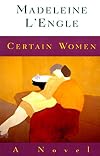
Summary: As actor David Wheaton dies of cancer, his daughter joins him on the Portia and as they re-read the unfinished script of Emma's estranged husband Nik on King David, they consider the parallels with their own lives, and struggle to come to terms with life in its brokenness, and its joys.
Madeleine L'Engle was best know for her Young Adult fiction work, A Wrinkle in Time, and the sequels to that work. For a time she was married to a successful actor, who she lost to cancer, and wrote show more about in several works, and I suspect draws upon in writing this. It was my familiarity with her other work that led me to pick up this book when I spotted it in a second hand store (I don't believe it is in print at present).
The story is that of the last summer of actor, David Wheaton, dying of cancer, diagnosed as he finished one of the ultimate roles of his life, playing King Lear, in which his daughter Emma also had a role. Now Emma, estranged from playwright husband Nik, is with him on the Portia, along with David's ninth wife (!) Alice, a physician, cruising the waters of the Pacific Northwest, David's favorite place to be when not in New York.
As David muses and tries to sum up his life, he keeps turning to an unfinished play Nik was writing, on the life and wives of King David. Nik had envisioned Wheaton in the title role, and as David reads sections of the unfinished script, he considers the parallels between King David and his wives, and his own nine marriages, the children from those marriages, and both the wondrous moments, and the brokenness such an unusual family inevitably brings.
It is not only David who is attempting to come to peace with and work out the relationships and mistakes of his life. Emma, relatively fresh from separating from Nik, also is wrestling with what had come between them, and the loves and losses she experienced in this family as well, again with parallels to the family of David. Yet oddly, although her parallel is Tamar, it is Abigail, David's second wife to whom she is drawn, as well as to David Wheaton's second wife who comes to visit, also an Abigail, who share with her the experience of losing children.
Eventually, a number of the surviving family arrive, along with Nik. Key in this narrative is the question is how do we come to terms with brokenness and failure, and the paradox of both a love of life, and the darkness of our flawed beings and that we often bring down upon ourselves and others? And with that is the question of what it means to choose life, and love while being these kind of people. Perhaps this is captured most succinctly in a question described by a wise Native American woman, Norma, who spoke of being at a crossroads in her own life and having to choose between a funeral, and a wedding.
Much of this is a story of the wives, and the daughter, Emma, that loved David Wheaton, and much of the conversation, remembered or present occurs between these women, particularly between Emma, Alice, and Abby. The dialogue between these women is perhaps what makes this book stand out, as they listen, choose to uncover pain, explore, wonder and tenderly share whatever wisdom is to be had at the time. At one point, they talk about "friendships of the heart," in contrast to romantic relationships, particularly between those of the same gender. There is a kind of understanding, of care in the relationships in this book that indeed characterize such friendship of the heart, that is far too rare, and wonderful to behold in this work.
If indeed this work is out of print, I hope it will not always be so. There is a quality of writing here to be savored, even as it wrestles with both life and death, and the dynamics of human relationships, particularly within families and between men and women. One senses in this a writer who wrote out of her own rich experiences of love, loss, brokenness, and yet joy in life, in which every word of dialogue seems to ring true. show less
Madeleine L'Engle was best know for her Young Adult fiction work, A Wrinkle in Time, and the sequels to that work. For a time she was married to a successful actor, who she lost to cancer, and wrote show more about in several works, and I suspect draws upon in writing this. It was my familiarity with her other work that led me to pick up this book when I spotted it in a second hand store (I don't believe it is in print at present).
The story is that of the last summer of actor, David Wheaton, dying of cancer, diagnosed as he finished one of the ultimate roles of his life, playing King Lear, in which his daughter Emma also had a role. Now Emma, estranged from playwright husband Nik, is with him on the Portia, along with David's ninth wife (!) Alice, a physician, cruising the waters of the Pacific Northwest, David's favorite place to be when not in New York.
As David muses and tries to sum up his life, he keeps turning to an unfinished play Nik was writing, on the life and wives of King David. Nik had envisioned Wheaton in the title role, and as David reads sections of the unfinished script, he considers the parallels between King David and his wives, and his own nine marriages, the children from those marriages, and both the wondrous moments, and the brokenness such an unusual family inevitably brings.
It is not only David who is attempting to come to peace with and work out the relationships and mistakes of his life. Emma, relatively fresh from separating from Nik, also is wrestling with what had come between them, and the loves and losses she experienced in this family as well, again with parallels to the family of David. Yet oddly, although her parallel is Tamar, it is Abigail, David's second wife to whom she is drawn, as well as to David Wheaton's second wife who comes to visit, also an Abigail, who share with her the experience of losing children.
Eventually, a number of the surviving family arrive, along with Nik. Key in this narrative is the question is how do we come to terms with brokenness and failure, and the paradox of both a love of life, and the darkness of our flawed beings and that we often bring down upon ourselves and others? And with that is the question of what it means to choose life, and love while being these kind of people. Perhaps this is captured most succinctly in a question described by a wise Native American woman, Norma, who spoke of being at a crossroads in her own life and having to choose between a funeral, and a wedding.
Much of this is a story of the wives, and the daughter, Emma, that loved David Wheaton, and much of the conversation, remembered or present occurs between these women, particularly between Emma, Alice, and Abby. The dialogue between these women is perhaps what makes this book stand out, as they listen, choose to uncover pain, explore, wonder and tenderly share whatever wisdom is to be had at the time. At one point, they talk about "friendships of the heart," in contrast to romantic relationships, particularly between those of the same gender. There is a kind of understanding, of care in the relationships in this book that indeed characterize such friendship of the heart, that is far too rare, and wonderful to behold in this work.
If indeed this work is out of print, I hope it will not always be so. There is a quality of writing here to be savored, even as it wrestles with both life and death, and the dynamics of human relationships, particularly within families and between men and women. One senses in this a writer who wrote out of her own rich experiences of love, loss, brokenness, and yet joy in life, in which every word of dialogue seems to ring true. show less
I read this decades ago and decided it was time to see if it were as good as I remembered. If anything, it was better. I think it is because I have experienced loss, making some of this more real. While death looms over the book (Maggie has been suddenly orphaned), it is far more about life. As L'Engle writes, "But being alive is a gift, the most wonderful and exciting gift in the world."
As is true in many of L'Engle's books, faith is a cornerstone in the story. For that aspect, I think this show more quotation rang most true for me: "The search for knowledge and truth can be the most exciting thing there is as long as it takes you toward God instead of away from Him.”
The book is a comfortable one. I liked the children who were far from perfect, but mostly tried to be good people. Sometimes in this world of social media and sometimes cruel memes, it helps to step away. This book was perfect for that. I will be reading the sequels.
The book is perfect for thoughtful middle-school aged children and older. Adults can read it with new and deeper understanding. It is highly recommended. show less
As is true in many of L'Engle's books, faith is a cornerstone in the story. For that aspect, I think this show more quotation rang most true for me: "The search for knowledge and truth can be the most exciting thing there is as long as it takes you toward God instead of away from Him.”
The book is a comfortable one. I liked the children who were far from perfect, but mostly tried to be good people. Sometimes in this world of social media and sometimes cruel memes, it helps to step away. This book was perfect for that. I will be reading the sequels.
The book is perfect for thoughtful middle-school aged children and older. Adults can read it with new and deeper understanding. It is highly recommended. show less
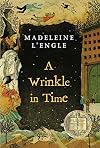
Years ago, kid-me loved this book. Adult-me, on the other hand, isn’t feeling the love. I think this book really speaks to people like Meg—young, slightly awkward, unsure of themselves. It affirms that they might grow into wonderful adults, even if they don’t feel wonderful as adolescents. However, as an adult, I simply feel judged. The adults in the story aren’t terribly realistic: the mom, in particular, is such a wonderful person because she’s extremely beautiful, young, poised, show more in control, dignified, brilliant, professional, and scientific. Kid-me was uncertain of things, but seeing as how I didn’t quite turn out to be a physicist-with-flawless-skin-and-a-genius-husband-and-four-kids, adult-me feels like a letdown. So yes, there’s an empowering message, but there are also impossible standards. For what it’s worth, I didn’t particularly like the mother. She is admired for not showing her emotions in front of her children, but she just comes off as distant and detached. And I was slightly bugged by the kitchen scene at the beginning: Meg, her brother Charles Wallace, and their mother all come down to the kitchen in the middle of the night for snacks. When the mom wants a sandwich, Charles Wallace prepares it for her. (He’s too young to be in school, so he’s, what? Four? Five at the most?) And the super-dignified, stoic mother somehow has no problem plopping herself down in the chair and letting him wait on her. I know this was supposed to show how capable and responsible the boy was (he spends most of his time taking care of his family), but it just makes the mom come off as lazy (with regard to the food) and inept (with regard to the family’s emotional well-being).
Some good points:
Once the journey really begins, the story gets a lot better. The characters are interesting and believable, and the sci-fi elements work really well. I won’t give anything away, but there is a legit sense of wonder, and then the tension builds, and the whole experience is remarkably well-crafted. It doesn’t fall into the YA trap of having the parents be really stupid so the teens can shine. Here, the parents are respected and wise—but they still can’t save Meg all the time. She has to save herself. I liked the friend Calvin very much, and I think general optimism and straightforwardness elevated every scene he was in. Some of the story’s didacticism got a little heavy-handed, and I don’t think that all of their lessons (such as the one on free will) were necessarily supported by the story. Even so, it was an inspiring story in many respects. Meg’s anger is believable, and her character’s growth is solid and fun to read. Finally, the religious elements in the story are very well-handled. The Bible quotes really fit well into the story, without being too preachy. The religious themes are incorporated smoothly into the sci-fi world, and they give the story its heart. Meg is fighting the darkness; a sort of evil shadow. And what are her words of encouragement? “And the light shineth in the darkness, and the darkness comprehendeth it not.” Beautiful.
Kid-me would have given this four or five stars. Grownup-me would give it three, except that the religious elements work so well in the story that I’m upping it a notch. :) Not as good as I remembered it, maybe, but still a wonderful adventure. show less
Some good points:
Once the journey really begins, the story gets a lot better. The characters are interesting and believable, and the sci-fi elements work really well. I won’t give anything away, but there is a legit sense of wonder, and then the tension builds, and the whole experience is remarkably well-crafted. It doesn’t fall into the YA trap of having the parents be really stupid so the teens can shine. Here, the parents are respected and wise—but they still can’t save Meg all the time. She has to save herself. I liked the friend Calvin very much, and I think general optimism and straightforwardness elevated every scene he was in. Some of the story’s didacticism got a little heavy-handed, and I don’t think that all of their lessons (such as the one on free will) were necessarily supported by the story. Even so, it was an inspiring story in many respects. Meg’s anger is believable, and her character’s growth is solid and fun to read. Finally, the religious elements in the story are very well-handled. The Bible quotes really fit well into the story, without being too preachy. The religious themes are incorporated smoothly into the sci-fi world, and they give the story its heart. Meg is fighting the darkness; a sort of evil shadow. And what are her words of encouragement? “And the light shineth in the darkness, and the darkness comprehendeth it not.” Beautiful.
Kid-me would have given this four or five stars. Grownup-me would give it three, except that the religious elements work so well in the story that I’m upping it a notch. :) Not as good as I remembered it, maybe, but still a wonderful adventure. show less
The Wrinkle in Time Quartet: A Wrinkle in Time / A Wind in the Door / A Swiftly Tilting Planet / Many Waters (The Kairos Novels) by Madeleine L'Engle

A Wrinkle in Time (1962)
The original novel seems to be most people's favorite, and certainly I had fond memories of it from when I was a kid. It's filled with great concepts: Mrs Who, Mrs Which, and Mrs Whatsit; the Happy Medium; the tesseract; the dystopia of Camazotz including IT the giant brain and the CENTRAL Central Intelligence building. Meg is a great character, and Calvin is basically the best boyfriend in all literature as far as I'm concerned.
I found myself somewhat unmoved this show more time. I liked the early stuff in the book, about Meg, Calvin, Charles Wallace, the family in general. Meg's a great character for capturing what it is to feel weird and alone and unaccomplished. (That said, one scene I remembered really liking turned out to actually be from A Wind in the Door.) Once the characters move into traveling through space/time, though, it felt like a succession of events more than a story: oh now they're here, oh now they're here. And I don't think it's a fault of L'Engle, but Camazotz was frightening and fascinating to me as a kid, but a lifetime of reading dystopian fiction later, and I felt like I'd seen it before, even if L'Engle was one of the first. I like that Meg saves the day by embracing her own faults, but eh, I dunno. When I got to the end, my reaction was, "I can see why I liked this as a kid, and I can definitely imagine giving it to my own kid, but I didn't find much to get out of this as an adult."
The notes here by editor Leonard S. Marcus are interesting: he has a lot to say about the varied manuscripts of Wrinkle, and also there are some good cultural insights. In particular, the fact that the CENTRAL Central Intelligence building is a comment on the CIA had never occurred to me. Clearly it would be easy to read Camazotz as a Cold War–era commentary on communism, but L'Engle was also criticizing her own country's actions.
A Wind in the Door (1973)
Something I hadn't realized reading these books as a kid is the long time period they were released over. This came out over a decade after A Wrinkle in Time. No wonder there are no direct references to Wrinkle in it, not even very obvious ones (surely the Echthroi are somehow related to the Black Thing?); anyone who had read Wrinkle in Time as a kid when it was released would have been an adult by the time of A Wind in the Door. She would have been chasing a whole new audience!
As a kid, this was always my least favorite of the original three novels. Other than the story about Calvin's plant and his home life, it did nothing for me at all; in particular, I found all the stuff about the farandolae inside Charles Wallace's mitochondrion tedious in the extreme.
To my surprise, this was my favorite of all eight Kairos novels. As an adult, the challenge of Meg figuring out who was the real version of her obnoxious high school principal, and who was the Echthroi impersonator, resonated much more with me. I really liked the idea of Naming, that to Name someone is to love someone, and therefore in order to Name Mr. Jenkins, Meg needed to figure out a way to love him. I liked the way this headed in the climax of the story, which features a particular audacious act of Naming—and thus of loving—from Meg. As someone who takes his responsibilities seriously (I hope, anyway), I liked that the villains were merely beings who wanted to avoid theirs. It was a natural but tragic path.
Above all else, I liked this conversation between Meg's parents. Mrs. Murry is despairing about both the state of her son Charles Wallace and the state of American society in general:
[H]er father reach[ed] across the table for her mother's hand. “My dear, this is not like you. With my intellect, I see cause for nothing but pessimism and even despair. But I can’t settle for what my intellect tells me. That's not all of it."
“What else is there?” Mrs. Murry’s voice was low and anguished.
“There are still stars which move in ordered and beautiful rhythm. There are still people in this world who keep promises. Even little ones, like your cooking stew over your Bunsen burner. You may be in the middle of an experiment, but you still remember to feed your family. That's enough to keep my heart optimistic, no matter how pessimistic my mind. And you and I have good enough minds to know how very limited and finite they really are. The naked intellect is an extraordinarily inaccurate instrument.”
In a time where it feels very easy to give into despair, I found here a little bit of hope to cling onto, and that's the real power of this book—for all her fault, Meg can save the world through love.
This is the first book to indicate that the Murray novels take place sometime in the future. Meg's mother is old enough to remember the moon landing... but young enough that another character thinks she might not remember the moon landing. So born in the early 1960s? (My parents were born in 1963 and '64, and my father remembers the moon landing but my mother does not.) I don't think we ever get a specific age for Dr. Kate Murry, but given she's old enough to have a teenage daughter, that would seem to put these novels in the late 1990s at the earliest, probably the early 2000s. (If the Murrays are about the same age as my own parents, it makes me want to think of Meg as the same age as me, which would put this book in the year 2000. If the Murrays waited longer to have children, then it takes place even later.) There's also a reference to humans landing on Mars. Similarly, the Wall Street Journal article that teaches Calvin about the emotional lives of plants is said to be very old (it's wrapping up china in the O'Keefe attic), but it's a real article that actually came out in 1972, the year before the novel.
Many Waters (1986)
I decided to make an exception to my usual practice of reading Library of America volumes in chronological order, and I swapped Many Waters with A Swiftly Tilting Planet. I had a couple reasons for this. For one, I read the original three Meg books many times as a kid and only discovered Many Waters much later, so having read them in publication order to begin with, I was curious how they would work in chronological order. Second, I remember not liking Many Waters very much, while Swiftly Tilting Planet was my favorite as a kid, and I preferred that my reading of the Murray novels would end on a high note.
Meg and/or Charles Wallace are the protagonists of the three original Murray novels; Many Waters focuses on Sandy and Dennys, the "ordinary" twins between Meg and Charles Wallace in age. They accidentally travel back in time to the age of Noah's Ark...
...and it is so so boring. Like, inexplicably so. Unlike all the other books, there's nothing at stake. There's no reason for Sandy and Dennys to travel back in time, either from a narrative standpoint (there's no threat they're alleviating) or a personal one (all the Meg/Charles Wallace novels have her learning and growing through her actions, but the twins are just there). You could write a book about them coming to terms with their (supposed) ordinariness, or about them coming of age sexually, but this book doesn't really give you those things, it just hints at them.
I also agree with Mari Ness that the book's past era just doesn't convince: "somehow, perhaps because of the language, or because this culture does not fit in with either the Bible or archaeological evidence of any early society (and not just because of the unicorns), it never manages to feel quite real. [...] [I]t [...] serve[s] to reduce any suspense the novel might have had. It’s not just that I know the flood is coming anyway, but that I can’t bring myself to care about the complete destruction of a place that never feels quite real."
Bizarrely, even though it has the least going on of any of the Murray novels, it's also the longest. So it just keeps on going and going and geeze louise was I bored.
A Swiftly Tilting Planet (1978)
The last Meg novel was my favorite as a kid. I guess I was a weird kid, because this is a weird book. Nuclear war is seemingly imminent on Christmas Eve, and Meg and Charles Wallace must stop it by using a unicorn to travel across time, untangling a family lineage that goes from Wales to Connecticut to South America with the help of a mystical Irish poem. While Meg remains in the present day, telepathically communicating with Charles Wallace, he subsumes his personality into historical figures to better understand what's going on and give the occasional nudge.
Rereading it as an adult, I was less into the time travel shenanigans—much more familiar to me as someone who has watched too much Steven Moffat Doctor Who—and a bit metaphysically bothered by the novel's idea that families could be doomed across time. But the book has some captivating chapters, in its vignettes across the years. The story of Calvin's mother is darkly tragic stuff.
The poem L'Engle uses to unify the narrative isn't her own composition, but is used in an utterly captivating way. Rereading it all these years later, I found it still contained the power I first found in it as a child. On the whole, I liked Wind in the Door more this time through, but I still found a lot to like here. Like L'Engle's best work, it hints at a strange cosmology beyond our comprehension, but also a universe where the most powerful force is ultimately our ability to listen to one another.
Also it's interesting to note that a big part of this book is a legend about a Welsh prince who came to North America before Columbus, and a year before this book came out, there was a historical novel about that same topic: Madoc, Prince of America by Bernard Knight. Now seemingly forgotten, but did L'Engle read it and get inspired? show less
The original novel seems to be most people's favorite, and certainly I had fond memories of it from when I was a kid. It's filled with great concepts: Mrs Who, Mrs Which, and Mrs Whatsit; the Happy Medium; the tesseract; the dystopia of Camazotz including IT the giant brain and the CENTRAL Central Intelligence building. Meg is a great character, and Calvin is basically the best boyfriend in all literature as far as I'm concerned.
I found myself somewhat unmoved this show more time. I liked the early stuff in the book, about Meg, Calvin, Charles Wallace, the family in general. Meg's a great character for capturing what it is to feel weird and alone and unaccomplished. (That said, one scene I remembered really liking turned out to actually be from A Wind in the Door.) Once the characters move into traveling through space/time, though, it felt like a succession of events more than a story: oh now they're here, oh now they're here. And I don't think it's a fault of L'Engle, but Camazotz was frightening and fascinating to me as a kid, but a lifetime of reading dystopian fiction later, and I felt like I'd seen it before, even if L'Engle was one of the first. I like that Meg saves the day by embracing her own faults, but eh, I dunno. When I got to the end, my reaction was, "I can see why I liked this as a kid, and I can definitely imagine giving it to my own kid, but I didn't find much to get out of this as an adult."
The notes here by editor Leonard S. Marcus are interesting: he has a lot to say about the varied manuscripts of Wrinkle, and also there are some good cultural insights. In particular, the fact that the CENTRAL Central Intelligence building is a comment on the CIA had never occurred to me. Clearly it would be easy to read Camazotz as a Cold War–era commentary on communism, but L'Engle was also criticizing her own country's actions.
A Wind in the Door (1973)
Something I hadn't realized reading these books as a kid is the long time period they were released over. This came out over a decade after A Wrinkle in Time. No wonder there are no direct references to Wrinkle in it, not even very obvious ones (surely the Echthroi are somehow related to the Black Thing?); anyone who had read Wrinkle in Time as a kid when it was released would have been an adult by the time of A Wind in the Door. She would have been chasing a whole new audience!
As a kid, this was always my least favorite of the original three novels. Other than the story about Calvin's plant and his home life, it did nothing for me at all; in particular, I found all the stuff about the farandolae inside Charles Wallace's mitochondrion tedious in the extreme.
To my surprise, this was my favorite of all eight Kairos novels. As an adult, the challenge of Meg figuring out who was the real version of her obnoxious high school principal, and who was the Echthroi impersonator, resonated much more with me. I really liked the idea of Naming, that to Name someone is to love someone, and therefore in order to Name Mr. Jenkins, Meg needed to figure out a way to love him. I liked the way this headed in the climax of the story, which features a particular audacious act of Naming—and thus of loving—from Meg. As someone who takes his responsibilities seriously (I hope, anyway), I liked that the villains were merely beings who wanted to avoid theirs. It was a natural but tragic path.
Above all else, I liked this conversation between Meg's parents. Mrs. Murry is despairing about both the state of her son Charles Wallace and the state of American society in general:
[H]er father reach[ed] across the table for her mother's hand. “My dear, this is not like you. With my intellect, I see cause for nothing but pessimism and even despair. But I can’t settle for what my intellect tells me. That's not all of it."
“What else is there?” Mrs. Murry’s voice was low and anguished.
“There are still stars which move in ordered and beautiful rhythm. There are still people in this world who keep promises. Even little ones, like your cooking stew over your Bunsen burner. You may be in the middle of an experiment, but you still remember to feed your family. That's enough to keep my heart optimistic, no matter how pessimistic my mind. And you and I have good enough minds to know how very limited and finite they really are. The naked intellect is an extraordinarily inaccurate instrument.”
In a time where it feels very easy to give into despair, I found here a little bit of hope to cling onto, and that's the real power of this book—for all her fault, Meg can save the world through love.
This is the first book to indicate that the Murray novels take place sometime in the future. Meg's mother is old enough to remember the moon landing... but young enough that another character thinks she might not remember the moon landing. So born in the early 1960s? (My parents were born in 1963 and '64, and my father remembers the moon landing but my mother does not.) I don't think we ever get a specific age for Dr. Kate Murry, but given she's old enough to have a teenage daughter, that would seem to put these novels in the late 1990s at the earliest, probably the early 2000s. (If the Murrays are about the same age as my own parents, it makes me want to think of Meg as the same age as me, which would put this book in the year 2000. If the Murrays waited longer to have children, then it takes place even later.) There's also a reference to humans landing on Mars. Similarly, the Wall Street Journal article that teaches Calvin about the emotional lives of plants is said to be very old (it's wrapping up china in the O'Keefe attic), but it's a real article that actually came out in 1972, the year before the novel.
Many Waters (1986)
I decided to make an exception to my usual practice of reading Library of America volumes in chronological order, and I swapped Many Waters with A Swiftly Tilting Planet. I had a couple reasons for this. For one, I read the original three Meg books many times as a kid and only discovered Many Waters much later, so having read them in publication order to begin with, I was curious how they would work in chronological order. Second, I remember not liking Many Waters very much, while Swiftly Tilting Planet was my favorite as a kid, and I preferred that my reading of the Murray novels would end on a high note.
Meg and/or Charles Wallace are the protagonists of the three original Murray novels; Many Waters focuses on Sandy and Dennys, the "ordinary" twins between Meg and Charles Wallace in age. They accidentally travel back in time to the age of Noah's Ark...
...and it is so so boring. Like, inexplicably so. Unlike all the other books, there's nothing at stake. There's no reason for Sandy and Dennys to travel back in time, either from a narrative standpoint (there's no threat they're alleviating) or a personal one (all the Meg/Charles Wallace novels have her learning and growing through her actions, but the twins are just there). You could write a book about them coming to terms with their (supposed) ordinariness, or about them coming of age sexually, but this book doesn't really give you those things, it just hints at them.
I also agree with Mari Ness that the book's past era just doesn't convince: "somehow, perhaps because of the language, or because this culture does not fit in with either the Bible or archaeological evidence of any early society (and not just because of the unicorns), it never manages to feel quite real. [...] [I]t [...] serve[s] to reduce any suspense the novel might have had. It’s not just that I know the flood is coming anyway, but that I can’t bring myself to care about the complete destruction of a place that never feels quite real."
Bizarrely, even though it has the least going on of any of the Murray novels, it's also the longest. So it just keeps on going and going and geeze louise was I bored.
A Swiftly Tilting Planet (1978)
The last Meg novel was my favorite as a kid. I guess I was a weird kid, because this is a weird book. Nuclear war is seemingly imminent on Christmas Eve, and Meg and Charles Wallace must stop it by using a unicorn to travel across time, untangling a family lineage that goes from Wales to Connecticut to South America with the help of a mystical Irish poem. While Meg remains in the present day, telepathically communicating with Charles Wallace, he subsumes his personality into historical figures to better understand what's going on and give the occasional nudge.
Rereading it as an adult, I was less into the time travel shenanigans—much more familiar to me as someone who has watched too much Steven Moffat Doctor Who—and a bit metaphysically bothered by the novel's idea that families could be doomed across time. But the book has some captivating chapters, in its vignettes across the years. The story of Calvin's mother is darkly tragic stuff.
The poem L'Engle uses to unify the narrative isn't her own composition, but is used in an utterly captivating way. Rereading it all these years later, I found it still contained the power I first found in it as a child. On the whole, I liked Wind in the Door more this time through, but I still found a lot to like here. Like L'Engle's best work, it hints at a strange cosmology beyond our comprehension, but also a universe where the most powerful force is ultimately our ability to listen to one another.
Also it's interesting to note that a big part of this book is a legend about a Welsh prince who came to North America before Columbus, and a year before this book came out, there was a historical novel about that same topic: Madoc, Prince of America by Bernard Knight. Now seemingly forgotten, but did L'Engle read it and get inspired? show less
Lists
BitLife (1)
el (1)
Books with Twins (1)
Witch Hunts (1)
. (1)
Autumn books (1)
Comfort Reads (1)
1960s (1)
Elevenses (1)
Best Young Adult (1)
Five star books (1)
Fave Books (1)
Witchy Fiction (1)
1980s (1)
Favourite Books (1)
A Novel Cure (1)
Sonlight Books (2)
4th Grade Books (2)
Overdue Podcast (1)
Unread books (5)
Newbery Adjacent (4)
Female Author (4)
1970s (3)
. (1)
al.vick-series (1)
6th Grade (1)
um actually (1)
Awards


You May Also Like


Associated Authors
Statistics
- Works
- 123
- Also by
- 46
- Members
- 128,249
- Popularity
- #56
- Rating
- 4.0
- Reviews
- 1,932
- ISBNs
- 882
- Languages
- 20
- Favorited
- 455
