
Rob Spillman
Author of Gods and Soldiers: The Penguin Anthology of Contemporary African Writing
About the Author
Works by Rob Spillman
Fantastic Women: 18 Tales of the Surreal and the Sublime from Tin House (2011) — Editor — 61 copies, 2 reviews
The Time of My Life: Writers on the Heartbreak, Hormones, and Debauchery of The Prom (2008) 9 copies
Tin House 17 (Fall 2003): Give 8 copies
The Complete Photobook 1 copy
Associated Works
The Bastard on the Couch: 27 Men Try Really Hard to Explain Their Feelings About Love, Loss, Fatherhood, and Freedom (2004) — Contributor — 186 copies, 7 reviews
Tagged
Common Knowledge
- Canonical name
- Spillman, Rob
- Gender
- male
- Organizations
- Tin House
- Nationality
- USA
- Associated Place (for map)
- USA
Members
Reviews
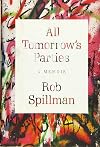
In reading Rob Spillman’s coming-of-age memoir, I was reminded of something one of Don DiLillo’s characters said to describe another person in the recent New Yorker short story, “Sine Cosine Tangent.” “The vivid boy, she whispered. The shapeless man.” Indeed, Spillman seems to have had a vivid boyhood, characterized by living part time with each of his separated musician parents. He seems to have wanted to believe that his closeted gay father was a far more compelling figure than show more his mother, who was, after all, just a mother. With his father, he looked forward to road trips designed to feed his running fantasies; and living in Berlin, Aspen and Upstate New York—all exciting places peopled by all sorts of fascinating artistic types. Conversely, he found living in Baltimore with his mother to be stifling and looked forward to nothing more than escaping just as soon as possible. Both parents loved Robby in their own ways, but each maintained a certain distance from him, a situation that ultimately left him far too much on his own searching for an identity.
Using alternating chapters that give the narrative a sense of simultaneity, Spillman follows his childhood; and his later search as an adult for a bohemian writing lifestyle in Europe, patterned after Hemingway or Kerouac. Driven primarily by anecdotes, the narrative is both intimate and engaging. What Spillman fails to recognize throughout the memoir, however, —and only seems to come to terms with in the final pages—was that he was a perennial outsider who adopted several powerful coping mechanisms. He ran to escape. Although a talented runner, he never realized any of his running fantasies. One of the most troubling and curious anecdotes was his decision to leave his wife while she was obviously experiencing a medical emergency to go for a run through the rubble of East Berlin. He read widely and was obviously moved by what he read, but one gets the sense that this was another way to escape things he did not like, such as boring part time jobs. And most troubling of all, he aspired to being a great writer himself (probably influenced by his artistic father), but never really engaged with it. Instead he did things that actually interfered with it like drinking and partying to excess. Although a man known to like a party, Hemingway once said about writing, “All you have to do is write one true sentence.” Spillman wrote a whole manuscript for a novel that he later realized had no true sentences, so he discarded it.
Although the memoir is replete with colorful anecdotes and does not shrink from the truth, it can be frustrating to read because, filtered through the lens he creates, one sees a young man who was given far too little guidance and allowed to make far too many wrong turns and to venture down far too many blind alleys. He flunked out of college and had three major automobile accidents to mention just two. Clearly, he seems to have been prone to adopting risky behaviors that occasionally panned out, like electing to live in East Berlin prior to unification, but just as likely did not. Knowing that he landed on his feet in the end is a relief and a testament to his intelligence, perseverance and guile. show less
Using alternating chapters that give the narrative a sense of simultaneity, Spillman follows his childhood; and his later search as an adult for a bohemian writing lifestyle in Europe, patterned after Hemingway or Kerouac. Driven primarily by anecdotes, the narrative is both intimate and engaging. What Spillman fails to recognize throughout the memoir, however, —and only seems to come to terms with in the final pages—was that he was a perennial outsider who adopted several powerful coping mechanisms. He ran to escape. Although a talented runner, he never realized any of his running fantasies. One of the most troubling and curious anecdotes was his decision to leave his wife while she was obviously experiencing a medical emergency to go for a run through the rubble of East Berlin. He read widely and was obviously moved by what he read, but one gets the sense that this was another way to escape things he did not like, such as boring part time jobs. And most troubling of all, he aspired to being a great writer himself (probably influenced by his artistic father), but never really engaged with it. Instead he did things that actually interfered with it like drinking and partying to excess. Although a man known to like a party, Hemingway once said about writing, “All you have to do is write one true sentence.” Spillman wrote a whole manuscript for a novel that he later realized had no true sentences, so he discarded it.
Although the memoir is replete with colorful anecdotes and does not shrink from the truth, it can be frustrating to read because, filtered through the lens he creates, one sees a young man who was given far too little guidance and allowed to make far too many wrong turns and to venture down far too many blind alleys. He flunked out of college and had three major automobile accidents to mention just two. Clearly, he seems to have been prone to adopting risky behaviors that occasionally panned out, like electing to live in East Berlin prior to unification, but just as likely did not. Knowing that he landed on his feet in the end is a relief and a testament to his intelligence, perseverance and guile. show less
The Literary Output of 1.1 Billion People Reduced to 386 Pages
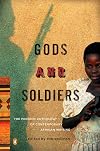
Unfortunately, "Gods and Soldiers" does not present a very broad range of voices in African literature. While there is good geographic representation, most of the stories, excerpts, and essays have a limited focus. With just a few exceptions, the reader only receives political commentary.
It is impossible to reduce the entire literary output of any continent to a mere 386 pages. The depth and breadth of African writing is enormous, show more from small press publishers to magazines to scientific journals, there is simply too much. Thus, to represent all "Contemporary African Writing" as political in nature is disingenuous. While I applaud Penguin for trying, I really wish they hadn't gone with tiny excerpts from novels and edited short stories. show less
Unfortunately, "Gods and Soldiers" does not present a very broad range of voices in African literature. While there is good geographic representation, most of the stories, excerpts, and essays have a limited focus. With just a few exceptions, the reader only receives political commentary.
It is impossible to reduce the entire literary output of any continent to a mere 386 pages. The depth and breadth of African writing is enormous, show more from small press publishers to magazines to scientific journals, there is simply too much. Thus, to represent all "Contemporary African Writing" as political in nature is disingenuous. While I applaud Penguin for trying, I really wish they hadn't gone with tiny excerpts from novels and edited short stories. show less
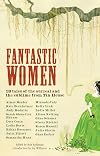
I borrowed this from the public library on an inter-library loan. It's not the best way to read this kind of collection. It's best taken in small doses, one story at a sitting. Otherwise they lose their edge, and they are edgy stories.
A collection of stories is like a music album. You aren't going to like each selection equally. If there are two or three you really like, a couple of ones you don't care for and the rest are good or OK, the collection is worthwhile. Of the 18 stories, I really show more liked five, another six were good, two were alright, three I didn't care for, and two I totally skipped. So I consider it a successful collection.
If it were my book, I would lay it aside and give some of the stories I didn't care for a second chance, but it's due tomorrow so back it goes. Maybe I'll buy a copy.
And I would like to read something else by some of these authors. show less
A collection of stories is like a music album. You aren't going to like each selection equally. If there are two or three you really like, a couple of ones you don't care for and the rest are good or OK, the collection is worthwhile. Of the 18 stories, I really show more liked five, another six were good, two were alright, three I didn't care for, and two I totally skipped. So I consider it a successful collection.
If it were my book, I would lay it aside and give some of the stories I didn't care for a second chance, but it's due tomorrow so back it goes. Maybe I'll buy a copy.
And I would like to read something else by some of these authors. show less
This is where literary meets genre, and the impact is sometimes mystifying, sometimes breath-taking, and always beautifully written. These stories demand an active reader, it's tough for me to read more than one a night, and some of them have given me vivid dreams. Highly recommended, but don't expect to read this easily. These stories require your attention in ways standard genre does not. I guarantee this book is not for everyone.
Lists
Awards


You May Also Like


Associated Authors
Statistics
- Works
- 17
- Also by
- 1
- Members
- 370
- Popularity
- #65,127
- Rating
- 3.4
- Reviews
- 9
- ISBNs
- 22
- Languages
- 1