
Truman Capote (1924–1984)
Author of In Cold Blood
About the Author
Truman Capote, 1924 - 1984 Novelist and playwright Truman Streckfus Person was born in 1924 in New Orleans to a salesman and a 16-year-old beauty queen. His parents divorced when he was four years old and was then raised by relatives for a few years in Monroeville. His mother was remarried to a show more successful businessman, moved to New York, and Truman adopted his stepfather's surname. He attended Greenwich High School and never went to college. When he was 17, Capote's formal education ended when he was employed at The New Yorker magazine. He belived he did not need to go to college to be a writer, since he was writing seriously since age 11. Capote's first novel was "Other Voices, Other Rooms" (1948), which told the story of a boy growing up in the Deep South. "The Grass Harp" (1951) is about a young boy and his elderly cousin discovering that some compromise is necessary for people to live together in a community and was adapted to screen in 1996. The play "The House of Flowers" (1954) is a musical set in a West Indies bordello. Capote then wrote, "Breakfast at Tiffanys" (1958), which tells the story of how Holly Golightly goes to New York seeking happiness. Capote became preoccupied with journalism and, sparked by the murder of a wealthy family in Holcomb, Kansas, began interviewing the locals to recreate the lives of the murderers and their victims. The research and writing for this novel, "In Cold Blood" (1966), took six years for him to complete. Other works of Capote's include the classic "A Christmas Memory" (1966), which is an autobiographical account of a seven-year-old boy, his cousin, and an eccentric old lady, "Music for Chameleons" (1981), which is a collection of short pieces, interviews, stories and conversations that were published in several magazines, and "One Christmas" (1982). On August 26, 1984 in Los Angeles, Truman Capote died of liver disease complicated by phlebitis and multiple drug intoxication. Published after his death were "Conversations With Capote" (1985) and "Answered Prayers: The Untitled Novel" (1986). (Bowker Author Biography) show less
Series
Works by Truman Capote
Os Cães Ladram. Pessoas Públicas E Lugares Privados - Coleção L&PM Pocket (Em Portuguese do Brasil) (2006) 8 copies
House of Flowers [short story] 8 copies
Yachts and Things — Author — 7 copies
Among the Paths to Eden 4 copies
Marilyn & Co: Begegnungen mit Marilyn Monroe, Marlon Brando, Elizabeth Taylor und vielen anderen (2009) 4 copies
Cinco relatos para mujeres 3 copies
Baum der Nacht Skizzen und Stories 2 copies
Shut a Final Door 2 copies
Doručak kod Tifanija 1 copy
Hidegvérrel 1 copy
Með köldu blóði 1 copy
Yoru no ki (夜の樹) 1 copy
Cu sânge rece 1 copy
O sangue frio 1 copy
Truman Capote papers 1 copy
Andere stimmen andere Stuben 1 copy
Закуска в „Тифани“ 1 copy
Answered Prayers (Contemporary Fiction, Plume) by Capote, Truman (1995) Mass Market Paperback 1 copy
Sangue frio 1 copy
Sabrane priče 1 copy
Miss Bobbit (in I racconti) 1 copy
Trees of the Night 1 copy
Blind items 1 copy
Un Été indien: nouvelle 1 copy
The Grass Harp 1 copy
Un árbol de la noche 1 copy
Glasba za kameleone 1 copy
Sithala le 1 copy
Morceaux choisis 1 copy
1962 1 copy
Associated Works
Perrine's Literature: Structure, Sound, and Sense (1970) — Contributor, some editions — 895 copies, 4 reviews
The World of the Short Story: A 20th Century Collection (1986) — Contributor — 512 copies, 4 reviews
My Sister's Hand in Mine: The Collected Works of Jane Bowles (1966) — Introduction — 453 copies, 5 reviews
Points of View: An Anthology of Short Stories, Revised & Updated Edition (1995) — Contributor — 443 copies, 7 reviews
The Art of the Tale: An International Anthology of Short Stories (1986) — Contributor — 381 copies, 3 reviews
The American Short Story: A Collection of the Best Known and Most Memorable Stories by the Great American Authors (1994) — Contributor — 370 copies
The Penguin Book of Christmas Stories: From Hans Christian Andersen to Angela Carter (2019) — Author — 330 copies, 5 reviews
American Fantastic Tales : Terror and the Uncanny from the 1940's to Now (2009) — Contributor — 298 copies, 5 reviews
The Art of Fact: A Historical Anthology of Literary Journalism (1997) — Contributor — 225 copies, 1 review
The Arbor House Treasury of Horror and the Supernatural (1981) — Contributor — 219 copies, 3 reviews
New York Stories [Everyman's Library Pocket Classics] (2011) — Contributor, some editions — 198 copies, 5 reviews
First Fiction: An Anthology of the First Published Stories by Famous Writers (1994) — Contributor — 196 copies, 1 review
In Another Part of the Forest: An Anthology of Gay Short Fiction (1994) — Contributor — 192 copies, 2 reviews
On the Firing Line: The Public Life of Our Public Figures (1989) — Contributor — 127 copies, 1 review
The lucifer society;: Macabre tales by great modern writers (1972) — Contributor — 52 copies, 1 review
The Graphic Canon of Crime & Mystery, Vol. 1: From Sherlock Holmes to A Clockwork Orange to Jo Nesbø (2017) — Contributor — 39 copies, 2 reviews
Reader's Digest Condensed Books 1957 v02: The Scapegoat / The Last Angry Man / The Muses Are Heard / The Fruit Tramp / The Enemy Below (1957) — Author — 39 copies, 1 review
The Best of Both Worlds: An Anthology of Stories for All Ages (1968) — Contributor — 25 copies, 1 review
Fifty Years of the American Short Story from the O. Henry Awards 1919-1970 (1970) — Contributor — 17 copies, 1 review
Sylvia Plath's Tomato Soup Cake: A Compendium of Classic Authors' Favourite Recipes (2024) — Contributor — 6 copies
Contemporary Short Stories: Representative Selections, Volume 3 — Contributor — 6 copies
Fifty Years of the American Short Story from the O. Henry Awards 1919-1970, Volume 1 (1970) — Contributor — 3 copies
Moderne Amerikaanse verhalen — Contributor — 3 copies
Crónicas de Italia — Contributor — 2 copies
Der Zauberspiegel. Phantastische Erzählungen der Weltliteratur — Contributor — 2 copies
Meesters der vertelkunst : zevenendertig verhalen uit de moderne wereldliteratuur (1975) — Contributor — 2 copies
The Ethnic Image in Modern American Literature, 1900-1950, Volumes 1-2 (1984) — Contributor — 1 copy
Tagged
Common Knowledge
- Canonical name
- Capote, Truman
- Legal name
- Persons, Truman Streckfus
- Other names
- Capote, Truman (Pseudonyme)
- Birthdate
- 1924-09-30
- Date of death
- 1984-08-25
- Gender
- male
- Education
- Greenwich High School
Dwight School - Occupations
- short story writer
novelist
playwright - Organizations
- The New Yorker
- Awards and honors
- American Academy of Arts and Letters Academy Award (Literature ∙ 1959)
American Academy of Arts and Letters (Literature ∙ 1964) - Relationships
- Lee, Harper (friend)
Murakami, Haruki (translator)
Dunphy, Jack (lover)
Agnelli, Marella (friend) - Cause of death
- liver disease
- Nationality
- USA
- Birthplace
- New Orleans, Louisiana, USA
- Places of residence
- Monroeville, Alabama, USA
New York, New York, USA
Greenwich, Connecticut, USA - Place of death
- Los Angeles, California, USA
- Burial location
- Westwood Village Memorial Park Cemetery, Los Angeles, California, USA
- Map Location
- USA
Members
Discussions
June 2015: Truman Capote in Monthly Author Reads (February 2019)
In Cold Blood, by Truman Capote (Bowie's Top 100) in 75 Books Challenge for 2016 (March 2016)
Reviews
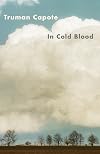
As a big true crime reader for almost 30 years, I don't know why it's taken me so long to get to the book that has so heavily influenced the genre. It's extremely well-written, well-researched, and reads like a thriller novel. Very dark, and even disturbing at times, when in the murderers' POV, it's nonetheless a gripping book. It takes you through the crime, manhunt, arrest, and trial, but not in a "facts and figures" sort of way, but rather in a very human way. This one is not for the show more faint of heart, but it is an incredibly moving narrative. show less

Truman Capote brings to life this horrific murder. Many of the conversations were fictionalized, but by and large I think they move the story forward without detracting from the validity of the crime. Capote captured the character of not only the victims, but also the perpetrators. The backstories on Perry Smith an Dick Hickock were especially interesting, their upbringing and the psychology. Smith captured my attention the most, perhaps because I was most horrified by him. And I loved how show more Capote intertwined actual letters and other artifacts relevant to the case. For instance, I found the article "Murder Without Apparent Motive--A study in Personality Disorganization" completely fascinating and very disturbing. Here are a few thoughts and outtakes to give the reader a feel for what's in store:
I was duly impressed by Perry Smith's vocabulary: Thanatoid=deathlike; amerce=punishment, amount fixed by court; facinorous=atrociously wicked; hagiophobia=a morbid fear of holy places, etc. And his "diary" which really was just a place he kept favorite quotes and interesting tidbits of information. Whew!! The man was smart, but only book smart. He was morally bankrupt. I am horrified that his upbringing could have so warped him that he could go on to kill the Clutter family, especially when the prime instigator, Dick Hickock, seemed to back off the crime.
"The crime was a psychological accident, virtually an impersonal act; the victims might as well have been killed by lightening. Except for one thing: they had experienced terror, they had suffered." (Dewey)
And Perry's response? "'Am I sorry? If that's what you mean--I'm not. I don't feel anything about it. I wish I did. But nothing about it bothers me a bit. half an hour after it happened, Dick was making jokes and I was laughing at them. Maybe we are not human. I'm human enough to feel sorry for myself. Sorry I can't walk out of here when you walk out. But that's all.' Sullivan could scarcely credit so detached an attitude; Perry was confused, mistaken, it was not possible for any man to be that devoid of conscience or compassion."
A very compelling, if chilling read. Recommended. show less
I was duly impressed by Perry Smith's vocabulary: Thanatoid=deathlike; amerce=punishment, amount fixed by court; facinorous=atrociously wicked; hagiophobia=a morbid fear of holy places, etc. And his "diary" which really was just a place he kept favorite quotes and interesting tidbits of information. Whew!! The man was smart, but only book smart. He was morally bankrupt. I am horrified that his upbringing could have so warped him that he could go on to kill the Clutter family, especially when the prime instigator, Dick Hickock, seemed to back off the crime.
"The crime was a psychological accident, virtually an impersonal act; the victims might as well have been killed by lightening. Except for one thing: they had experienced terror, they had suffered." (Dewey)
And Perry's response? "'Am I sorry? If that's what you mean--I'm not. I don't feel anything about it. I wish I did. But nothing about it bothers me a bit. half an hour after it happened, Dick was making jokes and I was laughing at them. Maybe we are not human. I'm human enough to feel sorry for myself. Sorry I can't walk out of here when you walk out. But that's all.' Sullivan could scarcely credit so detached an attitude; Perry was confused, mistaken, it was not possible for any man to be that devoid of conscience or compassion."
A very compelling, if chilling read. Recommended. show less
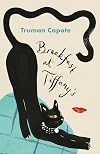
For the most part, Breakfast at Tiffany’s the movie stays fairly true to the novella. Those areas in which the movie and the novella differ, however, change the entire flavor of the story. Readers who are only familiar with the movie may experience shock at how jaded and how very young Holly is. More importantly, they will not expect the darker feel of the story, the seediness of Holly’s relationships and the amount of manipulation she exhibits.
Truman Capote’s Holly Golightly is not show more the fresh-faced, harmless ingenue Audrey Hepburn created. Rather, his vision is a very clearly defined Marilyn Monroe lookalike who is all about sex and titillation. Of most importance is the fact that she is young, still several years shy of her 20s, but there is an air of hard experience that is disheartening to see. As she reveals her background to her unnamed neighbor, one realizes that the true tragedy of her life, the one that created the woman she is right now, lies in those unspoken memories she will never discuss. For all her lightness and ability to live in the moment, there is very much an aspect about her of a frightened deer, one who is always on the verge of running away to a safe spot.
Michael C. Hall does an excellent job narrating. As the unnamed neighbor, he comes across as a remote observer who is desperately trying to hide his fascination with Miss Golightly. Mr. Hall attempts to use different voices for the various characters but never lets them interfere with his main job as the unnamed neighbor/narrator. Rather, he ensures listeners understand that the neighbor’s studied indifference to Holly’s past is nothing but a front. His performance is dispassionate and collected, making the casualness with which he describes certain events that much more effective in showcasing just how much the neighbor admired and adored Holly.
The language is the true star of Breakfast at Tiffany’s. Mr. Capote’s phrasing is superb, and those readers who like to take notes or jot down powerful phrases and sentences will have plenty of note-taking fodder. Mr. Capote’s observations about life, as filtered through Holly, are simply outstanding. He astutely tells readers how it is but does so without being overly saccharine or bitter.
While the movie version is beloved and acclaimed for a reason, one cannot help but feel the movie does Mr. Capote’s original story a disservice. By removing Holly’s harsher edges and glamorizing her lifestyle, the movie misses the point. While Audrey Hepburn captured Holly’s yearning for a better life, the movie is too much like a fairy tale, whereas the novella is much harsher in its depiction of life’s consequences. Some readers will not like the original, deeming it too dark and depressing. Others will adore the realism of the story and Holly’s very fragile sense of happiness and contentment. All readers will understand why critics consider Breakfast at Tiffany’s Mr. Capote’s masterpiece because he packs a powerful punch into a very short work of fiction. show less
Truman Capote’s Holly Golightly is not show more the fresh-faced, harmless ingenue Audrey Hepburn created. Rather, his vision is a very clearly defined Marilyn Monroe lookalike who is all about sex and titillation. Of most importance is the fact that she is young, still several years shy of her 20s, but there is an air of hard experience that is disheartening to see. As she reveals her background to her unnamed neighbor, one realizes that the true tragedy of her life, the one that created the woman she is right now, lies in those unspoken memories she will never discuss. For all her lightness and ability to live in the moment, there is very much an aspect about her of a frightened deer, one who is always on the verge of running away to a safe spot.
Michael C. Hall does an excellent job narrating. As the unnamed neighbor, he comes across as a remote observer who is desperately trying to hide his fascination with Miss Golightly. Mr. Hall attempts to use different voices for the various characters but never lets them interfere with his main job as the unnamed neighbor/narrator. Rather, he ensures listeners understand that the neighbor’s studied indifference to Holly’s past is nothing but a front. His performance is dispassionate and collected, making the casualness with which he describes certain events that much more effective in showcasing just how much the neighbor admired and adored Holly.
The language is the true star of Breakfast at Tiffany’s. Mr. Capote’s phrasing is superb, and those readers who like to take notes or jot down powerful phrases and sentences will have plenty of note-taking fodder. Mr. Capote’s observations about life, as filtered through Holly, are simply outstanding. He astutely tells readers how it is but does so without being overly saccharine or bitter.
While the movie version is beloved and acclaimed for a reason, one cannot help but feel the movie does Mr. Capote’s original story a disservice. By removing Holly’s harsher edges and glamorizing her lifestyle, the movie misses the point. While Audrey Hepburn captured Holly’s yearning for a better life, the movie is too much like a fairy tale, whereas the novella is much harsher in its depiction of life’s consequences. Some readers will not like the original, deeming it too dark and depressing. Others will adore the realism of the story and Holly’s very fragile sense of happiness and contentment. All readers will understand why critics consider Breakfast at Tiffany’s Mr. Capote’s masterpiece because he packs a powerful punch into a very short work of fiction. show less

Breakfast at Tiffany's is arguably Truman Capote's most famous work (rivaling only In Cold Blood), and it tells the story of a very young, eccentric call girl living in New York City, as told through the eyes of a her new neighbor.
The film version of Breakfast at Tiffany's has long been one of my favorite movies, one that I've watched and re-watched dozens of times. For some time, I'd been wanting to get around to reading the source material, and I'm glad that I finally did. I had been show more prepared to expect a different story from the one I knew from the film, especially two major changes:the not-Hollywood ending and that the narrator remains nameless without the relatively richer backstory of Paul Varjack . There were other notable differences as well - such as the novella being set in an earlier decade than the film lets on - but I was pleasantly surprised to see how closely the two sometimes aligned; large chunks of dialogue were exactly the same and certain scenarios were almost identical. The novella also surprised me in being able to pack so much in to what is essentially a long short story - about 80 pages of prose managed to give a number of interesting and memorable characters having a variety of adventures and misadventures. It also provides plenty of fodder for interpretation and speculation for those who wish to dig deeper.
My copy also contains three short stories: "House of Flowers," "A Diamond Guitar," and "A Christmas Memory." If I had to pull out a common thread among the three stories and the novella, it would be that unlikely friendships exist at the heart of each of them (although this is more of a stretch with "House of Flowers"): the unforgettable call girl and the featureless neighbor, the young flighty prostitute and the older grounded ones, the staid prisoner and the flashy one, the old mentally delayed woman and the young intellectual boy. The first two stories are clearly fiction, while the latter seems to be pulled at least in part from Capote's own childhood.
"House of Flowers" was my least favorite of the three; it started out with an evocative look at the lives of these three prostitutes and ended up with some weird voodoo stuff (because it takes place in Haiti so of course we have to go down that route). "A Diamond Guitar" was a touching story, also very evocative, about two prisoners who strike up a friendship that ultimately leaves them both disappointed. "A Christmas Memory" is about a young boy living with an older relative who is strongly implied to have some sort of developmental disability - she is very kind, but not very sharp. This is probably the story that touches readers the most, but it struck me as a tad bit too saccharine at times. Nevertheless, it was still an interesting "slice of life" read that is well written.
Altogether, the novella and the three short stories were very satisfying but also left me craving some more Capote works to read, which is really the best way for a book to end! show less
The film version of Breakfast at Tiffany's has long been one of my favorite movies, one that I've watched and re-watched dozens of times. For some time, I'd been wanting to get around to reading the source material, and I'm glad that I finally did. I had been show more prepared to expect a different story from the one I knew from the film, especially two major changes:
My copy also contains three short stories: "House of Flowers," "A Diamond Guitar," and "A Christmas Memory." If I had to pull out a common thread among the three stories and the novella, it would be that unlikely friendships exist at the heart of each of them (although this is more of a stretch with "House of Flowers"): the unforgettable call girl and the featureless neighbor, the young flighty prostitute and the older grounded ones, the staid prisoner and the flashy one, the old mentally delayed woman and the young intellectual boy. The first two stories are clearly fiction, while the latter seems to be pulled at least in part from Capote's own childhood.
"House of Flowers" was my least favorite of the three; it started out with an evocative look at the lives of these three prostitutes and ended up with some weird voodoo stuff (because it takes place in Haiti so of course we have to go down that route). "A Diamond Guitar" was a touching story, also very evocative, about two prisoners who strike up a friendship that ultimately leaves them both disappointed. "A Christmas Memory" is about a young boy living with an older relative who is strongly implied to have some sort of developmental disability - she is very kind, but not very sharp. This is probably the story that touches readers the most, but it struck me as a tad bit too saccharine at times. Nevertheless, it was still an interesting "slice of life" read that is well written.
Altogether, the novella and the three short stories were very satisfying but also left me craving some more Capote works to read, which is really the best way for a book to end! show less
Lists
First Novels (1)
discontinued (1)
. (1)
Short and Sweet (1)
Wishlist (1)
Want to Read (1)
1980 great books (1)
My TBR (1)
Winter Books (1)
Read (1)
To Read (1)
1960s (1)
test list (1)
Women's Stories (1)
Favourite Books (2)
Christmas Books (1)
True Crime (1)
Read 2026 Ranked (1)
Unread books (2)
Southern Fiction (3)
1950s (3)
Five star books (3)
A Novel Cure (2)
1940s (2)
Folio Society (2)
Nifty Fifties (2)
Overdue Podcast (2)
Read These Too (1)
Franklit (1)
Elegant Prose (1)
Legal Stories (1)
el (1)
Page Turners (1)
True Crime Books (1)
Edgar Award (1)
Take Four Books (1)
Pageturners (1)
. (1)
Summer Books (1)
DELETE (1)
Awards


You May Also Like


Associated Authors
Statistics
- Works
- 175
- Also by
- 76
- Members
- 57,120
- Popularity
- #257
- Rating
- 4.0
- Reviews
- 1,212
- ISBNs
- 959
- Languages
- 31
- Favorited
- 187


