

Crane Brinton (1898–1968)
Author of The Anatomy of Revolution
About the Author
Image credit: via American Historical Association
Works by Crane Brinton
Van prehistorie tot renaissance 8 copies
The World of History: Great Historical Writings by Henry Steele Commager and Others (A Mentor Book) (1954) — Editor — 6 copies
Elseviers wereldgeschiedenis : geschiedenis en beschaving van het westen dl 3: Bismarck tot heden 5 copies
European intellectual history 4 copies
Combi maailmanhistoria. Osa 3 / [suomentajat: Marja Itkonen-Kaila ... et al.] - tekijä: Crane Brinton. (1974) 3 copies
From many, one; the process of political integration, the problem, of world government (1948) 3 copies
De moderne tijd 2 copies
LAS IDEAS Y LOS HOMBRES 1 copy
کالبدشکافی چهار انقلاب 1 copy
The Society of Fellows 1 copy
Associated Works
The New Illustrated Encyclopedia of World History (1940) — Contributor, some editions — 709 copies, 5 reviews
Tagged
Common Knowledge
- Canonical name
- Brinton, Crane
- Legal name
- Brinton, Clarence Crane
- Birthdate
- 1898-02-02
- Date of death
- 1968-09-07
- Gender
- male
- Education
- Harvard University (BA|1919)
University of Oxford (D.Phil|1923) - Occupations
- historian
fire marshal (St. Paul's Cathedral)
intelligence analyst
professor (Ancient and Modern History) - Organizations
- Office of Strategic Services (WWII)
American Historical Association (President, 1963)
Harvard University - Awards and honors
- Rhodes Scholar
American Academy of Arts and Sciences (1939)
American Philosophical Society (1953) - Nationality
- USA
- Birthplace
- Winsted, Connecticut, USA
- Places of residence
- Springfield, Massachusetts, USA
- Place of death
- Cambridge, Massachusetts, USA
- Associated Place (for map)
- Massachusetts, USA
Members
Reviews

5494. The Lives of Talleyrand, by Crane Brinton (read 19 Aug 2017) This is a biography but it much prefers to expatiate on argument trying to show that though Talleyrand was not a good man he did good work for France, pointing out how much better France was treated at the Congress of Vienna than Germany was treated in 1919 at Versailles. The author tells of this well and one has to conclude that indeed Talleyrand did a good job for his country at Vienna. That showing is of interest but the show more many pages of discussion--two long chapters after telling of Talleyrand's death in 1839--make the book not a pleasant reading experience. show less
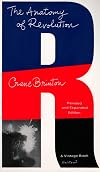
الكتاب عبارة عن دراسة تحليلية لأربعة ثورات كبرى في تاريخ العالم (الثورة الأمريكية - الفرنسية - الإنجليزية - الروسية) حاول فيه مؤلف الكتاب وضع مسار أو منهجية من الأحداث الرئيسية أو المراحل التي تسير عليها الثورات.
وبدأ ذلك بتحليل ميول مجتمع يسبق ثورة كبرى، وهو يرى أنه يجمع show more بين التوترات الاجتماعية والسياسية بسبب التدهور التدريجي لقيم المجتمع.
وقد أحسنَ جداً مترجم الكتاب -سمير الجلبي- في وضع مقدمة تحتوي فكرة هذا الكتاب تقريباً، وتشتمل على المراحل الرئيسية التي تمر بها الثورات من خلال تحليل المؤلف.
ومن الصعوبات التي تواجه قارئ هذا الكتاب: كثرة المصطلحات وأسماء الفرق والأحزاب والتوجهات .. وذكر تفصيلات عنها، تستلزم معرفة مسبقة بها من جانب القارئ .. وعدم معرفتها تسبب نوع من التشتت -لولا وجود المقدمة الجيدة- ، وتؤثر على قدر الاستفادة من الكتاب.
يَخلُص المؤلف من تحليله ذلك إلى سير أحداث ومراحل الثورة، حتى يعود النظام القديم مرة أخرى .. في هذا النص:
show less
وبدأ ذلك بتحليل ميول مجتمع يسبق ثورة كبرى، وهو يرى أنه يجمع show more بين التوترات الاجتماعية والسياسية بسبب التدهور التدريجي لقيم المجتمع.
وقد أحسنَ جداً مترجم الكتاب -سمير الجلبي- في وضع مقدمة تحتوي فكرة هذا الكتاب تقريباً، وتشتمل على المراحل الرئيسية التي تمر بها الثورات من خلال تحليل المؤلف.
ومن الصعوبات التي تواجه قارئ هذا الكتاب: كثرة المصطلحات وأسماء الفرق والأحزاب والتوجهات .. وذكر تفصيلات عنها، تستلزم معرفة مسبقة بها من جانب القارئ .. وعدم معرفتها تسبب نوع من التشتت -لولا وجود المقدمة الجيدة- ، وتؤثر على قدر الاستفادة من الكتاب.
يَخلُص المؤلف من تحليله ذلك إلى سير أحداث ومراحل الثورة، حتى يعود النظام القديم مرة أخرى .. في هذا النص:
show less

From the introduction:
This 'sociological history' explores the motivations, actors, and strategies of personage and plebes in the French Revolution. Published apparently in the early '30s, there is a willingness to seriously consider even Marxist thought that makes it hard to imagine this today getting a marquee publisher.
For the scholar, I think the extensive Bibliographic essay here in the backmatter is especially promising as a reference list. show less
... The great paradox of the French Revolution lies here: That until the fall of Robespierre in 1794 the most tender- minded were consistently the most hard-headed; the most doctrinaire, the most pliable. Historians, as a class rightly distrustful of paradox, have concluded, in spite of the evidence, that the com- bination is impossible. Royalist historians in general conclude that the revolutionists were impractical theorists, and fail to explain their success, exceptshow more
as the accidental triumph of villainy; republican historians conclude that the revolutionists were practical, far seeing men, and fail to explain either their ideology or their failure in 1794, except that the latter is always attributable to the villainy of their enemies. A true explanation must accept the facts, even though the facts are shocking to preconceived notions.
There is certainly little trace of political acumen in the extreme Right of the Assembly, and in the court party which it represented. Its ablest orator was the Abbé Maury, son of a cobbler, conservative with the interests of a self-made man, a good fighter, but utterly tactless and without any program. The Vicomte de Mira- beau, from his corpulence called Barrel Mirabeau, was an able obstructionist, especially when interrupting his brilliant brother. Outside the Assembly the queen, the king's brothers, most of the Versailles nobility formed a group with a definite aim: no con- cessions. It was a group scornful of propaganda, for the that it denied public opinion, in the modern sense, any place in very reason government. It was, of course, destined to failure from the simple fact that public opinion was already in 1789 a factor in government. Many of its members lived up to the middle-class notion of an aristocrat; that is, they were proud, haughty, dissolute, contemptuous of those immediately beneath them in the social scale. But as a class they were hardly the vicious and irresponsible tyrants revolutionary propaganda made them out. They were certainly among the most intellectual of aristocracies...
This 'sociological history' explores the motivations, actors, and strategies of personage and plebes in the French Revolution. Published apparently in the early '30s, there is a willingness to seriously consider even Marxist thought that makes it hard to imagine this today getting a marquee publisher.
For the scholar, I think the extensive Bibliographic essay here in the backmatter is especially promising as a reference list. show less

Unfortunately the narrator of this book was not to my liking, far to stilted, in fact the overwrought British accent sounded somewhat fake. In any case the content did win out and I ended up really enjoying this book. It was a great way to follow The Tudors as it filled in the period leading up to there. The fascinating thing about the middle ages is how that is the period the world as we know it today was really formed, the nations, their characters and habits all derive from here. For that show more reason I find it much more interesting than modern history, it goes back to the source of why modern history unfolded that way. There are so many facets of this period that are complete blanks for me I was happy that the book was so expansive covering the history of all civilised peoples of the middle ages. Well worth it! show less
Lists
Awards

You May Also Like


Associated Authors
Statistics
- Works
- 56
- Also by
- 5
- Members
- 1,976
- Popularity
- #13,013
- Rating
- 3.7
- Reviews
- 18
- ISBNs
- 89
- Languages
- 3
- Favorited
- 1