

Dorothy Scarborough (1878–1935)
Author of Famous Modern Ghost Stories
About the Author
Dorothy Scarborough (1878-1935) is known for her roles as a teacher, folklorist, and writer. She was an early member of the Texas Folklore Society (founded in 1910) and served a year as its president
Works by Dorothy Scarborough
Associated Works
The Best of the West: An Anthology of Classic Writing from the American West (1991) — Contributor — 285 copies, 1 review
Tagged
Common Knowledge
- Legal name
- Emily Dorothy Scarborough
- Other names
- "Aunt Dot" Scarborough
- Birthdate
- 1878-01-27
- Date of death
- 1935-11-07
- Gender
- female
- Education
- Baylor University (BA 1896; MA 1899)
University of Chicago (1906-1910)
University of Oxford (1910-1911)
Columbia University (PhD|Literature, 1917) - Nationality
- USA
- Places of residence
- Mount Carmel, Texas, USA (birth)
Sweetwater,Texas, USA
Chicago, Illinois, USA
Oxford, Oxfordshire, England, UK
New York, New York, USA (death)
Waco, Texas, USA - Burial location
- Oakwood Cemetery, Waco, Texas, USA
- Associated Place (for map)
- Texas, USA
Members
Reviews
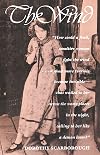
This book was pretty damn phenomenal.
Letty, young woman of 18 years has lost her mother, and with no money or near relatives to live with in her native Virginia, goes to live with her cousin and his family at a ranch near Sweetwater, TX in the 1880s. She's lived a privileged white life, with her mammy taking care of her and she's never done any hard work/labor. She comes to a bleak land devoid of any water, dust is everywhere, and the wind never ceases. She has no skills, no training, and show more no hardiness to deal with the barren land, and is incredibly sensitive to the ever persistent wind. She has to live a life she never imagined nor wanted, with skills she's never had. She's young, and naive. She's a precious doll, and she is destroyed by the land and wind that takes life, light, and cheer as it will.
The wind is just as much of a character in this book as any living, breathing person. It reminds me of A Woman in the Dunes (a fantastic film, that I adore), where the relentless elements drive a person to insanity and there's no escape from the endless torment of nature.
The fact that this book was written by a woman is wonderfully evident, and the battle between Letty and her cousin's beautiful, stereotypically strong and stoic frontierswoman wife is beautifully played, instead of becoming a pathetic cat-fight. Letty is not only feeling trapped by her life and her sex, but at odds with the one woman who might have been able to guide her through her new life.
I loved it - the stark awful landscape blasting a sensitive woman to the bone, the desperation, the hopelessness... the fatal mistakes and the constant thoughts towards what her life should have been. And the wind taking what it wants, and refusing to bow down to any will of man or woman. show less
Letty, young woman of 18 years has lost her mother, and with no money or near relatives to live with in her native Virginia, goes to live with her cousin and his family at a ranch near Sweetwater, TX in the 1880s. She's lived a privileged white life, with her mammy taking care of her and she's never done any hard work/labor. She comes to a bleak land devoid of any water, dust is everywhere, and the wind never ceases. She has no skills, no training, and show more no hardiness to deal with the barren land, and is incredibly sensitive to the ever persistent wind. She has to live a life she never imagined nor wanted, with skills she's never had. She's young, and naive. She's a precious doll, and she is destroyed by the land and wind that takes life, light, and cheer as it will.
The wind is just as much of a character in this book as any living, breathing person. It reminds me of A Woman in the Dunes (a fantastic film, that I adore), where the relentless elements drive a person to insanity and there's no escape from the endless torment of nature.
The fact that this book was written by a woman is wonderfully evident, and the battle between Letty and her cousin's beautiful, stereotypically strong and stoic frontierswoman wife is beautifully played, instead of becoming a pathetic cat-fight. Letty is not only feeling trapped by her life and her sex, but at odds with the one woman who might have been able to guide her through her new life.
I loved it - the stark awful landscape blasting a sensitive woman to the bone, the desperation, the hopelessness... the fatal mistakes and the constant thoughts towards what her life should have been. And the wind taking what it wants, and refusing to bow down to any will of man or woman. show less
This book was pretty damn phenomenal.
Letty, young woman of 18 years has lost her mother, and with no money or near relatives to live with in her native Virginia, goes to live with her cousin and his family at a ranch near Sweetwater, TX in the 1880s. She's lived a privileged white life, with her mammy taking care of her and she's never done any hard work/labor. She comes to a bleak land devoid of any water, dust is everywhere, and the wind never ceases. She has no skills, no training, and show more no hardiness to deal with the barren land, and is incredibly sensitive to the ever persistent wind. She has to live a life she never imagined nor wanted, with skills she's never had. She's young, and naive. She's a precious doll, and she is destroyed by the land and wind that takes life, light, and cheer as it will.
The wind is just as much of a character in this book as any living, breathing person. It reminds me of A Woman in the Dunes (a fantastic film, that I adore), where the relentless elements drive a person to insanity and there's no escape from the endless torment of nature.
The fact that this book was written by a woman is wonderfully evident, and the battle between Letty and her cousin's beautiful, stereotypically strong and stoic frontierswoman wife is beautifully played, instead of becoming a pathetic cat-fight. Letty is not only feeling trapped by her life and her sex, but at odds with the one woman who might have been able to guide her through her new life.
I loved it - the stark awful landscape blasting a sensitive woman to the bone, the desperation, the hopelessness... the fatal mistakes and the constant thoughts towards what her life should have been. And the wind taking what it wants, and refusing to bow down to any will of man or woman. show less
Letty, young woman of 18 years has lost her mother, and with no money or near relatives to live with in her native Virginia, goes to live with her cousin and his family at a ranch near Sweetwater, TX in the 1880s. She's lived a privileged white life, with her mammy taking care of her and she's never done any hard work/labor. She comes to a bleak land devoid of any water, dust is everywhere, and the wind never ceases. She has no skills, no training, and show more no hardiness to deal with the barren land, and is incredibly sensitive to the ever persistent wind. She has to live a life she never imagined nor wanted, with skills she's never had. She's young, and naive. She's a precious doll, and she is destroyed by the land and wind that takes life, light, and cheer as it will.
The wind is just as much of a character in this book as any living, breathing person. It reminds me of A Woman in the Dunes (a fantastic film, that I adore), where the relentless elements drive a person to insanity and there's no escape from the endless torment of nature.
The fact that this book was written by a woman is wonderfully evident, and the battle between Letty and her cousin's beautiful, stereotypically strong and stoic frontierswoman wife is beautifully played, instead of becoming a pathetic cat-fight. Letty is not only feeling trapped by her life and her sex, but at odds with the one woman who might have been able to guide her through her new life.
I loved it - the stark awful landscape blasting a sensitive woman to the bone, the desperation, the hopelessness... the fatal mistakes and the constant thoughts towards what her life should have been. And the wind taking what it wants, and refusing to bow down to any will of man or woman. show less
Recently I watched a clip of the choreographer Arthur Pita rehearsing Royal Ballet dancers for his new work, "The Wind". (https://www.roh.org.uk/productions/the-wind-by-arthur-pita). It's based on this controversial novel, published in 1925 and subsequently filmed in 1928 with Lillian Gish. The controversy over the novel arose because of the portrayal of the Sweetwater, Texas, area during a drought in the late 19th century. The publisher, in a poorly planned PR stunt, released it show more anonymously, leading Southern readers to assume spiteful Yankee authorship, when in fact Scarborough was Texas-born and -raised and had spent time in the Sweetwater area.
Letty Mason, an 18-year old Virginia girl raised in very genteel circumstances, is hustled off to relatives in west Texas after she is left destitute. It's a nightmare. The wind blows incessantly, sand gets into everything, and she is not really wanted in her cousin's small, poorly-appointed cabin, where even one extra mouth to feed is a burden. As she begins to go mad from loneliness and frustration, Letty is courted by two very rough cowboys, neither of whom she can imagine marrying. Instead, she dreams of returning to Virginia to find her white knight, or at least of making a connection with the handsome rancher she met on the train and who promised to stay in touch. The drought goes on for the many months the book covers, and Letty's life and future become more and more bleak.
That sounds really depressing, I know. In fact, I wouldn't have read the book based on such a description. However, the fact that it interested Pita so much made me take notice, and it is considered by some to be a classic of Texas literature. The writing is focused on Letty's mental downfall, and the wind is easily the second most important character. In her imagination it is an enemy that taunts her, reading her mind and taking pleasure in destroying all hope she can muster. In the end I'd have to say I found the book pretty interesting, and I'm glad I read it. show less
Letty Mason, an 18-year old Virginia girl raised in very genteel circumstances, is hustled off to relatives in west Texas after she is left destitute. It's a nightmare. The wind blows incessantly, sand gets into everything, and she is not really wanted in her cousin's small, poorly-appointed cabin, where even one extra mouth to feed is a burden. As she begins to go mad from loneliness and frustration, Letty is courted by two very rough cowboys, neither of whom she can imagine marrying. Instead, she dreams of returning to Virginia to find her white knight, or at least of making a connection with the handsome rancher she met on the train and who promised to stay in touch. The drought goes on for the many months the book covers, and Letty's life and future become more and more bleak.
That sounds really depressing, I know. In fact, I wouldn't have read the book based on such a description. However, the fact that it interested Pita so much made me take notice, and it is considered by some to be a classic of Texas literature. The writing is focused on Letty's mental downfall, and the wind is easily the second most important character. In her imagination it is an enemy that taunts her, reading her mind and taking pleasure in destroying all hope she can muster. In the end I'd have to say I found the book pretty interesting, and I'm glad I read it. show less
Herein, we have a young gal, Letty, from Virginia headed by train to Sweetwater, Texas, to live with her cousin and his family. She is not at all ready for life on the plain. Definitely a fish-out-of-water! And the wind and the sand drive her mad! And she pines for her old life, and hates her new one. Pobrecita.
There's a lot to like in this book. The dialogue, especially the cowboys', is wonderful to read! And the desolation of Letty's situation is expertly described! I also got a kick out show more of seeing a little bit of the origin of a favorite song of mine, “Sinnerman” by Nina Simone, in the reminiscing brought about from an old negro spiritual Letty was familiar with. All-in-all, this is a pretty good western!
My negative feedback would be that I felt like I was hit over the head a bit too much with Letty's sadness of her situation. Soooo many paragraphs about life back in Virginia, contrasted with life in Texas. Too much for my taste. And I never liked Letty, so I never really felt that bad for her. For me, she was less a victim, and more a spoiled, privileged pain in the rear.
Still, I'm glad I read it, and I think any fan of the Western genre would be glad too! show less
There's a lot to like in this book. The dialogue, especially the cowboys', is wonderful to read! And the desolation of Letty's situation is expertly described! I also got a kick out show more of seeing a little bit of the origin of a favorite song of mine, “Sinnerman” by Nina Simone, in the reminiscing brought about from an old negro spiritual Letty was familiar with. All-in-all, this is a pretty good western!
My negative feedback would be that I felt like I was hit over the head a bit too much with Letty's sadness of her situation. Soooo many paragraphs about life back in Virginia, contrasted with life in Texas. Too much for my taste. And I never liked Letty, so I never really felt that bad for her. For me, she was less a victim, and more a spoiled, privileged pain in the rear.
Still, I'm glad I read it, and I think any fan of the Western genre would be glad too! show less
You May Also Like


Associated Authors
Statistics
- Works
- 14
- Also by
- 1
- Members
- 259
- Popularity
- #88,670
- Rating
- 3.7
- Reviews
- 12
- ISBNs
- 75
- Languages
- 2