
William Maxwell (1) (1908–2000)
Author of So Long, See You Tomorrow
For other authors named William Maxwell, see the disambiguation page.
About the Author
Born in Lincoln, Illinois in 1908, William Maxwell is one of America's more prominent writers. He is the recipient of numerous awards including the National Book Critics Circle Award (1994), and the American Book Award (1982) for his novel "So Long, See You Tomorrow." Maxwell's fiction has been show more described as nostalgic. Most of his work takes place in simpler, gentler times in the small towns of the American Midwest. Two of Maxwell's novels, "They Came Like Swallows" (1937) and "So Long, See You Tomorrow" (1980), deal with characters who lose relatives in the influenza epidemic of 1918. Maxwell's own mother died in the epidemic when he was ten years old. Maxwell published his first novel, "Bright Center of Heaven," in 1934. He moved to New York City in 1936 and was hired by the New Yorker. His years as an editor there, 1936 to 1976, coincided with what many believe are the magazine's finest. This was the era that saw the publication of the works of many accomplished writers, such as J. D. Salinger, Eudora Welty, John Updike, and Mary McCarthy in the New Yorker's pages. Maxwell has published six novels, several collections of short stories, a family history, and numerous book reviews. He served as president of the National Institute of Arts and letters from 1969 to 1972. William Maxwell has been married for over 50 years to the former Emily Noyes. They met at the New Yorker when she applied for a job. The couple has two daughters. (Bowker Author Biography) show less
Works by William Maxwell
The Element of Lavishness: Letters of William Maxwell and Sylvia Townsend Warner, 1938-1978 (2000) 162 copies, 1 review
Associated Works
The Art of the Tale: An International Anthology of Short Stories (1986) — Contributor — 381 copies, 3 reviews
New York Stories [Everyman's Library Pocket Classics] (2011) — Contributor, some editions — 198 copies, 5 reviews
Literary Traveller: An Anthology of Contemporary Short Fiction (1994) — Contributor — 55 copies, 1 review
Food Tales: A Literary Menu of Mouthwatering Masterpieces (1992) — Contributor — 41 copies, 1 review
Antaeus No. 64/65, Spring/Autumn 1990 - Twentieth Anniversary Issue (1990) — Contributor — 14 copies
32 Współczesne Opowiadania Amerykańskie - Tom I — Contributor — 1 copy
Tagged
Common Knowledge
- Legal name
- Iggulden, Conn
- Other names
- IGGULDEN, Conn
MAXWELL, William - Birthdate
- 1908-08-16
- Date of death
- 2000-07-31
- Gender
- male
- Education
- University of Illinois
Harvard University - Occupations
- fiction editor (The New Yorker)
short story writer
novelist - Organizations
- The New Yorker (fiction editor for 40 years)
American Academy of Arts and Letters (Literature, 1963) - Awards and honors
- Brandeis Creative Arts Medal
Howells Medal of the American Academy of Arts and Letters
PEN/Malamud Award (1995)
Gold Medal, American Academy of Arts and Letters (1995)
American Academy of Arts and Letters Academy Award (Literature, 1958) - Relationships
- Salinger, J. D. (friend)
Warner, Sylvia Townsend (friend) - Nationality
- USA
- Birthplace
- Lincoln, Illinois, USA
- Places of residence
- Lincoln, Illinois, USA
New York, New York, USA - Place of death
- New York, New York, USA
- Burial location
- River View Cemetery, Portland, Multnomah County, Oregon, USA. Plot: Sec 123, Lot 76, Between Graves 1&2
- Associated Place (for map)
- USA
Members
Reviews
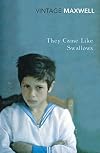
They Came Like Swallows follows a family during the 1918 flu epidemic in Illinois. As in many families, the mother is the heart and center. Maxwell tells the story of her family's relationship to her in a linear succession of time, first from the perspective of her younger son, Bunny, 8 years old, then the older son, Robert, 15 years old, and finally the father, her husband, James.
With writing that is gentle and sensitive -- Maxwell's style -- we get to know how each uniquely loves and show more uniquely needs her. The title comes from these lines from a W.B. Yeats poem:
The story fits so well that I now wonder if he took those lines and built his novel upon it.
Currently living through the pandemic of 2020 (hoping I can continue to live through it), I was keenly aware of similarities, like how school and churches were closed, and how travel was a source of high risk for infection. I closed the book with an even deeper sadness for the tragedy that is Covid-19, and an overwhelming sense of how it also has surely taken away hearts and compass-points of so very many ordinary families. show less
With writing that is gentle and sensitive -- Maxwell's style -- we get to know how each uniquely loves and show more uniquely needs her. The title comes from these lines from a W.B. Yeats poem:
They came like swallows and like swallows went,
And yet a woman's powerful character
Could keep a swallow to its first intent;
And half a dozen in formation there,
That seemed to whirl upon a compass-point,
Found certainty upon the dreaming air...
The story fits so well that I now wonder if he took those lines and built his novel upon it.
Currently living through the pandemic of 2020 (hoping I can continue to live through it), I was keenly aware of similarities, like how school and churches were closed, and how travel was a source of high risk for infection. I closed the book with an even deeper sadness for the tragedy that is Covid-19, and an overwhelming sense of how it also has surely taken away hearts and compass-points of so very many ordinary families. show less
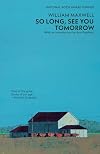
What a beautiful but sad book.
What we, or at any rate what I, refer to confidently as memory--meaning a moment, a scene, a fact that has been subjected to a fixative and thereby rescued from oblivion--is really a form of storytelling that goes on continually in the mind and often changes with the telling. Too many conflicting emotional interests are involved for life ever to be wholly acceptable, and possibly it is the work of the storyteller to rearrange things so that they conform to this show more end. In any case, in talking about the past we lie with every breath we draw.
So speaks out narrator as he sets out to recreate the end of his childhood. The last gasping breath of an unhappy lad's, I think innocence is too light-hearted a term for it, ignorance of the full measure of unhappiness that others can bear in addition to himself, even if he waits a half-century to get to the meat of the pain:
Whether they are part of a home or home is a part of them is not a question children are prepared to answer. Having taken away the dog, take away the kitchen–the smell of something good in the oven for dinner. Also the smell of washing day, of wool drying in the wooden rack. Of ashes. Of soup simmering on the stove. Take away the patient old horse waiting by the pasture fence. Take away the chores that kept him busy from the time he got home from school until they sat down to supper. Take away the early-morning mist, the sound of crows quarreling in the treetops.
His work clothes are still hanging on a nail beside the door of his room, but nobody puts them on or takes them off. Nobody sleeps in his bed. Or reads the broken-back copy of Tom Swift and His Flying Machine. Take that away too, while you are at it.
Take away the pitcher and bowl, both of them dry and dusty. Take away the cow barn where the cats, sitting all in a row, wait with their mouths wide open for somebody to squirt milk down their throats. Take away the horse barn too–the smell of hay and dust and horse piss and old sweat-stained leather, and the rain beating down on the plowed field beyond the door. Take all this away and what have you done to him? In the face of a deprivation so great, what is the use of asking him to go on being the boy he was. He might as well start life over again as some other boy instead.
"Cletus" brought to life as an Einsteinian thought experiment, a boy whose remembered existence is defined by a murder committed or a suicide perpetrated or both. Or neither?
But let me say this. My confusion about this issue is paralleled by the narrator's confusion about his own place, his very existence in the world of this little prairie farming town. His father isn't much for feelings, and he's a "sissy" and an artistic child...except for music, the art form his father loves and he knowingly resists learning as his only somewhat outward act of rebellion.
As he turned away I had the feeling he had washed his hands of me. Was I not the kind of little boy he wanted to have?
What strikes me as hilarious, in a not-funny-at-all way, is:
We were both creatures of the period. I doubt if the heavy-businessman-father-and-the-oversensitive-artistic-son syndrome exists anymore. Fathers have grown sensitive and kiss their grown sons when they feel like it, and who knows what oversensitive is, considering all there is to be sensitive to.
Well now, this novella having a publication date of 1980, all I can think is that Maxwell intended this as sly humor. Or else he was deaf and blind.
Sly humor it is.
And it's of a piece with the Maxwellian phrases that abound in this book. It's always so tempting to rush to the Goodreads quotes page and add...almost every line he writes. Retyping the entire book being, then, a real temptation, I add no quotes to the ones already found there. I rely on the mathematical certainty that all of us together are smarter than any one of us individually. Let the hive mind decide which of these sentences are crucial, which best illuminate Maxwell's writerly chops as well as his storyteller's acumen.
But the title of this review gives me away. I want to add something to the quotes page. I can't, though, because even I the "oh-so-what-about-spoilers" King-Emperor feel the last two pages of the story can't be excerpted without making the point of reading the book evaporate.
It is damned near heartbreaking, what those pages say and what it means. I was perfectly glad to read this book, and rate it close to four stars. Then the ending hit me with The Walking Dead's Negan's baseball bat.
Maxwell wrote a good little story and a perfect ending. That deserves recognition. Read it, please, it won't take long and it will give you something beautiful in return. show less
What we, or at any rate what I, refer to confidently as memory--meaning a moment, a scene, a fact that has been subjected to a fixative and thereby rescued from oblivion--is really a form of storytelling that goes on continually in the mind and often changes with the telling. Too many conflicting emotional interests are involved for life ever to be wholly acceptable, and possibly it is the work of the storyteller to rearrange things so that they conform to this show more end. In any case, in talking about the past we lie with every breath we draw.
So speaks out narrator as he sets out to recreate the end of his childhood. The last gasping breath of an unhappy lad's, I think innocence is too light-hearted a term for it, ignorance of the full measure of unhappiness that others can bear in addition to himself, even if he waits a half-century to get to the meat of the pain:
Whether they are part of a home or home is a part of them is not a question children are prepared to answer. Having taken away the dog, take away the kitchen–the smell of something good in the oven for dinner. Also the smell of washing day, of wool drying in the wooden rack. Of ashes. Of soup simmering on the stove. Take away the patient old horse waiting by the pasture fence. Take away the chores that kept him busy from the time he got home from school until they sat down to supper. Take away the early-morning mist, the sound of crows quarreling in the treetops.
His work clothes are still hanging on a nail beside the door of his room, but nobody puts them on or takes them off. Nobody sleeps in his bed. Or reads the broken-back copy of Tom Swift and His Flying Machine. Take that away too, while you are at it.
Take away the pitcher and bowl, both of them dry and dusty. Take away the cow barn where the cats, sitting all in a row, wait with their mouths wide open for somebody to squirt milk down their throats. Take away the horse barn too–the smell of hay and dust and horse piss and old sweat-stained leather, and the rain beating down on the plowed field beyond the door. Take all this away and what have you done to him? In the face of a deprivation so great, what is the use of asking him to go on being the boy he was. He might as well start life over again as some other boy instead.
"Cletus" brought to life as an Einsteinian thought experiment, a boy whose remembered existence is defined by a murder committed or a suicide perpetrated or both. Or neither?
But let me say this. My confusion about this issue is paralleled by the narrator's confusion about his own place, his very existence in the world of this little prairie farming town. His father isn't much for feelings, and he's a "sissy" and an artistic child...except for music, the art form his father loves and he knowingly resists learning as his only somewhat outward act of rebellion.
As he turned away I had the feeling he had washed his hands of me. Was I not the kind of little boy he wanted to have?
What strikes me as hilarious, in a not-funny-at-all way, is:
We were both creatures of the period. I doubt if the heavy-businessman-father-and-the-oversensitive-artistic-son syndrome exists anymore. Fathers have grown sensitive and kiss their grown sons when they feel like it, and who knows what oversensitive is, considering all there is to be sensitive to.
Well now, this novella having a publication date of 1980, all I can think is that Maxwell intended this as sly humor. Or else he was deaf and blind.
Sly humor it is.
And it's of a piece with the Maxwellian phrases that abound in this book. It's always so tempting to rush to the Goodreads quotes page and add...almost every line he writes. Retyping the entire book being, then, a real temptation, I add no quotes to the ones already found there. I rely on the mathematical certainty that all of us together are smarter than any one of us individually. Let the hive mind decide which of these sentences are crucial, which best illuminate Maxwell's writerly chops as well as his storyteller's acumen.
But the title of this review gives me away. I want to add something to the quotes page. I can't, though, because even I the "oh-so-what-about-spoilers" King-Emperor feel the last two pages of the story can't be excerpted without making the point of reading the book evaporate.
It is damned near heartbreaking, what those pages say and what it means. I was perfectly glad to read this book, and rate it close to four stars. Then the ending hit me with The Walking Dead's Negan's baseball bat.
Maxwell wrote a good little story and a perfect ending. That deserves recognition. Read it, please, it won't take long and it will give you something beautiful in return. show less
"Authentic" is a good one-word description of William Maxwell's So Long, See You Tomorrow--in part because the narrator's grief at losing his mother matches Maxwell's personal experience; and partly because its prose seems not to mediate between the story and the reader's apprehension of it. To read this novel is to be in touch with something honest and real, no matter how much or many of its events, thoughts, and utterances Maxwell has invented or embellished. Most importantly, So Long, See show more You Tomorrow gives us what we want, I believe, from every novel: emotional truth.
The image that will live for me always is that of a ten-year-old boy walking the floors with his father, his arm around the man's waist, every night after dinner. What are they looking for, the boy's mother, the man's wife having died? What problem can they resolve, what question answer by performing this rote passage from living room to front hall to library and back, or the other way 'round? Minds filled to distraction yet unthinking; bodies numb, hearts broken.
Grief is a powerful feeling. It is not pleasant but it is pure. Uncomplicated, unqualified. In writing this novel, Maxwell discovered a way to make a secret sharer of this most private of emotions. The narrator's abiding interest in Cletus and the circumstances leading to his father's suicide are a brave attempt by a person in pain to understand a similar pain felt by other. Perhaps by imagining Cletus's thoughts and feelings at losing the life he knew--his family, his home and way of living, finally a parent--Maxwell might better understand his own response to his mother's untimely death. "Other children could have borne it, have borne it," he writes almost at the end. "My older brother did, somehow. I couldn't." It seems impertinent, almost inhuman, to task Maxwell by asking him why he could not bear his mother's death--and yet, he seems to invite the reader to ask this question.
Did Cletus bear it? How? Maxwell doesn't know, exactly, having lost touch with his almost-friend, and then, more than a year later in a large high school in Chicago, having "done something I was ashamed of afterward"; that is, having failed to speak to Cletus upon encountering him unexpectedly in a school corridor, even just to tell him that his great secret was safe because also unspoken. Physically, Cletus has endured. The state of his mind, the nature of his feelings, Maxwell can only imagine. At that point, the boys seem to merge. Maxwell, undone as his father also was by loss (until the latter remarried), cannot believe in a suffering that is less than his own.
Just a few years previously, these two boys had played on the scaffolding at the construction site of Maxwell's family's new house. With the rooms framed-out and the plaster lathe not yet done, it was possible to pass from room to room by walking through "walls." No room could contain them; every entrance had many exists. Such magical comings and goings are not available in life. In life, a boy passes through a door only to find that he has entered a room he has not wanted to enter: the room where his mother dies; the room where his father kills a man, the man having taken away the father's wife; the room where his father kills himself with a pistol-shot, his body then dragged underwater by a heavy weight bound to waist and neck with baling wire. Life is "in itself and forever shipwreck."
Eighty-some years ago, James T. Farrell wrote a novel titled, A World I Never Made, in which a boy struggles to survive, to become himself and have something of his own life, in a world already established and fraught and in large part ruined. In So Long, See You Tomorrow, Maxwell and his not-so-secret sharer Cletus find themselves placed by circumstance in predicaments no one would choose. By not speaking to Cletus the last time he had the chance, Maxwell does not learn how his friend endured. Even before, in the unwalled house, "I didn't tell Cletus about my shipwreck ... and he didn't tell me about his." Is trauma estranging, even when it is mutual? Or are boys (and men) unwilling (or afraid) to confess weakness? By reading this novel, we witness one attempt to turn weakness into strength and dissolve grief in literary art--the one means Maxwell has found to free himself from his childhood's cruel deprivation and "by the grace of God lead his own life, undestroyed by what was not his doing."
~JL show less
The image that will live for me always is that of a ten-year-old boy walking the floors with his father, his arm around the man's waist, every night after dinner. What are they looking for, the boy's mother, the man's wife having died? What problem can they resolve, what question answer by performing this rote passage from living room to front hall to library and back, or the other way 'round? Minds filled to distraction yet unthinking; bodies numb, hearts broken.
Grief is a powerful feeling. It is not pleasant but it is pure. Uncomplicated, unqualified. In writing this novel, Maxwell discovered a way to make a secret sharer of this most private of emotions. The narrator's abiding interest in Cletus and the circumstances leading to his father's suicide are a brave attempt by a person in pain to understand a similar pain felt by other. Perhaps by imagining Cletus's thoughts and feelings at losing the life he knew--his family, his home and way of living, finally a parent--Maxwell might better understand his own response to his mother's untimely death. "Other children could have borne it, have borne it," he writes almost at the end. "My older brother did, somehow. I couldn't." It seems impertinent, almost inhuman, to task Maxwell by asking him why he could not bear his mother's death--and yet, he seems to invite the reader to ask this question.
Did Cletus bear it? How? Maxwell doesn't know, exactly, having lost touch with his almost-friend, and then, more than a year later in a large high school in Chicago, having "done something I was ashamed of afterward"; that is, having failed to speak to Cletus upon encountering him unexpectedly in a school corridor, even just to tell him that his great secret was safe because also unspoken. Physically, Cletus has endured. The state of his mind, the nature of his feelings, Maxwell can only imagine. At that point, the boys seem to merge. Maxwell, undone as his father also was by loss (until the latter remarried), cannot believe in a suffering that is less than his own.
Just a few years previously, these two boys had played on the scaffolding at the construction site of Maxwell's family's new house. With the rooms framed-out and the plaster lathe not yet done, it was possible to pass from room to room by walking through "walls." No room could contain them; every entrance had many exists. Such magical comings and goings are not available in life. In life, a boy passes through a door only to find that he has entered a room he has not wanted to enter: the room where his mother dies; the room where his father kills a man, the man having taken away the father's wife; the room where his father kills himself with a pistol-shot, his body then dragged underwater by a heavy weight bound to waist and neck with baling wire. Life is "in itself and forever shipwreck."
Eighty-some years ago, James T. Farrell wrote a novel titled, A World I Never Made, in which a boy struggles to survive, to become himself and have something of his own life, in a world already established and fraught and in large part ruined. In So Long, See You Tomorrow, Maxwell and his not-so-secret sharer Cletus find themselves placed by circumstance in predicaments no one would choose. By not speaking to Cletus the last time he had the chance, Maxwell does not learn how his friend endured. Even before, in the unwalled house, "I didn't tell Cletus about my shipwreck ... and he didn't tell me about his." Is trauma estranging, even when it is mutual? Or are boys (and men) unwilling (or afraid) to confess weakness? By reading this novel, we witness one attempt to turn weakness into strength and dissolve grief in literary art--the one means Maxwell has found to free himself from his childhood's cruel deprivation and "by the grace of God lead his own life, undestroyed by what was not his doing."
~JL show less
I wish every book I read was as moving and thoughtful as this one. Beyond it being a memoir (of sorts), it is told by one who has lived and observed and been immersed in words for a long time. (Maxwell was in his 70s when he wrote this.) From the first pages I felt at ease, being in well aged hands.
The structure is unique. Written part as memoir in first person about his own life; part, for lack of a better word, as investigation; and then a long switch to third person when Maxwell imagines show more the lives affected by this incident, including all the slow tragedies that led up to it. (Even Trixie, the dog, is effected and my heart ached for her.) Remarkably, this mishmash we are warned about in school, worked.
And the writing, oh the writing. I could live for the rest of my life on this kind of lyrical, dead-eye accurate, evocative writing. I wanted to find a few sentences to share the feeling here, but that wouldn't work. It is passages that flow, build, and then crescendo, ending with an intake of breath, "Oh yes. Life is like that," (to paraphrase a bit from poet Elizabeth Bishop).
This book has prompted a new bookshelf tag: to re-read. show less
The structure is unique. Written part as memoir in first person about his own life; part, for lack of a better word, as investigation; and then a long switch to third person when Maxwell imagines show more the lives affected by this incident, including all the slow tragedies that led up to it. (Even Trixie, the dog, is effected and my heart ached for her.) Remarkably, this mishmash we are warned about in school, worked.
And the writing, oh the writing. I could live for the rest of my life on this kind of lyrical, dead-eye accurate, evocative writing. I wanted to find a few sentences to share the feeling here, but that wouldn't work. It is passages that flow, build, and then crescendo, ending with an intake of breath, "Oh yes. Life is like that," (to paraphrase a bit from poet Elizabeth Bishop).
This book has prompted a new bookshelf tag: to re-read. show less
Lists
Five star books (3)
1980 great books (1)
Favourite Books (1)
Deathreads (1)
Americans Abroad (1)
Awards


You May Also Like


Associated Authors
Statistics
- Works
- 28
- Also by
- 21
- Members
- 5,753
- Popularity
- #4,287
- Rating
- 4.0
- Reviews
- 177
- ISBNs
- 137
- Languages
- 11
- Favorited
- 30