
James Q. Wilson (1931–2012)
Author of The Moral Sense
About the Author
James Q. Wilson is the former James Collins Professor of Management at UCLA and Shattuck Professor of Government at Harvard.
Works by James Q. Wilson
Bureaucracy: What Government Agencies Do And Why They Do It (Basic Books Classics) (1989) 338 copies, 1 review
Varieties of police behavior : the management of law and order in eight communities (1968) 27 copies
The Metropolitan enigma; inquiries into the nature and dimensions of America's urban crisis (1968) 27 copies
Just a Piece of Paper: Divorce Reform and the Undermining of Marriage (Choice in Welfare) (1995) 3 copies
Metropolitan Enigma, The: Inquiries into the Nature and Dimensions of America's "Urban Crisis" (1967) 2 copies
Bundle: American Government: Institutions and Policies, 14th CourseMate, 1 term (6 months) Access Code (2014) 2 copies
Crime in America 1 copy
American Government With Cd 9th Edition Plus Lasser Perspectives In American Politics 4th Edition (2004) 1 copy
Associated Works
Life, Liberty, and the Pursuit of Happiness: Ten Years of the Claremont Review of Books (2012) — Contributor — 17 copies
Tagged
Common Knowledge
- Canonical name
- Wilson, James Q.
- Legal name
- Wilson, James Quinn
- Birthdate
- 1931-05-27
- Date of death
- 2012-03-02
- Gender
- male
- Education
- University of Redlands (AB)
University of Chicago (MA|Political Science)
University of Chicago (PhD|Political Science) - Occupations
- political scientist
professor - Organizations
- Boston College
Pepperdine University
University of California, Los Angeles
Harvard University - Awards and honors
- Presidential Medal of Freedom (2003)
Francis Boyer Award (1997) - Nationality
- USA
- Birthplace
- Denver, Colorado, USA
- Places of residence
- Long Beach, California, USA
North Andover, Massachusetts, USA - Place of death
- Boston, Massachusetts, USA
- Associated Place (for map)
- USA
Members
Reviews
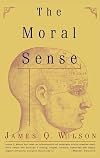
I had hoped this book would either be 1) a formidable response to situationalist ethical perspectives, or 2) kind of a light-reading G.E. Moore, or 3) something altogether new and exciting. It was anything but these. Wilson's moral/psychological survey bears all the lesser qualities of early enlightenment ethical theories. It is frustratingly narrowminded in its assumptions about what is universal in human thought and experience, overly self-assured and under-critical, and too quick to show more assert that such and such must be the case after striking down the other option in some shortsighted false dichotomy. Yet, being altogether conservative, it bears few insights not more vividly present in those limited works of enlightenment rationalism. Wilson's only seems to me to respond to his opponents' positions adequately if one only listens to superficial interpretations of those ethical systems. Reading this book taught me little, and meaningfully altered my concept of ethics--and therefore behavior--even less. I was really disappointed by the lack of rigor, cogency, and ingenuity. The book is not awful, but a work of comparable magnitude could have been written by just about any armchair philosopher with a yen to write down his thoughts--and I wonder if it might have then been more brief and more interesting. show less
Bumped into Wilson during a couple of reads of Jonathan Sacks and Stephen Carter. Since I think highly of the latter two, I thought I might like him. Glad I was right.
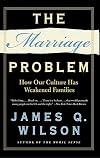
Some people claim that this book is anti-feminist. I wouldn't really call it that. I would say that the stats (especially 20 years ago) just didn't point in the direction that the feminists wanted. And the research is quite thorough. He doesn't really just look at one side. He always looks at both sides and then provides the show more most recent or most solidly supported scholarly research. The book is definitely dated(updating the stats on Hispanic culture may be needed) but, when compared with more recent work like [b:Marriage and Caste in America: Separate and Unequal Families in a Post-Marital Age|773464|Marriage and Caste in America Separate and Unequal Families in a Post-Marital Age|Kay S. Hymowitz|https://i.gr-assets.com/images/S/compressed.photo.goodreads.com/books/1348633250i/773464._SY75_.jpg|759515], you can see where we've ended up.
However, where Wilson succeeds in comparison to the latter is in his answer to the "why" question. Hymowitz does a good job explaining what, and how, and a potential solution, but Wilson really delves into the reasoning behind current actions and explores the history of marriage in Western, Eastern, and Southern cultures. I also loved his treatment of racism and its effects.
Worth the read. Gives me higher hopes for his other books. show less
Some people claim that this book is anti-feminist. I wouldn't really call it that. I would say that the stats (especially 20 years ago) just didn't point in the direction that the feminists wanted. And the research is quite thorough. He doesn't really just look at one side. He always looks at both sides and then provides the show more most recent or most solidly supported scholarly research. The book is definitely dated(updating the stats on Hispanic culture may be needed) but, when compared with more recent work like [b:Marriage and Caste in America: Separate and Unequal Families in a Post-Marital Age|773464|Marriage and Caste in America Separate and Unequal Families in a Post-Marital Age|Kay S. Hymowitz|https://i.gr-assets.com/images/S/compressed.photo.goodreads.com/books/1348633250i/773464._SY75_.jpg|759515], you can see where we've ended up.
However, where Wilson succeeds in comparison to the latter is in his answer to the "why" question. Hymowitz does a good job explaining what, and how, and a potential solution, but Wilson really delves into the reasoning behind current actions and explores the history of marriage in Western, Eastern, and Southern cultures. I also loved his treatment of racism and its effects.
Worth the read. Gives me higher hopes for his other books. show less

This is a lucid work of social science that actually illuminates such topics as gender differences, family dynamics, the origins of our moral sentiments, and why the human animal is the way he or she is. The author argues that the daily discourse of ordinary people is permeated with moral references and that these concerns derive from a moral nature that is part of our humanity. We are born neither wicked nor good Wilson argues. Rather we are born to be social, and this is what gives decency show more a fighting chance. show less
This book took me forever... not because it was terrible, but because it's impossible to skim and I kept having to reread sections when I picked it up every other day(reading with a newborn who won't nap is hard!).
Wilson makes some solid points, both scientifically and philosophically. We're not talking religion here-- simply nature vs nurture. I learned a lot about nature but also relearned much of what I knew about Kant, Rousseau, Hume, Locke, Aristotle, etc. I suppose that's why I liked show more it.
I specifically committed to pick up Adam Smith at least once in my life(Humanities excerpts notwithstanding). show less
Wilson makes some solid points, both scientifically and philosophically. We're not talking religion here-- simply nature vs nurture. I learned a lot about nature but also relearned much of what I knew about Kant, Rousseau, Hume, Locke, Aristotle, etc. I suppose that's why I liked show more it.
I specifically committed to pick up Adam Smith at least once in my life(Humanities excerpts notwithstanding). show less
Awards


You May Also Like


Associated Authors
Statistics
- Works
- 52
- Also by
- 8
- Members
- 1,845
- Popularity
- #13,950
- Rating
- 3.9
- Reviews
- 10
- ISBNs
- 167
- Languages
- 4
- Favorited
- 2