
Ali Shariati (1933–1977)
Author of On the Sociology of Islam: Lectures
About the Author
Image credit: Dr. Ali Shariati By Unknown author - http://drshariati.org/media.asp?page1=1&show=9, Public Domain, https://commons.wikimedia.org/w/index.php?curid=10030173
Works by Ali Shariati
هبوط در كوير /&#٬٢٠٠ن؛ 5 copies
حج 4 copies
İslam ve Sınıfsal Yapı 4 copies
النباهة و الاستحمار 3 copies
پدر، مادر، ما متهمیم 2 copies
مذهب علیه مذهب 2 copies
تشیع علوی، تشیع صفوی 2 copies
مسئولیت شیعه بودن 2 copies
نیایش 2 copies
انسان، مارکسیسم، اسلام 2 copies
Dua 2 copies
Medeniyet ve Modernizm 2 copies
Art: Awaiting the saviour 2 copies
هنر 2 copies
RAVESHE SHENAKHTE ESLAM 2 copies
ENSAN VA ESLAM 2 copies
ENTEZAR MAZ'HABE ETERAZ 2 copies
AZ KOJA AGHAZ KONIM? 2 copies
Ali Şiası Safevi Şiası 1 copy
ALI, MAKTAB, VAHDAT, EDALAT 1 copy
İran Ve İslam 1 copy
Kavramlar Sözlüğü 1 copy
Biz Ve İkbal 1 copy
PEDAR, MADAR, MA MOTAHAMIM 1 copy
ALI, TANHAST 1 copy
Selection and/or Election 1 copy
FARHANG VA IDEOLOZHI 1 copy
Medeniyet Tarihi - I 1 copy
ALI, ENSANE TAMAM 1 copy
TAMADON VA TAJADOD 1 copy
MAZ-HAB ALEYHE MAZ-HAB 1 copy
MASHIN DAR ESARATE MASHINISM 1 copy
BAZGASHT BE KHISHTAN VA NIYAZ-HAYE ENSANE EMROUZ KONFERANS DAR DANESHGAHE JONDI-SHAPOURE AHVAZ 1 copy
الشهادة 1 copy
بناء الذات الثورية 1 copy
اجتهاد و نظریه انقلاب دائمی 1 copy
NAMEH-EY BE PESARAM 1 copy
YAD VA YAD-AVARAN 1 copy
Biz ve İkbal 1 copy
یاد و یادآوران 1 copy
ABUZAR QAFARI 1 copy
امت و امامت 1 copy
چهار زندان انسان 1 copy
جهان بینی 1 copy
درسهای اسلام شناسی 1 copy
انسان و اسلام قسمت اول 1 copy
ماشین در اسارت ماشینیسم 1 copy
پدر! مادر! ما مُتّهمیم 1 copy
هنر 1 copy
خودآگاهی استحمار 1 copy
ابوذر 1 copy
حج 1 copy
ما و اقبال 1 copy
با مخاطب های آشنا 1 copy
قرن ما در جستجوی علی 1 copy
هنر برای موعود 1 copy
مسئولیت شیعه بودن 1 copy
SHEHADAT 1 copy
دفترهای خاکستری: کتاب احساس 1 copy
زن در چشم و دل محمد ص 1 copy
مکتب تعلیم و تربیت اسلامی 1 copy
پدر، مادر ما متهمیم 1 copy
علی حقیقتی بر گونه اساطیر 1 copy
FALSAFEYE NIYAYESH 1 copy
بازگشت 1 copy
امت و امامت 1 copy
MASOULIYATE SHIYEH BOODAN 1 copy
اسلام شناسی ۱ 1 copy
فاطمه فاطمه است 1 copy
ابوذر 1 copy
انسان و اسلام 1 copy
انتظار مذهب اعتراض 1 copy
قاسطین مارقین ناکثین 1 copy
ما و اقبال 1 copy
نیایش 1 copy
دوست داشتن از عشق برتر است 1 copy
Tagged
Common Knowledge
- Birthdate
- 1933-11-23
- Date of death
- 1977-06-19
- Gender
- male
- Nationality
- Iran
- Burial location
- Syria
Members
Reviews
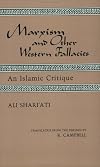
I was introduced to Ali Shariati as a sociologist and intellectual of pre-revolutionary Iran. His impact was pervasive enough to produce Urdu translations of his work in Pakistan, so I was just curious to know how a sociologist could become as popular as Shariati was.
After reading this text, I am not sure I can answer that question, but what I can express is my utter disappointment with this text. This is a dull, basic reading of "Western" philosophy, and its dismissiveness should have been show more obvious to me by the title itself, but I was expecting something much more engaging. In one sentence, Shariati's issue with Marxism is its incapability to address the "mystic" and the "spiritual", and the reader is supposed to be convinced that these two elements are necessary for any society to function effectively -- actually, it is fruitless to disparage this text because it has the same arguments as any Islamist attempt at deconstructing "Western" ideologies: "too materialist", "where is the morality?", "our civilization is the best".
I am certainly not convinced that Shariati knew his history or his anthropology, and am deeply doubtful of his grasp of classical sociology.
This text can only be appreciated as a readable and perhaps as a more sincerely intellectual Islamist reading of Marxism and existentialism, so if you wish to write a thesis on Islamist readings of Marxism, this text is definitely a very good introduction. show less
After reading this text, I am not sure I can answer that question, but what I can express is my utter disappointment with this text. This is a dull, basic reading of "Western" philosophy, and its dismissiveness should have been show more obvious to me by the title itself, but I was expecting something much more engaging. In one sentence, Shariati's issue with Marxism is its incapability to address the "mystic" and the "spiritual", and the reader is supposed to be convinced that these two elements are necessary for any society to function effectively -- actually, it is fruitless to disparage this text because it has the same arguments as any Islamist attempt at deconstructing "Western" ideologies: "too materialist", "where is the morality?", "our civilization is the best".
I am certainly not convinced that Shariati knew his history or his anthropology, and am deeply doubtful of his grasp of classical sociology.
This text can only be appreciated as a readable and perhaps as a more sincerely intellectual Islamist reading of Marxism and existentialism, so if you wish to write a thesis on Islamist readings of Marxism, this text is definitely a very good introduction. show less

This collection of eight lectures and articles is offered as a representative glimpse of the work of Iranian intellectual Ali Shari'ati. A Western-educated Islamist, Shari'ati was enthusiastic about the prospects of revolutionary Iran, but never endeared himself to the resulting theocratic establishment. Throughout this volume the reader can observe Shari'ati's efforts to regenerate Western academic disciplines on the basis of a profoundly Muslim perspective. These pieces are essentially show more philosophical discourse attempting to lay a groundwork for sociology, anthropology, and historiography framed by distinctively Islamic premises.
Shari'ati construes his anthropology on the basis of a "bi-dimensionality" that struck me as having an unwonted affinity to the ancient mysteries. He emphasizes the coordination of opposed principles in the human constitution: "God and Satan, or spirit and clay" (89, c.f. 74, 93), like the Dionysian and Titanic components of the Orphic man. He also uses Eve as a symbol of love--rather than life in accordance with her name--and Satan as a figure of the intellect (95, 124). This latter choice seemed odd and muddled to me, considering that Shari'ati makes Satan the inherently anti-divine impulse in humanity, and yet the project represented in these writings is one of putting the intellect in service of a divine mandate.
His historical theory, which comprehends a political philosophy, is a sort of dialectical materialism distilled through the narrative of Cain and Abel, in which Cain represents the spirit of exploitation and alienation that arose at the beginning of agriculture and has mutated and developed ever since, while Abel is both the perspective of the Edenic communism of primitive hunters and herders, and the striving for a future condition in which the Umma reaches its destination as a classless society.
The sociology that he outlines transposes the Muslim distinction of tawhid and shirk from a religious criterion to a social one, valorizing the unity of society. Likewise, he elevates the hejirah from a historical episode to an interpretive principle, viewing migration and displacement as the critical factor in all social evolution. In his effort to identify the distinctive characteristics of Islam, he engages in some comparative theology, advancing a claim that the Quran alone among prophetic writings addresses itself to the entirety of the people rather than an elite. Shari'ati stresses the allegiance of Iran to the school of Ali, but laments the national ignorance of positive history regarding Shiite origins and early Iranian Islam, and he derides the Shia theory of the imamate (94). He is opposed to Sufism (68, 85), and his glosses of non-Muslim religions (mostly on page 79) are unimpressive.
With a few exceptions, these selections show Shari'ati engaged in a highly coherent and impressive project of intellectual reframing. It is a short book, but a non-Muslim reader attempting to do justice to its contents will probably find it slow going. show less
Shari'ati construes his anthropology on the basis of a "bi-dimensionality" that struck me as having an unwonted affinity to the ancient mysteries. He emphasizes the coordination of opposed principles in the human constitution: "God and Satan, or spirit and clay" (89, c.f. 74, 93), like the Dionysian and Titanic components of the Orphic man. He also uses Eve as a symbol of love--rather than life in accordance with her name--and Satan as a figure of the intellect (95, 124). This latter choice seemed odd and muddled to me, considering that Shari'ati makes Satan the inherently anti-divine impulse in humanity, and yet the project represented in these writings is one of putting the intellect in service of a divine mandate.
His historical theory, which comprehends a political philosophy, is a sort of dialectical materialism distilled through the narrative of Cain and Abel, in which Cain represents the spirit of exploitation and alienation that arose at the beginning of agriculture and has mutated and developed ever since, while Abel is both the perspective of the Edenic communism of primitive hunters and herders, and the striving for a future condition in which the Umma reaches its destination as a classless society.
The sociology that he outlines transposes the Muslim distinction of tawhid and shirk from a religious criterion to a social one, valorizing the unity of society. Likewise, he elevates the hejirah from a historical episode to an interpretive principle, viewing migration and displacement as the critical factor in all social evolution. In his effort to identify the distinctive characteristics of Islam, he engages in some comparative theology, advancing a claim that the Quran alone among prophetic writings addresses itself to the entirety of the people rather than an elite. Shari'ati stresses the allegiance of Iran to the school of Ali, but laments the national ignorance of positive history regarding Shiite origins and early Iranian Islam, and he derides the Shia theory of the imamate (94). He is opposed to Sufism (68, 85), and his glosses of non-Muslim religions (mostly on page 79) are unimpressive.
With a few exceptions, these selections show Shari'ati engaged in a highly coherent and impressive project of intellectual reframing. It is a short book, but a non-Muslim reader attempting to do justice to its contents will probably find it slow going. show less

الاستحمار هو تزييفٌ، و خداع لذهن الإنسان و شعوره؛ كي يظل دائماً يدور أسرِ ساقيةِ الاستعمار !
قديماً كنا نستطيع أن نتعرف على الإستعمار جلياً؛ فأدواته و آلياته ظاهرة أمامنا، من السلاح و القتل و الحملات، أما اليوم فآليات الاستعمار صارت خفيةً جدا ، هذا الاستعمار الحديث show more ببساطةٍ يستحمرنا !
علي شريعني هنا يدعوك إلى أن تنتبه، و أن تثور على كل ما يستحمرك ، سواء كان هذا الاستحمار باسم الدين أو باسم العلم و التنوير أو باسم الحرية و الديمقراطية او حتى -والله- بالثورة ..! يدعوك لتغير التاريخ بنفسك لا أن تكون نسخة ممسوخة من غرب أو شرق
يدعوك أن تنتبه فقد تكون أسيراً و أنت تتوهم أنك حر ! كمثل طائرٍ محبوس في قفصه في غرفة مغلقة .. فتحوا له باب القفص ، فتوهم أنه حر و ما هو إلا شعور كاذب بالحرية .. انتبه
الكتاب صرخة ثائر في وجه كل طاغية و مستعمر و مستبد، و في وجه كل مُستَحمر يظن أنه منتبه ! show less
قديماً كنا نستطيع أن نتعرف على الإستعمار جلياً؛ فأدواته و آلياته ظاهرة أمامنا، من السلاح و القتل و الحملات، أما اليوم فآليات الاستعمار صارت خفيةً جدا ، هذا الاستعمار الحديث show more ببساطةٍ يستحمرنا !
علي شريعني هنا يدعوك إلى أن تنتبه، و أن تثور على كل ما يستحمرك ، سواء كان هذا الاستحمار باسم الدين أو باسم العلم و التنوير أو باسم الحرية و الديمقراطية او حتى -والله- بالثورة ..! يدعوك لتغير التاريخ بنفسك لا أن تكون نسخة ممسوخة من غرب أو شرق
يدعوك أن تنتبه فقد تكون أسيراً و أنت تتوهم أنك حر ! كمثل طائرٍ محبوس في قفصه في غرفة مغلقة .. فتحوا له باب القفص ، فتوهم أنه حر و ما هو إلا شعور كاذب بالحرية .. انتبه
الكتاب صرخة ثائر في وجه كل طاغية و مستعمر و مستبد، و في وجه كل مُستَحمر يظن أنه منتبه ! show less

هذا الكتاب هو تحفة لمؤلفه الشهيد رحمه الله يحوي من الدراسه المستفيضه لتاريخ الحكم الصفوي في ايران ومدى تأثير هذا الحكم على التشيع وبتفاصيل يصعب على الشيعي العربي تمييزها نظرا لجهلنا بتاريخ الامه الايرانيه.
Lists
You May Also Like


Statistics
- Works
- 268
- Members
- 592
- Popularity
- #42,408
- Rating
- 3.9
- Reviews
- 78
- ISBNs
- 120
- Languages
- 6