
Andrew Crumey
Author of Mobius Dick
About the Author
Works by Andrew Crumey
A Lesson for Carl 1 copy
Associated Works
I Am Because You Are: An Anthology of Stories Celebrating the Centenary of the Theory of General Relativity (2015) — Contributor — 7 copies
So, What Kept You?: New Stories inspired by Anton Chekhov and Raymond Carver (2006) — Contributor — 4 copies
Tagged
Common Knowledge
- Birthdate
- 1961
- Gender
- male
- Education
- Imperial College London (Ph.D. Theoretical Physics)
- Awards and honors
- Northern Rock Foundation Writer's Award (2006)
- Nationality
- Scotland
UK - Places of residence
- Kirkintilloch, Scotland (birthplace)
- Associated Place (for map)
- Kirkintilloch, Scotland
Members
Reviews
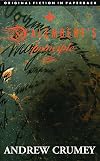
Imagine a puddle of water as a form of alien life - how would that life form think? What would they make of us humans? How would they communicate? These are just a few of the philosophical queries propounded by Andrew Crumey's characters as he re-works the the lives and imagines the conversations of the famous French philosophers - D'Alembert, Diderot and Julie de Lespinasse. It made my head hurt when I first read it, but the questions, answers and characters kept me coming back time after show more time; this book is a conundrum and a delight to read. show less
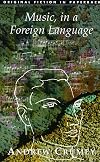
Not being a straightforward narrative this is a difficult novel to describe. Tenses shift within sections, there are stories within stories, false starts, rewritten chapters, repetitions of scenarios and the narrator is at pains to point out the fictionality of it all, indeed at times it reads more as a disquisition on literary efforts than an attempt at one. Yet, for all these strictures, it was immensely readable.
The tricksiness begins early as the novel starts with Chapter 0, where the show more narrator is thinking post coital thoughts about two characters who meet on a train and about whom he intends to write a novel. The bulk of Music, in a Foreign Language deals with the back story of one of these, a young man called Duncan, and the events leading up to the death of his father, Robert Waters. Waters and his friend Charles King had at the time been involved in slightly subversive activity in a Soviet style post-war Britain. This was the first appearance of that altered history in which Crumey also set parts of Mobius Dick and Sputnik Caledonia. The compromises such a society demands, the paranoia it engenders - and the betrayals it necessitates - are allowed to emerge organically from the story. Despite the title, music as a motif appears sparingly.
My one minor caveat is that the female characters are not as fully rounded as they might be, but the book’s main focus is on the friendship between Waters and King, so perhaps that is understandable.
I was equally as impressed by this, Crumey’s debut novel, as I was by both others of his I have read. If you like well written, thoughtful - even playful - novels you could do worse than give Crumey a try. show less
The tricksiness begins early as the novel starts with Chapter 0, where the show more narrator is thinking post coital thoughts about two characters who meet on a train and about whom he intends to write a novel. The bulk of Music, in a Foreign Language deals with the back story of one of these, a young man called Duncan, and the events leading up to the death of his father, Robert Waters. Waters and his friend Charles King had at the time been involved in slightly subversive activity in a Soviet style post-war Britain. This was the first appearance of that altered history in which Crumey also set parts of Mobius Dick and Sputnik Caledonia. The compromises such a society demands, the paranoia it engenders - and the betrayals it necessitates - are allowed to emerge organically from the story. Despite the title, music as a motif appears sparingly.
My one minor caveat is that the female characters are not as fully rounded as they might be, but the book’s main focus is on the friendship between Waters and King, so perhaps that is understandable.
I was equally as impressed by this, Crumey’s debut novel, as I was by both others of his I have read. If you like well written, thoughtful - even playful - novels you could do worse than give Crumey a try. show less

’Mobius Dick’ es una novela inclasificable, mezcla de parodia y erudición, donde la mecánica cuántica, la literatura y la historia se dan la mano. Schrödinger, Thomas Mann, E.T.A. Hoffmann, este libro es como un juego de espejos en el que se conjugan varias tramas, una historia con múltiples realidades, donde el lector debe decidir qué es ficción y qué realidad. Si bien las explicaciones y reflexiones que se exponen en el libro sobre física son abundantes, Crumey, físico show more teórico y matemático, las integra perfectamente en el texto. Ha de quedar claro que, pese a su temática, esta novela no encajaría dentro del género de ciencia ficción. Más bien Crumey utiliza ciertos elementos de éste para elaborar su juego de espejos literario, en el que la memoria y el miedo a la pérdida de la identidad son importantes. Lo mejor con esta novela es dejarse llevar y entrar en el juego que te propone el autor. Si bien al principio parecen varias historias independientes, a lo largo de la novela se van soltando pistas para que al final puedas atarlo todo y así sacar tus propias conclusiones.
Con el sentido habitual del escocés Andrew Crumey, ’Mobius Dick’ no deja de ser un juego intelectual con el que pasar el rato. Crumey tiene mejores novelas, véase la genial ‘Pfitz’ o ‘El principio de D’Alembert’. Interesante y poco más. show less
Con el sentido habitual del escocés Andrew Crumey, ’Mobius Dick’ no deja de ser un juego intelectual con el que pasar el rato. Crumey tiene mejores novelas, véase la genial ‘Pfitz’ o ‘El principio de D’Alembert’. Interesante y poco más. show less
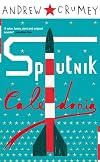
In the first part of the novel a shy boy called Robbie Coyle is growing up in a village called Kenzie in 1960s Scotland with the ambition of going into space. Since his father is an ardent socialist and anti-American Robbie therefore wants to be a cosmonaut. A frequent attender at his local library, he devours knowledge about the Soviet Union and discovers that “Russian is a language where some letters are written back to front and others are completely made up.” Quotes such as this show more display Crumey’s excellent ability to inhabit the world of a pre-adolescent. As he matures he starts to hear a voice in his head. The section ends with that voice saying, “I guess we’re not in Kenzie any more.”
The story then flips into a scenario of a Soviet-style Britain where a young adult Robert Coyle has been recruited into a space project to reach, before the wicked capitalists do so, what is possibly a black hole travelling through the solar system. The secret “Installation” where Robert is in training is suitably grim, the illustrations of the many compromises people have to make in such a society convincing, though whether dissidents could flourish there is another question. Perhaps this exists in the same British Democratic Republic which featured in the author’s Mobius Dick.
This central section could be considered an Altered History novel where the Jonbar Hinge lies in whether or not a man named Deuchar died while trying to rescue twins from drowning many years before the time the action is set. Yet its juxtaposition with the preceding and following parts, set in the “real” world, argues against this. And Crumey’s treatment of his subject matter does not have the feel of SF. The Soviet section can be read to be implicitly a figment of Robbie’s imagination. The subtlety of the point of divergence also marks this out from SF treatments of Altered Worlds. While Crumey pushes credibility a little by having characters in the central section behave and speak, or have the same names as, those in the book-end segments he does certainly avoid the trap into which Philip Roth fell in The Plot Against America of restoring the altered world to normal by the end.
The coda, a (present day?) exploration of the situation of Robbie’s ageing parents and a young boy who meets a mysterious stranger on a mission (which he is unwilling to explain) provides counterpoint and a resolution of sorts.
Sputnik Caledonia is excellently written and engaging, with convincing characters, but not quite as full of verve as Mobius Dick. show less
The story then flips into a scenario of a Soviet-style Britain where a young adult Robert Coyle has been recruited into a space project to reach, before the wicked capitalists do so, what is possibly a black hole travelling through the solar system. The secret “Installation” where Robert is in training is suitably grim, the illustrations of the many compromises people have to make in such a society convincing, though whether dissidents could flourish there is another question. Perhaps this exists in the same British Democratic Republic which featured in the author’s Mobius Dick.
This central section could be considered an Altered History novel where the Jonbar Hinge lies in whether or not a man named Deuchar died while trying to rescue twins from drowning many years before the time the action is set. Yet its juxtaposition with the preceding and following parts, set in the “real” world, argues against this. And Crumey’s treatment of his subject matter does not have the feel of SF. The Soviet section can be read to be implicitly a figment of Robbie’s imagination. The subtlety of the point of divergence also marks this out from SF treatments of Altered Worlds. While Crumey pushes credibility a little by having characters in the central section behave and speak, or have the same names as, those in the book-end segments he does certainly avoid the trap into which Philip Roth fell in The Plot Against America of restoring the altered world to normal by the end.
The coda, a (present day?) exploration of the situation of Robbie’s ageing parents and a young boy who meets a mysterious stranger on a mission (which he is unwilling to explain) provides counterpoint and a resolution of sorts.
Sputnik Caledonia is excellently written and engaging, with convincing characters, but not quite as full of verve as Mobius Dick. show less
Awards


You May Also Like


Associated Authors
Statistics
- Works
- 10
- Also by
- 2
- Members
- 1,018
- Popularity
- #25,308
- Rating
- 3.5
- Reviews
- 30
- ISBNs
- 57
- Languages
- 9
- Favorited
- 3