
Graham Masterton
Author of The Manitou
About the Author
Writer Graham Masterton was born in Edinburgh, Scotland on January 16, 1946. He received training as a newspaper reporter and edited the British men's magazine Mayfair. At the age of 24, he was the executive editor of Penthouse and Penthouse Forum. During this time, he started writing sex how-to show more books. In 1976, he published is first horror novel The Manitou and has written over thirty-five more over the years. He has received numerous awards including a Special Edgar by the Mystery Writers of America for Charnel House, a Silver Medal by the West Coast Review of Books for Mirror, and the Prix Julia Verlanger for Family Portrait. He has also written four collections of short stories and is the author of the Rook series. He currently lives with his wife in Cork, Ireland. (Bowker Author Biography) show less
Series
Works by Graham Masterton
Half-Sick of Shadows 8 copies
The Graham Masterton Collection Volume Two: The Devil in Gray and The Devils of D-Day (2018) 5 copies
The Graham Masterton Collection Volume One: The Manitou, Charnel House, and The Hymn (2018) 5 copies
The Secret Shih-Tan (short story) 4 copies
The Taking of Mr Bill [short story] 3 copies
Dom kości 2 copies
The Dark Days of Christmas 2 copies
Absence of Beast [short story] 2 copies
Rug (short story) 2 copies
The Heart of Helen Day (short story) 2 copies
The Scrawler 2 copies
Ever, Ever After (short story) 2 copies
La nuit de la salamandre 1 copy
Katie Maguire 03: Red Light 1 copy
Katie Maguire 06: Buried 1 copy
Pay Back the Devil 1 copy
Verotika No.06 1 copy
Djin 1 copy
Mount Alexander Goldfields Southern Cemeteries Headstone Photographs : Fryerstown Guildford & Vaughan 1 copy, 1 review
BURIED 1 copy
Eric the Pie 1 copy
shadow of power 1 copy
Beholder 1 copy
Picnic at Lac Du Sang 1 copy
Rococo 1 copy
Beijing Craps (short story) 1 copy
Sex Object (short story) 1 copy
Wnikający duch [short story] 1 copy
Changeling (short story) 1 copy
Ukryty W Mroku 1 copy
Associated Works
The Year's Best Fantasy and Horror: Tenth Annual Collection (1997) — Contributor; Contributor — 301 copies, 5 reviews
The Year's Best Fantasy and Horror: Seventh Annual Collection (1994) — Contributor — 281 copies, 3 reviews
The Year's Best Fantasy and Horror: Sixth Annual Collection (1993) — Contributor — 219 copies, 1 review
In the Shadow of Frankenstein: Tales of the Modern Prometheus (2016) — Contributor — 58 copies, 1 review
Gauntlet: Exploring the Limits of Free Expression, No. 2 - Stephen King Special (1991) — Contributor — 31 copies, 1 review
Oblicza Grozy — Contributor — 2 copies
Martwce - Antologia Wampiryczna — Contributor — 1 copy
Lazaret - Antologia Kliniczna — Contributor — 1 copy
Tagged
Common Knowledge
- Legal name
- Masterton, Graham
- Other names
- Luke, Thomas
Blackwood, Alan
Rimart, Anton
Winston, Katherine - Birthdate
- 1946-01-16
- Gender
- male
- Nationality
- UK
- Birthplace
- Edinburgh, Scotland, UK
- Map Location
- Scotland, UK
Members
Reviews

‘Plague’ is a bio-thriller from 1977 that has been opportunistically republished to cash in on the COVID-19 pandemic. Unfortunately, that’s not the most offensive thing about it. It’s fun in a 70s disaster movie kind of a way, and even does a reasonable job of predicting some of the challenges society has faced in 2020, but it’s also plagued (geddit?) by pretty appalling sexism and racism. Sadly that’s often a risk with older horror novels and thrillers and to be honest I don’t show more always call it out, but I will in this case because it overwhelmed the book’s better qualities for me.
The book is set in Miami and New York and details an outbreak of plague (think proper medieval shizzle) that spreads up the east coast. The action is split, chapter by chapter, between the two locations. The Miami chapters focus on Dr Donald Petrie (who bizarrely is referred to as Dr Petrie throughout the book) as he identifies the virus and struggles with local officials to get the right action taken to prevent its spread. The New York parts detail the lives of a mix of characters in an upscale apartment building as they learn of the outbreak and nervously watch it creep up the coast towards them. There’s a nice disaster movie cast: an ageing, faded Hollywood star, a union leader, a brilliant but troubled scientist and so on.
Splitting the story across the two locations actually works really well, although the fact that all of the New Work neighbours end up having a direct connection to the plague stretched credibility a bit. It keeps things interesting though, and the plot rattles along nicely as events in Miami become more and more horrific and Petrie is forced to take drastic action to save himself and his girlfriend and daughter. He faces the classic hero’s dilemma of having to chose between his loved ones and the greater good. It’s hackneyed, but effective in this setting.
The problem with the book is that it feels like the answer to the question: “Siri, show me a book written by a white guy in the 70s”. With one exception (a dutiful, self sacrificing nurse), the black characters are looters, rapists or just a faceless mob. There’s also a sub-plot about a right wing group spreading the idea that the plague is caused by the poor hygiene of black and Hispanic Americans. It’s uncomfortably unclear where the author actually stands on this point, and like much of the book it feels cyclical and unpleasant.
Just as problematic is the treatment of female characters. Dr Petrie has a shrewish ex-wife, a girlfriend young enough to be his daughter and a busty secretary who flirts with him incessantly.At one point one of the most important women in the book defies her boyfriend and is immediately (and quite explicitly) gang-raped by a group of Hell’s Angels who turn up out of nowhere. It’s repellent and has even less place in 2020 than a publisher cashing in on the pandemic.
If (and for me it was too big an if), you can ignore all that, this is a gripping, if silly read. There’s a definite appeal to reading books that somehow chime with out current reality, it’s just that whilst this one does an okay job on the medical emergency front, it is so tone deaf everywhere else. show less
The book is set in Miami and New York and details an outbreak of plague (think proper medieval shizzle) that spreads up the east coast. The action is split, chapter by chapter, between the two locations. The Miami chapters focus on Dr Donald Petrie (who bizarrely is referred to as Dr Petrie throughout the book) as he identifies the virus and struggles with local officials to get the right action taken to prevent its spread. The New York parts detail the lives of a mix of characters in an upscale apartment building as they learn of the outbreak and nervously watch it creep up the coast towards them. There’s a nice disaster movie cast: an ageing, faded Hollywood star, a union leader, a brilliant but troubled scientist and so on.
Splitting the story across the two locations actually works really well, although the fact that all of the New Work neighbours end up having a direct connection to the plague stretched credibility a bit. It keeps things interesting though, and the plot rattles along nicely as events in Miami become more and more horrific and Petrie is forced to take drastic action to save himself and his girlfriend and daughter. He faces the classic hero’s dilemma of having to chose between his loved ones and the greater good. It’s hackneyed, but effective in this setting.
The problem with the book is that it feels like the answer to the question: “Siri, show me a book written by a white guy in the 70s”. With one exception (a dutiful, self sacrificing nurse), the black characters are looters, rapists or just a faceless mob. There’s also a sub-plot about a right wing group spreading the idea that the plague is caused by the poor hygiene of black and Hispanic Americans. It’s uncomfortably unclear where the author actually stands on this point, and like much of the book it feels cyclical and unpleasant.
Just as problematic is the treatment of female characters. Dr Petrie has a shrewish ex-wife, a girlfriend young enough to be his daughter and a busty secretary who flirts with him incessantly.At one point one of the most important women in the book defies her boyfriend and is immediately (and quite explicitly) gang-raped by a group of Hell’s Angels who turn up out of nowhere. It’s repellent and has even less place in 2020 than a publisher cashing in on the pandemic.
If (and for me it was too big an if), you can ignore all that, this is a gripping, if silly read. There’s a definite appeal to reading books that somehow chime with out current reality, it’s just that whilst this one does an okay job on the medical emergency front, it is so tone deaf everywhere else. show less
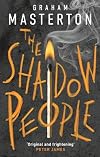
I was approved to receive an e-Galley ARC of The Shadow People, authored by Graham Masterson, from the publisher Head of Zeus and NetGalley for review consideration. What follows is my honest opinion given freely.
This became a DNF at 11%. I attempted to read past the police treating a trans suspect (referred to as ‘the man in the dress’) at the station with sub-human behavior, presented with no fanfare, and failed. I read fiction for many reasons, and do not shy away from darker story show more lines. This, however, felt like prejudice, and not part of an intentional addition to the story for the story’s enrichment. I’ve never been a big reader of Masterson, when I was barely double digits I remember my dad letting me read The Manitou and being terrified. He writes POC and women stereotypically (racist and sexist) often, which some could argue was how it was done when he wrote Manitou in the 70’s but Shadow People is coming out in 2022, it’s not okay now, and really should not have been okay then. I see many lauding this in reviews as wonderful because of the violence and gore, no mention of the problematic language. Either they are willing to look the other way, or they do not see it as problematic. As a reading community I think we should do better. What we purchase is showing support. I will not be requesting/reading from this author anymore. I support the LGBTQ+ community and the BIPOC community by reading/buying work by them and not reading/buying work by people that damages and disrespects them. show less
This became a DNF at 11%. I attempted to read past the police treating a trans suspect (referred to as ‘the man in the dress’) at the station with sub-human behavior, presented with no fanfare, and failed. I read fiction for many reasons, and do not shy away from darker story show more lines. This, however, felt like prejudice, and not part of an intentional addition to the story for the story’s enrichment. I’ve never been a big reader of Masterson, when I was barely double digits I remember my dad letting me read The Manitou and being terrified. He writes POC and women stereotypically (racist and sexist) often, which some could argue was how it was done when he wrote Manitou in the 70’s but Shadow People is coming out in 2022, it’s not okay now, and really should not have been okay then. I see many lauding this in reviews as wonderful because of the violence and gore, no mention of the problematic language. Either they are willing to look the other way, or they do not see it as problematic. As a reading community I think we should do better. What we purchase is showing support. I will not be requesting/reading from this author anymore. I support the LGBTQ+ community and the BIPOC community by reading/buying work by them and not reading/buying work by people that damages and disrespects them. show less

If you've read my other reviews for Masterton's books, you know I adore the man's work. This is no different and only strengthened my opinion. Death Trance is enshrouded with the cold, chilling feeling reminiscent to The Chosen Child (although that one still won the eerier award), with some scenes so suspenseful the scenes should be given as an example of what the word means in a dictionary. As with many of his novels, he combines intriguing history and religion/culture to push deeper show more impact.
The plot is a unique one. I'll fill in a bit the back blurb leaves out. When Randolph's family is massacred (in a sickening, detailed scene not intended for the squeamish), he ends up in a hospital with a Hindu doctor trying to console him in his time of grief. Hesitantly the good old doctor mentions how in his religious there is a belief that the living may come in contact with the dead through a sacred ritual led by a pedanda. Drowning in his mystery and unable to come to terms with his loved one's demise, Randolph eagerly embarks in this strange journey, not heeding any warnings that come his way about potential costs.
The story starts with a main character, Michael, then quickly dismisses him until later in favor of Randolph. Michael is a pleasure to read about, as his side story and journey is nearly as interesting. The book begins with the horrendous death of his companion, driving Michael further into his obsession and fear of the Rangda, The Witch Widow. That scene itself was a disturbing introduction into this twisted world.
While it's true Randolph perhaps should have feared more for the souls of his family, I sympathized with his ambition to see them that last time, to try and ease some of his overbearing guilt. Each character served their purpose well, all seeming genuine enough, each working together to serve the whole of the central plot. Thankfully Masterton doesn't commit what I deem to be a cardinal sin - head-hopping too much. When he's with one character, he stays long enough to make the needed impact, not causing unneeded confusion.
Things travel at a relatively speedy pace, leaving pause for build-up and psychological absorption. I never fidgeted from inactivity or needed to take a breather from too much stimulation. Masterton again does not spare us violence or bloodshed, having a few heady scenes stand out as fiercely disturbing. One of the villains of the story, Rangda, comes across as a startingly eerie, powerful force that causes unease. The other more human villain is an exotic mixture of psychopathy, greed, and odd soft spurts. The Hindu legend is fascinating, from the rituals to the priests to the leyaks, dead beings surving Rangda in the hopes of redeeming their spirits.
In summary, Death Trance is another amazing book from a sorely underappreciated author. This gem boasts suspense at every turn, truly horrific moments, rich characters driven by the most basic ambitions of mankind - love, greed, the thirst of knowledge, and still manages to end up happily after all (for some, that is). If you're in the mood for a horror story, this is the one to get. show less
The plot is a unique one. I'll fill in a bit the back blurb leaves out. When Randolph's family is massacred (in a sickening, detailed scene not intended for the squeamish), he ends up in a hospital with a Hindu doctor trying to console him in his time of grief. Hesitantly the good old doctor mentions how in his religious there is a belief that the living may come in contact with the dead through a sacred ritual led by a pedanda. Drowning in his mystery and unable to come to terms with his loved one's demise, Randolph eagerly embarks in this strange journey, not heeding any warnings that come his way about potential costs.
The story starts with a main character, Michael, then quickly dismisses him until later in favor of Randolph. Michael is a pleasure to read about, as his side story and journey is nearly as interesting. The book begins with the horrendous death of his companion, driving Michael further into his obsession and fear of the Rangda, The Witch Widow. That scene itself was a disturbing introduction into this twisted world.
While it's true Randolph perhaps should have feared more for the souls of his family, I sympathized with his ambition to see them that last time, to try and ease some of his overbearing guilt. Each character served their purpose well, all seeming genuine enough, each working together to serve the whole of the central plot. Thankfully Masterton doesn't commit what I deem to be a cardinal sin - head-hopping too much. When he's with one character, he stays long enough to make the needed impact, not causing unneeded confusion.
Things travel at a relatively speedy pace, leaving pause for build-up and psychological absorption. I never fidgeted from inactivity or needed to take a breather from too much stimulation. Masterton again does not spare us violence or bloodshed, having a few heady scenes stand out as fiercely disturbing. One of the villains of the story, Rangda, comes across as a startingly eerie, powerful force that causes unease. The other more human villain is an exotic mixture of psychopathy, greed, and odd soft spurts. The Hindu legend is fascinating, from the rituals to the priests to the leyaks, dead beings surving Rangda in the hopes of redeeming their spirits.
In summary, Death Trance is another amazing book from a sorely underappreciated author. This gem boasts suspense at every turn, truly horrific moments, rich characters driven by the most basic ambitions of mankind - love, greed, the thirst of knowledge, and still manages to end up happily after all (for some, that is). If you're in the mood for a horror story, this is the one to get. show less
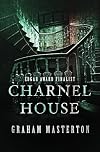
Graham Masterton's Charnel House is comfort food for the horror fan's soul. That may be the first time the words "comfort food" and "horror" have been used in the same sentence, but that's how this book made me feel: like coming home, putting on my pajamas, and curling up in my favorite corner of the couch. Charnel House is the kind of straightforward horror I grew up with in the 1970s (it was originally published in 1978). There is no question that the horror here is external and show more supernatural; no psychological terror, no convoluted back story, just an ancient evil come to life which must be stopped quickly, with the pacing to match.
Make no mistake: Charnel House is a creature of its time, blatantly politically incorrect with its talk of "Red Indians" and its archaic view of the role of women. For example, Masterton generously gives us a female doctor specializing in traumatic brain injury, but sexualizes and dismisses her immediately:
"Nicely proportioned though she was, she spoke and behaved like a specialist in brain damage, and so I left well enough alone. One day, she'd find herself a good-looking neurologist and settle down."
Those who believe older books should be sanitized to reflect current social values would do well to steer clear.
There are times when I want ambiguity in my horror fiction, just as there are times when I want to savor complex flavors in a fine dining restaurant. But there are other times when I want a big ol' bowl of mac and cheese, and at those times, books like Charnel House are the ones I reach for first.
I received a free copy of Charnel House from the publisher in exchange for an honest review. Special thanks go out to Open Road Media, which has apparently acquired the ebook rights to a stunning variety of older horror, mystery, and science fiction titles and is making them available at a reasonable price to a new generation. show less
Make no mistake: Charnel House is a creature of its time, blatantly politically incorrect with its talk of "Red Indians" and its archaic view of the role of women. For example, Masterton generously gives us a female doctor specializing in traumatic brain injury, but sexualizes and dismisses her immediately:
"Nicely proportioned though she was, she spoke and behaved like a specialist in brain damage, and so I left well enough alone. One day, she'd find herself a good-looking neurologist and settle down."
Those who believe older books should be sanitized to reflect current social values would do well to steer clear.
There are times when I want ambiguity in my horror fiction, just as there are times when I want to savor complex flavors in a fine dining restaurant. But there are other times when I want a big ol' bowl of mac and cheese, and at those times, books like Charnel House are the ones I reach for first.
I received a free copy of Charnel House from the publisher in exchange for an honest review. Special thanks go out to Open Road Media, which has apparently acquired the ebook rights to a stunning variety of older horror, mystery, and science fiction titles and is making them available at a reasonable price to a new generation. show less
Lists
Which house? (2)
Horror Books (1)
Awards


You May Also Like


Associated Authors
Statistics
- Works
- 226
- Also by
- 79
- Members
- 9,429
- Popularity
- #2,546
- Rating
- 3.6
- Reviews
- 356
- ISBNs
- 1,089
- Languages
- 12
- Favorited
- 30