
Nikolai Gogol (1809–1852)
Author of Dead Souls
About the Author
Nikolai Vasilevich Gogol was born in 1809 in the Ukraine. His father was an amateur playwright who had a small estate with a number of serfs. From the ages of 12 to 19, young Gogol attended a boarding school where he became known for his sharp wit and ability to amuse his classmates. After school show more he worked as a government clerk. He soon began writing memories of his childhood. His quaint depictions of the Ukrainian countryside marked his style and helped to make him famous. Gogol quickly gained fame and formed a friendship with the influential poet, Aleksandr Pushkin. Gogol is largely remembered for his realistic characterizations, his rich imagination, and his humorous style. His works include Mirgorod, a collection of short stories including Taras Bulba. Gogol's wit is evident in his short story, The Nose, where a man's nose wanders off around town in a carriage. Gogol's masterpiece is the novel Dead Souls. In this work, a swindler plots to buy from landowners their dead serfs. Towards the end of Gogol's life, his creative powers faded and he fled to Moscow. Here, he came under the power of a fanatical priest. Ten days before his death he burned some manuscripts of the second part of Dead Souls. He died of starvation in 1852, on the cusp of madness. (Bowker Author Biography) show less
Image credit: from Wikipedia
Series
Works by Nikolai Gogol
The Diary of a Madman, The Government Inspector, and Selected Stories (Penguin Classics) (2005) 670 copies, 7 reviews
Diary of a Madman, The Overcoat, The Nose, St Petersburg Tales and The Carriage (2014) 45 copies, 2 reviews
The Overcoat, The Nose, Nevsky Prospect, Carriage, The Portrait, Diary of a Madman, Rome (Russian language) (Russian Edition) (1994) 18 copies
A Cidade do Sossego e o Capote 14 copies
Christmas Eve: Stories from Village evenings near Dikanka and Mirgorod (Russian classics) (1991) 12 copies
The Carriage 11 copies
Works of Nikolai Gogol. Dead Souls, Taras Bulba, The Inspector General, The Nose, Viy & more (mobi) (2009) 7 copies
Hanz Kuechelgarten, Leaving the Theater & Other Works: Early Writings, Essays, Book Reviews & Letters (1990) 6 copies
Повести; Ревизор 6 copies
Verzamelde werken 5 copies
Gogol művei 5 copies
Short Fiction 5 copies
Twee opstandigen 5 copies
Jutustused 4 copies
De revisor en ander proza 4 copies
Kappen : noveller 4 copies
St. John's Eve and Other Stories 3 copies
Werke 3 copies
Les nouvelles Ukrainiennes 3 copies
Phantasien und Geschichten IV 3 copies
Kappan och andra berättelser 3 copies
El vií y otros relatos 3 copies
האדרת : וסיפורים אחרים 3 copies
De revisor en novellen 3 copies
Der Mantel. Erzählungen 3 copies
Jutustusi: Vana maailma mõisnikud ; Lugu sellest, kuidas Ivan Ivanovitš läks tülli Ivan Nikiforovitšiga ; Sinel 3 copies, 1 review
Phantastische Geschichten 3 copies
Gogol Short Stories 2 copies
Tales from Gogol 2 copies
Üç Öykü 2 copies
Cuentos ucranianos 2 copies
Избранные сочинения 2 copies
Избранные сочинения. том 1. Вечера на хуторе близ Диканьки. Миргород. "петербургского" цикла. 2 copies
El capote y otros cuentos 2 copies
EL RETRATO Y OTROS CUENTOS 2 copies
Povesti 2 copies
Izbrannye proizvedeniia 2 copies
Taras Bulba I (Cumhuriyet) 2 copies
Collected tales and plays 2 copies
Eski zaman beyleri ve diger öyküler 2 copies
Russische Novellen 2 copies
Novelle ukraine 2 copies
Mrtve duše i odabrane priče 2 copies
Valitud jutustusi 2 copies
Diary of a Madman, The Government Inspector, & Selected Stories (Penguin Classics) by Nikolay Gogol (1-Dec-2005) Paperback 2 copies, 1 review
_Ê_µ___ü_á__„Û: _______µ_«_ü_ü 2 copies
Wybór utworów 2 copies
Brenin yr ellyllon 2 copies
suflete moarte 1 copy
Собрание сочинений том 3. Мертвые души; Выбранные места из переписки с друзьями; О "Современнике";… 1 copy
Авторская исповедь 1 copy
Комедии и арабески 1 copy
Ukrainische Geschichten 1 copy
Opere vol. IV 1 copy
Spillere Frieriet 1 copy
Dead Souls and Other Novels 1 copy
“A Bewitched Place” 1 copy
Nikolai Gogol: The Diary of a Madman and Other Stories [Nicholas Boulton] [Naxos Audiobooks: NA0318] (2018) 1 copy
Reverent komöödia 1 copy
ДраматичеÑ?кие произведениÑ? 1 copy
Üc Öykü 1 copy
Üç Hikaye 1 copy
OBRA COMPLETA 1 copy
The overcoat and other stories (Collected works / of Nikolay Gogol ; translated by Constance Garnett) (1923) 1 copy
Zes Russische Klassieken 1 copy
Letters of Nikolai Gogol 1 copy
Cuadros maestros 1 copy
Collected Short Stories, The 1 copy
死せる魂 下 1 copy
死せる魂 上 1 copy
Meistererzählungen 1 copy
Malířské povídky 1 copy
Fayton - Burun - Palto 1 copy
Mrtvé duše 1 copy
Mŕtve duše 1 copy
ペテルブルグ物語―ネフスキイ大通り・鼻・外套 1 copy
Gogols Werke 1 copy
Мертвые души. Ревизор 1 copy
проза - статьи 1 copy
Šinjel i druge pripovetke 1 copy
Тарас Бульба 1 copy
[Повести] [Невский проспект; Нос; Портрет; Шинель; Коляска; Записки сумасшедшего; Рим. Отрывок].… 1 copy
Собрание сочинений в 7 томах 1 copy
Ревизор : комедия в 5 д 1 copy
Сочинения. Том 1. 1 copy
Записки сумасшедшего 1 copy
Сочинения. Том 2. 1 copy
Письма Т. 9 1 copy
Юношеские опыты Т. 7 1 copy
Исторические наброски; Заметки о русском быте; Словари, записные книжки; Выписки из творений… 1 copy
Повести Комедии Т. 3 1 copy
Taras Bulba an Tales 1 copy
Petrogradske priče 1 copy
Plašč in druge povesti 1 copy
Petrogradske pripovetke 1 copy
Sochinenija. Tom II 1 copy
Iz prepiske s prijateljima 1 copy
Revizor ; Ženidba 1 copy
Tutti i racconti di Gogol 1 copy
Kappan / Shinel 1 copy
RACCONTI - GOGOL' 1 copy
Ivan Ivanovitsj 1 copy
Taras Bulba, and other tales. The Inspector General. Introduction by Nikolay Andreyev (Everyman's Library. no. 740.) (1962) 1 copy
Russian Classics in Russian and English: Dead Souls by Nikolai Gogol (Dual-Language Book) (Russian Edition) (2011) 1 copy
Théâtre. (Le Revizor - Hyménée - Les joueurs). Texte français et préface d'André Barsacq. 1955. Broché. 287 pages.… (1955) 1 copy
Contes & nouvelles 1 copy
Izbrannoe 1 copy
[Rasskazy] 1 copy
Tvory 1 copy
The Collected Works of NICHOLAS GOGOL: The Complete Works PergamonMedia (Highlights of World Literature) (2015) 1 copy
מבחר סיפורי גוגול 1 copy
Short stories 1 copy
Tarass Bulba il cosacco (Classici della letteratura e narrativa senza tempo) (Italian Edition) 1 copy
Избранное 1 copy
Ο Επιθεωρητής : κωμωδία σε πέντε πράξεις , Τα παντρολογήματα : ένα εντελώς απίθανο συμβάν σε δύο… 1 copy
The Gamblers and Marriage 1 copy
Ispovest 1 copy
Phantastische Erzählungen II 1 copy
Phantastische Erzählungen I 1 copy
VÝBOR Z DÍLA I. 1 copy
Podobizna / Něvský prospekt 1 copy
Tarasz Bulba regény 1 copy
Az orr elbeszélések 1 copy
Valitut teokset. 2 1 copy
contos 1 copy
Ölü Canlar 1 copy
DIARIO DE N LOCO 1 copy
Collected Stories 1 copy
Nouvelles Russes, Traduction Française: Tarass Boulba Les Mémoires d'Un Fou La Calèche (Litterature) (French Edition) (2016) 1 copy
Novele 1 copy
Maksymy i inwokacje 1 copy
Valitut teokset I-II 1 copy
Contos Universais 1 copy
ההאדרת וסיפורים אחרים 1 copy
LibriVox Short Ghost and Horror Collection 040 — Author — 1 copy
O Casamento e Outras Peças 1 copy
Мртве душе : поема 1 copy
Taras Bulba e altri racconti 1 copy
Novelle 1 copy
Komedii 1 copy
Palto 1 copy
Racconti 1 copy
Associated Works
A Swim in a Pond in the Rain: In Which Four Russians Give a Master Class on Writing, Reading, and Life (2021) — Contributor — 1,985 copies, 57 reviews
The Portable Nineteenth-Century Russian Reader (1993) — Author, some editions — 224 copies, 1 review
Lapham's Quarterly - Lines of Work: Volume IV, Number 2, Spring 2011 (2011) — Contributor — 32 copies, 2 reviews
47 Great Short Stories: Stories by Poe, Chekhov, Maupassant, Gogol, O. Henry and Twain [Dover Thrift] (1990) — Contributor — 17 copies
Oogst Der Tijden. keur uit de werken van schrijvers en dichters aller volken en eeuwen (1940) — Contributor — 12 copies
Uncanny Tales: Horror and the Uncanny in Russian Prose of the 19th and Early 20th Centuries (1975) — Contributor — 5 copies
The humour of Russia — Contributor — 4 copies
Great European short novels — Contributor — 4 copies
Piirakkasota; valikoima huumoria — Contributor — 3 copies
Der Zauberspiegel. Phantastische Erzählungen der Weltliteratur — Contributor — 2 copies
Ode to Boy: Vol. 2: An Anthology of Same-Sex Attraction in Literature from the 19th Century Through the First World War (2014) — Contributor — 2 copies
Black Sabbath + Black Sunday: The U.S. Release Versions [Kino Classics/The Mario Bava Collection] (2014) — Author — 1 copy
Tagged
Common Knowledge
- Canonical name
- Gogol, Nikolai
- Legal name
- Gogol, Nikolai Vasilyevich
- Other names
- Gogol', Nicolaj Vasil'evič
Gógol, Nikolai Vassílievitx - Birthdate
- 1809-04-01
- Date of death
- 1852-03-04
- Gender
- male
- Education
- University of St. Petersburg
- Occupations
- humorist
playwright
novelist
teacher - Organizations
- University of St. Petersburg
- Nationality
- Russian Empire
- Birthplace
- Sorochinsk, Ukrainian gubernorate, Russian Empire
- Places of residence
- Sorochyntsi, Ukraine (birth)
Nezhin
St. Petersburg, Russia
Germany
Switzerland
Paris, France (show all 8)
Rome, Italy
Moscow, Russia (death) - Place of death
- Moscow, Russian Empire
- Burial location
- Novodevichy Convent, Moscow, Russia
- Map Location
- Ukraine
Members
Discussions
Dead Souls in Fans of Russian authors (March 2019)
Reviews
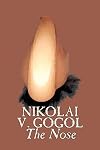
What a strange little story The Nose by Nikolai Gogol turned out to be. This is a satirical short story about a St. Petersburg official called Kovalyov, whose nose leaves his face and develops a life of its own. Apparently Gogol himself had an oddly shaped nose and was often teased about this. The sheer absurdity of this story relies on humor and social commentary to draw the reader in.
Highlighting the desire for social ranking, in this story, the Nose actually surpasses the position of the show more owner causing him much embarrassment and although the nose apparently can change in size, it is always clearly identified as belonging to Kovalyov which spearheads that characters feelings of inferiority and jealousy.
It is never explained fully how the nose made it’s escape or how it came to be re-attached but instead leaves that up to the imagination of the reader. Using this type of magical realism highlights the surreal nature of the story but the author definitely included plenty of social references about Russia and human nature in general. Personally I found The Nose to be both hilarious and insightful. show less
Highlighting the desire for social ranking, in this story, the Nose actually surpasses the position of the show more owner causing him much embarrassment and although the nose apparently can change in size, it is always clearly identified as belonging to Kovalyov which spearheads that characters feelings of inferiority and jealousy.
It is never explained fully how the nose made it’s escape or how it came to be re-attached but instead leaves that up to the imagination of the reader. Using this type of magical realism highlights the surreal nature of the story but the author definitely included plenty of social references about Russia and human nature in general. Personally I found The Nose to be both hilarious and insightful. show less

Absurd tale of a disembodied nose running amok in St. Petersburg. A barber discovers a nose in a loaf of bread. He recognizes it as belonging to one of his clients. Major Kovalyov wakes up one morning with a flat space where his nose should be. He searches for the nose and tries to advertise for its return.
I really enjoyed this creative short story. The author breaks the fourth wall, pointing out such things as the farcical notion of an “owner” wanting to advertise the loss of his nose show more in the local paper. It is humorous and makes fun of the rank, class, and structure in Russia at the time, a brilliant way to avoid stating anything directly. The Nose achieves a higher rank than the person who “lost” it. It is only 60 pages, so I read two English translations from the Russian (one by Ronald Wilks, the other by Claude Field) to get a better feel for the story. show less
I really enjoyed this creative short story. The author breaks the fourth wall, pointing out such things as the farcical notion of an “owner” wanting to advertise the loss of his nose show more in the local paper. It is humorous and makes fun of the rank, class, and structure in Russia at the time, a brilliant way to avoid stating anything directly. The Nose achieves a higher rank than the person who “lost” it. It is only 60 pages, so I read two English translations from the Russian (one by Ronald Wilks, the other by Claude Field) to get a better feel for the story. show less
Having read Gogol's short stories before (e.g. Diary of a Madman, The Nose), I felt very familiar with the tone of the first couple pages of The Overcoat. Akaky Akakyevich is a quirky minor official with a funny name, and I was fully prepared to observe all the funny problems that would hound him. Then, as a young clerk was teasing him for being such a quirky man with a funny name, I read this:
I've always felt most sympathetic towards characters that want nothing more than to be left to their own devices. I'm not talking about retired heroes who get called back into action when they just want to go fishing or whatever. I'm talking about losers, guys that aren't cool (I mean unkempt and uninteresting, not nerdy) and have never amounted to anything of any sort of social value but are self-sufficient and happy to forge on alone. Akaky Akakyevich isn't trying to climb the social ladder, start a family, or even interact with his coworkers. He's not asking for anything from anybody, and that's the real tragedy of his downfall.
This isn't Gogol's funniest work, but the juxtaposition of how Gogol views the St. Petersburg that he's created and how Akaky Akakyevich views the same city is amusing in its own way. Gogol makes it clear throughout almost all of his short stories that he cares very little for the "petty trivia," as he called it, of the contemporary Russian social order. The reader gets the sense that the rankings by which Russian society is arranged are arbitrary and useless, that bureaucracy is a hinderance to pretty much anything you'd want to accomplish, and that the letters that Akaky Akakyevich fervidly copies every day are largely superfluous.
But our hero doesn't see it that way. He respects his social superiors to the point where a browbeating at the hands of a "Person of Consequence" irreparably affects his health. He doesn't just value the work that he does; he makes it his entire life. Whether he values the content of the letters or just the simple repetition of the process (my guess is the latter), his whole world is dependent on the preservation of this system.
So can you hold the system responsible for Akaky Akakyevich's ruin? While it certainly isn't blameless, there are plenty of titular counsellors doing meaningless jobs that don't lose their minds over an overcoat.
Akaky Akakyevich is a fragile man whose fragility had yet to be exposed only because of his simple, solitary lifestyle. Like his previous overcoat, the "dressing jacket," he was surviving in a threadbare manner that could only be held together for so long. When he needs a new overcoat, he is able to purchase one, but when he needs a new Akaky Akakyevich, there isn't one available. The new overcoat allows him to display himself, but the loss of that overcoat leaves him exposed, and he is no longer able to patch over his shortcomings.
The Overcoat is great as a standalone work, but its influence is even greater. Dostoevsky said, "[Russian authors] all come out from Gogol's 'Overcoat'," and if you've read much of Russian lit before checking this out, you can feel it in every word. show less
And long afterward, at moments of the greatest gaiety, the figure of the humble little clerk withshow more
a bald patch on his head rose before him with his heartrending words: "Leave me alone! Why do you insult me?" and in those heartrending words he heard others: "I am your brother." And the poor young man hid his face in his hands, and many times afterwards in his life he shuddered, seeing how much inhumanity there is in man, how much savage brutality lies hidden under refined, cultured politeness, and my God! even in a man whom the world accepts as a gentleman and a man of honor...Yowza. Not quite a story about a guy whose nose jumps off his face.
I've always felt most sympathetic towards characters that want nothing more than to be left to their own devices. I'm not talking about retired heroes who get called back into action when they just want to go fishing or whatever. I'm talking about losers, guys that aren't cool (I mean unkempt and uninteresting, not nerdy) and have never amounted to anything of any sort of social value but are self-sufficient and happy to forge on alone. Akaky Akakyevich isn't trying to climb the social ladder, start a family, or even interact with his coworkers. He's not asking for anything from anybody, and that's the real tragedy of his downfall.
This isn't Gogol's funniest work, but the juxtaposition of how Gogol views the St. Petersburg that he's created and how Akaky Akakyevich views the same city is amusing in its own way. Gogol makes it clear throughout almost all of his short stories that he cares very little for the "petty trivia," as he called it, of the contemporary Russian social order. The reader gets the sense that the rankings by which Russian society is arranged are arbitrary and useless, that bureaucracy is a hinderance to pretty much anything you'd want to accomplish, and that the letters that Akaky Akakyevich fervidly copies every day are largely superfluous.
But our hero doesn't see it that way. He respects his social superiors to the point where a browbeating at the hands of a "Person of Consequence" irreparably affects his health. He doesn't just value the work that he does; he makes it his entire life. Whether he values the content of the letters or just the simple repetition of the process (my guess is the latter), his whole world is dependent on the preservation of this system.
So can you hold the system responsible for Akaky Akakyevich's ruin? While it certainly isn't blameless, there are plenty of titular counsellors doing meaningless jobs that don't lose their minds over an overcoat.
Akaky Akakyevich is a fragile man whose fragility had yet to be exposed only because of his simple, solitary lifestyle. Like his previous overcoat, the "dressing jacket," he was surviving in a threadbare manner that could only be held together for so long. When he needs a new overcoat, he is able to purchase one, but when he needs a new Akaky Akakyevich, there isn't one available. The new overcoat allows him to display himself, but the loss of that overcoat leaves him exposed, and he is no longer able to patch over his shortcomings.
The Overcoat is great as a standalone work, but its influence is even greater. Dostoevsky said, "[Russian authors] all come out from Gogol's 'Overcoat'," and if you've read much of Russian lit before checking this out, you can feel it in every word. show less
Brilliant. What an idea! Someone’s nose is found in some bread. A man wakes up to find his nose gone and begins a desperate search. He discovers it living a life of its own, a life far more privileged in status than it’s owner. Then it returns but there’s a twist.
I loved Gogol’s short story because it contrasts so strongly with every other piece of Russian lit. that I’ve read… and I’ve read a ton. Usually, they’re painstakingly detailed (Tolstoy), deeply psychological show more (Dostoevsky), heavily political (Solzhenitsyn) or deeply emotional (Goncharov, Pushkin, Turgenev, Lermontov, etc. aka everything else). But this is satire to rival Swift or Cervantes… from the pen of a Russian! Wonderful.
Analyses of the short story that I’ve read online tend towards searching the text for underlying psychological motives, for a political edge, for something, well, Russian about it. But I think Gogol just wanted to send a message to the literary community and say, “Life isn’t all misery and deeply felt meaning, you know!” And I think he said it very well.
The story is bonkers and total fun. There isn’t a single character in it who isn’t farcical, and it doesn’t really have a point (no pun intended). And you, yes you, with that twitch in your right index finger. Step away from the mouse. I know you are dying to comment and tell me what the point is about The Nose. Gogol wrote this for you, to show you that you can just read a story to enjoy it for its own sake without worrying about what it means. If you’ve missed that, go and read it again… go on.
Brilliant. show less
I loved Gogol’s short story because it contrasts so strongly with every other piece of Russian lit. that I’ve read… and I’ve read a ton. Usually, they’re painstakingly detailed (Tolstoy), deeply psychological show more (Dostoevsky), heavily political (Solzhenitsyn) or deeply emotional (Goncharov, Pushkin, Turgenev, Lermontov, etc. aka everything else). But this is satire to rival Swift or Cervantes… from the pen of a Russian! Wonderful.
Analyses of the short story that I’ve read online tend towards searching the text for underlying psychological motives, for a political edge, for something, well, Russian about it. But I think Gogol just wanted to send a message to the literary community and say, “Life isn’t all misery and deeply felt meaning, you know!” And I think he said it very well.
The story is bonkers and total fun. There isn’t a single character in it who isn’t farcical, and it doesn’t really have a point (no pun intended). And you, yes you, with that twitch in your right index finger. Step away from the mouse. I know you are dying to comment and tell me what the point is about The Nose. Gogol wrote this for you, to show you that you can just read a story to enjoy it for its own sake without worrying about what it means. If you’ve missed that, go and read it again… go on.
Brilliant. show less
Lists
. (1)
Folio Society (1)
el (1)
Magic Realism (1)
horror (1)
100 knjiga (1)
Plays I Like (1)
The "A" List (1)
Unread books (1)
. (1)
19th Century (2)
A Reading List (2)
Read These Too (1)
My TBR (2)
Favourite Books (4)
Five star books (1)
Bureaucracies (1)
Awards


You May Also Like


Associated Authors
Statistics
- Works
- 584
- Also by
- 78
- Members
- 28,941
- Popularity
- #691
- Rating
- 4.0
- Reviews
- 419
- ISBNs
- 1,846
- Languages
- 37
- Favorited
- 148
