
Martin Lindstrom (1) (1970–)
Author of Buyology: Truth and Lies About Why We Buy
For other authors named Martin Lindstrom, see the disambiguation page.
About the Author
Martin Lindstrom was born in Denmark in 1970. He is the author of Brand Building on the Internet, Clicks, Bricks and Brands, Brandchild: Insights into the Minds of Today's Global Kids: Understanding Their Relationship with Brands, Brandsense: Building Powerful Brands Through Touch, Taste, Smell, show more Sight & Sound, Buyology: The Truth About Why We Buy, Brandwash: Tricks Companies Use to Manipulate Our Minds and Persuade Us to Buy, and Small Data: The Tiny Clues that Uncover Huge Trends. He is a columnist for Fast Company, Time Magazine, and Harvard Business Review. His work can also be seen on NBC's Today show. He has appeared in a movie documentary and has made other movie and television appearances. In 2009, Time Magazine included him in their list of the top 100 Most Influential People in The World. He is the founding partner and Chairman of the Board of Buyology Inc. and Director of Brand Sense Agency. show less
Image credit: Martin Lindstrom. Photo by Luc Van Braekel.
Works by Martin Lindstrom
Brandwashed: Tricks Companies Use to Manipulate Our Minds and Persuade Us to Buy (2010) 366 copies, 23 reviews
BRANDchild: Insights into the Minds of Today's Global Kids: Understanding Their Relationship with Brands (2003) 60 copies
The Ministry of Common Sense: How to Eliminate Bureaucratic Red Tape, Bad Excuses, and Corporate BS (2021) 34 copies
This is Your Buyology 1 copy
Tagged
Common Knowledge
- Birthdate
- 1970
- Gender
- male
- Short biography
- MARTIN LINDSTROM, is the CEO and Chairman of the LINDSTROM company and the Chairman of BUYOLOGY INC. As one of the world’s most respected marketing gurus, he advises top executives at companies including the McDonald’s Corporation, Nestlé, American Express, Microsoft, The Walt Disney Company and GlaxoSmithKline. Martin Lindstrom speaks to a global audience of close to a million people every year. He has been featured in numerous publications, including USA TODAY, Fortune, and The Washington Post, and his previous book, BRAND sense, was acclaimed by the Wall Street Journal as one of the ten best marketing books ever published. His five books on branding have been translated into twenty-five languages.
- Nationality
- Denmark
- Associated Place (for map)
- Denmark
Members
Reviews
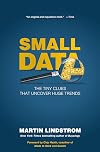
It takes an outsider
When Martin Lindstrom comes for a visit, watch out. He will examine, note and ponder absolutely everything, from hand gestures to wall décor and even the toilet water. He never knows what will inspire some eureka moment that he can apply to a client’s brand and make it a winner. He does this 300 days a year, visiting multiple countries every month. He lives and breathes ethnography (“Culture Scans”). And he goes in with no preconceived notions of what he expects to show more learn. Major brands all over the world, on every continent, hire him to find out what they can do to make their brands better, and what off the wall recommendation he is going to make to achieve it.
Lindstrom weaves thousands of offbeat facts and surprising observations into the story of how he does his job - watching consumers in their own environments around the world. It forces him to decide why one culture does something but another does it differently. Why fridge magnets are placed low in Russia, high in Saudi Arabia, and to pin photos in the USA.
His outsider perspective is evident in this sampling of findings on Americans:
-Americans have so many taboo subjects, they pay standup comics millions to discuss what people in other countries consider ordinary conversation.
-Americans name ketchup and mayonnaise as fresh foods
-Americans are among the least free people in the world. Everything, all day, is regulated, from building shapes to security services.
-The sameness of everything everywhere has a numbing effect. There is nothing surprising or natural.
-Everything is restricted “for your safety”. Even cotton swabs come with specific warnings.
-Americans don’t like to touch or be touched by others. And don’t stand too close, either.
-Women in particular constantly try to relive childhood in the things they collect and surround themselves with.
-Americans chat with strangers in elevators to assure each other they are not a threat.
-Americans barely walk, compared to anyone else. Fear keeps housewives and children home.
-Life in the USA is shaped by fear: fear of offending, of being inappropriate, of starting a fight, of being robbed, abducted, attacked, shot or killed. Lindstrom says he has not come across a population more fearful than Americans.
Then consider this discovery for a central European clothing chain. Lindstrom found that girls get up earlier now. Their phone bills say they’re back at it before 6:30. And that they take an average of 17 bathroom selfies every morning. They share proposed outfits with friends, so everyone can look cool for school. Lindstrom took this concept to the clothing store. He implemented full length mirrors that turn into internet cameras with one click. Girls now try on clothes and post directly to Facebook with a full length selfie. The response has been phenomenal – a new life for the bricks and mortar store.
This is a ringing endorsement of small data, as opposed to massive data warehouses, with their statisticians and armies of interpreters. Lindstrom can come to a clearer conclusion in a day than a department of big data analysts can in a month. The reason is humans are involved. Their inner selves, inner feelings, unconscious actions, cultural guidelines and ulterior motives all play into who they are, what they value and how they will react.
Right from the first page, Small Data jumps out as refreshing, unique insights, dramatic findings, and wonderful inspirations. It is a totally engrossing read.
David Wineberg show less
When Martin Lindstrom comes for a visit, watch out. He will examine, note and ponder absolutely everything, from hand gestures to wall décor and even the toilet water. He never knows what will inspire some eureka moment that he can apply to a client’s brand and make it a winner. He does this 300 days a year, visiting multiple countries every month. He lives and breathes ethnography (“Culture Scans”). And he goes in with no preconceived notions of what he expects to show more learn. Major brands all over the world, on every continent, hire him to find out what they can do to make their brands better, and what off the wall recommendation he is going to make to achieve it.
Lindstrom weaves thousands of offbeat facts and surprising observations into the story of how he does his job - watching consumers in their own environments around the world. It forces him to decide why one culture does something but another does it differently. Why fridge magnets are placed low in Russia, high in Saudi Arabia, and to pin photos in the USA.
His outsider perspective is evident in this sampling of findings on Americans:
-Americans have so many taboo subjects, they pay standup comics millions to discuss what people in other countries consider ordinary conversation.
-Americans name ketchup and mayonnaise as fresh foods
-Americans are among the least free people in the world. Everything, all day, is regulated, from building shapes to security services.
-The sameness of everything everywhere has a numbing effect. There is nothing surprising or natural.
-Everything is restricted “for your safety”. Even cotton swabs come with specific warnings.
-Americans don’t like to touch or be touched by others. And don’t stand too close, either.
-Women in particular constantly try to relive childhood in the things they collect and surround themselves with.
-Americans chat with strangers in elevators to assure each other they are not a threat.
-Americans barely walk, compared to anyone else. Fear keeps housewives and children home.
-Life in the USA is shaped by fear: fear of offending, of being inappropriate, of starting a fight, of being robbed, abducted, attacked, shot or killed. Lindstrom says he has not come across a population more fearful than Americans.
Then consider this discovery for a central European clothing chain. Lindstrom found that girls get up earlier now. Their phone bills say they’re back at it before 6:30. And that they take an average of 17 bathroom selfies every morning. They share proposed outfits with friends, so everyone can look cool for school. Lindstrom took this concept to the clothing store. He implemented full length mirrors that turn into internet cameras with one click. Girls now try on clothes and post directly to Facebook with a full length selfie. The response has been phenomenal – a new life for the bricks and mortar store.
This is a ringing endorsement of small data, as opposed to massive data warehouses, with their statisticians and armies of interpreters. Lindstrom can come to a clearer conclusion in a day than a department of big data analysts can in a month. The reason is humans are involved. Their inner selves, inner feelings, unconscious actions, cultural guidelines and ulterior motives all play into who they are, what they value and how they will react.
Right from the first page, Small Data jumps out as refreshing, unique insights, dramatic findings, and wonderful inspirations. It is a totally engrossing read.
David Wineberg show less
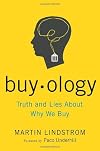
Lindstrom is a highly successful marketing expert -- a fact he makes a point of discussing at great length -- who was involved with some studies using fMRI brain scans to investigate people's responses to various forms of advertising. This seems like a really interesting topic to me, but unfortunately his explanations of the experiments and their results are often vague, confusing, and/or scientifically iffy. I have absolutely no idea, for instance, how he gets from the stated results of the show more experiments on product placement to the conclusions he eventually asserts. Which is a pity, because I'm kind of interested to know whether product placement works, but I feel like I might actually know less about it now than I did going in, because I've got no idea which of several possible things I should believe.
I also found aspects of the way the book is written extremely irritating. Lindstrom uses a lot of examples when talking about how advertisers appeal to our irrational, subconscious minds, repeatedly inviting us to "imagine you're doing X" or "remember when you did Y." In principle this is great; it's important to be able to relate this stuff to our own experiences if we're going to understand it properly. And yet every single time he launched into the second person, I found myself protesting. Almost none of it bore any resemblance to my own experiences at all, often to a degree that was downright offensive. If I'm invited to imagine myself in a clothing store with the ambiance of a trendy night club full of beautiful young things in hip clothes, my irrational inner brain is not flooding itself with happy reward chemicals as it imagines how purchasing their clothes will make me cool like them. My irrational inner brain is flooding me with nasty fight-or-flight chemicals and screaming things like, "Aaaaah! It's the popular kids who made my life hell in junior high! Must get out before the social humiliation starts! The tedious shallowness, it burns!" Now, I know perfectly well that I'm not remotely immune to the kind of influences and irrational thought processes that Lindstrom's talking about here. I know that because I've read better books than this that dealt with the subject by offering up examples and explanations that I could actually relate to. But if this book were my only encounter with these ideas, I'm almost certain that I'd walk away from it thinking that either it was all complete crap or else I was clearly a special snowflake to whom such normal human foibles did not apply. This strikes me as a pretty serious failure, but I think it has provided me with a potential insight into why the vast majority of advertising does absolutely nothing for me, or else has a deeply negative effect. It really just isn't aimed at me. I am, not, on reflection, entirely sure that hotshot ad execs are even aware that people like me exist. My guess is that they just don't tend to have many nerds in their social circles.
It's funny. Lindstrom takes great pains to assure the reader that there's nothing "creepy" about the whole brain-scanning thing, reassuring us that, hey, he's a consumer, too, and isn't remotely interested in brainwashing people into buying things they don't want. He's all about helping companies make products people genuinely want, he says, and his main goal is to show us how this advertising stuff works so we can become more aware and less easily manipulated. Well, I think that's an excellent and worthy goal, and I don't really doubt that he means it. And yet, in some hard-to-pin down but deeply disturbing way, he just comes across to me as... smarmy. This is no doubt largely an irrational emotional response on my part, and I might be inclined to feel a little bad about it, except that there's something richly, stupidly ironic about having that reaction to the work of someone who's supposedly an expert on making people feel good about the stuff he's selling.
Anyway, there are books which offer much better treatments of the kind of psychology Lindstrom is talking about here, minus his focus on "branding." Dan Ariely's Predictably Irrational comes to mind, and I would definitely recommend that over this. show less
I also found aspects of the way the book is written extremely irritating. Lindstrom uses a lot of examples when talking about how advertisers appeal to our irrational, subconscious minds, repeatedly inviting us to "imagine you're doing X" or "remember when you did Y." In principle this is great; it's important to be able to relate this stuff to our own experiences if we're going to understand it properly. And yet every single time he launched into the second person, I found myself protesting. Almost none of it bore any resemblance to my own experiences at all, often to a degree that was downright offensive. If I'm invited to imagine myself in a clothing store with the ambiance of a trendy night club full of beautiful young things in hip clothes, my irrational inner brain is not flooding itself with happy reward chemicals as it imagines how purchasing their clothes will make me cool like them. My irrational inner brain is flooding me with nasty fight-or-flight chemicals and screaming things like, "Aaaaah! It's the popular kids who made my life hell in junior high! Must get out before the social humiliation starts! The tedious shallowness, it burns!" Now, I know perfectly well that I'm not remotely immune to the kind of influences and irrational thought processes that Lindstrom's talking about here. I know that because I've read better books than this that dealt with the subject by offering up examples and explanations that I could actually relate to. But if this book were my only encounter with these ideas, I'm almost certain that I'd walk away from it thinking that either it was all complete crap or else I was clearly a special snowflake to whom such normal human foibles did not apply. This strikes me as a pretty serious failure, but I think it has provided me with a potential insight into why the vast majority of advertising does absolutely nothing for me, or else has a deeply negative effect. It really just isn't aimed at me. I am, not, on reflection, entirely sure that hotshot ad execs are even aware that people like me exist. My guess is that they just don't tend to have many nerds in their social circles.
It's funny. Lindstrom takes great pains to assure the reader that there's nothing "creepy" about the whole brain-scanning thing, reassuring us that, hey, he's a consumer, too, and isn't remotely interested in brainwashing people into buying things they don't want. He's all about helping companies make products people genuinely want, he says, and his main goal is to show us how this advertising stuff works so we can become more aware and less easily manipulated. Well, I think that's an excellent and worthy goal, and I don't really doubt that he means it. And yet, in some hard-to-pin down but deeply disturbing way, he just comes across to me as... smarmy. This is no doubt largely an irrational emotional response on my part, and I might be inclined to feel a little bad about it, except that there's something richly, stupidly ironic about having that reaction to the work of someone who's supposedly an expert on making people feel good about the stuff he's selling.
Anyway, there are books which offer much better treatments of the kind of psychology Lindstrom is talking about here, minus his focus on "branding." Dan Ariely's Predictably Irrational comes to mind, and I would definitely recommend that over this. show less
Brandwashed: Tricks Companies Use to Manipulate Our Minds and Persuade Us to Buy by Martin Lindstrom
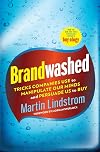
“Still, nothing is as wildly age-inappropriate as a toy that Tesco, the UK retailer, released in 2006: the Peekaboo Pole Dancing Kit, a pole-dancing play set marketed to females under ten—as something that will help them “unleash the sex kitten inside.”
This is the most disturbing example of marketing gone to a gross extreme in this book, but it’s far from the only one. Lindstrom tells the story of how marketing takes advantage of understanding the brain to push your buttons and show more sell products. He starts with research indicating that you can start to form brand attachments by babies in utero and continues with efforts grooming kids into perfect little customers, and influencers of parent purchases, before getting into how they target adults.
Then, while this book is about a decade old at this point, he starts to discuss all the ways big companies are tracking you with technology. Many more people are aware of some of the ways big data is used for advertising now, but it’s likely you’ll learn things about how deep those tentacles go reading this book as well, even though it’s starting to slow its age a little.
Finally, he discusses an experiment where he set up a family in a new neighborhood to test the efficacy of guerrilla word of mouth marketing to friends and neighbors. This also serves to demonstrate why astroturfing is such big business in the tech driven world of today.
As it’s partly driven by his personal involvement in the industry, not every claim is sourced to academic research, but a decent bit is. For additional science backed information on the subject, Influence or Presuasion by Robert Cialdini are the way to go, but Lindstrom’s insider perspective is worth reading as well.
Very good book. You’ll find it disturbing, but knowing is the only way to protect yourself from manipulation. show less
This is the most disturbing example of marketing gone to a gross extreme in this book, but it’s far from the only one. Lindstrom tells the story of how marketing takes advantage of understanding the brain to push your buttons and show more sell products. He starts with research indicating that you can start to form brand attachments by babies in utero and continues with efforts grooming kids into perfect little customers, and influencers of parent purchases, before getting into how they target adults.
Then, while this book is about a decade old at this point, he starts to discuss all the ways big companies are tracking you with technology. Many more people are aware of some of the ways big data is used for advertising now, but it’s likely you’ll learn things about how deep those tentacles go reading this book as well, even though it’s starting to slow its age a little.
Finally, he discusses an experiment where he set up a family in a new neighborhood to test the efficacy of guerrilla word of mouth marketing to friends and neighbors. This also serves to demonstrate why astroturfing is such big business in the tech driven world of today.
As it’s partly driven by his personal involvement in the industry, not every claim is sourced to academic research, but a decent bit is. For additional science backed information on the subject, Influence or Presuasion by Robert Cialdini are the way to go, but Lindstrom’s insider perspective is worth reading as well.
Very good book. You’ll find it disturbing, but knowing is the only way to protect yourself from manipulation. show less
Brandwashed: Tricks Companies Use to Manipulate Our Minds and Persuade Us to Buy by Martin Lindstrom
There is an oft-cited study of children in which they were offered identical meals — a hamburger, carrot sticks, a beverage — but one wrapped in plain packaging and one wrapped in McDonald’s packaging. The children chose the branded items over the plainly packaged items, claiming that they tasted better, despite the fact that the items were identical. In his book, “Brandwashed: Tricks Companies Use to Manipulate Our Minds and Persuade Us to Buy,” industry expert Martin Lindstrom, show more who has been involved in many a marketing campaign, examines the subtle and not-so-subtle ways that marketers and companies trick consumers into thinking they are making choices on their own and subverting “the man.” He begins with a well-used tactic for books on consumer culture — a “detox” in which he swears off all branded items for a certain period of time, and, predictably, fails. As is par for this type of book, Lindstrom segments his topic into chapters on marketing to children, using sex as a selling point, target markets and customized ads, online advertising and data mining, and so forth. Other topics that Lindstrom address include that of nostalgia marketing and the creation of addictive properties in products. One of the most interesting sections in the book details an experiment that Lindstrom conducted; he chose a young woman who worked behind the scenes at NBC’s Today, outfitted her with the trappings of a celebrity, including make-up, hair, a designer handbag and a fluffy dog, and put her outside Saks Fifth Avenue with a fake entourage. Almost immediately, a crowd was drawn to her, asking for her autograph and talking about having seen her perform — despite the fact that she had never been on stage, performed, or done any of the things which they claimed for her. Along these same lines, Lindstrom plants a family in a southern California community for the express purpose of seeing how much they can influence the buying and consuming habits of those around them — and in conclusion, makes the argument that the path to a more educated, responsible consumption can only come about through peer pressure and setting good examples in the community.
Although most of what he writes about has been covered in individual books already, Lindstrom writes in witty and engaging prose, not blaming the consumer for having bought into the marketers’ tricks, but rather in an attempt to educate and enlighten. As someone who does not often buy branded merchandise anyway, I found this to be a fascinating look at how marketers and corporations manipulate even the most savvy consumers — myself included. The concluding remarks do come up rather abruptly, with the argument about responsible consumption seeming rather broad, and really needing an entire book to unpack. This book, with its many references to current and prominent campaigns, companies, and celebrities, may not age well, although its overarching points should remain relevant for some time. show less
Although most of what he writes about has been covered in individual books already, Lindstrom writes in witty and engaging prose, not blaming the consumer for having bought into the marketers’ tricks, but rather in an attempt to educate and enlighten. As someone who does not often buy branded merchandise anyway, I found this to be a fascinating look at how marketers and corporations manipulate even the most savvy consumers — myself included. The concluding remarks do come up rather abruptly, with the argument about responsible consumption seeming rather broad, and really needing an entire book to unpack. This book, with its many references to current and prominent campaigns, companies, and celebrities, may not age well, although its overarching points should remain relevant for some time. show less
Lists
Awards


You May Also Like


Associated Authors
Statistics
- Works
- 12
- Members
- 1,866
- Popularity
- #13,791
- Rating
- 3.4
- Reviews
- 68
- ISBNs
- 120
- Languages
- 14