
Stephen R. C. Hicks
Author of Explaining Postmodernism: Skepticism and Socialism from Rousseau to Foucault
About the Author
Works by Stephen R. C. Hicks
Explaining Postmodernism: Skepticism and Socialism from Rousseau to Foucault (2019) 258 copies, 6 reviews
Explicando o Pós-modernismo: Ceticismo e socialismo - de Rouseau a Foucault (Portuguese Edition) (2013) 2 copies
Egoism in Nietzsche and Rand 1 copy
Associated Works
Tagged
Common Knowledge
- Legal name
- Hicks, Stephen Ronald Craig
- Birthdate
- 1960
- Gender
- male
- Occupations
- philosopher
professor - Nationality
- Canada
- Birthplace
- Toronto, Ontario, Canada
- Associated Place (for map)
- Ontario, Canada
Members
Reviews
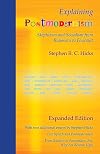
A very ambitious book, largely well executed in my view. To be clear, this is explaining post-modernism primarily if 'explaining' means demolishing. Part of the challenge for many people reading this will be whether it fits their world view. If you believe socialism is a proven failure (to do otherwise Hicks states, would be a matter of faith) and you believe post-modernism is a corrupting and cynical use of language to undermine capitalist society then this book will provide with a fair show more degree of evidence for those positions. Personally, without considering myself to be a socialist, but with a European rather than North American view of socialism, I found the almost one-to-one mapping of the defence of socialism to post-modernism a leap too far. Maybe this is semantics (eg is socialism a far-left Marxist with totalitarianism attached or is it a caring welfare state with redistributive taxes within an otherwise capitalist system?), but maybe Stephen Hicks would consider that point immaterial.
This is a polemic, not a balanced essay on the subject, but anyone with an interest in politics and social justice should read and consider what Stephen Hicks has to say. show less
This is a polemic, not a balanced essay on the subject, but anyone with an interest in politics and social justice should read and consider what Stephen Hicks has to say. show less
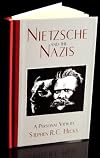
2 and a half stars rounded down to 2. Hicks is, if nothing else, clear and concise. It makes him easy to read and easy to understand. He sees Nazism as primarily an ideology and argues that it is best opposed by a counter ideology. This ideology matches that of Nietzsche half the time and opposes it the other half (though the Nazis chose to ignore that part).
I disagree that the ideology of Nazism is primary or as clear and consistent as Hicks makes it out to be. In fact, one aspect of Nazi show more theory is that passion is more important than the intellect so Nazism is explicitly anti-ideology. Just because philosophers like Heidegger supported him didn't make it an intellectual movement.
Hicks plays up the "socialist" part of National Socialism and points out the socialist aspects of the Nazi platform. Though these aspects existed when it was founded and Hitler gave speeches praising socialism and denouncing Capitalism, this was mainly lip service intended to win over the working class. He did favor nationalizing key aspects of the economy but that was just because he wanted to control them. Hitler was anti-union and anti-equality. Most other sources are clear on this (e.g. Encyclopedia Britanica) and point out, for example, he was probably behind the murder of Gregor Strasser, a party leader and proponent of socialism 1934 during the Night of the Long Knives.
On the plus side, you can read through this book in a day or two. show less
I disagree that the ideology of Nazism is primary or as clear and consistent as Hicks makes it out to be. In fact, one aspect of Nazi show more theory is that passion is more important than the intellect so Nazism is explicitly anti-ideology. Just because philosophers like Heidegger supported him didn't make it an intellectual movement.
Hicks plays up the "socialist" part of National Socialism and points out the socialist aspects of the Nazi platform. Though these aspects existed when it was founded and Hitler gave speeches praising socialism and denouncing Capitalism, this was mainly lip service intended to win over the working class. He did favor nationalizing key aspects of the economy but that was just because he wanted to control them. Hitler was anti-union and anti-equality. Most other sources are clear on this (e.g. Encyclopedia Britanica) and point out, for example, he was probably behind the murder of Gregor Strasser, a party leader and proponent of socialism 1934 during the Night of the Long Knives.
On the plus side, you can read through this book in a day or two. show less
I read the book almost immediately after receiving it but I have had difficulty gathering my thoughts and deciding how to review it, not because the book itself was difficult to read; but because I was unsure how to approach this small jewel of a book. I decided to lay out some of the reasons why I both think highly of this book and like it as well.
Looking at its title, Nietzsche and the Nazis, I wondered what kind of book is this. Is it history, biography, some combination of both with show more sociology, or something else? The subtitle, "A Personal View", suggests that the author will inject his own personal opinions into the narrative in some manner. Looking at the Table of Contents we find that it is in fact something else; namely a book primarily about philosophy. In fact, the first three parts of the book have philosophy in their titles. This is one of the reasons I like the book. Books about philosophy appeal to me; especially well-written and well-reasoned books like this one.
The introduction identifies the aim of this book by highlighting how people in general tend to have an interest in history, and then briefly defining the philosophy of history. The author describes the philosophical perspective of history as one that "is a huge laboratory of experiments in human living." (p 3) The book specifically focuses on one "major experiment" in the twentieth century, the rise of the Nazis.
The remainder of the book methodically and very efficiently tells about the nature of Nazism: its philosophy, National Socialism's programs, and the effective means that the Nazis used while in power over the Third Reich. The discussion of the Nazis is then contrasted with the philosophy of Friedrich Nietzsche. His life and influence is told through discussion of philosophical concepts that were key in his work such as nihilism, the death of God, the slave mentality, and the "overman". Having laid out the ideas of the Nazis and those of Nietzsche the book's climax presents the important differences between Nietzsche's thought and Nazism. This includes a discussion of ways in which Nietzsche's thought can be seen as a precursor of Nazism; they agree in such key areas as anti-individualism, anti-reason, and authoritarianism.
The book is excellent in several respects. It has a clarity of purpose and a logical structure. The principles of both the National Socialists and Nietzsche are well defined; in addition the conclusion highlights those principles which oppose the Nazis. This approach lets readers make their own decision about which principles they stand for. There are also helpful appendices that highlight relevant quotations on the ideas presented. If you are fascinated by history this book is a great place to discover both the reasons for one of the most important episodes in the history of the modern world and why each of us need to understand those reasons. show less
Looking at its title, Nietzsche and the Nazis, I wondered what kind of book is this. Is it history, biography, some combination of both with show more sociology, or something else? The subtitle, "A Personal View", suggests that the author will inject his own personal opinions into the narrative in some manner. Looking at the Table of Contents we find that it is in fact something else; namely a book primarily about philosophy. In fact, the first three parts of the book have philosophy in their titles. This is one of the reasons I like the book. Books about philosophy appeal to me; especially well-written and well-reasoned books like this one.
The introduction identifies the aim of this book by highlighting how people in general tend to have an interest in history, and then briefly defining the philosophy of history. The author describes the philosophical perspective of history as one that "is a huge laboratory of experiments in human living." (p 3) The book specifically focuses on one "major experiment" in the twentieth century, the rise of the Nazis.
The remainder of the book methodically and very efficiently tells about the nature of Nazism: its philosophy, National Socialism's programs, and the effective means that the Nazis used while in power over the Third Reich. The discussion of the Nazis is then contrasted with the philosophy of Friedrich Nietzsche. His life and influence is told through discussion of philosophical concepts that were key in his work such as nihilism, the death of God, the slave mentality, and the "overman". Having laid out the ideas of the Nazis and those of Nietzsche the book's climax presents the important differences between Nietzsche's thought and Nazism. This includes a discussion of ways in which Nietzsche's thought can be seen as a precursor of Nazism; they agree in such key areas as anti-individualism, anti-reason, and authoritarianism.
The book is excellent in several respects. It has a clarity of purpose and a logical structure. The principles of both the National Socialists and Nietzsche are well defined; in addition the conclusion highlights those principles which oppose the Nazis. This approach lets readers make their own decision about which principles they stand for. There are also helpful appendices that highlight relevant quotations on the ideas presented. If you are fascinated by history this book is a great place to discover both the reasons for one of the most important episodes in the history of the modern world and why each of us need to understand those reasons. show less
A quick introduction to a long history of philosophical thought. Hicks' hypothesis is that postmodernism is the child of failed socialism, but what stuck with me was the introduction to the long tradition of philosophical thought that Hicks' sketched in broad but effective strokes, from late-18th-century counter-enlightenment culture to today's postmodernist thinkers.
Witnessing a modern philosopher craft a novel argument and to watch it take shape, based off older building blocks, isn't show more something you'd find in an intro-to-philo book. This helped seeing how these ideas fit into the bigger picture together, and could possibly be used to create new ideas or theories. show less
Witnessing a modern philosopher craft a novel argument and to watch it take shape, based off older building blocks, isn't show more something you'd find in an intro-to-philo book. This helped seeing how these ideas fit into the bigger picture together, and could possibly be used to create new ideas or theories. show less
You May Also Like


Statistics
- Works
- 11
- Also by
- 1
- Members
- 357
- Popularity
- #67,135
- Rating
- 3.7
- Reviews
- 10
- ISBNs
- 18
- Languages
- 4