
Salvador Plascencia
Author of The People of Paper
About the Author
Image credit: Courtesy of Bloomsbury
Works by Salvador Plascencia
Kagit Insanlar 1 copy
Associated Works
Tagged
Common Knowledge
- Birthdate
- 1976
- Gender
- male
- Education
- Whittier College (BA, English)
Syracuse University (MFA, Fiction) - Nationality
- Mexico
USA - Birthplace
- Guadalajara, Mexico
- Places of residence
- Guadalajara, Mexico (birth)
Jalisco, Mexico
El Monte, California, USA - Associated Place (for map)
- Mexico
Members
Discussions
Magical Realism in Book with Paper Woman and Lead Shells in Name that Book (March 2016)
Reviews
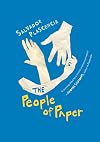
I mean, fuck Saturn. Three stars just for that.
I appreciate the surrealism in this writing and how well it integrates with the story - it's functional, not wackiness for the sake of wackiness, as surrealism sometimes seems to be interpreted. I didn't love the underlying story itself. Honestly it's a classic theme and I never liked it before, so that's not a surprise now. Fellas, it doesn't matter if you prove how much you love her, she's not required to love you. Sorry.
I appreciate the surrealism in this writing and how well it integrates with the story - it's functional, not wackiness for the sake of wackiness, as surrealism sometimes seems to be interpreted. I didn't love the underlying story itself. Honestly it's a classic theme and I never liked it before, so that's not a surprise now. Fellas, it doesn't matter if you prove how much you love her, she's not required to love you. Sorry.
Salvador Plascencia’s debut novel The People of Paper raises questions regarding authorship and voice in a work. Blurring the lines between author and speaker, the work leaves readers questioning who is really getting to tell the story.
In a world where the victors of war (colonizers, or Saturn) dictate written history, The People of Paper offers a novel wherein the colonized (members of E.M.F.) have the opportunity to dictate their own point of view. This novel forces readers to question show more the authenticity of what they are reading; how much of the story has been fabricated, misrepresented, or mistold? This novel requires readers to glean their own understanding of truth by sifting through various sides of the same story.
The People of Paper presents authorship itself as an act of colonization, in the sense that the author Plascencia has colonized the pages with his words: “Saturn’s real name is Salvador Plascencia.” (pg. 102). However, with colonization follows a loss of culture.
pg. 119, 138 “You have sold everything, save yourself. So you remain but you have sold everything else. You have delivered all this into their hands, and for what? For fourteen dollars and the vanity of your name on the book cover.” (pg. 138)
At this point in the novel, Saturn (ie. Plascencia himself) writes this, himself suggesting through the character Liz’s voice that by writing this story, he is “selling out”. Plascencia recognizes he is promoting exploitation of his own life by writing, sharing, and publishing this story. Ultimately this suggests his loss of control of this work, thereby raising the question of who is in control of the work? Merced de Papel represents a character that takes control of their own story, but is it Plascencias control since he is, in fact, authoring her?
“She was the first to be created: cardboard legs, cellophane appendix, and paper breasts. Created not from the rib of a man but from paper scraps.” (pg. 15)
Merced de Papel is a metaphor for the personification of books, her creation paralleling birth of a person as well as the birth of this novel.
The act of being authored, or created from scraps of paper, references Frankenstein & Patchwork Girl, characters who were pieced together with various mismatched scraps.
“She sat at the kitchen table peeling away layers of paper, repairing what she had stripped with fresh, tight wraps of newsprint.” (pg. 162)
In the story the reader sees Merced de Papel constantly “repairing” herself, remaking parts of her body as they become damaged and torn. The damage inflicted on her delicate body by simple, daily tasks represent the accumulating affect they carry: in other words, Merced is directly affected and changed by her experiences. Her effort to “repair” herself, then, represents our ability to take control our lives.
Merced is the author and archivist of her own self, always recreating her body and “repairing the damage”. This act of editing parallels human nature (which is always evolving, constantly being informed and changed by new Sunday Paper’s), but also represents the editing process for the book. Merced is the book in flux, constantly being edited as she is being written, which challenges the concept of who is author and who/what is created.
“But Merced de Papel never allowed history to accumulate, her skin changing with the news of the world.” (pg. 164)
This idea represents the way people are influenced by their surroundings and experiences, in the same way that Merced de Papel’s feet are turned to pulp by rain. Merced is affected by rain; it changes her perspective and forces her to take action against it. Similarly, people’s own trials affect and change people, shaping identities in response to our experiences. This is also seen in the scars of Merced de Papels’ lovers, which are visual representations of how she affected their lives and left them changed.
Merced de Papel is not only a metaphor for a book, but also a metaphor for how books affect and change peoples ways of thinking. show less
In a world where the victors of war (colonizers, or Saturn) dictate written history, The People of Paper offers a novel wherein the colonized (members of E.M.F.) have the opportunity to dictate their own point of view. This novel forces readers to question show more the authenticity of what they are reading; how much of the story has been fabricated, misrepresented, or mistold? This novel requires readers to glean their own understanding of truth by sifting through various sides of the same story.
The People of Paper presents authorship itself as an act of colonization, in the sense that the author Plascencia has colonized the pages with his words: “Saturn’s real name is Salvador Plascencia.” (pg. 102). However, with colonization follows a loss of culture.
pg. 119, 138 “You have sold everything, save yourself. So you remain but you have sold everything else. You have delivered all this into their hands, and for what? For fourteen dollars and the vanity of your name on the book cover.” (pg. 138)
At this point in the novel, Saturn (ie. Plascencia himself) writes this, himself suggesting through the character Liz’s voice that by writing this story, he is “selling out”. Plascencia recognizes he is promoting exploitation of his own life by writing, sharing, and publishing this story. Ultimately this suggests his loss of control of this work, thereby raising the question of who is in control of the work? Merced de Papel represents a character that takes control of their own story, but is it Plascencias control since he is, in fact, authoring her?
“She was the first to be created: cardboard legs, cellophane appendix, and paper breasts. Created not from the rib of a man but from paper scraps.” (pg. 15)
Merced de Papel is a metaphor for the personification of books, her creation paralleling birth of a person as well as the birth of this novel.
The act of being authored, or created from scraps of paper, references Frankenstein & Patchwork Girl, characters who were pieced together with various mismatched scraps.
“She sat at the kitchen table peeling away layers of paper, repairing what she had stripped with fresh, tight wraps of newsprint.” (pg. 162)
In the story the reader sees Merced de Papel constantly “repairing” herself, remaking parts of her body as they become damaged and torn. The damage inflicted on her delicate body by simple, daily tasks represent the accumulating affect they carry: in other words, Merced is directly affected and changed by her experiences. Her effort to “repair” herself, then, represents our ability to take control our lives.
Merced is the author and archivist of her own self, always recreating her body and “repairing the damage”. This act of editing parallels human nature (which is always evolving, constantly being informed and changed by new Sunday Paper’s), but also represents the editing process for the book. Merced is the book in flux, constantly being edited as she is being written, which challenges the concept of who is author and who/what is created.
“But Merced de Papel never allowed history to accumulate, her skin changing with the news of the world.” (pg. 164)
This idea represents the way people are influenced by their surroundings and experiences, in the same way that Merced de Papel’s feet are turned to pulp by rain. Merced is affected by rain; it changes her perspective and forces her to take action against it. Similarly, people’s own trials affect and change people, shaping identities in response to our experiences. This is also seen in the scars of Merced de Papels’ lovers, which are visual representations of how she affected their lives and left them changed.
Merced de Papel is not only a metaphor for a book, but also a metaphor for how books affect and change peoples ways of thinking. show less
I have never read a book quite like this. Lost love, colonialism, California, the small everyday parts of relationships, the big sweeping parts of relationships that are often in our own heads. Bees. Myths. Names. Sadness. Paper. History cycling through our lives over and over again. This book is surreal and beautiful and ugly and personal and epic.
Recommended, highly.
Recommended, highly.
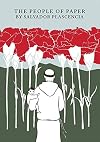
tl;dr review: High on style and imagination, low on substance.
Salvador Plascencia wanted the People of Paper (PoP) to make a smashing impression at the party. He went to great lengths to pick a dazzling dress, right accessories, make-up and all that. While this made for an eye-catching presence, he forgot to hook PoP up with cue cards listing some interesting things to talk about that could have kept the guests enthralled.
The People of Paper suffers from being the author's first novel. show more Plascencia has this bag full of tricks which he is too eager to show off. In a novel that is a marriage of magical realism and meta-fiction, he fails to deliver a focused work.
My favorite thing about this book would be the imaginary world Plascencia had conjured up. The novel is full of strange and fascinating images. There are so many tiny bits - little girl's lime addiction, monk fifty-three, origami surgeon, baby Nostradamus - that are going to stay with me for a while. In terms of fantastical imagery, the closest comparison that I can think of - among the books I have read - would be [b:Lanark|161037|Lanark|Alasdair Gray|http://photo.goodreads.com/books/1327948704s/161037.jpg|958496].
Plascencia plays around quite a bit with form and structure. The characters wage a war against the tyranny of the omniscient narrator who wouldn't leave their private thoughts alone. Some characters walk out of the novel to meet the author. There is multiple viewpoint narration, multiple columns laid out on some pages, some completely blacked out sections, a few diagrams, some rectangular holes in the pages because the author didn't want a certain name in his novel. This meta-fictive finery lends a unique touch to the book. Most of all, Plascencia keeps it from looking like just an annoying gimmick.
All is fine and dandy so far. But the core premise of the novel is too flimsy to shoulder the whole book. Innovative style and all aside, I am one of those readers who are also interested in 'what the hell is this book about' aspect. If you want your book to be about loss and sadness, you have got to let us stay with a character for more than half a page at a time and connect with them. Drowning the already thin emotions in the shiny surface doesn't help.
One of the back cover blurbs says, "Calvino, Borges and Garcia Marquez will come to mind." Well sure, when you think Latin-American magical realist, you immediately think of Marquez. You think of meta-fiction, you think of Calvino. But those names are really difficult for anyone to live up to. Please don't go in expecting something at the same level, you will only be setting yourselves up for disappointment. show less
Lists
Magic Realism (1)
Mooie titels (1)
Awards


You May Also Like


Associated Authors
Statistics
- Works
- 6
- Also by
- 6
- Members
- 963
- Popularity
- #26,728
- Rating
- 3.9
- Reviews
- 15
- ISBNs
- 8
- Languages
- 4
- Favorited
- 7