
Tom Quinn (1) (1956–)
Author of London's Strangest Tales: Extraordinary But True Stories
For other authors named Tom Quinn, see the disambiguation page.
About the Author
Journalist, juggler, orange-peel collector and expert on Victorian fish painters and early railways, Tom Quinn spends much of his time travelling round Britain looking for quirky subjects to write about. His books to date cover everything from antique collecting to English eccentrics
Series
Works by Tom Quinn
Railways' Strangest Journeys: Extraordinary but true stories from over 150 years of rail travel (2003) 35 copies
Backstairs Billy: The Life of William Tallon, the Queen Mother's Most Devoted Servant (2015) 35 copies
Fishing's Strangest Days: Extraordinary But True Stories from Over Two Hundred Years of Angling History (Strangest Series) (2002) 31 copies
The Military's Strangest Campaigns and Characters: Extraordinary But True Tales from Military History (Strangest series) (2006) 25 copies
Gilded Youth: A History of Growing Up In the Royal Family: From the Plantagenets to the Cambridges (2023) 23 copies, 1 review
They Also Serve: The Real Life Story of My Lifetime in Service as a Butler (Lives of Servants) (2012) 20 copies
Science's Strangest Inventions: Extraordinary But True Stories from Over 200 Years of Inventive History (Strangest series) (2005) 19 copies, 1 review
Tagged
Common Knowledge
- Birthdate
- 1956
- Gender
- male
- Occupations
- journalist
magazine editor
obituary writer - Nationality
- UK
- Birthplace
- London, England, UK
- Associated Place (for map)
- England, UK
Members
Discussions
Strange Tales of London in It's a LondonThing (July 2012)
Reviews
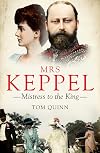
Scandalmongering about Alice Keppel, mistress to Edward VII. Author Ton Quinn doesn’t provide much in the way of sources except the memories of Agnes Cook, whose mother and grandmother were domestics in the Keppel household. Mrs. Cook’s recollections remind me of a saying attributed to Alice Roosevelt Longworth: “If you don’t have anything nice to say, come sit next to me”. According to Quinn and Cook, Mrs. Keppel parlayed her feminine attributes into a series of adulterous and show more financially lucrative relationships with various businessmen, financiers, and eventually the King. The gossip is pretty juicy; supposedly Keppel’s amorous dalliances were perfectly audible to the household staff, who would sign and comment, “Well, they’re at it again”. Some of Quinn’s claims seem spurious; for example he attributes the deafness and limp of Edward’s wife, Alexandra of Denmark, to syphilis transmitted by her husband, while more conventional sources claim an attack of rheumatic fever for the limp and hereditary otosclerosis for the deafness. Don’t know; certainly Edward acquired the nickname “Edward the Caresser” and was known for frequent trips to Parisian brothels (including having a special chair available in one; google it).
No pictures; a sparse bibliography of mostly general works about Victorian and Edwardian times; no index. Quinn frequently comments that Alice Keppel was Camilla Parker-Bowles great-grandmother, thus continuing a tradition of royal mistresses. Easy reading; I can’t really recommend it as history but it’s entertaining enough. show less
No pictures; a sparse bibliography of mostly general works about Victorian and Edwardian times; no index. Quinn frequently comments that Alice Keppel was Camilla Parker-Bowles great-grandmother, thus continuing a tradition of royal mistresses. Easy reading; I can’t really recommend it as history but it’s entertaining enough. show less
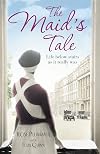
Rose Plummer was born in 1910, had a very poor upbringing and entered service as a maid at the age of fifteen. The Maid's Tale - Life Below Stairs As It Really Was is her own story of this time as told to Tom Quinn.
Rose isn't shy about including everything, the full extent of the poverty experienced in childhood, sharing a bed with her siblings, an outdoor toilet with her neighbours and petty theft to get by.
In adulthood she doesn't hold back from telling us about her flirting with soldiers show more in the park (which made me giggle) and the butler spit polishing the silver which the 'family' then used to eat their dinner with.
These are personal highlights, however the majority of the book enlightens the reader about domestic service during this period; how the hierarchy of servants was structured, the delegation of tasks, what food each level of servant generally ate and the perks for each.
Rose shares her personal story of entering service, her first house, then moving on to a bigger house and how it differed in terms of work. She also provides commentary on the impact of the second World War on domestic service and the changing opinions in society with regard to women in service and indeed her own feelings on this.
What is achingly clear is that the work of a maid was backbreaking and tough, and the expectations of the families of the time or Mistress of the House do seem to us to be harsh and cruel now.
I've always had a fascination for the 'life below stairs', but since the highly successful TV series Downton Abbey, there seems to be an abundance of books on the topic of servants, their duties and life experiences, enabling me to explore this further. If you're a fan of the series like me, then The Maid's Tale - Life Below Stairs As It Really Was is a great book to satisfy your own desire for more information on this part of English history. show less
Rose isn't shy about including everything, the full extent of the poverty experienced in childhood, sharing a bed with her siblings, an outdoor toilet with her neighbours and petty theft to get by.
In adulthood she doesn't hold back from telling us about her flirting with soldiers show more in the park (which made me giggle) and the butler spit polishing the silver which the 'family' then used to eat their dinner with.
These are personal highlights, however the majority of the book enlightens the reader about domestic service during this period; how the hierarchy of servants was structured, the delegation of tasks, what food each level of servant generally ate and the perks for each.
Rose shares her personal story of entering service, her first house, then moving on to a bigger house and how it differed in terms of work. She also provides commentary on the impact of the second World War on domestic service and the changing opinions in society with regard to women in service and indeed her own feelings on this.
What is achingly clear is that the work of a maid was backbreaking and tough, and the expectations of the families of the time or Mistress of the House do seem to us to be harsh and cruel now.
I've always had a fascination for the 'life below stairs', but since the highly successful TV series Downton Abbey, there seems to be an abundance of books on the topic of servants, their duties and life experiences, enabling me to explore this further. If you're a fan of the series like me, then The Maid's Tale - Life Below Stairs As It Really Was is a great book to satisfy your own desire for more information on this part of English history. show less
London's Strangest Tales: Extraordinary but true stories from over a thousand years of London's History by Tom Quinn
This one has been my bedside table reading for most of the year, and it's perfect for that, with short chapters that are often only two or three pages, ideal for grazing while my husband brushes his teeth before bed.
So many interesting little tidbits here, though I do wish there were some sources to back them up. It's so hard with these trivia books to know what's true and what might just be hearsay--which I wouldn't mind reading, as long as I know that it's more of an urban legend than a show more confirmed story.
In lieu of quotes, these are my favorite tidbits:
> The Cross Bones graveyard for the prostitutes licensed by the Bishop of Winchester ~1171
> The Egypt-inspired Lincoln's Inn Fields, with an open court, Sir John Sloane's house stuffed with curiosities, and the residence of Nell Gwynn, Charles II's favorite mistress
> The College of Arms in the old City
> Fortnum and Mason, a shop established by a former servant in the royal household, which supplied royalty and nobility, and which had survived from the 1600s through the printing of this book (2000s?)
> The swashbuckling adventures of Hannah Snell, who joined the navy disguised as a man and still managed to receive her pension after she spilled (and bragged about) the beans on her secret
> The surviving house on Craven Street where Benjamin Franklin lived while in England
> The original inspiration for Tom and Jerry, who started out as human characters in cheap Victorian publications
> The apparently impressive monuments to the dead in Kensal Rise Cemetery, which I would love to visit if I ever get back to London
> The now-defunct Necropolis Railway--which would make a fantastic name for a book--which took corpses and funeral processions to cemeteries out of town
> The descriptions of "toshers", who searched Victorian sewers for objects to sell on (pretty sure these inspired Neal Gaiman in Neverwhere)
> The riot at Roger Fry's first Post-Impressionist art show. Honestly, I just love it when art causes so much outrage.
> The Cheshire Cheese pub, particularly its longtime resident Polly the parrot, who celebrated the end of WWI by "imitating the noise of champagne bottles corks popping an estimated 400 times and then fell off her perch suffering from exhaustion (p. 207)
> The apparently confusing staircases at Liberty's, which I would love to see if it still exists.
> The beautiful public bathrooms that have apparently been shuttered. Alas!
> The monument to animals at war--though I'm more interested in the stories of said animals than the monuments themselves. I'm sure there's a book out there for me! show less
So many interesting little tidbits here, though I do wish there were some sources to back them up. It's so hard with these trivia books to know what's true and what might just be hearsay--which I wouldn't mind reading, as long as I know that it's more of an urban legend than a show more confirmed story.
In lieu of quotes, these are my favorite tidbits:
> The Cross Bones graveyard for the prostitutes licensed by the Bishop of Winchester ~1171
> The Egypt-inspired Lincoln's Inn Fields, with an open court, Sir John Sloane's house stuffed with curiosities, and the residence of Nell Gwynn, Charles II's favorite mistress
> The College of Arms in the old City
> Fortnum and Mason, a shop established by a former servant in the royal household, which supplied royalty and nobility, and which had survived from the 1600s through the printing of this book (2000s?)
> The swashbuckling adventures of Hannah Snell, who joined the navy disguised as a man and still managed to receive her pension after she spilled (and bragged about) the beans on her secret
> The surviving house on Craven Street where Benjamin Franklin lived while in England
> The original inspiration for Tom and Jerry, who started out as human characters in cheap Victorian publications
> The apparently impressive monuments to the dead in Kensal Rise Cemetery, which I would love to visit if I ever get back to London
> The now-defunct Necropolis Railway--which would make a fantastic name for a book--which took corpses and funeral processions to cemeteries out of town
> The descriptions of "toshers", who searched Victorian sewers for objects to sell on (pretty sure these inspired Neal Gaiman in Neverwhere)
> The riot at Roger Fry's first Post-Impressionist art show. Honestly, I just love it when art causes so much outrage.
> The Cheshire Cheese pub, particularly its longtime resident Polly the parrot, who celebrated the end of WWI by "imitating the noise of champagne bottles corks popping an estimated 400 times and then fell off her perch suffering from exhaustion (p. 207)
> The apparently confusing staircases at Liberty's, which I would love to see if it still exists.
> The beautiful public bathrooms that have apparently been shuttered. Alas!
> The monument to animals at war--though I'm more interested in the stories of said animals than the monuments themselves. I'm sure there's a book out there for me! show less
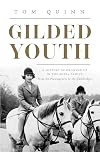
If you think it is easy growing up in the royal family, you will find your mind changed after reading this book. Cold, distant parents lead to unhappy children who grow up to treat their children the same way. It appears that William and Kate and Harry and Meghan are trying to do the right thing with their children but royal children will always be different, trying to find their way in a rapidly changing world.
**ARC provided by Edelweiss+**
**ARC provided by Edelweiss+**
You May Also Like


Associated Authors
Statistics
- Works
- 48
- Members
- 806
- Popularity
- #31,649
- Rating
- 3.6
- Reviews
- 13
- ISBNs
- 125