
Sharon Kay Penman (1945–2021)
Author of Here Be Dragons
About the Author
Sharon Kay Penman was born in New York City on August 13, 1945. She received a bachelor's degree in history from the University of Texas at Austin and a Juris Doctor degree from Rutgers University School of Law. She worked as a tax lawyer before becoming a full-time writer. She wrote The Sunne in show more Splendour, which chronicled the life of Richard III, while she was a student and a tax lawyer. After finishing the manuscript, her only copy was stolen from her car. She eventually rewrote the book and it was published in 1982. Her other works include Here Be Dragons, The Reckoning, When Christ and His Saints Slept, The Queen's Man, Cruel as the Grave, Dragon's Lair, Prince of Darkness, Lionheart and A King's Ransom. She won the 2001 Career Achievement Award for Historical Mysteries from Romantic Times. (Bowker Author Biography) show less
Image credit: © William Penman, Jr.
Series
Works by Sharon Kay Penman
A Queen in Exile 1 copy
Justin de Quincy 1 copy
Associated Works
Tagged
Common Knowledge
- Canonical name
- Penman, Sharon Kay
- Birthdate
- 1945-08-13
- Date of death
- 2021-01-22
- Gender
- female
- Education
- University of Texas, Austin (BA ∙ History)
Rutgers University (JD) - Occupations
- lawyer
historical novelist - Agent
- Molly Friedrich (Aaron M. Priest Literary Agency)
Mic Cheetham (Anthony Sheil Associates, Ltd.) - Short biography
- Sharon Kay Penman was born in New York City and grew up in New Jersey. She majored in history at the University of Texas at Austin, and received a law degree from Rutgers University School of Law. She worked as a tax lawyer before becoming a writer. While still a student, she started to research and write her first novel, The Sunne in Splendour (1982), a fictional account of the life of Richard Plantagenet, Duke of Gloucester, later King Richard III of England. However, after the only copy of her manuscript was stolen from her car, she was devastated and gave up writing for several years. Eventually she was inspired to begin again, and 12 years later, while practicing law at the same time, had produced the 936-page novel. In the early 1980s, she began publishing the "Welsh Trilogy" of historical novels set in medieval Wales. It was followed by the "Plantagenet series," novels about the life of King Henry II and Queen Eleanor of Aquitaine. In 1996, she published the first in a series of medieval mystery novels, The Queen's Man. It was named a finalist for an Edgar Award for Best First Mystery from the Mystery Writers of America.
- Cause of death
- pneumonia
- Nationality
- USA
- Birthplace
- New York, New York, USA
- Places of residence
- New York, New York, USA
New Jersey, USA - Place of death
- Atlantic City, New Jersey, USA
- Associated Place (for map)
- New Jersey, USA
Members
Discussions
Rest in Peace Sharon Kay Penman in Historical Fiction (September 2021)
Chronological Sharon Kay Penman Books Challenge in Historical Fiction (August 2021)
Sharon Kay Penman in Historical Fiction (February 2017)
GROUP READ: Devil's Brood by Sharon Kay Penman in 2013 Category Challenge (November 2013)
GROUP READ: Time and Chance by Sharon Kay Penman in 2013 Category Challenge (September 2013)
2013 GROUP READ Dicussion - When Christ and His Saints Slept in 2013 Category Challenge (February 2013)
Reviews
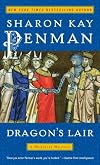
The Queen's man, Justin de Quincy, returns in a third story set in England and Wales. Eleanor of Aquitaine's oldest son, Richard Lionheart, traveling home from Crusade, is captured and imprisoned in Austria by the Holy Roman Emperor. An enormous ransom is demanded for Richard's release and Eleanor is determined to collect the ransom for her favorite son. Meanwhile, Richard's youngest brother, John, along with King Philippe of France, secretly plots to keep his older brother imprisoned.
A show more valuable shipment of wool, meant for the ransom, is hijacked on its way from Wales. Desperate to recover the stolen goods, Eleanor sends Justin de Quincy as her personal emissary, instructing him to recapture the ransom.
Justin's first visit is to the scene of the crime in Wales, where he is offered the questionable hospitality of Rhuddlan Castle as the guest of Davydd ab Owain and his wife, Emma of Anjou. Davydd pointedly directs the blame toward his rival, Llewelyn ob Iowerth, the charismatic Welsh prince so prominent in Penman's novel Here Be Dragons. Given Davydd's motives, Justin immediately ignores the obvious solution, instead trusting his own hunches. Traveling between Wales and England, Justin follows clues that suggest a much more sinister plot behind the theft. Secretly, and with the aid of the infamous Llewelyn, Justin visits various places in Northern Wales, where he stumbles across the real plot.
Sharon Kay Penman deservedly enjoys a huge fan following based on the superior quality of her medieval English historical novels. Her comprehensive research of this fascinating period enables her to invest her characters with believable personalities and a very skillful mystery plot. Of the three Justin de Quincy books I've read, this has been my favorite. I've always been a fool for a Welsh prince! show less
A show more valuable shipment of wool, meant for the ransom, is hijacked on its way from Wales. Desperate to recover the stolen goods, Eleanor sends Justin de Quincy as her personal emissary, instructing him to recapture the ransom.
Justin's first visit is to the scene of the crime in Wales, where he is offered the questionable hospitality of Rhuddlan Castle as the guest of Davydd ab Owain and his wife, Emma of Anjou. Davydd pointedly directs the blame toward his rival, Llewelyn ob Iowerth, the charismatic Welsh prince so prominent in Penman's novel Here Be Dragons. Given Davydd's motives, Justin immediately ignores the obvious solution, instead trusting his own hunches. Traveling between Wales and England, Justin follows clues that suggest a much more sinister plot behind the theft. Secretly, and with the aid of the infamous Llewelyn, Justin visits various places in Northern Wales, where he stumbles across the real plot.
Sharon Kay Penman deservedly enjoys a huge fan following based on the superior quality of her medieval English historical novels. Her comprehensive research of this fascinating period enables her to invest her characters with believable personalities and a very skillful mystery plot. Of the three Justin de Quincy books I've read, this has been my favorite. I've always been a fool for a Welsh prince! show less
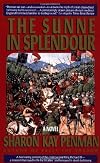
Well, I am certainly never going to be able to process the words "Richard, Duke of Gloucester" or "Richard III" in the same way ever again.
There were so many things that I loved about this book. I'm actually a little mad I didn't come across Penman's writing sooner. Now that I have, I am going to be scouring stores for every single book she has ever written and will not rest until I have read them all. I do have a few criticisms and niggles with this retelling of the War of the Roses, but show more the overall enjoyment and richness I found in these pages far outweighed any negatives for me. The depth, attention to detail, epic scale, scope of human experiences and emotions covered in its pages, not to mention the very subject matter it dealt with, among other things, all came together to make this a delightful and deeply immersive read for me.
Some of the major highlights for me were definitely how Penman wrote characters and relationships. Edward IV's reputation for philandering has always made me view him with a bit of contempt, but I found myself growing quite fond of him over the course of this novel because of the way Penman portrayed him, and I think that is in no small part because of how she handled the brotherly bond between him and Richard. The relationship between Richard and his niece, Elizabeth of York also pleasantly surprised me, and it was a detail relating to their bond that came closest to drawing some tears from me towards the end of the book. In a much smaller word count than that dedicated to Edward IV or Elizabeth of York, Edmund, Earl of Rutland's brief point-of-view scenes endeared me to him so much that despite their brevity and culmination, he—rather unfortunately for me—became and remained my favourite character for the vast bulk of the novel.
The attention paid to Richard's relationship with Anne Neville was also unexpected and quite sweet, although at times it did feel overbearing.
With regards to Richard himself, I enjoyed his journey as a character and sympathised with him throughout. Although there were also a few sections of the novel where he felt a little distant. Before reading this novel I had never given much independent thought to Richard, usually taking what various sources told me about him at face value. But now I am very curious to pick through the sources myself and investigate the historical truth about the man and find out a bit more about how much creative liberty Penman used in her portrayal of him.
I also appreciated the way Penman handled both the brutality and the licentiousness of the era and its players, finding that content generally quite respectfully and tastefully dealt with while avoiding the extremes of gratuitous excess, awkward sanitisation or total omission.
My major issues and niggles are pretty much the same touched on by the user Craig in his review, and are more nitpicks than things which negatively impacted my enjoyment or immersion:
1. I know this book is already very long, but there were some key moments that were summarised or relayed through dialogue instead of shown. I feel like this diminished their impact a little.
2. In her quest to absolve Richard, Penman makes him, at times, a little too saintly and I felt this made his character feel less nuanced and complex. For me Anne Neville suffered a bit of the same, but more from a sense that the author was trying too hard to make her endearing rather than trying too hard to absolve her.
3. In that same quest to absolve Richard, other characters necessarily have to take on the role of instigator, murderer, schemer, etc. The way this was handled for some of the other characters (namely the Woodvilles, and Elizabeth Woodville in particular) made them come across as a little a too villainous and conniving, and so diminished their nuance and complexity as well.
Despite these little qualms, this book was a rich and lavish journey that I am so glad I found! It also happens to be Penman's debut novel, and I am beyond excited to see how her writing and characterisation evolve over the course of her other novels if this is how she starts off!
Before getting to any of Penman's other works, however, I am very much looking forward to letting Anya Seton take me back a hundred or so years before these events to read about Katherine Swynford and John of Gaunt, First Duke of Lancaster, who are basically the ones to blame for this whole War of the Roses conflict happening in the first place.
9/10 will absolutely be re-reading this door-stopper,even knowing that the character I become most attached to dies on page 42 of the edition I have and I will spend the next 830 pages feeling kind of sad about it . show less
There were so many things that I loved about this book. I'm actually a little mad I didn't come across Penman's writing sooner. Now that I have, I am going to be scouring stores for every single book she has ever written and will not rest until I have read them all. I do have a few criticisms and niggles with this retelling of the War of the Roses, but show more the overall enjoyment and richness I found in these pages far outweighed any negatives for me. The depth, attention to detail, epic scale, scope of human experiences and emotions covered in its pages, not to mention the very subject matter it dealt with, among other things, all came together to make this a delightful and deeply immersive read for me.
Some of the major highlights for me were definitely how Penman wrote characters and relationships. Edward IV's reputation for philandering has always made me view him with a bit of contempt, but I found myself growing quite fond of him over the course of this novel because of the way Penman portrayed him, and I think that is in no small part because of how she handled the brotherly bond between him and Richard. The relationship between Richard and his niece, Elizabeth of York also pleasantly surprised me, and it was a detail relating to their bond that came closest to drawing some tears from me towards the end of the book. In a much smaller word count than that dedicated to Edward IV or Elizabeth of York, Edmund, Earl of Rutland's brief point-of-view scenes endeared me to him so much that despite their brevity and culmination, he—rather unfortunately for me—became and remained my favourite character for the vast bulk of the novel.
The attention paid to Richard's relationship with Anne Neville was also unexpected and quite sweet, although at times it did feel overbearing.
With regards to Richard himself, I enjoyed his journey as a character and sympathised with him throughout. Although there were also a few sections of the novel where he felt a little distant. Before reading this novel I had never given much independent thought to Richard, usually taking what various sources told me about him at face value. But now I am very curious to pick through the sources myself and investigate the historical truth about the man and find out a bit more about how much creative liberty Penman used in her portrayal of him.
I also appreciated the way Penman handled both the brutality and the licentiousness of the era and its players, finding that content generally quite respectfully and tastefully dealt with while avoiding the extremes of gratuitous excess, awkward sanitisation or total omission.
My major issues and niggles are pretty much the same touched on by the user Craig in his review, and are more nitpicks than things which negatively impacted my enjoyment or immersion:
1. I know this book is already very long, but there were some key moments that were summarised or relayed through dialogue instead of shown. I feel like this diminished their impact a little.
2. In her quest to absolve Richard, Penman makes him, at times, a little too saintly and I felt this made his character feel less nuanced and complex. For me Anne Neville suffered a bit of the same, but more from a sense that the author was trying too hard to make her endearing rather than trying too hard to absolve her.
3. In that same quest to absolve Richard, other characters necessarily have to take on the role of instigator, murderer, schemer, etc. The way this was handled for some of the other characters (namely the Woodvilles, and Elizabeth Woodville in particular) made them come across as a little a too villainous and conniving, and so diminished their nuance and complexity as well.
Despite these little qualms, this book was a rich and lavish journey that I am so glad I found! It also happens to be Penman's debut novel, and I am beyond excited to see how her writing and characterisation evolve over the course of her other novels if this is how she starts off!
Before getting to any of Penman's other works, however, I am very much looking forward to letting Anya Seton take me back a hundred or so years before these events to read about Katherine Swynford and John of Gaunt, First Duke of Lancaster, who are basically the ones to blame for this whole War of the Roses conflict happening in the first place.
9/10 will absolutely be re-reading this door-stopper,
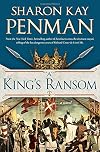
I have been a Sharon Kay Penmaniac for a very long time and I have read each and every one of her books about the Angevin family, and depicting the lives of this very colourful family was a work of love that took Ms. Penman 20 years to create. There are five wonderful books in this historical series. But, although this book wasn't my favourite in this series, it was the one that haunted my dreams at night. The book covers the final seven years of Richard the Lionheart's life. It begins with show more Richard leaving the Holy Land because he must return home to fight to reclaim his Kingdom. While he was fighting in the Crusades, his feckless brother John made an alliance with his sworn enemy, Philip II of France. Philip has been plundering his Aquitaine kingdom and John is laying waste to the southern part of England. Although Richard has not completed his sworn task in the Holy Land, he must leave in order to reclaim the Kingdom and the legacy that his father Henry II created. The book covers his dangerous journey home, his capture and imprisonment by the Germans and the Herculean efforts that his formidable mother Queen Eleanor (of Aquitaine) goes to to raise the huge ransom that is demanded for his release. Richard finally is freed after much intrigue and double-dealing and heads back to England and France to fight for his Kingdom. There are a lot of battle scenes in this book and of course they are picturesquely depicted by Ms. Penman. She spares no blood, guts or glory in any of her books. Was Richard a good king? Ms. Penman leaves that to her readers to decide, but he was certainly colourful and larger than life. Every character in this book is a real historical figure, and every scene is a real historic occurrence. Ms. Penman's research is extensive and I appreciate that I'm reading books as true to history as possible, but it is her skill in making these historical figures so very real and human and that is what brings me back to her books each time she writes a new one. I am sorry that I've come to the end of this series, but I look forward to the next one. She will not disappoint I'm sure. show less

Another beautifully written novel by this author. Covering the first three years of Richard the Lionheart's reign, this is in effect the fourth book in a series starting with her trilogy on Henry II and Eleanor of Aquitaine. The sights, sounds and smells of the Crusade and of the Holy Land itself are vividly described. Richard comes across as almost an action superhero though the author's historical note makes clear that if anything she has downplayed the sources in this respect (both show more Christian and Islamic sources). Some character traits are repeated rather tediously, though, such as the famed Angevin temper and Richard's recklessness for his own safety, while being concerned nevertheless for the safety of his men. It's refreshing to see his wife Berengaria of Navarre portrayed as a character in her own right as she is generally outshone by the King's sister Joanna and indeed is probably the most obscure medieval Queen, often relegated to being merely the answer to the quiz question of who was only Queen of England who didn't set foot in the country during her husband's reign. Saladin and his brother Adil (Saphadin) are also well depicted as the honourable opponents they seem to have been. Richard is the great strategist as which he was almost universally depicted in the sources on all sides, the massacre of the Acre garrison being depicted in the light of contemporary concerns, horrific though it was. The leading French crusaders come across very poorly here, as obstructive cowards constantly trying to outwit Richard and this does seem a little simplistic.Overall, this is a brilliant read, well up to Penman's high standards. 5/5 show less
Lists
Historical Fiction (10)
Five star books (1)
Awards


You May Also Like


Associated Authors
Statistics
- Works
- 20
- Also by
- 2
- Members
- 18,902
- Popularity
- #1,155
- Rating
- 4.2
- Reviews
- 508
- ISBNs
- 181
- Languages
- 4
- Favorited
- 190

