
John Banville
Author of The Sea
About the Author
Disambiguation Notice:
(dut) John Banville schrijft thrillers onder het pseudoniem Benjamin Black.
John Banville writes thrillers under the pseudonym Benjamin Black: these works are now aliased to this page.
DO NOT COMBINE WITH THE BENJAMIN BLACK PAGE
Series
Works by John Banville
Quirke (Season 1) 4 copies
Freddy Montgomery 2: Ghosts 2 copies
Alexander Cleave 3: Ancient Light 2 copies
Tutanak Defteri 1 copy
Triologia Montgomery 1 copy
DETI 1 copy
Quirke Collection 1 copy
Stafford And Quirke 01: Snow 1 copy
Quirke 07: Even The Dead 1 copy
Tony Judt 1 copy
Freddy Montgomery 3: Athena 1 copy
Quirke 06: Holy Orders 1 copy
Alexander Cleave 1: Eclipse 1 copy
Alexander Cleave 2: Shroud 1 copy
Quirke 01: Christine Falls 1 copy
Quirke 02: The Silver Swan 1 copy
Quirke 04: A Death In Summer 1 copy
Quirke 05: Vengeance 1 copy
The Quirke/Marlowe novels 1 copy
Associated Works
Books to Die For: The World's Greatest Mystery Writers on the World's Greatest Mystery Novels (2012) 278 copies, 10 reviews
Damien Hirst: Superstition — Introduction — 2 copies
Tagged
Common Knowledge
- Canonical name
- Banville, John
- Legal name
- Banville, William John
- Other names
- Black, Benjamin (pseudonym)
- Birthdate
- 1945-12-08
- Gender
- male
- Education
- St Peter's College, Wexford, Ireland
- Occupations
- novelist
sub-editor
reviewer - Organizations
- The Irish Times
The Irish Press
Aer Lingus - Awards and honors
- Lannan Literary Award (1997)
Royal Society of Literature (Fellow, 2007)
Franz Kafka Prize (2011)
American Academy of Arts and Sciences (2007)
Prince of Asturias Award (2014)
American Academy of Arts and Letters (Honorary member ∙ 2014) (show all 9)
International Nonino Prize (2003)
Austrian State Prize for European Literature (2013)
Cavaliere, Ordine della Stella d'Italia (2017) - Agent
- Andrew Wylie
- Nationality
- Ireland
- Birthplace
- Wexford, County Wexford, Ireland
- Places of residence
- Wexford, County Wexford, Ireland
Dublin, County Dublin, Ireland - Disambiguation notice
- John Banville writes thrillers under the pseudonym Benjamin Black: these works are now aliased to this page.
DO NOT COMBINE WITH THE BENJAMIN BLACK PAGE - Associated Place (for map)
- Ireland
Members
Discussions
The Sea by John Banville - Group Read December 2012 in 75 Books Challenge for 2012 (October 2023)
Group Read, May 2023: The Sea in 1001 Books to read before you die (May 2023)
Group Read, March 2021: The Book of Evidence in 1001 Books to read before you die (March 2021)
Reviews
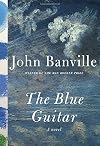
“How the past does cling, raking us lovingly with its tender claws.”
Introspective novel that focuses on the life of the narrator, Oliver Otway Orme, an acclaimed artist, and self-proclaimed thief. He feels blocked in his art due to an inability to capture anything meaningful beneath the surface of his subjects. Oliver comes across as a narcissist. The people around him serve as diversions for his whims. He thinks he is fooling everyone, but he may be in for a surprise or two. He show more “steals” his best friend’s wife to be his mistress. He and his wife grieve the death of their daughter. These two elements serve as the basis of a very slim plotline.
"Everything seemed hollow, hollow and weightless, like those brittle casings of themselves that dead wasps leave on window-sills at the dusty end of summer. Grief was flat, in other words, a flat dull empty ache."
Oliver delivers an inner dialogue of his thoughts and feelings about his relationships, family, friendships, and artistic pursuits, while the reader infers his less than admirable qualities. Subtle humor is embedded into the narrative. It is a story of aging, regret, and memory. Oliver’s life has become a big ball of yarn, and through his musings, he tries to untangle it. The primary attraction of this novel is the beautifully crafted language. John Banville is a wonderful wordsmith.
“It’s as if I had been standing for all my life in front of a full-length mirror, watching the people passing by, behind and in front of me, and now someone had taken me roughly by the shoulders and spun me about, and behold! There it was, the unreflected world, of people and things, and I nowhere to be seen in it.” show less
Introspective novel that focuses on the life of the narrator, Oliver Otway Orme, an acclaimed artist, and self-proclaimed thief. He feels blocked in his art due to an inability to capture anything meaningful beneath the surface of his subjects. Oliver comes across as a narcissist. The people around him serve as diversions for his whims. He thinks he is fooling everyone, but he may be in for a surprise or two. He show more “steals” his best friend’s wife to be his mistress. He and his wife grieve the death of their daughter. These two elements serve as the basis of a very slim plotline.
"Everything seemed hollow, hollow and weightless, like those brittle casings of themselves that dead wasps leave on window-sills at the dusty end of summer. Grief was flat, in other words, a flat dull empty ache."
Oliver delivers an inner dialogue of his thoughts and feelings about his relationships, family, friendships, and artistic pursuits, while the reader infers his less than admirable qualities. Subtle humor is embedded into the narrative. It is a story of aging, regret, and memory. Oliver’s life has become a big ball of yarn, and through his musings, he tries to untangle it. The primary attraction of this novel is the beautifully crafted language. John Banville is a wonderful wordsmith.
“It’s as if I had been standing for all my life in front of a full-length mirror, watching the people passing by, behind and in front of me, and now someone had taken me roughly by the shoulders and spun me about, and behold! There it was, the unreflected world, of people and things, and I nowhere to be seen in it.” show less
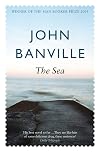
Rating: 3.5* of five
The Book Description: When Max Morden returns to the coastal town where he spent a holiday in his youth he is both escaping from a recent loss and confronting a distant trauma.
The Grace family appear that long ago summer as if from another world. Drawn to the Grace twins, Chloe and Myles, Max soon finds himself entangled in their lives, which are as seductive as they are unsettling. What ensues will haunt him for the rest of his years and shape everything that is to show more follow.
John Banville is one of the most sublime writers working in the English language. Utterly compelling, profoundly moving and illuminating, The Sea is quite possibly the best thing he has ever written.
My Review: The experience of reading Banville is akin to the experience of going to a whole museum dedicated to Renoir or Monet: At first, the awestruck lip-smacking chin-drooling moaning of readerly joy:
This gorgeous, sumptuous repast, this unsettling, foreboding atmosphere, this unbearably tense muscle in the brain MUST be leading to some cathartic, catastrophic release! There is a great change coming, there is something to contrast this soft and lovely tone, this unsettling beauty, this pastry cream in a pool of custard frosted with whipped cream with. Well, now:
And there it is, the catharsis. Sorta kinda, anyway. As much as you'll be getting, so take it and like it. There's a backstory to the catharsis, but it's all written in the ever-so-much of a writer's writing, and like the sugary sweetness of Renoir and Monet, in large doses it simply doesn't wear all that well. One longs for a smudge of dirt on the painting, or a misplaced modifier in the sentence, or even no modifier at all. But no. No indeed, there is no surcease, and therefore there is surfeit.
Now if the assembled company will pardon me, I am off to eat plain Zweiback, drink tap water, and stare at a blank wall for a while, until my senses are defatted. show less
The Book Description: When Max Morden returns to the coastal town where he spent a holiday in his youth he is both escaping from a recent loss and confronting a distant trauma.
The Grace family appear that long ago summer as if from another world. Drawn to the Grace twins, Chloe and Myles, Max soon finds himself entangled in their lives, which are as seductive as they are unsettling. What ensues will haunt him for the rest of his years and shape everything that is to show more follow.
John Banville is one of the most sublime writers working in the English language. Utterly compelling, profoundly moving and illuminating, The Sea is quite possibly the best thing he has ever written.
My Review: The experience of reading Banville is akin to the experience of going to a whole museum dedicated to Renoir or Monet: At first, the awestruck lip-smacking chin-drooling moaning of readerly joy:
They departed, the gods, on the day of the strange tide. All morning under a milky sky the waters in the bay had swelled and swelled, rising to unheard-of heights, the small waves creeping over parched sand that for years had known no wetting save for rain and lapping the very bases of the dunes. The rusted hulk of the freighter that had run aground at the far end of the bay longer ago than any of us could remember must have thought it was being granted a relaunch. I would not swim again, after that day. The seabirds mewled and swooped, unnerved, it seemed, by the spectacle of that bowl of water bulging like a blister, lead-blue and malignantly agleam.(p3, Picador hardcover edition)
This gorgeous, sumptuous repast, this unsettling, foreboding atmosphere, this unbearably tense muscle in the brain MUST be leading to some cathartic, catastrophic release! There is a great change coming, there is something to contrast this soft and lovely tone, this unsettling beauty, this pastry cream in a pool of custard frosted with whipped cream with. Well, now:
Could we, could I, have done otherwise? Could I have lived differently? Fruitless interrogation. Of course I could, but I did not, and therein lies the absurdity of even asking. Anyway, where are the paragons of authenticity against whom my concocted self might be measured? In those final bathroom paintings that Bonnard did of the septuagenarian Marthe he was still depicting her as the teenager he had thought she was when he first met her. Why should I demand more veracity of vision of myself than of a great and tragic artist?(p218, Picador hardcover edition)
And there it is, the catharsis. Sorta kinda, anyway. As much as you'll be getting, so take it and like it. There's a backstory to the catharsis, but it's all written in the ever-so-much of a writer's writing, and like the sugary sweetness of Renoir and Monet, in large doses it simply doesn't wear all that well. One longs for a smudge of dirt on the painting, or a misplaced modifier in the sentence, or even no modifier at all. But no. No indeed, there is no surcease, and therefore there is surfeit.
Now if the assembled company will pardon me, I am off to eat plain Zweiback, drink tap water, and stare at a blank wall for a while, until my senses are defatted. show less
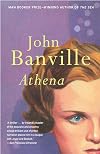
Banville weaves a dream-like narrative about a disgraced man (presumably Freddie Montgomery from Book of Evidence, now settled in a fairly decrepit city) getting involved with an art forgery ring and a beautiful woman, “A”. The chapters are punctuated by Montgomery’s curatorial analyses of fictitious artworks inspired by real paintings. These chart his unraveling as he loses A. Banville’s prose is really a joy to read as he gets inside the head of a lonely (and despicable) man show more mourning and obsessing over A. show less
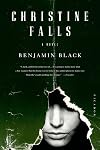
Writing as Benjamin Black, John Banville made an impressive debut as a mystery writer in 2006 with “Christine Falls.” Dark, moody and muddled (in a good way), the story manages to rise above genre to become literature of the sort the author writes under his own name.
The title character, a young Irish woman named Christine Falls, is dead before the first page. Quirke, a pathologist in 1950s Dublin, notices nothing amiss until he catches Mal, his brother-in-law who is also a doctor, show more altering the death records late at night. Yet Quirke is drunk at the time, so later he isn't sure he remembers what he thinks he remembers.
The woman and her baby supposedly both died in childbirth. But what happened to the baby's body? And who is the father of the baby — Mal, who married the Crawford sister Quirke desired for himself. or someone else? And what really happened to Christine Falls? The more questions he asks, the more bad things happen, including the murder of a woman who knows too much and a crippling beating of Quirke himself.
More tragic consequences follow Quirke to Boston when he goes there on family business. It turns out that is where the answers to his questions lie.
This is a solid mystery debut, never losing its grip on the reader despite its deliberate pace. show less
The title character, a young Irish woman named Christine Falls, is dead before the first page. Quirke, a pathologist in 1950s Dublin, notices nothing amiss until he catches Mal, his brother-in-law who is also a doctor, show more altering the death records late at night. Yet Quirke is drunk at the time, so later he isn't sure he remembers what he thinks he remembers.
The woman and her baby supposedly both died in childbirth. But what happened to the baby's body? And who is the father of the baby — Mal, who married the Crawford sister Quirke desired for himself. or someone else? And what really happened to Christine Falls? The more questions he asks, the more bad things happen, including the murder of a woman who knows too much and a crippling beating of Quirke himself.
More tragic consequences follow Quirke to Boston when he goes there on family business. It turns out that is where the answers to his questions lie.
This is a solid mystery debut, never losing its grip on the reader despite its deliberate pace. show less
Lists
Five star books (1)
Best Spy Fiction (1)
British Mystery (1)
Allie's Wishlist (1)
. (1)
Faust legend (1)
Best Beach Reads (1)
Summer Books (1)
Page Turners (1)
Renacimiento (1)
Unread books (2)
Booker Prize (3)
Favourite Books (1)
My TBR (1)
Awards


You May Also Like


Associated Authors
Statistics
- Works
- 90
- Also by
- 25
- Members
- 27,964
- Popularity
- #726
- Rating
- 3.8
- Reviews
- 1,130
- ISBNs
- 1,037
- Languages
- 28
- Favorited
- 79

