
Robin Wall Kimmerer
Author of Braiding Sweetgrass: Indigenous Wisdom, Scientific Knowledge, and the Teachings of Plants
About the Author
Robin Wall Kimmerer is a mother, scientist, decorated professor, and enrolled member of the Citizen Potawatomi Nation. Her first book, Garhering Moss, was awarded the John Burroughs Medal for outstanding nature writing. Her writings haw appeared in Orion, O Magazine, and numerous scientific show more journals. She lives in Fablus, New York, where she is SUNY Distinguished Teaching Professor of Environmental Biology, and the founder and director of the Center for Native Peoples and the Environment. show less
Works by Robin Wall Kimmerer
Braiding Sweetgrass: Indigenous Wisdom, Scientific Knowledge, and the Teachings of Plants (2013) — Author; Narrator, some editions — 6,916 copies, 164 reviews
Gathering Moss: A Natural and Cultural History of Mosses (2003) — Narrator, some editions — 1,444 copies, 37 reviews
Braiding Sweetgrass for Young Adults: Indigenous Wisdom, Scientific Knowledge, and the Teachings of Plants (2022) 359 copies, 6 reviews
Die Großzügigkeit der Felsenbirne: Vom Glück des Schenkens | Von der Autorin des Weltbestsellers »Geflochtenes Süßgras« (2025) 4 copies, 1 review
Das Sammeln von Moos 1 copy
Associated Works
The Colors of Nature: Culture, Identity, and the Natural World (2002) — Contributor — 101 copies, 1 review
Old Growth: The Best Writing about Trees from Orion Magazine (2021) — Foreword — 16 copies, 1 review
Tagged
Common Knowledge
- Canonical name
- Kimmerer, Robin Wall
- Birthdate
- 1953-09-13
- Gender
- female
- Education
- SUNY College of Environmental Science and Forestry (BS|Botany|1975)
University of Wisconsin, Madison (MS|Botany|1979)
University of Wisconsin, Madison (PhD|Plant Ecology|1983) - Occupations
- botanist
plant ecologist
university professor - Organizations
- Transylvania University
Centre College
State University of New York (College of Environmental Science and Forestry|Distinguished Teaching Professor of Environmental Biology)
Strategies for Ecology Education, Development, and Sustainability
Ecological Society of America
Center for Native Peoples and the Environment (founder and director) (show all 9)
Native Earth Environmental Youth Camp
Citizen Potawatomi Nation (enrolled member)
Third Act (advisor) - Awards and honors
- John Burroughs Nature Essay Award (2014)
Sigurd F. Olson Nature Writing Award (2014)
MacArthur Fellowship (2022)
John Burroughs Medal (2005) - Nationality
- Citizen Potawatomi Nation
- Birthplace
- New York, New York, USA
- Places of residence
- Syracuse, New York, USA
Madison, Wisconsin, USA
Danville, Kentucky, USA - Map Location
- USA
Members
Reviews
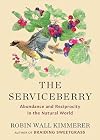
I received the 2nd edition of this book as a donation for my Little free library and am leaving this review voluntarily.
The author evokes for us in the role of serviceberries a way to rethink the priorities and structure of the economies we live under and to consider the value of giving.
Drawing on Indigenous Economics: Sustaining Peoples and Their Lands, one of the many interesting titles mentioned:
The author provides this intriguing fascination on how positive change can occur:
Ethnobotanists know that the more names a plant has, the greater its cultural importance.
The author evokes for us in the role of serviceberries a way to rethink the priorities and structure of the economies we live under and to consider the value of giving.
Why then have we permitted the dominance of economic systems that commoditize everything? That create scarcity insteadshow more
of abundance, that promote accumulation rather than sharing? We’ve surrendered our values to an economic system that actively harms what we love. Our metrics of economic value like GDP count only monetary value in the marketplace, of that which can be bought and sold. There is no room in these equations for the economic value of clean air and carbon sequestration and the ineffable riches of a forest filled with birdsong. Where is the value of a butterfly whose species has prospered for millennia and lives nowhere else on the planet? There is no formula complex enough to hold the birthplace of stories. It pains me to know that an old-growth forest is “worth” far more as lumber than as the lungs of the Earth. And yet I am harnessed to this economy, in ways large and small, yoked to pervasive extraction. I’m wondering how we fix that. And I’m not alone.
Drawing on Indigenous Economics: Sustaining Peoples and Their Lands, one of the many interesting titles mentioned:
Trosper tells the story of how making relationships led to the historic intertribal agreements with the U.S. government to protect the cultural landscape of the Bears Ears as the first tribally focused national monument. Five different tribes nurtured relationships with the federal government to forever protect an earthly gift to be held in common. This was a transformative step toward healing a long history of colonial taking. That hopeful model of Indigenous economics was abruptly curtailed when Donald Trump reversed the decision and instead conveyed rights to those sacred lands to a private uranium-mining company. It took an election to reverse it.
The author provides this intriguing fascination on how positive change can occur:
How do systems change? How can we move toward the just communities we need and want? The natural process of ecological replacement highlights two mechanisms at work in replacing a complex system that dominates the landscape and seems too big to change. Succession relies in part on incremental change, the slow, steady replacement of that which does not serve ecological flourishing with new communities. But it also relies on disturbance, on disruption of the status quo in order to let new species emerge and flower. Some massive disturbances are destructive, and recovery from them may not be possible. Other disturbances, of the right scale and type, create renewal and diversity. Indigenous land stewardship relied on humans using carefully calibrated kinds of disturbance to create a living mosaic in different stages of recovery. Disruptions create gaps, openings and edges between the new and the dominant. I want to see emerging gift economies nurtured in the gaps carved out of the overbearing market economy.show less
Both of these tools—incremental change and creative disruption—are available to us as agents of cultural transformation. I hope we will use them both. In these urgent times, we need to become the storm that topples the senescent, destructive economies so the new can emerge. The gap edges, or ecotones, where two ecosystems, the new and the old, meet, are among the most diverse and productive of ecosystems, full of berries and birds. There are species that live in neither the new nor the old, but at the edges. This is the home of Cedar Waxwings and the realm of Serviceberries.
Braiding Sweetgrass: Indigenous Wisdom, Scientific Knowledge and the Teachings of Plants by Robin Wall Kimmerer
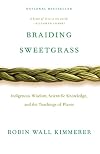
I love the voice behind this book. From the very beginning where Robin laments the sense of loss and helplessness in her graduate students as they face the human destruction of natural ecosystems, I immediately understood her purpose: to re-establish a nurturing relationship between people and land. Her words are lyrical, her science is solid, and her heart is both broken and pure. I felt so moved by the reverence of the Thanksgiving Address of the Onondaga Nation (which she quotes in full) show more that we incorporated it into the harvest festival at our elementary school. The intersection of indigenous culture and environmental restoration is a profound lesson of the time in which we live. Thank you, Robin, for the gift of your language to restore the Earth. show less
Braiding Sweetgrass: Indigenous Wisdom, Scientific Knowledge and the Teachings of Plants by Robin Wall Kimmerer
A dazzlingly beautifully written collection of essays, meditations, reflections, stories that serve as a powerful and poetic ode to nature, with a deeply personal and intimate reconciliation of the author's scientific approach and scholarship and her indigenous culture, knowledge, and heritage.
One of the very best books I've read about environmentalism, ecology, climate change, native Americans, botany, and conservation.
The one downside preventing it from being perfect is that it's too much show more of a good thing - a bit long and repetitive in spots, and elicits such intense emotions that it's best enjoyed a chapter at a time to avoid getting bored or overwhelmed. It's like super rich chocolate mousse, divine in small amounts but you wouldn't want to eat a gallon of it (and even if you are tempted, it won't sit well).
TL;DR: reject "sustainability" as the goal, and instead embrace "reciprocity". The first is an attempt to continue to take as much as we can indefinitely, while the latter is a give and take, one that approaches the natural world as a wonderful partnership of mutual contribution based on respect and appreciation, rather than an extractive exploitation based on power and greed. show less
One of the very best books I've read about environmentalism, ecology, climate change, native Americans, botany, and conservation.
The one downside preventing it from being perfect is that it's too much show more of a good thing - a bit long and repetitive in spots, and elicits such intense emotions that it's best enjoyed a chapter at a time to avoid getting bored or overwhelmed. It's like super rich chocolate mousse, divine in small amounts but you wouldn't want to eat a gallon of it (and even if you are tempted, it won't sit well).
TL;DR: reject "sustainability" as the goal, and instead embrace "reciprocity". The first is an attempt to continue to take as much as we can indefinitely, while the latter is a give and take, one that approaches the natural world as a wonderful partnership of mutual contribution based on respect and appreciation, rather than an extractive exploitation based on power and greed. show less
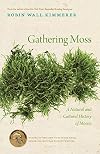
Gathering Moss: A Natural and Cultural History of Mosses by Robin Wall Kimmerer changed the way I see moss. Before I started reading Gathering Moss, I jokingly told my husband that by the time I finished the book I would probably never let him clear the moss from our yard again. Turns out it was no joke. Kimmerer examines, explains, and describes mosses in a way that had me increasingly appreciating the role they play in our ecosystems. I felt like Kimmerer took me into the forest, the bog, show more and the river with her as she researched myriad mosses. The microecosystems living within the moss fascinated me while the resiliency of the mosses gave me hope. Kimmerer also shines a very bright light on the destructiveness of people and how that destructiveness is sometimes wrapped up in what are expressed as good intentions. Gathering Moss brought me to a place of appreciation for the mosses on my trees, in my yard, and on my porch by making Kimmerer's research feel relevant to my life. show less
Lists
Female Author (1)
Favourite Books (1)
Reading LIst (1)
Five star books (1)
2025 (1)
Indie Next Picks (1)
Lending Library (2)
Science: Earth (2)
Best Audiobooks (1)
Permaculture (1)
Book wishlist (1)
Awards


You May Also Like


Associated Authors
Statistics
- Works
- 22
- Also by
- 6
- Members
- 10,276
- Popularity
- #2,308
- Rating
- 4.4
- Reviews
- 255
- ISBNs
- 79
- Languages
- 8
- Favorited
- 8