
Ngũgĩ wa Thiong'o (1938–2025)
Author of A Grain of Wheat
About the Author
Novelist, playwright, and essayist, Ngugi wa Thiong'o was born in Kenya on January 5, 1938. He received a B.A. in English from Makerere University College in Kampala, Uganda in 1963. He is Kenya's best-known writer and one of East Africa's most outspoken social critics. His first novel, Weep Not, show more Child (1964), was a penetrating account of the Mau Mau uprising (a tribal revolt that occurred in colonial Kenya) and was the first English-language novel by an East African. Two subsequent works, The River Between (1965) and A Grain of Wheat (1967), are sensitive novels about the Kikuyu people caught between the old and the new Africa. One of his major concerns has been the lack of reading materials in native African languages. In an attempt to bring literature to African peasants and workers, he wrote and produced the play I Will Marry When I Want (1977) in his native Kikuyu language. The play, which shows the exploitation of Kikuyu workers and peasants, attracted a large audience of poor Kenyans. It also led to Ngugi's arrest and imprisonment. After his release from prison, he went into exile and is currently living in the United States. His other works include Detained (1981); Decolonising the Mind: The Politics of Language in African Literature (1986); and Matigari (1987). He received the 2001 Nonino International Prize for Literature. In 2006, Random House published his first new novel in nearly two decades, Wizard of the Crow. (Bowker Author Biography) show less
Disambiguation Notice:
Ngũgĩ's name is not in the western form of last name, first name, because neither Ngũgĩ nor wa Thiong'o is his "last name" in the sense that is used in the west. He returned to the traditional Gikuyi form of his name, which roughly means Ngũgĩ son of Thiong'o, and is referred to on his own web site as Ngũgĩ.
Image credit: Photo by user 601TV / Flickr
Series
Works by Ngũgĩ wa Thiong'o
Writers in Politics: A Re-engagement with Issues of Literature and Society (Studies in African Literature) (1981) 36 copies
Penpoints, Gunpoints, and Dreams: Towards a Critical Theory of the Arts and the State in Africa (1998) 14 copies
Eén korrel graan (Dutch Edition) 2 copies
නාඩන් දරුව 1 copy
Mutiiri 1 copy
Afrika sichtbar machen: Essays über Dekolonisierung und Globalisierung (German Edition) (2021) 1 copy
Ngũgĩ wa Thiongʾo of Kenya 1 copy
Nace un tejedor de sueños (Narración en Castellano): El despertar de un escritor (Ciclogénesis) (2020) 1 copy
Chmury i łzy 1 copy
Njia Panda 1 copy
Decolonising the Mind 1 copy
Usilie Mpenzi Wangu 1 copy
Associated Works
The Art of the Story: An International Anthology of Contemporary Short Stories (1999) — Contributor — 394 copies, 5 reviews
Other Voices, Other Vistas: Short Stories from Africa, China, India, Japan, and Latin America (1992) — Contributor — 212 copies, 2 reviews
Tagged
Common Knowledge
- Canonical name
- Ngũgĩ wa Thiong'o
- Legal name
- Ngũgĩ wa Thiong'o
- Other names
- Ngugi, James Thiong'o (birth name)
wa Thiongo, Ngugi - Birthdate
- 1938-01-05
- Date of death
- 2025-05-28
- Gender
- male
- Education
- Alliance High School, Kikuyu, Kenya
Makerere University (Bx)
University of Leeds (Bx)
Dramatiska Institute, Stockholm, Sweden - Occupations
- novelist
playwright
essayist
academic
editor
journalist (show all 7)
professor - Organizations
- University of Nairobi
Yale University
New York University
University of California, Irvine
Ngũgĩ Wa Thiong'o Foundation - Awards and honors
- Lotus Prize for Literature (1973)
American Academy of Arts and Letters (Foreign Honorary ∙ Literature ∙ 2003)
PEN/Nabokov Award for Achievement in International Literature (2022) - Relationships
- Achebe, Chinua (advocate, friend)
wa Ngũgĩ, Mũkoma (offspring)
wa Ngũgĩ, Wanjikũ (offspring)
wa Ngũgĩ, Ndũcũ (offspring) - Nationality
- Kenya
- Birthplace
- Kamiriithu, British Kenya
- Places of residence
- Kamiriithu, Kenya
Nairobi, Kenya
Irvine, California, USA
New York, New York, USA
New Haven, Connecticut, USA
Amherst, Massachusetts, USA - Place of death
- Atlanta, Georgia, USA
- Map Location
- Kenya
- Disambiguation notice
- Ngũgĩ's name is not in the western form of last name, first name, because neither Ngũgĩ nor wa Thiong'o is his "last name" in the sense that is used in the west. He returned to the traditional Gikuyi form of his name, which roughly means Ngũgĩ son of Thiong'o, and is referred to on his own web site as Ngũgĩ.
Members
Discussions
AFRICAN NOVEL CHALLENGE OCTOBER 2023 : NGUGI WA THIONG'O & SCHOLASTIQUE MUKASONGA in 75 Books Challenge for 2023 (November 2023)
Petals of Blood by Ngũgĩ wa Thiong'o in Author Theme Reads (January 2012)
Matigari by Ngũgĩ wa Thiong'o in Author Theme Reads (December 2011)
Introducing Ngũgĩ wa Thiong'o in Author Theme Reads (December 2011)
Weep Not, Child by Ngũgĩ wa Thiong'o in Author Theme Reads (December 2011)
The River Between by Ngũgĩ wa Thiong'o in Author Theme Reads (December 2011)
Devil on the Cross by Ngũgĩ wa Thiong'o in Author Theme Reads (November 2011)
Reviews
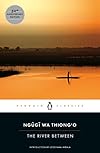
What a hard book to review. Almost fable-like, it describes a black savior trying to protect his people from the invading white people. It’s beautiful in its telling. Conversely, it praises female circumcision as an important rite signifying the tribe’s independence from the “evil” Christians. At once I want to love and hate this book. It was written by a Kenyan man in the early 1960s before circumcision was decried for its brutality. But the author was considered a show more “progressive.” Ha! I think he portrayed the gross outcome of the practice in the story but I can’t get past this statement supporting its continuation: “Circumcision of women was not important as a physical operation. It was what it did inside a person. It could not be stopped overnight. Patience and, above all, education, were needed.” I still give the book a pick; it’s an authentic viewpoint told well even if I find parts of it despicable. show less
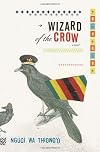
I've mentioned this before, but I work in publishing, and the other day I overheard two coworkers talking about book descriptors they hated (personally, I've got a bone to pick with "luminous," but we'll save that for another day). One said, "Every time a book says 'magisterial' in its flap copy, I know it's going to be long and boring."
Well, Wizard of the Crow is an exception to that proclamation—maybe the exception that proves the rule, but an exception nonetheless. Because it may be show more long (clocking in at a healthy 760 pages) but it's not at all boring. In fact it was a joy to read. Ngũgĩ wa Thiong'o's satirical epic of authoritarianism and resistance manages to be so many things at once: wondrous, brutal, tragic, hilarious, surreal, beautiful, dark, absurd.
I think a book this vital could only be produced by someone who has lived through dictatorship—Ngũgĩ was a political prisoner in his native Kenya, writing his novel Devil on the Cross on toilet paper in a cramped cell and living in exile for decades following his release. So I trust what he has to say (however indirectly, as this is a fantastical book set in the fictional Free Republic of Aburĩria) about the way dictators wield fear and chaos, the legacy of colonialist violence, and the potency of imagining the future.
It's hard to say much more than that because so much happens in The Wizard of the Crow. Despite its political verve, it is first and foremost just a really good story, complete with villains, magic, and heroes, daring escapes and transcendent love. It's no coincidence that the act of storytelling itself features so heavily in the plot.
This is a hugely overlooked gem of a book. I'm eager to read more of Ngũgĩ's work; we'll see if it's all just as magisterial.
____________________
Global Challenge: Kenya show less
Well, Wizard of the Crow is an exception to that proclamation—maybe the exception that proves the rule, but an exception nonetheless. Because it may be show more long (clocking in at a healthy 760 pages) but it's not at all boring. In fact it was a joy to read. Ngũgĩ wa Thiong'o's satirical epic of authoritarianism and resistance manages to be so many things at once: wondrous, brutal, tragic, hilarious, surreal, beautiful, dark, absurd.
I think a book this vital could only be produced by someone who has lived through dictatorship—Ngũgĩ was a political prisoner in his native Kenya, writing his novel Devil on the Cross on toilet paper in a cramped cell and living in exile for decades following his release. So I trust what he has to say (however indirectly, as this is a fantastical book set in the fictional Free Republic of Aburĩria) about the way dictators wield fear and chaos, the legacy of colonialist violence, and the potency of imagining the future.
It's hard to say much more than that because so much happens in The Wizard of the Crow. Despite its political verve, it is first and foremost just a really good story, complete with villains, magic, and heroes, daring escapes and transcendent love. It's no coincidence that the act of storytelling itself features so heavily in the plot.
This is a hugely overlooked gem of a book. I'm eager to read more of Ngũgĩ's work; we'll see if it's all just as magisterial.
____________________
Global Challenge: Kenya show less

Set on the eve of Kenyan independence, this covers events going back up to 15 years, to the aftermath of WW2 and the Mau Mau rebellion. It is set in and a round a cluster of villages and has a mostly black cast. They have varied experiences of the uprising and vastly different expectations of the outcome of independence. Some of the characters we meet have been involved in the independence struggle, others have been on the side of the whites. Some have spent time in detention camps and their show more actions have become mythologised over time. It felt that there were almost no characters who did not have at least some kind of mixed feelings of actions on their past that impacted on their current state. The rally for independence and the outcome of that reveals a truth that had been hidden for years, about the betrayal of a former freedom fighter. Who betrayed him is not what those involved expected and the outcome is worryingly left opaque. It seems that independence is not a wiping clean of the slate and that the same people now have to renegotiate their future while accepting their varied pasts. It didn't feel that the future was going to be plain sailing.
It is well written and the characters are fleshed out and feel real in both the present and the past. In several cases their lives have not turned out how they thought they would but they are doing what humans do, living one day at a time. show less
It is well written and the characters are fleshed out and feel real in both the present and the past. In several cases their lives have not turned out how they thought they would but they are doing what humans do, living one day at a time. show less
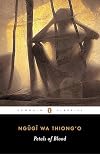
Some novels can make you laugh; some can make you cry. Just occasionally they can make you angry.
There was little to laugh at in Petals of Blood by Ngũgĩ wa Thiong’o. This is a book designed to evoke quite a different set of reactions, a book it would be difficult to read and not feel frustrated, exasperated and even outraged.
This is a novel about disillusionment; about the loss of the ideal of independence and the destruction of hope; about betrayal and hypocrisy and about the triumph show more of corruption over humanity. So incendiary was this novel at the time of its publication in 1977 that its author was imprisoned without charges by a Kenyan government sensitive to criticism of its manner of ruling their newly-independent nation. His arrest provoked a worldwide protest and led to his adoption by Amnesty International as a Prisoner of Conscience.
Petals of Blood opens with the arrest and detention of four people from the village of Ilmorog. It's a village geographically remote from the centre of government and remote from the minds of those who form that government. Ilmorog
One night three African directors of a foreign-owned brewery in the village are murdered in an arson attack. Four suspects are quickly arrested and detained for questioning: Munira, the headmaster of the village's small school; Karega his assistant teacher, Abdullah, the crippled owner of the local store and Wanja the beautiful, spirited barmaid/shop assistant. The four are linked to each other through friendship, to the fortunes of Ilmorog and the fortunes of Kenya itself.
Ngugi uses these four characters to unfold a human drama, telling the story in flashback to twelve years before the fire when Munira had arrived in Ilmorog to set up the school. Through the individual stories of the quartet we discover their past disappointments and frustrations with post independent Kenya motivate them to push for change. When the rains fail, the crops wither and the villagers begin to die, they hatch a plan to lead the villagers on a long walk to Nairobi, to lobby their elected officials for help.
"...it was they outside there who ought to dance to the needs of the people. Now it seemed that authority, power, everything, was outside Ilmorog... out there....in the big city. They must go and confront that which had been the cause of their empty granaries, that which had sapped their energies, and caused their weakness. Long ago when their cattle and goats were taken by hostile nations, the warriors went out, followed them and would not return until they had recovered their stolen wealth. Now Ilmorog's own heart ad been stole. They would follow to recover it. It was a new kind of war... but war all the same."
The walk confronts them with an even harsher reality. Modern Kenya is dominated by corrupt businessmen and politicians who have quickly and conveniently forgotten the high ideals of the revolt they waged to expel the British. No-one in this new order, neither church or state, cares about the plight of the people of a remote village. Despised and patronised but with all appeals for help rejected, they return home dejected.
The exodus is an emotive set piece which symbolises the moral decline that Ngugi sees permeate the country. But in case we didn't quite understand his point, he uses the second half of the novel to reinforce the message. The efforts of the villagers to draw attention to their community have unfortunate consequences which render them vulnerable to commercial opportunism, political expediency and religious hypocrisy.
By the end, the four friends feel a sense of betrayal by those in power. Yet despite the personal losses they suffer, they never lose their faith that one day, Kenya will fulfil its true destiny. This time it will be a country run by the people themselves.
"Tomorrow it would be the workers and the peasants leading the struggle and seizing power to overturn the system of all its preying bloodthirsty gods and gnomic angels, bringing to an end the reign of the few over the many and the era of drinking blood and feasting on human flesh. Then, only then,would the kingdom of man and woman really begin, joying and loving in creative labour."
Political corruption, social injustice, the struggle for freedom are not not uncommon themes in African literature. But Petals of Blood is one of the most strongly narrated indictments of a regime that assumed power with a promise of ending the inequality of its colonial masters only to perpetuate the same oppressions and divisions. Little wonder those in power were too afraid to let this author continue unfettered in his critique.
The Verdict
A truly remarkable novel. Difficult at times to read unless you are familiar with the country's history. But it's passionate depiction of the corrupting influence of power blended with some wonderfully portrayed characters, make this a compelling book. show less
There was little to laugh at in Petals of Blood by Ngũgĩ wa Thiong’o. This is a book designed to evoke quite a different set of reactions, a book it would be difficult to read and not feel frustrated, exasperated and even outraged.
This is a novel about disillusionment; about the loss of the ideal of independence and the destruction of hope; about betrayal and hypocrisy and about the triumph show more of corruption over humanity. So incendiary was this novel at the time of its publication in 1977 that its author was imprisoned without charges by a Kenyan government sensitive to criticism of its manner of ruling their newly-independent nation. His arrest provoked a worldwide protest and led to his adoption by Amnesty International as a Prisoner of Conscience.
Petals of Blood opens with the arrest and detention of four people from the village of Ilmorog. It's a village geographically remote from the centre of government and remote from the minds of those who form that government. Ilmorog
One night three African directors of a foreign-owned brewery in the village are murdered in an arson attack. Four suspects are quickly arrested and detained for questioning: Munira, the headmaster of the village's small school; Karega his assistant teacher, Abdullah, the crippled owner of the local store and Wanja the beautiful, spirited barmaid/shop assistant. The four are linked to each other through friendship, to the fortunes of Ilmorog and the fortunes of Kenya itself.
Ngugi uses these four characters to unfold a human drama, telling the story in flashback to twelve years before the fire when Munira had arrived in Ilmorog to set up the school. Through the individual stories of the quartet we discover their past disappointments and frustrations with post independent Kenya motivate them to push for change. When the rains fail, the crops wither and the villagers begin to die, they hatch a plan to lead the villagers on a long walk to Nairobi, to lobby their elected officials for help.
"...it was they outside there who ought to dance to the needs of the people. Now it seemed that authority, power, everything, was outside Ilmorog... out there....in the big city. They must go and confront that which had been the cause of their empty granaries, that which had sapped their energies, and caused their weakness. Long ago when their cattle and goats were taken by hostile nations, the warriors went out, followed them and would not return until they had recovered their stolen wealth. Now Ilmorog's own heart ad been stole. They would follow to recover it. It was a new kind of war... but war all the same."
The walk confronts them with an even harsher reality. Modern Kenya is dominated by corrupt businessmen and politicians who have quickly and conveniently forgotten the high ideals of the revolt they waged to expel the British. No-one in this new order, neither church or state, cares about the plight of the people of a remote village. Despised and patronised but with all appeals for help rejected, they return home dejected.
The exodus is an emotive set piece which symbolises the moral decline that Ngugi sees permeate the country. But in case we didn't quite understand his point, he uses the second half of the novel to reinforce the message. The efforts of the villagers to draw attention to their community have unfortunate consequences which render them vulnerable to commercial opportunism, political expediency and religious hypocrisy.
By the end, the four friends feel a sense of betrayal by those in power. Yet despite the personal losses they suffer, they never lose their faith that one day, Kenya will fulfil its true destiny. This time it will be a country run by the people themselves.
"Tomorrow it would be the workers and the peasants leading the struggle and seizing power to overturn the system of all its preying bloodthirsty gods and gnomic angels, bringing to an end the reign of the few over the many and the era of drinking blood and feasting on human flesh. Then, only then,would the kingdom of man and woman really begin, joying and loving in creative labour."
Political corruption, social injustice, the struggle for freedom are not not uncommon themes in African literature. But Petals of Blood is one of the most strongly narrated indictments of a regime that assumed power with a promise of ending the inequality of its colonial masters only to perpetuate the same oppressions and divisions. Little wonder those in power were too afraid to let this author continue unfettered in his critique.
The Verdict
A truly remarkable novel. Difficult at times to read unless you are familiar with the country's history. But it's passionate depiction of the corrupting influence of power blended with some wonderfully portrayed characters, make this a compelling book. show less
Lists
Translingualism (1)
1970s (1)
"We" narration (1)
1960s (1)
Revolutions (1)
A Novel Cure (1)
Reading Globally (2)
Africa (2)
Obama Reads (1)
Black Authors (1)
. (1)
Writers at Risk (1)
Read These Too (1)
1980s (1)
Big Jubilee List (1)
Awards


You May Also Like


Associated Authors
Statistics
- Works
- 68
- Also by
- 17
- Members
- 7,443
- Popularity
- #3,290
- Rating
- 3.9
- Reviews
- 146
- ISBNs
- 308
- Languages
- 21
- Favorited
- 20
