
Neil Jordan
Author of Interview with the Vampire: The Vampire Chronicles [1994 film]
About the Author
Image credit: Photo by Franz Richter
Series
Works by Neil Jordan
Interview with the Vampire: The Vampire Chronicles [1994 film] (1994) — Director — 547 copies, 6 reviews
End Of Affair 1 copy
Fine di una storia 1 copy
Associated Works
The Second Gates of Paradise: The Anthology of Erotic Short Fiction (1997) — Contributor — 38 copies
Tagged
Common Knowledge
- Canonical name
- Jordan, Neil
- Legal name
- Jordan, Neil Patrick
- Birthdate
- 1950-02-25
- Gender
- male
- Education
- University College Dublin
- Occupations
- film director
screenwriter
novelist - Awards and honors
- Rooney Prize for Irish Literature (1981)
Academy Award (Best Original Screenplay) - Nationality
- Ireland
- Birthplace
- Sligo, Ireland
- Places of residence
- Sligo, Ireland
Dublin, Ireland - Associated Place (for map)
- Ireland
Members
Reviews
Shade by Neil Jordan
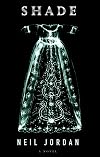
“I know exactly when I died,âÂ? says Nina Hardy, and she is not speaking metaphorically. Decapitated by her gardener, and shoved into a septic tank, she is emphatically deceased.
Luckily for her, she has had a rich life. And fortunately for the reader, Neil Jordan has decided to tell her haunting tale.
Jordan, the acclaimed film director, is no slouch as a writer, having won IrelandâÂÂs Guardian Fiction Prize for his story collection Night in Tunisia in 1979. After a ten-year show more break from publication, concentrating on a film career highlighted by his Oscar-winning movie The Crying Game, among others, he has returned to the page with Shade, an altogether exceptional novel swollen with dreamlike mystery and dread.
Nina is the shade of the title, âÂÂa shade of what I was . . . A rumour, a shade within a shadow, a remembrance of a memory, my own.âÂ? A ghost without purpose other than observation, she traipses back and forth through time, watching her life unfold from childhood, filtering even the most minor of occurrences through the spectre of tragedy.
Rural turn-of-the-century Ireland sets the stage, as Nina and her friends Janie and the hapless George pass the time, playing themselves as characters from Great Expectations, and later, from ShakespeareâÂÂs As You Like It. NinaâÂÂs ghost plays a part, a mournful presence seen only by NinaâÂÂs younger self but adopted by them all as âÂÂthe symbol, the embodiment of their uniqueness, their fraternity and sorority, their secret language.âÂ?
Life intrudes, as it must, as George and NinaâÂÂs half-brother Gregory find relentless terror on the battlefields of WWI, and Nina begins her adulthood through the sorts of horrors only women can ever experience.
As Shade progresses, travelling from the bloody trenches at Dardanelles to the theatrical stages of England and back again, there are echoes of Canadian author Robert Hillesâ wonderful recent novel A Gradual Ruin. But where Hilles finds a prospect of redemption after senseless brutality, Jordan finds only sadness that infects the soul and alters the consciousness in irreversible ways.
Unlike Alice SeboldâÂÂs best-selling, thematically similar novel The Lovely Bones, Jordan has little time for the considerations of an afterlife from the deceasedâÂÂs point of view. Instead, like his most personal films, Jordan uses the awareness of NinaâÂÂs imminent death to examine the undercurrent of conflict that permeates his charactersâ lives, the constant possibility of violence that accompanies every gesture.
Justly praised for his sterling cinematic dialogue, it is a joy to discover Jordan wields a poetâÂÂs ear for literary description and atmosphere as well. ShadeâÂÂs lyrical storytelling, with its references to âÂÂendless mackerel skyâÂ? and rivers of âÂÂalluvial flow,âÂ? is suffused in brooding melancholy; the pages themselves seem submerged in deep shadow.
When the shadow is finally lifted, JordanâÂÂs tale reveals itself to be an exquisitely crafted drama, a flowing Irish ode to impossible loves and the destructive conditions of adulthood. Tragic, moving, surprising, and unforgettable, Shade is a masterful lament to the fragility, and strength, of the self. show less
Luckily for her, she has had a rich life. And fortunately for the reader, Neil Jordan has decided to tell her haunting tale.
Jordan, the acclaimed film director, is no slouch as a writer, having won IrelandâÂÂs Guardian Fiction Prize for his story collection Night in Tunisia in 1979. After a ten-year show more break from publication, concentrating on a film career highlighted by his Oscar-winning movie The Crying Game, among others, he has returned to the page with Shade, an altogether exceptional novel swollen with dreamlike mystery and dread.
Nina is the shade of the title, âÂÂa shade of what I was . . . A rumour, a shade within a shadow, a remembrance of a memory, my own.âÂ? A ghost without purpose other than observation, she traipses back and forth through time, watching her life unfold from childhood, filtering even the most minor of occurrences through the spectre of tragedy.
Rural turn-of-the-century Ireland sets the stage, as Nina and her friends Janie and the hapless George pass the time, playing themselves as characters from Great Expectations, and later, from ShakespeareâÂÂs As You Like It. NinaâÂÂs ghost plays a part, a mournful presence seen only by NinaâÂÂs younger self but adopted by them all as âÂÂthe symbol, the embodiment of their uniqueness, their fraternity and sorority, their secret language.âÂ?
Life intrudes, as it must, as George and NinaâÂÂs half-brother Gregory find relentless terror on the battlefields of WWI, and Nina begins her adulthood through the sorts of horrors only women can ever experience.
As Shade progresses, travelling from the bloody trenches at Dardanelles to the theatrical stages of England and back again, there are echoes of Canadian author Robert Hillesâ wonderful recent novel A Gradual Ruin. But where Hilles finds a prospect of redemption after senseless brutality, Jordan finds only sadness that infects the soul and alters the consciousness in irreversible ways.
Unlike Alice SeboldâÂÂs best-selling, thematically similar novel The Lovely Bones, Jordan has little time for the considerations of an afterlife from the deceasedâÂÂs point of view. Instead, like his most personal films, Jordan uses the awareness of NinaâÂÂs imminent death to examine the undercurrent of conflict that permeates his charactersâ lives, the constant possibility of violence that accompanies every gesture.
Justly praised for his sterling cinematic dialogue, it is a joy to discover Jordan wields a poetâÂÂs ear for literary description and atmosphere as well. ShadeâÂÂs lyrical storytelling, with its references to âÂÂendless mackerel skyâÂ? and rivers of âÂÂalluvial flow,âÂ? is suffused in brooding melancholy; the pages themselves seem submerged in deep shadow.
When the shadow is finally lifted, JordanâÂÂs tale reveals itself to be an exquisitely crafted drama, a flowing Irish ode to impossible loves and the destructive conditions of adulthood. Tragic, moving, surprising, and unforgettable, Shade is a masterful lament to the fragility, and strength, of the self. show less
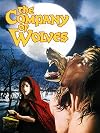
Aesthetics like you wouldn't believe. Angela Lansbury!!! The opening scene with the sister in the woods is truly creepy with oversized dolls and red-eyed wolves in a classic dark wood - running in the white dress super gothic touch. In the story of the woman who marries the traveling man, it's the wild folk wedding that kicks it off. It's so lush!
It takes us on a toxic masculinity journey. It fails to offer a way out of the "nature" of these wolf/men in the grandmother's tales. Women are show more victim of the men in the stories, even if the men are given some sympathetic "excuses"
I also wondered, is this horror? Then a guy rips his face off at one point, so... yes. show less
It takes us on a toxic masculinity journey. It fails to offer a way out of the "nature" of these wolf/men in the grandmother's tales. Women are show more victim of the men in the stories, even if the men are given some sympathetic "excuses"
I also wondered, is this horror? Then a guy rips his face off at one point, so... yes. show less
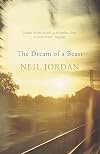
A short novella, told like a story, but its increasing surreality makes it increasingly like a very long dream, which confused me at first as I didn't know it was that sort of book. I expect its fans think it very profound, but it said nothing to me.
It is the sort of pretentious and poorly written thing I might have produced in my late teens, and whilst I might have been proud of it at the time, I would be relieved as an adult if it had never been published.
Even ignoring the absence of show more speech marks (which I find annoying, but concede is a valid stylistic trait), I still think the writing is bad. There are too many self-conscious mentions of light, railway tracks and mist that are ultimately empty.
It tries too hard to be "poetic", which leads to bizarre metaphors such as, "the almond green of her eyes" (though later he is more conventional and describes his own eyes as almond-shaped) and "the scent, which seemed to hang in the air like figures of eight". After lines like that, I couldn't decide whether "I touched my finger off the sundial" was a typo or deliberate, and if deliberate, what it was meant to mean.
At other times, it could do with a little more variety. He hears the "hissing of sprinklers" twice in the space of only 3 sparsely worded pages. However, as the same word is used for sprinklers on several other occasions, it's obviously deliberate, but it jarred with me.
As for the small amount of sex, it should surely be considered for the annual literary Bad Sex award.
Overall, the only person I would recommend this to would be a budding author wanting a case study of what not to do. show less
It is the sort of pretentious and poorly written thing I might have produced in my late teens, and whilst I might have been proud of it at the time, I would be relieved as an adult if it had never been published.
Even ignoring the absence of show more speech marks (which I find annoying, but concede is a valid stylistic trait), I still think the writing is bad. There are too many self-conscious mentions of light, railway tracks and mist that are ultimately empty.
It tries too hard to be "poetic", which leads to bizarre metaphors such as, "the almond green of her eyes" (though later he is more conventional and describes his own eyes as almond-shaped) and "the scent, which seemed to hang in the air like figures of eight". After lines like that, I couldn't decide whether "I touched my finger off the sundial" was a typo or deliberate, and if deliberate, what it was meant to mean.
At other times, it could do with a little more variety. He hears the "hissing of sprinklers" twice in the space of only 3 sparsely worded pages. However, as the same word is used for sprinklers on several other occasions, it's obviously deliberate, but it jarred with me.
As for the small amount of sex, it should surely be considered for the annual literary Bad Sex award.
Overall, the only person I would recommend this to would be a budding author wanting a case study of what not to do. show less
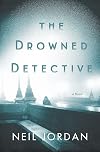
In an unspecified post-Communist Eastern European city, an English private detective named Jonathan makes a living by taking on assignments from ordinary citizens desperate to find lost loved ones. He lives in the city’s suburbs with his wife Sarah, an archaeologist working at a dig in the city, and their young daughter Jenny. Jonathan and Sarah’s marriage is going badly: the couple is seeing a therapist. In the course of previous investigations, Jonathan has (in unorthodox and highly show more questionable fashion) consulted an elderly psychic named Gertrude, whose advice has proved helpful. Early in the novel Jonathan and his associates Istvan and Frank are approached by a couple from the countryside who, 12 years after she went missing, are still looking for their daughter Petra. They are convinced she disappeared somewhere in the city. But before Jonathan can get the search for Petra underway, as he’s walking near the river one evening, he sees a young woman on the bridge who seems about to jump. He goes to her and tries to talk her down, but she jumps anyway, and he jumps in after her and pulls her to safety. She leads him along the twisting twilit city streets to an apartment, where they dry off, and soon he hears her playing one of Bach’s Suites for Cello. He leaves, and when he arrives home Sarah has the Casals recording of Bach’s Cello Suites on the CD player. From here, the story of Jonathan’s search for Petra and for some measure of peace of mind grows complex and layers mystery upon mystery: the city descends into a state of unrest, he discovers things about Sarah he would rather not know, the conundrums and inexplicable events pile up. Neil Jordan’s writing is brilliantly atmospheric. The unnamed Slavic city where the action takes place remains enticingly out of focus, and one can almost smell the steam rising from the cobblestones as the sun emerges after a sudden rain shower. The Drowned Detective is billed as a crime novel, but Jordan incorporates elements of other genres into an occasionally awkward mix that makes it difficult to place the book in any single category without caveats. The purist reader of detective thrillers will probably be disappointed, perhaps even frustrated. But for anyone who doesn’t mind spending a few hours with a novel that doesn’t necessarily answer all of the questions it poses, The Drowned Detective is not the worst choice you can make. show less
Lists
Awards


You May Also Like


Associated Authors
Statistics
- Works
- 50
- Also by
- 7
- Members
- 2,770
- Popularity
- #9,265
- Rating
- 3.6
- Reviews
- 54
- ISBNs
- 213
- Languages
- 11
- Favorited
- 5
