
C. C. Humphreys
Author of Vlad: The Last Confession
About the Author
Image credit: via Penguin Random House
Series
Works by C. C. Humphreys
Plague 1 copy
Associated Works
1066 Turned Upside Down: Alternative fiction stories by nine authors (2018) — Foreword — 16 copies, 2 reviews
Tagged
Common Knowledge
- Other names
- Humphreys, Chris
- Birthdate
- unknown
- Gender
- male
- Occupations
- novelist
actor
fight choreographer - Nationality
- Canada
- Birthplace
- Toronto, Ontario, Canada
- Places of residence
- Vancouver, British Columbia, Canada
UK
Los Angeles, California, USA - Associated Place (for map)
- Canada
Members
Reviews
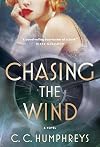
This book is an historical smorgasbord: the stock market crash, art theft, Nazis, gun-running, Communists, flying, the Hindenberg, the Spanish Civil War. Think of anything happening in the 1930s and C. C. Humphreys has managed to fit it in. I gobbled it up.
Roxy Loewen was the daughter of a rich man and he denied her nothing. In 1929 the last thing he bought her was a plane and she joined those first female pioneers of flying like Amelia Earhart and Louise Thaden. Then the stock market crash show more happened and her father lost everything. His former partner, Sydney Munroe, was out for his blood so he said goodbye to Roxy and stepped in front of a streetcar. Then Munroe wanted to get his hands on Roxy but she evaded his clutches, left the US and used her plane to make a living. Seven years later she was in Africa running guns for the Ethiopians trying to stave off Mussolini's army. When that cause was lost she was convinced by her Communist lover, Jocco, to head to Spain to pick up a painting. Jocco's father was an art dealer in Germany and he had heard there was an original Breugel in a church in Spain. Roxy was to meet an art expert there who would authenticate the painting and then she would fly it to Germany. Except things didn't turn out as expected. The painting ended up in Germany just in time to be shown during the 1936 Olympics and Roxy and Jocco were determined to steal it back. What could be difficult about stealing a priceless painting out from under the noses of Adolf Hitler and Hermann Goring? I'm not going to answer that; read the book.
I've read a few other books by Humphreys. Like this one they are filled with twists and turns and do somewhat strain credulity but they sure are entertaining. show less
Roxy Loewen was the daughter of a rich man and he denied her nothing. In 1929 the last thing he bought her was a plane and she joined those first female pioneers of flying like Amelia Earhart and Louise Thaden. Then the stock market crash show more happened and her father lost everything. His former partner, Sydney Munroe, was out for his blood so he said goodbye to Roxy and stepped in front of a streetcar. Then Munroe wanted to get his hands on Roxy but she evaded his clutches, left the US and used her plane to make a living. Seven years later she was in Africa running guns for the Ethiopians trying to stave off Mussolini's army. When that cause was lost she was convinced by her Communist lover, Jocco, to head to Spain to pick up a painting. Jocco's father was an art dealer in Germany and he had heard there was an original Breugel in a church in Spain. Roxy was to meet an art expert there who would authenticate the painting and then she would fly it to Germany. Except things didn't turn out as expected. The painting ended up in Germany just in time to be shown during the 1936 Olympics and Roxy and Jocco were determined to steal it back. What could be difficult about stealing a priceless painting out from under the noses of Adolf Hitler and Hermann Goring? I'm not going to answer that; read the book.
I've read a few other books by Humphreys. Like this one they are filled with twists and turns and do somewhat strain credulity but they sure are entertaining. show less
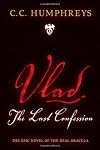
I began this book expecting not to like it. My name and heritage are such that I know a little bit about Vlad Țepeș, and I know a few words of Romanian, and have visited some of the locations talked about in the book - always a set up to be disappointed. And my experience with historical novels that reproduce the life of a historical figure has been mixed. But I'm glad to say that I enjoyed this considerably more than I expected.
The novel is a fictionalization of the life of Vlad Țepeș show more "the Impaler", a 15th century Wallachian prince and one of the inspirations for Stoker's Dracula. There's little known about him aside from a few major events, so maybe that's why the novel works: it gives the author room to create his own character(s) and their own motivations. And he does this pretty well. They were compelling and fairly real. Bringing 15th century Romania to life was a little less successful (compared to, for example, Sansom's success in bringing 16th century London to life in the Shardlake novels) but not a major impediment.
I have a few niggly complaints: the lack of diacritical marks for all the foreign words (Romanian, Hungarian, Turkish) is distracting for those of us who expect them and know that they actually help us pronounce the words correctly. And I have not figured out what the author was doing with some of these words. For instance the major church in Tîrgovişte, where some of the action takes place, is the Biserica Domneascǎ which is consistently called the Bisierica Domnesc. Is this a mistake? If not, then what am I missing? And the fortress of Giurgiu! OMG! In three pages it's spelled three different ways (Giurgiu, Guirgui, Giurgui) and this continues throughout the book. At first I thought it was bad copy editing, but now I think the author must be foolin' with us. If so, I wish he would let us in on the joke.
Anyway, minor distractions aside, it was enjoyable. Oh, by the way. If you are thinking of reading it, you better have a strong stomach. Vlad was not a nice guy and if you can't stomach descriptions of impalement and other tortures you might want to give this book a pass. show less
The novel is a fictionalization of the life of Vlad Țepeș show more "the Impaler", a 15th century Wallachian prince and one of the inspirations for Stoker's Dracula. There's little known about him aside from a few major events, so maybe that's why the novel works: it gives the author room to create his own character(s) and their own motivations. And he does this pretty well. They were compelling and fairly real. Bringing 15th century Romania to life was a little less successful (compared to, for example, Sansom's success in bringing 16th century London to life in the Shardlake novels) but not a major impediment.
I have a few niggly complaints: the lack of diacritical marks for all the foreign words (Romanian, Hungarian, Turkish) is distracting for those of us who expect them and know that they actually help us pronounce the words correctly. And I have not figured out what the author was doing with some of these words. For instance the major church in Tîrgovişte, where some of the action takes place, is the Biserica Domneascǎ which is consistently called the Bisierica Domnesc. Is this a mistake? If not, then what am I missing? And the fortress of Giurgiu! OMG! In three pages it's spelled three different ways (Giurgiu, Guirgui, Giurgui) and this continues throughout the book. At first I thought it was bad copy editing, but now I think the author must be foolin' with us. If so, I wish he would let us in on the joke.
Anyway, minor distractions aside, it was enjoyable. Oh, by the way. If you are thinking of reading it, you better have a strong stomach. Vlad was not a nice guy and if you can't stomach descriptions of impalement and other tortures you might want to give this book a pass. show less

It is 1536 and expert swordsman, Jean Rombaud, has been brought over from France by Henry VIII to behead his wife, Anne Boleyn. On the eve of her execution Rombaud swears a vow to the ill-fated queen, to bury her six-fingered hand at a crossroads in France. However, in a Europe ravaged by religious wars other powerful forces also want the hand for their own nefarious reasons. So when the he is attacked, left for dead and the hand taken by an Archbishop who witnessed the execution, Rombaud show more must battle against seemingly insurmountable odds to regain it and fulfil his promise. Rombaud accumulates a colourful assortment of displaced souls along the way equally determined to see him accomplish his goal. So begins a fight between good an evil.
Although this novel is set during the Tudor era, I was pleasantly surprised to discover that the main focus of the story was Jean Rombaud and isn't a simple retelling of that period's history. This is a swashbuckling adventure novel with plenty of fight scenes alongside numerous twists and turns with a touch of fantasy thrown in too.
Now I'm always a bit of a sucker for historical fiction and adventures stories in particular but whilst I really enjoyed the swashbuckling elements I felt that the plotting was a little bit off, it seemed overly long with much of the tale simply setting the scene for the next big battle scene rather than having any intrinsic value itself. This is a decent piece of escapism that runs along at a decent pace but nothing out of the ordinary for me. show less
Although this novel is set during the Tudor era, I was pleasantly surprised to discover that the main focus of the story was Jean Rombaud and isn't a simple retelling of that period's history. This is a swashbuckling adventure novel with plenty of fight scenes alongside numerous twists and turns with a touch of fantasy thrown in too.
Now I'm always a bit of a sucker for historical fiction and adventures stories in particular but whilst I really enjoyed the swashbuckling elements I felt that the plotting was a little bit off, it seemed overly long with much of the tale simply setting the scene for the next big battle scene rather than having any intrinsic value itself. This is a decent piece of escapism that runs along at a decent pace but nothing out of the ordinary for me. show less
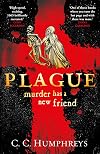
William Coke is a highwayman with a conscience. A veteran of the Civil Wars, he now makes his living by holding up travellers, but he shies away from murder – which is probably wise, because he has a sensitive stomach. On this latest foray he is preparing to rob the wealthy passengers of a coach in Finchley, but the driver refuses to stop (on account of his being murdered), and when he finally enters the carriage, the three people inside are already dead – or in the case of the lady, show more almost dead. Thief taker Pitman, hard on the heels of the coach, is resolved to catch the murderer, even if it means joining forces – albeit reluctantly at first – with a notorious criminal. They are joined by Sarah Chalker, an actress who has vowed to catch the murderer of her husband. But they're in a race against time, because the number of victims of the plague mounts every day, and they need to stay one step ahead not only of the disease, but also of the murderer.
The author brings seventeenth-century London alive before the reader's eyes (and ears, and nose); it felt almost as if I was walking the streets alongside the characters. The scenes describing houses being shut up with the inhabitants still inside them in an effort to restrict the spread of the plague, and the conditions inside Newgate prison, felt truly terrifying, and it's not hard to imagine how people must have suffered. The novel is meticulously researched and is rich in historical details: on daily life, theatre and religion. The main characters – with the exception of the villain – are well rounded and show some neat and unusual traits, which made me engage with them throughout the book. Where the novel falls flat in my opinion is in the characterisation of the villain: despite the author's attempt to inject an unexpected twist, and despite an effort to make them appear more human (as explained in the author notes in the appendix), they are a walking cliché and I pinpointed them as the killer almost from the moment they appeared on the scene.
However, I will be reading the sequel (on the Great Fire of London) to find out the characters' fates and to experience how the author recreates an altogether different terror. show less
The author brings seventeenth-century London alive before the reader's eyes (and ears, and nose); it felt almost as if I was walking the streets alongside the characters. The scenes describing houses being shut up with the inhabitants still inside them in an effort to restrict the spread of the plague, and the conditions inside Newgate prison, felt truly terrifying, and it's not hard to imagine how people must have suffered. The novel is meticulously researched and is rich in historical details: on daily life, theatre and religion. The main characters – with the exception of the villain – are well rounded and show some neat and unusual traits, which made me engage with them throughout the book. Where the novel falls flat in my opinion is in the characterisation of the villain: despite the author's attempt to inject an unexpected twist, and despite an effort to make them appear more human (as explained in the author notes in the appendix), they are a walking cliché and I pinpointed them as the killer almost from the moment they appeared on the scene.
However, I will be reading the sequel (on the Great Fire of London) to find out the characters' fates and to experience how the author recreates an altogether different terror. show less
Lists
Best Spy Fiction (1)
Awards


You May Also Like


Associated Authors
Statistics
- Works
- 31
- Also by
- 2
- Members
- 2,023
- Popularity
- #12,707
- Rating
- 3.6
- Reviews
- 77
- ISBNs
- 186
- Languages
- 8
- Favorited
- 2