
Tim Gautreaux
Author of The Clearing
About the Author
Image credit: Tim Gautreaux, at book fair America on September 12, 2014 in Vincennes, France
Works by Tim Gautreaux
Good for the Soul 1 copy
Little Frogs in a Ditch 1 copy
Easy Pickings 1 copy
Associated Works
The Scribner Anthology of Contemporary Short Fiction: Fifty North American American Stories Since 1970 (1999) — Contributor — 585 copies, 4 reviews
Don't Quit Your Day Job: Acclaimed Authors and the Day Jobs They Quit (2010) — Contributor — 45 copies
Best of The Oxford American: Ten Years from the Southern Magazine of Good Writing {anthology} (2002) — Contributor — 45 copies
A Very Southern Christmas: Holiday Stories from the South’s Best Writers (2003) — Contributor — 35 copies, 1 review
Tagged
Common Knowledge
- Legal name
- Gautreaux, Timothy Martin
- Birthdate
- 1947-10-19
- Gender
- male
- Education
- Université de Caroline du Sud
Université d'État Nicholls - Occupations
- novelist
short story writer - Organizations
- Southeastern Louisiana University (Professeur)
- Awards and honors
- John Dos Passos Prize (2005)
SEBA Book Award (1999)
writer-in-residence (Southeastern Louisiana University) - Nationality
- USA
- Birthplace
- Morgan City, Louisiana, USA
- Places of residence
- Hammond, Louisiana, USA
- Map Location
- Louisiane, Etats-Unis
- Associated Place (for map)
- Louisiana, USA
Members
Reviews
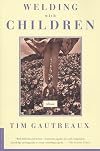
I read a lot of stories, and Tim Gautreaux has a voice unlike any other. His particular Louisiana tone is so precise, the strangeness of some of his characters is heartbreaking. They are everyday and odd at the same time. As the title of the collection indicates, they take risks and do things that no "ordinary" person would dream of doing, and they somehow seem not to regard the perils as we think they should. We cringe at the choices they make, we hope for the best, we turn the page, we sih.
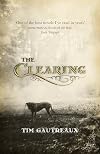
In the 1920’s during Prohibition, protagonist Randolph Aldridge, son of a Pennsylvania lumber baron, travels to Louisiana to find his elder brother, Byron, and manage one of his father’s sawmills. Randolph takes the train to Nimbus, an isolated logging town, where Byron functions as the arm of the law. Byron is estranged from his family after returning from his service in WWI, where he has suffered psychological trauma. The sawmill hands work hard, drink hard, and fight hard, often show more leading to violent confrontations. A mafia boss controls the local saloon and brothels, which adds to the violence.
The setting is vividly described. The writing is atmospheric and evokes a strong sense of the Louisiana swamps. The characters are particularly well-drawn. The relationship between the brothers is key. Byron has withdrawn to the edges of civilization and Randolph wants to help him reconnect with life. During his melancholy moods, Byron plays a series of sad songs on the Victrola. Randolph cares deeply for his brother, eventually making a significant sacrifice. The supporting characters are believable and given enough backstory to picture them as part of this small remote community. Even the blind horse has a unique personality.
I particularly enjoyed the writing style in passages such as: “Ella appeared in the doorway and leaned against the frame, looking at her brother-in-law. After a while she placed a finger below a dry blue eye. At first Randolph didn’t understand, but then he turned and saw that Byron was crying, his lips formed carefully around each note of the song issuing thin and one-dimensional from the mahogany cabinet. Randolph sat as still as wood, his lips parted, his disbelieving breath coming lightly between his lips. Out in the mill yard, rain began to fall, and the house shook as the blind horse bumped its head against the porch post.”
This book strikes a satisfying balance between character and plot. It is dark and violent but contains offsetting elements of decency and redemption. It features many voices, such as the northern outsiders, Cajuns, Creoles, African Americans, and Italians. It gets the reader thinking about how violence impacts people and nature. I am impressed by the author’s craftsmanship. show less
The setting is vividly described. The writing is atmospheric and evokes a strong sense of the Louisiana swamps. The characters are particularly well-drawn. The relationship between the brothers is key. Byron has withdrawn to the edges of civilization and Randolph wants to help him reconnect with life. During his melancholy moods, Byron plays a series of sad songs on the Victrola. Randolph cares deeply for his brother, eventually making a significant sacrifice. The supporting characters are believable and given enough backstory to picture them as part of this small remote community. Even the blind horse has a unique personality.
I particularly enjoyed the writing style in passages such as: “Ella appeared in the doorway and leaned against the frame, looking at her brother-in-law. After a while she placed a finger below a dry blue eye. At first Randolph didn’t understand, but then he turned and saw that Byron was crying, his lips formed carefully around each note of the song issuing thin and one-dimensional from the mahogany cabinet. Randolph sat as still as wood, his lips parted, his disbelieving breath coming lightly between his lips. Out in the mill yard, rain began to fall, and the house shook as the blind horse bumped its head against the porch post.”
This book strikes a satisfying balance between character and plot. It is dark and violent but contains offsetting elements of decency and redemption. It features many voices, such as the northern outsiders, Cajuns, Creoles, African Americans, and Italians. It gets the reader thinking about how violence impacts people and nature. I am impressed by the author’s craftsmanship. show less
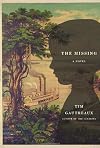
Sam Simoneaux is the floor-walker at a major retailer in New Orleans when a little girl is stolen from her parents. His failure to prevent the theft costs him his job and embroils him in the lives of the girl and her family. His search for Lily brings him face-to-face with all the forms loss can take in a life and reconnects him with a loss of his own that needs answers.
There is a flavor to this novel that is uniquely Southern. You can feel the rock of the Mississippi River, see the small show more towns that line her shores, catch the stench of the backwaters in which the least civilized of the people live, and feel the pull of family that is forged in blood. Characters that make minor appearances come on scene with so much wisdom and carrying such harrowing stories of their own that not one of them feels superfluous or unnecessary.
Along with confronting loss, Simoneaux must also confront revenge, the need for it and the uselessness of it.
It occurred to him that maybe he should have learned along the way that something like revenge did matter. But what use was it? Settling old scores right? Paying back a son of a bitch? He wasn’t trained to think that way. His uncle had told him many times that revenge didn’t help anybody and that the punishment for being a son of a bitch was being one.
All of which does not keep the heart and soul from screaming for some immediate and visible justice to be inflicted on someone who has himself inflicted a wound that cannot and will not ever heal. When we bleed do we not think the blood of our assailant would perhaps be the only way to ease the pain?
He felt sick for her, but terrible for himself as well, for the thin shoulder he cupped in his right hand might have been his own sister’s or brother’s, and then he was crushed by a deeper understanding of what he had lost back before he knew what loss was. He didn’t know such a feeling could come so late…
What makes Sam such a remarkable character for me is how much he cares, how willing he is to accept not only his own culpability but responsibility that should probably fall onto other shoulders. He is wise, with a sharp mind, but he acts from his heart; his heart always wins out. He is, in a word, unforgettable.
This book was recommended to me by my Goodreads friend, Kirk Smith. I wish I could tell him now how much I enjoyed it and how grateful I am for being introduced to this author, but Kirk was recently killed in an accident, so I will have to miss that opportunity to share this with him. It seems appropriate that this book would be about loss. I’m pretty sure the world is missing a very good man in Kirk Smith and that countless lives are diminished by his absence. show less
There is a flavor to this novel that is uniquely Southern. You can feel the rock of the Mississippi River, see the small show more towns that line her shores, catch the stench of the backwaters in which the least civilized of the people live, and feel the pull of family that is forged in blood. Characters that make minor appearances come on scene with so much wisdom and carrying such harrowing stories of their own that not one of them feels superfluous or unnecessary.
Along with confronting loss, Simoneaux must also confront revenge, the need for it and the uselessness of it.
It occurred to him that maybe he should have learned along the way that something like revenge did matter. But what use was it? Settling old scores right? Paying back a son of a bitch? He wasn’t trained to think that way. His uncle had told him many times that revenge didn’t help anybody and that the punishment for being a son of a bitch was being one.
All of which does not keep the heart and soul from screaming for some immediate and visible justice to be inflicted on someone who has himself inflicted a wound that cannot and will not ever heal. When we bleed do we not think the blood of our assailant would perhaps be the only way to ease the pain?
He felt sick for her, but terrible for himself as well, for the thin shoulder he cupped in his right hand might have been his own sister’s or brother’s, and then he was crushed by a deeper understanding of what he had lost back before he knew what loss was. He didn’t know such a feeling could come so late…
What makes Sam such a remarkable character for me is how much he cares, how willing he is to accept not only his own culpability but responsibility that should probably fall onto other shoulders. He is wise, with a sharp mind, but he acts from his heart; his heart always wins out. He is, in a word, unforgettable.
This book was recommended to me by my Goodreads friend, Kirk Smith. I wish I could tell him now how much I enjoyed it and how grateful I am for being introduced to this author, but Kirk was recently killed in an accident, so I will have to miss that opportunity to share this with him. It seems appropriate that this book would be about loss. I’m pretty sure the world is missing a very good man in Kirk Smith and that countless lives are diminished by his absence. show less
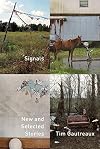
This is the kind of book that makes you realize that fiction can teach you more than facts can. I’ve read everything I can get my hands on by Gautreaux, and this book ranks up with the best.
There are 21 stories here, some drawn from earlier collections (Same Place, Same Things and Welding with Children). The tone is mostly down, but with heart. It’s that hard thud of realization, about how the world really is and about what kind of person you really are. Gautreaux likes to focus on the show more drama of unremarkable lives — a furnace repairman, a junkyard owner, an exterminator — and show that drama. What is an unremarkable life in the big picture is a drama in which things matter enormously on their own stage.
The most poignant of the stories, for me, may be The Furnace Man’s Lament. Mel Todd is a furnace repairman in ice-cold Minnesota. His life is punctuated by calls from desperate homeowners in the throes of freezing weather with broken heating systems. And he does his best to help. But when a teenager, Jack, is orphaned by the death of his grandfather in a dilapidated, heatless house, Todd does only his best. He doesn’t take the opportunity to take Jack in to his family. He gives Jack a job, and he supports him emotionally as well as he can, but that’s as far as he will go. When Jack makes his own choices in life, Todd bears the consequences of his holding back. He did nothing wrong, Jack does nothing wrong, but that missed opportunity will haunt him. Jack will be fine, more than fine, but he won’t be part of Todd’s life.
Sometimes Gautreaux can be unrelenting. Sympathetic characters don’t always enjoy happy endings. But that’s not the point. Happy endings can not only be unrealistic, they can be boring. Boring because they fail to surface the mixture of effort, courage, failure, injustice, and chance that makes our lives take the course that they take. Sometimes you do the best that you can do, or you fail to do the best that you can do. And sometimes your efforts fail or succeed through no fault or virtue of your own. Regardless, it’s the real drama of a real life.
After I’ve read Gautreaux’s stories, I feel as though I’m better equipped to try to live a good life, to accept my own failures, and to take the consequences. show less
There are 21 stories here, some drawn from earlier collections (Same Place, Same Things and Welding with Children). The tone is mostly down, but with heart. It’s that hard thud of realization, about how the world really is and about what kind of person you really are. Gautreaux likes to focus on the show more drama of unremarkable lives — a furnace repairman, a junkyard owner, an exterminator — and show that drama. What is an unremarkable life in the big picture is a drama in which things matter enormously on their own stage.
The most poignant of the stories, for me, may be The Furnace Man’s Lament. Mel Todd is a furnace repairman in ice-cold Minnesota. His life is punctuated by calls from desperate homeowners in the throes of freezing weather with broken heating systems. And he does his best to help. But when a teenager, Jack, is orphaned by the death of his grandfather in a dilapidated, heatless house, Todd does only his best. He doesn’t take the opportunity to take Jack in to his family. He gives Jack a job, and he supports him emotionally as well as he can, but that’s as far as he will go. When Jack makes his own choices in life, Todd bears the consequences of his holding back. He did nothing wrong, Jack does nothing wrong, but that missed opportunity will haunt him. Jack will be fine, more than fine, but he won’t be part of Todd’s life.
Sometimes Gautreaux can be unrelenting. Sympathetic characters don’t always enjoy happy endings. But that’s not the point. Happy endings can not only be unrealistic, they can be boring. Boring because they fail to surface the mixture of effort, courage, failure, injustice, and chance that makes our lives take the course that they take. Sometimes you do the best that you can do, or you fail to do the best that you can do. And sometimes your efforts fail or succeed through no fault or virtue of your own. Regardless, it’s the real drama of a real life.
After I’ve read Gautreaux’s stories, I feel as though I’m better equipped to try to live a good life, to accept my own failures, and to take the consequences. show less
Lists
Awards


You May Also Like


Associated Authors
Statistics
- Works
- 17
- Also by
- 23
- Members
- 1,578
- Popularity
- #16,353
- Rating
- 3.9
- Reviews
- 55
- ISBNs
- 79
- Languages
- 4
- Favorited
- 7
