
Mollie Hunter (1922–2012)
Author of A Stranger Came Ashore
About the Author
Mollie Hunter was born in Longniddry, East Lothian, Scotland on June 30, 1922. At the age of 14, she got a job at a flower shop in Edinburgh and educated herself by studying in the National Library. Most of her children's books were based on Scottish history and legends. Her works include A Sound show more of Chariots, The Kelpie's Pearls, The Thirteenth Member, and The Lothian Run. She won the Carnegie Medal in 1975 for The Stronghold. She died on July 31, 2012 at the age of 90. (Bowker Author Biography) show less
Image credit: scotsman.com
Series
Works by Mollie Hunter
A Sound of Chariots, 1 copy
Associated Works
Cricket Magazine, Vol. 5, No. 10, June 1978 — Contributor — 3 copies
Cricket Magazine, Vol. 5, No. 11, July 1978 — Contributor — 1 copy
Tagged
Common Knowledge
- Legal name
- McIlwraith, Maureen Mollie Hunter McVeigh
- Birthdate
- 1922-06-30
- Date of death
- 2012-07-31
- Gender
- female
- Education
- Preston Lodge School, East Lothian, Scotland
- Occupations
- novelist
author
teacher(creative writing)
children's book author
fantasy writer
playwright - Organizations
- Society of Authors (past chairman, Society of Authors in Scotland)
- Awards and honors
- May Hill Arbuthnot Lecturer (1975)
Child Study Association of America's Children's Books of the Year citation (The Ferlie, 1968, The Walking Stones, 1970, The Thirteenth Member, 1971, A Sound of Chariots and The Haunted Mountain, both 1972, The Stronghold, 1974, A Stranger Came Ashore, 1975, Talent Is Not Enough, 1976, A Furl of Fairy Wind, 1977, and Cat, Herself, 1987)
Book World's Children's Spring Book Festival honor book citation (1970, for The Lothian Run)
New York Times Outstanding Book of the Year citation (The Haunted Mountain and A Sound of Chariots, both 1972, and A Stranger Came Ashore, 1975)
Children's Book Award from the Child Study Association of America (1973, A Sound of Chariots)
Scottish Arts Council Award (1973, The Haunted Mountain) (show all 7)
Silver Pencil Award - Short biography
- Mollie Hunter was born and raised near Edinburgh, Scotland, and married Thomas McIwraith in 1940. She made her debut as a writer with the novel Patrick Kentigern Keenan, published in 1963 in the UK and released in the USA as The Smartest Man in Ireland. She went on lecture tours of the USA in 1975 and New Zealand in 1976. She served as a writer-in-residence at Dalhousie University in Halifax, Nova Scotia and also taught creative writing at the Aberlour Summer School. In addition to her more than 25 novels and plays for children and adults, she also produced nonfiction works about writing, and wrote numerous articles and essays for newspapers and magazines. She's considered one of the most popular and influential 20th-century Scottish fiction writers.
- Nationality
- UK
- Birthplace
- Longniddry, East Lothian, Scotland, UK
- Places of residence
- Inverness, Scotland, UK
- Place of death
- Inverness, Scotland, UK
- Associated Place (for map)
- Scotland, UK
Members
Discussions
Found: Children/YA book - a boy and an old man who is guardian of standing stones. in Name that Book (March 2025)
Reviews

A prolific and very talented children's author herself, Mollie Hunter has published many works of fantasy, folklore, and historical fiction, all set in her native Scotland. She won the prestigious Carnegie Medal in 1974 for her novel, The Stronghold. This collection reproduces five lectures given by the author in the United States in 1975, devoted to the craft of writing for children.
Talent Is Not Enough was the May Hill Arbuthnot Honor Lecture, an annual presentation made by a children's show more author, or a scholar of children's literature, to the ALSC (Association for Library Service to Children), a division of the American Library Association. The title is taken from Ralph Waldo Emerson's assertion that "Talent alone cannot make the writer. There must be a man behind the book." Here Hunter asserts that craft is as essential to creating a good children’s book as natural talent, and that every author must struggle to discover that unique "code" which will bring their talent to fruition, and allow for true communication with the reader. In a very moving passage, the author describes the powerful effect of one of her own stories on her then eight-year-old son, who sat listening, silent tears running down his face:
"Those soundless tears, then, did more than move me. I felt them as an honour, for the story situation that drew them was poignant beyond the child’s own power to express; but he had understood my form of words for it, and they had spoken for him. And so at last, it seemed to me then, I had discovered my particular code."
Hunter’s point that a successful children’s author must understand the landscape of childhood - the vivid sensory impact of living in a physical world designed for adults, and therefore out of scale to children; the sense of wonder and enthusiasm, not yet blunted by an adult code that "debars spontaneity, and is embarrassed by naked idealism," is well taken. Her contention that the field of children literature, as she found it at the beginning of her career, was dominated by a middle-class sensibility which humiliated poor children, who were "confronted in their reading by the cruel implication that they were the exceptions to the rule of people never having to worry about the rent, or getting enough to eat, or being cold and ragged," is also well observed.
On the other hand, I’m not sure I agree with her position that the "school story" genre has no relevance to the average child, simply because it does not reflect their actual life stories. Fantasy too, frequently includes occurrences that have no direct experiential equivalent for the child - but through a process of association, the reader sees her life reflected back at her. Although I have only just begun to investigate the school story in any detail, the girls' school-story group begun here on the site), I would imagine that it functions in a similar fashion, allowing the child to imagine a world separate from the parent. The phenomenal success of the Harry Potter books, which bridge these two genres, seems to point to the continued relevance of such stories.
Hunter’s concluding discussion of the "convention of care," which obligates authors of children’s books to consider the nature of their audience, and the necessity of balancing good literature with age-appropriate material, should be required reading. I’m not sure that the contemporary reader (this was published more than thirty years ago, after all), will agree with all of the author’s specific ideas, as to what would be appropriate, but the notions of caution and responsibility, as it concerns what children are exposed to, is as relevant today as it ever was.
Shoulder the Sky was the Anne Carroll Moore Lecture, delivered annually at the New York Public Library; this one in May, 1975. Here Hunter addresses the genre of historical fiction, its potential to make the past come alive for children, and its all-too frequent misuse by "pseudo-romantics." The author’s strong Scots sensibility shines through, as she dissects the mythology of Bonnie Prince Charlie, arguing for an approach that balances the need for realism and truth-telling with that for heroes, moments of glory, and that "voice calling bravely out of the past to the youngster of the present day." Her argument that the author of such work needs to be able to combine a sense of history, "an instinctual appreciation of the past," with a detailed knowledge of that past, an ability to create characters that truly inhabit the world/time described, is both convincing and perennially relevant.
One World was a lecture given by Hunter at the Enoch Pratt Free Library, in Baltimore, Maryland, in April, 1975. Here the author addresses the fantasy genre, which she broadly defines to include everything from fairy tales to spaceship adventures, arguing that it is all drawn from folkloric sources. Her analysis of a typical “starship story,” which clearly demonstrates the folktale parallels of character and plot, will no doubt strike a chord with many Star Trek and Star Wars devotees.
Hunter defines folklore itself quite broadly, arguing that it the sum of “What people have learned and passed on through the ages,”, and that it represents, not spontaneous acts of individual invention, but a slow accretion of knowledge, providing humanity with a connection to our pre-historic heritage. Her discussion of the Maes Howe, a megalithic monument on the Orkney Islands, and how its memory was preserved for thirty centuries in folk culture, long after it had been lost from the “factual” record, is as persuasive an argument for the relevance of folklore, as any I have ever read. Often “despised as a source of accurate information about the past,” folklore, Hunter contends, is a “chain of communication through the centuries,” a “long, unbroken line” stretching from Megalithic times to the present.
Thus fairytales and fantasy, though often dismissed as escapist literature, actually provide their readers with connections to a reality deeper and more immediate than history. Hunter demonstrates that this is the case even in supernatural stories, analyzing the Scots selkie tradition, which maintains the existence of “seal people,” who can abandon their skins and come up on shore in human form. Her anthropological interpretation of these stories is fascinating.
In The Otherworld, Hunter turns her attention to the subject of fairies, by which the author decidedly does NOT mean the “minute, gossamer-winged creatures” popularized by the Victorians. Rather, she is referring to the powerful and eerie “Other People” who inhabit much of western European folklore. She examines two major theories, as regards the origins of this lore: the transformation of ancient “Cult of the Dead” religious beliefs; and the more anthropological notion of displaced Stone Age inhabitants of Europe, gradually declining after the coming of more “settled” peoples. Her examination of the Celtic concept of the “Other World,”and her exploration of certain folktales, and what they might (or might not) tell us about interactions between various tribes in pre-historic Europe, make for an enlightening read.
Finally, in The Limits of Language,, Hunter analyzes the mechanics of writing for children: word choice (including issues of obscenity), sentence form and structure, and the rhythm created by word order, are all considered. The “magical” power of the words themselves is discussed, and the need to balance the instinctive with the intellectual. The end goal, of course, is that moment of recognition, of true communication, which is itself a kind of magic...
By turns moving and enlightening, the five essays contained in Talent Is Not Enough should be of interest both to the folklorist and to the children’s literature scholar. I have re-read this classic a number of times, always gaining some new insight. It speaks to themes near to my heart: the power of folk culture, our human connection to the ancient past, and the importance of care in our use of language. I assigned the titular essay in the class I taught on children’s fantasy and folklore, but I recommend the entire collection. show less
Talent Is Not Enough was the May Hill Arbuthnot Honor Lecture, an annual presentation made by a children's show more author, or a scholar of children's literature, to the ALSC (Association for Library Service to Children), a division of the American Library Association. The title is taken from Ralph Waldo Emerson's assertion that "Talent alone cannot make the writer. There must be a man behind the book." Here Hunter asserts that craft is as essential to creating a good children’s book as natural talent, and that every author must struggle to discover that unique "code" which will bring their talent to fruition, and allow for true communication with the reader. In a very moving passage, the author describes the powerful effect of one of her own stories on her then eight-year-old son, who sat listening, silent tears running down his face:
"Those soundless tears, then, did more than move me. I felt them as an honour, for the story situation that drew them was poignant beyond the child’s own power to express; but he had understood my form of words for it, and they had spoken for him. And so at last, it seemed to me then, I had discovered my particular code."
Hunter’s point that a successful children’s author must understand the landscape of childhood - the vivid sensory impact of living in a physical world designed for adults, and therefore out of scale to children; the sense of wonder and enthusiasm, not yet blunted by an adult code that "debars spontaneity, and is embarrassed by naked idealism," is well taken. Her contention that the field of children literature, as she found it at the beginning of her career, was dominated by a middle-class sensibility which humiliated poor children, who were "confronted in their reading by the cruel implication that they were the exceptions to the rule of people never having to worry about the rent, or getting enough to eat, or being cold and ragged," is also well observed.
On the other hand, I’m not sure I agree with her position that the "school story" genre has no relevance to the average child, simply because it does not reflect their actual life stories. Fantasy too, frequently includes occurrences that have no direct experiential equivalent for the child - but through a process of association, the reader sees her life reflected back at her. Although I have only just begun to investigate the school story in any detail, the girls' school-story group begun here on the site), I would imagine that it functions in a similar fashion, allowing the child to imagine a world separate from the parent. The phenomenal success of the Harry Potter books, which bridge these two genres, seems to point to the continued relevance of such stories.
Hunter’s concluding discussion of the "convention of care," which obligates authors of children’s books to consider the nature of their audience, and the necessity of balancing good literature with age-appropriate material, should be required reading. I’m not sure that the contemporary reader (this was published more than thirty years ago, after all), will agree with all of the author’s specific ideas, as to what would be appropriate, but the notions of caution and responsibility, as it concerns what children are exposed to, is as relevant today as it ever was.
Shoulder the Sky was the Anne Carroll Moore Lecture, delivered annually at the New York Public Library; this one in May, 1975. Here Hunter addresses the genre of historical fiction, its potential to make the past come alive for children, and its all-too frequent misuse by "pseudo-romantics." The author’s strong Scots sensibility shines through, as she dissects the mythology of Bonnie Prince Charlie, arguing for an approach that balances the need for realism and truth-telling with that for heroes, moments of glory, and that "voice calling bravely out of the past to the youngster of the present day." Her argument that the author of such work needs to be able to combine a sense of history, "an instinctual appreciation of the past," with a detailed knowledge of that past, an ability to create characters that truly inhabit the world/time described, is both convincing and perennially relevant.
One World was a lecture given by Hunter at the Enoch Pratt Free Library, in Baltimore, Maryland, in April, 1975. Here the author addresses the fantasy genre, which she broadly defines to include everything from fairy tales to spaceship adventures, arguing that it is all drawn from folkloric sources. Her analysis of a typical “starship story,” which clearly demonstrates the folktale parallels of character and plot, will no doubt strike a chord with many Star Trek and Star Wars devotees.
Hunter defines folklore itself quite broadly, arguing that it the sum of “What people have learned and passed on through the ages,”, and that it represents, not spontaneous acts of individual invention, but a slow accretion of knowledge, providing humanity with a connection to our pre-historic heritage. Her discussion of the Maes Howe, a megalithic monument on the Orkney Islands, and how its memory was preserved for thirty centuries in folk culture, long after it had been lost from the “factual” record, is as persuasive an argument for the relevance of folklore, as any I have ever read. Often “despised as a source of accurate information about the past,” folklore, Hunter contends, is a “chain of communication through the centuries,” a “long, unbroken line” stretching from Megalithic times to the present.
Thus fairytales and fantasy, though often dismissed as escapist literature, actually provide their readers with connections to a reality deeper and more immediate than history. Hunter demonstrates that this is the case even in supernatural stories, analyzing the Scots selkie tradition, which maintains the existence of “seal people,” who can abandon their skins and come up on shore in human form. Her anthropological interpretation of these stories is fascinating.
In The Otherworld, Hunter turns her attention to the subject of fairies, by which the author decidedly does NOT mean the “minute, gossamer-winged creatures” popularized by the Victorians. Rather, she is referring to the powerful and eerie “Other People” who inhabit much of western European folklore. She examines two major theories, as regards the origins of this lore: the transformation of ancient “Cult of the Dead” religious beliefs; and the more anthropological notion of displaced Stone Age inhabitants of Europe, gradually declining after the coming of more “settled” peoples. Her examination of the Celtic concept of the “Other World,”and her exploration of certain folktales, and what they might (or might not) tell us about interactions between various tribes in pre-historic Europe, make for an enlightening read.
Finally, in The Limits of Language,, Hunter analyzes the mechanics of writing for children: word choice (including issues of obscenity), sentence form and structure, and the rhythm created by word order, are all considered. The “magical” power of the words themselves is discussed, and the need to balance the instinctive with the intellectual. The end goal, of course, is that moment of recognition, of true communication, which is itself a kind of magic...
By turns moving and enlightening, the five essays contained in Talent Is Not Enough should be of interest both to the folklorist and to the children’s literature scholar. I have re-read this classic a number of times, always gaining some new insight. It speaks to themes near to my heart: the power of folk culture, our human connection to the ancient past, and the importance of care in our use of language. I assigned the titular essay in the class I taught on children’s fantasy and folklore, but I recommend the entire collection. show less

When I was maybe ten, my father brought this book home along with several others from a graduate class he was taking on children's literature. Of all those, A Stranger Came Ashore and Pinballs are the only ones I recall - and A Stranger Came Ashore is the only one I've re-read regularly since that time.
A bit of a magical, mythical tale, it holds up every time I read it, no matter my age. It's set on Scotland's Shetland islands and is tied to the small community (largely of fishermen) there, show more and interwoven with Scottish legends.
The mystery here is beautifully done, and this short book manages suspense and creepiness with gorgeous ease. It's easy to love Finn Learson and doubt Robbie - and later, easy to find Finn Learson an incredibly unnerving character.
Overall, the story delivers the right measures of tension and mystery, of possibilities and clues, before leading to an awesome confrontation. I'd recommend this book to anyone! show less
A bit of a magical, mythical tale, it holds up every time I read it, no matter my age. It's set on Scotland's Shetland islands and is tied to the small community (largely of fishermen) there, show more and interwoven with Scottish legends.
The mystery here is beautifully done, and this short book manages suspense and creepiness with gorgeous ease. It's easy to love Finn Learson and doubt Robbie - and later, easy to find Finn Learson an incredibly unnerving character.
Overall, the story delivers the right measures of tension and mystery, of possibilities and clues, before leading to an awesome confrontation. I'd recommend this book to anyone! show less
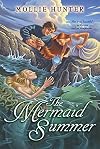
Everyone knows that nothing displeases the mermaids that haunt the Drongs (a stone formation off the coast of the village) more than humans who ignore their hold over the seas, but Eric Anderson, a jovial fisherman with little regard for the legendary creatures of the sea disregards the power of the mermaids, he finds that his self-assurance leads him into a whirlpool of trouble. When an enchantingly beautiful but deadly mermaid lures his fishing fleet into the dangerous waters that surround show more the pointed Drongs, Eric Anderson is certain the end has come. When his life and that of his companions is spared, Eric’s shame at bringing the mermaid’s curse upon his men and their families forces him to leave the village and take the curse upon himself, but Eric’s granddaughter, Anna refuses to believe that her Granda Eric will never return.
When Eric begins to send his family gifts from the many lands he journeyed to, his family is pleased, but worried. For his grandchildren, he selects gifts are more meaningful than he suspects: a conch shell and knife for Jon; a jade comb, a silver mirror, and a multi-hued fabric that shines with all the colors of the sea for Anna. Do these gifts have the power to break the mermaid’s curse? And will Anna and Jon be brave enough to use them?
---
The novel reads like a sea legend; the tale of a vengeful mermaid and a pair of cunning children in a Scottish fishing village. The mermaid is portrayed as a dark and powerful creature, in the tradition of the Sirens, her song allowing her to charm and destroy those who dare deny her. It’s an interesting, fairy-tale like tale, but the feminist in me had some trouble with the portrayal of women(girls) as vain, flighty, and impulsive. It is clear that this is Anna’s story; her actions are the ones that drive the story to its end, but these are depicted as unwise choices resulting from a foolish, stubborn girl’s curiosity. The mermaid, while a powerful creature, is nevertheless portrayed as a vain and self-centered girl, her actions arising as a result of her desire to be revered and exalted as the most awe-inspiring mermaid. The story almost carries the caveat so often associated with the old tales of seafaring men–”Ay, keep yer women-folk off yer boats and out of the seas. Nothing but trouble do they bring.”
However, I can now understand why I was so fascinated by this story when I was a kid; there weren’t that many children’s books that featured dark fantasy. Most mermaid books were of the Ariel variety–lovelorn girl wants to become a human. The Mermaid Summer is definitely not about a sweet, lovelorn mermaid who likes to sing. She’s cruel and takes pleasure in riddles; while Jon and Anna are no innocent children swayed by the magic of a beautiful mermaid.
Gricel @ things-she-read.org show less
When Eric begins to send his family gifts from the many lands he journeyed to, his family is pleased, but worried. For his grandchildren, he selects gifts are more meaningful than he suspects: a conch shell and knife for Jon; a jade comb, a silver mirror, and a multi-hued fabric that shines with all the colors of the sea for Anna. Do these gifts have the power to break the mermaid’s curse? And will Anna and Jon be brave enough to use them?
---
The novel reads like a sea legend; the tale of a vengeful mermaid and a pair of cunning children in a Scottish fishing village. The mermaid is portrayed as a dark and powerful creature, in the tradition of the Sirens, her song allowing her to charm and destroy those who dare deny her. It’s an interesting, fairy-tale like tale, but the feminist in me had some trouble with the portrayal of women(girls) as vain, flighty, and impulsive. It is clear that this is Anna’s story; her actions are the ones that drive the story to its end, but these are depicted as unwise choices resulting from a foolish, stubborn girl’s curiosity. The mermaid, while a powerful creature, is nevertheless portrayed as a vain and self-centered girl, her actions arising as a result of her desire to be revered and exalted as the most awe-inspiring mermaid. The story almost carries the caveat so often associated with the old tales of seafaring men–”Ay, keep yer women-folk off yer boats and out of the seas. Nothing but trouble do they bring.”
However, I can now understand why I was so fascinated by this story when I was a kid; there weren’t that many children’s books that featured dark fantasy. Most mermaid books were of the Ariel variety–lovelorn girl wants to become a human. The Mermaid Summer is definitely not about a sweet, lovelorn mermaid who likes to sing. She’s cruel and takes pleasure in riddles; while Jon and Anna are no innocent children swayed by the magic of a beautiful mermaid.
Gricel @ things-she-read.org show less

This novel for children is a good introduction to the sad events in the Scottish Highlands known as the Clearances, when people who had farmed the highlands for centuries were brutally evicted from their land to make way for sheep raising. Such people were left destitute and forced to emigrate to the Americas, because their former chiefs sold off the land in order to enjoy the luxury of lowland Scottish living standards, without a care for those who had served their ancestors for centuries. show more Harsh laws imposed after the English defeat of the Scots at Culloden ensured that the Highlanders could not bear arms, to defend themselves or resist eviction, on penalty of death.
Set in 1854, the story is narrated from the viewpoint of a 15 year old boy, Connal Ross, who at first is excited by the preparations to watch for the arrival of officials to serve the eviction notice although he is also trepidatious after an old man, Blind John, has visions of seeing violence done to Connal's mother and his sister Katrine. Connal retrieves an old pistol from hiding in the thatched roof of his house where it has been kept since their great grandfather's escape at Culloden. At first, there is hope because the agent who has to sign the eviction notices swears in writing that he will not be a party to signing them, but officials soon arrive with notices (which the people cannot open or they will be deemed to have accepted service of the notices).
The first pair are turned back good naturedly, as the community has determined on a path of passive resistance with the women taking the lead, in the erroneous belief that violence will not be offered against unarmed women and girls. But when two drunken officials turn up and one of them, McCraig, holds a pistol to the head of Connal's mother, Connal uses his old pistol to force McCraig to back down, and from then on things turn ugly, with the story given out that the highlanders have 'rioted'. After that, they are fair game for vicious reprisals to be taken against them, and Hunter does not spare her readership from some of what that entails.
From then on, Connal becomes a fugitive, and he and Katrine have to try to free their mother who has been jailed as a scapegoat as Connal cannot be found, and to avoid the vindictive McCraig who hounds them even as they attempt to board a ship to America after her trial.
It is a fast paced story from the young man's viewpoint, told in flashback as he writes his account for a lowlander Scottish doctor who at first views the Highlanders as savages who got what they deserved, but who comes to respect them by the end. show less
Set in 1854, the story is narrated from the viewpoint of a 15 year old boy, Connal Ross, who at first is excited by the preparations to watch for the arrival of officials to serve the eviction notice although he is also trepidatious after an old man, Blind John, has visions of seeing violence done to Connal's mother and his sister Katrine. Connal retrieves an old pistol from hiding in the thatched roof of his house where it has been kept since their great grandfather's escape at Culloden. At first, there is hope because the agent who has to sign the eviction notices swears in writing that he will not be a party to signing them, but officials soon arrive with notices (which the people cannot open or they will be deemed to have accepted service of the notices).
The first pair are turned back good naturedly, as the community has determined on a path of passive resistance with the women taking the lead, in the erroneous belief that violence will not be offered against unarmed women and girls. But when two drunken officials turn up and one of them, McCraig, holds a pistol to the head of Connal's mother, Connal uses his old pistol to force McCraig to back down, and from then on things turn ugly, with the story given out that the highlanders have 'rioted'. After that, they are fair game for vicious reprisals to be taken against them, and Hunter does not spare her readership from some of what that entails.
From then on, Connal becomes a fugitive, and he and Katrine have to try to free their mother who has been jailed as a scapegoat as Connal cannot be found, and to avoid the vindictive McCraig who hounds them even as they attempt to board a ship to America after her trial.
It is a fast paced story from the young man's viewpoint, told in flashback as he writes his account for a lowlander Scottish doctor who at first views the Highlanders as savages who got what they deserved, but who comes to respect them by the end. show less
Lists
Best Young Adult (1)
THE WAR ROOM (1)
Awards


You May Also Like


Associated Authors
Statistics
- Works
- 34
- Also by
- 3
- Members
- 1,744
- Popularity
- #14,746
- Rating
- 3.7
- Reviews
- 26
- ISBNs
- 177
- Languages
- 3
- Favorited
- 1