
About the Author
Winner of a 1990 Pulitzer Prize for explanatory journalism, Steve Coll has been managing editor of The Washington Post since 1998 and covered Afghanistan as the Post's South Asia bureau chief between 1989 and 1992. Coll is the author of four books, He lives with his wife and three children in show more Maryland show less
Image credit: Courtesy of the Pulitzer Prizes.
Works by Steve Coll
Ghost Wars: The Secret History of the CIA, Afghanistan, and Bin Laden, from the Soviet Invasion to September 10, 2001 (2004) 2,769 copies, 34 reviews
Directorate S: The C.I.A. and America's Secret Wars in Afghanistan and Pakistan (2018) 513 copies, 7 reviews
The Achilles Trap: Saddam Hussein, the C.I.A., and the Origins of America's Invasion of Iraq (2024) 211 copies, 2 reviews
The Taking of Getty Oil: Pennzoil, Texaco, and the Takeover Battle That Made History (1987) 73 copies, 2 reviews
Associated Works
Tagged
Common Knowledge
- Legal name
- Coll, Stephen Wilson
- Birthdate
- 1958-10-08
- Gender
- male
- Education
- Occidental College (BA|English and History|1980)
- Occupations
- journalist
administrator
professor (journalism) - Organizations
- The Washington Post
New America Foundation
The New Yorker
Columbia University School of Journalism
Pulitzer Prize Board - Awards and honors
- Pulitzer Prize for Explanatory Reporting (1990)
Pulitzer Prize for General Non-Fiction (2005)
PEN/John Kenneth Galbraith Award (2009)
Arthur Ross Book Award (2005)
Livingston Award (1992)
Robert F. Kennedy Memorial Award (2000) (show all 9)
Lionel Gelber Prize (2004)
Financial Times and Goldman Sachs Business Book of the Year Award (2012)
National Book Critics Circle Award (2008 and 2012) - Agent
- Melanie Jackson
- Relationships
- Coll, Susan (spouse)
- Nationality
- USA
- Birthplace
- Washington, District of Columbia, USA
- Places of residence
- Washington, D.C., USA
- Associated Place (for map)
- USA
Members
Reviews

An outstanding, riveting, and (surprisingly) nonpartisan account of the world's most powerful corporation. The author does an excellent job of describing the extent of that power, which operates on a scale that can otherwise be difficult to imagine. Seriously, you have no idea.
Also an oddly enjoyable read, in that Coll litters his account with colorful, memorable anecdotes.
Recommended for anyone remotely interested in current affairs, global politics and/or environmentalism.
Also an oddly enjoyable read, in that Coll litters his account with colorful, memorable anecdotes.
Recommended for anyone remotely interested in current affairs, global politics and/or environmentalism.
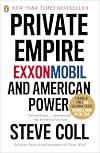
This is an impressive, if depressing, book. Journalist Steve Coll has done exhaustive work painting a comprehensive picture of the policies, actions and operating philosophies of one of the largest, and most ubiquitous, corporations in the world, covering the years from the Exxon Valdez oil spill in Alaska through the disastrous explosion of BP's floating oil rig out in the Gulf of Mexico. Coll tells the story through a series of mostly individual stories of ExxonMobil's dealings in African show more countries like Chad and Equatorial Guinea as they negotiate with repressive dictators while dealing with issues of security against insurgents in their own compounds and doing their best to ignore the horrific social conditions they see around them. We read of the corporation's years-long stubborn refusal to acknowledge the problem of climate change, and in fact see create purposefully disingenuous studies designed to confuse the issue and delay social/government action. We see them go their own way, sometimes at cross purposes with American diplomatic policy, often arrogantly declaring themselves a global corporation not tied to the U.S. government in terms of aims or policies, and then just as quickly lobbying for government support when such support is deemed necessary to enhance corporate goals. Those are just a few examples. In sum, one arrives at a relatively nuanced picture of what this corporate behemoth is capable of. That cuts both ways, in fact, as Coll also points out positive developments, such as the company's eventual acknowledgment of global warming (under new corporate leadership) and support for the idea of a carbon tax to help cut emissions. The book is well written and makes for smooth reading. At 642 pages, reading this book represents a considerable time commitment, but I believe it's a worthwhile endeavor. I feel like I gained not just a realistic picture of ExxonMobil, but of the oil industry as a whole, and how that industry fits into and affects global economy and politics. show less
The Achilles Trap: Saddam Hussein, the C.I.A., and the Origins of America's Invasion of Iraq by Steve Coll
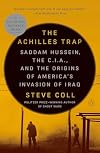
There have been numerous books written about the events that led to America’s invasion of Iraq in 2003, most from the American perspective. In The Achilles Trap, journalist Steve Coll has created a sweeping overview that includes the Iraqi side of the story as well. Like Nixon, Saddam Hussein taped many of his interactions with his officials. Coll uses this treasure trove, as well as interviews with key figures in both countries, to create a definitive account of the decades of events show more leading to the war’s outbreak.
When Saddam took power in 1979, despite the brutality of his regime, America viewed him as an ally against Iran. After Iraq went to war with Iran, the CIA fed Saddam critical information to insure that his forces would not be defeated on the field of battle. This was done despite Iraq’s illegal use of chemical weapons. Even with this support, Saddam feared that the CIA was actively working to remove him from office. This led him in the 1980s to order his scientists to begin work on creating an atomic weapon. Saddam’s invasion of Kuwait in 1990 fractured the America-Iraq relationship and led to the US entering the fray. Soundly beaten, but allowed to stay in power, Saddam ordered the destruction of any evidence that he had attempted to create weapons of mass destruction (WMD).
After 1990, all official contact between the US and Iraq were cut off, which led to the CIA having no idea what was taking place in Iraq. Because of this rupture, American officials continued to believe Saddam was still working to develop WMDs. In the years following, Coll shows how the lack of communication between the two countries led each to grow increasingly distrustful of the other. Having destroyed his WMD program, Saddam was convinced that the CIA had to know they had no such weapons. But since he continued to try to obstruct the UN inspectors' search for them in his country, the US still felt the threat was real. Despite the UN inspectors finally concluding there was no such weapon program, following 9/11, ignoring these findings, President George W. Bush made the decision to send troops into Iraq to overthrow Saddam.
This book presents a fascinating picture of how miscalculations on both sides led to a war that would devastate Iraq and result in a deadly civil war there. It is a gripping story and a well told one. This deep dive into the circumstances leading to the conflict is an essential read, and timely. Today, just as then, the lack of formal communications between countries could well be the spark that ignites another needless conflict. show less
When Saddam took power in 1979, despite the brutality of his regime, America viewed him as an ally against Iran. After Iraq went to war with Iran, the CIA fed Saddam critical information to insure that his forces would not be defeated on the field of battle. This was done despite Iraq’s illegal use of chemical weapons. Even with this support, Saddam feared that the CIA was actively working to remove him from office. This led him in the 1980s to order his scientists to begin work on creating an atomic weapon. Saddam’s invasion of Kuwait in 1990 fractured the America-Iraq relationship and led to the US entering the fray. Soundly beaten, but allowed to stay in power, Saddam ordered the destruction of any evidence that he had attempted to create weapons of mass destruction (WMD).
After 1990, all official contact between the US and Iraq were cut off, which led to the CIA having no idea what was taking place in Iraq. Because of this rupture, American officials continued to believe Saddam was still working to develop WMDs. In the years following, Coll shows how the lack of communication between the two countries led each to grow increasingly distrustful of the other. Having destroyed his WMD program, Saddam was convinced that the CIA had to know they had no such weapons. But since he continued to try to obstruct the UN inspectors' search for them in his country, the US still felt the threat was real. Despite the UN inspectors finally concluding there was no such weapon program, following 9/11, ignoring these findings, President George W. Bush made the decision to send troops into Iraq to overthrow Saddam.
This book presents a fascinating picture of how miscalculations on both sides led to a war that would devastate Iraq and result in a deadly civil war there. It is a gripping story and a well told one. This deep dive into the circumstances leading to the conflict is an essential read, and timely. Today, just as then, the lack of formal communications between countries could well be the spark that ignites another needless conflict. show less
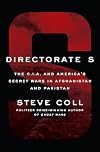
Steve Coll’s latest book, Directorate S: The CIA and America’s Secret Wars in Afghanistan and Pakistan, is a sequel to Coll‘s Pulitzer Prize-winning Ghost Wars, an excellent chronicling of the CIA's involvement in Afghanistan from the Soviet invasion through September 10, 2001.
As Coll painstakingly explains, U.S. relations with Afghanistan and Pakistan are, and have been, extremely complex due in no small part to the number of groups with conflicting interests. Pakistan perceives show more itself in a life and death struggle with India, its neighbor to the east, with whom it has had three unsuccessful wars since its founding in 1947. Its rivalry with India is largely based on religious differences; Pakistan originally split from British India to carve out an Islamic State.
Pakistan’s neighbor to the west is Afghanistan, a country that is nearly 100% Muslim. But Afghanistan is riven with tribal differences (Pashtuns vs. Tajik vs. Uzbek, etc.) as well as different versions of Islam. The capital, Kabul, is relatively modern and sophisticated; much of the hinterland is dominated by an almost medieval, primitive version of Islam practiced by the Taliban. Indeed, Afghanistan is embroiled in a long-lived civil war between the Taliban and a more moderate, enlightened government in Kabul.
Pakistan considers a friendly, or at least neutral, Afghanistan to be essential to its well being in its struggle with India. Pakistan has exerted its influence in Afghanistan through the ISI, its Inter-Services Intelligence agency, which has found common ground with the Taliban largely through religious affinity.
The United States became involved in Afghanistan in the 1980s in a proxy war against the USSR by supplying arms to insurgents fighting the Soviet-sponsored communist government. Those insurgents often were religious fundamentalists. The Soviets purposefully decimated the country’s educated elites, leaving the country to radical preachers and armed opportunists. Some of these morphed into Al Qaeda members after the defeat of the Russians.
The US supplanted the Soviets as invaders shortly after September 11, 2001, after it became known that Osama bin Laden had been operating as a guest of the Taliban, which at the time controlled the capital, Kabul, and most of the rest of the country. Bin Laden’s Al Qaeda operated training camps for terrorists in Taliban controlled areas.
By supporting the Northern Alliance, a rival of the Taliban, the US was able to drive the Taliban out of the capital, Kabul, and secure control of much of the country. Osama bin Laden was forced to go underground and eventually escaped to Pakistan, as it was learned much later. Then thing got "interesting" as the US and its allies failed to completely irradicate the Taliban, which underwent a "rebirth" of sorts and began to take back portions of the country. The US is still mired in that horrible quagmire seventeen years later.
The actual “Directorate S” is the section of Pakistan’s ISI that deals with the Taliban. It is thought to be responsible for helping create the Taliban’s safe harbors within the borders of Pakistan. Those safe harbors have immensely complicated the task of the American military in defeating the Taliban in Afghanistan.
In a section of the book entitled “Losing the Peace,” Coll blames the Bush administration for failing to bolster the nascent Afghan government that replaced the Taliban in 2002. It refused to pay even 10% of the war’s cost to secure the peace with new Afghan forces. One American observer noted, “You get what you pay for, and we paid for war.”
Some of America’s lack of success in Afghanistan can be attributed to the Bush administration’s emphasis on Iraq even though it had been the Afghan Taliban that had sheltered Osama bin Laden. For example, the CIA increasingly deployed lightly experienced officers in Afghanistan while sending the heavy hitters to Iraq. The US was never able to obtain the complete cooperation of Pakistan, which (in Coll’s words) played a double game—assisting both the US and the Taliban.
By the time Obama replaced Bush, Hamid Karzai, the man the Americans had put in place to head the new Afghan government, had soured on America’s participation in the war. His primary rationale was that American’s tended to kill too many innocent Afghans in their pursuit of Al Qaeda and the Taliban. Karzai also blamed Pakistan for its support of the Taliban.
Another complication in trying to make sense of Afghanistan is that that country’s most profitable industry is opium production. The Americans tried to destroy the poppy fields to deprive the Taliban of a source of income, but in doing so they also greatly depressed the economy of their Afghan allies.
One of the most moving sections of the book deals with “green on blue” murders—the phenomenon of Afghan army trainees turning their weapons on their American or European trainers. The cultural differences between the two groups were extreme, with the exaggerated respect shown to the Q'uran by the Afghans being one of the most intractable aspects of the relationship. Many religious Afghans simply could not tolerate the presence of large numbers of infidels (Americans) in their midst. For their part, many Americans showed an insulting lack of respect for Islam and the Q'uran.
The book also recounts an event in 2014 that should send shivers down the spines of all Americans. Apparently, two fervently religious Pakistani naval officers hatched a plan to commandeer a Pakistani warship that may have had a small nuclear weapon aboard. They planned to use the vessel, which also had a large naval gun and several missiles aboard, to attack American ships conducting joint maneuvers with the Pakistani navy. Fortunately they were thwarted by alert Pakistani commandos assigned to guard the ship, but their efforts represent the first armed terrorist attack against a facility holding nuclear weapons. Coll warns ominously, “Judging by Pakistan’s trajectory, it was unlikely to be the last.”
Coll asserts that the war became a “humbling case study in the limits of American power.” He argued that “the failure to solve the riddle of ISI and to stop its covert interference in Afghanistan became, ultimately, the greatest strategic failure of the American war.” He concludes that about the best the U.S. can hope for in Afghanistan is a sort of stalemate with the Taliban as long as it is supported by the ISI. The situation may come to resemble Mexico’s struggle with narco-traffickers or Colombia’s long war with the F.A.R.C. In each case the state, although fragmented and corrupt, remained more or less intact and continued to cooperate with the US and Europe.
Evaluation: Coll’s masterful study is carefully researched. It provides much more detail than can be duplicated in a (relatively) short review. In Ghost Wars, we learned that events in the region could be characterized as missed opportunities, owing, as Coll suggested, to "indifference, lassitude, blindness, paralysis, and commercial greed" that shaped America's foreign policy in Afghanistan and South Asia. Similarly in this book, we read about an endless number of strategic reviews and studies commissioned by the White House, Pentagon, CIA, and State Department, with no immediate effect.
The bleak assessment of this book is hard to gainsay in light of Coll’s thorough presentation. This is an important book for Americans who hope to understand the complications involved in intervening in foreign, particularly Islamic, lands.
(JAB) show less
As Coll painstakingly explains, U.S. relations with Afghanistan and Pakistan are, and have been, extremely complex due in no small part to the number of groups with conflicting interests. Pakistan perceives show more itself in a life and death struggle with India, its neighbor to the east, with whom it has had three unsuccessful wars since its founding in 1947. Its rivalry with India is largely based on religious differences; Pakistan originally split from British India to carve out an Islamic State.
Pakistan’s neighbor to the west is Afghanistan, a country that is nearly 100% Muslim. But Afghanistan is riven with tribal differences (Pashtuns vs. Tajik vs. Uzbek, etc.) as well as different versions of Islam. The capital, Kabul, is relatively modern and sophisticated; much of the hinterland is dominated by an almost medieval, primitive version of Islam practiced by the Taliban. Indeed, Afghanistan is embroiled in a long-lived civil war between the Taliban and a more moderate, enlightened government in Kabul.
Pakistan considers a friendly, or at least neutral, Afghanistan to be essential to its well being in its struggle with India. Pakistan has exerted its influence in Afghanistan through the ISI, its Inter-Services Intelligence agency, which has found common ground with the Taliban largely through religious affinity.
The United States became involved in Afghanistan in the 1980s in a proxy war against the USSR by supplying arms to insurgents fighting the Soviet-sponsored communist government. Those insurgents often were religious fundamentalists. The Soviets purposefully decimated the country’s educated elites, leaving the country to radical preachers and armed opportunists. Some of these morphed into Al Qaeda members after the defeat of the Russians.
The US supplanted the Soviets as invaders shortly after September 11, 2001, after it became known that Osama bin Laden had been operating as a guest of the Taliban, which at the time controlled the capital, Kabul, and most of the rest of the country. Bin Laden’s Al Qaeda operated training camps for terrorists in Taliban controlled areas.
By supporting the Northern Alliance, a rival of the Taliban, the US was able to drive the Taliban out of the capital, Kabul, and secure control of much of the country. Osama bin Laden was forced to go underground and eventually escaped to Pakistan, as it was learned much later. Then thing got "interesting" as the US and its allies failed to completely irradicate the Taliban, which underwent a "rebirth" of sorts and began to take back portions of the country. The US is still mired in that horrible quagmire seventeen years later.
The actual “Directorate S” is the section of Pakistan’s ISI that deals with the Taliban. It is thought to be responsible for helping create the Taliban’s safe harbors within the borders of Pakistan. Those safe harbors have immensely complicated the task of the American military in defeating the Taliban in Afghanistan.
In a section of the book entitled “Losing the Peace,” Coll blames the Bush administration for failing to bolster the nascent Afghan government that replaced the Taliban in 2002. It refused to pay even 10% of the war’s cost to secure the peace with new Afghan forces. One American observer noted, “You get what you pay for, and we paid for war.”
Some of America’s lack of success in Afghanistan can be attributed to the Bush administration’s emphasis on Iraq even though it had been the Afghan Taliban that had sheltered Osama bin Laden. For example, the CIA increasingly deployed lightly experienced officers in Afghanistan while sending the heavy hitters to Iraq. The US was never able to obtain the complete cooperation of Pakistan, which (in Coll’s words) played a double game—assisting both the US and the Taliban.
By the time Obama replaced Bush, Hamid Karzai, the man the Americans had put in place to head the new Afghan government, had soured on America’s participation in the war. His primary rationale was that American’s tended to kill too many innocent Afghans in their pursuit of Al Qaeda and the Taliban. Karzai also blamed Pakistan for its support of the Taliban.
Another complication in trying to make sense of Afghanistan is that that country’s most profitable industry is opium production. The Americans tried to destroy the poppy fields to deprive the Taliban of a source of income, but in doing so they also greatly depressed the economy of their Afghan allies.
One of the most moving sections of the book deals with “green on blue” murders—the phenomenon of Afghan army trainees turning their weapons on their American or European trainers. The cultural differences between the two groups were extreme, with the exaggerated respect shown to the Q'uran by the Afghans being one of the most intractable aspects of the relationship. Many religious Afghans simply could not tolerate the presence of large numbers of infidels (Americans) in their midst. For their part, many Americans showed an insulting lack of respect for Islam and the Q'uran.
The book also recounts an event in 2014 that should send shivers down the spines of all Americans. Apparently, two fervently religious Pakistani naval officers hatched a plan to commandeer a Pakistani warship that may have had a small nuclear weapon aboard. They planned to use the vessel, which also had a large naval gun and several missiles aboard, to attack American ships conducting joint maneuvers with the Pakistani navy. Fortunately they were thwarted by alert Pakistani commandos assigned to guard the ship, but their efforts represent the first armed terrorist attack against a facility holding nuclear weapons. Coll warns ominously, “Judging by Pakistan’s trajectory, it was unlikely to be the last.”
Coll asserts that the war became a “humbling case study in the limits of American power.” He argued that “the failure to solve the riddle of ISI and to stop its covert interference in Afghanistan became, ultimately, the greatest strategic failure of the American war.” He concludes that about the best the U.S. can hope for in Afghanistan is a sort of stalemate with the Taliban as long as it is supported by the ISI. The situation may come to resemble Mexico’s struggle with narco-traffickers or Colombia’s long war with the F.A.R.C. In each case the state, although fragmented and corrupt, remained more or less intact and continued to cooperate with the US and Europe.
Evaluation: Coll’s masterful study is carefully researched. It provides much more detail than can be duplicated in a (relatively) short review. In Ghost Wars, we learned that events in the region could be characterized as missed opportunities, owing, as Coll suggested, to "indifference, lassitude, blindness, paralysis, and commercial greed" that shaped America's foreign policy in Afghanistan and South Asia. Similarly in this book, we read about an endless number of strategic reviews and studies commissioned by the White House, Pentagon, CIA, and State Department, with no immediate effect.
The bleak assessment of this book is hard to gainsay in light of Coll’s thorough presentation. This is an important book for Americans who hope to understand the complications involved in intervening in foreign, particularly Islamic, lands.
(JAB) show less
Lists
Awards


The Achilles Trap: Saddam Hussein, the C.I.A., and the Origins of America's Invasion of Iraq (Team Favorites – Colin Reed – International Security Analyst – 2025)
The Achilles Trap: Saddam Hussein, the C.I.A., and the Origins of America's Invasion of Iraq (Thematic Reading Lists – North America – 2025)
Ghost Wars: The Secret History of the CIA, Afghanistan, and Bin Laden, from the Soviet Invasion to September 10, 2001 (Thematic Reading Lists – Edwin Tran – Geopolitics and Levantine Affairs Analyst – 2021)


You May Also Like


Associated Authors
Statistics
- Works
- 9
- Also by
- 1
- Members
- 4,989
- Popularity
- #5,019
- Rating
- 4.1
- Reviews
- 73
- ISBNs
- 90
- Languages
- 9
- Favorited
- 8

