
George Mackay Brown (1921–1996)
Author of Beside the Ocean of Time
About the Author
Image credit: George Mackay Brown, author of "Beside the Ocean of Time"
Works by George Mackay Brown
Penguin Modern Poets 21: Iain Crichton Smith, Norman MacCaig, George Mackay Brown (1972) — Author — 25 copies
Loaves and Fishes 1 copy
TWO POEMS FOR KENNA 1 copy
Celia 1 copy
Winlandia 1 copy
Nad oceanem czasu 1 copy
Beyond the Swelkie: A Collection of New Poems & Essays to Mark the Centenary of George Mackay Brown (1921-1996) (2021) 1 copy
The Hooded Fisherman 1 copy
Associated Works
Ghosts in country villages : stories of mystery and the supernatural (1983) — Contributor — 6 copies
Tagged
Common Knowledge
- Birthdate
- 1921-10-17
- Date of death
- 1996-04-13
- Gender
- male
- Education
- Newbattle Abbey College
University of Edinburgh (MA|1960) - Occupations
- novelist
poet
short story writer
playwright
columnist
essayist (show all 9)
screenwriter
children's book author
librettist - Organizations
- The Orcadian
Royal Society of Literature - Awards and honors
- Order of the British Empire (Officer, 1974)
Society of Authors Travel Award
Fletcher of Saltoun (Saltire) Award (1991) - Relationships
- Muir, Edwin (teacher)
- Nationality
- Scotland
- Birthplace
- Stromness, Orkney, Scotland, UK
- Places of residence
- Orkney, Scotland, UK
- Place of death
- Kirkwall, Orkney, Scotland, UK
- Burial location
- Warebeth Cemetery, Stromness, Orkney, Scotland, UK
- Map Location
- Scotland, UK
Members
Discussions
SassyLassy Seeing the Trees and the Forest in Club Read 2022 (November 2022)
Reviews

'The tide's turned', said Sander Groat. He wiped his slimy hands on his trousers and walked over to the crag. He took from a sandstone fissure a large stone jar. He prised the cork out of its neck and sniffed the contents. 'This is strong stuff,' he said. 'It's been in the jar since before Christmas.' He set the jar down on a flat rock in the centre of the noust.
The fishermen gathered round it, unwrapping their pieces. James of Dale sank his gums into a wedge of new cheese; the pale juice show more ran down into his beard. Abel Bews of Lombist had two cold smoked cuithes. Harold Bews cracked the delicate grey-blue shell of a duck egg on a stone. Peter Simison took from under his jacket a large round bannock, thickly buttered. Howie the carpenter had two boiled crabs. Peter and Howie shared their food. Tom of Estquoy say slightly apart from the other men. He had a slice of bread from the baker's at Hamnavoe, doubled over, with honey in the middle. 'I never eat when I'm drinking', said Sander Groat, and winker, and raised the ale jar.
A selection of stories set in the Orkney Islands at various historical periods. They are very atmospheric stories, mostly realistic stories about the lives of the islanders, but a few of them have a touch of the supernatural. The stories really capture the hard lives of the fishermen and crofters, and just how lonely it could be in such a small remote place for the incoming ministers and schoolteachers. You also feel the sadness at how the islands are gradually becoming depopulated as young folk and those with a more adventurous spirit leave for new lives in the cities or the Dominions. And even in the stories set in the twentieth century, the Scandanavian names of places and people hark back to the time before the Orkneys became part of Scotland, and remind you that the islanders are the descendants of the Vikings.
Loved it - definitely a keeper.
Vocabulary:
cuithe = a coal-fish
noust = boat beaching place show less
The fishermen gathered round it, unwrapping their pieces. James of Dale sank his gums into a wedge of new cheese; the pale juice show more ran down into his beard. Abel Bews of Lombist had two cold smoked cuithes. Harold Bews cracked the delicate grey-blue shell of a duck egg on a stone. Peter Simison took from under his jacket a large round bannock, thickly buttered. Howie the carpenter had two boiled crabs. Peter and Howie shared their food. Tom of Estquoy say slightly apart from the other men. He had a slice of bread from the baker's at Hamnavoe, doubled over, with honey in the middle. 'I never eat when I'm drinking', said Sander Groat, and winker, and raised the ale jar.
A selection of stories set in the Orkney Islands at various historical periods. They are very atmospheric stories, mostly realistic stories about the lives of the islanders, but a few of them have a touch of the supernatural. The stories really capture the hard lives of the fishermen and crofters, and just how lonely it could be in such a small remote place for the incoming ministers and schoolteachers. You also feel the sadness at how the islands are gradually becoming depopulated as young folk and those with a more adventurous spirit leave for new lives in the cities or the Dominions. And even in the stories set in the twentieth century, the Scandanavian names of places and people hark back to the time before the Orkneys became part of Scotland, and remind you that the islanders are the descendants of the Vikings.
Loved it - definitely a keeper.
Vocabulary:
cuithe = a coal-fish
noust = boat beaching place show less
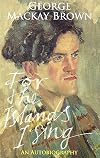
This is one of the best autobiographies that I have ever read. George Mackay Brown turns upon its head, the usual biography. You know the kind of thing, two pages cover the family history, another two childhood; perhaps as much as a chapter about the struggle and then, a smothering mass of detail about the famous career. George (No, I never had the pleasure of meeting him, but if one has read this, one seems to become a bosom friend) goes into detail about his family, his youth and the show more events and emotions which lead to his poetic style.
He is the most self effacing autobiographer that I think that I have read; in another hand, this could become a tedious attempt for a sympathy vote. Mackay Brown simply tells it as he remembers life. He takes responsibility for all his faults and gives thanks for his virtues. He is quick to give thanks to those who helped him to achieve his position and slow to review any slights that he must, inevitably, have suffered along the way. He was obviously a very generous man.
The style of writing is also quite beautiful: one could miss out all the references to poetry and still know that this man was a poet. Each word is carefully chosen to be, not just an approximation of what the author wishes to say, but is the only suitable word. Again, in so many hands, this would come across as 'arty', not here, it reads as a beautifully crafted history of a thoroughly decent, and talented, chap. Highly recommended!!! show less
He is the most self effacing autobiographer that I think that I have read; in another hand, this could become a tedious attempt for a sympathy vote. Mackay Brown simply tells it as he remembers life. He takes responsibility for all his faults and gives thanks for his virtues. He is quick to give thanks to those who helped him to achieve his position and slow to review any slights that he must, inevitably, have suffered along the way. He was obviously a very generous man.
The style of writing is also quite beautiful: one could miss out all the references to poetry and still know that this man was a poet. Each word is carefully chosen to be, not just an approximation of what the author wishes to say, but is the only suitable word. Again, in so many hands, this would come across as 'arty', not here, it reads as a beautifully crafted history of a thoroughly decent, and talented, chap. Highly recommended!!! show less

Two late prose works by the great Orcadian poet:
The sea-king's daughter imagines the Maid of Norway's voyage in 1290. The seven-year-old Norwegian princess was summoned to Scotland, presumably to become queen, as the only surviving descendant of the late king Alexander III. This version of the story doesn't go into the political background, but explores ideas about journeying, life, death, and storytelling against the background of the ship at sea. The prose has a measured, often rather show more solemn, folkloreish rhythm with lots of sound-patterns and repetitions. The piece as a whole has a very formal structure, with a sequence of movements in each of which the Maid and her ladies speak in precisely the same order: I don't know whether it was meant to be set to music, but GMB did work together quite often with Peter Maxwell-Davies. It would be easy to imagine this as a play for voices and music, or a cantata. Like Tristan and Isolde, but without the sex(!). It works well on the printed page, too, and the illustrations complement the text very nicely, giving the right sort of slightly fairy-tale medieval setting.
Eureka is a set of (very) short stories, all touching in different ways on the theme of discovery. The tone is much more playful than in The sea-king's daughter, and the approach to the subjects is often rather oblique. The trick with this sort of thing is in knowing when to stop: most of the time GMB is spot-on, cutting the text off after two or three hundred words just at the point where we realise where he is going with it. I wasn't so impressed with the illustrations in this case: some are decorative, but many are just obscure, and there doesn't seem to be any sort of dialogue between writer and illustrator going on. show less
The sea-king's daughter imagines the Maid of Norway's voyage in 1290. The seven-year-old Norwegian princess was summoned to Scotland, presumably to become queen, as the only surviving descendant of the late king Alexander III. This version of the story doesn't go into the political background, but explores ideas about journeying, life, death, and storytelling against the background of the ship at sea. The prose has a measured, often rather show more solemn, folkloreish rhythm with lots of sound-patterns and repetitions. The piece as a whole has a very formal structure, with a sequence of movements in each of which the Maid and her ladies speak in precisely the same order: I don't know whether it was meant to be set to music, but GMB did work together quite often with Peter Maxwell-Davies. It would be easy to imagine this as a play for voices and music, or a cantata. Like Tristan and Isolde, but without the sex(!). It works well on the printed page, too, and the illustrations complement the text very nicely, giving the right sort of slightly fairy-tale medieval setting.
Eureka is a set of (very) short stories, all touching in different ways on the theme of discovery. The tone is much more playful than in The sea-king's daughter, and the approach to the subjects is often rather oblique. The trick with this sort of thing is in knowing when to stop: most of the time GMB is spot-on, cutting the text off after two or three hundred words just at the point where we realise where he is going with it. I wasn't so impressed with the illustrations in this case: some are decorative, but many are just obscure, and there doesn't seem to be any sort of dialogue between writer and illustrator going on. show less
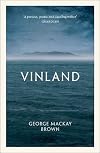
Another novel that is part of my small reading project with books inspired by Icelandic sagas, and one I probably would have liked considerably more if I had not read it directly after William T. Vollmann’s awe-inspiring Ice-Shirt. It still was a decent read, and I guess it helped that it was by far the slimmest volume so far.
One surprising but very enlightening side effect of this project is that by reading (more or less) in a row several novels tackling the same historical period, you show more get a very clear image of the differing ways in which they approach that period and mold it into an artistic form – it’s almost like a small encyclopedia of the historical novel. While William Vollmann’s The Ice-Shirt attempted to merge an authentic reconstruction with a contemporary perspective in a unique blend of fiction and non-fiction, George Mackay Brown places his emphasis firmly on the contemporary – Vinland is a novel that does not describe history for its own sake but uses it as an allegory for the present (much like many Science Fiction novels do, which makes me wonder if that might not point towards a more profound affinity between the two genres – something to keep in mind for further reading).
Vinland is partially based on the same Vinland sagas William T. Vollmann used, but mostly draws from the Orkneyinga saga, the “History of the Earls of Orkney”. In the novel Brown, who himself lived for most of his life on the Orkney Isles, tells the story of Orkney-born Ranald Sigmundson (a character who, as far as I can tell, is not in the sagas but who Brown made up for this novel) from his childhood to his death. This life story starts out very eventful – as a boy, Ranald finds himself part of Leif Erikson’s expedition to Vinland, encounters the natives there, then travels to the court of the Norwegian king and takes part in the battle of Clontarf. Up to this point, the novel is everything you would expect a novel about Vikings to be, with lots of adventure, exhilarating sea travels, glorious battles. But then Ranald’s grandfather dies, and thins take an unexpected turn – he returns to Orkney to take over the family farm, and from that day on never leaves again – at first, he still takes some part in politics, but withdraws more and more, and what had started out as a rousing adventure tale ends as a quiet and somewhat melancholy meditation on country life.
Brown eradicates all supernatural elements from the sagas and fills his tale out with small details of medieval everyday life and a realistic psychology for his characters. But in spite of that, and in spite of Vinland following the Orcadian power struggles of the time in some detail and its inclusion of several highly atmospheric set pieces, it is quite obvious that the novel is not really trying to paint a portrait of the past. Instead (and I do admit being somewhat annoyed at this, perhaps unjustly so), Brown keeps throwing analogies to the present at the reader – when, for example, Ranald becomes increasingly disgusted with petty politics and power games and the wars they tend to result in, this is clearly a present-day comment on present-day events even if they come dressed up in a historical costume. Which might not even be necessarily a bad thing, but is done so blatantly and heavy-handedly here that it drew several groans and repeated eye-rolling from me. Also, Brown falls occasionally short of of the state of current debates - a novel published in 1992 really should know better than to describe the natives of Vinland as noble savages who practice a harmony with nature that has supposedly been lost to Western civilization. (And if you’re now wondering what’s so civilized about the Vikings – so did I.)
In spite of all this, I still ended up enjoying Vinland, and this was solely due to the writing which is hauntingly beautiful – the prose, emulating the style of the sagas, appears very simple, almost simplistic on first sight, but develops a flowing, lilting rhythm over time that gently draws the reader in, almost without them noticing, and suddenly you find vivid, entrancing pictures being conjured in front of your eyes by the text. It is all very quiet and unassuming and has an increasingly melancholy air about it the farther the novel progresses. Vinland might be (especially if compared to Vollmann’s wild, sprawling, avant-garde extravaganza of a novel) craftsmanship rather than art, but there is a certain dignity in its very simplicity that I found very calming, and Brown’s prose is gorgeous. show less
One surprising but very enlightening side effect of this project is that by reading (more or less) in a row several novels tackling the same historical period, you show more get a very clear image of the differing ways in which they approach that period and mold it into an artistic form – it’s almost like a small encyclopedia of the historical novel. While William Vollmann’s The Ice-Shirt attempted to merge an authentic reconstruction with a contemporary perspective in a unique blend of fiction and non-fiction, George Mackay Brown places his emphasis firmly on the contemporary – Vinland is a novel that does not describe history for its own sake but uses it as an allegory for the present (much like many Science Fiction novels do, which makes me wonder if that might not point towards a more profound affinity between the two genres – something to keep in mind for further reading).
Vinland is partially based on the same Vinland sagas William T. Vollmann used, but mostly draws from the Orkneyinga saga, the “History of the Earls of Orkney”. In the novel Brown, who himself lived for most of his life on the Orkney Isles, tells the story of Orkney-born Ranald Sigmundson (a character who, as far as I can tell, is not in the sagas but who Brown made up for this novel) from his childhood to his death. This life story starts out very eventful – as a boy, Ranald finds himself part of Leif Erikson’s expedition to Vinland, encounters the natives there, then travels to the court of the Norwegian king and takes part in the battle of Clontarf. Up to this point, the novel is everything you would expect a novel about Vikings to be, with lots of adventure, exhilarating sea travels, glorious battles. But then Ranald’s grandfather dies, and thins take an unexpected turn – he returns to Orkney to take over the family farm, and from that day on never leaves again – at first, he still takes some part in politics, but withdraws more and more, and what had started out as a rousing adventure tale ends as a quiet and somewhat melancholy meditation on country life.
Brown eradicates all supernatural elements from the sagas and fills his tale out with small details of medieval everyday life and a realistic psychology for his characters. But in spite of that, and in spite of Vinland following the Orcadian power struggles of the time in some detail and its inclusion of several highly atmospheric set pieces, it is quite obvious that the novel is not really trying to paint a portrait of the past. Instead (and I do admit being somewhat annoyed at this, perhaps unjustly so), Brown keeps throwing analogies to the present at the reader – when, for example, Ranald becomes increasingly disgusted with petty politics and power games and the wars they tend to result in, this is clearly a present-day comment on present-day events even if they come dressed up in a historical costume. Which might not even be necessarily a bad thing, but is done so blatantly and heavy-handedly here that it drew several groans and repeated eye-rolling from me. Also, Brown falls occasionally short of of the state of current debates - a novel published in 1992 really should know better than to describe the natives of Vinland as noble savages who practice a harmony with nature that has supposedly been lost to Western civilization. (And if you’re now wondering what’s so civilized about the Vikings – so did I.)
In spite of all this, I still ended up enjoying Vinland, and this was solely due to the writing which is hauntingly beautiful – the prose, emulating the style of the sagas, appears very simple, almost simplistic on first sight, but develops a flowing, lilting rhythm over time that gently draws the reader in, almost without them noticing, and suddenly you find vivid, entrancing pictures being conjured in front of your eyes by the text. It is all very quiet and unassuming and has an increasingly melancholy air about it the farther the novel progresses. Vinland might be (especially if compared to Vollmann’s wild, sprawling, avant-garde extravaganza of a novel) craftsmanship rather than art, but there is a certain dignity in its very simplicity that I found very calming, and Brown’s prose is gorgeous. show less
Lists
Awards


You May Also Like


Associated Authors
Statistics
- Works
- 77
- Also by
- 25
- Members
- 1,900
- Popularity
- #13,550
- Rating
- 3.9
- Reviews
- 34
- ISBNs
- 178
- Languages
- 6
- Favorited
- 11