

Maurice G. Dantec (1959–2016)
Author of Babylon Babies
About the Author
Series
Works by Maurice G. Dantec
Tagged
Common Knowledge
- Canonical name
- Dantec, Maurice G.
- Legal name
- Dantec, Maurice Georges
- Birthdate
- 1959-06-13
- Date of death
- 2016-06-25
- Gender
- male
- Occupations
- writer
- Nationality
- France
- Places of residence
- Grenoble, France
Montreal, Quebec, Canada - Associated Place (for map)
- France
Members
Reviews

This is a novel with ambition, but underneath the gloss, I'm doubt there's anything there. Babylon Babies riffs on the usual cyberpunk tropes, mercenaries, mobsters, New Age cults, hackers and shamans, and it tries to transcend the genre by bringing in a bunch of abstruse theory, Deleuze and Guttari, Donna Harraway, Sun Tzu and Liddell Hart.
Instead of deepening the story, the philosophy about schizophrenia and the next evolutionary stage of mankind just overwhelms what could have been a show more tight, noirish cyberpunk thriller. In the incredibly fractured setting and plot, the inevitable betrayals and triple-crosses happen because they we all agree they're supposed to. Psyches break and go mad because the plot demands it, not because the characters have been pushed beyond their limits.
This novel consciously follows in the footsteps of Neuromancer. But while the novelty of its ideas at the time and the stark evocative force of Gibson's langauge made Neuromancer an instant classic, Babylon Babies just feels trite and forced. show less
Instead of deepening the story, the philosophy about schizophrenia and the next evolutionary stage of mankind just overwhelms what could have been a show more tight, noirish cyberpunk thriller. In the incredibly fractured setting and plot, the inevitable betrayals and triple-crosses happen because they we all agree they're supposed to. Psyches break and go mad because the plot demands it, not because the characters have been pushed beyond their limits.
This novel consciously follows in the footsteps of Neuromancer. But while the novelty of its ideas at the time and the stark evocative force of Gibson's langauge made Neuromancer an instant classic, Babylon Babies just feels trite and forced. show less
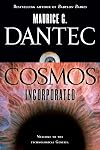
Well this was interesting read.
This is probably book with the best start. Entire scene, pace, world - very interesting, very noir and very cyberpunk. Slow but very visual presentation of UHU, new planetary authoritarian government that keeps everyone in check is truly upsetting (especially when one takes into account what happened in last two years and later in the book when some years start to pop up). Besides these highly controlled areas there are rogue, independent and highly show more criminalized/corrupted areas like Grand Junction - areas where everything is possible and where dream of leaving Earth for space colonies is used to control the people. Acting as special economic zones, areas like Junction offer glimpse in the world before the planetary wars.
Our main character (Plotkin) ends up in Junction, uncertain why he is there but led by the advanced augmentations that reveal next step after a certain time period. Without memories but with good instincts and some [what seems to be] intrinsic knowledge of what is going on he starts to get more and more interested about the people residing in his motel (Laika Motel, entire Grand Junction is a giant monument to humankind's space adventures from 20th century).
And after these really beautiful 35% of story reader will hit the speed bump and then incline of about 80 degrees. Author's style is very verbose at this point and assumes a lot on behalf of the reader. If you have not read some mid to hard level philosophical works, with loops in definitions that require a very high level of concentration this part of the story will be not just slow but snail paced at best.
Author's constant repetitions, looping back to the beginning of definitions (again something that is common in philosophical works), referencing works from Greeks to Averoes and then to Christian theologians and philosophers and ending with Leibniz and Guenther Andres, coupled with heavy use of philosophical terms (did not come across the mention of monad for at least a decade) can cause an effect of wall of text - believe me I managed only maybe 10-20 pages per day during this period. It is just too much information - for some reason some definitions would end up getting repeated in almost every chapter and just fog the brain.
At the end persistence payed off. If we put aside terms and phrases like carbon-carbon, constant meta etc (something that annoyed me a lot in Metabarons, another European/French SF epic) style is very catchy, and once author exits the marshes of philosophical explanations, story has a very fast pace and keeps you interested to the end.
This is a novel of apocalypse, novel about the relation between technology and humans, humankind's desire to avoid any thinking and communication during [lets call it] easy times, and relegation of oneself to just being a cog in a wheel (equivalent of Matrix's human battery) in order to obtain security. This of course culminates in the total dehumanization.
It contains SF elements (in domain of technology and human augmentations) with mystical element (reason for the above mentioned philosophical texts). It is a weird combination, but I gotta admit it is done very well. To me it was a very well executed mix of Matrix and Inception - very trippy and playing with reader's perception of reality [within the novel story-line of course] and keeps intrigue alive through entire novel.
While there are technical marvels everywhere in this world - both body augmentations and technical devices - this world is devolving in every way and further technological progress is either suppressed or just plainly lost because of lack of communication and transfer of knowledge (machine optimization - what is not required is not remembered). This is civilization at the end of its life, heavily wounded by religious and civil wars 50 years before establishment of UHU and it's omnipotent and ever controlling planet-wide government.
What is required is spark of life, of soul, of true human inquisitive and exploratory nature to awake the humankind. And this spark is mystical part of the novel that is classical approach to way legends are structured. Ending is mix of disaster and hope and very well done.
All in all very interesting SF novel that is [unfortunately] too heavy with philosophy. If these philosophical parts were made shorter or at least without constant repetitions, story would be more effective (at least for me).
I had no issues with translation, again only downside being parts of the book with philosophical discussions - not something that is result of translation but the very subject (trust me it is rare to find philosophical works in general that wont pop up in your dreams where you will ask yourself what did I just read? :) and philosophical subject in this book is very complex).
Highly recommended to fans of SF novels and thrillers/detective works. Trust me, going through the slow parts of the story does pay off.
I am now on the lookout for the sequel (Grand Junction). Really wondering how will the story end. show less
This is probably book with the best start. Entire scene, pace, world - very interesting, very noir and very cyberpunk. Slow but very visual presentation of UHU, new planetary authoritarian government that keeps everyone in check is truly upsetting (especially when one takes into account what happened in last two years and later in the book when some years start to pop up). Besides these highly controlled areas there are rogue, independent and highly show more criminalized/corrupted areas like Grand Junction - areas where everything is possible and where dream of leaving Earth for space colonies is used to control the people. Acting as special economic zones, areas like Junction offer glimpse in the world before the planetary wars.
Our main character (Plotkin) ends up in Junction, uncertain why he is there but led by the advanced augmentations that reveal next step after a certain time period. Without memories but with good instincts and some [what seems to be] intrinsic knowledge of what is going on he starts to get more and more interested about the people residing in his motel (Laika Motel, entire Grand Junction is a giant monument to humankind's space adventures from 20th century).
And after these really beautiful 35% of story reader will hit the speed bump and then incline of about 80 degrees. Author's style is very verbose at this point and assumes a lot on behalf of the reader. If you have not read some mid to hard level philosophical works, with loops in definitions that require a very high level of concentration this part of the story will be not just slow but snail paced at best.
Author's constant repetitions, looping back to the beginning of definitions (again something that is common in philosophical works), referencing works from Greeks to Averoes and then to Christian theologians and philosophers and ending with Leibniz and Guenther Andres, coupled with heavy use of philosophical terms (did not come across the mention of monad for at least a decade) can cause an effect of wall of text - believe me I managed only maybe 10-20 pages per day during this period. It is just too much information - for some reason some definitions would end up getting repeated in almost every chapter and just fog the brain.
At the end persistence payed off. If we put aside terms and phrases like carbon-carbon, constant meta etc (something that annoyed me a lot in Metabarons, another European/French SF epic) style is very catchy, and once author exits the marshes of philosophical explanations, story has a very fast pace and keeps you interested to the end.
This is a novel of apocalypse, novel about the relation between technology and humans, humankind's desire to avoid any thinking and communication during [lets call it] easy times, and relegation of oneself to just being a cog in a wheel (equivalent of Matrix's human battery) in order to obtain security. This of course culminates in the total dehumanization.
It contains SF elements (in domain of technology and human augmentations) with mystical element (reason for the above mentioned philosophical texts). It is a weird combination, but I gotta admit it is done very well. To me it was a very well executed mix of Matrix and Inception - very trippy and playing with reader's perception of reality [within the novel story-line of course] and keeps intrigue alive through entire novel.
While there are technical marvels everywhere in this world - both body augmentations and technical devices - this world is devolving in every way and further technological progress is either suppressed or just plainly lost because of lack of communication and transfer of knowledge (machine optimization - what is not required is not remembered). This is civilization at the end of its life, heavily wounded by religious and civil wars 50 years before establishment of UHU and it's omnipotent and ever controlling planet-wide government.
What is required is spark of life, of soul, of true human inquisitive and exploratory nature to awake the humankind. And this spark is mystical part of the novel that is classical approach to way legends are structured. Ending is mix of disaster and hope and very well done.
All in all very interesting SF novel that is [unfortunately] too heavy with philosophy. If these philosophical parts were made shorter or at least without constant repetitions, story would be more effective (at least for me).
I had no issues with translation, again only downside being parts of the book with philosophical discussions - not something that is result of translation but the very subject (trust me it is rare to find philosophical works in general that wont pop up in your dreams where you will ask yourself what did I just read? :) and philosophical subject in this book is very complex).
Highly recommended to fans of SF novels and thrillers/detective works. Trust me, going through the slow parts of the story does pay off.
I am now on the lookout for the sequel (Grand Junction). Really wondering how will the story end. show less

Che botta! Visionario e schizoide, peccato per alcune parti piuttosto noiose. L'idea di base è affascinante, diramata come un filamento di DNA. Lo stile è a tratti magnificamente psichedelico e si fa perdonare alcune cadute degne di una spy-story di serie B. Nonostante tutto è un ottimo romanzo.
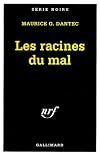
Andreas Schaltzmann est persuadé que les habitants de la planète Vega sont installés dans son quartier, à Vitry-sur-Seine, et étendent leurs ramifications jusqu'aux plus hautes sphères de l'État. Paranoïaque, l'homme décide de vider ses comptes en banque et ses chargeurs de revolvers ; il se lance dans une cavalcade meurtrière à travers la France. Arrêté, il apprend qu'on lui attribue des crimes qu'il n'a pas commis. Un trio de scientifiques persuadés de son innocence traquera show more les véritables tueurs grâce à un ordinateur de type supérieur, baptisé 'neuromatrice' qui fonctionne comme un cerveau humain mais à une vitesse surmultipliée. Ce roman atypique débute à la manière d'un périple de tueur en série pour s'orienter vers un récit prospectif où éléments philosophiques, sociologiques et scientifiques viennent s'imbriquer dans l'action. Le XXIe siècle, selon Maurice G. Dantec, ne sera pas une promenade de santé dans la mesure où (dit-il) 'l'humanité ne s'attaque pas aux racines du mal qui la ronge'. --Lisa B. show less
Lists
Awards


You May Also Like


Associated Authors
Statistics
- Works
- 18
- Members
- 1,151
- Popularity
- #22,319
- Rating
- 3.1
- Reviews
- 21
- ISBNs
- 75
- Languages
- 5
- Favorited
- 4