
Alan Furst
Author of Night Soldiers
About the Author
Furst received a B.A. from Oberlin College in 1962 and an M.A. from Penn State in 1967. Before becoming a full-time novelist, Furst worked in advertising and wrote magazine articles, most notably for Esquire, and as a columnist for the International Herald Tribune His early novels (1976-1983) show more achieved limited success. However, the 1988 publication of Night Soldiers inspired by a 1984 trip to Eastern Europe on assignment for Esquire revitalized his career. It was the first of his highly original novels about espionage in Europe before and during the Second World War. Born in New York on February 20, 1941, he lived for long periods in France, especially Paris where he was awarded a Fulbright teaching fellowship. In 2011, the Tulsa Library Trust in Tulsa, Oklahoma selected Furst to receive its Helmerich Award, a literary prize given annually to honor a distinguished author's body of work He also made The New York Times Best Seller List in 2012 with his title The Mission to Paris and Midnight in Europe in 2014. Furst again made the New York Times Bestseller in 2016 with his novel a Hero of France. (Publisher Provided) Alan Furst is an American author of spy novels. He was born in New York City on February 20, 1941, and was raised on the Upper West Side of Manhattan. Furst received a B.A. from Oberlin College in 1962 and an M.A. from Penn State in 1967. His novels are set just prior to and during the Second World War. Titles include: Night Soldiers, Kingdom of Shadows (which won the 2001 Hammett Prize), Blood of Victory, Spies of the Balkans and Mission to Paris. In 2011, the Tulsa Library Trust in Tulsa, Oklahoma, selected Furst to receive its Helmerich Award, a literary prize given annually to honor a distinguished author's body of work. Furst made The New York Times Best Seller List in 2012 with his title The Mission to Paris and Midnight in Europe in 2014. Furst again made the New York Times Bestseller in 2016 with his novel A Hero of France. (Bowker Author Biography) show less
Disambiguation Notice:
#1 Alan Furst, b. 1941 - Night Soldiers
Series
Works by Alan Furst
Associated Works
Writers on Writing, 2: More Collected Essays from the New York Times (2003) — Contributor — 199 copies, 3 reviews
Tagged
Common Knowledge
- Canonical name
- Furst, Alan
- Birthdate
- 1941-02-20
- Gender
- male
- Education
- Pennsylvania State University (MA|1967)
Columbia University
Oberlin College (BA|1962)
Horace Mann School - Occupations
- novelist
advertising
columnist - Organizations
- International Herald Tribune
- Awards and honors
- Helmerich Award (2011)
- Nationality
- USA
- Birthplace
- New York, New York, USA
- Places of residence
- Paris, Île-de-France, France
Sag Harbor, New York, USA - Map Location
- New York, USA
- Disambiguation notice
- #1 Alan Furst, b. 1941 - Night Soldiers
Members
Discussions
Question about Alan Furst's "Night Soldiers" books in Crime, Thriller & Mystery (January 2017)
Alan Furst, author of The Spies of Warsaw (July 27-August 7) in Author Chat (August 2009)
Reviews
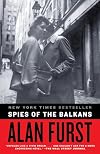
The enjoyment of reading two WWII era novels this year, spy novels, made me want to tackle another similar to Eric Ambler's work. Alan Furst’s Spies of the Balkans unfolds in the tense world of 1940-1941 Europe. I've already read 9 of Furst's espionage novels, this is the tenth. Set primarily in Salonika, Greece, a city historically rich with Jewish heritage, the novel follows Costa Zannis, a senior police official entangled in a dangerous web of political intrigue and humanitarian show more urgency. Zannis is 'recruited' to aid in the escape of wealthy Jews who have not yet been taken by the Gestapo in Germany. He does this willingly despite the risk. Somewhat unwillingly, near the end, the British pressure him to rescue a downed aviator who must not be captured and interrogated.
Part of what sets Spies of the Balkans apart is its heart: the story of Jews fleeing Nazi-occupied Europe, and the fragile, underground network of people working desperately to get them to safety before they are taken by the SS. Zannis becomes an unlikely yet deeply compelling hero, orchestrating escapes through the mountains of the Balkans, away from the ever-encroaching reach of the SS. Furst captures the looming menace, although their presence is often felt more than seen. The fear is visceral, and there are quite a few pulse pounding moments while reading.
The setting of Greece is more than backdrop; it’s a character in itself. Salonika, on the cusp of Axis occupation, is portrayed with a kind of melancholy, whispers of Byzantine history, and the sea in the distance.
Furst’s style here bears a resemblance to Eric Ambler, not just the setting but in its emphasis on ordinary men thrust into extraordinary situations. Zannis is no James Bond (although there does seem to be a nod or two to Bond) - but he’s thoughtful, morally driven, and operates in a world where right and wrong are often murky.
In sum, Spies of the Balkans is a moody, elegant spy novel that intertwines historical accuracy with noir-style suspense. It's a tribute not just to resistance and courage, but to those quiet acts of defiance that saved lives in Europe’s darkest hours. I'll be a little spoilery and say that the novel ends with the aerial bombardment of Salonika by the advancing Germans which wrecks the ship that could have taken Zannis away. Zannis and his lady franticly flee in another way. However, the novel ends before the arrival of the German army and the occupation. We therefor do not witness here the destruction that the Germans bring to Salonika.
Recommended show less
Part of what sets Spies of the Balkans apart is its heart: the story of Jews fleeing Nazi-occupied Europe, and the fragile, underground network of people working desperately to get them to safety before they are taken by the SS. Zannis becomes an unlikely yet deeply compelling hero, orchestrating escapes through the mountains of the Balkans, away from the ever-encroaching reach of the SS. Furst captures the looming menace, although their presence is often felt more than seen. The fear is visceral, and there are quite a few pulse pounding moments while reading.
The setting of Greece is more than backdrop; it’s a character in itself. Salonika, on the cusp of Axis occupation, is portrayed with a kind of melancholy, whispers of Byzantine history, and the sea in the distance.
Furst’s style here bears a resemblance to Eric Ambler, not just the setting but in its emphasis on ordinary men thrust into extraordinary situations. Zannis is no James Bond (although there does seem to be a nod or two to Bond) - but he’s thoughtful, morally driven, and operates in a world where right and wrong are often murky.
In sum, Spies of the Balkans is a moody, elegant spy novel that intertwines historical accuracy with noir-style suspense. It's a tribute not just to resistance and courage, but to those quiet acts of defiance that saved lives in Europe’s darkest hours. I'll be a little spoilery and say that the novel ends with the aerial bombardment of Salonika by the advancing Germans which wrecks the ship that could have taken Zannis away. Zannis and his lady franticly flee in another way. However, the novel ends before the arrival of the German army and the occupation. We therefor do not witness here the destruction that the Germans bring to Salonika.
Recommended show less

Color me gobsmacked. I knew Furst wrote spy stories. What I wasn't expecting was that this spy story had a protagonist who was 1) a Polish Jew, and 2) a foreign news correspondence for Pravda. The story covers the years 1937 to 1940. Years ago, I would have read this story as simple spy story, a story of the ties between Russia and Germany, but suddenly it struck me, along about page 8, that this story not only chronicled the war as experienced by our journalist, Andre Szara, but it became show more glaringly obvious that it also chronicles the US's slide into autocracy. Since the book was written in 1991, that clearly was not the book's intent. Rather you watch the history we are repeating done to the smallest detail:
"Madness, he thought. Then he corrected himself. He had seen a newsreel of Hitler dancing a jig outside the railroad car in Compiegne where the French had been forced to sign a peace treaty. A weird hopping little dance, like a madman." show less
"Madness, he thought. Then he corrected himself. He had seen a newsreel of Hitler dancing a jig outside the railroad car in Compiegne where the French had been forced to sign a peace treaty. A weird hopping little dance, like a madman." show less
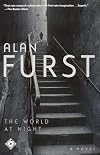
We begin The World at Night on the 10th of May in 1940 before dawn. Jean-Claude Casson, film producer of forty-two years of age, is in bed with his assistant, Gabriella Vico. The phone rings...it's Casson's wife. Marie-Claire wants to talk about the dinner party she and Jean-Claude are throwing that night. Does this not sound like the start to a torrid romance novel? Far from it (although there is passion within the pages)! By the end of the first chapter Casson has received a telegram show more recalling him back to active duty. The Germans are on the move and will occupy France shortly. Without warning Corporal Casson is pulled into a completely different life and, after three months when he returns home to Paris, the old life he left behind has completely vanished. As a movie producer he needs a way to stay useful in the eyes of the enemy. What can he do to earn a living during the German occupation? Somehow, in some way, this line of work makes him the perfect recruit for espionage. The only convincing he would need would be political. Which side are you on, boy? This question becomes pertinent when a simple lie traps Jean-Claude. He realizes no one is one hundred percent evil or one hundred percent good which makes the danger all that more a stark reality. You don't know of whom you should stay clear or who you can trust.
If you are looking for a spy thriller with lots of violence, The World at Night is not for you. The dangers are subtle and barely suggested. Instead, Furst is a master of detail. From fashion and the automobiles to the food and drink and music, the culture of Paris lives and breathes alongside its society. Furst's imagery is perfection: what do you picture when he describes a young woman as having "hen-strangler hands"? Furst takes you into 1940s Paris with love. A commentary on authenticity. I believe authenticity comes from the ability to faithfully mimic primary sources; the ability to take first-hand accounts and recreate them exactly. Once you see faithful details repeated you assume a truthful interpretation. Such is The World at Night.
Speaking of characters and love, I could not help but fall in love with Jean-Claude Casson. His mature passion for beautiful women and the way he makes each one feel as though she were the only one in his life...sigh. When he finally settles on one particular woman you root for them to be together. show less
If you are looking for a spy thriller with lots of violence, The World at Night is not for you. The dangers are subtle and barely suggested. Instead, Furst is a master of detail. From fashion and the automobiles to the food and drink and music, the culture of Paris lives and breathes alongside its society. Furst's imagery is perfection: what do you picture when he describes a young woman as having "hen-strangler hands"? Furst takes you into 1940s Paris with love. A commentary on authenticity. I believe authenticity comes from the ability to faithfully mimic primary sources; the ability to take first-hand accounts and recreate them exactly. Once you see faithful details repeated you assume a truthful interpretation. Such is The World at Night.
Speaking of characters and love, I could not help but fall in love with Jean-Claude Casson. His mature passion for beautiful women and the way he makes each one feel as though she were the only one in his life...sigh. When he finally settles on one particular woman you root for them to be together. show less
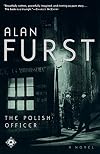
This is one of Furst's earlier World War II thrillers, and, as usual it's full of vivid characters and noir atmosphere. It is September, 1939 and the German's are invading Poland. France and Britain have declared war on Germany, but are doing less than nothing to help the Poles fend off the invading Wehrmacht. Captain Alexander de Milia has been assigned some rear guard actions: hijacking a train to get the Polish treasury of gold to Romania and organizing resistance units. He moves from show more Poland, to Romania, back to Poland to Russia to France to London & then back to France. All the while he acts bravely, and doesn't ask too many questions. He seems to know that the war is being fought among the great powers and that the little countries that are in the way have very little hope of survival.
Furst captures all of this in his atmospheric writing that captures a mood that is both cynical and heroic. DeMila has no illusions about either side in this war, but he does have his own ode of honor that he follows to the letter. I'd like to think that there were such men during the war & that they survived. show less
Furst captures all of this in his atmospheric writing that captures a mood that is both cynical and heroic. DeMila has no illusions about either side in this war, but he does have his own ode of honor that he follows to the letter. I'd like to think that there were such men during the war & that they survived. show less
Lists
Books Read in 2023 (15)
Best Spy Fiction (6)
Awards


You May Also Like


Associated Authors
Statistics
- Works
- 26
- Also by
- 2
- Members
- 16,464
- Popularity
- #1,377
- Rating
- 3.8
- Reviews
- 532
- ISBNs
- 401
- Languages
- 12
- Favorited
- 87

