
Albert Camus (1913–1960)
Author of The Stranger
About the Author
Born in 1913 in Algeria, Albert Camus was a French novelist, dramatist, and essayist. He was deeply affected by the plight of the French during the Nazi occupation of World War II, who were subject to the military's arbitrary whims. He explored the existential human condition in such works as show more L'Etranger (The Outsider, 1942) and Le Mythe de Sisyphe (The Myth of Sisyphus, 1942), which propagated the philosophical notion of the "absurd" that was being given dramatic expression by other Theatre of the Absurd dramatists of the 1950s and 1960s. Camus also wrote a number of plays, including Caligula (1944). Much of his work was translated into English. He was awarded the Nobel Prize for Literature in 1957. Camus died in an automobile accident in 1960. (Bowker Author Biography) show less
Disambiguation Notice:
Do not combine this page with the author page for A. Camus or for Camus as there are other authors with the same surname, and surname and initial.
Image credit: Albert Camus in 18 October, 1957
Series
Works by Albert Camus
The Plague, The Fall, Exile and the Kingdom, and Selected Essays (Everyman's Library) (2004) 780 copies, 4 reviews
Jonas Ou L'Artiste Au Travail: Suivi de la Pierre Qui Pousse (Folio (Gallimard)) (French Edition) (1957) 102 copies, 2 reviews
Between Hell and Reason: Essays from the Resistance Newspaper Combat, 1944-1947 (1991) 60 copies, 2 reviews
Travels in the Americas: Notes and Impressions of a New World (The France Chicago Collection) (2023) 19 copies, 2 reviews
Oeuvres completes tome IV [Bibliotheque de la Pleiade] (French Edition) (Bibliothèque de la Pléiade, 10921) (2008) 15 copies, 1 review
Obras/ Works: El Reves Y El Derecho. Nupcias. El Extranjero. El Mito De Sisifo. Caligula. Carnets, 1 (Spanish Edition) (1996) 10 copies
Lo straniero - La peste - La caduta - L'esilio e il regno - Il rovescio e il diritto - Nozze - Il mito di Sisifo - L'estate - Il malinteso (1965) 8 copies
L'Étranger, La Peste, La Chute 6 copies
Obras/ Works: El Hombre Rebelde. Cronicas 1948-1953. Reflexiones Sobre La Guillotina. El Verano (Spanish Edition) (1996) 5 copies
Minotaurus 5 copies
Ribellione e morte: saggi politici 5 copies
La caduta e Discorsi di Svezia — Author — 4 copies
Albert Camus, editorialiste a l'Express: Mai 1955-fevrier 1956 (Cahiers Albert Camus) (French Edition) (1987) — Author — 4 copies, 1 review
Obras / Works: Diarios de viaje & Carnets, 2 & La caída & Crónicas argelinas 1939-1958 (Spanish Edition) (1996) 3 copies
Fiche de lecture L'Étranger de Albert Camus (analyse littéraire de référence et résumé complet) (2014) 3 copies
Esortazione ai medici della peste 3 copies
L'Étranger&La Peste 2 copies
Счастливая смерть [Роман]; Посторонний : [Повесть]; Чума : [Роман]; Падение : [Повесть]; Калигула :… (1993) 2 copies
Novele 2 copies
Pages choisies 2 copies
Fiche de lecture La Peste de Camus (Analyse littéraire de référence et résumé complet) (French Edition) (2018) 2 copies
Opere di Camus 2 copies
Albert Camus: Obras escogidas 2 copies
"PREFACE" 2 copies
Essays by Albert Camus: The Myth of Sisyphus, the Rebel, Reflections on the Guillotine (2010) 2 copies
O xenos 1 copy
L'estate 1 copy
L'Eté , par Albert Camus 1 copy
l´été 1 copy
L'homme Revolte. Edition Special Centenaire Avec Carnet Offert (French Edition) (FOLIO ESSAIS) (2013) 1 copy
Denemeler 1 copy
คนนอก (L'Etranher) 1 copy
D¿ơuma 1 copy
راستان (Rastan) 1 copy
Dżuma Tom 1 1 copy
Primeiros cadernos 1 copy
Özgürlük Ve Devrim 1 copy
Świadek Wolności 1 copy
Par Robert de Luppe 1 copy
Le mythe se Sisyphe 1 copy
Esė rinktinė. D. 2 1 copy
Δημιουργία και ελευθερία 1 copy
E PRAPMJA DHE E PËRPARMJA 1 copy
NJË KËNAQËSI E VETMUAR 1 copy
RËNIA 1 copy
MBRETËRIA DHE MËRGIMI 1 copy
NJERIU I PARË 1 copy
VERA NË ALGJER 1 copy
Новеллы : учебное пособие для педагогических институтов по специальности N 2103 "Иностранные языки" 1 copy
Избранное 1 copy
Kẻ Ngoại Cuộc 1 copy
L'Žtranger 1 copy
المقصلة 1 copy
The Funeral 1 copy
TË DREJTËT 1 copy
Başkaldıran İnsan 1 copy
Obras Completas Tomo II 1 copy
Obra selecta 1 copy
SANATÇI VE ÇAĞI 1 copy
NJË VDEKJE E LUMTUR 1 copy
කැමූ සිතුවිලි 1 copy
'Ādil'hā 1 copy
Cahiers Albert Camus 1 copy
Twice A Year, No. XIV-XV 1 copy
Teatro di Albert Camus 1 copy
Užrašų knygelės I 1 copy
Rub a lice 1 copy
The Trial — Author — 1 copy
Calepins de Bibliographie 1 copy
The Silent Men — Author — 1 copy
Summer 1 copy
Misère de la Kabylie 1 copy
Opgør : Essays 1 copy
Rencontre avec Camus. 1 copy
La peste - Tome 3 1 copy
The Sea Close By 1 copy
El verano / Bodas / La caída 1 copy
Dżuma Tom 2 1 copy
Profil - Camus (Albert) : La Peste: analyse littéraire de l'oeuvre (Profil d'une Oeuvre) (French Edition) (2002) 1 copy
Proti neredu sveta 1 copy
The Renegade or a Confused Spirit — Author — 1 copy
Vous Parle 1 copy
Desde la biblioteca: Camus 1 copy
Odabrana djela 1 copy
Krisis kebebasan 1 copy
The Thibaults 1 copy
Plague Exile Kingdom 1 copy
Saggi letterari 1 copy
GOJËKYÇURI RENEGATI 1 copy
Associated Works
At the Existentialist Café: Freedom, Being, and Apricot Cocktails (2016) — Contributor, some editions — 1,928 copies, 46 reviews
The Story and Its Writer: An Introduction to Short Fiction (1976) — Contributor — 1,214 copies, 3 reviews
Perrine's Literature: Structure, Sound, and Sense (1970) — Contributor, some editions — 893 copies, 4 reviews
The Assassin's Cloak: An Anthology of the World's Greatest Diarists (2000) — Contributor, some editions — 623 copies, 9 reviews
The Art of the Tale: An International Anthology of Short Stories (1986) — Contributor — 381 copies, 3 reviews
The Moral Life: An Introductory Reader in Ethics and Literature (1999) — Contributor — 202 copies, 2 reviews
The Graphic Canon, Vol. 3: From Heart of Darkness to Hemingway to Infinite Jest (2013) — Contributor — 162 copies, 1 review
Fifty Years: Being a Retrospective Collection of Novels, Novellas, Tales, Drama, Poetry, and Reportage and Essays: All Drawn from Volumes Issued during the Last Half-Century by… (1965) — Contributor — 56 copies
The World of Law, Volumes I-II: The Law in Literature, The Law as Literature (1960) — Contributor — 54 copies
Die Sammlung der Nationalgalerie : 1945-1968 : Der geteilte Himmel : die Dokumentation einer Ausstellung (2014) — Contributor — 6 copies
L'homme revolte [de] Camus: Analyse critique (Profil d'une oeuvre ; 56) (French Edition) (1977) — Contributor — 1 copy
Tagged
Common Knowledge
- Legal name
- Camus, Albert
- Birthdate
- 1913-11-07
- Date of death
- 1960-01-04
- Gender
- male
- Education
- University of Algiers (BA, 1935)
University of Algiers (MA, 1936) - Occupations
- novelist
essayist
playwright
journalist - Organizations
- French Communist Party
Algerian People's Party
Combat
French Resistance - Awards and honors
- Nobel Prize (Literature, 1957)
- Relationships
- Casares, Maria (partner)
Feraoun, Mouloud (friend) - Short biography
- Albert Camus was born to French-Spanish parents in Mondovi, a small village in northeastern Algeria, then a French colony. In 1933, he enrolled at the University of Algiers.. He became a theater professional and journalist, joining the staff of the Alger-Républicain in 1938. He was in Paris working for Paris-Soir magazine at the outbreak of World War II, and joined the French Resistance. After the war, he left political journalism and focused on essays, fiction, and his work as a theater producer and playwright. Camus died in an auto accident in 1960 at age 46.
- Cause of death
- car crash
- Nationality
- Algeria (birth)
France - Birthplace
- Mondovi, Algeria
- Places of residence
- Algiers, Algeria
Paris, France
Mondovi, Algeria (birth) - Place of death
- Villeblevin, Yonne, Bourgogne-Franche-Comté, France
- Burial location
- Lourmarin Cemetery, Lourmarin, Vaucluse, France
- Map Location
- France
Algeria - Disambiguation notice
- Do not combine this page with the author page for A. Camus or for Camus as there are other authors with the same surname, and surname and initial.
Members
Discussions
Camus - His Non-Fiction - discussion in Literary Centennials (May 2018)
possibly Dystopian about Death in Name that Book (October 2015)
Camus - The Fall - discussion in Literary Centennials (January 2014)
Albert Camus - Resources and General Discussion in Literary Centennials (December 2013)
Camus - The Plague - discussion in Literary Centennials (August 2013)
Camus - The Stranger (aka Outsider) - discussion in Literary Centennials (March 2013)
Camus - A Happy Death - discussion in Literary Centennials (January 2013)
***GroupRead: The Plague (Spoiler Free) in 75 Books Challenge for 2010 (April 2010)
Reviews

I read Gide’s The Immoralist and The Stranger in succession while traveling, both in cheap dog-eared mass-market paperback editions (a particular tactile, olfactory experience in itself), and the pairing made me think of literary themes unfolding between the fin de siècle and WWII, Gide’s protagonist Michel guided by Eros (What is available to you in this modern world?), Camus’ Meursault trapped by Fate (This world has Nothing for you, monsieur). Camus’ unadorned prose is an show more effective antidote to wasted sentiment.
The only thing that interests me now is the problem of circumventing the machine, learning if the inevitable admits a loophole. show less
The only thing that interests me now is the problem of circumventing the machine, learning if the inevitable admits a loophole. show less
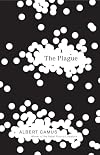
The Plague seems like an appropriate title of a book for a coronavirus-stricken world. Set in modern (1940s?) North Africa, this book reimagines a world where the plague mysteriously makes a recurrence. The work is told from the point of view of a doctor. As with COVID-19 paralyzing the world, the disease paralyzes an entire town for several seasons. Many die over many months.
This work provides moving portrayals of individual death and of massive death’s dehumanizing effect on human show more flourishing. Camus, as always, points us to an existential philosophy of choosing to seize the day despite evil. Even the deaths of a child and of one of the books heroes are cast in this light. The town eventually recovers, much as the world will recover from today’s infections. The world resumes much as it did post World War II; however, the world after has changed in so many ways.
In this work, the protagonist faces squarely the good and the evil that humans are capable of. Camus does not mince words in these portrayals. Much like with the Christian concept of original sin, all of us are guilty of murderous callousness towards our fellows. (In Camus’ day, he might have said that even enlightened and educated Germany turned towards fascism.) Nonetheless, goodness still flows from humanity, and this optimistic message is even borne in times of plague. The plague we all wrestle with is not only external (as in disease) but also internal (as in monstrous selfishness). There are no saints, only humans or “men” as Camus put it writing in a less gender-inclusive era.
This wrestling with evil is classic Camus. (There are some reports that such wrestling led him to convert to a neo-orthodox form of Christianity before his tragic death in a car accident in 1960.) Camus wrestled with why six million civilian Jews and large numbers of soldiers died in two massive wars in a twentieth century that opened with such promise. Of course, questions like these only provide uncomfortable answers. Nonetheless, Camus chooses – yes, chooses, in a demonstration of his existentialist philosophy – to focus upon the good brought out by these trials. Humans are not turned into saints by life. They – no, we – are shown to be petty and selfish over and over again. Nonetheless, we must deliberate and choose to bring out the good by our daily lives despite the plague’s pervasive presence.
In a contemporary environment where governments sometimes fail us and even the best of our fellows seem unsaintly, Camus’ message remains relevant. This work speaks against partisan bickering through small and limited ideologies, but to warm and open embrace of our common and frail humanity. It needs to be reread and reheard by new generations sixty years after Camus’ sudden death. Twenty years ago in college, I loved spending my spare time discovering this author. Today, I cherish his themes even more as they account for the mass of real life that I’ve lived. I wish that more would join me by contemplating his perspective. show less
This work provides moving portrayals of individual death and of massive death’s dehumanizing effect on human show more flourishing. Camus, as always, points us to an existential philosophy of choosing to seize the day despite evil. Even the deaths of a child and of one of the books heroes are cast in this light. The town eventually recovers, much as the world will recover from today’s infections. The world resumes much as it did post World War II; however, the world after has changed in so many ways.
In this work, the protagonist faces squarely the good and the evil that humans are capable of. Camus does not mince words in these portrayals. Much like with the Christian concept of original sin, all of us are guilty of murderous callousness towards our fellows. (In Camus’ day, he might have said that even enlightened and educated Germany turned towards fascism.) Nonetheless, goodness still flows from humanity, and this optimistic message is even borne in times of plague. The plague we all wrestle with is not only external (as in disease) but also internal (as in monstrous selfishness). There are no saints, only humans or “men” as Camus put it writing in a less gender-inclusive era.
This wrestling with evil is classic Camus. (There are some reports that such wrestling led him to convert to a neo-orthodox form of Christianity before his tragic death in a car accident in 1960.) Camus wrestled with why six million civilian Jews and large numbers of soldiers died in two massive wars in a twentieth century that opened with such promise. Of course, questions like these only provide uncomfortable answers. Nonetheless, Camus chooses – yes, chooses, in a demonstration of his existentialist philosophy – to focus upon the good brought out by these trials. Humans are not turned into saints by life. They – no, we – are shown to be petty and selfish over and over again. Nonetheless, we must deliberate and choose to bring out the good by our daily lives despite the plague’s pervasive presence.
In a contemporary environment where governments sometimes fail us and even the best of our fellows seem unsaintly, Camus’ message remains relevant. This work speaks against partisan bickering through small and limited ideologies, but to warm and open embrace of our common and frail humanity. It needs to be reread and reheard by new generations sixty years after Camus’ sudden death. Twenty years ago in college, I loved spending my spare time discovering this author. Today, I cherish his themes even more as they account for the mass of real life that I’ve lived. I wish that more would join me by contemplating his perspective. show less
Deceptive and destructive simplicity. This is a novel that hurts more with what isn't said and what's implied than what's laid bare (even in horrifying and incredible strokes of literary artistry). I don't think it's quite perfect, but a masterwork doesn't have to be, at least in this case. Especially towards the end this becomes more evident, with the reveal of who the narrator is and the connection to the rest of the story, it's a balancing act of the superfluities of humanity and what's show more essential, and how the plague is a bane and a boon, the terms bleeding into one another in incredible disharmony. Definitely a must read. show less
In high school, I was enamored with the writings of Albert Camus. Twenty-five years later, I reread "The Stranger" and "The Plague" and enjoyed them considerably less.
In "The Plague," a sickness descends on a French colony in North Africa. It begins with rats falling dead in the streets and eventually spreads to humans. We see doctors and bureaucrats dallying about at the beginning and then trying to figure out what was happening.
What irks me the most about "The Plague" is the colonial show more attitude. The Algerians mentioned in the book are simply shadows in the background. This was the world of Camus: the French dominated everything. I have read that Camus himself did not have colonialist sentiments, but his writing is absent of any Arab characters or notions, even though the Algerians were already fighting for freedom by the time the book was published - and soon they would be fighting one of the most brutal wars of decolonization.
Camus ignores all this. Some apologists might say the book is an example of his philosophy and therefore he does not need to confront such issues. Others might say the book was written at a time when Europeans cared little for the feelings of the people in their colonies and therefore Camus would have no understanding of them.
Nevertheless, the book is very colonial and outdated. show less
In "The Plague," a sickness descends on a French colony in North Africa. It begins with rats falling dead in the streets and eventually spreads to humans. We see doctors and bureaucrats dallying about at the beginning and then trying to figure out what was happening.
What irks me the most about "The Plague" is the colonial show more attitude. The Algerians mentioned in the book are simply shadows in the background. This was the world of Camus: the French dominated everything. I have read that Camus himself did not have colonialist sentiments, but his writing is absent of any Arab characters or notions, even though the Algerians were already fighting for freedom by the time the book was published - and soon they would be fighting one of the most brutal wars of decolonization.
Camus ignores all this. Some apologists might say the book is an example of his philosophy and therefore he does not need to confront such issues. Others might say the book was written at a time when Europeans cared little for the feelings of the people in their colonies and therefore Camus would have no understanding of them.
Nevertheless, the book is very colonial and outdated. show less
Lists
Reading LIst (8)
philosophy (1)
Elegant Prose (1)
Legal Stories (1)
Reading Globally (1)
Short and Sweet (1)
First Novels (1)
To Read (1)
Schwob Nederland (1)
Junky Paperbacks (1)
Overdue Podcast (1)
Plays I Like (1)
Best Beach Reads (1)
100 (1)
Best First Lines (1)
Books in English (1)
Allie's Wishlist (1)
Find (1)
DELETE (1)
French Books (1)
A Novel Cure (1)
My List (1)
On the pile (1)
Existentialism (6)
Modernism (2)
. (2)
Folio Society (2)
Gen X Library (2)
Five star books (2)
My TBR (2)
. (3)
Unread books (5)
el (5)
1940s (4)
AP Lit (2)
Favourite Books (3)
bound (1)
Fave Books (1)
My wishlist (1)
Take Four Books (1)
Favourite Books (1)
To Read (1)
Want to Read (1)
Urban Fiction (1)
1950s (1)
Fiction For Men (1)
Wanted (1)
100 knjiga (1)
Awards


You May Also Like


Associated Authors
Statistics
- Works
- 359
- Also by
- 58
- Members
- 107,953
- Popularity
- #80
- Rating
- 3.9
- Reviews
- 1,311
- ISBNs
- 2,013
- Languages
- 49
- Favorited
- 518


