
David Teems
Author of Tyndale: The Man Who Gave God an English Voice
About the Author
David Teems is the author of To Love Is Christ, And Thereby Hangs a Tale, Majestie: The King Behind the King James Bible, and Discovering Your Spiritual Center.
Works by David Teems
And Thereby Hangs a Tale: What I Really Know About the Devoted Life I Learned from My Dogs (2010) 10 copies, 1 review
Speak To Me 2 copies
Tagged
Common Knowledge
- Gender
- male
Members
Reviews
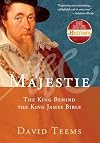
Ugh!! I'm so glad I'm done with this book!
I read several Tudor history books this summer and figured this book on James I would be a great followup. I should have been more specific with myself. A book on James I would have been a great followup---this particular book was not.
The author relied far too much on secondary sources and quotes. Another reader said it felt like they were reading the Cliff's Notes version of James' life and reign---exactly. I still feel like I know very little about show more the man. Teems liked to say, "James was James." Or various versions of that; problem is, he didn't give us a clear and thorough portrait of James to begin with.
The thing I found consistently frustrating though was that Teems gives his reader very little credit for possessing a functioning brain. Anyone who has chosen to read this book is already going to know that "plough" is "plow", that "elasticity" means "a good deal of stretch", that a vicar is a pastor. He uses vocabulary and then defines it: "he learned to vacillate. To say one thing and do another." This is needlessly redundant (see what I did there?). It goes on, ad nauseum: a fortnight is two weeks, a physic is medication, a homonym is defined...
I concede there were a few interesting bits. I found this quote to be the most fascinating of all. The author is discussing the influence that Shakespeare may have had on the translation of the KJB: "Remember, the circles in late Elizabethan and early Jacobean London were quite small. And all of this somewhat amazingly took place within a few square miles of earth, and at the same moment in time." Amazing. Also, I thought James' rendering of Psalm 100 was quite clever and the KJB information was really interesting---if brief. Though I feel like I wasted a lot of time forcing myself to read this book, it has served to spark an interest in James I and the translating of the KJB, so I suppose all's not lost. show less
I read several Tudor history books this summer and figured this book on James I would be a great followup. I should have been more specific with myself. A book on James I would have been a great followup---this particular book was not.
The author relied far too much on secondary sources and quotes. Another reader said it felt like they were reading the Cliff's Notes version of James' life and reign---exactly. I still feel like I know very little about show more the man. Teems liked to say, "James was James." Or various versions of that; problem is, he didn't give us a clear and thorough portrait of James to begin with.
The thing I found consistently frustrating though was that Teems gives his reader very little credit for possessing a functioning brain. Anyone who has chosen to read this book is already going to know that "plough" is "plow", that "elasticity" means "a good deal of stretch", that a vicar is a pastor. He uses vocabulary and then defines it: "he learned to vacillate. To say one thing and do another." This is needlessly redundant (see what I did there?). It goes on, ad nauseum: a fortnight is two weeks, a physic is medication, a homonym is defined...
I concede there were a few interesting bits. I found this quote to be the most fascinating of all. The author is discussing the influence that Shakespeare may have had on the translation of the KJB: "Remember, the circles in late Elizabethan and early Jacobean London were quite small. And all of this somewhat amazingly took place within a few square miles of earth, and at the same moment in time." Amazing. Also, I thought James' rendering of Psalm 100 was quite clever and the KJB information was really interesting---if brief. Though I feel like I wasted a lot of time forcing myself to read this book, it has served to spark an interest in James I and the translating of the KJB, so I suppose all's not lost. show less
And Thereby Hangs a Tale: What I Really Know About the Devoted Life I Learned from My Dogs by David Teems
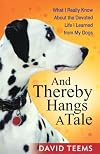
This is NOT, I repeat, NOT a "dog book." I should know by now to look a little further than the cover of a book, but this one had such an appealing photo of a Dalmatian, well ... I shoulda known better. Nope it's a book about Christianity and religious faith, with quotes from the Bible and chapters on St Francis and St Bernard, with a few rogue lines from Jack London's WHITE FANG. Teems starts out talking a bit about his Dalmatians and their dynamic with his family, but there's really not a show more whole lot in here about dogs. He uses them mostly as a device to talk about devotion and being faithful, which dogs certainly do know about. But even so ... Nope. It's a great 'doggy' title, AND THEREBY HANGS A TALE, but it's really a sheep in dog's clothing. Fortunately, I bought the book for fifty cents at a library sale. I think I'll take it back and let them try to sell it again. But maybe, to be fair to the next potential buyer (i.e. sucker), I should first glue a note on the cover saying : "Beware; this is NOT a dog book." And it's really not very interesting either. show less
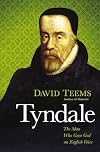
Teems writes weird. By 'weird', I don't mean bad, I just mean 'different'. I wouldn't call this book an account of Tyndale's life, rather, I would call it a 'conversation/discussion' of his life. Perhaps my choice of words seems strange as one can't really have a conversation or a discussion without a participant; but those are the words that come to mind. In a sense, I did feel as though I was participating. Mr. Teems gives you his own thoughts about different events, stating what he finds show more humorous, and giving his opinion of the various 'characters' in Tyndale's day. You may agree or disagree with what he thinks. He strikes me as a 'one-on-one' teacher, one who gives you, not only the people, time period, events, books and letters that were written, but gets you to think about them, to ponder certain questions. He gets your thoughts rolling. For instance, he'll give you Tyndale's translation of a certain passage in the Bible and also give you the KJV, NASB, NIV,SCB, translations and have you compare them and then he'll talk about the differences and similarities between them.
I learned a lot from this book. Oddly enough, one of the things I learned is that you can't learn a huge amount about Tyndale's biography. There really isn't much information on Tyndale's life available. To learn about the man, as is made clear in the book, we mainly have his books, letters and Bible translation to go off of. Teems makes good usage of these documents. I like that he'll mention Tyndale's publishing a book, and then take a chapter to 'look' at it. His 'looks' at Tyndale's Bible translation are throughout the book. In one of those 'looks' the author tells you about translation vs. paraphrase in his comparison of Tyndale's translation vs. today's The Message bible. "Representing a more modern appetite, The Message is a clear departure from Tyndale...The translation is upbeat. It is optimistic. It is sincere. And it is certainly readable. These are admirable qualities. But rhapsody has been exchanged for explanation (paraphraseis). .......Robert Alter referred to the phenomenon as the 'heresy of explanation.' (Quoting Alter)'The unacknowledged heresy underlying most modern English versions of the Bible is the use of translation as a vehicle for explaining the Bible instead of representing it in another language, and in the most egregious instances this amounts to explaining away the Bible.' Translation and interpretation are not the same thing, and that is Alter's point. "
Let me mention here a few things that I didn't like. For one, there are some things/topics I do not want to know the details of, in any society. There are some of these unnecessary things scattered throughout the book. Apparently, on rare occasions, Tyndale could be as crude as Luther in his comments about the hypocritical religious people of the day. Also, in my opinion, Teems stressed the 'music/sound/ feeling/rhythm' of Tyndale's writing too much. I would have been fine with a paragraph or two on it's musical quality, how well Tyndale wrote, how simply, I wouldn't even have minded a chapter on it, but it seemed to be one of the main emphases of the author. And, lastly: again, in my opinion, the chapter 'It was England to Him' was entirely unnecessary, even a bit boring. In it, Mr. Teems ponders what it would have been like for Tyndale to have been so far away from his native land (England) by looking at other people's experiences away from home. What was said in that chapter could have been said in one paragraph. But again, that's my opinion.
Now, back to a positive note. In this book, Teems explains that English was considered to be a crude, common language. Latin was the best language, the developed language of the day that was considered fit for the Bible. I liked that it is pointed out that the New Testament translated into the 'common' English language was, "the common Greek(Koine) materialized as common English". I had never thought about it in that way before. Koine Greek wasn't an 'elite' language, it was common, just as English was!
To sum up this look at the life of Tyndale: in reading the information compiled by Teems, It was evident from Tyndale's life that he had a 'working faith', a faith given to Him by God. He wasn't looking at his circumstances, his feelings, his desires, he wasn't focusing on the world around him, He was focused upon God and the tasks that God had given him to do. He knew that life was not about him, but about God.
I'll end with one of the many Tyndale quotes from the book:"Wicked deeds prove that a heart is unfaithful. Unless you are hitting the mark with your deeds, the aim of your soul must be crooked. Your faith should inform every activity of your being."
I received this book as a complimentary copy from BookSneeze® in exchange for my review(which does not have to be favorable). show less
I learned a lot from this book. Oddly enough, one of the things I learned is that you can't learn a huge amount about Tyndale's biography. There really isn't much information on Tyndale's life available. To learn about the man, as is made clear in the book, we mainly have his books, letters and Bible translation to go off of. Teems makes good usage of these documents. I like that he'll mention Tyndale's publishing a book, and then take a chapter to 'look' at it. His 'looks' at Tyndale's Bible translation are throughout the book. In one of those 'looks' the author tells you about translation vs. paraphrase in his comparison of Tyndale's translation vs. today's The Message bible. "Representing a more modern appetite, The Message is a clear departure from Tyndale...The translation is upbeat. It is optimistic. It is sincere. And it is certainly readable. These are admirable qualities. But rhapsody has been exchanged for explanation (paraphraseis). .......Robert Alter referred to the phenomenon as the 'heresy of explanation.' (Quoting Alter)'The unacknowledged heresy underlying most modern English versions of the Bible is the use of translation as a vehicle for explaining the Bible instead of representing it in another language, and in the most egregious instances this amounts to explaining away the Bible.' Translation and interpretation are not the same thing, and that is Alter's point. "
Let me mention here a few things that I didn't like. For one, there are some things/topics I do not want to know the details of, in any society. There are some of these unnecessary things scattered throughout the book. Apparently, on rare occasions, Tyndale could be as crude as Luther in his comments about the hypocritical religious people of the day. Also, in my opinion, Teems stressed the 'music/sound/ feeling/rhythm' of Tyndale's writing too much. I would have been fine with a paragraph or two on it's musical quality, how well Tyndale wrote, how simply, I wouldn't even have minded a chapter on it, but it seemed to be one of the main emphases of the author. And, lastly: again, in my opinion, the chapter 'It was England to Him' was entirely unnecessary, even a bit boring. In it, Mr. Teems ponders what it would have been like for Tyndale to have been so far away from his native land (England) by looking at other people's experiences away from home. What was said in that chapter could have been said in one paragraph. But again, that's my opinion.
Now, back to a positive note. In this book, Teems explains that English was considered to be a crude, common language. Latin was the best language, the developed language of the day that was considered fit for the Bible. I liked that it is pointed out that the New Testament translated into the 'common' English language was, "the common Greek(Koine) materialized as common English". I had never thought about it in that way before. Koine Greek wasn't an 'elite' language, it was common, just as English was!
To sum up this look at the life of Tyndale: in reading the information compiled by Teems, It was evident from Tyndale's life that he had a 'working faith', a faith given to Him by God. He wasn't looking at his circumstances, his feelings, his desires, he wasn't focusing on the world around him, He was focused upon God and the tasks that God had given him to do. He knew that life was not about him, but about God.
I'll end with one of the many Tyndale quotes from the book:"Wicked deeds prove that a heart is unfaithful. Unless you are hitting the mark with your deeds, the aim of your soul must be crooked. Your faith should inform every activity of your being."
I received this book as a complimentary copy from BookSneeze® in exchange for my review(which does not have to be favorable). show less
In Tyndale: The Man Who Gave God an English Voice, author David Teems leads readers through a period in European history when translating the Bible into the vernacular was ultimately an offense punishable by death. He attempts to follow the life of William Tyndale, the father of the first English Bible while also doing a fair bit of exegesis along the way.
One of the drawbacks to this book is the fact that little is known about Tyndale’s life. Because of this Teems has forgone the show more traditional chronological format of most biographies and has inserted a fair bit of speculation and comparative biography in its place. While much of what he has here is interesting, it does lack a narrative flow causing the reader to work a bit harder than normal to work through the book.
It starts out quite strong presenting itself as one part adventure story - dealing with Tyndale’s clandestine travels through Europe as he tries to write and publish his book - and one part translation analysis. It also ends well with the details surrounding Tydale’s capture and eventual execution. Where the book lags is in the middle where, because so little is really know, Teems must instead rely on comparative analysis with other authors of the time.
One aspect of the book that was a surprise was finding out that Tyndale, just as much as Shakespeare or the King James Bible, was really one of the fathers of English as we know it. In this respect Tyndale gets far too little credit in most linguistic histories, and Teems is right to set the record straight.
Overall, I did like the book, though it ended up being less than what I was originally expecting. show less
One of the drawbacks to this book is the fact that little is known about Tyndale’s life. Because of this Teems has forgone the show more traditional chronological format of most biographies and has inserted a fair bit of speculation and comparative biography in its place. While much of what he has here is interesting, it does lack a narrative flow causing the reader to work a bit harder than normal to work through the book.
It starts out quite strong presenting itself as one part adventure story - dealing with Tyndale’s clandestine travels through Europe as he tries to write and publish his book - and one part translation analysis. It also ends well with the details surrounding Tydale’s capture and eventual execution. Where the book lags is in the middle where, because so little is really know, Teems must instead rely on comparative analysis with other authors of the time.
One aspect of the book that was a surprise was finding out that Tyndale, just as much as Shakespeare or the King James Bible, was really one of the fathers of English as we know it. In this respect Tyndale gets far too little credit in most linguistic histories, and Teems is right to set the record straight.
Overall, I did like the book, though it ended up being less than what I was originally expecting. show less
You May Also Like


Associated Authors
Statistics
- Works
- 8
- Members
- 331
- Popularity
- #71,752
- Rating
- 3.3
- Reviews
- 8
- ISBNs
- 24