
Robert van Gulik (1910–1967)
Author of Celebrated Cases of Judge Dee
About the Author
Robert H. Van Gulik was born in the Netherlands on August 9, 1910. He joined the Dutch Foreign Service in 1935. From 1942-1945, he was secretary for the Dutch mission to Chiang Kai-shek's Nationalist government in Chongqing, China. During this time, he translated a number of Chinese texts including show more Celebrated Cases of Judge Dee (Dee Goong An). He proceeded to write sixteen of his own Judge Dee novels. His scholarly works included Siddham: An Essay on the History of Sanskrit Studies in China and Japan, Hayagriva: Horse Cult in Asia, and Sexual Life in Ancient China. He died on September 24, 1967. (Bowker Author Biography) show less
Image credit: Koto's warehouse sickle - of deceased former teacher (Immortal fame of old masters)
Series
Works by Robert van Gulik
Sexual Life in Ancient China: A Preliminary Survey of Chinese Sex and Society from ca. 1500 B.C. Till 1644 A.D. (1961) 109 copies, 5 reviews
Erotic Colour Prints of the Ming Period, with an Essay on Chinese Sex Life from the Han to the Ch'ing Dynasty, B.C. 206- A.D. 1644 (1989) 24 copies
The Emperor's Pearl / Necklace and Calabash / Poets and Murder / The Chinese Maze Murders (2005) 8 copies
The Phantom of the Temple / The Chinese Nail Murders / The Coffins of the Emperor / Murder on New Year's Eve / The Night of the Tiger / Murder in Canton (2005) 8 copies, 1 review
The Two Beggars [short story] 5 copies
The Chinese Gold Murders / Five Auspicious Clouds / The Red Tape Murders / He Came with the Rain / The Lacquer Screen / The Chinese Lake Murders (2009) 5 copies
He Came with the Rain [short story] 3 copies
The Red Tape Murders [short story] 2 copies
Five Auspicious Clouds [short story] 2 copies
The Wrong Sword [short story] 2 copies
The hot springs of Odawara 2 copies
柳園の壺 2 copies
Het levende lijk 2 copies
雷鳴の夜 1 copy
寅申の刻 1 copy
南海の金鈴 1 copy
白夫人の幻 1 copy
真珠の首飾り 1 copy
紅楼の悪夢 1 copy
北雪の釘 1 copy
水底の妖 1 copy
観月の宴 1 copy
紫雲の怪 1 copy
柳園の壺 1 copy
Judge Dee 1-17 1 copy
The Chinese Bell Murders / The Red Pavilion / Poets and Murder / Necklace and Calabash / The Two Beggars / The Wrong Sword (1993) 1 copy
3x soudce Ti 1 copy
Třikrát soudce Ti 1 copy
The Mango Trick in China 1 copy
Nagels in Ning-tso 1 copy
五色の雲 1 copy
Associated Works
Great Detectives: A Century of the Best Mysteries from England and America (1984) — Contributor — 404 copies, 4 reviews
The Devil's Novice / The Disappearance of the Saturnalia Silver / Blind Justice / He Came with the Rain (2000) — Contributor — 6 copies
Tagged
Common Knowledge
- Canonical name
- van Gulik, Robert
- Legal name
- van Gulik, Robert Hans
- Other names
- 高羅佩
Gao Lo-pei - Birthdate
- 1910-08-09
- Date of death
- 1967-09-24
- Gender
- male
- Education
- University of Leyden (PhD)
University of Utrecht (Ph.D. with honors, 1935) - Occupations
- Dutch diplomat
orientalist
musician (of the guqin) - Short biography
- Robert Hans van Gulik (August 9, 1910, Zutphen - September 24, 1967, The Hague) was an orientalist, diplomat, musician, and writer, best known for the Judge Dee mysteries. He was the son of a medical officer in the Dutch army. He was born in the Netherlands but from the age of three until twelve he lived in Batavia (now Jakarta). He went to the University of Leyden in 1934 and obtained his Ph.D. in 1935. He joined the Dutch Foreign Service in 1935. He was in Tokyo when Japan declared war on the Netherlands in 1941 but was evacuated in 1942. He spent most of the rest of World War II as the secretary for the Dutch mission to Chiang Kai-shek's Nationalist government in Chongqing. While in Chongqing, he married a Chinese woman, Shui Shifang, with whom he had four children. After the war ended, he returned to the Netherlands and then went to the United States as the Councillor of the Dutch embassy in Washington D.C. He returned to Japan in 1949 and stayed there for the next four years. While in Tokyo, he published his first two books, Celebrated Cases of Judge Dee and a privately published book of erotic colored prints from the Ming dynasty. From 1965 until his early death from cancer in 1967 he was the Dutch ambassador to Japan.
- Cause of death
- cancer
- Nationality
- Netherlands
- Birthplace
- Zutphen, Netherlands
- Places of residence
- Zutphen, Netherlands (birth)
Batavia (now Jakarta ∙ Indonesia)
Kuala Lumpur, Malaysia
Washington, D.C., USA
Tokyo, Japan
Chungkin, China - Place of death
- The Hague, Netherlands
Members
Reviews

I enjoyed this immensely, both the novel itself as well as the translator's notes in the preface and the afterward. I think it's important to understand the context of Chinese detective novels, because there are some elements (ghosts/dreams used as evidence; the torture for confessions) that are completely unbelievable for the Western reader but are par for the course in their original culture. I found this very fascinating and I think it really added to my enjoyment of the novel, without show more fifteen million footnotes explaining everything along the way.
In the afterward, the translator, van Gulik, mused that perhaps a modern day detective novelist should try writing a Chinese-style detective story, and I'm going to guess he decided to do that himself, considering the number of books he added to this series LOL.
The novel itself concerns the tribunal overseen by Judge Dee, a magistrate in Tang dynasty China, and the cases that are brought before him. There are 3 cases presented here, one right after the other, so that at one point 3 separate investigations are going on. It's messy in a realistic way and shows how the characters are stretched between their different duties. Dee even puts his career (and perhaps his life) on the line in pursuit of justice in one case: the ancient Chinese penal code was brutal for everyone who came into contact with it, apparently. The cases are varied and interesting (the murder of a silk merchant, the death of a bride on her wedding night, a shopkeeper's death that is basically covered up and only discovered a year after the fact), and the investigations equally so. If you enjoy historical procedurals, or series like Li Du, I think you'd like this one, too. I am definitely putting this book on my list of ones to buy, because the notes alone interest me that much! I can't wait to read more of these, and am so glad one of the libraries in our system has copies in the stacks ♥ show less
In the afterward, the translator, van Gulik, mused that perhaps a modern day detective novelist should try writing a Chinese-style detective story, and I'm going to guess he decided to do that himself, considering the number of books he added to this series LOL.
The novel itself concerns the tribunal overseen by Judge Dee, a magistrate in Tang dynasty China, and the cases that are brought before him. There are 3 cases presented here, one right after the other, so that at one point 3 separate investigations are going on. It's messy in a realistic way and shows how the characters are stretched between their different duties. Dee even puts his career (and perhaps his life) on the line in pursuit of justice in one case: the ancient Chinese penal code was brutal for everyone who came into contact with it, apparently. The cases are varied and interesting (the murder of a silk merchant, the death of a bride on her wedding night, a shopkeeper's death that is basically covered up and only discovered a year after the fact), and the investigations equally so. If you enjoy historical procedurals, or series like Li Du, I think you'd like this one, too. I am definitely putting this book on my list of ones to buy, because the notes alone interest me that much! I can't wait to read more of these, and am so glad one of the libraries in our system has copies in the stacks ♥ show less
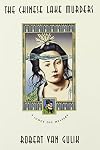
Robert van Gulik was a Dutch diplomat, linguist (he writes English like a native!), and an expert in China, both modern and ancient. Thank God he also decided to become an author!
The Chinese Lake Murders unfurls with three cases from when Judge Dee was a new magistrate in Han-yuang in A.D. 666. While being feted on a pleasure boat, Judge Dee discovers the body of a murdered courtesan, Almond Blossom. Just moments earlier, the girl had whispered to Judge Dee that a terrible conspiracy was show more afoot in Han-yuang, making the magistrate certain that she was killed to keep her from divulging her secret.
Traditionally, Chinese detective stories focus on three mysteries solved by a magistrate. However, in The Chinese Lake Murders, Judge Dee faces quite a few enigmas: The report of a bride who dies on her wedding night and is quickly laid into a coffin. When Judge Dee opens that coffin, the bride is gone, but the murdered corpse of a carpenter has taken its place! What happened to the bride? Who killed the carpenter? What happened to the bridegroom, who vanished on the same night? What is the dangerous conspiracy that Almond Blossom was murdered to conceal? And what about the strange actions of a 90-year-old retired Imperial Councilor? Those familiar with Judge Dee won't be surprised to find that these disparate threads become intertwined by the time of the novel's twist ending! That intertwined case becomes the most important case of Judge Dee's career -- and the centerpiece of an excellent novel.
Van Gulik first introduced Judge Dee to the West in Celebrated Cases of Judge Dee, first published in 1949 (although not translated into English until 1976). Using a real-life Chinese magistrate during the T'ang Dynasty named Ti Jen-chieh, van Gulik simplified the magistrate's name to Judge Dee Jen-djieh, and, in that first novel, he pretty much just used the cases from an 18th century Chinese detective novel, Dee Goong An. In his later novels, van Gulik, while influenced by cases from original ancient Chinese cases and 18th century Chinese detective stories, wrote the books from his own imagination. While some readers contend that the first book is van Gulik's best, I love The Lacquer Screen the best; that said, all of the Judge Dee novels I've read so far have been fantastic! I can't wait for the next one! show less
The Chinese Lake Murders unfurls with three cases from when Judge Dee was a new magistrate in Han-yuang in A.D. 666. While being feted on a pleasure boat, Judge Dee discovers the body of a murdered courtesan, Almond Blossom. Just moments earlier, the girl had whispered to Judge Dee that a terrible conspiracy was show more afoot in Han-yuang, making the magistrate certain that she was killed to keep her from divulging her secret.
Traditionally, Chinese detective stories focus on three mysteries solved by a magistrate. However, in The Chinese Lake Murders, Judge Dee faces quite a few enigmas: The report of a bride who dies on her wedding night and is quickly laid into a coffin. When Judge Dee opens that coffin, the bride is gone, but the murdered corpse of a carpenter has taken its place! What happened to the bride? Who killed the carpenter? What happened to the bridegroom, who vanished on the same night? What is the dangerous conspiracy that Almond Blossom was murdered to conceal? And what about the strange actions of a 90-year-old retired Imperial Councilor? Those familiar with Judge Dee won't be surprised to find that these disparate threads become intertwined by the time of the novel's twist ending! That intertwined case becomes the most important case of Judge Dee's career -- and the centerpiece of an excellent novel.
Van Gulik first introduced Judge Dee to the West in Celebrated Cases of Judge Dee, first published in 1949 (although not translated into English until 1976). Using a real-life Chinese magistrate during the T'ang Dynasty named Ti Jen-chieh, van Gulik simplified the magistrate's name to Judge Dee Jen-djieh, and, in that first novel, he pretty much just used the cases from an 18th century Chinese detective novel, Dee Goong An. In his later novels, van Gulik, while influenced by cases from original ancient Chinese cases and 18th century Chinese detective stories, wrote the books from his own imagination. While some readers contend that the first book is van Gulik's best, I love The Lacquer Screen the best; that said, all of the Judge Dee novels I've read so far have been fantastic! I can't wait for the next one! show less

Admirers of Robert van Gulik's always delightful Judge Dee mysteries have another treat in store with The Chinese Bell Murders. In this novel, Judge Dee is newly arrived in the city of Poo-Yang, and he begins by re-investigating a case that his predecessor, Judge Feng, could not complete since Feng had had to leave when he was reassigned to a new posting. In that case, an impoverished literary candidate named Wang was on the verge of being executed for the rape and murder of a butcher's show more daughter; however, Judge Dee cleverly and immediately realizes that the real culprit was someone else!
As in all Judge Dee novels, there are two more mysteries for Judge Dee to solve before the reader happily comes to the end: the case of a decades-long feud between two families who hail from Canton and some nefarious goings-on at a Buddhist temple. At the Temple of Boundless Mercy, barren women who spend the night, as often as not, later conceive. While the temple's abbot, who goes by the name of Spiritual Virtue, gives credit to the goddess Kwan Yin, Judge Dee suspects otherwise. Although in most Judge Dee novels the three mysteries are intertwined, in The Chinese Bell Murders, the mysteries stand alone and are solved consecutively.
In solving all three crimes, Judge Dee is ably assisted by his loyal and enterprising staff: a longtime family servant turned sergeant, Hoong; two former highwaymen, Ma Joong and Chiao Tai (whom Judge Dee first met in The Chinese Gold Murders) and the former conman, Tao Gan (who joined Judge Dee in The Chinese Lake Murders). What a pleasure to meet up with Judge Dee and his lieutenants again! While The Chinese Bell Murders was the third book that van Gulik wrote, the novel ranks eighth chronologically. None of that matters, however, as -- unlike with some mystery series, which must be read in order so as to make sense -- readers will enjoy Judge Dee novels in whatever order they read them.
Unlike most Judge Dee mysteries, The Chinese Bell Murders begins with an odd supernatural set-up. Readers new to Judge Dee should not let that put them off. The mysteries aren't the least bit twee, and all of the novels provide an illuminating glimpse into the 7th century China.
Judge Dee is based on a real-life Chinese magistrate during the T'ang Dynasty named Ti Jen-chieh, a name van Gulik simplified to Judge Dee Jen-djieh. Van Gulik first introduced Judge Dee to the West in Celebrated Cases of Judge Dee, first published in 1949 (although not translated into English until 1976). As in the other novels, for the three cases in The Chinese Bell Murders, van Gulik took his inspiration from original ancient Chinese cases and 18th century Chinese detective stories, although van Gulik changes the case enough, removing much of the coincidence and supernatural elements so that he makes the stories his own. show less
As in all Judge Dee novels, there are two more mysteries for Judge Dee to solve before the reader happily comes to the end: the case of a decades-long feud between two families who hail from Canton and some nefarious goings-on at a Buddhist temple. At the Temple of Boundless Mercy, barren women who spend the night, as often as not, later conceive. While the temple's abbot, who goes by the name of Spiritual Virtue, gives credit to the goddess Kwan Yin, Judge Dee suspects otherwise. Although in most Judge Dee novels the three mysteries are intertwined, in The Chinese Bell Murders, the mysteries stand alone and are solved consecutively.
In solving all three crimes, Judge Dee is ably assisted by his loyal and enterprising staff: a longtime family servant turned sergeant, Hoong; two former highwaymen, Ma Joong and Chiao Tai (whom Judge Dee first met in The Chinese Gold Murders) and the former conman, Tao Gan (who joined Judge Dee in The Chinese Lake Murders). What a pleasure to meet up with Judge Dee and his lieutenants again! While The Chinese Bell Murders was the third book that van Gulik wrote, the novel ranks eighth chronologically. None of that matters, however, as -- unlike with some mystery series, which must be read in order so as to make sense -- readers will enjoy Judge Dee novels in whatever order they read them.
Unlike most Judge Dee mysteries, The Chinese Bell Murders begins with an odd supernatural set-up. Readers new to Judge Dee should not let that put them off. The mysteries aren't the least bit twee, and all of the novels provide an illuminating glimpse into the 7th century China.
Judge Dee is based on a real-life Chinese magistrate during the T'ang Dynasty named Ti Jen-chieh, a name van Gulik simplified to Judge Dee Jen-djieh. Van Gulik first introduced Judge Dee to the West in Celebrated Cases of Judge Dee, first published in 1949 (although not translated into English until 1976). As in the other novels, for the three cases in The Chinese Bell Murders, van Gulik took his inspiration from original ancient Chinese cases and 18th century Chinese detective stories, although van Gulik changes the case enough, removing much of the coincidence and supernatural elements so that he makes the stories his own. show less
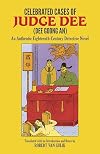
A translation of an 18th century Chinese novel about a 7th century judge-detective. He was a real person, but as far as we know the cases presented here are fictitious.
Historical mysteries are one of my favourite genres, so I was naturally intrigued by the idea of a historical mystery written 200-odd years ago in China, long before the genre existed in the West. The three investigations are unconnected apart from Judge Dee working on them at the same time. The translator (from 1947) tries show more to draw parallels with Sherlock Holmes but the novel is more like what we would now call a police procedural - even if the procedure does include dreams, what I think is the I Ching, and the torturing of suspects.
I enjoyed this look into a different way of going about an investigation, and I will probably read the others in the series. In the rest of the series Van Gulik is described as author rather than translator so I'm not sure how much they owe to Chinese sources. show less
Historical mysteries are one of my favourite genres, so I was naturally intrigued by the idea of a historical mystery written 200-odd years ago in China, long before the genre existed in the West. The three investigations are unconnected apart from Judge Dee working on them at the same time. The translator (from 1947) tries show more to draw parallels with Sherlock Holmes but the novel is more like what we would now call a police procedural - even if the procedure does include dreams, what I think is the I Ching, and the torturing of suspects.
I enjoyed this look into a different way of going about an investigation, and I will probably read the others in the series. In the rest of the series Van Gulik is described as author rather than translator so I'm not sure how much they owe to Chinese sources. show less
Lists
Awards


You May Also Like


Associated Authors
Statistics
- Works
- 109
- Also by
- 13
- Members
- 10,328
- Popularity
- #2,299
- Rating
- 3.9
- Reviews
- 207
- ISBNs
- 566
- Languages
- 19
- Favorited
- 40

