

Robert Kagan
Author of Of Paradise and Power: America and Europe in the New World Order
About the Author
Robert Kagan is senior associate at the Carnegie Endowment for International Peace, Transatlantic Fellow at the German Marshall Fund, and a columnist for The Washington Post.
Image credit: Claudio Vazquez
Works by Robert Kagan
The Ghost at the Feast: America and the Collapse of World Order, 1900-1941 (Dangerous Nation Trilogy) (2023) 121 copies, 2 reviews
Present Dangers: Crisis and Opportunity in American Foreign and Defense Policy (2000) — Editor; Contributor — 39 copies
Associated Works
An Inconvenient Truth [2006 documentary film] (2006) — Contributor, some editions — 277 copies, 8 reviews
The Betrayal of Liberalism: How the Disciples of Freedom and Equality Helped Foster the Illiberal Politics of Coercion and Control (1999) — Contributor — 32 copies
War and democracy : a comparative study of the Korean War and the Peloponnesian War (2000) — Contributor — 8 copies
Tagged
Common Knowledge
- Canonical name
- Kagan, Robert
- Birthdate
- 1958-09-26
- Gender
- male
- Education
- Yale University
Harvard University
American University (Washington, DC) - Occupations
- historian
editor
columnist
Carnegie Endowment for International Peace, Senior Associate
U.S. Department of State, Office of Policy Planning, (1984-1988)
U.S. Department of State, Bureau for Inter-American Affairs, Deputy for Policy - Organizations
- Carnegie Endowment for International Peace
The Weekly Standard
The New Republic
The Washington Post
Brookings Institution - Relationships
- Kristol, William (co-editor)
Kagan, Donald (father)
Kagan, Frederick W. (brother) - Nationality
- USA
- Birthplace
- Athens, Greece
- Places of residence
- Brussels, Belgium
- Associated Place (for map)
- Athens, Greece
Members
Reviews
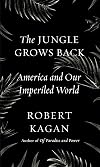
This is one of that books that I love because it makes me really wonder if maybe a bunch of things I believe are ill-founded while bolstering a strain of thought that I think I've "secretly" harbored for a long time. But I also think the book leaves out a lot. Sure, a "unipolar" world, a US-led liberal order, is safer and more stable (for many... or at least for some.) And, sure, a "balance of powers" between "great powers" has a 100% terrible history. And a China-led illiberal order seems show more like it would be the worst of the US-order, writ large.
But there is a part of me that just... pushes back and says, "There's got to be a better way." I think part of that comes from the (obvious) admission from Kagan that of course the US, as global cop, will have to make choices: we can't be everywhere, we can't "fix" things, so we have to pick where and how much and how long and how hard. And all those choices leave a lot of room to f* up. Which Kagan also admits.
I guess it come comes down to the "Communism" question. I.e., communism is great on paper, it just turns into a disaster when you actually do it in the real world. I don't think the US ever did anything even approximately Stalin-scale, so I'm not drawing a false equivalency here. That said, maybe the US-led unipolar world is "great on paper" only. Maybe the alternatives aren't a US-led liberal order or a new "Great Game." Maybe we can actually have a truly multi-polar world... but I suspect that might be more a wish than a reality. show less
But there is a part of me that just... pushes back and says, "There's got to be a better way." I think part of that comes from the (obvious) admission from Kagan that of course the US, as global cop, will have to make choices: we can't be everywhere, we can't "fix" things, so we have to pick where and how much and how long and how hard. And all those choices leave a lot of room to f* up. Which Kagan also admits.
I guess it come comes down to the "Communism" question. I.e., communism is great on paper, it just turns into a disaster when you actually do it in the real world. I don't think the US ever did anything even approximately Stalin-scale, so I'm not drawing a false equivalency here. That said, maybe the US-led unipolar world is "great on paper" only. Maybe the alternatives aren't a US-led liberal order or a new "Great Game." Maybe we can actually have a truly multi-polar world... but I suspect that might be more a wish than a reality. show less
The Ghost at the Feast: America and the Collapse of World Order, 1900-1941 (Dangerous Nation Trilogy) by Robert Kagan

At the end of the 19th century, the relationship between the United States and other nations of the world had changed dramatically because of the explosive growth of America’s power, measured in wealth, land and resources, population, relative economic self-sufficiency, and potential military capability. This accumulation of power completely changed the way the rest of the world viewed the United States, as well as the way Americans viewed themselves. In The Ghost at the Feast, Robert show more Kagan, a neoconservative senior fellow at the Brookings Institution and author of several books on international relations, here argues that the United States failed to use that power in the 1920s in ways that could have spared the world a great deal of misery. He states:
“. . . . It is the contention of this book that the United States had it within its power to preserve the peace in Europe after 1919, and at a manageable cost. But for reasons having little to do with capacity, Washington policy makers would not take the steps necessary. And while it is customary to focus on the collapse of world order in the 1930s, it was in the 1920s that the peace was truly lost. By the time [FDR] took office in March 1933, Hitler was already in power in Germany and the self-described “have-not” powers, which included Italy and Japan along with Germany, had already embarked on their determined attempt to undo the fragile order that Americans were half-heartedly attempting to establish.”
America, Kagan observes, stood apart in a number of additional ways from the rest of the world. Its government was a democratic republic, while other countries were still dominated by hereditary monarchies and aristocracies. Moreover, Americans “shared neither common blood nor an ancient rootedness in the soil.” Their isolation and wealth gave them freedom from the constant fear of encroachments by other powers, although, as Kagan wryly observes, “Americans had never been very good at minding their own business.” And their influence was resented abroad. Their culture not only was spreading in unwelcome ways, but missionaries from America covered the globe “to better people’s lives” [as determined by Americans, of course].
Kagan writes that “the story of American foreign policy in the first four decades of the twentieth century is about the effort to . . . adjust the nation to its new position without sacrificing the principles developed in the past….” Beyond that, Kagan avers, “Americans had no grand international plan and no clear direction.”
Kagan then details how those first four decades played out, starting with the war with Spain that began in April 1898 and “is generally regarded as a great turning point in the history of American foreign policy,” making the US into a “world power.”
When Germany knocked Russia out of World War I in 1917, that greatly disrupted the balance of power among the other European powers. Kagan contends, “The power of Germany had simply grown too great for the rest of Europe to handle.” America’s intervention in World War I was necessary for the Allies’ victory. Moreover, at the end of the war, the US stood alone among the world’s other powers since it had not suffered the immense destruction of industrial capacity and loss of life that the others had.
The Allies imposed stringent terms on Germany at the Versailles peace conference, harsh enough to cause the Weimar Republic to fail in just over a decade. But they did not enforce those terms on Germany once Hitler came to power. And as a British diplomat observed, “Fear that Americans might not honor any promises made in the Paris peace negotiations was ‘the ghost at all our feasts.’” That fear was largely realized as Americans, believing (perhaps correctly at that time) that they were invulnerable to foreign invasion, did nothing to help Britain and France establish a power bloc of democracies to maintain the peace. Kagan opines, “The ironic tragedy was that Americans had had an opportunity to achieve something approximating [the] ideal of a self-regulating, largely democratic liberal world order—in 1919 and the years that followed.”
But America did not take on that role. Kagan states:
“Americans’] 'determination in the 1920s and ‘30s never to be drawn into a war in Europe again had the effect of depriving them of the means and the mentality necessary to avoid precisely that fate. Instead, disillusioned Americans withdrew from the peace and thereby destroyed what they alone had the power to create.’”
Although it should have been obvious in the 1920s and ‘30s, Kagan maintains, that the balance of power was shifting away from European democracies in favor of dictatorships, “Americans continued to imagine that what happened in the world was mostly a matter of indifference to them.” So America abstained from “interfering” in Europe and events took their natural course based on the realities of power. “The result was that the United States would end up at war again, only under much worse circumstances.”
Kagan’s book makes a vigorous argument for a strong internationalist American foreign policy. Such a policy obviously entails risk, but the risks of isolationism have proven to be even greater, in his view.
Note: A number of excellent maps are included.
(JAB) show less
“. . . . It is the contention of this book that the United States had it within its power to preserve the peace in Europe after 1919, and at a manageable cost. But for reasons having little to do with capacity, Washington policy makers would not take the steps necessary. And while it is customary to focus on the collapse of world order in the 1930s, it was in the 1920s that the peace was truly lost. By the time [FDR] took office in March 1933, Hitler was already in power in Germany and the self-described “have-not” powers, which included Italy and Japan along with Germany, had already embarked on their determined attempt to undo the fragile order that Americans were half-heartedly attempting to establish.”
America, Kagan observes, stood apart in a number of additional ways from the rest of the world. Its government was a democratic republic, while other countries were still dominated by hereditary monarchies and aristocracies. Moreover, Americans “shared neither common blood nor an ancient rootedness in the soil.” Their isolation and wealth gave them freedom from the constant fear of encroachments by other powers, although, as Kagan wryly observes, “Americans had never been very good at minding their own business.” And their influence was resented abroad. Their culture not only was spreading in unwelcome ways, but missionaries from America covered the globe “to better people’s lives” [as determined by Americans, of course].
Kagan writes that “the story of American foreign policy in the first four decades of the twentieth century is about the effort to . . . adjust the nation to its new position without sacrificing the principles developed in the past….” Beyond that, Kagan avers, “Americans had no grand international plan and no clear direction.”
Kagan then details how those first four decades played out, starting with the war with Spain that began in April 1898 and “is generally regarded as a great turning point in the history of American foreign policy,” making the US into a “world power.”
When Germany knocked Russia out of World War I in 1917, that greatly disrupted the balance of power among the other European powers. Kagan contends, “The power of Germany had simply grown too great for the rest of Europe to handle.” America’s intervention in World War I was necessary for the Allies’ victory. Moreover, at the end of the war, the US stood alone among the world’s other powers since it had not suffered the immense destruction of industrial capacity and loss of life that the others had.
The Allies imposed stringent terms on Germany at the Versailles peace conference, harsh enough to cause the Weimar Republic to fail in just over a decade. But they did not enforce those terms on Germany once Hitler came to power. And as a British diplomat observed, “Fear that Americans might not honor any promises made in the Paris peace negotiations was ‘the ghost at all our feasts.’” That fear was largely realized as Americans, believing (perhaps correctly at that time) that they were invulnerable to foreign invasion, did nothing to help Britain and France establish a power bloc of democracies to maintain the peace. Kagan opines, “The ironic tragedy was that Americans had had an opportunity to achieve something approximating [the] ideal of a self-regulating, largely democratic liberal world order—in 1919 and the years that followed.”
But America did not take on that role. Kagan states:
“Americans’] 'determination in the 1920s and ‘30s never to be drawn into a war in Europe again had the effect of depriving them of the means and the mentality necessary to avoid precisely that fate. Instead, disillusioned Americans withdrew from the peace and thereby destroyed what they alone had the power to create.’”
Although it should have been obvious in the 1920s and ‘30s, Kagan maintains, that the balance of power was shifting away from European democracies in favor of dictatorships, “Americans continued to imagine that what happened in the world was mostly a matter of indifference to them.” So America abstained from “interfering” in Europe and events took their natural course based on the realities of power. “The result was that the United States would end up at war again, only under much worse circumstances.”
Kagan’s book makes a vigorous argument for a strong internationalist American foreign policy. Such a policy obviously entails risk, but the risks of isolationism have proven to be even greater, in his view.
Note: A number of excellent maps are included.
(JAB) show less
Kagan takes the exact opposite view I've always held (viz., that the U.S. must act as a global police force) and so expertly presents his case that I can't dismiss it. I'm not along with him yet, but after reckoning with it for a while, I have to admit his argument is persuasive and troubling.
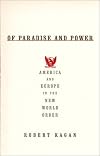
It's always gratifying to read a book that you agree 100% with. This essay on US transatlantic relationships and policy making is right on the money. Kagan pulls no punches in this one and his simple fact-of-the-matter rationale is hard to argue with and clear cut.
But just because he calls out Europe for exactly what they have been and are, he does it without getting nasty and schoolyardish about it. Which is refreshing in these times of O-Reilly and Heraldo.
Kagan acurately outlines why US show more foreign policy is what it is and why it will remain so. That is until someone else becomes king of the hill.
His parallels between Europe's historical actions and the US's current endeavors are clear and factual.
It's refreshing to read something on US policy that's not filled with the boasting and grandstanding that all of today's political books are filled with.
Kagan is the political science professor you'll wish you had in school and this book won't disappoint any reader. Whether you agree with him or not. show less
But just because he calls out Europe for exactly what they have been and are, he does it without getting nasty and schoolyardish about it. Which is refreshing in these times of O-Reilly and Heraldo.
Kagan acurately outlines why US show more foreign policy is what it is and why it will remain so. That is until someone else becomes king of the hill.
His parallels between Europe's historical actions and the US's current endeavors are clear and factual.
It's refreshing to read something on US policy that's not filled with the boasting and grandstanding that all of today's political books are filled with.
Kagan is the political science professor you'll wish you had in school and this book won't disappoint any reader. Whether you agree with him or not. show less
Lists
Awards


You May Also Like


Associated Authors
Statistics
- Works
- 23
- Also by
- 7
- Members
- 2,344
- Popularity
- #10,935
- Rating
- 3.6
- Reviews
- 31
- ISBNs
- 80
- Languages
- 14
- Favorited
- 3
