
Camara Laye (1928–1980)
Author of The Dark Child
About the Author
Works by Camara Laye
Associated Works
Tagged
Common Knowledge
- Birthdate
- 1928-01-01
- Date of death
- 1980-02-04
- Gender
- male
- Education
- College Georges Poiret
Central School of Automobile Engineering (Argenteuil ∙ France)
National Conservatory of Arts and Crafts
Technical College for Aeronautics and Automobile Construction (Diploma ∙ Engineering ∙ 1956)
Institut fondamental d'Afrique noire (Dakar, Senegal) - Occupations
- novelist
short story writer
poet - Awards and honors
- Prix Charles Veillon
- Cause of death
- kidney infection
- Nationality
- Guinea (Mandé)
- Birthplace
- Kouroussa, Guinea
- Places of residence
- Dakar, Senegal
Conakry, French Guinea
Paris, France
Dahomey (now Benin)
Gold Coast (now Ghana) - Place of death
- Dakar, Senegal
Members
Reviews
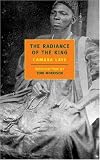
Kafka plus Conrad turned upside down in Africa? Yes. Camara re-writes the Heart of Darkness as if it were a Kafkan parable, and, because that wasn't enough, writes from the close third POV of a white man, whose perceptions are entirely untrustworthy. But this is no grand existential statement about subjectivism and so on. The point is quite clear, and quite terrifying for the white reader: Clarence is simply incapable of experiencing or understanding the (unnamed) West African country he show more finds himself in. What he experiences, instead, are all the usual cliches. Africa smells. Africans jump up and down a lot. Africa is full of charlatans and corruption. Africa is filthy. Africa is full of sexually available women. And so on.
Most of these "experiences" are caused by his own stupidity, whether that's an inability to understand the people around him, an inability to understand himself, or because he's doped out of his mind.
It's hard to over-state the difficulty of this novel. It's not difficult for a reader--there's a bit of surrealism, which is tough to deal with, but mostly it's funny, the set-pieces are excellent, and it's easy to follow what's going on. When one can't understand what's going on, that's because Clarence can't, either, and you just have to stick with it and wait for the one of the not-white characters to explain what Clarence's own stupidity is hiding from him (and us).
But it must have been very difficult to write such a conceptually coherent novel. To take just one small example, "an unnamed West African country" is already a whopping cliche. And yet Camara sticks to it, not because he doesn't want to set it in, e.g., Guinea, but because people like Clarence really do experience Africa as if it were one place, and so the names of nations/peoples/geographies are unimportant to them (us). Camara allows us to experience the women in the novel as sexual objects or housemaids, not because that's what he thinks women are, but because, again, that how people like Clarence (us) experience African women. That's before we get to the way he imbues Kafka's characteristic situations with a different narrative engine (the trip to the Castle/King becomes waiting for the King to come to Clarence), and incorporates Conrad (and inverts him: the King is the antithesis of Kurtz), and so on.
My only criticism is that the prose, whether it's Camara's or the translators, is utilitarian at best. I itch to edit this book. Random example: "And again he looked at the tunnel walls with an expression of terror on his face." On what else, I wonder, would the expression of terror be? Delete. show less
Most of these "experiences" are caused by his own stupidity, whether that's an inability to understand the people around him, an inability to understand himself, or because he's doped out of his mind.
It's hard to over-state the difficulty of this novel. It's not difficult for a reader--there's a bit of surrealism, which is tough to deal with, but mostly it's funny, the set-pieces are excellent, and it's easy to follow what's going on. When one can't understand what's going on, that's because Clarence can't, either, and you just have to stick with it and wait for the one of the not-white characters to explain what Clarence's own stupidity is hiding from him (and us).
But it must have been very difficult to write such a conceptually coherent novel. To take just one small example, "an unnamed West African country" is already a whopping cliche. And yet Camara sticks to it, not because he doesn't want to set it in, e.g., Guinea, but because people like Clarence really do experience Africa as if it were one place, and so the names of nations/peoples/geographies are unimportant to them (us). Camara allows us to experience the women in the novel as sexual objects or housemaids, not because that's what he thinks women are, but because, again, that how people like Clarence (us) experience African women. That's before we get to the way he imbues Kafka's characteristic situations with a different narrative engine (the trip to the Castle/King becomes waiting for the King to come to Clarence), and incorporates Conrad (and inverts him: the King is the antithesis of Kurtz), and so on.
My only criticism is that the prose, whether it's Camara's or the translators, is utilitarian at best. I itch to edit this book. Random example: "And again he looked at the tunnel walls with an expression of terror on his face." On what else, I wonder, would the expression of terror be? Delete. show less
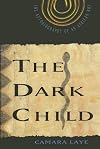
The Dark Child is an autobiography detailing the author’s childhood in French Guinea during the 1930’s and 40’s. Similar to Land of Childhood, which I’ve previously reviewed, this is a book that looks back fondly on a homeland that the author has left behind. In this case, the author wrote after traveling to France to continue his education, and it’s little wonder to me that he might have been homesick and experiencing culture shock.
The result is a book that provides a marvelous show more opportunity for the modern reader to learn about the customs of the time and for readers from other cultures to gain a window into this one. The author describes what his ordinary life was like, from watching his father work as a blacksmith/goldsmith to undergoing traditional coming-of-age practices. He expresses regret that there are aspects of his people’s traditions and beliefs that he does not understand because of his schooling, which was of an unusual amount compared to his peers and obviously a break from the way of life that had been traditional in his homeland up to that point. The reader is forced to wonder how much tradition has been lost.
This book is well written from beginning to end. The style is simple but powerful, and it’s clear from the beginning that the author had deep themes in mind while choosing which parts of his life to detail and in what ways.
The only thing readers may find potentially triggering is the presence of male and female circumcision. The author undergoes the former, and while the latter is mentioned so briefly it’s easy for an ignorant reader to miss it, readers who know the details from other sources may have a very different experience.
Apart from that, I was personally bothered by the description on the back of my copy, which describes French Guinea as “a place steeped in mystery”. From whose perspective? Surely not the people who lived there. And if readers such as myself are ignorant, it’s not because those native people are hiding anything. It’s likely because US schools (according to my experience) prefer to teach British literature and Greek and Roman mythology, effectively choosing which foreign countries should be familiar to us and which should seem “mysterious”.
Similarly, this back cover has a quote referring to the author as “Laye”, but after reading the book it became clear that “Laye” is his first name, while his family name is “Camara”. Unfortunately I could not find out from a web search whether the Mandinka people prefer to be referred to by their first name in cases where people with a European-style name would be referred to by their surname, but at best I find fault with the introduction that could have explained such things. After all, it was clearly setting about to provide historical and cultural context to non-African readers anyway. And that being the case, I’m not sure why this introduction was written by a man from Haiti who has no ties to or particular knowledge of French Guinea that his Wikipedia article sees fit to mention. It must have also been written quite a long time ago, since he died in 1975.
Overall, I’m glad that an English translation exists (as the original was written in French), but I’m disappointed by signs that the English-speaking world continues to showcase such little regard for the culture that Camara Laye himself celebrates. I would love to see a new edition of this classic, with an introduction by a modern author or scholar from what is now the independent country of Guinea. I’m sure such a person would have a lot of valuable things to say. In the meantime, I would advise readers to ignore everything on the back cover, skip the introduction, and simply read what the author himself wrote. You can do your own historical and cultural research if you would like.
I must say that, apart from these things, my greatest disappointment with the book was the fact that it didn’t go on to describe the author’s experiences in France and what happened after. Of course, this is an unfair criticism since it was written while the author was still in France, and the conclusion given is the surely the best he could have provided at that time of his life. But it goes to show how much I cared about him by the end that I wanted to see him build a good life for himself and be reunited with his family who were so aggrieved to part with him.
This is a good book. If you’re participating in an Around the World reading challenge or have any interest in learning about cultures you may not have been taught about at your school, I highly recommend it. Similarly, it’s a great choice if you like autobiographies portraying ordinary life with skillful writing. This one deserves more attention than it seems to have thus far received. show less
The result is a book that provides a marvelous show more opportunity for the modern reader to learn about the customs of the time and for readers from other cultures to gain a window into this one. The author describes what his ordinary life was like, from watching his father work as a blacksmith/goldsmith to undergoing traditional coming-of-age practices. He expresses regret that there are aspects of his people’s traditions and beliefs that he does not understand because of his schooling, which was of an unusual amount compared to his peers and obviously a break from the way of life that had been traditional in his homeland up to that point. The reader is forced to wonder how much tradition has been lost.
This book is well written from beginning to end. The style is simple but powerful, and it’s clear from the beginning that the author had deep themes in mind while choosing which parts of his life to detail and in what ways.
The only thing readers may find potentially triggering is the presence of male and female circumcision. The author undergoes the former, and while the latter is mentioned so briefly it’s easy for an ignorant reader to miss it, readers who know the details from other sources may have a very different experience.
Apart from that, I was personally bothered by the description on the back of my copy, which describes French Guinea as “a place steeped in mystery”. From whose perspective? Surely not the people who lived there. And if readers such as myself are ignorant, it’s not because those native people are hiding anything. It’s likely because US schools (according to my experience) prefer to teach British literature and Greek and Roman mythology, effectively choosing which foreign countries should be familiar to us and which should seem “mysterious”.
Similarly, this back cover has a quote referring to the author as “Laye”, but after reading the book it became clear that “Laye” is his first name, while his family name is “Camara”. Unfortunately I could not find out from a web search whether the Mandinka people prefer to be referred to by their first name in cases where people with a European-style name would be referred to by their surname, but at best I find fault with the introduction that could have explained such things. After all, it was clearly setting about to provide historical and cultural context to non-African readers anyway. And that being the case, I’m not sure why this introduction was written by a man from Haiti who has no ties to or particular knowledge of French Guinea that his Wikipedia article sees fit to mention. It must have also been written quite a long time ago, since he died in 1975.
Overall, I’m glad that an English translation exists (as the original was written in French), but I’m disappointed by signs that the English-speaking world continues to showcase such little regard for the culture that Camara Laye himself celebrates. I would love to see a new edition of this classic, with an introduction by a modern author or scholar from what is now the independent country of Guinea. I’m sure such a person would have a lot of valuable things to say. In the meantime, I would advise readers to ignore everything on the back cover, skip the introduction, and simply read what the author himself wrote. You can do your own historical and cultural research if you would like.
I must say that, apart from these things, my greatest disappointment with the book was the fact that it didn’t go on to describe the author’s experiences in France and what happened after. Of course, this is an unfair criticism since it was written while the author was still in France, and the conclusion given is the surely the best he could have provided at that time of his life. But it goes to show how much I cared about him by the end that I wanted to see him build a good life for himself and be reunited with his family who were so aggrieved to part with him.
This is a good book. If you’re participating in an Around the World reading challenge or have any interest in learning about cultures you may not have been taught about at your school, I highly recommend it. Similarly, it’s a great choice if you like autobiographies portraying ordinary life with skillful writing. This one deserves more attention than it seems to have thus far received. show less
This 70 year old novel tells the story of a Europeans bewildering journey thru an unnamed African kingdom. The story touches on race and privileged behavior without it being the focus of the novel. Instead the reader is entranced by a wonderfully odd tale of discovery. The pretentious main protagonist (Clarence), so wildly without insight into his own character or the motivations of others, seemingly wanders forward in both dependence and arrogance. But is it really wandering?
A wonderful show more story that lives up to the overused Kafkaesque moniker. show less
A wonderful show more story that lives up to the overused Kafkaesque moniker. show less
In the first 90 pages of this book, the great drama involves influential parents intervening to stop schoolyard bullying and in the second 90 pages of this book, the great drama involves the foreskin being chopped from the author's penis. ("Later on, I went through an ordeal much more frightening than Konden Diara, a really dangerous ordeal, and no game: circumcision." Oh my god!!)
And in case you were worried that your pulse might slow in the dying chapters of the "novel," in the last show more fifteen pages, there is some canned hand-wringing about hurting a mother's feelings by traveling to another country to pursue your education. I have never read an African novel with less substance or less style.
It boggles my mind that Laye wrote this book in his twenties. It has no youth in it whatsoever: no playfulness; no striving; no struggle and no love. It felt like the sanitized nostalgic reminiscences of an old man who reached his age without acquiring wisdom or wit and whose primary concern is making the circumstances around his youth seem as pure, well-designed and dignified as possible.
The persistent non-happening of this book might have been elevated if the author was insightful or reflective; but the closest thing he offers are perhaps a dozen scattered rhetorical questions like, "Do we still have secrets?" "Are we not always consumed with longing?" "Do our hearts ever rest?"
Um? Our protagonist has a heart? He longs for something? Could've fooled me. Closest we come to experiencing that longing is his rhetorical question, which has no power whatsoever.
There are so many wonderful books about growing up in Africa and there are some pretty decent ones romanticizing village life and traditional crafts. This is not one of them. It would be a shame if this was even one of the first twenty books that you read by an African author. I swear by the five yours I wasted that there is nothing between the covers but ink.
If you set out to write a book that is designed to make your parents feel better about your exile and the role they had in shaping your destiny; perhaps the product is inevitably doomed to an earnest and artless one-dimensionality. show less
And in case you were worried that your pulse might slow in the dying chapters of the "novel," in the last show more fifteen pages, there is some canned hand-wringing about hurting a mother's feelings by traveling to another country to pursue your education. I have never read an African novel with less substance or less style.
It boggles my mind that Laye wrote this book in his twenties. It has no youth in it whatsoever: no playfulness; no striving; no struggle and no love. It felt like the sanitized nostalgic reminiscences of an old man who reached his age without acquiring wisdom or wit and whose primary concern is making the circumstances around his youth seem as pure, well-designed and dignified as possible.
The persistent non-happening of this book might have been elevated if the author was insightful or reflective; but the closest thing he offers are perhaps a dozen scattered rhetorical questions like, "Do we still have secrets?" "Are we not always consumed with longing?" "Do our hearts ever rest?"
Um? Our protagonist has a heart? He longs for something? Could've fooled me. Closest we come to experiencing that longing is his rhetorical question, which has no power whatsoever.
There are so many wonderful books about growing up in Africa and there are some pretty decent ones romanticizing village life and traditional crafts. This is not one of them. It would be a shame if this was even one of the first twenty books that you read by an African author. I swear by the five yours I wasted that there is nothing between the covers but ink.
If you set out to write a book that is designed to make your parents feel better about your exile and the role they had in shaping your destiny; perhaps the product is inevitably doomed to an earnest and artless one-dimensionality. show less
Lists
Awards


You May Also Like


Associated Authors
Statistics
- Works
- 5
- Also by
- 5
- Members
- 1,282
- Popularity
- #20,005
- Rating
- 3.5
- Reviews
- 31
- ISBNs
- 51
- Languages
- 7
- Favorited
- 1
