
Shandi Mitchell
Author of Under This Unbroken Sky: A Novel
About the Author
Image credit: www.shandimitchell.com/
Works by Shandi Mitchell
Tagged
Common Knowledge
- Canonical name
- Mitchell, Shandi
- Birthdate
- 20th century
- Gender
- female
- Education
- Dalhousie University
- Nationality
- Canada
- Associated Place (for map)
- Canada
Members
Reviews
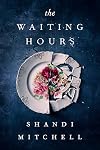
The Waiting Hours, Shandi Mitchell’s suspenseful follow-up to her award-winning debut novel, Under This Unbroken Sky, examines the professional and personal lives of people working in crisis response: Mike is a cop, Kate an ER nurse, and Tamara a 911 operator. The action takes place in an unspecified urban centre, though enough cues are present, and sufficient landmarks mentioned, to make the Halifax/Dartmouth setting obvious to anyone familiar with the city. The story begins with the show more murder of a boy, and through the remainder of the book we witness the fallout from this senseless act of violence affecting each of the main characters. But Mitchell’s novel probes much deeper: into her characters’ personal lives, relationships and traumas. Mike, who is called to the crime scene, and who has always prided himself on his toughness, independence and resilience, subsequently struggles to control feelings of helplessness, paranoia and frightening outbursts of aggression. Kate, who also works in Search and Rescue with her dog Zeus, and who is avoiding the major issue in her life—a mentally ill brother who is off his meds and spiralling out of control—by totally immersing herself in two high-pressure jobs, is eventually forced to address the problem and seek outside help. And Tamara, whose phobias have left her obsessively protective of her privacy and suspicious and fearful of the external world and everyone in it, slowly begins to emerge from a shell of her own making by forging a connection with the family of the murdered boy and witnessing first-hand their grief and their strength in the face of tragedy. The novel is constructed episodically, the third-person perspective shifting from chapter to chapter among the three main characters (as well as a taxi driver named Hassan who enters Tamara’s life and develops feelings for her) as their separate stories unfold. Mitchell’s novel, dramatically urgent, brimming with compassion, reveals the agonizing conundrum of front-line workers who are exposed to the unfiltered tragedy and heartrending unfairness of the human condition on a daily basis, and then, in order to survive, must discover some path to normalcy in their own lives. In The Waiting Hours, Shandi Mitchell has written an emotionally devastating novel that takes us into the trenches where the battle is waged, revealing the enormous challenge these people face, the risks they take, and the steep price of failure. show less

"Bubble, bubble, toil and trouble." No witches here, but Shandi Mitchell's debut novel, UNDER THIS UNBROKEN SKY, is filled with toil and trouble and this tragic tale could easily be seen as Shakespearean in its themes of greed, family betrayals and suffering. Novelist Ron Rash has likened Mitchell's fiction to that of Willa Cather. To that list I would add Mildred Walker, as I was often reminded of her classic novel of Depression-era Montana, WINTER WHEAT, one of my all-time favorite reads. show more
The bleakness of Depression-era prairie life in Alberta comes through best from the half-crazed viewpoint of abused and oft-abandoned wife, Anna Shevchuk, as she muses incoherently about her desperate situation.
"House, land ... Forever. Empty. Flat. Alone ... Nobody. Life. Sadness ..."
In Anna's increasing madness and her strange attempts to connect with marauding coyotes, I thought too of another Canadian writer, Marian Engle, and her twisted but magical novel, BEAR. People and animals. All of us beasts. No happy endings.
Ron Rash is correct, however, in his Cather connection and how important land is to farmers, and to immigrants in particular. Mitchell's protagonist, Teodor Mikhalayenko, defines himself, justifies himself in those terms, answering his sister Anna, when she asks why he couldn't "just leave": "Because it's my land. It's all I have and all I am. And no one will ever take it away."
All of the characters here are impressive and three-dimensional. Teodor's wife and children, as well as Anna's children and ne'er-do-well husband. Mitchell displays uncommon skill in getting inside the heads of all of them, making them incredibly real; and making you care about almost all of them. Anna's husband, Stefan, is a truly unlikeable scoundrel, a classic villain; but there is room for a tiny bit of pity for even him - that's how good Mitchell is!
Perhaps the most affecting of the secondary characters is Anna's daughter, Lesya, born with a club foot, she makes a pet of a similarly crippled chicken. Sadly, not even a crippled hen named "Happiness" can survive this harsh and cruel existence.
As I said at the outset, this is a tragedy, and a fine one at that. Mitchell is a wonderful writer. I can't wait to see what she writes next. Highly recommended. show less
The bleakness of Depression-era prairie life in Alberta comes through best from the half-crazed viewpoint of abused and oft-abandoned wife, Anna Shevchuk, as she muses incoherently about her desperate situation.
"House, land ... Forever. Empty. Flat. Alone ... Nobody. Life. Sadness ..."
In Anna's increasing madness and her strange attempts to connect with marauding coyotes, I thought too of another Canadian writer, Marian Engle, and her twisted but magical novel, BEAR. People and animals. All of us beasts. No happy endings.
Ron Rash is correct, however, in his Cather connection and how important land is to farmers, and to immigrants in particular. Mitchell's protagonist, Teodor Mikhalayenko, defines himself, justifies himself in those terms, answering his sister Anna, when she asks why he couldn't "just leave": "Because it's my land. It's all I have and all I am. And no one will ever take it away."
All of the characters here are impressive and three-dimensional. Teodor's wife and children, as well as Anna's children and ne'er-do-well husband. Mitchell displays uncommon skill in getting inside the heads of all of them, making them incredibly real; and making you care about almost all of them. Anna's husband, Stefan, is a truly unlikeable scoundrel, a classic villain; but there is room for a tiny bit of pity for even him - that's how good Mitchell is!
Perhaps the most affecting of the secondary characters is Anna's daughter, Lesya, born with a club foot, she makes a pet of a similarly crippled chicken. Sadly, not even a crippled hen named "Happiness" can survive this harsh and cruel existence.
As I said at the outset, this is a tragedy, and a fine one at that. Mitchell is a wonderful writer. I can't wait to see what she writes next. Highly recommended. show less

This a memorable book, though far from an enjoyable one. It is both classically Canadian—think: Margaret Atwood’s Survival: A Thematic Guide to Canadian Literature—and Hardyesque—think: The Mayor of Casterbridge. However, I believe Mitchell pushed the suffering too far. The young girl Lesya’s murder of her pet hen, Happiness, is absolutely horrifying. Worse than the self-hanging of Father Time (and Jude’s other children) in Hardy’s Jude the Obscure. I think that about says it show more all. Having said all this, there is much the author got right about the Ukrainian immigrant settler experience in western Canada. show less
From the book jacket: Spring 1938. After nearly two years in prison for the crime of stealing his own grain, Ukranian immigrant Teodor Mykolayenko is a free man. While he was gone, his wife, Maria, their five children, and his sister, Anna, struggled to survive on the harsh northern Canadian prairie, but now Teodor – a man who has overcome drought, starvation, and Stalin’s purges – is determined to make a better life for them. … But Anna’s husband, Stefan, unexpectedly returns, show more stirring up rancor and discord that will end in violence and tragedy.
My reactions:
This debut work just about broke my heart. Mitchell’s writing is luminous and poetic in places, making the landscape and weather central characters in the drama that unfolds. In the span of a year’s time, the novel touches on the immigrant experience, the injustice of prejudice against the newcomers, the harsh realities of prairie life during this time, domestic abuse, faith, loyalty, friendship, charity, pride, survival and forgiveness. If that seems like too much to handle, trust me, it isn’t; at least not in Mitchell’s capable hands.
Teodor embodies the immigrant ethic – hard work and steadfast movement toward a goal, championing a cause for the betterment of his family. But he also falls victim to his own faults: pride and anger. He is so caught in being justifiably outraged that he cannot see his way to compromise. And yet, he is a loving father, husband, brother and uncle.
Maria is a tower of strength, keeping her family together and carefully husbanding their meager resources to feed not only her own children, but her sister-in-law and her two children. Her work is no less difficult than Teodor’s back-breaking task of clearing the land for their homestead. She instills values of charity, love and faith in her family, and tries her best to do so for her niece and nephew.
The character that most distresses me is Petro, Anna and Stefan’s son. He tries so hard to emulate his older cousin and uncle, but is understandably most influenced by his father. He may be only nine when the novel ends, but I worry for his future.
This is a book, and an author, that deserves a wider audience. show less
My reactions:
This debut work just about broke my heart. Mitchell’s writing is luminous and poetic in places, making the landscape and weather central characters in the drama that unfolds. In the span of a year’s time, the novel touches on the immigrant experience, the injustice of prejudice against the newcomers, the harsh realities of prairie life during this time, domestic abuse, faith, loyalty, friendship, charity, pride, survival and forgiveness. If that seems like too much to handle, trust me, it isn’t; at least not in Mitchell’s capable hands.
Teodor embodies the immigrant ethic – hard work and steadfast movement toward a goal, championing a cause for the betterment of his family. But he also falls victim to his own faults: pride and anger. He is so caught in being justifiably outraged that he cannot see his way to compromise. And yet, he is a loving father, husband, brother and uncle.
Maria is a tower of strength, keeping her family together and carefully husbanding their meager resources to feed not only her own children, but her sister-in-law and her two children. Her work is no less difficult than Teodor’s back-breaking task of clearing the land for their homestead. She instills values of charity, love and faith in her family, and tries her best to do so for her niece and nephew.
The character that most distresses me is Petro, Anna and Stefan’s son. He tries so hard to emulate his older cousin and uncle, but is understandably most influenced by his father. He may be only nine when the novel ends, but I worry for his future.
This is a book, and an author, that deserves a wider audience. show less
Lists
Awards


You May Also Like


Statistics
- Works
- 2
- Members
- 402
- Popularity
- #60,415
- Rating
- 4.0
- Reviews
- 51
- ISBNs
- 21
- Languages
- 2
- Favorited
- 1