

Leonard Wolf (1923–2019)
Author of The Essential Dracula
About the Author
Leonard Wolf was born in Vulcan, Romania (Transylvania). He is the editor of The Essential Frankenstein, The Essential Dracula, and The Essential Jekyll and Hyde, the contributing editor to the Newmarket Pictorial Moviebook on Mary Shelley's Frankenstein, and technical advisor on the films Bram show more Stoker's Dracula and Mary Shelley's Frankenstein. Wolf's prize-winning poetry and fiction have appeared in The Atlantic, Harper's and The New Yorker. His work in the horror genre has been honored twice with the Anne Radcliffe Award for Literature. He lives in New York City. show less
Works by Leonard Wolf
Associated Works
Tagged
Common Knowledge
- Canonical name
- Wolf, Leonard
- Legal name
- Wolf, Leonard Ludovic
- Birthdate
- 1923-03-01
- Date of death
- 2019-03-20
- Gender
- male
- Education
- University of Iowa (Ph.D)
- Occupations
- professor
writer
poet - Organizations
- University of California, Berkeley
San Francisco State University
St Mary's College - Awards and honors
- James Phelan Poetry Prize
Anne Radcliffe Award - Relationships
- Wolf, Naomi (daughter)
Goleman, Deborah (spouse) - Nationality
- Romania (birth)
USA - Birthplace
- Vulcan, Transylvania, Romania
- Place of death
- Corvallis, Oregon, USA
- Associated Place (for map)
- Vulcan, Transylvania, Romania
Members
Reviews
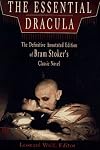
With this—probably my second or third—reading of “Dracula,” certain surprising aspects of the novel (which would elude most first-time readers) became glaringly apparent to me. I will forego a summary of the plot, since the tale is almost universally known. Instead, I’ll simply identify those aspects of the novel that seem to go unrecognized in the wake of its legacy and undeniable impact on the horror genre and our culture’s insatiable fascination with vampires. First of all, show more the narrative structure of “Dracula,” despite its being a conventional Victorian romance, is quite postmodern—the titular character is, in fact, the antagonist of the story rather than the protagonist; the tale is told from the perspectives of numerous narrators, and this poly-vocal, cobbled-together story features numerous narrative voices (none more annoying than Van Helsing’s convoluted and at times unintelligibly purple prose) and genres (diaries, letters, newspaper stories). And, shockingly, the conclusion of the novel deconstructs the entirety of the narrative that has preceded it. Jonathan Harker writes:
“We were struck with the fact, that in all the mass of material of which the record is composed, there is hardly one authentic document; nothing but a mass of type-writing, except the later note-books of Mina and Seward and myself, and Van Helsing’s memorandum. We could hardly ask any one, even did we wish to, to accept these as proofs of so wild a story.” (pp. 444-445)
This edition is particularly rich and rewarding for readers who are returning to “Dracula” for subsequent readings. Leonard Wolf’s introduction and his abundant footnotes enrich the tale and supplement the story in a highly entertaining fashion. It’s like reading the novel with a literary tour guide looking over your shoulder and making sure you don’t miss any point of interest.
Ultimately, a careful rereading of “Dracula” reveals just how little it contains of what we now consider conventional about the vampire myth. The “horror” it contains is also quite tame—much of the terror throughout the novel is masterfully implied rather than blatant, and Dracula himself is hardly even present for the majority of the action. “Dracula” is indeed a classic—one that rewards rereadings, reconsideration, and constant review. show less
“We were struck with the fact, that in all the mass of material of which the record is composed, there is hardly one authentic document; nothing but a mass of type-writing, except the later note-books of Mina and Seward and myself, and Van Helsing’s memorandum. We could hardly ask any one, even did we wish to, to accept these as proofs of so wild a story.” (pp. 444-445)
This edition is particularly rich and rewarding for readers who are returning to “Dracula” for subsequent readings. Leonard Wolf’s introduction and his abundant footnotes enrich the tale and supplement the story in a highly entertaining fashion. It’s like reading the novel with a literary tour guide looking over your shoulder and making sure you don’t miss any point of interest.
Ultimately, a careful rereading of “Dracula” reveals just how little it contains of what we now consider conventional about the vampire myth. The “horror” it contains is also quite tame—much of the terror throughout the novel is masterfully implied rather than blatant, and Dracula himself is hardly even present for the majority of the action. “Dracula” is indeed a classic—one that rewards rereadings, reconsideration, and constant review. show less
The Essential Frankenstein: The Definitive, Annotated Edition of Mary Shelley's ClassicNovel (Essentials) by Mary Shelley
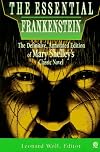
last time i read frankenstein was probably 20 years ago. rereading it now, i still love it. this heavily-annotated edition is great for a reread, but i wouldn't recommend it for a first-time reading (too distracting, and too spoilery). i learned a lot more about mary shelley and the context in which the book was written.
also of possible interest is that this edition is based on the original 1818 version of frankenstein. the annotations make note of where the more-widely-read 1831 edition show more differs significantly.
i have to admit that one of the reasons i like this book so much is that both frankenstein and his creature are so tortured and angsty about the act of creation and about one's own monstrous nature... etc etc. i dig it. show less
also of possible interest is that this edition is based on the original 1818 version of frankenstein. the annotations make note of where the more-widely-read 1831 edition show more differs significantly.
i have to admit that one of the reasons i like this book so much is that both frankenstein and his creature are so tortured and angsty about the act of creation and about one's own monstrous nature... etc etc. i dig it. show less

I am not a fan of the original book, which I think has major flaws. But this is by far the best edition of the book I have ever read, and the annotations are both helpful and interesting (my rating is a blended rating of the book and the annotations; I'd give the annotations 5 stars). I especially liked how the annotations include recipes for unfamiliar dishes mentioned in the story, which was a nice addition that I've never seen in any other annotated book.

How to start. Gilles de Rais had everything, absolutely everything going for him. Money, land, title, friends in high places, and companion to Joan of Arc. The man was definitely torn between God and the Devil, which we all are to some degree or another. The crimes he committed are unpardonable and for the church to bury him on holy ground and not burn him to ash like his accomplices is beyond my comprehension. The author does a good job in bringing together evidence and doesn't expand the show more evidence to fit any preconcieved notion of his. He does touch on the nature of the crimes by writing what was given as his testimony. Anybody after listening to his confession to the judges would probably be aghast and have every reason to hate this man intensely even though by this time in the book it is anti-climatic. All I can say is at least justice was served although I think he should of suffered much as the children he tormented did. One thing that sticks in my mind after reading this book was, was he truly repentant as he appeared at the end or was it a facade? I guess one will never know. show less
Lists
Awards

You May Also Like


Associated Authors
Statistics
- Works
- 16
- Also by
- 10
- Members
- 976
- Popularity
- #26,388
- Rating
- 4.0
- Reviews
- 19
- ISBNs
- 36
- Languages
- 1
- Favorited
- 2