kidzdoc makes another attempt to conquer Mount TBR in 2016
This topic was continued by kidzdoc makes another attempt to conquer Mount TBR in 2016, part 2.
Talk Club Read 2016
Join LibraryThing to post.
This topic is currently marked as "dormant"—the last message is more than 90 days old. You can revive it by posting a reply.
1kidzdoc

This is an early morning photograph of my neighborhood in Midtown Atlanta, taken from Lake Clara Meer in Piedmont Park, the city's largest park. I live within the cluster of buildings in the middle of this photo.
I usually start the year by making grandiose and absurd plans to make a sizable dent in my ever increasing TBR (To Be Read) collection of books, and to end the year with less unread books than I start the year with. I have failed spectacularly every year since I joined Club Read in 2009, but I continue to hope (valiantly, if not foolishly) that the upcoming year will be different.
As usual, I'll post a list of my goals for the year, which will look similar to my goals for last year, with a few minor differences.


The Vegetarian by Han Kang
I Am Legend by Richard Matheson
Roads to Santiago by Cees Nooteboom
Completed books: (TBR = book acquired prior to 1/1/15)
January:
1. My Struggle: Book One by Karl Ove Knausgaard (TBR) (review)
2. Walking Prey: How America's Youth Are Vulnerable to Sex Slavery by Holly Austin Smith (review)
3. Ru by Kim Thúy (review)
4. Fifth Business by Robertson Davies (TBR) (review)
5. Bodies of Light by Sarah Moss (review)
February:
6. Stokely: A Life by Peniel E. Joseph (TBR) (review)
7. Literary Lapses by Stephen Leacock (review)
8. When Breath Becomes Air by Paul Kalanithi
9. How to Be Drawn by Terrance Hayes
10. The Weight of Shadows: A Memoir of Immigration & Displacement by José Orduña
11. Ready to Burst by Frankétienne (TBR)
12. Don't Let Me Be Lonely: An American Lyric by Claudia Rankine
March:
13. And After Many Days by Jowhor Ile
14. Lighthead by Terrance Hayes (TBR)
15. A General Theory of Oblivion by José Eduardo Agualusa
2kidzdoc
Books purchased or acquired in 2016 (purchased books in bold):
January:
1. Ottolenghi: The Cookbook by Yotam Ottolenghi (4 Jan, gift book from brother)
2. The Sea by Blai Bonet (4 Jan, gift book from brother)
3. Walking Prey: How America's Youth Are Vulnerable to Sex Slavery by Holly Austin Smith (6 Jan, Amazon Kindle e-book)
4. Ludwika: A Polish Woman's Struggle To Survive In Nazi Germany by Christoph Fischer (20 Jan, Amazon Kindle free e-book)
5. Snowball in a Blizzard: A Physician's Notes on Uncertainty in Medicine (23 Jan, gift from MichiganTrumpet)
February:
6. Literary Lapses by Stephen Leacock (1 Feb, Amazon Kindle free e-book)
7. Christopher and Columbus by Elizabeth von Arnim (2 Feb, Amazon Kindle free e-book)
8. Pioneer Work in Opening the Medical Profession to Women by Elizabeth Blackwell (3 Feb, Amazon Kindle free e-book)
9. The Weight of Shadows: A Memoir of Immigration & Displacement by José Orduña (8 Feb, LT Early Reviewers book)
10. When Breath Becomes Air by Paul Kalanithi (8 Feb, Barnes & Noble)
11. Soups, Stews and Casseroles (Food Writers' Favorites) by MADD (Mothers Against Drunk Driving) (13 Feb, gift from Mom)
12. Negroland: A Memoir by Margo Jefferson (13 Feb, Amazon)
13. The Indian Slow Cooker: 50 Healthy, Easy, Authentic Recipes by Anupy Singla (22 Feb, B&N)
January:
1. Ottolenghi: The Cookbook by Yotam Ottolenghi (4 Jan, gift book from brother)
2. The Sea by Blai Bonet (4 Jan, gift book from brother)
3. Walking Prey: How America's Youth Are Vulnerable to Sex Slavery by Holly Austin Smith (6 Jan, Amazon Kindle e-book)

4. Ludwika: A Polish Woman's Struggle To Survive In Nazi Germany by Christoph Fischer (20 Jan, Amazon Kindle free e-book)
5. Snowball in a Blizzard: A Physician's Notes on Uncertainty in Medicine (23 Jan, gift from MichiganTrumpet)
February:
6. Literary Lapses by Stephen Leacock (1 Feb, Amazon Kindle free e-book)
7. Christopher and Columbus by Elizabeth von Arnim (2 Feb, Amazon Kindle free e-book)
8. Pioneer Work in Opening the Medical Profession to Women by Elizabeth Blackwell (3 Feb, Amazon Kindle free e-book)
9. The Weight of Shadows: A Memoir of Immigration & Displacement by José Orduña (8 Feb, LT Early Reviewers book)
10. When Breath Becomes Air by Paul Kalanithi (8 Feb, Barnes & Noble)
11. Soups, Stews and Casseroles (Food Writers' Favorites) by MADD (Mothers Against Drunk Driving) (13 Feb, gift from Mom)
12. Negroland: A Memoir by Margo Jefferson (13 Feb, Amazon)
13. The Indian Slow Cooker: 50 Healthy, Easy, Authentic Recipes by Anupy Singla (22 Feb, B&N)
3kidzdoc
2016 Reading Globally Themes and possible reads from my TBR collection:
First quarter: Writers from the Caribbean

Alejo Carpentier, The Lost Steps
Patrick Chamoiseau, Solibo Magnificent; Texaco
Edwidge Danticat, Claire of the Sea Light; The Farming of Bones; Krik? Krak!
Frantz Fanon, Black Skin, White Masks; The Wretched of the Earth
Frankétienne, Ready to Burst
Marlon James, The Book of Night Women
Peniel E. Joseph, Stokely: A Life
Linton Kwesi Johnson, Selected Poems
Oonya Kempadoo, All Decent Animals
George Lamming, The Emigrants
Earl Lovelace, Is Just a Movie; Salt
E. A. Markham, The Three Suitors of Fred Belair
Paule Marshall, The Fisher King
Shiva Naipaul, Fireflies; North of South
V.S. Naipaul, The Enigma of Arrival; The Loss of El Dorado; India: A Wounded Civilization;
The Writer and the World: Essays
Orlando Patterson, The Cultural Matrix: Understanding Black Youth; The Ordeal of Integration
Caryl Phillips, The European Tribe; The Lost Child; The Nature of Blood
Claudia Rankine, Don't Let Me Be Lonely: An American Lyric
Monique Roffey, Archipelago
Simone Schwarz-Bart, The Bridge of Beyond
Lyonel Trouillot, Children of Heroes
Derek Walcott, Omeros
Second quarter: Writers at Risk
Third quarter: Soviet and Post Soviet Writers
Fourth quarter: Dictators, Dictatorships and Other Forms of Tyranny
First quarter: Writers from the Caribbean

Alejo Carpentier, The Lost Steps
Patrick Chamoiseau, Solibo Magnificent; Texaco
Edwidge Danticat, Claire of the Sea Light; The Farming of Bones; Krik? Krak!
Frantz Fanon, Black Skin, White Masks; The Wretched of the Earth
Frankétienne, Ready to Burst
Marlon James, The Book of Night Women
Peniel E. Joseph, Stokely: A Life
Linton Kwesi Johnson, Selected Poems
Oonya Kempadoo, All Decent Animals
George Lamming, The Emigrants
Earl Lovelace, Is Just a Movie; Salt
E. A. Markham, The Three Suitors of Fred Belair
Paule Marshall, The Fisher King
Shiva Naipaul, Fireflies; North of South
V.S. Naipaul, The Enigma of Arrival; The Loss of El Dorado; India: A Wounded Civilization;
The Writer and the World: Essays
Orlando Patterson, The Cultural Matrix: Understanding Black Youth; The Ordeal of Integration
Caryl Phillips, The European Tribe; The Lost Child; The Nature of Blood
Claudia Rankine, Don't Let Me Be Lonely: An American Lyric
Monique Roffey, Archipelago
Simone Schwarz-Bart, The Bridge of Beyond
Lyonel Trouillot, Children of Heroes
Derek Walcott, Omeros
Second quarter: Writers at Risk
Third quarter: Soviet and Post Soviet Writers
Fourth quarter: Dictators, Dictatorships and Other Forms of Tyranny
4kidzdoc

2015 Booker Prize longlist:
Did You Ever Have a Family by Bill Clegg
The Green Road by Anne Enright
A Brief History of Seven Killings by Marlon James
The Moor's Account by Laila Lalami
Satin Island by Tom McCarthy
The Fishermen by Chigozie Obioma
The Illuminations by Andrew O'Hagan
Lila by Marilynne Robinson
Sleeping on Jupiter by Anuradha Roy
The Year of the Runaways by Sunjeev Sahota
The Chimes by Anna Smaill
A Spool of Blue Thread by Anne Tyler
A Little Life by Hanya Yanagihara
2016 Man Booker International Prize longlist:
José Eduardo Agualusa (Angola), A General Theory of Oblivion, translated by Daniel Hahn
Elena Ferrante (Italy), The Story of the Lost Child, translated by Ann Goldstein
Han Kang (South Korea), The Vegetarian, translated by Deborah Smith
Maylis de Kerangal (France) Mend the Living, translated by Jessica Moore
Eka Kurniawan (Indonesia), Man Tiger, translated by Labodalih Sembiring
Yan Lianke (China), The Four Books, translated by Carlos Rojas
Fiston Mwanza Mujila (Democratic Republic of Congo/Austria), Tram 83, translated by Roland Glasser
Raduan Nassar (Brazil), A Cup of Rage, translated by Stefan Tobler
Marie NDiaye (France), Ladivine, translated by Jordan Stump
Kenzaburō Ōe (Japan), Death by Water, translated by Deborah Boliver Boehm
Aki Ollikainen (Finland), White Hunger, translated by Emily Jeremiah & Fleur Jeremiah
Orhan Pamuk (Turkey), A Strangeness in My Mind, translated by Ekin Oklap
Robert Seethaler (Austria), A Whole Life, translated by Charlotte Collins
2016 Booker Prize longlist:
5kidzdoc


2015 Wellcome Book Prize shortlist:
The Iceberg by Marion Coutts
Do No Harm by Henry Marsh
Bodies of Light by Sarah Moss
The Incredible Unlikeliness of Being by Alice Roberts
My Age of Anxiety by Scott Stossel
All My Puny Sorrows by Miriam Toews
2016 Wellcome Book Prize shortlist:
Playthings by Alex Pheby
It's All in Your Head by Suzanne O'Sullivan
The Last Act of Love by Cathy Rentzenbrink
Neurotribes by Steve Silberman
Signs for Lost Children by Sarah Moss
The Outrun by Amy Liptrot
6kidzdoc
Books about Medicine and Public Health:

1. Walking Prey: How America's Youth Are Vulnerable to Sex Slavery by Holly Austin Smith
2. When Breath Becomes Air by Paul Kalanithi
1. Walking Prey: How America's Youth Are Vulnerable to Sex Slavery by Holly Austin Smith
2. When Breath Becomes Air by Paul Kalanithi
7kidzdoc

Literature from the African diaspora:
Ready to Burst by Frankétienne (TBR)
Nonfiction from the African diaspora:
Stokely: A Life by Peniel E. Joseph
Poetry from the African diaspora:
How to Be Drawn by Terrance Hayes
Don't Let Me Be Lonely: An American Lyric by Claudia Rankine
8zenomax
More ambitious targets in 2016, Darryl!
Looking forward to you review of The End of Days. I enjoyed Visitation very much.
Looking forward to you review of The End of Days. I enjoyed Visitation very much.
9klarusu
>1 kidzdoc: Beautiful picture Darryl - it looks like a lovely place to live.
I realised I completely fell off the international literature wagon in 2015 for some unknown reason. I'm hoping to remedy that in 2016 - I'm guessing your thread will be full on inspiration ;-)
I realised I completely fell off the international literature wagon in 2015 for some unknown reason. I'm hoping to remedy that in 2016 - I'm guessing your thread will be full on inspiration ;-)
10FlorenceArt
I am in awe of your list of Caribbean literature books! This will certainly feed my wishlist, in fact I just added Solibo magnifique.
11The_Hibernator
Oh! You're still reading the Wellcome Book Prize Books! I read one every once in a while, but I haven't gone through a short-list in a while since I didn't realize anyone else was. My Age of Anxiety is on my to-read list, though.
12kidzdoc
>8 zenomax: I liked Visitation as well, Z., so I bought The End of Days as soon as I could. I've had a hard time concentrating on reading for the past three weeks, due to my very busy work schedule, and I've decided to put The End of Days down and read Vauxhall, a novel by Gabriel Gbadamosi, instead. It's set in a troubled neighborhood in South London in the 1970s, narrated by a young boy of African descent who lives there.
>9 klarusu: Thanks, Claire. It's a busy area of town, with plenty of automobile and foot traffic, but I can also walk to Piedmont Park (and the Atlanta Botanical Garden) and find solitude in a matter of minutes.
Yes, I'll read plenty of international literature in 2016!
>10 FlorenceArt: Thanks, Florence. I bought many of those books from City Lights Bookstore in San Francisco in past years, and I'm eager to get started on them.
>11 The_Hibernator: It's good to see you in Club Read, Rachel! I always buy the books shortlisted for the Wellcome Book Prize, due to the prize's focus on health and illness, but I don't always read all of them in the same year. I have a lot more unread longlisted books in my library, and I'd like to get to some of them next year.
>9 klarusu: Thanks, Claire. It's a busy area of town, with plenty of automobile and foot traffic, but I can also walk to Piedmont Park (and the Atlanta Botanical Garden) and find solitude in a matter of minutes.
Yes, I'll read plenty of international literature in 2016!
>10 FlorenceArt: Thanks, Florence. I bought many of those books from City Lights Bookstore in San Francisco in past years, and I'm eager to get started on them.
>11 The_Hibernator: It's good to see you in Club Read, Rachel! I always buy the books shortlisted for the Wellcome Book Prize, due to the prize's focus on health and illness, but I don't always read all of them in the same year. I have a lot more unread longlisted books in my library, and I'd like to get to some of them next year.
13kidzdoc
I finished my 72nd book of 2015, Vauxhall by Gabriel Gbadamosi, earlier this morning. I've chosen three short books to close out the year, and then I intend to get started on books for 2016. Here is a list of planned reads for January:
And After Many Days by Jowhor Ile
Between the World and Me by Ta-Nehisi Coates
Bodies of Light by Sarah Moss
The Farming of Bones by Edwidge Danticat
Fifth Business by Robertson Davies
The Lost Steps by Alejo Carpentier
My Struggle: Book One by Karl Ove Knausgaard
Ru by Kim Thúy
A Spool of Blue Thread by Anne Tyler
Texaco by Patrick Chamoiseau
And After Many Days by Jowhor Ile
Between the World and Me by Ta-Nehisi Coates
Bodies of Light by Sarah Moss
The Farming of Bones by Edwidge Danticat
Fifth Business by Robertson Davies
The Lost Steps by Alejo Carpentier
My Struggle: Book One by Karl Ove Knausgaard
Ru by Kim Thúy
A Spool of Blue Thread by Anne Tyler
Texaco by Patrick Chamoiseau
14RidgewayGirl
I look forward to following your reading again next year. There are a few books that you plan to read in January that I'm very interested in finding out what you think of them.
17janeajones
Looking forward to your reviews. Happy New Year!
18kidzdoc
Happy New Year, everyone! One of the nurses I work with, who is originally from Louisiana, gave me a serving of her husband's gumbo on Christmas Day in exchange for the jambalaya I had made for pot luck lunch in the hospital. It tasted fabulous, and after she gave me his recipe I made it for Christmas Eve dinner. It turned out great, and her husband graciously gave his permission to share the recipe.

Paul Sitz's Chicken and Andouille Sausage Cajun Gumbo
Ingredients:
1/2 cup Vegetable Oil
3/4 cup All purpose flour
1 lb Andouille sausage
2 lbs Chicken Thighs (bone-in; can substitute bone-in chicken breasts as well)
1 medium/large Green Bell Pepper (chopped)
1 medium/large Sweet Onion (diced)
3-4 ribs celery (chopped)
5-6 cloves fresh garlic (chopped)
1 bunch green onions (chopped)
1/2 cup parsley (chopped)
8 oz frozen okra
2 quarts low sodium chicken stock
1 tbsp gumbo filé powder
3 tbsp cajun seasoning
1 tsp dried thyme
1/2 tsp cayenne powder (scale based on heat preference)
3 dried bay leaves
Salt/Pepper to taste
Louisiana Hot Sauce to taste
2 cups white rice
Cooking Instructions:
Chop andouille sausage into bite size pieces. Using a large dutch oven, render andouille sausage over medium heat for 5-7 min. Remove sausage and set aside, but leave rendered fat/oil in pot. Using 1 tbsp of cajun seasoning, season Chicken. Then cook in the rendered fat from andouille sausage (4min/side, chicken will not be fully cooked). Remove chicken and set aside. There shouldn’t be much oil left, but use 1-2 oz of your favorite beer, white wine, or bourbon (or even just water) to deglaze the drippings from the bottom of the pan. Reserve these drippings with the chicken and sausage (will be returned into the gumbo later).
Clean out dutch oven before starting the roux. Combing flour and vegetable oil over medium heat. Using whisk, stir roux constantly until it becomes a milk chocolate color. This will take 15-20 minutes, but you should take care to not rush this process because a burnt roux will ruin the gumbo.
Once the roux is the color of milk chocolate, add the chopped pepper, onion, celery and garlic, and cook for 10 min. Add 2 quarts chicken stock, remaining 2 tbsp cajun seasoning, dried thyme, bay leaves, and gumbo filé powder (suggestion: don’t add salt and pepper until gumbo has come to full simmer and you’ve taste-tested). Bring to a boil and reduce to simmer. Add back andouille sausage and bone-in chicken thighs. Let simmer/stew for 1 hr. Remove chicken thighs and pick meat off bones (suggestion: if you substitute chicken breasts, consider removing after 30-40 min). Discard bones/fat, add back meat from chicken thighs, add okra, and simmer for 20 min. Throughout the cooking process, you may want to skim/remove oil that rises to the top.
Serve over steamed white rice. Garnish with green onions, parsley and hot sauce. Makes 10-12 servings.
______________________________
This is a nontraditional gumbo recipe, as it includes both filé powder and okra. I used Creole seasoning instead of Cajun seasoning. I was afraid of burning the roux, so I cooked it on medium-low heat, stirring it constantly as Paul said, and it achieved a milk chocolate color in about 17-18 minutes. It only took 2-3 minutes for it to transform from a blonde roux to a brown roux, so you want to watch it closely once it starts to turn brown. I'll re-emphasize Paul's comment about the importance of not rushing the time required to make the roux, as the gumbo will be ruined if the roux is burnt. I couldn't tell at what stage the drippings from the Andouille sausage and the chicken should have been added to the gumbo, so I poured it in after I added the vegetables (onion, bell pepper, celery and garlic) to the brown roux. I used Uncle Ben's Original parboiled rice, which is my go to rice for Cajun and Creole recipes. I forgot to add cayenne powder to the gumbo, so it wasn't as spicy as the one Paul made last week, and that made it more palatable to my parents. I didn't add any salt or black pepper, as it didn't need it IMO. It took about four hours from start to finish to make the gumbo, and I didn't find it hard to make. Very highly recommended!
Lisa says that Paul also has great recipes for shrimp Creole, crawfish étouffée and other Louisiana dishes, so I'll give them a try after I get them from her.

Paul Sitz's Chicken and Andouille Sausage Cajun Gumbo
Ingredients:
1/2 cup Vegetable Oil
3/4 cup All purpose flour
1 lb Andouille sausage
2 lbs Chicken Thighs (bone-in; can substitute bone-in chicken breasts as well)
1 medium/large Green Bell Pepper (chopped)
1 medium/large Sweet Onion (diced)
3-4 ribs celery (chopped)
5-6 cloves fresh garlic (chopped)
1 bunch green onions (chopped)
1/2 cup parsley (chopped)
8 oz frozen okra
2 quarts low sodium chicken stock
1 tbsp gumbo filé powder
3 tbsp cajun seasoning
1 tsp dried thyme
1/2 tsp cayenne powder (scale based on heat preference)
3 dried bay leaves
Salt/Pepper to taste
Louisiana Hot Sauce to taste
2 cups white rice
Cooking Instructions:
Chop andouille sausage into bite size pieces. Using a large dutch oven, render andouille sausage over medium heat for 5-7 min. Remove sausage and set aside, but leave rendered fat/oil in pot. Using 1 tbsp of cajun seasoning, season Chicken. Then cook in the rendered fat from andouille sausage (4min/side, chicken will not be fully cooked). Remove chicken and set aside. There shouldn’t be much oil left, but use 1-2 oz of your favorite beer, white wine, or bourbon (or even just water) to deglaze the drippings from the bottom of the pan. Reserve these drippings with the chicken and sausage (will be returned into the gumbo later).
Clean out dutch oven before starting the roux. Combing flour and vegetable oil over medium heat. Using whisk, stir roux constantly until it becomes a milk chocolate color. This will take 15-20 minutes, but you should take care to not rush this process because a burnt roux will ruin the gumbo.
Once the roux is the color of milk chocolate, add the chopped pepper, onion, celery and garlic, and cook for 10 min. Add 2 quarts chicken stock, remaining 2 tbsp cajun seasoning, dried thyme, bay leaves, and gumbo filé powder (suggestion: don’t add salt and pepper until gumbo has come to full simmer and you’ve taste-tested). Bring to a boil and reduce to simmer. Add back andouille sausage and bone-in chicken thighs. Let simmer/stew for 1 hr. Remove chicken thighs and pick meat off bones (suggestion: if you substitute chicken breasts, consider removing after 30-40 min). Discard bones/fat, add back meat from chicken thighs, add okra, and simmer for 20 min. Throughout the cooking process, you may want to skim/remove oil that rises to the top.
Serve over steamed white rice. Garnish with green onions, parsley and hot sauce. Makes 10-12 servings.
______________________________
This is a nontraditional gumbo recipe, as it includes both filé powder and okra. I used Creole seasoning instead of Cajun seasoning. I was afraid of burning the roux, so I cooked it on medium-low heat, stirring it constantly as Paul said, and it achieved a milk chocolate color in about 17-18 minutes. It only took 2-3 minutes for it to transform from a blonde roux to a brown roux, so you want to watch it closely once it starts to turn brown. I'll re-emphasize Paul's comment about the importance of not rushing the time required to make the roux, as the gumbo will be ruined if the roux is burnt. I couldn't tell at what stage the drippings from the Andouille sausage and the chicken should have been added to the gumbo, so I poured it in after I added the vegetables (onion, bell pepper, celery and garlic) to the brown roux. I used Uncle Ben's Original parboiled rice, which is my go to rice for Cajun and Creole recipes. I forgot to add cayenne powder to the gumbo, so it wasn't as spicy as the one Paul made last week, and that made it more palatable to my parents. I didn't add any salt or black pepper, as it didn't need it IMO. It took about four hours from start to finish to make the gumbo, and I didn't find it hard to make. Very highly recommended!
Lisa says that Paul also has great recipes for shrimp Creole, crawfish étouffée and other Louisiana dishes, so I'll give them a try after I get them from her.
19kidzdoc
>16 AlisonY: Happy New Year, Alison! I'll follow your thread again this year as well.
>17 janeajones: Happy New Year, Jane! My first review will probably come this weekend, after I finish My Struggle: Book One by Karl Ove Knausgaard.
>17 janeajones: Happy New Year, Jane! My first review will probably come this weekend, after I finish My Struggle: Book One by Karl Ove Knausgaard.
20kidzdoc

I've revised my Top Ten Books of 2015, after I realized that I inexplicably forgot to include Nada:
Fiction:
Outlaws by Javier Cercas (favorite novel of the year)
A Brief History of Seven Killings by Marlon James (second favorite novel of the year)
Nada by Carmen Laforet
The Time of the Doves by Mercè Rodoreda
The Year of the Runaways by Sunjeev Sahota
A God in Ruins by Kate Atkinson
Nonfiction:
The Iceberg by Marion Coutts (nonfiction book of the year)
My Age of Anxiety by Scott Stossel
Fear and Loathing in La Liga: Barcelona vs Real Madrid by Sid Lowe
Poetry:
Citizen: An American Lyric by Claudine Rankine
Honorable Mention:
Did You Ever Have a Family by Bill Clegg
The Meursault Investigation by Kamel Daoud
22janeajones
I need to get a copy of Citizen: An American Lyric Just read a review in the NYTBR.
23kidzdoc
>21 baswood: Right, Barry!
>22 janeajones: It's superb, Jane. I'll almost certainly re-read it soon, and I'll read her previous poetry collection Don't Let Me Be Lonely: An American Lyric in February or March, for the Reading Globally theme.
>22 janeajones: It's superb, Jane. I'll almost certainly re-read it soon, and I'll read her previous poetry collection Don't Let Me Be Lonely: An American Lyric in February or March, for the Reading Globally theme.
24dchaikin
Hi Darryl. Looking forward to seeing how all those lists work out - especially the prize lists.
25kidzdoc
>24 dchaikin: Thanks, Dan. I'd like to finish last year's Booker Prize longlist and Wellcome Book Prize shortlist before the 2016 lists are announced, so I'll try to read at least one book per month or two from last year's selections until I'm caught up.
I finished my first book of 2016, My Struggle: Book One by Karl Ove Knausgaard, late last night, which was compelling and superb. I gave it 4-1/2 stars, and I'll write a review of it in the next day or two.
I finished my first book of 2016, My Struggle: Book One by Karl Ove Knausgaard, late last night, which was compelling and superb. I gave it 4-1/2 stars, and I'll write a review of it in the next day or two.
27AlisonY
>25 kidzdoc: I loved My Struggle: Book One too - also gave it 4.5 stars! Looking forward to your review.
I'm enjoying My Struggle: Book Two at the moment. I'd love to just abandon work for the next few days to finish it off (alas, no chance).
I'm enjoying My Struggle: Book Two at the moment. I'd love to just abandon work for the next few days to finish it off (alas, no chance).
28ursula
>25 kidzdoc: Another fan! I'll await your comments on it.
29kidzdoc
>26 AnnieMod: I'm glad that you also liked Outlaws, Annie. At least two other members of the 75 Books group also listed it among their favorite books of 2015.
>27 AlisonY:, >28 ursula: I'll probably review My Struggle: Book One tomorrow. I had an easy work day today, but I didn't sleep well last night, so I'll probably go to bed earlier than usual.
>27 AlisonY:, >28 ursula: I'll probably review My Struggle: Book One tomorrow. I had an easy work day today, but I didn't sleep well last night, so I'll probably go to bed earlier than usual.
30theaelizabet
Hi Darryl. You always have such an interesting thread!
I held the Maron James in my hand the other day, but placed it back on the shelf for something else. Later, I heard the most interesting interview with him, so next trip to my local bookstore, that book will be marching out with me.
Here's to a good reading year!
I held the Maron James in my hand the other day, but placed it back on the shelf for something else. Later, I heard the most interesting interview with him, so next trip to my local bookstore, that book will be marching out with me.
Here's to a good reading year!
31kidzdoc
>30 theaelizabet: Thanks, Teresa! I haven't listened to any interviews of Marlon James, so I'll have to do so. I would like to read his earlier novel The Book of Night Women for the Reading Globally first quarter theme on Caribbean literature. It isn't in my LT library, but I'm all but certain that I own a copy of it.
Last year was a disappointing reading year for me, but I think 2016 will be a much better one. I hope that you also have a good reading year!
Last year was a disappointing reading year for me, but I think 2016 will be a much better one. I hope that you also have a good reading year!
32reva8
>1 kidzdoc: Hi! Your thread is filled with lovely things already! Happy New Year, and I'm looking forward to your reading.
33kidzdoc
>32 reva8: Happy New Year to you too, Reva! It's good to see you back with us, and I'll follow you this year as well.
34kidzdoc
Apologies in advance for this message, which deals with the sexual exploitation of children. Feel free to skip it if the topic is too disturbing to you.
My group often has a noon conference on Wednesdays, and today the head of Children's Child Advocacy and Protection group gave us an unforgettable talk on child trafficking (also known as CESC, for commercial sexual exploitation of children). Atlanta is one of the worst cities in the US for child trafficking, and many of us, including myself, have taken care of an exploited child who has required hospital care*. The stories she told us were deeply moving, disturbing and frightening, and when she discussed the risk factors and signs that a child may be involved in the illegal sex trade I was dismayed to think that there were teens that I've treated in the past who might have fit that profile. So, when I got home I vowed to learn as much as I could about child trafficking ASAP, particularly since the speaker told us that the vast majority of these children seek medical attention, but the pediatricians and other health care providers that encounter them often miss the signs that they are victims of child trafficking.
So, with that in mind I downloaded the book Walking Prey: How America's Youth Are Vulnerable to Sex Slavery by Holly Austin Smith, which I'll start reading tonight and finish this weekend. The author was a victim, and is a survivor, of the child sexual trafficking trade herself. I'll review it, along with a practice parameter from the journal Pediatrics that the lecturer helped create last year, and I'll probably mention some of the signs that a child may be a victim of child trafficking.
*The most memorable patient I had, at least a dozen years ago, was a 11 or 12 year old girl who presented with pharyngitis and a hot swollen knee, or septic arthritis of the knee. That picture is pathognomonic for gonorrhea infection, but neither the referring doctor nor I (as a young doctor barely out of residency) could believe that this blond haired girl from a nice suburban town who was shy and acted much younger than her years could possibly be infected with this bacterium. Sure enough, her throat and knee joint cultures grew the gonorrhea bacterium, and we learned that she was under the control of a pimp, unbeknownst to her parents, family, teachers, neighbors and friends, and was forced to perform at least oral sex on adult men on a regular basis. The doctors, nurses and other staff that were involved in her care were all deeply disturbed and horrified, but our distress was a drop in the bucket compared to that of her mother, who had recently separated from her husband. I'll never forget her.
My group often has a noon conference on Wednesdays, and today the head of Children's Child Advocacy and Protection group gave us an unforgettable talk on child trafficking (also known as CESC, for commercial sexual exploitation of children). Atlanta is one of the worst cities in the US for child trafficking, and many of us, including myself, have taken care of an exploited child who has required hospital care*. The stories she told us were deeply moving, disturbing and frightening, and when she discussed the risk factors and signs that a child may be involved in the illegal sex trade I was dismayed to think that there were teens that I've treated in the past who might have fit that profile. So, when I got home I vowed to learn as much as I could about child trafficking ASAP, particularly since the speaker told us that the vast majority of these children seek medical attention, but the pediatricians and other health care providers that encounter them often miss the signs that they are victims of child trafficking.
So, with that in mind I downloaded the book Walking Prey: How America's Youth Are Vulnerable to Sex Slavery by Holly Austin Smith, which I'll start reading tonight and finish this weekend. The author was a victim, and is a survivor, of the child sexual trafficking trade herself. I'll review it, along with a practice parameter from the journal Pediatrics that the lecturer helped create last year, and I'll probably mention some of the signs that a child may be a victim of child trafficking.
*
35lilisin
>34 kidzdoc:
It'll be interesting to read your review of the book. Being very much a by-the-book, law-abiding, rule-following person, I always am fascinated by reports of the other side so when it comes to people trafficking children for money, I become very interested in reading the psychology behind these cases.
I recently read a few articles about how Mexican men become pimps and it interviewed one formal pimp who is in jail to see whether or not he felt remorse and how was it that he got himself into the trade.
It'll be interesting to read your review of the book. Being very much a by-the-book, law-abiding, rule-following person, I always am fascinated by reports of the other side so when it comes to people trafficking children for money, I become very interested in reading the psychology behind these cases.
I recently read a few articles about how Mexican men become pimps and it interviewed one formal pimp who is in jail to see whether or not he felt remorse and how was it that he got himself into the trade.
36kidzdoc
>35 lilisin: Will do, lilisin; I'll review both this book and My Struggle: Book One. Walking Prey starts out very well, as the author describes her own experience as a lonely and misunderstood teenager of a stable southern New Jersey family in the early 1990s, who was seeking attention and validation of herself. She fell prey to a man in her early 20s who saw her one day, gave her his phone number, and talked to her by phone over two weeks (actually it was the trafficker's brother who did the phone talking). He was able to gain her trust, and eventually convince her to run away with him, as she thought that he wanted to be her boyfriend. By the time she realized what was happening she was taken to a motel, dressed in "slutty" clothes, and was prepared for her first trick.
37.Monkey.
Poor girl, and poor all the children who are exploited by these sorry excuses for human beings. So wretched. :(
38kidzdoc
Right, Monkey. Anyone who is convicted of being a sex trafficker or any adult who knowingly has sex with a child (less than 18 years of age) should be locked in prison permanently IMO, as they are no longer fit to live in a decent society.
One of the worst aspects of my job as a pediatric hospitalist is to care for children who have been physically or sexually abused or neglected. I have two kids on my service now who fit that profile, and very little makes me angrier than to know that a vulnerable child has been subjected to abuse. As bad as the spoilered story I posted above is, I have far worse ones that I could mention, but I won't, as they are too upsetting for anyone to hear about.
One of the worst aspects of my job as a pediatric hospitalist is to care for children who have been physically or sexually abused or neglected. I have two kids on my service now who fit that profile, and very little makes me angrier than to know that a vulnerable child has been subjected to abuse. As bad as the spoilered story I posted above is, I have far worse ones that I could mention, but I won't, as they are too upsetting for anyone to hear about.
39.Monkey.
Yeah, there is little worse than the abuse of a child. Which is why even in prison those people are on the bottom rung and get shit from everyone else, as they ought.
40japaul22
>34 kidzdoc: So horrifying. I've read a bit about sex trafficking in Asia but don't know much about it in the US. I suppose it's typical wishful thinking to turn a blind eye to problems at home. Sounds like an important book, especially for people like physicians, educators, and police who might have the most contact with these girls. But of course for all humans as well.
41Sakerfalcon
I can only imagine how difficult it must be to see children suffering pain which has been wilfully caused by another person, maybe even someone in a position of trust. Worse still must be if you have to let them go back into that person's "care". It disgusts me that anyone can treat another human, especially a child, as a piece of property to be used and disposed of as they will, but sadly there seem to be far too many such types. Good for you for researching this horrible topic to try and save those poor kids who fall victim to abusers. Encountering a caring professional like you who can spot the danger signs and deal sensitively with them could make all the difference to their future.
42rebeccanyc
Horrifying. And so tragic.
43janeajones
And it's everywhere. Last year our local newspaper did a series on underage sex trafficking here in Sarasota and throughout Florida. Much as I disagree with her stance against the ACA, our state AG has made dealing with the problem one of her main priorities.
44klarusu
>20 kidzdoc: I have Nada on my TBR pile. I think I'llmove it up to the top now.
45AlisonY
>34 kidzdoc: a very sad but interesting piece, Darryl. Sometimes I find it hard to get my brain around the fact that these hidden activities are going on in our society - it's so difficult to understand why anyone would want to harm a child in particular, never mind another person. I admire you greatly for being able to do the job you do - I wouldn't be able to keep my tears in check in such situations.
46baswood
Very interesting Darryl and a difficult subject for a doctor. It must stretch the boundaries as to what you can do in a situation where a child might be involved in sex trafficking.
47kidzdoc
>39 .Monkey.: there is little worse than the abuse of a child
Absolutely. Unfortunately people who abuse children in the US are often given far less prison time than those who are convicted of violent crimes against adults. Children, for the most part, don't have a voice in the legal system and aren't viewed as important by most politicians, since they don't vote or contribute to political action committees, so it's up to those of us who care for them in any capacity to speak up for them, and ensure that they have all the protections that the government can provide.
Anyone who abuses a child, in particular, or allows a child of theirs to be abused gets zero sympathy from me, regardless of how difficult their lives are, and, although I really shouldn't hold this opinion as a Christian, I have absolutely no problem with inflicting capital punishment on convicted and proven child sex offenders or traffickers. Unfortunately in the US the children who are trafficked are far more likely to be sent to jail, either to juvenile detention or an adult prison, than those who take advantage of them. So, anything that happens to these offenders while they are in prison is well deserved IMO.
I'll finish catching up here after work tomorrow...
48kidzdoc
>40 japaul22: Right, Jennifer. And, as Wednesday's speaker reminded us, it isn't just girls who are at risk. Boys are also victims of trafficking as are LGBT youth, especially in a conservative region of the country like the Deep South, where gay and transgendered males are frequently kicked out of their homes by their parents and are left to fend for themselves on the streets.
Any of us have the potential to encounter one of these victims in public, so it would be useful for all of us to be aware of that, and to know what signs would suggest that a young person is being trafficked.
>41 Sakerfalcon: It is hard for us to see and treat young children who have been actively physically abused, such as the young girl I mentioned in the spoilered comment in >47 kidzdoc:, or those who have been permanently and severely damaged by physical abuse. It isn't uncommon for us to care for a child in foster care with cerebral palsy, spastic quadriplegia, epilepsy and global developmental delay who suffered severe traumatic brain injuries as a result of abuse by a family member, who will never be able to walk, talk, feed herself or have a meaningful (by most standards) life. It's uncommon for us to see the victims of sexual abuse or child trafficking, but even those who do see them regularly recognize that they are only seeing the tip of a very large iceberg.
>42 rebeccanyc: Absolutely, Rebecca. Sadly, I'm sure that there are hundreds and almost certainly thousands of these kids in NYC at any one time.
>43 janeajones: I would definitely expect there to be a problem in areas like Atlanta, Tampa and Sarasota, which are in warm climates, well served by interstates, and attract a lot of visitors.
Any of us have the potential to encounter one of these victims in public, so it would be useful for all of us to be aware of that, and to know what signs would suggest that a young person is being trafficked.
>41 Sakerfalcon: It is hard for us to see and treat young children who have been actively physically abused, such as the young girl I mentioned in the spoilered comment in >47 kidzdoc:, or those who have been permanently and severely damaged by physical abuse. It isn't uncommon for us to care for a child in foster care with cerebral palsy, spastic quadriplegia, epilepsy and global developmental delay who suffered severe traumatic brain injuries as a result of abuse by a family member, who will never be able to walk, talk, feed herself or have a meaningful (by most standards) life. It's uncommon for us to see the victims of sexual abuse or child trafficking, but even those who do see them regularly recognize that they are only seeing the tip of a very large iceberg.
>42 rebeccanyc: Absolutely, Rebecca. Sadly, I'm sure that there are hundreds and almost certainly thousands of these kids in NYC at any one time.
>43 janeajones: I would definitely expect there to be a problem in areas like Atlanta, Tampa and Sarasota, which are in warm climates, well served by interstates, and attract a lot of visitors.
49kidzdoc
>44 klarusu: Sounds good, Claire. I look forward to your thoughts on Nada.
>45 AlisonY: Thanks, Alison. There certainly have been times when I and my physician and nurse colleagues have shed tears when we see abused children, including the girl I described in >34 kidzdoc: and other especially tragic cases. Although it was also sad to hear the mournful cries of the little girl I mentioned in >47 kidzdoc: after she was taken into protective custody at least we could take comfort in knowing that she would be safe from receiving any further injuries and that she probably wouldn't have any long lasting damage from the ones she sustained last week.
>46 baswood: Good point, Barry. The speaker mentioned to us that it's not uncommon for the victims of child trafficking to refuse help by medical professionals, law enforcement officials or other adults when it is offered, even when they have been physically harmed by traffickers or those who use them. It's also not unusual that they are arrested for prostitution and placed into a juvenile detention center, while the traffickers and those who sexually abuse them are not punished. The ones who run away from home often don't want to return to their parents, and even if they are brought back home they frequently go back to the traffickers shortly afterward.
I should finish Walking Prey no later than tomorrow, as I'm off from work this weekend (and hopefully Monday) and I'll review this book and My Struggle: Book One before I go back to work on Tuesday.
>45 AlisonY: Thanks, Alison. There certainly have been times when I and my physician and nurse colleagues have shed tears when we see abused children, including the girl I described in >34 kidzdoc: and other especially tragic cases. Although it was also sad to hear the mournful cries of the little girl I mentioned in >47 kidzdoc: after she was taken into protective custody at least we could take comfort in knowing that she would be safe from receiving any further injuries and that she probably wouldn't have any long lasting damage from the ones she sustained last week.
>46 baswood: Good point, Barry. The speaker mentioned to us that it's not uncommon for the victims of child trafficking to refuse help by medical professionals, law enforcement officials or other adults when it is offered, even when they have been physically harmed by traffickers or those who use them. It's also not unusual that they are arrested for prostitution and placed into a juvenile detention center, while the traffickers and those who sexually abuse them are not punished. The ones who run away from home often don't want to return to their parents, and even if they are brought back home they frequently go back to the traffickers shortly afterward.
I should finish Walking Prey no later than tomorrow, as I'm off from work this weekend (and hopefully Monday) and I'll review this book and My Struggle: Book One before I go back to work on Tuesday.
50The_Hibernator
Some interesting commentary on abuse of children and how to deal with the offenders. I agree that anyone who hurts a child that badly should get a long prison sentence (though I'm not sure I agree with life or the death sentence). People convicted of drug trafficking often get more time than violent offenders, which is something that has galled me for a long time.
As for the 18 and under rule, I've met some 22 year olds that are less mature sexually than the average 18 yo. I think sexual coercion of the innocent is equally bad when it is a 22yo. But you've got to draw the line somewhere.
As for the 18 and under rule, I've met some 22 year olds that are less mature sexually than the average 18 yo. I think sexual coercion of the innocent is equally bad when it is a 22yo. But you've got to draw the line somewhere.
51kidzdoc
I finally finished Walking Prey: How America's Youth Are Vulnerable to Sex Slavery by Holly Austin Smith earlier this morning. It was a tough read, given its difficulty subject matter, which combines the author's own harrowing story and information about CSEC, the commercial sexual exploitation of children. She used her own experiences, interviews with other child trafficking survivors, and information gleaned from law enforcement officials and mental health professionals to explore this topic in detail, and explain what steps would have helped her as she was going through an extremely difficult childhood and a challenging young adulthood, before she was able to take control of her life and find personal self worth and peace of mind. It's a eye-opening and very useful book, and an excellent memoir. I've given it 4½ stars, and I'll review it shortly.
Next up will be Ru by Kim Thúy, as I should be able to finish it today, and I may be able to finish How to Be Drawn by Terrance Hayes as well.
>50 The_Hibernator: Right, Rachel. Child traffickers generally receive almost insignificant prison sentences (the one who lured Holly Austin Smith and other underage girls into prostitution was only given a 364 day sentence), and "johns" are often not arrested or are released by the police, whereas the girls are frequently arrested, subjected to hostile interrogations, and commonly placed into juvenile detention, even though they are the victims of this trade.
I would imagine that there are plenty of women in their twenties who are far less sexually knowledgeable than teenage girls. However, the teens, and especially the preteens, are far less emotionally mature and are very often incapable of making good decisions and foreseeing the ramifications of bad ones, regardless of their home situation and whether they have been abused or not. For those reasons I'd say that child trafficking is a far worse crime than the prostitution of adult women and men by pimps (18 years of age and older), although all forms of trafficking should be prosecuted to the fullest extent possible.
Next up will be Ru by Kim Thúy, as I should be able to finish it today, and I may be able to finish How to Be Drawn by Terrance Hayes as well.
>50 The_Hibernator: Right, Rachel. Child traffickers generally receive almost insignificant prison sentences (the one who lured Holly Austin Smith and other underage girls into prostitution was only given a 364 day sentence), and "johns" are often not arrested or are released by the police, whereas the girls are frequently arrested, subjected to hostile interrogations, and commonly placed into juvenile detention, even though they are the victims of this trade.
I would imagine that there are plenty of women in their twenties who are far less sexually knowledgeable than teenage girls. However, the teens, and especially the preteens, are far less emotionally mature and are very often incapable of making good decisions and foreseeing the ramifications of bad ones, regardless of their home situation and whether they have been abused or not. For those reasons I'd say that child trafficking is a far worse crime than the prostitution of adult women and men by pimps (18 years of age and older), although all forms of trafficking should be prosecuted to the fullest extent possible.
52zenomax
All very harrowing, but necessary to know about because it is happening in our communities. I was particularly surprised to hear about the problem in more conservative areas of the US where children are ejected from the home because of sexual orientation. How could a parent do that?
My wife used to work in child protection and the main issue there was sexual abuse of children within families, thereby creating problems of trust through the generations. Very sad and hard to know what to do about it, particularly as social work tends to get squeezed for funds.
My wife used to work in child protection and the main issue there was sexual abuse of children within families, thereby creating problems of trust through the generations. Very sad and hard to know what to do about it, particularly as social work tends to get squeezed for funds.
53janemarieprice
>51 kidzdoc: Darryl, I'll be interested in your review and am glad you're making the effort on this subject. I imagine it is extremely hard to read about but something we should all be more knowledgeable about. My dad worked at an OBGYN department on an STD research project and had some horrific stories about that time.
54mabith
Definitely adding Walking Prey to my reading list. It would be so difficult to be confronted with the abuse of children on a regular basis. I have a hard enough time with a neighbor who is extremely vulnerable and constantly in bad situations which I'm powerless to prevent and have seen others, better equipped than I, fail to prevent (I live in a building for elderly and/or disabled low-income people only and there are a lot of cognitive disabilities).
55kidzdoc
Finally: a book review!
Book #1: My Struggle: Book One by Karl Ove Knausgaard
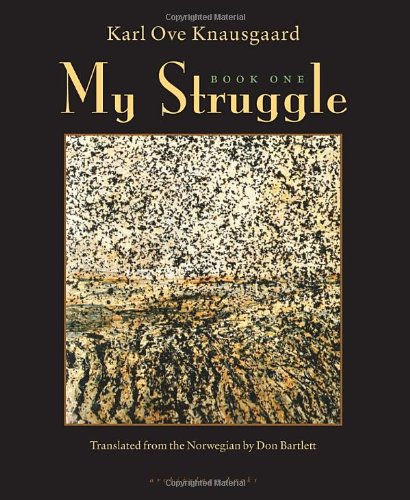
My rating:
He had been her first born.
Children were not supposed to pre-decease their parents, they weren't supposed to. That was not the idea.
And to me, what had Dad been to me?
Someone I wished dead.
So why all these tears?
This almost indescribably rich and unputdownable memoir begins with a riff on death, as a physiological process, a phenomenon that simultaneously inspires reverence and horror, and a profoundly transformational event for those who are affected by the passing of the deceased person:
It seemed to me as though a New Orleans brass band should have accompanied and played alongside Knausgaard during his haunting opening trumpet blast. However, unlike a typical Crescent City jazz funeral march, there will be no posthumous celebration of the life of the dearly departed, in this case Karl Ove’s father. Instead, he gives us an exploration of the man and his slow, downward spiral from a respected teacher, husband and father to a shell of a man, ravaged by alcoholism, poor health and self loathing, who suffers a grotesque and premature death in his childhood home at the side of his demented mother.
Karl Ove began this memoir as a young man, as he struggled to write a new novel and was invigorated but challenged by the demands of being a father to a young child, and the husband of a woman who loves him unconditionally but does not fully satisfy his wants and needs. He reflects on and describes, in great detail, his seemingly ordinary childhood as a sensitive and intelligent boy who seeks acceptance from his distant and judgmental father as validation of his own worth. He develops a taste for alcohol as a teenager, has a series of superficial relationships with girls, and stumbles his way toward a career as a writer.
When his brother informs him of his father’s death, the two young men drop everything and go to their grandmother’s house, to prepare for the funeral and provide support to their father’s ailing mother. Although Karl Ove never gained the love and respect he so desperately sought, he is profoundly affected by his father’s death, and he grapples to understand why it has caused him so much anguish.
My Struggle: Book One could rightfully be described as a navel gazing memoir, similar to others that have been recently written. However, it is much more than that: Knausgaard draws the reader into his story, as it reads like a rich novel with superb dialogue and a compelling story line, and I devoured this book far more quickly than I expected to.
Ultimately, no review, at least not this one, can do justice to this book. I urge you to read this book because it’s one of the best memoirs that I’ve ever read. Read it because it is a fascinating look at the life of a young man, and the troubled relationship between a father and a son. Read it because it is as good as any contemporary historical novel. Most importantly, as many others have said, just read it, despite my insufficient comments about it. You’ll be glad that you did.
Book #1: My Struggle: Book One by Karl Ove Knausgaard
My rating:

He had been her first born.
Children were not supposed to pre-decease their parents, they weren't supposed to. That was not the idea.
And to me, what had Dad been to me?
Someone I wished dead.
So why all these tears?
This almost indescribably rich and unputdownable memoir begins with a riff on death, as a physiological process, a phenomenon that simultaneously inspires reverence and horror, and a profoundly transformational event for those who are affected by the passing of the deceased person:
For the heart, life is simple: it beats for as long as it can. Sooner or later, one day, this pounding action will cease of its own accord, and the blood will begin to run toward the body’s lowest point, where it will collect in a small pool, visible from outside as a dark, soft patch on ever whitening skin, as the temperature sinks, the limbs stiffen and the intestines drain.
The moment life departs the body, it belongs to death…None of this is alien to us. We are constantly surrounded by objects and phenomena from the realm of the death. Nonetheless, there are few things that arouse in us greater distaste than to see a human being caught up in it, at least if we are to judge by the efforts we make to keep corpses out of sight.
It seemed to me as though a New Orleans brass band should have accompanied and played alongside Knausgaard during his haunting opening trumpet blast. However, unlike a typical Crescent City jazz funeral march, there will be no posthumous celebration of the life of the dearly departed, in this case Karl Ove’s father. Instead, he gives us an exploration of the man and his slow, downward spiral from a respected teacher, husband and father to a shell of a man, ravaged by alcoholism, poor health and self loathing, who suffers a grotesque and premature death in his childhood home at the side of his demented mother.
Karl Ove began this memoir as a young man, as he struggled to write a new novel and was invigorated but challenged by the demands of being a father to a young child, and the husband of a woman who loves him unconditionally but does not fully satisfy his wants and needs. He reflects on and describes, in great detail, his seemingly ordinary childhood as a sensitive and intelligent boy who seeks acceptance from his distant and judgmental father as validation of his own worth. He develops a taste for alcohol as a teenager, has a series of superficial relationships with girls, and stumbles his way toward a career as a writer.
When his brother informs him of his father’s death, the two young men drop everything and go to their grandmother’s house, to prepare for the funeral and provide support to their father’s ailing mother. Although Karl Ove never gained the love and respect he so desperately sought, he is profoundly affected by his father’s death, and he grapples to understand why it has caused him so much anguish.
My Struggle: Book One could rightfully be described as a navel gazing memoir, similar to others that have been recently written. However, it is much more than that: Knausgaard draws the reader into his story, as it reads like a rich novel with superb dialogue and a compelling story line, and I devoured this book far more quickly than I expected to.
Ultimately, no review, at least not this one, can do justice to this book. I urge you to read this book because it’s one of the best memoirs that I’ve ever read. Read it because it is a fascinating look at the life of a young man, and the troubled relationship between a father and a son. Read it because it is as good as any contemporary historical novel. Most importantly, as many others have said, just read it, despite my insufficient comments about it. You’ll be glad that you did.
57RidgewayGirl
>55 kidzdoc: I wish everyone would stop writing such intriguing reviews for Knausgaard.
58baswood
Great review of My Struggle: Book One There have been a number of enthusiastic reviews of this book.
59mabith
With My Struggle I've been finding it a bit strange that it's listed as fiction but all the relatives names aren't even changed. If your friends and family are going to be annoyed with what you reveal anyway why not just bill it as memoir to begin with or change it enough that it's really, properly fiction?
60FlorenceArt
>55 kidzdoc: You know, I'm starting to get a little worried. Is this a sect? Who will be the next to succumb? Will we all submit in the end, or will a small group of underground resistants remain?
61ursula
>60 FlorenceArt: Surrender now, beat the rush!
62AlisonY
>55 kidzdoc: well that was a review worth waiting for! Well done sir - very nicely done.
>60 FlorenceArt: - yep, I think it might be a sect but we're brainwashed and don't realise it. He is our literary master.
>60 FlorenceArt: - yep, I think it might be a sect but we're brainwashed and don't realise it. He is our literary master.
63Christopher_Lindsay
Glad you enjoyed Book 1 -- I'm through 3 and I think they just keep getting more compelling.
64Linda92007
Hi Darryl. I enjoyed your thoughts on My Struggle: Book One. I own the first two in the series. Hopefully these winter months will give me the opportunity to start reading them.
65kidzdoc
>57 RidgewayGirl: Sorry, Kay. I also own Books Two, Three and Four, so there will be more Knausgaard reviews from this quarter.
Have we convinced you to join the Karl Ove Fan Club yet? If so we'll be happy to send you this complimentary T-shirt:

>58 baswood: Thanks, Barry. Those enthusiastic recommendations are well deserved, IMO, as is the hype over Book One, at least.
>59 mabith: The classification of My Struggle: Book One is confusing to me, Meredith. It's listed in the Dewey decimal system as 839.82; 839 is the designation for "Other Germanic literatures". Whether it is a memoir or fiction ultimately doesn't matter to me, though.
>60 FlorenceArt: LOL! The Karl Ove phenomenon is akin to a slow growing and insidious virus within a community, which infects and fells one person after another. You may want to wear an isolation suit before you visit the threads of the afflicted.
Have we convinced you to join the Karl Ove Fan Club yet? If so we'll be happy to send you this complimentary T-shirt:
>58 baswood: Thanks, Barry. Those enthusiastic recommendations are well deserved, IMO, as is the hype over Book One, at least.
>59 mabith: The classification of My Struggle: Book One is confusing to me, Meredith. It's listed in the Dewey decimal system as 839.82; 839 is the designation for "Other Germanic literatures". Whether it is a memoir or fiction ultimately doesn't matter to me, though.
>60 FlorenceArt: LOL! The Karl Ove phenomenon is akin to a slow growing and insidious virus within a community, which infects and fells one person after another. You may want to wear an isolation suit before you visit the threads of the afflicted.
66kidzdoc
>61 ursula: Good point, Ursula. Resistance is futile.
>62 AlisonY: Thanks, Comrade Alison! Reading your excellent review of Book Two encouraged me to post my comments about Book One.
>63 Christopher_Lindsay: Definitely so, Chris. Thanks for your enthusiastic comments about My Struggle last year, as they encouraged me to start this series early this year. Books Two and Three are on my coffee table, and Book Four is on one of my shelves nearby. I'll start Book Two no later than March.
Have you encouraged Laura to read Book One?
>64 Linda92007: Thanks, Linda. Book One was a very quick read, despite its length (430 pages of small print in the Archipelago Books paperback), and it sounds as though the considerably longer Book Two (573 pages) is equally as compelling.
>62 AlisonY: Thanks, Comrade Alison! Reading your excellent review of Book Two encouraged me to post my comments about Book One.
>63 Christopher_Lindsay: Definitely so, Chris. Thanks for your enthusiastic comments about My Struggle last year, as they encouraged me to start this series early this year. Books Two and Three are on my coffee table, and Book Four is on one of my shelves nearby. I'll start Book Two no later than March.
Have you encouraged Laura to read Book One?
>64 Linda92007: Thanks, Linda. Book One was a very quick read, despite its length (430 pages of small print in the Archipelago Books paperback), and it sounds as though the considerably longer Book Two (573 pages) is equally as compelling.
67theaelizabet
> Oh, gee. I've pooh-poohed this book and now it looks as though I'll have to seriously consider it! Very nice review!
68kidzdoc
>52 zenomax: Right, Z. The author of Walking Prey stresses that all children, regardless of the stability of their lives, are at risk of becoming a victim of child traffickers, and no community can be said to be safe from these predators. Certain children are at more risk, of course, and she lists several factors that make it more likely that it will occur, with sexual abuse being one of the more prominent ones.
I hope to review this book in the next day or two, as my work days for the rest of the week should be relatively benign ones.
>53 janemarieprice: Thanks, Jane. Reading Walking Prey and attending last week's lecture by Dr. Greenbaum has opened my eyes considerably to the possibility of coming across a victim of abuse or trafficking. Hopefully I will maintain a heightened sense of vigilance, especially since we have readily available resources in the hospital that can help these victims and survivors.
>54 mabith: It's very common for us to care for young children with unexplained or serious injuries, including skull and long bone fractures. Fortunately most of these fractures are accidental ones, but we are obligated by law to conduct a thorough investigation if the story provided by the parents doesn't fit the injury. For example, if a mother said that her 4 month old daughter climbed out of the crib, fell and fractured her skull as a result that would not be plausible, as a baby of that age could not crawl out of a crib with the railings fully locked. On the other hand, if the same baby was being held by her 3 year old brother and he dropped her or fell on top of her, especially onto an uncarpeted floor, that would be a believable injury, and a detailed investigation usually would not be warranted, unless other red flags came up during the interview of the parents or the examination of the child. Certain injuries are completely understandable and normal, especially forehead or leg bruises on a toddler just learning to walk. They fall down all the time, and since their heads are larger and relatively heavier than those of older children and adults, forehead bruising, although unsightly and potentially worrisome to someone not familiar with the family, is quite normal. Bruises on the back or the backs of the legs is not normal, though, and seeing those would raise concerns for abuse.
>67 theaelizabet: Thanks, Thea! There's plenty of room for new members of the Karl Ove sect.
I hope to review this book in the next day or two, as my work days for the rest of the week should be relatively benign ones.
>53 janemarieprice: Thanks, Jane. Reading Walking Prey and attending last week's lecture by Dr. Greenbaum has opened my eyes considerably to the possibility of coming across a victim of abuse or trafficking. Hopefully I will maintain a heightened sense of vigilance, especially since we have readily available resources in the hospital that can help these victims and survivors.
>54 mabith: It's very common for us to care for young children with unexplained or serious injuries, including skull and long bone fractures. Fortunately most of these fractures are accidental ones, but we are obligated by law to conduct a thorough investigation if the story provided by the parents doesn't fit the injury. For example, if a mother said that her 4 month old daughter climbed out of the crib, fell and fractured her skull as a result that would not be plausible, as a baby of that age could not crawl out of a crib with the railings fully locked. On the other hand, if the same baby was being held by her 3 year old brother and he dropped her or fell on top of her, especially onto an uncarpeted floor, that would be a believable injury, and a detailed investigation usually would not be warranted, unless other red flags came up during the interview of the parents or the examination of the child. Certain injuries are completely understandable and normal, especially forehead or leg bruises on a toddler just learning to walk. They fall down all the time, and since their heads are larger and relatively heavier than those of older children and adults, forehead bruising, although unsightly and potentially worrisome to someone not familiar with the family, is quite normal. Bruises on the back or the backs of the legs is not normal, though, and seeing those would raise concerns for abuse.
>67 theaelizabet: Thanks, Thea! There's plenty of room for new members of the Karl Ove sect.
69kidzdoc
Book #2: Walking Prey: How America's Youth Are Vulnerable to Sex Slavery by Holly Austin Smith
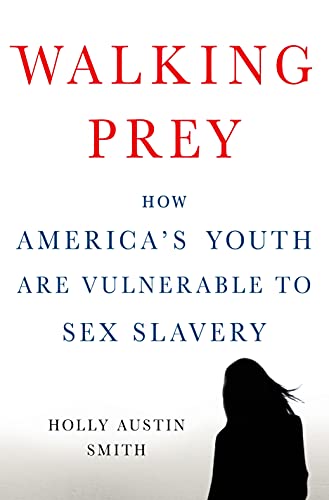

My rating:
I was looking for something.
In June of 1992 Holly Austin Smith had finished eighth grade in a small coastal town in southern New Jersey, 30 miles away from Atlantic City. She appeared to her neighbors and casual friends to be an ordinary 14 year old girl, with an unremarkable appearance, neither strikingly beautiful nor homely, a seemingly normal life as the only child of two middle class parents in an apparently stable home, and a good kid with a mildly defiant attitude. However, just under the surface lay much deeper problems, as she was repeatedly sexually abused by an older cousin, had multiple sexual partners and was subjected to forced intercourse by several of them, and was ignored and all but neglected by her alcoholic parents. She was a follower rather than a leader, struggled but failed to fit in to a clique that would accept her, and sought the attention from boys her age, along with older young men, as she believed from her exposure to MTV videos, pop music, teen magazines, and other media that love would provide her with the happiness and personal satisfaction that she so desperately sought.
On an ordinary summer day she went to the local mall with friends, looking for someone to acknowledge her and help her escape from her suffocating and miserable home. Suddenly she noticed an attractive and well dressed young man gazing intently at her. He smiled at her, gave her his phone number, and asked her to call him anytime. She spent the next two weeks talking with him on the phone, as he gained her trust and her love, and when he promised to take her across the country with him in his red Corvette she jumped at the opportunity and met him. Before she could realize what was happening he bought her alluring clothes, shoes and a wig, took her to a motel, put her in the charge of an older woman, and prepared her to turn her first trick.
Later that summer Holly was picked up by police, confessed what had happened to her, and after a brief stay in a rehabilitation facility she was returned to her parents, as both she and they were provided with little counseling or guidance on how she could best recover from the trauma of her experience. As a result, she soon found herself back in trouble, and it took well over a decade for her to put her life in order and finally achieve peace and fulfillment.
Holly Austin Smith now serves as a consultant to law enforcement officials, mental health and other medical professionals, social workers and child advocates, as well as an inspirational speaker for other survivors of commercial sexual exploitation of children (CSEC). In Walking Prey, she shares her own story, openly and bravely, and discusses the extensive problem of child trafficking, using her own research and the stories of other survivors to effectively drive home her points. Although she focuses on CSEC in the United States, she makes it clear that this is a worldwide problem, and one that no community in any country is completely safe from. She discusses the risk factors for a child to become a victim of traffickers, most notably childhood abuse, particularly sexual abuse, poverty, homelessness, difficulty in school, and mental health problems. She provides useful tips to help those who encounter at risk teenagers determine if a child might be sexually exploited, along with resources that can be utilized to get them off of the streets and into effective programs to address the underlying problems that led to their downfall, and references for further reading.
Walking Prey is a compelling and unforgettable personal story of a survivor of child trafficking, which serves as a clarion call for all people to eliminate this sickening cancer, and provide greater focus on the victims of sexual exploitation to help them re-integrate into society, so that they can lead fulfilling lives and not perpetuate sexual abuse on the children that they later become responsible for. I found this book to be very useful for me as a pediatrician who frequently cares for victims of childhood abuse and at risk teenagers, and as a result of reading it I hope to be able to identify and counsel child trafficking victims in the remainder of my career.

My rating:

I was looking for something.
In June of 1992 Holly Austin Smith had finished eighth grade in a small coastal town in southern New Jersey, 30 miles away from Atlantic City. She appeared to her neighbors and casual friends to be an ordinary 14 year old girl, with an unremarkable appearance, neither strikingly beautiful nor homely, a seemingly normal life as the only child of two middle class parents in an apparently stable home, and a good kid with a mildly defiant attitude. However, just under the surface lay much deeper problems, as she was repeatedly sexually abused by an older cousin, had multiple sexual partners and was subjected to forced intercourse by several of them, and was ignored and all but neglected by her alcoholic parents. She was a follower rather than a leader, struggled but failed to fit in to a clique that would accept her, and sought the attention from boys her age, along with older young men, as she believed from her exposure to MTV videos, pop music, teen magazines, and other media that love would provide her with the happiness and personal satisfaction that she so desperately sought.
On an ordinary summer day she went to the local mall with friends, looking for someone to acknowledge her and help her escape from her suffocating and miserable home. Suddenly she noticed an attractive and well dressed young man gazing intently at her. He smiled at her, gave her his phone number, and asked her to call him anytime. She spent the next two weeks talking with him on the phone, as he gained her trust and her love, and when he promised to take her across the country with him in his red Corvette she jumped at the opportunity and met him. Before she could realize what was happening he bought her alluring clothes, shoes and a wig, took her to a motel, put her in the charge of an older woman, and prepared her to turn her first trick.
Later that summer Holly was picked up by police, confessed what had happened to her, and after a brief stay in a rehabilitation facility she was returned to her parents, as both she and they were provided with little counseling or guidance on how she could best recover from the trauma of her experience. As a result, she soon found herself back in trouble, and it took well over a decade for her to put her life in order and finally achieve peace and fulfillment.
Holly Austin Smith now serves as a consultant to law enforcement officials, mental health and other medical professionals, social workers and child advocates, as well as an inspirational speaker for other survivors of commercial sexual exploitation of children (CSEC). In Walking Prey, she shares her own story, openly and bravely, and discusses the extensive problem of child trafficking, using her own research and the stories of other survivors to effectively drive home her points. Although she focuses on CSEC in the United States, she makes it clear that this is a worldwide problem, and one that no community in any country is completely safe from. She discusses the risk factors for a child to become a victim of traffickers, most notably childhood abuse, particularly sexual abuse, poverty, homelessness, difficulty in school, and mental health problems. She provides useful tips to help those who encounter at risk teenagers determine if a child might be sexually exploited, along with resources that can be utilized to get them off of the streets and into effective programs to address the underlying problems that led to their downfall, and references for further reading.
Walking Prey is a compelling and unforgettable personal story of a survivor of child trafficking, which serves as a clarion call for all people to eliminate this sickening cancer, and provide greater focus on the victims of sexual exploitation to help them re-integrate into society, so that they can lead fulfilling lives and not perpetuate sexual abuse on the children that they later become responsible for. I found this book to be very useful for me as a pediatrician who frequently cares for victims of childhood abuse and at risk teenagers, and as a result of reading it I hope to be able to identify and counsel child trafficking victims in the remainder of my career.
70bragan
>55 kidzdoc: I have to admit, that excerpt is some very nice writing. But I'm not sure even this much lavish praise is enough to overcome the mental block I have against wanting to read a guy who gave his memoir the same name as Hitler's.
71lilisin
>69 kidzdoc:
I have to say I'm amazed by people like this who turn horrific times in their lives into their careers. To have to talk about your rape or abuse almost every day for the rest of your life seems exhausting. Now, I'm certain that it's how all worth it to save others and I'm sure at some point it has turned into an anecdote and the anguish has since dwindled, but still, I know I couldn't do it.
Just with a breakup from a relationship I can talk about the why's and why not's for about three months before I just get utterly exhausted and start getting tired with myself for dwindling on the past. Then I start getting annoyed when I'm moving on and someone decides to ask me how the recovery from my breakup is doing. The last thing I want to do at that point is discuss it some more.
So yes, amazed at people who turn such abuse into a career.
I have to say I'm amazed by people like this who turn horrific times in their lives into their careers. To have to talk about your rape or abuse almost every day for the rest of your life seems exhausting. Now, I'm certain that it's how all worth it to save others and I'm sure at some point it has turned into an anecdote and the anguish has since dwindled, but still, I know I couldn't do it.
Just with a breakup from a relationship I can talk about the why's and why not's for about three months before I just get utterly exhausted and start getting tired with myself for dwindling on the past. Then I start getting annoyed when I'm moving on and someone decides to ask me how the recovery from my breakup is doing. The last thing I want to do at that point is discuss it some more.
So yes, amazed at people who turn such abuse into a career.
72kidzdoc
>70 bragan: I had heard about the controversial book title, but it wasn't an issue for me.
>71 lilisin: Right. It is amazing that she was so willing to discuss her past so openly, although she does say in the book that it took awhile before she could do so, either to law enforcement officials or therapists who were trying to help her, her parents, or people who asked her why she made the choices she did when she was going through her nightmarish teenage years. She did emphasize, correctly, that teenagers are often impetuous, don't make good decisions, and frequently don't learn from their mistakes. (I'll bet that all of us can think of something incredibly stupid that we did at that age.)
My hunch is that her writing of this book and her career as an activist against commercial exploitation of children is her way of controlling and taking ownership of the past, and using her experiences to help prevent other teens and preteens from becoming victims of child trafficking, and help adults identify those children at risk for sexual exploitation as well as those who are being exploited, and provide them with adequate services to keep them from returning to the streets or getting into other troubles, as she did.
>71 lilisin: Right. It is amazing that she was so willing to discuss her past so openly, although she does say in the book that it took awhile before she could do so, either to law enforcement officials or therapists who were trying to help her, her parents, or people who asked her why she made the choices she did when she was going through her nightmarish teenage years. She did emphasize, correctly, that teenagers are often impetuous, don't make good decisions, and frequently don't learn from their mistakes. (I'll bet that all of us can think of something incredibly stupid that we did at that age.)
My hunch is that her writing of this book and her career as an activist against commercial exploitation of children is her way of controlling and taking ownership of the past, and using her experiences to help prevent other teens and preteens from becoming victims of child trafficking, and help adults identify those children at risk for sexual exploitation as well as those who are being exploited, and provide them with adequate services to keep them from returning to the streets or getting into other troubles, as she did.
73kidzdoc
Book #3: Ru by Kim Thúy
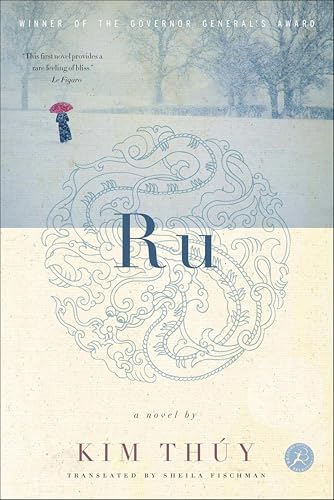
My rating:
We often forget about the existence of all those women who carried Vietnam on their backs while their husbands and sons carried weapons on theirs. We forget them because under their cone-shaped hats they did not look up at the sky...Those women let their sadness grow in the chambers of their hearts. They were so weighed down by all of their grief that they couldn't pull themselves up, couldn't straighten their hunched backs, bowed under the weight of their sorrow. When the men emerged from the jungle and started to walk again along the earthen dikes around their rice fields, the women continued to bear the weight of Vietnam's audible history on their backs. Very often they passed away under that weight, in silence.
This autobiographical work of fiction consists of short vignettes based on the author's experience growing up in South Vietnam, in a prosperous family that opposed the communists in the North and was forced to flee after the fall of Saigon in 1975. She and her family spent time in a squalid refugee camp in Malaysia before they were subsequently accepted into Quebec. Although their Québécois neighbors were welcoming and supportive of the new immigrants, the trauma of their past experiences and the immense cultural differences in moving to Canada left them bereft and adrift, particularly the older adults.
In Ru, Thúy introduces the reader to numerous relatives of the narrator, each of whom has an interesting story to tell. Unfortunately, for this reader at least, the focus quickly shifted to a subsequent character at the time that I wanted to learn more about the first one. In reading this book I felt as if I was in a room with 25 related people, as I was accompanied by a rushed host who insisted that I meet everyone but spend no more than two minutes with each one, when I would have preferred to listen to two or three of them individually for an hour or two. As a result, Ru initially captured my attention, due to its evocative writing and compelling stories, but the frequent shifts from one character to the next made me lose my interest in them, and this book.
My rating:

We often forget about the existence of all those women who carried Vietnam on their backs while their husbands and sons carried weapons on theirs. We forget them because under their cone-shaped hats they did not look up at the sky...Those women let their sadness grow in the chambers of their hearts. They were so weighed down by all of their grief that they couldn't pull themselves up, couldn't straighten their hunched backs, bowed under the weight of their sorrow. When the men emerged from the jungle and started to walk again along the earthen dikes around their rice fields, the women continued to bear the weight of Vietnam's audible history on their backs. Very often they passed away under that weight, in silence.
This autobiographical work of fiction consists of short vignettes based on the author's experience growing up in South Vietnam, in a prosperous family that opposed the communists in the North and was forced to flee after the fall of Saigon in 1975. She and her family spent time in a squalid refugee camp in Malaysia before they were subsequently accepted into Quebec. Although their Québécois neighbors were welcoming and supportive of the new immigrants, the trauma of their past experiences and the immense cultural differences in moving to Canada left them bereft and adrift, particularly the older adults.
In Ru, Thúy introduces the reader to numerous relatives of the narrator, each of whom has an interesting story to tell. Unfortunately, for this reader at least, the focus quickly shifted to a subsequent character at the time that I wanted to learn more about the first one. In reading this book I felt as if I was in a room with 25 related people, as I was accompanied by a rushed host who insisted that I meet everyone but spend no more than two minutes with each one, when I would have preferred to listen to two or three of them individually for an hour or two. As a result, Ru initially captured my attention, due to its evocative writing and compelling stories, but the frequent shifts from one character to the next made me lose my interest in them, and this book.
74baswood
Enjoyed your review of Ru
and your excellent view of Walking Prey I understand that some people could object to Holly Austin Smith making a career out of her abuse, however whatever she does to publicise the problem has got to be a huge positive.
and your excellent view of Walking Prey I understand that some people could object to Holly Austin Smith making a career out of her abuse, however whatever she does to publicise the problem has got to be a huge positive.
75mabith
>71 lilisin: I think with that sort of issue it's less a career with the people than a serious calling (and mostly there's an extreme need for more open communication about it within society).
76rebeccanyc
>70 bragan: That's ws exactly my reaction!
77janeajones
I enjoyed Ru more than you did, but I probably didn't worry about the narrative much. I found it more evocative as poetic reminiscence. And then, I have a Vietnamese daughter-in-law who emigrated from DaNang as a teenager.
78cabegley
>73 kidzdoc: Great review, Darryl. I got a good feel of the experience of reading this book. Interesting topic, though, even if the book fell short.
79kidzdoc
>74 baswood: Thanks, Barry. IMO Holly Austin Smith should be commended and praised, and not criticized, for her decision to write this book and speak about her experiences to others. I suspect that doing so is therapeutic for her, and it presumably permits her to control her own story, and demonstrate to herself and everyone else that she is a survivor, and not a victim, of child trafficking.
>75 mabith: I agree, Meredith.
>76 rebeccanyc: For me the book's title was vastly less important than its content, Rebecca.
>77 janeajones: I did enjoy Ru in the beginning, but the format didn't work well for me, Jane.
>78 cabegley: Thanks, Chris. Many other people liked Ru considerably more than I did. Several of us are participating in the Canadian Author Challenge in the 75 Books group, and Kim Thúy is one of the authors for January (along with Robertson Davies). Roughly six other 75ers have read Ru this month, and my 3 star rating is, I think, the lowest of anyone who has rated and reviewed it.
>75 mabith: I agree, Meredith.
>76 rebeccanyc: For me the book's title was vastly less important than its content, Rebecca.
>77 janeajones: I did enjoy Ru in the beginning, but the format didn't work well for me, Jane.
>78 cabegley: Thanks, Chris. Many other people liked Ru considerably more than I did. Several of us are participating in the Canadian Author Challenge in the 75 Books group, and Kim Thúy is one of the authors for January (along with Robertson Davies). Roughly six other 75ers have read Ru this month, and my 3 star rating is, I think, the lowest of anyone who has rated and reviewed it.
80VivienneR
I commend both you and Holly Austen Smith (and others) for being able to deal with such horror. You have my admiration for the goal to recognize victims and treat them.
81kidzdoc
RIP Peggy Anderson, the former writer and copy editor of The Philadelphia Inquirer, who was best known for her 1978 book Nurse, a first person account of an anonymous young nurse (later identified as Mary Fish) who worked at Pennsylvania Hospital in Center City, Philadelphia. That book sold over two million copies, formed the basis of a television movie and series, and helped change the public's view of the profession for the better. I'll remember her for her 1985 book Children's Hospital, which profiled six children who were treated at Children's Hospital of Philadelphia. It was released during the year that I volunteered at this hospital for a summer, and that experience and reading this book helped me decide to become a pediatrician.
NYT: Peggy Anderson, Chronicler of the Nursing Profession, Dies at 77
NYT: Peggy Anderson, Chronicler of the Nursing Profession, Dies at 77
82kidzdoc
>80 VivienneR: Thanks, Vivienne.
83dchaikin
Terrific review of My Struggle. We are being blitzed my praise of this. But it's convincing praise. I certainly want to read these tomes now.
But all these last three reviews were very interesting, as is your personal connection to Peggie Anderson, who I had not heard of.
But all these last three reviews were very interesting, as is your personal connection to Peggie Anderson, who I had not heard of.
84kidzdoc
>83 dchaikin: Thanks, Dan. I was also influenced by the praise of this book, and I'm glad that it lived up to its lofty billing.
I had forgotten about Peggy Anderson and Children's Hospital until I saw today's obituary of her (she died early this morning). I remember that book fondly (I suspect that my copy of it is in a box of old books that I haven't yet listed on LT), but I can't remember if I've read Nurse or not.
I had forgotten about Peggy Anderson and Children's Hospital until I saw today's obituary of her (she died early this morning). I remember that book fondly (I suspect that my copy of it is in a box of old books that I haven't yet listed on LT), but I can't remember if I've read Nurse or not.
85The_Hibernator
>71 lilisin: >72 kidzdoc: I think there are two types of people - people who feel better telling their story and people who feel better moving on. In fact, as I mentioned on your other thread, Darryl, I'm reading a book called Unpinned by a rape survivor who works closely with a volunteer program for reintegrating sex offenders into society. He gave a talk during our training, and when thanked for giving the talk he answered "Actually, I feel a little selfish because I always talk about my own problems, which is therapeutic, but I don't let others talk about theirs." (That proved to be correct as later in the conversation I tried to say something and he rudely interrupted as if I didn't exist.) That guy seemed to feel that EVERYONE should talk about their issues. I think he would be surprised, or perhaps think you are wrong, for thinking some people shouldn't talk about their pain as much as possible.
86kidzdoc
>85 The_Hibernator: I can see where it can be therapeutic to discuss one's own life experiences, and sharing them can be helpful to others as well. However, I can also imagine that doing so woud be too painful for others, and it may cause them to relive former traumatic episodes. I'd say that there is no single right path for everyone.
87kidzdoc

RIP C.D. Wright, the former poet laureate of Rhode Island and professor at Brown University, who died unexpectedly at the age of 67. She won the 2010 National Book Critics Circle Award for Poetry for her collection One with Others: (a little book of her days), which described the events in the small town of Forrest City, Arkansas during 1969, when racial tensions between the town's white and black residents reached a boiling point. I gave that book 5 stars when I read it, as it was one of the most searing poetry collections I had ever read; you can read my review of it here.
Washington Post: C.D. Wright, poet who wrote of her Arkansas youth, dies at 67
88kidzdoc
The finalists for the 2015 National Book Critics Circle Awards were announced last night:
AUTOBIOGRAPHY:
Elizabeth Alexander, The Light of the World (Grand Central Publishing)
Vivian Gornick, The Odd Woman and the City (Farrar, Straus and Giroux)
George Hodgman, Bettyville (Viking)
Margo Jefferson, Negroland (Pantheon)
Helen Macdonald, H Is for Hawk (Grove Press)
BIOGRAPHY:
Terry Alford, Fortune’s Fool: The Life of John Wilkes Booth (Oxford University Press)
Charlotte Gordon, Romantic Outlaws: The Extraordinary Lives of Mary Wollstonecraft and Her Daughter Mary Shelley (Random House)
T.J. Stiles, Custer’s Trials: A Life on the Frontier of a New America (Alfred A. Knopf)
Rosemary Sullivan, Stalin’s Daughter: The Extraordinary and Tumultuous Life of Svetlana Alliluyeva (Harper)
Karin Wieland, translated by Shelley Frisch, Dietrich and Riefenstahl: Hollywood, Berlin, and a Century in Two Lives (Liveright)
CRITICISM:
Ta-Nehisi Coates, Between the World and Me (Spiegel & Grau)
Leo Damrosch, Eternity’s Sunrise: The Imaginative World of William Blake (Yale University Press)
Maggie Nelson, The Argonauts (Graywolf)
Colm Tóibín, On Elizabeth Bishop (Princeton University Press)
James Wood, The Nearest Thing to Life (Brandeis University Press)
FICTION:
Paul Beatty, The Sellout (Farrar, Straus and Giroux)
Lauren Groff, Fates and Furies (Riverhead)
Valeria Luiselli, The Story of My Teeth, translated by Christina MacSweeney (Coffee House Press)
Anthony Marra, The Tsar of Love and Techno (Hogarth)
Ottessa Moshfegh, Eileen (Penguin Press)
NONFICTION:
Mary Beard, SPQR: A History of Rome (Liveright)
Ari Berman, Give Us the Ballot: The Modern Struggle for Voting Rights in America (Farrar, Straus and Giroux)
Jill Leovy, Ghettoside: A True Story of Murder in America (Spiegel & Grau)
Sam Quinones, Dreamland: The True Tale of America’s Opiate Epidemic (Bloomsbury)
Brian Seibert, What the Eye Hears: A History of Tap Dancing (Farrar, Straus and Giroux)
POETRY:
Ross Gay, Catalog of Unabashed Gratitude (University of Pittsburgh Press)
Terrance Hayes, How to Be Drawn (Penguin)
Ada Limón, Bright Dead Things (Milkweed Editions)
Sinéad Morrissey, Parallax and Selected Poems (Farrar, Straus and Giroux)
Frank Stanford, What About This: Collected Poems of Frank Stanford (Copper Canyon Press)
"Winners of the National Book Critics Circle awards will be announced on Thursday, March 17, 2016 at 6:00 p.m. at the New School’s Tishman Auditorium. A finalists’ reading will be held on March 16, also at 6:00 p.m. at the same location. Both events are free and open to the public."
More info: http://bookcritics.org/
AUTOBIOGRAPHY:
Elizabeth Alexander, The Light of the World (Grand Central Publishing)
Vivian Gornick, The Odd Woman and the City (Farrar, Straus and Giroux)
George Hodgman, Bettyville (Viking)
Margo Jefferson, Negroland (Pantheon)
Helen Macdonald, H Is for Hawk (Grove Press)
BIOGRAPHY:
Terry Alford, Fortune’s Fool: The Life of John Wilkes Booth (Oxford University Press)
Charlotte Gordon, Romantic Outlaws: The Extraordinary Lives of Mary Wollstonecraft and Her Daughter Mary Shelley (Random House)
T.J. Stiles, Custer’s Trials: A Life on the Frontier of a New America (Alfred A. Knopf)
Rosemary Sullivan, Stalin’s Daughter: The Extraordinary and Tumultuous Life of Svetlana Alliluyeva (Harper)
Karin Wieland, translated by Shelley Frisch, Dietrich and Riefenstahl: Hollywood, Berlin, and a Century in Two Lives (Liveright)
CRITICISM:
Ta-Nehisi Coates, Between the World and Me (Spiegel & Grau)
Leo Damrosch, Eternity’s Sunrise: The Imaginative World of William Blake (Yale University Press)
Maggie Nelson, The Argonauts (Graywolf)
Colm Tóibín, On Elizabeth Bishop (Princeton University Press)
James Wood, The Nearest Thing to Life (Brandeis University Press)
FICTION:
Paul Beatty, The Sellout (Farrar, Straus and Giroux)
Lauren Groff, Fates and Furies (Riverhead)
Valeria Luiselli, The Story of My Teeth, translated by Christina MacSweeney (Coffee House Press)
Anthony Marra, The Tsar of Love and Techno (Hogarth)
Ottessa Moshfegh, Eileen (Penguin Press)
NONFICTION:
Mary Beard, SPQR: A History of Rome (Liveright)
Ari Berman, Give Us the Ballot: The Modern Struggle for Voting Rights in America (Farrar, Straus and Giroux)
Jill Leovy, Ghettoside: A True Story of Murder in America (Spiegel & Grau)
Sam Quinones, Dreamland: The True Tale of America’s Opiate Epidemic (Bloomsbury)
Brian Seibert, What the Eye Hears: A History of Tap Dancing (Farrar, Straus and Giroux)
POETRY:
Ross Gay, Catalog of Unabashed Gratitude (University of Pittsburgh Press)
Terrance Hayes, How to Be Drawn (Penguin)
Ada Limón, Bright Dead Things (Milkweed Editions)
Sinéad Morrissey, Parallax and Selected Poems (Farrar, Straus and Giroux)
Frank Stanford, What About This: Collected Poems of Frank Stanford (Copper Canyon Press)
"Winners of the National Book Critics Circle awards will be announced on Thursday, March 17, 2016 at 6:00 p.m. at the New School’s Tishman Auditorium. A finalists’ reading will be held on March 16, also at 6:00 p.m. at the same location. Both events are free and open to the public."
More info: http://bookcritics.org/
89edwinbcn
Not books I would read, but great and informative reviews. Also love to read the book news on your thread.
90kidzdoc
>89 edwinbcn: Thanks, Edwin.
91rebeccanyc
>88 kidzdoc: Interesting list.
92kidzdoc
Thanks, Rebecca. I've read The Sellout, which I thought was okay, I'm reading How to Be Drawn now, and I'll probably read Between the World and Me within the next week or two. I do want to read Negroland soon, along with Catalog of Unabashed Gratitude.
93kidzdoc
Book #4: Fifth Business by Robertson Davies


My rating:
The first novel in The Deptford Trilogy concerns three men, Dunstable Ramsay, Percy Boyd "Boy" Staunton, and Paul Dempster, who grew up in the fictional Canadian town of Deptford, which is based on Robertson Davies' home town of Thamesville, Ontario. Their lives are linked by the events on one fateful day in 1908, when young Percy throws a snowball in anger at Dunstable, and instead hits Paul's mother, who is pregnant with him, causing her to go into premature labor that evening. The novel is narrated by Dunstable, in the form of a letter about his life to the headmaster of the school that he has taught in for years and recently retired from. The lives and loves of Percy and Paul are integral to his own life, so we learn about them, and how the three influenced each other, for good as well as bad.
The three men lead fascinating lives, and each finds success in a different fashion, although none escape from personal tragedy. The novel is full of twists and unexpected turns, and it was very well written and a definite page turner. Instead of describing what happens to the three and possibly spoil the surprises I would suggest that you read the literary treat that is Fifth Business for yourself. I own The Deptford Trilogy, and I eagerly look forward to reading the remaining two novels, The Manticore and World of Wonders, later this year.


My rating:
The first novel in The Deptford Trilogy concerns three men, Dunstable Ramsay, Percy Boyd "Boy" Staunton, and Paul Dempster, who grew up in the fictional Canadian town of Deptford, which is based on Robertson Davies' home town of Thamesville, Ontario. Their lives are linked by the events on one fateful day in 1908, when young Percy throws a snowball in anger at Dunstable, and instead hits Paul's mother, who is pregnant with him, causing her to go into premature labor that evening. The novel is narrated by Dunstable, in the form of a letter about his life to the headmaster of the school that he has taught in for years and recently retired from. The lives and loves of Percy and Paul are integral to his own life, so we learn about them, and how the three influenced each other, for good as well as bad.
The three men lead fascinating lives, and each finds success in a different fashion, although none escape from personal tragedy. The novel is full of twists and unexpected turns, and it was very well written and a definite page turner. Instead of describing what happens to the three and possibly spoil the surprises I would suggest that you read the literary treat that is Fifth Business for yourself. I own The Deptford Trilogy, and I eagerly look forward to reading the remaining two novels, The Manticore and World of Wonders, later this year.
94Simone2
>93 kidzdoc: This is the second time I read a good review of this book in two days, so I'll definitely pick it up now!
95kidzdoc
>94 Simone2: Thanks, Barbara. Several of the members of the 75 Books group are participating in a year long Canadian Authors Challenge, and the authors this month are Robertson Davies and Kim Thúy, which is why I read this novel and Ru earlier this month. I bought The Deptford Trilogy two or three years ago, as I had planned my own Canadian Author Challenge but I didn't read it then, so I'm glad to have a good reason to get to it again.
96rebeccanyc
I love Robertson Davies! Glad you enjoyed Fifth Business.
97kidzdoc
>96 rebeccanyc: Thanks, Rebecca! I'm glad that you are also a fan of Robertson Davies, since our taste in books largely overlap.
98japaul22
I'm hoping to start the Deptford Trilogy this year. Glad to see a positive review! I'm looking forward to it.
100kidzdoc
>98 japaul22: I hope that you enjoy Fifth Business as much as I did, Jennifer.
>99 baswood: You're quite welcome, Barry.
>99 baswood: You're quite welcome, Barry.
101mabith
Glad to see a review of a Robertson Davies book. I haven't read anything by him yet (and actually only know his name, and profession, from a song).
102Simone2
>101 mabith: Which song?
103kidzdoc
>101 mabith: I'd highly recommend reading Fifth Business, Meredith. Hopefully you won't have too hard of a time finding it.
>102 Simone2: Could it be My Baby Loves a Bunch of Authors by Moxy Früvous? I have no idea who they are, but several authors are mentioned in this song, including Robertson Davies.
https://www.youtube.com/watch?v=5MeQK7JtLpU
>102 Simone2: Could it be My Baby Loves a Bunch of Authors by Moxy Früvous? I have no idea who they are, but several authors are mentioned in this song, including Robertson Davies.
https://www.youtube.com/watch?v=5MeQK7JtLpU
104kidzdoc
Pollo Ciudad with Pickled Tomato Salsa

Ingredients:
4 large, boneless chicken thighs or leg and thighs, with skin
Salt and freshly ground black pepper, to taste
1 tablespoon vegetable oil
2 tablespoons unsalted butter
3 shallots, diced
3 large mushrooms, thinly sliced
1 to 2 jalapenos, chopped with seeds
1 tablespoon ground cumin
1 cup chicken stock
3/4 cup half-and-half or heavy cream
1/2 bunch cilantro, stems and leaves separated
2 egg yolks
1 1/2 tablespoons brown sugar
2 tablespoons red wine vinegar
3 cups cooked rice, for serving
4 grilled scallions, for serving
Pickled Tomato Salsa, recipe follows, for serving
Pickled Tomato Salsa:
1 pound tomatoes, diced
1/2 bunch scallions, white and green parts, thinly sliced
2 to 3 serrano chiles, with seeds, thinly sliced in rounds
1/2 cup white vinegar
2 1/2 tablespoons brown sugar
2 teaspoons salt
4 teaspoons freshly grated ginger
1 tablespoon minced garlic
2 teaspoons yellow mustard seeds
2 teaspoons cracked black peppercorns
2 teaspoons ground cumin
1 teaspoon cayenne
1/2 teaspoon turmeric
1/2 cup extra-virgin olive oil
Directions:
Season chicken liberally with salt and pepper. Heat a large saute pan over medium-high heat, add oil, and place chicken in pan skin side down. Sear for 4 minutes, then reduce heat to medium and continue cooking for another 8 minutes. Turn chicken and cook another 4 minutes, or until just cooked all the way through.
Meanwhile, make sauce by melting butter in a medium saute pan over moderate heat. Cook shallots and mushrooms until soft and golden, about 10 minutes. Add jalapenos and cumin, lower heat, and cook for 5 minutes. Add chicken stock. Turn heat to high and cook until liquid is reduced by half. Add cream or half-and-half and cilantro stems and return to a boil. Remove from heat. Puree in a blender, pass through a wire mesh strainer, and return to heat.
Whisk egg yolks, sugar, and vinegar together in a small bowl. While continuing to whisk, pour one cup pureed cilantro sauce into egg mixture to temper. Then combine egg mixture with puree and cook over low heat, stirring constantly, until sauce is thick and smooth.
Arrange grilled chicken over a bed of your favorite rice and spoon sauce over all. Garnish with cilantro leaves, grilled scallions, and Pickled Tomato Salsa. Serve immediately.
Pickled Tomato Salsa:
In a large bowl, toss tomatoes with scallions and serrano chiles.
In a medium saucepan, bring vinegar to a boil. Add sugar and salt, and cook until dissolved, about 1 minute. Remove from heat and reserve.
Measure ginger, garlic, mustard seeds, cracked peppercorns, cumin, cayenne, and turmeric onto a plate and place near stove. In another medium saucepan, heat oil over moderate heat until just smoking. Add spices and cook, stirring constantly with a wooden spoon, until aromas are released, about 2 minutes. Remove from heat and stir in vinegar mixture. Immediately pour over reserved tomato mixture. Stir to combine, cover with plastic wrap, and refrigerate 3 to 4 hours or several days. Makes 2 cups.
Recipe courtesy of Susan Feniger and Mary Sue Milliken.
___________________________________________________________
Erin, the psychiatry nurse practitioner who works in my office space, shared this recipe with me last year. I absolutely love this entrée, as it's my favorite homemade chicken and rice dish. It's a bit labor intensive, but the bulk of the work comes from making the pickled tomato salsa and the cilantro mushroom sauce. The best part of this recipe is that it makes large portions of salsa and sauce, far more than than it would suggest. I was able to get enough of both to cover 10-12 thighs when I last made it in the summer for my family, so it's great for leftovers or large meals. It packs a good amount of heat, mainly due to the serrano chiles, and when I made it for them I used half of the peppers. Very highly recommended!
ETA: I don't strain the puréed cilantro mushroom sauce. I used portobello mushrooms instead of regular white ones, which gave the sauce a richer taste.

Ingredients:
4 large, boneless chicken thighs or leg and thighs, with skin
Salt and freshly ground black pepper, to taste
1 tablespoon vegetable oil
2 tablespoons unsalted butter
3 shallots, diced
3 large mushrooms, thinly sliced
1 to 2 jalapenos, chopped with seeds
1 tablespoon ground cumin
1 cup chicken stock
3/4 cup half-and-half or heavy cream
1/2 bunch cilantro, stems and leaves separated
2 egg yolks
1 1/2 tablespoons brown sugar
2 tablespoons red wine vinegar
3 cups cooked rice, for serving
4 grilled scallions, for serving
Pickled Tomato Salsa, recipe follows, for serving
Pickled Tomato Salsa:
1 pound tomatoes, diced
1/2 bunch scallions, white and green parts, thinly sliced
2 to 3 serrano chiles, with seeds, thinly sliced in rounds
1/2 cup white vinegar
2 1/2 tablespoons brown sugar
2 teaspoons salt
4 teaspoons freshly grated ginger
1 tablespoon minced garlic
2 teaspoons yellow mustard seeds
2 teaspoons cracked black peppercorns
2 teaspoons ground cumin
1 teaspoon cayenne
1/2 teaspoon turmeric
1/2 cup extra-virgin olive oil
Directions:
Season chicken liberally with salt and pepper. Heat a large saute pan over medium-high heat, add oil, and place chicken in pan skin side down. Sear for 4 minutes, then reduce heat to medium and continue cooking for another 8 minutes. Turn chicken and cook another 4 minutes, or until just cooked all the way through.
Meanwhile, make sauce by melting butter in a medium saute pan over moderate heat. Cook shallots and mushrooms until soft and golden, about 10 minutes. Add jalapenos and cumin, lower heat, and cook for 5 minutes. Add chicken stock. Turn heat to high and cook until liquid is reduced by half. Add cream or half-and-half and cilantro stems and return to a boil. Remove from heat. Puree in a blender, pass through a wire mesh strainer, and return to heat.
Whisk egg yolks, sugar, and vinegar together in a small bowl. While continuing to whisk, pour one cup pureed cilantro sauce into egg mixture to temper. Then combine egg mixture with puree and cook over low heat, stirring constantly, until sauce is thick and smooth.
Arrange grilled chicken over a bed of your favorite rice and spoon sauce over all. Garnish with cilantro leaves, grilled scallions, and Pickled Tomato Salsa. Serve immediately.
Pickled Tomato Salsa:
In a large bowl, toss tomatoes with scallions and serrano chiles.
In a medium saucepan, bring vinegar to a boil. Add sugar and salt, and cook until dissolved, about 1 minute. Remove from heat and reserve.
Measure ginger, garlic, mustard seeds, cracked peppercorns, cumin, cayenne, and turmeric onto a plate and place near stove. In another medium saucepan, heat oil over moderate heat until just smoking. Add spices and cook, stirring constantly with a wooden spoon, until aromas are released, about 2 minutes. Remove from heat and stir in vinegar mixture. Immediately pour over reserved tomato mixture. Stir to combine, cover with plastic wrap, and refrigerate 3 to 4 hours or several days. Makes 2 cups.
Recipe courtesy of Susan Feniger and Mary Sue Milliken.
___________________________________________________________
Erin, the psychiatry nurse practitioner who works in my office space, shared this recipe with me last year. I absolutely love this entrée, as it's my favorite homemade chicken and rice dish. It's a bit labor intensive, but the bulk of the work comes from making the pickled tomato salsa and the cilantro mushroom sauce. The best part of this recipe is that it makes large portions of salsa and sauce, far more than than it would suggest. I was able to get enough of both to cover 10-12 thighs when I last made it in the summer for my family, so it's great for leftovers or large meals. It packs a good amount of heat, mainly due to the serrano chiles, and when I made it for them I used half of the peppers. Very highly recommended!
ETA: I don't strain the puréed cilantro mushroom sauce. I used portobello mushrooms instead of regular white ones, which gave the sauce a richer taste.
105mabith
>102 Simone2: Darryl got it, My Baby Loves a Bunch of Authors by Moxy Fruvous. Really fun song and fun band. Sort of a Canadian They Might Be Giants, but a bit less off the wall and with some more serious songs.
106rachbxl
There, I've caught up with you. Glad to see the andouille making an appearance so early in the year ;-)
So Outlaws was your favourite book of last year? Hmmm. I have a mental block about Cercas which I really should get over. (Favourite writer of someone who became a very annoying ex).
So Outlaws was your favourite book of last year? Hmmm. I have a mental block about Cercas which I really should get over. (Favourite writer of someone who became a very annoying ex).
107kidzdoc
>106 rachbxl: Ha! I do love Creole and Cajun cuisine, and I almost always have some chicken and andouille sausage Creole jambalaya in my freezer. I think the gumbo sans rice would freeze well, so I may make it again next month.
Outlaws was my favorite novel of the year, but I'd give a slight nod to The Iceberg, the winner of last year's Wellcome Book Prize, as my overall book of the year. I've become a big fan of Javier Cercas, as I've given at least four stars to the four books of his I've read so far (The Anatomy of a Moment, Soldiers of Salamis and The Tenant and the Motive, along with Outlaws). I also own his novel The Speed of Light, which I think is the only other book of his that is available in English translation, and I'll read it soon.
Having sung Cercas's praises, I agree that it's hard to overcome the effects of an annoying ex...
Outlaws was my favorite novel of the year, but I'd give a slight nod to The Iceberg, the winner of last year's Wellcome Book Prize, as my overall book of the year. I've become a big fan of Javier Cercas, as I've given at least four stars to the four books of his I've read so far (The Anatomy of a Moment, Soldiers of Salamis and The Tenant and the Motive, along with Outlaws). I also own his novel The Speed of Light, which I think is the only other book of his that is available in English translation, and I'll read it soon.
Having sung Cercas's praises, I agree that it's hard to overcome the effects of an annoying ex...
108kidzdoc
I made harira, a traditional Moroccan lamb, chickpea and spinach soup, for dinner, and I like how it turned out. This is the first recipe I've tried from Ottolenghi: The Cookbook, which I received as a Christmas gift last month. His web site doesn't list the full recipe, but you can find it here: http://www.culinate.com/books/collections/all_books/ottolenghi/525335

Ingredients:
1 cup (200 grams) dried chickpeas (you can also use canned chickpeas here (roughly 3 cups or 500 grams) instead of dried)
1 tsp. baking soda (not necessary if you don't use dried chickpeas)
3 Tbsp. olive oil
1 large onion, cut into ⅜-inch (1-centimeter) dice
7 oz. (200 grams) boneless lamb rack or shoulder, cut into ⅜-inch (1-centimeter) dice
2 Tbsp. tomato purée (I used an equivalent amount of tomato paste)
1 Tbsp. superfine sugar
2½ lb. (1 kilogram) canned tomatoes, chopped
5 cups (1.2 liters) chicken stock or water
~ Salt and freshly ground black pepper
~ Juice of 1 lemon
1 tsp. ground cumin
1 tsp. ground ginger
~ Pinch of saffron threads
3 cups (100 grams) baby spinach leaves
4 Tbsp. coarsely chopped cilantro
4 to 6 lemon wedges
Steps:
Start preparing the soup the night before by putting the dried chickpeas in a large bowl with the baking soda and covering them with plenty of cold water — it should cover the chickpeas by at least twice their height. Leave at room temperature to soak overnight.
The next day, drain the soaked chickpeas, place in a large saucepan, and cover with plenty of fresh water. Bring to a boil and simmer for about 1 to 1½ hours, until the chickpeas are tender. Drain in a colander and set aside.
Place a large saucepan over medium heat and add the olive oil. Add the onion and fry until soft and translucent. Increase the heat, add the diced lamb, and cook for 2 to 3 minutes, until the lamb is sealed on all sides and has taken on a bit of color. Add the tomato purée and sugar and mix well. Cook for 2 minutes, then add the chopped tomatoes, drained chickpeas, stock, and some salt and pepper.
Bring the soup to a boil and lower the heat to a simmer. Use a large spoon to skim off any scum that forms on the surface, then cook for about 35 minutes, until the meat is tender.
Squeeze the lemon juice into the soup. Season the soup with the cumin, ginger, and saffron. Taste and adjust the salt and pepper.
When ready to serve, bring the soup back to a boil. Wash and drain the spinach leaves and chop them coarsely. Add the spinach and cilantro to the soup just before you bring it to the table. Serve with a wedge of lemon.
________________________________________________
This soup is quite tangy, due to the tomatoes and lemon juice, rich and subtly flavored without being spicy hot. I used diced tomatoes, and the next time I make it I'll use Ro-Tel diced tomatoes with habañero peppers, to give it a kick. The recipes says that it makes 4-6 servings, but it makes a nearly full pot of soup, not including the spinach, so most people should be able to get 6-8 or more servings out of this. This would be good with artisan bread or, better yet, homemade cornbread, and I think it would make a great soup for anytime of the year.

Ingredients:
1 cup (200 grams) dried chickpeas (you can also use canned chickpeas here (roughly 3 cups or 500 grams) instead of dried)
1 tsp. baking soda (not necessary if you don't use dried chickpeas)
3 Tbsp. olive oil
1 large onion, cut into ⅜-inch (1-centimeter) dice
7 oz. (200 grams) boneless lamb rack or shoulder, cut into ⅜-inch (1-centimeter) dice
2 Tbsp. tomato purée (I used an equivalent amount of tomato paste)
1 Tbsp. superfine sugar
2½ lb. (1 kilogram) canned tomatoes, chopped
5 cups (1.2 liters) chicken stock or water
~ Salt and freshly ground black pepper
~ Juice of 1 lemon
1 tsp. ground cumin
1 tsp. ground ginger
~ Pinch of saffron threads
3 cups (100 grams) baby spinach leaves
4 Tbsp. coarsely chopped cilantro
4 to 6 lemon wedges
Steps:
Start preparing the soup the night before by putting the dried chickpeas in a large bowl with the baking soda and covering them with plenty of cold water — it should cover the chickpeas by at least twice their height. Leave at room temperature to soak overnight.
The next day, drain the soaked chickpeas, place in a large saucepan, and cover with plenty of fresh water. Bring to a boil and simmer for about 1 to 1½ hours, until the chickpeas are tender. Drain in a colander and set aside.
Place a large saucepan over medium heat and add the olive oil. Add the onion and fry until soft and translucent. Increase the heat, add the diced lamb, and cook for 2 to 3 minutes, until the lamb is sealed on all sides and has taken on a bit of color. Add the tomato purée and sugar and mix well. Cook for 2 minutes, then add the chopped tomatoes, drained chickpeas, stock, and some salt and pepper.
Bring the soup to a boil and lower the heat to a simmer. Use a large spoon to skim off any scum that forms on the surface, then cook for about 35 minutes, until the meat is tender.
Squeeze the lemon juice into the soup. Season the soup with the cumin, ginger, and saffron. Taste and adjust the salt and pepper.
When ready to serve, bring the soup back to a boil. Wash and drain the spinach leaves and chop them coarsely. Add the spinach and cilantro to the soup just before you bring it to the table. Serve with a wedge of lemon.
________________________________________________
This soup is quite tangy, due to the tomatoes and lemon juice, rich and subtly flavored without being spicy hot. I used diced tomatoes, and the next time I make it I'll use Ro-Tel diced tomatoes with habañero peppers, to give it a kick. The recipes says that it makes 4-6 servings, but it makes a nearly full pot of soup, not including the spinach, so most people should be able to get 6-8 or more servings out of this. This would be good with artisan bread or, better yet, homemade cornbread, and I think it would make a great soup for anytime of the year.
109janemarieprice
>107 kidzdoc: Gumbo freezes very well.
Your other recipes look great as well. I enjoy things that make a lot of leftovers as it works for my lifestyle.
Your other recipes look great as well. I enjoy things that make a lot of leftovers as it works for my lifestyle.
110kidzdoc
>109 janemarieprice: Thanks, Jane. That NYE batch was the first time that I've ever made gumbo. I would have thought that it freezes well, but I'm glad to know that for certain.
I enjoy things that make a lot of leftovers as it works for my lifestyle.
Exactly. My normal weekday routine is to plan what I'm going to cook toward the end of the week, go to Publix early on Saturday or Sunday morning to buy ingredients for them, and cook over the weekend, preferably dishes that make 4-6 or more servings, and freeze what I can in individual sized Tupperware containers, to bring to work for lunch and to have available to reheat for dinner after I return home. Like most of us, I get home too late and I'm usually too mentally fatigued to cook from scratch after work, and picking up something quick to have for dinner often means choosing something that is very unhealthy. (I would be much more inclined to do that if I lived in NYC and commuted on the subway, though, as there are far more good neighborhood restaurants there than in Atlanta.)
Ottolenghi: The Cookbook has some fabulous looking recipes, and I'll use it heavily over the next year or two, along with his vegetarian cookbook Plenty, which I have on my Kindle. I went to his restaurant in the Islington section of London with one of my work partners and two LTers, Caroline and Bianca, last year before we saw a play, and the food was wonderful, as was the service. I'd highly recommend a visit to anyone who visits the capital.
http://www.ottolenghi.co.uk/ (warning: do not look at this web site if you're hungry and don't have ready access to good food)
I enjoy things that make a lot of leftovers as it works for my lifestyle.
Exactly. My normal weekday routine is to plan what I'm going to cook toward the end of the week, go to Publix early on Saturday or Sunday morning to buy ingredients for them, and cook over the weekend, preferably dishes that make 4-6 or more servings, and freeze what I can in individual sized Tupperware containers, to bring to work for lunch and to have available to reheat for dinner after I return home. Like most of us, I get home too late and I'm usually too mentally fatigued to cook from scratch after work, and picking up something quick to have for dinner often means choosing something that is very unhealthy. (I would be much more inclined to do that if I lived in NYC and commuted on the subway, though, as there are far more good neighborhood restaurants there than in Atlanta.)
Ottolenghi: The Cookbook has some fabulous looking recipes, and I'll use it heavily over the next year or two, along with his vegetarian cookbook Plenty, which I have on my Kindle. I went to his restaurant in the Islington section of London with one of my work partners and two LTers, Caroline and Bianca, last year before we saw a play, and the food was wonderful, as was the service. I'd highly recommend a visit to anyone who visits the capital.
http://www.ottolenghi.co.uk/ (warning: do not look at this web site if you're hungry and don't have ready access to good food)
111FlorenceArt
>108 kidzdoc: This is the first of your recipes that I feel I could cook! Usually my eyes glaze over just reading the list of ingredients. And I like harira, so I might try it since I have the time and opportunity to cook for myself at the moment.
Also making a note of Outlaws.
Also making a note of Outlaws.
112janemarieprice
>110 kidzdoc: There are so many restaurants here and I know several people who never cook, but it adds up very quickly. Though grocery stores are expensive, it's still much cheaper than eating out. And although there are tons of yummy local places, most aren't particularly healthy either.
113kidzdoc
>111 FlorenceArt: Funny you should say that, Florence. I felt the same way until two years ago. I would see enticing recipes in The New York Times, The Guardian and elsewhere, but I became discouraged at the list of the ingredients and the instructions. Now that I've started cooking on a regular basis I'm no longer anywhere near as intimidated or turned off by looking at these recipes, although I will look at them in detail before I decide to give any of them a try.
I'd be very interested to get your take on harira, should you decide to make it.
ETA: I divided the soup into individual Tupperware containers after I posted the recipe, and it filled five of them to the brim without spinach, not counting the bowl I had for dinner last night.
>112 janemarieprice: Good points, Jane. On the other hand, there were plenty of good Indian vegetarian restaurants in Murray Hill close to NYU Medical Center when I worked there in the late 1980s and early 1990s, all of which were in fierce competition for customers' business. They would offer lunch specials for (I think) $5 or less, and they would give you so much food that you could easily make two meals out of one order. If there were places like that within walking distance of where I lived or worked I wouldn't do nearly as much cooking as I do now.
I'd be very interested to get your take on harira, should you decide to make it.
ETA: I divided the soup into individual Tupperware containers after I posted the recipe, and it filled five of them to the brim without spinach, not counting the bowl I had for dinner last night.
>112 janemarieprice: Good points, Jane. On the other hand, there were plenty of good Indian vegetarian restaurants in Murray Hill close to NYU Medical Center when I worked there in the late 1980s and early 1990s, all of which were in fierce competition for customers' business. They would offer lunch specials for (I think) $5 or less, and they would give you so much food that you could easily make two meals out of one order. If there were places like that within walking distance of where I lived or worked I wouldn't do nearly as much cooking as I do now.
114kidzdoc
Planned reads for February:
African Rhythms: The Autobiography of Randy Weston by Randy Weston
And After Many Days by Jowhor Ile
Between the World and Me by Ta-Nehisi Coates
The Incredible Unlikeliness of Being by Alice Roberts
Life on Mars: Poems by Tracy K. Smith
Ready to Burst by Frankétienne
Sleeping on Jupiter by Anuradha Roy
Stokely: A Life by Peniel E. Joseph
Sunshine Sketches of a Little Town by Stephen Leacock
Texaco by Patrick Chamoiseau
African Rhythms: The Autobiography of Randy Weston by Randy Weston
And After Many Days by Jowhor Ile
Between the World and Me by Ta-Nehisi Coates
The Incredible Unlikeliness of Being by Alice Roberts
Life on Mars: Poems by Tracy K. Smith
Ready to Burst by Frankétienne
Sleeping on Jupiter by Anuradha Roy
Stokely: A Life by Peniel E. Joseph
Sunshine Sketches of a Little Town by Stephen Leacock
Texaco by Patrick Chamoiseau
115baswood
I like Ottolenghi's T V shows and I have been tempted to buy one of his cookbooks and so I will be interested to see how you get on with the recipes.
116kidzdoc
Book #5: Bodies of Light by Sarah Moss
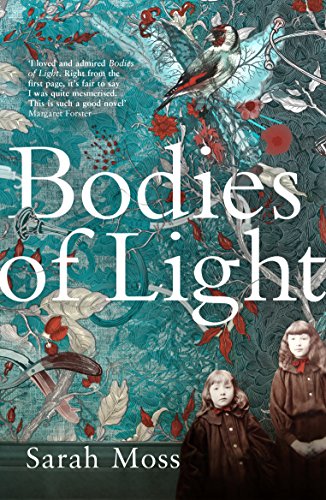

My rating:
This superb novel is set in Victorian Manchester, and is centered on Alethea (Ally) Moberley, the first child of Alfred, a successful but eccentric painter and interior designer, and Elizabeth, a devoutly religious and strict Quaker who is completely invested in the well being of poor women within and outside of England, and to ensuring that Ally and her sister May stay on a very narrow and righteous path and devote their lives to the downtrodden.
In the 1860s and 1870s women were only just beginning to be accepted, begrudgingly, into colleges and professions that were previously denied to them. Girton College, the first for women at Cambridge, opened in 1869, which was followed by Newnham College in 1872, although Bedford College for Women at the University of London had preceded Girton College by 20 years. Formal medical education was denied to women, as Elizabeth Garrett Anderson, the first woman licensed to practice medicine in 1865 and the first to be accepted to the British Medical Association in 1873, remained the only female member of the BMA for nearly two decades, after the organization voted against allowing any other women to gain admittance. Those women who did attempt to gain entry to male only bastions, including medicine, were greeted with hostility and derision, or were simply ignored.
In 1864, the Contagious Diseases Act was passed by Parliament, which was initially created to limit the spread of sexually transmitted infections to soldiers. Policemen in ports and army towns searched for women who were known prostitutes, and any others who were suspected of soliciting sexual favors from clients. Any woman who was walking alone could be taken into custody, even if she was married or had a legitimate reason to be out in public. Those accused of solicitation were arrested and taken to police stations, where they were strapped onto tables and forced to undergo painful and humiliating pelvic examinations with a metal speculum by male officers. Thousands of women were taken into police custody under the Contagious Disease Act; those who were found to be infected were transferred to Lock hospitals for treatment of venereal diseases, where they could be held for up to a year, and those who were uninfected were released. Some of the innocent women were so badly traumatized that they committed suicide shortly afterward, and undoubtedly many others were infected by the use of contaminated specula, thus contributing to the spread of the disease. For single men and soldiers, having sex with prostitutes was considered to be a necessary evil, and they were frequently released by police with little more than a warning. In later years, the Contagious Diseases Act was employed in larger cities and towns, to limit the spread of disease amongst the general public.
Elizabeth Moberley, like many independent women in the Victorian Era, was horrified by this Act, and because of this and the woeful health services available to women, she single mindedly determined that Ally would become a physician, and devote her life to women's health. The repressed but strong willed Ally agreed with her mother's decision, although she didn't have much choice in the matter, and the latter half of the book describes her pursuit of a medical career, and how she overcame numerous obstacles in the clinics and difficulties at home to achieve that goal.
Bodies of Light starts with the marriage of Alfred and Elizabeth, their difficult but successful marriage of opposites, Ally's birth and the profoundly negative affect her infancy and early childhood had on Elizabeth, Ally's largely unhappy childhood spent under the hard thumb of her inflexible mother, and her relationship with her far more carefree younger sister May. This was a wonderfully written and captivating story, with vividly portrayed central characters, and I was emotionally invested in Ally and cheered her on throughout the book. My only minor critiques are that I wished that it was a longer novel, with fuller descriptions of her medical education and the challenges she faced along the way, and it ended too abruptly for me, although it could be that I wasn't ready to leave Ally behind at the conclusion of the novel.
I look forward to reading Signs for Lost Children, which was published last year and picks up where Bodies of Light left off. I'm very surprised that this book wasn't chosen for last year's Bailey's Women's Prize for Fiction, as it would have been a fabulous choice for the longlist, at least.
My rating:
This superb novel is set in Victorian Manchester, and is centered on Alethea (Ally) Moberley, the first child of Alfred, a successful but eccentric painter and interior designer, and Elizabeth, a devoutly religious and strict Quaker who is completely invested in the well being of poor women within and outside of England, and to ensuring that Ally and her sister May stay on a very narrow and righteous path and devote their lives to the downtrodden.
In the 1860s and 1870s women were only just beginning to be accepted, begrudgingly, into colleges and professions that were previously denied to them. Girton College, the first for women at Cambridge, opened in 1869, which was followed by Newnham College in 1872, although Bedford College for Women at the University of London had preceded Girton College by 20 years. Formal medical education was denied to women, as Elizabeth Garrett Anderson, the first woman licensed to practice medicine in 1865 and the first to be accepted to the British Medical Association in 1873, remained the only female member of the BMA for nearly two decades, after the organization voted against allowing any other women to gain admittance. Those women who did attempt to gain entry to male only bastions, including medicine, were greeted with hostility and derision, or were simply ignored.
In 1864, the Contagious Diseases Act was passed by Parliament, which was initially created to limit the spread of sexually transmitted infections to soldiers. Policemen in ports and army towns searched for women who were known prostitutes, and any others who were suspected of soliciting sexual favors from clients. Any woman who was walking alone could be taken into custody, even if she was married or had a legitimate reason to be out in public. Those accused of solicitation were arrested and taken to police stations, where they were strapped onto tables and forced to undergo painful and humiliating pelvic examinations with a metal speculum by male officers. Thousands of women were taken into police custody under the Contagious Disease Act; those who were found to be infected were transferred to Lock hospitals for treatment of venereal diseases, where they could be held for up to a year, and those who were uninfected were released. Some of the innocent women were so badly traumatized that they committed suicide shortly afterward, and undoubtedly many others were infected by the use of contaminated specula, thus contributing to the spread of the disease. For single men and soldiers, having sex with prostitutes was considered to be a necessary evil, and they were frequently released by police with little more than a warning. In later years, the Contagious Diseases Act was employed in larger cities and towns, to limit the spread of disease amongst the general public.
Elizabeth Moberley, like many independent women in the Victorian Era, was horrified by this Act, and because of this and the woeful health services available to women, she single mindedly determined that Ally would become a physician, and devote her life to women's health. The repressed but strong willed Ally agreed with her mother's decision, although she didn't have much choice in the matter, and the latter half of the book describes her pursuit of a medical career, and how she overcame numerous obstacles in the clinics and difficulties at home to achieve that goal.
Bodies of Light starts with the marriage of Alfred and Elizabeth, their difficult but successful marriage of opposites, Ally's birth and the profoundly negative affect her infancy and early childhood had on Elizabeth, Ally's largely unhappy childhood spent under the hard thumb of her inflexible mother, and her relationship with her far more carefree younger sister May. This was a wonderfully written and captivating story, with vividly portrayed central characters, and I was emotionally invested in Ally and cheered her on throughout the book. My only minor critiques are that I wished that it was a longer novel, with fuller descriptions of her medical education and the challenges she faced along the way, and it ended too abruptly for me, although it could be that I wasn't ready to leave Ally behind at the conclusion of the novel.
I look forward to reading Signs for Lost Children, which was published last year and picks up where Bodies of Light left off. I'm very surprised that this book wasn't chosen for last year's Bailey's Women's Prize for Fiction, as it would have been a fabulous choice for the longlist, at least.
117kidzdoc
>115 baswood: Will do, Barry. If I had to rate Ottolenghi: The Cookbook today I would give it 5 stars, and I'm all but certain that this will be my ultimate rating, as it's a handsome book filled with hundreds of vibrant large photos and enticing recipes. I want to try a few more recipes before I rate and review it, though, and I did buy ingredients to make two more recipes, portobello mushrooms with pearl barley and preserved lemon, and grilled asparagus, zucchini (courgettes) and manouri, although I'm still on the lookout for manouri or halloumi cheese.
118FlorenceArt
>116 kidzdoc: Great review! I'm tempted to wishlist this.
119kidzdoc
>118 FlorenceArt: Thanks, Florence.
120reva8
>55 kidzdoc: You've joined the Knaus Guards! Great review. I really have to get around to reading this.....>60 FlorenceArt: There's something very slightly cult-ish about it, I agree.
>69 kidzdoc: What a terrible thing to happen, and how wonderful that she was able to turn her life around.
>93 kidzdoc: Oh, this sounds intriguing and I hope the series continues to be as good. I've bookmarked it for future reading.
>116 kidzdoc: This is such a fantastic review of Bodies of Light. I've come away from your thread with a pile of new reading!
>69 kidzdoc: What a terrible thing to happen, and how wonderful that she was able to turn her life around.
>93 kidzdoc: Oh, this sounds intriguing and I hope the series continues to be as good. I've bookmarked it for future reading.
>116 kidzdoc: This is such a fantastic review of Bodies of Light. I've come away from your thread with a pile of new reading!
121AlisonY
>116 kidzdoc: you sell it well - one for the wish list. Great review.
122kidzdoc
>120 reva8: Thanks, Reva! I own Books Two, Three and Four in the Knausgaard series, and I'll probably read one of them every 2-3 months. I bought The Deptford Trilogy in London two years ago (oddly enough, it hasn't been published in one volume in the US), so I'll read the other two novels, The Manticore and World of Wonders, later this year.
123kidzdoc
>121 AlisonY: Thanks, Alison. Two of my closest real life friends from LT, Rachael (@FlossieT) and Fliss (@flissp), who both live in Cambridge, highly recommended Bodies of Light to me last year, so I was pleased that it was just as good as they suggested.
124mabith
Major book bullet with Bodies of Light, excellent review.
125kidzdoc
>124 mabith: Thanks, Meredith. I should mention that Bodies of Light hasn't been published in the US yet, even though it came out in the UK over two years ago. I bought my copy in London last June after it was shortlisted for the Wellcome Book Prize, the annual British literary award for books whose central theme focuses on medicine, health or illness, regardless of genre. However, you can currently order the paperback version of it from The Book Depository for $9.31 (£6.52) with free shipping, which is less than the £7.99 cover price.
126baswood
Excellent review of Bodies of Light
127kidzdoc
>126 baswood: Thanks, Barry.
129kidzdoc
>128 mabith: You're welcome, Meredith.
130VivienneR
Excellent review of Robertson Davies. I'm planning on re-reading Davies - this year. I hope. It's been too long.
131kidzdoc
>130 VivienneR: Thanks, Vivienne.
132RidgewayGirl
And Bodies of Light is on the wishlist. Excellent review!
133kidzdoc
>132 RidgewayGirl: Thanks, Kay!
134NanaCC
Bodies of Light does sound good. I'm adding to my ridiculously long wishlist, and have no idea when I might get to it. But I like having great books to choose from.
137kidzdoc
I made Portobello Mushrooms With Pearled Barley and Preserved Lemon for lunch today.

Ingredients:
Pearled barley:
1 tablespoon sunflower oil
1 medium onion, finely chopped
1 clove garlic, finely chopped
3 cups (750 ml) vegetable or chicken stock
heaping 1/2 cup (110 g) pearled barley
1/4 preserved lemon, flesh removed and skin finely chopped
1 3/4 ounce (50 g) feta cheese, crumbled
1 tablespoon chopped flat-leaf parsley
2 teaspoons thyme leaves
2 tablespoons purple basil sprouts, radish sprouts, or purple basil leaves, shredded
1 tablespoon olive oil
Salt and freshly ground black pepper
7 tablespoons (100 g) unsalted butter
15 sprigs thyme
6 large portobello mushrooms
3/4 cup (180 ml) dry white wine
1 cup (180 ml) vegetable stock
2 cloves garlic, finely sliced
Coarse sea salt and freshly ground black pepper
Directions:
1. First cook the barley. Heat the sunflower oil in a heavy-based saucepan and sauté the onion and garlic until translucent. Add the stock and bring to a boil. Stir in the barley, lower the heat, then cover and simmer for 1 hour, until all the liquid has been absorbed and the barley is tender.
2. Meanwhile, preheat the oven to 350°F / 180°C. Take a large baking sheet and grease it heavily with two-thirds of the butter. Scatter the thyme sprigs over it. Stem the mushrooms and place the mushroom caps, stem side up, on top of the thyme. Pour over the wine and stock and scatter the sliced garlic over. Dot each mushroom with a couple of knobs of the remaining butter, then season with salt and pepper. Cover the pan with aluminum foil and place in the oven for 15 to 20 minutes, until the mushrooms are tender. Leave them in their cooking juices until you are ready to serve.
3. When the barley is done, remove the pan from the heat and stir in the preserved lemon, feta, parsley, and thyme. Taste and add salt and pepper. To serve, reheat the mushrooms in the oven for a few minutes, if necessary. Place each mushroom, stem side up, on a serving plate. Scoop the barley on top and spoon some of the mushroom cooking juices over. Garnish with the basil sprouts and drizzle over the olive oil.
_______________________________________
I didn't have or make preserved lemon, so I used ¼ of a fresh lemon instead. This was an easy recipe to make, which came from Ottolenghi: The Cookbook, and I thought it was rich but mildly flavored, although the flavors were significantly enhanced by adding sea salt to the pearled barley at the the end. It's a nice main entrée, which would go well with a side salad or green vegetable. It didn't knock my socks off, but I did like it and would make it again.

Ingredients:
Pearled barley:
1 tablespoon sunflower oil
1 medium onion, finely chopped
1 clove garlic, finely chopped
3 cups (750 ml) vegetable or chicken stock
heaping 1/2 cup (110 g) pearled barley
1/4 preserved lemon, flesh removed and skin finely chopped
1 3/4 ounce (50 g) feta cheese, crumbled
1 tablespoon chopped flat-leaf parsley
2 teaspoons thyme leaves
2 tablespoons purple basil sprouts, radish sprouts, or purple basil leaves, shredded
1 tablespoon olive oil
Salt and freshly ground black pepper
7 tablespoons (100 g) unsalted butter
15 sprigs thyme
6 large portobello mushrooms
3/4 cup (180 ml) dry white wine
1 cup (180 ml) vegetable stock
2 cloves garlic, finely sliced
Coarse sea salt and freshly ground black pepper
Directions:
1. First cook the barley. Heat the sunflower oil in a heavy-based saucepan and sauté the onion and garlic until translucent. Add the stock and bring to a boil. Stir in the barley, lower the heat, then cover and simmer for 1 hour, until all the liquid has been absorbed and the barley is tender.
2. Meanwhile, preheat the oven to 350°F / 180°C. Take a large baking sheet and grease it heavily with two-thirds of the butter. Scatter the thyme sprigs over it. Stem the mushrooms and place the mushroom caps, stem side up, on top of the thyme. Pour over the wine and stock and scatter the sliced garlic over. Dot each mushroom with a couple of knobs of the remaining butter, then season with salt and pepper. Cover the pan with aluminum foil and place in the oven for 15 to 20 minutes, until the mushrooms are tender. Leave them in their cooking juices until you are ready to serve.
3. When the barley is done, remove the pan from the heat and stir in the preserved lemon, feta, parsley, and thyme. Taste and add salt and pepper. To serve, reheat the mushrooms in the oven for a few minutes, if necessary. Place each mushroom, stem side up, on a serving plate. Scoop the barley on top and spoon some of the mushroom cooking juices over. Garnish with the basil sprouts and drizzle over the olive oil.
_______________________________________
I didn't have or make preserved lemon, so I used ¼ of a fresh lemon instead. This was an easy recipe to make, which came from Ottolenghi: The Cookbook, and I thought it was rich but mildly flavored, although the flavors were significantly enhanced by adding sea salt to the pearled barley at the the end. It's a nice main entrée, which would go well with a side salad or green vegetable. It didn't knock my socks off, but I did like it and would make it again.
138kidzdoc
Book #6: Stokely: A Life by Peniel E. Joseph

My rating:
“Dr. King’s policy was that nonviolence would achieve the gains for black people in the United States. His major assumption was that if you are nonviolent, if you suffer, your opponent will see your suffering and will be moved to change his heart. That’s very good. He only made one fallacious assumption: In order for nonviolence to work, your opponent must have a conscience. The United States has none.”
“Our grandfathers had to run, run, run. My generation’s out of breath. We ain’t running no more.”
Stokely Carmichael was one of the most important figures in the US Civil Rights Movement and the antiwar campaign in the 1960s, who was best known for creating the phrase "Black Power", his leadership of the Student Nonviolent Coordinating Committee (SNCC), his involvement in the original Black Panther Party in Lowndes County, Alabama, his fiery speeches, and his fierce intellect. He was widely viewed as the successor to Malcolm X after his assassination in 1965, and although he was publicly critical of Dr. Martin Luther King Jr.'s nonviolent movement he maintained a close friendship with him, other moderate civil rights activists, and well meaning people of other races who supported the cause of freedom and equality for all mankind. He was arguably one of the most influential and most feared black Americans during the peak of his activity in the latter half of the 1960s, until he moved to Africa with his new wife, the South African singer Miriam Makeba, where he lived until his death from cancer in 1998.
Carmichael was born in Port of Prince, the capital of Trinidad and Tobago in 1941. His mother, a cabin line stewardess, left their crowded family home for New York City when Stokely was three, and his father, a skilled carpenter, followed two years later. He would not see either of them until he reached the age of 11, when he flew to NYC to move in with them in the Bronx. Port of Prince was a majority black city with blacks in all positions of power, and growing up there was essential to his view that black people were capable of governing themselves effectively without the aid of other races, including whites. He was loved by his grandmother and aunts, and he thrived under their care while he simultaneously developed an independent streak.
The British based education he received in Trinidad and Tobago served him well when he moved to the US, as he excelled in his studies at the prestigious Bronx High School of Science and at Howard University. His classmates and neighbors included numerous Jewish and Italian families, including one who introduced him to the vibrant left wing intellectual subculture that existed in the city in the 1950s. He attended talks and meetings, which became the origin of his political activities at Bronx Science and Howard.
The beginnings of the student civil rights movement coincided with Carmichael's matriculation at Howard in 1960, as college students from North Carolina A&T began the first of a series of nonviolent sit-ins at segregated lunch counters in the city of Greensboro. These sit-ins spread to other cities in the South, in stores and restaurants where blacks were not allowed to dine, and these protests led to the formation of the Student Nonviolent Coordinating Committee (SNCC) later that year. Carmichael formally joined the movement later that year, participating in sit-ins in Virginia and other civil rights protests in Maryland, and his intellect and commitment to the cause led him to become a leader on campus and the following year, when he served as one of the Freedom Riders that sought to integrate buses and their terminals throughout the Deep South.
Through his participation in the Nonviolent Action Group (NAG) at Howard and SNCC, Carmichael was introduced to and became familiar with civil rights leader that included Martin Luther King, Jr., Bayard Rustin, John Lewis (who he later succeeded as the head of SNCC), and Tom Hayden, a white student at the University of Michigan who gained fame as one of the founding fathers of Students for a Democratic Society (SDS).
Carmichael's coming of age came about when he participated in voter registration movements, freedom marches and protests in Alabama and Mississippi, which began during the summers between his studies at Howard and continued after he received his bachelor's degree in 1964. He ingratiated himself with local community leaders, and his tireless efforts, frequent influential speeches and ebullient personality led to his recognition as one of the young faces of the Civil Rights Movement. By 1966 he was elected as president of SNCC, and during that year he become known to the country at large, particularly due to his famous "Black Power" speech in June of that year, in which he proclaimed that black autonomy and solidarity rather than alignment with liberal whites and members of other races was essential to the advancement of the race. He adopted this position after civil rights groups failed to get representatives from the Mississippi Freedom Democratic Party seated to the 1964 Democratic National Convention, as party leaders chose segregationist delegates instead, and due to persistent failures of the US government under President Johnson to protect civil rights activists in the Deep South from abuse by local officials, along with Johnson's escalation of the War in Vietnam.
Carmichael became a frequently sought after speaker on college campuses and abroad, which provided SNCC which the necessary funds it needed to continue its activity. However, Stokely's ego and independence fell afoul of the committee's leadership, and his increasingly more extreme statements and positions led to his isolation and ultimate replacement, particularly after he traveled to Europe and Cuba and incurred the wrath of J. Edgar Hoover, the head of the FBI, President Johnson, and moderate civil rights leaders who disagreed with his tactics and rejection of nonviolence as a tool to achieve racial equality. His travels abroad ultimately led to his disillusionment with the United States, and in 1968, not long after Dr. King's assassination, he moved to Guinea in West Africa. He adopted the name Kwame Turé, taken from the names of two of Africa's most prominent leaders, Kwame Nkrumah, the first president of independent Ghana, and Sekou Touré, the first president of Guinea. Unfortunately these two men and others like them became oppressive dictators shortly after their installation as the heads of government, and Carmichael became a marginalized and ineffective civil rights leader during the remainder of his life.
Carmichael was diagnosed with prostate cancer in 1996, which claimed his life two years later at the age of 56.
In Stokely: A Life, the noted Haitian American historian Peniel E. Joseph has done a masterful job in detailing the life of this legendary but often misunderstood man, who was an energetic and influential civil rights leader and the key figure in the Black Power movement, but also ostracized white liberals and moderate civil rights activists by his increasingly more extreme positions and statements during his most active years. This book is a valuable contribution to American history and the history of the movement, and it is a compelling, readable and detailed biography, with excellent and even analysis and criticism of the man throughout. It focuses on Carmichael's activity in the US far more than his participation after he moved to Guinea in 1968, though, which is a notable but minor weakness that kept me from giving it a full five stars.
This short YouTube video is an excerpt of one of Carmichael's more fiery speeches, which provides a valuable look at his power and intellect: https://www.youtube.com/watch?v=zxrzTsfpPfM.

My rating:
“Dr. King’s policy was that nonviolence would achieve the gains for black people in the United States. His major assumption was that if you are nonviolent, if you suffer, your opponent will see your suffering and will be moved to change his heart. That’s very good. He only made one fallacious assumption: In order for nonviolence to work, your opponent must have a conscience. The United States has none.”
“Our grandfathers had to run, run, run. My generation’s out of breath. We ain’t running no more.”
Stokely Carmichael was one of the most important figures in the US Civil Rights Movement and the antiwar campaign in the 1960s, who was best known for creating the phrase "Black Power", his leadership of the Student Nonviolent Coordinating Committee (SNCC), his involvement in the original Black Panther Party in Lowndes County, Alabama, his fiery speeches, and his fierce intellect. He was widely viewed as the successor to Malcolm X after his assassination in 1965, and although he was publicly critical of Dr. Martin Luther King Jr.'s nonviolent movement he maintained a close friendship with him, other moderate civil rights activists, and well meaning people of other races who supported the cause of freedom and equality for all mankind. He was arguably one of the most influential and most feared black Americans during the peak of his activity in the latter half of the 1960s, until he moved to Africa with his new wife, the South African singer Miriam Makeba, where he lived until his death from cancer in 1998.
Carmichael was born in Port of Prince, the capital of Trinidad and Tobago in 1941. His mother, a cabin line stewardess, left their crowded family home for New York City when Stokely was three, and his father, a skilled carpenter, followed two years later. He would not see either of them until he reached the age of 11, when he flew to NYC to move in with them in the Bronx. Port of Prince was a majority black city with blacks in all positions of power, and growing up there was essential to his view that black people were capable of governing themselves effectively without the aid of other races, including whites. He was loved by his grandmother and aunts, and he thrived under their care while he simultaneously developed an independent streak.
The British based education he received in Trinidad and Tobago served him well when he moved to the US, as he excelled in his studies at the prestigious Bronx High School of Science and at Howard University. His classmates and neighbors included numerous Jewish and Italian families, including one who introduced him to the vibrant left wing intellectual subculture that existed in the city in the 1950s. He attended talks and meetings, which became the origin of his political activities at Bronx Science and Howard.
The beginnings of the student civil rights movement coincided with Carmichael's matriculation at Howard in 1960, as college students from North Carolina A&T began the first of a series of nonviolent sit-ins at segregated lunch counters in the city of Greensboro. These sit-ins spread to other cities in the South, in stores and restaurants where blacks were not allowed to dine, and these protests led to the formation of the Student Nonviolent Coordinating Committee (SNCC) later that year. Carmichael formally joined the movement later that year, participating in sit-ins in Virginia and other civil rights protests in Maryland, and his intellect and commitment to the cause led him to become a leader on campus and the following year, when he served as one of the Freedom Riders that sought to integrate buses and their terminals throughout the Deep South.
Through his participation in the Nonviolent Action Group (NAG) at Howard and SNCC, Carmichael was introduced to and became familiar with civil rights leader that included Martin Luther King, Jr., Bayard Rustin, John Lewis (who he later succeeded as the head of SNCC), and Tom Hayden, a white student at the University of Michigan who gained fame as one of the founding fathers of Students for a Democratic Society (SDS).
Carmichael's coming of age came about when he participated in voter registration movements, freedom marches and protests in Alabama and Mississippi, which began during the summers between his studies at Howard and continued after he received his bachelor's degree in 1964. He ingratiated himself with local community leaders, and his tireless efforts, frequent influential speeches and ebullient personality led to his recognition as one of the young faces of the Civil Rights Movement. By 1966 he was elected as president of SNCC, and during that year he become known to the country at large, particularly due to his famous "Black Power" speech in June of that year, in which he proclaimed that black autonomy and solidarity rather than alignment with liberal whites and members of other races was essential to the advancement of the race. He adopted this position after civil rights groups failed to get representatives from the Mississippi Freedom Democratic Party seated to the 1964 Democratic National Convention, as party leaders chose segregationist delegates instead, and due to persistent failures of the US government under President Johnson to protect civil rights activists in the Deep South from abuse by local officials, along with Johnson's escalation of the War in Vietnam.
Carmichael became a frequently sought after speaker on college campuses and abroad, which provided SNCC which the necessary funds it needed to continue its activity. However, Stokely's ego and independence fell afoul of the committee's leadership, and his increasingly more extreme statements and positions led to his isolation and ultimate replacement, particularly after he traveled to Europe and Cuba and incurred the wrath of J. Edgar Hoover, the head of the FBI, President Johnson, and moderate civil rights leaders who disagreed with his tactics and rejection of nonviolence as a tool to achieve racial equality. His travels abroad ultimately led to his disillusionment with the United States, and in 1968, not long after Dr. King's assassination, he moved to Guinea in West Africa. He adopted the name Kwame Turé, taken from the names of two of Africa's most prominent leaders, Kwame Nkrumah, the first president of independent Ghana, and Sekou Touré, the first president of Guinea. Unfortunately these two men and others like them became oppressive dictators shortly after their installation as the heads of government, and Carmichael became a marginalized and ineffective civil rights leader during the remainder of his life.
Carmichael was diagnosed with prostate cancer in 1996, which claimed his life two years later at the age of 56.
In Stokely: A Life, the noted Haitian American historian Peniel E. Joseph has done a masterful job in detailing the life of this legendary but often misunderstood man, who was an energetic and influential civil rights leader and the key figure in the Black Power movement, but also ostracized white liberals and moderate civil rights activists by his increasingly more extreme positions and statements during his most active years. This book is a valuable contribution to American history and the history of the movement, and it is a compelling, readable and detailed biography, with excellent and even analysis and criticism of the man throughout. It focuses on Carmichael's activity in the US far more than his participation after he moved to Guinea in 1968, though, which is a notable but minor weakness that kept me from giving it a full five stars.
This short YouTube video is an excerpt of one of Carmichael's more fiery speeches, which provides a valuable look at his power and intellect: https://www.youtube.com/watch?v=zxrzTsfpPfM.
139rebeccanyc
Thanks for your review; you paint a vivid portrait of Stokely Carmichael. About the only thing I knew about him was his unfortunate remark that the position of women in SNCC was prone.
140kidzdoc
Book #7: Literary Lapses by Stephen Leacock

My rating:
This collection of humorous short stories by one of Canada's most famous writers was published in 1910, and it represented his first work of fiction. The best stories were moderately amusing, most notably "My Financial Career", in which a nervous man opens and closes his first bank account in one visit; "How to be a Doctor", a guide to the practice of modern medicine and the care of the patient, in which removal of various body parts is essential to forming diagnoses; and "The New Food", a description of highly concentrated food pellets and the unfortunate demise of a baby who gobbled a bottle of them at a time. Unfortunately there were far more misses than hits in this collection, which was undoubtedly more amusing a century ago than it is now.

My rating:

This collection of humorous short stories by one of Canada's most famous writers was published in 1910, and it represented his first work of fiction. The best stories were moderately amusing, most notably "My Financial Career", in which a nervous man opens and closes his first bank account in one visit; "How to be a Doctor", a guide to the practice of modern medicine and the care of the patient, in which removal of various body parts is essential to forming diagnoses; and "The New Food", a description of highly concentrated food pellets and the unfortunate demise of a baby who gobbled a bottle of them at a time. Unfortunately there were far more misses than hits in this collection, which was undoubtedly more amusing a century ago than it is now.
141kidzdoc
>139 rebeccanyc: Thanks, Rebecca. It's a shame, and a testament to the influence of the racist media that sought to tear down and misrepresent civil rights leaders like Malcolm X, Dr. King and Stokely Carmichael, that you and many others know him best from that quote. The author does address that quote head on and place it in context. Carmichael had a wicked sense of humor, and that comment was made in jest:
After a long day of haggling over the fate of the world, Carmichael once again offered comic relief. Carmichael's natural charisma lent a patina of celebrity and showmanship to everything he did. At the conclusion of one of his patented monologues that made fun of a wide range of targets, he turned to a discussion of position papers. "What is the position of women in SNCC?" he asked rhetorically. "The position of women in SNCC is prone!" he impishly answered. Carmichael and his audience, men and women included, laughed for a long time. Retrospectively, this quote would take on a life of its own, becoming a symbol of the era's sexism. Mary King remembers it differently. "It drew us closer together, because, even in that moment, he was poking fun at his own attitudes." If Carmichael shared the sexist views of his generation regarding women's roles in politics, he fought hard against these blinders, and Mary King remembered him as "one of the most responsive men" to "Sex and Caste." Howard student, SNCC worker, and Summer Project volunteer Jean Smith Young similarly recalled that Carmichael treated her with respect, a sentiment echoed by Martha Prescod Norman Nooman. The joke's lasting reverberations, however, would prove overwhelming. Shorn of context, Carmichael's words damaged his personal reputation, cost him political credibility in feminist circles, and unfairly minimized SNCC's democratic culture.
142edwinbcn
>Leacock seems an unusual choice of reading for you. How come you picked this book?
I read The selected humorous stories of Leacock, which largely consisted of various chapters from Sunshine Sketches of a Little Town a few years ago, and also only gave it 2 stars. Like you said, it isn't our time's humour any more.
I read The selected humorous stories of Leacock, which largely consisted of various chapters from Sunshine Sketches of a Little Town a few years ago, and also only gave it 2 stars. Like you said, it isn't our time's humour any more.
143kidzdoc
>142 edwinbcn: Right, Edwin. Some of us in the 75 Books group are participating in a Canadian Authors Challenge, in which two authors are highlighted every month. January's authors were Kim Thúy and Robertson Davies, which is why I read Ru and Fifth Business last month. Stephen Leacock is one of the two authors for February, and since the Kindle version of Literary Lapses was available for free (since it was published before 1923) and was a short work I decided to read it this month. It was only 126 pages, according to Amazon, but it was a complete slog of a book.
I also downloaded Sunshine Sketches of a Little Town, but after your comments and those from another LTer this month I won't read it.
I also downloaded Sunshine Sketches of a Little Town, but after your comments and those from another LTer this month I won't read it.
144edwinbcn
Alright, he is a Canadian author. Good decision. I have a copy of Sunshine Sketches of a Little Town but am not going to read it. I already put it on the pile that goes out to our library next month.
145kidzdoc
>144 edwinbcn: I bought several books by Canadian authors two or three years ago, including The Deptford Trilogy, when I created my own Canadian literature challenge, as I wanted to address a perceived gap in my lack of knowledge of literature from our neighbors to the north. I won't participate in Ilana's challenge every month, but I own books by at least half a dozen selected authors that I plan to read this year, and I'd like to get to the other two books in The Deptford Trilogy this year after I enjoyed reading Fifth Business.
146SassyLassy
I found the authors in the Canadian Authors Challenge somewhat of a surprise, especially if it is designed to introduce Canadian fiction to readers in other parts of the world. There are some real duds there, authors like Leacock who were well thought of in their time, but now are almost never read. Of course the canon of CanLit had to be represented (Atwood, Davies, Findley, Laurence, Richler and the like), but that generation is mostly dead and there were few represented in the next generations. Where are the Francophones, the allophones, the poets and nationalists?
>143 kidzdoc: >144 edwinbcn: One of the things Leacock is remembered for is his political influence, his connections and his academic work. He studied under Thorstein Veblen for his PhD and was chair of Political Science and Economics at McGill for many years. He was very conservative in outlook and supported the old line Canadian links with the British Empire.
That kind of leads me to the British Author Challenge. If Britain is made up of England, Scotland and Wales, where are the Scots and Welsh in the list of authors? There are some great authors on the list, but it could be called the English Author Challenge.
Down off my soapbox now.
>143 kidzdoc: >144 edwinbcn: One of the things Leacock is remembered for is his political influence, his connections and his academic work. He studied under Thorstein Veblen for his PhD and was chair of Political Science and Economics at McGill for many years. He was very conservative in outlook and supported the old line Canadian links with the British Empire.
That kind of leads me to the British Author Challenge. If Britain is made up of England, Scotland and Wales, where are the Scots and Welsh in the list of authors? There are some great authors on the list, but it could be called the English Author Challenge.
Down off my soapbox now.
147SassyLassy
>138 kidzdoc: When I got carried away in my previous post, I neglected to mention how much I enjoyed your review of Stokely: A Life. I hadn't know the part about his early life, which put some of the later part into better perspective. I do think he deserves more widespread recognition. Thanks for the link and what a great definition of apathy.
148rebeccanyc
>141 kidzdoc: Thanks for providing that section from the book, Darryl. It certainly is no accident that that quote was disseminated widely, a sad comment on, as you say, the "racist media."
149kidzdoc
>146 SassyLassy: Interesting commentary about Canadian literature, Sassy. Besides the authors that Ilana chose, who else would you recommend?
Unfortunately, the choice of authors for this year's British Authors Challenge was, for me, mostly uninspiring. I have several other book goals and plans to participate in this year, so I'll only read some of the listed authors, whose books I already own. I agree with you; I would have liked to have seen more Scottish and Welsh authors included.
>147 SassyLassy: I'm glad that you liked my review of Stokely: A Life. I think its author did a superb job of describing Stokely's early life, and explaining how his development as a thinker and an activist were directly linked to those experiences and influences.
"We have to stop saying that we are apathetic because I'm gonna define that word for you. 'Apathy' means that you won't work on a program that I tell you will help you. Cause, baby, when college students leave a good job and go to Mississippi to organize their people, that ain't hardly apathy. And when people get together in Watts and in Chicago and organize a rebellion, that ain't hardly apathy." Brilliant.
>148 rebeccanyc: You're welcome, Rebecca.
Unfortunately, the choice of authors for this year's British Authors Challenge was, for me, mostly uninspiring. I have several other book goals and plans to participate in this year, so I'll only read some of the listed authors, whose books I already own. I agree with you; I would have liked to have seen more Scottish and Welsh authors included.
>147 SassyLassy: I'm glad that you liked my review of Stokely: A Life. I think its author did a superb job of describing Stokely's early life, and explaining how his development as a thinker and an activist were directly linked to those experiences and influences.
"We have to stop saying that we are apathetic because I'm gonna define that word for you. 'Apathy' means that you won't work on a program that I tell you will help you. Cause, baby, when college students leave a good job and go to Mississippi to organize their people, that ain't hardly apathy. And when people get together in Watts and in Chicago and organize a rebellion, that ain't hardly apathy." Brilliant.
>148 rebeccanyc: You're welcome, Rebecca.
150Nickelini
>102 Simone2:, >103 kidzdoc:, & >105 mabith: I was going to post a link to a funny video for that song, but it seems to have disappeared from YouTube. I guess the Jian Ghomeshi scandal has killed Moxy Fruvous's reputation. It was a funny video, although uncomfortable to watch now. Oh well.
>146 SassyLassy: I found the authors in the Canadian Authors Challenge somewhat of a surprise, especially if it is designed to introduce Canadian fiction to readers in other parts of the world. There are some real duds there, authors like Leacock who were well thought of in their time, but now are almost never read. Of course the canon of CanLit had to be represented (Atwood, Davies, Findley, Laurence, Richler and the like), but that generation is mostly dead and there were few represented in the next generations.
I know -- so many worthwhile authors were left off, while authors like Leacock are there. Who reads Leacock anymore? Ugh.
>146 SassyLassy: I found the authors in the Canadian Authors Challenge somewhat of a surprise, especially if it is designed to introduce Canadian fiction to readers in other parts of the world. There are some real duds there, authors like Leacock who were well thought of in their time, but now are almost never read. Of course the canon of CanLit had to be represented (Atwood, Davies, Findley, Laurence, Richler and the like), but that generation is mostly dead and there were few represented in the next generations.
I know -- so many worthwhile authors were left off, while authors like Leacock are there. Who reads Leacock anymore? Ugh.
152Yells
Good Canadian authors? Where does one start? :)
If you listen to what the CBC has to say, these are the best 100 books: http://www.cbc.ca/books/books100.html. I think I have read just over half of them - loved some and disliked others.
I really like east coast stuff so would recommend David Adams Richards, Donna Morrissey, Michael Crummey or Wayne Johnston. If you want interesting & humorous books about Canada, Farley Mowat (and his wife Clare) are always good. Stuart McLean is awesome (if you can get your hands on his audiobooks, even better). His Dave and Morley stories are my go-to for long drives.
If you listen to what the CBC has to say, these are the best 100 books: http://www.cbc.ca/books/books100.html. I think I have read just over half of them - loved some and disliked others.
I really like east coast stuff so would recommend David Adams Richards, Donna Morrissey, Michael Crummey or Wayne Johnston. If you want interesting & humorous books about Canada, Farley Mowat (and his wife Clare) are always good. Stuart McLean is awesome (if you can get your hands on his audiobooks, even better). His Dave and Morley stories are my go-to for long drives.
153Nickelini
>152 Yells: I love me some Dave & Morley (although I only listen to them--haven't read McLean yet).
154kidzdoc
>152 Yells: Thanks for the CBC list and your recommendations. By my count I've read 13 of the 100 books, and own seven others. Of the authors you mentioned I only own one book, Galore by Michael Crummey, which I plan to read for the Canadian Authors Challenge later this year.
>153 Nickelini: Nice. I don't take long drives anymore, but I do take long flights from the US to Europe, so I'll keep the Dave & Morley stories in mind.
>153 Nickelini: Nice. I don't take long drives anymore, but I do take long flights from the US to Europe, so I'll keep the Dave & Morley stories in mind.
155Yells
The Vinyl Cafe books are good (this is the Dave and Morley stuff) but since he reads his own stuff and has such a unique voice, hearing them is definitely better. He also does (or did... he took a break last year because of skin cancer) shows every Christmas in various Canadian cities. Hopefully those continue because they are a lot of fun. Much better than Leacock :)
156kidzdoc
>155 Yells: Thanks! I've now finished 11 books this year, including two today, and Literary Lapses is my least favorite so far.
ETA: I bought Fifteen Dogs by André Alexis last year, and I'll probably read it this summer.
ETA: I bought Fifteen Dogs by André Alexis last year, and I'll probably read it this summer.
157Yells
Fifteen Dogs is fantastic. It was one of my top reads last year.
159cabegley
>138 kidzdoc: Great, informative review of Stokely: A Life, Darryl! I appreciated learning more about him.
160kidzdoc
>159 cabegley: Thanks, Chris!
161baswood
Enjoyed your informative review of Stokely: A Life
162SassyLassy
>149 kidzdoc: Oh dear, you may regret asking for a list.
Of the names already on the list, I would definitely recommend Michael Crummey who I think is one of the best current writers in Canada. Read his Galore. Timothy Findley was also there and I would recommend most of his books, but especially The Wars. Jane Urquhart is an interesting writer, with the surgical skill and linguistic precision of an Ian McEwan, but like him, there is often no real sense of engagement, just of appreciation for the writing.
People on the list I would not read (personal taste I know) would include Farley Mowat who seems to delight in ridicule, and Pierre Berton.
So, who is not there that I would recommend? Here goes:
No longer with us:
Matt Cohen
Marian Engel -- Bear recently reissued so should be available
Adele Wiseman
Francophone and should be easy to find in translation
Antonine Maillet* the first person outside France to be awarded the Prix Goncourt
Jacques Poulin I remember you reviewing him in the past
Michel Tremblay
Still very much with us
Joseph Boyden perhaps just for the stories he presents of people not often represented in the mainstream
Thomson Highway - would probably also win the best contemporary titles award
Frances Itani
Wayne Johnston* especially his books dealing with the Smallwood era
Linden MacIntyre
Anne Marie MacDonald
Lisa Moore especially Februrary
David Adams Richards who writes of Russell Banks kind of people and places
Johanna Skibsrud one of the youngest, born in 1980
Guy Vanderhaeghe from the west
Then there are the critics
Margaret Atwood - this to me is where she excels
Northrop Frye - one of the best ever
There is a fairly strong East Coast influence here. I am sure others like Nickelini, Yells and VivienneR from other parts of the country could and would give you other choices. One of the things about Canada that many outside the country are not aware of is the strong sense of regionalism outside the major centres, and this is reflected in the literature.
Of the names already on the list, I would definitely recommend Michael Crummey who I think is one of the best current writers in Canada. Read his Galore. Timothy Findley was also there and I would recommend most of his books, but especially The Wars. Jane Urquhart is an interesting writer, with the surgical skill and linguistic precision of an Ian McEwan, but like him, there is often no real sense of engagement, just of appreciation for the writing.
People on the list I would not read (personal taste I know) would include Farley Mowat who seems to delight in ridicule, and Pierre Berton.
So, who is not there that I would recommend? Here goes:
No longer with us:
Matt Cohen
Marian Engel -- Bear recently reissued so should be available
Adele Wiseman
Francophone and should be easy to find in translation
Antonine Maillet* the first person outside France to be awarded the Prix Goncourt
Jacques Poulin I remember you reviewing him in the past
Michel Tremblay
Still very much with us
Joseph Boyden perhaps just for the stories he presents of people not often represented in the mainstream
Thomson Highway - would probably also win the best contemporary titles award
Frances Itani
Wayne Johnston* especially his books dealing with the Smallwood era
Linden MacIntyre
Anne Marie MacDonald
Lisa Moore especially Februrary
David Adams Richards who writes of Russell Banks kind of people and places
Johanna Skibsrud one of the youngest, born in 1980
Guy Vanderhaeghe from the west
Then there are the critics
Margaret Atwood - this to me is where she excels
Northrop Frye - one of the best ever
There is a fairly strong East Coast influence here. I am sure others like Nickelini, Yells and VivienneR from other parts of the country could and would give you other choices. One of the things about Canada that many outside the country are not aware of is the strong sense of regionalism outside the major centres, and this is reflected in the literature.
163Nickelini
>162 SassyLassy: Yes, that's a crazy east-coast list! (east coast to me being anything east of Alberta). Of the ones you've mentioned, I've read and loved Thomson Highway and Lisa Moore, and yes, Bear is fabulous.
164FlorenceArt
Arg! Stop that you guys, my wishlist is starting to smoke! Well, maybe not. I'll just add Bear and just ignore you guys from now on, OK?
It was fun reading the reviews for Bear :-) And I downloaded the list mentioned earlier, and I'm ashamed at how few of those books I have read. There are also a few that I read without realizing that the author was Canadian.
It was fun reading the reviews for Bear :-) And I downloaded the list mentioned earlier, and I'm ashamed at how few of those books I have read. There are also a few that I read without realizing that the author was Canadian.
165torontoc
I liked Guy Vanderhaeghe's earlier books ( isn't he from Saskatchewan?)
167mabith
Thanks for your detailed review of Stokely: A Life. I'm definitely going to get to that this year, already got the audiobook via Audible.
168detailmuse
Darryl it's been so interesting to catch up here. You bring such a full life to your thread.
169janeajones
Loved your review of Stokely: A Life, Darryl.
As for Canadians, Anne Carson is an incredible poet, and Gabrielle Roy for Francophone fiction.
As for Canadians, Anne Carson is an incredible poet, and Gabrielle Roy for Francophone fiction.
171kidzdoc
Whoa! I'm way behind here. Catching up...
>161 baswood: Thanks, Barry.
>162 SassyLassy: Thanks for that great list of Canadian authors, Sassy! Let's see...I haven't heard of any of the deceased authors. I've read Translation is a Love Affair and Mister Blue by Jacques Poulin, both of which I enjoyed, and Spring Tides, which I haven't read yet. I also own and haven't yet read February by Lisa Moore, The Sentimentalists by Johanna Skibsrud and The Blind Assassin and The Handmaid's Tale by Margaret Atwood, so I'll start with those novels first.
>163 Nickelini: Bear sounds interesting, so I've add it to my wish list. Thanks, Joyce.
>164 FlorenceArt: Ha! This group is anathema to all of us who are trying to limit our book purchases.
>165 torontoc: I've not heard of Guy Vanderhaeghe, Cyrel. Which books of his would you recommend?
>161 baswood: Thanks, Barry.
>162 SassyLassy: Thanks for that great list of Canadian authors, Sassy! Let's see...I haven't heard of any of the deceased authors. I've read Translation is a Love Affair and Mister Blue by Jacques Poulin, both of which I enjoyed, and Spring Tides, which I haven't read yet. I also own and haven't yet read February by Lisa Moore, The Sentimentalists by Johanna Skibsrud and The Blind Assassin and The Handmaid's Tale by Margaret Atwood, so I'll start with those novels first.
>163 Nickelini: Bear sounds interesting, so I've add it to my wish list. Thanks, Joyce.
>164 FlorenceArt: Ha! This group is anathema to all of us who are trying to limit our book purchases.
>165 torontoc: I've not heard of Guy Vanderhaeghe, Cyrel. Which books of his would you recommend?
172kidzdoc
>166 Yells: That settles it. I'll look for Bear when I go book shopping in London next month.
>167 mabith: You're welcome, Meredith. I hope that you enjoy Stokely: A Life as much as I did.
>168 detailmuse: Thanks, MJ! I'd have to say that my 75 Books threads are considerably more lively, though, with a variety of off-topic conversations including the US presidential elections, the recent Supreme Court vacancy, weird foods, my disinterest in reading To Kill a Mockingbird as an African American, and, most recently, a very sick little baby who I cared for in the hospital yesterday who went from being relatively well and watching a video on her parents' iPad in the morning to being on death's door and requiring life support after she suddenly deteriorated and went into heart failure by early afternoon. Thankfully her nurse alerted me to her worsening status, and fortunately we were quickly able to establish what her problem was and get her on life support before her heart failed.
>169 janeajones: Thanks, Jane. And thanks for mentioning Anne Carson and Gabrielle Roy; I've heard a little about each of them but I don't own any of their books.
>170 dchaikin: Thanks, Dan!
>167 mabith: You're welcome, Meredith. I hope that you enjoy Stokely: A Life as much as I did.
>168 detailmuse: Thanks, MJ! I'd have to say that my 75 Books threads are considerably more lively, though, with a variety of off-topic conversations including the US presidential elections, the recent Supreme Court vacancy, weird foods, my disinterest in reading To Kill a Mockingbird as an African American, and, most recently, a very sick little baby who I cared for in the hospital yesterday who went from being relatively well and watching a video on her parents' iPad in the morning to being on death's door and requiring life support after she suddenly deteriorated and went into heart failure by early afternoon. Thankfully her nurse alerted me to her worsening status, and fortunately we were quickly able to establish what her problem was and get her on life support before her heart failed.
>169 janeajones: Thanks, Jane. And thanks for mentioning Anne Carson and Gabrielle Roy; I've heard a little about each of them but I don't own any of their books.
>170 dchaikin: Thanks, Dan!
173ELiz_M
>172 kidzdoc: The newly opened Libreria may not have wi-fi or a standard method of categorizing books, but they do have free whiskey.
174kidzdoc
>173 ELiz_M: Nice! I'll arrive in London in 10 days, so I'll definitely check out Libreria while I'm there. Thanks, Liz!
This past Sunday I made Mushroom-Spinach Soup With Middle Eastern Spices, using a recipe that was in the Food section of last Wednesday's edition of The New York Times:

INGREDIENTS:
*6 tablespoons unsalted butter or extra-virgin olive oil
*1¼ pounds mixed mushrooms (such as cremini, oyster, chanterelles and shiitake), chopped
*½ pound shallots, finely diced
*1 tablespoon tomato paste
*2 teaspoons chopped fresh thyme leaves
*1½ teaspoons ground cumin
*1 teaspoon ground coriander
*¾ teaspoon ground cinnamon
*Pinch ground allspice
*2½ teaspoons kosher salt, more to taste
*1 teaspoon black pepper
*5 ounces baby spinach
*Fresh lime juice, to taste
*Plain yogurt, for serving (optional)
PREPARATION:
Heat 3 tablespoons butter or oil in a large pot over medium-high heat. Add half the mushrooms and half the shallots; cook, stirring occasionally, until most of the liquid has evaporated and the mushrooms are well browned, 10 to 12 minutes. Transfer mushrooms to a bowl and repeat with remaining butter, mushrooms and shallots.
Return all mushrooms to the pot and stir in tomato paste, thyme, cumin, coriander, cinnamon and allspice; cook until fragrant, about 1 minute.
Stir in 5 cups water, the salt and the black pepper. Bring mixture to a simmer over medium heat and cook gently for 20 minutes. Stir in baby spinach and let cook until just wilted, 1 to 2 minutes.
Using an immersion blender or food processor, coarsely purée soup. Mix in lime juice. Thin with water, as needed. Taste and adjust seasoning, if necessary. Serve with dollops of yogurt if you'd like.
______________________________
Mmm. This was a very quick and easy recipe to make. My preferred local supermarket (Publix) sells sliced mixed mushrooms in the grocery section, and I just gave them a quick chop before I added them to the pot. I didn't purée the soup for long, as I prefer a thick, chunky soup. I added a heaping tablespoon of Greek yogurt to the reheated soup. After sitting in my refrigerator for six days it was thicker and tasted even better than it did after I first made it. This recipe makes four full bowls, and I'll add it to my regular rotation of favorite stews and soups.
This past Sunday I made Mushroom-Spinach Soup With Middle Eastern Spices, using a recipe that was in the Food section of last Wednesday's edition of The New York Times:

INGREDIENTS:
*6 tablespoons unsalted butter or extra-virgin olive oil
*1¼ pounds mixed mushrooms (such as cremini, oyster, chanterelles and shiitake), chopped
*½ pound shallots, finely diced
*1 tablespoon tomato paste
*2 teaspoons chopped fresh thyme leaves
*1½ teaspoons ground cumin
*1 teaspoon ground coriander
*¾ teaspoon ground cinnamon
*Pinch ground allspice
*2½ teaspoons kosher salt, more to taste
*1 teaspoon black pepper
*5 ounces baby spinach
*Fresh lime juice, to taste
*Plain yogurt, for serving (optional)
PREPARATION:
Heat 3 tablespoons butter or oil in a large pot over medium-high heat. Add half the mushrooms and half the shallots; cook, stirring occasionally, until most of the liquid has evaporated and the mushrooms are well browned, 10 to 12 minutes. Transfer mushrooms to a bowl and repeat with remaining butter, mushrooms and shallots.
Return all mushrooms to the pot and stir in tomato paste, thyme, cumin, coriander, cinnamon and allspice; cook until fragrant, about 1 minute.
Stir in 5 cups water, the salt and the black pepper. Bring mixture to a simmer over medium heat and cook gently for 20 minutes. Stir in baby spinach and let cook until just wilted, 1 to 2 minutes.
Using an immersion blender or food processor, coarsely purée soup. Mix in lime juice. Thin with water, as needed. Taste and adjust seasoning, if necessary. Serve with dollops of yogurt if you'd like.
______________________________
Mmm. This was a very quick and easy recipe to make. My preferred local supermarket (Publix) sells sliced mixed mushrooms in the grocery section, and I just gave them a quick chop before I added them to the pot. I didn't purée the soup for long, as I prefer a thick, chunky soup. I added a heaping tablespoon of Greek yogurt to the reheated soup. After sitting in my refrigerator for six days it was thicker and tasted even better than it did after I first made it. This recipe makes four full bowls, and I'll add it to my regular rotation of favorite stews and soups.
175kidzdoc
I have finished my hyperconcentrated work schedule that began in November and ended yesterday, so I'll have much more time to read and keep up with everyone's threads. I'm off for 16 days in a row (earned time off, not vacation time), and I'll fly to London for a 1½ week holiday tomorrow night. I'll spend much of the time in the company of LT friends.
I'll buy plenty of books, of course, including at least a dozen from two UK literary awards that were announced this month.
The shortlist for the 2016 Wellcome Book Prize, the UK based prize for the best books that have a "central theme that engages with some aspect of medicine, health or illness", was announced earlier this afternoon:

Playthings by Alex Pheby:
It's All in Your Head by Suzanne O'Sullivan:
The Last Act of Love by Cathy Rentzenbrink:
Neurotribes by Steve Silberman:
Signs for Lost Children by Sarah Moss:
The Outrun by Amy Liptrot:
The winner of the Wellcome Book Prize will be announced on April 25th.
I own Neurotribes, which I plan to read for Autism Awareness Month in April, and I was already planning to buy Signs for Lost Children this week, as I loved Bodies of Light. The other four books sound fascinating, so I'll buy all of them while I'm in London, and start reading one of them this week.
Edited to correct touchstones.
I'll buy plenty of books, of course, including at least a dozen from two UK literary awards that were announced this month.
The shortlist for the 2016 Wellcome Book Prize, the UK based prize for the best books that have a "central theme that engages with some aspect of medicine, health or illness", was announced earlier this afternoon:

Playthings by Alex Pheby:
Playthings, Alex Pheby’s second novel, provides a compelling and original take on one of the most influential psychological case studies in early-20th-century history: the mind of Daniel Paul Schreber.
Daniel Paul Schreber was a judge who lived in Dresden – and in later life wrote Memoirs of My Nervous Illness, an autobiographical account of his battle with mental illness. This extraordinary book, based on Schreber’s first two confinements in an asylum, became a foundation stone in the psychological history of the 20th century.
What Schreber was not able to write about was the final part of his story: his third episode of delusion and paranoia and subsequent incarceration, from which he did not return. Playthings provides this dark final chapter. Along the way, it plunges deep not just into the mind of Schreber, but also into the society in which he struggled to live – because his rigid upbringing, and subsequent breakdowns, is the story not just of one man, but of Germany as whole.
It's All in Your Head by Suzanne O'Sullivan:
Up to a third of people who go to see their GP have symptoms that are medically unexplained; in many of these cases an emotional cause is suspected. And yet, when it comes to a diagnosis, ‘It’s all in your head’ is the very last thing we want to hear, and the last thing doctors want to say.
In It’s All in Your Head consultant neurologist Dr Suzanne O’Sullivan takes us on a journey through the world of psychosomatic illness. We meet patients like Pauline, who has been ill all her adult life, Camilla, the lawyer with the perfect life – except for her unexplained seizures – Yvonne, who was blinded at work by cleaning spray, and Rachel, a once-promising dancer now stuck in the purgatory of ME.
The Last Act of Love by Cathy Rentzenbrink:
In the summer of 1990, Cathy’s brother Matty was knocked down by a car on the way home from a night out. It was two weeks before his GCSE results, which turned out to be the best in his school. Sitting by his unconscious body in hospital, holding his hand and watching his heartbeat on the monitors, Cathy and her parents willed him to survive. They did not know then that there are many and various fates worse than death.
This is the story of what happened to Cathy and her brother, and the unimaginable decision that she and her parents had to make eight years after the night that changed everything. It’s a story for anyone who has ever watched someone suffer, or lost someone they loved, or lived through a painful time that left them forever changed. Told with boundless warmth and affection, The Last Act of Love is a heartbreaking yet uplifting testament to a family’s survival and the price we pay for love.
Neurotribes by Steve Silberman:
What is autism: a devastating developmental condition, a lifelong disability, or a naturally occurring form of cognitive difference akin to certain forms of genius? In truth, it is all of these things and more – and the future of our society depends on our understanding it.
Following on from his groundbreaking article ‘The geek syndrome’, ‘Wired’ reporter Steve Silberman unearths the secret history of autism, long suppressed by the same clinicians who became famous for discovering it, and finds surprising answers to the crucial question of why the number of diagnoses has soared in recent years.
Going back to the earliest autism research and chronicling the brave and lonely journey of autistic people and their families through the decades, Silberman provides long-sought solutions to the autism puzzle while casting light on the growing movement of ‘neurodiversity’ and mapping out a path towards a more humane world for people with learning differences.
Signs for Lost Children by Sarah Moss:
Set in the 1880s, Signs for Lost Children carries on from Bodies of Light, which was shortlisted in 2015, following a newly married couple who are separated and change in each other’s absence.
Protagonist Ally is now a prizewinning doctor, one of the pioneering group who, against fierce opposition, fought to open up medicine to women. Only weeks into their marriage, she and her husband Tom embark on a six-month period of separation. Tom goes to Japan to build lighthouses, while Ally stays and works at the Truro asylum. As Ally plunges into the politics of madness, Tom navigates the social nuances of late-19th-century Japan.
With her unique blend of emotional insight and intellectual profundity, Sarah Moss builds a novel in two parts, painting two distinct but conjoined portraits of loneliness and determination. Signs for Lost Children is a powerful enquiry into the workings of the human mind and heart.
The Outrun by Amy Liptrot:
Amy was shaped by the cycle of the seasons, birth and death on the farm, and her father’s mental illness, which were as much a part of her childhood as the wild, carefree existence on Orkney. But as she grew up, she longed to leave this remote life. She moved to London and found herself in a hedonistic cycle. Unable to control her drinking, alcohol gradually took over. Now 30, she finds herself washed up back home on Orkney, standing unstable at the cliff edge, trying to come to terms with what happened to her in London.
The Outrun is a beautiful, inspiring book about living on the edge, about the pull between island and city, and about the ability of the sea, the land, the wind and the moon to restore life and renew hope.
The winner of the Wellcome Book Prize will be announced on April 25th.
I own Neurotribes, which I plan to read for Autism Awareness Month in April, and I was already planning to buy Signs for Lost Children this week, as I loved Bodies of Light. The other four books sound fascinating, so I'll buy all of them while I'm in London, and start reading one of them this week.
Edited to correct touchstones.
176AlisonY
Have a great time in London. That's fabulous that you've actually met up with some LT people. I'd love to meet some of the CR folks some day.
178kidzdoc
>176 AlisonY: Thanks, Alison. I've met at least five members of Club Read, and I'll see Caroline McElwee once or more during this trip. Most of my closest friends are current or former members of the 75 Books group, though.
>177 NanaCC: Thanks, Colleen!
>177 NanaCC: Thanks, Colleen!
179mabith
Neurotribes was a great read for me. Playthings is definitely going on my list.
180kidzdoc
>179 mabith: Good to know, Meredith. At least two of the 75ers thought highly of Neurotribes as well.
181janemarieprice
Have a great trip Darryl! I'll be interested to see your review of Neurotribes - I was looking at Far from the Tree as a gift for a friend but was worried about the length (way too long for a gift right!?), so though maybe this could be a good option as a gift for her.
183kidzdoc
>181 janemarieprice: Thanks, Jane! I arrived in London late yesterday morning, but was too tired to join Claire (@Sakerfalcon) for dinner last night. I'll meet her for lunch today, and have dinner with Rachael (@FlossieT) and her husband Rupert at a Szechuan restaurant in Bloomsbury.
I have Far from the Tree on my Kindle, and I do want to read it relatively soon, hopefully this summer. It's roughly 1000 pages, from what I remember. I'll read Neurotribes next month.
>182 wandering_star: Right, Margaret. I'll look for Playthings today, either at Daunt Books before I meet Claire for lunch, or at The London Review Bookshop if I meet Rachael there.
See you soon!
I have Far from the Tree on my Kindle, and I do want to read it relatively soon, hopefully this summer. It's roughly 1000 pages, from what I remember. I'll read Neurotribes next month.
>182 wandering_star: Right, Margaret. I'll look for Playthings today, either at Daunt Books before I meet Claire for lunch, or at The London Review Bookshop if I meet Rachael there.
See you soon!
184brodiew2
>1 kidzdoc: I Am Legend is one of my favorite audio books of all time. Much more intimate and chilling that the more recent movie. I have't seen 'Omega Man' in years.
185Yells
Oh man.. I didn't even think about listening to the audio version! I just finished reading I Am Legend and quite liked it.
186kidzdoc
>184 brodiew2:, >185 Yells: I'm glad to hear that both of you thought highly of I Am Legend. I'll read it this weekend, as Rachael (@FlossieT) and Fliss (@flissp) invited me to join their book club meeting in Cambridge on Monday to discuss it.
187MsLdnReads
Hi, I've just found your friend after responding to your comment about The Outrun on mine.
Interesting to see The Iceberg was one of your favourite books last year. I listened to Marion Coutts talk about it at a joint event with Ali Smith last year, instantly bought a copy but then haven't read it! I must add it back to my TBR for the next quarter. Also My Age of Anxiety, which is languishing undread somewhere on my shelves.
I'll be interested to hear what you make of The Last Act of Love. I'm in two minds over whether to read this or not - years ago I was on a writing course with Cathy and I read some of her very early material then. I don't know if you can get Radio 4's iplayer in the States? If you can, you might be interested to know this was one of the books discussed in the programme 'A Good Read' - I think it was a fortnight ago.
Interesting to see The Iceberg was one of your favourite books last year. I listened to Marion Coutts talk about it at a joint event with Ali Smith last year, instantly bought a copy but then haven't read it! I must add it back to my TBR for the next quarter. Also My Age of Anxiety, which is languishing undread somewhere on my shelves.
I'll be interested to hear what you make of The Last Act of Love. I'm in two minds over whether to read this or not - years ago I was on a writing course with Cathy and I read some of her very early material then. I don't know if you can get Radio 4's iplayer in the States? If you can, you might be interested to know this was one of the books discussed in the programme 'A Good Read' - I think it was a fortnight ago.
188kidzdoc
>187 MsLdnReads: Apologies for my late reply! I'll create a new thread shortly, since this one has become stale, and especially because I finally wrote two book reviews this morning. Over the next week I'll write more reviews, and post descriptions of the museum exhibitions and plays I saw during my trip to London last month.
I would have loved to have attended the Marion Coutts/Ali Smith talk! I also thought highly of My Age of Anxiety, as I gave it 4½ stars.
We can get BBC Radio 4 in the US, so I'll have to see if I can listen to that broadcast. I did buy a copy of The Last Act of Love from the Blackwell's bookshop in the Wellcome Collection, and I'll probably read it next month.
I would have loved to have attended the Marion Coutts/Ali Smith talk! I also thought highly of My Age of Anxiety, as I gave it 4½ stars.
We can get BBC Radio 4 in the US, so I'll have to see if I can listen to that broadcast. I did buy a copy of The Last Act of Love from the Blackwell's bookshop in the Wellcome Collection, and I'll probably read it next month.
This topic was continued by kidzdoc makes another attempt to conquer Mount TBR in 2016, part 2.

