lyzard's list: once more unto the obscurity, dear friends - Part Four
This is a continuation of the topic lyzard's list: once more unto the obscurity, dear friends - Part Three.
This topic was continued by lyzard's list: once more unto the obscurity, dear friends - Part Five.
Talk 75 Books Challenge for 2016
Join LibraryThing to post.
This topic is currently marked as "dormant"—the last message is more than 90 days old. You can revive it by posting a reply.
1lyzard
Owls of Australia
A close relative of the barn owl, the masked owl is the largest species of the genus Tyto. It is found predominantly in timbered areas, although discrete populations are also found in some arid areas. Similarly, though most masked owls nest in hollow trees, some are known to nest in rock crevices or even underground. They are nocturnal, and will breed at any time of the year if conditions are favourable. Like many owl species, masked owls are now considered vulnerable.


A close relative of the barn owl, the masked owl is the largest species of the genus Tyto. It is found predominantly in timbered areas, although discrete populations are also found in some arid areas. Similarly, though most masked owls nest in hollow trees, some are known to nest in rock crevices or even underground. They are nocturnal, and will breed at any time of the year if conditions are favourable. Like many owl species, masked owls are now considered vulnerable.


2lyzard

*************************************************
Currently reading:

The Girl From Nowhere by Mrs Baillie Reynolds (1910)
3lyzard
January:
1. Murder At Wrides Park by J. S. Fletcher (1931)
2. Tom Strong, Washington's Scout: A Story Of Patriotism by Alfred Bishop Mason (1911)
3. Fear Stalks The Village by Ethel Lina White (1932)
4. Murder At The College by Victor L. Whitechurch (1932)
5. The Princess Passes by Ruby M. Ayres (1931)
6. The Billiard-Room Mystery by Brian Flynn (1927)
7. The Porro Palaver by Adam Broome (1928)
8. Amos The Wanderer by William Babington Maxwell (1932)
9. 13 Thirteenth Street by Natalie Sumner Lincoln (1932)
10. The Lady Of The Decoration by Frances Little (1907)
11. Murder In The Maze by J. J. Connington (1927)
12. The Secret Of The Morgue by Frederick G. Eberhard (1932)
13. They Were Defeated by Rose Macaulay (1932)
14. The New Woman And The Victorian Novel by Gail Cunningham (1978)
15. Lonesome Road by Patricia Wentworth (1939)
16. April Lady by Georgette Heyer (1957)
17. Murder In The Mews: And Other Stories by Agatha Christie (1937)
18. Mrs Tim Carries On: Leaves From The Diary Of An Officer's Wife In The Year 1940 by D. E. Stevenson (1941)
19. All This, And Heaven Too by Rachel Field (1938)
February:
20. Marriage by Susan Ferrier (1818)
21. Lucia's Progress by E. F. Benson (1935)
22. The Murder Of Mrs Davenport by Anthony Gilbert (1928)
23. The Owl's Warning by Herman Landon (1932)
24. Love's Hour by Elinor Glyn (1932)
25. The Murder Of Caroline Bundy by Alice Campbell (1932)
26. The Madonna Of Seven Moons by Margery Lawrence (1931)
27. Mr Crewe's Career by Winston Churchill (1908)
28. Trent's Last Case by E. C. Bentley (1913)
29. The Three Taps: A Detective Story Without A Moral by Ronald Knox (1927)
March:
30. Sylvester; or, The Wicked Uncle by Georgette Heyer (1957)
31. Trouble For Lucia by E. F. Benson (1939)
32. Dumb Witness by Agatha Christie (1937)
33. The Imperfect Crime by Bruce Graeme (1932)
34. Dusty Death by Clifton Robbins (1931)
35. Rupert Of Hentzau by Anthony Hope (1898)
36. The Inner Shrine by Basil King (1909)
37. The Fortress by Hugh Walpole (1932)
38. Venetia by Georgette Heyer (1958)
39. As A Thief In The Night by R. Austin Freeman (1928)
40. The Red Seal by Natalie Sumner Lincoln (1920)
1. Murder At Wrides Park by J. S. Fletcher (1931)
2. Tom Strong, Washington's Scout: A Story Of Patriotism by Alfred Bishop Mason (1911)
3. Fear Stalks The Village by Ethel Lina White (1932)
4. Murder At The College by Victor L. Whitechurch (1932)
5. The Princess Passes by Ruby M. Ayres (1931)
6. The Billiard-Room Mystery by Brian Flynn (1927)
7. The Porro Palaver by Adam Broome (1928)
8. Amos The Wanderer by William Babington Maxwell (1932)
9. 13 Thirteenth Street by Natalie Sumner Lincoln (1932)
10. The Lady Of The Decoration by Frances Little (1907)
11. Murder In The Maze by J. J. Connington (1927)
12. The Secret Of The Morgue by Frederick G. Eberhard (1932)
13. They Were Defeated by Rose Macaulay (1932)
14. The New Woman And The Victorian Novel by Gail Cunningham (1978)
15. Lonesome Road by Patricia Wentworth (1939)
16. April Lady by Georgette Heyer (1957)
17. Murder In The Mews: And Other Stories by Agatha Christie (1937)
18. Mrs Tim Carries On: Leaves From The Diary Of An Officer's Wife In The Year 1940 by D. E. Stevenson (1941)
19. All This, And Heaven Too by Rachel Field (1938)
February:
20. Marriage by Susan Ferrier (1818)
21. Lucia's Progress by E. F. Benson (1935)
22. The Murder Of Mrs Davenport by Anthony Gilbert (1928)
23. The Owl's Warning by Herman Landon (1932)
24. Love's Hour by Elinor Glyn (1932)
25. The Murder Of Caroline Bundy by Alice Campbell (1932)
26. The Madonna Of Seven Moons by Margery Lawrence (1931)
27. Mr Crewe's Career by Winston Churchill (1908)
28. Trent's Last Case by E. C. Bentley (1913)
29. The Three Taps: A Detective Story Without A Moral by Ronald Knox (1927)
March:
30. Sylvester; or, The Wicked Uncle by Georgette Heyer (1957)
31. Trouble For Lucia by E. F. Benson (1939)
32. Dumb Witness by Agatha Christie (1937)
33. The Imperfect Crime by Bruce Graeme (1932)
34. Dusty Death by Clifton Robbins (1931)
35. Rupert Of Hentzau by Anthony Hope (1898)
36. The Inner Shrine by Basil King (1909)
37. The Fortress by Hugh Walpole (1932)
38. Venetia by Georgette Heyer (1958)
39. As A Thief In The Night by R. Austin Freeman (1928)
40. The Red Seal by Natalie Sumner Lincoln (1920)
4lyzard
April:
41. I Spy by Natalie Sumner Lincoln (1916)
42. Inspector French And The Cheyne Mystery by Freeman Wills Crofts (1926)
43. The Crooked Cross by Charles J. Dutton (1926)
44. Hangman's Holiday by Dorothy L. Sayers (1933)
45. The Mystery Of Edwin Drood by Charles Dickens (1870)
46. Epilogue by Bruce Graeme (1933)
47. The Unknown Ajax by Georgette Heyer (1959)
48. The Rosary by Florence L. Barclay (1909)
May:
49. Death On The Nile by Agatha Christie (1937)
50. The Merrivale Mystery by James Corbett (1929)
51. The "Canary" Murder Case by S. S. Van Dine (1927)
52. Murder In A Haystack by Dorothy Aldis (1931)
53. Strange Murders At Greystones by Elsie N. Wright (1931)
54. The Room With The Tassels by Carolyn Wells (1918)
55. The Unseen Ear by Natalie Sumner Lincoln (1921)
56. The Riddle Of The Night by Thomas Hanshew, Mary Hanshew and Hazel Hanshew (1916)
57. The Riddle Of The Purple Emperor by Thomas Hanshew, Mary Hanshew and Hazel Hanshew (1918)
June:
58. Elsie's Womanhood by Martha Finley (1875)
59. The Return Of Clubfoot by Valentine Williams (1922)
60. Seeds Of Murder by Frederick Van Wyck Mason (1930)
61. Colonel Gore's Second Case by Lynn Brock (Allister McAllister) (1925)
62. Tish Marches On by Mary Roberts Rinehart (1937)
63. The Harvester by Gene Stratton-Porter (1911)
64. Kai Lung's Golden Hours by Ernest Bramah (1922)
65. Appointment With Death by Agatha Christie (1938)
66. The Poisoned Chocolates Case by Anthony Berkeley (1929)
67. Pistols For Two, And Other Stories by Georgette Heyer (1960)
41. I Spy by Natalie Sumner Lincoln (1916)
42. Inspector French And The Cheyne Mystery by Freeman Wills Crofts (1926)
43. The Crooked Cross by Charles J. Dutton (1926)
44. Hangman's Holiday by Dorothy L. Sayers (1933)
45. The Mystery Of Edwin Drood by Charles Dickens (1870)
46. Epilogue by Bruce Graeme (1933)
47. The Unknown Ajax by Georgette Heyer (1959)
48. The Rosary by Florence L. Barclay (1909)
May:
49. Death On The Nile by Agatha Christie (1937)
50. The Merrivale Mystery by James Corbett (1929)
51. The "Canary" Murder Case by S. S. Van Dine (1927)
52. Murder In A Haystack by Dorothy Aldis (1931)
53. Strange Murders At Greystones by Elsie N. Wright (1931)
54. The Room With The Tassels by Carolyn Wells (1918)
55. The Unseen Ear by Natalie Sumner Lincoln (1921)
56. The Riddle Of The Night by Thomas Hanshew, Mary Hanshew and Hazel Hanshew (1916)
57. The Riddle Of The Purple Emperor by Thomas Hanshew, Mary Hanshew and Hazel Hanshew (1918)
June:
58. Elsie's Womanhood by Martha Finley (1875)
59. The Return Of Clubfoot by Valentine Williams (1922)
60. Seeds Of Murder by Frederick Van Wyck Mason (1930)
61. Colonel Gore's Second Case by Lynn Brock (Allister McAllister) (1925)
62. Tish Marches On by Mary Roberts Rinehart (1937)
63. The Harvester by Gene Stratton-Porter (1911)
64. Kai Lung's Golden Hours by Ernest Bramah (1922)
65. Appointment With Death by Agatha Christie (1938)
66. The Poisoned Chocolates Case by Anthony Berkeley (1929)
67. Pistols For Two, And Other Stories by Georgette Heyer (1960)
5lyzard
July:
68. No Other Way by Gordon Holmes (1912)
69. Patty In Paris by Carolyn Wells (1907)
70. No Other Way by Louis Tracy (1913)
71. The Inside Of The Cup by Winston Churchill (1913)
72. Hunting Shirt by Mary Johnston (1931)
73. Seven Times Seven by John Creasey (1932)
74. Mrs Red Pepper by Grace S. Richmond (1913)
75. Some Do Not... by Ford Madox Ford (1924)
76. Lisarda; or, The Travels Of Love And Jealousy by H. Cox (1690)
77. The Mystery Woman by Alice MacGowan and Perry Newberry (1924)
78. Tom Strong, Lincoln's Scout by Alfred Bishop Mason (1919)
79. The Ginger King by A. E. W. Mason (1940)
80. The House In Lordship Lane by A. E. W. Mason (1946)
81. Arsène Lupin Contre Herlock Sholmes by Maurice Leblanc (1908)
82. Mrs Tim Gets A Job by D. E. Stevenson (1947)
August:
83. Hargrave by Frances Trollope (1843)
84. The Doctor, His Wife And The Clock by Anna Katharine Green (1895)
85. That Affair Next Door by Anna Katharine Green (1897)
86. Ruth Fielding In Moving Pictures; or, Helping The Dormitory Fund by Alice B. Emerson (1916)
87. The Yellow Streak by Valentine Williams (1922)
88. The Eyes Of The World by Harold Bell Wright (1914)
89. The Lost Pearl by Francis D. Grierson (1925)
90. Murder In Four Degrees by J. S. Fletcher (1931)
91. The Law Of The Four Just Men by Edgar Wallace (1921)
92. Strange Wine by Harlan Ellison (1978)
93. Hercule Poirot's Christmas by Agatha Christie (1938)
94. A Civil Contract by Georgette Heyer (1961)
September:
95. Emma by Jane Austen (1815)
96. Dead Man Twice by Christopher Bush (1930)
97. The Mystery Girl by Carolyn Wells (1922)
98. Whitehall by E. V. Timms (1931)
99. Vanessa by Hugh Walpole (1933)
100. Lady Lisle by Mary Elizabeth Braddon (1862)
101. The Turmoil by Booth Tarkington (1915)
102. Amberwell by D. E. Stevenson (1955)
103. Mr Dooley In Peace And In War by Finley Peter Dunne (1898)
104. The Amateur Cracksman by E. W. Hornung (1899)
105. The Nonesuch by Georgette Heyer (1962)
October:
106. Murder In The House Of Commons by Mary Agnes Hamilton (1931)
107. The Murder Of Harvey Blake by Raymond Goldman (1931)
108. My Particular Murder by David Sharp (1931)
109. Indian Summer Of A Forsyte by John Galsworthy (1918)
110. In Chancery by John Galsworthy (1920)
111. Red Altars by John Gordon Brandon (1928)
68. No Other Way by Gordon Holmes (1912)
69. Patty In Paris by Carolyn Wells (1907)
70. No Other Way by Louis Tracy (1913)
71. The Inside Of The Cup by Winston Churchill (1913)
72. Hunting Shirt by Mary Johnston (1931)
73. Seven Times Seven by John Creasey (1932)
74. Mrs Red Pepper by Grace S. Richmond (1913)
75. Some Do Not... by Ford Madox Ford (1924)
76. Lisarda; or, The Travels Of Love And Jealousy by H. Cox (1690)
77. The Mystery Woman by Alice MacGowan and Perry Newberry (1924)
78. Tom Strong, Lincoln's Scout by Alfred Bishop Mason (1919)
79. The Ginger King by A. E. W. Mason (1940)
80. The House In Lordship Lane by A. E. W. Mason (1946)
81. Arsène Lupin Contre Herlock Sholmes by Maurice Leblanc (1908)
82. Mrs Tim Gets A Job by D. E. Stevenson (1947)
August:
83. Hargrave by Frances Trollope (1843)
84. The Doctor, His Wife And The Clock by Anna Katharine Green (1895)
85. That Affair Next Door by Anna Katharine Green (1897)
86. Ruth Fielding In Moving Pictures; or, Helping The Dormitory Fund by Alice B. Emerson (1916)
87. The Yellow Streak by Valentine Williams (1922)
88. The Eyes Of The World by Harold Bell Wright (1914)
89. The Lost Pearl by Francis D. Grierson (1925)
90. Murder In Four Degrees by J. S. Fletcher (1931)
91. The Law Of The Four Just Men by Edgar Wallace (1921)
92. Strange Wine by Harlan Ellison (1978)
93. Hercule Poirot's Christmas by Agatha Christie (1938)
94. A Civil Contract by Georgette Heyer (1961)
September:
95. Emma by Jane Austen (1815)
96. Dead Man Twice by Christopher Bush (1930)
97. The Mystery Girl by Carolyn Wells (1922)
98. Whitehall by E. V. Timms (1931)
99. Vanessa by Hugh Walpole (1933)
100. Lady Lisle by Mary Elizabeth Braddon (1862)
101. The Turmoil by Booth Tarkington (1915)
102. Amberwell by D. E. Stevenson (1955)
103. Mr Dooley In Peace And In War by Finley Peter Dunne (1898)
104. The Amateur Cracksman by E. W. Hornung (1899)
105. The Nonesuch by Georgette Heyer (1962)
October:
106. Murder In The House Of Commons by Mary Agnes Hamilton (1931)
107. The Murder Of Harvey Blake by Raymond Goldman (1931)
108. My Particular Murder by David Sharp (1931)
109. Indian Summer Of A Forsyte by John Galsworthy (1918)
110. In Chancery by John Galsworthy (1920)
111. Red Altars by John Gordon Brandon (1928)
6lyzard
Reading projects 2016:
Blog reads:
Chronobibliography: Gallantry Unmask'd; or, Women In Their Proper Colours
Authors In Depth: Lady Lisle by Mary Elizabeth Braddon
Reading Roulette: The Holy Lover by Marie Conway Oemler
Australian fiction: The Hermit In Van Diemen's Land by Henry Savery
Gothic novel timeline: Miscellaneous Pieces, In Prose by John and Anna Laetitia Aikin
Early crime fiction: Hargrave by Frances Trollope / The Mysteries Of London by Paul Feval
Related reading:
Group / tutored reads:
Completed: Marriage by Susan Ferrier (thread here)
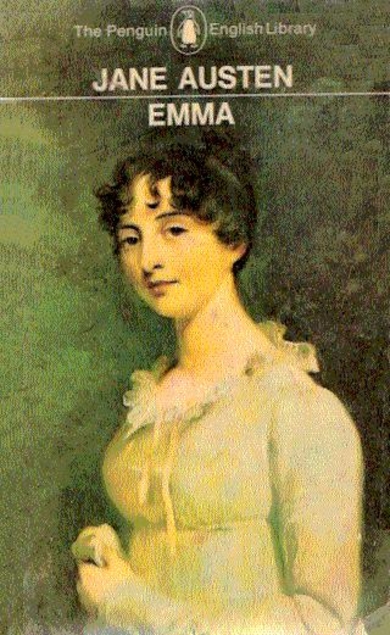
Now: Emma by Jane Austen (thread here.)
Upcoming: The Prime Minister by Anthony Trollope
Upcoming: Camilla by Fanny Burney
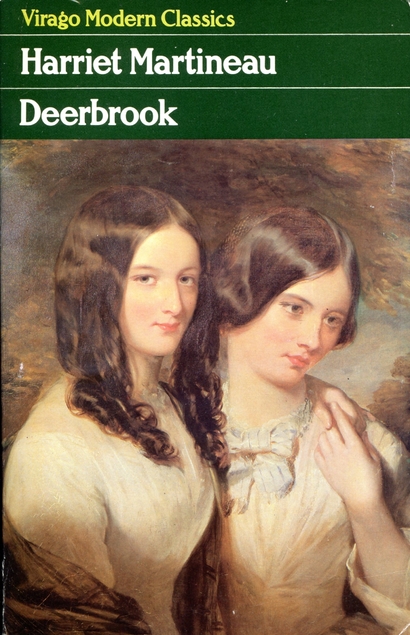
Upcoming: Deerbrook by Harriet Martineau
The evolution of detective fiction:
Next up: The Mysteries Of London by Paul Feval (R. Stephenson, translator)
Virago chronological reading project:
Next up: Deerbrook by Harriet Martineau
America's best-selling novels (1895 - ????):
Next up: Seventeen by Booth Tarkington
Agatha Christie mysteries in chronological order:
Next up: Murder Is Easy
Georgette Heyer historical romances in chronological order:
Next up: False Colours
Random reading 1940 - 1969:
Next up: From Beowulf To Virginia Woolf by Robert Myers
Potential decommission:
Next up: Deathbird Stories by Harlan Ellison
Possible future reading projects:
- Nobel Prize winners who won for fiction
- Daily Telegraph's 100 Best Novels, 1899
- 1898 C.K. Shorter List of Best 100 Novels
- James Tait Black Memorial Prize
- Berkeley "Books Of The Century"
- Mystery League books (and their covers)
- Collins White Circle Crime Club / Green Penguins
- Dell paperbacks
Blog reads:
Chronobibliography: Gallantry Unmask'd; or, Women In Their Proper Colours
Authors In Depth: Lady Lisle by Mary Elizabeth Braddon
Reading Roulette: The Holy Lover by Marie Conway Oemler
Australian fiction: The Hermit In Van Diemen's Land by Henry Savery
Gothic novel timeline: Miscellaneous Pieces, In Prose by John and Anna Laetitia Aikin
Early crime fiction: Hargrave by Frances Trollope / The Mysteries Of London by Paul Feval
Related reading:
Group / tutored reads:
Completed: Marriage by Susan Ferrier (thread here)
Now: Emma by Jane Austen (thread here.)
Upcoming: The Prime Minister by Anthony Trollope
Upcoming: Camilla by Fanny Burney
Upcoming: Deerbrook by Harriet Martineau
The evolution of detective fiction:
Next up: The Mysteries Of London by Paul Feval (R. Stephenson, translator)
Virago chronological reading project:
Next up: Deerbrook by Harriet Martineau
America's best-selling novels (1895 - ????):
Next up: Seventeen by Booth Tarkington
Agatha Christie mysteries in chronological order:
Next up: Murder Is Easy
Georgette Heyer historical romances in chronological order:
Next up: False Colours
Random reading 1940 - 1969:
Next up: From Beowulf To Virginia Woolf by Robert Myers
Potential decommission:
Next up: Deathbird Stories by Harlan Ellison
Possible future reading projects:
- Nobel Prize winners who won for fiction
- Daily Telegraph's 100 Best Novels, 1899
- 1898 C.K. Shorter List of Best 100 Novels
- James Tait Black Memorial Prize
- Berkeley "Books Of The Century"
- Mystery League books (and their covers)
- Collins White Circle Crime Club / Green Penguins
- Dell paperbacks
7lyzard
Books in transit:
On interlibrary loan / branch transfer / storage request:
From Beowulf To Virginia Woolf by Robert Myers
The Five Flamboys by Francis Beeding
Purchased and shipped:
On loan:
*Amberwell by D. E. Stevenson (19/10/2016)
*Lady Lisle by Mary Elizabeth Braddon (04/11/2016)
*Whitehall by E. V. Timms (05/12/2016)
*Vanessa by Hugh Walpole (05/12/2016)
Follow up:
The Holy Lover by Marie Conway Oemler {academic loan / State Library NSW, held}
The Sign Of the Glove by Carlton Dawe {academic loan / State Library NSW, held}
Daylight Murder by Paul McGuire {academic loan / State Library NSW, held}
Forgive Us Our Trespasses by Lloyd C. Douglas {interlibrary loan}
Summerhills by D. E. Stevenson {interlibrary loan}
The Thirty-Nine Steps by John Buchan {Sutherland}
Hatter's Castle by A. J. Cronin {Sutherland stack}
The Avenging Parrot by Anne Austin {rare, expensive}
Mystery Stories For Girls by Agnes Miller {Michigan?}
On interlibrary loan / branch transfer / storage request:
From Beowulf To Virginia Woolf by Robert Myers
The Five Flamboys by Francis Beeding
Purchased and shipped:
On loan:
*Amberwell by D. E. Stevenson (19/10/2016)
*Lady Lisle by Mary Elizabeth Braddon (04/11/2016)
*Whitehall by E. V. Timms (05/12/2016)
*Vanessa by Hugh Walpole (05/12/2016)
Follow up:
The Holy Lover by Marie Conway Oemler {academic loan / State Library NSW, held}
The Sign Of the Glove by Carlton Dawe {academic loan / State Library NSW, held}
Daylight Murder by Paul McGuire {academic loan / State Library NSW, held}
Forgive Us Our Trespasses by Lloyd C. Douglas {interlibrary loan}
Summerhills by D. E. Stevenson {interlibrary loan}
The Thirty-Nine Steps by John Buchan {Sutherland}
Hatter's Castle by A. J. Cronin {Sutherland stack}
The Avenging Parrot by Anne Austin {rare, expensive}
Mystery Stories For Girls by Agnes Miller {Michigan?}
8lyzard
Series and sequels 1866 - 1920:
(1866 - 1876) **Emile Gaboriau - Monsieur Lecoq - The Widow Lerouge (1/6) {ManyBooks}
(1867 - 1905) **Martha Finley - Elsie Dinsmore - Elsie's Motherhood (5/28) {ManyBooks}
(1867 - 1872) **George MacDonald - The Seaboard Parish - Annals Of A Quiet Neighbourhood (1/3) {ManyBooks}
(1878 - 1917) **Anna Katharine Green - Ebenezer Gryce - Lost Man's Lane (9/12) {Project Gutenberg}
(1896 - 1909) **Melville Davisson Post - Randolph Mason - The Corrector Of Destinies (3/3) {Internet Archive}
(1894 - 1898) **Anthony Hope - Ruritania - Rupert Of Hentzau (3/3) {Project Gutenberg}
(1895 - 1901) **Guy Newell Boothby - Dr Nikola - Dr Nikola (2/5) {ManyBooks}
(1897 - 1900) **Anna Katharine Green - Amelia Butterworth - Lost Man's Lane (2/3) {Project Gutenberg}
(1898 - 1915) **Kate Douglas Wiggins - Penelope - Penelope's English Experiences (1/4) {Project Gutenberg}
(1899 - 1909) **E. W. Hornung - Raffles - The Black Mask (aka Raffles: Further Adventures Of The Amateur Cracksman) (2/4) {Project Gutenberg}
(1900 - 1974) *Ernest Bramah - Kai Lung - Kai Lung Unrolls His Mat (3/6) {Roy Glashan's Library}
(1901 - 1919) **Carolyn Wells - Patty Fairfield - Patty's Friends (6/17) {Project Gutenberg}
(1901 - 1927) **George Barr McCutcheon - Graustark - Graustark (1/6) {Project Gutenberg}
(1903 - 1904) **Louis Tracy - Reginald Brett - The Albert Gate Mystery (2/2) {ManyBooks}
(1905 - 1925) **Baroness Orczy - The Old Man In The Corner - Unravelled Knots (3/3) {Project Gutenberg Australia}}
(1905 - 1928) **Edgar Wallace - The Just Men - The Three Just Men (5/6) {Roy Glashan's Library}
(1906 - 1930) **John Galsworthy - The Forsyte Saga - Awakening (4/11) {Project Gutenberg}
(1907 - 1912) **Carolyn Wells - Marjorie - Marjorie's Vacation (1/6) {ManyBooks}
(1907 - 1942) *R. Austin Freeman - Dr John Thorndyke - Mr Pottermack's Oversight (17/26) {Roy Glashan's Library}
(1907 - 1941) *Maurice Leblanc - Arsene Lupin - The Hollow Needle (3/21) {ManyBooks}
(1908 - 1924) **Margaret Penrose - Dorothy Dale - Dorothy Dale: A Girl Of Today (1/13) {ManyBooks}
(1909 - 1942) *Carolyn Wells - Fleming Stone - Feathers Left Around (14/49) {AbeBooks}
(1909 - 1929) *J. S. Fletcher - Inspector Skarratt - Marchester Royal (1/3) {Kindle}
(1909 - 1912) **Emerson Hough - Western Trilogy - 54-40 Or Fight (1/3) {Project Gutenberg}
(1910 - 1936) *Arthur B. Reeve - Craig Kennedy - The Treasure-Train (6/11) {ManyBooks}
(1910 - 1946) A. E. W. Mason - Inspector Hanaud - The House In Lordship Lane (7/7) {Roy Glashan's Library}
(1910 - ????) *Edgar Wallace - Inspector Smith - Kate Plus Ten (3/?) {Project Gutenberg Australia}
(1910 - 1930) **Edgar Wallace - Inspector Elk - The Joker (3/6?) {ManyBooks}
(1910 - ????) *Thomas, Mary and Hazel Hanshew - Cleek - The Frozen Flames (6/12) {feedbooks}
(1910 - 1918) **John McIntyre - Ashton-Kirk - Ashton-Kirk, Secret Agent (2/4) {Project Gutenberg}
(1910 - 1931) *Grace S. Richmond - Red Pepper Burns - Red Pepper's Patients (3/6) {Project Gutenberg}
(1910 - ????) *Jeffery Farnol - The Vibarts - The Way Beyond (3/?) {Project Gutenberg Canada}
(1911 - 1935) G. K. Chesterton - Father Brown - The Scandal Of Father Brown (5/5) {branch transfer}
(1911 - 1937) Mary Roberts Rinehart - Letitia Carberry - Tish Marches On (5/5) {Kindle}
(1911 - 1919) **Alfred Bishop Mason - Tom Strong - Tom Strong, Lincoln's Scout (5/5) {Project Gutenberg}
(1912 - ????) **Gordon Holmes (Louis Tracy) - Steingall and Clancy - One Wonderful Night (2/3) {ManyBooks}
(1913 - 1928) **Louis Tracy - Winter and Furneaux - The Strange Case Of Mortimer Fenley (2/9) {ManyBooks}
(1913 - 1934) *Alice B. Emerson - Ruth Fielding - Ruth Fielding Down In Dixie (10/30) {Project Gutenberg}
(1913 - 1973) Sax Rohmer - Fu-Manchu - The Bride Of Fu-Manchu (6/14) {interlibrary loan}
(1913 - 1952) *Jeffery Farnol - Jasper Shrig - Peregrine's Progress (2/9) {ManyBooks}
(1914 - 1950) Mary Roberts Rinehart - Hilda Adams - Episode Of The Wandering Knife (5/5) Better World Books}
(1914 - 1934) *Ernest Bramah - Max Carrados - The Eyes Of Max Carrados (2/4) {Roy Glashan's Library}
(1916 - 1941) John Buchan - Edward Leithen - Sick Heart River (5/5) {Fisher Library}
(1915 - 1936) *John Buchan - Richard Hannay - The Thirty-Nine Steps (1/5) {Fisher Library / Project Gutenberg / branch transfer}
(1915 - 1923) **Booth Tarkington - Growth - The Magnificent Ambersons (2/3) {Project Gutenberg / Fisher Library}
(1916 - 1917) **Carolyn Wells - Alan Ford - Faulkner's Folly (2/2) {owned}
(1916 - 1927) **Natalie Sumner Lincoln - Inspector Mitchell - The Nameless Man (2/10) {AbeBooks}
(1917 - 1929) **Henry Handel Richardson - Dr Richard Mahony - Australia Felix (1/3) {Fisher Library / City of Sydney}
(1918 - 1923) **Carolyn Wells - Pennington Wise - The Man Who Fell Through The Earth (2/8) {Project Gutenberg}
(1918 - ????) *Valentine Williams - Okewood / Clubfoot - Clubfoot The Avenger (4/?) {ManyBooks}
(1919 - 1966) *Lee Thayer - Peter Clancy - The Key (6/60) {expensive / Rare Books}
(1919 - 1921) **Octavus Roy Cohen - David Carroll - The Crimson Alibi (1/3) {Rare Books}
(1920 - 1939)E. F. Benson - Mapp And Lucia - Trouble For Lucia (6/6) {interlibrary loan}
(1920 - 1948) *H. C. Bailey - Reggie Fortune - Mr Fortune, Please (4/23) {State Library NSW, interlibrary loan}
(1920 - 1949) William McFee - Spenlove - The Beachcomber - (3/6) {AbeBooks / Better World Books}
(1920 - 1932) *Alice B. Emerson - Betty Gordon - Betty Gordon At Bramble Farm (1/15) {ManyBooks}
(1920 - 1975) Agatha Christie - Hercule Poirot - Sad Cypress (20/39) {owned}
(1920 - 1921) **Natalie Sumner Lincoln - Ferguson - The Unseen Ear (2/2) {HathiTrust}
(1920 - 1937) *H. C. McNeile - Bulldog Drummond - Bull-Dog Drummond (1/10 - series continued) {Project Gutenberg / Fisher storage}
*** Incompletely available series
** Series complete pre-1931
* Present status pre-1931
(1866 - 1876) **Emile Gaboriau - Monsieur Lecoq - The Widow Lerouge (1/6) {ManyBooks}
(1867 - 1905) **Martha Finley - Elsie Dinsmore - Elsie's Motherhood (5/28) {ManyBooks}
(1867 - 1872) **George MacDonald - The Seaboard Parish - Annals Of A Quiet Neighbourhood (1/3) {ManyBooks}
(1878 - 1917) **Anna Katharine Green - Ebenezer Gryce - Lost Man's Lane (9/12) {Project Gutenberg}
(1895 - 1901) **Guy Newell Boothby - Dr Nikola - Dr Nikola (2/5) {ManyBooks}
(1897 - 1900) **Anna Katharine Green - Amelia Butterworth - Lost Man's Lane (2/3) {Project Gutenberg}
(1898 - 1915) **Kate Douglas Wiggins - Penelope - Penelope's English Experiences (1/4) {Project Gutenberg}
(1899 - 1909) **E. W. Hornung - Raffles - The Black Mask (aka Raffles: Further Adventures Of The Amateur Cracksman) (2/4) {Project Gutenberg}
(1900 - 1974) *Ernest Bramah - Kai Lung - Kai Lung Unrolls His Mat (3/6) {Roy Glashan's Library}
(1901 - 1919) **Carolyn Wells - Patty Fairfield - Patty's Friends (6/17) {Project Gutenberg}
(1901 - 1927) **George Barr McCutcheon - Graustark - Graustark (1/6) {Project Gutenberg}
(1905 - 1928) **Edgar Wallace - The Just Men - The Three Just Men (5/6) {Roy Glashan's Library}
(1906 - 1930) **John Galsworthy - The Forsyte Saga - Awakening (4/11) {Project Gutenberg}
(1907 - 1912) **Carolyn Wells - Marjorie - Marjorie's Vacation (1/6) {ManyBooks}
(1907 - 1942) *R. Austin Freeman - Dr John Thorndyke - Mr Pottermack's Oversight (17/26) {Roy Glashan's Library}
(1907 - 1941) *Maurice Leblanc - Arsene Lupin - The Hollow Needle (3/21) {ManyBooks}
(1908 - 1924) **Margaret Penrose - Dorothy Dale - Dorothy Dale: A Girl Of Today (1/13) {ManyBooks}
(1909 - 1942) *Carolyn Wells - Fleming Stone - Feathers Left Around (14/49) {AbeBooks}
(1909 - 1929) *J. S. Fletcher - Inspector Skarratt - Marchester Royal (1/3) {Kindle}
(1909 - 1912) **Emerson Hough - Western Trilogy - 54-40 Or Fight (1/3) {Project Gutenberg}
(1910 - 1936) *Arthur B. Reeve - Craig Kennedy - The Treasure-Train (6/11) {ManyBooks}
(1910 - ????) *Edgar Wallace - Inspector Smith - Kate Plus Ten (3/?) {Project Gutenberg Australia}
(1910 - 1930) **Edgar Wallace - Inspector Elk - The Joker (3/6?) {ManyBooks}
(1910 - ????) *Thomas, Mary and Hazel Hanshew - Cleek - The Frozen Flames (6/12) {feedbooks}
(1910 - 1918) **John McIntyre - Ashton-Kirk - Ashton-Kirk, Secret Agent (2/4) {Project Gutenberg}
(1910 - 1931) *Grace S. Richmond - Red Pepper Burns - Red Pepper's Patients (3/6) {Project Gutenberg}
(1910 - ????) *Jeffery Farnol - The Vibarts - The Way Beyond (3/?) {Project Gutenberg Canada}
(1912 - ????) **Gordon Holmes (Louis Tracy) - Steingall and Clancy - One Wonderful Night (2/3) {ManyBooks}
(1913 - 1928) **Louis Tracy - Winter and Furneaux - The Strange Case Of Mortimer Fenley (2/9) {ManyBooks}
(1913 - 1934) *Alice B. Emerson - Ruth Fielding - Ruth Fielding Down In Dixie (10/30) {Project Gutenberg}
(1913 - 1973) Sax Rohmer - Fu-Manchu - The Bride Of Fu-Manchu (6/14) {interlibrary loan}
(1913 - 1952) *Jeffery Farnol - Jasper Shrig - Peregrine's Progress (2/9) {ManyBooks}
(1914 - 1934) *Ernest Bramah - Max Carrados - The Eyes Of Max Carrados (2/4) {Roy Glashan's Library}
(1915 - 1936) *John Buchan - Richard Hannay - The Thirty-Nine Steps (1/5) {Fisher Library / Project Gutenberg / branch transfer}
(1915 - 1923) **Booth Tarkington - Growth - The Magnificent Ambersons (2/3) {Project Gutenberg / Fisher Library}
(1916 - 1927) **Natalie Sumner Lincoln - Inspector Mitchell - The Nameless Man (2/10) {AbeBooks}
(1917 - 1929) **Henry Handel Richardson - Dr Richard Mahony - Australia Felix (1/3) {Fisher Library / City of Sydney}
(1918 - 1923) **Carolyn Wells - Pennington Wise - The Man Who Fell Through The Earth (2/8) {Project Gutenberg}
(1918 - ????) *Valentine Williams - Okewood / Clubfoot - Clubfoot The Avenger (4/?) {ManyBooks}
(1919 - 1966) *Lee Thayer - Peter Clancy - The Key (6/60) {expensive / Rare Books}
(1919 - 1921) **Octavus Roy Cohen - David Carroll - The Crimson Alibi (1/3) {Rare Books}
(1920 - 1939)
(1920 - 1948) *H. C. Bailey - Reggie Fortune - Mr Fortune, Please (4/23) {State Library NSW, interlibrary loan}
(1920 - 1949) William McFee - Spenlove - The Beachcomber - (3/6) {AbeBooks / Better World Books}
(1920 - 1932) *Alice B. Emerson - Betty Gordon - Betty Gordon At Bramble Farm (1/15) {ManyBooks}
(1920 - 1975) Agatha Christie - Hercule Poirot - Sad Cypress (20/39) {owned}
(1920 - 1937) *H. C. McNeile - Bulldog Drummond - Bull-Dog Drummond (1/10 - series continued) {Project Gutenberg / Fisher storage}
*** Incompletely available series
** Series complete pre-1931
* Present status pre-1931
9lyzard
Series and sequels 1921 - 1929:
(1921 - 1929) ** / ***Charles J. Dutton - John Bartley - Flying Clues (8/9) {AbeBooks}
(1921 - 1925) **Herman Landon - The Gray Phantom - Gray Terror (3/5) {Amazon}
(1922 - 1973) *Agatha Christie - Tommy and Tuppence - N. Or M.? (3/5) {owned}
(1922 - 1927) *Alice MacGowan and Perry Newberry - Jerry Boyne - Shaken Down (3/5) {owned}
(1922 - 1931) *Valentine Williams - Inspector Manderton - The Orange Divan (2/4) {AbeBooks}
(1923 - 1937) Dorothy L. Sayers - Lord Peter Wimsey - Murder Must Advertise (10/15) {Sutherland stack / Fisher Library}
(1923 - 1924) **Carolyn Wells - Lorimer Lane - The Fourteenth Key (2/2) {eBay}
(1923 - 1931) *Agnes Miller - The Linger-Nots - The Linger-Nots And The Mystery House (1/5) {AbeBooks / Amazon}
(1923 - 1927) **Annie Haynes - Inspector Furnival - The Abbey Court Murder (1/3) {Kindle}
(1924 - 1959) Philip MacDonald - Colonel Anthony Gethryn - Persons Unknown (aka "The Maze") (5/24) {academic loan / State Library NSW, held}
(1924 - 1957) *Freeman Wills Crofts - Inspector French - Inspector French And The Starvel Tragedy (3/30) {academic loan / State Library NSW, Rare Books / Rare Books}
(1924 - 1935) * / ***Francis D. Grierson - Inspector Sims and Professor Wells - The Zoo Murder (5/13) {ordered}
(1924 - 1940) *Lynn Brock - Colonel Gore - Colonel Gore's Third Case: The Kink (3/12) {Kindle}
(1924 - 1933) *Herbert Adams - Jimmie Haswell - The Crooked Lip (2/9) {Rare Books}
(1924 - 1944) *A. Fielding - Inspector Pointer - The Charteris Mystery (2/23) {AbeBooks / Rare Books}
(1924 - 1928) **Ford Madox Ford - Parade's End - No More Parades (2/4) {ebook}
(1925 - 1961) ***John Rhode - Dr Priestley - Death In The Hopfields (25/72) {HathiTrust / State Library NSW, held}
(1925 - 1953) *G. D. H. Cole / M. Cole - Superintendent Wilson - The Murder At Crome House (4/?) {academic loan / State Library NSW, held}
(1925 - 1937) *Hulbert Footner - Madame Storey - Madame Storey (2/10) {mobilereads / Project Gutenberg Canada}
(1925 - 1932) *Earl Derr Biggers - Charlie Chan - The Chinese Parrot (2/6) {feedbooks}
(1925 - 1944) *Agatha Christie - Superintendent Battle - Murder Is Easy (4/5) {owned}
(1925 - 1934) *Anthony Berkeley - Roger Sheringham - The Second Shot (5/10) {academic loan / Rare Books}
(1925 - 1950) *Anthony Wynne (Robert McNair Wilson) - Dr Eustace Hailey - The Double-Thirteen Mystery (2/27) (aka "The Double Thirteen") {AbeBooks / Rare Books}
(1925 - 1939) *Charles Barry (Charles Bryson) - Inspector Lawrence Gilmartin - The Smaller Penny (1/15) {AbeBooks}
(1925 - 1929) **Will Scott - Will Disher - Disher--Detective (aka "The Black Stamp") (1/3) {AbeBooks, expensive}
(1926 - 1968) * / ***Christopher Bush - Ludovic Travers - Murder At Fenwold (3/63) {Rare Books}
(1926 - 1939) *S. S. Van Dine - Philo Vance - The Greene Murder Case (3/12) {State Library, interlibrary loan / Fisher Library storage}
(1926 - 1952) *J. Jefferson Farjeon - Ben the Tramp - The House Opposite (2/8) {Kindle, upcoming / State Library NSW, held}
(1926 - ????) *G. D. H. Cole / M. Cole - Everard Blatchington - Burglars In Bucks (aka "The Berkshire Mystery") (2/6) {Fisher Library}
(1927 - 1933) *Herman Landon - The Picaroon - The Picaroon Does Justice (2/7) {Book Searchers}
(1927 - 1932) *Anthony Armstrong - Jimmie Rezaire - The Secret Trail (2/5) {Kindle}
(1927 - 1937) *Ronald Knox - Miles Bredon - Footsteps At The Lock (2/5) {mobilereads}
(1927 - 1958) *Brian Flynn - Anthony Bathurst - The Case Of The Black Twenty-Two (2/54) {Amazon}
(1927 - 1947) *J. J. Connington - Sir Clinton Driffield - Tragedy At Ravensthorpe (2/17) {Murder Room ebook}
(1927 - 1935) *Anthony Gilbert (Lucy Malleson) - Scott Egerton - Death At Four Corners (3/10) {State Library NSW, interlibrary loan}
(1927 - 1932) *William Morton (aka William Blair Morton Ferguson) - Daniel "Biff" Corrigan - Masquerade (1/4) {expensive}
(1927- 1929) **George Dilnot - Inspector Strickland - The Crooks' Game (1/2) {AbeBooks / Amazon}
(1928 - 1961) Patricia Wentworth - Miss Silver - In The Balance (aka "Danger Point") (4/33) {State Library NSW, interlibrary loan}
(1928 - 1936) *Gavin Holt - Luther Bastion - The Garden Of Silent Beasts (5/17) {academic loan / State Library NSW, held}
(1928 - ????) Trygve Lund - Weston of the Royal North-West Mounted Police - In The Snow: A Romance Of The Canadian Backwoods (4/?) {AbeBooks}
(1928 - 1936) *Kay Cleaver Strahan - Lynn MacDonald - October House (4/7) {AbeBooks}
(1928 - 1937) *John Alexander Ferguson - Francis McNab - Murder On The Marsh (2/5) {Internet Archive / Rare Books / State Library NSW, held}
(1928 - 1960) *Cecil Freeman Gregg - Inspector Higgins - The Murdered Manservant (aka "The Body In The Safe") (1/35) {rare, expensive}
(1928 - 1959) *John Gordon Brandon - Inspector Patrick Aloysius McCarthy - The Black Joss (2/53) {State Library NSW, held}
(1928 - 1935) *Roland Daniel - Wu Fang / Inspector Saville - Wu Fang (2/6)) {expensive}
(1928 - 1946) *Francis Beeding - Alistair Granby - The Five Flamboys (2/18) {State Library NSW, interlibrary loan}
(1928 - 1930) **Annie Haynes - Inspector Stoddart - The Man With The Dark Beard (1/4) {Project Gutenberg Australia / Kindle?}
(1928 - 1930) **Elsa Barker - Dexter Drake and Paul Howard - The Cobra Candlestick (aka "The Cobra Shaped Candlestick") (1/3) {AbeBooks / Rare Books}
(1928 - ????) Adam Broome - Denzil Grigson - Crowner's Quest (2/?) {AbeBooks / eBay}
(1929 - 1947) Margery Allingham - Albert Campion - Sweet Danger (5/35) {Fisher Library}
(1929 - 1984) Gladys Mitchell - Mrs Bradley - Death At The Opera (5/67) {interlibrary loan}
(1929 - 1937) ***Patricia Wentworth - Benbow Smith - Walk With Care (3/4) {expensive}
(1929 - ????) Mignon Eberhart - Nurse Sarah Keate - Murder By An Aristocrat (aka "Murder Of My Patient") (5/8) {Rare Books / Kindle US / academic loan}
(1929 - ????) ***Moray Dalton - Inspector Collier - ???? (3/?) - Death In The Cup {unavailable}, The Wife Of Baal {unavailable}
(1929 - ????) * / ***Charles Reed Jones - Leighton Swift - The King Murder (1/?) {AbeBooks}
(1929 - 1931) Carolyn Wells - Kenneth Carlisle - Sleeping Dogs (1/3) {Amazon / eBay / Rare Books}
(1929 - 1967) *George Goodchild - Inspector McLean - McLean Of Scotland Yard (1/65) {State Library NSW, held}
(1929 - 1979) *Leonard Gribble - Anthony Slade - The Case Of The Marsden Rubies (1/33) {AbeBooks / Rare Books}
(1929 - 1932) *E. R. Punshon - Carter and Bell - The Unexpected Legacy (1/5) {expensive, omnibus / Rare Books}
(1929 - 1971) *Ellery Queen - Ellery Queen - The Roman Hat Mystery (1/40) {interlibrary loan}
(1929 - 1966) *Arthur Upfield - Bony - The Barrakee Mystery (1/29) {Fisher Library}
(1929 - 1931) *Ernest Raymond - Once In England - A Family That Was (1/3) {State Library NSW, interlibrary loan}
(1929 - 1937) *Anthony Berkeley - Ambrose Chitterwick - The Piccadilly Murder (2/3) {interlibrary loan}
(1929 - 1940) *Jean Lilly - DA Bruce Perkins - The Seven Sisters (1/3) {AbeBooks / expensive shipping}
(1929 - 1935) *N. A. Temple-Ellis (Nevile Holdaway) - Montrose Arbuthnot - The Inconsistent Villains (1/4) {AbeBooks / expensive shipping}
(1929 - 1943) *Gret Lane - Kate Clare Marsh and Inspector Barrin - The Cancelled Score Mystery (1/9) {unavailable?}
(1929 - 1961) *Henry Holt - Inspector Silver - The Mayfair Mystery (aka "The Mayfair Murder") (1/16) {AbeBooks}
(1929 - 1930) *J. J. Connington - Superintendent Ross - The Eye In The Museum (1/2) {Kindle}
(1929 - 1941) *H. Maynard Smith - Inspector Frost - Inspector Frost's Jigsaw (1/7) {AbeBooks, omnibus}
(1929 - ????) *Armstrong Livingston - Jimmy Traynor - The Doublecross (1/?) {AbeBooks}
(1929 - 1932) Clemence Dane and Helen Simpson - Sir John Saumarez - Re-Enter Sir John (3/3) {Fisher Library storage}
(1929 - 1940) *Rufus King - Lieutenant Valcour - Murder By The Clock (1/11) {AbeBooks / omnibus}
(1929 - 1933) *Will Levinrew (Will Levine) - Professor Brierly - Murder On The Palisades (2/5) {Rare Books}
(1929 - 1932) *Nancy Barr Mavity - Peter Piper - The Body On The Floor (1/5) {AbeBooks / Rare Books / State Library NSW, held}
(1929 - 1934) *Charles J. Dutton - Professor Harley Manners - Streaked With Crimson (1/6) {AbeBooks / Amazon}
*** Incompletely available series
** Series complete pre-1931
* Present status pre-1931
(1921 - 1929) ** / ***Charles J. Dutton - John Bartley - Flying Clues (8/9) {AbeBooks}
(1921 - 1925) **Herman Landon - The Gray Phantom - Gray Terror (3/5) {Amazon}
(1922 - 1973) *Agatha Christie - Tommy and Tuppence - N. Or M.? (3/5) {owned}
(1922 - 1927) *Alice MacGowan and Perry Newberry - Jerry Boyne - Shaken Down (3/5) {owned}
(1922 - 1931) *Valentine Williams - Inspector Manderton - The Orange Divan (2/4) {AbeBooks}
(1923 - 1937) Dorothy L. Sayers - Lord Peter Wimsey - Murder Must Advertise (10/15) {Sutherland stack / Fisher Library}
(1923 - 1931) *Agnes Miller - The Linger-Nots - The Linger-Nots And The Mystery House (1/5) {AbeBooks / Amazon}
(1923 - 1927) **Annie Haynes - Inspector Furnival - The Abbey Court Murder (1/3) {Kindle}
(1924 - 1959) Philip MacDonald - Colonel Anthony Gethryn - Persons Unknown (aka "The Maze") (5/24) {academic loan / State Library NSW, held}
(1924 - 1957) *Freeman Wills Crofts - Inspector French - Inspector French And The Starvel Tragedy (3/30) {academic loan / State Library NSW, Rare Books / Rare Books}
(1924 - 1935) * / ***Francis D. Grierson - Inspector Sims and Professor Wells - The Zoo Murder (5/13) {ordered}
(1924 - 1940) *Lynn Brock - Colonel Gore - Colonel Gore's Third Case: The Kink (3/12) {Kindle}
(1924 - 1933) *Herbert Adams - Jimmie Haswell - The Crooked Lip (2/9) {Rare Books}
(1924 - 1944) *A. Fielding - Inspector Pointer - The Charteris Mystery (2/23) {AbeBooks / Rare Books}
(1924 - 1928) **Ford Madox Ford - Parade's End - No More Parades (2/4) {ebook}
(1925 - 1961) ***John Rhode - Dr Priestley - Death In The Hopfields (25/72) {HathiTrust / State Library NSW, held}
(1925 - 1953) *G. D. H. Cole / M. Cole - Superintendent Wilson - The Murder At Crome House (4/?) {academic loan / State Library NSW, held}
(1925 - 1937) *Hulbert Footner - Madame Storey - Madame Storey (2/10) {mobilereads / Project Gutenberg Canada}
(1925 - 1932) *Earl Derr Biggers - Charlie Chan - The Chinese Parrot (2/6) {feedbooks}
(1925 - 1944) *Agatha Christie - Superintendent Battle - Murder Is Easy (4/5) {owned}
(1925 - 1934) *Anthony Berkeley - Roger Sheringham - The Second Shot (5/10) {academic loan / Rare Books}
(1925 - 1950) *Anthony Wynne (Robert McNair Wilson) - Dr Eustace Hailey - The Double-Thirteen Mystery (2/27) (aka "The Double Thirteen") {AbeBooks / Rare Books}
(1925 - 1939) *Charles Barry (Charles Bryson) - Inspector Lawrence Gilmartin - The Smaller Penny (1/15) {AbeBooks}
(1925 - 1929) **Will Scott - Will Disher - Disher--Detective (aka "The Black Stamp") (1/3) {AbeBooks, expensive}
(1926 - 1968) * / ***Christopher Bush - Ludovic Travers - Murder At Fenwold (3/63) {Rare Books}
(1926 - 1939) *S. S. Van Dine - Philo Vance - The Greene Murder Case (3/12) {State Library, interlibrary loan / Fisher Library storage}
(1926 - 1952) *J. Jefferson Farjeon - Ben the Tramp - The House Opposite (2/8) {Kindle, upcoming / State Library NSW, held}
(1926 - ????) *G. D. H. Cole / M. Cole - Everard Blatchington - Burglars In Bucks (aka "The Berkshire Mystery") (2/6) {Fisher Library}
(1927 - 1933) *Herman Landon - The Picaroon - The Picaroon Does Justice (2/7) {Book Searchers}
(1927 - 1932) *Anthony Armstrong - Jimmie Rezaire - The Secret Trail (2/5) {Kindle}
(1927 - 1937) *Ronald Knox - Miles Bredon - Footsteps At The Lock (2/5) {mobilereads}
(1927 - 1958) *Brian Flynn - Anthony Bathurst - The Case Of The Black Twenty-Two (2/54) {Amazon}
(1927 - 1947) *J. J. Connington - Sir Clinton Driffield - Tragedy At Ravensthorpe (2/17) {Murder Room ebook}
(1927 - 1935) *Anthony Gilbert (Lucy Malleson) - Scott Egerton - Death At Four Corners (3/10) {State Library NSW, interlibrary loan}
(1927 - 1932) *William Morton (aka William Blair Morton Ferguson) - Daniel "Biff" Corrigan - Masquerade (1/4) {expensive}
(1927- 1929) **George Dilnot - Inspector Strickland - The Crooks' Game (1/2) {AbeBooks / Amazon}
(1928 - 1961) Patricia Wentworth - Miss Silver - In The Balance (aka "Danger Point") (4/33) {State Library NSW, interlibrary loan}
(1928 - 1936) *Gavin Holt - Luther Bastion - The Garden Of Silent Beasts (5/17) {academic loan / State Library NSW, held}
(1928 - ????) Trygve Lund - Weston of the Royal North-West Mounted Police - In The Snow: A Romance Of The Canadian Backwoods (4/?) {AbeBooks}
(1928 - 1936) *Kay Cleaver Strahan - Lynn MacDonald - October House (4/7) {AbeBooks}
(1928 - 1937) *John Alexander Ferguson - Francis McNab - Murder On The Marsh (2/5) {Internet Archive / Rare Books / State Library NSW, held}
(1928 - 1960) *Cecil Freeman Gregg - Inspector Higgins - The Murdered Manservant (aka "The Body In The Safe") (1/35) {rare, expensive}
(1928 - 1959) *John Gordon Brandon - Inspector Patrick Aloysius McCarthy - The Black Joss (2/53) {State Library NSW, held}
(1928 - 1935) *Roland Daniel - Wu Fang / Inspector Saville - Wu Fang (2/6)) {expensive}
(1928 - 1946) *Francis Beeding - Alistair Granby - The Five Flamboys (2/18) {State Library NSW, interlibrary loan}
(1928 - 1930) **Annie Haynes - Inspector Stoddart - The Man With The Dark Beard (1/4) {Project Gutenberg Australia / Kindle?}
(1928 - 1930) **Elsa Barker - Dexter Drake and Paul Howard - The Cobra Candlestick (aka "The Cobra Shaped Candlestick") (1/3) {AbeBooks / Rare Books}
(1928 - ????) Adam Broome - Denzil Grigson - Crowner's Quest (2/?) {AbeBooks / eBay}
(1929 - 1947) Margery Allingham - Albert Campion - Sweet Danger (5/35) {Fisher Library}
(1929 - 1984) Gladys Mitchell - Mrs Bradley - Death At The Opera (5/67) {interlibrary loan}
(1929 - 1937) ***Patricia Wentworth - Benbow Smith - Walk With Care (3/4) {expensive}
(1929 - ????) Mignon Eberhart - Nurse Sarah Keate - Murder By An Aristocrat (aka "Murder Of My Patient") (5/8) {Rare Books / Kindle US / academic loan}
(1929 - ????) ***Moray Dalton - Inspector Collier - ???? (3/?) - Death In The Cup {unavailable}, The Wife Of Baal {unavailable}
(1929 - ????) * / ***Charles Reed Jones - Leighton Swift - The King Murder (1/?) {AbeBooks}
(1929 - 1931) Carolyn Wells - Kenneth Carlisle - Sleeping Dogs (1/3) {Amazon / eBay / Rare Books}
(1929 - 1967) *George Goodchild - Inspector McLean - McLean Of Scotland Yard (1/65) {State Library NSW, held}
(1929 - 1979) *Leonard Gribble - Anthony Slade - The Case Of The Marsden Rubies (1/33) {AbeBooks / Rare Books}
(1929 - 1932) *E. R. Punshon - Carter and Bell - The Unexpected Legacy (1/5) {expensive, omnibus / Rare Books}
(1929 - 1971) *Ellery Queen - Ellery Queen - The Roman Hat Mystery (1/40) {interlibrary loan}
(1929 - 1966) *Arthur Upfield - Bony - The Barrakee Mystery (1/29) {Fisher Library}
(1929 - 1931) *Ernest Raymond - Once In England - A Family That Was (1/3) {State Library NSW, interlibrary loan}
(1929 - 1937) *Anthony Berkeley - Ambrose Chitterwick - The Piccadilly Murder (2/3) {interlibrary loan}
(1929 - 1940) *Jean Lilly - DA Bruce Perkins - The Seven Sisters (1/3) {AbeBooks / expensive shipping}
(1929 - 1935) *N. A. Temple-Ellis (Nevile Holdaway) - Montrose Arbuthnot - The Inconsistent Villains (1/4) {AbeBooks / expensive shipping}
(1929 - 1943) *Gret Lane - Kate Clare Marsh and Inspector Barrin - The Cancelled Score Mystery (1/9) {unavailable?}
(1929 - 1961) *Henry Holt - Inspector Silver - The Mayfair Mystery (aka "The Mayfair Murder") (1/16) {AbeBooks}
(1929 - 1930) *J. J. Connington - Superintendent Ross - The Eye In The Museum (1/2) {Kindle}
(1929 - 1941) *H. Maynard Smith - Inspector Frost - Inspector Frost's Jigsaw (1/7) {AbeBooks, omnibus}
(1929 - ????) *Armstrong Livingston - Jimmy Traynor - The Doublecross (1/?) {AbeBooks}
(1929 - 1940) *Rufus King - Lieutenant Valcour - Murder By The Clock (1/11) {AbeBooks / omnibus}
(1929 - 1933) *Will Levinrew (Will Levine) - Professor Brierly - Murder On The Palisades (2/5) {Rare Books}
(1929 - 1932) *Nancy Barr Mavity - Peter Piper - The Body On The Floor (1/5) {AbeBooks / Rare Books / State Library NSW, held}
(1929 - 1934) *Charles J. Dutton - Professor Harley Manners - Streaked With Crimson (1/6) {AbeBooks / Amazon}
*** Incompletely available series
** Series complete pre-1931
* Present status pre-1931
10lyzard
Series and sequels 1930 - 1953:
(1930 - ????) ***Moray Dalton - Hermann Glide - ???? (3/?) {see above}
(1930 - 1932) Hugh Walpole - The Herries Chronicles - Vanessa (4/4) {Fisher Library storage}
(1930 - 1932) Faith Baldwin - The Girls Of Divine Corners - Myra: A Story Of Divine Corners (4/4) {owned}
(1930 - 1960) ***Miles Burton - Desmond Merrion - Death In The Tunnel (11/57) {Poison Pen Press, May 2016}
(1930 - 1960) ***Miles Burton - Inspector Henry Arnold - Death In The Tunnel (12/60) {Poison Pen Press, May 2016}
(1930 - 1933) ***Roger Scarlett - Inspector Kane - In The First Degree (5/5) {unavailable}
(1930 - 1941) *Harriette Ashbrook - Philip "Spike" Tracy - The Murder Of Sigurd Sharon (3/7) {AbeBooks}
(1930 - 1943) Anthony Abbot - Thatcher Colt - About The Murder Of The Night Club Lady (3/8) {AbeBooks}
(1930 - ????) ***David Sharp - Professor Fielding - None Of My Business (3/?) {owned}
(1930 - 1950) *H. C. Bailey - Josiah Clunk - Garstons aka The Garston Murder Case (1/11) {AbeBooks}
(1930 - 1968) *Francis Van Wyck Mason - Hugh North - The Vesper Service Murders (2/41) {Kindle}
(1930 - 1976) *Agatha Christie - Miss Jane Marple - The Body In The Library (3/12) {owned}
(1930 - ????) *Anne Austin - James "Bonnie" Dundee - The Avenging Parrot (1/?) - {AbeBooks, expensive shipping}
(1930 - 1950) *Leslie Ford (as David Frome) - Mr Pinkerton and Inspector Bull - The Hammersmith Murders (1/11) {AbeBooks / Rare Books}
(1930 - 1935) *"Diplomat" (John Franklin Carter) - Dennis Tyler - Murder In The State Department (1/7) {expensive}
(1930 - 1962) *Helen Reilly - Inspector Christopher McKee - The Diamond Feather (1/31) {AbeBooks, expensive shipping / Rare Books}
(1930 - 1933) *Mary Plum - John Smith - The Killing Of Judge MacFarlane (1/4) {AbeBooks / Rare Books}
(1930 - 1945) *Hulbert Footner - Amos Lee Mappin - The Mystery Of The Folded Paper (aka The Folded Paper Mystery (1/10) {mobilereads / omnibus}
(1930 - 1940) *E. M. Delafield - The Provincial Lady - The Provincial Lady In Wartime (4/4) {Fisher Library}
(1930 - 1933) *Monte Barrett - Peter Cardigan - The Pelham Murder Case (1/3) {Amazon}
(1930 - ????) Vernon Loder - Inspector Brews and Ned Hope - The Essex Murders (aka "The Death Pool") (1/?) {Kindle}
(1931 - 1940) Bruce Graeme - Superintendent Stevens and Pierre Allain - An International Affair (3/8) {AbeBooks}
(1931 - 1940) Bruce Graeme - Superintendent Stevens - Epilogue (1/?) {owned}
(1931 - 1951) Phoebe Atwood Taylor - Asey Mayo - The Mystery Of The Cape Cod Players (3/24) {AbeBooks / State Library NSW, held}
(1931 - 1955) Stuart Palmer - Hildegarde Withers - Murder On Wheels (2/18) {Kindle?}
(1931 - 1951) Olive Higgins Prouty - The Vale Novels - Now, Voyager (3/5) {interlibrary loan}
(1931 - 1933) Sydney Fowler - Inspector Cleveland - Arresting Delia (4/4) {Book Depository / Rare Books}
(1931 - 1934) J. H. Wallis - Inspector Wilton Jacks - The Capital City Mystery (2/6) {AbeBooks, expensive}
(1931 - ????) Paul McGuire - Inspector Cummings - Daylight Murder (aka "Murder At High Noon") (3/5) {academic loan / State Library NSW, held}
(1931 - 1937) Carlton Dawe - Leathermouth - The Sign Of The Glove (2/13) {academic loan / State Library NSW, held}
(1931 - 1947) R. L. Goldman - Asaph Clume and Rufus Reed - Murder Without Motive (2/6) {Wildside Press}
(1931 - 1959) E. C. R. Lorac (Edith Caroline Rivett) - Inspector Robert Macdonald - The Murder On The Burrows (1/46) {rare, expensive}
(1931 - ????) Clifton Robbins - Clay Harrison - The Man Without A Face (2/?) {owned}
(1931 - 1972) Georges Simenon - Inspector Maigret - La Nuit du Carrefour (7/75) {interlibrary loan}
(1931 - 1934) T. S. Stribling - The Vaiden Trilogy - The Store (2/3) {academic loan / State Library, held}
(1931 - 1935) Pearl S. Buck - The House Of Earth - Sons (2/3) {Fisher Library}
(1931 - 1942) R. A. J. Walling - Garstang - The Stroke Of One (1/3) {Amazon}
(1931 - ????) Francis Bonnamy (Audrey Boyers Walz) - Peter Utley Shane - Death By Appointment (1/8){AbeBooks / Rare Books}
(1931 - 1937) J. S. Fletcher - Ronald Camberwell - Murder In The Squire's Pew (3/11) {Kindle / State Library NSW, held}
(1932 - 1954) Sydney Fowler - Inspector Cambridge and Mr Jellipot - The Bell Street Murders (1/11) {AbeBooks / Rare Books}
(1932 - 1935) Murray Thomas - Inspector Wilkins - Buzzards Pick The Bones (1/3) {AbeBooks, expensive}
(1932 - ????) R. A. J. Walling - Philip Tolefree - Follow The Blue Car (2/?) {expensive}
(1932 - 1962) T. Arthur Plummer - Detective-Inspector Andrew Frampton - Shadowed By The C. I. D. (1/50) {unavailable?}
(1932 - 1936) John Victor Turner - Amos Petrie - Death Must Have Laughed (1/7) {Rare Books}
(1932 - 1944) Nicholas Brady (John Victor Turner) - Ebenezer Buckle - The House Of Strange Guests (1/4) {unavailable?}
(1932 - 1932) Lizette M. Edholm - The Merriweather Girls - The Merriweather Girls In Quest Of Treasure (3/4) {ManyBooks}
(1932 - 1933) Barnaby Ross (aka Ellery Queen) - Drury Lane - The Tragedy Of Z (3/4) {Rare Books}
(1932 - 1952) D. E. Stevenson - Mrs Tim - Mrs Tim Gets A Job (4/5) {interlibrary loan}
(1932 - ????) Richard Essex (Richard Harry Starr) - Jack Slade - Slade Of The Yard (1/?) {AbeBooks}
(1932 - 1933) Gerard Fairlie - Mr Malcolm - Shot In The Dark (1/3) (State Library NSW, held}
(1933 - 1959) John Gordon Brandon - Arthur Stukeley Pennington - West End! (1/?) {AbeBooks / State Library, held}
(1933 - 1940) Lilian Garis - Carol Duncan - The Ghost Of Melody Lane (1/9) {AbeBooks}
(1933 - 1934) Peter Hunt (George Worthing Yates and Charles Hunt Marshall) - Allan Miller - Murders At Scandal House (1/3) {AbeBooks / Amazon}
(1933 - 1968) John Dickson Carr - Gideon Fell - Hag's Nook (1/23) {Better World Books / State Library NSW, interlibrary loan}
(1933 - 1939) Gregory Dean - Deputy Commissioner Benjamin Simon - The Case Of Marie Corwin (1/3) {AbeBooks / Amazon}
(1933 - 1956) E. R. Punshon - Detective-Sergeant Bobby Owen - Information Received (1/35) {academic loan / State Library NSW, held / Rare Books}
(1933 - 1970) Dennis Wheatley - Duke de Richlieu - The Forbidden Territory (1/11) {Fisher Library}
(1933 - 1934) Jackson Gregory - Paul Savoy - A Case For Mr Paul Savoy (1/3) {AbeBooks / Rare Books}
(1933 - 1957) John Creasey - Department Z - The Death Miser (1/28) {State Library NSW, held}
(1934 - 1936) Storm Jameson - The Mirror In Darkness - Company Parade (1/3) {Fisher Library}
(1934 - 1953) Leslie Ford (Zenith Jones Brown) - Colonel John Primrose and Grace Latham - The Clock Strikes Twelve (aka "The Supreme Court Murder") (NB: novella) {owned}
(1934 - 1949) Richard Goyne - Paul Templeton - Strange Motives (1/13) {unavailable?}
(1934 - 1941) N. A. Temple-Ellis (Nevile Holdaway) - Inspector Wren - Three Went In (1/3) {unavailable?}
(1934 - 1953) Carter Dickson (John Dickson Carr) - Sir Henry Merivale - The Plague Court Murders (1/22) {Fisher Library}
(1934 - 1968) Dennis Wheatley - Gregory Sallust - Black August (1/11) {interlibrary loan / omnibus}
(1935 - 1939) Francis Beeding - Inspector George Martin - The Norwich Victims (1/3) {AbeBooks / Book Depository / State Library NSW, held}
(1935 - 1976) Nigel Morland - Palmyra Pym - The Moon Murders (1/28) {State Library NSW, held}
(1935 - 1941) Clyde Clason - Professor Theocritus Lucius Westborough - The Fifth Tumbler (1/10) {unavailable?}
(1935 - ????) G. D. H. Cole / M. Cole - Dr Tancred - Dr Tancred Begins (1/?) (AbeBooks, expensive / State Library NSW, held / Rare Books}
(1935 - ????) George Harmon Coxe - Kent Murdock - Murder With Pictures (1/22) {AbeBooks}
(1935 - 1959) Kathleen Moore Knight - Elisha Macomber - Death Blew Out The Match (1/16) {AbeBooks / Amazon}
(1936 - 1974) Anthony Gilbert (Lucy Malleson) - Arthur Crook - Murder By Experts (1/51) {interlibrary loan}
(1936 - 1952) Helen Dore Boylston - Sue Barton - Sue Barton, Student Nurse (1/7) {interlibrary loan}
(1939 - 1942) Patricia Wentworth - Inspector Lamb - Who Pays The Piper? (aka "Account Rendered") (2/3) {State Library NSW, interlibrary loan}
(1947 - 1974) Dennis Wheatley - Roger Brook - The Launching Of Roger Brook (1/12) {Fisher Library storage}
(1948 - 1971) E. V. Timms - The Gubbys - Forever To Remain (1/12) {Fisher Library / interlibrary loan}
(1953 - 1960) Dennis Wheatley - Molly Fountain and Colonel Verney - To The Devil A Daughter (1/2) {Fisher Library storage}
(1955 - 1956) D. E. Stevenson - The Ayrton Family - Summerhills (2/2) {interlibrary loan}
*** Incompletely available series
** Series complete pre-1931
* Present status pre-1931
(1930 - ????) ***Moray Dalton - Hermann Glide - ???? (3/?) {see above}
(1930 - 1960) ***Miles Burton - Desmond Merrion - Death In The Tunnel (11/57) {Poison Pen Press, May 2016}
(1930 - 1960) ***Miles Burton - Inspector Henry Arnold - Death In The Tunnel (12/60) {Poison Pen Press, May 2016}
(1930 - 1941) *Harriette Ashbrook - Philip "Spike" Tracy - The Murder Of Sigurd Sharon (3/7) {AbeBooks}
(1930 - 1943) Anthony Abbot - Thatcher Colt - About The Murder Of The Night Club Lady (3/8) {AbeBooks}
(1930 - ????) ***David Sharp - Professor Fielding - None Of My Business (3/?) {owned}
(1930 - 1950) *H. C. Bailey - Josiah Clunk - Garstons aka The Garston Murder Case (1/11) {AbeBooks}
(1930 - 1968) *Francis Van Wyck Mason - Hugh North - The Vesper Service Murders (2/41) {Kindle}
(1930 - 1976) *Agatha Christie - Miss Jane Marple - The Body In The Library (3/12) {owned}
(1930 - ????) *Anne Austin - James "Bonnie" Dundee - The Avenging Parrot (1/?) - {AbeBooks, expensive shipping}
(1930 - 1950) *Leslie Ford (as David Frome) - Mr Pinkerton and Inspector Bull - The Hammersmith Murders (1/11) {AbeBooks / Rare Books}
(1930 - 1935) *"Diplomat" (John Franklin Carter) - Dennis Tyler - Murder In The State Department (1/7) {expensive}
(1930 - 1962) *Helen Reilly - Inspector Christopher McKee - The Diamond Feather (1/31) {AbeBooks, expensive shipping / Rare Books}
(1930 - 1933) *Mary Plum - John Smith - The Killing Of Judge MacFarlane (1/4) {AbeBooks / Rare Books}
(1930 - 1945) *Hulbert Footner - Amos Lee Mappin - The Mystery Of The Folded Paper (aka The Folded Paper Mystery (1/10) {mobilereads / omnibus}
(1930 - 1933) *Monte Barrett - Peter Cardigan - The Pelham Murder Case (1/3) {Amazon}
(1930 - ????) Vernon Loder - Inspector Brews and Ned Hope - The Essex Murders (aka "The Death Pool") (1/?) {Kindle}
(1931 - 1940) Bruce Graeme - Superintendent Stevens and Pierre Allain - An International Affair (3/8) {AbeBooks}
(1931 - 1940) Bruce Graeme - Superintendent Stevens - Epilogue (1/?) {owned}
(1931 - 1951) Phoebe Atwood Taylor - Asey Mayo - The Mystery Of The Cape Cod Players (3/24) {AbeBooks / State Library NSW, held}
(1931 - 1955) Stuart Palmer - Hildegarde Withers - Murder On Wheels (2/18) {Kindle?}
(1931 - 1951) Olive Higgins Prouty - The Vale Novels - Now, Voyager (3/5) {interlibrary loan}
(1931 - 1933) Sydney Fowler - Inspector Cleveland - Arresting Delia (4/4) {Book Depository / Rare Books}
(1931 - 1934) J. H. Wallis - Inspector Wilton Jacks - The Capital City Mystery (2/6) {AbeBooks, expensive}
(1931 - ????) Paul McGuire - Inspector Cummings - Daylight Murder (aka "Murder At High Noon") (3/5) {academic loan / State Library NSW, held}
(1931 - 1937) Carlton Dawe - Leathermouth - The Sign Of The Glove (2/13) {academic loan / State Library NSW, held}
(1931 - 1947) R. L. Goldman - Asaph Clume and Rufus Reed - Murder Without Motive (2/6) {Wildside Press}
(1931 - 1959) E. C. R. Lorac (Edith Caroline Rivett) - Inspector Robert Macdonald - The Murder On The Burrows (1/46) {rare, expensive}
(1931 - ????) Clifton Robbins - Clay Harrison - The Man Without A Face (2/?) {owned}
(1931 - 1972) Georges Simenon - Inspector Maigret - La Nuit du Carrefour (7/75) {interlibrary loan}
(1931 - 1934) T. S. Stribling - The Vaiden Trilogy - The Store (2/3) {academic loan / State Library, held}
(1931 - 1935) Pearl S. Buck - The House Of Earth - Sons (2/3) {Fisher Library}
(1931 - 1942) R. A. J. Walling - Garstang - The Stroke Of One (1/3) {Amazon}
(1931 - ????) Francis Bonnamy (Audrey Boyers Walz) - Peter Utley Shane - Death By Appointment (1/8){AbeBooks / Rare Books}
(1931 - 1937) J. S. Fletcher - Ronald Camberwell - Murder In The Squire's Pew (3/11) {Kindle / State Library NSW, held}
(1932 - 1954) Sydney Fowler - Inspector Cambridge and Mr Jellipot - The Bell Street Murders (1/11) {AbeBooks / Rare Books}
(1932 - 1935) Murray Thomas - Inspector Wilkins - Buzzards Pick The Bones (1/3) {AbeBooks, expensive}
(1932 - ????) R. A. J. Walling - Philip Tolefree - Follow The Blue Car (2/?) {expensive}
(1932 - 1962) T. Arthur Plummer - Detective-Inspector Andrew Frampton - Shadowed By The C. I. D. (1/50) {unavailable?}
(1932 - 1936) John Victor Turner - Amos Petrie - Death Must Have Laughed (1/7) {Rare Books}
(1932 - 1944) Nicholas Brady (John Victor Turner) - Ebenezer Buckle - The House Of Strange Guests (1/4) {unavailable?}
(1932 - 1932) Lizette M. Edholm - The Merriweather Girls - The Merriweather Girls In Quest Of Treasure (3/4) {ManyBooks}
(1932 - 1933) Barnaby Ross (aka Ellery Queen) - Drury Lane - The Tragedy Of Z (3/4) {Rare Books}
(1932 - 1952) D. E. Stevenson - Mrs Tim - Mrs Tim Gets A Job (4/5) {interlibrary loan}
(1932 - ????) Richard Essex (Richard Harry Starr) - Jack Slade - Slade Of The Yard (1/?) {AbeBooks}
(1932 - 1933) Gerard Fairlie - Mr Malcolm - Shot In The Dark (1/3) (State Library NSW, held}
(1933 - 1959) John Gordon Brandon - Arthur Stukeley Pennington - West End! (1/?) {AbeBooks / State Library, held}
(1933 - 1940) Lilian Garis - Carol Duncan - The Ghost Of Melody Lane (1/9) {AbeBooks}
(1933 - 1934) Peter Hunt (George Worthing Yates and Charles Hunt Marshall) - Allan Miller - Murders At Scandal House (1/3) {AbeBooks / Amazon}
(1933 - 1968) John Dickson Carr - Gideon Fell - Hag's Nook (1/23) {Better World Books / State Library NSW, interlibrary loan}
(1933 - 1939) Gregory Dean - Deputy Commissioner Benjamin Simon - The Case Of Marie Corwin (1/3) {AbeBooks / Amazon}
(1933 - 1956) E. R. Punshon - Detective-Sergeant Bobby Owen - Information Received (1/35) {academic loan / State Library NSW, held / Rare Books}
(1933 - 1970) Dennis Wheatley - Duke de Richlieu - The Forbidden Territory (1/11) {Fisher Library}
(1933 - 1934) Jackson Gregory - Paul Savoy - A Case For Mr Paul Savoy (1/3) {AbeBooks / Rare Books}
(1933 - 1957) John Creasey - Department Z - The Death Miser (1/28) {State Library NSW, held}
(1934 - 1936) Storm Jameson - The Mirror In Darkness - Company Parade (1/3) {Fisher Library}
(1934 - 1953) Leslie Ford (Zenith Jones Brown) - Colonel John Primrose and Grace Latham - The Clock Strikes Twelve (aka "The Supreme Court Murder") (NB: novella) {owned}
(1934 - 1949) Richard Goyne - Paul Templeton - Strange Motives (1/13) {unavailable?}
(1934 - 1941) N. A. Temple-Ellis (Nevile Holdaway) - Inspector Wren - Three Went In (1/3) {unavailable?}
(1934 - 1953) Carter Dickson (John Dickson Carr) - Sir Henry Merivale - The Plague Court Murders (1/22) {Fisher Library}
(1934 - 1968) Dennis Wheatley - Gregory Sallust - Black August (1/11) {interlibrary loan / omnibus}
(1935 - 1939) Francis Beeding - Inspector George Martin - The Norwich Victims (1/3) {AbeBooks / Book Depository / State Library NSW, held}
(1935 - 1976) Nigel Morland - Palmyra Pym - The Moon Murders (1/28) {State Library NSW, held}
(1935 - 1941) Clyde Clason - Professor Theocritus Lucius Westborough - The Fifth Tumbler (1/10) {unavailable?}
(1935 - ????) G. D. H. Cole / M. Cole - Dr Tancred - Dr Tancred Begins (1/?) (AbeBooks, expensive / State Library NSW, held / Rare Books}
(1935 - ????) George Harmon Coxe - Kent Murdock - Murder With Pictures (1/22) {AbeBooks}
(1935 - 1959) Kathleen Moore Knight - Elisha Macomber - Death Blew Out The Match (1/16) {AbeBooks / Amazon}
(1936 - 1974) Anthony Gilbert (Lucy Malleson) - Arthur Crook - Murder By Experts (1/51) {interlibrary loan}
(1936 - 1952) Helen Dore Boylston - Sue Barton - Sue Barton, Student Nurse (1/7) {interlibrary loan}
(1939 - 1942) Patricia Wentworth - Inspector Lamb - Who Pays The Piper? (aka "Account Rendered") (2/3) {State Library NSW, interlibrary loan}
(1947 - 1974) Dennis Wheatley - Roger Brook - The Launching Of Roger Brook (1/12) {Fisher Library storage}
(1948 - 1971) E. V. Timms - The Gubbys - Forever To Remain (1/12) {Fisher Library / interlibrary loan}
(1953 - 1960) Dennis Wheatley - Molly Fountain and Colonel Verney - To The Devil A Daughter (1/2) {Fisher Library storage}
(1955 - 1956) D. E. Stevenson - The Ayrton Family - Summerhills (2/2) {interlibrary loan}
*** Incompletely available series
** Series complete pre-1931
* Present status pre-1931
11lyzard
Unavailable series works*:
Charles J. Dutton - John Bartley
The Second Bullet (#5)
John Rhode - Dr Priestley
The Paddington Mystery (#1)
Tragedy At The Unicorn (#5)
The Hanging Woman (#11)
Christopher Bush - Ludovic Travers
The Plumley Inheritance (#1)
Patricia Wentworth - Benbow Smith
Walk With Care (#3)
Moray Dalton - Inspector Collier
>#3 onwards (to end of series)
Moray Dalton - Hermann Glide
>#3 onwards (to end of series)
Miles Burton - Desmond Merrion / Inspector Arnold
>everything from #2 - #11 inclusive
David Sharp - Professor Fielding
When No Man Pursueth (#1)
Francis D. Grierson - Inspector Sims and Professor Wells
Secret Judges (#2)
The Double Thumb (#3)
Roger Scarlett - Inspector Kane
>#4 onwards (to end of series)
Tom Strong - Alfred Bishop Mason
Tom Strong, Boy-Captain (#2)
Tom Strong, Junior (#3)
Tom Strong, Third (#4)
Wu Fang - Roland Daniel
The Society Of The Spiders (#1)
(*Treating works held by my academic library's Rare Books section as 'available')
Charles J. Dutton - John Bartley
The Second Bullet (#5)
John Rhode - Dr Priestley
The Paddington Mystery (#1)
Tragedy At The Unicorn (#5)
The Hanging Woman (#11)
Christopher Bush - Ludovic Travers
The Plumley Inheritance (#1)
Patricia Wentworth - Benbow Smith
Walk With Care (#3)
Moray Dalton - Inspector Collier
>#3 onwards (to end of series)
Moray Dalton - Hermann Glide
>#3 onwards (to end of series)
Miles Burton - Desmond Merrion / Inspector Arnold
>everything from #2 - #11 inclusive
David Sharp - Professor Fielding
When No Man Pursueth (#1)
Francis D. Grierson - Inspector Sims and Professor Wells
Secret Judges (#2)
The Double Thumb (#3)
Roger Scarlett - Inspector Kane
>#4 onwards (to end of series)
Tom Strong - Alfred Bishop Mason
Tom Strong, Boy-Captain (#2)
Tom Strong, Junior (#3)
Tom Strong, Third (#4)
Wu Fang - Roland Daniel
The Society Of The Spiders (#1)
(*Treating works held by my academic library's Rare Books section as 'available')
12lyzard
Timeline of detective fiction:
Pre-history:
Things As They Are; or, The Adventures Of Caleb Williams by William Godwin (1794)
Mademoiselle de Scudéri by E.T.A. Hoffmann (1819)
Richmond: Scenes In The Life Of A Bow Street Officer by Anonymous (1827)
Memoirs Of Vidocq by Eugene Francois Vidocq (1828)
Le Pere Goriot by Honore de Balzac (1835)
Passages In The Secret History Of An Irish Countess by J. Sheridan Le Fanu (1838); The Purcell Papers (1880)
The Murders In The Rue Morgue: The Dupin Tales by Edgar Allan Poe (1841, 1842, 1845)
Serials:
The Mysteries Of Paris by Eugene Sue (1842 - 1843)
The Mysteries Of London - Paul Feval (1844) (Internet Archive, R. Stephenson)
The Mysteries Of London - George Reynolds (1844 - 1848)
The Mysteries Of The Court Of London - George Reynolds (1848 - 1856)
John Devil by Paul Feval (1861)
Early detective novels:
Recollections Of A Detective Police-Officer by "Waters" (William Russell) (1856)
The Widow Lerouge by Emile Gaboriau (1866)
Under Lock And Key by T. W. Speight (1869)
Checkmate by J. Sheridan LeFanu (1871)
Is He The Man? by William Clark Russell (1876)
Devlin The Barber by B. J. Farjeon (1888)
Mr Meeson's Will by H. Rider Haggard (1888)
The Mystery Of A Hansom Cab by Fergus Hume (1889)
The Queen Anne's Gate Mystery by Richard Arkwright (1889)
The Ivory Queen by Norman Hurst (1889) (Check Julius H. Hurst 1899)
The Big Bow Mystery by Israel Zangwill (1892)
Female detectives:
The Diary Of Anne Rodway by Wilkie Collins (1856)
The Female Detective by Andrew Forrester (1864)
Revelations Of A Lady Detective by William Stephens Hayward (1864)
The Law And The Lady by Wilkie Collins (1875)
Madeline Payne; or, The Detective's Daughter by Lawrence L. Lynch (Emma Murdoch Van Deventer) (1884)
Mr Bazalgette's Agent by Leonard Merrick (1888)
Moina; or, Against The Mighty by Lawrence L. Lynch (Emma Murdoch Van Deventer) (sequel to Madeline Payne?) (1891)
The Experiences Of Loveday Brooke, Lady Detective by Catherine Louisa Pirkis (1893)
Dorcas Dene, Detective by George Sims (1897)
- Amelia Butterworth series by Anna Katharine Grant (1897 - 1900)
Miss Cayley's Adventures by Grant Allan (1899)
Hilda Wade by Grant Allan (1900)
Dora Myrl, The Lady Detective by M. McDonnel Bodkin (1900)
The Investigators by J. S. Fletcher (1902)
Lady Molly Of Scotland Yard by Baroness Orczy (1910)
Constance Dunlap, Woman Detective by Arthur B. Reeve (1913)
Related mainstream works:
Adventures Of Susan Hopley by Catherine Crowe (1841)
Men And Women; or, Manorial Rights by Catherine Crowe (1843)
Hargrave by Frances Trollope (1843)
Clement Lorimer by Angus Reach (1849)
True crime:
Clues: or, Leaves from a Chief Constable's Note Book by Sir William Henderson (1889)
Dreadful Deeds And Awful Murders by Joan Lock
Pre-history:
Serials:
The Mysteries Of London - Paul Feval (1844) (Internet Archive, R. Stephenson)
The Mysteries Of London - George Reynolds (1844 - 1848)
The Mysteries Of The Court Of London - George Reynolds (1848 - 1856)
John Devil by Paul Feval (1861)
Early detective novels:
Recollections Of A Detective Police-Officer by "Waters" (William Russell) (1856)
The Widow Lerouge by Emile Gaboriau (1866)
Under Lock And Key by T. W. Speight (1869)
Checkmate by J. Sheridan LeFanu (1871)
Is He The Man? by William Clark Russell (1876)
Devlin The Barber by B. J. Farjeon (1888)
Mr Meeson's Will by H. Rider Haggard (1888)
The Mystery Of A Hansom Cab by Fergus Hume (1889)
The Queen Anne's Gate Mystery by Richard Arkwright (1889)
The Ivory Queen by Norman Hurst (1889) (Check Julius H. Hurst 1899)
The Big Bow Mystery by Israel Zangwill (1892)
Female detectives:
The Diary Of Anne Rodway by Wilkie Collins (1856)
The Female Detective by Andrew Forrester (1864)
Revelations Of A Lady Detective by William Stephens Hayward (1864)
Madeline Payne; or, The Detective's Daughter by Lawrence L. Lynch (Emma Murdoch Van Deventer) (1884)
Mr Bazalgette's Agent by Leonard Merrick (1888)
Moina; or, Against The Mighty by Lawrence L. Lynch (Emma Murdoch Van Deventer) (sequel to Madeline Payne?) (1891)
The Experiences Of Loveday Brooke, Lady Detective by Catherine Louisa Pirkis (1893)
Dorcas Dene, Detective by George Sims (1897)
- Amelia Butterworth series by Anna Katharine Grant (1897 - 1900)
Miss Cayley's Adventures by Grant Allan (1899)
Hilda Wade by Grant Allan (1900)
Dora Myrl, The Lady Detective by M. McDonnel Bodkin (1900)
The Investigators by J. S. Fletcher (1902)
Lady Molly Of Scotland Yard by Baroness Orczy (1910)
Constance Dunlap, Woman Detective by Arthur B. Reeve (1913)
Related mainstream works:
Hargrave by Frances Trollope (1843)
Clement Lorimer by Angus Reach (1849)
True crime:
Clues: or, Leaves from a Chief Constable's Note Book by Sir William Henderson (1889)





17PaulCranswick
I hope that I am not premature and you are not looking to "hold 17", Liz.
Happy new thread.
Happy new thread.
19harrygbutler
Happy new thread, Liz!
21Helenliz
Happy new thread. I like the time travel in this thread. Most of us think it's almost august. >;-)
23lyzard
Hi, Harry, Rhian, Helen, Joe---thank you!
>21 Helenliz:
Time keeps on slippin', slippin'... :D
>22 jnwelch:
Aw, glad you like my owls!
The later Mrs Tim books are frustratingly difficult to find. I don't understand why the first one (or the first two in omnibus, as they tend to do now) get reissued over and over but not the others.
Yes, indeed---it looks like Emma will finally be happening! Only a year late... Great to know you'll be joining us. :)
>21 Helenliz:
Time keeps on slippin', slippin'... :D
>22 jnwelch:
Aw, glad you like my owls!
The later Mrs Tim books are frustratingly difficult to find. I don't understand why the first one (or the first two in omnibus, as they tend to do now) get reissued over and over but not the others.
Yes, indeed---it looks like Emma will finally be happening! Only a year late... Great to know you'll be joining us. :)
24lyzard
Yes, that's right, folks! After first discussing it over a year ago, and after all previous attempts were thwarted because one of us, or the other of us, or both of us, couldn't fit it in, Ilana and I will be holding a tutored read of Jane Austen's Emma in September. All welcome!
It's been a sad, sad year for group / tutored reads so far, so I'm looking forward to getting back on track!
It's been a sad, sad year for group / tutored reads so far, so I'm looking forward to getting back on track!
25lyzard
Finished Mrs Tim Gets A Job---for TIOLI #10, as it turned out, although I started it with the idea that it was set during WWII rather than afterwards and would qualify for the 'Britain at war' challenge. Fortunately, there was an alternative. :)
And that will be my last for July: 15 works read, and only two of them written up so far {*whimper*}.
I am now reading Hargrave by Frances Trollope...which amounts to an admission of defeat. I read Hargrave the first time late last year, as part of my 'Timeline of Detective Fiction' challenge, but because of my circumstances I never got around to blogging it---though I certainly picked it up and put it down any number of times! But finally I accepted that at this point, the details are too fuzzy to do this novel justice in a full-length review, so here we go again...
And I am going to get Lisarda blogged this week, dammit!
And that will be my last for July: 15 works read, and only two of them written up so far {*whimper*}.
I am now reading Hargrave by Frances Trollope...which amounts to an admission of defeat. I read Hargrave the first time late last year, as part of my 'Timeline of Detective Fiction' challenge, but because of my circumstances I never got around to blogging it---though I certainly picked it up and put it down any number of times! But finally I accepted that at this point, the details are too fuzzy to do this novel justice in a full-length review, so here we go again...
And I am going to get Lisarda blogged this week, dammit!
26rosalita
>24 lyzard: It's been a long time since I read Emma. I may have to scrounge up a copy and join y'all.
28The_Hibernator
Emma was a wonderful book - though my favorite of Austen's would be either Sense and Sensibility or Persuasion. I find it hard to relate to Emma's character - though I appreciate the amount of growth that takes place throughout the book.
29CDVicarage
Looking forward to Emma.
30souloftherose
Happy new thread Liz!
>21 Helenliz: 'I like the time travel in this thread. Most of us think it's almost august. >;-)'
And to add to the confusion she's about to read Hercule Poirot's Christmas :-)
Also looking forward to tagging along with the Emma tutored read in September. You've also reminded me that Mrs Tim Gets a Job is next in that series for me too so I will see if my library has a copy with a hiedously inappropriate cover in the reserve stock.
>21 Helenliz: 'I like the time travel in this thread. Most of us think it's almost august. >;-)'
And to add to the confusion she's about to read Hercule Poirot's Christmas :-)
Also looking forward to tagging along with the Emma tutored read in September. You've also reminded me that Mrs Tim Gets a Job is next in that series for me too so I will see if my library has a copy with a hiedously inappropriate cover in the reserve stock.
31lyzard
Well! Nothing like declaring a firm resolution of getting things done to bring on a week of technical issues!
>28 The_Hibernator:
Hopefully we can make some of that more understandable! :)
>29 CDVicarage:
Looking forward to having you, Kerry.
>30 souloftherose:
Thanks, Heather!
I wasn't organised enough to get to it, but my thought was to confuse everyone last month by putting it in the 'hot' challenge. This month I'm looking at the hot weather challenge, though I suppose that would be pushing it (albeit Christmas sometimes = bushfires here).
We'll be very pleased to have you join in!
I shall look forward to your hideously inappropriate cover (particularly in the context of an Austerity Britain story!).
>28 The_Hibernator:
Hopefully we can make some of that more understandable! :)
>29 CDVicarage:
Looking forward to having you, Kerry.
>30 souloftherose:
Thanks, Heather!
I wasn't organised enough to get to it, but my thought was to confuse everyone last month by putting it in the 'hot' challenge. This month I'm looking at the hot weather challenge, though I suppose that would be pushing it (albeit Christmas sometimes = bushfires here).
We'll be very pleased to have you join in!
I shall look forward to your hideously inappropriate cover (particularly in the context of an Austerity Britain story!).
32lyzard
Finished Hargrave for TIOLI #3.
And now another series with a "bridging" short story, as with the Inspector Hanaud series of A. E. W. Mason last month:
First, now reading The Doctor, His Wife And The Clock, to be followed by That Affair Next Door, the next two entries in Anna Katharine Green's Ebenezer Gryce series.
And now another series with a "bridging" short story, as with the Inspector Hanaud series of A. E. W. Mason last month:
First, now reading The Doctor, His Wife And The Clock, to be followed by That Affair Next Door, the next two entries in Anna Katharine Green's Ebenezer Gryce series.
35lyzard
Finished The Doctor, His Wife And The Clock and That Affair Next Door for TIOLI #3.
Now reading Ruth Fielding In Moving Pictures by Alice B. Emerson.
Now reading Ruth Fielding In Moving Pictures by Alice B. Emerson.
36lyzard

I Spy - In the early days of WWI, matters are going badly for the Allies---not least because of the excellence of the German espionage system, which regularly conveys detailed information about troop movements and ammunition supplies to its High Command. A young English officer, John Hargraves, is mortally wounded in a bombing raid. As he lies dying, he tries to dictate a final message to a girl, warning her that he saw someone named 'Karl' in London, but he dies without finishing the message or even revealing the girl's full name... Meanwhile, the head of the German Secret Service briefs one of his agents, the man responsible for gathering much of the intelligence so detrimental to the Allies, on his new assignment, which will carry him to Washington D. C. There, in addition to his ongoing intelligence work, he is to help lay the groundwork for an American conflict with Mexico, intended to keep the U. S. from becoming involved in Europe... Kathleen Whitney, a lovely and popular young debutante, is stunned when she is introduced at a Washington dinner party to a man called Captain Charles Miller: at first sight, Kathleen is sure she knows him already, but under a different name... Winslow Whitney, Kathleen's father, is an electronics expert working on a device which will revolutionise warfare, and which he intends to offer to the U. S. Government. However, other powers are aware of the development of the device---and their agents will stop at nothing to secure it... This 1920 espionage tale by Natalie Sumner Lincoln offers a good idea poorly worked out---which is to say, it suffers all the usual faults of Lincoln's writing, including building artificial suspense by withholding pertinent character details, and by stopping in the middle of scenes and/or unreasonably delaying revelations of her characters' motivations. While this creates a certain degree of exasperation, the surrounding story is sufficiently interesting and complicated to keep the reader engaged. As with many of Lincoln's novels, it also offers a fascinating sketch of diplomatic / political Washington, in this case during the period prior to America's entrance into WWI---something that German agents are working very hard to prevent. Local feeling is both for and against Germany, with peace movements hoping to prevent America joining the conflict on principle, and certain factions trying to push it into war with Mexico instead. Then there are those individuals of no principle at all, whose services can simply be bought. One of these is Sinclair Spencer, whose obsession with Kathleen has made him an easy tool in the hands of those determined to secure her father's invention. But Spencer's efforts to gain possession of the device come to an abrupt end when he is found in the elevator of the Whitney mansion with his throat cut---and with an hysterical Kathleen beside him...
Kathleen stood erect, wrath drying the tears which affection had brought. John had seen Karl in London in war times; there was but one answer to the puzzle. "Captain Karl von Mueller," she said cuttingly, "to use the name by which I knew you abroad, do you wish my father's invention for Germany?"
"I do." Rising quietly, he faced her, stern and unyielding. "Why dissemble any longer? Your father promised to sell it to us; then went back on his given word. In handing me the invention you will but redeem his pledge."
"You have a strange conception of honour." Her eyes were blazing with fury. "Your statement about my father is open to doubt. Captain von Mueller, I give you forty-eight hours to leave this country before I denounce you as a German spy."
"Really?" His slow smile of unbelief caused her to writhe inwardly. "Do you think the unsupported statement of a woman suspected of murder will find credence?" Kathleen clenched John Hargraves' letter until her knuckles shone white under the taut skin. "Secondly," he continued in the same quiet tone, "you speak tonight only of this winter. Have you forgotten our relationship in Germany?"
37lyzard

Inspector French And The Cheyne Mystery (US / reissue title: The Cheyne Mystery) - Maxwell Cheyne, a boating enthusiast and aspiring writer, is approached regarding a literary collaboration---except that the meeting ends with Cheyne in a drugged stupor; and while he has not been robbed, it is clear his pockets were searched. A frantic message from his home in the country reveals that Cheyne's mother and sister were lured away by a fake telegram, and the house burgled in their absence---though again, nothing seems to be missing. Despite these experiences, Cheyne is unsuspicious when approached by a young inventor asking for his help in the testing of a new position indicator, for navigating in fog. This venture ends with Cheyne imprisoned in the hold of a motor launch, where he is informed that he will be held without food or water until he writes a letter authorising the handing over of papers placed into his keeping during the war by a friend and fellow officer named Arnold Price. Cheyne holds out for several days but must finally give in. Inspired, however, by his rage and humiliation, he goes in pursuit of his captors and, through a mix of luck and judgement, succeeds in tracing them to their hideout on the fringe of London, where they meet with their two co-conspirators---one of whom is a woman who has been employed in the Cheyne house as a maid. At great risk to himself, Cheyne discovers that the object of the conspiracy is a complicated cipher, a swirling mixture of letters and numbers, headed by the aphorism, England expects every man to do his duty... Although the Inspector French novels by Freeman Wills Croft are famous as one the earliest "police procedural" series, this second book in the series is not a mystery at all, but an adventure-thriller of the kind popular during the 1920s. Although Cheyne's gullibility is exasperating, the reader is compensated by the introduction of Joan Merrill, a charming photographer-artist, who gets drawn into the mystery, and who becomes very much the brains of the partnership when the two young people agree to work together to solve it. With the help of Cheyne and Joan make good progress in tracing the gang and the stolen cipher; but when Joan is abducted, and he himself narrowly escapes with his life when a bomb is detonated, Cheyne turns to Scotland Yard, and the shrewd and compassionate Inspector French. When it is discovered that Joan succeeded in obtaining and photographing the cipher before falling into the hands of the gang, French and Cheyne set themselves to crack it---and discover that its code conceals the true location of the Silurian, sunk during the war with millions in gold on board...
As a result of Schulz's fatal wound the cipher was handed to Price, and Schulz was doubtless about to explain how it should be read when he was interrupted by the nurse. Before another chance offered, he was dead... To obtain the cipher was Dangle's obvious course, and there was no reason to doubt his own statement of how he set about it. A search amongst Price's papers showed the latter had sent the document to Cheyne, and from Cheyne Dangle had evidently decided to obtain it. But nothing could be done till after the war...
Like a flash these thoughts passed through Cheyne's mind, and like a flash he saw what depended on them. Now they knew where Joan Merrill had been taken. If she was still alive---and he simply could not bring himself to admit any other possibility---she was on that boat of Merkel's some two hundred and fifty miles north of the Azores!
38lyzard

The Crooked Cross - I have something of a love-hate relationship of the John Barley mysteries of Charles J. Dutton. Frankly, they're not very good; sometimes just dull; but occasionally - which is why I keep coming back to them - hitting that sweet spot known as "so bad, it's good". It must be said, however, that sixth book in the series offers something quite unexpected. While the mystery itself is only mediocre (par for the course), the framework in which it sits is fascinating---particularly at this distance from its 1926 publication. Written in the immediate wake of the Scopes 'Monkey' Trial, The Crooked Cross concerns a scientist who claims to have discovered in China proof of the origins of man, and of the theory of evolution. We are not much surprised when said scientist, Henry Warren, is stabbed to death before the end of the first chapter: the body is found lying on its back, legs straight and arms flung out on either side, and with a cross cut into the forehead. We are even less surprised when the list of suspects in Warren's murder eventually expands to embrace both a fanatical "Chinaman" and an even more fanatical minister. What is surprising is the stance subsequently taken by John Bartley, who with regard to what we would today call "the religious right" expresses himself with a mixture of scorn and contempt, in a way that leaves no doubt he is his author's mouthpiece. In pursuing this theme, Dutton offers the viewpoint of Inspector Ranville from Scotland Yard, tagging along to observe American methods, who from the position of outsider observer is frequently found shaking his head in disbelief over the country's mixing of religion with politics; while at several points the narrative contains warnings about the dangers of religious extremism. While Warren's claimed discoveries - and the position and marking of his body - seem at first the most obvious motive, when it is discovered that the scientist had, unknowingly, been used to smuggle opium out of China, other possibilities open up; while the breaking of the glass in a locked bookcase and the theft of at least one valuable book suggest a prosaic answer of robbery gone wrong. A second murder - that of Warren's gardener - is in its way even more puzzling than the first; while a further complication is the disappearance of Warren's secretary, Florence Harlen, who quit her job in anger on the day of her employer's death---her last words on the subject being that someone ought to kill him. Bartley, however, does not allow himself to be diverted from his first and, he is convinced, correct view of the case: that it is an example of a peculiarly American murder...
Bartley's eyes swept over us, and as no-one spoke he went on: "In every college in this world evolution is taught as the only logical explanation of the origin of man. Every intelligent person accepts it. You know, however, that in America today there is a great campaign against the subject. In fact, there is a campaign against science as being 'ungodly'. Take a rabid, bigoted man who is uneducated---one who sees in science an attack upon religion and the Bible---and you will find a man who would say Warren was what that word implied---'a liar'...
"I have often wondered just how far you could carry on a campaign of hatred and untruths without reaping a fearful penalty. We have been breeding intolerance in America for years. All over our country, in the south and in the west, men are at the present time carrying on a campaign against the teaching of science. They are inflaming the minds of simple people in what they call a great crusade. In the end you cannot breed intolerance without reaping the full penalty. Warren paid the price of that campaign of misrepresentation. It has happened before. Intolerance---breeding hatred---and then in an unbalanced mind flaring out in violence..."
39lyzard
Just in case you were wondering, no, we never do find out what Henry Warren discovered in China - surprise! :D
(Although that said, the novel never suggests he didn't discover what he claimed, it just doesn't tell us what it was beyond some allusions to fossils.)
A big thanks is due to Julia for helping me get hold of a copy of this rare novel.
(Although that said, the novel never suggests he didn't discover what he claimed, it just doesn't tell us what it was beyond some allusions to fossils.)
A big thanks is due to Julia for helping me get hold of a copy of this rare novel.
40lyzard
Finished Ruth Fielding In Moving Pictures for TIOLI #7.
Now reading The Yellow Streak by Valentine Williams.
Now reading The Yellow Streak by Valentine Williams.
41rosalita
>39 lyzard: Yay! I mean, it doesn't sound it was an unqualified success except that it helps you keep moving forward on the series. I love the idea that they just left the details of the China discovery blowing the wind -- no need to clutter the reader's mind with trivia, I guess. :-)
42lyzard
The day I get an unqualified success from Charles J. Dutton is the day I keel over from shock! He just wasn't a very good writer...although that said, I'm told that the second series he wrote, with a psychologist-detective, is better than these Bartley books, in which he seems to have lost interest fairly quickly.
I'm still glad you helped me get hold of this one, though, because for all its literary shortcomings it's a fascinating snapshot of its time, and with aspects that (sadly) are still relevant.
Yeah, if you wanted to be generous I guess you could say that the discovery is not really the business of the detectives; we're told that the dead man's assistant has his notes and will be completing the work, and then the narrative just moves on...
I mean, hey, it's only the most important historical discoveries of all time--- What's the big deal? :D
I'm still glad you helped me get hold of this one, though, because for all its literary shortcomings it's a fascinating snapshot of its time, and with aspects that (sadly) are still relevant.
Yeah, if you wanted to be generous I guess you could say that the discovery is not really the business of the detectives; we're told that the dead man's assistant has his notes and will be completing the work, and then the narrative just moves on...
I mean, hey, it's only the most important historical discoveries of all time--- What's the big deal? :D
43lyzard

Hangman's Holiday - This 1933 collection of short stories by Dorothy L. Sayers is usually considered part of her Lord Peter Wimsey series, but while four of the twelve stories do feature the aristocrat-detective, a further six are the vehicle via which Sayers introduced her second, distinctly unaristocratic amateur detective, the travelling wine salesman, Montague Egg. As with nearly all short story collections, Hangman's Holiday is a mixed bag, though all of the stories are entertaining, if not entirely credible. However, it is interesting to watch each of these two very different detectives operating within his own particular environment---which is to say, we find Lord Peter dealing (for example) with murder at a high-society costume ball, and with stolen pearls at a country-house party; and Montague applying his personal expertise to case of poisoned wine, and getting involved with a bizarre murder plot that begins with a cat stuck up a tree on a London street. (The latter story, Maher-shalal-hashbaz, is a complete horror, and cat lovers should steer well clear of it.) I was also interested to note that The Incredible Elopement Of Lord Peter Wimsey turns upon an unusual method of poisoning which also features in Alice Campbell's The Murder Of Caroline Bundy, published around the same time---I'm guessing there was something in the news circa 1930 that captured the attention of both Sayers and Campbell. But while Lord Peter Wimsey and Montague Egg dominate this collection, I have to say that in my opinion, the two strongest stories in Hangman's Holiday are the two standalones which close the book, each of which is shot through with some very black humour. In The Fountain Plays, a basically kindly and respectable man is driven to desperation when a blackmailer discovers a secret from his past; while in The Man Who Knew How, a young reporter comes across a man who claims he has developed a cheap, easy and undetectable murder method---and is on his way to try it out...
"It's a mixture of that and one or two other things---all equally ordinary and cheap. For ninepence you could make up enough to poison the whole Cabinet---and even you would hardly call that a crime, would you? But of course one wouldn't polish the whole lot off at once; it might look funny if they all died simultaneously in their baths."
"Why in their baths?"
"That's the way it would take them. It's the action of the hot water that brings on the effect of the stuff, you see. Any time from a few hours to a few days after administration. It's quite a simple chemical reaction and it couldn't possibly be detected by analysis. It would just look like heart failure."
Pender eyed him uneasily. He did not like the smile; it was not only derisive, it was smug, it was almost---gloating---triumphant! He could not quite put a name to it.
"You know," pursued the man, thoughtfully pulling a pipe from his pocket and beginning to fill it, "it is very odd how often one seems to read of people being found dead in their baths..."
45lyzard

The Mystery Of Edwin Drood - It is difficult to know how to approach a review of this last of Charles Dickens' novels, left unfinished at the time of his death in 1870---perhaps by noting that while all the familiar Dickens humours and grotesques - and prejudices - are firmly in place in this final work, it also shows fascinating signs of new experimentation with plot and form. Dickens signals his intentions from the very beginning of The Mystery Of Edwin Drood, which opens audaciously with a character suffering the aftermath of an opium fever-dream. The person in question is John Jasper, choir-master in a very ancient and very dull cathedral town, who intermittently resorts to this drastic method of escaping his stiflingly restricted life and his own demons. Though only a young man himself, Jasper is the guardian of his nephew, Edwin Drood, for whom he feels the deepest affection. Edwin's visits are Cloisterham are not to his uncle, however, but to see Rosa Bud, who attends a girls' school in the town. Edwin and Rosa were, in effect, "willed" to one another by their fathers, and are soon to marry. Rosa is as good as she is beautiful, and Drood has fine prospects as an engineer, with a lucrative post awaiting him in Egypt. In the world's opinion they are a singularly fortunate couple; no-one suspects that there is no real love between them, or that each contemplates their upcoming marriage with dismay. Meanwhile, Rosa has another secret from Edwin: she is deeply frightened of John Jasper, whose attentions to her beneath the cloak of music lessons fill her with dread and horror. The quiet life of Cloisterham is disrupted by the arrival of Neville and Helen Landless, a young brother and sister who have come from Ceylon; Helen attends the boarding-school, while Neville lodges with the Reverend Mr Crisparkle and his mother. Though Helen is much admired, Neville's quick temper and thin skin make him enemies---in particular, Edwin Drood. Neville is immediately smitten with Rosa, and resents Edwin's casual attitude towards her and their engagement; instant antagonism flares into anger and violence. With Christmas approaching, Mr Crisparkle and John Jasper try to make peace between the two. In pursuit of this, Edwin and Neville agree to dine together at Jasper's; afterwards, late at night, they walk out together---and Edwin Drood is never seen again... Though its overarching plot means that The Mystery Of Edwin Drood is indeed a 'mystery' in the modern sense - the reader isn't left in much doubt about the reason for Edwin's disappearance - it is evident that Dickens intended his novel to be something deeper: not merely a whodunit, but a psychological study of a murderer. Even in its incomplete form, the reader is aware of the complex, self-torturing consciousness behind much of this story's darkness---and it is indeed a very dark story, both overtly, with constant reminders of death and decay via scenes set in graveyards and allusions to the crypt beneath the cathedral, and covertly, with various characters subject to misunderstanding and false judgement, and suffering in isolation; while John Jasper's opium hallucinations add a literally nightmarish component to the unfolding mystery. Even the novel's conventional central couple are not quite what we might expect. Edwin Drood is - not to put too fine a point upon the matter - a complete prat, and it is refreshing to discover that we are not supposed to like and sympathise with him, but to see the destructive potential of his oblivious self-absorption. As for Rosa--- It is dismaying to note that, even at this stage of his career, Dickens was unable to relinquish the obsession with fragile, fluttery girl-women which makes him so exasperating to some of us: the narrative's insistence upon how little and young Rosa is grows ever more uncomfortable in conjunction with her position as the romantic obsession of no less than three men. (Rosa is also burdened with The World's Most Unfortunate Nickname, but we won't get into that...) On the other hand, Rosa is the possessor of a surprising and welcome amount of backbone, as displayed via the steps she takes to remove herself from a perceived danger (although not without much mental gasping at someone so little and young doing such an audacious thing). It is also she who puts an end to the engagement between herself and Edwin, going against strong social convention to prevent a marriage she is certain will make both of them unhappy. Conscious, however, how avidly the town of Cloisterham is watching the two of them, and that the accompanying vicarious thrill is a bright spot in many dull lives, Rosa and Edwin agree to keep their severance a secret until Rosa graduates from her school and is able to leave town---a decision that sets in motion a series of events that will culminate in an appalling tragedy...
So Minor Canon Row knew Neville Landless no more; and he went whithersoever he would, or could, with a blight upon his name and fame.
It was not until then that John Jasper silently resumed his place in the choir. Haggard and red-eyed, his hopes plainly had deserted him, his sanguine mood was gone, and all his worst misgivings had come back. A day or two afterwards, while unrobing, he took his Diary from a pocket of his coat, turned the leaves, and with an impressive look, and without one spoken word, handed his entry to Mr Crisparkle to read:
My dear boy is murdered. The discovery of the watch and shirt-pin convinces me that he was murdered that night, and that his jewellery was taken from him to prevent identification by its means. All the delusive hopes I had founded on his separation from his betrothed wife, I give to the winds. They perish before this fatal discovery. I now swear, and record the oath on this page, That I nevermore will discuss this mystery with any human creature, until I hold the clue to it in my hand. That I never will relax in my secresy or in my search. That I will fasten the crime of the murder of my dear boy upon the murderer. And That I devote myself to his destruction...
46lyzard

Epilogue - So why was I reading The Mystery Of Edwin Drood? - out of the blue, as it were, and without even hinting at a group read? Well--- After reading The Imperfect Crime by "Bruce Graeme" (Graham Montague Jeffries) in March, I sat down to chase up the next book in his Stevens and Allain series---but found instead a Superintendent Stevens standalone called Epilogue which, as far as I can tell, represents the first literary attempt at writing an ending to Dickens' unfinished last novel. To tell his story, Graeme has Superintendent William Stevens and his subordinate, Detective-Sergeant Arnold, mysteriously transported back to Victorian England---to the year 1857, when Sir Richard Mayne is the head of Scotland Yard, when the idea of the "police detective" is still in its infancy, and modern policing methods have yet to be so much as imagined. Stevens and Arnold are assigned a new case by Mayne, the disappearance of a young man named Edwin Drood, which occurred upon Christmas Eve, some eight months previously, in a cathedral town called Cloisterham... Epilogue is a very odd novel indeed, part whodunit, part history lesson, part fantasy. The latter is perhaps the least successful part of the story: simply think of the most obvious explanation you can for the police officers' experience, and you'll probably be right. However, the apparent time-travelling is merely a peg for Graeme to hang his story on. On the whole, the author does a good job reproducing Dickens' characters, and recreating the town of Cloisterham. More importantly, he plays fair both with Dickens and his own premise by following the hints laid out in The Mystery Of Edwin Drood to their natural conclusion, while holding his modern detectives to the systems and techniques of detection that would have been available to them in the mid-Victorian period (while still exercising modern detective thinking). Despite these limitations, Stevens and Arnold come to the same conclusion that, I suspect, most readers of Dickens' mystery do, and are finally able to close the book on Edwin Drood. Despite the darkness of the overarching story, a tone in keeping with Dickens' own, there is plenty of humour in Epilogue, though not all of it is successful. Superintendent Stevens, usually the most taciturn of Englishmen, finds himself quite unable to bite his tongue here, and gets himself in endless trouble via references to events that haven't yet happened and things that do not exist---and which, in the opinion of most of his auditors, never could. While some of this is exasperating (Oh, just shut up! you find yourself thinking, as Stevens bumbles through yet another recantation of something he shouldn't have said), it does culminate in a very funny courtroom scene, during which Stevens - perhaps feeling he may as well be hanged for a sheep as for a lamb - reveals all sorts of shocking details about the future; and while the court receives his intimations of World War I almost without flinching, it is rocked to its very foundation by Stevens' insistence that in the not-too-distant future, the world will contain such an abomination as - gasp! - women barristers...
To Stevens, "And the sport of fisticuffs---will that still be practised?"
"They use boxing-gloves now---I mean, they will."
"The British will still be supreme in all matters of sport, of course?" Hawkins continued airily.
Stevens was a patriot, nevertheless he felt almost spiteful when he replied. "That is where you are wrong, sir," he snarled. "The rest of the world have the British whacked in most sports. The end of the nineteenth century saw the last British heavyweight champion of the world."
"Impossible!" Counsel for the Defence said sharply. Stevens shrugged his shoulder. "And what will be the nationality of the future world champions?"
"Americans, and Germans and Italians."
This time Hawkins shrugged his shoulders and glanced significantly at the jury. Such an obvious impossibility stamped the witness as the charlatan he was...
47lyzard
...World War I, and women barristers, and non-British boxing champions,yes; but we note that Stevens doesn't dare mention the Ashes of 1882. That would probably have landed him in the loony bin...
48lyzard

The Unknown Ajax - After the heir to the barony of Darracott and his son are drowned in a yachting accident, it is assumed by Matthew Darracott that he and his own sons are next in the succession---until Lord Darracott reveals the existence of another heir. Many years earlier, Lord Darracott disowned his second son, Hugh, after he made what his father considered a disastrous and shameful marriage, to the daughter of a mere weaver; now, the child of that marriage must inherit the title and the entailed estates, since all of Lord Darracott's efforts to cut him out of the succession have failed. Revealing this to his dismayed family, Lord Darracott adds that the young man, Major Hugo Darracott, is shortly expected, and that since he cannot be rid of him, he intends to "lick him into shape": a plan that involves marrying him off to his cousin Anthea, much to her indignation. Knowing that Hugo was raised by his mother and grandfather after the early death of his father, the Darracotts are, consciously or unconsciously, expecting the "weaver's brat" of whom Lord Darracott speaks with such loathing---and at first it seems that this is exactly what they've got, as Hugo appals his relatives over dinner with his broad Yorkshire accent and other signs of his lack of education and breeding. It is only the sharp-eyed Anthea and the detached Lady Aurelia Darracott who begin to suspect that Hugo has a wicked sense of humour... This 1959 novel by Georgette Heyer is not one of her better-known books, but it should be, as it is certainly amongst her best: a fabulous blending of suspense, humour, and lightly-handled romance. Hugo, six-feet-five and of a bulk to go with his height, is one of Heyer's big, quiet heroes---but as is usually the case, the externals are misleading, with Hugo's seeming simplicity concealing a sharp intelligence, a generous nature and an indomitable will---and yes, a wicked sense of humour, too. Projecting at first a guilelessness that amounts to stupidity, Hugo amuses himself by living down to his family's worst expectations (prompting his hostile cousin Vincent to quote Shakespeare's Troilus And Cressida at him, hence the novel's title) while he tries to come to terms with his new situation and his grandfather's plans for him; none of which he has any intention of going along with, should they not suit him; although, as it happens, he finds himself not averse to the idea of marriage with Anthea... The Unknown Ajax is a cleverly plotted book, and it climaxes in a wonderfully sustained and nerve-wracking set-piece, as the Darracotts must put aside their differences and come together to protect from the consequences of his own recklessness Anthea's young brother, Richmond, who has involved himself with a gang of smugglers, and fallen foul of the district's determined new Excise Officer. One of Heyer's strongest points as a writer is her creation of unforgettable supporting characters, and she outdoes herself here with her handling of Lady Aurelia Darracott, Hugo's aunt-by-marriage: an almost oppressively well-bred and well-behaved woman---but one who, in the family's time of crisis, suddenly shows that she, too, has some unsuspected and quite startling depths. Well indeed may Hugo comment to Anthea, "I don't say I wouldn't liefer have made up to my Aunt Aurelia---" By the end of The Unknown Ajax, I'm sure there won't be many readers who don't feel like making up to her...
"It was being transported that set me to reets," said Hugo. "A rare, tedious voyage we had of it, but---"
"Transported?" interjected his lordship, gripping the arms of his chair till his knuckles shone. "You were transported, sir?"
"We all were," said Hugo. "The most of us three parts dead with fever, and that ashamed!--- Eh, it doesn't bear thinking on! Such a voyage as it was, too! Close on five months it was before we landed, for the transport I was on carried away its rudder in a gale, and we ran four hundred miles out of course before the Swallow towed us into Falmouth, and then we had to sail on to the Downs before they'd let us ashore."
A delightful chuckle broke from Richmond. "I thought that was it! You are the most complete hand, Cousin Hugo!"
"I collect," said Matthew coldly, "that when you speak of having been imprisoned and - er - transported, you mean that you were a prisoner-of-war?"
"Why, what did you think I meant?" asked Hugo, much astonished.
49lyzard
Most of the covers for The Unknown Ajax are just boring; even the entry in our old friend, The Brightly Coloured Background Series:

Although one or two stand out, like these equally unimaginative and barf-worthy examples of Did Not Read The Book:


Along with a couple that come under the heading, "Who the hell are these people?"


What I notice mostly, though, is an across-the-board resistance to drawing Hugo to scale...

Although one or two stand out, like these equally unimaginative and barf-worthy examples of Did Not Read The Book:


Along with a couple that come under the heading, "Who the hell are these people?"


What I notice mostly, though, is an across-the-board resistance to drawing Hugo to scale...
50lyzard
AAAAAAAAAAAAAAAAAAAAAAAAAAHHHHHHHHHHHHHHHHHHHHHHHH!!!!!!!!!!!!!!!!!!!!!!!!!!!!!!!!!!!!!!!!!
I just realised that I overlooked a book read in April...and that my counts have been wrong ever since...
...and that consequently, I mucked up what I meant to be my #75...
...and that I have not, in fact, finished my April reviewing.
AAAAAAAAAAAAAAAAAAAAAAAAAAHHHHHHHHHHHHHHHHHHHHHHHH!!!!!!!!!!!!!!!!!!!!!!!!!!!!!!!!!!!!!!!!!
I just realised that I overlooked a book read in April...and that my counts have been wrong ever since...
...and that consequently, I mucked up what I meant to be my #75...
...and that I have not, in fact, finished my April reviewing.
AAAAAAAAAAAAAAAAAAAAAAAAAAHHHHHHHHHHHHHHHHHHHHHHHH!!!!!!!!!!!!!!!!!!!!!!!!!!!!!!!!!!!!!!!!!
52Helenliz
>51 lyzard: there there. A little sit down and some slightly more prompt reviewing may be of assistance here.
Say she who hasn't written one in months herself...
>48 lyzard: I did think Hugo a lovely hero. *swoon*
Say she who hasn't written one in months herself...
>48 lyzard: I did think Hugo a lovely hero. *swoon*
53ronincats
This is my cover:

And this is the review I posted some time ago because, after all, this is my very favorite Heyer of all:
This may be my favorite Heyer. Certainly I think she must have taken great joy in its construction. Taking place entirely at Darracott Place on the border of Kent and Sussex, the story deals with the arrival of Major Hugh Darracott who is the new heir after the deaths of his uncle and cousin. Because Hugh's father was disinherited after marrying a weaver's daughter in Yorkshire while in the military, no one in the family except Lord Darracott, his grandfather, knew of his existence prior to this. His grandfather bids him to the family estate to be "licked into shape".
With such a small canvas, the characters of all the family are vividly drawn with a wicked eye for detail. The challenge of melding in Yorkshire dialect with Heyer's usual accurate but unobtrusive use of the vernacular of the time is well met. The culture of the countryside in these post-Napoleonic times provides the dramatic and riveting climax of the story, which, unusually, brings out the best in everyone. Delightful all the way through, this is Heyer at her best, IMHO.

And this is the review I posted some time ago because, after all, this is my very favorite Heyer of all:
This may be my favorite Heyer. Certainly I think she must have taken great joy in its construction. Taking place entirely at Darracott Place on the border of Kent and Sussex, the story deals with the arrival of Major Hugh Darracott who is the new heir after the deaths of his uncle and cousin. Because Hugh's father was disinherited after marrying a weaver's daughter in Yorkshire while in the military, no one in the family except Lord Darracott, his grandfather, knew of his existence prior to this. His grandfather bids him to the family estate to be "licked into shape".
With such a small canvas, the characters of all the family are vividly drawn with a wicked eye for detail. The challenge of melding in Yorkshire dialect with Heyer's usual accurate but unobtrusive use of the vernacular of the time is well met. The culture of the countryside in these post-Napoleonic times provides the dramatic and riveting climax of the story, which, unusually, brings out the best in everyone. Delightful all the way through, this is Heyer at her best, IMHO.
54lyzard
>52 Helenliz:
Now, now... :D
The drop off in review writing was not entirely my own fault: April was not a good month! (And as for February and March and the beginning of May... *shudder*)
But at least you can always look at me and say solemnly, "There but for the grace of the Reviewing Gods..."
Glad you enjoyed The Unknown Ajax! (The book, that is, not just its hero!)
>53 ronincats:
Nice, Roni! :)
Those covers are funny: so often "heroines" are made blonde regardless, but this time everyone seems intent upon darkening Anthea's fair hair - !?
Now, now... :D
The drop off in review writing was not entirely my own fault: April was not a good month! (And as for February and March and the beginning of May... *shudder*)
But at least you can always look at me and say solemnly, "There but for the grace of the Reviewing Gods..."
Glad you enjoyed The Unknown Ajax! (The book, that is, not just its hero!)
>53 ronincats:
Nice, Roni! :)
Those covers are funny: so often "heroines" are made blonde regardless, but this time everyone seems intent upon darkening Anthea's fair hair - !?
55jnwelch
Great reviews, Liz. Thumbing all three. I'd never heard of The Unknown Ajax, so I'm adding it to the WL. I probably should just go ahead and start a Georgette Heyer WL, as she's written so many good ones.
P.S. I'll thumb if you post. :-)
P.S. I'll thumb if you post. :-)
56rosalita
I enjoyed your review of Edwin Drood, which I've never read, and also the story behind why you read it and the other book. Would you recommend reading Drood first before trying to track down Epilogue?
And of course you know how I feel about The Unknown Ajax. It's a pip! My cover seems to have gone for quantity of characters over accuracy of portrayal:

And of course you know how I feel about The Unknown Ajax. It's a pip! My cover seems to have gone for quantity of characters over accuracy of portrayal:

57lyzard
>55 jnwelch:
Ooh, thank you, Joe---I'll post if you thumb! :D
See, it's never one that people have casually heard of---this is why we have to talk it up whenever we get the chance!
>56 rosalita:
Thanks, Julia!
You could read Epilogue without having Edwin Drood, since it lays out all the pertinent details of the latter, but I think you'd lose quite a lot of the fun of it, seeing how Graeme uses Dickens' own details and hints. Conversely, if you were thinking of reading Edwin Drood at all you're better off reading it first and making up your own mind about the mystery, before seeing what Graeme makes of it.
Hmm... Yet another "Who the hell are these people!?" cover, I see...
Ooh, thank you, Joe---I'll post if you thumb! :D
See, it's never one that people have casually heard of---this is why we have to talk it up whenever we get the chance!
>56 rosalita:
Thanks, Julia!
You could read Epilogue without having Edwin Drood, since it lays out all the pertinent details of the latter, but I think you'd lose quite a lot of the fun of it, seeing how Graeme uses Dickens' own details and hints. Conversely, if you were thinking of reading Edwin Drood at all you're better off reading it first and making up your own mind about the mystery, before seeing what Graeme makes of it.
Hmm... Yet another "Who the hell are these people!?" cover, I see...
59lyzard
Best-selling books in the United States for 1910:
1. The Rosary by Florence L. Barclay
2. A Modern Chronicle by Winston Churchill
3. The Wild Olive by Basil King
4. Max by Katherine Cecil Thurston
5. The Kingdom of Slender Swords by Hallie Erminie Rives
6. Simon the Jester by William J. Locke
7. Lord Loveland Discovers America by C.N. Williamson and A.M. Williamson
8. The Window at the White Cat by Mary Roberts Rinehart
9. Molly Make-Believe by Eleanor Hallowell Abbott
10. When a Man Marries by Mary Roberts Rinehart
Not much staying power amongst the best-sellers of 1910; and while Mary Roberts Rinehart, who makes two appearances (whoo!), is probably the best-known author, neither The Window at the White Cat nor When a Man Marries is now one of her persistently popular books. Both are mysteries, but with a blending of romance and humour.
Lord Loveland Discovers America is also a mixture of romance and humour, with an impoverished British peer travelling to America in search of a rich wife, and undergoing a series of chastening misadventures; while Molly Make-Believe is about a young man recovering from an illness who, neglected by his fiancée, signs up to receive a course of love-letters from a letter-writing service. Simon the Jester, meanwhile, is a more serious work about a British MP who, finding out that he has only six months to live, sets out to do good and be truly happy for the first time in his life. The Kingdom of Slender Swords is set in Japan, but is mostly about white people reacting to "the local colour".
1910's top-ten list includes the best-selling authors of the previous two years: A Modern Chronicle marks definitively Winston Churchill's shift from historical fiction to modern social commentary, in its study of a social-climbing woman and the world that produced her; while Basil King's The Wild Olive is a melodramatic story about a man unjustly convicted of murder who escapes from prison, and given a chance at a new life by a mysterious young woman. More romantic melodrama is found in Katherine Cecil Thurston's Max, the story of a Russian princess who disguises herself as a boy and flees to Paris, to escape an arranged marriage.
And in fact, romantic melodrama wins the day in Florence Barclay's The Rosary, about a woman who secretly obtains a post as nurse to the man she loves after he is blinded.
1. The Rosary by Florence L. Barclay
2. A Modern Chronicle by Winston Churchill
3. The Wild Olive by Basil King
4. Max by Katherine Cecil Thurston
5. The Kingdom of Slender Swords by Hallie Erminie Rives
6. Simon the Jester by William J. Locke
7. Lord Loveland Discovers America by C.N. Williamson and A.M. Williamson
8. The Window at the White Cat by Mary Roberts Rinehart
9. Molly Make-Believe by Eleanor Hallowell Abbott
10. When a Man Marries by Mary Roberts Rinehart
Not much staying power amongst the best-sellers of 1910; and while Mary Roberts Rinehart, who makes two appearances (whoo!), is probably the best-known author, neither The Window at the White Cat nor When a Man Marries is now one of her persistently popular books. Both are mysteries, but with a blending of romance and humour.
Lord Loveland Discovers America is also a mixture of romance and humour, with an impoverished British peer travelling to America in search of a rich wife, and undergoing a series of chastening misadventures; while Molly Make-Believe is about a young man recovering from an illness who, neglected by his fiancée, signs up to receive a course of love-letters from a letter-writing service. Simon the Jester, meanwhile, is a more serious work about a British MP who, finding out that he has only six months to live, sets out to do good and be truly happy for the first time in his life. The Kingdom of Slender Swords is set in Japan, but is mostly about white people reacting to "the local colour".
1910's top-ten list includes the best-selling authors of the previous two years: A Modern Chronicle marks definitively Winston Churchill's shift from historical fiction to modern social commentary, in its study of a social-climbing woman and the world that produced her; while Basil King's The Wild Olive is a melodramatic story about a man unjustly convicted of murder who escapes from prison, and given a chance at a new life by a mysterious young woman. More romantic melodrama is found in Katherine Cecil Thurston's Max, the story of a Russian princess who disguises herself as a boy and flees to Paris, to escape an arranged marriage.
And in fact, romantic melodrama wins the day in Florence Barclay's The Rosary, about a woman who secretly obtains a post as nurse to the man she loves after he is blinded.
60lyzard

Florence Barclay was born in England, the daughter of a minister and, eventually, the wife of another; while her sister was the Salvation Army leader, Maud Ballington Booth.
Barclay produced one novel, published under a pseudonym, when she was still in her twenties, but did not devote herself to writing until in her forties, when a serious illness left her an invalid for quite some time. She eventually produced a number of short stories, a work of non-fiction about the history of the Red Cross, and eleven novels; and given her background, it is perhaps not surprising to discover that much of her fiction, though predominantly romantic, also deals seriously with questions of faith.
The Rosary, her third novel, was published in 1909 and became the best-selling novel in the United States for 1910.
61lyzard

The Rosary - Jane Champion is a woman of intelligence, with great strength of character and a wealth of kindness; but she is also plain, with an awkward figure; and while she has many male friends who admire and depend upon her, no-one has ever loved her: they tend to think of her, rather, as "good old Jane", one of the boys. One of Jane's best friends is the young artist, Garth Dalmain, famous for his eye for female beauty. Like so many others, Garth has boundless affection for Jane, but has never given her a thought as a woman---until one night when, forced to step in at the last moment, Jane sings to entertain her aunt's guests. With the sudden revelation through music of the heart and soul behind the plain exterior, Garth's world changes in an instant... Overwhelmed by Garth's sudden outpouring of passion, shy and diffident about her own worth, although in no doubt of her own feelings, Jane makes a tragic misstep---and in an instant the door to her own happiness slams in her face... Jane is abroad, picking up the pieces of her life, when news reaches her that Garth has been blinded in a shooting accident. When he rejects her plea to let her come to him, Jane is driven to drastic action. With the connivance of Garth's doctor, a friend of her own, she arranges to take the place of the nurse-secretary hired to care for him. She intends, as "Nurse Rosemary Gray", to devote her life to his service; but always there is the hope that they might one day be reunited... The Rosary is a turgid romance that falls into that most exasperating of melodrama sub-categories, People Suffering As Much As Humanly Possible In The Name Of Love. And it is doubly exasperating for female readers, or at least for this female reader, in putting all the blame for its central situation on Jane---with neither her understandable lack of self-esteem nor her romantic inexperience allowed to excuse her failure to buy into Garth's instantaneous transformation: a man who, by the way, has previously told her to her face that having to look at someone unattractive "over the coffee cups" is his idea of hell! (When "Rosemary" finally gets to explain things from Jane's point of view, it turns out that Mr I-Understand-Women never thought of any of that...) The absurdity of the novel's premise means that is isn't entirely without entertainment value, but the constant hashing and re-hashing of the estranged lovers' emotions is pretty gruelling for those without a sufficiently high tolerance for romantic wallowing. Matters are not helped by the parallel re-hashing of the song from which the novel's title is taken: a real song which likewise enormously popular at the time, and which basically equates romantic love with religious faith. In the end, I found myself less interested in the travails of Jane and Garth than in The Story That Wasn't Written, when it is revealed that during the Boer War, a pre-Garth (and therefore cheerful and self-sufficient) Jane went off and nursed the troops in South Africa. Now, that's a novel I'd like to read...
"Ah," said Garth, the keen pleasure of the artist springing up once more. "Miss Gray, I have somewhat forgotten them. Have you them here? That is right. Put them up before you, and describe them to me. Let me hear how they struck you, as pictures."
Jane rose, and went to the window. She threw it open; and as she breathed in the fresh air, breathed out a passionate prayer that her nerve, her voice, her self-control might not fail her, in this critical hour. She herself had been convicted by Garth's pictures. Now she must convince Garth, by her description of them. He must be made to believe in the love he had depicted.
Then Nurse Rosemary sat down; and, in the gentle, unemotional voice, which was quite her own, described to the eager ears of the blind artist, exactly what Jane had seen in the studio.
It was perfectly done. It was mercilessly done. All the desperate, hopeless, hunger for Jane, awoke in Garth; the maddening knowledge that she had been his, and yet not his; that, had he pressed for her answer that evening, it could not have been a refusal; that the cold calculations of later hours, had no place in those moments of ecstasy. Yet---he lost her---lost her! Why? Ah, why? Was there any possible reason other than the one she gave?
62lyzard
So yeah---on the second attempt---April:
April stats:
Works read: 8
TIOLI: 8, in 7 different challenges, with 1 shared read
Mystery / thriller: 5
Contemporary romance: 1
Historical romance: 1
Classic: 1
Series works: 5
Blog reads: 0
1932: 0
1931: 0
Virago / Persephone: 0
Potential decommission: 0
Owned: 3
Library: 3
Ebook: 2
Male authors : Female authors: 4 : 4
Oldest work: The Mystery Of Edwin Drood by Charles Dickens (1870)
Newest work: The Unknown Ajax by Georgette Heyer (1959)
April stats:
Works read: 8
TIOLI: 8, in 7 different challenges, with 1 shared read
Mystery / thriller: 5
Contemporary romance: 1
Historical romance: 1
Classic: 1
Series works: 5
Blog reads: 0
1932: 0
1931: 0
Virago / Persephone: 0
Potential decommission: 0
Owned: 3
Library: 3
Ebook: 2
Male authors : Female authors: 4 : 4
Oldest work: The Mystery Of Edwin Drood by Charles Dickens (1870)
Newest work: The Unknown Ajax by Georgette Heyer (1959)


69lyzard
So, yeah---finished The Lost Pearl for TIOLI #15.
Now reading Murder In Four Degrees by J. S. Fletcher.
Now reading Murder In Four Degrees by J. S. Fletcher.
70lyzard

Death On The Nile - During an evening out in London, Hercule Poirot observes approvingly a young couple, very much in love; the woman speaks eagerly of a friend she knows will help them by giving the man a job; their conversation drifts to plans for a honeymoon in Egypt... The young woman is Jacqueline de Bellefort, the young man, Simon Doyle---and the friend, the beautiful and wealthy Linnet Ridgeway. Holidaying himself in Egypt, Poirot sees the young people again---but by that time, Linnet Ridgeway has become Mrs Simon Doyle; while the devastated Jacqueline has devoted herself to ruining the newlyweds' happiness as they have ruined hers. A sympathetic Poirot warns Jacqueline not to give herself over to vengeance, but she tells him sombrely that it is too late. The Doyles and their shadow embark upon a trip by steamer down the Nile, with Poirot amongst their fellow-passengers. One morning, the detective is hurriedly summoned to one of the cabins, where Linnet Doyle lies dead, murdered. It is assumed at first that Jacqueline has followed through on her wild threats, but she has a firm alibi, having spent the night sedated and under a nurse's care after shooting and injuring Simon Doyle in a fit of drunken hysteria. When it is discovered that Linnet's famous rope of pearls is missing, the crime begins to look like robbery-homicide---but Poirot is sure that matters aren't that simple... One of Agatha Christie's most famous and popular works, Death On The Nile also contains one her most complex characterisations, with Jacqueline de Bellefort, eyes wide open, giving herself over to her darkest impulses in spite of what she knows is wise counsel from Poirot, whose compassion for her is mingled with his fear of what she might do. This depiction of what these days we would call a "stalker" is psychologically acute, and all the more frightening for what we now understand of such behaviour. Conversely, this novel also gives us an interesting spin on the cherished Golden Age trope of the unsympathetic victim in the person of Linnet Ridgeway, The Girl Who Has Everything, who uses her beauty, wealth and power to get whatever she wants---including her best friend's man. When Linnet tries to hire Poirot to make Jacqueline "see sense", he coolly refuses, offending the heiress - who isn't accustomed to hearing 'no' - by quoting at her the parable of the rich man who took away the poor man's one ewe lamb. When Dr Bessner, one of the passengers, is called away from Simon's bedside to examine Linnet's body, he declares that she died instantaneously---so what are the investigators to make of the letter 'J' written on the wall in blood? Poirot is from the first convinced that someone has tried to frame Jacqueline, only for this plot to fail due to unforeseen circumstances---but who else had a motive to murder Linnet? The presence on board the steamer of Poirot's old friend, secret serviceman Colonel Race, suggests international complications, and the two men's investigation determines that several of their fellow passengers are not who they appear to be---even as Poirot's reconstruction of the crime highlights irreconcilable details in the witness statements. There are secrets and lies to be revealed, and two more murders to be solved, before Poirot can identify a clever and cold-blooded killer...
"Then this idea came into my mind---to follow them! Whenever they arrived at some faraway spot and were together and happy---they should see---me! And it worked! It got Linnet badly---in a way nothing else could have done! It got right under her skin... That was when I began to enjoy myself. And there's nothing she can do about it! I'm always perfectly pleasant and polite---there's not a word they can take hold of! It's poisoning everything---everything---for them."
Her laugh rang out---clear and silvery. Poirot grasped her arm. "Be quiet. Quiet, I tell you."
Jacqueline looked at him. "Well?" she said. Her smile was definitely challenging.
"Mademoiselle, I beseech you, do not do what you are doing."
"Leave dear Linnet alone, do you mean?"
"It is deeper than that. Do not open your heart to evil."
Her lips fell apart, a look of bewilderment came into her eyes. Poirot went on gravely: "Because---if you do---evil will come..."
71lyzard

The Merrivale Mystery - James Corbett is beginning to acquire these days a reputation as "the Ed Wood Jr of the Golden Age mystery"; and while I'm yet to be convinced that any of Corbett's mysteries are as consistently entertaining as, say, Plan Nine From Outer Space, on the evidence of his first novel, from 1931, it isn't hard to see where the critics are coming from. Corbett is a bad writer, sure enough, but in an idiosyncratic way as likely to surprise a laugh as a wince out of the reader. The Merrivale Mystery gives us all the Corbett trademarks: an absurdly exaggerated style, full of unnecessary adjectives ("Your steps are feline and cat-like!"); awkwardly stilted dialogue; abrupt shifts in point-of-view; grammatical errors (he doesn't know the difference between "imply" and "infer"); the misuse of words, particularly of obscure terms obviously culled from the thesaurus; an intrusive use of slang terms in formal situations ("loopy" is a favourite, as is "brain-box"); and a taste for bizarre metaphors and similes that make no sense whatsoever ("You are all living the life of a potato!" Serge tells the suspects sternly). What's not to enjoy? Well, the answer to that would be "the story"---although frankly, that's almost beside the point. We can't let the ending pass without a reproving wag of the finger, though, because it's an outrageous cheat. When Sir Philip Merrivale is murdered, and the police fail to solve the case within the first twelve hours (!), they have no choice but to turn for help to "Serge, the famous detective"---who, we are told solemnly, the Scotland Yard men "worship as a super-intelligence". Serge immediately sets off for Merrivale Hall, his inevitable sidekick in tow, a young writer named Ralph Morton (who has started his career by casually knocking off a best-seller or two in his spare time; it's just that easy, you know!). On the scene, he learns that Sir Philip was shot dead in his library, and that the prime suspect is the victim's lovely young widow, Sybil---and the first act of Serge, a "notorious woman-hater", is to fall desperately in love with her. But there's no lack of alternative suspects---so many, indeed, that we don't actually get around to meeting all of them!---including three literal weird sisters, Lilian, Kate and Tabitha; a brilliant but bed-ridden cousin, George; Sybil's brother, Cecil, an alcoholic; and two Merrivale half-brothers, Percival and Reginald, who are "developing into congenital idiots". Henry Merrivale, a cousin, is the family solicitor and administers the estate; another cousin, Frank, a doctor, lives in the nearby village but is frequently in the house to care for George, whose valet, Proust, spends most of his time eavesdropping and reporting to his master. It turns out that Sir Philip had gathered as many members of his family as possible to live at his country estate. They're all miserable, and they all hate each other---but so addicted are they to their life of indolent luxury, none of them will leave---or at least, not until one more murder and one attempted murder have occurred...
"And now, Serge, I am going to ask you a question," Moreton exclaimed. "Who do you think committed that crime at Merrivale Hall?"
Bancroft was staggered. He never met such colossal impudence and cheek. Why, even he, dared not put that query to the criminologist!
"I am afraid I must postpone the answer," Serge said kindly. "As Bancroft will affirm, Moreton, I never show my hand to the last moment. I do not mind confessing however that I am greatly mystified, but a theory has already suggested itself to my mind, and it is so intricate and fantastic I dare not express it. Bancroft would say I had gone loopy!"
"I am not so sure," Bancroft muttered. "I happen to have a good memory, Serge, and although many of your theories are incredible, I notice they all stand the test of realism!"
"This case is vastly different," Serge pursued. "I say that because there is not the faintest suggestion of a clue, and apparently every pointer has been eliminated. We are up against a carefully-planned murder, Bancroft, and I fear we are only on the fringe of the forest. There is still a vast undergrowth of tragedy!"
72lyzard
There is no shortage of literary gems in The Merrivale Mystery, but I think my personal favourite comes near the end, with the detectives and their police back-up closing in:
The men saluted in the darkness and stole away with furtive tread. They knew the anti-climax was at hand, and their satisfaction was unbounded...
Truer words were never spoken.
On the other hand, a broken clock is right twice a day, they say, and sometimes even James Corbett can hit upon the truth---even if he does express it in his own inimitable style
Quoth George the invalid:
"Books are my constant inspiration and delight, and without them I should be a dead thing minus animation."
The men saluted in the darkness and stole away with furtive tread. They knew the anti-climax was at hand, and their satisfaction was unbounded...
Truer words were never spoken.
On the other hand, a broken clock is right twice a day, they say, and sometimes even James Corbett can hit upon the truth---even if he does express it in his own inimitable style
Quoth George the invalid:
"Books are my constant inspiration and delight, and without them I should be a dead thing minus animation."
73rosalita
>72 lyzard: Wow! Feline AND cat-like! A dead thing MINUS animation! That guy sure did have a way with words.
74lyzard
He had impudence AND cheek! I wish I could see to the back of his cranium, as he would say himself...
75rosalita
Ha! I missed that one. Also, I plan to incorporate "You are living the life of a potato!" into my regular rotation of non-profane insults immediately. I defy the insultee to explain exactly why they are offended by the comparison.
77rosalita
I can understand why. That's what makes it a great insult — there is absolutely no response possible.
I'll report back on how it goes after I try it out next week. :-)
I'll report back on how it goes after I try it out next week. :-)
79lyzard

The "Canary" Murder Case - When nightclub singer Margaret Odell, known as "the Canary", is found strangled in her ransacked apartment, District Attorney John Markham makes good on a promise and invites amateur detective Philo Vance to accompany him to the scene of the crime. It soon emerges that in addition to her singing career, the Canary had a lucrative sideline as a blackmailer, her specialty being luring wealthy married men into writing compromising letters or having their photograph taken with her. It isn't hard to imagine that she finally pushed one of her 'marks' too far---but which? The investigators identify four men who are, or recently have been, involved with the Canary - businessmen Kenneth Spotswoode and Louis Mannix, former politician Charles Cleaver and society doctor Ambroise Lindquist - each of whom has something to offer by way of an alibi. However, the bigger question soon becomes how the murderer got into the Canary's apartment, and out again, without being seen: a side exit is found bolted on the inside, and the only other way out is past the lobby room of the building's telephone operator, who swears he saw no-one... This second entry in S. S. Van Dine's Philo Vance series finds the dilettante detective as thoroughly irritating and obnoxious as ever (there is a perverse pleasure to be had from an early scene in which know-it-all Vance expounds on why there is not, and never could be, any such thing in America as "organised crime"), but the mystery in which he involves himself this time around is more satisfying than that in The Benson Murder Case, which introduced him---less psychological pontificating, more actual investigation---most of which is devoted to cracking the "impossible crime" element offered by the geography of Margaret Odell's apartment building. That said, however, psychology certainly comes into it, since there's little hard evidence against any of the four suspects. Vance must therefore devise a way of compelling the murderer to reveal himself as the kind of man the detective knows must have committed the crime. For Golden Age mystery fans, the most interesting thing about The "Canary" Murder Case may well be the climactic poker-game that Vance organises in pursuit of this end, which precedes and prefigures the bridge game that plays a similar role in Agatha Christie's Cards On The Table. Whether or not Christie was influenced in this by Van Dine, to my mind she uses her game much better---placing it at the beginning of her novel, having Hercule Poirot announce in its wake that he knows who the killer is, and then leaving the reader to try and catch up with him. Vance's poker game, conversely, forms the climax to The "Canary" Murder Case, and is by way of being too much of a good thing. I can't believe that many readers won't already have picked the killer well before the game takes place---not when the narrative takes care to mention at least half-a-dozen times that one of the four suspects could not possibly have committed the crime...
"Quite," agreed Vance. "The doctor is unquestionably eliminated... Yes; Cleaver and Mannix---they're the allurin' twins. Don't see any way to go beyond them." He frowned and sipped his coffee. "My original quartet is dwindling, and I don't like it. It narrows the thing down too much---there's no scope for the mind, as it were, in only two choices. What if we should succeed in eliminating Cleaver and Mannix? Where would we be---eh, what? Nowhere---simply nowhere. And yet, one of the quartet is guilty; let's cling to that consolin' fact. It can't be Spotswoode and it can't be Lindquist. Cleaver and Mannix remain: two from four leaves two. Simple arithmetic, what? The only trouble is, this case isn't simple. Lord, no!---I say, how would the equation work out if we used algebra, or spherical trigonometry, or differential calculus? Let's cast it in the fourth dimension, or the fifth, or the sixth... It's the quartet idea that's driving me mad," moaned Vance. "It wrings me to have my tetrad lopped off in such brutal fashion. I'd set my trustin' young heart on that quartet, and now it's only a pair. My sense of order and proportion has been outraged..."
80PaulCranswick
>70 lyzard: One of my favourite Poirot mysteries that one and it helps that I read it looking at the Med whilst sitting on the beach in Agami near Alexandria.
Have a splendid Sunday, Liz.
Have a splendid Sunday, Liz.
81The_Hibernator
I read my first Georgette Heyer book within the last year and really loved it. I'm looking for suggestions for my third one. :) I've read Cotillion and The Corinthian.
82lyzard
>80 PaulCranswick:
Hi, Paul - yup, it's a good'un! Ooh, that sounds lovely! :)
>81 The_Hibernator:
Good to hear, Rachel! The usual recommendations are Frederica and The Grand Sophy, but around here you'll see that we like to talk up The Unknown Ajax too. (Cotillion is the other "lesser known" one I always recommend, glad to see you're already a fan!)
Hi, Paul - yup, it's a good'un! Ooh, that sounds lovely! :)
>81 The_Hibernator:
Good to hear, Rachel! The usual recommendations are Frederica and The Grand Sophy, but around here you'll see that we like to talk up The Unknown Ajax too. (Cotillion is the other "lesser known" one I always recommend, glad to see you're already a fan!)
83lyzard
Finished Murder In Four Degrees for TIOLI #12.
Now reading The Law Of The Four Just Men by Edgar Wallace.
Now reading The Law Of The Four Just Men by Edgar Wallace.
84Matke
Loving the reviews here. In regard to >71 lyzard: and >72 lyzard:, and completely as non sequitors, Henry Merrivale was the name of one of Trollope's sons and also one of the detectives created by John Dickson Carr (under his pseudonym, Carter Dickson).
And isn't that helpful?
And isn't that helpful?
85lyzard
Gail! Lovely to see you back around the traps, my dear! :)
I don't know if it's helpful, but it's interesting. There are so many Merrivales in The Merrivale Mystery that a little overlap isn't surprising. I haven't gotten to Carr's Henry Merrivale series yet, though of course It's On The List.
I don't know if it's helpful, but it's interesting. There are so many Merrivales in The Merrivale Mystery that a little overlap isn't surprising. I haven't gotten to Carr's Henry Merrivale series yet, though of course It's On The List.
86lyzard

Murder In A Haystack - Sarah Masters hosts a party at her country house involving a treasure-hunt for her friends---even though working out how to pair up her guests makes it almost more trouble than it's worth: Vincent Otis and Ann Sage are having an affair; there are whispers of 'something' between Kitty Winston and David Gregory, even though both are married, the latter to a deeply jealous yet almost exasperatingly understanding wife, Alberta; while John Wellington - recently divorced from Sarah's neighbour, Jean - turns up with the notorious Mrs Symonds, to whom (says rumour) he is soon to be married. However, Sarah breaks her party up into twos as best she can, and the treasure-hunt goes ahead, successfully for a time---until Ann and Vincent stumble across the dead body of Mrs Symonds, almost hidden in a haystack... Dorothy Aldis's 1931 mystery is a very unusual work of fiction for its time---so much so, to modern eyes the actual mystery almost becomes irrelevant, though it is well worked out. Aldis was known chiefly as a writer of children's fiction, yet the outstanding aspect of this novel is its startling frankness about contemporary sexual mores. John Wellington, though he is supposedly "devoted" to his wife, is an open serial adulterer; when Jean finds herself unable to grin and bear it, as her society demands, she rushes into a divorce---only for a spiteful judge to punish her eagerness to be free by awarding custody of the Wellington' young son to John. Jean has since fallen into such a state of depression, she is under the care of psychiatrist Dr Haffner: it is he who breaks to her the news of John's plans to marry "Swannie" Symonds, an unapologetic free spirit who has three illegitimate children, all with different fathers---and all planned. Meanwhile, Alberta Gregory so annoys the circle of friends that they almost urge Dave to start an affair with Kitty, though they are all fond of her husband, Howard; Bob Sage, himself a lifelong womaniser, has reformed upon marrying the young and fragile Sylvia, and turned hypocrite, too---condemning his sister, Ann, for living exactly as he always has, moving easily from affair to affair. Ann herself, however, is perfectly content with her casual physical arrangement with Vincent Otis---and frankly dismayed to discover that he has marriage on his mind. (She shuddered away from it the way she did at the thought of castor oil.) After all this, it can be difficult to focus on a little thing like murder! The police arrive, and District Attorney Scott takes charge of the investigation. It doesn't take him long to realise that all of Jean Wellington's friends think she killed Mrs Symonds, though they are determined to protect her if they can. Scott also brings to light that several others of the party knew Mrs Symonds before she turned up with John---and, in the case of the male faction, possibly "knew her", too. Trying to pin down everyone's movements during the evening, when all of them have been wandering around Sarah's property in the darkness and no-one has a firm alibi, finally prompts Scott to stage a re-enactment, wherein everyone runs over the same ground that they did before and after the discovery of the body. The re-enactment does indeed expose the murderer---but it is not Scott who solves the case. Instead, a most unexpected alternative detective emerges in the form of Sarah Masters' Aunt Hattie Gruggs, who proudly joins the ranks of fiction's spinster detectives by cutting through the numerous distracting elements and unerringly identifying the murderer. And if all the shocking behaviour and revelations that pepper Dorothy Aldis's narrative aren't enough, at its climax Murder In A Haystack offers the reader something else unique in the annals of crime fiction, having a vital role in the solution of its mystery played by a large and pungent mound of fertiliser...
"I beg your pardon!"---Scott had stepped upon Aunt Hattie.
"Oh, that's all right. My fault for getting under your feet. But I think I ought to tell you something, Mr Scott; I'm afraid," she spoke apologetically, "I'm afraid I left something out."
"You left something out?"
"Well, when I acted my part just now I did. Now, Mr Scott, I know what you're thinking," she rushed on as a dull brick-red surged under the District Attorney's skin. "You're tired, and you're hungry, and you're thinking I'm an old fool of an old woman, but that it isn't going to get you anywhere to lose your temper at me." Hattie smiled at him; she even put her hand upon his arm. "But someone who got to the orchard before I did left something out too, Mr Scott. Something very important. Because if it weren't so important he or she wouldn't have left it out..."
87jnwelch
These reviews are great fun, Liz, thanks. My wife and I just got back from living like a potato on a brief weekend getaway. We relaxed like corpses, minus animation.
You make me want to re-read Death on the Nile, and caught my interest with Murder in a Haystack. something else unique in the annals of crime fiction, having a vital role in the solution of its mystery played by a large and pungent mound of fertiliser... Ha!
You make me want to re-read Death on the Nile, and caught my interest with Murder in a Haystack. something else unique in the annals of crime fiction, having a vital role in the solution of its mystery played by a large and pungent mound of fertiliser... Ha!
88lyzard
Hi, Joe - thanks! Yes, I was reading some odd ones around this time (and I have one more to go, in terms of reviewing). I think I've reached a point in life where living like a potato is my overriding ambition!
The fertiliser is blood and bone rather than manure, which perhaps suggests there was a limit to what you could get away with. :)
The fertiliser is blood and bone rather than manure, which perhaps suggests there was a limit to what you could get away with. :)
89lyzard
And now, we interrupt our May reviewing with a couple of library books that are due back...
90lyzard

Seven Times Seven - Over the course of his amazingly prolific career John Creasey became famous chiefly for his gritty crime stories, but his first novel, published in 1932, is an over-the-top adventure-thriller featuring that most tiresome convention of the time, The Silly Ass Who Really Isn't---in fact, a whole squad of them. Our leading Silly Ass is Peter Augustus Marraday (note the name: Dorothy and Lord Peter have a lot to answer for), who is facing an uncertain future after his investments fail, and might even have to give up his life of leisure and - God forbid! - get a job. Fate immediately intervenes on his behalf, however, when Peter saves a rising young screen actress, Patricia Tremain, from dangerous pursuers. He learns from Patricia that, while she was last in America, some strange information came accidentally into her possession: a list of names attended by a code, with emphasis upon the number '49'; information that, only too clearly, certain parties are willing to kill to repossess. This is not the first time that Peter and his closest friends - Robert Curtis, Roland Lettinson, Wallace Davidson, Tommy Bessart and John Vandeville - have thrown themselves into an adventure, and the young men agree with enthusiasm that they will protect Patricia and crack the mysterious code. This time, however, they may have bitten off more than they can chew, have stumbled into an audacious plot to overthrow incumbent governments and seize control of the world... While no-one expects hard-edged realism in this subgenre of the thriller, it has to be said that Seven Times Seven strays too far into the twin realms of absurdity and wish-fulfilment to be successful, the narrative's ever-escalating oh-come-on factor preventing the necessary suspension of disbelief. (Case in point: when Peter and his team find that the police are keeping certain things out of the papers that they want publicised, they respond by buying their own newspaper.) Moreover, the novel's band of heroes - switching in an instant from a bunch of hard-drinking, pleasure-seeking young layabouts into a deadly fighting-force; it's all in the breeding, dontcha know? - are simply annoying, Peter most of all. There are all sorts of hints in the narrative about the team's previous crime-fighting activities, while the novel's ending is a blatant set-up for a sequel, suggesting that Creasey had more of their adventures in mind---but his interest soon switched to his espionage-focused 'Department Z' stories. We feel it was probably for the best. All this said, there are a couple of aspects of Seven Times Seven worth highlighting, including the subplot involving a mysterious, undersized stranger who keeps popping up in the band's adventures, and whose true identity is a pleasant surprise. Best of all, though, is the role played by Domkins', Peter's devoted valet---all Silly Asses That Really Aren't have a devoted valet, dontcha know?---which is something I haven't come across in any other example of this branch of writing, and makes up for much of the rest.
"Oh, my God!" Charlesworth moaned. "Can't we do anything, Marraday?"
He cowered back against the wall as the seconds flew by. About his ears he could hear the foundation of society falling in frightful debris. He could see bloodshed, ruthless killing, looting, lust, avarice, ravage, filling the whole of the civilised world. He could see the helpless women, helpless men and infants shuddering in the death grip of this monster's frightful ruthlessness. His eyes were staring from his head, his whole body was shaking like a man with ague. He screamed, and, screaming, flung himself forward towards that invisible wall of fiery death...
The timely warning of Marraday saved him. Curtis and Lettinson had him safely in their grip. He struggled, kicked and swore, heaved and fought like mad.
Number Forty-Nine and Number Forty-Eight just grinned at his frantic efforts. Number Forty-Nine touched the vital point of the wireless set. Number Forty-Eight, half afraid now that the moment had come, stared at his white fingers as they turned the fateful terminal.
Marraday, picking his wooden chair from the floor, raised it above his head and hurled it towards the two fiends and that wireless installation...
91lyzard

Mrs Tim Gets A Job - With her husband Tim in Egypt and no prospect of returning home soon, both children away at boarding-school and the lease on her rented house about to expire, Hester Christie makes up her mind to get a job. Through her friend Grace MacDougall she hears about Erica Clutterbuck, who has been forced to turn her family home, an estate on the Scottish borders, into a hotel in order to pay for its upkeep. Miss Clutterbuck is looking for an assistant, someone to help with some of the housekeeping but chiefly to act as a buffer between herself and the guests. Impulsively, Hester applies---but soon regrets it when she meets her brusque, intimidating employer. However, events conspire to show Hester that a complex personality and a generous heart lurk beneath this unpromising exterior, and before long she finds herself not only coming to grips with her new position, but enjoying a strange new friendship... There is, it must be admitted, something uniquely irritating about this fourth entry in D. E. Stevenson's Mrs Tim series---namely, its thoroughly middle-class Work? Ew! attitude, complete with a constant implication that Hester doing something rather shameful. What rescues it, however, is the contrasting shift in Hester's own attitude, from secretly agreeing with her critics to feeling that she has found a useful and worthwhile way of filling her time---to the extent that we find her more than once rejecting an offer of an alternative roof over her head, wherein the main inducement held out to her is having absolutely nothing to do. That said, there is never any suggestion that Hester's job is anything more than a slightly daring stop-gap solution, until such time as her family reassembles. But whatever we make of its central premise, in its entirety Mrs Tim Gets A Job offers a thoughtful sketch of Austerity Britain. While the narrative contains plenty of the humour we have come to expect, there are numerous sombre undertones too, with characters struggling to put their lives back together and find their place in the new and often lonely and frightening post-war world. In fact, it is fascinating to note how much darker this novel is than its predecessor, Mrs Tim Carries On, which was set during wartime. (One subplot, involving a young man whose twin was killed, is devastating.) Hester herself is sustained in her own loneliness by the beauty of her surroundings, and by her odd friendship with the prickly Erica Clutterbuck. It's Jane to the rescue here, with these two very different women bonding over their mutual passion for Miss Austen---a detail that culminates in a very funny interlude wherein Miss Clutterbuck "entertains" a sewing-circle by reading out loud to them a self-penned Austen pastiche, on the grounds that (i) the real Jane is too good for them, and (ii) they won't know the difference anyway...
"You're old-fashioned, that's what's the matter with you. You're the sort of man who likes a woman to sit with her lily-white hands folded in her lap---or embroidering a tapestry---while her lord and master rides out to do battle in her honour."
Tony says he didn't know he was that sort of man.
"Well, you are!" I cry in annoyance. "You would have like to find me at Winfield, dropping tears over my needlework---you know you would!"
Tony says not tears.
"Tears," I repeat angrily. "Tears and idleness and lily-white hands. What sort of life is that for an active woman?"
Tony says it sounds a trifle dull, but---
"Of course it's dull---dull as ditchwater! Isn't it a hundred times better to do something useful? How would you like to have nothing to do, day after day, except cook and dust the drawing-room?"
92rosalita
I can't say you've convinced me to look for Seven Times Seven, Liz. Though I still have on my list to check out the Mrs. Tim books someday.
While I'm here, I might just as well mention that there is an expansive sale of Heyer ebooks this month, apparently to celebrate her birthday? Anyway, I picked up the only two Regencies that I didn't already own, Frederica and An Infamous Army (I've read them both but from the library). Now I'm wondering if I should venture into her non-Regency books, which I think are detective stories. Do you recommend one or more of them as being on a par with the romances?
While I'm here, I might just as well mention that there is an expansive sale of Heyer ebooks this month, apparently to celebrate her birthday? Anyway, I picked up the only two Regencies that I didn't already own, Frederica and An Infamous Army (I've read them both but from the library). Now I'm wondering if I should venture into her non-Regency books, which I think are detective stories. Do you recommend one or more of them as being on a par with the romances?
93lyzard
No, I wouldn't recommend Seven Times Seven unless you're really a fan of that particular kind of novel.
Heyer wrote both straight fiction and mysteries apart from her historical fiction (romantic and otherwise), but I haven't read much of either (just as I come across them in my year-by-year lists) so I can't really recommend anything at this point. Footsteps In The Dark is a romance-thriller similar to some of Patricia Wentworth's novels; I haven't encountered any of her police-based detective stories yet.
Heyer wrote both straight fiction and mysteries apart from her historical fiction (romantic and otherwise), but I haven't read much of either (just as I come across them in my year-by-year lists) so I can't really recommend anything at this point. Footsteps In The Dark is a romance-thriller similar to some of Patricia Wentworth's novels; I haven't encountered any of her police-based detective stories yet.
95CDVicarage
>92 rosalita: Avoid Penhallow but I've enjoyed her detective stories.
96ronincats
I don't understand it, Liz, but although Amazon US and Canada are celebrating Heyer's birthday today by having all her ebooks at $2.99 instead of the usual $9.99 or more, I hear that the UK is NOT.
97rosalita
>95 CDVicarage: Thanks for the tip, Kerry!
>96 ronincats: That's crazy, Roni! Why would they do that? The notice I saw said that the sale was originated from Sourcebooks, who published the ebook versions here in the US. Maybe they are not the UK publisher?
>96 ronincats: That's crazy, Roni! Why would they do that? The notice I saw said that the sale was originated from Sourcebooks, who published the ebook versions here in the US. Maybe they are not the UK publisher?
98lyzard
>95 CDVicarage:
Thanks for weighing in, Kerry!
>96 ronincats:
Don't look at us, sigh...
>97 rosalita:
I should think that's very likely. There are different copyright holders and suppliers in each territory which probably determines what's allowed to happen in each. (I'm constantly driven crazy by what isn't available here, when I know it is in other places.)
Thanks for weighing in, Kerry!
>96 ronincats:
Don't look at us, sigh...
>97 rosalita:
I should think that's very likely. There are different copyright holders and suppliers in each territory which probably determines what's allowed to happen in each. (I'm constantly driven crazy by what isn't available here, when I know it is in other places.)
100casvelyn
Apparently someone somewhere in the world likes books and sloths enough to have this done:


101ronincats
Look what Joe found and posted on his thread this morning!

I don't think she's a redhead--too well dressed.
And it looks like someone probably photo-shopped the title in--it's not in his bibliography.

I don't think she's a redhead--too well dressed.
And it looks like someone probably photo-shopped the title in--it's not in his bibliography.
102rosalita
"She stopped his circulation ... but good!" Fantastic.
Do people still use that "but good" intensifier these days? That was a favorite of my mom's on just about any occasion you could name, but especially when she was promising to "fix your/his/her wagon", which never involved an actual wagon.
Do people still use that "but good" intensifier these days? That was a favorite of my mom's on just about any occasion you could name, but especially when she was promising to "fix your/his/her wagon", which never involved an actual wagon.
104lyzard
Thanks for keeping my thread warm, guys!
>100 casvelyn:
Gorgeous, thank you!
>101 ronincats:
That's hilarious, Roni!
You know, I think she is a redhead: I guess working in a library she couldn't give in to her instincts and drop her clothes all over the place.
>102 rosalita:
I can't say I've ever heard it used in person, but it pops up in a lot of 30s movies--usually accompanied by a dramatic dismissive hand / arm movement---"But good!"
>100 casvelyn:
Gorgeous, thank you!
>101 ronincats:
That's hilarious, Roni!
You know, I think she is a redhead: I guess working in a library she couldn't give in to her instincts and drop her clothes all over the place.
>102 rosalita:
I can't say I've ever heard it used in person, but it pops up in a lot of 30s movies--usually accompanied by a dramatic dismissive hand / arm movement---"But good!"
105lyzard
So anyway---
Finished Strange Wine by Harlan Ellison for TIOLI #6, and A Civil Contract by Georgette Heyer for TIOLI #3 (shared read, yay!). I have also finished Hercule Poirot's Christmas by Agatha Christie, but unless some generous soul comes to my rescue over the next few hours, I will have read my first non-TIOLI book in, ooh, ever!
Warning for anyone thinking of reading Hercule Poirot's Christmas:
This novel contains explicit spoilers for Peril At End House, so if you haven't read that you shouldn't read this.
Finished Strange Wine by Harlan Ellison for TIOLI #6, and A Civil Contract by Georgette Heyer for TIOLI #3 (shared read, yay!). I have also finished Hercule Poirot's Christmas by Agatha Christie, but unless some generous soul comes to my rescue over the next few hours, I will have read my first non-TIOLI book in, ooh, ever!
Warning for anyone thinking of reading Hercule Poirot's Christmas:
This novel contains explicit spoilers for Peril At End House, so if you haven't read that you shouldn't read this.
106lyzard
Please note:
Starting over the weekend, Ilana and I will FINALLY be starting a tutored read of Jane Austen's Emma, which we have been planning / postponing for a ridiculous amount of time.
As always---everyone is welcome, and the more the merrier!
I will post here and elsewhere when the thread is up.
Starting over the weekend, Ilana and I will FINALLY be starting a tutored read of Jane Austen's Emma, which we have been planning / postponing for a ridiculous amount of time.
As always---everyone is welcome, and the more the merrier!
I will post here and elsewhere when the thread is up.
108lyzard

Strange Murders At Greystones - As with The Merrivale Mystery, this 1931 mystery came with an anti-recommendation, but it never reaches the rarefied heights, or depths, of James Corbett's debut novel. That said, it's certainly pretty bad, combining a ridiculous plot with a stilted yet florid writing style and cardboard characters. (The fact that its own publisher can think of nothing better to say about it than, "It's a brand new book!" is a bit of a giveaway, don't you think?) On the other hand, Strange Murders At Greystones is nothing if not topical, featuring a vile media baron with no professional ethics, who makes a habit of ruining people's lives both personally and in his newspapers---anyone we know? Fantasy wins out over reality when Thatcher Graham is found dead in his library, with his head beaten in. There is a strange odour in the room, as his housekeeper, Mrs Griggs, notes just before discovering the body; the dead man's fingertips are also discoloured. Just before Graham's death, he was overheard having a violent quarrel with young reporter, Jack Pelton, who is engaged to Polly Graham, though without her father's consent; and there are witnesses to confirm that no-one entered the library after Pelton left it. This is enough for the brash and unimaginative Inspector Kelley, who arrests Pelton; although he is forced to release the reporter when, that night, the police officer left on guard at Greystones is also murdered; while an hysterical Polly reports that she was attacked in her room by something she swears had green, glowing eyes... There's no style at all about Strange Murders At Greystones, but you can't accuse it of being dull, as Elsie Wright whips up a whole battalion of suspects with motive to kill Thatcher Graham, and also throws into the mix a couple more murders, a gang headed by one "Machine-Gun Griffin", a disappearing portrait, a secret child, a spunky French maid, a stolen invention, a wandering psychopath, a maze of secret passages---and of course The Thing With Green Eyes. However, perhaps the most genuinely interesting thing about this novel is its view of the police, as represented by the brutish Inspector Kelley. Like many American mysteries and thrillers of this time, Strange Murders At Greystones shows utter contempt for the police---but here it comes, not from a cynical writer of hard-boiled fiction, but in a cosy-ish mystery written by someone we feel was probably a very nice lady, which makes it all the more shocking when we find Kelley, after getting pressured from above to make an arrest, considering gravely (i) who he might frame for the murder, and (ii) how long he'll have to apply the third degree in order to get a "confession". Luckily for Grodsky, a political agitator and the Inspector's chosen patsy, Jack Pelton decides to turn detective, joining forces with Polly to discover the identity of her father's killer...
From the corner of the room two piercing green eyes were regarding her, fixedly, unblinkingly. Polly could not move---her limbs were paralysed. She could not cry out---her throat belonged to someone else. She could only sit there, horror-stricken, while those eyes drew closer, closer, through the pitchy blackness of the room. Her whole being tingled to run---to scream---to get away from this horror that enveloped her, but her terror, and an indescribable fascination held her rigid.
The thing was approaching. It had reached the end of the couch. She could hear its heavy breathing. Now---now---its face was close to hers---she could feel its hot breath. Oh, God, why didn't she faint---why didn't she die?
A cold hand reached out and touched her throat. It was a human hand, but claw-like and bony...
111lyzard

The Room With The Tassels - After arguing pro and con for the existence of ghosts and the paranormal, a group of wealthy friends decides to turn their summer holiday into a ghost-hunting quest by renting Black Aspens in Vermont, a property with a reputation for being haunted. Stebbins, the caretaker, tells the house's history: of the murder of its owner by his wife; and the subsequent disappearance of the dead man from a locked room---a room known because of its decorations as 'The Room With The Tassels'. Stebbins adds that he has himself seen what he believes to be the ghost of the murderess, who went insane and died in an asylum; while the candlestick she used in life has frequently been found to have moved in the night. The guests react to this story according to their beliefs and temperaments; but before long, several of the party do have strange experiences---including a sight of the ghost. But real-life horrors intrude when, inexplicably, both Gifford Bruce and his young niece, Vernie Reid, drop dead one afternoon without anyone near them---a tragedy made all the more horrible when Vernie's body later disappears from The Room With The Tassels... In addition to her Fleming Stone novels, Carolyn Wells made several attempts to initiate a second successful mystery series, but the only one to catch on was that featuring Pennington 'Penny' Wise, a detective with a taste for the unusual and a teenage sidekick, the elusive and eccentric Zizi, a sometime actress and model. (Zizi pre-dates her masculine counterpart, Fibsy McGuire, who enlivens the Fleming Stone series, and probably inspired his creation.) In the wake of the double tragedy, Stebbins confesses to faking some of the earlier manifestations, explaining that he wanted to give the guests their money's worth---but absolutely denies being responsible for the later appearances of the 'ghost'. Though intrigued by the stories of what preceded the sudden deaths of Gifford Bruce and Vernie Reid, Wise is sceptical about the supernatural, believing that human acts and human motives lie behind both the two deaths and the subsequent disappearance of Vernie. Between questioning - Wise - and teasing provocation - Zizi - the two detectives gain enough information to develop a theory, but must discover how the killer could contrive two very public murders, as well as steal Vernie's body. Hoping to lure out the 'ghost', Zizi announces her intention of sleeping in The Room With The Tassels. The ghost obliges her with an appearance, and - pretending to be paralysed with fear - she takes in the details of what is, viewed calmly, clearly a disguise. The second invasion of her room is even more sinister...
Penny Wise addressed them in grave, earnest tones, without anger or undue excitement, saying, in part:
"I have made considerable progress in the investigations of the tragedies that have occurred in this house. I have learned much regarding the crimes and I think I have discovered who the guilty party is. I may say, in passing, that there is not, and has not been any supernatural influence at work. Any one who says that there has, is either blindly ignorant of or criminally implicated in the whole matter. The two deaths were vile and wicked murders and they are going to be avenged. The kidnapping of Zizi is the work of the same diabolical ingenuity that compassed the deaths of two innocent victims. A third death, that of my clever child assistant, was necessary to prevent discovery, hence Zizi's fate."
"Is she dead?" wailed Hester, "oh, Mr. Wise, is she dead?"
"I will tell you what happened to her," said Wise, quietly. "She was taken from her bed in the so-called haunted room, she was carried out of the house, and a bundle of bricks was tied to her, and she was thrown into the lake. That's what happened to Zizi..."
112lyzard

The Unseen Ear - This 1921 novel is another of Natalie Sumner Lincoln's interesting but exasperating mysteries, full of people doing things for no apparent reason (except to create red herrings), unconvincing motives, and an outrageous ending contrived to let most of the "nice" people off the hook. It also illustrates again the contemporary American attitude to the police, with the bull-headed Detective Ferguson, who failed to distinguish himself in The Red Seal, failing to distinguish himself here, either, with his bull-in-a-china-shop methods. On the other hand, this story is most unusual for its time, in that it features a main character with a disability, which shown as sometimes being a frustrating hindrance, but also as no barrier to living a normal life. Judith Richards, daughter of the wealthy and powerful Hale family, is deaf---and there is a suggestion that her family takes this as a personal affront, a failure on her part or their own. Furthermore, the Hales are deeply suspicious of Judith's new husband, who she met and married while travelling: the implication being that he somehow "took advantage" of Judith, and was probably after her money. Author Lincoln has no truck with this attitude, however---and the best part of this book is that it is Judith who solves the mystery. And although she is deaf, she can hear by using a variety of hearing-aids, some designed to disguise her disability. When she is alone she doesn't bother with them, however---and so it is that, while she reads in front of the fire one night in her family's library, behind her in the cavernous room are committed two crimes. First, a man opens and extracts some papers from the safe in the corner---but has no sooner done so than he is stabbed to death. Getting up to go to bed some time later, Judith stares appalled at the body on the floor... Joseph Richards, Judith's husband of two months, is first on the scene. After putting Judith to bed, he summons the coroner and the police, telling them he does not recognise the dead man. But when Mrs Hale and her brother-in-law, John Hale, arrive home from a diplomatic reception, that latter cries out in horror that it is his step-son, Austin. At first the assumption is that Austin disturbed a burglar and was killed, but the unfolding of the case reveals many secrets amongst the Hales--- including the fact that Austin and his step-father were romantic rivals for the pretty young secretary, Polly Davis, who has secrets of her own...
"I have a confession to make to you," Judith began. "You recall finding the bloodstained shears near Austin's body? I used them---"
"Judith!" Richards sprang forward with an imploring gesture, but for once his wife ignored him.
"I used them," she reiterated, "to remove a locket from Austin's watch chain when I found him lying dead in the library. That locket,"she paused to take the smelling salts which Maud who had hurriedly entered a second before handed to her,---"that locket Polly Davis stole from my bedroom last night with other jewellery."
No-one spoke, and Judith, resting one hand on Anna's shoulder and the other on Maud's arm, rose stiffly to her feet.
"Late this afternoon," Judith continued, "I was examining Father's safe,"---Hale started violently---"when someone stole behind me, blindfolded me, disconnected my earphone, and gagged me."
"Well, well, go on," urged Detective Ferguson, forgetting, in his interest, his usual respectful manner.
"I was gagged," repeated Judith, "with my fan. The thief did not know that this fan"---she raised it as she spoke---"is an ear trumpet which when pressed against my teeth allows me to hear distinctly..."
113lyzard
And with THAT---I have caught up my unwritten reviews from the beginning of the year!
While I was still arguing with myself over whether or not I could just let them go---an argument I was never going to win; thanks a lot, OCD!---I did get a few more ongoing ones done, too:
Those for the Hanshews' Cleek novels, The Riddle Of The Night and The Riddle Of The Purple Emperor, mean that I have wrapped up the May reviews---yay!
While for June, I made it through:
Elsie's Womanhood by Martha Finley
The Return Of Clubfoot by Valentine Williams
Seeds Of Murder by Frederick Van Wyck Mason
Colonel Gore's Second Case by Lynn Brock (Allister McAllister)
Tish Marches On by Mary Roberts Rinehart
...before I stopped and jumped back to February.
So I've made it through about a month's worth of reviews today (well, not really; but I can kid myself!), which I think calls for a celebration.
Stand by for sloths!!
While I was still arguing with myself over whether or not I could just let them go---an argument I was never going to win; thanks a lot, OCD!---I did get a few more ongoing ones done, too:
Those for the Hanshews' Cleek novels, The Riddle Of The Night and The Riddle Of The Purple Emperor, mean that I have wrapped up the May reviews---yay!
While for June, I made it through:
Elsie's Womanhood by Martha Finley
The Return Of Clubfoot by Valentine Williams
Seeds Of Murder by Frederick Van Wyck Mason
Colonel Gore's Second Case by Lynn Brock (Allister McAllister)
Tish Marches On by Mary Roberts Rinehart
...before I stopped and jumped back to February.
So I've made it through about a month's worth of reviews today (well, not really; but I can kid myself!), which I think calls for a celebration.
Stand by for sloths!!
114lyzard
I should note that I didn't read the #1 book for the best-seller challenge in May---because I already had, not too long before.
However, because the author in question was particularly influential in a particular direction, I still want to highlight his achievement.
However, because the author in question was particularly influential in a particular direction, I still want to highlight his achievement.
115lyzard
Best-selling books in the United States for 1911:
1. The Broad Highway by Jeffrey Farnol
2. The Prodigal Judge by Vaughan Kester
3. The Winning of Barbara Worth by Harold Bell Wright
4. Queed by Henry Sydnor Harrison
5. The Harvester by Gene Stratton-Porter
6. The Iron Woman by Margaret Deland
7. The Long Roll by Mary Johnston
8. Molly Make-Believe by Eleanor Hallowell Abbott
9. The Rosary by Florence L. Barclay
10. The Common Law by Robert W. Chambers
The 1911 best-seller list contains two holdovers from 1910, Eleanor Hallowell Abbott's Molly Make-Believe and Florence Barclay's The Rosary, the previous year's #9 and #1, respectively.
Regional novels came roaring back in 1911: Vaughan Kester's The Prodigal Judge is set predominantly in Tennessee, Harold Bell Wright's The Winning of Barbara Worth in California's Imperial Valley; Margaret Deland's The Iron Woman in a fictional version of Pittsburgh; and Gene Stratton-Porter's The Harvester in her beloved 'Limberlost' area of Indiana. The latter two novels are also much concerned with industry and progress, with The Winning Of Barbara Worth about the damming of the Colorado River and The Iron Woman about the female head of an iron mill. We shall hear more of The Harvester presently {*cough*}. All four novels also contain a healthy (or unhealthy, depending on how you look at it) serving of romance.
Robert Chambers' The Common Law concerns an artist and his model, and is a lengthy rumination on Art and Love, and the difference between success and greatness---a plot which bears a suspicious resemblance to that of a novel we'll be dealing with later in this challenge.
Queed may be the year's wild-card, a jumbling of genres that features a hero who has been described in some quarters as "the first nerd in American literary history", a social scientist completely lacking in social skills, but who nevertheless quietly triumphs by going his own way.
The remaining two books on the list are historical romances. Mary Johnston's The Long Roll is a Civil War novel to which, evidently, Stonewall Jackson's widow took strong exception; while Jeffrey Farnol's The Broad Highway is a full-blooded Regency adventure-romance about a young man with a LOT to learn about women...
1. The Broad Highway by Jeffrey Farnol
2. The Prodigal Judge by Vaughan Kester
3. The Winning of Barbara Worth by Harold Bell Wright
4. Queed by Henry Sydnor Harrison
5. The Harvester by Gene Stratton-Porter
6. The Iron Woman by Margaret Deland
7. The Long Roll by Mary Johnston
8. Molly Make-Believe by Eleanor Hallowell Abbott
9. The Rosary by Florence L. Barclay
10. The Common Law by Robert W. Chambers
The 1911 best-seller list contains two holdovers from 1910, Eleanor Hallowell Abbott's Molly Make-Believe and Florence Barclay's The Rosary, the previous year's #9 and #1, respectively.
Regional novels came roaring back in 1911: Vaughan Kester's The Prodigal Judge is set predominantly in Tennessee, Harold Bell Wright's The Winning of Barbara Worth in California's Imperial Valley; Margaret Deland's The Iron Woman in a fictional version of Pittsburgh; and Gene Stratton-Porter's The Harvester in her beloved 'Limberlost' area of Indiana. The latter two novels are also much concerned with industry and progress, with The Winning Of Barbara Worth about the damming of the Colorado River and The Iron Woman about the female head of an iron mill. We shall hear more of The Harvester presently {*cough*}. All four novels also contain a healthy (or unhealthy, depending on how you look at it) serving of romance.
Robert Chambers' The Common Law concerns an artist and his model, and is a lengthy rumination on Art and Love, and the difference between success and greatness---a plot which bears a suspicious resemblance to that of a novel we'll be dealing with later in this challenge.
Queed may be the year's wild-card, a jumbling of genres that features a hero who has been described in some quarters as "the first nerd in American literary history", a social scientist completely lacking in social skills, but who nevertheless quietly triumphs by going his own way.
The remaining two books on the list are historical romances. Mary Johnston's The Long Roll is a Civil War novel to which, evidently, Stonewall Jackson's widow took strong exception; while Jeffrey Farnol's The Broad Highway is a full-blooded Regency adventure-romance about a young man with a LOT to learn about women...
116lyzard

In the first decades of the 20th century, Jeffery Farnol was an extremely popular writer all around the world. He is also one who should be better known today.
For one thing---Farnol basically invented the historical romance as we now understand it, publishing literally dozens of novels set predominantly in Georgian and Regency England which usually blend adventure, suspense and romance. Beyond their inherent qualities, there is no doubt that Farnol's romances were hugely influential upon the young Georgette Heyer; indeed, his fingerprints are all over her early, Georgian novels; although it was not long before Heyer found her own, distinctive voice: their Regencies have little in common beside their historical detail. However, the fact is that without Jeffery, we wouldn't have Georgette---at least, not as we know her.
And if that isn't enough, Jeffery Farnol also invented the historical mystery, in a series of novels featuring the Bow Street Runner, Jasper Shrig.
Probably Farnol's style is against him today: his books tend to be melodramatic, and very overtly romantic. It should be noted, however, that these points are usually counterbalanced by interesting plots, likeable characters, and the author's obvious sense of humour: qualities that I am very sure had a great deal to do with The Broad Highway finding itself at #1 on the United States' best-seller list for 1911.
117lyzard
...and while don't want to speak for him, I imagine that my fellow-traveller, Steve, must have found The Broad Highway a refreshing change from the welter of humourless romantic melodrama that he and I have had to wade through for this challenge! :)
118lyzard
May stats:
Works read: 9
TIOLI: 9, in 7 different challenges (no shared reads, alas!)
Mystery / thriller: 9 (good grief! I've never done that before!)
Series works: 6
Blog reads: 0
1932: 0
1931: 2
Virago / Persephone: 0
Potential decommission: 0
Owned: 5
Library: 0
Ebook: 4
Male authors : Female authors: 4 : 9 (counting all three Hanshews twice)
Oldest work: The Riddle Of The Night by Thomas Hanshew, Mary Hanshew and Hazel Hanshew (1916)
Newest work: Death On The Nile by Agatha Christie (1937)
Works read: 9
TIOLI: 9, in 7 different challenges (no shared reads, alas!)
Mystery / thriller: 9 (good grief! I've never done that before!)
Series works: 6
Blog reads: 0
1932: 0
1931: 2
Virago / Persephone: 0
Potential decommission: 0
Owned: 5
Library: 0
Ebook: 4
Male authors : Female authors: 4 : 9 (counting all three Hanshews twice)
Oldest work: The Riddle Of The Night by Thomas Hanshew, Mary Hanshew and Hazel Hanshew (1916)
Newest work: Death On The Nile by Agatha Christie (1937)

121swynn
>117 lyzard: I imagine that my fellow-traveller, Steve, must have found The Broad Highway a refreshing change ...
I did indeed. My comments are here. I would read more Farnol.
I did indeed. My comments are here. I would read more Farnol.
122lyzard
>120 rosalita:
Sloths are Nature's click-bait! :)
>121 swynn:
Yes, I thought so! My tolerance levels are higher than yours, but even I'm struggling with some of these---I admire your intestinal fortitude in soldiering on! :)
Sloths are Nature's click-bait! :)
>121 swynn:
Yes, I thought so! My tolerance levels are higher than yours, but even I'm struggling with some of these---I admire your intestinal fortitude in soldiering on! :)
124souloftherose
>45 lyzard: Enjoyed youd comments on Edwin Drood very much. I think that's the only Dickens novel I haven't read.
>46 lyzard: 'So why was I reading The Mystery Of Edwin Drood? - out of the blue, as it were, and without even hinting at a group read?'
Well, I was about to ask that very question!
>48 lyzard: I think The Unknown Ajax was one of the months I skipped the Heyer read but it sounds like one I should definitely go back to.
>70 lyzard: Another good review and a reminder that I'm also behind on the AC reread. Oh dear, oh dear.
>91 lyzard: I have Mrs Tim Gets a Job on loan from the library and sadly have to report that the cover of my edition is only a very unattractive plain brown and not ridiculously inappropriate this time.
>119 lyzard: Sloths!
>123 lyzard: I'm there!
>46 lyzard: 'So why was I reading The Mystery Of Edwin Drood? - out of the blue, as it were, and without even hinting at a group read?'
Well, I was about to ask that very question!
>48 lyzard: I think The Unknown Ajax was one of the months I skipped the Heyer read but it sounds like one I should definitely go back to.
>70 lyzard: Another good review and a reminder that I'm also behind on the AC reread. Oh dear, oh dear.
>91 lyzard: I have Mrs Tim Gets a Job on loan from the library and sadly have to report that the cover of my edition is only a very unattractive plain brown and not ridiculously inappropriate this time.
>119 lyzard: Sloths!
>123 lyzard: I'm there!
125lyzard
Hi! Nice to see you out and around again; I hope things are going better for you!
I think Edwin Drood would be too frustrating for a group read. :)
Oh, you certainly should read The Unknown Ajax, but don't worry about keeping up with the Christie / Heyer reads if it's not convenient or you're not in the ood, it's not important (although I do miss my shared reads!).
What, no flowing floral tea-dress in Austerity Britain?? I'm MOST disappointed!
Fabulous that you'll be joining us for Emma, I was hoping you would. :)
I think Edwin Drood would be too frustrating for a group read. :)
Oh, you certainly should read The Unknown Ajax, but don't worry about keeping up with the Christie / Heyer reads if it's not convenient or you're not in the ood, it's not important (although I do miss my shared reads!).
What, no flowing floral tea-dress in Austerity Britain?? I'm MOST disappointed!
Fabulous that you'll be joining us for Emma, I was hoping you would. :)
126lyzard

The Poisoned Chocolates Case - I have something of a love-hate relationship with Anthony Berkeley and his Roger Sheringham novels---Roger was conceived as a satire on the amateur detective so popular at the time, but too often Berkeley had him crossing the line and becoming, not humorously obnoxious, but genuinely, unlikeably obnoxious. However, those novels in which Berkeley hits his mark are first-rate both as mysteries and as commentaries upon the mystery genre---and its readers. He did so in Roger Sheringham And The Vane Mystery, and he excels himself here, in 1929's The Poisoned Chocolates Case. Roger Sheringham, novelist, crime writer and amateur detective, has gathered a small band of enthusiasts dedicated to discussing and trying to solve real-life mysteries. When Joan Bendix dies after eating poisoned chocolates given to her by her husband, it seems an open-and-shut case---except that Graham Bendix received the box by accident, after a commercial sample was sent to the chocolate-disliking Sir Eustace Pennefather, who passed it on to Bendix. Is this a ghastly accident---or murder gone wrong?---and who was really the intended victim? Roger persuades his friend and sometime colleague, Chief Inspector Moresby, to address his "Crimes Circle" - which consists of himself, barrister Sir Charles Wildman, novelist Alicia Dammers, playwright Mrs Fielder-Fleming, mystery writer Morton Harrogate Bradley (aka Percy Robinson), and the unassuming Mr Ambrose Chitterwick - and to describe to them everything that the police have learned about the death of Joan Bendix. Roger then proposes that the members of the Crimes Circle each conduct their own inquiry, meeting again in a week's time. This proposal is adopted and followed and, one speaking on each of the six following evenings, the members present their findings---only to realise to their dismay that they have come up with six completely valid yet completely different solutions to the mystery... I referenced The Poisoned Chocolates Case earlier this year when I reviewed E. C. Bentley's famous mystery, Trent's Last Case: that novel, published in 1915, is a celebrated deconstruction of the detective story. Writing fifteen years later, however, and at the peak of what we now call the "Golden Age" of the mystery genre, Anthony Berkeley has much more grist for his mill. As the six amateur detectives present their cases (and be warned: there is no actual detection at all in this novel, which consists of 250 pages of people talking; I think it's brilliant, but I know it drives some readers crazy), there is an overt and covert commentary upon the vast differences between real-life and fictional crime-solving, and the myriad ways in which mystery writers cheat in order to achieve their effects. In particular, Berkeley dwells upon their tendency to have only one possible interpretation for any given set of facts---showing, via his six conflicted amateurs, how various interpretations are not only possible but likely for any given set of circumstances, as well as open to influence by the personality and experience of the investigator. Each of the six - Roger included - has their own axe to grind, which emerges in the matter of which details of the case each of them instinctively focuses upon and chooses to pursue; each of them convinces the others of the truth - or rather, "the truth" - of their own interpretation, only for the next speaker to change everyone's mind again. (Confession time: I knew I was wrong in my interpretation when I realised my thoughts were tending in the same direction as Roger's...) However, by the time that Alicia Dammers speaks on the fifth night of their gatherings, the Crimes Circle is convinced that they have at last solved the mystery of Joan Bendix's death---and the other five are more than a little annoyed when the retiring Mr Chitterwick points out that he hasn't yet presented his theory...
"I have prepared a little chart which may show more clearly the various contrasting theories, parallels, and suggested criminals... You will see," said Mr Chitterwick, with a shade more confidence, "that practically speaking no two members have agreed on any one single matter of importance. The divergence of opinion and method is really remarkable. And in spite of such variations each member has felt confident that his or her solution was the right one. This chart, more than any words of mine could, emphasises not only the extreme openness, as Mr Bradley would say, of the case before us, but illustrates another of Mr Bardley's observations too, that is, how surprisingly easy it is to prove anything one may desire, by a process either of conscious or of unwitting selection.
"Miss Dammers, I think," suggested Mr Chitterwick, "may perhaps find that chart especially interesting. I am not myself a student of psychology, but even to me it was striking to notice how the solution of each member reflected, if I may say so, that particular member's own trend of thought and character. Sir Charles, for instance, whose training has naturally led him to realise the importance of the material... At the other end of the scale, Miss Dammers herself regards the case almost entirely from a psychological view-point and takes as its salient feature the character, as unconsciously revealed, of the criminal..."
127lyzard
Finished Emma for TIOLI #2.
Now reading Dead Man Twice by Christopher Bush; but because my copy has teeny-tiny font and my eyes don't like it, also reading The Mystery Girl by Carolyn Wells as my "nighttime book".
...or perhaps I should have said, I'll be reading The Mystery Girl if I can find it...
...okay, did I buy The Mystery Girl or did I not!?...
...oh, duhhh, it's a Kindle!
Now reading Dead Man Twice by Christopher Bush; but because my copy has teeny-tiny font and my eyes don't like it, also reading The Mystery Girl by Carolyn Wells as my "nighttime book".
...or perhaps I should have said, I'll be reading The Mystery Girl if I can find it...
...okay, did I buy The Mystery Girl or did I not!?...
...oh, duhhh, it's a Kindle!
128lyzard
Please join me in wishing Kara a happy birthday! Here she is wearing what used to be my pyjamas...


130harrygbutler
Happy birthday, Kara!
132FAMeulstee
Wishing Kara a very happy birthday!
133rosalita
Kara, what lovely eyes you have! I hope your birthday is the very best of days, my feline friend.
134lyzard
Aww, thank you, everyone!
She had a pretty good day---it's hard to spoil her more than she already is, but she got prawns for her dinner treat, which is her favourite. :)
She had a pretty good day---it's hard to spoil her more than she already is, but she got prawns for her dinner treat, which is her favourite. :)
135lyzard
Finished Dead Man Twice for TIOLI #8; still reading The Mystery Girl by Carolyn Wells.
136lyzard
Dag-NABBIT!!
I have again accidentally read a book out of series order---when, oh when will I remember that alphabetical order does not equal publication order?? :D
I have again accidentally read a book out of series order---when, oh when will I remember that alphabetical order does not equal publication order?? :D
137lyzard
Best-selling books in the United States for 1912:
1. The Harvester by Gene Stratton-Porter
2. The Street Called Straight by Basil King
3. Their Yesterdays by Harold Bell Wright
4. The Melting of Molly by Maria Thompson Davies
5. A Hoosier Chronicle by Meredith Nicholson
6. The Winning of Barbara Worth by Harold Bell Wright
7. The Just and the Unjust by Vaughan Kester
8. The Net by Rex Beach
9. Tante by Anne Douglas Sedgwick
10. Fran by J. Breckenridge Ellis
The regional novel retained its popularity in 1912, with the year's #1 bestseller being one of Gene Stratton-Porter's tales of the "Limberlost" area of Indiana. The Harvester is joined by Meredith Nicholson's A Hoosier Chronicle - Indiana was clearly "hot" in 1912! - an idealised account of life away from "the big city"; The Net is another of Rex BBeach's tales of the Klondike; J. Breckenridge Ellis's Fran is set in Missouri, and involves the exposure of a hypocritical evangelical preacher; while Harold Bell Wright's California-set The Winning Of Barbara Worth, a holdover from 1911, is joined by Their Yesterdays, which was falsely advertised as a novel, but is more correctly a series of loosely connected, religiously themed essays.
The rest of the year's offerings are an eclectic, and rather interesting, bunch. The Street Called Straight is another of Basil King's solemn social melodramas, about a young woman who struggles to do the right thing when she discovers that her father is an embezzler. Anne Douglas Sedgwick's Tante is a psychological drama about a temperamental pianist who dominates and manipulates her young ward. The Just and the Unjust is a thriller about a man framed for murder; while The Melting of Molly is a humorous, sympathetic story about a bright, likeable young widow whose first love promises / threatens to re-enter her life. There's just one problem: he remembers her as a winsome, willowy seventeen-year-old, while in the interim Molly has, um, put on a few pounds...
1. The Harvester by Gene Stratton-Porter
2. The Street Called Straight by Basil King
3. Their Yesterdays by Harold Bell Wright
4. The Melting of Molly by Maria Thompson Davies
5. A Hoosier Chronicle by Meredith Nicholson
6. The Winning of Barbara Worth by Harold Bell Wright
7. The Just and the Unjust by Vaughan Kester
8. The Net by Rex Beach
9. Tante by Anne Douglas Sedgwick
10. Fran by J. Breckenridge Ellis
The regional novel retained its popularity in 1912, with the year's #1 bestseller being one of Gene Stratton-Porter's tales of the "Limberlost" area of Indiana. The Harvester is joined by Meredith Nicholson's A Hoosier Chronicle - Indiana was clearly "hot" in 1912! - an idealised account of life away from "the big city"; The Net is another of Rex BBeach's tales of the Klondike; J. Breckenridge Ellis's Fran is set in Missouri, and involves the exposure of a hypocritical evangelical preacher; while Harold Bell Wright's California-set The Winning Of Barbara Worth, a holdover from 1911, is joined by Their Yesterdays, which was falsely advertised as a novel, but is more correctly a series of loosely connected, religiously themed essays.
The rest of the year's offerings are an eclectic, and rather interesting, bunch. The Street Called Straight is another of Basil King's solemn social melodramas, about a young woman who struggles to do the right thing when she discovers that her father is an embezzler. Anne Douglas Sedgwick's Tante is a psychological drama about a temperamental pianist who dominates and manipulates her young ward. The Just and the Unjust is a thriller about a man framed for murder; while The Melting of Molly is a humorous, sympathetic story about a bright, likeable young widow whose first love promises / threatens to re-enter her life. There's just one problem: he remembers her as a winsome, willowy seventeen-year-old, while in the interim Molly has, um, put on a few pounds...
138lyzard

Geneva Grace Stratton was born in 1863 and raised in rural Indiana, where she developed a deep love for a nature and a profound belief that human happiness requires a connection with the natural world. In 1886, she married pharmacist Charles D. Porter, and the two settled close to what was then known as the Limberlost (now the Loblolly Marsh). Stratton-Porter undertook nature studies in this wild area, an area of study she considered by the professional naturalists of the day, and began contributing related articles and photographs to a variety of magazines.
Photography became a passion, and she was one of the first to eschew the photography of dead, stuffed birds, instead undertaking the often arduous task of capturing images of birds in the wild. She began to craft books describing and illustrating the flora and fauna of the area, although she had trouble finding a publisher for them until she struck a deal for the rights to her fiction requiring the publication of her non-fiction works as well. After the disastrous attempt to drain the Limberlost area and convert it to agricultural purposes, Stratton-Porter was a leading figure in the movement to repurchase and restore the land.
At the turn of the century, Gene Stratton-Porter began to write and publish fiction, chiefly to support her naturalist studies, and become one of her time's most popular and successful novelists. The film industry took notice and began to adapt Stratton-Porter's stories for the silent screen. She was dissatisfied with the results and - never one to do things by halves - founded her own film studio, so that she could oversee future adaptations herself.
A number of Gene Stratton-Porter's novels are set in the Limberlost area, and contain heartfelt descriptions of the wilderness. Both The Girl Of The Limberlost and Freckles, perhaps her most enduringly popular works, fall into this category; so too does the book that became America's #1 best-seller of 1912, The Harvester.
139lyzard

The Harvester - Gene Stratton-Porter's 1911 novel tells the story of David Langston, known as "The Harvester", a young man living a solitary existence in the Limberlost area of Indiana. David's few neighbours consider him either mad or fatally lazy, as he does not farm his land as they do; but what they do not realise is that David puts both his own land and the surrounding woods and swampland to an entirely different purpose, gathering and cultivating plants for medicinal purposes. David's high-quality preparations are much prized by the pharmaceutical firms to which he sells them; in addition, he experiments with new combinations of extracts, hoping to develop medicines and tonics more effective than those already available. As the dedication of The Harvester makes clear, David Langston was intended as a sketch of Henry David Thoreau, and Stratton-Porter's detailed descriptions of his life in the Limberlost, his passion for and understanding of its flora and fauna, and his respectful use of its rich bounty in the compounding of medicines is her novel's most interesting and successful aspect; and it dovetails into another interesting if not quite so successfully executed theme: that of, essentially, "a clean mind in a clean body". Here Stratton-Porter is hampered by the fact that she is writing about things women were not "supposed" to know anything about, and at times her necessarily oblique approach almost obscures her point. David is intended as a riposte to many of the era's prevailing myths about male sexuality, and the conscious cleanliness of his life in the country is pointedly and repeatedly contrasted with the dangers and temptations of city life. Though warnings against the possible consequences of casual and/or commercial sex punctuate the narrative, to her credit Stratton-Porter presents what we might call "proper" sex as a positive and desirable thing---and in fact, her novel concludes with a short scene that makes it amusingly clear that her hitherto-chaste hero and heroine are simply dying for it. Unfortunately, it is the relationship between that hero and heroine which is most likely to test the patience of the reader of The Harvester. Ruth Jameson is one of those tiresome characters with an overstrained code of honour whose chief function is to create difficulties where none actually exist; while in his dealings with her - particularly his equally overstrained determination to give her up to another man (whether they want each other or not!) - David becomes almost as exasperating as she is. Their entire interaction is overwrought and melodramatic: a fitting follow-on, I suppose, for a relationship that begins, not just with boring old Love At First Sight, but with A Mystical Vision Of Perfect Love. Response to this will be a very individual thing, of course---but cynical old me thinks the whole subplot would have worked just as well (or just as poorly, depending on your point of view) if David's first glimpse of Ruth had been that which eventually occurs in reality, when he finds her sobbing over a ruined bed of ginseng.
The Harvester breakfasted, fed the stock, hitched Betsy to the spring wagon, and went into the dripping, steamy woods. If anyone had asked him that morning concerning his idea of Heaven, he never would have dreamed of describing a place of gold-paved streets, crystal pillars, jewelled gates, and thrones of ivory. These things were beyond the man's comprehension and he would not have admired or felt at home in such magnificence if it had been materialised for him. He would have told you that a floor of last year's brown leaves, studded with myriad flower faces, big, bark-encased pillars of a thousand years, jewels on every bush, shrub, and tree, and tilting thrones on which gaudy birds almost burst themselves to voice the joy of life, while their bright-eyed little mates peered questioningly at him over nest rims---he would have told you that Medicine Woods on a damp, sunny May morning was Heaven. And he would have added that only one angel, tall and slender, with the pink of health on her cheeks and the dew of happiness in her dark eyes, was necessary to enter and establish glory. Everything spoke to him that morning, but the Harvester was silent. It had been his habit to talk constantly to Belshazzar, Ajax, his work, even the winds and perfumes; it had been his method of dissipating solitude, but to-day he had no words, even for these dear friends. He only opened his soul to beauty...
140The_Hibernator
Happy birthday to Kara! A little late.
143lyzard

Kai Lung's Golden Hours - This belated sequel - published twenty-two years later! - to Ernest Bramah's The Wallet Of Kai Lung, a collection of short stories featuring itinerant story-teller, Kai Lung, is a stronger work than the original, weaving Kai Lung's tales into a compelling framework. Some may find Bramah's "Chinoiserie", his faux-Chinese characters speaking faux-Chinese in a China that never existed, problematic; but the bizarre yet gentle humour of Brahmah's approach and the constant eruption of fantasy elements into his narrative invite the reader to share the joke. Certainly we are not intended to take any of this very seriously, as obscure scholars win the hearts of princesses, long-dead ancestors intrude exasperatingly into everyday life, and shape-shifting dragons roam the countryside. This time around, Kai Lung finds himself passing through a territory gripped by civil unrest. The reign of the Mandarin Shan Tien is threatened by the activities of bands of rebels, and the Mandarin's main advisor, Ming-shu, retaliates by arresting and executing anyone who gives him the slightest excuse---or, as in Kai Lung's case, if he doesn't happen to like his face. Fortunately for Kai Lung, he has already encountered the beautiful and intelligent K'ang Hwa-Mei, a lady of Shan Tien's court, who likes his face very much---among other things; and if Ming-shu has one of the Mandarin's ears, Hwa-Mei has the other. Guilty of nothing in particular (and therefore, pace Franz Kafka, unable to defend himself), Kai Lung is condemned and scheduled for execution; but thanks to careful coaching by Hwa-Mei, who knows what is preying on the Mandarin's mind at any given moment, each time he is called before the court to explain himself, Kai Lung is able to produce a story relevant to Shan Tien's most immediate concern---and so manages, Scheherazade-like, to have his execution postponed again and again. But when the Mandarin departs from the court leaving the vengeful Ming-shu in charge, it seems that nothing can save Kai Lung's life...
"There are other things that I would learn of your craft. What kind of story is the most favourably received, and the one whereby your collecting bowl is the least ignored?"
"That depends on the nature and condition of those who stand around, and therein lies much that is essential to the art," replied Kai Lung, not without an element of pride. "Should the company be chiefly formed of the illiterate and the immature of both sexes, stories depicting the embarrassment of unnaturally round-bodied mandarins, the unpremeditated flight of eccentrically-garbed passers-by into vats of powdered rice, the despair of guardians of the street when assailed by showers of eggs and overripe lo-quats, or any other variety of humiliating pain inflicted upon the innocent and unwary, never fail to win approval. The prosperous and substantial find contentment in hearing of the unassuming virtues and frugal lives of the poor and unsuccessful. Those of humble origin, especially tea-house maidens and the like, are only really at home among stories of the exalted and quick-moving, the profusion of their robes, the magnificence of their palaces, and the general high-minded depravity of their lives. Ordinary persons require stories dealing lavishly with all the emotions, so that they may thereby have a feeling of sufficiency when contributing to the collecting bowl."
144swynn
>139 lyzard: Yes. Except that I would drop the "almost" from " ... her necessarily oblique approach almost obscures her point." Literal-minded fellow that I am.
The Bramah stories also sound appealing, though I am probably among those readers who would find it problematic.
The Bramah stories also sound appealing, though I am probably among those readers who would find it problematic.
145lyzard
One of my favourite genres is Oblique Female Writing Of The Fin De Siècle. :D
It's hard to judge for someone else. There's definitely an air of "Confucius say" but at the same time these stories don't have a mean bone in their bodies.
It's hard to judge for someone else. There's definitely an air of "Confucius say" but at the same time these stories don't have a mean bone in their bodies.
146lyzard

Appointment With Death - Holidaying in Jerusalem after receiving her Bachelor of Medicine degree, Sarah King finds herself interested in an American family, the Boyntons - mother, four adult children, and the wife of the eldest son - whose refusal ever to separate or to mingle with other travellers strikes her as strange and unnatural. After brief conversations with the younger son, Raymond, who is clearly suffering great nervous strain, Sarah is more than ever convinced that something is badly wrong. Sarah is reunited with the Boyntons in Petra, where the other members of the touring party include the officious Lady Westholme, a British M.P., and her satellite, Miss Pierce; Dr Theodore Gerard, a famous French psychiatrist, who like Sarah has his professional instincts roused by the Boyntons; and Mr Jefferson Cope, who is in love with Nadine, the wife of Lennox Boynton. Not long after the party's arrival in Petra, Mrs Boynton is found dead---not of natural causes. Colonel Carbury, a local official, turns for help to his guest, M. Hercule Poirot, who tells him that while in Jerusalem, he overheard Raymond Boynton saying to an unknown second person, "You do see, don't you, that she's got to be killed...?" Like the earlier Cards On The Table, which is referenced here, Appointment With Death is a mystery that rests heavily upon the psychology of its characters, far more so than upon conventional evidence. At he same time, it is another of Agatha Christie's Middle East-set novels; and gains much of its power from its main action occurring in Petra, which offers an eerily beautiful backdrop for this disturbing story. It is not uncommon for Golden Age mysteries to include a victim so vile that the reader need not feel bad when they are murdered---but Christie takes this convention to new lengths with the monstrous Mrs Boynton: a sadist who takes great pleasure in dominating and tormenting the members of her family. At the same time, this novel acts against a number of other Golden Age tropes with its slow-burn set-up, its careful delineation of the emotional and psychological subjection of the younger Boyntons---and of the new and growing tensions within the family, with Raymond strongly drawn to Sarah; Carol pathetically desperate for an ordinary friendship; Lennox confronted with Nadine's threat to leave him; and the highly-strung youngest child, Ginevra, teetering on the verge of mental collapse. Asked to investigate, Hercule Poirot finds himself confronted by a group of suspects, each one with compelling motive for murder---and each one determined to protect all the others. As he begins to untangle the web of lies and contradictions created by the Boyntons - and not just by the Boyntons - Poirot swiftly realises that in order to solve the mystery, he must come to grips with the cruelly warped psychology of the dead woman...
They were arriving. Bedouin servants came running out.
Sarah stared up at one of the caves. It held a sitting figure. What was it? An idol? A gigantic squatting image?
No, that was the flickering lights that made it loom so large. But it must be an idol of some kind, sitting there immovable, brooding over the place...
And then, suddenly, her heart gave a leap of recognition.
Gone was the feeling of peace---of escape---that the desert had given her. She had been led from freedom back into captivity. She had ridden down into this dark winding valley and here, like an arch priestess of some forgotten cult, like a monstrous swollen female Buddha, sat Mrs Boynton...
147lyzard

Pistols For Two - This collection of short stories from Georgette Heyer is rather like a box of chocolates---each one is sweet and tasty, but having all of them at once is probably not such a good idea. Overall this is certainly one of the least substantial of Heyer's works; and it is likely that the premises on which these stories rest are those she concluded weren't enough to support a novel. But this is not to say that they are not worth reading: on the contrary, thanks to Heyer's always welcome blending of romance and humour; although at the same time, the best of these tales are the ones that tend to play with the formula: the title story, in which two young men, lifelong friends, somehow find themselves about to fight a duel; A Husband For Fanny, in which a young widow is so fixated upon securing her daughter's future, she almost misses her own chance for happiness; and the very creepy Night At The Inn, in which two young people fall foul of a vicious criminal gang...
And it was all because of freckled little Marianne Treen, who was a shocking flirt, when one came to consider the matter dispassionately... When one thought of the time one had wasted, trying to fix her interest---yes, wasted was the word! All these summer months, when he and Jack might have been so much better employed... The more one thought of it the less vivid grew Marianne's present image, the clearer the memory of a tiresome little girl with freckles, spoiling one's sport by insisting on accompanying one, and then falling into the brook, or complaining that she was tired, or dared not cross a field with cows grazing in it. The idea that he and Jack - Jack! - should stand up to shoot at one another for the sake of Marianne Treen would have been a grand jest if it had not been so tragic...
148lyzard
Tick! :)
June stats:
Works read: 10
TIOLI: 10, in 9 different challenges, with 1 shared read
Mysteries / thrillers: 5
Humour: 2
Contemporary drama: 1
Historical romance: 1
Young adult: 1
Series works: 8
Blog reads: 0
1932: 0
1931: 0
Virago / Persephone: 0
Potential decommission: 0
Owned: 2
Library: 1
Ebook: 7
Male authors : Female authors: 5 : 5
Oldest work: Elsie's Womanhood by Martha Finley (1875)
Newest work: Pistols For Two, And Other Stories by Georgette Heyer (1960)
June stats:
Works read: 10
TIOLI: 10, in 9 different challenges, with 1 shared read
Mysteries / thrillers: 5
Humour: 2
Contemporary drama: 1
Historical romance: 1
Young adult: 1
Series works: 8
Blog reads: 0
1932: 0
1931: 0
Virago / Persephone: 0
Potential decommission: 0
Owned: 2
Library: 1
Ebook: 7
Male authors : Female authors: 5 : 5
Oldest work: Elsie's Womanhood by Martha Finley (1875)
Newest work: Pistols For Two, And Other Stories by Georgette Heyer (1960)
149lyzard
Second quarter stats (totals):
Works read: 67
TIOLI: 67, in 50 different challenges, with 12 shared reads
Mystery / thriller: 39
Historical romance: 6
Humour: 5
Contemporary romance: 4
Contemporary drama: 4
Historical drama: 4
Classic: 3
Young adult: 1
Non-fiction: 1
Series works: 39
Blog reads: 0
1932: 11
1931: 6
Virago / Persephone: 1
Potential decommission: 0
Owned: 21
Library: 19
eBook: 27
Male author : Female author: 33 : 38
Oldest work: Marriage by Susan Ferrier (1818)
Newest work: The New Woman And The Victorian Novel by Gail Cunningham (1978)
Works read: 67
TIOLI: 67, in 50 different challenges, with 12 shared reads
Mystery / thriller: 39
Historical romance: 6
Humour: 5
Contemporary romance: 4
Contemporary drama: 4
Historical drama: 4
Classic: 3
Young adult: 1
Non-fiction: 1
Series works: 39
Blog reads: 0
1932: 11
1931: 6
Virago / Persephone: 1
Potential decommission: 0
Owned: 21
Library: 19
eBook: 27
Male author : Female author: 33 : 38
Oldest work: Marriage by Susan Ferrier (1818)
Newest work: The New Woman And The Victorian Novel by Gail Cunningham (1978)
150rosalita
Good review of Pistols for Two. A classic example of a book that is best consumed by dipping in and out over a period of weeks or months.
152lyzard
I am now only two-and-a-half months (and two blog posts) behind...
By Jove! I do believe this calls for---
---A SLOTH!!

By Jove! I do believe this calls for---
---A SLOTH!!

156lyzard
Whoo! - one piece of blogging down!
I have written up Lisarda; or, the Travels Of Love And Jealousy, a short novel from 1690 about raging mad jealous Spaniards and their romantic misadventures (some comic, some not).
Part 1
Part 2
I have written up Lisarda; or, the Travels Of Love And Jealousy, a short novel from 1690 about raging mad jealous Spaniards and their romantic misadventures (some comic, some not).
Part 1
Part 2
157Matke
Excellent on-point reviews of the Berkeley and Christie books. I read The Poisoned Chocolates Case earlier this year and found it wonderful. Appointment with Death ranks in my top five of Christie's works, and was my absolute favorite when I was in my teens.
And, from what I've read, I think that Berkeley was quite as obnoxious as his detective, although in a slightly different vein.
And, from what I've read, I think that Berkeley was quite as obnoxious as his detective, although in a slightly different vein.
158lyzard
Hi, Gail! - thank you. :)
Yes, clearly it drives some people nuts but I found it very clever and very funny. I have that impression of Berkeley too, although when he hits the mark it's impossible not to admire his writing. (Mind you, I think we see more of his real personality in those books where he doesn't hit the mark.)
I've always found Appointment With Death very disturbing, and another rebuttal to those who think Christie is a superficial writer.
Yes, clearly it drives some people nuts but I found it very clever and very funny. I have that impression of Berkeley too, although when he hits the mark it's impossible not to admire his writing. (Mind you, I think we see more of his real personality in those books where he doesn't hit the mark.)
I've always found Appointment With Death very disturbing, and another rebuttal to those who think Christie is a superficial writer.
159kac522
>138 lyzard: What an interesting woman! I've never heard of "Limberlost" and I've lived in next-door Illinois all my life. Just checked it out--her log cabin home is about a 3 hour drive from Chicago, so I may just take a road trip! I'll let you know if I go...there's a website about the place:
http://www.indianamuseum.org/gsp#contact
http://www.indianamuseum.org/gsp#contact
160lyzard
I'd love to hear about it if you do! The area isn't known as 'Limberlost' any more so that may be why.
Yes, she was certainly a busy and brilliant woman; fascinating too that the fiction for which she is best known was just a sideline to what she considered her "real" work.
Yes, she was certainly a busy and brilliant woman; fascinating too that the fiction for which she is best known was just a sideline to what she considered her "real" work.
161casvelyn
>159 kac522: Actually, both of Gene Stratton Porter's homes are state historic sites, but it is her first home that was near the Limberlost swamp: http://www.indianamuseum.org/limberlost-state-historic-site. The Rome City home was her second, built on Sylvan Lake after the Limberlost was drained.
I've dusted and washed all the woodwork in the Limberlost home in Geneva (grad student service project) as well as visited the Rome City home just as a regular tourist.
I've dusted and washed all the woodwork in the Limberlost home in Geneva (grad student service project) as well as visited the Rome City home just as a regular tourist.
163lyzard

Patty In Paris - Having finished high school, Patty Fairfield has no desire for any more formal education. Her father, however, is adamant that her education is as yet incomplete, and though he does not insist upon college, a finishing school looms in the dismayed Patty's future. Finally a compromise is reached, with Mr Fairfield agreeing that some time spent in Europe, with formal lessons in language, art and music supported by the cultural experience, will be satisfactory. An opportunity presents itself sooner than expected, with the Fairfields' friends, the Farringtons, inviting Patty to join them for, at least, three months in France. Almost before she knows it, Patty is waving goodbye to her father and step-mother, and looking forward to a Parisian winter... The title tells it all in this fifth book in Carolyn Well's young adult series, in which Patty Fairfield experiences first the excitements of travel by ocean liner, then the attractions of Paris and the surrounding countryside, and, as always, makes new friends (she also learns to drive, always a big thing in American novels of this period); but in which nothing much happens to develop the story arc. The usual America vs France situations raise their head, but the perpetually cheerful Patty ensures that both sides see the best of each other; and by the end she has added a Frenchman or two to the growing squad of young men who find her a delightful companion, and would like her to be something more. But Patty, still emotionally young for her age, is more intent upon having fun in general; and this short novel's conclusion finds her reunited with Mr and Mrs Fairfield, and heading off to continue her new experiences in London.
"I feel as if I were riding in one of the old royal state carriages," said Patty, "although there isn't the slightest resemblance in the vehicle, or the means of locomotion."
"No," said Elise, laughing; "nor in the people. I don't believe these tourists bear much resemblance to the ladies and gentlemen who rode in the Royal carriages. But I think it's more fun than our own car, because we sit up so high and can see everything so well."
"And hear, too," said Patty, as they listened to the man in the front seat, who had turned around and was announcing through a megaphone the names of the places as they passed them. "He seems to know his lesson pretty well," whispered Patty, "but his French pronunciation is even worse than mine."
"Your pronunciation isn't so bad, Patty, but you haven't any vocabulary to speak of."
"To speak with, you mean. But never you mind, miss; as soon as your respected parents decide upon a house, and we get settled in it, I'm going to study French like anything, and French history, too. I used to hate these things, but times have changed since Patty came to Paris!"
164lyzard
"And I'll promise, papa, to study awfully hard on my French and music; and as for reading, that will be no hardship, for I'd rather read than eat any day."
---Patty Fairfield
---Patty Fairfield
165casvelyn
>162 lyzard: One year for the service project we cataloged ~2000 vintage books in the attic of a historic home. I thought it was the greatest thing ever, but the other grad students were not amused.
167lyzard
Best-selling books in the United States for 1913:
1. The Inside of the Cup by Winston Churchill
2. V. V.'s Eyes by Henry Sydnor Harrison
3. Laddie by Gene Stratton Porter
4. The Judgment House by Gilbert Parker
5. Heart of the Hills by John Fox, Jr.
6. The Amateur Gentleman by Jeffrey Farnol
7. The Woman Thou Gavest Me by Hall Caine
8. Pollyanna by Eleanor H. Porter
9. The Valiants of Virginia by Hallie Erminie Rives
10. T. Tembarom by Frances Hodgson Burnett
The most enduring novel of 1913, Eleanor Porter's Pollyanna, about a perpetually optimistic orphan who brings happiness into the lives of others, is nevertheless an anomaly amongst a collection of works dealing predominantly with serious social themes. The other outlier here is Jeffrey Farnol's The Amateur Gentleman, a Regency romance about an uneducated man who inherits a fortune and uses it to make himself over into a gentleman, finding romance, adventure and danger along the way.
Regional novels remained popular: The Valiants of Virginia is about a young man getting in touch with his roots in Virginia after coming to grief financially in New York; Heart of the Hills is another of John Fox Jr's Appalachian novels, this one protesting the exploitation of the area and its people by outsiders. Gene Stratton-Porter's Laddie is a semi-autobiographical novel about her childhood in Indiana, and her beloved elder brother who died.
Frances Burnett's T. Tembarom is a bridging novel to the rest, the story of a street urchin who battles childhood adversity to be a successful man, but with a tacked-on fairy-tale ending. The Judgment House is a story of social and political life in England, and the struggle for personal and professional integrity; while The Woman Thou Gavest Me and V. V.'s Eyes are novels of social criticism that deal forthrightly with what was called at the time "the woman question", and involve intelligent young women striving for autonomy and meaning in their lives.
The year's #1 is a social criticism novel of another stripe: Winston Churchill's The Inside of the Cup is the story of a minister reassessing his faith and his duty, and what it means to be a Christian.
1. The Inside of the Cup by Winston Churchill
2. V. V.'s Eyes by Henry Sydnor Harrison
3. Laddie by Gene Stratton Porter
4. The Judgment House by Gilbert Parker
5. Heart of the Hills by John Fox, Jr.
6. The Amateur Gentleman by Jeffrey Farnol
7. The Woman Thou Gavest Me by Hall Caine
8. Pollyanna by Eleanor H. Porter
9. The Valiants of Virginia by Hallie Erminie Rives
10. T. Tembarom by Frances Hodgson Burnett
The most enduring novel of 1913, Eleanor Porter's Pollyanna, about a perpetually optimistic orphan who brings happiness into the lives of others, is nevertheless an anomaly amongst a collection of works dealing predominantly with serious social themes. The other outlier here is Jeffrey Farnol's The Amateur Gentleman, a Regency romance about an uneducated man who inherits a fortune and uses it to make himself over into a gentleman, finding romance, adventure and danger along the way.
Regional novels remained popular: The Valiants of Virginia is about a young man getting in touch with his roots in Virginia after coming to grief financially in New York; Heart of the Hills is another of John Fox Jr's Appalachian novels, this one protesting the exploitation of the area and its people by outsiders. Gene Stratton-Porter's Laddie is a semi-autobiographical novel about her childhood in Indiana, and her beloved elder brother who died.
Frances Burnett's T. Tembarom is a bridging novel to the rest, the story of a street urchin who battles childhood adversity to be a successful man, but with a tacked-on fairy-tale ending. The Judgment House is a story of social and political life in England, and the struggle for personal and professional integrity; while The Woman Thou Gavest Me and V. V.'s Eyes are novels of social criticism that deal forthrightly with what was called at the time "the woman question", and involve intelligent young women striving for autonomy and meaning in their lives.
The year's #1 is a social criticism novel of another stripe: Winston Churchill's The Inside of the Cup is the story of a minister reassessing his faith and his duty, and what it means to be a Christian.
168lyzard

YOU AGAIN!!??
I have nothing left to say about our friend Mr Churchill, except to note that at this point he had completed his transition from historical novelist to social critic.
169lyzard

The Inside Of The Cup - When elderly and long-serving Dr Gilman dies, the leading men of the church of St John's - also the wealthiest and most socially prominent citizens of their city - must seek an new minister: one in accordance with their own orthodox views. John Hodder is brought from his small New England parish to this industrial-based society in the mid-west; and while everyone notes the man's personal magnetism and power, they find nothing alarming in his doctrines---to the disappointment of some, who are beginning to withdraw from the church. At first Hodder feels at home in his new position, welcomed and encouraged by his city's leading citizens, and much courted socially; but when it is borne upon him that he is able to other nothing but platitudes to those people who turn to him for immediate spiritual guidance, he begins to question his own beliefs. Events then draw Hodder into the poorer parts of the city, where he finds misery, disease, vice, struggle---and atheism. When Hodder learns that the very men who appointed him - who consider themselves the city's leading Christians - are also slum-lords, and worse, the minister undergoes a crisis both spiritual and personal... The Inside Of The Cup, Winston Churchill's 1913 best-seller about Christianity in modern life, was both popular and controversial in its day, embraced by the public and the church on the whole, but strongly criticised for its minister-hero's rejection of a literal interpretation of such fundamentals as the Virgin Birth. In a more secular sense, the book was also criticised for its blunt didacticism---and it is here, I think, that the modern reader, whatever their personal beliefs, is likely to struggle. In trying to make clear both the failures of the church and the future of Christianity, Churchill resorts to the worst kind of telling not showing, inserting into his novel what I can only call a Christianity info-dump, which stops his story dead in its tracks for over one hundred pages as John Hodder painfully evolves a new set of beliefs---or rather, a better and more practical interpretation of the old ones. (And he does it a second time towards the end of the novel!) Surrounding this, however, though sometimes lost in verbiage, is an interesting story of the place of faith in modern society. Hodder's struggle with himself, as he begins to question his beliefs---what he believes, whether he truly believes what he preaches---is psychologically compelling; while there is honest drama in Hodder's grim recognition that his new faith will inevitably bring him into direct conflict with the people who hired him and who paid him, and who do not take kindly to his new, socially conscious view of Christianity, nor his condemnation of themselves as un-Christian. As a non-American, I admit I had a good laugh when Hodder's outrageous suggestion that the very rich might not, in fact, be God's Chosen People, nor the acquisition of wealth and property the best way to heaven, sees him immediately condemned as a socialist: clearly the misuse of that term is nothing new! Less funny, however, and something that ultimately undermines Churchill's entire thesis, is the narrowness of John Hodder's New Christianity, which he claims in his enthusiasm will "sweep the world": not only does this story fail to acknowledge the existence of any faith but Christianity, it doesn't even admit the existence of other denominations!---yet this is less repellent than the novel's major failing, the fact that John Hodder's "all-embracing" new faith is apparently for white people only, with people of colour conspicuous by their absence from the narrative.
“There,” cried Eleanor, triumphantly, “I’ve always said Mr Hodder had a spiritual personality. You feel---you feel there is truth shut up inside of him which he cannot communicate. I’ll tell you who impresses me in that way more strongly than any one else---Mr Bentley. And he doesn’t come to church any more.”
“Mr. Bentley,” said her mother, “is a saint..."
“Mr. Bentley doesn’t bother his head about theology,” said Sally. “He just lives.”
“There’s Eldon Parr,” suggested George Bridges, mentioning the name of the city’s famous financier; “I’m told he relieved Mr Bentley of his property some twenty-five years ago. If Mr Hodder should begin to preach the modern heresy which you desire, Mr Parr might object. He’s very orthodox, I’m told.”
“And Mr Parr,” remarked the modern Evelyn, sententiously, “pays the bills, at St. John’s. Doesn’t he, father?”
“I fear he pays a large proportion of them,” Mr. Waring admitted, in a serious tone.
“In these days,” said Evelyn, “the man who pays the bills is entitled to have his religion as he likes it.”
“No matter how he got the money to pay them,” added Phil.
“That suggests another little hitch in the modern church which will have to be straightened out,” said George Bridges. "‘Woe unto you, scribes and Pharisees, hypocrites! For ye make clean the outside of the cup and of the platter, but within they are full of extortion and excess.’”
170The_Hibernator
I'm a little afraid to post lest I break into your holds, but you seem to have stopped about 4 minutes ago, so hopefully I'm good.
>167 lyzard: I haven't read any of those books, though I have watched Pollyanna a long, long time ago. Is it a good book?
>167 lyzard: I haven't read any of those books, though I have watched Pollyanna a long, long time ago. Is it a good book?
171lyzard
No, you're good! I just like to keep the three monthly best-seller challenge posts together.
I would have to call Pollyanna an acquired taste. The novel is less sickly than most adaptations of it, because the hardships that Pollyanna and others face are more serious and real; but it still needs you to buy into its power-of-positive-thinking attitude and accept Pollyanna's ability to influence others, including adults. (Also its suggestion that all of Aunt Polly's problems stem from her being unmarried!)
I would have to call Pollyanna an acquired taste. The novel is less sickly than most adaptations of it, because the hardships that Pollyanna and others face are more serious and real; but it still needs you to buy into its power-of-positive-thinking attitude and accept Pollyanna's ability to influence others, including adults. (Also its suggestion that all of Aunt Polly's problems stem from her being unmarried!)
172SandDune
>171 lyzard: I have to admit that I liked Pollyanna a lot as a child, and I did still enjoy it when I reread it a few years ago!
173lyzard
Hi, Rhian! I'm probably too much of a cynic to answer that question properly, so thanks for chipping in. :)
174lyzard
Finished Vanessa for TIOLI #2...which means that I have FINISHED A SERIES!!
Only a four-book series; but given the ever-increasing length of each volume - and with Vanessa racking up 850 pages!! - I don't feel my usual sense of cheating...
Now reading Lady Lisle by Mary Elizabeth Braddon.
Only a four-book series; but given the ever-increasing length of each volume - and with Vanessa racking up 850 pages!! - I don't feel my usual sense of cheating...
Now reading Lady Lisle by Mary Elizabeth Braddon.
175harrygbutler
>174 lyzard: Congrats on finishing the series!
>171 lyzard: >172 SandDune: I just read Pollyanna for the first time, and I quite liked it too. The fact that the hardships are serious (as you noted, Liz), and the playing of the "glad game" is neither easy nor perfunctory, nor miracle-working (not all troubles are overcome, though burdens may be lightened), helped the novel to work, I think.If the little stories from the community and the tale of the Paysons in particular are unrealistic, I think they are effective artistically, in heightening the contrast with Pollyanna's having lost the ability to play the game. (And I think it is clear Aunt Polly's problems stem from shutting herself off from love — and not just marriage; it seems to me noteworthy that that romantic angle finds its resolution only as a consequence of her learning to love her niece.)
>171 lyzard: >172 SandDune: I just read Pollyanna for the first time, and I quite liked it too. The fact that the hardships are serious (as you noted, Liz), and the playing of the "glad game" is neither easy nor perfunctory, nor miracle-working (not all troubles are overcome, though burdens may be lightened), helped the novel to work, I think.
177lyzard

Hunting Shirt - Mary Johnston's 1931 novel is an historical drama set - or at least beginning - in the foothills of the Allegheny Mountains, in the area now known as West Virginia. Her hero is Alastair MacLeod, whose own name has almost been lost behind the nickname 'Hunting Shirt', a reference to his invariable garb. Hunting Shirt is the pride of his settlement: the best rider, the best hunter, the best tracker, the best scout. These are talents that do not make him, in such unsettled times, attractive husband material; but in spite of this Hunting Shirt has begun to think of pretty, dainty little Myra Fontaine---not least because he knows he has a rival in Hildebrandt Hite, a far more sober and substantial citizen. One night the settlement finds itself under heavy attack by the Cherokees. Thanks to an early warning, casualties are minimised, but the fighting is fierce; and Hunting Shirt is severely wounded in hand-to-hand combat with a young chief called Fire Tree. Moreover, Fire Tree escapes with an heirloom necklace owned by Myra, dropped in her flight from the Fontaines' cabin to the fort; later, word comes of the Cherokee chief wielding it as a talisman. Impulsively, Hunting Shirt swears to Myra that he will hunt Fire Tree down and get her necklace back---no matter how long it takes... As its hero undertakes a task that rapidly escalates from an adventure to a solemn quest, Hunting Shirt offers a vivid word-picture of wild territories of the Alleghenies and beyond in the early 17th century, and of the practical skills that were needed for survival in this dangerous time and place. What begins as a picaresque adventure tale takes on psychological dimensions as Hunting Shirt's obsession with Fire Tree grows: it becomes evident that, in all but their backgrounds, the two young men are almost mirror-images of one another, the same strengths, the same courage, the same dogged endurance; while it eventually turns out that Fire Tree is every bit as intrigued by his settler counterpart as Hunting Shirt is with him: a situation which eventually gives rise to a mutual feeling of wary but genuine respect, and even friendship. This central connection is the focus of a recurrent and poignant theme in the novel: the longing, at the individual level, for friendship and peace between the settlers and the natives, and the tentative reaching out between them, even as the rulers on both sides push for ever-more bloody conflict. For Hunting Shirt, this contradiction takes on a deeply personal aspect when he comes into contact with a young woman raised by an elderly Cherokee man and his sister after the killing of her settler parents... As always, there is a disappointing sense of cop-out about the white-woman-raised-by-Indians trope; yet we must note that Mary Johnston's use of it is more interesting than most. Although Hunting Shirt realises "with a thrill" that the lovely young woman he first sees steering a canoe down a river is white by birth, it is explicitly the qualities and talents that Niketha / Marian has gained through her upbringing that appeal to him. She is, surely, a most fitting partner for a wanderer like himself---but what then of his oath to Myra, with its implication that he would return to claim her hand...?
That day and the next Hunting Shirt and Marian, for now he said "Marian" and now "Niketha", and so by the two names she spoke of herself, repaired the house and broke the clods in the garden field and planted the maize... At sunset again, in the purple dusk, under the trellis of the opening stars, seated in rest and content with the three at their fire, he questioned and talked. As often before in contacts with Indians, he had the sense of wisdom about him, old forest wisdom. Marian was not Indian---no, no more than he, Alastair Ross MacLeod, was Indian---but she had lived half her life with them only, and she had taken forest wisdom, taken the tincture. The old Cherokee her "father" was wise and Samana the prophetess was wise, and not so vastly unlike that old Highland woman, his grandmother, who had died in King's Valley when he was twelve. Forest wisdom, wisdom of Nature, wisdom of the clan and tribe... He sat and talked, aware of a deep, homely akinness.
178lyzard

Mrs Red Pepper - This first sequel in Grace S. Richmond's series about physician and surgeon Dr Redfield Pepper Burns generally exchanges plot for character development, with a focus upon the significant adjustments required by both Red and his new wife, the former Ellen Lessing. While Red schools himself to the necessity of no longer merely pleasing himself, and to altering certain habits that have grown upon him as a bachelor-doctor, for Ellen the change is of even greater magnitude, the exchange of life as a city socialite for that of a small-town doctor's wife, and as step-mother to Red's foster-son, Bobby. And Red and Ellen are not the only one for whom things have irrevocably changed: there is also Amy Mathewson, Red's nurse-secretary, who has long been quietly in love with her boss---as Ellen sees quickly enough, even though Red is oblivious. While these personal adjustments are taking place, Ellen and Red both reconnect with an old friend. In Ellen's case, it is Charlotte Ruston, who after suffering reverses in her life has decided to take up photography as a professional, in order to support herself and her only relative, her elderly grandmother. The two move into a tiny cottage near to the Burns' house, where Charlotte can work to hone her skills. Meanwhile, Red persuades Dr John Leaver to say for an indefinite time with himself and Ellen, after the surgeon suffers a breakdown due to overwork and nervous strain, which leads him to walk away in the middle of an operation: an act that Leaver believes means his career is over. Working together and separately to help their friends, it is some time before Red and Ellen discover that there was a time when Charlotte Ruston and John Leaver knew each other very well indeed...
"I understand, dear," Ellen said quickly. "You are so used to being master of the house that you forgot the new conditions. It's all right---you are still master---particularly in everything that has to do with your profession. And if you can find a cure for poor Dr Leaver's broken spirit I shall be as happy as you."
"It's going to make you a lot of trouble,---two guests in the house, for an indefinite period. You see, I'm just waking up to what I'm asking of you. It's precisely like my impetuosity to create a situation I can't retreat from, and then wonder at my own nerve. Will it bother you very much?"
"It's what we're here for, isn't it?" She smiled at him as he turned and put both arms around her, kneeling beside her in the shadow of the vines. "It's certainly what you are here for, and I am your partner, or I'm not much of a wife."
179lyzard

Some Do Not... - Published in 1924, this is the first volume in Ford Madox Ford's "Parade's End" tetrology, his psychological study of WWI and its impact upon British society; depicting also the death of the era known as "the long Edwardian summer", and exploding the many myths associated with this so-called Golden Age. Though ultimately extremely rewarding, Some Do Not... is a dense and complex work, with Ford's oblique writing style, his habit of beginning scenes at their climax and then working backwards to show their development, requiring from the reader both patience and commitment. This is true also with regard to the novel's protagonist, Christopher Tietjens, the slow unfolding of whose mind and character dominates the narrative. At the outset the reader will almost certainly sympathise with Sylvia, Tietjens' estranged wife, who has fled from her marriage; but the subtle revelation of Tietjens himself brings about a shift in identification. The conscientious Tietjens is a man out of step with his class and society because he believes in its principles and fulfils its duties, rather than merely reaping its privileges. As a consequence, he is misunderstood at every turn, shunned even by those who should know him best, condemned as "immoral" for his refusal to be so. In particular, Tietjens suffers for his determination to guard and care for his unfaithful wife and the child who is not biologically his, even as he denies himself the love of Valentine Wannop---who everyone believes is, must be, his mistress. Running in parallel with its scalpel-edged deconstruction of late Edwardian society, Some Do Not... examines the impact of WWI upon this society---its main effect being to strip away the polite lies and surface posturing and to expose the rottenness beneath, with the very conduct of the war - the brutal indifference to the slaughter, the secondary war of lies - crystalising all that was previously hidden. In keeping with Ford's indirect style, this is a story of war in which the war itself never appears, although its devastating consequences are plain for all to see. The second half of the novel finds the Tietjens on leave with shell-shock, his formerly brilliant mind and retentive memory shattered by his experiences at the front, and surrounded by suspicion and resentment: war, so glorious at a distance, is an embarrassment up close. The novel ends, inevitably, with Tietjens rejecting his brother's offer of a position in London that will excuse him from active service: he is last seen returning to France, from where he does not expect or even wish to return...
Valentine exclaimed bitterly: "Oh, say it! Say it! Say that your large hulking body will stop two bullets in front of two small anaemic fellows. And how can you say you’ll have nothing to live for? You’ll come back. You’ll do your good work again. You know you did good work..."
Tiejens said: "Yes, I believe I did. I used to despise it, but I’ve come to believe I did... But no! They’ll never let me back. They’ve got me out, with all sorts of bad marks against me. They’ll pursue me systematically... You see, in such a world as this, an idealist - or perhaps it’s only a sentimentalist - must be stoned to death. He makes the others so uncomfortable... No; they’ll get me, one way or the other. And some fellow - Macmaster here - will do my jobs. He won’t do them so well, but he’ll do them more dishonestly. Or no. I oughtn’t to say dishonestly. He’ll do them with enthusiasm and righteousness. He’ll fulfil the orders of his superiors with an immense docility and unction. He’ll fake figures against our allies with the black enthusiasm of a Calvin and, when that war comes, he’ll do the requisite faking with the righteous wrath of Jehovah smiting the priests of Baal. And he’ll be right. It’s all we’re fitted for. We ought never to have come into this war. We ought to have snaffled other peoples’ colonies as the price of neutrality..."
180lyzard

The Mystery Woman - Private investigator Jerry Boyne is asked to look into the disappearance of millionaire-businessman John Scott Sargent, who supposedly departed San Francisco for Russia on a Japanese ship, but was later found not to be on board. Meanwhile, a young friend of Boyne's, Mary 'Skeeter' Thornhill, an aspiring reporter, drags him into the matter of a young man found catatonic in a dingy boarding-house, where a second boarder was found dead. No crime is suspected in the latter case, which is significant only for bringing Boyne and Skeet into conflict with the bad-tempered, bull-headed Detective-Sergeant Ed Rance---a bad man to have as an enemy. Everything changes, however, when it is discovered that the dead "vagrant" is none other than the missing John Scott Sargent; and that, furthermore, he did not die of heart failure as first believed: he was murdered. Police interest is first focused upon the catatonic young man, who has since disappeared, until it is discovered that Sargent had a woman visitor shortly just before he died... The first collaboration between novelist and poet Alice MacGowan and Perry Newberry, the former mayor of Carmel, which introduced private investigator, Jerry Boyne, was The Million-Dollar Suitcase: a peculiar story in which someone other than Boyne did all the heavy lifting and, indeed, Boyne himself comes across as barely competent. The second novel in the series, however, does a sharp one-eighty, showing Boyne as hard-working, shrewd, and honest. These qualities are tested to the limit when Boyne falls in love with Italian actress, Mimi Cesana---who he comes to believe was the "Mystery Woman" on the scene of John Scott Sargent's death. Boyne has always prided himself upon his professional integrity, but suddenly this means less to him than the safety of Mimi, who he vows to protect whatever it takes, in spite of her past but hidden connection to Sargent, and her present connection with Ramon De Paez, the young man of the boarding-house; and even if, as he secretly fears, she is guilty of murder... The Mystery Woman is an interesting mystery, but its real strength is its San Francisco setting, which is described with real knowledge and feeling. The narrative winds through the city's myriad of sub-worlds, as Boyne's investigation takes him from the mansions up on the hills to the dives and shanty-towns by the docks, and through the city's various ethnic enclaves and its theatre district, before events reach a climax at the Greek Theatre at UC Berkeley. Though he learns both of John Scott's Sargent checkered past, and the enemies it gained him, and of the new will he made shortly before his murder, either of which might have provided a motive, too many twists in the case seem to lead back to Mimi Cesana who, if not the killer herself, is certainly involved with the man who is the main alternative suspect. Despite this, Boyne swears recklessly to protect her, whatever the consequences to himself; and he runs interference for Mimi, between the police - headed by the vindictive Rance - on one hand, and the newspapers on the other, the detective seeks desperately for an alternative explanation for John Scott Sargent's death---one convincing, if not necessarily true...
Wilkes said: "You may have been within your legal rights, but it wasn't the action of a law-abiding citizen, desiring to further justice---"
"Stop on the word justice," I said sternly. "Justice and Ed Rance have nothing in common."
And I welcomed the angry snort of the detective. I wanted him to boil over. But again Wilkes held him back, lifting his voice a little as he said to me: "Very well. The attack on our detectives, later that night, was clearly outside the law."
"You assume that I did that. Have you proof?"
"We know that a certain woman at the Ferranti held an interview with someone in Washington Square during the interval that our men were out of service... With the man you helped escape from the city prison---Ramon De Paez."
"Again, have you proof? Or is this another of Rance's wild guesses?"
The sarcastic smile that I gave the sergeant lifted him out of his chair. With a big fist hammering the table, he shouted an almost inarticulate opinion of me and my doings. I let him rave on. It was just what I wanted... There was a hint of distrust in the glance Wilkes gave the detective.
181lyzard
Finished Lady Lisle by Mary Elizabeth Braddon for TIOLI #2 (or possibly for #12 if I can get the timing right), which is #100 for the year.
I am about a month behind on my normal reading pace, not surprisingly considering how this year has panned out, but still, I hope to do better during the run home.
I am about a month behind on my normal reading pace, not surprisingly considering how this year has panned out, but still, I hope to do better during the run home.
182lyzard

Tom Strong, Lincoln's Scout - This is the fifth and final entry in Alfred Bishop Mason's young adult series dealing with American history between the War of Independence and the Civil War---of which, unfortunately, only the first and last works are available. Four generations of Tom Strongs feature in these stories; this one finds the youngest Tom entering the service under the patronage of Abraham Lincoln and rising to the rank of captain in spite of his youth, as his great-grandfather did under George Washington. These two stories have, however, a significant difference in tone. While never shying away from the horrors of war, there is an underlying exuberance to Tom Strong, Washington's Scout as it tells of the fight for independence; but in civil war, Mason finds only misery and regret. The novel is dominated by its portrait of Abraham Lincoln, and there is an unabashed admiration bordering on worship in its presentation of the soon-to-be-martyred president. Tom Strong, Lincoln's Scout opens with Tom and his father getting caught up in the events of Harper's Ferry; it concludes with Lincoln's assassination. In between, the narrative manages to place its young hero at various critical points in history, with Tom undergoing many dangers and hardships in his dual roles of messenger and scout, including a term as a prisoner-of-war in the infamous Libby Prison (he is, needless to say, one of those who takes part in the breakout of of February, 1864). Mason's grasp of history remains as firm as ever, as does his ability to place critical events in their proper perspective; at the same time, he occasionally detours to highlight an unwitting irony of events, or a peculiar detail--for example, the fact that John Wilkes Booth was a member of the militia that oversaw the execution of John Brown. Both literally and figuratively, Booth is the villain of Tom Strong, Lincoln's Scout: his path crosses Tom's throughout the narrative, with the boy twice barely escaping the encounter with his life---once surviving an attempted murder while couriering dispatches to Ulysses S. Grant, once being recognised while travelling incognito through Confederate-held territory. But the most critical encounter occurs in April, 1865, when Tom spots Booth slipping into Ford's Theater in Washington...
In the upper stage-box, to the right of the audience, that evening, sat Abraham Lincoln, President of the United States, Mrs Lincoln, a friend, Miss Harris, and an officer, Major Henry R. Rathbone. The cares of State seemed to have slipped for the moment from Lincoln's shoulders. He had
bowed smilingly from the box in response to the cheers of the packed audience in the body of the house. He had followed intently the action of the amusing play, constantly smiling, often applauding. The eyes of the little party of four were bent upon the stage, about ten o'clock, when the door of the box was jerked violently open behind them. As they turned at the noise, Death stalked in upon them.
Five minutes before, Tom Strong had been idly strolling along Tenth Street and had paused at the theatre door to read the play-bills posted there. A small group of belated play-goers was at the ticket-booth. A man shoved roughly through them. A woman's "Oh!" of surprise and protest drew Tom's attention to the man. He had seen him but thrice before, yet the man's face was engraved upon his memory. Once, at Charlestown, Virginia, Wilkes Booth had stood in the ranks of the militia, eagerly awaiting the execution of John Brown. Once, upon a railroad train north of Baltimore, Wilkes Booth had drugged the boy and left him, as the scoundrel thought, to die. Once, upon a railroad platform at Kingston, Alabama, Wilkes Booth had recognised him and had again sought his death. Whose death did he seek to compass now? What was the Confederate spy doing here? Tom had scarcely glimpsed the hawk-like features, the pallid face, the flowing black hair of his foe, when Booth disappeared from his sight in the crowded lobby of the theatre...
184rosalita
I don't know why this popped into my head just now, but do we have a next Heyer book on tap? I may need some Regency goodness after we finish sorting out Emma.
185lyzard
The Nonesuch is next up; I've been chunkster-heavy this month but I'm hoping to get to it.
186rosalita
Oh, I liked that one a lot! Definitely going to find time to re-read it, even if it's early next month.
187lyzard

The Ginger King - Inspector Hanaud has just wrapped up a case in London when he is approached by the head of an insurance company about a possible case of arson. There is no evidence of arson, Mr Middleton stresses: merely the fact that one year before, exactly the same sort of fire struck another business owned by the same person---also heavily insured. Hanaud learns that while the premises were gutted, there was a survivor: a handsome ginger cat, the "Ginger King" as it is dubbed for its regal attitude; a cat that the business's owner is clearly phobic about, and yet desperate to reclaim... This short story in A. E. W. Mason's Inspector Hanaud series was originally published in 1940, in the Strand Magazine, and has only recently been reissued as a standalone work. Overall it is an amusing bit of nonsense, with a clever approach to arson fraud, but the "suspicious foreigner" routine is nasty and tiresome--and more than ordinarily stupid in a series where the detective is also a foreigner! The Ginger King is a fully developed character and plays a vital role in the story---as well as having two very narrow escapes from death. We should note that, alas, it is implied that a year earlier, another cat wasn't so lucky...
The ginger cat had risen from the chair and jumped down on to the floor. There it stretched out one hind leg and then the other, deliberately, as though it had the whole day for that and nothing else. Next it stepped daintily across the floor to Hanaud, licked the hand which he dropped to stroke it, and then sprang on to his knee and settled down. Settled down, however, is not the word. It kept its head in the air and looked about in a curious excitement whilst its brown eyes shone like jewels.
“Well, upon my word,” said the superintendent. “That’s the first time that cat has recognised the existence of anyone in the station. But there it is. All cats are snobs.”
188lyzard

The House In Lordship Lane - At the end of a stormy passage from France to England on the small yacht owned by Captain Mordaunt, Mr Julius Ricardo is involved in a second adventure when a young man leaps from a ship nearing Dartmouth and is pulled onto the yacht barely alive. The ship, they later learn, is carrying deportees from various South American countries, and the young man, Bryan Devisher, has spent six years in a Venezuelan prison after being framed by his former business partner. When the yacht pulls into harbour, Devisher slips away before the authorities can see him... Meeting his friend, Inspector Hanaud, at his London house, Mr Ricardo learns that he has been authorised to seek restitution in an old case of fraud involving a pearl necklace: an act perpetrated by Daniel Horbury, now a successful businessman and politician, and a young partner who Ricardo realises must have been Devisher. Before Hanaud can act, however, word reaches him that Horbury is dead, having apparently cut his own throat at his country house. In company with Inspector Maltby of Scotland Yard, Hanaud and Mr Ricardo visit the scene, where the story told by Mrs Horbury supports the theory of suicide---the imminent exposure by Hanaud of Horbury's criminal past ostensibly the motive. Officially the body was discovered in the morning by the Horburys' charwoman, but Hanaud reveals to the others that, in pursuit of the elusive businessman, he telephoned the house in the middle of the night---at a time, he now knows, after Horbury's death---and that, although without speaking, someone answered the phone sitting near to the body... The final entry in A. E. W. Mason's Inspector Hanaud series is a lengthy and quite complicated mystery that wanders from France to England to Egypt and back again---even while the focus remains Daniel Horbury, whose long history of unscrupulous and even criminal acts means a lengthy list of suspects. Eventually the detectives become convinced that it was Horbury's blackmailing activities that lie behind his death; and though the immediate evidence points to Bryan Devisher, who has managed to elude the authorities, at length it becomes evident that the key to the case is a letter and a shipping chart which Horbury removed from his London office on the day of his death---and which subsequently disappeared from the house in Lordship Lane. Their investigation leads the detectives to the elderly Septimus Crottle, head of the Dagger Line shipping company, who vanishes in the middle of the investigation. Yet in spite of all these complications, Hanaud remains focused upon Olivia Horbury. No-one doubts that her grief is real and profound; no-one suspects her of involvement in her husband's death; so why is she trying so very hard to make murder look like suicide...?
"If she knew, why should she keep silent?" Maltby asked.
"Again, I don't know," Hanaud repeated.
But he was not abandoning his inspiration. If anything, it grew stronger. For he looked about him, and in that noonday sunlight, with the blackbirds and the thrushes calling from the garden, he suddenly shivered.
"I wish I knew," Hanaud cried, a man in distress. "What happened here when even this house was silent, and nothing moved but the shadows on path and meadow and lawn, as the moon drenched the world in silver? Let me tell you what I---see. Her, Olivia Horbury, when the crime was done and the house empty, climbing the stairs to her room. It was not yet midnight---and all the long night to live through. She must go to bed, leave the light on to help the man who needs no more helping. She turns from one side to the other until---surely it is close on dawn?---suddenly the telephone rings through the house, shrill enough even to wake that sprawling figure in the room below. Did she look at her watch and note that the night was not half spent? And suddenly the telephone stops. Too abruptly, too quickly! Someone is in the house besides herself and the dead man. A friend? No! The murderer returned, not trusting her word, to make sure. To make sure by a second crime..."
189lyzard

Arsène Lupin vs. Herlock Sholmes - In the collection of short stories that introduced Maurice Leblanc's gentleman-burglar, Arsène Lupin, the concluding story features an appearance by Sherlock Holmes himself---although the success of his involvement can be gauged by the story's title, Sherlock Holmes Arrives Too Late. When Leblanc decided to expand this cameo appearance into a full-on pastiche, copyright reared its ugly head---and so, in the second book in the series, Lupin finds himself pitted against Herlock Sholmes and his sub-witted assistant, Mr Wilson. (We should note, however, that some translations render the detective's name as "Holmlock Shears".) The work itself is a curiously toned, uneven affair: when it remembers it is supposed to be a pastiche, it is sufficiently amusing---except, perhaps, for poor Wilson, who makes Nigel Bruce's interpretation of Dr Watson seem like a genius, and who suffers endless abuse and even physical injury as a result of his devotion to his "friend", Sholmes. For much of the book, however, Leblanc plays it disconcertingly straight, keeping the focus more upon Sholmes than upon Lupin, and allowing the English detective a startling measure of success as he thwarts and pursues his quarry. It's all very odd---but still, there is a lot of fun to be had as the antagonists parry and thrust. The narrative consists of two self-contained tales, a novella and a shorter story. The Blonde Lady finds Lupin pulling off a series of robberies with the help of a female accomplice, while the law tries to determine which of the many ladies devoted to the urbane thief might be one in question---and how the two of them manage to literally vanish from the scenes of their activities. In The Jewish Lamp, Holmes receives by letter a commission for a case in Paris---and by the same post, a letter from Arsène Lupin, warning him not to get involved--a warning that acts like a red rag on a bull. When he arrives at the home of the Baron d'Imblevalle, he finds himself involved in a strange theft---an elaborate, carefully executed theft---in which jewels are left behind and nothing but an ornamental lamp stolen...
"Of course," said Herlock Sholmes, "I do not hold all the trump cards, as these cases are already several months old, and I lack certain information and clues upon which I am accustomed to base my investigations."
"Such as spots of mud and cigarette ashes," said Wilson, with an air of importance.
"I wish to enquire," said Arsène Lupin, in that deferential tone which he employed in speaking to Sholmes, "would I be indiscreet if I were to ask you what opinion you have formed about the case?"
Really, it was a most exciting situation to see those two men facing each other across the table, engaged in an earnest discussion as if they were obliged to solve some abstruse problem or come to an agreement upon some controverted fact. Wilson was in the seventh heaven of delight. Herlock Sholmes filled his pipe slowly, lighted it, and said: "This affair is much simpler than it appeared to be at first sight."
"Much simpler," said Wilson, as a faithful echo.
"I say 'this affair,' for, in my opinion, there is only one," said Sholmes. "The death of the Baron d'Hautrec, the story of the ring, and, let us not forget, the mystery of lottery ticket number 514, are only different phases of what one might call the mystery of the Blonde Lady..."
190lyzard
July stats:
Works read: 15
TIOLI: 15, in 12 different challenges
Mystery / thriller: 7
Contemporary drama: 3
Historical drama: 2
Young adult: 1
Humour: 1
Classic: 1
Series works: 11
Blog reads: 1
1932: 1
1931: 1
Virago / Persephone: 0
Potential decommission: 0
Owned: 2
Library: 2
Ebook: 11
Male authors : Female authors: 11 : 5
Oldest work: Lisarda; or, The Travels Of Love And Jealousy by H. Cox (1690)
Newest work: Mrs Tim Gets A Job by D. E. Stevenson (1947)
Works read: 15
TIOLI: 15, in 12 different challenges
Mystery / thriller: 7
Contemporary drama: 3
Historical drama: 2
Young adult: 1
Humour: 1
Classic: 1
Series works: 11
Blog reads: 1
1932: 1
1931: 1
Virago / Persephone: 0
Potential decommission: 0
Owned: 2
Library: 2
Ebook: 11
Male authors : Female authors: 11 : 5
Oldest work: Lisarda; or, The Travels Of Love And Jealousy by H. Cox (1690)
Newest work: Mrs Tim Gets A Job by D. E. Stevenson (1947)

192rosalita
>187 lyzard: All cats are snobs.
Truer words were never spoken! There such judgy little things.
>191 lyzard: Squeeeee!!
Truer words were never spoken! There such judgy little things.
>191 lyzard: Squeeeee!!
193lyzard
As I say to my sister-in-law (a dog person), dogs are always pleased to see you; but when a cat is pleased to see you, it makes you feel special!
Truer words were never squeeeeeed. :)
Truer words were never squeeeeeed. :)
194rosalita
But cats are NEVER pleased to see you! Or at least they are never pleased to see me; I'm sure Kara and her friends love you. And not just for your potential as a food source.
I do come around even when you don't post adorable pictures of cuddly sloths, but sloths will always get me to de-lurk. :-)
I do come around even when you don't post adorable pictures of cuddly sloths, but sloths will always get me to de-lurk. :-)
195lyzard
Wellll...they do tend to attach to particular humans, and are less given to casual flirtation than dogs. :)
Always appreciate a good de-lurk...
Always appreciate a good de-lurk...
197souloftherose
Catching up in time to say sloth! And to say that I think my cat might occasionally be pleased to see me but she clearly thinks it's bad for me to feel too appreciated.
199lyzard

The Doctor, His Wife, And The Clock - Ebenezer Gryce of the NYPD is summoned to the home of Mr Hasbrouck, who has been shot dead within his own darkened house, with the assailant making his escape unseen. The investigation discovers no clue to the killer, and the case goes cold---until Gryce identifies an inconsistency in the witness statements: at the time of the murder, a woman's scream was heard; yet both Mrs Hasbrouck and the servants deny screaming. The only remaining possibility seems to be the Hasbroucks' neighbour, the young and beautiful Mrs Zabriskie. Gryce's new inquiries yield an incredible outcome when Dr Zabriskie abruptly confesses to the murder---despite the fact that he is blind... This entry in Anna Katharine Green's series featuring Ebenezer Gryce is both a short story and a prequel, an account of a case from the early days of Gryce's career. It is a difficult and painful case that unfolds, as the young detective finds himself confronted with two grim possibilities: that either a man much admired for his courage in affliction and his professional dedication has committed murder, or - as his long-suffering but devoted wife clearly believes, though she strives to hide her fears - he is going insane. Despite the seeming impossibility of the circumstances, Dr Zabriskie continues to insist upon his guilt---and when Gryce hesitates to act upon his confession, offers to demonstrate how he did it...
“Hush!” came from her lips in imperious tones. “I will not believe that he shot Mr Hasbrouck even if you prove him to have been insane at the time. How could he? My husband is blind. It would take a man of very keen sight to force himself into a house that was closed for the night, and kill a man in the dark at one shot.”
“Rather,” cried a voice from the doorway, “it is only a blind man who could do this. Those who trust to eyesight must be able to catch some glimpse of the mark they aim at, and this room, as I have been told, was without a glimmer of light. But the blind trust to sound, and as Mr. Hasbrouck spoke---”
“Oh!” burst from the horrified wife, “is there no one to stop him when he speaks like that?”
200lyzard

That Affair Next Door - "I am not an inquisitive woman," states Miss Amelia Butterworth at the very opening of this 1897 novel by Anna Katharine Green, and it is possible that no more outrageous lie has ever been uttered in the history of detective fiction. In That Affair Next Door, Green added a new twist to the evolution of the mystery writing by creating its first spinster-detective---a character that Agatha Christie, a great admirer of Green, later acknowledged as inspiring her own creation of the most famous of this subset of meddling females, Miss Jane Marple. Moreover, then Green took the equally daring step of pitting her amateur detective against her other detective, Mr Ebenezer Gryce of the NYPD, who makes the mistake of treating Miss Butterworth and her observations with amused contempt, and so angers her into taking an active role in the investigation of the mysterious crime committed in the house next door to her own. One night (as Miss Butterworth knows from peeping through her curtains), a young man and woman enter the empty house; soon afterwards, the man leaves again; and the next morning, a woman is found dead under a heavy, fallen cabinet, her features crushed beyond recognition. This is not, however, the cause of death: the woman was stabbed with a hat-pin at the base of her brain. The house in question belongs to the Van Burnham family, and preliminary investigation suggests that the victim is Louisa Van Burnham, whose husband was cut off by his father after he made what was considered a disgraceful marriage; Howard, however, denies that the dead woman is his wife---and that he was the man seen entering the house. As it happens, Miss Butterworth does not think he was the man she saw---so when Howard is arrested, it spurs her into action... Like most of Anna Katharine Green's full-length detective novels, That Affair Next Door is clearly descended from the "sensation fiction" popular a few decades earlier, and there is a great deal of melodrama mixed in with the mystery. More unusually for Green, however, this time the Sturm und Drang is offset by a large serving of humour, as Miss Butterworth and Ebenezer Gryce throw themselves into their battle of wits, and slowly grow into a feeling of mutual respect. The two detectives finds themselves confronted by an extremely complex case, and it will not be one or the other, but the discoveries made by both, that will eventually solve the mystery---but not without the involvement of a third party, whose revelations send the investigation in an unexpected and shocking new direction...
"Miss Butterworth,"---it was the Inspector who was speaking,---"I have been told that you take great interest in the Van Burnam murder, and that you have even gone so far as to collect some facts in connection with it which you have not as yet given to the police."
"You have heard correctly," I returned. "I have taken a deep interest in this tragedy, and have come into possession of some facts in reference to it which as yet I have imparted to no living soul."
Mr Gryce's interest in my poor little vase increased marvellously. Seeing this, I complacently continued:
"I could not have accomplished so much had I indulged in a confidant. Such work as I have attempted depends for its success upon the secrecy with which it is carried on. That is why amateur work is sometimes more effective than professional. No one suspected me of making inquiries, unless it was this gentleman, and he was forewarned of my possible interference. I told him that in case Howard Van Burnam was put under arrest, I should take it upon myself to stir up matters; and I have."
201lyzard

Ruth Fielding In Moving Pictures - When a young movie actress, Hazel Gray, falls into the treacherous Lumano River and nearly drowns, it is Ruth Fielding and her friend, Tom Cameron, who risk themselves to save her. Hazel is carried to the Red Mill and cared for by Aunt Alvirah; and although Ruth has words with the film's arrogant director, whose negligence she considers to blame for the accident, she discovers when he comes to check on Hazel that Mr Hammond, the head of the Alectrion Film Corporation, is a very different proposition. When Ruth confesses she has long felt she might write movie scenarios, Hammond promises to read any outlines she might develop; and to her astonishment and delight, her first effort gains from him both praise and payment. When disaster strikes Briarwood School, with a fire destroying a dormitory wing of the school, Ruth wonders whether she has a way to contribute to the expensive rebuilding... This ninth book in the Ruth Fielding series by "Alice B. Emerson" is a marked improvement over its predecessor, Ruth Fielding And The Gypsies, both advancing the story arc and dealing with some serious themes, as well as providing a fascinating glimpse into the early days of American film production (which, at this date, was indeed still based in New York State). In particular, this story picks up Ruth's increasing discomfort with her state of financial dependence and her desire to support herself, separate from the grudging offerings of her miserly Uncle Jabez. Ruth longs to go to college when she graduates from Briarwood, but knows that Jabez won't pay for her further education. When she sells her scenario to Mr Hammond, the prospect of earning her own keep opens up for Ruth---but in the wake of the fire, her focus switches from the future to the immediate needs of her beloved Briarwood. She proposes to Mr Hammond the production of a fund-raising film, starring Hazel Gray, but filmed at Briarwood, and with the students in supporting roles: the film to be shown in the girls' hometowns in the first instance, in order to judge its appeal. Everyone is enthusiastic, and Ruth sets to work---but soon begins to fear that she has bitten off more than she can chew, with the film project on top of her studies placing her under a great strain, and threatening to interfere with her plans for graduation and college...
That very week "The Heart of a Schoolgirl" was to be shown at the local Opera House. Mrs Tellingham gave a half holiday and engaged enough stages besides Noah's old Ark, to take all the girls to the play. They went to the matineé, and the centre of enthusiasm was in the seats in the body of the house reserved for the Briarwood girls.
The house was well filled at this first showing of the picture in Lumberton, and more than the girls themselves were enthusiastic over it. To Ruth's surprise the manager of the house showed "Curiosity" first, and when she saw her name emblazoned under the title of the one-reel film, Ruth Fielding had a distinct shock.
It was a joyful feeling that shook her, however. As never before she realised that she had really accomplished something in the world. She had earned money with her brains! And she had written something really worthwhile, too...
202lyzard

The Yellow Streak - Inspector Manderton went on to become one of Valentine Williams' series characters, but he occupies a subordinate position in the 1922 mystery that introduced him. When businessman Hartley Parrish is found shot dead in his locked library, the official verdict is suicide---though no-one can offer a solid reason for why he should have taken his own life. However, during a furious quarrel between Robin Greve and Mary Trevert that occurred shortly before Parrish's death, Robin implied that he knew of disgraceful secrets connected with the businessman's life; and it is Mary's great fear that something said by Robin, an accusation or a threat, drove Parrish to his death. Certainly raised voices were heard coming from the library not long before the single shot was fired... Inspector Manderton of Scotland Yard is compelled to accept the ruling of suicide, but privately he isn't certain; and if murder has been committed, Robin Greve is the only possible suspect. That being the case, Manderton finds himself both puzzled and intrigued by Robin's own insistence that Parrish was murdered---and by the steps he is taking to prove it... The Yellow Streak is a curiously structured work, with a case of suicide turning into one of murder, and a conventional country-house mystery morphing into a thriller, even as the narrative shifts from England to the Netherlands. While Mary steels herself to look into Parrish's life, hoping to find something that will account for his death - and clear Robin of any involvement - Robin himself is pursuing his own investigation into what he believes is Parrish's murder: an investigation in which the initially antagonistic Manderton becomes a valued collaborator, after Robin finds evidence that a second shot was fired at the time of Parrish's death, even though no-one heard it. After Bruce Wright, formerly one of Parrish's secretaries, tells Robin about his employer's strange behaviour whenever a letter in a particular blue envelope arrived for him, Robin begins to suspect blackmail---particularly when he remembers seeing such a letter, sent from a firm in Rotterdam, lying near the body. Unknown to Robin, however, that particular letter is now in the possession of Mary Trevert, who has similarly concluded that it contains a clue to Parrish's death, though it appears to be an ordinary business communication. When Robin learns that Mary has departed for Rotterdam, he sets out urgently to track her down---and the two of them find themselves in deadly conflict with a dangerous gang, which Parrish used to carry out profiteering activities during the war, and which he subsequently defrauded and betrayed...
"If Parrish killed himself," Robin went on earnestly, "that letter drove him to it. If, on the other hand, he was murdered, may not that letter have contained a warning?"
"I should prefer to suspend judgment until we've seen the letter, Mr. Greve," said the detective bluntly. "We must get it from Jeekes. In the meantime, what makes you think that the murderer (to follow up your theory) was conversant with the lay of the land at Harkings?"
"Because," answered Robin, "the murderer left no tracks on the grass or flower-beds. He stuck to the hard gravel path throughout. That path, which runs from the drive through the rosery to the gravel path round the house just under the library window, is precious hard to find in the dark, especially where it leaves the drive, as at the outset it is a mere thread between the rhododendron bushes. And, as I know from experience, unless you are acquainted with the turns in the path, it is very easy to get off it in the dark, especially in the rosery, and go blundering on to the flower-beds. And I'll tell you something else about the murderer. He---or she---was of small stature---not much above five foot six in height. The upward diagonal course of the bullet through Parrish's heart shows that..."
203lyzard
Finished Mr Dooley In Peace And In War for TIOLI #1.
Now reading The Amateur Cracksman by E. W. Hornung.
Now reading The Amateur Cracksman by E. W. Hornung.
205lyzard
Best-selling books in the United States for 1914:
1. The Eyes of the World by Harold Bell Wright
2. Pollyanna by Eleanor H. Porter
3. The Inside of the Cup by Winston Churchill
4. The Salamander by Owen Johnson
5. The Fortunate Youth by William J. Locke
6. T. Tembarom by Frances Hodgson Burnett
7. Penrod by Booth Tarkington
8. Diane of the Green Van by Leona Dalrymple
9. The Devil's Garden by W. B. Maxwell
10. The Prince of Graustark by George Barr McCutcheon
1914's best-seller list contains three holdovers from the previous year: Eleanor Porter's Pollyanna, Winston Churchill's The Inside of the Cup, and Frances Burnett's T. Tembarom (1913's #8, #1 and #10, respectively).
William Locke's The Fortunate Youth bears similarities to T. Tembarom, being likewise the story of a young man's journey from childhood slums to find success and wealth---but this time, we find a young man trading on his good looks rather than his indomitable spirit. For a gender-flip, we have Owen Johnson's The Salamander about a group of young 'flapper' friends trying to get by on their wits and physical attractions in a world where men have all the money.
The Prince of Graustark is another of George McCutcheon's "Ruritanian" novels; while Ruritania also intrudes in Diane of the Green Van, a peculiar mixing of genres that starts as a female picaresque and ends up with its half-Seminole heiress-heroine involving herself in the affairs on a non-existent European country.
Penrod is the first entry in Booth Tarkington's humorous trilogy about a boy growing up in the pre-WWI Midwest.
And here I have to stop and say a personal "Whoo-hoo!" for The Devil's Garden, a scandalous (for its time) story about a marriage in crisis, which was banned from some English libraries for its frankness about obsessive love and adultery: an outcome not at all unexpected when we consider that William Babington Maxwell was the son of Mary Elizabeth Braddon, no stranger herself to scandalous novel-writing and the attendant controversy.
The year's #1 best-seller, however, is The Eyes of the World by Harold Bell Wright, the story of a young artist caught between social and financial success and artistic integrity.
1. The Eyes of the World by Harold Bell Wright
2. Pollyanna by Eleanor H. Porter
3. The Inside of the Cup by Winston Churchill
4. The Salamander by Owen Johnson
5. The Fortunate Youth by William J. Locke
6. T. Tembarom by Frances Hodgson Burnett
7. Penrod by Booth Tarkington
8. Diane of the Green Van by Leona Dalrymple
9. The Devil's Garden by W. B. Maxwell
10. The Prince of Graustark by George Barr McCutcheon
1914's best-seller list contains three holdovers from the previous year: Eleanor Porter's Pollyanna, Winston Churchill's The Inside of the Cup, and Frances Burnett's T. Tembarom (1913's #8, #1 and #10, respectively).
William Locke's The Fortunate Youth bears similarities to T. Tembarom, being likewise the story of a young man's journey from childhood slums to find success and wealth---but this time, we find a young man trading on his good looks rather than his indomitable spirit. For a gender-flip, we have Owen Johnson's The Salamander about a group of young 'flapper' friends trying to get by on their wits and physical attractions in a world where men have all the money.
The Prince of Graustark is another of George McCutcheon's "Ruritanian" novels; while Ruritania also intrudes in Diane of the Green Van, a peculiar mixing of genres that starts as a female picaresque and ends up with its half-Seminole heiress-heroine involving herself in the affairs on a non-existent European country.
Penrod is the first entry in Booth Tarkington's humorous trilogy about a boy growing up in the pre-WWI Midwest.
And here I have to stop and say a personal "Whoo-hoo!" for The Devil's Garden, a scandalous (for its time) story about a marriage in crisis, which was banned from some English libraries for its frankness about obsessive love and adultery: an outcome not at all unexpected when we consider that William Babington Maxwell was the son of Mary Elizabeth Braddon, no stranger herself to scandalous novel-writing and the attendant controversy.
The year's #1 best-seller, however, is The Eyes of the World by Harold Bell Wright, the story of a young artist caught between social and financial success and artistic integrity.
206lyzard

Harold Bell Wright was the product of a difficult childhood, caught between his alcoholic father and his deeply religious mother: the latter, who had nurtured her son's artistic leanings, died when he was eleven. Abandoned by their father, Wright and his siblings lived a hand to mouth existence; although he dreamed of being a painter, Wright was forced to travel from town to town working at odd jobs to support himself. Settling in Ohio, he attended Hiram College for a time, which paved the way for a position of minister for the Disciples of Christ.
While holding a ministry in Kansas, Wright began writing moral stories to be read to his congregation; a novel called That Printer Of Udell's was serialised in The Christian Century and was a popular success. Wright's second novel, The Shepherd Of The Hills, became a best-seller (though it did not make the Top Ten list); in the wake of this success, Wright resigned his ministry and took up writing fulltime, specialising in regional novels with overt religious themes and characters faced with serious moral choices, and full of descriptions of nature and the countryside. Several of his novels criticise the impracticality of contemporary church practice, and the emphasis on dogma over charity.
Though Wright was popular with the public, critics of the time attacked his novels for being simultaneously simplistic and preachy, full of black-and-white views of good and evil and two-dimensional characters. It has also been argued that Wright's best-selling status was significantly influenced by the fact that he was one of the first American authors to be aggressively marketed by his publishers; in particular, he was marketed in rural areas that most publishers didn't bother with.
Nevertheless, Wright became one of the best-selling authors of the early 20th century, challenging Winston Churchill in terms of sales, and with a number of his books being adapted for the screen.
207lyzard

The Eyes Of The World - Called home from Europe to his mother's deathbed, Aaron King learns to his horror that she has literally sacrificed everything to his education and artistic training; that she has spent her last years in grinding poverty to allow him to be a success, and to make up for the financial defalcations of his politician-father, a scandal hushed up but still shameful. With his mother's last words ringing in his ears, Aaron leaves New York and travels cross-country to southern California, settling in the San Bernadino community of Fairlands, where he has hopes of making his name as a portrait painter. Almost immediately, Aaron attracts the interest of the beautiful Mrs Taine, a patron of the arts and close friend of the influential critic, Jim Rutledge. Success---financial success, general popularity---is within Aaron's easy grasp; but two counter-influences cause him to pause and consider what he wishes to achieve with his art. One is Conrad Lagrange, a successful novelist who despises himself for pandering to the more sordid tastes of the reading public; the other the lovely young Sybil Andres, whose passion for music and love for the mountains provide Aaron with new and pure inspiration... The Eyes Of The World was America's best-selling novel of 1914, and is a good example of the strengths and weaknesses of Harold Bell Wright: the latter finally overwhelming the former. The story is set predominantly in the San Bernardino Valley and its surrounding mountains, and Wright's descriptions of this area are both beautiful and heartfelt---but also overly long and repetitious. In the midst of these scenes he sets a moral fable of stunning unsubtleness, with his hero torn between artistic integrity and easy popularity---though honestly, if Aaron is capable of misinterpreting his mother's dying words about "success" to mean "sell your soul for money", he's too dumb to worry about---with his struggle centred about a commissioned portrait of the beautiful but spiritually corrupt Mrs Taine, who he can choose to paint either as she wishes to be seem, or as he really sees her... During his struggle, Aaron is surrounded by a cast of characters whose symbolic purpose Wright literally spells out for the reader...capitalisation and all: Lust, Materialism, Sensual, Civilisation, The Age---and of course, on the side of the angels, Nature and Art. There's not much doubt about how things will eventually play out, although a climax consisting of a dangerous hunt through the mountains after Sybil is abducted adds some welcome action to this extremely wordy novel. In truth, the most interesting thing about The Eyes Of The World is the character of Conrad Lagrange---and the concomitant subplot dealing with the role played in the world by critics. Lagrange offers himself up to Aaron as a cautionary tale, that of a man seduced by fame and wealth; who despises himself for pandering to the lowest common denominator, but does it anyway. I can only imagine that Wright, with his sneers at "ugly" and "sordid" fiction, had someone specific in mind: perhaps Upton Sinclair or Frank Norris? Certainly he didn't mean himself---although its impossible not to laugh at finding an attack upon the taste of the reading public in the work of a man who became one of his era's best-selling writers: a man frequently criticised for, yes, pandering with his simplistic fiction. Which brings us to the funniest aspect of The Eyes Of The World, Wright's venomous characterisation of Jim Rutledge, the art critic. This subplot is a clear reaction to Wright's own battles with contemporary literary critics, and carries with it the hilarious suggestion that critics generally are individuals of terrifying power, capable of bringing about The End Of Civilisation As We Know It---that is, if certain brave artists don't take a stand against them; artists like Aaron King...and Harold Bell Wright...
"Surely, you should understand what I mean by success," the younger man retorted. "You who have gained---"
"Oh, yes; I forgot"---came the quick interruption---"I am the famous Conrad Lagrange. Of course, you, too, must succeed. You must become the famous Aaron King. But perhaps you will tell me why you must, as you call it, succeed?"
The artist hesitated before answering; then said with anxious earnestness, "I don't think I can explain, Mr Lagrange. My mother---" he paused.
The older man stopped short, and, turning, stood for a little with his face towards the mountains where San Bernardino's pyramid-like peak was thrust among the stars. When he spoke, every bit of that bitter humoor was gone from his deep voice. "I beg your pardon, Mr King"---he said slowly---"I am as ugly and misshapen in spirit as in body."
But when they had walked some way---again in silence---and were drawing near the hotel, the momentary change in his mood passed. In a tone of stinging sarcasm he said, "You are on the right road, Mr King. You did well to come to Fairlands. It is quite evident that you have mastered the modern technic of your art. To acquire fame, you have only to paint pictures of fast women who have no morals at all---making them appear as innocent maidens, because they have the price to pay, and, in the eyes of the world, are of social importance. Put upon your canvases what the world will call portraits of distinguished citizens---making low-browed money---thugs to look like noble patriots, and bloody butchers of humanity like benevolent saints. You need give yourself no uneasiness about your success. It is easy. Get in with the right people; use your family name and your distinguished ancestors; pull a few judicious advertising wires; do a few artistic stunts; get yourself into the papers long and often, no matter how; make yourself a fad; become a pet of the social autocrats--and your fame is assured. And---you will be what I am."
208lyzard

The Lost Pearl - After a Mexican ring is stolen from the British Museum, Inspector Sims of Scotland Yard is contacted by Philip Vesey, whose uncle donated the ring and other items to the museum, and whose estate he recently inherited. Vesey tells Sims and his colleague, Professor Wells, that he has recently received strange, threatening communications demanding from him the "Pearl Beyond Price"; he adds that he has found no pearl amongst his uncle's effects. It is agreed that Sims and Wells will spend a weekend at High Oaks, Vesey's country place, and help to examine the late Jasper Vesey's as-yet uncatalogued collection; but before this can happen, Vesey and his friend Tim Clare have other visitors: Doña Raquel Orsola and her daughter, Maya, who car breaks down near the estate's gates. While it is being fixed, Philip and Tim entertain the ladies, with Philip falling hard for the lovely yet distant Maya. Philip is taken aback when Wells suggests that the ladies planned their "breakdown" in order to gain access to High Oaks, and are involved with the ring-thief. An examination of Jasper Vesey's papers uncovers several references to the Ring of Cholula, as it is properly called, to the Pearl Beyond Price, and to a certain ancient cult which is awaiting its High Priest... I gather that many of Francis D. Grierson's Inspector Sims / Professor Wells stories are mysteries, but so far the only ones I've managed to get my hands on have turned out to be rather tiresome "treasure-hunt" adventures. The Lost Pearl starts reasonably, but then gets sillier and sillier as it goes along (not to mention rather racist), with unknown drugs that can induce a death-like state, a form of hypnotism that can turn someone into a psychic "transmitter", and the attempted resurrection of a Mexican god. Meanwhile, the always irritatingly jocular Sims and Wells are joined in their quest to unravel the mystery by the even more irritatingly jocular Philip Vesey and Tim Clare, this era's usual brand of silly-asses-who-aren't. A game of cat-and-mouse between our heroes and the seekers of the artifacts becomes even more complicated when Doña Raquel falls for Philip, who has already fallen for Maya. With threats against Maya used to keep him in check, Philip finds himself abducted and on his way to Mexico, where Doña Raquel and her collaborator, Esteban Lazaro, intend to carry out a ritual to resurrect the god Quetzalcoatl: a ritual which requires human sacrifice...
"O Quetzalcoatl," Lazaro went on, "hear me now, O Magnificent One; hear me who am the descendant of that High Priest who ministered unto thee when thou wert known of men in thy splendour and majesty. Lo, I have served thee long and patiently---I and this woman that standest with me before thee. Thou knowest how we have laboured to learn the secrets of the past so that we might restore thy glory in the ages to come. To a distant land we have journeyed to bring back this sacred ring stolen from thy temple. The pearl also would we have found, but of it we have yet learned nothing. Yet have I now found a writing that sayeth that from thine own lips shall we learn the mystery of the pearl that is beyond price.
"Look thou also on this maiden, O Splendid One. On her bosom she bears the Sign---the Sign of the Blood. Lo, if thou should will it, now will we cast her also into the Grave as a pure offering unto thee, so that thou shalt give us the secret of the pearl..."
209lyzard
Finished The Nonesuch for TIOLI #12...and that concludes September.
Now reading Murder In The House Of Commons by Mary Agnes Hamilton.
Now reading Murder In The House Of Commons by Mary Agnes Hamilton.
210The_Hibernator
Hey! looks like you've really been pumping out the books lately! Happy October!
212lyzard
Finished Murder In The House Of Commons for TIOLI #2.
Now reading The Murder Of Harvey Blake by Raymond Goldman.
Now reading The Murder Of Harvey Blake by Raymond Goldman.
213rosalita
>209 lyzard: I've posted my review of The Nonesuch on my thread, but I couldn't resist sharing the cover of my e-book with you, another in the long tradition of absolutely terrible Heyer covers:

Is that ... creature ... really meant to be the handsome, effortlessly stylish Sir Waldo? Forget the period-inauthentic clothes; that's a face only a Labrador could love, not every eligible woman in London and Yorkshire.

Is that ... creature ... really meant to be the handsome, effortlessly stylish Sir Waldo? Forget the period-inauthentic clothes; that's a face only a Labrador could love, not every eligible woman in London and Yorkshire.
214lyzard

Murder In Four Degrees - At the beginning of this second entry in the series by J. S. Fletcher, we learn that after the events of Murder At Wrides Park, then-amateur detective Ronald Camberwell and former Scotland Yard inspector, now private investigator William Chaney did indeed enter into a professional partnership. One of the earliest cases for the teamed-up "private inquiry agents", as they like to call themselves, involves murder committed in the grounds of the eccentric Lord Cheverdale, the self-made, puritanical newspaper owner; the dead man is the editor of the crusading Morning Sentinel, Thomas Hannington. Although the police have taken charge, Cheverdale wants an independent, parallel investigation---conducted by someone who can be trusted to carry their findings to him only. Lord Cheverdale, once humble John Chever, a grocer, is a crank and a crusader, while Hannington was the man he trusted to carry his own policy into action in his newspaper. Between them the two had rubbed many people the wrong way, and made many enemies. It is even possible, Chaney observes, that the murder was a political assassination, of sorts. The police investigation takes that direction from the outset; but the more that Chaney and Camberwell look into the case, the more they suspect that the answer is closer to home... Murder In Four Degrees is an interesting but somewhat frustrating mystery---one of those stories where the detectives manage to remain oblivious to an obvious suspect for most of the book, while you, the reader, tear your hair and shout abuse at them. But it also has some very enjoyable aspects, including the lengthy game of cat-and-mouse between the detectives and their quarry, which comprises the story's final act, and the character of Miss Hetherley, Hannington's secretary: a smart, observant, businesslike young woman---who is allowed to be so without negative editorialisation (almost unheard of in this era!). It is also a story with a disturbingly high body-count, showing just how much someone has to lose. His political activities aside, Lord Cheverdale is a man of peculiar but strong personal views: a man of strict morals, who expects similar conduct from his family and his employees. Having absorbed the implications of this situation, Camberwell and Chaney begin looking for someone close to Cheverdale who has a discreditable secret. Via Miss Hetherley, the detectives learn of an unusual disruption to Hannington's routine on the day of his death, when he was visited by a woman who hid her identity behind a heavy veil: a woman who, like Hannington himself, was afterwards beaten to death...
Chaney set to work on his story. He had a natural gift of telling a clear, consecutive story in plain and lucid language, without waste of words. Lord Cheverdale, because of his business training, was a good listener; I could see from the expression of his keen old eyes and his characteristically hard and grim lips that he was following every point. And Chaney made his points in sequence---the discovery of the marriage certificate of Frank Crowther and Alice Holroyd; the inquiries at Milthwaite, Mentone, Monte Carlo and Paris, and their result; the probabilities that the murders of Hannington, Mrs Crowther, or Clayton, Mrs Goodge, and the Hindu student were the work of the same hand; and finally that we felt convinced that Crowher was either the actual murderer of had some hand in the murders. But one thing Chaney did not tell Lord Cheverdale---of the tattooed serpent or dragon round Crowther's arm; that, for reasons of his own, he kept to himself...
215lyzard

The Law Of The Four Just Men (US title: Again The Three Just Men) - This fourth entry in Edgar Wallace's "Just Men" series collects a series of short stories, the majority of which were originally published in The Strand Magazine and The Novel Magazine across 1921. As the overly literal American title suggests, the "Four" haven't been four for quite some time, not since one of their number was killed by the police (the others now hire a fourth as needed); moreover, the head of the band, the Frenchman Raymond Poiccart, has retired to his villa in Seville (though he shows up in one story); so we're left with just the Englishman George Manfred and the Spaniard Leon Gonzalez, the latter of whom is the active agent in most of these stories, while the scholarly Manfred acts as sounding-board and advisor, and occasional collaborator. The "Just Men" stories have always had a disturbing amorality about them, but in short-story format, without a complex framework and/or an adversary whose activities excuse theirs (at least to some degree) to cloud the issue, it is even more than usually obvious that our heroes are straight-out vigilantes---albeit that they focus their attention on criminals whom the law can't touch, or have failed to identify. Thus we find Gonzalez and Manfred pursuing blackmailers, white slavers, kidnappers, drug pushers, card sharpers---and murderers, although they are not above resorting to murder themselves, upon occasion. They also take the occasional side-trip to fix things by non-violent means, as when they interfere to help a bigamist. Morality, or the lack thereof, aside, the most tiresome aspect of these stories is the obsession of Gonzalez with the theories of phrenology and physiognomy - theories that are absolute nonsense, though they weren't thought so in the 1920s - which he drags into every story as a way of spotting a criminal. As with many short story collections, then, these are better consumed one at a time than all at once. The best of the bunch are The Man Who Was Happy, about the aforementioned bigamist, and the bizarre and disturbing The Man Who Hated Earthworms.
But for the fact that he was already the possessor of innumerable coats-of-arms, quarterings, family mottoes direct and affiliated, Leon Gonsalez might have taken for his chief motto the tag, homo sum, nihil humani a me alienum puto. For there was no sphere of human activity which did not fascinate him. Wherever crowds gathered, wherever man in the aggregate was to be seen at his best or worst, there was Gonsalez to be found, oblivious to the attractions which had drawn the throng together, intensely absorbed in the individual members of the throng themselves.
Many years ago four young men, wealthy and intensely sincere, had come together with a common purpose inspired by one common ideal. There had been, and always will be, such combinations of enthusiasts. Great religious revivals, the creation of missions and movements of sociological reform, these and other developments have resulted from the joining together of fiery young zealots.
But the Four Just Men had as their objective the correction of the law's inequalities. They sought and found the men whom the wide teeth of the legal rake had left behind, and they dealt out their justice with terrible swiftness...
217lyzard
Finished My Particular Murder for TIOLI #2.
Now reading the short "interlude", Indian Summer Of A Forsyte, to be followed by In Chancery, both by John Galsworthy.
Now reading the short "interlude", Indian Summer Of A Forsyte, to be followed by In Chancery, both by John Galsworthy.
218rosalita
>215 lyzard: The difference in titles between the UK and US editions is amusing. I often think that US titles tend toward the more literal and less fanciful side of things, and generally not in a good way. The one that came immediately to mind was Ben Aaronovitch's Peter Grant series, with the first book titled Rivers of London in the UK but the more prosaic (and violent — perhaps another American stereotype) Midnight Riot in the US.
>213 rosalita: Also, I normally roll my eyes when people call attention to their own posts that haven't been commented on by the thread owner, but I'm going to do it anyway. Don't worry, I'm rolling my own eyes as I type, which is forcing me to correct quite a few typos along the way. :-)
>213 rosalita: Also, I normally roll my eyes when people call attention to their own posts that haven't been commented on by the thread owner, but I'm going to do it anyway. Don't worry, I'm rolling my own eyes as I type, which is forcing me to correct quite a few typos along the way. :-)
219lyzard
I guess if a title is "too British" you can sort of understand it, but a lot of the American changes seem perfectly senseless to me, change for the sake of change.
Oops! No, actually, thank you for mentioning it because I missed that completely! - you and I must have posted at almost the same instant.
Yes, that's beauty, isn't it?? There are several senseless covers for The Nonesuch which I intend to post when I getting around to my review of it.
Oops! No, actually, thank you for mentioning it because I missed that completely! - you and I must have posted at almost the same instant.
Yes, that's beauty, isn't it?? There are several senseless covers for The Nonesuch which I intend to post when I getting around to my review of it.
220lyzard
And an early announcement!---
This year has ended up putting a crimp in many reading plans, but I am delighted to announce that we will be resuming our group reads of Anthony Trollope's "Palliser" novels next month, with The Prime Minister. More details as we get ourselves organised, but (fingers crossed) without any more speed-bumps intervening, we should be starting the first weekend in November.
This year has ended up putting a crimp in many reading plans, but I am delighted to announce that we will be resuming our group reads of Anthony Trollope's "Palliser" novels next month, with The Prime Minister. More details as we get ourselves organised, but (fingers crossed) without any more speed-bumps intervening, we should be starting the first weekend in November.
221lyzard

Strange Wine - This volume from 1978 collects fifteen short stories of by Harlan Ellison which were originally published across the early 1970s, and offer a mixture of horror, fantasy and science fiction. While a number of the stories are quite powerful, Ellison's air of self-importance and his pessimism about humanity in general makes them tough going, taken all together; while the era of their writing means that the attitude to women displayed here is sometimes...problematic. Furthermore, the subject matter of a number of these stories is deliberately provocative (particularly that of the opening story, Croatoan, which deals with abortion), making this collection definitely not for all tastes. Though the most famous stories here are probably When Hitler Painted Roses, about a temporary collision between heaven and hell, and The Boulevard Of Broken Dreams, which finds a horrifying past intruding into the present, I preferred two of the science-fiction themed entries: The Wine Has Been Left Open Too Long And The Memory Has Gone Flat, about a gathering of aliens, each of whom has collected a unique sound from somewhere in the universe, and Seeing, which is set in a grim, Bladerunner-esque future, and finds a young woman being hunted by organ-thieves for her unique eyes. It should also be noted that despite general appearances to the contrary, a couple of stories here do indicate that Ellison has a sense of humour: Mom, about a dead Jewish mother haunting her son, is far too obvious, but Working With The Little People, about a unique solution to writer's block, is quite funny; as is the bizarre From A To Z, In the Chocolate Alphabet, which offers 26 unique definitions. Strange Wine is also notable for its prologue, a lengthy anti-television rant, in which we need only substitute the word "internet" for "television" to discover how little things really change...
The dinosaurs had no strange wine. They had no imagination. They lived 130,000,000 years and vanished. Why? Because they had no imagination. Unlike human beings who have it and use it and build their future rather than merely passing through their lives as if they were spectators. Spectators watching television, one might say.
The saurians had no strange wine, no imagination, and they became extinct. And you don't look so terrific yourself.
This is a collection of fantasies, strange wine. Fifteen draughts your mind can quaff. They lie here, silent, waiting for you to activate them with your imagination...
222lyzard

Hercule Poirot's Christmas (US title: A Holiday For Murder) - Old Simeon Lee, whose only remaining pleasure after many years of selfish and damaging behaviour is tormenting his grown children and setting them at odds with one another, gathers his entire family for Christmas: not just stoic Alfred and his wife, Hilda, who live with him at his country house, but also the stuffy George and his glamorous young wife, Magdalene; sensitive David and his wife, Hilda; eldest son Harry, kicked out in disgrace many years earlier; and Pilar Estravados, the old man's only grandchild, now an orphan, whom none of them have met before. A belated addition to the party is the South African Stephen Grant, the son of Simeon's former business partner, who is invited to stay for "a real English Christmas". All of the Lees get more than they bargained for, however, when after a day of conflict and anger, Simeon Lee is found with his throat savagely cut---in a room locked on the inside... Requested by her brother-in-law to write a story with "plenty of blood", with "no doubt about it being murder", Agatha Christie obliged with this gruesome 1938 mystery---which gets much mileage out of Lady Macbeth's lament, Yet who would have thought the old man to have had so much blood in him? The investigation of Simeon Lee's murder falls initially to the local Superintendent Sugden, but the district's Chief Constable, Colonel Johnson, just happens to have a guest staying with him for Christmas: Hercule Poirot. Suffering miseries away from his own central heating, Poirot is only too glad to have a case to occupy him, though he insists that he will merely be an assistant, an observer. It is soon established that the door to Simeon's room was locked from the outside, using pliars or some such implement; yet this does not explain how the murderer managed to escape unseen, with all members of the family rushing upstairs in response to the sounds of a struggle, and the horrifying scream that followed... The antagonistic Lee family seems swarming with suspects, but the case takes a different turn when Sugden reveals that Simeon had contacted him about some uncut diamonds missing from his safe. Poirot, however, is not distracted by this suggestion of robbery-homicide, but instead remains convinced that this is a murder with its basis in family, in blood...
"And yet I have very strongly the feeling that there is nothing absurd about this crime---that it is on the contrary very well planned and admirably executed. That it has, in fact, succeeded! Therefore that everything that has happened was meant...
"And then, going over it again, I got my first glimmer of light.
"Blood---so much blood---blood everywhere... An insistence on blood---fresh, wet, gleaming blood... So much blood---too much blood.
"And a second thought comes with that. This is a crime of blood---it is in the blood. It is Simeon Lee's own blood that rises up against him..."
223lyzard
I think I said this when I was reading Hercule Poirot's Christmas, but it is worth saying again:
This novel contains explicit spoilers for Three Act Tragedy, and if you haven't read that, you shouldn't read this.
This novel contains explicit spoilers for Three Act Tragedy, and if you haven't read that, you shouldn't read this.
224CDVicarage
>220 lyzard: Hurray! I'm looking forward to this. Got my audio version ready.
225japaul22
>220 lyzard: excellent! I couldn't wait and read it earlier this year, but I'll definitely jump in on the discussion.
226kac522
>220 lyzard:, >224 CDVicarage:, >225 japaul22: Woo hoo! I couldn't wait either, and read it, but I'm getting the audio version ready to listen along for this. I'm converting cassette tapes (remember those?) to audio files. Should be an interesting technical experience... :)
228lyzard
Finished Indian Summer Of A Forsyte for TIOLI #10, and In Chancery for TIOLI #7.
Now reading Red Altars by John Gordon Brandon.
Now reading Red Altars by John Gordon Brandon.
229rosalita
>222 lyzard: You've reminded me that I need to get back to my chronological read of the Poirot stories. I'm up to Black Coffee, I think. I just put it on hold at the library.
230lyzard
Yyyyeah, that's not strictly on the list: it's the novelisation of a play by Christie that does feature Poirot, but isn't generally considered "canon" because it was adapted by someone else. (Of course, if you've read everything else, by all means!)
231rosalita
>230 lyzard: Ugh, really? It's listed in the Poirot series listing here on LT as Book 6.5. OK, I've canceled my hold on that and moved on to put a hold on Lord Edgware Dies — I hope that's a legit Poirot novel?
232lyzard
Yes, it was novelised by Charles Osborne; he and Christie are often listed as co-authors. I guess it's been elbowed in by publishing date.
Yes, Lord Edgware Dies is the real deal! Hastings and all. :)
Yes, Lord Edgware Dies is the real deal! Hastings and all. :)
233rosalita
No, someone just got a little carried away with listing everything in chronological order. I left it in the series listing, but moved it to the bottom and clearly labeled it as a play novelization. That allows the series list to be complete while not confusing the heck out of us mere mortals. :-)
235lyzard
Hmm...
No man is less addicted to carrying firearms than a highly-placed police officer; and no man more chary of using them---except at the last gasp. American police methods find no favour with those in authority at Scotland Yard; none whatsoever.
---Red Altars, John Gordon Brandon (1928)
No man is less addicted to carrying firearms than a highly-placed police officer; and no man more chary of using them---except at the last gasp. American police methods find no favour with those in authority at Scotland Yard; none whatsoever.
---Red Altars, John Gordon Brandon (1928)
238lyzard

A Civil Contract - Called home from his military service upon the death of his father, Adam Deveril, the new Lord Lynton, is appalled to discover he must deal with the late Viscount's astronomical debts---debts which will demand the selling of Fontley, the Deveril family estate in Lincolnshire. When his attorney tentatively suggests that he might "marry money", Adam recoils from the idea---not least because of his tacit understanding with the beautiful Julia Oversley. Recognising that his circumstances forbid their marriage, Adam calls upon Lord Oversley to explain himself, and must endure a painful parting scene with Julia. To his further discomfort, Adam finds Lord Oversley offering the same advice as his attorney; warning him too that once Fontley is gone he will never get it back, and arguing that his duty to his widowed mother and two sisters requires his self-sacrifice. Deeply reluctant but finally resigned, Adam agrees to a marriage of convenience with Jenny Chawleigh, the daughter of the uncultured but wealthy businessman, Jonathan Chawleigh; exchanging his title and social position for Mr Chawleigh's fortune... This 1961 novel by Georgette Heyer is one of her longest and most serious works---and certainly her most divisive. Eschewing her usual humour and deftly handled romance, Heyer instead offers a much more realistic portrait of how marriages were made amongst the aristocracy in the early 19th century. This diversion from her usual approach is one that does not appeal to all readers, with A Civil Contract provoking a great deal of resentment for, in particular, its refusal to manufacture a fairy-tale ending for its characters; although I would argue that they find more happiness than was was usually the case in reality, in this sort of situation. This is a novel with both depth and complexity. It is also unusual for its type in that, at the outset, the marriage of convenience is shown from the man's point of view. In this, Heyer recognises how important it is that the reader understands what Adam suffers under the triple blow of his father's death, his discovery of the debt, and his renunciation of Julia---because otherwise, we could hardly excuse his initial attitude to the plain, shy Jenny: a deep, instinctive resentment exacerbated by both Adam's in-bred class snobbery and his sense of his own powerlessness under the suffocating generosity of Mr Chawleigh---who may well be this novel's real triumph: crass and insensitive - "a vulgarian", as his unappreciative son-in-law labels him; yet at the same time shrewd and kind, and devoted to his only child: we appreciate his good qualities even as we understand why he sometimes drives Adam to the edge of madness. But despite Heyer's care in delineating Adam's state of mind, the reader's sympathies will certainly be with Jenny, as she suppresses her own feelings and tries to be the wife that Adam needs, if not wants, and strives to fulfil the duties of her new and unfamiliar position. (Is there anyone who doesn't agree with Mr Chawleigh when he tells Adam that she's too good for him?) A Civil Contract unfolds over a longer timeframe than most of Heyer's novels, about eighteen months, during which time the apparently ill-matched couple struggles towards a better understanding of each other and a comfortable life together. The passing of time is felt not only in the birth of Adam and Jenny's child (another Heyer first), but in the subplot of Adam's younger sister, the delightful Lydia, who makes her debut and later becomes engaged; and in Adam's monitoring of the military situation in Europe, as the conflict moves inexorably towards the Battle of Waterloo: an event that will mark the beginning of a new phase of the Lyntons' marriage...
Looking over his water-logged acres, Adam thought: I still have Fontley. Then, as he thought how much it would cost to bring his neglected land to prosperity, depression surged up in him again... Still, he had at least made a start, and very fortunate he was to have been able to build even two new cottages, when less than a year before he had faced the prospect of being forced to sell Fontley. That had seemed to him the worst thing that could befall him; he had thought that no sacrifice would be too great that would save his home. He had been offered the means to do it, and he had accepted the offer of his own will; and to indulge now in nostalgic yearnings was foolish and contemptible. One could never have everything one wanted in this world, and he, after all, had been granted a great deal: Fontley, and a wife who desired only to make him happy. His heart would never leap at the sight of her; there was no magic in their dealings; but she was kind, and comfortable, and he had grown to be fond of her---so fond, he realised, that if, by the wave of a wand he could cause her to disappear he would not wave it. Enchantment had vanished from the world; his life was not romantic, but practical, and Jenny had become a part of it.
239lyzard
The Pan cover excepted (which is why I used it), A Civil Contract suffers from a bad case of "did not read the book", with just a dash of "who are these people?"
I guess it's kind of hard when a "romance" really isn't one...


I guess it's kind of hard when a "romance" really isn't one...


240lyzard
August stats:
Works read: 12
TIOLI: 12, in 10 different challenges, with 1 shared read
Mystery / thriller: 7
Contemporary drama: 1
Historical romance: 1
Young adult: 1
Fantasy: 1
Classic: 1
Series works: 8
Blog reads: 1
1932: 0
1931: 1
Virago / Persephone: 0
Potential decommission: 1
Owned: 5
Library: 0
Ebook: 7
Male authors : Female authors: 7 (including one using a female pseudonym) : 5
Oldest work: Hargrave by Frances Trollope (1843)
Newest work: Strange Wine by Harlan Ellison (1978)
Works read: 12
TIOLI: 12, in 10 different challenges, with 1 shared read
Mystery / thriller: 7
Contemporary drama: 1
Historical romance: 1
Young adult: 1
Fantasy: 1
Classic: 1
Series works: 8
Blog reads: 1
1932: 0
1931: 1
Virago / Persephone: 0
Potential decommission: 1
Owned: 5
Library: 0
Ebook: 7
Male authors : Female authors: 7 (including one using a female pseudonym) : 5
Oldest work: Hargrave by Frances Trollope (1843)
Newest work: Strange Wine by Harlan Ellison (1978)
241lyzard
I am now only a month and a half behind with my reviews, which of course requires---
---A SLOTH!!!!

---A SLOTH!!!!

242rosalita
SLOTH!!!
Excellent review of A Civil Contract. It's one of my favorite Heyers, partly because of the more realistic view of marriage in the Regency period and also because Adam and Jenny are both flawed but deeply likable characters.
Excellent review of A Civil Contract. It's one of my favorite Heyers, partly because of the more realistic view of marriage in the Regency period and also because Adam and Jenny are both flawed but deeply likable characters.
245lyzard
Now that I'm caught up to the end of August, we have a natural break in proceedings here which seemed like the right time for a new thread.
So please join me!
So please join me!
246jnwelch
>238 lyzard: Great view of A Civil Contract, Liz. I'll thumb it.
I loved its complexity, too. It felt like the potential loss of Fontley was the greatest motivation for Adam to marry Jenny, even though he had so many other disastrous debts he had to deal with. The emotional attachment seemed huge. Excellent pick for an excerpt.
It was a clever idea to have the man (Adam) in the position of need during that time period, when we've seen it from the female perspective so many times in Jane Austen's books and I'm sure others.
One thing - toward the end of the first paragraph, fourth line from the end, it says, "Mr Chawleigh who is", and the rest got cut off. I thought Mr Chawleigh was a standout creation, too, so I'd be interested to hear what followed that in your review.
P.S. Oops, I'll thumb the review if you post it on the book page.
I loved its complexity, too. It felt like the potential loss of Fontley was the greatest motivation for Adam to marry Jenny, even though he had so many other disastrous debts he had to deal with. The emotional attachment seemed huge. Excellent pick for an excerpt.
It was a clever idea to have the man (Adam) in the position of need during that time period, when we've seen it from the female perspective so many times in Jane Austen's books and I'm sure others.
One thing - toward the end of the first paragraph, fourth line from the end, it says, "Mr Chawleigh who is", and the rest got cut off. I thought Mr Chawleigh was a standout creation, too, so I'd be interested to hear what followed that in your review.
P.S. Oops, I'll thumb the review if you post it on the book page.
247lyzard
Oops, indeed!
Thanks, Joe: I'll take care of both of those things. :)
(ETA: What you were seeing was improper tidying up, after I moved my comment about Mr Chawleigh to earlier in the review!)
We can appreciate how the danger of losing an estate, where there was both the duty as heir and all the personal, emotional connections, would have been a very powerful motivator, as opposed to just chipping away at a mound of debt. What's interesting to me is Adam's emerging feeling for his land, as such, particularly in the wake of his father's evident neglect. (It's also one of the things that drive Julia away, so it's all good!)
Thanks, Joe: I'll take care of both of those things. :)
(ETA: What you were seeing was improper tidying up, after I moved my comment about Mr Chawleigh to earlier in the review!)
We can appreciate how the danger of losing an estate, where there was both the duty as heir and all the personal, emotional connections, would have been a very powerful motivator, as opposed to just chipping away at a mound of debt. What's interesting to me is Adam's emerging feeling for his land, as such, particularly in the wake of his father's evident neglect. (It's also one of the things that drive Julia away, so it's all good!)
This topic was continued by lyzard's list: once more unto the obscurity, dear friends - Part Five.

