
lyzard's list: Borrowing surcease of sorrow from books in 2022 - Part 2
This is a continuation of the topic lyzard's list: Borrowing surcease of sorrow from books in 2022.
This topic was continued by lyzard's list: Borrowing surcease of sorrow from books in 2022 - Part 3.
Talk 75 Books Challenge for 2022
Join LibraryThing to post.
1lyzard
The thorny devil - or Moloch horridus, to give it its exceedingly unkind Latin name - is widely distributed over the arid regions of Western Australia, South Australia and the Northern Territory. It grows to be approximately 20cm in length, with the females generally larger than the males. Its spiny scales are partly defensive (the species also has a "false head" on the back of its neck, to confuse predators), and partly designed to collect water, which travels by capillary action to the mouth. Thorny devils feed predominantly on ants.
On the left here is a group of thorny devil hatchlings, bred at the Alice Springs Desert Park; on the right is a shot which I think captures how much personality these little guys have:


On the left here is a group of thorny devil hatchlings, bred at the Alice Springs Desert Park; on the right is a shot which I think captures how much personality these little guys have:


2lyzard
As was the case last time, my thread-title is taken from Edgar Allan Poe's The Raven (the full text of which may be found here).
I was really hoping that by the time 2022 rolled around, this wouldn't be an appropriate quote...but here we are:
Ah, distinctly I remember it was in the bleak December;
And each separate dying ember wrought its ghost upon the floor.
Eagerly I wished the morrow;---vainly I had sought to borrow
From my books surcease of sorrow---sorrow for the lost Lenore---
For the rare and radiant maiden whom the angels name Lenore---
Nameless here for evermore...
*************************

*************************
Currently reading:
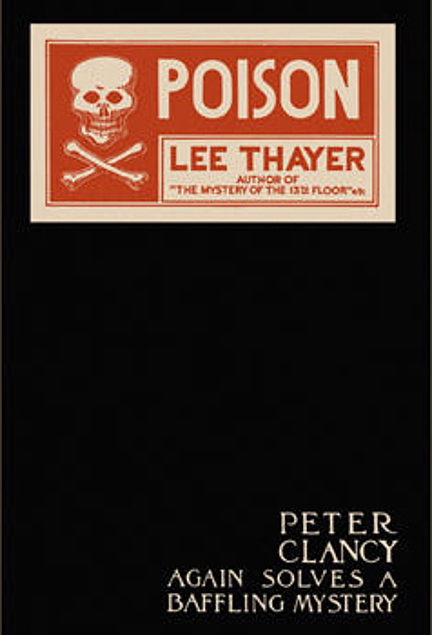
Poison by Lee Thayer (1926)
I was really hoping that by the time 2022 rolled around, this wouldn't be an appropriate quote...but here we are:
Ah, distinctly I remember it was in the bleak December;
And each separate dying ember wrought its ghost upon the floor.
Eagerly I wished the morrow;---vainly I had sought to borrow
From my books surcease of sorrow---sorrow for the lost Lenore---
For the rare and radiant maiden whom the angels name Lenore---
Nameless here for evermore...
*************************

*************************
Currently reading:
Poison by Lee Thayer (1926)
3lyzard
2022 reading
January:
1. Tom Cringle's Log by Michael Scott (1833)
2. The Heroine; or, Adventures Of A Fair Romance Reader by Eaton Stannard Barrett (1813)
3. And Now Tomorrow by Rachel Field (1942)
4. The Island Of Fu Manchu by Sax Rohmer (1941)
5. The Mystery Of The Fiery Eye by Robert Arthur (1967)
6. Jonathan Livingston Seagull by Richard Bach (1970)
7. Royal Escape by Georgette Heyer (1938)
8. The Gutenberg Murders by Gwen Bristow and Bruce Manning (1931)
9. The Box Office Murders by Freeman Wills Crofts (1929)
10. Wheels Within Wheels by Carolyn Wells (1923)
11. The Mystery Of The Burnt Cottage by Enid Blyton (1943)
12. Elsie At The World's Fair by Martha Finley (1894)
13. The Marquis Of Carabas by Elizabeth Brodnax (1991)
14. Hotel Bosphorus by Esmahan Aykol (2001)
15. Roseanna by Maj Sjöwall and Per Wahlöö (1965)
16. The Looking-Glass War by John le Carré (1965)
February:
17. The Song Of The Lark by Willa Cather (1915)
18. Glenarvon by Lady Caroline Lamb (1816)
19. Mr Midshipman Easy by Frederick Marrat (1836)
20. Elsie's Journey On Inland Waters by Martha Finley (1895)
21. The Teeth Of The Tiger by Maurice Leblanc (1914)
22. Castle Skull by John Dickson Carr (1931)
23. Dancing Death by Christopher Bush (1931)
24. The Girl In The Cellar by Patricia Wentworth (1961)
25. Fer-de-Lance by Rex Stout (1934)
26. Dangerous Cargo by Hulbert Footner (1934)
March:
27. The Perpetual Curate by Margaret Oliphant (1864)
28. The Tunnel Mystery by J. C. Lenehan (1929)
29. Elsie At Home by Martha Finley (1897)
30. My Lord John by Georgette Heyer (1974)
31. Centennial by James A. Michener (1974)
32. The Mystery Of The Silver Spider by Robert Arthur (1967)
33. Rally Round The Flag, Boys! by Max Shulman (1957)
34. A Man Could Stand Up by Ford Madox Ford (1926)
35. The Casino Murder Case by S. S. Van Dine (1934)
36. Sir John Magill's Last Journey by Freeman Wills Crofts (1930)
37. Rory O'More by Samuel Lover (1837)
38. The Puzzle Of The Pepper Tree by Stuart Palmer (1933)
April:
39. From Man To Man; or, Perhaps Only... by Olive Schreiner (1926)
40. The Red-Haired Girl by Carolyn Wells (1926)
41. Ragtime by E, L. Doctorow (1974)
42. Harrington by Maria Edgeworth (1817)
43. Elsie On the Hudson And Elsewhere by Martha Finley (1898)
44. The Crooked Furrow by Jeffery Farnol (1937)
45. Nemesis At Raynham Parva by J. J. Connington (1929)
46. The Lost Gallows by John Dickson Carr (1931)
47. The Grey Rat by Ottwell Binns (1931)
January:
1. Tom Cringle's Log by Michael Scott (1833)
2. The Heroine; or, Adventures Of A Fair Romance Reader by Eaton Stannard Barrett (1813)
3. And Now Tomorrow by Rachel Field (1942)
4. The Island Of Fu Manchu by Sax Rohmer (1941)
5. The Mystery Of The Fiery Eye by Robert Arthur (1967)
6. Jonathan Livingston Seagull by Richard Bach (1970)
7. Royal Escape by Georgette Heyer (1938)
8. The Gutenberg Murders by Gwen Bristow and Bruce Manning (1931)
9. The Box Office Murders by Freeman Wills Crofts (1929)
10. Wheels Within Wheels by Carolyn Wells (1923)
11. The Mystery Of The Burnt Cottage by Enid Blyton (1943)
12. Elsie At The World's Fair by Martha Finley (1894)
13. The Marquis Of Carabas by Elizabeth Brodnax (1991)
14. Hotel Bosphorus by Esmahan Aykol (2001)
15. Roseanna by Maj Sjöwall and Per Wahlöö (1965)
16. The Looking-Glass War by John le Carré (1965)
February:
17. The Song Of The Lark by Willa Cather (1915)
18. Glenarvon by Lady Caroline Lamb (1816)
19. Mr Midshipman Easy by Frederick Marrat (1836)
20. Elsie's Journey On Inland Waters by Martha Finley (1895)
21. The Teeth Of The Tiger by Maurice Leblanc (1914)
22. Castle Skull by John Dickson Carr (1931)
23. Dancing Death by Christopher Bush (1931)
24. The Girl In The Cellar by Patricia Wentworth (1961)
25. Fer-de-Lance by Rex Stout (1934)
26. Dangerous Cargo by Hulbert Footner (1934)
March:
27. The Perpetual Curate by Margaret Oliphant (1864)
28. The Tunnel Mystery by J. C. Lenehan (1929)
29. Elsie At Home by Martha Finley (1897)
30. My Lord John by Georgette Heyer (1974)
31. Centennial by James A. Michener (1974)
32. The Mystery Of The Silver Spider by Robert Arthur (1967)
33. Rally Round The Flag, Boys! by Max Shulman (1957)
34. A Man Could Stand Up by Ford Madox Ford (1926)
35. The Casino Murder Case by S. S. Van Dine (1934)
36. Sir John Magill's Last Journey by Freeman Wills Crofts (1930)
37. Rory O'More by Samuel Lover (1837)
38. The Puzzle Of The Pepper Tree by Stuart Palmer (1933)
April:
39. From Man To Man; or, Perhaps Only... by Olive Schreiner (1926)
40. The Red-Haired Girl by Carolyn Wells (1926)
41. Ragtime by E, L. Doctorow (1974)
42. Harrington by Maria Edgeworth (1817)
43. Elsie On the Hudson And Elsewhere by Martha Finley (1898)
44. The Crooked Furrow by Jeffery Farnol (1937)
45. Nemesis At Raynham Parva by J. J. Connington (1929)
46. The Lost Gallows by John Dickson Carr (1931)
47. The Grey Rat by Ottwell Binns (1931)
4lyzard
Books in transit:
To borrow:
Miss Mackenzie by Anthony Trollope {Fisher Library}
Nightmare Abbey by Thomas Love Peacock {Fisher Library}
Mosquitoes by William Faulkner {Fisher Library}
Possible requests:
Trinity by Leon Uris {Fisher storage}
Don't Stop The Carnival by Herman Wouk {Fisher storage}
The Crime Conductor by Philip MacDonald {JFR}
Le Port des Brumes by Georges Simenon {ILL}
On interlibrary loan / branch transfer / storage / stack / Rare Book request:
On loan:
*Ragtime by E. L. Doctorow (22/04/2022)
*The Casino Murder Case by S. S. Van Dine (12/05/2022)
A Murder Of Quality by John le Carré (12/05/2022)
Ripley's Game by Patricia Highsmith (12/05/2022)
The Man On The Balcony by Maj Sjöwall and Per Wahlöö (12/05/2022)
Baksheesh by Esmahan Aykol (12/05/2022)
Mr Fortune Objects by H. C. Bailey (13/05/2022)
Burglars In Bucks by G. D. H. and M. Cole (13/06/2022)
**Harrington by Maria Edgeworth (13/06/2022)
Incognita by William Congreve (13/06/2022)
*The Crooked Furrow by Jeffery Farnol (13/06/2022)
**The Perpetual Curate by Margaret Oliphant (13/06/2022)
*From Man To Man by Olive Schreiner (20/06/2022)
Blanche Among The Talented Tenth by Barbara Neely (20/06/2022)
The Harlem Cycle Vol. 1 by Chester Himes (20/06/2022)
Dead Man's Music by Christopher Bush (29/06/2022)
Maid In Waiting by John Galsworthy (29/06/2022)
Purchased and shipped:
To borrow:
Miss Mackenzie by Anthony Trollope {Fisher Library}
Nightmare Abbey by Thomas Love Peacock {Fisher Library}
Mosquitoes by William Faulkner {Fisher Library}
Possible requests:
Trinity by Leon Uris {Fisher storage}
Don't Stop The Carnival by Herman Wouk {Fisher storage}
The Crime Conductor by Philip MacDonald {JFR}
Le Port des Brumes by Georges Simenon {ILL}
On interlibrary loan / branch transfer / storage / stack / Rare Book request:
On loan:
*Ragtime by E. L. Doctorow (22/04/2022)
*The Casino Murder Case by S. S. Van Dine (12/05/2022)
A Murder Of Quality by John le Carré (12/05/2022)
Ripley's Game by Patricia Highsmith (12/05/2022)
The Man On The Balcony by Maj Sjöwall and Per Wahlöö (12/05/2022)
Baksheesh by Esmahan Aykol (12/05/2022)
Mr Fortune Objects by H. C. Bailey (13/05/2022)
Burglars In Bucks by G. D. H. and M. Cole (13/06/2022)
**Harrington by Maria Edgeworth (13/06/2022)
Incognita by William Congreve (13/06/2022)
*The Crooked Furrow by Jeffery Farnol (13/06/2022)
**The Perpetual Curate by Margaret Oliphant (13/06/2022)
*From Man To Man by Olive Schreiner (20/06/2022)
Blanche Among The Talented Tenth by Barbara Neely (20/06/2022)
The Harlem Cycle Vol. 1 by Chester Himes (20/06/2022)
Dead Man's Music by Christopher Bush (29/06/2022)
Maid In Waiting by John Galsworthy (29/06/2022)
Purchased and shipped:
5lyzard
Ongoing reading projects:
Blog reads:
Chronobibliography: Incognita; or, Love And Duty Reconciled by William Congreve
Authors In Depth:
- Adelaide; or, The Countercharm by Catherine Cuthbertson
- Shannondale (aka "The Three Beauties; or, Shannondale: A Novel") by E.D.E.N. Southworth
- Lady Audley's Secret / The White Phantom by Mary Elizabeth Braddon
- Anecdotes Of The Altamont Family by "Gabrielli"
- The Cottage by Margaret Minifie
- The Old Engagement by Julia Day
- The Abbess by Frances Trollope
Reading Roulette: Pique by Frances Notley / Our Mr Wrenn by Sinclair Lewis
Australian fiction: Alfred Dudley; or, The Australian Settlers by Sarah Porter
Gothic novel timeline: Anecdotes Of A Convent by Anonymous
Early crime fiction: The Mysteries Of London by G. W. M. Reynolds
Silver-fork novels: Sayings And Doings; or, Sketches From Life (First Series) by Theodore Hook
Related reading: Gains And Losses by Robert Lee Wollf / The Man Of Feeling by Henry Mackenzie / Le Loup Blanc by Paul Féval / Theresa Marchmont; or, The Maid Of Honour by Catherine Gore
Group reads:
COMPLETED: The Perpetual Curate by Margaret Oliphant {thread here}
Next: Miss Mackenzie by Anthony Trollope
General reading challenges:
America's best-selling novels (1895 - ????):
Next up: Trinity by Leon Uris
"The Three Investigators" (shared reads):
Next up: The Mystery Of The Screaming Clock by Robert Arthur
Virago chronological reading project:
Next up: Aurora Floyd by Mary Elizabeth Braddon / Miss Marjoribanks by Margaret Oliphant
The C.K. Shorter List of the Best 100 Novels:
Next up: Jack Brag by Theodore Hook
A Century Of Reading:
Next up: 1818 - Nightmare Abbey by Thomas Love Peacock
Mystery League publications:
Next up: The Mystery Of Villa Sineste by Walter Livingston
Banned In Boston!: (here)
Next up: Mosquitoes by William Faulkner
The evolution of detective fiction:
Next up: Clement Lorimer by Angus B. Reach
Random reading 1940 - 1969:
Next up: Don't Stop The Carnival by Herman Wouk
Potential decommission / re-shelving:
Next up: ????
Completed challenges:
- Georgette Heyer historical romances in chronological order
- Agatha Christie mysteries in chronological order
- Agatha Christie uncollected short stories
- Patricia Wentworth's Miss Silver series
- Georgette Heyer historical fiction
Possible future reading projects:
- Nobel Prize winners who won for fiction
- Daily Telegraph's 100 Best Novels, 1899
- James Tait Black Memorial Prize
- Berkeley "Books Of The Century"
- Collins White Circle Crime Club / Green Penguins
- Dell paperbacks
- "El Mundo" 100 best novels of the twentieth century
- 100 Best Books by American Women During the Past 100 Years, 1833-1933
- 50 Classics of Crime Fiction 1900–1950 (Jacques Barzun and Wendell Hertig Taylor)
- The Guardian's 100 Best Novels
- Life Magazine "The 100 Outstanding Books of 1924 - 1944" (Henry Seidel Canby)
- "40 Trashy Novels You Must Read Before You Die" (Flavorwire)
- best-novel lists in Wikipedia article on The Grapes Of Wrath
- Pandora 'Mothers Of The Novel'
- Newark Library list (here)
- "The Story Of Classic Crime In 100 Books" (here)
- Dean's Classics series
- "Fifty Best Australian Novels" (here)
- "The Top 100 Crime Novels Of All Time" (here)
- Haycraft Queen Cornerstones (here)
Blog reads:
Chronobibliography: Incognita; or, Love And Duty Reconciled by William Congreve
Authors In Depth:
- Adelaide; or, The Countercharm by Catherine Cuthbertson
- Shannondale (aka "The Three Beauties; or, Shannondale: A Novel") by E.D.E.N. Southworth
- Lady Audley's Secret / The White Phantom by Mary Elizabeth Braddon
- Anecdotes Of The Altamont Family by "Gabrielli"
- The Cottage by Margaret Minifie
- The Old Engagement by Julia Day
- The Abbess by Frances Trollope
Reading Roulette: Pique by Frances Notley / Our Mr Wrenn by Sinclair Lewis
Australian fiction: Alfred Dudley; or, The Australian Settlers by Sarah Porter
Gothic novel timeline: Anecdotes Of A Convent by Anonymous
Early crime fiction: The Mysteries Of London by G. W. M. Reynolds
Silver-fork novels: Sayings And Doings; or, Sketches From Life (First Series) by Theodore Hook
Related reading: Gains And Losses by Robert Lee Wollf / The Man Of Feeling by Henry Mackenzie / Le Loup Blanc by Paul Féval / Theresa Marchmont; or, The Maid Of Honour by Catherine Gore
Group reads:
COMPLETED: The Perpetual Curate by Margaret Oliphant {thread here}
Next: Miss Mackenzie by Anthony Trollope
General reading challenges:
America's best-selling novels (1895 - ????):
Next up: Trinity by Leon Uris
"The Three Investigators" (shared reads):
Next up: The Mystery Of The Screaming Clock by Robert Arthur
Virago chronological reading project:
Next up: Aurora Floyd by Mary Elizabeth Braddon / Miss Marjoribanks by Margaret Oliphant
The C.K. Shorter List of the Best 100 Novels:
Next up: Jack Brag by Theodore Hook
A Century Of Reading:
Next up: 1818 - Nightmare Abbey by Thomas Love Peacock
Mystery League publications:
Next up: The Mystery Of Villa Sineste by Walter Livingston
Banned In Boston!: (here)
Next up: Mosquitoes by William Faulkner
The evolution of detective fiction:
Next up: Clement Lorimer by Angus B. Reach
Random reading 1940 - 1969:
Next up: Don't Stop The Carnival by Herman Wouk
Potential decommission / re-shelving:
Next up: ????
Completed challenges:
- Georgette Heyer historical romances in chronological order
- Agatha Christie mysteries in chronological order
- Agatha Christie uncollected short stories
- Patricia Wentworth's Miss Silver series
- Georgette Heyer historical fiction
Possible future reading projects:
- Nobel Prize winners who won for fiction
- Daily Telegraph's 100 Best Novels, 1899
- James Tait Black Memorial Prize
- Berkeley "Books Of The Century"
- Collins White Circle Crime Club / Green Penguins
- Dell paperbacks
- "El Mundo" 100 best novels of the twentieth century
- 100 Best Books by American Women During the Past 100 Years, 1833-1933
- 50 Classics of Crime Fiction 1900–1950 (Jacques Barzun and Wendell Hertig Taylor)
- The Guardian's 100 Best Novels
- Life Magazine "The 100 Outstanding Books of 1924 - 1944" (Henry Seidel Canby)
- "40 Trashy Novels You Must Read Before You Die" (Flavorwire)
- best-novel lists in Wikipedia article on The Grapes Of Wrath
- Pandora 'Mothers Of The Novel'
- Newark Library list (here)
- "The Story Of Classic Crime In 100 Books" (here)
- Dean's Classics series
- "Fifty Best Australian Novels" (here)
- "The Top 100 Crime Novels Of All Time" (here)
- Haycraft Queen Cornerstones (here)
6lyzard
TBR notes:
Currently 'missing' series works:
Dead Men At The Folly by John Rhode (Dr Priestley #13) {Rare Books}
The Robthorne Mystery by John Rhode (Dr Priestley #17) {Rare Books / State Library NSW, held / Internet Archive / Kindle}
Poison For One by John Rhode (Dr Priestley #18) {Rare Books / State Library NSW, held}
Shot At Dawn by John Rhode (Dr Priestley #19) {Rare Books}
The Corpse In The Car by John Rhode (Dr Priestley #20) {CARM}
Hendon's First Case by John Rhode (Dr Priestley #21) {Rare Books}
Mystery At Olympia (aka "Murder At The Motor Show") (Dr Priestley #22) {Kindle / State Library NSW, held / Internet Archive}
In Face Of The Verdict by John Rhode (Dr Priestley #24) {Rare Books / State Library NSW, held / Internet Archive}
The White-Faced Man (aka "The Praying Monkey") by Gavin Holt (Luther Bastion #2) {State Library NSW, held}
Secret Judges by Francis D. Grierson (Sims and Wells #2) {Rare Books}
The Platinum Cat by Miles Burton (Desmond Merrion #17 / Inspector Arnold #18) {Rare Books}
The Double-Thirteen Mystery by Anthony Wynne (Dr Eustace Hailey #2) {Rare Books}
The Black Death by Moray Dalton {CARM}
1931 / 1932 available reading:
Dead Man's Music by Christopher Bush {Kindle / Fisher Library}
The Crime Conductor by Philip MacDonald {JFR}
Snowbird by Ottwell Binns {serialised}
Gay Go Up by Anne Hepple {online; possible abridged? / Mitchell Library}
The Mystery Mission And Other Stories by Sydney Horler {Internet Archive}
Pitiful Dust by Vernon Knowles {Mitchell Library}
The Brink (aka "The Swaying Rock") by Arthur J. Rees {Mitchell Library}
The Solange Stories by F. Tennyson Jesse {JFR / Rare Books}
The Whisperer by J. M. Walsh {online; possibly abridged? / Mitchell Lbrary}
Captain Nemesis by F. Van Wyck Mason {JFR}
The Vesper Service Murders by F. Van Wyck Mason {Kindle}
The Vagrant Heart by Deirdre O'Brien {JFR}
The Black Joss by John Gordon Brandon {Mitchell Library}
Jinks by Oliver Sandys {JFR}
About The Murder Of A Night Club Lady by Anthony Abbot {serialised}
This Way To Happiness (aka "Janice") by Maysie Greig {Mitchell Library}
Storms And Tea-Cups by Cecily Wilhelmine Sidgwick (Mrs Alfred Sidgwick) {JFR}
Pawns & Kings (aka "Pawns And Kings") by Seamark (Austin J. Small) {JFR}
The Agent Outside by Patrick Wynnton {JFR}
The Top Step by Nelle Scanlan {Mitchell Library}
Murder In Wax by Peter Baron (akaLeonard Worswick Clyde) {HathiTrust}
The Dressing Room Murder by J. S. Fletcher {Kindle / Rare Books}
Poison Case No. 10 by Louis Cornell {HathiTrust}
The Man Who Was Dead by W. Stanley Sykes {HathiTrust}
The Jackanapes Jacket (aka "Murder At Hampton Court") by Edith Murray Keate {Kindle}
The Silecroft Case by J. C. Lenehan {Kindle}
****
The Meriwether Mystery by Kay Cleaver Strahan {Kindle / HathiTrust}
(441)
The Matilda Hunter Murder by Harry Stephen Keeler {Kindle}
Storm by Charles Rodda {National Library, ILL?}
The Hangman's Guests by Stuart Martin {NLA / CARM}
The Lap Of Luxury by Berta Ruck {NLA}
NB: Rest of 1931 listed on the Wiki
Series back-reading:
All At Sea by Carolyn Wells {Rare Books}
Invisible Death by Brian Flynn {Kindle} / The Creeping Jenny Mystery by Brian Flynn {Kindle}
The Net Around Joan Ingilby by A. Fielding {Rare Books}
Burglars In Bucks by George and Margaret Cole {Fisher Library}
Poison by Lee Thayer {AbeBooks / Amazon}
A Family That Was by Ernest Raymond {State Library NSW, JFR}
The Cancelled Score Mystery by Gret Lane {Kindle}
Inspector Frost And Lady Brassingham by H. Maynard Smith {Kindle}
Last Post by Ford Madox Ford {fadedpage.com}
Jalna by Mazo de la Roche {State Library NSW, JFR / ILL}
Completist reading:
Thieves' Nights by Harry Stephen Keeler (#5) {Rare Books}
The Forsaken Inn by Anna Katharine Green (#8) {Project Gutenberg}
The After House by Mary Roberts Rinehart (#8) {Project Gutenberg}
The White Cockatoo by Mignon Eberhart {Rare Books}
Unavailable / expensive:
The Amber Junk (aka The Riddle Of The Amber Ship) by Hazel Phillips Hanshew (Cleek #9)
The Hawkmoor Mystery by W. H. Lane Crauford
The Double Thumb by Francis Grierson (Sims and Wells #3)
The Shadow Of Evil by Charles J. Dutton (Harley Manners #2)
The Seventh Passenger by Alice MacGowan and Perry Newberry (Jerry Boyne #4)
The Hanging Woman by John Rhode (Dr Priestley #11)
The Park Lane Mystery by Louis Tracy (Winter and Furneaux # 6)
Currently 'missing' series works:
Dead Men At The Folly by John Rhode (Dr Priestley #13) {Rare Books}
The Robthorne Mystery by John Rhode (Dr Priestley #17) {Rare Books / State Library NSW, held / Internet Archive / Kindle}
Poison For One by John Rhode (Dr Priestley #18) {Rare Books / State Library NSW, held}
Shot At Dawn by John Rhode (Dr Priestley #19) {Rare Books}
The Corpse In The Car by John Rhode (Dr Priestley #20) {CARM}
Hendon's First Case by John Rhode (Dr Priestley #21) {Rare Books}
Mystery At Olympia (aka "Murder At The Motor Show") (Dr Priestley #22) {Kindle / State Library NSW, held / Internet Archive}
In Face Of The Verdict by John Rhode (Dr Priestley #24) {Rare Books / State Library NSW, held / Internet Archive}
The White-Faced Man (aka "The Praying Monkey") by Gavin Holt (Luther Bastion #2) {State Library NSW, held}
Secret Judges by Francis D. Grierson (Sims and Wells #2) {Rare Books}
The Platinum Cat by Miles Burton (Desmond Merrion #17 / Inspector Arnold #18) {Rare Books}
The Double-Thirteen Mystery by Anthony Wynne (Dr Eustace Hailey #2) {Rare Books}
The Black Death by Moray Dalton {CARM}
1931 / 1932 available reading:
Dead Man's Music by Christopher Bush {Kindle / Fisher Library}
The Crime Conductor by Philip MacDonald {JFR}
Snowbird by Ottwell Binns {serialised}
Gay Go Up by Anne Hepple {online; possible abridged? / Mitchell Library}
The Mystery Mission And Other Stories by Sydney Horler {Internet Archive}
Pitiful Dust by Vernon Knowles {Mitchell Library}
The Brink (aka "The Swaying Rock") by Arthur J. Rees {Mitchell Library}
The Solange Stories by F. Tennyson Jesse {JFR / Rare Books}
The Whisperer by J. M. Walsh {online; possibly abridged? / Mitchell Lbrary}
Captain Nemesis by F. Van Wyck Mason {JFR}
The Vesper Service Murders by F. Van Wyck Mason {Kindle}
The Vagrant Heart by Deirdre O'Brien {JFR}
The Black Joss by John Gordon Brandon {Mitchell Library}
Jinks by Oliver Sandys {JFR}
About The Murder Of A Night Club Lady by Anthony Abbot {serialised}
This Way To Happiness (aka "Janice") by Maysie Greig {Mitchell Library}
Storms And Tea-Cups by Cecily Wilhelmine Sidgwick (Mrs Alfred Sidgwick) {JFR}
Pawns & Kings (aka "Pawns And Kings") by Seamark (Austin J. Small) {JFR}
The Agent Outside by Patrick Wynnton {JFR}
The Top Step by Nelle Scanlan {Mitchell Library}
Murder In Wax by Peter Baron (akaLeonard Worswick Clyde) {HathiTrust}
The Dressing Room Murder by J. S. Fletcher {Kindle / Rare Books}
Poison Case No. 10 by Louis Cornell {HathiTrust}
The Man Who Was Dead by W. Stanley Sykes {HathiTrust}
The Jackanapes Jacket (aka "Murder At Hampton Court") by Edith Murray Keate {Kindle}
The Silecroft Case by J. C. Lenehan {Kindle}
****
The Meriwether Mystery by Kay Cleaver Strahan {Kindle / HathiTrust}
(441)
The Matilda Hunter Murder by Harry Stephen Keeler {Kindle}
Storm by Charles Rodda {National Library, ILL?}
The Hangman's Guests by Stuart Martin {NLA / CARM}
The Lap Of Luxury by Berta Ruck {NLA}
NB: Rest of 1931 listed on the Wiki
Series back-reading:
All At Sea by Carolyn Wells {Rare Books}
Invisible Death by Brian Flynn {Kindle} / The Creeping Jenny Mystery by Brian Flynn {Kindle}
The Net Around Joan Ingilby by A. Fielding {Rare Books}
Burglars In Bucks by George and Margaret Cole {Fisher Library}
Poison by Lee Thayer {AbeBooks / Amazon}
A Family That Was by Ernest Raymond {State Library NSW, JFR}
The Cancelled Score Mystery by Gret Lane {Kindle}
Inspector Frost And Lady Brassingham by H. Maynard Smith {Kindle}
Last Post by Ford Madox Ford {fadedpage.com}
Jalna by Mazo de la Roche {State Library NSW, JFR / ILL}
Completist reading:
Thieves' Nights by Harry Stephen Keeler (#5) {Rare Books}
The Forsaken Inn by Anna Katharine Green (#8) {Project Gutenberg}
The After House by Mary Roberts Rinehart (#8) {Project Gutenberg}
The White Cockatoo by Mignon Eberhart {Rare Books}
Unavailable / expensive:
The Amber Junk (aka The Riddle Of The Amber Ship) by Hazel Phillips Hanshew (Cleek #9)
The Hawkmoor Mystery by W. H. Lane Crauford
The Double Thumb by Francis Grierson (Sims and Wells #3)
The Shadow Of Evil by Charles J. Dutton (Harley Manners #2)
The Seventh Passenger by Alice MacGowan and Perry Newberry (Jerry Boyne #4)
The Hanging Woman by John Rhode (Dr Priestley #11)
The Park Lane Mystery by Louis Tracy (Winter and Furneaux # 6)
7lyzard
A Century (And A Bit) Of Reading:
At least one book a year from 1800 - 1900!
1800: Juliania; or, The Affectionate Sisters by Elizabeth Sandham
1801: Belinda by Maria Edgeworth
1802: The Infidel Father by Jane West
1803: Thaddeus Of Warsaw by Jane Porter
1804: The Lake Of Killarney by Anna Maria Porter
1805: The Impenetrable Secret, Find It Out! by Francis Lathom
1806: The Wild Irish Girl by Sydney Owenson
1807: Corinne; ou, l'Italie by Madame de Staël
1808: The Marquise Of O. by Heinrich Von Kleist
1809: The Scottish Chiefs by Jane Porter
1810: Forest Of Montalbano by Catherine Cuthbertson / Zastrozzi by Percy Bysshe Shelley / St. Irvyne; or, The Rosicrucian by Percy Bysshe Shelley
1811: Self-Control by Mary Brunton
1812: The Absentee by Maria Edgeworth
1813: The Heroine; or, Adventures Of A Fair Romance Reader by Eaton Stannard Barrett
1814: The Wanderer; or, Female Difficulties by Frances Burney
1815: Headlong Hall by Thomas Love Peacock
1816: Glenarvon by Lady Caroline Lamb
1817: Harrington by Maria Edgeworth
1820: The Sketch Book Of Geoffrey Crayon, Gent. by Washington Irving
1821: The Ayrshire Legatees; or, The Pringle Family by John Galt / Valerius: A Roman Story by J. G. Lockhart / Kenilworth by Walter Scott
1822: Bracebridge Hall; or, The Humorists by Washington Irving
1823: The Two Broken Hearts by Catherine Gore
1824: The Adventures Of Hajji Baba Of Ispahan by James Justinian Morier
1826: Lichtenstein by Wilhelm Hauff / The Last Of The Mohicans by James Fenimore Cooper
1827: The Epicurean by Thomas Moore / The Betrothed by Alessandro Manzoni
1828: The Life Of Mansie Wauch, Tailor In Dalkeith by David Moir
1829: Wilhelm Meister's Travels by Johann Goethe / The Collegians by Gerald Griffin / Louisa Egerton; or, Castle Herbert by Mary Leman Grimstone / Richelieu: A Tale Of France by G. P. R. James
1830: Alfred Dudley; or, The Australian Settlers by Sarah Porter
1832: The Refugee In America by Frances Trollope
1833: Tom Cringle's Log by Michael Scott
1836: Mr Midshipman Easy by Frederick Marrat / The Tree And Its Fruits; or, Narratives From Real Life by Phoebe Hinsdale Brown
1837: Rory O'More by Samuel Lover
1845: Zoe: The History Of Two Lives by Geraldine Jewsbury / The Mysteries Of London (Volume I) by G. W. M. Reynolds
1846: The Mysteries Of London (Volume II) by G. W. M. Reynolds
1847: Agnes Grey by Anne Brontë / The Macdermots Of Ballycloran by Anthony Trollope / The Mysteries Of London: Volume III by G. W. M. Reynolds
1848: The Kellys And The O'Kellys by Anthony Trollope / The Mysteries Of London: Volume IV by G. W. M. Reynolds
1850: Pique by Frances Notley
1851: The Mother-In-Law; or, The Isle Of Rays by E.D.E.N. Southworth
1856: Recollections Of A Detective Police-Officer by "Waters"
1857: The Three Clerks by Anthony Trollope
1859: The Semi-Detached House by Emily Eden / The Bertrams by Anthony Trollope
1860: The Semi-Attached Couple by Emily Eden / Castle Richmond by Anthony Trollope
1861: The Executor by Margaret Oliphant / The Rector by Margaret Oliphant
1862: Orley Farm by Anthony Trollope / The Struggles Of Brown, Jones, And Robinson by Anthony Trollope
1863: The Doctor's Family by Margaret Oliphant / Marian Grey; or, The Heiress Of Redstone Hall by Mary Jane Holmes / Salem Chapel by Margaret Oliphant
1869: He Knew He Was Right by Anthony Trollope
1873: Had You Been In His Place by Lizzie Bates
1874: Chaste As Ice, Pure As Snow by Charlotte Despard
1877: Elsie's Children by Martha Finley
1880: The Duke's Children: First Complete Edition by Anthony Trollope / Elsie's Widowhood by Martha Finley
1881: Ghosts by Henrik Ibsen / The Beautiful Wretch by William Black / The Autobiography Of Mark Rutherford by William Hale White
1882: Grandmother Elsie by Martha Finley
1883: Treasure Island by Robert Louis Stevenson / Elsie's New Relations by Martha Finley / X Y Z: A Detective Story by Anna Katharine Green
1884: Elsie At Nantucket by Martha Finley
1885: The Two Elsies by Martha Finley / Two Broken Hearts by Robert R. Hoes
1886: The Mill Mystery by Anna Katharine Green / Elsie's Kith And Kin by Martha Finley
1887: Elsie's Friends At Woodburn by Martha Finley
1888: Christmas With Grandma Elsie by Martha Finley
1889: Under False Pretences by Adeline Sergeant / Elsie And The Raymonds by Martha Finley
1890: Elsie Yachting With The Raymonds by Martha Finley
1891: Elsie's Vacation And After Events by Martha Finley
1892: The Yellow Wallpaper by Charlotte Perkins Gilman / Elsie At Viamede by Martha Finley / Blood Royal by Grant Allen
1893: Elsie At Ion by Martha Finley
1894: Martin Hewitt, Investigator by Arthur Morrison / The Great God Pan by Arthur Machen / Elsie At The World's Fair by Martha Finley
1895: Chronicles Of Martin Hewitt by Arthur Morrison / Elsie's Journey On Inland Waters by Martha Finley
1896: The Island Of Dr Moreau by H. G. Wells / Adventures Of Martin Hewitt by Arthur Morrison
1897: Penelope's Progress by Kate Douglas Wiggin
1898: A Man From The North by Arnold Bennett / The Lust Of Hate by Guy Newell Boothby / Elsie On The Hudson And Elsewhere by Martha Finley
1899: Agatha Webb by Anna Katharine Green / Dr Nikola's Experiment by Guy Newell Boothby
1900: The Circular Study by Anna Katharine Green
At least one book a year from 1800 - 1900!
1800: Juliania; or, The Affectionate Sisters by Elizabeth Sandham
1801: Belinda by Maria Edgeworth
1802: The Infidel Father by Jane West
1803: Thaddeus Of Warsaw by Jane Porter
1804: The Lake Of Killarney by Anna Maria Porter
1805: The Impenetrable Secret, Find It Out! by Francis Lathom
1806: The Wild Irish Girl by Sydney Owenson
1807: Corinne; ou, l'Italie by Madame de Staël
1808: The Marquise Of O. by Heinrich Von Kleist
1809: The Scottish Chiefs by Jane Porter
1810: Forest Of Montalbano by Catherine Cuthbertson / Zastrozzi by Percy Bysshe Shelley / St. Irvyne; or, The Rosicrucian by Percy Bysshe Shelley
1811: Self-Control by Mary Brunton
1812: The Absentee by Maria Edgeworth
1813: The Heroine; or, Adventures Of A Fair Romance Reader by Eaton Stannard Barrett
1814: The Wanderer; or, Female Difficulties by Frances Burney
1815: Headlong Hall by Thomas Love Peacock
1816: Glenarvon by Lady Caroline Lamb
1817: Harrington by Maria Edgeworth
1820: The Sketch Book Of Geoffrey Crayon, Gent. by Washington Irving
1821: The Ayrshire Legatees; or, The Pringle Family by John Galt / Valerius: A Roman Story by J. G. Lockhart / Kenilworth by Walter Scott
1822: Bracebridge Hall; or, The Humorists by Washington Irving
1823: The Two Broken Hearts by Catherine Gore
1824: The Adventures Of Hajji Baba Of Ispahan by James Justinian Morier
1826: Lichtenstein by Wilhelm Hauff / The Last Of The Mohicans by James Fenimore Cooper
1827: The Epicurean by Thomas Moore / The Betrothed by Alessandro Manzoni
1828: The Life Of Mansie Wauch, Tailor In Dalkeith by David Moir
1829: Wilhelm Meister's Travels by Johann Goethe / The Collegians by Gerald Griffin / Louisa Egerton; or, Castle Herbert by Mary Leman Grimstone / Richelieu: A Tale Of France by G. P. R. James
1830: Alfred Dudley; or, The Australian Settlers by Sarah Porter
1832: The Refugee In America by Frances Trollope
1833: Tom Cringle's Log by Michael Scott
1836: Mr Midshipman Easy by Frederick Marrat / The Tree And Its Fruits; or, Narratives From Real Life by Phoebe Hinsdale Brown
1837: Rory O'More by Samuel Lover
1845: Zoe: The History Of Two Lives by Geraldine Jewsbury / The Mysteries Of London (Volume I) by G. W. M. Reynolds
1846: The Mysteries Of London (Volume II) by G. W. M. Reynolds
1847: Agnes Grey by Anne Brontë / The Macdermots Of Ballycloran by Anthony Trollope / The Mysteries Of London: Volume III by G. W. M. Reynolds
1848: The Kellys And The O'Kellys by Anthony Trollope / The Mysteries Of London: Volume IV by G. W. M. Reynolds
1850: Pique by Frances Notley
1851: The Mother-In-Law; or, The Isle Of Rays by E.D.E.N. Southworth
1856: Recollections Of A Detective Police-Officer by "Waters"
1857: The Three Clerks by Anthony Trollope
1859: The Semi-Detached House by Emily Eden / The Bertrams by Anthony Trollope
1860: The Semi-Attached Couple by Emily Eden / Castle Richmond by Anthony Trollope
1861: The Executor by Margaret Oliphant / The Rector by Margaret Oliphant
1862: Orley Farm by Anthony Trollope / The Struggles Of Brown, Jones, And Robinson by Anthony Trollope
1863: The Doctor's Family by Margaret Oliphant / Marian Grey; or, The Heiress Of Redstone Hall by Mary Jane Holmes / Salem Chapel by Margaret Oliphant
1869: He Knew He Was Right by Anthony Trollope
1873: Had You Been In His Place by Lizzie Bates
1874: Chaste As Ice, Pure As Snow by Charlotte Despard
1877: Elsie's Children by Martha Finley
1880: The Duke's Children: First Complete Edition by Anthony Trollope / Elsie's Widowhood by Martha Finley
1881: Ghosts by Henrik Ibsen / The Beautiful Wretch by William Black / The Autobiography Of Mark Rutherford by William Hale White
1882: Grandmother Elsie by Martha Finley
1883: Treasure Island by Robert Louis Stevenson / Elsie's New Relations by Martha Finley / X Y Z: A Detective Story by Anna Katharine Green
1884: Elsie At Nantucket by Martha Finley
1885: The Two Elsies by Martha Finley / Two Broken Hearts by Robert R. Hoes
1886: The Mill Mystery by Anna Katharine Green / Elsie's Kith And Kin by Martha Finley
1887: Elsie's Friends At Woodburn by Martha Finley
1888: Christmas With Grandma Elsie by Martha Finley
1889: Under False Pretences by Adeline Sergeant / Elsie And The Raymonds by Martha Finley
1890: Elsie Yachting With The Raymonds by Martha Finley
1891: Elsie's Vacation And After Events by Martha Finley
1892: The Yellow Wallpaper by Charlotte Perkins Gilman / Elsie At Viamede by Martha Finley / Blood Royal by Grant Allen
1893: Elsie At Ion by Martha Finley
1894: Martin Hewitt, Investigator by Arthur Morrison / The Great God Pan by Arthur Machen / Elsie At The World's Fair by Martha Finley
1895: Chronicles Of Martin Hewitt by Arthur Morrison / Elsie's Journey On Inland Waters by Martha Finley
1896: The Island Of Dr Moreau by H. G. Wells / Adventures Of Martin Hewitt by Arthur Morrison
1897: Penelope's Progress by Kate Douglas Wiggin
1898: A Man From The North by Arnold Bennett / The Lust Of Hate by Guy Newell Boothby / Elsie On The Hudson And Elsewhere by Martha Finley
1899: Agatha Webb by Anna Katharine Green / Dr Nikola's Experiment by Guy Newell Boothby
1900: The Circular Study by Anna Katharine Green
8lyzard
Timeline of detective fiction:
An examination of the roots of modern crime and mystery fiction:
Pre-history:
Things As They Are; or, The Adventures Of Caleb Williams by William Godwin (1794)
Mademoiselle de Scudéri by E. T. A. Hoffmann (1819); Tales Of Hoffmann (1982)
Richmond: Scenes In The Life Of A Bow Street Officer by Anonymous (1827)
Memoirs Of Vidocq by Eugene Francois Vidocq (1828)
Le Pere Goriot by Honore de Balzac (1835)
Passages In The Secret History Of An Irish Countess by J. Sheridan Le Fanu (1838); The Purcell Papers (1880)
The Murders In The Rue Morgue: The Dupin Tales by Edgar Allan Poe (1841, 1842, 1845)
Serials:
The Mysteries Of Paris by Eugene Sue (1842 - 1843)
The Mysteries Of London by Paul Feval (1844)
The Mysteries Of London by George Reynolds (1844 - 1848)
-The Mysteries Of London: Volume I
-The Mysteries Of London: Volume II
- The Mysteries Of London: Volume III
- The Mysteries Of London: Volume IV
The Mysteries Of The Court Of London by George Reynolds (1848 - 1856)
John Devil by Paul Feval (1861)
Early detective novels:
Recollections Of A Detective Police-Officer by "Waters" (William Russell) (1856)
The Widow Lerouge by Emile Gaboriau (1866)
Under Lock And Key by T. W. Speight (1869)
Checkmate by J. Sheridan LeFanu (1871)
Is He The Man? by William Clark Russell (1876)
Devlin The Barber by B. J. Farjeon (1888)
Mr Meeson's Will by H. Rider Haggard (1888)
The Mystery Of A Hansom Cab by Fergus Hume (1889)
The Queen Anne's Gate Mystery by Richard Arkwright (1889)
The Ivory Queen by Norman Hurst (1889) (Check Julius H. Hurst 1899)
The Big Bow Mystery by Israel Zangwill (1892)
Female detectives:
The Diary Of Anne Rodway by Wilkie Collins (1856)
Ruth The Betrayer; or, The Female Spy by Edward Ellis (1862-1863)
The Female Detective by Andrew Forrester (1864)
Revelations Of A Lady Detective by William Stephens Hayward (1864)
The Law And The Lady by Wilkie Collins (1875)
Madeline Payne; or, The Detective's Daughter by Lawrence L. Lynch (Emma Murdoch Van Deventer) (1884)
Mr Bazalgette's Agent by Leonard Merrick (1888)
Moina; or, Against The Mighty by Lawrence L. Lynch (Emma Murdoch Van Deventer) (sequel to Madeline Payne?) (1891)
The Experiences Of Loveday Brooke, Lady Detective by Catherine Louisa Pirkis (1893)
When The Sea Gives Up Its Dead by Elizaberth Burgoyne Corbett (Mrs George Corbett)
Dorcas Dene, Detective by George Sims (1897)
- Amelia Butterworth series by Anna Katharine Grant (1897 - 1900)
Hagar Of The Pawn-Shop by Fergus Hume (1898)
The Adventures Of A Lady Pearl-Broker by Beatrice Heron-Maxwell (1899)
Miss Cayley's Adventures by Grant Allan (1899)
Hilda Wade by Grant Allan (1900)
Dora Myrl, The Lady Detective by M. McDonnel Bodkin (1900)
The Investigators by J. S. Fletcher (1902)
Lady Molly Of Scotland Yard by Baroness Orczy (1910)
Constance Dunlap, Woman Detective by Arthur B. Reeve (1913)
Miss Madelyn Mack, Detective by Hugh C. Weir (1914)
Related mainstream works:
Adventures Of Susan Hopley by Catherine Crowe (1841)
Men And Women; or, Manorial Rights by Catherine Crowe (1843)
Hargrave by Frances Trollope (1843)
Clement Lorimer by Angus Reach (1849)
Clara Vaughan by R. D. Blackmore (1864)
True crime:
Clues: or, Leaves from a Chief Constable's Note Book by Sir William Henderson (1889)
Dreadful Deeds And Awful Murders by Joan Lock
An examination of the roots of modern crime and mystery fiction:
Pre-history:
Serials:
The Mysteries Of London by George Reynolds (1844 - 1848)
-
-
- The Mysteries Of London: Volume III
- The Mysteries Of London: Volume IV
The Mysteries Of The Court Of London by George Reynolds (1848 - 1856)
John Devil by Paul Feval (1861)
Early detective novels:
Recollections Of A Detective Police-Officer by "Waters" (William Russell) (1856)
The Widow Lerouge by Emile Gaboriau (1866)
Under Lock And Key by T. W. Speight (1869)
Checkmate by J. Sheridan LeFanu (1871)
Is He The Man? by William Clark Russell (1876)
Devlin The Barber by B. J. Farjeon (1888)
Mr Meeson's Will by H. Rider Haggard (1888)
The Mystery Of A Hansom Cab by Fergus Hume (1889)
The Queen Anne's Gate Mystery by Richard Arkwright (1889)
The Ivory Queen by Norman Hurst (1889) (Check Julius H. Hurst 1899)
The Big Bow Mystery by Israel Zangwill (1892)
Female detectives:
The Diary Of Anne Rodway by Wilkie Collins (1856)
Ruth The Betrayer; or, The Female Spy by Edward Ellis (1862-1863)
The Female Detective by Andrew Forrester (1864)
Revelations Of A Lady Detective by William Stephens Hayward (1864)
Madeline Payne; or, The Detective's Daughter by Lawrence L. Lynch (Emma Murdoch Van Deventer) (1884)
Mr Bazalgette's Agent by Leonard Merrick (1888)
Moina; or, Against The Mighty by Lawrence L. Lynch (Emma Murdoch Van Deventer) (sequel to Madeline Payne?) (1891)
The Experiences Of Loveday Brooke, Lady Detective by Catherine Louisa Pirkis (1893)
When The Sea Gives Up Its Dead by Elizaberth Burgoyne Corbett (Mrs George Corbett)
Dorcas Dene, Detective by George Sims (1897)
Hagar Of The Pawn-Shop by Fergus Hume (1898)
The Adventures Of A Lady Pearl-Broker by Beatrice Heron-Maxwell (1899)
Miss Cayley's Adventures by Grant Allan (1899)
Hilda Wade by Grant Allan (1900)
Dora Myrl, The Lady Detective by M. McDonnel Bodkin (1900)
The Investigators by J. S. Fletcher (1902)
Lady Molly Of Scotland Yard by Baroness Orczy (1910)
Constance Dunlap, Woman Detective by Arthur B. Reeve (1913)
Miss Madelyn Mack, Detective by Hugh C. Weir (1914)
Related mainstream works:
Clement Lorimer by Angus Reach (1849)
Clara Vaughan by R. D. Blackmore (1864)
True crime:
Clues: or, Leaves from a Chief Constable's Note Book by Sir William Henderson (1889)
9lyzard
Series and sequels, 1866 - 1919:
(1866 - 1876) **Emile Gaboriau - Monsieur Lecoq - The Widow Lerouge (1/6) {ManyBooks}
(1878 - 1917) **Anna Katharine Green - Ebenezer Gryce - The Mystery Of The Hasty Arrow (13/13)
(1896 - 1909) **Melville Davisson Post - Randolph Mason - The Corrector Of Destinies (3/3)
(1894 - 1903) **Arthur Morrison - Martin Hewitt - The Red Triangle (4/4)
(1895 - 1901) **Guy Newell Boothby - Dr Nikola - Farewell, Nikola (5/5)
(1897 - 1900) **Anna Katharine Green - Amelia Butterworth - The Circular Study (3/3)
(1899 - 1917) **Anna Katharine Green - Caleb Sweetwater - The Mystery Of The Hasty Arrow (7/7)
(1899 - 1909) **E. W. Hornung - Raffles - Mr Justice Raffles (4/4)
(1900 - 1974) Ernest Bramah - Kai Lung - Kai Lung: Six / Kai Lung Raises His Voice (7/7)
(1903 - 1904) **Louis Tracy - Reginald Brett - The Albert Gate Mystery (2/2)
(1905 - 1925) **Baroness Orczy - The Old Man In The Corner - Unravelled Knots (3/3)}
(1905 - 1928) **Edgar Wallace - The Just Men - Again The Three Just Men (6/6)
(1907 - 1942) R. Austin Freeman - Dr John Thorndyke - The Jacob Street Mystery (26/26)
(1907 - 1941) *Maurice Leblanc - Arsene Lupin - The Golden Triangle (8/25) {Project Gutenberg}
(1909 - 1942) *Carolyn Wells - Fleming Stone - All At Sea (22/49) {Rare Books}
(1909 - 1929) *J. S. Fletcher - Inspector Skarratt - Marchester Royal (1/3) {Kindle}
(1910 - 1936) *Arthur B. Reeve - Craig Kennedy - The Film Mystery (14/24) {Project Gutenberg}
(1910 - 1946) A. E. W. Mason - Inspector Hanaud - The House In Lordship Lane (7/7)
(1910 - 1917) Edgar Wallace - Inspector Smith - Kate Plus Ten (3/3)
(1910 - 1930) **Edgar Wallace - Inspector Elk - The Twister (4/6) {Roy Glashan's Library}
^^^^^(1910 - 1932) *Thomas, Mary and Hazel Hanshew - Cleek - The Amber Junk (aka Riddle Of The Amber Ship (9/12) {rare, expensive}
(1910 - 1918) **John McIntyre - Ashton-Kirk - Ashton-Kirk: Criminologist (4/4)
^^^(1910 - 1928) **Louis Tracy - Winter and Furneaux - The Black Cat (8/9) {Rare Books}
(1911 - 1935) G. K. Chesterton - Father Brown - The Scandal Of Father Brown (5/5)
^^^(1911 - 1940) *Bertram Atkey - Smiler Bunn - The Mystery Of The Glass Bullet (9/11) {Roy Glashan's Library}
(1912 - 1919) **Gordon Holmes (Louis Tracy) - Steingall and Clancy - The Bartlett Mystery (3/3)
(1913 - 1973) Sax Rohmer - Fu Manchu - The Shadow Of Fu Manchu (11/14) {Internet Archive}
(1913 - 1952) Jeffery Farnol - Jasper Shrig - Murder By Nail (6/9) {Rare Books / State Library NSW, JFR}
(1914 - 1950) Mary Roberts Rinehart - Hilda Adams - Episode Of The Wandering Knife (5/5)
(1914 - 1934) Ernest Bramah - Max Carrados - The Bravo Of London (5/5)
(1915 - 1936) *John Buchan - Richard Hannay - The Thirty-Nine Steps (1/5) {Fisher Library / Project Gutenberg / branch transfer / Kindle}
(1916 - 1917) **Carolyn Wells - Alan Ford - Faulkner's Folly (2/2) {owned}
^^^(1916 - 1927) **Natalie Sumner Lincoln - Inspector Mitchell - The Moving Finger (3/10) {ManyBooks / Kindle}
^^^^^(1916 - 1917) **Nevil Monroe Hopkins - Mason Brant - The Strange Cases Of Mason Brant (1/2) {expensive}
(1918 - 1923) **Carolyn Wells - Pennington Wise - Wheels Within Wheels (8/8)
(1918 - 1939) Valentine Williams - The Okewood Brothers - The Fox Prowls (5/5)
(1918 - 1944) Valentine Williams - Clubfoot - Courier To Marrakesh (7/7)
(1918 - 1950) *Wyndham Martyn - Anthony Trent - The Mysterious Mr Garland (3/26) {Rare Books / CARM}
(1919 - 1966) *Lee Thayer - Peter Clancy - Poison (7/60) {HathiTrust}
(1919 - 1922) **Octavus Roy Cohen - David Carroll - Midnight (4/4)
^^^^^ Remainder of series unavailable
^^^ Incompletely available series
** Series complete pre-1931
* Present status pre-1931
(1866 - 1876) **Emile Gaboriau - Monsieur Lecoq - The Widow Lerouge (1/6) {ManyBooks}
(1907 - 1941) *Maurice Leblanc - Arsene Lupin - The Golden Triangle (8/25) {Project Gutenberg}
(1909 - 1942) *Carolyn Wells - Fleming Stone - All At Sea (22/49) {Rare Books}
(1909 - 1929) *J. S. Fletcher - Inspector Skarratt - Marchester Royal (1/3) {Kindle}
(1910 - 1936) *Arthur B. Reeve - Craig Kennedy - The Film Mystery (14/24) {Project Gutenberg}
(1910 - 1930) **Edgar Wallace - Inspector Elk - The Twister (4/6) {Roy Glashan's Library}
^^^^^
^^^(1910 - 1928) **Louis Tracy - Winter and Furneaux - The Black Cat (8/9) {Rare Books}
^^^(1911 - 1940) *Bertram Atkey - Smiler Bunn - The Mystery Of The Glass Bullet (9/11) {Roy Glashan's Library}
(1913 - 1973) Sax Rohmer - Fu Manchu - The Shadow Of Fu Manchu (11/14) {Internet Archive}
(1913 - 1952) Jeffery Farnol - Jasper Shrig - Murder By Nail (6/9) {Rare Books / State Library NSW, JFR}
(1915 - 1936) *John Buchan - Richard Hannay - The Thirty-Nine Steps (1/5) {Fisher Library / Project Gutenberg / branch transfer / Kindle}
^^^(1916 - 1927) **Natalie Sumner Lincoln - Inspector Mitchell - The Moving Finger (3/10) {ManyBooks / Kindle}
^^^^^
(1918 - 1950) *Wyndham Martyn - Anthony Trent - The Mysterious Mr Garland (3/26) {Rare Books / CARM}
(1919 - 1966) *Lee Thayer - Peter Clancy - Poison (7/60) {HathiTrust}
^^^^^ Remainder of series unavailable
^^^ Incompletely available series
** Series complete pre-1931
* Present status pre-1931
10lyzard
Series and sequels, 1920 - 1927:
(1920 - 1948) H. C. Bailey - Reggie Fortune - Mr Fortune Objects (10/23) {State Library NSW, JFR}
(1920 - 1975) Agatha Christie - Hercule Poirot - Curtain (38/38)
(1920 - 1921) **Natalie Sumner Lincoln - Ferguson - The Unseen Ear (2/2)
(1920 - 1937) *"Sapper" (H. C. McNeile) - Bulldog Drummond - The Third Round (3/10 - series continued) {Roy Glashan's Library}
(1921 - 1929) **Charles J. Dutton - John Bartley - Streaked With Crimson (9/9)
(1921 - 1925) **Herman Landon - The Gray Phantom - Gray Magic (5/5)
(1922 - 1973) Agatha Christie - Tommy and Tuppence - Postern Of Fate (5/5)
^^^^^(1922 - 1927) *Alice MacGowan and Perry Newberry - Jerry Boyne - The Seventh Passenger (4/5) {Amazon}
(1922 - 1931) Valentine Williams - Inspector Manderton - Death Answers The Bell (4/4)
(1922 - ????) *Armstrong Livingston - Jimmy Traynor - The Mystery Of The Twin Rubies (1/?) {Internet Archive / ebook?}
(1923 - 1937) Dorothy L. Sayers - Lord Peter Wimsey - In The Teeth Of The Evidence (14/14)
(1923 - 1924) **Carolyn Wells - Lorimer Lane - The Fourteenth Key (2/2)
(1923 - 1927) Annie Haynes - Inspector Furnival - The Crow's Inn Tragedy (3/3)
(1924 - 1959) Philip MacDonald - Colonel Anthony Gethryn - The Crime Conductor (8/24) {State Library NSW, JFR / Rare Books}
(1924 - 1957) Freeman Wills Crofts - Inspector French - Mystery In The Channel (7/30) {SMSA / Blacktown Library / Rare Books / State Library NSW, JFR}
^^^(1924 - 1935) *Francis D. Grierson - Inspector Sims and Professor Wells - Secret Judges (2/13) {Rare Books}
(1924 - 1940) *Lynn Brock - Colonel Gore - The Mendip Mystery (aka "Murder At The Inn") (5/12) {Kindle}
(1924 - 1933) *Herbert Adams - Jimmie Haswell - The Crooked Lip (2/9) {Rare Books}
(1924 - 1944) *A. Fielding - Inspector Pointer - The Net Around Joan Ingilby (5/23) {Rare Books}
(1924 - 1936) *Hulbert Footner - Madame Storey - The Richest Widow (10/11) {Roy Glashan's Library}
^^^^^(1924 - 1931) R. Francis Foster - Anthony Ravenhill - The Missing Gates (1/7) {unavailable}
(1925 - 1961) ***John Rhode - Dr Priestley - Dead Men At The Folly (13/72) {Rare Books}
(1925 - 1953) *G. D. H. Cole / M. Cole - Superintendent Wilson - Burglars In Bucks (aka "The Berkshire Mystery") (7/?) {Fisher Library}
(1925 - 1932) Earl Derr Biggers - Charlie Chan - Keeper Of The Keys (6/6)
(1925 - 1944) Agatha Christie - Superintendent Battle - Towards Zero (5/5)
(1925 - 1934) *Anthony Berkeley - Roger Sheringham - The Second Shot (6/10) {academic loan / Rare Books / Internet Archive}
(1925 - 1950) *Anthony Wynne (Robert McNair Wilson) - Dr Eustace Hailey - The Double-Thirteen Mystery (2/27) (aka "The Double Thirteen") {AbeBooks / Rare Books}
^^^(1925 - 1939) *Charles Barry (Charles Bryson) - Inspector Lawrence Gilmartin - The Detective's Holiday (2/15) {Rare Books / GooglePlay}
(1925 - 1929) **Will Scott - Will Disher - Disher--Detective (aka "The Black Stamp") (1/5) {HathiTrust}
(1925 - 1927) **Francis Beeding - Professor Kreutzemark - The Hidden Kingdom (2/2)
(1926 - 1968) *Christopher Bush - Ludovic Travers - Dead Man's Music (6/63) {Kindle / Fisher Library}
(1926 - 1939) S. S. Van Dine - Philo Vance - The Garden Murder Case (9/12) {fadedpage.com}
(1926 - 1952) J. Jefferson Farjeon - Ben the Tramp - Ben Sees It Through (4/8) {interlibrary loan / Kindle / ZLibrary}
(1926 - ????) *G. D. H. Cole / M. Cole - Everard Blatchington - Burglars In Bucks (aka "The Berkshire Mystery") (2/6) {Fisher Library}
(1926 - ????) *Arthur Gask - Gilbert Larose - The Lonely House (3/27) {Roy Glashan's Library}
(1926 - 1931) *Aidan de Brune - Dr Night - The Green Pearl (2/3) {Roy Glashan's Library}
^^^(1927 - 1933) *Herman Landon - The Picaroon - The Trailing Of The Picaroon (4/7) {State Library NSW, JFR}
(1927 - 1932) *Anthony Armstrong - Jimmie Rezaire - The Trail Of The Lotto (3/5) {CARM / AbeBooks}
(1927 - 1937) *Ronald Knox - Miles Bredon - The Body In The Silo (3/5) {Kindle / Rare Books}
(1927 - 1958) *Brian Flynn - Anthony Bathurst - The Creeping Jenny Mystery (7/54) {Kindle / ZLibrary}
(1927 - 1947) J. J. Connington - Sir Clinton Driffield - The Boathouse Riddle (6/17) {Kindle / mobilereads / ZLibrary}
(1927 - 1935) *Anthony Gilbert (Lucy Malleson) - Scott Egerton - Mystery Of The Open Window (4/10) {Rare Books}
^^^^^(1927 - 1932) *William Morton (aka William Blair Morton Ferguson) - Kirker Cameron and Daniel "Biff" Corrigan - Masquerade (1/4) {expensive}
^^^^^(1927 - 1929) **George Dilnot - Inspector Strickland - The Crooks' Game (1/2) {AbeBooks / Amazon}
(1927 - 1949) **Dornford Yates - Richard Chandos - Blood Royal (3/8) {State Library, JFR / Kindle / ZLibrary}
^^^^^ Remainder of series unavailable
^^^ Incompletely available series
** Series complete pre-1931
* Present status pre-1931
(1920 - 1948) H. C. Bailey - Reggie Fortune - Mr Fortune Objects (10/23) {State Library NSW, JFR}
(1920 - 1937) *"Sapper" (H. C. McNeile) - Bulldog Drummond - The Third Round (3/10 - series continued) {Roy Glashan's Library}
^^^^^
(1922 - ????) *Armstrong Livingston - Jimmy Traynor - The Mystery Of The Twin Rubies (1/?) {Internet Archive / ebook?}
(1924 - 1959) Philip MacDonald - Colonel Anthony Gethryn - The Crime Conductor (8/24) {State Library NSW, JFR / Rare Books}
(1924 - 1957) Freeman Wills Crofts - Inspector French - Mystery In The Channel (7/30) {SMSA / Blacktown Library / Rare Books / State Library NSW, JFR}
^^^(1924 - 1935) *Francis D. Grierson - Inspector Sims and Professor Wells - Secret Judges (2/13) {Rare Books}
(1924 - 1940) *Lynn Brock - Colonel Gore - The Mendip Mystery (aka "Murder At The Inn") (5/12) {Kindle}
(1924 - 1933) *Herbert Adams - Jimmie Haswell - The Crooked Lip (2/9) {Rare Books}
(1924 - 1944) *A. Fielding - Inspector Pointer - The Net Around Joan Ingilby (5/23) {Rare Books}
(1924 - 1936) *Hulbert Footner - Madame Storey - The Richest Widow (10/11) {Roy Glashan's Library}
^^^^^
(1925 - 1961) ***John Rhode - Dr Priestley - Dead Men At The Folly (13/72) {Rare Books}
(1925 - 1953) *G. D. H. Cole / M. Cole - Superintendent Wilson - Burglars In Bucks (aka "The Berkshire Mystery") (7/?) {Fisher Library}
(1925 - 1934) *Anthony Berkeley - Roger Sheringham - The Second Shot (6/10) {academic loan / Rare Books / Internet Archive}
(1925 - 1950) *Anthony Wynne (Robert McNair Wilson) - Dr Eustace Hailey - The Double-Thirteen Mystery (2/27) (aka "The Double Thirteen") {AbeBooks / Rare Books}
^^^(1925 - 1939) *Charles Barry (Charles Bryson) - Inspector Lawrence Gilmartin - The Detective's Holiday (2/15) {Rare Books / GooglePlay}
(1925 - 1929) **Will Scott - Will Disher - Disher--Detective (aka "The Black Stamp") (1/5) {HathiTrust}
(1926 - 1968) *Christopher Bush - Ludovic Travers - Dead Man's Music (6/63) {Kindle / Fisher Library}
(1926 - 1939) S. S. Van Dine - Philo Vance - The Garden Murder Case (9/12) {fadedpage.com}
(1926 - 1952) J. Jefferson Farjeon - Ben the Tramp - Ben Sees It Through (4/8) {interlibrary loan / Kindle / ZLibrary}
(1926 - ????) *G. D. H. Cole / M. Cole - Everard Blatchington - Burglars In Bucks (aka "The Berkshire Mystery") (2/6) {Fisher Library}
(1926 - ????) *Arthur Gask - Gilbert Larose - The Lonely House (3/27) {Roy Glashan's Library}
(1926 - 1931) *Aidan de Brune - Dr Night - The Green Pearl (2/3) {Roy Glashan's Library}
^^^(1927 - 1933) *Herman Landon - The Picaroon - The Trailing Of The Picaroon (4/7) {State Library NSW, JFR}
(1927 - 1932) *Anthony Armstrong - Jimmie Rezaire - The Trail Of The Lotto (3/5) {CARM / AbeBooks}
(1927 - 1937) *Ronald Knox - Miles Bredon - The Body In The Silo (3/5) {Kindle / Rare Books}
(1927 - 1958) *Brian Flynn - Anthony Bathurst - The Creeping Jenny Mystery (7/54) {Kindle / ZLibrary}
(1927 - 1947) J. J. Connington - Sir Clinton Driffield - The Boathouse Riddle (6/17) {Kindle / mobilereads / ZLibrary}
(1927 - 1935) *Anthony Gilbert (Lucy Malleson) - Scott Egerton - Mystery Of The Open Window (4/10) {Rare Books}
^^^^^
^^^^^
(1927 - 1949) **Dornford Yates - Richard Chandos - Blood Royal (3/8) {State Library, JFR / Kindle / ZLibrary}
^^^^^ Remainder of series unavailable
^^^ Incompletely available series
** Series complete pre-1931
* Present status pre-1931
11lyzard
Series and sequels, 1928 - 1930:
(1928 - 1961) Patricia Wentworth - Miss Silver - The Girl In The Cellar (32/32)
(1928 - 1936) *Gavin Holt - Luther Bastion - The Garden Of Silent Beasts (5/17) {academic loan / State Library NSW, held}
(1928 - 1936) Kay Cleaver Strahan - Lynn MacDonald - The Meriwether Mystery (5/7) {Kindle / ZLibrary}
^^^^^(1928 - 1937) John Alexander Ferguson - Francis McNab - Death Of Mr Dodsley (5/5) {unavailable}
^^^(1928 - 1960) *Cecil Freeman Gregg - Inspector Higgins - Murder On The Bus (3/35) {Rare Books / Kindle}
(1928 - 1959) *John Gordon Brandon - Inspector Patrick Aloysius McCarthy - The Black Joss (2/53) {State Library NSW, held / JFR}
^^^^^(1928 - 1935) *Roland Daniel - Wu Fang / Inspector Saville - The Society Of The Spiders (1/6)
(1928 - 1946) *Francis Beeding - Alistair Granby - Pretty Sinister (2/18) {academic loan}
(1928 - 1930) **Annie Haynes - Inspector Stoddart - The Crystal Beads Murder (4/4)
(1928 - 1930) **Elsa Barker - Dexter Drake and Paul Howard - The Cobra Candlestick (aka "The Cobra Shaped Candlestick") (1/3) {AbeBooks / Rare Books}
^^^(1928 - ????) Adam Broome - Denzil Grigson - The Queen's Hall Murder (4/10) {Trove}
(1928 - 1931) **John Stephen Strange (Dorothy Stockbridge Tillet) - Van Dusen Ormsberry - The Man Who Killed Fortescue (1/3) {GooglePlay / Internet Archive}
(1929 - 1947) Margery Allingham - Albert Campion - The Case Of The Late Pig (8/35) {interlibrary loan / Kindle / fadedpage.com}
(1929 - 1984) Gladys Mitchell - Mrs Bradley - The Devil At Saxon Wall (6/67) {interlibrary loan / Kindle}
(1929 - 1937) Patricia Wentworth - Benbow Smith - Down Under (4/4)
(1929 - ????) Mignon Eberhart - Nurse Sarah Keate - Dead Yesterday And Other Stories (6/8) (NB: multiple Eberhart characters) {expensive / limited edition} / Wolf In Man's Clothing (7/8) {Rare Books / Kindle / ZLibrary}
^^^(1929 - ????) Moray Dalton - Inspector Collier - The Belgrave Manor Crime (5/14) {Kindle}
^^^(1929 - 1930) * / ***Charles Reed Jones - Leighton Swift - The Torch Murder (1/3) {Rare Books}
(1929 - 1931) Carolyn Wells - Kenneth Carlisle - The Skeleton At The Feast (3/3) {Kindle}
(1929 - 1967) *George Goodchild - Inspector McLean - McLean Investigates (2/65) {State Library NSW, JFR}
(1929 - 1979) *Leonard Gribble - Anthony Slade - The Case Of The Marsden Rubies (1/33) {AbeBooks / Rare Books / re-check Kindle}
(1929 - 1932) *E. R. Punshon - Carter and Bell - The Unexpected Legacy (1/5) {Rare Books}
(1929 - 1971) *Ellery Queen - Ellery Queen - The Roman Hat Mystery (1/40) {interlibrary loan / Internet Archive}
(1929 - 1966) *Arthur Upfield - Bony - The Mystery Of Swordfish Reef (7/29) {SMSA}
(1929 - 1937) *Anthony Berkeley - Ambrose Chitterwick - The Piccadilly Murder (2/3) {interlibrary loan / Internet Archive}
^^^^^(1929 - 1940) *Jean Lilly - DA Bruce Perkins - The Seven Sisters (1/3) {rare, expensive}
(1929 - 1935) *N. A. Temple-Ellis (Nevile Holdaway) - Montrose Arbuthnot - The Inconsistent Villains (1/4) {Rare Books}
(1929 - 1943) *Gret Lane - Kate Clare Marsh and Inspector Barrin - The Cancelled Score Mystery (1/9) {Kindle}
(1929 - 1961) Henry Holt - Inspector Silver - The Necklace Of Death (3/16) {Rare Books}
(1929 - 1930) **J. J. Connington - Superintendent Ross - The Two Tickets Puzzle (2/2)
(1929 - 1941) *H. Maynard Smith - Inspector Frost - Inspector Frost And Lady Brassingham (5/7) {Kindle}
(1929 - 1932) Clemence Dane and Helen Simpson - Sir John Saumarez - Re-Enter Sir John (3/3)
(1929 - 1940) *Rufus King - Lieutenant Valcour - Murder By The Clock (1/11) {Rare Books / Kindle / ZLibrary}
(1929 - 1933) *Will Levinrew (Will Levine) - Professor Brierly - For Sale - Murder (4/5) {AbeBooks}
(1929 - 1932) *Nancy Barr Mavity - Peter Piper - The Body On The Floor (1/5) {AbeBooks / Rare Books / State Library NSW, JFR}
(1929 - 1934) *Charles J. Dutton - Professor Harley Manners - The Circle Of Death (4/6) {newspapers.com}
(1929 - 1932) Thomas Cobb - Inspector Bedison - Who Closed The Casement? (4/4)
(1929 - ????) * J. C. Lenehan - Inspector Kilby - The Silecroft Case (2/?) {Kindle}
(1929 - 1936) *Robin Forsythe - Anthony "Algernon" Vereker - The Polo Ground Mystery (2/5) {Kindle}
^^^^^(1929 - 1931) */***David Frome (Zenith Jones Brown) - Major Gregory Lewis - The Murder Of An Old Man (1/3) {rare, expensive}
(1930 - ????) Moray Dalton - Hermann Glide - The Strange Case Of Harriet Hall (4/?) {Kindle}
^^^(1930 - 1960) Miles Burton - Desmond Merrion - Death Of Mr Gantley (3/57) {Internet Archive}
^^^(1930 - 1960) Miles Burton - Inspector Henry Arnold - Death Of Mr Gantley (3/57) {Internet Archive}
(1930 - 1933) Roger Scarlett - Inspector Kane - Murder Among The Angells (4/5) {expensive}
(1930 - 1941) Harriette Ashbrook - Philip "Spike" Tracy - Murder Makes Murder (5/7) {Kindle}
(1930 - 1943) Anthony Abbot - Thatcher Colt - About The Murder Of The Night Club Lady (3/8) {AbeBooks / serialised}
^^^^^(1930 - ????) ***David Sharp - Professor Fielding - I, The Criminal (4/?) {unavailable?}
(1930 - 1950) *H. C. Bailey - Josiah Clunk - Garstons (aka The Garston Murder Case) (1/11) {HathiTrust}
(1930 - 1968) *Francis Van Wyck Mason - Hugh North - The Vesper Service Murders (2/41) {Kindle}
(1930 - 1976) Agatha Christie - Miss Jane Marple - Miss Marple's Final Cases (14/14)
(1930 - 1939) Anne Austin - James "Bonnie" Dundee - Murdered But Not Dead (5/5)
(1930 - 1950) *Leslie Ford (as David Frome) - Mr Pinkerton and Inspector Bull - The Hammersmith Murders (1/11) {AbeBooks / Rare Books}
^^^^^(1930 - 1935) *"Diplomat" (John Franklin Carter) - Dennis Tyler - Murder In The State Department (1/7) {Amazon / Abebooks}
(1930 - 1962) *Helen Reilly - Inspector Christopher McKee - The Diamond Feather (1/31) {Rare Books}
(1930 - 1933) *Mary Plum - John Smith - The Killing Of Judge MacFarlane (1/4) {AbeBooks / Rare Books}
(1930 - 1945) *Hulbert Footner - Amos Lee Mappin - The Nation's Missing Guest (3/10) {fadedpage.com}
^^^(1930 - 1933) *Monte Barrett - Peter Cardigan - The Wedding March Murder (2/3) {serialised}
(1930 - 1931) Vernon Loder - Inspector Brews - Death Of An Editor (2/2)
^^^^^(1930 - 1931) *Roland Daniel - John Hopkins - The Rosario Murder Case (1/2) {unavailable?}
^^^(1930 - 1961) *Mark Cross ("Valentine", aka Archibald Thomas Pechey) - Daphne Wrayne and her Four Adjusters - The Grip Of The Four (1/53) {Rare Books}
^^^(1930 - 1937) Elaine Hamilton - Inspector Reynolds - Peril At Midnight (6/9) {Kindle}
(1930 - 1932) *J. S. Fletcher - Sergeant Charlesworth - The Borgia Cabinet (1/2) {fadedpage.com / Kindle}
(1930 - ????) *Carolyn Keene - Nancy Drew - The Bungalow Mystery (3/?) {original text unavailable}
(1930 - 1937) John Dickson Carr - Henri Bencolin - The Corpse In The Waxworks (aka "The Waxworks Murder") (4/5) {SMSA / Fisher Library / State Library NSW, JFR}
^^^^^ Remainder of series unavailable
^^^ Incompletely available series
** Series complete pre-1931
* Present status pre-1931
(1928 - 1936) *Gavin Holt - Luther Bastion - The Garden Of Silent Beasts (5/17) {academic loan / State Library NSW, held}
(1928 - 1936) Kay Cleaver Strahan - Lynn MacDonald - The Meriwether Mystery (5/7) {Kindle / ZLibrary}
^^^^^
^^^(1928 - 1960) *Cecil Freeman Gregg - Inspector Higgins - Murder On The Bus (3/35) {Rare Books / Kindle}
(1928 - 1959) *John Gordon Brandon - Inspector Patrick Aloysius McCarthy - The Black Joss (2/53) {State Library NSW, held / JFR}
^^^^^
(1928 - 1946) *Francis Beeding - Alistair Granby - Pretty Sinister (2/18) {academic loan}
(1928 - 1930) **Elsa Barker - Dexter Drake and Paul Howard - The Cobra Candlestick (aka "The Cobra Shaped Candlestick") (1/3) {AbeBooks / Rare Books}
^^^(1928 - ????) Adam Broome - Denzil Grigson - The Queen's Hall Murder (4/10) {Trove}
(1928 - 1931) **John Stephen Strange (Dorothy Stockbridge Tillet) - Van Dusen Ormsberry - The Man Who Killed Fortescue (1/3) {GooglePlay / Internet Archive}
(1929 - 1947) Margery Allingham - Albert Campion - The Case Of The Late Pig (8/35) {interlibrary loan / Kindle / fadedpage.com}
(1929 - 1984) Gladys Mitchell - Mrs Bradley - The Devil At Saxon Wall (6/67) {interlibrary loan / Kindle}
(1929 - ????) Mignon Eberhart - Nurse Sarah Keate - Dead Yesterday And Other Stories (6/8) (NB: multiple Eberhart characters) {expensive / limited edition} / Wolf In Man's Clothing (7/8) {Rare Books / Kindle / ZLibrary}
^^^(1929 - ????) Moray Dalton - Inspector Collier - The Belgrave Manor Crime (5/14) {Kindle}
^^^(1929 - 1930) * / ***Charles Reed Jones - Leighton Swift - The Torch Murder (1/3) {Rare Books}
(1929 - 1967) *George Goodchild - Inspector McLean - McLean Investigates (2/65) {State Library NSW, JFR}
(1929 - 1979) *Leonard Gribble - Anthony Slade - The Case Of The Marsden Rubies (1/33) {AbeBooks / Rare Books / re-check Kindle}
(1929 - 1932) *E. R. Punshon - Carter and Bell - The Unexpected Legacy (1/5) {Rare Books}
(1929 - 1971) *Ellery Queen - Ellery Queen - The Roman Hat Mystery (1/40) {interlibrary loan / Internet Archive}
(1929 - 1966) *Arthur Upfield - Bony - The Mystery Of Swordfish Reef (7/29) {SMSA}
(1929 - 1937) *Anthony Berkeley - Ambrose Chitterwick - The Piccadilly Murder (2/3) {interlibrary loan / Internet Archive}
^^^^^
(1929 - 1935) *N. A. Temple-Ellis (Nevile Holdaway) - Montrose Arbuthnot - The Inconsistent Villains (1/4) {Rare Books}
(1929 - 1943) *Gret Lane - Kate Clare Marsh and Inspector Barrin - The Cancelled Score Mystery (1/9) {Kindle}
(1929 - 1961) Henry Holt - Inspector Silver - The Necklace Of Death (3/16) {Rare Books}
(1929 - 1941) *H. Maynard Smith - Inspector Frost - Inspector Frost And Lady Brassingham (5/7) {Kindle}
(1929 - 1940) *Rufus King - Lieutenant Valcour - Murder By The Clock (1/11) {Rare Books / Kindle / ZLibrary}
(1929 - 1933) *Will Levinrew (Will Levine) - Professor Brierly - For Sale - Murder (4/5) {AbeBooks}
(1929 - 1932) *Nancy Barr Mavity - Peter Piper - The Body On The Floor (1/5) {AbeBooks / Rare Books / State Library NSW, JFR}
(1929 - 1934) *Charles J. Dutton - Professor Harley Manners - The Circle Of Death (4/6) {newspapers.com}
(1929 - ????) * J. C. Lenehan - Inspector Kilby - The Silecroft Case (2/?) {Kindle}
(1929 - 1936) *Robin Forsythe - Anthony "Algernon" Vereker - The Polo Ground Mystery (2/5) {Kindle}
^^^^^
(1930 - ????) Moray Dalton - Hermann Glide - The Strange Case Of Harriet Hall (4/?) {Kindle}
^^^(1930 - 1960) Miles Burton - Desmond Merrion - Death Of Mr Gantley (3/57) {Internet Archive}
^^^(1930 - 1960) Miles Burton - Inspector Henry Arnold - Death Of Mr Gantley (3/57) {Internet Archive}
(1930 - 1933) Roger Scarlett - Inspector Kane - Murder Among The Angells (4/5) {expensive}
(1930 - 1941) Harriette Ashbrook - Philip "Spike" Tracy - Murder Makes Murder (5/7) {Kindle}
(1930 - 1943) Anthony Abbot - Thatcher Colt - About The Murder Of The Night Club Lady (3/8) {AbeBooks / serialised}
^^^^^
(1930 - 1950) *H. C. Bailey - Josiah Clunk - Garstons (aka The Garston Murder Case) (1/11) {HathiTrust}
(1930 - 1968) *Francis Van Wyck Mason - Hugh North - The Vesper Service Murders (2/41) {Kindle}
(1930 - 1950) *Leslie Ford (as David Frome) - Mr Pinkerton and Inspector Bull - The Hammersmith Murders (1/11) {AbeBooks / Rare Books}
^^^^^
(1930 - 1962) *Helen Reilly - Inspector Christopher McKee - The Diamond Feather (1/31) {Rare Books}
(1930 - 1933) *Mary Plum - John Smith - The Killing Of Judge MacFarlane (1/4) {AbeBooks / Rare Books}
(1930 - 1945) *Hulbert Footner - Amos Lee Mappin - The Nation's Missing Guest (3/10) {fadedpage.com}
^^^(1930 - 1933) *Monte Barrett - Peter Cardigan - The Wedding March Murder (2/3) {serialised}
^^^^^
^^^(1930 - 1961) *Mark Cross ("Valentine", aka Archibald Thomas Pechey) - Daphne Wrayne and her Four Adjusters - The Grip Of The Four (1/53) {Rare Books}
^^^(1930 - 1937) Elaine Hamilton - Inspector Reynolds - Peril At Midnight (6/9) {Kindle}
(1930 - 1932) *J. S. Fletcher - Sergeant Charlesworth - The Borgia Cabinet (1/2) {fadedpage.com / Kindle}
(1930 - ????) *Carolyn Keene - Nancy Drew - The Bungalow Mystery (3/?) {original text unavailable}
(1930 - 1937) John Dickson Carr - Henri Bencolin - The Corpse In The Waxworks (aka "The Waxworks Murder") (4/5) {SMSA / Fisher Library / State Library NSW, JFR}
^^^^^ Remainder of series unavailable
^^^ Incompletely available series
** Series complete pre-1931
* Present status pre-1931
12lyzard
Series and sequels, 1931 - 1932:
^^^(1931 - 1940) Bruce Graeme - Superintendent Stevens and Pierre Allain - Not Proven (5/8) {Trove}
(1931 - 1951) Phoebe Atwood Taylor - Asey Mayo - The Tinkling Symbol (6/24) {Rare Books / academic loan}
(1931 - 1955) Stuart Palmer - Hildegarde Withers - The Puzzle Of The Silver Persian (5/18) {Kindle / ILL / ZLibrary}
(1931 - 1933) Sydney Fowler - Inspector Cleveland - Arresting Delia (4/4)
(1931 - 1934) J. H. Wallis - Inspector Wilton Jacks - The Capital City Mystery (2/6) {Rare Books}
(1931 - ????) Paul McGuire - Inspector Cummings - Daylight Murder (aka "Murder At High Noon") (3/5) {academic loan / State Library NSW, held}
(1931 - ????) Carlton Dawe - Leathermouth - Leathermouth's Luck (4/??) {Trove}
(1931 - 1947) R. L. Goldman - Asaph Clume and Rufus Reed - Death Plays Solitaire (3/6) {Kindle}
^^^(1931 - 1959) E. C. R. Lorac (Edith Caroline Rivett) - Inspector Robert Macdonald - The Affair On Thor's Head (2/46) {State Library NSW, JFR}
(1931 - 1935) Clifton Robbins - Clay Harrison - Methylated Murder (5/5)
(1931 - 1972) Georges Simenon - Inspector Maigret - Le Port des Brumes (15/75) {ILL / ZLibrary}
^^^(1931 - 1942) R. A. J. Walling - Garstang - Murder At Midnight (2/3) {Rare Books}
(1931 - ????) Francis Bonnamy (Audrey Boyers Walz) - Peter Utley Shane - Death By Appointment (1/8) {AbeBooks / Rare Books}
(1931 - 1937) J. S. Fletcher - Ronald Camberwell - Murder In The Squire's Pew (3/11) {Kindle / State Library NSW, held}
(1931 - 1933) Edwin Dial Torgerson - Sergeant Pierre Montigny - The Murderer Returns (1/2) {Rare Books)
(1931 - 1933) Molly Thynne - Dr Constantine and Inspector Arkwright - He Dies And Makes No Sign (3/3)
(1931 - 1935) Valentine Williams - Sergeant Trevor Dene - The Clue Of The Rising Moon (4/4)
(1931 - 1942) Patricia Wentworth - Frank Garrett - Pursuit Of A Parcel (5/5)
(1931 - 1931) Frances Shelley Wees - Michael Forrester and Tuck Torrie - The Mystery Of The Creeping Man (2/2)
(1931 - 1948) Alice Campbell - Tommy Rostetter - The Click Of The Gate (1/?) {CARM}
(1932 - 1954) Sydney Fowler - Inspector Cambridge and Mr Jellipot - The Bell Street Murders (1/11) {AbeBooks / Rare Books}
^^^^^(1932 - 1935) Murray Thomas - Inspector Wilkins - Buzzards Pick The Bones (1/3) {AbeBooks, expensive}
(1932 - ????) R. A. J. Walling - Philip Tolefree - The Cat And The Corpse (aka "The Corpse In The Green Pajamas") (6/22) {Kindle / Internet Archive}
(1932 - 1962) T. Arthur Plummer - Detective-Inspector Andrew Frampton - Frampton Of The Yard! (3/50) {Rare Books}
(1932 - 1936) John Victor Turner - Amos Petrie - Who Spoke Last? (2/7) {Kindle}
(1932 - 1944) Nicholas Brady (John Victor Turner) - Ebenezer Buckle - The House Of Strange Guests (1/4) {Kindle}
(1932 - 1933) Barnaby Ross (aka Ellery Queen) - Drury Lane - Drury Lane's Last Case (4/4)
^^^(1932 - ????) Richard Essex (Richard Harry Starr) - Jack Slade - Slade Scores Again (2/?) {Rare Books}
(1932 - 1933) Gerard Fairlie - Mr Malcolm - Shot In The Dark (1/3) (State Library NSW, held}
(1932 - 1934) Paul McGuire - Superintendent Fillinger - Murder By The Law (2/5) {State Library, held}
^^^^^(1932 - 1946) Roland Daniel - Inspector Pearson - The Crackswoman (1/6) {unavailable}
(1932 - 1951) Sydney Horler - Tiger Standish - Tiger Standish (1/11) {Rare Books}
^^^^^ Remainder of series unavailable
^^^ Incompletely available series
^^^(1931 - 1940) Bruce Graeme - Superintendent Stevens and Pierre Allain - Not Proven (5/8) {Trove}
(1931 - 1951) Phoebe Atwood Taylor - Asey Mayo - The Tinkling Symbol (6/24) {Rare Books / academic loan}
(1931 - 1955) Stuart Palmer - Hildegarde Withers - The Puzzle Of The Silver Persian (5/18) {Kindle / ILL / ZLibrary}
(1931 - 1934) J. H. Wallis - Inspector Wilton Jacks - The Capital City Mystery (2/6) {Rare Books}
(1931 - ????) Paul McGuire - Inspector Cummings - Daylight Murder (aka "Murder At High Noon") (3/5) {academic loan / State Library NSW, held}
(1931 - ????) Carlton Dawe - Leathermouth - Leathermouth's Luck (4/??) {Trove}
(1931 - 1947) R. L. Goldman - Asaph Clume and Rufus Reed - Death Plays Solitaire (3/6) {Kindle}
^^^(1931 - 1959) E. C. R. Lorac (Edith Caroline Rivett) - Inspector Robert Macdonald - The Affair On Thor's Head (2/46) {State Library NSW, JFR}
(1931 - 1972) Georges Simenon - Inspector Maigret - Le Port des Brumes (15/75) {ILL / ZLibrary}
^^^(1931 - 1942) R. A. J. Walling - Garstang - Murder At Midnight (2/3) {Rare Books}
(1931 - ????) Francis Bonnamy (Audrey Boyers Walz) - Peter Utley Shane - Death By Appointment (1/8) {AbeBooks / Rare Books}
(1931 - 1937) J. S. Fletcher - Ronald Camberwell - Murder In The Squire's Pew (3/11) {Kindle / State Library NSW, held}
(1931 - 1933) Edwin Dial Torgerson - Sergeant Pierre Montigny - The Murderer Returns (1/2) {Rare Books)
(1931 - 1948) Alice Campbell - Tommy Rostetter - The Click Of The Gate (1/?) {CARM}
(1932 - 1954) Sydney Fowler - Inspector Cambridge and Mr Jellipot - The Bell Street Murders (1/11) {AbeBooks / Rare Books}
^^^^^
(1932 - ????) R. A. J. Walling - Philip Tolefree - The Cat And The Corpse (aka "The Corpse In The Green Pajamas") (6/22) {Kindle / Internet Archive}
(1932 - 1962) T. Arthur Plummer - Detective-Inspector Andrew Frampton - Frampton Of The Yard! (3/50) {Rare Books}
(1932 - 1936) John Victor Turner - Amos Petrie - Who Spoke Last? (2/7) {Kindle}
(1932 - 1944) Nicholas Brady (John Victor Turner) - Ebenezer Buckle - The House Of Strange Guests (1/4) {Kindle}
^^^(1932 - ????) Richard Essex (Richard Harry Starr) - Jack Slade - Slade Scores Again (2/?) {Rare Books}
(1932 - 1933) Gerard Fairlie - Mr Malcolm - Shot In The Dark (1/3) (State Library NSW, held}
(1932 - 1934) Paul McGuire - Superintendent Fillinger - Murder By The Law (2/5) {State Library, held}
^^^^^
(1932 - 1951) Sydney Horler - Tiger Standish - Tiger Standish (1/11) {Rare Books}
^^^^^ Remainder of series unavailable
^^^ Incompletely available series
13lyzard
Series and sequels, 1933 onwards:
(1933 - 1959) John Gordon Brandon - Arthur Stukeley Pennington - West End! (1/?) {AbeBooks / State Library, held}
(1933 - 1940) Lilian Garis - Carol Duncan - The Ghost Of Melody Lane (1/9) {fadedpage.com / Internet Archive}
^^^^^(1933 - 1934) Peter Hunt (George Worthing Yates and Charles Hunt Marshall) - Allan Miller - Murders At Scandal House (1/3) {AbeBooks / Amazon}
(1933 - 1968) John Dickson Carr - Gideon Fell - Hag's Nook (1/23) {Better World Books / State Library NSW, interlibrary loan}
^^^^^(1933 - 1939) Gregory Dean (Jacob D. Posner) - Deputy Commissioner Benjamin Simon - The Case Of Marie Corwin (1/3) {AbeBooks / Amazon}
(1933 - 1956) E. R. Punshon - Detective-Sergeant Bobby Owen - Information Received (1/35) {academic loan / State Library NSW, held / Rare Books}
(1933 - 1934) Jackson Gregory - Paul Savoy - A Case For Mr Paul Savoy (1/3) {AbeBooks / Rare Books}
(1933 - 1957) John Creasey - Department Z - The Death Miser (1/28) {State Library NSW, held}
^^^^^(1933 - 1940) Bruce Graeme - Superintendent Stevens - Body Unknown (2/2) {expensive}
(1933 - 1952) Wyndham Martyn - Christopher Bond - The Demede Mystery (3/8) {State Library NSW, JFR}
^^^^^(1934 - 1949) Richard Goyne - Paul Templeton - Strange Motives (1/13) {unavailable?}
^^^^^(1934 - 1941) N. A. Temple-Ellis (Nevile Holdaway) - Inspector Wren - Three Went In (1/3) {unavailable?}
(1934 - 1953) Carter Dickson (John Dickson Carr) - Sir Henry Merivale - The Plague Court Murders (1/22) {Fisher Library}
(1934 - 1953) Leslie Ford (Zenith Jones Brown) - Colonel Primrose - The Strangled Witness (1/17) {Rare Books}
(1934 - 1975) Rex Stout - Nero Wolfe - The League Of Frightened Men (2/?) {Internet Archive / Rare Books / State Library NSW / Kindle}
(1934 - 1935) Vernon Loder - Inspector Chace - Murder From Three Angles (1/2) {Kindle / ????}
(1935 - 1939) Francis Beeding - Inspector George Martin - The Norwich Victims (1/3) {Roy Glashan's Library}
(1935 - 1976) Nigel Morland - Palmyra Pym - The Moon Murders (1/28) {State Library NSW, held}
(1935 - 1941) Clyde Clason - Professor Theocritus Lucius Westborough - The Fifth Tumbler (1/10) {HathiTrust}
(1935 - ????) G. D. H. Cole / M. Cole - Dr Tancred - Dr Tancred Begins (1/?) (AbeBooks, expensive / State Library NSW, held / Rare Books}
(1935 - ????) George Harmon Coxe - Kent Murdock - Murder With Pictures (1/22) {ebook? / AbeBooks}
^^^(1935 - 1959) Kathleen Moore Knight - Elisha Macomber - The Tainted Token (6/16) {Rare Books}
(1936 - 1974) Anthony Gilbert (Lucy Malleson) - Arthur Crook - Murder By Experts (1/51) {Kindle / interlibrary loan}
(1936 - 1940) George Bell Dyer - The Catalyst Club - The Catalyst Club (1/3) {Rare Books}
^^^(1936 - 1956) Theodora Du Bois - Anne and Jeffrey McNeil - Death Dines Out (4/19) {Rare Books}
(1936 - 1945) Charles Kingston - Chief Inspector Wake - Murder In Piccadilly (1/7) {Kindle}
(1937 - 1953) Leslie Ford (Zenith Jones Brown) - Grace Latham - Ill Met By Moonlight (1/16) {Kindle}
(1938 - 1944) Zelda Popkin - Mary Carner - Time Off For Murder (2/6) {Kindle}
^^^^^(1938 - 1939) D. B. Olsen (Dolores Hitchens) - Lt. Stephen Mayhew - The Clue In The Clay (1/2) {expensive}
(1939 - 1953) Patricia Wentworth - Inspector Lamb - The Vanishing Point (11/11)
^^^(1939 - 1940) Clifton Robbins - George Staveley - Death Forms Threes (2/2) {Rare Books}
(1939 - 1956) D. B. Olsen (Dolores Hitchens) - Rachel Murdock (check Stephen Mayhew) - The Cat Saw Murder (1/12) {Kindle / ZLibrary}
^^^(1940 - 1943) Bruce Graeme - Pierre Allain - The Corporal Died In Bed (1/3) {CARM}
(1941 - 1951) Bruce Graeme - Theodore I. Terhune - Seven Clues In Search Of A Crime (1/7) {Kindle / GooglePlay}
(1943 - 1961) Enid Blyton - Five Find-Outers - The Mystery Of The Disappearing Cat (2/15) {fadedpage}
(1945 - 1952) D. B. Olsen (Dolores Hitchens) - Professor Pennyfeather - Bring The Bride A Shroud (aka "A Shroud For The Bride") (1/6) {Rare Books / National Library}
(1947 - 1953) Michael Gilbert - Inspector Hazelrigg - They Never Looked Inside (2/6) {State Library NSW, JFR}
(1955 - 1991) Patricia Highsmith - Tom Ripley - Ripley's Game (3/5) {SMSA}
(1957 - 1993) Chester B. Himes - The Harlem Cycle - For Love Of Imabelle (aka "A Rage In Harlem") (1/9) {interlibrary loan* / Kindle}
(1961 - 2017) - John le Carré - George Smiley - A Murder Of Quality (2/9) {Fisher Library / SMSA}
(1964 - 1987) Robert Arthur Jr (and others) - The Three Investigators - The Mystery Of The Screaming Clock (9/43) {freebooklover}
(1965 - 1975) Maj Sjöwall and Per Wahlöö - Martin Beck - The Man Who Went Up In Smoke (2/10) {SMSA}
(1992 - 2000) Barbara Neely - Blanche White - Blanche Among The Talented Tenth (2/4) {Fisher Library / Kindle}
(2001 - 2012) Esmahan Aykol - Kati Hirschel - Baksheesh (2/4) {SMSA}
^^^^^ Remainder of series unavailable
^^^ Incompletely available series
(1933 - 1959) John Gordon Brandon - Arthur Stukeley Pennington - West End! (1/?) {AbeBooks / State Library, held}
(1933 - 1940) Lilian Garis - Carol Duncan - The Ghost Of Melody Lane (1/9) {fadedpage.com / Internet Archive}
^^^^^
(1933 - 1968) John Dickson Carr - Gideon Fell - Hag's Nook (1/23) {Better World Books / State Library NSW, interlibrary loan}
^^^^^
(1933 - 1956) E. R. Punshon - Detective-Sergeant Bobby Owen - Information Received (1/35) {academic loan / State Library NSW, held / Rare Books}
(1933 - 1934) Jackson Gregory - Paul Savoy - A Case For Mr Paul Savoy (1/3) {AbeBooks / Rare Books}
(1933 - 1957) John Creasey - Department Z - The Death Miser (1/28) {State Library NSW, held}
^^^^^
(1933 - 1952) Wyndham Martyn - Christopher Bond - The Demede Mystery (3/8) {State Library NSW, JFR}
^^^^^
^^^^^
(1934 - 1953) Carter Dickson (John Dickson Carr) - Sir Henry Merivale - The Plague Court Murders (1/22) {Fisher Library}
(1934 - 1953) Leslie Ford (Zenith Jones Brown) - Colonel Primrose - The Strangled Witness (1/17) {Rare Books}
(1934 - 1975) Rex Stout - Nero Wolfe - The League Of Frightened Men (2/?) {Internet Archive / Rare Books / State Library NSW / Kindle}
(1934 - 1935) Vernon Loder - Inspector Chace - Murder From Three Angles (1/2) {Kindle / ????}
(1935 - 1939) Francis Beeding - Inspector George Martin - The Norwich Victims (1/3) {Roy Glashan's Library}
(1935 - 1976) Nigel Morland - Palmyra Pym - The Moon Murders (1/28) {State Library NSW, held}
(1935 - 1941) Clyde Clason - Professor Theocritus Lucius Westborough - The Fifth Tumbler (1/10) {HathiTrust}
(1935 - ????) G. D. H. Cole / M. Cole - Dr Tancred - Dr Tancred Begins (1/?) (AbeBooks, expensive / State Library NSW, held / Rare Books}
(1935 - ????) George Harmon Coxe - Kent Murdock - Murder With Pictures (1/22) {ebook? / AbeBooks}
^^^(1935 - 1959) Kathleen Moore Knight - Elisha Macomber - The Tainted Token (6/16) {Rare Books}
(1936 - 1974) Anthony Gilbert (Lucy Malleson) - Arthur Crook - Murder By Experts (1/51) {Kindle / interlibrary loan}
(1936 - 1940) George Bell Dyer - The Catalyst Club - The Catalyst Club (1/3) {Rare Books}
^^^(1936 - 1956) Theodora Du Bois - Anne and Jeffrey McNeil - Death Dines Out (4/19) {Rare Books}
(1936 - 1945) Charles Kingston - Chief Inspector Wake - Murder In Piccadilly (1/7) {Kindle}
(1937 - 1953) Leslie Ford (Zenith Jones Brown) - Grace Latham - Ill Met By Moonlight (1/16) {Kindle}
(1938 - 1944) Zelda Popkin - Mary Carner - Time Off For Murder (2/6) {Kindle}
^^^^^
^^^(1939 - 1940) Clifton Robbins - George Staveley - Death Forms Threes (2/2) {Rare Books}
(1939 - 1956) D. B. Olsen (Dolores Hitchens) - Rachel Murdock (check Stephen Mayhew) - The Cat Saw Murder (1/12) {Kindle / ZLibrary}
^^^(1940 - 1943) Bruce Graeme - Pierre Allain - The Corporal Died In Bed (1/3) {CARM}
(1941 - 1951) Bruce Graeme - Theodore I. Terhune - Seven Clues In Search Of A Crime (1/7) {Kindle / GooglePlay}
(1943 - 1961) Enid Blyton - Five Find-Outers - The Mystery Of The Disappearing Cat (2/15) {fadedpage}
(1945 - 1952) D. B. Olsen (Dolores Hitchens) - Professor Pennyfeather - Bring The Bride A Shroud (aka "A Shroud For The Bride") (1/6) {Rare Books / National Library}
(1947 - 1953) Michael Gilbert - Inspector Hazelrigg - They Never Looked Inside (2/6) {State Library NSW, JFR}
(1955 - 1991) Patricia Highsmith - Tom Ripley - Ripley's Game (3/5) {SMSA}
(1957 - 1993) Chester B. Himes - The Harlem Cycle - For Love Of Imabelle (aka "A Rage In Harlem") (1/9) {interlibrary loan* / Kindle}
(1961 - 2017) - John le Carré - George Smiley - A Murder Of Quality (2/9) {Fisher Library / SMSA}
(1964 - 1987) Robert Arthur Jr (and others) - The Three Investigators - The Mystery Of The Screaming Clock (9/43) {freebooklover}
(1965 - 1975) Maj Sjöwall and Per Wahlöö - Martin Beck - The Man Who Went Up In Smoke (2/10) {SMSA}
(1992 - 2000) Barbara Neely - Blanche White - Blanche Among The Talented Tenth (2/4) {Fisher Library / Kindle}
(2001 - 2012) Esmahan Aykol - Kati Hirschel - Baksheesh (2/4) {SMSA}
^^^^^ Remainder of series unavailable
^^^ Incompletely available series
14lyzard
Non-crime series and sequels:
(1861 - 1876) **Margaret Oliphant - Carlingford - Miss Marjoribanks (6/7) {Fisher storage}
(1867 - 1905) **Martha Finley - Elsie Dinsmore - Elsie In The South (24/28) {Project Gutenberg}
(1867 - 1872) **George MacDonald - The Seaboard Parish - Annals Of A Quiet Neighbourhood (1/3) {ManyBooks}
(1893 - 1915) **Kate Douglas Wiggins - Penelope - Penelope's Postscripts (4/4)
(1894 - 1898) **Anthony Hope - Ruritania - Rupert Of Hentzau (3/3)
(1898 - 1918) **Arnold Bennett - Five Towns - Tales Of The Five Towns (3/11) {Fisher storage / Project Gutenberg / Internet Archive}
(1901 - 1919) **Carolyn Wells - Patty Fairfield - Patty And Azalea (17/17)
(1901 - 1927) **George Barr McCutcheon - Graustark - Beverly Of Graustark (2/6) {Project Gutenberg}
(1906 - 1930) **John Galsworthy - The Forsyte Saga - Maid In Waiting (10/12) {Fisher Library storage}
(1907 - 1912) **Carolyn Wells - Marjorie - Marjorie's Vacation (1/6) {ManyBooks}
(1908 - 1924) **Margaret Penrose - Dorothy Dale - Dorothy Dale: A Girl Of Today (1/13) {ManyBooks}
(1909 - 1912) **Emerson Hough - Western Trilogy - 54-40 Or Fight (1/3) {Project Gutenberg}
(1910 - 1931) Grace S. Richmond - Red Pepper Burns - Red Pepper Returns (6/6)
(1910 - 1933) Jeffery Farnol - The Vibarts - The Way Beyond (3/3) {Fisher Library storage / fadedpage.com}
(1911 - 1937) Mary Roberts Rinehart - Letitia Carberry - Tish Marches On (5/5)
(1911 - 1919) **Alfred Bishop Mason - Tom Strong - Tom Strong, Lincoln's Scout (5/5)
(1913 - 1934) *Alice B. Emerson - Ruth Fielding - Ruth Fielding In The Far North (20/30) {expensive}
(1916 - 1941) John Buchan - Edward Leithen - Sick Heart River (5/5)
(1915 - 1923) **Booth Tarkington - Growth - The Magnificent Ambersons (2/3) {Project Gutenberg / Fisher Library / Kindle}
(1917 - 1929) **Henry Handel Richardson - Dr Richard Mahony - Australia Felix (1/3) {Fisher Library / Kindle}
(1920 - 1939) E. F. Benson - Mapp And Lucia - Trouble For Lucia (6/6)
(1920 - 1952) William McFee - Spenlove - The Adopted - (7/7)
(1920 - 1932) *Alice B. Emerson - Betty Gordon - Betty Gordon At Bramble Farm (1/15) {ManyBooks}
(1923 - 1931) *Agnes Miller - The Linger-Nots - The Linger-Nots And The Secret Maze (5/5) {unavailable}
(1924 - 1928) **Ford Madox Ford - Parade's End - Last Post (4/4) {fadedpage.com}
(1926 - 1936) *Margery Lawrence - The Round Table - Nights Of The Round Table (1/2) {Kindle}
(1927 - 1960) **Mazo de la Roche - Jalna - Jalna (1/16) {State Library NSW, JFR / fadedpage.com}
(1928 - ????) Trygve Lund - Weston of the Royal North-West Mounted Police - The Vanished Prospector (6/9) {AbeBooks}
(1929 - 1931) *Ernest Raymond - Once In England - A Family That Was (1/3) {State Library NSW, JFR}
(1930 - 1932) Hugh Walpole - The Herries Chronicles - Vanessa (4/4)
(1930 - 1932) Faith Baldwin - The Girls Of Divine Corners - Myra: A Story Of Divine Corners (4/4)
(1930 - 1940) E. M. Delafield - The Provincial Lady - The Provincial Lady In Wartime (4/4)
(1930 - 1937) *Nina Murdoch - Miss Emily - Miss Emily In Black Lace (1/3) {State Library, held}
(1931 - 1951) Olive Higgins Prouty - The Vale Novels - Fabia (5/5)
(1931 - 1934) T. S. Stribling - The Vaiden Trilogy - The Store (2/3) {Internet Archive / academic loan / State Library, held}
(1931 - 1935) Pearl S. Buck - The House Of Earth - A House Divided (3/3)
(1932 - 1932) Lizette M. Edholm - The Merriweather Girls - The Merriweather Girls At Good Old Rockhill (4/4) {HathiTrust}
(1932 - 1952) D. E. Stevenson - Mrs Tim - Mrs Tim Flies Home (5/5) {interlibrary loan}
(1933 - 1970) Dennis Wheatley - Duke de Richlieu - The Forbidden Territory (1/11) {Fisher Library}
(1934 - 1936) Storm Jameson - The Mirror In Darkness - Company Parade (1/3) {Fisher Library}
(1934 - 1968) Dennis Wheatley - Gregory Sallust - Black August (1/11) {interlibrary loan / omnibus}
(1936 - 1952) Helen Dore Boylston - Sue Barton - Sue Barton, Student Nurse (1/7) {interlibrary loan}
(1947 - 1974) Dennis Wheatley - Roger Brook - The Launching Of Roger Brook (1/12) {Fisher Library storage}
(1948 - 1971) E. V. Timms - The Gubbys - Forever To Remain (1/12) {Fisher Library / interlibrary loan}
(1953 - 1960) Dennis Wheatley - Molly Fountain and Colonel Verney - To The Devil A Daughter (1/2) {Fisher Library storage}
(1955 - 1956) D. E. Stevenson - The Ayrton Family - Summerhills (2/2) {interlibrary loan}
(1989 - ????) Nancy A. Collins - Sonja Blue - Paint It Black (3/7) {Kindle / ZLibrary}
*** Incompletely available series
** Series complete pre-1931
* Present status pre-1931
(1861 - 1876) **Margaret Oliphant - Carlingford - Miss Marjoribanks (6/7) {Fisher storage}
(1867 - 1905) **Martha Finley - Elsie Dinsmore - Elsie In The South (24/28) {Project Gutenberg}
(1867 - 1872) **George MacDonald - The Seaboard Parish - Annals Of A Quiet Neighbourhood (1/3) {ManyBooks}
(1898 - 1918) **Arnold Bennett - Five Towns - Tales Of The Five Towns (3/11) {Fisher storage / Project Gutenberg / Internet Archive}
(1901 - 1927) **George Barr McCutcheon - Graustark - Beverly Of Graustark (2/6) {Project Gutenberg}
(1906 - 1930) **John Galsworthy - The Forsyte Saga - Maid In Waiting (10/12) {Fisher Library storage}
(1907 - 1912) **Carolyn Wells - Marjorie - Marjorie's Vacation (1/6) {ManyBooks}
(1908 - 1924) **Margaret Penrose - Dorothy Dale - Dorothy Dale: A Girl Of Today (1/13) {ManyBooks}
(1909 - 1912) **Emerson Hough - Western Trilogy - 54-40 Or Fight (1/3) {Project Gutenberg}
(1910 - 1933) Jeffery Farnol - The Vibarts - The Way Beyond (3/3) {Fisher Library storage / fadedpage.com}
(1913 - 1934) *Alice B. Emerson - Ruth Fielding - Ruth Fielding In The Far North (20/30) {expensive}
(1915 - 1923) **Booth Tarkington - Growth - The Magnificent Ambersons (2/3) {Project Gutenberg / Fisher Library / Kindle}
(1917 - 1929) **Henry Handel Richardson - Dr Richard Mahony - Australia Felix (1/3) {Fisher Library / Kindle}
(1920 - 1932) *Alice B. Emerson - Betty Gordon - Betty Gordon At Bramble Farm (1/15) {ManyBooks}
(1924 - 1928) **Ford Madox Ford - Parade's End - Last Post (4/4) {fadedpage.com}
(1926 - 1936) *Margery Lawrence - The Round Table - Nights Of The Round Table (1/2) {Kindle}
(1927 - 1960) **Mazo de la Roche - Jalna - Jalna (1/16) {State Library NSW, JFR / fadedpage.com}
(1928 - ????) Trygve Lund - Weston of the Royal North-West Mounted Police - The Vanished Prospector (6/9) {AbeBooks}
(1929 - 1931) *Ernest Raymond - Once In England - A Family That Was (1/3) {State Library NSW, JFR}
(1930 - 1937) *Nina Murdoch - Miss Emily - Miss Emily In Black Lace (1/3) {State Library, held}
(1931 - 1934) T. S. Stribling - The Vaiden Trilogy - The Store (2/3) {Internet Archive / academic loan / State Library, held}
(1933 - 1970) Dennis Wheatley - Duke de Richlieu - The Forbidden Territory (1/11) {Fisher Library}
(1934 - 1936) Storm Jameson - The Mirror In Darkness - Company Parade (1/3) {Fisher Library}
(1934 - 1968) Dennis Wheatley - Gregory Sallust - Black August (1/11) {interlibrary loan / omnibus}
(1936 - 1952) Helen Dore Boylston - Sue Barton - Sue Barton, Student Nurse (1/7) {interlibrary loan}
(1947 - 1974) Dennis Wheatley - Roger Brook - The Launching Of Roger Brook (1/12) {Fisher Library storage}
(1948 - 1971) E. V. Timms - The Gubbys - Forever To Remain (1/12) {Fisher Library / interlibrary loan}
(1953 - 1960) Dennis Wheatley - Molly Fountain and Colonel Verney - To The Devil A Daughter (1/2) {Fisher Library storage}
(1989 - ????) Nancy A. Collins - Sonja Blue - Paint It Black (3/7) {Kindle / ZLibrary}
*** Incompletely available series
** Series complete pre-1931
* Present status pre-1931
15lyzard
Unavailable series works:
John Rhode - Dr Priestley
The Hanging Woman (#11) {rare, expensive}
Miles Burton - Desmond Merrion / Inspector Arnold
The Three Crimes (#2 Merrion / #1 Arnold) {rare, expensive}
The Menace On The Downs (#2 Arnold) {rare, expensive}
Fate At The Fair (#4 Merrion / #4 Arnold) {unavailable}
Tragedy At The Thirteenth Hole (#5 Merrion / #5 Arnold) {unavailable}
Death At The Cross-Roads (#6 Merrion / #6 Arnold) {unavailable}
The Charabanc Mystery (#7 Merrion / #7 Arnold) {unavailable}
To Catch A Thief (#8 Merrion / #8 Arnold) {unavailable}
The Devereux Court Mystery (#9 Merrion / #9 Arnold) {unavailable}
Murder Of A Chemist (#11 Merrion / #11 Arnold) {unavailable}
Where Is Barbara Prentice? (aka "The Clue Of The Silver Cellar") (#13 Merrion / #13 Arnold) {rare, expensive}
Death At The Club (aka "The Clue Of The Fourteen Keys") (#14 Merrion/ #14 Arnold) {unavailable}
Murder In Crown Passage (aka "The Man With The Tattoed Face") (#15 Merrion / #15 Arnold) {unavailable}
R. Francis Foster - Anthony Ravenhill
The Missing Gates (#1) {unavailable}
Anthony Ravenhill, Crime Merchant (#2) {expensive}
The Music Gallery Murder (#3) {unavailable}
The Moat House Mystery (#4) {unavailable}
The Dark Night (#5) {unavailable}
Natalie Sumner Lincoln - Inspector Mitchell
The Nameless Man (#2) {expensive}
Louis Tracy - Winter and Furneaux
The Park Lane Mystery (#6) {unavailable}
John Alexander Ferguson - Francis McNab
Death Of Mr Dodsley (#5) {unavailable}
Moray Dalton - Inspector Collier
The Harvest Of Tares (#4) {unavailable}
David Sharp - Professor Fielding
When No Man Pursueth (#1) {unavailable}
I, The Criminal (#4) {rare, expensive}
The Inconvenient Corpse (#5 rare, expensive}
Marriage And Murder (#6)
E. C. R. Lorac - Inspector Robert MacDonald
The Murder On The Burrows (#1) {unavailable}
The Greenwell Mystery (#3) {unavailable}
R. A. J. Walling - Garstang
Stroke Of One (#1) {unavailable}
T. Arthur Plummer - Inspector Frampton
Shadowed By The C.I.D. (#1) {unavailable}
Shot At Night (#2) {unavailable}
Bruce Graeme - Superintendent Stevens
Body Unknown (#?) {unavailable}
Charles Barry (real name: Charles Bryson) - Inspector Gilmartin
The Smaller Penny (#1) {expensive}
Francis D. Grierson - Inspector Sims and Professor Wells
The Double Thumb (#3) {unavailable}
Cecil Freeman Gregg - Inspector Higgins
The Murdered Manservant (aka "The Body In The Safe") (#1) {HathiTrust/not accessible}
The Three Daggers (#2) {HathiTrust/not accessible}
Adam Broome - Denzil Grigson
Crowner's Quest (#2) {rare, expensive}
The Island Of Death (#3) {rare, expensive}
The Crocodile Club (#5) {unavailable}
The Black Mamba (#6) {rare, expensive}
Snakes And Ladders (#7) {unavailable}
The Red Queen Club (#8) {unavailable}
Flame Of The Forest (#9) {rare, expensive}
Roger Scarlett - Inspector Kane
Murder Among The Angells (#4) {expensive}
In The First Degree (#5) {expensive}
Charles J. Dutton - Harley Manners
The Shadow Of Evil (#2) {rare, expensive}
Alice MacGowan and Perry Newberry - Jerry Boyne
The Seventh Passenger (#4) {expensive}
Who Is This Man? (#5) {available, expensive shipping}
Elaine Hamilton - Inspector Reynolds
Murder In The Fog (#2) {unavailable}
The Chelsea Mystery (#3) {unavailable}
The Green Death (Reynolds #4?) {unavailable}
The Silent Bell (Reynolds #5?) {unavailable}
Roland Daniel - Wu Fang
The Society Of The Spiders (#1) {Ramble House}
Wu Fang (#2) {unavailable}
Ruby Of A Thousand Dreams (#3) {Ramble House}
Wu Fang's Revenge (#4) {unavailable}
The Son Of Wu Fang (#5) {Ramble House}
The Return Of Wu Fang (#6) {Ramble House}
Herman Landon - The Picaroon
The Picaroon Does Justice (#2) {CARM}
Buy My Silence! (#3) {rare, expensive}
The Hanshews - Cleek
The Amber Junk (aka "Riddle Of The Amber Ship") (#9) {rare, expensive}
The House Of Seven Keys (#10) {rare, expensive}
The Riddle Of The Winged Death (#11) {unavailable}
Murder In The Hotel (#12) {unavailable}
Bertram Atkey - Smiler Bunn
The Smiler Bunn Brigade (#2) {rare, expensive}
Smiler Bunn, Man-Hunter (#3) {unavailable}
Smiler Bunn, Gentleman Crook (#4) {unavailable}
The Man With Yellow Eyes (#5) {unavailable}
Smiler Bunn: Byewayman (#6) {unavailable}
Smiler Bunn, Gentleman-Adventurer (#7) {unavailable}
Smiler Bunn, Crook (#8) {unavailable}
Arsenic and gold (#10) {unavailable}
The House Of Clystevill (#11) {unavailable}
William Morton (aka William Blair Morton Ferguson) - Daniel "Biff" Corrigan / Police Commissioner Kirker Cameron
Masquerade (#1) {expensive}
The Mystery Of The Human Bookcase (#2) {expensive}
The Murderer (aka "The Pilditch Puzzle") (#3) {expensive}
The Case Of Casper Gault ????
Jean Lilly - DA Bruce Perkins
The Seven Sisters (#1) {rare, expensive}
False Face (#2) {rare, expensive}
Death In B-Minor (#3) {rare, expensive}
Death Thumbs A Ride (#4) {rare, expensive}
David Frome (Zenith Jones Brown) - Major Gregory Lewis
Murder Of An Old Man (#1) {rare, expensive}
In At The Death (#2) {rare, expensive}
The Strange Death Of Martin Green (#3) {rare, expensive}
Charles Reed Jones - Leighton Swift
The King Murder (#1) {unavailable}
The Van Norton Murders (#3) {Complete Detective Novel Magazine}
John Franklin Carter (aka "Diplomat") - Dennis Tyler
Murder In The State Department (#1) {unavailable}
Murder In The Embassy (#2) {unavailable}
Scandal In The Chancery (#3) {unavailable}
The Corpse On The White House Lawn (#4) {unavailable}
Death In The Senate (#5) {unavailable}
Slow Death At Geneva (#6) {unavailable}
Brain Trust Murder (#7) {unavailable}
Monte Barrett - Peter Cardigan
Murder Off Stage (aka "Knotted Silk") (#2) {expensive shipping}
Murray Thomas - Inspector Wilkins
Buzzards Pick The Bones (#1) {unavailable}
Inspector Wilkins Sees Red (#2) {rare, expensive}
Inspector Wilkins Reads The Proofs (#3) {unavailable}
Roland Daniel - John Hopkins
The Rosario Murder Case (#1) {unavailable}
The Shooting Of Sergius Leroy (#2) {unavailable}
George Dilnot - Inspector Strickland
Crooks' Game (#1) {expensive}
The Black Ace (#2) {expensive}
Richard Essex (aka ) - Jack Slade
Slade Of The Yard (#1) {expensive}
Mark Cross aka Archibald Thomas Pechey aka Valentine - Daphne Wrayne and the Four Adjusters
The Shadow Of The Four (#1) {rare, expensive}
Bruce Graeme - Stevens and Allain
Satan's Mistress (#4) {unavailable}
Roland Daniel - Inspector Pearson
The Crackswoman (#1) {unavailable}
The Green Jade God (#2) {unavailable}
White Eagle (#3) {unavailable}
The Crimson Shadow (#4) {expensive}
The Gangster's Last Shot (#5) {unavailable}
Murder At Little Malling (#6) {CARM}
Kathleen Moore Knight - Elisha Macomber
Death Blew Out The Match (#1) {expensive}
The Clue Of The Poor Man's Shilling (aka "The Poor Man's Shilling") (#2) {CARM / expensive}
The Wheel That Turned (#3) {expensive}
Seven Were Veiled (#4) {expensive}
Acts Of Black Night (#5) {expensive}
Peter Hunt (aka George Worthing Yates and Charles Hunt Marshall) - Alan Miller
Murders At Scandal House (#1) {expensive}
Murder For Breakfast (#2) {expensive}
Murder Among The Nudists (#3) {expensive}
Gregory Dean (aka Jacob D. Posner) - Benjamin Simon
The Case Of Marie Corwin (#1) {unavailable}
The Case Of The Fifth Key (#2) {unavailable}
Murder On Stilts (#3) {unavailable}
Wyndham Martyn - Christopher Bond
Christopher Bond, Adventurer (#1) {unavailable}
Spies Of Peace (#2) {unavailable}
N. A. Temple-Ellis (aka Nevile Holdaway) - Inspector Wren
Three Went In (#1) {unavailable}
Dead In No Time (aka "Murder In The Ruins") (#2) {expensive}
Death Of A Decent Fellow (#3) {unavailable}
Richard Goyne - Paul Templeton
Strange Motives (#1) {unavailable}
Murder At The Inn (#2) {unavailable}
Produce The Body (#3) {unavailable}
Death By Desire (#4) {expensive}
Hanged I'll Be! (#5) {CARM}
Death In Harbour (#6) {unavailable}
Seven Were Suspect (#7) {unavailable}
The Merrylees Mystery (#8) {unavailable}
Who Killed My Wife? (#9) {unavailable}
Fear Haunts The Fells (#10) {unavailable}
Five Roads Inn (#11) {unavailable}
Murder Made Easy (#12) {unavailable}
Murderer's Moon (#13) {expensive}
Theodora du Bois - Anne and Jeffrey McNeill
Armed With A New Terror (#1) {unavailable}
Death Wears A White Coat (#2) {unavailable}
Death Tears A Comic Strip (#3) {expensive}
D. B. Olsen (aka Dolores Hichens) - Stephen Mayhew (overlaps with Rachel Murdock)
The Clue In The Clay (#1) {expensive}
Death Cuts A Silhouette (#2) {expensive}
Clifton Robbins - George Staveley
Six Sign-Post Murder (#1) {expensive}
Alfred Bishop Mason - Tom Strong
Tom Strong, Boy-Captain (#2)
Tom Strong, Junior (#3)
Tom Strong, Third (#4)
Agnes Miller - The Linger-Nots
The Linger-Nots And The Secret Maze (#5)
John Rhode - Dr Priestley
The Hanging Woman (#11) {rare, expensive}
Miles Burton - Desmond Merrion / Inspector Arnold
The Three Crimes (#2 Merrion / #1 Arnold) {rare, expensive}
The Menace On The Downs (#2 Arnold) {rare, expensive}
Fate At The Fair (#4 Merrion / #4 Arnold) {unavailable}
Tragedy At The Thirteenth Hole (#5 Merrion / #5 Arnold) {unavailable}
Death At The Cross-Roads (#6 Merrion / #6 Arnold) {unavailable}
The Charabanc Mystery (#7 Merrion / #7 Arnold) {unavailable}
To Catch A Thief (#8 Merrion / #8 Arnold) {unavailable}
The Devereux Court Mystery (#9 Merrion / #9 Arnold) {unavailable}
Murder Of A Chemist (#11 Merrion / #11 Arnold) {unavailable}
Where Is Barbara Prentice? (aka "The Clue Of The Silver Cellar") (#13 Merrion / #13 Arnold) {rare, expensive}
Death At The Club (aka "The Clue Of The Fourteen Keys") (#14 Merrion/ #14 Arnold) {unavailable}
Murder In Crown Passage (aka "The Man With The Tattoed Face") (#15 Merrion / #15 Arnold) {unavailable}
R. Francis Foster - Anthony Ravenhill
The Missing Gates (#1) {unavailable}
Anthony Ravenhill, Crime Merchant (#2) {expensive}
The Music Gallery Murder (#3) {unavailable}
The Moat House Mystery (#4) {unavailable}
The Dark Night (#5) {unavailable}
Natalie Sumner Lincoln - Inspector Mitchell
The Nameless Man (#2) {expensive}
Louis Tracy - Winter and Furneaux
The Park Lane Mystery (#6) {unavailable}
John Alexander Ferguson - Francis McNab
Death Of Mr Dodsley (#5) {unavailable}
Moray Dalton - Inspector Collier
The Harvest Of Tares (#4) {unavailable}
David Sharp - Professor Fielding
When No Man Pursueth (#1) {unavailable}
I, The Criminal (#4) {rare, expensive}
The Inconvenient Corpse (#5 rare, expensive}
Marriage And Murder (#6)
E. C. R. Lorac - Inspector Robert MacDonald
The Murder On The Burrows (#1) {unavailable}
The Greenwell Mystery (#3) {unavailable}
R. A. J. Walling - Garstang
Stroke Of One (#1) {unavailable}
T. Arthur Plummer - Inspector Frampton
Shadowed By The C.I.D. (#1) {unavailable}
Shot At Night (#2) {unavailable}
Bruce Graeme - Superintendent Stevens
Body Unknown (#?) {unavailable}
Charles Barry (real name: Charles Bryson) - Inspector Gilmartin
The Smaller Penny (#1) {expensive}
Francis D. Grierson - Inspector Sims and Professor Wells
The Double Thumb (#3) {unavailable}
Cecil Freeman Gregg - Inspector Higgins
The Murdered Manservant (aka "The Body In The Safe") (#1) {HathiTrust/not accessible}
The Three Daggers (#2) {HathiTrust/not accessible}
Adam Broome - Denzil Grigson
Crowner's Quest (#2) {rare, expensive}
The Island Of Death (#3) {rare, expensive}
The Crocodile Club (#5) {unavailable}
The Black Mamba (#6) {rare, expensive}
Snakes And Ladders (#7) {unavailable}
The Red Queen Club (#8) {unavailable}
Flame Of The Forest (#9) {rare, expensive}
Roger Scarlett - Inspector Kane
Murder Among The Angells (#4) {expensive}
In The First Degree (#5) {expensive}
Charles J. Dutton - Harley Manners
The Shadow Of Evil (#2) {rare, expensive}
Alice MacGowan and Perry Newberry - Jerry Boyne
The Seventh Passenger (#4) {expensive}
Who Is This Man? (#5) {available, expensive shipping}
Elaine Hamilton - Inspector Reynolds
Murder In The Fog (#2) {unavailable}
The Chelsea Mystery (#3) {unavailable}
The Green Death (Reynolds #4?) {unavailable}
The Silent Bell (Reynolds #5?) {unavailable}
Roland Daniel - Wu Fang
The Society Of The Spiders (#1) {Ramble House}
Wu Fang (#2) {unavailable}
Ruby Of A Thousand Dreams (#3) {Ramble House}
Wu Fang's Revenge (#4) {unavailable}
The Son Of Wu Fang (#5) {Ramble House}
The Return Of Wu Fang (#6) {Ramble House}
Herman Landon - The Picaroon
The Picaroon Does Justice (#2) {CARM}
Buy My Silence! (#3) {rare, expensive}
The Hanshews - Cleek
The Amber Junk (aka "Riddle Of The Amber Ship") (#9) {rare, expensive}
The House Of Seven Keys (#10) {rare, expensive}
The Riddle Of The Winged Death (#11) {unavailable}
Murder In The Hotel (#12) {unavailable}
Bertram Atkey - Smiler Bunn
The Smiler Bunn Brigade (#2) {rare, expensive}
Smiler Bunn, Man-Hunter (#3) {unavailable}
Smiler Bunn, Gentleman Crook (#4) {unavailable}
The Man With Yellow Eyes (#5) {unavailable}
Smiler Bunn: Byewayman (#6) {unavailable}
Smiler Bunn, Gentleman-Adventurer (#7) {unavailable}
Smiler Bunn, Crook (#8) {unavailable}
Arsenic and gold (#10) {unavailable}
The House Of Clystevill (#11) {unavailable}
William Morton (aka William Blair Morton Ferguson) - Daniel "Biff" Corrigan / Police Commissioner Kirker Cameron
Masquerade (#1) {expensive}
The Mystery Of The Human Bookcase (#2) {expensive}
The Murderer (aka "The Pilditch Puzzle") (#3) {expensive}
The Case Of Casper Gault ????
Jean Lilly - DA Bruce Perkins
The Seven Sisters (#1) {rare, expensive}
False Face (#2) {rare, expensive}
Death In B-Minor (#3) {rare, expensive}
Death Thumbs A Ride (#4) {rare, expensive}
David Frome (Zenith Jones Brown) - Major Gregory Lewis
Murder Of An Old Man (#1) {rare, expensive}
In At The Death (#2) {rare, expensive}
The Strange Death Of Martin Green (#3) {rare, expensive}
Charles Reed Jones - Leighton Swift
The King Murder (#1) {unavailable}
The Van Norton Murders (#3) {Complete Detective Novel Magazine}
John Franklin Carter (aka "Diplomat") - Dennis Tyler
Murder In The State Department (#1) {unavailable}
Murder In The Embassy (#2) {unavailable}
Scandal In The Chancery (#3) {unavailable}
The Corpse On The White House Lawn (#4) {unavailable}
Death In The Senate (#5) {unavailable}
Slow Death At Geneva (#6) {unavailable}
Brain Trust Murder (#7) {unavailable}
Monte Barrett - Peter Cardigan
Murder Off Stage (aka "Knotted Silk") (#2) {expensive shipping}
Murray Thomas - Inspector Wilkins
Buzzards Pick The Bones (#1) {unavailable}
Inspector Wilkins Sees Red (#2) {rare, expensive}
Inspector Wilkins Reads The Proofs (#3) {unavailable}
Roland Daniel - John Hopkins
The Rosario Murder Case (#1) {unavailable}
The Shooting Of Sergius Leroy (#2) {unavailable}
George Dilnot - Inspector Strickland
Crooks' Game (#1) {expensive}
The Black Ace (#2) {expensive}
Richard Essex (aka ) - Jack Slade
Slade Of The Yard (#1) {expensive}
Mark Cross aka Archibald Thomas Pechey aka Valentine - Daphne Wrayne and the Four Adjusters
The Shadow Of The Four (#1) {rare, expensive}
Bruce Graeme - Stevens and Allain
Satan's Mistress (#4) {unavailable}
Roland Daniel - Inspector Pearson
The Crackswoman (#1) {unavailable}
The Green Jade God (#2) {unavailable}
White Eagle (#3) {unavailable}
The Crimson Shadow (#4) {expensive}
The Gangster's Last Shot (#5) {unavailable}
Murder At Little Malling (#6) {CARM}
Kathleen Moore Knight - Elisha Macomber
Death Blew Out The Match (#1) {expensive}
The Clue Of The Poor Man's Shilling (aka "The Poor Man's Shilling") (#2) {CARM / expensive}
The Wheel That Turned (#3) {expensive}
Seven Were Veiled (#4) {expensive}
Acts Of Black Night (#5) {expensive}
Peter Hunt (aka George Worthing Yates and Charles Hunt Marshall) - Alan Miller
Murders At Scandal House (#1) {expensive}
Murder For Breakfast (#2) {expensive}
Murder Among The Nudists (#3) {expensive}
Gregory Dean (aka Jacob D. Posner) - Benjamin Simon
The Case Of Marie Corwin (#1) {unavailable}
The Case Of The Fifth Key (#2) {unavailable}
Murder On Stilts (#3) {unavailable}
Wyndham Martyn - Christopher Bond
Christopher Bond, Adventurer (#1) {unavailable}
Spies Of Peace (#2) {unavailable}
N. A. Temple-Ellis (aka Nevile Holdaway) - Inspector Wren
Three Went In (#1) {unavailable}
Dead In No Time (aka "Murder In The Ruins") (#2) {expensive}
Death Of A Decent Fellow (#3) {unavailable}
Richard Goyne - Paul Templeton
Strange Motives (#1) {unavailable}
Murder At The Inn (#2) {unavailable}
Produce The Body (#3) {unavailable}
Death By Desire (#4) {expensive}
Hanged I'll Be! (#5) {CARM}
Death In Harbour (#6) {unavailable}
Seven Were Suspect (#7) {unavailable}
The Merrylees Mystery (#8) {unavailable}
Who Killed My Wife? (#9) {unavailable}
Fear Haunts The Fells (#10) {unavailable}
Five Roads Inn (#11) {unavailable}
Murder Made Easy (#12) {unavailable}
Murderer's Moon (#13) {expensive}
Theodora du Bois - Anne and Jeffrey McNeill
Armed With A New Terror (#1) {unavailable}
Death Wears A White Coat (#2) {unavailable}
Death Tears A Comic Strip (#3) {expensive}
D. B. Olsen (aka Dolores Hichens) - Stephen Mayhew (overlaps with Rachel Murdock)
The Clue In The Clay (#1) {expensive}
Death Cuts A Silhouette (#2) {expensive}
Clifton Robbins - George Staveley
Six Sign-Post Murder (#1) {expensive}
Alfred Bishop Mason - Tom Strong
Tom Strong, Boy-Captain (#2)
Tom Strong, Junior (#3)
Tom Strong, Third (#4)
Agnes Miller - The Linger-Nots
The Linger-Nots And The Secret Maze (#5)


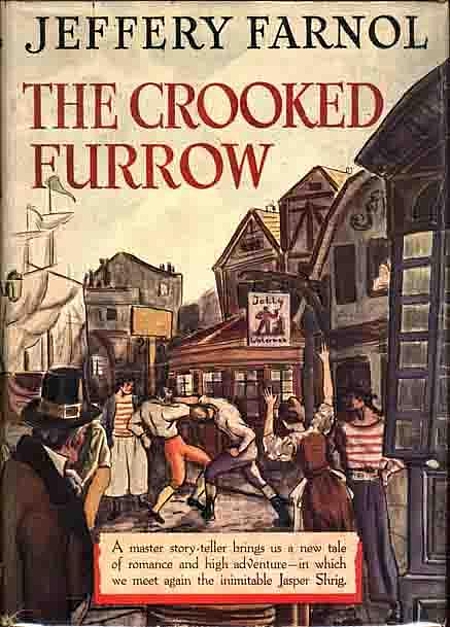


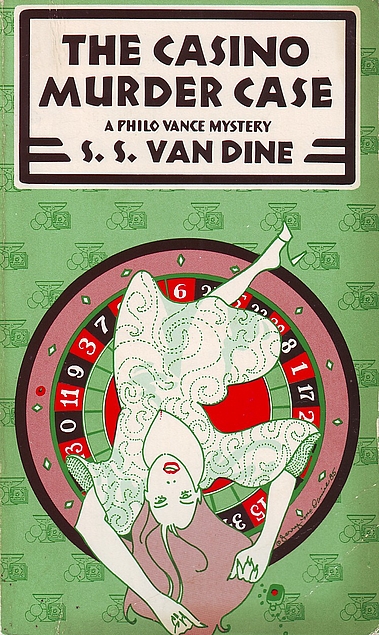


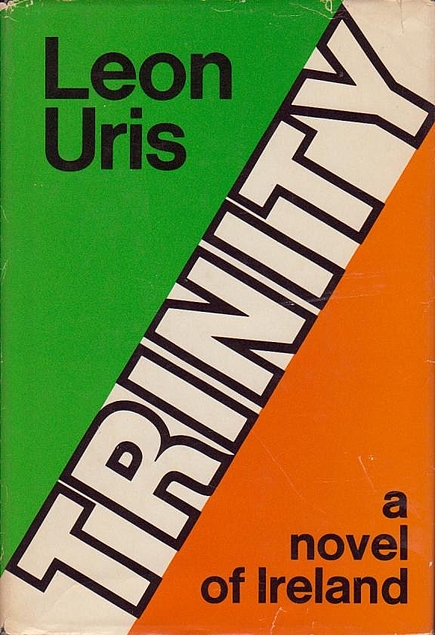

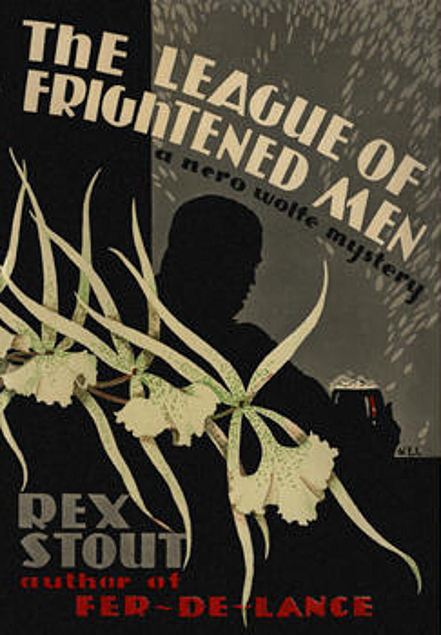


18lyzard
Group read news:
There will be a group read of Margaret Oliphant's The Perpetual Curate in March. It will be conducted through the Virago group, but all welcome of course.
Our next Trollope read will be Miss Mackenzie. We do not have a date yet, but probably May or June.
There will be a group read of Margaret Oliphant's The Perpetual Curate in March. It will be conducted through the Virago group, but all welcome of course.
Our next Trollope read will be Miss Mackenzie. We do not have a date yet, but probably May or June.
19lyzard
General thoughts:
I am still plodding on through my 2021 reviews, and have at least made some progress. In the unlikely event anyone is interested, my reviewing thread is here.
My March reading will be dominated by two works: Margaret Oliphant's The Perpetual Curate, for the group read, and James A. Michener's Centennial, for the best-seller-challenge.
Anything else will be secondary, but these are the other possibles:
The Mystery Of The Silver Spider by Robert Arthur {shared read}
Rally Round The Flag, Boys! by Max Shulman {random reading / shared read}
Rory O'More by Samuel Lover {C. K. Shorter challenge}
Harrington by Maria Edgeworth {A Century Of Reading}
From Man To Man by Olive Schreiner {Banned in Boston challenge}
The Tunnel Mystery by J. C. Lenehan {Mystery League challenge}
My Lord John by Georgette Heyer {historical fiction challenge / shared read}
I am still plodding on through my 2021 reviews, and have at least made some progress. In the unlikely event anyone is interested, my reviewing thread is here.
My March reading will be dominated by two works: Margaret Oliphant's The Perpetual Curate, for the group read, and James A. Michener's Centennial, for the best-seller-challenge.
Anything else will be secondary, but these are the other possibles:
The Mystery Of The Silver Spider by Robert Arthur {shared read}
Rally Round The Flag, Boys! by Max Shulman {random reading / shared read}
Rory O'More by Samuel Lover {C. K. Shorter challenge}
Harrington by Maria Edgeworth {A Century Of Reading}
From Man To Man by Olive Schreiner {Banned in Boston challenge}
The Tunnel Mystery by J. C. Lenehan {Mystery League challenge}
My Lord John by Georgette Heyer {historical fiction challenge / shared read}
21figsfromthistle
Happy new one!
22Helenliz
Happy new thread.
>1 lyzard: is quite a sight! I'm put in mind of the joke about hedgehogs - how do Hedgehogs make love? Answer: Carefully. I think the same might be said of the Thorny Devils.
>1 lyzard: is quite a sight! I'm put in mind of the joke about hedgehogs - how do Hedgehogs make love? Answer: Carefully. I think the same might be said of the Thorny Devils.
25lyzard
>21 figsfromthistle:, >22 Helenliz:, >23 drneutron:, >24 FAMeulstee:
Thanks, Anita, Helen, Jim, and Anita! :)
>22 Helenliz:
I don't know how that do it but, based on the picture on the left, they manage it!
>23 drneutron:
Aw, I think they're sweet... :D
>24 FAMeulstee:
Lots of them do, but if you try to prove through pictures, people tend to run away!
Thanks, Anita, Helen, Jim, and Anita! :)
>22 Helenliz:
I don't know how that do it but, based on the picture on the left, they manage it!
>23 drneutron:
Aw, I think they're sweet... :D
>24 FAMeulstee:
Lots of them do, but if you try to prove through pictures, people tend to run away!
26lyzard
Finished Dangerous Cargo for TIOLI #17.
I made a start on The Tunnel Mystery by J. C. Lenehan, thinking I could squeeze another short read into February; but my reading time went kerflooey, so I have put it aside for the time being.
Now reading The Perpetual Curate by Margaret Oliphant, in preparation for the group read.
I made a start on The Tunnel Mystery by J. C. Lenehan, thinking I could squeeze another short read into February; but my reading time went kerflooey, so I have put it aside for the time being.
Now reading The Perpetual Curate by Margaret Oliphant, in preparation for the group read.
27PaulCranswick
I am a bit slow around the threads these last few days, Liz, but I wanted to slightly belatedly wish you a happy new thread.
29lyzard
>27 PaulCranswick:
Thanks, Paul!
>28 rosalita:
Proof that you can be cute without being the least bit cuddly!
Thanks, Paul!
>28 rosalita:
Proof that you can be cute without being the least bit cuddly!
30rosalita
>29 lyzard: Proof that you can be cute without being the least bit cuddly!
See, I keep telling people that! :-D
See, I keep telling people that! :-D
31lyzard
I have realised, somewhat belatedly, that technically I've finished another series.
One of the important supporting characters in Patricia Wentworth's Miss Silver series is Inspector Ernest Lamb, her somewhat grudging police collaborator; although the inspector's importance (and his appearances) in the novels receded as Wentworth developed the relationship between Miss Silver and Lamb's subordinate, Frank Abbott, who was eventually promoted to Detective Inspector and was able to stand on his own two feet (though Lamb continued to be name-checked).
Lamb is also an important character in Wentworth's short series of espionage thrillers featuring government operative, Frank Garrett.
However, he first appeared as a standalone character in 1939's The Blind Side. Lamb is, in effect, the "antagonist detective" there: that is, he suspects one half of the self-evidently innocent central romantic couple, a standard situation with Wentworth.
Still---the fact remains that he did get a standalone; and for this reason I have created a series page for him, and recorded his various appearances: fourteen of them in all.
This also means that - technically - you get another marmoset:

One of the important supporting characters in Patricia Wentworth's Miss Silver series is Inspector Ernest Lamb, her somewhat grudging police collaborator; although the inspector's importance (and his appearances) in the novels receded as Wentworth developed the relationship between Miss Silver and Lamb's subordinate, Frank Abbott, who was eventually promoted to Detective Inspector and was able to stand on his own two feet (though Lamb continued to be name-checked).
Lamb is also an important character in Wentworth's short series of espionage thrillers featuring government operative, Frank Garrett.
However, he first appeared as a standalone character in 1939's The Blind Side. Lamb is, in effect, the "antagonist detective" there: that is, he suspects one half of the self-evidently innocent central romantic couple, a standard situation with Wentworth.
Still---the fact remains that he did get a standalone; and for this reason I have created a series page for him, and recorded his various appearances: fourteen of them in all.
This also means that - technically - you get another marmoset:

33lyzard
I have had some internet issues this morning, but I am hoping to have the thread up for the group read of The Perpetual Curate later today.
34rosalita
>31 lyzard: That marmoset is, technically, rather adorable.
37Helenliz
>31 lyzard: we'll take marmosets, even if they just technically marmosets.
38lyzard
>37 Helenliz:
I hope I can continue to supply them.
Though mind you, a quokka for catching up my reviews is what I dream about...
I hope I can continue to supply them.
Though mind you, a quokka for catching up my reviews is what I dream about...
39lyzard

Publication date: 1991
Genre: Historical romance
Read for: Potential decommission / TIOLI (new-to-me author)
The Marquis Of Carabas - Having made Venice too hot to hold them, Richard Brown and his daughter, Catherine, contemplate their next move. The Browns have lived by their wits for many years, finding trouble all over the Continent. Even so, Catherine is startled when her father proposes England as their next destination: he was forced to flee the country of his birth as a young man, and has never been home since. Catherine is even more startled when, through her father's fog of words, she understands that her goal in England is to make a wealthy marriage: one on which her father may retire... In London, Alec Carrock finds himself growing concerned over the state of his family. His grandmother, the selfish, autocratic Dowager Duchess of Tyne, is interfering in her grandson's marriage, and has already brought about a separation between the young couple. Furthermore, though she prides herself on her perspicacity, the Duchess has taken under her wing a woman whom Alec suspects of being little more than an adventuress. Determined to expose her, Alec makes a point of getting to know the Marchesa Caterina di Carabas---and not only finds himself drawn to her, but gripped by the bewildering conviction that she is two different people at once... Like all modern authors who attempt to write Regency romances, Elizabeth Brodnax does so under the encompassing shadow of Georgette Heyer; and her 1991 novel finds her not merely accepting her fate, but embracing it. The Marquis Of Carabas is heavily influenced by Heyer's The Masqueraders, as Brodnax has the grace to acknowledge in her afterword; while its narrative is studded with a number of borrowed Heyer moments and phrases. How the knowledgeable reader reacts will be a matter of individual taste: for me, the problem is less the borrowing per se, than that Heyer's unmistakable style blends poorly with Brodnax's own, more modern way of writing, making these touches rather jarring. However, the plot of The Marquis Of Carabas is not, despite the hommage, something Heyer would have tackled, and nor is Brodnax's way of working it out. The sheer audacity of Catherine Brown's storming of London in the guise of the Marchesa di Carabas goes a long way towards ensuring its success; and, dazzled by her beauty and her (presumed) fortune, few of the men who pursue her look any further. Alex Carrock, however, poses a problem in more ways than one---as she does for him. The glittering society figure only arouses his antagonism; but the compassionate woman who befriends the unhappy young Sophie, Duchess of Tyne, and rescues her from the consequences of her folly, is something - someone - else entirely. On her part, meanwhile, having tacitly accepted her father's plans for a comfortable future when she took on the masquerade, Catherine then finds herself falling in love with Alec. As 'Catherine' and 'Caterina' battle for supremacy within her, she blows hot and cold on him---knowing that sooner or later she must either tell him the truth about herself, or flee; and what will happen to her - and to her father - if she does...?
"Caterina, I think my family owes you the deepest of thanks."
His words should have sent a glow of pleasure and a sense of a task well accomplished through Catherine, and indeed she was happy for the sake of Sophie and her duke. But now that the excitement was over, she found she was suffering from a return of conscience. It was abominable how she was treating this poor trusting family, and it was especially terrible how she was treating Alec Carrock, who was clearly coming to like and trust her.
Alec looked around the hall, as if to see whether Bagwell, who had discreetly disappeared some ten minutes earlier, was still present.
"Caterina," he said, and the look in his eyes was warm.
Catherine found that the shared excitement of Sophie's elopement had made her decision for her. She could not encourage this man to consider a marriage that she would know to be based on falsehoods. And judging from the look in his eyes, she thought that he was starting to hold a warmth of feeling for her. Which meant that she must quickly put paid to any intimacy between them.
"La, sir," she said gaily. "It was nothing..."

42lyzard
>41 cbl_tn:
Less so after you've been looking at them for four months straight. Not usually to this degree, granted... :)
Thanks!
Less so after you've been looking at them for four months straight. Not usually to this degree, granted... :)
Thanks!
43lyzard
Finished The Tunnel Mystery for TIOLI #1.
And now---
---proving that you're never so miserable that you can't be more miserable---
---reading Elsie At Home by Martha Finley.
And now---
---proving that you're never so miserable that you can't be more miserable---
---reading Elsie At Home by Martha Finley.
44lyzard
Alas, it appears my recent run on the Mystery League challenge has come to a (temporary?) halt: after a few books being readily available, I am back to waiting on access to the Rare Books section at my academic library---with no end to the lockout in sight. :(
However---at some point in the future I will be reading:
#19: The Mystery Of The Villa Sineste by Walter Livingston (US edition: 1931)
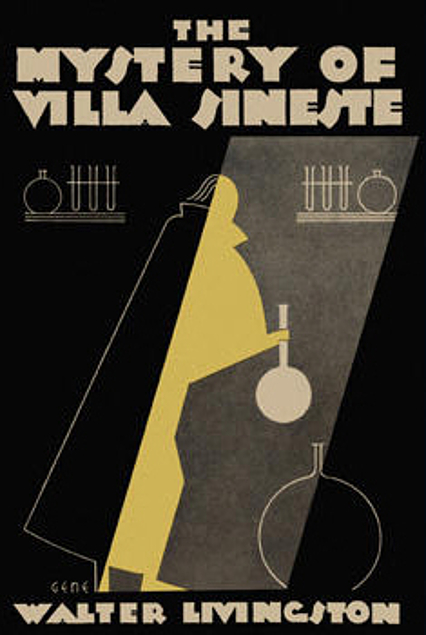
Walter Livingston wrote only two books: both of them were published by the Mystery League; neither of the secured a British release or an American second edition.
As with The Mystery Of Burnleigh Manor, which I read and reviewed in 2018, I suspect that the best thing about this book will be the covert art by Gene Thurston. We'll see...hopefully...one of these days...
(I'm now doubly annoyed by being cut off from this one, however, because if I am interpreting Mr Thurston correctly, it looks like we're due for some SCIENCE!!)
However---at some point in the future I will be reading:
#19: The Mystery Of The Villa Sineste by Walter Livingston (US edition: 1931)
Walter Livingston wrote only two books: both of them were published by the Mystery League; neither of the secured a British release or an American second edition.
As with The Mystery Of Burnleigh Manor, which I read and reviewed in 2018, I suspect that the best thing about this book will be the covert art by Gene Thurston. We'll see...hopefully...one of these days...
(I'm now doubly annoyed by being cut off from this one, however, because if I am interpreting Mr Thurston correctly, it looks like we're due for some SCIENCE!!)
46lyzard

Publication date: 1895
Genre: Young adult
Series: Elsie Dismore #21
Read for: Series reading / TIOLI (uneven no. words in title)
Elsie's Journey On Inland Waters - I seem to be saying this with respect to every entry in this series, but---this 21st entry in Martha Finley's series may have less plot than any other to date. When it opens our extended family group is still at the Chicago World's Fair; and we get a bit more plagiarism from the Chicago Record's "History Of The World's Fair"; and The World's "Fine Art Series". The characters then set out on a cruise of the Great Lakes on the Dolphin, the yacht owned by Captain Raymond, and the book becomes another gruelling exercise in local history, this time regurgitated from the works of historian Benson John Lossing, as we hear far more than we ever wanted to about the Revolutionary War and the War of 1812, and of the history of Detroit, and of Quebec and Montreal. As far as the characters themselves go, the creepiness of the relationship between Raymond and his eldest daughter, Lucilla, continues to ramp up, as the latter begins to attract attention from young men; the main cast is reunited with middle-aged newlyweds, Ronald Lilburn and the former Annis Keith (both distant cousins of Elsie's); they holiday together near Newport, after meeting up with still more cousins (Emburys and Keiths), which paves the way for the history of Rhode Island; Walter Dinsmore, the youngest of Elsie's sons, leaves home for Princeton; and finally the main characters head for home via Annapolis, and a visit with Max Raymond.
"My dear papa looks so tired, mamma," remarked little Elsie in regretful tones, "what has he been doing?"
"Staying up all night to take care of us," replied Violet, the tears shining in her eyes. "Don't you think we ought to love dear papa and do all we can to make him happy?"
"Yes, indeed, mamma!" answered the little girl earnestly. "Oh, I hope he can get a good sleep soon so that he will feel rested and well. I was going to ask him to tell me about what happened at the River Raisin. You know our soldiers, in that fight with the British and Indians that he told us about yesterday, called out over and over again, 'Remember the River Raisin,' and papa said he would tell me what it meant if I would ask him to-day. But I can wait till to-morrow," she added, with a sigh of resignation.
"How would it do for grandma to take your papa's place and tell you the story?" asked Grandma Elsie, in cheerful tones, and with a loving, smiling look at the little girl.
"Oh, nicely, grandma! I don't know but you could do it as well as papa could," answered the child eagerly.
"Ah, dearie, it is a very sad story, and I think I shall have to make it short," sighed Mrs Travilla; "the details would but harrow up your feelings unnecessarily..."
47lyzard

Publication date: 1897
Genre: Young adult
Series: Elsie Dinsmore #22
Read for: Series reading / TIOLI (plot centred on family)
Elsie At Home - It looks at the outset as if there might actually be some plot in this 22nd entry in Martha Finley's series, which opens with the long-absent mother of Evelyn Leland, the de facto adopted daughter of her uncle, Lester Leland, and his wife, the former Elsie Dinsmore Jr, turning up out of the blue. However, she has shown up simply to die of consumption and to undergo conversion at the hands of Elsie Dinsmore Travilla, and to pave the way for an entire chapter full of bible quotes about resurrection generally and the Resurrection specifically. So much for that. Finley then starts marrying off her supporting cast, with the bulk of Elsie At Home consisting of different subsets of characters having essentially the same related conversations about preparations, celebrations and gifts over and over---and plenty of one of this series' most annoying touches, the repeated insistence that "dress isn't important" embedded within pages of discussion of what everyone is going to wear. Meanwhile, having turned the relationship between Captain Levis Raymond and his eldest daughter, Lucilla, into an only slightly less creepy replica of that between Horace Dinsmore and his daughter, Elsie, upon which the series focused in its earliest days, Finley goes a step further and brings back into the narrative Captain Donald Keith, a cousin of Elsie and a friend of Captain Raymond, effectively to take over the position originally occupied in that narrative by Edward Travilla. After some pleading from Keith, Raymond allows him to "speak" to Lucilla, who recoils in horror and swears that she could never love any man more than she loves her father: never, never, never...
"Ah! papa dear, I do not know how I could ever live away from you again. I am so glad you no longer have to go sailing away over the ocean, leaving your children behind."
"I am glad of it, too," he returned, "but I sometimes fear that the day may come when my dear eldest daughter will want to leave me for a home with someone else."
"Indeed, father dear, you need not have the slightest fear of that," she said, laying her head against his breast with a low, happy laugh. "I am sure there isn't in the wide world any other man whom I could love half so well as I do you. I am just as glad to belong to you now as ever I was."
"And don't want me to give you away?"
"No, no, indeed!" she cried with energy. "Oh, papa! you surely are not thinking of such a thing? You have said, over and over again, that you would not,---at least not for years yet,---even if I wanted you to."
"And I say the same now; so don't be wanting me to," he returned in jesting tone, and laying her down upon her pillow as he spoke. "Now go to sleep at once, that you may be ready to rise at your usual early hour and join your father in the morning stroll about the grounds. 'The Lord bless thee and keep thee; the Lord make his face shine upon thee, and be gracious unto thee; the Lord lift up his countenance upon thee, and give thee peace,'" he added in tender, solemn tones, his hand resting upon her head as he spoke.
Then, with a good-night kiss upon her lips, he left her...
48Helenliz
>45 lyzard: noted. It will follow my current read.
Shall we lay any bets on who gets a review written first? >;-)
Shall we lay any bets on who gets a review written first? >;-)
49FAMeulstee
>40 lyzard: Doesn't look good, Liz, I hope you are safe.
50lyzard
>48 Helenliz:
No bets! :D
>49 FAMeulstee:
Thanks, Anita. I'm okay, but there was flooding and evacuation to the west. However the worst of it has been in SE Queensland and northern New South Wales where there has been catastrophic flooding with loss of life and huge amounts of property damage.
No bets! :D
>49 FAMeulstee:
Thanks, Anita. I'm okay, but there was flooding and evacuation to the west. However the worst of it has been in SE Queensland and northern New South Wales where there has been catastrophic flooding with loss of life and huge amounts of property damage.
51lyzard

Publication date: 2001
Genre: Mystery / thriller
Series: Kati Hirschel #1
Read for: TIOLI (Turkish-born author)
Hotel Bosphorus (original title: Kitapçi Dükânı) - Born in Turkey of German parents, raised in Germany, Kati Hirschel now thinks of herself as an "Istanbuli": she is particularly proud of owning the city's only bookstore specialising in crime and detective fiction. Though she immerses herself in the local culture, Kati's German youth comes flooding back when she receives a phone-call from her old friend, Petra Vogel, an actress, who tells her that she will be coming to Istanbul to make a movie. Their reunion is awkward, however, and is soon drastically interrupted when the film's director, Kurt Müller, is found dead in the bathtub in his room at the Hotel Bosphorus: a hair-dyer having been thrown in the water. It is soon clear that Petra is the prime suspect; but as the case stalls on international politics and resentments, Kati decides to take a hand. After all, she must have learnt something from all those books... First published in 2001, though not translated into English until 2011, Esmahan Aykol's debut novel is an interesting though frequently disconcerting semi-mystery: "semi" because it is quite as focused upon its portrait of life in Istanbul, and upon the Turkish-German culture-clashes that are both its supertext and its subtext, as upon the actual murder mystery at its heart. There are numerous autobiographical details in Hotel Bosphorus, and much wry humour in the novel's partly-affectionate, partly-jaundiced view of the two cultures which together have shaped Kati Hirschel. That said, it is often hard to know how to take the book's self-satisfied, opinionated protagonist---though "not as seriously as she takes herself" is probably the short answer; which, thankfully, is less than her author does. Nor, certainly, are we to take her sweeping statements about "all Turks" and "all Germans" at face value. (Mind you, though she does it herself, she doesn't like when other people do it.) Kati's serene conviction that all men want her, on the other hand, is rather uncomfortably borne out by the narrative, which finds her simultaneously pursued by the police inspector in charge of the murder case, and the local crime lord whose syndicate is suspected of involvement. However, perhaps the most difficult aspect of Hotel Bosphorus for the reader to deal with is the erratic nature of Kati's "investigation", as she gets distracted by her job, her friends, her potential love affairs, and even family problems back in Germany. Granted, this is probably a far more realistic view of the "amateur detective" than is usually offered by mystery novels; and in truth, a greater issue is that Kati does not so much investigate, as people simply keep telling her things. At the outset she has private knowledge of Petra's background, including the fact that, despite the common gossip, she was not involved with Müller; she gains conflicting but insightful perspectives from Inspector Batuhan Önal, who has charge of the case, and Meset Mumcu, the crime boss; but her breakthrough comes when she leaves Istanbul for Berlin, where her mother is in hospital. While there she is introduced to an international criminal lawyer who throws a whole new light on the case, telling her that it is not Müller's murderer he is interested in, but Müller himself...
"Turkish police would never accept the aid of foreign police to solve a murder that took place within their area of jurisdiction," said Selim. "They won't accept help from outside even if it means the murder remains unsolved. No one is allowed to interfere with the internal workings of the Turkish state. And in the case of police work, even the government can't interfere."
I rolled my eyes. "That's all very well and good, but the police say there's no evidence," I said. "That means there were no fingerprints, no witness statements, no blood traces and not even a button or a strand of hair was left at the murder scene. Most importantly, nobody had a motive for killing him. So tell me, how are they to get to the bottom of such a murder? Would German police find evidence the Turkish police couldn't?"
"Why not?" said Jean, shrugging his shoulders.
"Why not?" I exclaimed. "You talk as if you don't know how inept the German police are. Don't you remember the attempted bank robbery when two girls were taken hostage? The police killed one of the hostages instead of the robbers."
"You're right. They're hopeless at hostage situations. But the German police are good at solving murders. And of course there's the question of technology; quite simply, the Germans have better equipment."
"Well, that's a great example of prejudice," I said. "Solving a murder has nothing to do with technology. Murders are solved with the mind." I continued talking, my voice rising like that of a primary-school teacher...
52PaulCranswick
>51 lyzard: I joined you with that one, Liz, and it wasn't one of my smartest of moves. Definitely not a series I will be following.
Have a lovely weekend.
Have a lovely weekend.
53lyzard
>52 PaulCranswick:
Hi, Paul - thanks!
I'll probably give it one more at least (oh, who am I kidding? - I'm far too obsessive to just let it go; anyway there's only three more), but it's certainly an exercise in wrong expectations. I don't really think it's been correctly or honestly marketed. I'll know better next time.
Hi, Paul - thanks!
I'll probably give it one more at least (oh, who am I kidding? - I'm far too obsessive to just let it go; anyway there's only three more), but it's certainly an exercise in wrong expectations. I don't really think it's been correctly or honestly marketed. I'll know better next time.
55lyzard
My completion of My Lord John also completes a self-challenge, my reading of Georgette Heyer's straight historical fiction in chronological order:
- The Great Roxhythe (1923)
- Simon The Coldheart (1925)
- Beauvallet (1929)
- The Conqueror (1931)
- Royal Escape (1938)
- My Lord John (1975, unfinished)
Many thanks to Helen for sharing the reads, and keeping these ticking over.
Now---as this is the completion of a challenge, though a relatively small one, I have resurrected a celebratory image that I've used before in similar circumstances.
Because you can't have too many lizards, right??---

- The Great Roxhythe (1923)
- Simon The Coldheart (1925)
- Beauvallet (1929)
- The Conqueror (1931)
- Royal Escape (1938)
- My Lord John (1975, unfinished)
Many thanks to Helen for sharing the reads, and keeping these ticking over.
Now---as this is the completion of a challenge, though a relatively small one, I have resurrected a celebratory image that I've used before in similar circumstances.
Because you can't have too many lizards, right??---

56lyzard
The question now is---do I just keep moving with my other, existing self-challenges, or do I add another one to the list? And if so, what kind? Serious or silly? Straight fiction, or more crime? Modern fiction, or more classics?
Here is my list of possibles from the bottom of my "projects" post, up above: what do other people think?
Possible future reading projects:
- Nobel Prize winners who won for fiction
- Daily Telegraph's 100 Best Novels, 1899
- James Tait Black Memorial Prize
- Berkeley "Books Of The Century"
- Collins White Circle Crime Club / Green Penguins
- Dell paperbacks
- "El Mundo" 100 best novels of the twentieth century
- 100 Best Books by American Women During the Past 100 Years, 1833-1933
- 50 Classics of Crime Fiction 1900–1950 (Jacques Barzun and Wendell Hertig Taylor)
- The Guardian's 100 Best Novels
- Life Magazine "The 100 Outstanding Books of 1924 - 1944" (Henry Seidel Canby)
- "40 Trashy Novels You Must Read Before You Die" (Flavorwire)
- best-novel lists in Wikipedia article on The Grapes Of Wrath
- Pandora 'Mothers Of The Novel'
- Newark Library list
- "The Story Of Classic Crime In 100 Books"
- Dean's Classics series
- "Fifty Best Australian Novels"
- "The Top 100 Crime Novels Of All Time"
- Haycraft Queen Cornerstones
Here is my list of possibles from the bottom of my "projects" post, up above: what do other people think?
Possible future reading projects:
- Nobel Prize winners who won for fiction
- Daily Telegraph's 100 Best Novels, 1899
- James Tait Black Memorial Prize
- Berkeley "Books Of The Century"
- Collins White Circle Crime Club / Green Penguins
- Dell paperbacks
- "El Mundo" 100 best novels of the twentieth century
- 100 Best Books by American Women During the Past 100 Years, 1833-1933
- 50 Classics of Crime Fiction 1900–1950 (Jacques Barzun and Wendell Hertig Taylor)
- The Guardian's 100 Best Novels
- Life Magazine "The 100 Outstanding Books of 1924 - 1944" (Henry Seidel Canby)
- "40 Trashy Novels You Must Read Before You Die" (Flavorwire)
- best-novel lists in Wikipedia article on The Grapes Of Wrath
- Pandora 'Mothers Of The Novel'
- Newark Library list
- "The Story Of Classic Crime In 100 Books"
- Dean's Classics series
- "Fifty Best Australian Novels"
- "The Top 100 Crime Novels Of All Time"
- Haycraft Queen Cornerstones
57Matke
>54 lyzard: I was going to say, “Oh, but that’s an easy one!” before I remembered that “you’re not from around here” and hence may not have the cultural references which help to make Centennial a fairly easy, if very long read. I’ll be really interested in your take on it. Michener does include about fifty million characters but they’re all pretty well-developed.
>55 lyzard: I don’t know if he’s one of ours, but we have a similar species here, and they are fun to watch.
>56 lyzard: Another challenge? What, do you not have enough to keep your mind occupied? 😉 That said, I’m scanning your possibles list with a mental pen in hand…
>55 lyzard: I don’t know if he’s one of ours, but we have a similar species here, and they are fun to watch.
>56 lyzard: Another challenge? What, do you not have enough to keep your mind occupied? 😉 That said, I’m scanning your possibles list with a mental pen in hand…
58Matke
>57 Matke: Oh My Word
I’ve just spent a nostalgic and, er, idiosyncratically delightful time perusing that Berkeley list. I was divided between three reactions:
1. What??? I haven’t read anything from this year’s lists?
2. At least I’ve read something from the “Critically Acclaimed and Historically Significant” side.
3. Oh! Look at all these old favs! (A surprising and inappropriate number of which I read as a child).
And I’m only up to 1958. Thank you soooo much for this marvelous rabbit hole for an idle Sunday morning. Not joking here: this is unbelievably fun.
I’ve just spent a nostalgic and, er, idiosyncratically delightful time perusing that Berkeley list. I was divided between three reactions:
1. What??? I haven’t read anything from this year’s lists?
2. At least I’ve read something from the “Critically Acclaimed and Historically Significant” side.
3. Oh! Look at all these old favs! (A surprising and inappropriate number of which I read as a child).
And I’m only up to 1958. Thank you soooo much for this marvelous rabbit hole for an idle Sunday morning. Not joking here: this is unbelievably fun.
59lyzard
Gail!! How lovely to get a visit from you! :)
>57 Matke:
Well, yes, it *was* the 1000 pages I was referring to in the first instance. :D
It's a green anole, which I believe is native to the southeast US, so you may well be familiar with it.
>58 Matke:
HA!! Not so easy to just put them aside, is it?? :D
Yes, I was a precocious reader too...
Shall I take the Berkeley lists as your vote, then?
They are tempting but given their nature, I think any move in that direction would have to wait until the conclusion of the current best-seller challenge...whenever that might be!
>57 Matke:
Well, yes, it *was* the 1000 pages I was referring to in the first instance. :D
It's a green anole, which I believe is native to the southeast US, so you may well be familiar with it.
>58 Matke:
HA!! Not so easy to just put them aside, is it?? :D
Yes, I was a precocious reader too...
Shall I take the Berkeley lists as your vote, then?
They are tempting but given their nature, I think any move in that direction would have to wait until the conclusion of the current best-seller challenge...whenever that might be!
60Matke
>59 lyzard: Oh, no yet! I have a couple or three other lists to scan…
I bless my mother for giving me mostly a free hand with books. Very few were on the “Nope” list. Of course a lot of stuff sailed right over my head since I had no knowledge base to draw on. I did the same with my kids, except with a bit of sneaky encouragement to get them to try something new. Worked like a charm, too.
I bless my mother for giving me mostly a free hand with books. Very few were on the “Nope” list. Of course a lot of stuff sailed right over my head since I had no knowledge base to draw on. I did the same with my kids, except with a bit of sneaky encouragement to get them to try something new. Worked like a charm, too.
61lyzard
>60 Matke:
I didn't get much interference either, though in my case there was a lot of early (and probably uncomprehending) reading of classics that didn't require intervention. The trash came later. :D
I didn't get much interference either, though in my case there was a lot of early (and probably uncomprehending) reading of classics that didn't require intervention. The trash came later. :D
62rosalita
>55 lyzard: I love those little guys! I don't know if I'd love them quite so much if they showed up in my house without an invitation, but they are delightful to look at from a respectful distance. :-)
63lyzard
>62 rosalita:
They'd be very welcome in mine! :)
We get mostly tiny skinks here, and the occasional blue-tongue.
They'd be very welcome in mine! :)
We get mostly tiny skinks here, and the occasional blue-tongue.
64lyzard
Finished Centennial for TIOLI #2.
It narrowly escapes my 'crushed by a book' condemnation, but I am going to give a hearty PHEW!!
And now for something completely different--- :D
Now reading The Mystery Of The Silver Spider by Robert Arthur.
It narrowly escapes my 'crushed by a book' condemnation, but I am going to give a hearty PHEW!!
And now for something completely different--- :D
Now reading The Mystery Of The Silver Spider by Robert Arthur.
65swynn
>64 lyzard: Hooray for finishing big books!
68lyzard

Publication date: 1965
Genre: Mystery / thriller
Series: Martin Beck #1
Read for: TIOLI (set in one of the top 7 countries from the 2021 Happiness Report)
Roseanna - The naked body of a young woman is pulled out of one of the locks on the Göta Canal, at Borenshult: she has been raped and strangled. A detective from nearby Motala, Gunnar Ahlberg, is assigned the case, but he is unable to identify the victim and must request help from Stockholm. Martin Beck and his colleagues, Lennart Kollberg and Fredrik Melander, travel to Motala, but are unable to provide any immediate assistance; although they place their resources at Ahlberg's disposal. The lack of information suggests that the dead woman was a passenger on one of the many boats to pass through the lock, creating a nightmare of transient suspects. Eventually identification comes via Interpol, from the US: the dead woman was Roseanna McGraw of Lincoln, Nebraska. A partnership forms between Beck, Ahlberg and Detective Kakfa of Lincoln---the three determined men recognising that they must understand their victim before they can understand her killer... This 1965 novel by the wife-and-husband writing team of Maj Sjöwall and Per Wahlöö introduced their series character, Martin Beck, whose very success now makes him seem like a cliché. Beck is the archetypal dedicated cop whose professional success is offset by a disastrous personal life, in this case a wife and children he barely knows and uses his work to avoid; while the various stresses of Beck's life manifest as chain-smoking and digestive upsets. However, despite the familiarity of its framework, the reader of Roseanna is more likely to be struck by how this novel differs from the mass of crime writing that was influenced by it. Though he has his issues, Beck is pleasingly not "on the edge", but rather a quiet, even introverted man, who succeeds through persistence and painstaking attention to detail. Also absent is the unjust pressure "from above", with the detectives' superiors on the whole supportive through the difficult, time-consuming investigation. The writing here is perhaps more graphic than its US and UK equivalents of the time with respect to the nature of the crime and the injuries inflicted on the victim; and it is likewise almost startlingly sexually frank. The latter is a vital aspect of the narrative, and there is a refreshing and admirable lack of judgement about Roseanna and her active sex life: all the opprobrium is reserved for the killer and his hang-ups. Bolstered by details about Roseanna and her life received from Nebraska, Beck and Ahlberg, with the assistance of Kollberg and Melander, undertake the gruelling task of identifying everyone on board the Diana, the tourist ship on which Roseanna had been travelling: tracking their subsequent movements, and determining who might have had contact with their victim. By these means they eventually do identify a suspect, and interrogate him; but though certain in themselves of his guilt, they have no solid evidence against him. Finally, in desperation, Beck and the others mount a dangerous sting operation, setting up a female officer to deliberately draw the killer's attention...
"Let there be enough film," thought Martin Beck...
Mr Bellamy from Klamath Falls was more stubborn than ever and held the position of his camera. Roseanna McGraw passed the boat, could be seen completely and clearly down on the path...
But it wasn't over yet. A somewhat underexposed shot of a face with violet lips and sunglasses filled the screen, and then disappeared to the right. Along the port side of A deck a waitress in a white blouse banged on a gong. Roseanna McGraw stepped out from behind her coming from the door to the dining room, wrinkled her forehead, looked up at the sky, laughed, and turned toward someone who was hidden. Not completely. They could see an arm in speckled tweed, a bit of a shoulder. Then came the white spots, and then the film faded and ended in grey, grey, grey.
She had laughed. He was certain of it. At seven o'clock on the evening of the fourth of July. Ten minutes later she had eaten beefsteak, fresh potatoes, strawberries and milk, while a Swedish colonel and a German major had exchanged viewpoints on the siege of Stalingrad.
The screen was flooded with light. More locks. A blue sky with floating clouds. The captain with his hand on the telegraph machine.
"Sjötorp," said Ahlberg. "Twelve o'clock on the next day. Soon they'll be out on Lake Vättern."
Martin Beck remembered all the details. One hour later it had stopped raining. Roseanna McGraw was dead. Her body had been lying naked and violated in the mud near the breakwater at Borenhult for nearly twelve hours...
69lyzard

Publication date: 1965
Genre: Mystery / thriller
Series: George Smiley #3
Read for: Series reading / TIOLI (published in my birth year)
The Looking-Glass War - Word is received in Britain via an East German defector of Sovit missiles on the border. Though not an official agent, a man called Taylor is sent by the covert government agency known as "the Department" to Finland, to collect a roll of film from a pilot paid to divert over East German air space. However, the mission ends in tragedy when Taylor is hit by a car, in what might be an accident---or might not. Avery, the youngest man attached to the Department, is sent to collect Taylor's body, and if possible retrieve the film; but his mission is exposed and the film lost. The head of the Department, Leclerc, and Haldane, in charge of research, must decide whether to go ahead on the defector's word and, if so, who will undertake the dangerous mission of infiltrating East Germany. Fred Leiser, a Pole who distinguished himself during the war, is recruited after being convinced of his unique importance, and undergoes refresher training under the aegis of Avery and certain specialists. It is only after Leiser sets out on his mission that it becomes apparent to those involved what is really at stake... Technically John le Carré's The Looking-Glass War is the third in his series featuring George Smiley, however Smiley is a minor figure here, though not an unimportant one---effectively figuring as the moral touchstone in a narrative than plunges ever deeper into a moral quagmire. There is an excoriating cynicism about this novel, in which the good faith and dedication of men are exploited to their ruin, self-interest makes mileage even out of the politics of the Cold War, and nostalgia becomes a dangerous poison. At the centre of The Looking-Glass War is the Department, a covert agency that achieved glory during WWII, but which has since sunk into irrelevance---overtaken by the political espionage branch known as the Circus. When the defector's claim of a Soviet build-up in East Germany provides the Department with the chance to regain its former status, Leclerc determines to let nothing stand in the way. He remains throughout serenely confident of the Department's ability to pull off such a mission; though the reader, remembering that the relatively straightforward tasks assigned to Taylor and Avery both ended in embarrassing failure, isn't so sure... As always with le Carré, The Looking-Glass War highlights the tedious and thoroughly unglamorous nature of real espionage work, and the lies and manipulation that lurk behind the flattering smokescreen of "service to one's country". John Avery, hiding in his work from his personal problems, and suffering from a feeling of inadequacy deriving from having been too young to fight in the war, and Fred Leiser, desperate to feel important once more, throw themselves into the preparation for the mission; while Leclerc and Haldane, watching with approval, use the situation to regain some of the Department's former standing---and gaining an unexpected degree of co-operation from the Circus, usually their tacit rivals. Leclerc, Haldane and Avery travel with Leiser to the point in West Germany at which he is to cross the border, and see him on his way. Almost immediately, however, the mission goes wrong; though it is not until George Smiley shows up that the men of the Department discover just how wrong...
"Do you think he's safely over?"
"You did well." Haldane was smiling.
"We'd have heard, wouldn't we? Heard the shots or seen the lights?"
"He's out of our care. Well done." He yawned... "You know, it doesn't seem real. In the war, there was no question. They went or they refused. Why did he go, Avery? Jane Austen said money or love, those were the only two things in the world. Leiser didn't go for money."
"You said one could never know. You said so the night he telephoned."
"He told me it was hate. Hatred for the Germans. I didn't believe him."
"He went anyway. I thought that was all that mattered to you, you said you didn't trust motive."
"He wouldn't do it for hatred, we know that. What is he, then? We never knew him, did we? He's near the mark, you know; he's on his deathbed. What does he think of? If he dies now, tonight, what will be on his mind?"
"You shouldn't speak like that."
"Ah." At last Haldane turned and looked at Avery and the peace had not left his face. "When we met him he was a man without love. Do you know what love is? It is whatever you can still betray. We don't force people to do things for us. We let them discover love. And, of course, Leiser did, didn't he? He married us for money, so to speak, and left us for love..."
70lyzard
January stats:
Works read: 16
TIOLI: 16, in 15 different challenges, and 3 shared reads
Mystery / thriller: 7
Young adult: 2
Classic: 2
Contemporary drama: 1
Historical romance: 1
Children's fiction: 1
Historical drama: 1
Fantasy: 1
Series works: 9
Re-reads: 3
Blog reads: 0
1932: 0
1931: 1
Virago / Persephone: 0
Potential decommission: 0
Owned: 2
Library: 3
Ebooks: 10
Borrowed: 1
Male authors : female authors: 9 : 9
Oldest work: The Heroine; or, Adventures Of A Fair Romance Reader by Eaton Stannard Barrett (1813)
Newest work: Hotel Bosphorus by Esmahan Aykol (2001)
Works read: 16
TIOLI: 16, in 15 different challenges, and 3 shared reads
Mystery / thriller: 7
Young adult: 2
Classic: 2
Contemporary drama: 1
Historical romance: 1
Children's fiction: 1
Historical drama: 1
Fantasy: 1
Series works: 9
Re-reads: 3
Blog reads: 0
1932: 0
1931: 1
Virago / Persephone: 0
Potential decommission: 0
Owned: 2
Library: 3
Ebooks: 10
Borrowed: 1
Male authors : female authors: 9 : 9
Oldest work: The Heroine; or, Adventures Of A Fair Romance Reader by Eaton Stannard Barrett (1813)
Newest work: Hotel Bosphorus by Esmahan Aykol (2001)

72lyzard
Finished The Mystery Of The Silver Spider for TIOLI #5.
Now reading Rally Round The Flag, Boys! by Max Shulman.
Now reading Rally Round The Flag, Boys! by Max Shulman.
73Helenliz
>71 lyzard:. Yay! Sloth.
74rosalita
>71 lyzard: SLOTH!!!! !!!!!!!!!!!!!!!!!!!!!!
Poor dear looking as tired as I feel this morning after waking up at 3:30am and being able to fall back asleep.
Poor dear looking as tired as I feel this morning after waking up at 3:30am and being able to fall back asleep.
75lyzard
>73 Helenliz:
I'd like to think there'll be one or two more along presently... :)
>74 rosalita:
I hear you. I don't have that problem so much, but suffer chronically from "HELLO THIS IS YOUR BRAIN LET'S THINK ABOUT THINGS YOU DON'T WANT TO THINK ABOUT FOR TWO HOURS" as soon as I turn the lights out. :(
BTW I hope you're okay with me pushing on with a couple of (theoretical) shared reads? How are you getting along with picking another series?
That's not a nag, I'm just trying to get organised again post-Centennial! Also I'm running to my city library today, but I guess won't pick up the next Bony book?? :)
I'd like to think there'll be one or two more along presently... :)
>74 rosalita:
I hear you. I don't have that problem so much, but suffer chronically from "HELLO THIS IS YOUR BRAIN LET'S THINK ABOUT THINGS YOU DON'T WANT TO THINK ABOUT FOR TWO HOURS" as soon as I turn the lights out. :(
BTW I hope you're okay with me pushing on with a couple of (theoretical) shared reads? How are you getting along with picking another series?
That's not a nag, I'm just trying to get organised again post-Centennial! Also I'm running to my city library today, but I guess won't pick up the next Bony book?? :)
76rosalita
>75 lyzard: I find it helpful to play classical music at a low volume on my iPad, with the timer set to stop playing after an hour or so. That usually gives my brain something besides OMG ALL THIS to focus on long enough to fall asleep.
I think I had decided in my own mind that we were going with Bony, so please feel free to continue on with any of the others. It would have been helpful for me to tell you that, I reckon. :-)
I think I had decided in my own mind that we were going with Bony, so please feel free to continue on with any of the others. It would have been helpful for me to tell you that, I reckon. :-)
77lyzard
OMG MY ACADEMIC LIBRARY IS FINALLY OPEN!!!!!!!!!!
I'm hyperventilating here...
Alas, they have not yet re-opened the Rare Books section to the public, but at this point I'm not going to be greedy. Half a loaf, glass half full, and all that. :D
I'm hyperventilating here...
Alas, they have not yet re-opened the Rare Books section to the public, but at this point I'm not going to be greedy. Half a loaf, glass half full, and all that. :D
78cbl_tn
>77 lyzard: That's wonderful news!
80rosalita
Hooray! I don't have a sloth or a lizard or a marmoset to celebrate, but this fella may be waiting for you in the stacks:


81lyzard
>78 cbl_tn:, >79 Helenliz:, >80 rosalita:
Thank you!!
Horrified to realise it is two years next month since I set foot in the place, and still on some level expecting things to go wrong before I can get there, but--- :D
Thank you!!
Horrified to realise it is two years next month since I set foot in the place, and still on some level expecting things to go wrong before I can get there, but--- :D
82lyzard
>76 rosalita:
I play low-volume music too but it doesn't always work.
You probably did but my brain hasn't processed it! But that's definitely a plan now and I will hold off on the next Bony book and we will see how you get on.
I play low-volume music too but it doesn't always work.
You probably did but my brain hasn't processed it! But that's definitely a plan now and I will hold off on the next Bony book and we will see how you get on.
83Helenliz
>48 Helenliz: Smug face.
But then you read more than me AND write much fuller reviews than I do, so it wasn't ever really a fair contest.
But then you read more than me AND write much fuller reviews than I do, so it wasn't ever really a fair contest.
84lyzard
>83 Helenliz:
Very nice of you not to mention the whole "chronically behind with reviews" thing... :D
Very nice of you not to mention the whole "chronically behind with reviews" thing... :D
85lyzard
Finished Rally Round The Flag, Boys! for TIOLI #6.
Now reading A Man Could Stand Up by Ford Madox Ford.
Now reading A Man Could Stand Up by Ford Madox Ford.
86lyzard
TWO YEARS!!!!
Two years since I walked through these doors...


BO-OO-OO-OO-OO-OO-OO-OO-OO-OO-OO-OO-OO-OO-OO-OO-OO-OO-OO-OO-OO-OO-OO-OO-OO-OO-OO-OO-KS!!!!


Two years since I walked through these doors...


BO-OO-OO-OO-OO-OO-OO-OO-OO-OO-OO-OO-OO-OO-OO-OO-OO-OO-OO-OO-OO-OO-OO-OO-OO-OO-OO-OO-KS!!!!


88swynn
>86 lyzard: Yay!
89rosalita
>86 lyzard: Beautiful!
92lyzard
>87 Helenliz:, >88 swynn:, >89 rosalita:, >90 drneutron:, >91 kac522:
Thank you, everyone!
Turns out there's a physical condition midway between hyperventilating and discombobulated, who knew? :D
I shouldn't be ungracious towards the ebooks that have kept me going for the last two years (and what would I have done if this had happened in the pre-ebook era??), but it was amazing to get my hands on a pile of books again! And the feeling of scanning the shelves for my particular book...!
Two tiny flies in the ointment, and I'm too thankful for the huge mercy to let them bother me at the moment: the library is sticking with its frustrating 'only two items on storage request at a time' policy, which means I have at least two more trips in before I actually finish my first wave of borrowing; and the Rare Books section is still closed to the public. The latter is where a dizzying number of my series and challenges have stalled; but I shall just have to possess my soul in patience and monitor the ongoing situation.
And at least I'll have PLENTY OF BOOKS TO READ IN THE MEANTIME!!!!
Thank you, everyone!
Turns out there's a physical condition midway between hyperventilating and discombobulated, who knew? :D
I shouldn't be ungracious towards the ebooks that have kept me going for the last two years (and what would I have done if this had happened in the pre-ebook era??), but it was amazing to get my hands on a pile of books again! And the feeling of scanning the shelves for my particular book...!
Two tiny flies in the ointment, and I'm too thankful for the huge mercy to let them bother me at the moment: the library is sticking with its frustrating 'only two items on storage request at a time' policy, which means I have at least two more trips in before I actually finish my first wave of borrowing; and the Rare Books section is still closed to the public. The latter is where a dizzying number of my series and challenges have stalled; but I shall just have to possess my soul in patience and monitor the ongoing situation.
And at least I'll have PLENTY OF BOOKS TO READ IN THE MEANTIME!!!!
93rosalita
>92 lyzard: A two-item limit on requests from storage is annoying, but on the other hand at least they are letting you leave the building with them (eventually)!
94lyzard
>93 rosalita:
This is me getting unreasonable about actual student policy again: it's to stop people requesting EVERY book on a topic and then only borrowing one.
But if only I could get a dispensation on the grounds that I want ALL THE BOOKS!! :D
This is me getting unreasonable about actual student policy again: it's to stop people requesting EVERY book on a topic and then only borrowing one.
But if only I could get a dispensation on the grounds that I want ALL THE BOOKS!! :D
95kac522
>94 lyzard: Fat chance, my dear.
98kac522
>96 lyzard: of course!
99lyzard
Finished The Casino Murder Case for TIOLI #4.
Now reading Sir John Magill's Last Journey by Freeman Wills Crofts.
Now reading Sir John Magill's Last Journey by Freeman Wills Crofts.
100lyzard

Publication date: 1934
Genre: Mystery / thriller
Series: Nero Wolfe #1
Read for: Shared read / TIOLI (uneven no. of title words)
Fer-de-Lance - Through one of his occasional operatives, private detective Nero Wolfe is consulted by Maria Maffei about the disappearance of her brother, Carlo. Sent out to start preliminary investigations, Wolfe's assistant, Archie Goodwin, brings back with him Anna Fiore, the young servant at Maffei's boarding-house, who overheard the telephone conversation with its hint of blackmail that drew the missing man from home. Patient questioning by Wolfe elicits from Anna the fact that, on the day of his disappearance, Maffei cut from the paper an article about the collapse on the golf course of university president, Peter Oliver Barstow; but even Archie, who knows his boss, is startled by Wolfe's further questions about a golf club in Maffei's room---although not as startled as Anna... As it happens, Wolfe and Archie are barely ahead of the police, who the next day inform them that Maffei has been found stabbed to death, and demand the surrender of certain articles removed from his rooms. In exchange for his - apparent - cooperation, Wolfe learns that Maffei's body was discovered not far from the golf course upon which Mr Barstow died... This first work in the long-running series by Rex Stout featuring housebound New York-based private investigator, Nero Wolfe, is something of a mixed bag. Though it offers up a complicated, two-for-one murder mystery, much of Fer-de-Lance is devoted to setting up the character of Wolfe---delineating his physical and mental eccentricities, his hobbies, his antagonistic relationship with official law and order, and the nature of his interactions with his assistant, Archie, who acts as his eyes and ears, and above all his legs; and who also narrates, so that his own personality becomes a critical aspect of the story. This blending is not always smooth, with an overload of hints and allusions sometimes getting in the way of the plot; while the rapidity with which Wolfe deduces the true manner of Mr Barstow's death, via a golf-club death-trap, requires a lot of swallowing (as does the death-trap itself). There are also a few jarring touches, such as Archie's immediate dislike of Manuel Kimball, one of the quartet playing golf, who is the product of a mixed marriage, and therefore "a foreigner", and therefore "suspicious". However, this is offset by Wolfe taking the murder of a working-class Italian immigrant as seriously as he does the mysterious death of a wealthy university president---not just because of their tacit connection, but in its own right, and because he has been commissioned by Maria Maffei, to whom he therefore gives his best efforts, as much as he does the Barstows, who eventually consult him. Archie is sent out to gather all the information he can about the fatal game of golf, played between Barstow and his son, Lawrence, and their neighbours, the Kimballs, also father and son. Beyond uncovering an unpleasant family secret, the mental instability of Mrs Barstow, Archie can only report that Barstow himself seems not to have had an enemy in the world, nor was any motive for his murder forthcoming. This forces Wolfe to reassess the case---and leads him to question whether Barstow was actually the intended victim, or whether somehow, somewhere along the way in this bizarre and deeply-laid murder-scheme, something went wrong...
"You, Michael Allen, when you see Mr Barstow, your last season's baby, at a distance from the tee practising with a mashie, you do not need to be told what to do; you join him, pick up his bag, hand him a club perhaps---"
Mike was shaking his head.
"No? What do you do?"
"I begin chasing balls."
"Ah. The balls he was hitting with the mashie... What were you doing, William Riley, while Michael was chasing balls?"
"I was chewing gum."
"Exclusively? I mean, was that the utmost of your efforts?"
"Well, I was standing holding old Kimball's bag."
Listening to him start, I was thinking that Wolfe's long words would get the kids so tied up that pretty soon they would just go dead on him, but it worked the other way. Without telling them so he had given them the feeling that he was counting on them to help him show how dumb the hundred psychologists had been, and they weren't going to get licked at it because it took long words to do it.
He went along inch by inch, now with this boy, now with that, sometimes with all of them talking at once. He let them get into a long discussion of the relative merits of various brands of clubs, and sat with his eyes half closed pretending he enjoyed it. He questioned them for half an hour regarding the identities and characteristics of the other caddies and golfers present, those belonging to the matches which immediately preceded the Barstow foursome at the tee. Every time one of the boys bolted ahead to the actual teeing off Wolfe called him back. Among all the irrelevancies I could see one thing, perhaps the main thing, he was doing: he wasn't losing sight for a single instant of each and every club in each and every bag...
101lyzard
Good work, Fer-de-Lance blurber:
So I needn't bother with the other 73 works in the series?---
First and perhaps the best of all Rex Stout's Nero Wolfe stories...
But at least that was only a blurber: my personal favourite amongst this sort of mis-step is Freeman Wills Crofts giving the title Inspector French's Greatest Case to, you guessed it, the first book in his 30-book series...
(Presumably he meant "Inspector French's Greatest Case In His Career To Date"...)
So I needn't bother with the other 73 works in the series?---
First and perhaps the best of all Rex Stout's Nero Wolfe stories...
But at least that was only a blurber: my personal favourite amongst this sort of mis-step is Freeman Wills Crofts giving the title Inspector French's Greatest Case to, you guessed it, the first book in his 30-book series...
(Presumably he meant "Inspector French's Greatest Case In His Career To Date"...)
102rosalita
>100 lyzard: As we'll (eventually) see in Too Many Cooks, Stout regularly balances Wolfe's social liberality with Archie's representing the more xenophobic/racist "Everyman". I heartily dislike the slur that Archie uses for Manuel Kimball but I'm sure it's just a reflection of the kind of casual racism no one of the time gave a second thought. Always one of the things you have to be prepared for with books of this era, as of course you know better than anyone!
Because I first read this one after having read fairly heavily from later in the series, what strikes me here is that Wolfe's erudition is much more awkward and ponderous than it quickly became. Stout seemed to hear Archie's voice from the beginning, but it took him a few books to capture Wolfe's.
>101 lyzard: Definitely NOT the best! :-)
Because I first read this one after having read fairly heavily from later in the series, what strikes me here is that Wolfe's erudition is much more awkward and ponderous than it quickly became. Stout seemed to hear Archie's voice from the beginning, but it took him a few books to capture Wolfe's.
>101 lyzard: Definitely NOT the best! :-)
103lyzard
>102 rosalita:
Fair enough, though I dislike that "Everyman" is considered naturally "illiberal".
The awkwardness is obviously the result of too much attempted set-up; it doesn't surprise me to hear that it smooths down in future.
A first book? Hardly! I know that better than anyone too. :D
Fair enough, though I dislike that "Everyman" is considered naturally "illiberal".
The awkwardness is obviously the result of too much attempted set-up; it doesn't surprise me to hear that it smooths down in future.
A first book? Hardly! I know that better than anyone too. :D
104lyzard
Best-selling books in the United States for 1973:
1. Jonathan Livingston Seagull by Richard Bach
2. Once Is Not Enough by Jacqueline Susann
3. Breakfast of Champions by Kurt Vonnegut
4. The Odessa File by Frederick Forsyth
5. Burr by Gore Vidal
6. The Hollow Hills by Mary Stewart
7. Evening in Byzantium by Irwin Shaw
8. The Matlock Paper by Robert Ludlum
9. The Billion Dollar Sure Thing by Paul E. Erdman
10. The Honorary Consul by Graham Greene
The 1973 list offers a mixture of genres.
Thrillers and novels of suspense are prominent, generally blended with politics. Frederick Forsyth's The Odessa File is a holdover from the 1972 list. Robert Ludlum's The Matlock Paper is about a young academic recruited to help expose the head of a crime syndicate operating through the universities of New England. Paul Erdman's The Billion Dollar Sure Thing is about international monetary policy and the manipulation of the gold standard. Graham Greene's The Honorary Consul is about an under-qualified, alcoholic deputy consul, who is the victim of a botched kidnapping in revolutionary South America.
Jacqueline Susann's Once Is Not Enough is about a rich but naive young woman negotiating the social upheaval of the late 60s and early 70s. Irwin Shaw's Evening in Byzantium is - overtly - about a once-famous film-maker trying to mount a comeback, and confronting a profoundly changed post-studio industry.
Gore Vidal's Burr is his biographical novel about Aaron Burr, told from the point of view of a young clerk in his law office, who has been bribed to dig up dirt on his employer.
The remaining works may all be considered "fantasy", albeit of three very different kinds.
Mary Stewart's The Hollow Hills, her follow-up to The Crystal Cave, follows the future King Arthur from his birth, after he is placed in the care of Merlin.
Kurt Vonnegutt's Breakfast of Champions is a bizarre, post-modern work dealing with free will, personal identity, and the social and economic condition of the US in the early 70s.
The #1 best-seller, however, for the second year in a row (!), was Richard Bach's Jonathan Livingston Seagull (reviewed here).
1. Jonathan Livingston Seagull by Richard Bach
2. Once Is Not Enough by Jacqueline Susann
3. Breakfast of Champions by Kurt Vonnegut
4. The Odessa File by Frederick Forsyth
5. Burr by Gore Vidal
6. The Hollow Hills by Mary Stewart
7. Evening in Byzantium by Irwin Shaw
8. The Matlock Paper by Robert Ludlum
9. The Billion Dollar Sure Thing by Paul E. Erdman
10. The Honorary Consul by Graham Greene
The 1973 list offers a mixture of genres.
Thrillers and novels of suspense are prominent, generally blended with politics. Frederick Forsyth's The Odessa File is a holdover from the 1972 list. Robert Ludlum's The Matlock Paper is about a young academic recruited to help expose the head of a crime syndicate operating through the universities of New England. Paul Erdman's The Billion Dollar Sure Thing is about international monetary policy and the manipulation of the gold standard. Graham Greene's The Honorary Consul is about an under-qualified, alcoholic deputy consul, who is the victim of a botched kidnapping in revolutionary South America.
Jacqueline Susann's Once Is Not Enough is about a rich but naive young woman negotiating the social upheaval of the late 60s and early 70s. Irwin Shaw's Evening in Byzantium is - overtly - about a once-famous film-maker trying to mount a comeback, and confronting a profoundly changed post-studio industry.
Gore Vidal's Burr is his biographical novel about Aaron Burr, told from the point of view of a young clerk in his law office, who has been bribed to dig up dirt on his employer.
The remaining works may all be considered "fantasy", albeit of three very different kinds.
Mary Stewart's The Hollow Hills, her follow-up to The Crystal Cave, follows the future King Arthur from his birth, after he is placed in the care of Merlin.
Kurt Vonnegutt's Breakfast of Champions is a bizarre, post-modern work dealing with free will, personal identity, and the social and economic condition of the US in the early 70s.
The #1 best-seller, however, for the second year in a row (!), was Richard Bach's Jonathan Livingston Seagull (reviewed here).
105lyzard
Best-selling books in the United States for 1974:
1. Centennial by James A. Michener
2. Watership Down by Richard Adams
3. Jaws by Peter Benchley
4. Tinker, Tailor, Soldier, Spy by John le Carré
5. Something Happened by Joseph Heller
6. The Dogs of War by Frederick Forsyth
7. The Pirate by Harold Robbins
8. I Heard the Owl Call My Name by Margaret Craven
9. The Seven-Per-Cent Solution by Nicholas Meyer
10. The Fan Club by Irving Wallace
No holdovers on the 1974 list, yet it offers almost exactly the same strange mix of genres as 1973---though in this case, history comes out on top.
Infinitely inferior to the film it spawned, Peter Benchley's Jaws is about a community beset by a great white shark. Harold Robbins' The Pirate, set mostly in the Middle East, is about sex and high finance, and the substitution of a Jewish baby for the dead child of an insanely wealthy Arab (!). Irving Wallace's The Fan Club is an ugly work about an actress kidnapped by four of her biggest "fans".
Joseph Heller's Something Happened is yet another naval-gazing midlife-crisis novel, whose protagonist spends 500 pages explaining why he's so awful. (Spoiler: nothing much happens.)
One extreme to another---Margaret Cravan's I Heard the Owl Call My Name is about a young minister sent to a struggling First Nations community in British Columbia.
Frederick Forsyth's The Dogs of War is a thriller about a political coup in Africa being used as a cover for a grab of valuable mineral rights; while John le Carré's Tinker, Tailor, Soldier, Spy is about efforts to uncover the double agent responsible for the collapse of the British Intelligence Service during the Cold War.
Nicholas Meyer's The Seven-Per-Cent Solution is a reworking of the Sherlock Holmes mythos, in which the cocaine-addicted detective undergoes analysis by Sigmund Freud.
Richard Adams' Watership Down is about a small band of rabbits fleeing their doomed warren and facing danger of all sorts as they seek a new home.
The year's only work of historical fiction was also its best-seller: James A. Michener's Centennial.
1. Centennial by James A. Michener
2. Watership Down by Richard Adams
3. Jaws by Peter Benchley
4. Tinker, Tailor, Soldier, Spy by John le Carré
5. Something Happened by Joseph Heller
6. The Dogs of War by Frederick Forsyth
7. The Pirate by Harold Robbins
8. I Heard the Owl Call My Name by Margaret Craven
9. The Seven-Per-Cent Solution by Nicholas Meyer
10. The Fan Club by Irving Wallace
No holdovers on the 1974 list, yet it offers almost exactly the same strange mix of genres as 1973---though in this case, history comes out on top.
Infinitely inferior to the film it spawned, Peter Benchley's Jaws is about a community beset by a great white shark. Harold Robbins' The Pirate, set mostly in the Middle East, is about sex and high finance, and the substitution of a Jewish baby for the dead child of an insanely wealthy Arab (!). Irving Wallace's The Fan Club is an ugly work about an actress kidnapped by four of her biggest "fans".
Joseph Heller's Something Happened is yet another naval-gazing midlife-crisis novel, whose protagonist spends 500 pages explaining why he's so awful. (Spoiler: nothing much happens.)
One extreme to another---Margaret Cravan's I Heard the Owl Call My Name is about a young minister sent to a struggling First Nations community in British Columbia.
Frederick Forsyth's The Dogs of War is a thriller about a political coup in Africa being used as a cover for a grab of valuable mineral rights; while John le Carré's Tinker, Tailor, Soldier, Spy is about efforts to uncover the double agent responsible for the collapse of the British Intelligence Service during the Cold War.
Nicholas Meyer's The Seven-Per-Cent Solution is a reworking of the Sherlock Holmes mythos, in which the cocaine-addicted detective undergoes analysis by Sigmund Freud.
Richard Adams' Watership Down is about a small band of rabbits fleeing their doomed warren and facing danger of all sorts as they seek a new home.
The year's only work of historical fiction was also its best-seller: James A. Michener's Centennial.
106lyzard

This was James A. Michener's second time at the top of the best-seller lists, after 1965's The Source.
A sketch of Michener's life and career may be found here; while my review of The Source is here.
107lyzard

Publication date: 1974
Genre: Historical fiction
Read for: Best-seller challenge
Centennial - Marking both the 100th anniversary of Colorado's statehood and the approaching bicentennial of the nation, James A. Michener's 1974 best-seller ambitiously traces the history of the American West as a whole via a concentration upon one tiny corner of it: that which after "three billion, six hundred million years" (no, really) would be Centennial, Colorado. As he frequently does, Michener uses a framing device to tell his story, in this case having a successful magazine send academic historian, Lewis Vernor, to Centennial, Colorado (based on Greeley, in the north of the state), in order to construct a series of essays on the phases of the town's history that most seize his imagination---in the first place to support their own planned spread on this "representative" town, but with the promise of a book deal dangling in Vernor's future. The essays that Vernor sends back, which come complete with endnotes, either cautionary or asserting the authority of the research, effectively comprise Centennial. Michener being Michener, his novel starts literally with the creation of the planet---with the geological, botanical and zoological pre-history of what would one day be Colorado, before introducing the region's first human beings. From here, the narrative of Centennial divides into historical sections dealing with the iconic figures of the West: the Native Americans, the fur trappers, the farmers and homesteaders, the cattle ranchers and cowboys, the sheepmen, the soldiers, the gold miners---and the townspeople for whom all the rest paved the way. Michener uses a divided style in telling his story, blending accounts of typical people doing typical things with fictionalised but recognisable portraits of real people and historical incidents---including a sickeningly detailed description of a massacre of a sleeping native camp by a militia force. Michener is uncompromising in his presentation of the unconscionable treatment of the Native Americans; and this attitude carries over into his championing of the various other ethnic groups who would later bear the brunt of the growing white population's prejudices. But not only with respect to its human characters is Centennial distressing: though factual and necessary, the narrative's relentless animal killing - including the extermination of the buffalo - is also distressing. Overall, Centennial is a typical Michener novel in that, while not at all difficult to read as fiction, it becomes discouraging to the reader through its sheer magnitude; while its final, contemporary section - though we can understand Michener's desire to run an eye over the issues of modern society - feels in particular like piling on. However, taken in its separate parts, there is much to admire here; though naturally, different aspects of the narrative will appeal to greater or lesser degrees to different readers. Ultimately, the most striking thing about this novel is Michener's wholesale rejection of so many of the myths of the American West, which are replaced by a measured consideration of the violence, greed and bigotry that in fact drove so much of its history---but one which comes accompanied by a heartfelt appreciation of the astonishing courage and endurance of those individuals who battled to put down roots in an often hostile land.
The new route produced two lasting consequences. First, it brought thousands of emigrants onto land which had previously been considered useless, so that not only did gold-seekers want mining lands in the hills, but truck farmers wanted flat lands from which they could feed the miners...
Second, the new route doomed the buffalo. It cut the once-unlimited grazing lands between the Platte and the Arkansas into diminished segments; no longer could huge herds move freely north and south, as they seemed to require for propagation. If the discovery of gold had a devastating effect o the Indians, its effect on the buffalo was fatal. Within a space of time so brief that men would ever after marvel at the depopulation, the buffalo would vanish forever from this region.
Clearly, decisions had to be made, or Indian and gold-seeker would soon be at war. Ironically, the demand for action could not have come at a worse time. In Washington and Fort Leavenworth attention had to be concentrated on the Civil War, and few experienced officers could be spared for devising new arrangements with the Indians. Men who knew nothing of the west were given the job of managing them, and no attention could be paid to how it was done.
Without even discussing the situation with the Indians, these men reached an incredible decision: tell the Indians a mistake was made at Fort Laramie, then offer them a new treaty which would give them a small parcel of mostly worthless land containing no water, no trees and no buffalo, land whose only redeeming feature is that it could never possibly be desired by white men. And then conclude the new treaty with the solemn assurance that this time when the Great White Father used the phrase "for as long as the waters flow and the grass shall grow," he meant it...
108lyzard
Finished Sir John Magill's Last Journey for TIOLI #14.
Now reading---
Dammit.
I don't know where I got the idea that The Man On The Balcony was the second entry in the Martin Beck series rather than the third, but here I am with the wrong book on hand.
So I guess I'm not reading THAT.
Hmm...
Now reading Rory O'Moore by Samuel Lover. However it looks like I'll be reading that one online, so---
Also reading The Puzzle Of The Pepper Tree by Stuart Palmer.
Now reading---
Dammit.
I don't know where I got the idea that The Man On The Balcony was the second entry in the Martin Beck series rather than the third, but here I am with the wrong book on hand.
So I guess I'm not reading THAT.
Hmm...
Now reading Rory O'Moore by Samuel Lover. However it looks like I'll be reading that one online, so---
Also reading The Puzzle Of The Pepper Tree by Stuart Palmer.
109swynn
>107 lyzard: Yes, there's such a lot of it isn't there? And I agree that the contemporary section feels like one chapter too many -- maybe Michener felt he needed it for some structural reason, but it feels like a wrap-up monologue that just won't stop.
110FAMeulstee
The John Le Carré book, A Murder of Quality, will probably arrive next week, so we can do our shared read in April.
111lyzard
>109 swynn:
Probably if he was writing now his publishers would make him turn out his novels as trilogies---the same content in a less intimidating format. It's all good - much of it is very good - but it begins to feel like being pressed to death, one chapter at a time! :D
Probably if he was writing now his publishers would make him turn out his novels as trilogies---the same content in a less intimidating format. It's all good - much of it is very good - but it begins to feel like being pressed to death, one chapter at a time! :D
113lyzard
So---thinking about April, then:
Ragtime by E. L. Doctorow {best-seller challenge}
From Man To Man by Olive Schreiner {Banned in Boston...FINALLY!!}
Harrington by Maria Edgeworth {A Century Of Reading}
The League Of Frightened Men by Rex Stout {shared read}
A Murder Of Quality by John le Carré {shared read}
The Lost Gallows by John Dickson Carr {series reading}
Murder Makes Murder by Harriette Ashbrook {TIOLI}
Mr Fortune Objects by H. C. Bailey {ILL}
I am still reading my current C. K. Shorter challenge book, Rory O'Moore, so I don't know yet what might be up for next month; but I would like to keep that challenge ticking over.
Meanwhile, I will also have some ACTUAL LIBRARY BOOKS to choose from! (Not quite over the shock of that yet!!)
Ragtime by E. L. Doctorow {best-seller challenge}
From Man To Man by Olive Schreiner {Banned in Boston...FINALLY!!}
Harrington by Maria Edgeworth {A Century Of Reading}
The League Of Frightened Men by Rex Stout {shared read}
A Murder Of Quality by John le Carré {shared read}
The Lost Gallows by John Dickson Carr {series reading}
Murder Makes Murder by Harriette Ashbrook {TIOLI}
Mr Fortune Objects by H. C. Bailey {ILL}
I am still reading my current C. K. Shorter challenge book, Rory O'Moore, so I don't know yet what might be up for next month; but I would like to keep that challenge ticking over.
Meanwhile, I will also have some ACTUAL LIBRARY BOOKS to choose from! (Not quite over the shock of that yet!!)
114FAMeulstee
>113 lyzard: I understand your joy over library books. I only had to do without for 2 months in 2020, and almost found that unbearable.
115lyzard
>114 FAMeulstee:
The public libraries did their best to keep functioning; just my luck I needed a different source!
The public libraries did their best to keep functioning; just my luck I needed a different source!

117lyzard
SCORE!!!!
I just found a free online copy of a book I have been hunting down for ages, OHHHH YEHHHH!!!! :D
I just found a free online copy of a book I have been hunting down for ages, OHHHH YEHHHH!!!! :D
118lyzard
...and now sitting here with fingers and toes crossed...
Having had a good run of luck lately, I thought I would push it by inquiring whether there were any plans for the general reopening of my academic library's Rare Books section. Fairly quickly I got a response insisting it already is!...except the main website is still insisting that it isn't.
I'm hoping that they just haven't updated the site info---but I've been in this sort of situation before ("It *is* open! Oh, no, not to you..."), so I'm not letting my hopes get up too high as I wait for further clarification...
Having had a good run of luck lately, I thought I would push it by inquiring whether there were any plans for the general reopening of my academic library's Rare Books section. Fairly quickly I got a response insisting it already is!...except the main website is still insisting that it isn't.
I'm hoping that they just haven't updated the site info---but I've been in this sort of situation before ("It *is* open! Oh, no, not to you..."), so I'm not letting my hopes get up too high as I wait for further clarification...
120lyzard
Cautious optimism:
I haven't had a response to my email pointing out that the library website has Rare Books off-limits to the general public, but OTOH I placed a test request this morning and it seems to have been accepted.
Not making any assumptions yet, though. I particularly dislike that my proposed visit to Rare Books is set for the 1st April...
I haven't had a response to my email pointing out that the library website has Rare Books off-limits to the general public, but OTOH I placed a test request this morning and it seems to have been accepted.
Not making any assumptions yet, though. I particularly dislike that my proposed visit to Rare Books is set for the 1st April...
122lyzard
>121 Helenliz:
Well, well: apparently it worked!---
The requested item has been retrieved and is available for use on the 1/4/22 at 11am - 1pm.
EEEEEEEEEEEEEEEEEEEEEEEEEEEEEEEEEEEEEEEEEEEEEEEEEEEEEEEEEEEEEEEEEEEEEEEEEEEEEEEEEEEEEEEEE!!!!!!!!!!!!!!!!!!!!!!!!!
Well, well: apparently it worked!---
The requested item has been retrieved and is available for use on the 1/4/22 at 11am - 1pm.
EEEEEEEEEEEEEEEEEEEEEEEEEEEEEEEEEEEEEEEEEEEEEEEEEEEEEEEEEEEEEEEEEEEEEEEEEEEEEEEEEEEEEEEEE!!!!!!!!!!!!!!!!!!!!!!!!!
123lyzard
Finished The Puzzle Of The Pepper Tree for TIOLI #11.
I was going to try and squeeze in one more March book, but now that something resembling normality is being resumed, I thought I should knuckle down to all the stalled challenge and series reading instead. And so---
Now reading From Man To Man; or, Perhaps Only... by Olive Schreiner.
I was going to try and squeeze in one more March book, but now that something resembling normality is being resumed, I thought I should knuckle down to all the stalled challenge and series reading instead. And so---
Now reading From Man To Man; or, Perhaps Only... by Olive Schreiner.
124lyzard
So---the Banned in Boston challenge:
This began back in 2017 (!) when, apropos of reading Elmer Gantry for the best-seller challenge, I came across a list of books that were literally Banned In Boston.
Though Boston always had a reputation for disapproval and even censorship, apparently in the late 1920s there was a virulent outbreak of book-banning that resulted in several dozen books being removed from public libraries and from sale at bookstores.
This fact was picked up on by a number of non-Boston newspapers and reported with varying degrees of approval or mockery; and eventually the story made its way to England, where the list of books was reproduced in the Guardian in conjunction with a short but condemnatory article.
That list came to my attention---and when could I ever resist a list? And Steve, always the good sport, decided to read along.
It's been a challenge of fits and starts, since many of the books are quite difficult to get hold of; but we were plugging away until the library lockdown cut off my access to a copy of Olive Schreiner's From Man To Man---and there we sat for a full two years.
Up to this point, we have read the following (considering along the way the likely reasons for their banning):
- The Wayward Man by St. John Ervine (aka "The Irishman"; got banned under both titles!)
- Dark Laughter by Sherwood Anderson
- High Winds by Arthur Train
- Blue Voyage by Conrad Aiken
- What I Believe by Bertrand Russell
- Circus Parade by Jim Tully
- The American Caravan by Various (an 833-page anthology from which I excused Steve!)
- Move Over by Ethel Pettit
- Oil! by Upton Sinclair
...and in fact I had a library copy of Oil! in my possession when the first shutdown happened.
Of all my challenges, this was the one worst hit, as it was the one where alternative book access was hardest; and I am delighted finally to get it moving again.
Banned in Boston!---

(Noting that, alas, I couldn't actually get hold of the Virago edition; but at this point, that is a very minor consideration!)
This began back in 2017 (!) when, apropos of reading Elmer Gantry for the best-seller challenge, I came across a list of books that were literally Banned In Boston.
Though Boston always had a reputation for disapproval and even censorship, apparently in the late 1920s there was a virulent outbreak of book-banning that resulted in several dozen books being removed from public libraries and from sale at bookstores.
This fact was picked up on by a number of non-Boston newspapers and reported with varying degrees of approval or mockery; and eventually the story made its way to England, where the list of books was reproduced in the Guardian in conjunction with a short but condemnatory article.
That list came to my attention---and when could I ever resist a list? And Steve, always the good sport, decided to read along.
It's been a challenge of fits and starts, since many of the books are quite difficult to get hold of; but we were plugging away until the library lockdown cut off my access to a copy of Olive Schreiner's From Man To Man---and there we sat for a full two years.
Up to this point, we have read the following (considering along the way the likely reasons for their banning):
- The Wayward Man by St. John Ervine (aka "The Irishman"; got banned under both titles!)
- Dark Laughter by Sherwood Anderson
- High Winds by Arthur Train
- Blue Voyage by Conrad Aiken
- What I Believe by Bertrand Russell
- Circus Parade by Jim Tully
- The American Caravan by Various (an 833-page anthology from which I excused Steve!)
- Move Over by Ethel Pettit
- Oil! by Upton Sinclair
...and in fact I had a library copy of Oil! in my possession when the first shutdown happened.
Of all my challenges, this was the one worst hit, as it was the one where alternative book access was hardest; and I am delighted finally to get it moving again.
Banned in Boston!---

(Noting that, alas, I couldn't actually get hold of the Virago edition; but at this point, that is a very minor consideration!)
125drneutron
>122 lyzard: Awesome! Some beginnings of normalcy. I actually went to the library and browsed the stacks a couple of weeks ago. It was goooood.
126swynn
Hooray on access to Rare Books!
I also have an edition of From Man To Man published by Cassandra in 1977, with an introductory note by Schreiner's husband, C.S. Cronwright-Schreiner.
I also have an edition of From Man To Man published by Cassandra in 1977, with an introductory note by Schreiner's husband, C.S. Cronwright-Schreiner.
127lyzard
>125 drneutron:
Normalcy, yes! It's ridiculous how satisfying just locating a book on the shelves is. :)
>126 swynn:
I started making a mental list of all the things I had stalled on because of that and it was actually a little scary. Where I'm going to find the catch-up time (given the travelling time involved too) I do not know, but some sort of routine simply has to happen!
I have the third impression of the first Fisher Unwin edition, from 1927, which also carries that introduction (which as always I will read at the end).
Normalcy, yes! It's ridiculous how satisfying just locating a book on the shelves is. :)
>126 swynn:
I started making a mental list of all the things I had stalled on because of that and it was actually a little scary. Where I'm going to find the catch-up time (given the travelling time involved too) I do not know, but some sort of routine simply has to happen!
I have the third impression of the first Fisher Unwin edition, from 1927, which also carries that introduction (which as always I will read at the end).
128cbl_tn
Hooray for the reopening of the rare books collection! I hope you enjoy your library visit!
130lyzard
Even I am a little bemused by my choice of a work for my Rare Book request. There are all sorts of things I would objectively consider more imperative than this, but impulse directed me to Carolyn Wells' The Red-Haired Girl.
This is part of Wells' (very) long-running Fleming Stone series, most of which is readily available---but as sometimes happens with old series, suddenly you hit one book that for some reason just isn't.
Like all Wells' writing, this series is something of an acquired taste; nor am I encouraged by the first-edition cover of this particular book, which threatens another narrative built around one of Wells' always-irritating ingenue characters (she obviously found them charming; they're not); yet this is what got the honour of 'first request'---

This is part of Wells' (very) long-running Fleming Stone series, most of which is readily available---but as sometimes happens with old series, suddenly you hit one book that for some reason just isn't.
Like all Wells' writing, this series is something of an acquired taste; nor am I encouraged by the first-edition cover of this particular book, which threatens another narrative built around one of Wells' always-irritating ingenue characters (she obviously found them charming; they're not); yet this is what got the honour of 'first request'---

131klobrien2
>122 lyzard: I laughed aloud at your “EEEE…” post. I forget, does that mean that you get to check the book out, or do you have to read it there? Either way, how wonderful!
Karen O
Karen O
132lyzard

Publication date: 1836
Genre: Classic
Read for: C. K. Shorter challenge
Mr Midshipman Easy - Though Michael Scott's Tom Cringle's Log is considered the pioneering work of nautical fiction, it was Frederick Marryat, himself a naval officer, who created a genre---publishing a series of novels with nautical themes, and drawing upon his own professional experiences. Marryat's most popular work was the semi-autobiographical, semi-humorous Mr Midshipman Easy; though at this distance, the book is an uneasy blending of materials that reveals more about its author and his times than perhaps were intended. Part of the novel, indeed too much of it, is a heavy-handed satire of (what it considers) the ridiculous notions of "equality" and "the rights of man" ---and as is often the case, it overreaches by presenting an absurdly exaggerated and ultimately dishonest picture of its targets and then attacking them on that basis. The result is that the reader comes away, not convinced as Marrayat hoped, but rather with a very clear idea of just how terrifying were the implications of the First Reform Bill of 1832 to people in a position of privilege. The source of these absurd ideas in Mr Midshipman Easy is Mr Nicodemus Easy, a country gentleman in good circumstances, but who brings up his only child, Jack, to fight for ideas of equality wherever he goes. Where he goes turns out to be the Royal Navy, which Mr Easy considers more conducive to reform than any other British institution; but after trying to put his father's precepts into action, the young officer learns some very stern lessons about discipline, submission to authority and the chain of command... So much for intended social satire of Mr Midshipman Easy. The rest of the novel, the far more successful part, offers a mostly good-humoured sketch of Jack Easy's introduction to naval life, during which he gets his father's nonsense (mostly) knocked out of him; though this humour sits somewhat jarringly beside the book's pragmatic attitude toward the brutal realities of naval duty during the Napoleonic Wars. Jack himself leads a life of improbable good-fortune, tumbling in and out of adventures both at sea and on land, and escaping by the skin of his teeth from situations that should get him killed, but which somehow instead lead to professional success and rapid promotion to his own command. He is supported and assisted by a small band of friends---and it is here that Mr Midshipman Easy becomes something more than its awkwardly blended parts, via the character of "Mesty" - Mephistopheles Faust - a black ship-hand who plays an increasingly important part in the narrative. It is hard to grasp what Marrayat intended here: on one hand, Mesty is part of the author's satire (once he gains something like authority, the former slave "naturally" discards any belief in equality); but on the other, we are left with an unprecedented portrait of actual equality when, given the chance to show what he can do, Mesty displays intelligence, loyalty, courage and an aptitude for command---becoming Jack's valued friend and colleague in the process, and someone upon whom he increasingly depends: a piece of characterisation that, bizarrely, completely undermines Marrayat's attempt at social satire, and which gives Mr Midshipman Easy a lasting value it would not otherwise possess.
“You must one of these days tell me your history, Mesty,” replied Jack; “but just now let us argue the point in question. How could you put an end to this mutiny?”
“By putting an end to all wine. Suppose I go shore after they all drunk, I spile the casks in three or four places, and in the morning all wine gone---den dey ab get sober, and beg pardon---we take dem on board, put away all arms ’cept yours and mine, and I like to see the mutiny after dat. Blood and ’ounds---but I settle um, anyhow.”
“The idea is very good, Mesty---why should we not do so?”
“Because I not like run de risk to go ashore---all for what? to go back, boil de kettle for all gentlemans---I very happy here, Massa,” replied Mesty carelessly.
“And I am very miserable,” replied Jack; “but, however, I am completely in your power, Mesty, and I must, I suppose, submit.”
“What you say, Massa Easy---submit to me?---no, sar, when you are on board Harpy as officer, you talk with me as a friend, and not treat me as negro servant. Massa Easy, I feel---I feel what I am,” continued Mesty, striking his bosom, “I feel it here---for all first time since I leave my country, I feel dat I am someting; but, Massa Easy, I love my friend as much as I hate my enemy---and you neber submit to me---I too proud to allow dat, ’cause, Massa Easy---I am a man---and once I was a prince.”
Although Mesty did not perhaps explain by words half so well as he did by his countenance, the full tide of feeling which was overflowing in his heart, Jack fully understood and felt it. He extended his hand to Mesty, and said:
“Mesty---that you have been a prince, I care little about, although I doubt it not, because you are incapable of a lie; but you are a man, and I respect you, nay, I love you as a friend---and with my will we never part again.”
133lyzard
Mr Midshipman Easy was read for the C. K. Shorter "Best 100 Novels" challenge.
Next on the list was something I had already read, although for a different challenge:
#41: Le Père Goriot by Honoré de Balzac (1835)

I read Le Père Goriot in 2013, as part of my 'Timeline of Detective Fiction' (which I really need to get back to). While this may seem strange, this novel contains the first appearance of one of Balzac's recurring characters, Vautrin---who was a portrait of Eugène François Vidocq, the former criminal turned police officer, who is regarded by some as the first professional detective---and whose dubious autobiography I also read for the Detective Fiction timeline.
(My review of Le Père Goriot is here: my reviews - reviews, because it runs four volumes - of Memoirs Of Vidocq begin here, and carry on down the thread. Be warned, these are all back when I was writing essays instead of reviews. {Think my reviews are too long now? Ha!})
So!---
Skipping over Le Père Goriot, the next book in the Shorter challenge was---
#42: Rory O'More by Samuel Lover (1937)

Part of the fun of this challenge is that Shorter not only includes on his list a lot of books I haven't read, but quite a number I've never heard of! This is one of them.
Samuel Lover was an Irish composer, songwriter and novelist. Rory O'More, I gather, started life as a ballad, before being turned into a three-volume novel; and it contains a number of songs written to support the narrative, which Lover later set to music himself and published separately---and which were a great success, outlasting the novel that spawned them.
Next on the list was something I had already read, although for a different challenge:
#41: Le Père Goriot by Honoré de Balzac (1835)

I read Le Père Goriot in 2013, as part of my 'Timeline of Detective Fiction' (which I really need to get back to). While this may seem strange, this novel contains the first appearance of one of Balzac's recurring characters, Vautrin---who was a portrait of Eugène François Vidocq, the former criminal turned police officer, who is regarded by some as the first professional detective---and whose dubious autobiography I also read for the Detective Fiction timeline.
(My review of Le Père Goriot is here: my reviews - reviews, because it runs four volumes - of Memoirs Of Vidocq begin here, and carry on down the thread. Be warned, these are all back when I was writing essays instead of reviews. {Think my reviews are too long now? Ha!})
So!---
Skipping over Le Père Goriot, the next book in the Shorter challenge was---
#42: Rory O'More by Samuel Lover (1937)

Part of the fun of this challenge is that Shorter not only includes on his list a lot of books I haven't read, but quite a number I've never heard of! This is one of them.
Samuel Lover was an Irish composer, songwriter and novelist. Rory O'More, I gather, started life as a ballad, before being turned into a three-volume novel; and it contains a number of songs written to support the narrative, which Lover later set to music himself and published separately---and which were a great success, outlasting the novel that spawned them.
134lyzard
Publication date: 1837
Genre: Classic
Read for: C. K. Shorter challenge
Rory O'More - Another work of historical fiction, a genre for which Clement Shorter evidently had a great fondness, this 1837 novel by Samuel Lover is also a work of nationalism---following the novels of the Anglo-Irish Maria Edgeworth and the Irish Sydney Morgan in embracing both the social and political cause of the Irish people, and attacking the treatment of the Irish by the English government. This is a novel of a lost cause, however, dealing broadly with the abortive Irish Rebellion of 1798, which preceded 1800's Act of Union. It is a daring novel in some ways; a disappointing one in others. It has co-heroes, both of whom in their different ways are one of the daring touches. Rory O'More himself is offered as the best that Ireland has to offer: "only" a peasant, but a man of courage, honour and high ideals---and as such, an Irish patriot and potential rebel. Horace De Lacy, whose cross-class friendship with Rory anchors the plot, is an Irishman of French extraction, who has absorbed revolutionary principles growing up in France. He, too, is devoted to the idea of an Irish rebellion, and enters Ireland in 1797 as the secret agent of the French Directory---sent to spy out the land in both England and Ireland, and to judge the likelihood of success of revolution in both countries. With regret, De Lacy advises against any action in England: the people there, as he writes to his co-conspirators, are too comfortable, and too prosperous, so that even the most oppressed "hug their chains". In Ireland, however, the matter is very different: with poverty endemic and cruelty and injustice at every turn, the country, De Lacy judges, is ripe for revolt... Rory O'More is a strangely, often uncomfortably, uneven novel. On one hand it offers the usual Irish comic schtick, with much humour based on long stretches of dialect, and character sketches full of quaint behaviour, and quaint notions---all of which wears a bit thin. Its central narrative, meanwhile, or one of them, deals with the growing friendship of its mismatched central characters; Rory's romance with local belle, Katheleen Regan; and his feud with his prospective brother-in-law, Shan Dhu - "Black John" Regan - who hates Rory with a passion for a variety of reasons, and whose determination to destroy him overrides their position as members of the same secret society of rebels. Much of this material sits very oddly beside Samuel Lover's impassioned account of the treatment suffered by the Irish at the hands of the English and of (in Lover's view) the traitorous Irish middle-class, which held onto its privileges by embracing both the English cause and its religion---and which he defiantly presents as justification enough of the Irish uprising. Lover also denounces the behaviour of the French, who again and again promised troops in support of the Irish cause, but which never eventuated---leaving the unsupported rebels to be brutally crushed by the English forces. Given all this, it is disappointing to have report that when it comes to actual rebellion, Lover apparently got cold feet: he finds means to spirit both of his heroes out of Ireland, leaving the rebellion to play out in their absence over a few depressing pages.
"Their noticing your remark will be sufficient; but, as a further assurance, they can return you the united man''s signal and grip. Give me your hand," said De Lacy, and he clasped the extended palm of Rory.
"That's the grip," said Rory, "sure enough. Why, thin, how did you come by that, sir?" said Rory; "tare alive! are the French united Irishmen?"
"Not exactly," said De Lacy, smiling; ''but the chosen know your signs. Now I've told you all that's requisite for your mission: when you give these signs, they whom you'll meet will tell you what it is requisite for me to know, and you can bring me back the intelligence.""
"I've no time to lose," said Rory; "I must be off to-morrow by the dawn."
"Will your mother or sister suspect anything from your absence?"
"Why, sir, the thruth is, neither mother nor sisther ever questioned me about my in-comings or outgoings; though they have, av coorse, observed I was not always regular, and women is sharp enough in sitch matthers; but they suspect something is going on in the counthry; how could they help it? but they know it is in a good cause, and that they have no business to meddle with it, and so the fewer questions they ask, they think it is the betther. They know men must do what becomes men; and though the mother and sisther loves me as well as ever a son or a brother was loved in this wide world, they would rather see me do what a man ought to do, and die, than skulk and live undher disgrace..."
135lyzard
...and now that's caught up, at least!
And the Shorter challenge continues to present me with surprises: next up is yet another book I don't know:
#43: Jack Brag by Theodore Hook (1837)
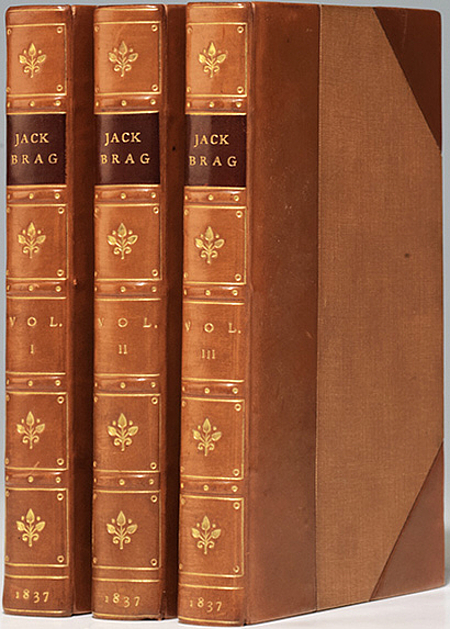
I may not know the book, but I do know Theodore Hook, who was an important exponent of the so-called "Silver-Fork Novel", those exposés of high society that were so condemned by the critics and so popular with the public during the 1820s and 1830s. Whether this is one of them remains to be seen...
And the Shorter challenge continues to present me with surprises: next up is yet another book I don't know:
#43: Jack Brag by Theodore Hook (1837)
I may not know the book, but I do know Theodore Hook, who was an important exponent of the so-called "Silver-Fork Novel", those exposés of high society that were so condemned by the critics and so popular with the public during the 1820s and 1830s. Whether this is one of them remains to be seen...
136rosalita
So happy for you that your access to the rare book collection has been restored, Liz. I can imagine — well, actually I don't have to imagine how vexing it was because you told us. :-) But all's well that ends well (fingers crossed).
137lyzard
>131 klobrien2:
I was making those little circular motions with my clenched fists while I was doing it. :D
No, these items are held under strict conditions so I have to read on-site. It's a pain with the travelling, but at least it's access!
>136 rosalita:
AT LENGTH. :D
I'm still having visions of something going wrong at the last minute so everything will remain crossed until I actually have the book in my hands...
I was making those little circular motions with my clenched fists while I was doing it. :D
No, these items are held under strict conditions so I have to read on-site. It's a pain with the travelling, but at least it's access!
>136 rosalita:
AT LENGTH. :D
I'm still having visions of something going wrong at the last minute so everything will remain crossed until I actually have the book in my hands...
138lyzard
So anyway---
TAH-DAAAAAAAAAAHHHHHHHHHH!!!!!!!!!!


It was awfully quiet down there, which personally I found very pleasant; but I got the feeling they were glad to have a visitor. (Of course, they'd probably have more visitors if the website didn't say they were still closed! Not everyone's as obsessive as me, after all...)
TAH-DAAAAAAAAAAHHHHHHHHHH!!!!!!!!!!


It was awfully quiet down there, which personally I found very pleasant; but I got the feeling they were glad to have a visitor. (Of course, they'd probably have more visitors if the website didn't say they were still closed! Not everyone's as obsessive as me, after all...)
139lyzard
So, yeah:
Now reading The Red-Haired Girl by Carolyn Wells; still reading From Man To Man by Olive Schreiner.
(And amused to note they share an OPD of 1926: you could hardly find two books more different!)
Now reading The Red-Haired Girl by Carolyn Wells; still reading From Man To Man by Olive Schreiner.
(And amused to note they share an OPD of 1926: you could hardly find two books more different!)
140cbl_tn
>138 lyzard: >139 lyzard: I love that you've started your post-COVID reading with a redhead!
142rosalita
>138 lyzard: Hooray! Hurrah! Target acquired!
143lyzard
>142 rosalita:
O frabjous day! Callooh! Callay! :D
I have no idea how I'm going to fit multiple reading session + travelling time blocks into my schedule but IT HAS TO HAPPEN!!
O frabjous day! Callooh! Callay! :D
I have no idea how I'm going to fit multiple reading session + travelling time blocks into my schedule but IT HAS TO HAPPEN!!
145FAMeulstee
>138 lyzard: Yay! Back reading in situ :-)
146lyzard
>144 Helenliz:
Finally, yes! :D
It's another of Wells' mysteries where the actual detective doesn't show up until late in the narrative, but she's doing a better job than usual with what I call the round-in-circles material. So far there's only been one glimpse of the redhead...
>145 FAMeulstee:
Not the most time-efficient way of getting a book read, but at least I'm GETTING A BOOK READ!!
Finally, yes! :D
It's another of Wells' mysteries where the actual detective doesn't show up until late in the narrative, but she's doing a better job than usual with what I call the round-in-circles material. So far there's only been one glimpse of the redhead...
>145 FAMeulstee:
Not the most time-efficient way of getting a book read, but at least I'm GETTING A BOOK READ!!
147lyzard

Publication date: 1915
Genre: Contemporary drama
Read for: Virago reading / TIOLI ('lark' in title)
The Song Of The Lark - Even as a young child, Thea Kronborg knows that she is different from the people around her. The daughter of a minister, Thea grows up in Moonstone, a tiny, isolated town in Colorado, where anything unusual is considered suspicious; and Thea keeps her passion for music and her vague dreams of a career a secret. However, a few people see and embrace Thea's potential, including her much-harried mother, who fights to get her daughter piano lessons---not dreaming, however, of anything greater than work as a music teacher. But Thea's ambition vastly outstrips her mother's kindly intentions; and the day will come when she must choose between the life and the family she has always known, and a path both frightening and alluring... Willa Cather's The Song Of The Lark is a (still too) rare example of the female Bildungsroman, and an even rarer work of a woman's hard choices in the pursuit of an artistic career. The first half the novel, which makes it part of Cather's loosely aligned "Pioneer Trilogy", comprises an exquisitely detailed, slowly unfolding narrative of Thea's childhood in a remote Colorado town, and of the people who impact the formation of her character---none of whom, except her mother, are members of her family. Dr Archie, the young medico striving to build a life in the face of a disastrous marriage, befriends and supports the child, finding in her complexities a hope for the future; while for Professor Wunsch, the alcoholic former musician who teaches her piano, pours into Thea his own wasted talent. For Thea herself, however, equally important is "Spanish Johnny", an erratic Mexican worker whose passion for music helps decide her future course of action. Ironically, it is Ray Kennedy, a railway worker who early decides upon Thea as his future wife, and wants nothing more than together life in Moonstone, who inadvertently paves the way for her escape. When Ray is killed in an accident, his insurance money makes it possible for Thea to pursue her ambitions in Chicago. There, it is Andor Harsanyi, the concert pianist under whom she studies, who discovers the secret that Thea has cherished within herself since her earliest childhood: that though she is a talented pianist, her real talent, and her real passion, is song... The second half of The Song Of The Lark is difficult to assess. There is no question of its thematic importance, nor of Willa Cather's defiant intentions as she portrays Thea's growing ruthlessness in her pursuit of a career as an opera singer; yet Thea the single-minded woman is less interesting than Thea the confused child; and as her career begins to dominate the narrative, on the whole the novel loses the fine perceptions that are the highlight of the earlier descriptions of Moonstone. The exception is an extended passage in which Thea retreats to the canyons and ancient, abandoned cliff dwellings of Arizona to commune with herself over her future, which contains some equally beautiful and striking writing. Otherwise, there is an odd, muted quality about this section of the novel, with several of its "big" emotional moments - Thea's decision over her dying mother, the confrontation between herself and Frederick Ottenburg, the wealthy young socialite who gives her his patronage and then falls in love with her - playing out "off-stage", out of the reader's line of vision. Of course in a way this is the point: everything is less important to Thea than her singing; and Cather makes no bones about the work, the sacrifice, and the ruthlessness required take any individual - still more a woman - to the pinnacle of their chosen field.
Not only did the world seem older and richer to Thea now, but she herself seemed older. She had never been alone for so long before, or thought so much. Nothing had ever engrossed her so deeply as the daily contemplation of that line of pale-yellow houses tucked into the wrinkle of the cliff. Moonstone and Chicago had become vague. Here everything was simple and definite, as things had been in childhood. Her mind was like a ragbag into which she had been frantically thrusting whatever she could grab. And here she must throw this lumber away. The things that were really hers separated themselves from the rest. Her ideas were simplified, became sharper and clearer. She felt united and strong...
She was ashamed to think what an apprehensive drudge she must always have seemed to Fred, and she wondered why he had concerned himself about her at all. Perhaps she would never be so happy or so good-looking again, and she would like Fred to see her, for once, at her best. She had not been singing much, but she knew that her voice was more interesting than it had ever been before. She had begun to understand that---with her, at least---voice was, first of all, vitality; a lightness in the body and a driving power in the blood. If she had that, she could sing. When she felt so keenly alive, lying on that insensible shelf of stone, when her body bounded like a rubber ball away from its hardness, then she could sing. This, too, she could explain to Fred. He would know what she meant.
Another week passed. Thea did the same things as before, felt the same influences, went over the same ideas; but there was a livelier movement in her thoughts, and a freshening of sensation, like the brightness which came over the underbrush after a shower. A persistent affirmation---or denial---was going on in her, like the tapping of the woodpecker in the one tall pine tree across the chasm. Musical phrases drove each other rapidly through her mind, and the song of the cicada was now too long and too sharp. Everything seemed suddenly to take the form of a desire for action.
It was while she was in this abstracted state, waiting for the clock to strike, that Thea at last made up her mind what she was going to try to do in the world, and that she was going to Germany to study without further loss of time...
148kac522
>147 lyzard: I've been putting this off for ages, so thanks for the incentive. Sounds like it would make an excellent Virago group read.
149lyzard

Publication date: 1930
Genre: Mystery / thriller
Series: Inspector French #6
Read for: Series reading / TIOLI (all vowels in title)
Sir John Magill's Last Journey - Sir John Magill sets out for Northern Ireland from his London home, travelling by train through Scotland and then by boat. After conducting some business, Sir John telephones his son, Malcolm, from Whitehead Railway station asking to be picked up: he says he will begin walking towards Lurigen, where Malcolm has a house, and that they can meet on the road. However, Malcolm finds no sign of his father; nor does he hear from him again... Attempting to determine the nature of the business that took Sir John to Ireland, and who may have had motive to harm him, the Belfast police contact Scotland Yard---and Inspector Joseph French is dispatched to assist. He and his Irish colleagues are still investigating the case as one of a missing person when an anonymous letter directs them to the body of Sir John Magill, buried in the grounds of his son's house... Sir John Magill's Last Journey is an amusing blending of most of the familiar tropes of Freeman Wills Crofts' Inspector French series---chief amongst them that it carries its protagonist far from London (French always enjoys a journey and new scenery). Eventually a running joke of sorts develops, with French bouncing from England to Scotland to Northern Ireland and back again as the seeming nature of the case shifts and shifts again; though the geography of the story is vital to its mystery, and is worked out realistically and with great attention to detail. Meanwhile, perhaps even more than usual, the actual investigation consists of painstaking and potentially tedious routine police work, with French and his colleagues, Inspector Rainey and Sergeant M'Clung, following even the most tenuous of leads to their conclusion. (French's failure to go all out in this respect almost cost him his life during an earlier case, so no more short cuts for him!) This thoroughness leads to a larger degree of "luck" than the police detectives might reasonably expect - though French concedes that you always needs some - when several unlikely witnesses are able to put the investigators on the right track. But perhaps most typical of all is the turn that the Magill case takes about halfway through the narrative, when it switches from a whodunit to a how-and-why, with the identity of the guilty party, or parties, effectively revealed, and the question becoming how French and the others are going to go about proving it. Though all the early evidence points to Malcolm, French's instincts point him in a different direction; as, indeed, does the medical evidence, which reveals that the victim was drugged some hours before his death: a finding that contradicts many of the witness statements about Sir John's movements. Through an elaborate reconstruction, French is able to demonstrate how he believes this tricky, sleight-of-hand murder was actually committed, and why; but this brings him no nearer to the tangible proof he needs---pushing him towards the setting of a dangerous trap...
French's heart seemed to miss a beat and he sat for a moment breathlessly. His pipe slipped from his half-opened mouth and, dropping to the floor, ejected a little heap of red-hot ashes on to the carpet. But French saw neither it nor anything else. He was gripped by a sudden new idea, which, like a blinding flash of lightning in the murky blackness of a hurricane, had illuminated the whole of his thoughts.
He got up, automatically picked up the pipe and tramped the red ashes into blacknss, and with growing excitement began to pace the room. Yes! Tremulously he began to admit to himself that he had got it! Yes, at last it worked in! The visits of 'Coates' to Sir John, the plans of the linen-silk machinery, the journey to Ireland, the movements of the launch and its four passengers, the velvet coat and its accompanying symbolic ladder. As he ran over the details in his mind he saw that at last they fitted! Now he knew why Teer had called at Tarn Bay and just what had taken place on the Cave Hill. He saw in his mind's eye the strange happening on the road where the bloodstained hat was found, he realised the true inwardness of what Cleaner M'Atamney had seen at Larne and visualised the hiseous consummation at Lurigen. At last he understood Malcolm's part in all these manifestations. In short - oh, could it be? at last he had solved his problem!
150lyzard
As often with the Inspector French novels, that quote seems a lot more spoiler-iffic than it actually is: it comes about halfway through the narrative, and there is an awfully long way to go before French's "solved" problem is solved.
Meanwhile, Sir John Magill's Last Journey has a moral we can all take to heart:
If you're putting together a criminal conspiracy, don't invite into it anyone with bright red hair... :D
Meanwhile, Sir John Magill's Last Journey has a moral we can all take to heart:
If you're putting together a criminal conspiracy, don't invite into it anyone with bright red hair... :D
151lyzard
>148 kac522:
It had been on my lists for ages too. This is one of the things I like best about the TIOLI challenges, they give you that shove to get things read.
Sounds like it would make an excellent Virago group read.
Stick around long enough and it might happen! :D
It had been on my lists for ages too. This is one of the things I like best about the TIOLI challenges, they give you that shove to get things read.
Sounds like it would make an excellent Virago group read.
Stick around long enough and it might happen! :D
152lyzard
Finished From Man To Man for TIOLI #8.
Now reading Ragtime by E. L. Doctorow; still reading The Red-Haired Girl by Carolyn Wells.
Now reading Ragtime by E. L. Doctorow; still reading The Red-Haired Girl by Carolyn Wells.
153rosalita
>149 lyzard: Stop making me wish we'd chosen the French series instead of Boney!
154lyzard
>153 rosalita:
:D
I suppose reading and reviewing a Bony book to tip the balance back would be counterproductive...?
:D
I suppose reading and reviewing a Bony book to tip the balance back would be counterproductive...?
155rosalita
>154 lyzard: I need to get off the schneid and read the last Miss Silver, and then I'll be ready! Should happen this month, she said optimistically.
157rosalita
>156 lyzard: I can't even pretend that I was waiting for your review. :-) I'm just hopelessly behind.
158lyzard
>158 lyzard:
...she said to the person who had to set up a dedicated thread for her unwritten reviews... :D
...she said to the person who had to set up a dedicated thread for her unwritten reviews... :D
159rosalita
>158 lyzard: I'm more behind on actually reading the books, not the reviews! That seems worse, somehow. :-)
161rosalita
>160 lyzard: Well, when you put it that way ... :-D
162lyzard
Finished The Red-Haired Girl for TIOLI #2...
...and it looks like Rare Books is my only option for the next book in the series, too.
Sigh... :D
...and it looks like Rare Books is my only option for the next book in the series, too.
Sigh... :D
163lyzard
And in fact my list of books only available via a visit to the Rare Books section is paralysingly long.
Making an actual choice is pretty much impossible; this is why, as with The Red-Haired Girl, I tend to let an impulse sway me, without thinking about it too much.
I'm currently tending towards Dead Men At The Folly by John Rhodes, the 13th in his Dr Priestley series; though this will require me to clench my teeth and skip over an entry. I am trying to be better at that sort of thing, but it always hurts. In this case, copies of Rhodes' The Hanging Woman are very rare and very expensive, and so realistically out of reach; I'll just have to keep hoping that, at some point, somebody resurrects it online.
Making an actual choice is pretty much impossible; this is why, as with The Red-Haired Girl, I tend to let an impulse sway me, without thinking about it too much.
I'm currently tending towards Dead Men At The Folly by John Rhodes, the 13th in his Dr Priestley series; though this will require me to clench my teeth and skip over an entry. I am trying to be better at that sort of thing, but it always hurts. In this case, copies of Rhodes' The Hanging Woman are very rare and very expensive, and so realistically out of reach; I'll just have to keep hoping that, at some point, somebody resurrects it online.
164lyzard
I have two other Rare Books competing for my attention---and quite strongly, strangely enough given their nature.
One is Thieves' Nights, the next book along in the bizarre oeuvre of Harry Stephen Keeler, which I am (in fits and starts) working through.
The other is The Rum Row Murders, a standalone work by Charles Reed Jones, one of the more frustrating authors of the early 30s in that, though he was popular and prolific at the time, his books have since all but vanished.
Why someone should have saved a copy of this particular book is unclear. Jones' most successful work was The King Murder, the first in a short series featuring private detective, Leighton Swift: it became the basis of a successful film and, while you can find that, and information about it, everywhere (hugely complicating any search, of course), the book itself has completely disappeared. This is doubly frustrating since Rare Books holds a copy of the second Leighton Swift mystery, The Torch Murder; however, the third and last entry, The Van Norton Murders, is also effectively unavailable---
---effectively because The Van Norton Murders first appeared in the January 1930 edition of Complete Detective Novel Magazine: what's on the cover is what's inside. Copies of that do show up on eBay from time to time, but not in my price range.
One is Thieves' Nights, the next book along in the bizarre oeuvre of Harry Stephen Keeler, which I am (in fits and starts) working through.
The other is The Rum Row Murders, a standalone work by Charles Reed Jones, one of the more frustrating authors of the early 30s in that, though he was popular and prolific at the time, his books have since all but vanished.
Why someone should have saved a copy of this particular book is unclear. Jones' most successful work was The King Murder, the first in a short series featuring private detective, Leighton Swift: it became the basis of a successful film and, while you can find that, and information about it, everywhere (hugely complicating any search, of course), the book itself has completely disappeared. This is doubly frustrating since Rare Books holds a copy of the second Leighton Swift mystery, The Torch Murder; however, the third and last entry, The Van Norton Murders, is also effectively unavailable---
---effectively because The Van Norton Murders first appeared in the January 1930 edition of Complete Detective Novel Magazine: what's on the cover is what's inside. Copies of that do show up on eBay from time to time, but not in my price range.
165lyzard
As I say, i am trying to be better about skipping books, though it goes against every fibre in my being.
I'm also trying to convince myself that there is no practical difference between buying a pricey book and paying academic loan fees, which is proving weirdly difficult.
Case in point: Herman Landon's The Picaroon Does Justice is available for loan from a private book depository for a fee of $28.80, plus a $5,30 processing fee...and I keep agonising over it. Yet I know perfectly well that if a copy was available to buy for $34.10 I'd say, "That's too much" and move on.
My brain just will not accept the equivalencies of those two situations. :D
I'm also trying to convince myself that there is no practical difference between buying a pricey book and paying academic loan fees, which is proving weirdly difficult.
Case in point: Herman Landon's The Picaroon Does Justice is available for loan from a private book depository for a fee of $28.80, plus a $5,30 processing fee...and I keep agonising over it. Yet I know perfectly well that if a copy was available to buy for $34.10 I'd say, "That's too much" and move on.
My brain just will not accept the equivalencies of those two situations. :D
166lyzard
Having made my bold declaration about skipping unavailable series works I was immediately diverted into another list-task because of course I was.
I have been working through my series lists, changing entries from 'next book' to 'next *available* book', and it was going quite well until I hit the Anthony Trent series by Wyndham Martyn.
First of all I hit my old enemy, two books published in the same year but listed in alphabetical order not publication order: The Mysterious Mr Garland and The Return Of Anthony Trent, both - supposedly - from 1923.
In trying to work out which one should correctly come first, I stumbled into another puzzle: there are numerous sources insisting that the 1921 film, The Star Reporter, was based on The Mysterious Mr Garland...but I can't find an OPD for that prior to 1923.
My other problem is more fundamental: I can't find any confirmation that The Mysterious Mr Garland actually is part of the Anthony Trent series...
ETA: Okay. I've confirmed to my own satisfaction that The Mysterious Mr Garland did come before The Return Of Anthony Trent. Furthermore, scanty as its info is at the IMDb (it's a lost film), the cast list for The Star Reporter does have Anthony Trent as one of the characters.
This doesn't explain the OPD business though...
ETA2: Hmm...

Except that Anthony Trent isn't a reporter...unless that's the career he adopted after he gave up being a "master criminal", which is how is was originally introduced.
I have been working through my series lists, changing entries from 'next book' to 'next *available* book', and it was going quite well until I hit the Anthony Trent series by Wyndham Martyn.
First of all I hit my old enemy, two books published in the same year but listed in alphabetical order not publication order: The Mysterious Mr Garland and The Return Of Anthony Trent, both - supposedly - from 1923.
In trying to work out which one should correctly come first, I stumbled into another puzzle: there are numerous sources insisting that the 1921 film, The Star Reporter, was based on The Mysterious Mr Garland...but I can't find an OPD for that prior to 1923.
My other problem is more fundamental: I can't find any confirmation that The Mysterious Mr Garland actually is part of the Anthony Trent series...
ETA: Okay. I've confirmed to my own satisfaction that The Mysterious Mr Garland did come before The Return Of Anthony Trent. Furthermore, scanty as its info is at the IMDb (it's a lost film), the cast list for The Star Reporter does have Anthony Trent as one of the characters.
This doesn't explain the OPD business though...
ETA2: Hmm...

Except that Anthony Trent isn't a reporter...unless that's the career he adopted after he gave up being a "master criminal", which is how is was originally introduced.
167rosalita
>166 lyzard: I am just spitballing here, but is it possible that the book started life as a screenplay before being re-issued in book form? That seems less likely for a series book, but it's the only thing that comes to mind at the moment.
168lyzard
>167 rosalita:
I wondered whether the novel was purchased in galleys, altered onscreen to fit the contemporary obsession with reporters, but eventually published as written?
Of course it doesn't really matter, except that these unexplained details tend to lodge themselves in my convolutions and refuse to budge! :D
I wondered whether the novel was purchased in galleys, altered onscreen to fit the contemporary obsession with reporters, but eventually published as written?
Of course it doesn't really matter, except that these unexplained details tend to lodge themselves in my convolutions and refuse to budge! :D
169rosalita
>168 lyzard: Your next assignment is to figure out if there's a connection between whatever film production company made the movie and the eventual publisher of the novel...
170lyzard
>169 rosalita:
If I choose to accept it...? :D
There you go:
Arrow Film Corporation was an American film production and distribution company during the silent era from 1915 to 1926. An independent company, it operated alongside the established studios.
What that mainly tells us is that Wyndham Martyn wasn't so established in his writing career that a low-budget studio couldn't afford to buy his novels!
If I choose to accept it...? :D
There you go:
Arrow Film Corporation was an American film production and distribution company during the silent era from 1915 to 1926. An independent company, it operated alongside the established studios.
What that mainly tells us is that Wyndham Martyn wasn't so established in his writing career that a low-budget studio couldn't afford to buy his novels!
171rosalita
>170 lyzard: Bingo! Maybe someone at the studio read one of the previous books in the series and reached out to see if he had anything new?
172lyzard
From the little I've read of Martyn it seems an odd choice, particularly if they were going to alter his central character so much. I guess we'll never know!
173lyzard
ANYWAY---enough of my obsessive ramblings! (For the moment.)
Finished Ragtime for TIOLI #11.
Now reading Harrington by Maria Edgeworth.
Finished Ragtime for TIOLI #11.
Now reading Harrington by Maria Edgeworth.
174lyzard
Publication date: 1926
Genre: Mystery / thriller
Series: Fleming Stone #21
Read for: Series reading / TIOLI (linked to 1st quarter read)
The Red-Haired Girl - Lloyd Converse cuts his vacation in the Adirondacks short to return to New York. Having realised that he wants to marry lovely young Janet Thurston, Lloyd resolves to speak to his older brother, George, who inherited the bulk of their father's estate, about increasing his income. Lloyd knows that George has also been away; and when he lets himself into the house, he is surprised to see a sliver of light under the door to his brother's suite. Supposing only that he, too, cut his visit short, Lloyd enters---and finds a scene of horror... In shock, Lloyd does almost everything he shouldn't, including delaying his call to the police until he has pulled himself together. It doesn't take the unimaginative Detective Young long to place Lloyd under arrest; the circumstantial case against him, as his lawyer, Harrison Whitney, and Janet soon realise, is very strong. The only evidence to the contrary is a mysterious red-haired woman seen slipping away from the Converse home just before Lloyd entered it... As is the case with many of Carolyn Wells' mysteries, in The Red-Haired Girl the arrival of the scene of the actual series detective is significantly delayed, with most of the narrative taken up with the other characters - including in this case no less that four other detectives, of various qualifications and abilities - running around in circles. Also as usual, when Fleming Stone is finally called in, he solves the case in an absurdly short space of time---although to be fair, he does some actual detection here, re-investigating the crime scene, and paying attention to details that the tunnel-visioned Detective Young has dismissed. He also (in what is, for Wells, an unusually wry meta-touch) offers a most "Sherlockian" reading of the killer's character from one particular piece of evidence, in what is partly legitimate deduction, and partly a trap. Prior to all that, Wells does a much better job than usual in shaping her intervening narrative---including having her police detective actually make an arrest. This causes the reader no dismay: Lloyd is an infuriating character, always preening himself on his high principles and general superiority; but his behaviour upon finding his brother's body could not possibly be stupider: he picks up the gun, has a drink from one of the two glasses, starts cleaning up, doesn't call the cops, you name it. The only thing he does of any sense - not that it does him any good with Detective Young - is to make a rough outline of the mark of a wet, bare foot that he finds upon the mat in his brother's bathroom... Though he is not himself sure of Lloyd's innocence, Harrison Whitney agrees to represent him, and hires a private detective called Kittinger to conduct a separate investigation. Meanwhile, Alan Avery, Whitney's confidential clerk and a friend of Lloyd's, also begins looking into the case; while Janet, unconvinced of Kittinger's competence, makes her own inquiries. Each detective in his or her own way is desperately seeking the red-haired woman, who may be the killer, or may just be a witness; but no sign of her has been found when a second murder throws the case into chaos...
"I remember his very words,---'rather large than small; rather tall than short; rather stout than slim; and with bushy, flaming red hair.' That's the woman."
"Heavens! Where did he get all that?"
"He said he pieced it together from the policeman's description."
"No wonder they killed that man! He would soon have been too smart for them. He would have found that girl next... Go on about the red-haired girl..."
"She must have washed her hands in the bathroom, because Binns, the policeman, recognised that peculiar fragrance of Bouquet soap. He vows he noticed it as she passed him."
"She must have passed fairly close, then, for that is a delicate odour."
"I know it. But she did pass closely, or he couldn't have seen all the points of her costume that he did see."
"True enough. Any more?"
"No; except that I discovered, or rather learned, from the Converse cook that two of her flatirons were missing the next morning."
"Flatirons!" Fleming Stone looked really excited for the first time. "There was nothing in the papers about flatirons," he said.
"I told the police detective, but he only scouted the idea that there could be any importance in it," Janet said, looking anxious.
"Flatirons! My heavens, we will brand the murderer with those flatirons..."
176PaulCranswick
I will be interested to see what you thought of Ragtime, Liz. I enjoyed that one back in the day but noted down in my then diary that it was "very American"! Long before LT days.
177rosalita
>174 lyzard: Your description of Wells' tendency to bring the actual detective onto the scene late in the narrative reminds me of many of the Miss Silver books. Was that a common tactic among mystery writers of the era?
178lyzard
>176 PaulCranswick:
I really enjoyed it, a very strange mix of humour and rage. I like those sorts of meta-historical touches, too, like some of Tom Stoppard's plays.
>177 rosalita:
I don't think Maudie ever showed up THIS late!
(Eep! - maybe in The Girl In The Cellar...?)
No, I don't find that it is at all common, just something that Wells did a lot (in her Pennington Wise series, in addition to the Fleming Stone books). Her better works, though she never seemed to realise it, are the ones where she *doesn't* do it: her writing and characterisations aren't usually strong enough to compensate for the gap, though this is one of her more successful efforts that way.
I really enjoyed it, a very strange mix of humour and rage. I like those sorts of meta-historical touches, too, like some of Tom Stoppard's plays.
>177 rosalita:
I don't think Maudie ever showed up THIS late!
(Eep! - maybe in The Girl In The Cellar...?)
No, I don't find that it is at all common, just something that Wells did a lot (in her Pennington Wise series, in addition to the Fleming Stone books). Her better works, though she never seemed to realise it, are the ones where she *doesn't* do it: her writing and characterisations aren't usually strong enough to compensate for the gap, though this is one of her more successful efforts that way.
179lyzard

Publication date: 1816
Genre: Classic
Read for: A Century Of Reading
Glenarvon - When Lord Byron broke off their intense but brief affair, the emotionally unstable Lady Caroline Lamb swung wildly between attempts to get him back and various acts of revenge, including what we would now call stalking. She also sat down and wrote a three-volume novel, a roman à clef fictionalising the affair and satirising many of the prominent figures of her society (not least her mother-in-law, Lady Melbourne). No-one cared about the affair; but those pilloried did care about the satire; and though she had her revenge - the novel certainly got under Byron's thick skin - Lamb ruined herself socially in the process. If Glenarvon were only satire, its value - for that matter, its accessibility - would be limited; but somewhat surprisingly, Lamb makes her novel rather more than that. Set against the Irish rebellion of 1798 (giving me a weird sense of déjà vu when I later read Rory O'More, which also uses that backdrop), the three volumes of Glenarvon are almost three separate works: the first traces the family background, birth, upbringing and marriage of Lamb's alter-ego, the Lady Calantha; the second dwells in detail upon the - almost - uncontrollable attraction between Calantha and Clarence de Ruthven, Lord Glenarvon; while the third brings it all to an inevitably tragic conclusion. The first volume of the novel is the hardest to get through, as it dwells upon Calantha's careless upbringing and the inadequate guidance given by her parents and, later, her husband. No doubt there is some truth to this, and Lamb makes some valid points about the position and treatment of women in her society; but it is also extremely self-indulgent, as she also presents herself as everyone else's victim, and not responsible for her own faults and misdeeds. Of course things pick up when Glenarvon arrives on the scene; and here, Lamb embraces the emotional language and beliefs of contemporary Romanticism. However, in spite of all the excess, there is never a physical affair between the protagonists (or the novel wouldn't have been published): though they do spend a lot of time debating the point. The third volume is the best, though it makes little sense plot-wise. Instead what it offers is an unexpectedly clever deployment of the tropes of the Gothic novel, particularly in that it effectively presents Byron simultaneously as Romantic hero and Gothic villain. Lamb lets rip at this point; and if she spends Volume II excusing herself on the grounds of how irresistible Byron was, here she makes it clear what a complete shit he was, too---not least by reproducing real incidents from the end of their affair, and by including a copy of the vicious 'Dear Jane' letter she received. It seems, however, that Byron cared less for all that than for Lamb's presentation of Glenarvon as a shallow, egotistical posturer, exploiting the Irish cause for his own gain but caring only about his own image; which, given his later history, might have been a bit unfair, at that.
Calantha turned to him, she saw that face whose every feature was engraved deep in her very heart---that smile of sweetness---that calm serenity, she had not the power to speak---to think; and yet recovering from this strange enchantment,---"How could you betray me?" she said. "I judge you not, but I can never feel either interest or friendship again."
"And yet," said Glenarvon gravely, "I need both at this time, for I am miserable and ill too, only I do not wish to excite your compassion by these arts, and I had rather die unforgiven, than use any towards you."
"Wherefore did you betray me?"
"Can you ask? I was deeply wounded. It is not enough for me that you love me, all must, and shall know it. I will make every sacrifice for you---run every risk; but every risk and every sacrifice must be shared."
"Whatever my feelings might be," she answered coldly, "you shall never subdue me again. I may be infatuated, but I will never be criminal. You may torture me as you please, if you have the power over me which you imagine, but I can bear torture, and none ever yet subdued me."
"Calantha," said Lord Glenarvon, taking her hand firmly, and smiling half scornfully, "you shall be my slave. I will mould you as I like; teach you to think but with my thoughts, to act but with my feelings, you shall wait, nor murmur---suffer, nor dare complain---ask, and be rejected---and all this, I will do, and you know it, for your heart is already mine..."
180lyzard
The backlash against Glenarvon was immediate; and though Lamb scrambled to produce a much-softened second edition, the damage was done.
Copies are out there, though---so if you have any interest in the novel, make sure you find the unexpurgated version.
The wonderful people at Valancourt Books have released an inexpensive Kindle edition of the full text.
Copies are out there, though---so if you have any interest in the novel, make sure you find the unexpurgated version.
The wonderful people at Valancourt Books have released an inexpensive Kindle edition of the full text.
181lyzard
And of course---
Those of you who have read Heyer's Bath Tangle will remember a scene in which the heroine and her fiancé have an argument over whether she should be reading scandalous novels like Glenarvon... :D
Those of you who have read Heyer's Bath Tangle will remember a scene in which the heroine and her fiancé have an argument over whether she should be reading scandalous novels like Glenarvon... :D
182rosalita
>181 lyzard: Well, that sounds like the perfect excuse to re-read Bath Tangle, now that I know more about the book being argued about. And if I recall correctly, Bath Tangle stars another of those tempestuous redheads ... !
185lyzard

Publication date: 1817
Genre: Classic
Read for: A Century Of Reading
Harrington - Too lazy and selfish to discharge her duties properly, a nursemaid terrorises her young charge into good behaviour by threatening him with "Simon the Jew": convincing the child that an inoffensive neighbourhood clothes-dealer is a monster who kills naughty children. The results are disastrous: the boy suffers constant nightmares and nervous afflictions; and as he grows, he develops a hatred of all Jewish people. This prejudice suffers its first check when Harrington is at school, and he encounters a young Jewish peddler called Jacob, whose honesty and sensitivity refutes all that he believes. Through Jacob, while at Cambridge Harrington is introduced to Israel Lyons, a cultured scholar whose teaching and example cures what is left of his prejudice. Lyons, in turn, arranges for Harrington to meet a Spanish Jew, Mr Montenero, who has just settled in London---and Harrington's new beliefs face their greatest test when he falls in love with Montenero's daughter, Berenice... Maria Edgeworth was perhaps the first, though certainly not the last, English author of the 19th century to have antisemitism in her writing called out by a correspondent. A generous, intelligent woman, Edgeworth sat down to ponder these criticisms and her own conduct---and responded with Harrington, the first-person narrative of - as the recent Valancourt Books edition amusingly puts it - "a recovering antisemite". Set some thirty years before its publication, allowing Edgeworth to use the Gordon Riots of 1780 as an ironic backdrop, this is a self-consciously didactic work, and as such not infrequently an awkward, over-insistent read. However, its attempt to analyse the psychology of bigotry is all but unprecedented; and whatever faults it has, we must forgive them in the face of this short novel's most critical aspect: its insistence that prejudice is nothing inherent in human nature, but something taught to children by adults. Edgeworth is also unsparing in her criticisms of her own society, presenting the English upper classes in a most unflattering light, and enjoying the irony of a passage in which two of her most flagrant bigots almost fall foul of the prejudices of others, when they are mistaken for Catholics during an anti-Catholic riot: though realistically, they learn nothing from the experience, and in fact resent being saved by the Monteneros. Though Edgeworth's intentions here are admirable, she does take the obvious soft option: she makes her Jewish characters absurdly perfect, to underscore the nature of the prejudice against them. This is not unusual in this sort of story - Guess Who's Coming To Dinner? pulled exactly the same stunt some 150 years later - but it is a choice that denies those characters the right simply to be human. (It also demands a higher standard from the objects of prejudice than from those who practice it.) In addition to its tracing of its protagonist's shifting beliefs, Harrington ponders the question of mixed marriages, with Harrington battling his frenemy, Lord Mowbray, who vows to win Berenice - and Berenice's fortune - for himself, and being threatened with disinheritance by his father if he pursues his courtship. At last, unfortunately, Harrington is guilty of a cop-out; though this is offset by another of the novel's key moments: Harrington's mother signalling her own surrender by referring to her future daughter-in-law not as "the Jewess", but simply as Berenice.
Lady de Brantefield all the time sat in the most remote part of the room, fixed in a huge arm-chair. The pictures and the most valuable things were, by desperately hard work, just stowed into our place of safety, when we heard the shouts of the mob, at once at the back and front of the house, and soon a thundering knocking at the hall-door. Mr Montenero and I went to the door, of course without opening it, and demanded, in a loud voice, what they wanted.
“We require the papists,” one answered for the rest, “the two women papists and the priest you’ve got within, to be given up, for your lives!”
“There is no priest here---there are no papists here:---two Protestant ladies, strangers to me, have taken refuge here, and I will not give them up,” said Mr Montenero.
“Then we’ll pull down the house.”
“The military will be here directly,” said Mr Montenero, coolly; “you had better go away.”
“The military!---then make haste, boys, with the work.”
And with a general cry of “No papists!---no priests!---no Jews!---no wooden shoes!” they began with a volley of stones against the windows. I ran to see where Berenice was. It had been previously agreed among us, that she and her guests, and every female in the house, should, on the first alarm, retire into a back room; but at the first shout of the mob, Lady de Brantefield lost the little sense she ever possessed: she did not faint, but she stiffened herself in the posture in which she sat, and with her hands turned down over the elbows of the huge chair, on which her arms were extended, she leaned back in all the frightful rigidity of a corpse, with a ghastly face, and eyes fixed.
Berenice, in vain, tried to persuade her to move. Her ideas were bewildered or concentrated. Only the obstinacy of pride remained alive within her.
“No,” she said, “she would never move from that spot---she would not be commanded by Jew or Jewess.”
186lyzard
Harrington was the 1817 work for my Century Of Reading challenge.
1818, my next missing year, is tricky inasmuch as I seem to have read its most important works already---
(---noting, however, that Northanger Abbey and Persuasion, though dated 1818, were actually published in December of the previous year: I don't know what the thing was with British publishers, that made them do that for these works and others, but it drives me crazy---)
---including Shelley's Frankenstein, Scott's The Heart of Mid-Lothian - which I read with Heather some years ago, thread here - and Ferrier's Marriage, as part of the Virago project, thread here.
Of the remaining key works, I've decided to go with Nightmare Abbey by Thomas Love Peacock---partly because it makes fun of Shelley and the Romantics, not unwelcome after Zastrozzi and St. Irvyne, and partly because it is another twist on the persistence of the Gothic tropes, after Glenarvon.
1818, my next missing year, is tricky inasmuch as I seem to have read its most important works already---
(---noting, however, that Northanger Abbey and Persuasion, though dated 1818, were actually published in December of the previous year: I don't know what the thing was with British publishers, that made them do that for these works and others, but it drives me crazy---)
---including Shelley's Frankenstein, Scott's The Heart of Mid-Lothian - which I read with Heather some years ago, thread here - and Ferrier's Marriage, as part of the Virago project, thread here.
Of the remaining key works, I've decided to go with Nightmare Abbey by Thomas Love Peacock---partly because it makes fun of Shelley and the Romantics, not unwelcome after Zastrozzi and St. Irvyne, and partly because it is another twist on the persistence of the Gothic tropes, after Glenarvon.
187lyzard
I meant to mention, re: Harrington, that Edgeworth had the grace to call herself out in no uncertain terms: citing the work that caused her Jewish correspondent to accuse her of "illiberality":
And here I must observe, that not only in the old story books, where the Jews are as sure to be wicked as the bad fairies, or bad genii, or allegorical personifications of the devils, and the vices in the old emblems, mysteries, moralities, &c.; but in almost every work of fiction, I found them represented as hateful beings; nay, even in modern tales of very late years, since I have come to man’s estate, I have met with books by authors professing candour and toleration---books written expressly for the rising generation, called, if I mistake not, Moral Tales for Young People; and even in these, wherever the Jews are introduced, I find that they are invariably represented as beings of a mean, avaricious, unprincipled, treacherous character. Even the peculiarities of their persons, the errors of their foreign dialect and pronunciation, were mimicked and caricatured, as if to render them objects of perpetual derision and detestation. I am far from wishing to insinuate that such was the serious intention of these authors. I trust they will in future benefit by these hints. I simply state the effect which similar representations in the story books I read, when I was a child, produced on my mind. They certainly acted most powerfully and injuriously, strengthening the erroneous association of ideas I had accidentally formed, and confirming my childish prejudice by what I then thought the indisputable authority of printed books.
And here I must observe, that not only in the old story books, where the Jews are as sure to be wicked as the bad fairies, or bad genii, or allegorical personifications of the devils, and the vices in the old emblems, mysteries, moralities, &c.; but in almost every work of fiction, I found them represented as hateful beings; nay, even in modern tales of very late years, since I have come to man’s estate, I have met with books by authors professing candour and toleration---books written expressly for the rising generation, called, if I mistake not, Moral Tales for Young People; and even in these, wherever the Jews are introduced, I find that they are invariably represented as beings of a mean, avaricious, unprincipled, treacherous character. Even the peculiarities of their persons, the errors of their foreign dialect and pronunciation, were mimicked and caricatured, as if to render them objects of perpetual derision and detestation. I am far from wishing to insinuate that such was the serious intention of these authors. I trust they will in future benefit by these hints. I simply state the effect which similar representations in the story books I read, when I was a child, produced on my mind. They certainly acted most powerfully and injuriously, strengthening the erroneous association of ideas I had accidentally formed, and confirming my childish prejudice by what I then thought the indisputable authority of printed books.
188lyzard

Publication date: 1914
Genre: Mystery / thriller
Series: Arsene Lupin #7
Read for: Series reading / TIOLI (connection to Lunar New Year)
The Teeth Of The Tiger - M. Desmalions, the Prefect of Police, is asked to oversee the complicated estate of an Englishman called Cosmo Mornington, who has bequeathed large sums to the heirs of his mother's sisters---if they can be located and identified. In his will, Mornington appoints his friend, Don Luis Perenna, his executor, tasked with finding the heirs; and making him the residuary legatee if he cannot. After having his own identity confirmed by Señor Caceres, the Peruvian attaché, who knows his family, and the Comte d'Astrignac, who knew him in the Foreign Legion, Don Luis accepts the assignment. He comments that Mornington was always convinced that he would be murdered---and that in his, Don Luis', opinion, he was. Further investigation proves Don Luis correct, which, though he raised the matter in the first place, focuses attention and suspicion upon him as the victim's potential heir. This causes a significant problem for Don Luis who, in spite of all the evidence of identification, is secretly Arsène Lupin... After somewhat pushing the reset button with the short story collection, The Confessions Of Arsène Lupin, Maurice Leblanc thankfully went on turning his gentleman-crook back into something resembling his initial conception of the character---making him once again a more lighthearted, devil-may-care figure, rather than the mopey tragedian he had (for various reasons) morphed into. Chronologically, The Teeth Of The Tiger follows 813, the 4th book in the series, which ends with the supposed death of Arsène Lupin in an explosion---following which, we are left to assume, he spent a considerable number of years resurrecting himself as Don Luis Perenna; only to have his new identity threatened by his involvement in the Mornington case. (Consistent chronology is not this series' strong point, it must be said.) This is overall an enjoyably complicated mystery-thriller, with Lupin showing his old facility for getting in and out of trouble; and one with a certain mordaunt sense of humour, with people killed off via elaborately improbable death-traps, and the unfortunate M. Desmalions choosing to ignore the unwelcome knowledge that Don Luis and Arsène Lupin are the same person: life for the French police is so much easier with Lupin safely dead. Set against this, however, we have Lupin getting annoyingly over-emotional about "the only woman I ever really loved" (we've met about six of them already); that subplot does get tiresome. However, the main narrative finds Don Luis / Lupin trying to preserve his carefully constructed new identity, while tracking down the other heirs of Cosmo Mornington who, though they are not supposed to know anything about the will, clearly do---with the result that they begin to be picked off, one by one, despite the police being informed in advance exactly when and where these murders will be committed...
Three o'clock in the morning! … The words kept on recurring to his mind. Twice he looked at his watch. There was twelve minutes left. There was ten minutes. Was the house really going to be blown up, by the mere effect of an infernal and all-powerful will?
"It's senseless, absolutely senseless!" he cried, stamping his foot.
But, on looking at his companions, he was amazed to see how drawn their faces were; and he felt his courage sink in a strange way. He was certainly not afraid; and the others were no more afraid than he. But all of them, from the chiefs to the simple detectives, were under the influence of that Don Luis Perenna whom they had seen accomplishing such extraordinary feats, and who had shown such wonderful ability throughout this mysterious adventure.
Consciously or unconsciously, whether they wished it or no, they looked upon him as an exceptional being endowed with special faculties, a being of whom they could not think without conjuring up the image of the amazing Arsène Lupin, with his legend of daring, genius, and superhuman insight.
And Lupin was telling them to fly. Pursued and hunted as he was, he voluntarily gave himself up to warn them of their danger. And the danger was immediate. Seven minutes more, six minutes more---and the house would be blown up...
M. Desmalions turned away his head and continued his walk up and down the room. But his anguish increased; and the words which he had heard over the telephone rang in his ears; and all Perenna's authority, his ardent entreaties, his frenzied conviction---all this upset him. He had seen Perenna at work. He felt it borne in upon him that he had no right, in the present circumstances, to neglect the man's warning.
"Let's go," he said.
189lyzard

Publication date: 1931
Genre: Mystery / thriller
Series: Ludovic Travers #5
Read for: Series reading / TIOLI (does not bring up the first touchstone)
Dancing Death - People begin to gather at Little Levington Hall for a New Year's fancy dress ball, which finds the owner, Martin Braishe, reviving an old family tradition. Braishe is a scientist, having just completed a dangerous piece of work on an experimental poison gas; but he is also a good host who knows how to enjoy himself. Already at Levington is Denis Frewne, a friend of Braishe's, who is living isolated in a cottage in the grounds as he struggles to complete his novel: his wife, Brenda, and her sister, the actress Mirabel Quest, are expected down from London, among other house-guests. The party is a success, but when a snow-storm develops it is cut short, with the casual guests departing while the rest see in the New Year before retiring. It is an eventful night: the lights and phones fail, due to wires being cut; paving the way for the discovery the next morning of a series of robberies; while Braishe discovers that his safe has been opened and a sample of his poison gas stolen. The proper course of action is still being debated when the body of Mirabel Quest is discovered, stabbed to death and thrust under a bed; and the party is still reeling from this when Denis Frewne, too, is found dead in his cottage from what might be natural causes---or might not... Though Ludovic Travers is considered the main detective from the start of Christopher Bush's series, prior to Dancing Death he plays a relatively minor role in the action, with most of the detection falling to his friend a colleague, private investigator, John Franklin; though it is usually Travers' observations that break the case. Here, however, we find Travers front and centre - much to his own dismay - with Franklin sent off through the snow to fight his way to the local police station after the discovery of the burglaries and Mirabel's murder. With the police not expected for perhaps another twenty-four hours, Travers subsequently teams up with George Paradine, an older, retired medical man whose formidible wife, Celia, is a relative of Brenda and Mirabel, to see what can be determined from the crime scenes - if the cottage is a crime scene - and everyone's account of their movements. There is resistance to the latter, until Travers points out that the snow stopped falling overnight, but there are no footprints in it---meaning the murderer is still in the house... This series is always something of an acquired taste, and Dancing Death is certainly no exception. Bush has a somewhat oblique style, and his characters do not always share their thoughts with the reader at the best of times; while with the nerdy, introverted Travers in charge, the lack of communication becomes problematic. Furthermore, there is a large cast of characters in this novel; and I feel that Bush does not spend quite enough time at the outset introducing them, and clarifying their relationship to one another, before things go wrong. All that said, about halfway through Dancing Death there is almost an audible snap---as it turns abruptly from a slightly frustrating though not uninteresting work into a wholly satisfactory piece of complex detective fiction, as Travers, sure at last in his own mind of the truth, begins to trace the events that led up to the New Year's Eve party, and to unravel the secrets that ended in double murder...
The really vital, the damning thing was, precisely who was aware of the change of rooms? He’d never for a moment believed that burglar-murderer theory... No! the murderer was an inmate of the house---and in the house at that very moment; and the problem should be solved from the two factors of motive and opportunity. Then who knew of the change of rooms? And that very question showed him something he’d not taken into account. The problem was twofold!---
The murderer was ignorant of the change of rooms and therefore intended to kill Brenda Fewne; the murderer was aware of the change and therefore intended to kill Mirabel Quest.
Moreover, running right through the dual problem was the added complication of the identical costumes the sisters had worn, the startling similarity in face and build, and the fact that everything almost certainly occurred when the house was in darkness.
No wonder Travers whistled hopelessly. Brenda Fewne couldn’t be questioned till the police got there---the men would never stand for that. In any case, what motive could there possibly have been for killing her? Or had the idea been even more hellish than common sanity suggested---a wiping out of both Denis Fewne and his wife at the same time? And if so---why? What, in God’s name, was the motive? Travers shook his head. A thing like that was too awful to contemplate---and far too tremendous for him to tackle. The thing to do, till the police---or Franklin---arrived, was to walk warily; to keep a courteous distance and yet give no man offence; and as quietly as possible to go on working on the supposition that the murderer had intended to kill the one who was killed, and had therefore known of the change of rooms...
190lyzard
Finished Elsie On The Hudson And Elsewhere for TIOLI #12.
Now reading The Crooked Furrow by Jeffery Farnol.
Now reading The Crooked Furrow by Jeffery Farnol.
191lyzard

Publication date: 1898
Genre: Young adult
Series: Elsie Dinsmore #23
Read for: Series reading / TIOLI (maritime setting)
Elsie On The Hudson And Elsewhere - Well, we seem to have a new contender in the this-book-has-no-plot stakes: fully two-thirds of this 23rd entry in Martha Finley's series consists of Revolutionary War material reproduced almost wholesale from the works of much-abused historian, Benson John Lossing, served up while its characters take a yachting holiday up the Hudson River and around the Great Lakes; and, just to add insult to injury, we have to hear the Benedict Arnold story all over again, having sat through it the last time the characters were anywhere near West Point (Elsie Yachting With The Raymonds, I think, #16). The only respite, if you can call it that, consists of the inevitable chapter or two of bible quotes, and some of Finley's excruciatingly unfunny ventriloquist scenes. There isn't even anything here to make fun of, which is a bit sad. At long last the characters head for home; and in the final chapter or two we finally get something at least resembling a little plot. We have already heard of the escape of the burglar jailed on Lucilla Raymond's testimony (Christmas With Grandma Elsie, #14), and that he has revenge on his mind; and here he makes an attempt on her life while she is out riding with her father, Captain Raymond, and Chester Dinsmore, one of the young men Raymond has been holding off from his daughter. Chester nearly gets himself killed in the process, leading to Raymond capitulating and granting Chester permission to court Lucilla...
The yacht was now moving rapidly down the river, all on board greatly enjoying the beautiful scenery. They landed at Tarrytown and visited the historical spots in its vicinity, among them the scene of André's capture and the monument to his captors.
"Why did they name this place Tarrytown, uncle?" asked Eric.
"Probably from the fact that a great deal of wheat was raised in the vicinity. 'Tarwe Town'---meaning wheat town---was what the early Dutch settlers called it.
"Those living here in Revolutionary days saw stormy scenes. There were lawless hands of marauders called Cowboys and Skinners infesting the Neutral Ground, which extended for thirty miles along the river and was plundered by both bands of outlaws without much, if any, regard to their victims' loyalty or disloyalty to the country."
"Those were bad times to live in," remarked Little Elsie. "I'd a great deal rather live in these; though I should like to have seen Washington and Wayne and Lafayette and---oh, all the rest of the good, brave men who did so much to save our country!"
"Yes," said Grandma Elsie, "but though we cannot see them here, we may hope to meet at least some of them in another and a better world."
192Helenliz
>191 lyzard: Sounds like a delight (!). How many more to get to the end of the that particular series?
193lyzard
>192 Helenliz:
These things are always a slog, but this one was like a form of torture. :(
Five. I can't face more than one a month, but I've promised myself I am going to get through them working at that rate.
These things are always a slog, but this one was like a form of torture. :(
Five. I can't face more than one a month, but I've promised myself I am going to get through them working at that rate.
195rosalita
>194 lyzard: You snuck him in there after I posted!
197lyzard

Publication date: 1864
Genre: Classic
Read for: Virago project / group read
The Perpetual Curate - Though his position is poorly paid and offers no opportunity for advancement, after five years in Carlingford as the Perpetual Curate of St. Roque's Frank Wentworth has established himself as a hardworking and valuable member of the community. He is particularly proud of his work amongst the rough, often irreligious workers of the poor area known as Wharfside---and is indignant and disbelieving when the new Rector of Carlingford, Mr Morgan, late in life to his duties and jealous of his dignity, takes offence at what he considers Frank's "trespass" on his parish. Frank's troubles have only just begun, however: his three aunts, led by the formidable Miss Leonora, descend upon Carlingford to inspect him as a minister. The three have a family living in their keeping but, Low Church to the point of Evangelicalism, they disapprove of Frank's very High Church tendencies; and Miss Leonora makes it clear that unless he changes his ways, the living will not be his. Frank's pride, as much as his religious convictions, makes him defiant---though he knows that the living would bring with it an income that would allow him to marry. Frank is very much in love with Lucy Wodehouse; however, painfully aware of his circumstances, he has never breathed a word of it to her. Nevertheless, he looks to serve her any way he can; and when Miss Wodehouse, her much-older sister, confides to him a dark family secret, he is only too willing to assist her---never dreaming of consequences that almost ruin him with Carlingford... After Salem Chapel, with its setting amongst Carlingford's Dissenting community, Margaret Oliphant is on more familiar ground in The Perpetual Curate, which in addition to its wryly observed country town setting, has a plot that turns very much on the High Church / Low Church factional brawling that also marks Anthony Trollope's Barchester books---but which goes a serious step further, in its questioning of what makes a good minister, and its embrace of the universal truths behind the superficial points of doctrinal difference. Frank Wentworth is, likewise, a far more satisfactory protagonist than Arthur Vincent, his Dissenting predecessor: though perhaps too proud for his profession, and with a good (though not unjustified) opinion of himself that he believes too easily that others share, Frank is late in seeing the threat to his position posed by Mr Morgan's jealousy and the growing gossip surrounding him and, first, the mysterious lodger who takes a room in the same house where Frank lodges; and second, his encounters with the lovely but feckless young Rosa Elsworthy, the niece of his clerk at St. Roque's. When Rosa disappears, after having been seen late the previous evening in conversation with Frank at the gate of his lodging-house, it ignites a wave of suspicion that almost destroys the devoted minister... As with Salem Chapel before it, in The Perpetual Curate Oliphant blends sensation-fiction elements into her domestic plot---and does a much better job here, with the melodrama of Rosa's disappearance, the arrival in Carlingford of Frank's disreputable half-brother, Jack, and the latter's unsavoury connection with the mysterious lodger, all believably impacting the Perpetual Curate's standing. That said, Oliphant's depiction of the town itself is anything but flattering: behind its surface quaintness, Carlingford is revealed as a hotbed of gossip and spite, with Frank's position as a clergyman, and his five years of honourable service, counting for nothing in the face of his community's willingness to think the worst: a groundswell that climaxes in a public inquiry into Frank's "fitness". Along the way, Oliphant offers up sketches of any number of exasperating individuals, perhaps most of all Frank's Aunt Dora, with her constant bleating of "It's not my fault!" and "You do not blame me?"; but offsets this with two remarkable characterisations: Miss Leonora, whose own pride and self-approbation suffer serious blows through her nephew's travails; and Mrs Morgan, the rector's wife, married late after many years of waiting, and discovering that her "hero" is, after all, just a man.
The air was very still in Carlingford, where you could hear the bees in the lime-blossoms as you went to church in the sunshine. All that world of soft air in which the embowered houses of Grange Lane lay beatified, was breathing sweet of the limes; but notwithstanding the radiance of the day, people were talking of other subjects as they came down under the shadow of the garden-walls to St Roque's. There was a great stream of people---greater than usual; for Carlingford was naturally anxious to see how Mr Wentworth would conduct himself in such an emergency. On one side of the way Mr Wodehouse's hospitable house, shut up closely, and turning all its shuttered windows to the light, which shone serenely indifferent upon the blank frames, stood silent, dumbly contributing its great moral to the human holiday; and on the other, Elsworthy's closed shop, with the blinds drawn over the cheerful windows above, where little Rosa once amused herself watching the passengers, interposed a still more dreadful discordance.
The Carlingford people talked of both occurrences with composure as they went to St Roque's. They were sorry, and shocked, and very curious; but that wonderful moral atmosphere of human indifference and self-regard which surrounds every individual soul, kept their feelings quite within bounds. Most people wondered much what Mr Wentworth would say; whether he would really venture to face the Carlingford world; whether he would take refuge in a funeral sermon for Mr Wodehouse; or how it was possible for him to conduct himself under such circumstances. When the greater part of the congregation was seated, Miss Leonora Wentworth, all by herself, in her iron-grey silk, which rustled like a breeze along the narrow passage, although she wore no crinoline, went up to a seat immediately in front, close to Mr Wentworth's choristers, who just then came trooping in in their white surplices, looking like angels of unequal height and equivocal reputation. Miss Leonora placed herself in the front row of a little group of benches arranged at the side, just where the Curate's wife would have been placed, had he possessed such an appendage. She looked down blandly upon the many lines of faces turned towards her, accepting their inspection with perfect composure. Though her principles were Evangelical, Miss Leonora was still a Wentworth, and a woman. She had not shown any sympathy for her nephew on the previous night; but she had made up her mind to stand by him, without saying anything about her determination. This incident made a great impression on the mind of Carlingford. Most likely it interfered with the private devotions, from which a few heads popped up abruptly as she passed; but she was very devout and exemplary in her own person, and set a good example, as became the clergyman's aunt.
Excitement rose very high in St Roque's when Mr Wentworth came into the reading-desk, and Elsworthy, black as a cloud, became visible underneath. The clerk had not ventured to absent himself, nor to send a substitute in his place. Never, in the days when he was most devoted to Mr Wentworth, had Elsworthy been more determined to accompany him through every particular of the service. They had stood together in the little vestry, going through all the usual preliminaries, the Curate trying hard to talk as if nothing had happened, the clerk going through all his duties in total silence. Perhaps there never was a church service in Carlingford which was followed with such intense interest by all the eyes and ears of the congregation. When the sermon came, it took Mr Wentworth's admirers by surprise, though they could not at the moment make out what it was that puzzled them. Somehow the perverse manner in which for once the Curate treated that wicked man who is generally made so much of in sermons, made his hearers slightly ashamed of themselves. As for Miss Leonora, though she could not approve of his sentiments, the thought occurred to her that Frank was not nearly so like his mother's family as she had supposed him to be. When the service was over, she kept her place, steadily watching all the worshippers out, who thronged out a great deal more hastily than usual to compare notes, and ask each other what they thought. "I can't fancy he looks guilty," an eager voice here and there kept saying over and over. But on the whole, after they had got over the momentary impression made by his presence and aspect, the opinion of Carlingford remained unchanged; which was---that, notwithstanding all the evidence of his previous life, it was quite believable that Mr Wentworth was a seducer and a villain...
199lyzard
Opinions, people!---
Is this an Anthony Trollope joke?
From The Crooked Furrow by Jeffery Farnol:
"This is what he writes: 'Dear Miss Saphronia, thank you but I have my snuff. Yours once most devotedly and forever, I. O. Drake.' Snuff, indeed!... I've often wondered, and never asked him, what the O. stands for, not Oliver, I know. I fear it must be---Obadiah!"
(It's 'Octavian'. I'm not sure if that's better or worse.)
Is this an Anthony Trollope joke?
From The Crooked Furrow by Jeffery Farnol:
"This is what he writes: 'Dear Miss Saphronia, thank you but I have my snuff. Yours once most devotedly and forever, I. O. Drake.' Snuff, indeed!... I've often wondered, and never asked him, what the O. stands for, not Oliver, I know. I fear it must be---Obadiah!"
(It's 'Octavian'. I'm not sure if that's better or worse.)
200lyzard
So I spent a chunk of this morning checking on the correct publication order for entries in a series where most of the books aren't available anyway.
Sometimes even I worry about me. :D
Sometimes even I worry about me. :D
203Matke
>199 lyzard: Not absolutely sure that it’s a Trollope joke, but I hope it is.
ETA: The Grey Rat by Ottwell Binns?
Well, really, Liz; this sounds like something from P.G. Wodehouse.
ETA: The Grey Rat by Ottwell Binns?
Well, really, Liz; this sounds like something from P.G. Wodehouse.
204lyzard
>203 Matke:
Well, there aren't that many Obadiahs out there, and she's so horrified that I figured it had to be that! :D
Quite the reverse! Not only is it a real name, he was a Unitarian minister who wrote tons of thrillers and action novels. He also wrote as "Ben Bolt", and I don't think we can really blame him for adopting a pseudonym...
In this case "The Grey Rat" is the code-name for a nasty double-agent.
Well, there aren't that many Obadiahs out there, and she's so horrified that I figured it had to be that! :D
Quite the reverse! Not only is it a real name, he was a Unitarian minister who wrote tons of thrillers and action novels. He also wrote as "Ben Bolt", and I don't think we can really blame him for adopting a pseudonym...
In this case "The Grey Rat" is the code-name for a nasty double-agent.
205lyzard

Publication date: 1931
Genre: Mystery / thriller
Series: Henri Bencolin #2
Read for: Series reading / TIOLI (author named 'John')
The Lost Gallows - In London, Henri Bencolin, head of the Parisian police, and his young American friend, Jeff Marle, find rooms at the Brimstone Club, once a notorious 19th century "hell", now a private hotel / club for a wealthy but transient clientele. As the two take tea in the lounge with their host, Sir John Landervorne, former assistant police commissioner, the conversation between the two officials turns to cases involving hanging: Sir John recounts a recent incident in which an acquaintance of his was startled by the shadow of a gallows, cast against the fog in which he was lost. Bencolin caps this by pointing out, on a chair on the far side of the room, a tiny model of a gibbet, perfect in every way. From Victor, the club steward, the men learn that the object may have come in the post for another club guest, Nezam El Moulk. That evening, the fog persisting, Jeff is almost hit by a wildly careening car: he recognises it as El Moulk's, into which he saw the Egyptian drive off some time before. The car finally pulls to a stop at the Brimstone Club, where it is found to have been driven, apparently, by a dead man: inside is Smail, El Moulk's chauffeur, with his throat cut; of El Moulk himself there is no sign... The novel that introduced Henri Bencolin, John Dickson Carr's It Walks By Night (reviewed here), is a locked-room mystery full of grotesque touches; but its sequel, in addition to its mystery, is almost a fully-fledged horror novel, with a ghoulish emphasis upon hanging, an impossible, horrifyingly bloody crime, and events playing out in dark passageways and secret rooms. There is an increased emphasis, too, upon the Mephistophelian nature of Bencolin himself, for all that he is the series' protagonist, with moments that highlight great ego, his emotional coldness and his capacity for cruelty, and a reference to him as "the most dangerous man in Europe"; while the supporting cast includes bizarre figures such as Graffin, El Moulk's hysterical, drunken private secretary, and Teddy, the undersized, mentally challenged club servant. The mystery in The Lost Gallows turns on a crime committed in the past, in which a young man framed for murder hanged himself in his prison cell. Now, ten years later, someone has come to make Nezam El Moulk pay for his role in those two deaths: a shadowy, threatening man who calls himself "Jack Ketch"... In the wake of Smail's murder and El Moulk's disappearance, Bencolin, Sir John and Inspector Talbot learn from Graffin and Joyet, El Moulk's valet, that the Egyptian had recently been subject to a steady persecution, with objects relating to his crime in the past arriving in the post, or appearing in his rooms despite their being kept locked. Furthermore, the superstitious El Moulk was haunted by an ancient story of a curse, which he believed to be playing out via his victimisation by Jack Ketch. The increasing horror of the case begins to play upon the nerves of everyone involved in it, even the experienced police officials---everyone, that is, but Henri Bencolin, who responds to Sir John's criticism of his methods and attitude with a cool wager that he will solve the mystery in forty-eight hours...
Bencolin paused. "Who lives in Ruination Street? How would you send letters there? This vision of El Moulk swallowed up in a lost street is the prettiest fancy in the whole realm of nightmare!---How could a murderer better dispose of his victim than by hanging him on a high gallows, up before the sight of all heaven, but on a street the police couldn't find?"
Sir John made a gesture of exasperation. He said: "See here, Bencolin---seriously---this romancing has got to stop. You'll damned well have everything so muddled that we shan't know what we're about. You'll never know it from Talbot but he looks on you like a kind of god. I know him. He'll take your suggestion like a shot. And then---"
His clipped beard was thrust forward and his sallow face pinched with earnestness. Without knowing it, he had touched a spring in Bencolin. The Frenchman's charlatanism shot up like a jack-in-the-box. He threw back his head and laughed in that way of his, opening his mouth hardly at all. He spoke coolly, but I knew he was furious.
"So, my friend, you think my methods of work will only muddle things?"
"If you call those 'methods of work'---yes."
"Ah, yes," said Bencolin, still coolly. He ran a thoughtful finger along the edge of the billiard-table. His voice trembled. I had seen him in that mood a few times before, and on the last occasion he had broken a man's back in a frowsy café on the rue Brisemiche.
"We have often argued, you and I, upon this matter." The poison crept into his voice. He looked up. "I know little about this case. I do not yet even know what has happened. But I will make you a small wager. I will bet you dinners for the three of us that I can name this man's murderer within forty-eight hours."
His voice broke. He crashed his fist down upon the edge of the billiard-table. "God damn your slow methods! I have no use for the plodder. We will see whether I 'romance' or not..."
206lyzard

Publication date: 1931
Genre: Mystery / thriller
Series: Henri Bencolin #3
Read for: Series reading / TIOLI (double letters in both title / author's name)
Castle Skull - Henri Bencolin and Jeff Marle are convinced by wealthy Belgian businessman, Jérôme D'Aunay, to look into the death of the stage actor, Myron Alison, who was shot three times and set on fire on the battlements of the Schloss Schadel, "Castle Skull", the isolated Rhine stronghold owned by the celebrated illusionist, Maleger, before his death. Bencolin's interest is piqued by the mention of Maleger, a man of mystery even in life, who supposedly fell to his death from a train some seventeen years before; his body - or a body - being pulled from the Rhine. D'Aunay recounts how he and Alison, perhaps Maleger's only close friends, were tasked in his will with the upkeep of Castle Skull; since then, Alison and his sister, Agatha, have lived in a summer home across the river from the schloss. Bencolin finally accepts the assignment---not least because he discovers that the case will officially be in charge of the Baron von Arnheim, head of German Intelligence during the war as Bencolin was of French Intelligence. Bitter enemies then - bitter enemies now - their investigation of Myron Alison's murder becomes a matter of grim rivalry... If John Dickson Carr's The Lost Gallows was a horror story, Castle Skull is essentially a Gothic novel---with a skull-shaped castle on the Rhine, looming towers, torture-chambers, and even the shadow of a werewolf complicating a murder bizarre and horrifying in its own right. But while Castle Skull plays its part in the strange story, much of the narrative unfolds at the Alisons' house across the river, where Bencolin and Marle find assembled an ill-assorted party: the rough-mannered but warm-hearted Agatha Alison; D'Aunay and his unhappy wife, Isobel; famous violinist, M. Levasseur; and young English couple, Sally Reine and Sir Marshall Dunstan, who are engaged---though the latter's growing obsession with Isobel D'Aunay is obvious to all. From Hoffmann, the butler, Bencolin hears of the death of Myron Alison: how he was seen from the Alison cottage, on fire on the battlements; how he, Hoffmann, was sent across the river in a skiff with Fritz, another servant, to investigate; and their horrifying discovery---which included the disappearance of Bauer, the castle's watchman, who has not been seen since. Bencolin sets to work investigating everyone's movements on the night of the murder, and who, if anyone, could have made their way across the river---and how. It is soon clear that several of the party are not telling the whole truth, but whether this is out of guilt or because of secrets of their own is uncertain. The arrival on the scene of von Arnheim coincides with the discovery in the castle of the body of Bauer, shot to death and hung up in chains; though Inspector Konrad swears it was not there when he and his men searched after Alison's murder. The subsequent investigation becomes an open competition between Bencolin and von Arnheim, with the latter convinced that, somehow, the presumed-dead Maleger is at the bottom of the affair: a theory to which he clings in spite of evidence to the contrary. As for Bencolin, he has theories of his own---different, but equally strange...
Bencolin was watching his adversary, and he leaned forward intently now. "Tell me, my friend. You have already the foundation of a theory, do you not?"
Again von Arnheim smiled, in a way that bunched up his mouth. "I have a glimmering, I think," he answered, shrugging.
"Yes. And since you have evidently no desire to question members of this household, I fancy I can tell you what it is... Now, my dear fellow, go to the table and look at the pistol on it, and you will have your theory blown in a million pieces. It is the Mauser with which Alison and the watchman Bauer were murdered. I found it upstairs in the pocket of an old coat hanging in Alison's wardrobe."
A pause. Von Arnheim's face was still impassive, and his greenish eyes did not wink as he stood motionless, the monocle in his hand. But the faintest tinge of colour had come into his cheek...
"You fancied," Bencolin went on dreamily, "that the murderer was the magician Maleger. You believed that he was not really dead. You believed that he had arranged a fake 'death'; that he leapt unhurt from his train, and threw into the river some medical-school corpse, or some body from a rifled grave, with his watch and rings attached.
"And at first glance it is a tenable hypothesis, which does credit to the well-known acumen of the Baron von Arnheim. Before I left Paris, I used the services of our files. Maleger, Alison, and D'Aunay were together in the Kimberley diamond fields, where Maleger made his fortune. I lack details---with which I presume you are supplied---but shall we say that in some fashion Maleger defrauded them? Shall we say that years afterwards they obtained proof and were about to prosecute and wreck him? Then the trumped-up 'death', in which Maleger disappears with vast quantities of cash still in his possession..." Drowsily Bencolin waved his hand. "Ah no. It won't do, I assure you. My friend the Baron von Arnheim will himself see that it is untenable, without objections from me..."
207lyzard

Publication date: 1961
Genre: Mystery / thriller
Series: Miss Silver #32
Read for: Shared read
The Girl In The Cellar - A young woman sits in the dark, with no memory of how she came to be there, or even of her own identity. She only knows that, somewhere in the darkness with her, there is a dead body... Finding a purse nearby, the woman takes from it a torch and confirms her worst fears: another young woman lies dead at the bottom of the stairs upon which she is sitting, shot in the back. She makes her way out of what she discovers to be an empty house and, still in shock, wanders through London. She is finally accosted by a kind, governess-looking woman who introduces herself as Miss Silver, gives her tea, and encourages her to look in her purse: inside, the girl finds a letter addressing her as "Anne"---in fact, as Mrs James Fancourt---and inviting her to a house called Chantreys. She - Anne; it feels right - travels there, and is welcomed by a woman she is sure she knows; yet everything about Lilian Fancourt's actions seems false. On the other hand, Anne has no memory at all of the man she is told is her husband---but everything about Jim seems exactly right... Dora Any Elles, aka Patricia Wentworth, died prematurely in January of 1961; and The Girl In The Cellar was published posthumously---becoming the enforced last entry in her long-running series featuring governess turned private investigator, Miss Maud Silver. In some ways it is an unfortunate ending: not so much because it is an atypical Wentworth mystery, but rather because Miss Silver plays something of a supporting role here, rather than being front and centre as we would wish; while Frank Abbott, too, plays only a minor part. However, the real elephant in the room of The Girl In The Cellar is, of course, its amnesia-plot: and getting anywhere with the narrative requires some significant suspension of disbelief. The novel's focus remains predominantly upon the mysterious Anne - if that is her name - as she struggles with her loss of memory, the acquisition of a husband she doesn't know, and a variety of encounters with people who seem to wish her harm---and worse: who seem to believe that she is implicated in the murder of the young woman in the cellar. Meanwhile, Jim Fancourt has problems of his own, including a disappearing wife he hardly knows called Anne Borrowdale---who is not the Anne he finds waiting for him at Chantreys. Having heard her story, Jim is strangely convinced. Furthermore, he knows Frank Abbott---and through him, he knows of Maud Silver; and to her he carries the strange story of his own hasty marriage, his wife's disappearance, and the second Anne's story of murder. The two set out to retrace Anne's steps, and discover the empty house, the mysteriously clean cellar and, in a dark corner, a bead from a broken necklace, which Jim recognises as his wife's; his real wife's. Meanwhile, danger comes at Anne from unexpected sources, including Lilian Fancourt, who she discovers she cannot trust. In fear, Anne flees---leaving an increasingly frantic Jim to try unavailingly to track her movements, a determined Miss Silver to identify the killers of Anne Borrowdale, and both of them, along with Frank Abbott, in a desperate race against time...
“It’s about forty miles,” said Frank Abbott. “There’s no particular reason why they should be there, you know.”
“There’s no particular reason why they should be anywhere,” said Jim. He stood looking out of the window in Frank Abbott’s room, plainly beyond all thought or reason, actuated solely by a frantic desire for action.
Frank turned to Miss Silver. She sat very upright at the far side of his table. She wore the black coat which had endured for many years and would not be discarded whilst it endured. Her neat, pale features were perfectly composed, the lips firmly set, the eyes attentive. The hands in their black gloves were crossed firmly on the handle of a worn black handbag. Her second-best hat of black felt, adorned by a large bow of black and purple ribbon, was tilted a little more over her face than she usually wore it. To Frank Abbott her appearance and demeanour were the clearest indications that she had made up her mind. He might go, or he might stay, but Miss Silver was going down to Swan Eaton. All that depended upon him was whether she went alone, or whether she went accompanied and protected by the forces of the law.
He said, “I suppose you have made up your mind?”
Miss Silver replied in a most decorous manner: “I believe that it would be a good plan to go down to Swan Eaton.”
“And suppose they are not there?”
“That we can consider if the occasion offers.”
“You really think---”
“I think that there are indications in that direction. I think that we must explore them. And I think that there is no time to be lost.”
Jim swung round on them. “Do you realise what may be happening whilst we are talking? Either you go at once, or I go alone! They may be murdering her!”
Miss Silver rose to her feet. “It would be better if you would come with us, Frank,” she said, “but Mr Fancourt and I are leaving immediately.”
Frank Abbott nodded.
“All right, you win.”
208lyzard

Publication date: 1934
Genre: Mystery / thriller
Series: Madame Storey #9
Read for: Series reading / TIOLI (2-word title, author with 2 names)
Dangerous Cargo - Horace Laghet is the most hated man in America. After profiting off the Wall Street Crash, at the height of the Depression his wealth, his conspicuous consumption and his callous attitude are an affront to those struggling to survive. On the whole Laghet shrugs off the threats and abuse; but when an anonymous call warns him his life will be at risk if he follows through on his plans for the maiden cruise of his new, multi-million-dollar yacht, he is moved to listen---and to respond. Laghet calls upon Madame Rosika Storey, to persuade her to go undercover on the cruise: posing as one of his guests, she may identify the source of the threat. Madame Storey finally accepts Laghet's offer of $5000 a week, but under certain conditions: her secretary, Bella Brickley, is to accompany her; she is free to quit at any time; she is not responsible for Laghet's safety; and, above all, Laghet is to follow her instructions implicitly. Once the cruise gets underway, however, Madame Storey soon realises the magnitude of her task: including the crew, there are more than one hundred people on the Buccaneer and the danger could be anywhere---or in several directions at once... This 9th entry in Hulbert Footner's series featuring the beautiful and brilliant Rosika Storey is an "inverted" detective novel of sorts, with the case built around Madame Storey's efforts to prevent the commission of a crime, rather than to solve one. Writing for a Depression-era audience, Footner has it both ways in Dangerous Cargo, offering the twin wish-fulfillment fantasies of Laghet's ridiculously extravagant lifestyle on one hand---but on the other, having his obnoxious millionaire finally meet a very sticky end. In this, it could be said that Madame Storey fails; but then, Laghet promised to obey her but didn't, so... Madame Storey has not been long on the Buccaneer before she realises that, in spite of Laghet's boast about a hand-picked crew, there is a faction amongst the men that poses a potential threat; but she finds an ally, too, in Les Farman, an intelligent, self-respecting crewman upon whom she knows she can rely as the tension onboard grows ever greater. However, the anonymous call to Laghet suggests a threat nearer to hand---amongst his guests. These include Laghet's own weak but devoted brother, Adrian; Celia Dale, Laghet's naive young fiancée, and her mother, Sophie, who bullocked her into the engagement; Adele Holder, with whom Laghet is involved in spite of Celia; Emil Herbert, a talented young pianist; Dr Tanner, part-guest, part ship's doctor; and Martin Coade, Laghet's sardonic secretary. When Laghet is found dead in the swimming-pool, all the initial evidence points to Adrian; but when Madame Storey intervenes with a wide-ranging interrogation, the matter is found to be far less certain. However, before the matter is settled disaster strikes, and those on the Buccaneer find themselves on a sinking ship...
Les was standing in a strong light at the head of the ladder, looking down at the yelling mob with a composed face. His empty hands were in plain view. To a certain extent his quiet eye intimidated them, but they were gradually edging towards the foot of the ladder; sailors, stewards and oilers, all mixed together. Madame Storey showed herself beside him, and the crowd fell quiet. They didn't know how to take her. She was on Horace's side, but they couldn't forget that it was she who had stopped the flogging. She said: "Will you let me talk to you, sailors?"
There were confused cries of "Yes!...No!..." and a bull-like voice roaring: "What have you got to say?"
She smiled. It was neither forced nor contemptuous. Danger made her eyes bright...
"I don't know if you know it," she said, "but I'm a sort of criminologist or investigator---if anybody calls me detective I'll fight! Two weeks before we started from New York, Horace Laghet was warned over the telephone that if he took this voyage he would never come back alive. He laughed at the first warning. The day before we sailed he was warned again, and then he sent for me and asked me to come along and find out if there was a plot aboard his yacht to get him."
They listened to her in complete silence now. While she was speaking the guests gathered along the forward rail of the promenade. There was Emil and Celia pressed close together and looking down with the serene fearlessness of youth; there was Adele listening with a pinched and hateful face, half-supported by Dr Tanner, whose face was a blank; there was Sophie in one of her girlish evening-dresses, running back and forth, torn between curiosity and terror, wasting her breath in vain whispered appeals to Celia to come away.
The last to arrive were Adrian and Martin in sleek evening- dress; Adrian seemed to be half out of his wits with terror; his mouth worked and his eyes rolled like an idiot's; he listened as if in pain. Martin, on the other hand, looked down at the scene, merely blinking. A little behind the group, Horace came into view, listening with bent head. I didn't envy him his thoughts...
209lyzard
February stats:
Works read: 10
TIOLI: 10, in 8 different challenges
Mystery / thriller: 6
Classic: 2
Contemporary drama: 1
Young adult: 1
Series works: 7
Re-reads: 1
Blog reads: 0
1932: 0
1931: 2
Virago / Persephone: 1
Potential decommission: 0
Owned: 1
Library: 2
Ebooks: 7
Male authors : female authors: 6 : 4
Oldest work: Glenarvon by Lady Caroline Lamb (1816)
Newest work: The Girl In The Cellar by Patricia Wentworth (1961)
******
YTD stats:
Works read: 26
TIOLI: 26, in 23 different challenges, and 3 shared reads
Mystery / thriller: 13
Classic: 4
Young adult: 3
Contemporary drama: 2
Historical romance: 1
Children's fiction: 1
Historical drama: 1
Fantasy: 1
Series works: 16
Re-reads: 4
Blog reads: 0
1932: 0
1931: 3
Virago / Persephone: 1
Potential decommission: 0
Owned: 3
Library: 5
Ebooks: 17
Borrowed: 1
Male authors : female authors: 15 : 13
Oldest work: The Heroine; or, Adventures Of A Fair Romance Reader by Eaton Stannard Barrett (1813)
Newest work: Hotel Bosphorus by Esmahan Aykol (2001)
Works read: 10
TIOLI: 10, in 8 different challenges
Mystery / thriller: 6
Classic: 2
Contemporary drama: 1
Young adult: 1
Series works: 7
Re-reads: 1
Blog reads: 0
1932: 0
1931: 2
Virago / Persephone: 1
Potential decommission: 0
Owned: 1
Library: 2
Ebooks: 7
Male authors : female authors: 6 : 4
Oldest work: Glenarvon by Lady Caroline Lamb (1816)
Newest work: The Girl In The Cellar by Patricia Wentworth (1961)
******
YTD stats:
Works read: 26
TIOLI: 26, in 23 different challenges, and 3 shared reads
Mystery / thriller: 13
Classic: 4
Young adult: 3
Contemporary drama: 2
Historical romance: 1
Children's fiction: 1
Historical drama: 1
Fantasy: 1
Series works: 16
Re-reads: 4
Blog reads: 0
1932: 0
1931: 3
Virago / Persephone: 1
Potential decommission: 0
Owned: 3
Library: 5
Ebooks: 17
Borrowed: 1
Male authors : female authors: 15 : 13
Oldest work: The Heroine; or, Adventures Of A Fair Romance Reader by Eaton Stannard Barrett (1813)
Newest work: Hotel Bosphorus by Esmahan Aykol (2001)

211rosalita
>210 lyzard: SLOTH!!!!!!!! !!!! ! !,!!!!!!'!!!!!!!!!!
Also, I really need to get on with it and read the last (sob!) Miss Silver...
Also, I really need to get on with it and read the last (sob!) Miss Silver...
212FAMeulstee
>210 lyzard: Sloth!
Not falling very much behind on this years reads AND still carry on well at last years thread. You will get there ;-)
Not falling very much behind on this years reads AND still carry on well at last years thread. You will get there ;-)
213lyzard
>211 rosalita:
And now that I have reviewed it, I can sigh and shake my head sadly at you. :D
>212 FAMeulstee:
I keep telling myself that all I have to do is write more than I read and yet the gap never seems to close... :)
And now that I have reviewed it, I can sigh and shake my head sadly at you. :D
>212 FAMeulstee:
I keep telling myself that all I have to do is write more than I read and yet the gap never seems to close... :)
215lyzard
I had been hunting a copy of Poison, part of Lee Thayer's Peter Clancy series, for ages, and was thrilled recently to discover that it had been free-digitised.
Had a nasty moment just now, however: as I was tracking down the publication details for Poison I came across another Thayer book I didn't know, Doctor SOS, and was dismayed to find people insisting that this earlier - and even harder to get hold of - work was also part of the Clancy series.
That I skipped over it before suggested that at some point I had convinced myself it wasn't a series work; but of course that assumption wouldn't do. Fortunately, I managed to find a review of Doctor SOS in a newspaper archive that made it clear it does not feature Peter Clancy---phew!
The other thing that was dismayingly clear from that research is how many people in the 1920s assumed that Lee Thayer was a man... :)
Had a nasty moment just now, however: as I was tracking down the publication details for Poison I came across another Thayer book I didn't know, Doctor SOS, and was dismayed to find people insisting that this earlier - and even harder to get hold of - work was also part of the Clancy series.
That I skipped over it before suggested that at some point I had convinced myself it wasn't a series work; but of course that assumption wouldn't do. Fortunately, I managed to find a review of Doctor SOS in a newspaper archive that made it clear it does not feature Peter Clancy---phew!
The other thing that was dismayingly clear from that research is how many people in the 1920s assumed that Lee Thayer was a man... :)
216lyzard
With a line drawn under February, I figured that was a good time for a new thread.
You all took my thorny devils so well, I thought you deserved a little treat; so my new thread-topper is completely non-threatening and very pretty.
Be warned, though: from here it's going to get a bit weird and scary... :D
Part 3
You all took my thorny devils so well, I thought you deserved a little treat; so my new thread-topper is completely non-threatening and very pretty.
Be warned, though: from here it's going to get a bit weird and scary... :D
Part 3
This topic was continued by lyzard's list: Borrowing surcease of sorrow from books in 2022 - Part 3.

