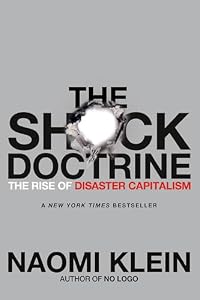
The Shock Doctrine: The Rise of Disaster Capitalism
by Naomi Klein
On This Page
Description
In her ground-breaking reporting Naomi Klein introduced the term "disaster capitalism." Whether covering Baghdad after the U.S. occupation, Sri Lanka in the wake of the tsunami, or New Orleans post-Katrina, she witnessed something remarkably similar. People still reeling from catastrophe were being hit again, this time with economic "shock treatment", losing their land and homes to rapid-fire corporate makeovers. The Shock Doctrine retells the story of the most dominant ideology of our time, show more Milton Friedman's free market economic revolution. In contrast to the popular myth of this movement's peaceful global victory, Klein shows how it has exploited moments of shock and extreme violence in order to implement its economic policies in so many parts of the world from Latin America and Eastern Europe to South Africa, Russia and Iraq. At the core of disaster capitalism is the use of cataclysmic events to advance radical privatization combined with the privatization of the disaster response itself. Klein argues that by capitalizing on crises, created by nature or war, the disaster capitalism complex now exists as a booming new economy, and is the violent culmination of a radical economic project that has been incubating for fifty years. show lessTags
Recommendations



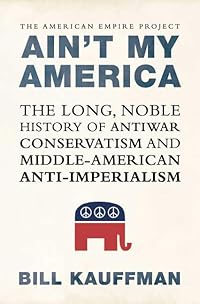
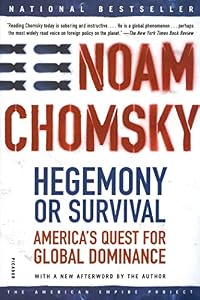

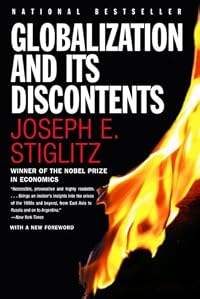
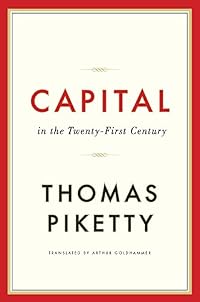

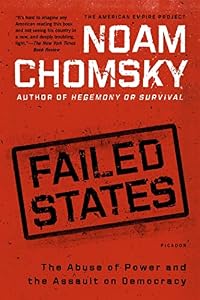
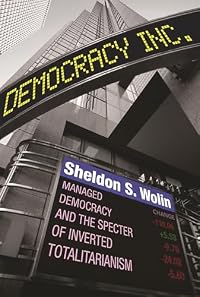



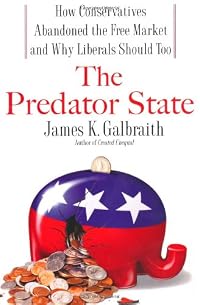
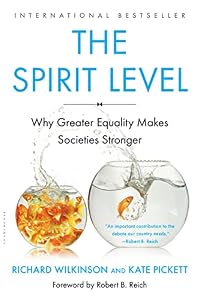




Member Recommendations
AsYouKnow_Bob Frank's canvas is somewhat narrower in scope, but the analysis of the effects of conservative governance is quite similar.

M_Clark Ramp Hollow looks at the way Appalachia was developed and exploited with the original settlers being progressively marginalized. It shows another side of capitalism long before Milton Friedmann was born.

The Revolution of Civil Society. Challenging Neo-Liberal Orthodoxy: The Development of the Progressive State by Michael Lloyd
M_Clark Milton Friedmann was heavily influenced by Hayek. This book attacks, in a very philosophical way, the fundamental philosophies of Hayek and the neo-liberals.

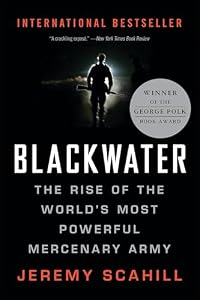
M_Clark This book is a perfect compliment to the book of Naomi Klein who often cites it in her book. Its detailed descriptions of the follies of the people in the Green Zone in Bagdad provides additional coverage on the topics in Klein's book.
Member Reviews
It's 2007 and Naomi Klein builds a rather convincing argument about modern governmental/corporational trends.
I've personally never seen it laid out so baldly, but after having read several dozen of political books, perhaps an equivalent number of documentaries, and a lot of otherwise independent research into the topics herein, I'm willing to concede that she has a very valid point.
What is the point?
Modern economics theories are used to lay out a rather obvious plan of mass looting. They're constructed as laissez-faire Chicago School of Economics, which looks great on paper, letting the invisible hand of Adam Smith regulate all markets. In practice, putting it into effect, under the heading of Democracy or Liberation or whatever they show more want, the big heads of the Chicago school are backed with the CIA, big corporation interests, and a single additional theory that makes the whole thing gel together.
What's this extra theory? It's simple. They believe, as they have learned from their lessons in briefly earlier psychology research, that the best way to heal a patient is to first break their minds and bodies, starting them out on a tabula rasa, and then rebuilding from the rubble. So many have quoted the belief that the only way to get real change is after a disaster.
Never mind that the original torture victims in McGill college that underwent sensory deprivation, LSD, PCP, punctuated with ECT and blaring noise did not come out of the experience quite sane. Most of them never recovered. But THIS was the original study that they based their first great experiment on. Export the school of thought to Chile, and when it didn't quite take, destabilize the government, assassinate Allende, and install Pinochet. On Sept. 11, 1973. They used shock and awe, destroyed infrastructure, and people went hungry and were terrorized.
Guess who got a Nobel Prize in economics?
It's worse. The dictatorship was atrocious, but the big corporations were given leave to move in and rape the economy, loot anything of value, while allowing Pinochet to take the lion's share, turning him into an Oligarch, overnight. A decade later, Chile, once sporting one of the most impressive resumes of a growing and happy populace, could barely stand on its own. But the corporations got RICH.
Jump ahead to Russia right as Communism is going defunct. The same Chicago school economics of Free-Market offers them a deal. Businesses will loan expertise and open market doctrines and massive loans, but be sure to destabilize everything first. When enough blood is on the ground and people are terrified, starving, and giving up everything they ever owned, then offer them a deal they can't refuse. Capitalism on a plate that promises everything that the European nations and America has to offer since Communism is dead.
When democracy is offered but capitalism is competing, capitalism beats anything. Enter a capitalism-backed coup, corporate sponsorships everywhere, and a promise that our new leader will be able to make himself and a handful others into some of the top 30 ranked richest people in the world, opening up Russia to free trade on a scale never seen before, the only way to keep it going is by looting the population. And it did. What was the number? 14 million homeless children? Think about that. At least under communism there WAS something like a middle class. Now it's only the super rich and the survivors.
CLEARLY, this is an AMAZING outcome for the Chicago School! Companies got rich. The stock market had a field day supporting the victors. Everyone was shaking everyone else's hands. Except for the rest of the 99%, of course. They went hungry. A reported 50,000 AIDS victims exploded into 1.5 million over the space of a couple of years. Clearly, everyone was having a party.
But the rich got richer.
Remember what happened during the Iraq War, part 2? Privatized war, with every single aspect of the war delegated to private companies except for the troops, themselves. 90% of every contract went into overhead, contractors subcontracting up to four times until there was no longer any money left for doing the work. And easily, if you look back on the actual work for the reconstruction, either it was not completed in 85% of the cases, or what did get finished was at half capacity after a year. ALL work and workers were brought in from the outside. Corporations tried to set up McD and Walmart, unloaded big screen TVs on the streets that were lined with rubble.
Shock and Awe. Come on. The purpose is to drive them all into a permanent state of helplessness or create an environment of terrorism. Against them. But heck, as long as we can brew terrorists this way, each one wanting to get revenge or at the very least, JUSTICE for this travesty. 650,000 dead. For Oil. For the free market. For the freedom of a hoard of corporations to come swooping in and install a Free Trade Zone, where profits just kept coming.
Let's ignore for a moment that every cabinet member in the presidency at that time had vested and current interests in the very same corporations that made the most money on Iraq. Or that America inflated its debt many times over to pay for the graft, looting, and amazing incompetence, while leaving the door open to keep ALL of the contractors out of the legal crosshairs of ANY country, while walking away with astounding paychecks.
Ignore the fact that most invasions, if they're NOT there to loot, will actually set aside troops to protect national heritage. There is a lot of proof that the national museum holding artifacts thousands of years old was specifically excluded from that protection list, which is why troops sat by and watched as so many truckloads of priceless artifacts were spirited away. Later, even now, only 20% have ever been recovered.
We can add Hurricane Katrina to the list. The same contractors for Iraq came in to help out, taking more government money, pulling the same exact crap, and then leaving the job almost completely undone. We're talking BIG money, too. But look on the bright side! All that land can now be cleared out to build new condos! Tons of companies swooped in to reclaim the land. And they did. And a lot of them were linked, intricately, to the SAME people who were supposed to REBUILD for the original inhabitants.
Sorry, folks, couldn't do the job. You're gonna have to find a new place to live. My brother here wants the land for his new McD!
Yep, first you need to have a disaster. If you don't have a disaster, make one. If you can, build compounds and Green zones and make sure you give enough fodder to create a simmering cauldron of hate that you can regularly call on to rise up and smash down with your brand new war machine. And make sure it keeps on simmering, too, right, ISIS? We need a reason to keep getting the latest equipment to protect our super-rich bunkers.
It's great economics as long as your real intention is to get extremely rich. It's not good economics if you want long-lasting, sustained prosperity. It's the looter's creed. Make situations you can profit from. Make sure you always negotiate from the ultimate position. If that means making sure the rest of the world has a foot on its neck, then that's all for the best. That's GOOD NEGOTIATION TACTICS.
Laissez-faire, to these guys, means taking away all the safety nets. They're the same ones gutting social security, social protections, and basic food and health for the poorest people in our first-world nations. They want no government, or to turn all governments into shells with no power to do anything. They've stated this creed a million times. They want social darwinism at its worst. Keep everyone so shock and awed that they can take everything. Absolutely everything.
Let's judge an idea not on its stated ideal. Let's judge an idea based on its actual practice. If this wonderful ideal says it works best after a disaster, flawlessly re-establishing the free hand of the market, then by their own writings, we should have seen a flowering of cooperation, self-interest coinciding with everyone else's self-interest, and a natural growth of blanket prosperity that effects everyone involved. It's pretty. I've read many great books on the Chicago Style of Economics and loved them. But let's look at the ACTUAL FACTS of its implementation.
There has never been a free hand of the market. The big banana corporation pressured America to secure its economic freedom. America got it's most famous laissez-faire economists to embark on a campaign, assisted with a ton of money, integral CIA support, and a bunch of extra vultures hanging in the wings, smelling blood in the water. When the blood splashed and buildings with the elected government were murdered, all the looters moved in. Of course, back in the day, it was all ideological garbage. Sticking it to the communists, bringing in democracy. Ignore the fact that they just bombed a democracy and Pinochet the dictator came in, got rich, and entered a very profitable loot cycle with the outside vultures.
It begs the question. If, each and every time, they bring in the Chicago School of Economics, they always bring the same result, then maybe we ought to question their motives. Maybe.
I'm just waiting for other enemies of this paradigm to get their own shock and awe. Left-leaning college campuses? Gay bars? All they need is a disaster. They can wait for it and exploit it like with Katrina, but they're perfectly willing to orchestrate them, too. And give you wonderfully idealistic reasons why you should let them murder you, too.
Dark, right? But real. You've seen these looters in the housing bubble. The banking crisis. It's big. Very, very big. You can complain about transgenders in bathrooms all you like, but the really scary bits are right here. And they can take us all down. Equally. show less
I've personally never seen it laid out so baldly, but after having read several dozen of political books, perhaps an equivalent number of documentaries, and a lot of otherwise independent research into the topics herein, I'm willing to concede that she has a very valid point.
What is the point?
Modern economics theories are used to lay out a rather obvious plan of mass looting. They're constructed as laissez-faire Chicago School of Economics, which looks great on paper, letting the invisible hand of Adam Smith regulate all markets. In practice, putting it into effect, under the heading of Democracy or Liberation or whatever they show more want, the big heads of the Chicago school are backed with the CIA, big corporation interests, and a single additional theory that makes the whole thing gel together.
What's this extra theory? It's simple. They believe, as they have learned from their lessons in briefly earlier psychology research, that the best way to heal a patient is to first break their minds and bodies, starting them out on a tabula rasa, and then rebuilding from the rubble. So many have quoted the belief that the only way to get real change is after a disaster.
Never mind that the original torture victims in McGill college that underwent sensory deprivation, LSD, PCP, punctuated with ECT and blaring noise did not come out of the experience quite sane. Most of them never recovered. But THIS was the original study that they based their first great experiment on. Export the school of thought to Chile, and when it didn't quite take, destabilize the government, assassinate Allende, and install Pinochet. On Sept. 11, 1973. They used shock and awe, destroyed infrastructure, and people went hungry and were terrorized.
Guess who got a Nobel Prize in economics?
It's worse. The dictatorship was atrocious, but the big corporations were given leave to move in and rape the economy, loot anything of value, while allowing Pinochet to take the lion's share, turning him into an Oligarch, overnight. A decade later, Chile, once sporting one of the most impressive resumes of a growing and happy populace, could barely stand on its own. But the corporations got RICH.
Jump ahead to Russia right as Communism is going defunct. The same Chicago school economics of Free-Market offers them a deal. Businesses will loan expertise and open market doctrines and massive loans, but be sure to destabilize everything first. When enough blood is on the ground and people are terrified, starving, and giving up everything they ever owned, then offer them a deal they can't refuse. Capitalism on a plate that promises everything that the European nations and America has to offer since Communism is dead.
When democracy is offered but capitalism is competing, capitalism beats anything. Enter a capitalism-backed coup, corporate sponsorships everywhere, and a promise that our new leader will be able to make himself and a handful others into some of the top 30 ranked richest people in the world, opening up Russia to free trade on a scale never seen before, the only way to keep it going is by looting the population. And it did. What was the number? 14 million homeless children? Think about that. At least under communism there WAS something like a middle class. Now it's only the super rich and the survivors.
CLEARLY, this is an AMAZING outcome for the Chicago School! Companies got rich. The stock market had a field day supporting the victors. Everyone was shaking everyone else's hands. Except for the rest of the 99%, of course. They went hungry. A reported 50,000 AIDS victims exploded into 1.5 million over the space of a couple of years. Clearly, everyone was having a party.
But the rich got richer.
Remember what happened during the Iraq War, part 2? Privatized war, with every single aspect of the war delegated to private companies except for the troops, themselves. 90% of every contract went into overhead, contractors subcontracting up to four times until there was no longer any money left for doing the work. And easily, if you look back on the actual work for the reconstruction, either it was not completed in 85% of the cases, or what did get finished was at half capacity after a year. ALL work and workers were brought in from the outside. Corporations tried to set up McD and Walmart, unloaded big screen TVs on the streets that were lined with rubble.
Shock and Awe. Come on. The purpose is to drive them all into a permanent state of helplessness or create an environment of terrorism. Against them. But heck, as long as we can brew terrorists this way, each one wanting to get revenge or at the very least, JUSTICE for this travesty. 650,000 dead. For Oil. For the free market. For the freedom of a hoard of corporations to come swooping in and install a Free Trade Zone, where profits just kept coming.
Let's ignore for a moment that every cabinet member in the presidency at that time had vested and current interests in the very same corporations that made the most money on Iraq. Or that America inflated its debt many times over to pay for the graft, looting, and amazing incompetence, while leaving the door open to keep ALL of the contractors out of the legal crosshairs of ANY country, while walking away with astounding paychecks.
Ignore the fact that most invasions, if they're NOT there to loot, will actually set aside troops to protect national heritage. There is a lot of proof that the national museum holding artifacts thousands of years old was specifically excluded from that protection list, which is why troops sat by and watched as so many truckloads of priceless artifacts were spirited away. Later, even now, only 20% have ever been recovered.
We can add Hurricane Katrina to the list. The same contractors for Iraq came in to help out, taking more government money, pulling the same exact crap, and then leaving the job almost completely undone. We're talking BIG money, too. But look on the bright side! All that land can now be cleared out to build new condos! Tons of companies swooped in to reclaim the land. And they did. And a lot of them were linked, intricately, to the SAME people who were supposed to REBUILD for the original inhabitants.
Sorry, folks, couldn't do the job. You're gonna have to find a new place to live. My brother here wants the land for his new McD!
Yep, first you need to have a disaster. If you don't have a disaster, make one. If you can, build compounds and Green zones and make sure you give enough fodder to create a simmering cauldron of hate that you can regularly call on to rise up and smash down with your brand new war machine. And make sure it keeps on simmering, too, right, ISIS? We need a reason to keep getting the latest equipment to protect our super-rich bunkers.
It's great economics as long as your real intention is to get extremely rich. It's not good economics if you want long-lasting, sustained prosperity. It's the looter's creed. Make situations you can profit from. Make sure you always negotiate from the ultimate position. If that means making sure the rest of the world has a foot on its neck, then that's all for the best. That's GOOD NEGOTIATION TACTICS.
Laissez-faire, to these guys, means taking away all the safety nets. They're the same ones gutting social security, social protections, and basic food and health for the poorest people in our first-world nations. They want no government, or to turn all governments into shells with no power to do anything. They've stated this creed a million times. They want social darwinism at its worst. Keep everyone so shock and awed that they can take everything. Absolutely everything.
Let's judge an idea not on its stated ideal. Let's judge an idea based on its actual practice. If this wonderful ideal says it works best after a disaster, flawlessly re-establishing the free hand of the market, then by their own writings, we should have seen a flowering of cooperation, self-interest coinciding with everyone else's self-interest, and a natural growth of blanket prosperity that effects everyone involved. It's pretty. I've read many great books on the Chicago Style of Economics and loved them. But let's look at the ACTUAL FACTS of its implementation.
There has never been a free hand of the market. The big banana corporation pressured America to secure its economic freedom. America got it's most famous laissez-faire economists to embark on a campaign, assisted with a ton of money, integral CIA support, and a bunch of extra vultures hanging in the wings, smelling blood in the water. When the blood splashed and buildings with the elected government were murdered, all the looters moved in. Of course, back in the day, it was all ideological garbage. Sticking it to the communists, bringing in democracy. Ignore the fact that they just bombed a democracy and Pinochet the dictator came in, got rich, and entered a very profitable loot cycle with the outside vultures.
It begs the question. If, each and every time, they bring in the Chicago School of Economics, they always bring the same result, then maybe we ought to question their motives. Maybe.
I'm just waiting for other enemies of this paradigm to get their own shock and awe. Left-leaning college campuses? Gay bars? All they need is a disaster. They can wait for it and exploit it like with Katrina, but they're perfectly willing to orchestrate them, too. And give you wonderfully idealistic reasons why you should let them murder you, too.
Dark, right? But real. You've seen these looters in the housing bubble. The banking crisis. It's big. Very, very big. You can complain about transgenders in bathrooms all you like, but the really scary bits are right here. And they can take us all down. Equally. show less
I read this book over the course of a year. Not because it was particularly heavy going, or slow, but simply due to the sheer momentousness of the things being said. What Naomi Klein has achieved here is a staggering overview of an insidious global phenomenon, disaster capitalism, which just might be one of the most potent driving forces in world economics of the past fifty years. Starting from a basic premise that the confusion immediately following periods of shock puts people in a malleable state, economists led by the Chicago School teachings of Milton Friedman began applying the principle to whole countries, seizing on periods of mass shock (wars, coups, natural disasters etc) to force through radical free-market reforms and show more privatisations of state assets while the populations were still reeling from the aftermath. Klein charts this process from its genesis in South America to the post-Communist regions of Eastern Europe to the reconstruction fiascos in Iraq, Sri Lanka and New Orleans, showing how the unifying factor in each case was the desire of a select few to make obscene profits from the misery and suffering of untold millions.
It's a horrendous picture and in Klein's hands it's utterly convincing. The devastation sown in the wake of these disasters is all too real to ignore, yet it is only through the unifying lens of Friedman's theories that it begins to make some sort of sense. Disaster and chaos come to be seen not as destabilising forces but golden opportunities, at least for those in the position to take advantage of them. For the rest of us the results are devastating, blowing apart the ever growing gap between the rich and the poor, devastating social welfare programs, destroying communities, and driving countries into crippling debt.
It's rare that I ever read a book that has such a profound impact on my very world view, but this is such a book. I urge anyone at all interested in real world events to read this book immediately. Heck, I urge everyone to read this book period. It's that good. show less
It's a horrendous picture and in Klein's hands it's utterly convincing. The devastation sown in the wake of these disasters is all too real to ignore, yet it is only through the unifying lens of Friedman's theories that it begins to make some sort of sense. Disaster and chaos come to be seen not as destabilising forces but golden opportunities, at least for those in the position to take advantage of them. For the rest of us the results are devastating, blowing apart the ever growing gap between the rich and the poor, devastating social welfare programs, destroying communities, and driving countries into crippling debt.
It's rare that I ever read a book that has such a profound impact on my very world view, but this is such a book. I urge anyone at all interested in real world events to read this book immediately. Heck, I urge everyone to read this book period. It's that good. show less
Reading The Shock Doctrine, I got flashbacks to reading No Logo all those years ago when I was a student. Klein's writing was eye-opening back then, and her case studies and research made even a dry brick of a book a project that I could not set down.
It is the same experience with this one. The sheer amount of detail and background make Klein's book very addictive because it feels like an attempt at keeping a record of events that will probably be edited out of the footnotes of history.
The Shock Doctrine feels like an attempt of holding people accountable, and it is a very timely and thought-provoking read. It's also entirely infuriating. It's very depressing to be reminded that current events/circumstances are the very basis for the show more disaster capitalism that Klein describes.
The only reason that I am not increasing my rating for this book is that I felt it lacked balance, which was most evident for me when Klein wrote about Hugo Chavez, without any mention of criticism. Granted the book was written in 2008, but still I expected more balance even if I agree with the underlying premise Klein is arguing.
Still, this was again a thought-provoking read and, maybe because of the current events we are living through, I loved that the book ended on the message (paraphrasing here):
What can we do right now to start to bring our community back in spite of the government, not because of it? show less
It is the same experience with this one. The sheer amount of detail and background make Klein's book very addictive because it feels like an attempt at keeping a record of events that will probably be edited out of the footnotes of history.
The Shock Doctrine feels like an attempt of holding people accountable, and it is a very timely and thought-provoking read. It's also entirely infuriating. It's very depressing to be reminded that current events/circumstances are the very basis for the show more disaster capitalism that Klein describes.
The only reason that I am not increasing my rating for this book is that I felt it lacked balance, which was most evident for me when Klein wrote about Hugo Chavez, without any mention of criticism. Granted the book was written in 2008, but still I expected more balance even if I agree with the underlying premise Klein is arguing.
Still, this was again a thought-provoking read and, maybe because of the current events we are living through, I loved that the book ended on the message (paraphrasing here):
What can we do right now to start to bring our community back in spite of the government, not because of it? show less
Klein builds the book around different kinds of shock, which she argues are increasingly exploited by powerful corporate interests at the expense of the lives and well-being of everyone else.
Briefly, the collective shock of a disaster, Klein argues, is analogous to the shock which in individuals results in post-traumatic stress disorder. It is in this vulnerable state that a society is vulnerable (or "ready" if you're Milton Friedman) to the radical free-market "shock therapy" which was first put into practice in Chile following the CIA-backed coup of Pinochet, by the direction of economists from the University of Chicago led by Friedman.
This therapy basically involves privatization of industry, opening trade barriers so US show more corporations can take over industry, and massive layoffs as a necessary consequence of it all. (Klein goes into much more gory and engrossing detail.) The result, in every country this neoliberal program has been successfully instituted, has been massive transfers of public wealth into the hands of US corporations and poverty and desperation for the objects of the therapy. Klein recounts the stories of Chile, Argentina, Mexico, China, the former Soviet republics, and others that support her thesis. She uses the Iraq invasion and reconstruction and the responses to Hurricane Katrina as examples as well.
This book is a great synthesis of several decades of major global economic and political events which the US has initiated and benefited from and about which most American are completely ignorant. show less
Briefly, the collective shock of a disaster, Klein argues, is analogous to the shock which in individuals results in post-traumatic stress disorder. It is in this vulnerable state that a society is vulnerable (or "ready" if you're Milton Friedman) to the radical free-market "shock therapy" which was first put into practice in Chile following the CIA-backed coup of Pinochet, by the direction of economists from the University of Chicago led by Friedman.
This therapy basically involves privatization of industry, opening trade barriers so US show more corporations can take over industry, and massive layoffs as a necessary consequence of it all. (Klein goes into much more gory and engrossing detail.) The result, in every country this neoliberal program has been successfully instituted, has been massive transfers of public wealth into the hands of US corporations and poverty and desperation for the objects of the therapy. Klein recounts the stories of Chile, Argentina, Mexico, China, the former Soviet republics, and others that support her thesis. She uses the Iraq invasion and reconstruction and the responses to Hurricane Katrina as examples as well.
This book is a great synthesis of several decades of major global economic and political events which the US has initiated and benefited from and about which most American are completely ignorant. show less
As an economist, and a left-leaning Keynesian at that, I was quite interested in and sympathetic to a balanced critique of Milton Friedman and his impact on markets and countries. Unfortunately, this isn't it. 'The Shock Doctrine' is the first book I have ever thrown in the bin - it is, indeed, shocking and infuriating, but for all the wrong reasons. Well-researched, the author nevertheless fails to understand any of the nuance behind the many events described and leaves out counterfactuals and exceptions when they become inconvenient. Everything is black and white here and the system, as Klein describes it, operates in the same fashion wherever implemented. Correlation always begets causality and humans, in her worldview, are too show more stupid to not accept what is happening to them.There are no exceptions or subtleties in Klein's world.
If only life were that simple.
Most importantly, at no turn does it take in to account the fact that many of the 'shock treatments' described were entered in to or accepted willingly, and that the negative impacts were the result of corrupt implementors, not the treatment itself. Hence, there is almost always an example that runs counter to or disproves the point she is trying to make. Her bizarre views on the IMF alone provide several such examples. It is a rant, and a poorly written one at that, and I am embarrassed that, somewhere, there is a record of my having purchased it. show less
If only life were that simple.
Most importantly, at no turn does it take in to account the fact that many of the 'shock treatments' described were entered in to or accepted willingly, and that the negative impacts were the result of corrupt implementors, not the treatment itself. Hence, there is almost always an example that runs counter to or disproves the point she is trying to make. Her bizarre views on the IMF alone provide several such examples. It is a rant, and a poorly written one at that, and I am embarrassed that, somewhere, there is a record of my having purchased it. show less
The free market ideology of the Friedman school of economics as observed under Naomi Klein's microscope. What might look on the surface to be a miracle cure for all that ails the world economically under that microscope appears for what it is--a cancer causing agent. In the final pages of the Shock doctrine she points to some of Friedman's original adherents in the Southern Cone of South America dying in disgrace or going to prison. Pinochet, Videla, Massera, Bordabery, Sanchez de Lozada.
Her book shows how over the span of time between the early 70's and the present--Friedman's disciples have taken over the IMF, the World Bank and subverted the purposes of those institutions--breaking down the social safety networks whereever they've show more gone--with the mantra of privatization of public institutions, deregulation and cutting social programs and spending. It's an economic theory intent on making already wealthy people fabulously wealthy at the expense of middle and working class and poorer people--intent on exploiting and expanding the income gap between the haves and the have nots. It tends towards elitism, it tends toward racism as well. It is an idea that whereever it goes puts people out of work and undermines existing infastructure.
One might wonder what some of these so called highly placed economists who subscribe to these theories do on a normal day. It seems mostly that they pray for rain--better yet hurricanes, earthquakes, forest fires, tsunamis--best of all wars and civil wars. For they see in every kind of catastrophe and/or natural disaster an economic opportunity to enrich themselves and their multi-national corporate friends. That so many of these economists, politicians, bureaucrats and multinationals are at least nominally 'American' should give people here in this country of mine a lot to pause and think about. Well--we are finding out for ourselves right now the benefits of deregulated financial markets and it's mostly boo-hoo and how did this happen? We're also finding out that what is technically legal is not necessarily ethical and/or moral--a concept by the way which is completely abstract to the Chicago school of economist acolytes of Friedman's theories. To continue what the book points out time and again is that whenever disaster strikes a window appears for those willing to exploit others--that emergency situations can be used anti-democratically to justify most anything--from stealing the land of tsunami victims to selling off public energy and water companies to private for profit entities to changing already existing economic laws by which a country--any country goes about its business.
As well we cannot separate economics from politics. Friedman apparently thought that you could--for instance his theories which enabled the dictatorships of Pinochet and the Argentine generals had nothing at all to do with the disappearances and the torture of some of the most vocal critics (to say nothing of the thousands who just happened to be in the wrong place at the wrong time) of those regimes. As it happens though without those original dictatorships, without the antidemocratic sneakiness his ideas would have never got off the ground. Klein's book as well focuses on Bush 2's invasion of Iraq and the subsequent occupation and the rampant corruption that followed in its wake. Whatever the opinion on the need for removing Saddam and his regime--the subsequent events of the occupation has darkened the reputation of the United States all over the world. That so many fall for the kind of bullshit that Bush, Cheney and Friedmanite friends peddled cannot sadly be denied. The Katrina disaster did have that one silver lining of waking a number of people up to the horrible nature of that administration though unfortunately by that point in time it was just beginning a second term and we had another 3 + years to finally be rid of them once and hopefully for all.
FWIW I don't necessarily like to read things that make me angry and that is exactly what this book does. What that means in a larger sense is probably not a lot as after all is said and done I am just one voice out of somewhere around 300 million other voices in this country and a lot of those 300 million voices still believe crap like 'markets will correct themselves on their own' and that 'money makes money makes more money'. A lot of them as well look up to our own homegrown elite of wealth and priveledge and down on those lower on the economic scale. A lot of people don't concern themselves with wage or wealth equality--are only ever intent on more. Real human attainment is not reaching such atmospheric heights as if you're looking down from a mountaintop on everyone far below you --what we should strive for is the realization of our connectedness to each other since as a species (except in the case of certain aberrant individuals) we share the same biology and all need as well some kind of emotional, spiritual and intellectual sustenance. A society isn't just for a few but is meant for all to share and take their part in.
Anyway as I said--it's not a happy look at (mostly american inspired) events that play out from the misuse of contemporary events but IMO a very necessary one. show less
Her book shows how over the span of time between the early 70's and the present--Friedman's disciples have taken over the IMF, the World Bank and subverted the purposes of those institutions--breaking down the social safety networks whereever they've show more gone--with the mantra of privatization of public institutions, deregulation and cutting social programs and spending. It's an economic theory intent on making already wealthy people fabulously wealthy at the expense of middle and working class and poorer people--intent on exploiting and expanding the income gap between the haves and the have nots. It tends towards elitism, it tends toward racism as well. It is an idea that whereever it goes puts people out of work and undermines existing infastructure.
One might wonder what some of these so called highly placed economists who subscribe to these theories do on a normal day. It seems mostly that they pray for rain--better yet hurricanes, earthquakes, forest fires, tsunamis--best of all wars and civil wars. For they see in every kind of catastrophe and/or natural disaster an economic opportunity to enrich themselves and their multi-national corporate friends. That so many of these economists, politicians, bureaucrats and multinationals are at least nominally 'American' should give people here in this country of mine a lot to pause and think about. Well--we are finding out for ourselves right now the benefits of deregulated financial markets and it's mostly boo-hoo and how did this happen? We're also finding out that what is technically legal is not necessarily ethical and/or moral--a concept by the way which is completely abstract to the Chicago school of economist acolytes of Friedman's theories. To continue what the book points out time and again is that whenever disaster strikes a window appears for those willing to exploit others--that emergency situations can be used anti-democratically to justify most anything--from stealing the land of tsunami victims to selling off public energy and water companies to private for profit entities to changing already existing economic laws by which a country--any country goes about its business.
As well we cannot separate economics from politics. Friedman apparently thought that you could--for instance his theories which enabled the dictatorships of Pinochet and the Argentine generals had nothing at all to do with the disappearances and the torture of some of the most vocal critics (to say nothing of the thousands who just happened to be in the wrong place at the wrong time) of those regimes. As it happens though without those original dictatorships, without the antidemocratic sneakiness his ideas would have never got off the ground. Klein's book as well focuses on Bush 2's invasion of Iraq and the subsequent occupation and the rampant corruption that followed in its wake. Whatever the opinion on the need for removing Saddam and his regime--the subsequent events of the occupation has darkened the reputation of the United States all over the world. That so many fall for the kind of bullshit that Bush, Cheney and Friedmanite friends peddled cannot sadly be denied. The Katrina disaster did have that one silver lining of waking a number of people up to the horrible nature of that administration though unfortunately by that point in time it was just beginning a second term and we had another 3 + years to finally be rid of them once and hopefully for all.
FWIW I don't necessarily like to read things that make me angry and that is exactly what this book does. What that means in a larger sense is probably not a lot as after all is said and done I am just one voice out of somewhere around 300 million other voices in this country and a lot of those 300 million voices still believe crap like 'markets will correct themselves on their own' and that 'money makes money makes more money'. A lot of them as well look up to our own homegrown elite of wealth and priveledge and down on those lower on the economic scale. A lot of people don't concern themselves with wage or wealth equality--are only ever intent on more. Real human attainment is not reaching such atmospheric heights as if you're looking down from a mountaintop on everyone far below you --what we should strive for is the realization of our connectedness to each other since as a species (except in the case of certain aberrant individuals) we share the same biology and all need as well some kind of emotional, spiritual and intellectual sustenance. A society isn't just for a few but is meant for all to share and take their part in.
Anyway as I said--it's not a happy look at (mostly american inspired) events that play out from the misuse of contemporary events but IMO a very necessary one. show less
Dreadful. Absolutely dreadful.
To be clear: I am no supporter of free market ideology, which I find corrupt, catering to the most selfish and egotistic parts of human nature, being as it is a pitiful excuse for governments/ societies adopting such system to evade its responsibility when it comes to empathy and help the vulnerable. The rise of corporate capitalism and its toxic, rapacious, predatory obnoxiousness and catastrophic impacts, from our civil liberties to the environment and the trampling of human rights in some parts of the world, should be a case in point. To be clear too: I am not a commie, vilifying Conservative ideologies and thinking of capitalism as 'Evil'. I believe in capitalism. I also believe in empathy. And I don't show more believe the two to be antinomic.
What is my problem with this book, then, especially given that I had loved (absolutely loved!) No Logo by the same author, a sharp yet highly relevant criticism of what consumerism has turned into? Well...
First, it's a sensationalist caricature. It's all in the title: SHOCK! Now, sensationalism surely is a very good way, from a journalistic point of view, to sell sheets and create uproar. What using such 'shock value' tactic does, though, is taking the risk to flirt with the ridiculous and the ludicrous. To compare ultra-capitalism to torture, as the author indulges in doing here, does just that: it's ridiculous.
Oh, for sure! Such economical system, at times imposed upon whole countries, whole regions, whole people, especially after some 'disasters' (men made or natural) contributed to bring it about, is far from being a tea party! Yet... Yet, 'at times' is crucial here; because, whatever you think of what happened in Irak, or following the fall of the Berlin wall in what was the USSR, the fact remains that the likes of Sarkozy, Thatcher, and Reagan, for instance, were all democratically elected. The author, of course, knows it full well but... she just brushed over it in about 4 lines, lost somewhere within 500 pages! Right: let's not delve too much into what could make her whole theory crumble like a pile of cards.
This approach, in fact, is but very embarrassing, especially for someone like me who would have been, otherwise, the first to agree with her -the implementation of such form of capitalism in some part of the world has had disastrous consequences indeed. The thing is, I don't like reductionism. And, this book stands guilty as charged of such oversimplifications. Post-war Irak? Chile after the fall of Pinochet? Asia post-tsunami? Yeltsin's Russia? Whatever! To her, it's all the same; and, cherry on the cake, every failures are blamed upon Friedman and his gang, with the policies implemented by the politicians adhering to their views being compared, even if metaphorically, to, well, torture!
Again: I don't like the Chicago School of Economics. What I dislike too, though, is scapegoating intellectuals and politicians for problems that, no matter how toxic their views, they didn't create in the first place but merely exacerbated.
This is not a sharp analysis like 'No Logo' was. This is a complete lack of discernment, solely for schock value. show less
To be clear: I am no supporter of free market ideology, which I find corrupt, catering to the most selfish and egotistic parts of human nature, being as it is a pitiful excuse for governments/ societies adopting such system to evade its responsibility when it comes to empathy and help the vulnerable. The rise of corporate capitalism and its toxic, rapacious, predatory obnoxiousness and catastrophic impacts, from our civil liberties to the environment and the trampling of human rights in some parts of the world, should be a case in point. To be clear too: I am not a commie, vilifying Conservative ideologies and thinking of capitalism as 'Evil'. I believe in capitalism. I also believe in empathy. And I don't show more believe the two to be antinomic.
What is my problem with this book, then, especially given that I had loved (absolutely loved!) No Logo by the same author, a sharp yet highly relevant criticism of what consumerism has turned into? Well...
First, it's a sensationalist caricature. It's all in the title: SHOCK! Now, sensationalism surely is a very good way, from a journalistic point of view, to sell sheets and create uproar. What using such 'shock value' tactic does, though, is taking the risk to flirt with the ridiculous and the ludicrous. To compare ultra-capitalism to torture, as the author indulges in doing here, does just that: it's ridiculous.
Oh, for sure! Such economical system, at times imposed upon whole countries, whole regions, whole people, especially after some 'disasters' (men made or natural) contributed to bring it about, is far from being a tea party! Yet... Yet, 'at times' is crucial here; because, whatever you think of what happened in Irak, or following the fall of the Berlin wall in what was the USSR, the fact remains that the likes of Sarkozy, Thatcher, and Reagan, for instance, were all democratically elected. The author, of course, knows it full well but... she just brushed over it in about 4 lines, lost somewhere within 500 pages! Right: let's not delve too much into what could make her whole theory crumble like a pile of cards.
This approach, in fact, is but very embarrassing, especially for someone like me who would have been, otherwise, the first to agree with her -the implementation of such form of capitalism in some part of the world has had disastrous consequences indeed. The thing is, I don't like reductionism. And, this book stands guilty as charged of such oversimplifications. Post-war Irak? Chile after the fall of Pinochet? Asia post-tsunami? Yeltsin's Russia? Whatever! To her, it's all the same; and, cherry on the cake, every failures are blamed upon Friedman and his gang, with the policies implemented by the politicians adhering to their views being compared, even if metaphorically, to, well, torture!
Again: I don't like the Chicago School of Economics. What I dislike too, though, is scapegoating intellectuals and politicians for problems that, no matter how toxic their views, they didn't create in the first place but merely exacerbated.
This is not a sharp analysis like 'No Logo' was. This is a complete lack of discernment, solely for schock value. show less
Members
- Recently Added By
Published Reviews
ThingScore 100
The Shock Doctrine shows in chilling detail how the free market has been backed up with violence over the last 30 years. I suspect it has stirred up a debate already.
added by mikeg2
Lists

LT picks: Blue Books
197 works; 44 members

The Guardian's 100 best books of the 21st century
100 works; 21 members

Non-Fiction Worth Reading
1,015 works; 261 members

Accidents, Disasters, and Tragedies
175 works; 7 members

Recommend the 20 best books you've read in the last five years
2,168 works; 606 members

Blue Books
20 works; 1 member

Top Five Books of 2019
387 works; 108 members

books to check out in 2014
9 works; 1 member

Entender el mundo
46 works; 1 member

Macmillan Publishers
129 works; 3 members

Club Read's Recommended Nonfiction Written by Women
618 works; 30 members

Remember Shuffle Podcast| Iraq War Series: Parts I - VI
13 works; 1 member

Non-Fiction
68 works; 1 member

Evergreen Award™ Winners and Nominees 2005–2024
200 works; 3 members

Five star books
1,755 works; 108 members

My List
302 works; 1 member

Female Author
1,235 works; 66 members

Books Read in 2019
4,052 works; 108 members

Puffin Books 70th anniversary handbook recommendations
537 works; 10 members

Read This Next
120 works; 3 members

Books cited in Progress by Samuel McDonald
160 works; 1 member
Author Information

23+ Works 20,338 Members
Naomi Klein was born in Montreal, Canada on May 8, 1970. She attended the University of Toronto and began writing there for the student newspaper, The Varsity. Klein was offered a series of editorial jobs in newspapers and magazines and this prevented her from getting a final degree from the university. She worked for The Toronto Globe and Mail show more and This Magazine. She is an author and social activist, who is known for her political analyses and criticism of corporate globalization. Her books include No Logo: Taking Aim at the Brand Bullies, Fences and Windows: Dispatches from the Front Lines of the Globalization Debate, and The Shock Doctrine: The Rise of Disaster Capitalism. She received the 2014 Hilary Weston Writers' Trust Prize for Nonfiction for This Changes Everything: Capitalism vs. the Climate. (Bowker Author Biography) show less
Some Editions
Awards and Honors
Awards
Distinctions
Series
Belongs to Publisher Series
Work Relationships
Contains
Has the adaptation
Common Knowledge
- Canonical title
- The Shock Doctrine: The Rise of Disaster Capitalism
- Original title
- The Shock Doctrine
- Original publication date
- 2007
- Related movies
- The Shock Doctrine (2007 | IMDb); The Shock Doctrine (2009 | IMDb)
- Epigraph
- Any change is a change in the topic.
—Cesar Aira, Argentine novelist, Cumpleaños, 2001 - Dedication
- For Avi, again
- First words
- I met Jamar Perry in September 2005, at the big Red Cross shelter in Baton Rouge, Louisiana.
- Last words
- (Click to show. Warning: May contain spoilers.)Most of all, they are building in resilience—for when the next shock hits.
- Blurbers
- Kowinski, William S.; le Carré, John; Zinn, Howard; Stiglitz, Joseph E.; Roy, Arundhati; Huffington, Arianna (show all 8); Hersh, Seymour M.; Scahill, Jeremy
- Original language
- English
- Canonical DDC/MDS
- 330.122; 909.825
- Canonical LCC
- HB95
Classifications
- Genres
- Economics, General Nonfiction, Politics and Government, Nonfiction, History
- DDC/MDS
- 330.122 — Society, government, & culture Economics Jobs & Careers Theory Systems Capitalism
- LCC
- HB95 — Social sciences Economic theory. Demography Economic theory. Demography History of economics. History of economic
- BISAC
Statistics
- Members
- 6,223
- Popularity
- 1,990
- Reviews
- 140
- Rating
- (4.19)
- Languages
- 20 — Catalan, Czech, Danish, Dutch, English, Finnish, French, German, Greek, Italian, Norwegian (Bokmål), Polish, Portuguese, Romanian, Russian, Croatian, Slovenian, Spanish, Swedish, Turkish
- Media
- Paper, Audiobook, Ebook
- ISBNs
- 66
- UPCs
- 1
- ASINs
- 29