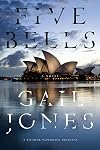
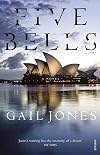
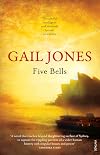
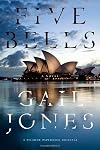
Five Bells
by Gail Jones
On This Page
Description
"Told over the course of a single Saturday in Sydney, Five Bells describes four lives that come to share not only a place and time but also mysterious patterns and ambiguous symbols, including a barely glimpsed fifth figure, a young child."--Provided by publisher.Tags
Recommendations




















Member Recommendations

Member Reviews
It's a bright sunny Saturday in Australia, and crowds of people converge on the Circular Quay in Sydney, with its views of the landmark Opera House and bridge. Among them are four people who interpret what they see in very different ways due to their histories and circumstances. First is Ellie, a transplant from the countryside, who is meeting up with her former childhood lover for the first time in years. James is eager to meet Ellie, hoping that connecting with her can help him heal from a traumatic event which he cannot overcome on his own. Catherine has just moved to Australia from Ireland and is only starting to recover from the grief of losing her brother. Pei Xing suffered greatly during the Cultural Revolution in China and show more emigrated to Australia hoping to start a new life, but finding a fragment of her old.
Each character's backstory is complicated and messy, as are most people's, and Jones does an excellent job at threading the stories together. Commonalities pop up in unexpected places—Doctor Zhivago, the ferries, a missing child—yet each character is unique and fully formed. Small acts of kindness among strangers are impactful for all four characters, and the interconnected nature of social interaction is a major theme. Sydney, and the Circular Quay in particular, is like another character, influencing each of the four in different ways, and being interpreted by each of the four in different ways, sometimes differently in the same day. For instance, one person thinks the Opera House resembles a body bent in a graceful curve, another a hooded eye. What one person can see as beautiful and containing hope, another sees as foreboding.
I thought I knew where the book was going, led in part by the jacket flap description, but the ending was a surprise and darker than I anticipated. But the plot is beside the point. The real beauty of the book lies in the character descriptions and the setting and atmosphere. The author reminds us that we are all of us connected in a myriad of ways, if only we could see it. show less
Each character's backstory is complicated and messy, as are most people's, and Jones does an excellent job at threading the stories together. Commonalities pop up in unexpected places—Doctor Zhivago, the ferries, a missing child—yet each character is unique and fully formed. Small acts of kindness among strangers are impactful for all four characters, and the interconnected nature of social interaction is a major theme. Sydney, and the Circular Quay in particular, is like another character, influencing each of the four in different ways, and being interpreted by each of the four in different ways, sometimes differently in the same day. For instance, one person thinks the Opera House resembles a body bent in a graceful curve, another a hooded eye. What one person can see as beautiful and containing hope, another sees as foreboding.
I thought I knew where the book was going, led in part by the jacket flap description, but the ending was a surprise and darker than I anticipated. But the plot is beside the point. The real beauty of the book lies in the character descriptions and the setting and atmosphere. The author reminds us that we are all of us connected in a myriad of ways, if only we could see it. show less
Somewhat reminiscent of Virginia Woolf and evoking Joyce’s story “The Dead”, Gail Jones’s lyrical novel follows four characters as they move around Sydney Harbour’s Circular Quay on a glorious January Saturday. This is not a plot-driven novel. Given its dreamy quality and lack of external action, Five Bells might not be everyone’s cup of tea.
It’s an unconventional novel, a kind of meditation on memory and the inner life. Jones presents characters’ responses to the sights and sounds of the harbour (particularly the opera house) and their memories of childhood and youth (including failures, losses, and small but life-changing “moments of being”). The author wants the reader to hear her characters’ “inner show more music”—as Pasternak puts it in Dr. Zhivago—a novel which all of them seem to be familiar with.
Only two of the protagonists, Ellie and James, know each other. They share memories of their small-town, Western Australian childhood and youth. However, the characters—Ellie, James, Chinese-born Pei Xing (who’s in her sixties), and Irish journalist Catherine Healy—move in a common milieu and respond to the same sensory inputs: a didgeridoo busker, a child’s squeal, flags and umbrellas flapping, signs of a coming storm, bats and seabirds, the movement of the crowd and ferries. They’re connected through recurrent images of water, snow, and the colours red and yellow. Themes of migrancy and displacement, familial loss, and imprisonment also link them.
This is the first work by Gail Jones I’ve read, and it made quite an impression. show less
It’s an unconventional novel, a kind of meditation on memory and the inner life. Jones presents characters’ responses to the sights and sounds of the harbour (particularly the opera house) and their memories of childhood and youth (including failures, losses, and small but life-changing “moments of being”). The author wants the reader to hear her characters’ “inner show more music”—as Pasternak puts it in Dr. Zhivago—a novel which all of them seem to be familiar with.
Only two of the protagonists, Ellie and James, know each other. They share memories of their small-town, Western Australian childhood and youth. However, the characters—Ellie, James, Chinese-born Pei Xing (who’s in her sixties), and Irish journalist Catherine Healy—move in a common milieu and respond to the same sensory inputs: a didgeridoo busker, a child’s squeal, flags and umbrellas flapping, signs of a coming storm, bats and seabirds, the movement of the crowd and ferries. They’re connected through recurrent images of water, snow, and the colours red and yellow. Themes of migrancy and displacement, familial loss, and imprisonment also link them.
This is the first work by Gail Jones I’ve read, and it made quite an impression. show less
I enjoyed her excellent prose and superb, precise descriptions. Initially I thought the language very pedantic and pretentious, but then I started to appreciate her accurate vivid descriptions.
She cleverly wove her diverse characters and their lives to intersect at Sydney’s quayside. All her characters seemed alive, very real, and believable.
I found many growing up memories were stirred for me.
Her thorough research, spending time in China and Ireland, is clearly apparent.
An excellent book.
She cleverly wove her diverse characters and their lives to intersect at Sydney’s quayside. All her characters seemed alive, very real, and believable.
I found many growing up memories were stirred for me.
Her thorough research, spending time in China and Ireland, is clearly apparent.
An excellent book.
What a lovely novel! I read Sorry by Gail Jones several years ago, and her writing has gotten even better. This one is even more character driven, so if you're looking for big action, best look elsewhere. The novel focuses on four people, all a bit haunted, sad, and lonely in their own way, yet all but one also hopeful. Catherine can't seem to move past the death of her much-beloved brother. Ellie can't move past her first lover, James, and when they plan to meet again, her hopes are rekindled. But James is running from his own past and a tragic secret. Pei Xing was imprisoned and tortured during China's Cultural Revolution. While she is trying to shape a new life in Australia, she does so mainly be embracing the ghosts of her show more past.
Jones takes us inside each of these characters, each of them unique yet identifiable, and lets us feel their pain, their joy, their fear, their hope. Her style is perfectly suited to her introverted structure and to each of her characters. It's just lovely, spare, poetic, original. Here, for example, is Pei Xing remembering her father, a translator who had brought Doctor Zhivago to Chinese readers:
"Pei Jing's father, always a thin man, was becoming even thinner, living, it seemed, only on cigarettes, so that when the Cultural Revolution began and the Red Guards came to take him away, he was already half gone. As someone educated abroad and used to negotiating meanings in English and Russian, he was bound to be considered a class traitor and a running dog of imperialists. The weighty terms written in large letters on banners outside their house, the line on the door about the Four Olds, all seemed to bear no relation to her harried parents, but more especially to her father, whose skin was like parchment and who was already translating himself into another world when the Revolution began. He was already thinning in Chinese style, like lines of brushstrokes, a narrow falling vertical, and right to left."
This is a gentle but very moving novel, one I highly recommend. show less
Jones takes us inside each of these characters, each of them unique yet identifiable, and lets us feel their pain, their joy, their fear, their hope. Her style is perfectly suited to her introverted structure and to each of her characters. It's just lovely, spare, poetic, original. Here, for example, is Pei Xing remembering her father, a translator who had brought Doctor Zhivago to Chinese readers:
"Pei Jing's father, always a thin man, was becoming even thinner, living, it seemed, only on cigarettes, so that when the Cultural Revolution began and the Red Guards came to take him away, he was already half gone. As someone educated abroad and used to negotiating meanings in English and Russian, he was bound to be considered a class traitor and a running dog of imperialists. The weighty terms written in large letters on banners outside their house, the line on the door about the Four Olds, all seemed to bear no relation to her harried parents, but more especially to her father, whose skin was like parchment and who was already translating himself into another world when the Revolution began. He was already thinning in Chinese style, like lines of brushstrokes, a narrow falling vertical, and right to left."
This is a gentle but very moving novel, one I highly recommend. show less
“But I hear nothing, nothing...only bells,
Five bells, the bumpkin calculus of Time.”
Like the epic poem from which it takes its title, Gail Jones’ Five Bells is a story about a series of inner illuminations or moments. From the start of the book and right through it, the reader is thrust into the very heart of four characters in a single location – Circular Quay in Sydney. At the centre of each of the lives we move in and out of, is the Sydney Opera House. It’s sails form, to use Jones’ own words, “the intersection of so many currents of information.” There is outward motion as the characters walk, meet, and move in and out of that focal point, but the real plot takes place in the transition that each character show more undergoes. From the very opening of the book where Ellie, the most well-developed character, imagines the arc of Circular Quay to the circular ending where she is falling asleep imagining the Quay and trying to remember to phone her old lover James, the book reminded me of Virginia Woolf’s The Waves. I can’t think of a higher compliment as The Waves is Woolf’s most mature and powerful piece of work, and Jones’ work accomplishes something similar, bringing together the disparate characters into a single multi-faceted character around a single multi-faceted location: “How then does light return to the world after the eclipse of the sun? Miraculously. Frailly. In thin stripes.” (The Waves 286).
Jones’ prose is delicate and richly poetic, always moving behind and beneath the superficial to not only get at the emotions and thought processes of her characters, but also at the memories of the past that illuminate the present. James and Ellie form the love story of the book, reuniting in Sydney after twenty years apart. The reader feels their ache – the damage in their separate lives, and the desire to go back to something that was powerful for both of them. James’ sorrow mingling with his desire forms the black heart of the story, and Jones handles the co-mingling of nostalgia, desire and the development of mature, independent love perfectly:
Ellie is the stronger of the two characters, and the way in which she processes that desire and nostalgia becomes a beacon of light that allows the book to end on a positive note, even in the midst of horror. The waves always break on the shore, and darkness is always waiting for us, in the evening or morning, but Ellie’s joy is the triumph of the moment eclipsing the rain that ends the book. This rain is a clear nod to the snow in James Joyce’s last Dubliners story “The Dead” and serves a similar purpose, bringing all the characters together under into a joined atmosphere: “His soul swooned slowly as he heard the snow falling faintly through the universe and faintly falling, like the descent of their last end, upon all the living and the dead.” In Ellie’s world, all the living and the dead converge in that moment, just as they do in Joyce, providing a kind of transformation and immortality that is enough to eclipse the darkness.
Another character, Pei Xing, is a sixty year old Chinese migrant. Pei Xing travels each week through Circular Quay to visit Dong Hua, the woman who tortured her while she was in prison during the Chinese Revolution, a thread that is well depicted and richly researched. The act of feeding and forgiving her tormentor is beautifully portrayed, as Jones doesn’t diminish or mollify the torment that Pei Xing had experienced. The reader feels it as Pei Xing remembers:
As Hua readily admits, the violence cannot be undone – there is no excuse. Pei Xing’s family cannot be brought back and her forgiveness doesn’t come easy, working against the wishes of her son and daughter-in-law. Nevertheless, there is love between Pei Xing and Dong Hua, and Pei Xing’s transformation from victim to carer is one that resonates powerfully. Her path crosses with another character, Catherine, an Irish tourist mourning the death of her brother, when both of them are shown on television next to a child who has disappeared. Pei Xing and Catherine develop an instant connection, and Pei Xing attempts to comfort Catherine during a brief exchange at the police station. Catherine experiences the trip as a kind of wake for her lost brother Brendan – another nod to Joyce that is made explicit as Catherine watches the waves swell from the ferry. Throughout the book are tiny threads that bind these characters together – from Pasternak’s Dr Zhivago read by two separate characters at separate times, the visions of the Opera House and Circular Quay that each character experiences at different moments, to the ‘unbeachable gap’ between countries, continents and across time.
This is a novel that, like Slessor’s poem, explores time, and the way in which it flows between and across character. When Ellie, James, and their pivotal teacher Miss Morrison learn about the Clepsydra – the Chinese clock that consists of vessels that leak time, Ellie and James are excited. Time is a process “of emptying and filling, a fluent time-passing, not one chopped into pieces.” This is the theme of Five Bells and Jones works it beautifully, never loosening her grip of the theme, or letting her characters off the hook. Beyond the painful and joyful moments of the present tense, is transformation and transcendence.
Article first published as Book Review: Five Bells by Gail Jones on Blogcritics. show less
Five bells, the bumpkin calculus of Time.”
Like the epic poem from which it takes its title, Gail Jones’ Five Bells is a story about a series of inner illuminations or moments. From the start of the book and right through it, the reader is thrust into the very heart of four characters in a single location – Circular Quay in Sydney. At the centre of each of the lives we move in and out of, is the Sydney Opera House. It’s sails form, to use Jones’ own words, “the intersection of so many currents of information.” There is outward motion as the characters walk, meet, and move in and out of that focal point, but the real plot takes place in the transition that each character show more undergoes. From the very opening of the book where Ellie, the most well-developed character, imagines the arc of Circular Quay to the circular ending where she is falling asleep imagining the Quay and trying to remember to phone her old lover James, the book reminded me of Virginia Woolf’s The Waves. I can’t think of a higher compliment as The Waves is Woolf’s most mature and powerful piece of work, and Jones’ work accomplishes something similar, bringing together the disparate characters into a single multi-faceted character around a single multi-faceted location: “How then does light return to the world after the eclipse of the sun? Miraculously. Frailly. In thin stripes.” (The Waves 286).
Jones’ prose is delicate and richly poetic, always moving behind and beneath the superficial to not only get at the emotions and thought processes of her characters, but also at the memories of the past that illuminate the present. James and Ellie form the love story of the book, reuniting in Sydney after twenty years apart. The reader feels their ache – the damage in their separate lives, and the desire to go back to something that was powerful for both of them. James’ sorrow mingling with his desire forms the black heart of the story, and Jones handles the co-mingling of nostalgia, desire and the development of mature, independent love perfectly:
More than his shape, more than his touch, more than his off-hand humour and his inexperienced furvour, she wanted returned to her the ordinary astonishment of that first known body. (99)
Ellie is the stronger of the two characters, and the way in which she processes that desire and nostalgia becomes a beacon of light that allows the book to end on a positive note, even in the midst of horror. The waves always break on the shore, and darkness is always waiting for us, in the evening or morning, but Ellie’s joy is the triumph of the moment eclipsing the rain that ends the book. This rain is a clear nod to the snow in James Joyce’s last Dubliners story “The Dead” and serves a similar purpose, bringing all the characters together under into a joined atmosphere: “His soul swooned slowly as he heard the snow falling faintly through the universe and faintly falling, like the descent of their last end, upon all the living and the dead.” In Ellie’s world, all the living and the dead converge in that moment, just as they do in Joyce, providing a kind of transformation and immortality that is enough to eclipse the darkness.
Another character, Pei Xing, is a sixty year old Chinese migrant. Pei Xing travels each week through Circular Quay to visit Dong Hua, the woman who tortured her while she was in prison during the Chinese Revolution, a thread that is well depicted and richly researched. The act of feeding and forgiving her tormentor is beautifully portrayed, as Jones doesn’t diminish or mollify the torment that Pei Xing had experienced. The reader feels it as Pei Xing remembers:
She remembered the blow to her face that had broken her nose and the sour taste of blood at the back of her throat…Pei Xing thought to herself: I can never escape this, never; it has followed me to Australia. I am Australian now, and still it is here. Still it is here. (118)
As Hua readily admits, the violence cannot be undone – there is no excuse. Pei Xing’s family cannot be brought back and her forgiveness doesn’t come easy, working against the wishes of her son and daughter-in-law. Nevertheless, there is love between Pei Xing and Dong Hua, and Pei Xing’s transformation from victim to carer is one that resonates powerfully. Her path crosses with another character, Catherine, an Irish tourist mourning the death of her brother, when both of them are shown on television next to a child who has disappeared. Pei Xing and Catherine develop an instant connection, and Pei Xing attempts to comfort Catherine during a brief exchange at the police station. Catherine experiences the trip as a kind of wake for her lost brother Brendan – another nod to Joyce that is made explicit as Catherine watches the waves swell from the ferry. Throughout the book are tiny threads that bind these characters together – from Pasternak’s Dr Zhivago read by two separate characters at separate times, the visions of the Opera House and Circular Quay that each character experiences at different moments, to the ‘unbeachable gap’ between countries, continents and across time.
This is a novel that, like Slessor’s poem, explores time, and the way in which it flows between and across character. When Ellie, James, and their pivotal teacher Miss Morrison learn about the Clepsydra – the Chinese clock that consists of vessels that leak time, Ellie and James are excited. Time is a process “of emptying and filling, a fluent time-passing, not one chopped into pieces.” This is the theme of Five Bells and Jones works it beautifully, never loosening her grip of the theme, or letting her characters off the hook. Beyond the painful and joyful moments of the present tense, is transformation and transcendence.
Article first published as Book Review: Five Bells by Gail Jones on Blogcritics. show less
Five Bells is the story of four different people, whose lives connect at Circular Quay, the site of the Sydney Opera House. The story shifts between each of their perspectives on the same day, as their lives link in sometimes planned, sometimes unexpected, ways.
The writing is stunning. I found myself reading some sentences over and over because the composition and rhythm was so impressive. The author vividly brings Sydney to life in her descriptions. In fact, at times, the setting seems the strongest character in the story. Each of the characters had their own interesting story (I found that of Pei Xing to be the most fascinating), but with the exception of Pei Xing, they felt somewhat removed, so that it was difficult to feel invested show more in them.
I haven't read writing this brilliant in a long, long time. If you're looking for powerful writing that's rich in symbolism and will generate a lot of thoughtful discussion, this book will not disappoint. If you're looking for richly developed characters to connect with, it may fall short of your expectations. I tend to love books that really hone in on character development; the gorgeous writing and symbolism in this were enough to keep me turning the pages, but in the end I longed for something more. show less
The writing is stunning. I found myself reading some sentences over and over because the composition and rhythm was so impressive. The author vividly brings Sydney to life in her descriptions. In fact, at times, the setting seems the strongest character in the story. Each of the characters had their own interesting story (I found that of Pei Xing to be the most fascinating), but with the exception of Pei Xing, they felt somewhat removed, so that it was difficult to feel invested show more in them.
I haven't read writing this brilliant in a long, long time. If you're looking for powerful writing that's rich in symbolism and will generate a lot of thoughtful discussion, this book will not disappoint. If you're looking for richly developed characters to connect with, it may fall short of your expectations. I tend to love books that really hone in on character development; the gorgeous writing and symbolism in this were enough to keep me turning the pages, but in the end I longed for something more. show less
Briefly, Five Bells tells the story of four different people, all, at the moment the novel opens, are enroute to or through the Circular Quay (pronounced "key"), the hub of Sydney Harbor. And each person is lost in thought, preoccupied by memories. As Jones explores the backstories stories of each of the four, she deftly weaves, in her characteristic lyrical prose, threads between the four of them. There are reoccurring motifs like snow and Russian literature and the Sydney Opera House.
"It was moon-white and seemed to hold within it a great, serious stillness. The fan of its chambers leant together, inclining to the water. An unfolding thing, shutters, a sequence of sorts. Ellie marvelled that it had ever been created at all, so show more singular a building, so potentially faddish, or odd. And that shape of supplication, like a body bending into the abstraction of a low bow or a theological gesture. Ellie could imagine music in there, but not people somehow. It looked poised in a kind of alertness to acoustical meanings, concentrating on sound waves, opened to circuit and flow.
Yes, there it was. Leaning into the pure morning sky."
Each character sees the building differently, using a different metaphor. And here, I think, the author is using this particular exercise to illustrate how we remember, each of us remembering the same things but slightly different through the lens of who we are.
I loved revisiting Sydney through this book. Her descriptions are wonderful. The story though makes one, like her characters of Ellie, Catherine, James and Pei Xing, thoughtful, wistful. But then it is a book about memory.
I am a die-hard Gail Jones fan, and I don't think this is my favorite of her books, but it is another beautiful piece of literature. show less
"It was moon-white and seemed to hold within it a great, serious stillness. The fan of its chambers leant together, inclining to the water. An unfolding thing, shutters, a sequence of sorts. Ellie marvelled that it had ever been created at all, so show more singular a building, so potentially faddish, or odd. And that shape of supplication, like a body bending into the abstraction of a low bow or a theological gesture. Ellie could imagine music in there, but not people somehow. It looked poised in a kind of alertness to acoustical meanings, concentrating on sound waves, opened to circuit and flow.
Yes, there it was. Leaning into the pure morning sky."
Each character sees the building differently, using a different metaphor. And here, I think, the author is using this particular exercise to illustrate how we remember, each of us remembering the same things but slightly different through the lens of who we are.
I loved revisiting Sydney through this book. Her descriptions are wonderful. The story though makes one, like her characters of Ellie, Catherine, James and Pei Xing, thoughtful, wistful. But then it is a book about memory.
I am a die-hard Gail Jones fan, and I don't think this is my favorite of her books, but it is another beautiful piece of literature. show less
Members
- Recently Added By
Lists

Best 21st Century Books (So Far)
670 works; 85 members

Australian Women's Writing 2003 - 2014
49 works; 3 members
Author Information

13+ Works 1,161 Members
Gail Jones was born in 1955 in Harvey, Australia. She was educated at the University of Western Australia. She is Professor of Writing in the Writing and Society Research School at the University of Western Australia. She is the author of two short-story collections, and a critical monograph. Her novels include Black Mirror, Sixty Lights, Dreams show more of Speaking, Sorry, and A Guide to Berlin, which won the 2016 Colin Roderick Award and the HT Priestley Medal. (Bowker Author Biography) show less
Awards and Honors
Awards
Common Knowledge
- Canonical title
- Five Bells
- Original publication date
- 2011
- Important places
- Australia; New South Wales, Australia; Sydney, New South Wales, Australia
- Epigraph
- Memory believes before knowing remembers. William Faulkner "Light in August"
Where have you gone? The tide is over you,
The turn of midnight water's over you,
As Time is over you, and mystery,
And memory, the flood that does not flow.
Kenneth Slessor, 'Five Bells' - First words
- Circular Quay: she loved even the sound of it.
- Last words
- (Click to show. Warning: May contain spoilers.)There is the musical sound of rain on her roof and Ellie is thinking, so she will remember, must ring James, must ring James, must ring, ring...
- Blurbers
- McGregor, Fiona
- Original language
- English
Classifications
Statistics
- Members
- 241
- Popularity
- 135,235
- Reviews
- 21
- Rating
- (3.63)
- Languages
- English, French, German
- Media
- Paper, Ebook
- ISBNs
- 13
- ASINs
- 3