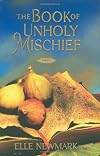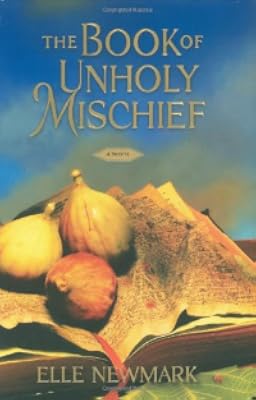
The Book of Unholy Mischief
by Elle Newmark
On This Page
Description
It is 1498, and the whole of Venice is abuzz. Hidden somewhere in the labyrinthine city is an ancient book, rumoured to contain thorny heresies and secrets of immeasurable power. Luciano, a penniless orphan, has been plucked from the street and taken on as apprentice to the chef at the doge's palace. While learning the alchemy of cooking, he quickly finds himself entangled in the search for the ancient tome, even suspecting the chef, his maestro, may be concealing valuable information. But show more lurking in the wings are some of the most powerful, dangerous men in Venice, and Luciano's secret will lead him through a perilous maze to the centre of an intrigue that will test his deepest desires and loyalties. show lessTags
Recommendations











Member Recommendations
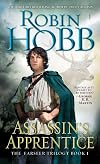
mene Both books have a similar setting: Told by a narrator when he is already old and has lived his life, he talks about his childhood. Both main characters lived in the "important building" of the city (though in Assassin's Apprentice it's a fantasy world and in The Book of Unholy Mischief it's Venice in Italy), both boys go to town every now and then to meet his friends (and a girl), and both are apprentices of someone/something they cannot tell anyone else (except for a few people). Both books contain a bit of magic, though of a different kind.
Member Reviews
If you are a reader that is looking for a fast-paced, quick to it book, The Book of Unholy Mischief is not for you. If, however, you are looking for a book that simmers slowly, builds with an exotic, leisurely scent of savory spices and peels back, layer after layer, as a succulent orange or oversized onion does, you won't be disappointed by this visual masterpiece.
I loved the colorful depictions of Venice in the late fifteenth century. So vivid was author Elle Newmark's writing and characterizations, even after finishing the book, I can still easily visualize Venice in my mind and the wonderfully written Luciano and Chef Ferraro. I can feel the squalor and grime under my feet of the poorer calles that Luciano strolled and can sense show more the aromatic herbs from Chef Ferraro's private closet. I can feel Bernardo rubbing my leg with his head, feel his purrs and smell his wet fur, as well as hear the various cries coming from the street merchants, the sailors and the prostitutes.
That alone would make The Book of Unholy Mischief a worthy and fantastic read. After all, aren't the best writers capable of allowing their readers to not only see in their mind's eye the location and the characters but to hear and even smell the story? Ms. Newmark allows the reader to use all his or her senses and to a fabulous extent.
But let's not shortchange the story which, if you allow it time to build, is phenomenal on its own. Historical fiction lovers will delight not only in the day to day accounts of Renaissance Venice but also with the mystery surrounding the infamous book of the title, which not only supposedly holds the key to immortal life, wealth and riches but brings about grief, death, murder and ties to Jesus' crucifixtion and resurrection. Readers who prefer their books with little or no objectionable language and sexual situations will be satisfied with The Book of Unholy Mischief as there are only brief descriptions of slight violence, mostly relative to street living, and one torture scene.
The Book of Unholy Mischief was a fascinating read and has stayed with me, even after turning that last page and closing the book. I felt vested in the characters, so much so that I experienced both joy and sadness throughout the book and into its conclusion. The mystery over the book built slowly and paid off greatly in the end. Portions of the book dealing with cooking and succulent descriptions of food will leave your mouth watering and your stomach rumbling. And on a purely shallow note, the cover is subtle, understated and yet still luscious and inviting.
I wouldn't hesitate to recommend The Book of Unholy Mischief to one and all and I would love to see this flavorful story on a movie or t.v. screen, as I do think the story would certainly be justified on film. show less
I loved the colorful depictions of Venice in the late fifteenth century. So vivid was author Elle Newmark's writing and characterizations, even after finishing the book, I can still easily visualize Venice in my mind and the wonderfully written Luciano and Chef Ferraro. I can feel the squalor and grime under my feet of the poorer calles that Luciano strolled and can sense show more the aromatic herbs from Chef Ferraro's private closet. I can feel Bernardo rubbing my leg with his head, feel his purrs and smell his wet fur, as well as hear the various cries coming from the street merchants, the sailors and the prostitutes.
That alone would make The Book of Unholy Mischief a worthy and fantastic read. After all, aren't the best writers capable of allowing their readers to not only see in their mind's eye the location and the characters but to hear and even smell the story? Ms. Newmark allows the reader to use all his or her senses and to a fabulous extent.
But let's not shortchange the story which, if you allow it time to build, is phenomenal on its own. Historical fiction lovers will delight not only in the day to day accounts of Renaissance Venice but also with the mystery surrounding the infamous book of the title, which not only supposedly holds the key to immortal life, wealth and riches but brings about grief, death, murder and ties to Jesus' crucifixtion and resurrection. Readers who prefer their books with little or no objectionable language and sexual situations will be satisfied with The Book of Unholy Mischief as there are only brief descriptions of slight violence, mostly relative to street living, and one torture scene.
The Book of Unholy Mischief was a fascinating read and has stayed with me, even after turning that last page and closing the book. I felt vested in the characters, so much so that I experienced both joy and sadness throughout the book and into its conclusion. The mystery over the book built slowly and paid off greatly in the end. Portions of the book dealing with cooking and succulent descriptions of food will leave your mouth watering and your stomach rumbling. And on a purely shallow note, the cover is subtle, understated and yet still luscious and inviting.
I wouldn't hesitate to recommend The Book of Unholy Mischief to one and all and I would love to see this flavorful story on a movie or t.v. screen, as I do think the story would certainly be justified on film. show less
The Book of Unholy Mischief – Elle Newmark n. Raul Esparza
4 stars
In 1498 a Venetian street boy secures a position as an apprentice in the kitchen of the doge. In time he comes to understand that he is not only apprenticed to become a master cook but also to become one of the mysterious Guardians of The Book. The Guardians strive to preserve and protect the accumulated knowledge of centuries. It is the dawn of the Renaissance and a time of great political intrigue and corruption.
From the first gripping chapter, this story drew me in completely. I could smell the food cooking. I wanted to reach in to prevent disaster.
Like The DaVinci Code, this book deals with corruption within the Catholic Church and with a different interpretation show more of the Gospels. There is little doubt of the historical truth of the blatant corruption of the Borgia Pope but other assertions of the story might be offensive to some people. I had no trouble accepting the book as a work of fiction and enjoying the well plotted suspense.
I first listened to this book. I liked Raul Esparza’s performance, but found that sometimes he read too rapidly.
I found the author’s notes at the end of the hard copy to be very interesting.
show less
4 stars
In 1498 a Venetian street boy secures a position as an apprentice in the kitchen of the doge. In time he comes to understand that he is not only apprenticed to become a master cook but also to become one of the mysterious Guardians of The Book. The Guardians strive to preserve and protect the accumulated knowledge of centuries. It is the dawn of the Renaissance and a time of great political intrigue and corruption.
From the first gripping chapter, this story drew me in completely. I could smell the food cooking. I wanted to reach in to prevent disaster.
Like The DaVinci Code, this book deals with corruption within the Catholic Church and with a different interpretation show more of the Gospels. There is little doubt of the historical truth of the blatant corruption of the Borgia Pope but other assertions of the story might be offensive to some people. I had no trouble accepting the book as a work of fiction and enjoying the well plotted suspense.
I first listened to this book. I liked Raul Esparza’s performance, but found that sometimes he read too rapidly.
I found the author’s notes at the end of the hard copy to be very interesting.
show less
In late 15th century Venice, Luciano, a street urchin is collared by the doge's chef when he tries to steal a pomegranate. With this lucky instance, he is plucked from his hard existence in the streets and apprenticed to the chef. Using the cunning he used to survive on the streets, he soon discovers that there are more secrets and lies in Venice than he ever imagined and that his Master is so much more than he ever dreamed. Meanwhile, rumors circulate in Venice about a book containing no one knows what. Some people believe that it contains the secrets of alchemy. The doge thinks it has the information to cure his syphilis. Luciano is certain that is has a love potion that will make the little novice to whom he has given his heart love show more him back. People in power are willing to kill to possess the book, offering staggering awards for it. And so amidst the treachery and political manuvering that is Venice, the race to find and possess the book is on.
Caught up in the frenzy surrounding the book, Luciano eavesdrops in the palace, reports to his friends on the street, talks to the novice, and of course, starts to learn to cook. Watching the chef, he learns the importance of food, wondering if the meals that issue from their kitchen are changing the course of history and the fate of Venice. One of Luciano's first private lessons with the chef teaches him about the beauty of an onion, intricate layer upon intricate layer upon intricate layer. This is a beautiful metaphor for both the Venice Newmark has created as well as the story as a whole. As Luciano's apprenticeship continues, he not only learns to cook but to conspire and the grave importance of secrets kept and secrets spilled. Told in relatively short chapters, the reader will want to keep racing to the end of each, eager for the small revelations that will allow another piece of the puzzle about this fabulous, much-coveted book to fall into place.
Told from Luciano's point of view, the characters are fully fleshed out and human. And while the reader can see the pitfalls in certain characters long before Luciano recognizes that not everyone is worthy of his good heart's affection, this serves to illustrate Luciano's character better than had we been told of the traits that make him the perfect apprentice of the chef's. Newmark builds the suspense well and the final denouement is balanced and inevitable. In all honesty, before I got the book, I wasn't too certain this was going to be the book for me but as I continued to read the description, I couldn't escape the tug of intrigue and I am so very glad I didn't! I thoroughly enjoyed this lively historical fiction. I studiously ignored some of the factual inconsistencies (and Newmark addresses some of this in the author's afterword) because after all, this is fiction and allowances for the fantastical do not go amiss. I'd have loved for the chef to cook for me after all those mouth-watering food descriptions. Like the movie Seducing Beauty, this was an appealing, satisfying, and vividly tempting glimpse into the mysteries, politics, and depravities of long ago Venice. show less
Caught up in the frenzy surrounding the book, Luciano eavesdrops in the palace, reports to his friends on the street, talks to the novice, and of course, starts to learn to cook. Watching the chef, he learns the importance of food, wondering if the meals that issue from their kitchen are changing the course of history and the fate of Venice. One of Luciano's first private lessons with the chef teaches him about the beauty of an onion, intricate layer upon intricate layer upon intricate layer. This is a beautiful metaphor for both the Venice Newmark has created as well as the story as a whole. As Luciano's apprenticeship continues, he not only learns to cook but to conspire and the grave importance of secrets kept and secrets spilled. Told in relatively short chapters, the reader will want to keep racing to the end of each, eager for the small revelations that will allow another piece of the puzzle about this fabulous, much-coveted book to fall into place.
Told from Luciano's point of view, the characters are fully fleshed out and human. And while the reader can see the pitfalls in certain characters long before Luciano recognizes that not everyone is worthy of his good heart's affection, this serves to illustrate Luciano's character better than had we been told of the traits that make him the perfect apprentice of the chef's. Newmark builds the suspense well and the final denouement is balanced and inevitable. In all honesty, before I got the book, I wasn't too certain this was going to be the book for me but as I continued to read the description, I couldn't escape the tug of intrigue and I am so very glad I didn't! I thoroughly enjoyed this lively historical fiction. I studiously ignored some of the factual inconsistencies (and Newmark addresses some of this in the author's afterword) because after all, this is fiction and allowances for the fantastical do not go amiss. I'd have loved for the chef to cook for me after all those mouth-watering food descriptions. Like the movie Seducing Beauty, this was an appealing, satisfying, and vividly tempting glimpse into the mysteries, politics, and depravities of long ago Venice. show less
A tale of old Venice, alchemy, and intrigue, wrapped up with some of the most sumptuous descriptions of food I've read in a long time. Young Luciano, an orphan living by his wits and cunning, finds his life changed when the Doge's chef rescues him from his life on the streets. At the same time there is a search for a mysterious book of potions -- recipes for gold, immortality, love, and more.
What swept me in were the menus that Chef presented to the Doge and guests. The descriptions bordered on magical realism, and made me wish for table scraps.
I usually don't like to listen to abridged audio-books, but this was edited in such a way that I didn't really realize it was abridged until the end, when the book title/author/publisher ID was show more given. Still, there were some phrases that captured me enough to record them when a stoplight came along (I listen to audio books in the car.) Unfortunately, the only slip of paper with a quote scrawled on it says, "He reeked of good health and old money." That could apply to a lot of people I know today. show less
What swept me in were the menus that Chef presented to the Doge and guests. The descriptions bordered on magical realism, and made me wish for table scraps.
I usually don't like to listen to abridged audio-books, but this was edited in such a way that I didn't really realize it was abridged until the end, when the book title/author/publisher ID was show more given. Still, there were some phrases that captured me enough to record them when a stoplight came along (I listen to audio books in the car.) Unfortunately, the only slip of paper with a quote scrawled on it says, "He reeked of good health and old money." That could apply to a lot of people I know today. show less
Set in Venice during the final years of the fifteenth century, The Book of Unholy Mischief by Elle Newmark paints a very vivid picture of that city at the height of it’s power, full of political intrigue, secrets and gossip. As the book opens the city is aflame with the rumour of a very special book hidden somewhere within the city. This book is said to hold the secrets of the ancient alchemists of Byzantium, including recipes for the making of gold, a powerful love potion and a prescription for immortality.
The story is told by Luciano who starts life as a penniless orphan, a street smart boy who has been chosen to be the apprentice of the doge’s head chef. Luciano has learned the art of spying on people and it isn’t too long show more before he too is caught up in the quest for the mysterious book. The chef tries to instill in Luciano an appreciation for how food can manipulate men’s hearts and minds, but the real message of this book seems to be that ultimate power comes from the magic of knowledge.
I was excited about The Book of Unholy Magic but unfortunately the plot was extremely slow moving with many loose ends left dangling. Although I wasn’t totally drawn into the mystery part of the book, the author’s development of the rich atmosphere of this fascinating city and her mouthwatering
descriptions of the food preparation kept me involved in the story. show less
The story is told by Luciano who starts life as a penniless orphan, a street smart boy who has been chosen to be the apprentice of the doge’s head chef. Luciano has learned the art of spying on people and it isn’t too long show more before he too is caught up in the quest for the mysterious book. The chef tries to instill in Luciano an appreciation for how food can manipulate men’s hearts and minds, but the real message of this book seems to be that ultimate power comes from the magic of knowledge.
I was excited about The Book of Unholy Magic but unfortunately the plot was extremely slow moving with many loose ends left dangling. Although I wasn’t totally drawn into the mystery part of the book, the author’s development of the rich atmosphere of this fascinating city and her mouthwatering
descriptions of the food preparation kept me involved in the story. show less
I loved this book, a wonderful, touching story of Luciano a street urchin from the streets of Venice in the 15th century, who is rescued by Chef Ferraro whilst out stealing one day. Little did Luciano know how his life was going to change from that very moment!
There are rumours flying around Venice about a magical book that contains spells and magical formulas for eternal life and love potions to lift the heart. People are offering rewards and are willing to kill for the book, it is a very dangerous time to live with a little knowledge of such a mystical book.
Luciano doesn't know quite how much the chef knows of the book, but knows that his skills are more than a normal chef really has. He sees more and learns more than he understands show more and struggles to work it all out. He encounters dangers at every turn and has a hairy and spine tingeling escape from the Cappe Nere, when discovered.
A marvellous story, wonderful characters and some fantastic descriptions of the food and recipes made, and the historic details is an added bonus. You really have to give this book a go, you will love it! show less
There are rumours flying around Venice about a magical book that contains spells and magical formulas for eternal life and love potions to lift the heart. People are offering rewards and are willing to kill for the book, it is a very dangerous time to live with a little knowledge of such a mystical book.
Luciano doesn't know quite how much the chef knows of the book, but knows that his skills are more than a normal chef really has. He sees more and learns more than he understands show more and struggles to work it all out. He encounters dangers at every turn and has a hairy and spine tingeling escape from the Cappe Nere, when discovered.
A marvellous story, wonderful characters and some fantastic descriptions of the food and recipes made, and the historic details is an added bonus. You really have to give this book a go, you will love it! show less
It’s 1498, and the Renaissance is at its height in the city-states of Italy. Savonarola has just been executed in Florence, and Rodrigo Borgia is Pope Alexander VI in Rome. And half of Europe is in a race for dominance across the Atlantic in the New World. Venice is the home for a convergence of cultures in the Mediterranean, allowing its residents to experience foods never before seen in Europe (including the supposedly poisonous “love apple,” or tomato).
Luciano is a homeless Venetian street urchin, forced to live hand-to-mouth and to steal in order to survive. One stolen pomegranate and Luciano finds himself as the apprentice to the chef of the doge, the secular head of Venice. When the doge (not named here, but probably show more Agostino Barbarigo) poisons a peasant in the palace’s dining room, Luciano embarks on a search for a highly-prized book that holds secrets that many powerful people will kill for. But what are those secrets?
Venice comes to life in this vibrant novel. The author has clearly done her research; you feel as though you’re walking the streets of the old, decaying city; and the reader never quite shakes off the feeling that danger and evil are luring around each corner.
Food is also described in deep detail in this novel, though the author may have attached too much significance to its impact on the story. Still, the author has a wonderful way with words and a turn of phrase that’s just as magical as the book described within. This is the kind of book that will make you think about it long after you’ve finished reading the last page. I really hate The Da Vinci Code comparisons, but The Book of Unholy Mischief is a much more sophisticated, layered, and intelligent version of that book. show less
Luciano is a homeless Venetian street urchin, forced to live hand-to-mouth and to steal in order to survive. One stolen pomegranate and Luciano finds himself as the apprentice to the chef of the doge, the secular head of Venice. When the doge (not named here, but probably show more Agostino Barbarigo) poisons a peasant in the palace’s dining room, Luciano embarks on a search for a highly-prized book that holds secrets that many powerful people will kill for. But what are those secrets?
Venice comes to life in this vibrant novel. The author has clearly done her research; you feel as though you’re walking the streets of the old, decaying city; and the reader never quite shakes off the feeling that danger and evil are luring around each corner.
Food is also described in deep detail in this novel, though the author may have attached too much significance to its impact on the story. Still, the author has a wonderful way with words and a turn of phrase that’s just as magical as the book described within. This is the kind of book that will make you think about it long after you’ve finished reading the last page. I really hate The Da Vinci Code comparisons, but The Book of Unholy Mischief is a much more sophisticated, layered, and intelligent version of that book. show less
Members
- Recently Added By
Published Reviews
ThingScore 50
So “The Book of Unholy Mischief” turns out to be an unexpected hybrid, a highly flavored and faintly preposterous romp that is also a meditation on food, ideas and the importance of keeping hold of the principles of free thought in a world oppressed by censorship. It’s only a shame that the strong and sometimes clumsy seasoning of the plotting tends to swamp the deeper, subtler flavor of show more the rest. show less
added by 2wonderY
Lists

Authors from the United States
245 works; 3 members

A Smorgasbord of Culinary Fiction
221 works; 94 members
Author Information

5 Works 992 Members
Some Editions
Common Knowledge
- Canonical title
- The Book of Unholy Mischief
- Original title
- Bones of the Dead
- Alternate titles
- The Chef's Apprentice
- Original publication date
- 2008-12-30; 2011
- People/Characters
- Luciano; Chef Amato Ferrero; Alexander VI, Pope (Rodrigo de Borja, 1431-1503); Francesca; Rosa Ferrero; Marco (show all 8); Guiseppe; Rodrigo Borgia
- Important places
- Venice, Veneto, Italy; Italy; Rome, Italy
- Epigraph
- If I have seen further (than other men), it is by standing on the shoulders of giants.
Sir Isaac Newton - Dedication
- For the teachers
- First words
- My name is Luciano--just Luciano
- Last words
- (Click to show. Warning: May contain spoilers.)Only yesterday, I overheard a German traveler discussing a new idea called celestial physics, and I turned, as if the chef had called my name.
- Blurbers
- Jacobs, Kate
Classifications
Statistics
- Members
- 648
- Popularity
- 44,760
- Reviews
- 61
- Rating
- (3.67)
- Languages
- 6 — Catalan, Dutch, English, German, Italian, Spanish
- Media
- Paper, Audiobook, Ebook
- ISBNs
- 35
- ASINs
- 12