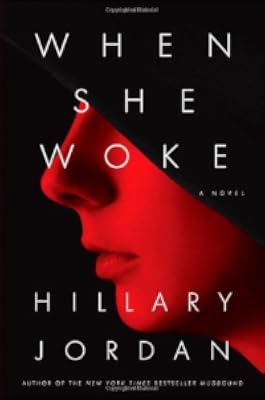
When She Woke
by Hillary Jordan 
On This Page
Description
Hannah Payne's life has been devoted to church and family, but after her arrest, she awakens to a nightmare: she is lying on a table in a bare room, covered only by a paper gown, with cameras broadcasting her every move to millions at home, for whom observing new Chromes—criminals whose skin color has been genetically altered to match the class of their crime—is a new and sinister form of entertainment. Hannah is a Red; her crime is murder. The victim, according to the State of Texas, show more was her unborn child, and Hannah is determined to protect the identity of the father, a public figure with whom she's shared a fierce and forbidden love.When She Woke is a fable about a stigmatized woman struggling to navigate an America of a not-too-distant future—where the line between church and state has been eradicated and convicted felons are no longer imprisoned and rehabilitated but chromed and released back into the population to survive as best they can. In seeking a path to safety in an alien and hostile world, Hannah unknowingly embarks on a path of self-discovery that forces her to question the values she once held true and the righteousness of a country that politicizes faith.
. show less
Tags
Recommendations






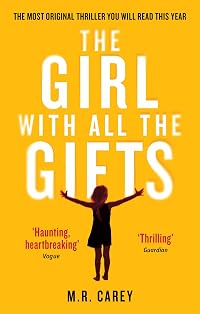
Member Recommendations
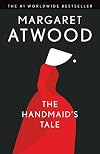
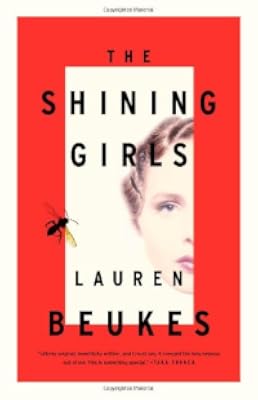
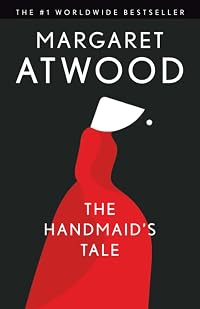
sparemethecensor The Handmaid's Tale is the classic forerunner to dystopic fiction of sexist futures. When She Woke picks up the mantel with a more modern version of a misogynistic theocracy taking over government. Both show terrifying futures for the state of women in society.
Also recommended by anonymous user, BeckyJG, bookworm12
190
anonymous user WHEN SHE WOKE is a modern retelling of the classic.
110
ellbeecee Near-future dystopian fiction that makes you consider what's going on and the various paths that could be taken.
30
anonymous user It's YA, but the fertility issues are similar in both novels.
20
4leschats Similar theme of a post-evangelical government takeover and its ramifications on civil liberties
11
4leschats Similar themes of marked criminals/lower elements and female fertility
Member Reviews
Just -- barely -- OK.
I give Jordan 3 stars for good writing; one star for the story.
Have you ever tasted blancmange? This book is the literary equivalent of it: you think you want it, because it's a pudding and you think you "might just" be satisfied with something that you know isn't spectacular, but triggers a few comfort memories. But then, after the first spoonful, you're really, really sorry because you've got a mouthful of snot and you don't know how to get rid of it, if you're in polite company.
I was looking for certain comfort memories in this book; memories of enjoyable afternoons spent reading well-spun dystopian novels that would transport you to horrifying "what ifs". What I got instead was a mucilaginous mess . I knew, in show more my heart, this was no rewriting of The Scarlet Letter, as the jacket promised. Oh come on now. As if.
The jacket also promised a mash-up of Atwood and Hawthorne. The publicist, I'm guessing, was thinking of Atwood's The Handmaid's Tale. Even I, who am not a great Atwood fan, give Marg full points on that one. Jordan doesn't even come close. Jordan could hold Atwood's gown train, but she could never be the princess at that writers' ball.
Still, I was looking forward to something slightly futuristic with a nice comfortable little morality tale spun in for good measure. What I got instead was a MORALITY TALE, with, yes, large cap punctuation, that wags its red finger throughout the novel ... admonishing ... geez, admonishing everyone-and-eveything-and-god-knows-what. In this world, Roe v Wade has been abolished and all those who partake in murderous acts against foetuses are dunked into metaphorical red paint and left to exhibit their punishment in a very non-metaphorical way.
Jordan's re-imagining of The Scarlet Letter should have been left in her imagination, and not brought to the light of day to punish those who seek either entertainment, or enlightenment, in the realm of literature.
It reads much like a RomCom gone very, very badly; a dash of harlequinesque sauce, thrown into a Christian potboiler.
What a mess!
Blancmange it is! show less
I give Jordan 3 stars for good writing; one star for the story.
Have you ever tasted blancmange? This book is the literary equivalent of it: you think you want it, because it's a pudding and you think you "might just" be satisfied with something that you know isn't spectacular, but triggers a few comfort memories. But then, after the first spoonful, you're really, really sorry because you've got a mouthful of snot and you don't know how to get rid of it, if you're in polite company.
I was looking for certain comfort memories in this book; memories of enjoyable afternoons spent reading well-spun dystopian novels that would transport you to horrifying "what ifs". What I got instead was a mucilaginous mess . I knew, in show more my heart, this was no rewriting of The Scarlet Letter, as the jacket promised. Oh come on now. As if.
The jacket also promised a mash-up of Atwood and Hawthorne. The publicist, I'm guessing, was thinking of Atwood's The Handmaid's Tale. Even I, who am not a great Atwood fan, give Marg full points on that one. Jordan doesn't even come close. Jordan could hold Atwood's gown train, but she could never be the princess at that writers' ball.
Still, I was looking forward to something slightly futuristic with a nice comfortable little morality tale spun in for good measure. What I got instead was a MORALITY TALE, with, yes, large cap punctuation, that wags its red finger throughout the novel ... admonishing ... geez, admonishing everyone-and-eveything-and-god-knows-what. In this world, Roe v Wade has been abolished and all those who partake in murderous acts against foetuses are dunked into metaphorical red paint and left to exhibit their punishment in a very non-metaphorical way.
Jordan's re-imagining of The Scarlet Letter should have been left in her imagination, and not brought to the light of day to punish those who seek either entertainment, or enlightenment, in the realm of literature.
It reads much like a RomCom gone very, very badly; a dash of harlequinesque sauce, thrown into a Christian potboiler.
What a mess!
Blancmange it is! show less
Set in the not-too-distant future, Hannah finds herself on the wrong side of the law. Convicted villains are no longer imprisoned in the United States, they are chromed, their entire skin is genetically tinted a color, depending on their crime. Hannah is a red. She had an abortion. Roe v. Wade has been overturned and the lines between Church and State have blurred.
I couldn't put this chilling book down. It is sci-fi, with a magnetic heroine that reminded me of Atwood's The Handmaid's Tale. Her story unfolds in layers. It is about the price of love, the enormity of shame, the power of self-discovery. I don't want to say too much more, or it will ruin the complexity of the book. Completely compelling!
I couldn't put this chilling book down. It is sci-fi, with a magnetic heroine that reminded me of Atwood's The Handmaid's Tale. Her story unfolds in layers. It is about the price of love, the enormity of shame, the power of self-discovery. I don't want to say too much more, or it will ruin the complexity of the book. Completely compelling!
When She Woke is a dystopian themed adult fiction inspired by Nathaniel Hawthorne's The Scarlet Letter. And like Hawthorne's book, the main character, Hannah Payne, is publicly condemned and ostracized for her perceived crime and forced to wear scarlet as a badge of shame, yet refuses to name the man responsible for her pregnancy. When She Woke also explores similar themes of religion, adultery, and criminality as did The Scarlet Letter.
After being convicted of murdering her unborn child, Hannah goes through a process called melachroming which entails a convicted criminal having their skin color altered to announce the type of crime they committed. She wakes to find herself in a solitary room with only a shower, sleeping platform, and show more a camera in the wall that will, for her first thirty days as a “Chrome,” monitor and broadcast her every move to the entire world.
The dystopian society was one of extreme religious conservatism. The one aspect of this society that almost didn't fit for me was that in such an extremely Puritanical society, would they really rely so heavily on technology? Other than that, imagining a society built on the tenets of such extreme fundamentalistic Christian beliefs was downright frightening. Hannah was forced to contend with her guilt over making choices that not only went against every principal she had been taught to believe in her strict evangelical upbringing, but also put her in the untenable position of losing her friends, family, reputation, and possibly her own life. She struggled to reconcile her actions with her religious beliefs and wondered if she would ever feel a connection to God again.
I found When She Woke to be extremely thought provoking. The idea of melachroming intrigued me. There is some part of me that is not fully convinced that this is such a bad idea as it would effectively punish the criminal through public humiliation yet save the state the expense of housing all but the most violent offenders. In the book, there was a lower life expectancy for some crimes or “colors” such as Red (murderers) and Greens (Child Molesters) while those convicted of less serious crimes (Yellows) were less feared and hated but still ostracized. Right or wrong, it was certainly a fascinating concept to consider.
With all of the heavy and thought provoking themes in When She Woke, it still managed to be an exciting and engaging read. I devoured this book in just one day, unable to put it down. I knew before the first hundred pages that I wouldn't be getting any sleep that night until I finished it. It sinks its hooks in early and never lets go as it takes you on an action packed and emotionally stirring journey. When She Woke takes a fairly clear stance on the topic of abortion, however, I don't believe it was presented in such a biased way that those who differ in their beliefs would be unable to enjoy it. When She Woke tackles some pretty controversial and socially relevant subject matter from a passionately feminist perspective and this may be off-putting for some readers but I found it to be an inspiring story about the struggle from oppression to empowerment. This will definitely be shelved with my all time favorites. I would recommend this to fans of dystopian themed fiction, those who enjoyed the Handmaids Tale or The Scarlet Letter, and those who enjoy fiction that focuses on socially relevant issues. show less
After being convicted of murdering her unborn child, Hannah goes through a process called melachroming which entails a convicted criminal having their skin color altered to announce the type of crime they committed. She wakes to find herself in a solitary room with only a shower, sleeping platform, and show more a camera in the wall that will, for her first thirty days as a “Chrome,” monitor and broadcast her every move to the entire world.
The dystopian society was one of extreme religious conservatism. The one aspect of this society that almost didn't fit for me was that in such an extremely Puritanical society, would they really rely so heavily on technology? Other than that, imagining a society built on the tenets of such extreme fundamentalistic Christian beliefs was downright frightening. Hannah was forced to contend with her guilt over making choices that not only went against every principal she had been taught to believe in her strict evangelical upbringing, but also put her in the untenable position of losing her friends, family, reputation, and possibly her own life. She struggled to reconcile her actions with her religious beliefs and wondered if she would ever feel a connection to God again.
I found When She Woke to be extremely thought provoking. The idea of melachroming intrigued me. There is some part of me that is not fully convinced that this is such a bad idea as it would effectively punish the criminal through public humiliation yet save the state the expense of housing all but the most violent offenders. In the book, there was a lower life expectancy for some crimes or “colors” such as Red (murderers) and Greens (Child Molesters) while those convicted of less serious crimes (Yellows) were less feared and hated but still ostracized. Right or wrong, it was certainly a fascinating concept to consider.
With all of the heavy and thought provoking themes in When She Woke, it still managed to be an exciting and engaging read. I devoured this book in just one day, unable to put it down. I knew before the first hundred pages that I wouldn't be getting any sleep that night until I finished it. It sinks its hooks in early and never lets go as it takes you on an action packed and emotionally stirring journey. When She Woke takes a fairly clear stance on the topic of abortion, however, I don't believe it was presented in such a biased way that those who differ in their beliefs would be unable to enjoy it. When She Woke tackles some pretty controversial and socially relevant subject matter from a passionately feminist perspective and this may be off-putting for some readers but I found it to be an inspiring story about the struggle from oppression to empowerment. This will definitely be shelved with my all time favorites. I would recommend this to fans of dystopian themed fiction, those who enjoyed the Handmaids Tale or The Scarlet Letter, and those who enjoy fiction that focuses on socially relevant issues. show less
I haven't read a book like this since...ever. It has had my mind reeling since the day I opened it, and I'm well aware the gears will be churning days after. Jordan's words create a universe so unraveled you can do nothing but will yourself to be sucked into it. Her vocabulary is also a joy I delighted in, which is rare for me these days. I'd also like to say that, being scarred with an autoimmune disorder, I often feel like I've been "chromed" Red, so it was easy for me to feel the detachment, loneliness, and anger Hannah felt. I also suspect that it's not just me who can easily sympathize with the main character, but everyone and their battles will be able to find blessings through Ms. Payne.
The plot automatically grabs your show more attention, whirls you under, back and forth, and in-between places you'd rather not go--it makes you face your fears. About religion. About what you've been taught since you were old enough to stand. And ultimately, it reassures you that your life is YOUR life--your choices, your free will, no "box within a box." This book gives you hope. show less
The plot automatically grabs your show more attention, whirls you under, back and forth, and in-between places you'd rather not go--it makes you face your fears. About religion. About what you've been taught since you were old enough to stand. And ultimately, it reassures you that your life is YOUR life--your choices, your free will, no "box within a box." This book gives you hope. show less
Read about dystopia so that we don’t have to live it
This novel scared the hell out of me. I don’t know if it scared me more as a woman or a Jew, but suffice it to say that Hillary Jordan’s update of The Scarlet Letter set in a near-future when the United States is a fundamentalist Christian theocracy touched on my deepest fears.
In Jordan’s novel, our Hester Prynne is Hannah Payne. Hannah doesn’t have to wear a scarlet A, it is her skin itself that announces her crime—not just adultery, but murder. She has aborted her unborn fetus, and for that she has been sentenced to live as a “red” for the next 16 years. She is behind bars for only a month, but her skin is dyed a vivid, artificial red for all to see. And the life of show more a “chrome” out in society is both hard and dangerous. Those fine Christian citizens often take matters of social justice into their own hands.
Hannah’s formerly sheltered world is quickly turned upside down, and there’s a compelling and fast-paced story at the center of When She Woke that had me reading deep into the night. But there’s a lot more going on within these pages than just the events of the plot. There are several levels of social commentary going on here. Obviously there’s some rather pointed discussion of religion versus secularism and personal rights. But the very fact that criminality is depicted by skin color opens the door to all kinds of racial subtext as well. And certainly there’s much to be said about the role of women in society. Here, for instance, is a quote that jumped out at me:
“’College wasn’t an option for me,’ Hannah said. There’d been no money for it. But even if she’d been able to get money for a scholarship, her parents would have opposed her going. They’d taught her that her highest purpose as a woman, the purpose to which she’d been created, was to get married, be a helpmate to her husband, and raise a family. She had grown up believing that. But sometimes she couldn’t help thinking wistfully about what it would be like to have four years to do nothing but learn.”
This novel pushed a lot of the same fear buttons in me that The Handmaid’s Tale did decades ago. I doubt this novel will become the sort of modern classic that Atwood’s has, but I applaud anyone prepared to foster discussion of difficult and painful ideas in an intelligent forum. Write about this dystopia, talk about this dystopia, so that we don’t have to live it. As Hillary Jordan has illustrated, it’s all too easy to imagine. show less
This novel scared the hell out of me. I don’t know if it scared me more as a woman or a Jew, but suffice it to say that Hillary Jordan’s update of The Scarlet Letter set in a near-future when the United States is a fundamentalist Christian theocracy touched on my deepest fears.
In Jordan’s novel, our Hester Prynne is Hannah Payne. Hannah doesn’t have to wear a scarlet A, it is her skin itself that announces her crime—not just adultery, but murder. She has aborted her unborn fetus, and for that she has been sentenced to live as a “red” for the next 16 years. She is behind bars for only a month, but her skin is dyed a vivid, artificial red for all to see. And the life of show more a “chrome” out in society is both hard and dangerous. Those fine Christian citizens often take matters of social justice into their own hands.
Hannah’s formerly sheltered world is quickly turned upside down, and there’s a compelling and fast-paced story at the center of When She Woke that had me reading deep into the night. But there’s a lot more going on within these pages than just the events of the plot. There are several levels of social commentary going on here. Obviously there’s some rather pointed discussion of religion versus secularism and personal rights. But the very fact that criminality is depicted by skin color opens the door to all kinds of racial subtext as well. And certainly there’s much to be said about the role of women in society. Here, for instance, is a quote that jumped out at me:
“’College wasn’t an option for me,’ Hannah said. There’d been no money for it. But even if she’d been able to get money for a scholarship, her parents would have opposed her going. They’d taught her that her highest purpose as a woman, the purpose to which she’d been created, was to get married, be a helpmate to her husband, and raise a family. She had grown up believing that. But sometimes she couldn’t help thinking wistfully about what it would be like to have four years to do nothing but learn.”
This novel pushed a lot of the same fear buttons in me that The Handmaid’s Tale did decades ago. I doubt this novel will become the sort of modern classic that Atwood’s has, but I applaud anyone prepared to foster discussion of difficult and painful ideas in an intelligent forum. Write about this dystopia, talk about this dystopia, so that we don’t have to live it. As Hillary Jordan has illustrated, it’s all too easy to imagine. show less
In this futuristic retelling of The Scarlet Letter, Hillary Jordan lets her imagination run amuck. Trying to save the reputation of the man she loves, Hannah Payne sees no other recourse to her actions, but in so doing, she condemns herself. In reading this novel, you may be appalled at what society and religion have evolved into, but one thing you won’t be is indifferent. This book is like a train wreck: you don’t want to see it, but you can’t tear your eyes away.
"When she woke, she was red."
I have a confession to make.
I am one of those English majors who hates Nathaniel Hawthorne. And I do not use that word lightly. His "introduction" to [The Scarlet Letter] is one of the few pieces of writing I have actually considered ripping into shreds for the cathartic value (granted it was a photocopy for a class, because I would never rip a book no matter what).
But my reason for really not enjoying [The Scarlet Letter] was the writing style, not the story itself. I was always intrigued by the story, but couldn't get into it because of the way Hawthorne wrote it.
So I was thrilled to hear about [When She Woke], a modern dystopian take on [The Scarlet Letter]. And what I had suspected all along was show more true-when put in the hands of a writer whose style I enjoyed much more, the story of a woman whose adulterous affair and the resulting pregnancy shed light not only on herself, but on the society around her, became one I could not put down.
The premise of this story is fascinating. In a seemingly utopian society, those who commit crimes (or rather what society deems crimes), become Chromes. Their entire body is colored by a pigment relating to their crime, and thus their physical appearance tells all those around them the story of their socially-deemed sin.
The protagonist of the story, Hannah, a girl who grew up going to church and sewing wedding dresses for other girls, wakes up on the first page of the story as a Red. Instead of destroying her life as society plans, living her life as a Chrome forces Hannah not only to reexamine herself, but the society she has always believed in without question. show less
I have a confession to make.
I am one of those English majors who hates Nathaniel Hawthorne. And I do not use that word lightly. His "introduction" to [The Scarlet Letter] is one of the few pieces of writing I have actually considered ripping into shreds for the cathartic value (granted it was a photocopy for a class, because I would never rip a book no matter what).
But my reason for really not enjoying [The Scarlet Letter] was the writing style, not the story itself. I was always intrigued by the story, but couldn't get into it because of the way Hawthorne wrote it.
So I was thrilled to hear about [When She Woke], a modern dystopian take on [The Scarlet Letter]. And what I had suspected all along was show more true-when put in the hands of a writer whose style I enjoyed much more, the story of a woman whose adulterous affair and the resulting pregnancy shed light not only on herself, but on the society around her, became one I could not put down.
The premise of this story is fascinating. In a seemingly utopian society, those who commit crimes (or rather what society deems crimes), become Chromes. Their entire body is colored by a pigment relating to their crime, and thus their physical appearance tells all those around them the story of their socially-deemed sin.
The protagonist of the story, Hannah, a girl who grew up going to church and sewing wedding dresses for other girls, wakes up on the first page of the story as a Red. Instead of destroying her life as society plans, living her life as a Chrome forces Hannah not only to reexamine herself, but the society she has always believed in without question. show less
Members
- Recently Added By
Published Reviews
ThingScore 25
These early scenes, in which Hannah wakes up in the Chrome ward where she’s been sentenced to remain for 30 days, are promisingly inventive. ... Lacking the satiric sting of “1984″ and “A Clockwork Orange,” the pathos of “Super Sad True Love Story” and “The Book of Dave,” or the kind of newfangled vocabulary each of these works used to describe their worlds, Jordan’s show more dystopia turns out to depict a much smaller future than its bold opening chapters, with their clever homage to Hawthorne, had so valiantly attempted to guarantee. show less
added by lquilter
Lists

Best Dystopias
280 works; 274 members

Best Science Fiction Novels
816 works; 426 members

Best Feminist Science Fiction
188 works; 35 members
Science fiction novels with a female protagonist
105 works; 30 members

Favorite Science Fiction by Women Authors
737 works; 202 members

Dystopian and Apocalyptic Literature
350 works; 74 members

ALA The Reading List
490 works; 28 members

Best Feminist Literature
188 works; 26 members

Slipstream or Interstitial Fiction
160 works; 19 members

Top Five Books of 2013
1,562 works; 721 members

Favorite Books Published in 2011
14 works; 5 members
Recommended Speculative Fiction by Women and People of Color
298 works; 45 members

Religious Science Fiction
70 works; 20 members

Summer Reads 2014
207 works; 70 members
LGBTQ+ Speculative Fiction
821 works; 51 members

Feminism
167 works; 4 members
Dystopia Must-Reads
18 works; 2 members

Book Club Suggestions for 2020
27 works; 2 members

Indie Next Picks
196 works; 4 members

Stories Inspired by Other Fiction
127 works; 24 members

Top Five Books of 2017
757 works; 231 members

Literature About Adultery
69 works; 10 members

Books To Get From The Library
115 works; 5 members

Books Read in 2013
1,630 works; 51 members

Female Protagonist
1,056 works; 57 members

Strong Characters
39 works; 2 members

Best 21st Century Books (So Far)
670 works; 86 members
Author Information

4+ Works 5,108 Members
Hillary Jordan is a LibraryThing Author, an author who lists their personal library on LibraryThing.
Some Editions
Awards and Honors
Awards
Distinctions
Work Relationships
Was inspired by
Common Knowledge
- Canonical title*
- Écarlate
- Original title
- When she woke
- Original publication date
- 2011-10-04
- People/Characters
- Hannah Payne; Aidan Dale; Kayla Mariko Ray; Simone; Paul; Becca Payne Crenshaw (show all 17); Mrs. Henley; Stanton; Ponder Henley; Susan; Walker Bridget; Alyssa Dale; Anthony; Raphael; Cole Crenshaw; Mrs. Bunten; Gabrielle
- Important places
- Dallas, Texas, USA; Texas, USA; Québec, Canada; Mississippi, USA; Maxon, Virginia, USA; Columbus, Mississippi, USA
- Epigraph
- “Truly, friend, and methinks it must gladden your heart, after your troubles and sojourn in the wilderness,” said the townsman, “to find yourself, at length, in a land where iniquity is searched out, and punished in the... (show all) sight of rulers and people.” —NATHANIEL HAWTHORNE, The Scarlet Letter
- Dedication
- This book is for my father
- First words
- When she woke, she was red.
- Last words
- (Click to show. Warning: May contain spoilers.)She woke and she was herself.
- Original language
- English
- Canonical DDC/MDS
- 813.6
- Canonical LCC
- PS3610.O6556
*Some information comes from Common Knowledge in other languages. Click "Edit" for more information.
Classifications
Statistics
- Members
- 1,782
- Popularity
- 12,320
- Reviews
- 181
- Rating
- (3.67)
- Languages
- 5 — English, French, German, Portuguese, Turkish
- Media
- Paper, Audiobook, Ebook
- ISBNs
- 27
- ASINs
- 11