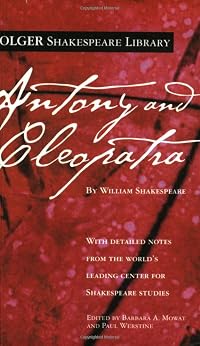
Antony and Cleopatra
by William Shakespeare
On This Page
Description
Antony and Cleopatra is a tragic play by Shakespeare, which tells the ill-fated love story between Antony and Cleopatra and the antagonistic role played by Julius Caesar, future Emperor of Rome."I will tell you.
The barge she sat in, like a burnish'd throne,
Burn'd on the water: the poop was beaten gold;
Purple the sails, and so perfumed that
The winds were love-sick with them; the oars were silver,
Which to the tune of flutes kept stroke, and made
The water which they beat to follow show more faster,
As amorous of their strokes."
. show less
Tags
Recommendations




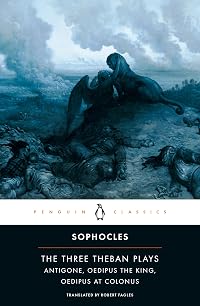

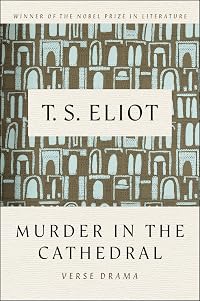
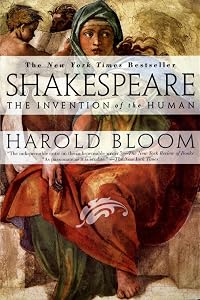
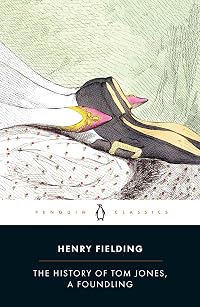







Member Recommendations
anonymous user Shakespeare's treatments of passionate, irrational and self-destructive love between teenagers (R&J) and mature people (A&C) make for a truly fascinating comparison. The vastly greater political and metaphysical implications, as well as the extreme concentration of the language, in the later play show how far Shakespeare developed for just over a decade.
Member Reviews
Would LOVE to see this played as a screwball comedy all the way through, yes, including all the deaths at the end. Cleopatra is one of the funniest and broadest characters in Shakespeare, and what's more comedic than triumvers drunkenly discoursing on the crocodile, or, you know, a man botching his own disembowelment? For heaven's sake, the most dramatic scene in the play is interrupted for several minutes when a clown stumbles into it and refuses to take his cue to leave.
Right away the play catches you off-base, with a scene showing the title romance well underway. We don't get an insight as to how it began until Act 2, scene ii, by which time we have a pretty good idea these guys, unlike say Romeo and Juliet, are lovers crossed not by the stars but by themselves. Antony has a chip on his shoulder from knowing he deserves to rule over Rome and not serve in tandem with two lightweights. Cleopatra is a woman who likes to make her men dance, even to the point when it isn't good for her, but she's such fun and so luminous a presence even when she is the butt of the humor you have to love her with Antony's blind passion. Just watch her play Punch & Judy with a luckless messenger who has to tell her about show more Antony's new wife.
Two elements stand out in the reading of this play, beyond the glorious leads. The figure of Enobarbus, Antony's sardonic aide-de-camp, offers a great insight into the romance and the political backdrop with his cagy asides and singular wit. "That truth should be silent I had almost forgot," he tells his boss, but it never really is with Enobarbus on the job.
The other element is "Antony And Cleopatra's" cinematic quality, with no less than 42 scenes set in Rome, Greece, and Egypt. Lovemaking, drinking, battles, and jump-cuts abound. There are longish scenes, like the final one, but even there the action moves fast. It might be considered a failing that so much of what happens on stage up until the last two acts is basically reaction action to storylines that occur off-frame, but Shakespeare makes the drama come so alive, and draws his focus so remarkably on his imperfect central lovers, that you only marvel at what he is able to accomplish without, say, a staged first meeting between Antony and Cleopatra, or a more direct falling out between Antony and Octavian Caesar.
One of the great attractions for me of reading this play is it works as a kind of antidote to Shakespeare's other celebrated romance. Romeo And Juliet are lovers in the full bloom of youth, toyed with by others' ambitions. Antony and Cleopatra are older and more in charge of their lives, yet make an even bigger hash of things. A street fight in Verona pales in comparison to Actium, yet I find Antony and Cleopatra as I get older far more rewarding company, with their refusal to live their lives in accordance with other's wants. show less
Two elements stand out in the reading of this play, beyond the glorious leads. The figure of Enobarbus, Antony's sardonic aide-de-camp, offers a great insight into the romance and the political backdrop with his cagy asides and singular wit. "That truth should be silent I had almost forgot," he tells his boss, but it never really is with Enobarbus on the job.
The other element is "Antony And Cleopatra's" cinematic quality, with no less than 42 scenes set in Rome, Greece, and Egypt. Lovemaking, drinking, battles, and jump-cuts abound. There are longish scenes, like the final one, but even there the action moves fast. It might be considered a failing that so much of what happens on stage up until the last two acts is basically reaction action to storylines that occur off-frame, but Shakespeare makes the drama come so alive, and draws his focus so remarkably on his imperfect central lovers, that you only marvel at what he is able to accomplish without, say, a staged first meeting between Antony and Cleopatra, or a more direct falling out between Antony and Octavian Caesar.
One of the great attractions for me of reading this play is it works as a kind of antidote to Shakespeare's other celebrated romance. Romeo And Juliet are lovers in the full bloom of youth, toyed with by others' ambitions. Antony and Cleopatra are older and more in charge of their lives, yet make an even bigger hash of things. A street fight in Verona pales in comparison to Actium, yet I find Antony and Cleopatra as I get older far more rewarding company, with their refusal to live their lives in accordance with other's wants. show less
I have to admit, at first this one did not resonate with me as much as I thought it would. Perhaps it's because no characters stand out aside from the titular couple (not even Octavian Caesar); perhaps it's because there are no soliloquies revealing inner motivation, nor all that many memorable phrases (though there are some). Perhaps it's just because I read it at a restless moment and couldn't give it the attention I would usually give to such a book.
I suspect, however, it is because there are a lot of moving pieces in Antony and Cleopatra. Military campaigns, political machinations in royal courts, and temporary alliances; years condensed down into a small timeframe. This, of course, is a common Shakespeare technique in his history show more plays and his tragedies, but for some strange reason it didn't seem to work (for me) here. The play is, of course, all about the downfall of the doomed couple and their fledgling breakaway empire, but the grandeur of this and the drama of the foundations being shaken are robbed of some of their power by the brevity of the plot. Shakespeare proved he could condense such seismic events as the death of a kingdom into a small, character-driven play (for example, the similar Macbeth) so I was a bit surprised by my reaction to Antony and Cleopatra.
At best, perhaps all I can say to account for this is that there's many different pivots that need to be addressed for the history to work: the courting between Antony and Cleopatra; the rise of Octavian as a political force; the insurrection of the lesser Pompey; the alliance through marriage to Octavia; and all this before we even get to the battles, including the all-important Actium, and the anguish and suicides of Mark Antony (on his sword) and Cleopatra (famously, by asp poison). (Note, for example, the rather clumsy and unexplained shift from Antony pledging to Octavia in Act 3, Scene 4 – "If I lose mine honour, I lose myself" (pg. 77) – and then, in Scene 6 of the same Act, after a brief interlude with two lesser characters, it is reported that Antony has taken up with Cleopatra again and been crowned in Egypt. A lot of context is sacrificed for this narrative jump.) Trying to embrace all of this – all of which needs to work for the play to be effective – whilst still fusing the play with strong characterization and themes, perhaps explains my rather belated realization that even Shakespeare was human.
But he's not Shakespeare for nothing. The play is perfectly serviceable, despite my above criticism, and what is more, there is an excellently-realized characterization of Mark Antony. "Valiant and dejected" (pg. 110); "the triple pillar of the world transformed Into a strumpet's fool" (pg. 29); he is the epitome of a great man laid low by his weakness for a certain woman: "A man who is the abstract of all faults That all men follow." (pg. 40). Many such men fret about their masculinity and the price of their honour; as Antony diminishes in mind and in (military) skill, he feels unmanned (Shakespeare has a nice, deliberate theme running throughout in which Antony is said to act as a woman and Cleopatra a man) and humiliated, his faults exposed to the world. He even botches his suicide. Antony is, in Shakespeare's oeuvre, an unrepentantly great man (just listen to his famous speech in Julius Caesar) and his uncharacteristically pitiful downfall is frightening, perhaps all the more so for being so muted. Even here, his woman upstages and outperforms him: she approaches her own suicide with more composure and it is more memorable; the final, crowning act of the play. In tandem, the two lovers drive each other into the ground, each exacerbating the faults in the other rather than bringing out their strengths. By the end of the play, the tragedy is complete and profound. Such culminations are why we continue to read Shakespeare. show less
I suspect, however, it is because there are a lot of moving pieces in Antony and Cleopatra. Military campaigns, political machinations in royal courts, and temporary alliances; years condensed down into a small timeframe. This, of course, is a common Shakespeare technique in his history show more plays and his tragedies, but for some strange reason it didn't seem to work (for me) here. The play is, of course, all about the downfall of the doomed couple and their fledgling breakaway empire, but the grandeur of this and the drama of the foundations being shaken are robbed of some of their power by the brevity of the plot. Shakespeare proved he could condense such seismic events as the death of a kingdom into a small, character-driven play (for example, the similar Macbeth) so I was a bit surprised by my reaction to Antony and Cleopatra.
At best, perhaps all I can say to account for this is that there's many different pivots that need to be addressed for the history to work: the courting between Antony and Cleopatra; the rise of Octavian as a political force; the insurrection of the lesser Pompey; the alliance through marriage to Octavia; and all this before we even get to the battles, including the all-important Actium, and the anguish and suicides of Mark Antony (on his sword) and Cleopatra (famously, by asp poison). (Note, for example, the rather clumsy and unexplained shift from Antony pledging to Octavia in Act 3, Scene 4 – "If I lose mine honour, I lose myself" (pg. 77) – and then, in Scene 6 of the same Act, after a brief interlude with two lesser characters, it is reported that Antony has taken up with Cleopatra again and been crowned in Egypt. A lot of context is sacrificed for this narrative jump.) Trying to embrace all of this – all of which needs to work for the play to be effective – whilst still fusing the play with strong characterization and themes, perhaps explains my rather belated realization that even Shakespeare was human.
But he's not Shakespeare for nothing. The play is perfectly serviceable, despite my above criticism, and what is more, there is an excellently-realized characterization of Mark Antony. "Valiant and dejected" (pg. 110); "the triple pillar of the world transformed Into a strumpet's fool" (pg. 29); he is the epitome of a great man laid low by his weakness for a certain woman: "A man who is the abstract of all faults That all men follow." (pg. 40). Many such men fret about their masculinity and the price of their honour; as Antony diminishes in mind and in (military) skill, he feels unmanned (Shakespeare has a nice, deliberate theme running throughout in which Antony is said to act as a woman and Cleopatra a man) and humiliated, his faults exposed to the world. He even botches his suicide. Antony is, in Shakespeare's oeuvre, an unrepentantly great man (just listen to his famous speech in Julius Caesar) and his uncharacteristically pitiful downfall is frightening, perhaps all the more so for being so muted. Even here, his woman upstages and outperforms him: she approaches her own suicide with more composure and it is more memorable; the final, crowning act of the play. In tandem, the two lovers drive each other into the ground, each exacerbating the faults in the other rather than bringing out their strengths. By the end of the play, the tragedy is complete and profound. Such culminations are why we continue to read Shakespeare. show less
Shakespeare here writes about two historical characters far more famous and important that Lear or Macbeth but he doesn't treat them in a monumental tragic fashion. He instead portrays them as rather ordinary mortals: Antony, a pliable politician and unfocused warrior; Cleopatra, a passionate but insecure cougar. The most interesting scene is a on-boat banquet where the shrewd politicos of Rome persuade a young revolutionary to abandon a rebellion he is winning. The most memorable character (to me) is Enobarbus, a close, intelligent friend of Antony who betrays him when he decides he has no chance to win and then cannot live with himself.
Huh. I'd have put money on my having read this before, though quite a while back, but I sure don't remember finding Cleopatra so loathsome before. I've read enough histories that cover the whole Julius Caesar/Mark Antony/Cleopatra/Octavius/death by asps thing that maybe I hadn't read Shakespeare's version before. At any rate, history suggests that Cleopatra was canny, intelligent, and deliberate, but Shakespeare's Cleopatra is a silly, fickle, whining brat. Character after character tells us that she is bewitching, glorious, and desirable, but every time we meet her she is whimpering and simpering, telling silly lies to manipulate Antony, swanning around in a way that would embarrass a sensible teenager, much less a matronly queen. And show more Antony isn't much better. Far from taking his position in the triumvirate seriously, he tosses his responsibilities to Rome and his family there aside to frisk, puppy-like, around his Egyptian mistress. Yuck. Neither one comes off as grown-up, much less as noble figures whose tragic fates we should find regrettable. And yet...
Despite the characters' manifold flaws, the play is deeply compelling. Somehow both Antony and Cleopatra, for all their foolish choices and pettinesses, transcend all and appear, in the end, to be outsize, even archetypal figures. Their bad decisions, which so many other people must pay for, somehow end with a sort of grandeur and mythic feel that, logically, the details don't support. They are so convinced of the earth shattering significance of their lives that they convince us it is so. Having turned these historical figures into melodramatic children Shakespeare uses his art to transform them further into great tragic lovers.
Part of my extreme distaste for Cleopatra may be thanks to the very excellent Arkangel recording of the play that I listened to along with my reading of the Arden Shakespeare edition. Estelle Kohler, who plays Cleopatra, doesn't hold back anything in her emotional performance. All the weeping, whining, wheedling, and cattiness is going full throttle. The asp could have showed up in, say, Act 2, and Antony could have settled down with Octavia, who seemed a nice, sensible sort of woman, and things would have been much simpler. But that wouldn't have made much of a story, would it? Marjorie Garber's wonderful essay, in her “Shakespeare After All,” helped me appreciate the play, though she couldn't make the main characters any less annoying. Highly recommended. show less
Despite the characters' manifold flaws, the play is deeply compelling. Somehow both Antony and Cleopatra, for all their foolish choices and pettinesses, transcend all and appear, in the end, to be outsize, even archetypal figures. Their bad decisions, which so many other people must pay for, somehow end with a sort of grandeur and mythic feel that, logically, the details don't support. They are so convinced of the earth shattering significance of their lives that they convince us it is so. Having turned these historical figures into melodramatic children Shakespeare uses his art to transform them further into great tragic lovers.
Part of my extreme distaste for Cleopatra may be thanks to the very excellent Arkangel recording of the play that I listened to along with my reading of the Arden Shakespeare edition. Estelle Kohler, who plays Cleopatra, doesn't hold back anything in her emotional performance. All the weeping, whining, wheedling, and cattiness is going full throttle. The asp could have showed up in, say, Act 2, and Antony could have settled down with Octavia, who seemed a nice, sensible sort of woman, and things would have been much simpler. But that wouldn't have made much of a story, would it? Marjorie Garber's wonderful essay, in her “Shakespeare After All,” helped me appreciate the play, though she couldn't make the main characters any less annoying. Highly recommended. show less
This one’s a bummer on every level. Which, for a tragedy, I suppose is a good thing?
I do think Antony & Cleopatra is a very unwieldy play, though. There are so many characters, many of whom wind up changing sides or just disappearing altogether. Having several short scenes one after the other, each taking place in a different location and with a different set of characters, is head-spinning, and not in a good way. The plot seems to race ahead before Shakespeare has even had time to pin it down, spiralling out of control in unexpected ways.
It’s strange, but even a play like A Midsummer Night’s Dream (I know, I know, comparing a tragedy and a comedy—sue me) which has an equally rollicking pace and is made out of dozens of show more complicated conflicts, seems much more tightly controlled than this one; it’s like a well-woven web, whereas Antony & Cleopatra is like a tangled ball of twine. I’m a big fan of the characterisation here, though—both lovers are deep and complicated characters with fatal flaws and reputations to keep up, but they just can’t carry the rest of the play, which picks up and drops plot threads as though they were nothing. show less
I do think Antony & Cleopatra is a very unwieldy play, though. There are so many characters, many of whom wind up changing sides or just disappearing altogether. Having several short scenes one after the other, each taking place in a different location and with a different set of characters, is head-spinning, and not in a good way. The plot seems to race ahead before Shakespeare has even had time to pin it down, spiralling out of control in unexpected ways.
It’s strange, but even a play like A Midsummer Night’s Dream (I know, I know, comparing a tragedy and a comedy—sue me) which has an equally rollicking pace and is made out of dozens of show more complicated conflicts, seems much more tightly controlled than this one; it’s like a well-woven web, whereas Antony & Cleopatra is like a tangled ball of twine. I’m a big fan of the characterisation here, though—both lovers are deep and complicated characters with fatal flaws and reputations to keep up, but they just can’t carry the rest of the play, which picks up and drops plot threads as though they were nothing. show less
جدای از زیبایی نمایشنامه و داستان، دو نکتهی برجسته نظر من رو به خودش جلب کرد:
اول نوع پردهبندی در این نمایشنامه که انگار در پرده پیشین داستان تمام میشد و داستان دیگهای آغاز میشد... مثلاً در پردهی دوم آنتونی و قیصر درگیر توطئهی پومپی هستند، اما در پایان پردهی دوم این قسمت از قصه به پایان میرسه و داستان بخش دیگری آغاز میشه.
دوم نوع شخصیتپردازی شخصیتها... تا آخر نمایشنامه با اینکه با شخصیتهای show more اصلی همدردی میکنید، اما نمیتونید با طیب خاطر حق رو بهشون بدید یا بگید که دنبال باطل رفتند... شخصیتها تا حدود زیادی (اونقدر که در قرن 17 اجازه میداده و مخاطب رو میتونسته درگیر کنه) خاکستریاند... این نکته وقتی جالبتر میشه که این نمایشنامه از روی زندگی شخصیتهایی نوشته شده که واقعاً وجود داشتند و خاکستری بودنشون به نمایش بعد انسانیشون بسیار کمک کرده. show less
اول نوع پردهبندی در این نمایشنامه که انگار در پرده پیشین داستان تمام میشد و داستان دیگهای آغاز میشد... مثلاً در پردهی دوم آنتونی و قیصر درگیر توطئهی پومپی هستند، اما در پایان پردهی دوم این قسمت از قصه به پایان میرسه و داستان بخش دیگری آغاز میشه.
دوم نوع شخصیتپردازی شخصیتها... تا آخر نمایشنامه با اینکه با شخصیتهای show more اصلی همدردی میکنید، اما نمیتونید با طیب خاطر حق رو بهشون بدید یا بگید که دنبال باطل رفتند... شخصیتها تا حدود زیادی (اونقدر که در قرن 17 اجازه میداده و مخاطب رو میتونسته درگیر کنه) خاکستریاند... این نکته وقتی جالبتر میشه که این نمایشنامه از روی زندگی شخصیتهایی نوشته شده که واقعاً وجود داشتند و خاکستری بودنشون به نمایش بعد انسانیشون بسیار کمک کرده. show less
Members
- Recently Added By
Lists

Favorite Shakespeare plays?
37 works; 45 members

Must read
30 works; 2 members

Next Plays / 2025
352 works; 1 member

My Play Collection
769 works; 3 members

Recommended Reading : 600 Classics Reviewed, Editors of Salem Press, 2015
634 works; 6 members

'Books You Can't Live Without: The Top 100', The Guardian, 2007
156 works; 7 members

Books Read in 2023
5,547 works; 145 members

Greatest Books, allegedly
484 works; 9 members
1:28 p.m.'s 350 Stage Plays Challenge
94 works; 3 members

Fake Top 100 Fiction
81 works; 4 members

My 100 Favorite Books of All Time
57 works; 2 members

Books Mentioned in The Wedding Planner's Daughter series
107 works; 2 members
Stage Plays/Screenplays/Dialogues/Anything Dialogue-Storytelling Related
81 works; 2 members

Books Set in Rome
98 works; 2 members
The Great Courses: Shakespeare's Tragedies
35 works; 1 member
Plays I Like
230 works; 31 members

Authors from England
147 works; 4 members
Overdue Podcast
806 works; 9 members

Western World's Greatest Books - Project Gutenberg
295 works; 15 members
Early Modern (Shakesperean)
64 works; 2 members

once upon a time ~ ancient world
46 works; 7 members
Love and Marriage
93 works; 10 members

Bibliography for How to be a Heroine
148 works; 12 members

100 Books to Read in a Lifetime (That Are Older Than 200 Years)
415 works; 174 members
Favorite Literary Love Stories
182 works; 100 members

Global Reads: Books Set in the Middle East and North Africa
50 works; 8 members
The Top Ten: Writers Pick Their Favorite Books
240 works; 31 members
Books You Read During High School (For School)
301 works; 52 members

Next Plays to Watch
50 works; 1 member
Author Information

6,124+ Works 442,689 Members
William Shakespeare, 1564 - 1616 Although there are many myths and mysteries surrounding William Shakespeare, a great deal is actually known about his life. He was born in Stratford-Upon-Avon, son of John Shakespeare, a prosperous merchant and local politician and Mary Arden, who had the wealth to send their oldest son to Stratford Grammar School. show more At 18, Shakespeare married Anne Hathaway, the 27-year-old daughter of a local farmer, and they had their first daughter six months later. He probably developed an interest in theatre by watching plays performed by traveling players in Stratford while still in his youth. Some time before 1592, he left his family to take up residence in London, where he began acting and writing plays and poetry. By 1594 Shakespeare had become a member and part owner of an acting company called The Lord Chamberlain's Men, where he soon became the company's principal playwright. His plays enjoyed great popularity and high critical acclaim in the newly built Globe Theatre. It was through his popularity that the troupe gained the attention of the new king, James I, who appointed them the King's Players in 1603. Before retiring to Stratford in 1613, after the Globe burned down, he wrote more than three dozen plays (that we are sure of) and more than 150 sonnets. He was celebrated by Ben Jonson, one of the leading playwrights of the day, as a writer who would be "not for an age, but for all time," a prediction that has proved to be true. Today, Shakespeare towers over all other English writers and has few rivals in any language. His genius and creativity continue to astound scholars, and his plays continue to delight audiences. Many have served as the basis for operas, ballets, musical compositions, and films. While Jonson and other writers labored over their plays, Shakespeare seems to have had the ability to turn out work of exceptionally high caliber at an amazing speed. At the height of his career, he wrote an average of two plays a year as well as dozens of poems, songs, and possibly even verses for tombstones and heraldic shields, all while he continued to act in the plays performed by the Lord Chamberlain's Men. This staggering output is even more impressive when one considers its variety. Except for the English history plays, he never wrote the same kind of play twice. He seems to have had a good deal of fun in trying his hand at every kind of play. Shakespeare wrote 154 sonnets, all published on 1609, most of which were dedicated to his patron Henry Wriothsley, The Earl of Southhampton. He also wrote 13 comedies, 13 histories, 6 tragedies, and 4 tragecomedies. He died at Stratford-upon-Avon April 23, 1616, and was buried two days later on the grounds of Holy Trinity Church in Stratford. His cause of death was unknown, but it is surmised that he knew he was dying. (Bowker Author Biography) show less
Some Editions
Awards and Honors
Series
Belongs to Publisher Series
William Shakespeare, Theatralische Werke in 21 Einzelbänden, übersetzt von Christoph Martin Wieland (10)
Penguin Shakespeare (B17)
New Penguin Shakespeare (NS31)
The Yale Shakespeare (33)
Edition Holzinger (Shakespeare)
University Paperbacks (UP286 / 206)
Centopaginemillelire (279)
Work Relationships
Is contained in
Has the (non-series) prequel
Has the adaptation
Is abridged in
Was inspired by
Has as a study
Has as a supplement
Has as a commentary on the text
Has as a student's study guide
Common Knowledge
- Canonical title
- Antony and Cleopatra
- Original title
- The Tragedie of Anthonie, and Cleopatra
- Original publication date
- 1623 (Folio) (Folio)
- People/Characters
- Mark Antony; Marcus Antonius; Cleopatra VII (Philopator); Augustus Caesar (Octavian); Marcus Aemilius Lepidus; Sextus Pompeius (Pompey) (show all 10); Domitius Enobarbus; Octavia Minor; Marcus Vipsanius Agrippa; Dolabella
- Important places
- Ancient Egypt; Alexandria, Egypt; Egypt
- Important events
- Roman Empire; 1st century BCE; Reign of Cleopatra VII; Ptolemaic Dynasty; Hellenistic Period
- Related movies
- Antony and Cleopatra (1951 | IMDb); Antony and Cleopatra (1972 | IMDb); Antony and Cleopatra (1974 | IMDb); Antony and Cleopatra (1981 | IMDb); Antony and Cleopatra (1983 | IMDb); RSC Live : Antony and Cleopatra (2017 | IMDb)
- First words
- Nay, but this dotage of our general's
O'erflows the measure: those his goodly eyes,
That o'er the files and musters of the war
Have glow'd like plated Mars, now bend, now turn,
The office and devotion of their vie... (show all)w
Upon a tawny front: his captain's heart,
Which in the scuffles of great fights hath burst
The buckles on his breast, reneges all temper,
And is become the bellows and the fan
To cool a gipsy's lust. - Quotations
- My salad days,
When I was green in judgment.
Age cannot wither her, nor custom stale
Her infinite variety.
Small to greater matters must give way.
Since Cleopatra died,
I have liv'd in such dishonour that the gods
Detest my baseness.
I have
Immortal longings in me. - Last words
- (Click to show. Warning: May contain spoilers.)Come, Dolabella, see
High order in this great solemnity. - Publisher's editor
- Harrison, G. B. (Penguin Popular Classics); Jones, Emrys (New Penguin Shakespeare)
- Original language*
- Inglese
- Disambiguation notice
- This work is for the complete Antony and Cleopatra only. Do not combine this work with abridgements, adaptations or simplifications (such as "Shakespeare Made Easy"), Cliffs Notes or similar study guides, or anything e... (show all)lse that does not contain the full text. Do not include any video recordings. Additionally, do not combine this with other plays.
*Some information comes from Common Knowledge in other languages. Click "Edit" for more information.
Classifications
Statistics
- Members
- 6,234
- Popularity
- 1,990
- Reviews
- 71
- Rating
- (3.73)
- Languages
- 25 — Arabic, Catalan, Chinese, Czech, Danish, Dutch, English, Esperanto, Finnish, French, German, Greek, Hungarian, Italian, Multiple languages, Norwegian (Bokmål), Norwegian, Farsi/Persian, Polish, Portuguese, Russian, Spanish, Swedish, Turkish, Urdu
- Media
- Paper, Audiobook, Ebook
- ISBNs
- 355
- UPCs
- 5
- ASINs
- 188