
HHhH
by Laurent Binet
On This Page
Description
HHhH: "Himmlers Hirn heisst Heydrich," or "Himmler's brain is called Heydrich." The most dangerous man in Hitler's cabinet, Reinhard Heydrich was known as the "Butcher of Prague." He was feared by all and loathed by most. With his cold Aryan features and implacable cruelty, Heydrich seemed indestructible-until two men, a Slovak and a Czech recruited by the British secret service-killed him in broad daylight on a bustling street in Prague, and thus changed the course of History.Who were these show more men, arguably two of the most discreet heroes of the twentieth century? In Laurent Binet's captivating debut novel, we follow Jozef Gabcik and Jan Kubis from their dramatic escape of Nazi-occupied Czechoslovakia to England; from their recruitment to their harrowing parachute drop into a war zone, from their stealth attack on Heydrich's car to their own brutal death in the basement of a Prague church.A seemingly effortlessly blend of historical truth, personal memory, and Laurent Binet's remarkable imagination, HHhH-an international bestseller and winner of the prestigious Prix Goncourt du Premier Roman-is a work at once thrilling and intellectually engrossing, a fast-paced novel of the Second World War that is also a profound meditation on the nature of writing and the debt we owe to history. show lessTags
Recommendations





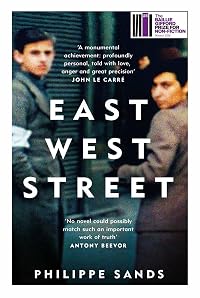

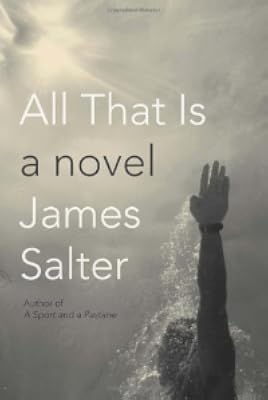


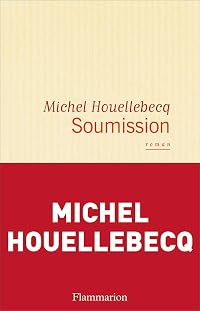

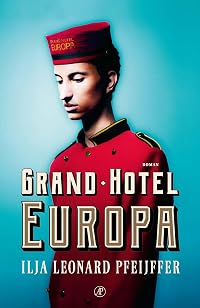


Member Recommendations

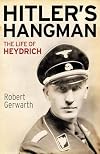
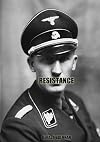
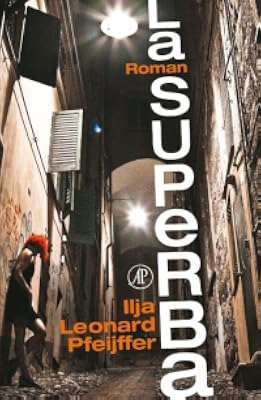
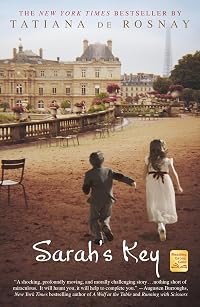
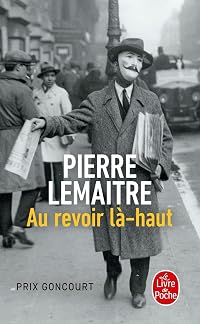
passion4reading A work of historical crime fiction, this nevertheless has Heydrich's assassination at its heart and deals with some of the fallout, both factual and fictitious.
karatelpek Alternative History-HHhH is a key supporting character in Harris' dystopian future.


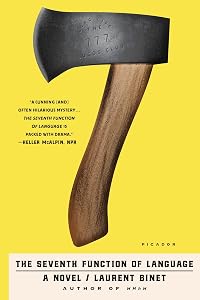
sneuper Both books are about the assassination of Heydrich. Binet uses Burgess’s book as source.
sneuper Both books are about the assassination of Heydrich. Binet used Chacko’s book as source.
Member Reviews
I convinced my parents to buy this book for 299 crowns. It helped that they were Czech crowns, and that we were in the center of Prague, in a Wenceslas Square bookstore specifically, and that the backpage starts: "This is Operation Anthropoid, Prague, 1942." I love reading about places when I'm in those places, and I also heard good things about HHhH from before, and I adore history. So you can see, I started this book exploding with a desire to love it.
I didn't know what I was getting myself into. This is a History book, with a capital H: Everything Binet writes is true. Even when he's writing about writing this book, it's true. I believe the protagonist of the story is Binet, the historian who's writing the book -- not that fucktard show more Heydrich (is he the antagonist?) or the parachutists Gabcik/Kubis -- and even when he writes about the process of writing the book itself, Binet still functions as a character, caught in a heroic struggle to write the perfect history, one that balances literary chops with an allegiance to truth.
I found that meta-ness entertaining at times, many times insightful, and at other times it kind of got on my nerves. When it got on my nerves, it was because the book had started to seem to me like Binet had tried to write an original and fascinating history of the assassination, failed, and then tried to make up for it by placing the story within that gimmicky lens of a historian writing a book.
Otherwise, though, I really liked HHhH. It's thrilling and moving, and the narrator's voice is compellingly casual and suave. I don't know what to feel about its essence though -- whether Binet's just employing a stylistic gimmick or innovating a new and authentic way of looking at fiction/history. show less
I didn't know what I was getting myself into. This is a History book, with a capital H: Everything Binet writes is true. Even when he's writing about writing this book, it's true. I believe the protagonist of the story is Binet, the historian who's writing the book -- not that fucktard show more Heydrich (is he the antagonist?) or the parachutists Gabcik/Kubis -- and even when he writes about the process of writing the book itself, Binet still functions as a character, caught in a heroic struggle to write the perfect history, one that balances literary chops with an allegiance to truth.
I found that meta-ness entertaining at times, many times insightful, and at other times it kind of got on my nerves. When it got on my nerves, it was because the book had started to seem to me like Binet had tried to write an original and fascinating history of the assassination, failed, and then tried to make up for it by placing the story within that gimmicky lens of a historian writing a book.
Otherwise, though, I really liked HHhH. It's thrilling and moving, and the narrator's voice is compellingly casual and suave. I don't know what to feel about its essence though -- whether Binet's just employing a stylistic gimmick or innovating a new and authentic way of looking at fiction/history. show less
-So whatcha readin'?
-HHhH.
-Hhhh?
-No. HHhH.
-HHHH?
-I said HHhH!
-HhHhHhHh? Any GGgGood?
-(Throws book at them.)
Yes, is is very good. A writer tries to turn a historical event which has touched him deeply into a novel, but has intense scruples about the process of inventing fictional novelistic elements when the real events are so compelling. he wrestles with this, he explores his own fascination with the event, he comes u against the limits of attempting a simple truthful and accurate retelling and catches himself more then once inventing details, or possibly misremembering details and being forced to choose.
The event is the assasination of Reinhard Heydrich, the Butcher of Prague, a great deal of time is spent on Heydrich's life and show more career and the increasingly efficient orchestration of mass murder. It doesn't take much to make the reader thoroughly invested in seeing the fucker murdered himself, but this is nonetheless done with skill and precision, creating a narrative that feels non-fictional, yet with breaks where the author insists that he is working on a novel, and these breaks actually add to the momentum and the engagement, because the authors commitment to the story is itself so thorough and passionate, his minor literary and historical struggle set against the massive struggle and brutality and sacrifice taking place on the pages.
It races to its end with the breathlessness of a thriller and the inevitability of a tragedy. Perhaps in the end, the story it tell is non-fiction, but the novel is a about a writer trying to tell that story in a way that remains true to his own principles and does honour to the people it describes. Maybe it shouldn't work, but it does, because of the sincerity and heart of the author - the device is not an ironic, distancing alienating one, but one that pushes you right up against the very idea of a modern person looking back at historical events that are themselves distant and trying to make sense of them, almost become a part of them through an exercise of sympathetic imagination. It's brilliant, whatever it is. show less
-HHhH.
-Hhhh?
-No. HHhH.
-HHHH?
-I said HHhH!
-HhHhHhHh? Any GGgGood?
-(Throws book at them.)
Yes, is is very good. A writer tries to turn a historical event which has touched him deeply into a novel, but has intense scruples about the process of inventing fictional novelistic elements when the real events are so compelling. he wrestles with this, he explores his own fascination with the event, he comes u against the limits of attempting a simple truthful and accurate retelling and catches himself more then once inventing details, or possibly misremembering details and being forced to choose.
The event is the assasination of Reinhard Heydrich, the Butcher of Prague, a great deal of time is spent on Heydrich's life and show more career and the increasingly efficient orchestration of mass murder. It doesn't take much to make the reader thoroughly invested in seeing the fucker murdered himself, but this is nonetheless done with skill and precision, creating a narrative that feels non-fictional, yet with breaks where the author insists that he is working on a novel, and these breaks actually add to the momentum and the engagement, because the authors commitment to the story is itself so thorough and passionate, his minor literary and historical struggle set against the massive struggle and brutality and sacrifice taking place on the pages.
It races to its end with the breathlessness of a thriller and the inevitability of a tragedy. Perhaps in the end, the story it tell is non-fiction, but the novel is a about a writer trying to tell that story in a way that remains true to his own principles and does honour to the people it describes. Maybe it shouldn't work, but it does, because of the sincerity and heart of the author - the device is not an ironic, distancing alienating one, but one that pushes you right up against the very idea of a modern person looking back at historical events that are themselves distant and trying to make sense of them, almost become a part of them through an exercise of sympathetic imagination. It's brilliant, whatever it is. show less
Possibly one of the best historical novels I've read in ages. A postmodern take on Operation Anthropoid, this book beautifully tells the story of Jozef Gabčík and Jan Kubiš, not just as it happened but as it is being researched. Woven into the narrative about this mission is the narrator's thoughts about the act of telling historical stories, often told with the zeal of the academically eccentric.
I read the English translation, which is fantastic. The pacing is great, the final showdown had me on the edge of my seat not just because of the insanity of its facts, but through the writing itself. The book is able to be quick and action-packed when it needs to, thoughtfully slow at other times, and sometimes truly unhinged in ways that show more emphasize the narrator's conflict between history and traditional narratives. Bravo to the translation!
If you're at all interested in WW2, especially if you're interested in stories about resisting fascism and what it means to tell stories about resisting fascism, I would highly recommend picking this book up. Don't let the term "postmodern" throw you off - this book is very approachable and the author does a great job giving you enough information to understand the story being told.
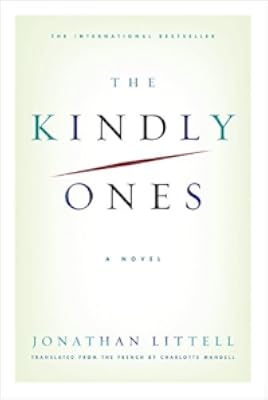
(Unrelated: the parts of the novel where the narrator goes on about Johnathan Littrell's The Kindly Ones made me giggle, as they come across as the narrator being very annoyed for petty, personal reasons. Someday I hope to be paid to bitch about Reddit commenters saying things I don't agree with, a la the way the narrator complains about anonymous reviews online.) show less
I read the English translation, which is fantastic. The pacing is great, the final showdown had me on the edge of my seat not just because of the insanity of its facts, but through the writing itself. The book is able to be quick and action-packed when it needs to, thoughtfully slow at other times, and sometimes truly unhinged in ways that show more emphasize the narrator's conflict between history and traditional narratives. Bravo to the translation!
If you're at all interested in WW2, especially if you're interested in stories about resisting fascism and what it means to tell stories about resisting fascism, I would highly recommend picking this book up. Don't let the term "postmodern" throw you off - this book is very approachable and the author does a great job giving you enough information to understand the story being told.
(Unrelated: the parts of the novel where the narrator goes on about Johnathan Littrell's The Kindly Ones made me giggle, as they come across as the narrator being very annoyed for petty, personal reasons. Someday I hope to be paid to bitch about Reddit commenters saying things I don't agree with, a la the way the narrator complains about anonymous reviews online.) show less
Original. Creative. Surprising. Not words that I normally use to describe WWII literature. But Laurent Binet's novel is all of these. Ostensibly about the assassination of Reinhard Heydrich and the subsequent reprisals taken against the perpetrators and the Czech population, the novel is also an exploration of what it means to be obsessed with World War II and how our obsessions and experiences influence how we write about the past and thereby change how others in turn perceive it.
Reinhard Heydrich was Himmler's right hand man in the SS, thus coining the phrase "Himmlers Hirn heisst Heydrich (HHhH)", which translates to "Himmler's brain is called Heydrich". After the annexation of the Sudetenland and breaking off of Slovakia, the Nazi's show more decided that they needed a strong hand in the Czech and Bohemian Protectorate in order to maintain order and, more importantly, keep the industrialized Czech factories producing at top speed for the German army. Heydrich is sent to squelch any possible disruption caused by native Czech resistance, which he does with swift and horrifying brutality. The Czech government in exile decides to send a pair of operatives (one Czech and one Slovak) to assassinate Heydrich. Jozef Gabčík and Jan Kubiš parachute into the Protectorate and eventually succeed in fatally wounding Heydrich, provoking one of the greatest manhunts by the SS. In the meantime, a small village with a tenuous link to one of the assassins is completely destroyed in retaliation.
If the book were simply about the assassination and the fate of the two parachutists, it would be interesting, but hardly original. Although the story is not extremely well-known, it is part of the lore of WWII. But Binet does something different. He uses the character of the author (how closely this character resembles himself, the reader is let to surmise) to talk about the process of writing the novel, thus creating a work that is self-aware and reflective. In first person conversation with the reader, the character/author describes his obsession with World War II and Czechoslovakia, his visits to Prague to pay homage to sites important to the story, his research, and how this passion effects his relationships. He constantly interrupts the narrative to interject his own feelings, questions about whether he is digressing, and how a newly discovered piece of information changes his perspective. I found myself cheering when he finds a book that he has needed in his research, wondering along with him whether Heydrich's car really was black, and commiserating when he can find no further data on a particular line of inquiry. One is tempted to forget that this is historical fiction and believe it a memoir. But instead it is a very clever piece of metafiction.
Lest you think this all rather boring and dry, let me assure you that it is funny and an absolute page turner. Each chapter is only a few paragraphs long, and they fly by. His description of the seven resistance fighters trapped in the crypt of a church surrounded by over 700 SS soldiers is absolutely spellbinding. I have never read such a creative narrative of accurate history. Fabulous and highly recommended. show less
Reinhard Heydrich was Himmler's right hand man in the SS, thus coining the phrase "Himmlers Hirn heisst Heydrich (HHhH)", which translates to "Himmler's brain is called Heydrich". After the annexation of the Sudetenland and breaking off of Slovakia, the Nazi's show more decided that they needed a strong hand in the Czech and Bohemian Protectorate in order to maintain order and, more importantly, keep the industrialized Czech factories producing at top speed for the German army. Heydrich is sent to squelch any possible disruption caused by native Czech resistance, which he does with swift and horrifying brutality. The Czech government in exile decides to send a pair of operatives (one Czech and one Slovak) to assassinate Heydrich. Jozef Gabčík and Jan Kubiš parachute into the Protectorate and eventually succeed in fatally wounding Heydrich, provoking one of the greatest manhunts by the SS. In the meantime, a small village with a tenuous link to one of the assassins is completely destroyed in retaliation.
If the book were simply about the assassination and the fate of the two parachutists, it would be interesting, but hardly original. Although the story is not extremely well-known, it is part of the lore of WWII. But Binet does something different. He uses the character of the author (how closely this character resembles himself, the reader is let to surmise) to talk about the process of writing the novel, thus creating a work that is self-aware and reflective. In first person conversation with the reader, the character/author describes his obsession with World War II and Czechoslovakia, his visits to Prague to pay homage to sites important to the story, his research, and how this passion effects his relationships. He constantly interrupts the narrative to interject his own feelings, questions about whether he is digressing, and how a newly discovered piece of information changes his perspective. I found myself cheering when he finds a book that he has needed in his research, wondering along with him whether Heydrich's car really was black, and commiserating when he can find no further data on a particular line of inquiry. One is tempted to forget that this is historical fiction and believe it a memoir. But instead it is a very clever piece of metafiction.
Lest you think this all rather boring and dry, let me assure you that it is funny and an absolute page turner. Each chapter is only a few paragraphs long, and they fly by. His description of the seven resistance fighters trapped in the crypt of a church surrounded by over 700 SS soldiers is absolutely spellbinding. I have never read such a creative narrative of accurate history. Fabulous and highly recommended. show less
This is a bad novel but an interesting book. The author wrestles with how to get at the truth of an event and the people involved without making them into puppets. He's at his best when he forgets this and breathes life into his characters. He's at his worst when he quibbles over the color of a car. A scrupulous devotion to fact often prevents him from writing the truth.
“Gabčík existed…His story is as true as it is extraordinary. He and his comrades are, in my eyes, the authors of one of the greatest acts of resistance in human history, and without doubt the greatest of the Second World War.”
This is the story of Operation Anthropoid. It is a combination of history, memoir, and historical fiction about the 1942 assassination of Reinhard Heyrich, known as Hitler’s Hangman and the Butcher of Prague. The protagonists are the two assassins of the Czechoslovakian resistance, Jozef Gabčík and Jan Kubiš, who were trained by British Special Operations. They parachuted back into their home country, were harbored by fellow resistors, and eventually seized an opportunity.
It is written in an unusual show more fashion. The author comments on his research and the decisions he made while writing this book. It is hard for me to imagine immersing oneself in the macabre history of Heydrich and his horrific acts but the story that emerges is well worth reading. It is a riveting account. It reads like fiction, but Binet wanted to stick almost exclusively to the facts. As he puts it, “Inventing a character in order to understand historical facts is like fabricating evidence…It’s like planting false proof at a crime scene where the floor is already strewn with incriminating evidence.” I found it exceptional.
4.5 show less
This is the story of Operation Anthropoid. It is a combination of history, memoir, and historical fiction about the 1942 assassination of Reinhard Heyrich, known as Hitler’s Hangman and the Butcher of Prague. The protagonists are the two assassins of the Czechoslovakian resistance, Jozef Gabčík and Jan Kubiš, who were trained by British Special Operations. They parachuted back into their home country, were harbored by fellow resistors, and eventually seized an opportunity.
It is written in an unusual show more fashion. The author comments on his research and the decisions he made while writing this book. It is hard for me to imagine immersing oneself in the macabre history of Heydrich and his horrific acts but the story that emerges is well worth reading. It is a riveting account. It reads like fiction, but Binet wanted to stick almost exclusively to the facts. As he puts it, “Inventing a character in order to understand historical facts is like fabricating evidence…It’s like planting false proof at a crime scene where the floor is already strewn with incriminating evidence.” I found it exceptional.
4.5 show less
What is the obsession with Reinhard Heydrich? I suppose it must be that Himmler’s right hand man in the SS was the highest ranking Nazi to be assassinated during WWII. An architect of the Holocaust, force behind the Einsatzgruppen paramilitary death squads, and Deputy Reich Protector of the largely Czech Protectorate of Bohemia and Moravia. Arguably the intended successor to Adolf Hitler. WWII alternate history aficionados ever since find it convenient to thwart his assassination, establishing for him a prominent role in a new timeline. Witness Amazon’s production of The Man in the High Castle or Robert Harris’ Fatherland for two recent examples.
This book is hard to characterize, and in the hands of a lesser author, would have show more been a mess. It is part biography of Heydrich, part thriller as we follow the heroes Jozef Gabčík and Jan Kubiš as they parachute toward destiny and near-certain death in Nazi-controlled Prague. But in Binet’s hands, HHhH (acronym from the German meaning “Himmler's brain is called Heydrich”), is also meta-historical meditation on writing history, personal memoir of Binet himself, travelogue as the author researches his book: in other words, this book has a unique structure and an idiosyncratic plan, and I am happy to say that he pulls it off gloriously. show less
This book is hard to characterize, and in the hands of a lesser author, would have show more been a mess. It is part biography of Heydrich, part thriller as we follow the heroes Jozef Gabčík and Jan Kubiš as they parachute toward destiny and near-certain death in Nazi-controlled Prague. But in Binet’s hands, HHhH (acronym from the German meaning “Himmler's brain is called Heydrich”), is also meta-historical meditation on writing history, personal memoir of Binet himself, travelogue as the author researches his book: in other words, this book has a unique structure and an idiosyncratic plan, and I am happy to say that he pulls it off gloriously. show less
Members
- Recently Added By
Published Reviews
ThingScore 88
Precies dit soort terzijdes maakt Binets roman zo aantrekkelijk. Hij is, als kind van deze tijd, voortdurend in discussie met wat er om hem heen gebeurt, hij beschrijft waarom de toedracht van de aanslag hem fascineert, maar meldt ook hoe het hem persoonlijk vergaat, hoe hij vast komt te zitten en worstelt om verder te komen. Hij schrijft op wat zijn meelezers tegen hem zeggen en betrekt de show more lezer bij de totstandkoming van zijn spannende roman. show less
added by sneuper
Het debuut van Laurent Binet (1972) is niet gewoon bijzonder. Het is subliem. (...) Pas wanneer we in HhhH Heydrich en de situatie in Tsjechië goed in beeld hebben, verschijnen de helden ten tonele. De roman begint trekjes te vertonen van Tarantino's film Inglourious Basterds, zij het dat dit wél echt is gebeurd. Het wordt opeens razend spannend en leest supersnel. (...) Ondanks zijn show more voornemen niets te willen verzinnen om de mensen die in zijn boek voorkomen zoveel mogelijk recht te doen, heeft Binet een modus gevonden om prachtige literatuur te maken van deze bizarre episode uit de geschiedenis. Het concept van de historische roman heeft bij hem een nieuwe invulling gekregen. show less
added by sneuper
Lists

Recommend the 20 best books you've read in the last five years
2,168 works; 606 members

Top Five Books of 2013
1,562 works; 721 members

Best 21st Century Books (So Far)
670 works; 86 members

Best Historical Fiction
620 works; 261 members

Best of French Literature
138 works; 27 members

Historical Fiction
889 works; 90 members

Dishonourable Mentions of 2013
189 works; 63 members

Top Five Books of 2020
982 works; 348 members

Books set in Prague
40 works; 1 member

Books Read in 2017
4,249 works; 129 members

Historical Literary Non-fiction
11 works; 2 members
IMPAC Dublin Literary Award 2014 longlist
150 works; 3 members

Books Read in 2018
4,360 works; 110 members

THE WAR ROOM
813 works; 24 members

BBC World Book Club
265 works; 5 members
Author Information

9+ Works 4,273 Members
Some Editions
Awards and Honors
Awards
Distinctions
Series
Belongs to Publisher Series
Common Knowledge
- Canonical title*
- HhhH
- Original title
- HHhH
- Original publication date
- 2009 (French) (French); 2010 (Dutch) (Dutch); 2012 (English) (English)
- People/Characters
- Reinhard Heydrich; Jozef Gabčík; Jan Kubis
- Important places
- Prague, Czech Republic; Berlin, Germany
- Important events
- World War II; Assassination of Reinhard Heydrich
- Related movies
- HHhH (2017 | IMDb)
- Epigraph
- Once again, the writer stains the tree of History with his thoughts, but it is not for us to find the trick that would enable us to put the animal back in its carrying cage.
—Osip Mandelstam, "The End of the Novel" - First words
- Gabčík—that's his name—really did exist.
- Quotations
- What would be the point of 'inventing' Nazism?
- Last words
- (Click to show. Warning: May contain spoilers.)I am also there, perhaps.
- Blurbers
- Ellis, Bret Easton; Amis, Martin; McCann, Colum; Tower, Wells; Lodge, David; Lanzmann, Claude (show all 9); Shteyngart, Gary; Wray, John; Pivot, Bernard
- Original language
- French
*Some information comes from Common Knowledge in other languages. Click "Edit" for more information.
Classifications
Statistics
- Members
- 2,385
- Popularity
- 8,197
- Reviews
- 130
- Rating
- (3.97)
- Languages
- 21 — Catalan, Czech, Danish, Dutch, English, Estonian, Finnish, French, German, Greek, Hebrew, Hungarian, Italian, Korean, Norwegian (Bokmål), Polish, Portuguese, Russian, Spanish, Swedish, Turkish
- Media
- Paper, Audiobook, Ebook
- ISBNs
- 71
- ASINs
- 14