
The Invention of Morel [novella]
by Adolfo Bioy Casares
On This Page
Description
From the Publisher: Jorge Luis Borges declared The Invention of Morel a masterpiece of plotting, comparable to The Turn of The Screw and Journey to the Center of the Earth. Set on a mysterious island, Bioy's novella is a story of suspense and exploration, as well as a wonderfully unlikely romance, in which every detail is at once crystal clear and deeply mysterious. Inspired by Bioy Casares's fascination with the movie star Louise Brooks, The Invention of Morel has gone on to live a secret show more life of its own. Greatly admired by Julio Cortazar, Gabriel Garcia Marquez, and Octavio Paz, the novella helped to usher in Latin American fiction's now famous postwar boom. As the model for Alain Resnais and Alain Robbe-Grillet's Last Year in Marienbad, it also changed the history of film. show lessTags
Recommendations
















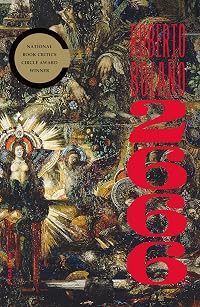






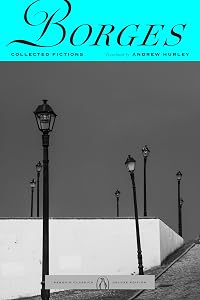









Member Recommendations
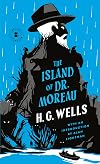
chrisharpe Bioy Casares uses H G Wells' "The Island of Doctor Moreau" as a model for "The Invention of Morel". After Morel, the Wells tale is rather pedestrian, but still worth reading.
50
by chrisharpe

Member Reviews
This is enticingly vague and atmospheric at first, but I quickly became uneasy on behalf of, and then about, the fugitive. As some things become clearer, others become less so, prompting complex, and often paradoxical, philosophical questions. When you can't trust your senses, what is truth, and how do you know if you are dead, dreaming, hallucinating, or mad? When nothing makes sense, and cause doesn’t seem to lead to the expected effect, how do you make decisions, or are you a mere plaything of malign gods or Fate?
Add to that the obsessive desire (he calls it “love”) of an apparently unattainable woman and it sounds overloaded. It’s not. Approaching the midpoint, I was underwhelmed. But then Bioy carefully pulled out all the show more stops: I was bombarded by a bewildering cacophony of the “adverse miracle”. I lived the story. Wonderful.
The English title can be interpreted in two ways. There’s truth in both.
Image: Faustine watching the sunset. One of Norah Borges de Torre’s illustrations.
Avoid spoilers
The brilliance and unsettling joy of this book is in thinking alongside the fugitive, trying to work out what is going on, how, and why: questioning your sanity as the impossible begins to seem merely improbable and even likely. As you gradually figure it out, you have to unravel, rewind, and analyse all your assumptions, not just about the story, but the very fabric of reality.
I'm glad Bioy kept it short, despite the many ways he could have expanded it: that way we each invent our own Morel.
A few thoughts:
• The first person, present tense creates an immediacy and immersion in a conventional chronology. That turns out to be cleverly at odds with that of the story.
• As early as page 11, Bioy plants major clues. The people dancing on the hill, “their clothes are from another era”, are dismissed as eccentric. I fell for that misdirection for a while.
• The name Faustine comes from the Latin for “fortunate one”, but I expect most readers think of Faust’s bargain with the Devil, as I assume was Bioy’s intent.
• Morel raises the question of recording without consent, but what about the fugitive following Faustine, and even sleeping under her bed, observing and listening. At that point, he knows enough to say “I am now able to view Faustine dispassionately, as a simple object”. Object? My instinct is to object, but if she has no consciousness, it shouldn’t matter. However, applying similar logic to online images is trickier.
• Goldfish famously have very short memories. The replenished fishtank, even though they weren’t goldfish, was a nice touch. It echoed the pain of the fugitive watching the endless repetition of others, while for him, each moment was unique.
• Morel and the fugitive initially seek a form of life after death in different ways: Morel via his invention, and the fugitive by the diary he thinks will prove his innocence. But the fugitive is seduced by Faustine and the invention of Morel. Is that a happy ending?
• This was written in 1940, but Bioy is envisaging something far more advanced than a 3D hologram.
Image: "Double Exposure Love" by Alexander Lefler (Woman and man's shadowy faces overlapping to create a more solid composite) (Source)
Quotes - spoilers
• “They were not two copies of the same book, but the same copy twice.”
• “Faustine lives only in this image, for which I do not exist.” [The most extreme form of unrequited love.]
See also - spoilers
• From quite early on, I was thinking of The Sixth Sense.
• There are more similarities with HG Wells’ 1896 novel, The Island of Doctor Moreau than just the surnames.
• I gather this has been filmed, but I don’t want to watch as poor special effects and cinematography would ruin it. It could make a good episode of Black Mirror, except that Charlie Brooker writes or commissions all the stories himself.
Borges
Bioy, as he liked to be known, was a protégé, collaborator, and friend of the slightly older, fellow Argentinian writer, Borges. This was his first “successful fiction”, aged only 26. In the prologue, Borges writes, of the book dedicated to him:
“To classify it as perfect is neither an imprecision nor a hyperbole.”
Image: Empty shoes by a puddle whose reflection shows a couple wearing the shoes. Surreal photo by Olaf Bathke. (Source)
See also
There are additional links in the spoilered section, but their titles are spoilers.
• The cover photo is of actor Louise Brooks, a literary inspiration for this novella. See also Louise Brooks Society.
• On the first page, and several times afterwards, the fugitive praises Malthus and wants to write a book promoting his ideas. I reviewed his An Essay on the Principle of Population with Swift’s A Modest Proposal HERE.
• In Poe’s The Pit and the Pendulum, a solitary man is battling not just to stay alive but also to work out what's going on, whether death would be easier, and questioning his sanity. In other respects, it’s quite different. See my review HERE.
• Bélidor was an engineer, specialising in hydraulics and ballistics. The fugitive pockets a book Bélidor wrote.
• It’s impossible to read of a man, apparently unjustly tried and sentenced, battling unknown forces, without thinking of Kafka, especially The Trial, which I reviewed HERE.
• The opening makes you wonder if it will be like Robinson Crusoe. But it's not.
• In Jay Parini’s delightful memoir, Borges and Me, Borges mentions his admiration of this book. See my review HERE.
• One of Borges’s early stories has a character with a similar name: The Cruel Redeemer of Lazarus Morell. It's about a bid for freedom. I reviewed it HERE.
• I’ve reviewed all of Borges’s Collected Fictions HERE.
• Casares explores similar themes, with a similar sort of twist, in his short story, Venetian Masks, which I reviewed HERE. However, I think Morel is far superior, so if you only read one, make it this.
Quotes
There are more in the spoilered section.
• “Plants, grasses, and flowers overtake each other with more urgency to be born than to die, each one invading the time and place of the others in a tangled mass.”
• “Hope is everything I must fear.”
• “The effort needed to kill myself was superfluous now, because with Faustine gone not even the anachronous satisfaction of death remained.”
• “Troops with rented uniforms and deadly aim.” show less
Add to that the obsessive desire (he calls it “love”) of an apparently unattainable woman and it sounds overloaded. It’s not. Approaching the midpoint, I was underwhelmed. But then Bioy carefully pulled out all the show more stops: I was bombarded by a bewildering cacophony of the “adverse miracle”. I lived the story. Wonderful.
The English title can be interpreted in two ways. There’s truth in both.
Image: Faustine watching the sunset. One of Norah Borges de Torre’s illustrations.
Avoid spoilers
The brilliance and unsettling joy of this book is in thinking alongside the fugitive, trying to work out what is going on, how, and why: questioning your sanity as the impossible begins to seem merely improbable and even likely. As you gradually figure it out, you have to unravel, rewind, and analyse all your assumptions, not just about the story, but the very fabric of reality.
I'm glad Bioy kept it short, despite the many ways he could have expanded it: that way we each invent our own Morel.
A few thoughts:
• The first person, present tense creates an immediacy and immersion in a conventional chronology. That turns out to be cleverly at odds with that of the story.
• As early as page 11, Bioy plants major clues. The people dancing on the hill, “their clothes are from another era”, are dismissed as eccentric. I fell for that misdirection for a while.
• The name Faustine comes from the Latin for “fortunate one”, but I expect most readers think of Faust’s bargain with the Devil, as I assume was Bioy’s intent.
• Morel raises the question of recording without consent, but what about the fugitive following Faustine, and even sleeping under her bed, observing and listening. At that point, he knows enough to say “I am now able to view Faustine dispassionately, as a simple object”. Object? My instinct is to object, but if she has no consciousness, it shouldn’t matter. However, applying similar logic to online images is trickier.
• Goldfish famously have very short memories. The replenished fishtank, even though they weren’t goldfish, was a nice touch. It echoed the pain of the fugitive watching the endless repetition of others, while for him, each moment was unique.
• Morel and the fugitive initially seek a form of life after death in different ways: Morel via his invention, and the fugitive by the diary he thinks will prove his innocence. But the fugitive is seduced by Faustine and the invention of Morel. Is that a happy ending?
• This was written in 1940, but Bioy is envisaging something far more advanced than a 3D hologram.
Image: "Double Exposure Love" by Alexander Lefler (Woman and man's shadowy faces overlapping to create a more solid composite) (Source)
Quotes - spoilers
• “They were not two copies of the same book, but the same copy twice.”
• “Faustine lives only in this image, for which I do not exist.” [The most extreme form of unrequited love.]
See also - spoilers
• From quite early on, I was thinking of The Sixth Sense.
• There are more similarities with HG Wells’ 1896 novel, The Island of Doctor Moreau than just the surnames.
• I gather this has been filmed, but I don’t want to watch as poor special effects and cinematography would ruin it. It could make a good episode of Black Mirror, except that Charlie Brooker writes or commissions all the stories himself.
Borges
Bioy, as he liked to be known, was a protégé, collaborator, and friend of the slightly older, fellow Argentinian writer, Borges. This was his first “successful fiction”, aged only 26. In the prologue, Borges writes, of the book dedicated to him:
“To classify it as perfect is neither an imprecision nor a hyperbole.”
Image: Empty shoes by a puddle whose reflection shows a couple wearing the shoes. Surreal photo by Olaf Bathke. (Source)
See also
There are additional links in the spoilered section, but their titles are spoilers.
• The cover photo is of actor Louise Brooks, a literary inspiration for this novella. See also Louise Brooks Society.
• On the first page, and several times afterwards, the fugitive praises Malthus and wants to write a book promoting his ideas. I reviewed his An Essay on the Principle of Population with Swift’s A Modest Proposal HERE.
• In Poe’s The Pit and the Pendulum, a solitary man is battling not just to stay alive but also to work out what's going on, whether death would be easier, and questioning his sanity. In other respects, it’s quite different. See my review HERE.
• Bélidor was an engineer, specialising in hydraulics and ballistics. The fugitive pockets a book Bélidor wrote.
• It’s impossible to read of a man, apparently unjustly tried and sentenced, battling unknown forces, without thinking of Kafka, especially The Trial, which I reviewed HERE.
• The opening makes you wonder if it will be like Robinson Crusoe. But it's not.
• In Jay Parini’s delightful memoir, Borges and Me, Borges mentions his admiration of this book. See my review HERE.
• One of Borges’s early stories has a character with a similar name: The Cruel Redeemer of Lazarus Morell. It's about a bid for freedom. I reviewed it HERE.
• I’ve reviewed all of Borges’s Collected Fictions HERE.
• Casares explores similar themes, with a similar sort of twist, in his short story, Venetian Masks, which I reviewed HERE. However, I think Morel is far superior, so if you only read one, make it this.
Quotes
There are more in the spoilered section.
• “Plants, grasses, and flowers overtake each other with more urgency to be born than to die, each one invading the time and place of the others in a tangled mass.”
• “Hope is everything I must fear.”
• “The effort needed to kill myself was superfluous now, because with Faustine gone not even the anachronous satisfaction of death remained.”
• “Troops with rented uniforms and deadly aim.” show less
A obra foi publicada em 1940, e tantas décadas atrás o escritor argentino já prenunciava os fenômenos midiáticos que a tecnologia tornou acessíveis nos últimos anos. Um fugitivo da justiça se refugia numa ilha remota, onde supostamente não haveria ninguém. Mas há um grupo, e ele se apaixona por uma mulher que o ignora.
E o despreza de uma maneira que parece simplesmente não notar sua presença. Aos poucos o homem vai descobrindo a razão desse comportamento, o que não alivia, mas explica o estranhamento que nós leitores compartilhamos com o personagem.
Curioso esse fascínio dos autores de ambientar histórias singulares em ilhas. De William Golding com "O senhor das moscas" até "A Ilha do doutor Moreau" de H. G. Wells, sem show more esquecer de "Lost". Bom que os desfechos na literatura sejam mais respeitosos com os leitores do que os roteiristas de seriados. show less
E o despreza de uma maneira que parece simplesmente não notar sua presença. Aos poucos o homem vai descobrindo a razão desse comportamento, o que não alivia, mas explica o estranhamento que nós leitores compartilhamos com o personagem.
Curioso esse fascínio dos autores de ambientar histórias singulares em ilhas. De William Golding com "O senhor das moscas" até "A Ilha do doutor Moreau" de H. G. Wells, sem show more esquecer de "Lost". Bom que os desfechos na literatura sejam mais respeitosos com os leitores do que os roteiristas de seriados. show less
I read that Borges praised this book, and indeed in the Introduction he says that "To classify it as perfect is neither an imprecision nor a hyperbole." While I'm not quite sure it reaches those Olympian heights of accomplishment, this hazy, hallucinatory science fiction novella posed an enormous number of great questions. It begins as the simple diary of a man hiding from the world on a remote tropical island who encounters some mysterious intruders, but the slow revelation of its premise is eventually tied in with the main character's impossible, unrequited love in a way that also manages to function as a 1930s-era reaction to the invention of motion pictures with sound, which is pretty interesting from the perspective of 2016. Its show more simple, clear prose comes across well even in Ruth Simms' translation, which makes the otherworldly events of the novel more vivid in that H.G. Wells way (whose own The Island of Doctor Moreau is an obvious influence). And much like a Wells novel, Casares's work touches on broader social themes like the morality of technology, how it offers escape from nature, and its effect on population.
For the modern reader, nothing comes to mind so readily as the TV show Lost (which actually featured it in one of those winking character-happens-to-be-reading-relevant-literature moments). The unnamed protagonist is a fugitive from political turmoil in his native Venezuela who has escaped justice by traveling to a remote Polynesian island, which outsiders avoid due to its fearsome reputation for a wasting disease. Life is a struggle until a strange group of people show up on the island. They don't seem to notice him, but they come and go suddenly, have odd conversations with each other which seem to repeat themselves, and conduct mysterious meetings at one of the few structures which is safe from the unpredictable tides. He falls in love with Faustine, one of their number, but she seems oblivious to him, and he becomes obsessed with her potential relationships to the other members of the group. And then, in the course of his furtive explorations of the island, as he becomes gradually more and more determined to win over the oddly distant and unreachable Faustine, he discovers the secret behind their mysterious presence on the island:
"To be on an island inhabited by artificial ghosts was the most unbearable of nightmares - to be in love with one of those images was worse than being in love with a ghost (perhaps we always want the person we love to have the existence of a ghost)."
One of the group's number, the titular scientist Morel, has discovered a way to capture the life-energy of a person the way a camera captures their image or a microphone their voice, and store it so that the person is actually alive when the recording is replayed. There are two catches: one, that the process inevitably results in the death of the subject via that same wasting disease reported by outsiders (shades of the dissolving photographs in Back to the Future); and two, that the person within the recording is unable to interact with the outside world. Furthermore, Morel has set up the machine so that it's powered by the tides, replaying endlessly. So the fugitive is in love with a hologram that's stuck in an impenetrable Nietzschean eternal recurrence, pondering both how to reach the woman he can't stop thinking about, and what would happen if knowledge of this machine spreads beyond the island. He frequently references Malthus, obsessed with the power and yet the fragility of Morel's invention:
"When minds of greater refinement than Morel's begin to work on the invention, man will select a lonely, pleasant place, will go there with the persons he loves most, and will endure in an intimate paradise. A single garden, if the scenes to be eternalized are recorded at different moments, will contain innumerable paradises, and each group of inhabitants, unaware of the others, will move about simultaneously, almost in the same places, without colliding. But unfortunately these will be vulnerable paradises because the images will not be able to see men; and, if men do not heed the advice of Malthus, someday they will need the land of even the smallest paradise, and will destroy its defenseless inhabitants or will exile them by disconnecting their machines."
That pull-the-plug worry brings to mind an under-discussed aspect of the contemporary discussion about AI and uploaded personalities - why exactly would ordinary people devote huge amounts of resources to virtual consciousnesses if doing so meant lower living standards for everyone who wasn't an AI? In a Malthusian world, pies are always a fixed size, and since AIs would ultimately be fairly helpless without a protective phalanx of Terminator robots, I just doubt they'd get more than a tiny slice unless they truly offered fantastic advantages to the earth-dwellers who could easily find other uses for all the electricity they consumed (for an innovative solution to this very question, see Greg Egan's superb Permutation City). Morel's invention does allow for an eternal life free of outside constraint, as long as the machine is running, but of a very particular and limited kind. It turns out that he recorded his companions without their knowledge, reducing them to the mysterious wasting corpses that attracted the attentions of the protagonist to this island in the first place. He's invented something fantastic, but only those with the very highest amor fati would consider the fate of his victims anything but horrible.
Regardless, Morel's invention of a true life on record is an interesting metaphor for Casares' reaction to movie technology, as he based the unreachable Faustine on silent film star Louise Brooks, whose career dried up after films with sound became popular. As Marshall McLuhan said, media technologies are often as interesting for what they obsolete as they allow, and many successful silent film stars couldn't make the transition into the newly enhanced medium. Certainly for a lovesick exile from the world like the protagonist, a life spent not only watching a movie starring his beloved but actually entering into it and becoming a character alongside her must sound like heaven compared to certain lonely death on the island (the reference in Faustine's name to Faust is surely deliberate). All the more so because his suicide-into-immortality-by-machine at the end, recording himself in the hope that some future inventor would read his diary and find a way to splice his recording into Faustine's so that they could live together in perfect bliss forever, would almost certainly never happen (if the word "never" has any meaning to someone living out the same span of a recording over and over again). Despite our emotional connections to the characters in the films we see, they're ultimately just images, incapable of loving us or even knowing of our existence.
There's lots to admire here: atmosphere, plot, pacing, imagination, and philosophy; very different from the typical "man stranded on a desert island" story. While probably not perfect, it's without any flaws that matter, and I can't really think of anything I would change about it. Casares easily deserves a place alongside Wells and Verne in the pantheon of pre-postwar science fiction novelists for this novel alone. show less
For the modern reader, nothing comes to mind so readily as the TV show Lost (which actually featured it in one of those winking character-happens-to-be-reading-relevant-literature moments). The unnamed protagonist is a fugitive from political turmoil in his native Venezuela who has escaped justice by traveling to a remote Polynesian island, which outsiders avoid due to its fearsome reputation for a wasting disease. Life is a struggle until a strange group of people show up on the island. They don't seem to notice him, but they come and go suddenly, have odd conversations with each other which seem to repeat themselves, and conduct mysterious meetings at one of the few structures which is safe from the unpredictable tides. He falls in love with Faustine, one of their number, but she seems oblivious to him, and he becomes obsessed with her potential relationships to the other members of the group. And then, in the course of his furtive explorations of the island, as he becomes gradually more and more determined to win over the oddly distant and unreachable Faustine, he discovers the secret behind their mysterious presence on the island:
"To be on an island inhabited by artificial ghosts was the most unbearable of nightmares - to be in love with one of those images was worse than being in love with a ghost (perhaps we always want the person we love to have the existence of a ghost)."
One of the group's number, the titular scientist Morel, has discovered a way to capture the life-energy of a person the way a camera captures their image or a microphone their voice, and store it so that the person is actually alive when the recording is replayed. There are two catches: one, that the process inevitably results in the death of the subject via that same wasting disease reported by outsiders (shades of the dissolving photographs in Back to the Future); and two, that the person within the recording is unable to interact with the outside world. Furthermore, Morel has set up the machine so that it's powered by the tides, replaying endlessly. So the fugitive is in love with a hologram that's stuck in an impenetrable Nietzschean eternal recurrence, pondering both how to reach the woman he can't stop thinking about, and what would happen if knowledge of this machine spreads beyond the island. He frequently references Malthus, obsessed with the power and yet the fragility of Morel's invention:
"When minds of greater refinement than Morel's begin to work on the invention, man will select a lonely, pleasant place, will go there with the persons he loves most, and will endure in an intimate paradise. A single garden, if the scenes to be eternalized are recorded at different moments, will contain innumerable paradises, and each group of inhabitants, unaware of the others, will move about simultaneously, almost in the same places, without colliding. But unfortunately these will be vulnerable paradises because the images will not be able to see men; and, if men do not heed the advice of Malthus, someday they will need the land of even the smallest paradise, and will destroy its defenseless inhabitants or will exile them by disconnecting their machines."
That pull-the-plug worry brings to mind an under-discussed aspect of the contemporary discussion about AI and uploaded personalities - why exactly would ordinary people devote huge amounts of resources to virtual consciousnesses if doing so meant lower living standards for everyone who wasn't an AI? In a Malthusian world, pies are always a fixed size, and since AIs would ultimately be fairly helpless without a protective phalanx of Terminator robots, I just doubt they'd get more than a tiny slice unless they truly offered fantastic advantages to the earth-dwellers who could easily find other uses for all the electricity they consumed (for an innovative solution to this very question, see Greg Egan's superb Permutation City). Morel's invention does allow for an eternal life free of outside constraint, as long as the machine is running, but of a very particular and limited kind. It turns out that he recorded his companions without their knowledge, reducing them to the mysterious wasting corpses that attracted the attentions of the protagonist to this island in the first place. He's invented something fantastic, but only those with the very highest amor fati would consider the fate of his victims anything but horrible.
Regardless, Morel's invention of a true life on record is an interesting metaphor for Casares' reaction to movie technology, as he based the unreachable Faustine on silent film star Louise Brooks, whose career dried up after films with sound became popular. As Marshall McLuhan said, media technologies are often as interesting for what they obsolete as they allow, and many successful silent film stars couldn't make the transition into the newly enhanced medium. Certainly for a lovesick exile from the world like the protagonist, a life spent not only watching a movie starring his beloved but actually entering into it and becoming a character alongside her must sound like heaven compared to certain lonely death on the island (the reference in Faustine's name to Faust is surely deliberate). All the more so because his suicide-into-immortality-by-machine at the end, recording himself in the hope that some future inventor would read his diary and find a way to splice his recording into Faustine's so that they could live together in perfect bliss forever, would almost certainly never happen (if the word "never" has any meaning to someone living out the same span of a recording over and over again). Despite our emotional connections to the characters in the films we see, they're ultimately just images, incapable of loving us or even knowing of our existence.
There's lots to admire here: atmosphere, plot, pacing, imagination, and philosophy; very different from the typical "man stranded on a desert island" story. While probably not perfect, it's without any flaws that matter, and I can't really think of anything I would change about it. Casares easily deserves a place alongside Wells and Verne in the pantheon of pre-postwar science fiction novelists for this novel alone. show less
The name Morel in the title probably echoes H G Wells’s The Island of Doctor Moreau and in some respects this is a similar story, although it’s a very different kind of paradise, or hell, being created here.
Casares’s work was championed by his mentor, fellow Argentine and friend Jorge Luis Borges, and you can see why Borges thought so much of this novella—it’s very much his kind of thing. Written in 1940 and just eighty-eight pages long if you discount the illustrations and Borges’s prologue, on the face of it it’s a simple story: a man on the run from the police (crime unknown, possibly political) takes refuge on a tiny, remote and apparently uninhabited island. There are four abandoned structures (“museum”, show more “chapel”, “swimming pool”, “mill”), marshes, flies, disease. A few of the questions which went through my mind while reading might help give you an idea of the kind of book Morel is: Is the narrator on the island he thinks he is on; or, lost, has he washed up on a different one? Is the “museum” really an abandoned hotel? Is this island uninhabited—there seem to be a group of visitors who arrive and then leave again at regular intervals. Are these visitors even real, or something else, ghosts perhaps? Or is the narrator himself the ghost, rather than them, haunting the island’s abandoned buildings? Or is he hallucinating all this as a result of some of the strange plants he is digging up and eating? Is he delirious with one of the island’s diseases—insane even?
You could class this as surrealism or as science fiction, since its “all might not be what it seems” scenario is an even earlier example of the kind of thing later explored by the likes of Philip K Dick, Daniel F Galouye and others from the 1950s and ̕60s onwards. Within that SF framework, though, this is above all a story about unrequited love: having failed to win another’s heart, how might you go about making the dream come true (or sort of true) anyway? What mad scheme (if it is mad that is) would you need, not only to contrive the fantasy, but make it last forever? Bioy Casares himself had a long-time infatuation with the 1920s and ̕30s film star Louise Brooks, and if he exercised his own considerable imagination over what it might take to make that dream come true, then this story was his extraordinarily prophetic answer. show less
Casares’s work was championed by his mentor, fellow Argentine and friend Jorge Luis Borges, and you can see why Borges thought so much of this novella—it’s very much his kind of thing. Written in 1940 and just eighty-eight pages long if you discount the illustrations and Borges’s prologue, on the face of it it’s a simple story: a man on the run from the police (crime unknown, possibly political) takes refuge on a tiny, remote and apparently uninhabited island. There are four abandoned structures (“museum”, show more “chapel”, “swimming pool”, “mill”), marshes, flies, disease. A few of the questions which went through my mind while reading might help give you an idea of the kind of book Morel is: Is the narrator on the island he thinks he is on; or, lost, has he washed up on a different one? Is the “museum” really an abandoned hotel? Is this island uninhabited—there seem to be a group of visitors who arrive and then leave again at regular intervals. Are these visitors even real, or something else, ghosts perhaps? Or is the narrator himself the ghost, rather than them, haunting the island’s abandoned buildings? Or is he hallucinating all this as a result of some of the strange plants he is digging up and eating? Is he delirious with one of the island’s diseases—insane even?
You could class this as surrealism or as science fiction, since its “all might not be what it seems” scenario is an even earlier example of the kind of thing later explored by the likes of Philip K Dick, Daniel F Galouye and others from the 1950s and ̕60s onwards. Within that SF framework, though, this is above all a story about unrequited love: having failed to win another’s heart, how might you go about making the dream come true (or sort of true) anyway? What mad scheme (if it is mad that is) would you need, not only to contrive the fantasy, but make it last forever? Bioy Casares himself had a long-time infatuation with the 1920s and ̕30s film star Louise Brooks, and if he exercised his own considerable imagination over what it might take to make that dream come true, then this story was his extraordinarily prophetic answer. show less
Although this novel is very short, it feels increasingly slow and frustrating toward the midpoint. Rather than a fault, this mood shows its success at getting the reader to identify with its stranded fugitive speaker, who is significantly the aspiring author of two books other than the journal which forms the principal text of The Invention of Morel. The later part of the book involves a crucial anagnorisis and the working out of its consequences.
I was more than a little reminded of The Island of the Day Before, and I feel certain Eco must have read Morel. Although in praising it Borges called this book an "adventure story," I am compelled to view it as a parable.
The moral of Morel:The utmost to be hoped for is a benevolent and show more capable posthumous editor. show less
I was more than a little reminded of The Island of the Day Before, and I feel certain Eco must have read Morel. Although in praising it Borges called this book an "adventure story," I am compelled to view it as a parable.
The moral of Morel:
Bioy Casares fu amico e collaboratore di Borges, dalla cui fama è per lo più oscurato. Sapeva, parole sue, di libri, di donne, di tennis. Questo romanzo breve del 1940 è la principale opera per cui è ricordato e può essere considerata (come diceva lo stesso Borges) un racconto perfetto, che sviluppa sotto forma di distopia fantascientifica una delle più potenti descrizioni del solipsismo e della solitudine in letteratura. Michele Mari, grazie alle cui pagine cui l'ho scoperto, lo paragona a La nube Purpurea di Shiel e a Dissipatio H.G. di Morelli. Direi che i paragoni sono calzanti e vi aggiungerei Io sono leggenda di Matheson, per lo meno nelle parti più concentrate sui pensieri del protagonista. A ogni modo, non è "solo" un show more libro di fantascienza o di introspezione psicologica. Bioy Casares si confronta con topoi potentissimi (l'isola, la tecnica) e sviluppa - di nuovo, siamo nel '40 - riflessioni profonde sulla "società dell'immagine", fornendo potenti metafore a chi si occupa di cinema e fotografia - o di sociologia. show less
An escaped convict finds himself on a strange uninhabited island until one day visitors arrive. The nature of these visitors will become apparent (though not in all its aspects) to the reader before it does to the narrator. This short novel appeared in 1940, though it wasn't translated into English until sometime later. Variations of its central conceit have appeared in many other places, but the satisfaction of Casares' story comes not from the magical or science fiction aspects of its plot device, but rather from the innate human desire for companionship, love, and perhaps even immortality that he portrays so well. This book can be read at multiple levels, perhaps even as nothing but a fever dream of its narrator. The story benefits show more from its author's restraint in telling it, leaving a lot up to the reader's interpretation and imagination. I will probably lie awake in bed tonight thinking about it. That is meant as a recommendation. show less
Members
- Recently Added By
Lists

1001 Books You Must Read Before You Die
1,448 works; 1,134 members

Best of World Literature
435 works; 52 members
501 Must-Read Books
529 works; 71 members

1940s
221 works; 25 members

Canon de la narrativa universal del siglo XX
254 works; 6 members

Latin American Literature
50 works; 11 members
Lithub: 50 Great Classic Novels Under 200 pages
50 works; 10 members

Books Set on Islands
190 works; 24 members

Authors from Argentina
5 works; 1 member
Speculative Fiction from around the World
610 works; 18 members

Spanish Language in English Translation
19 works; 2 members

Las 100 mejores novelas de la literatura hispanoamericana
96 works; 1 member

Books Read in 2021
5,361 works; 114 members
Canon de la narrativa universal del s. XX (cicutadry)
499 works; 3 members
Las 100 mejores novelas de la literatura hispanoamericana (cicutadry)
100 works; 1 member
Talk Discussions
Past Discussions
The Invention of Morel in The Weird Tradition (November 2024)
Author Information

114+ Works 8,547 Members
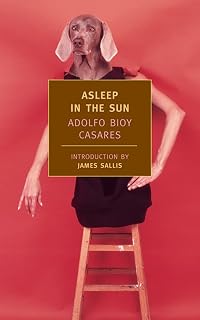
Adolfo Bioy Casares has collaborated with Jorge Luis Borges on a number of works. They compiled Anthology of Fantastic Literature (1940), a documentation of the development of Spanish American suprarealism, and Six Problems for Don Isidro Parodi (1981), a playful and inventive variation on the theme of the detective who cannot visit the scene of show more the crime. Bioy Casares's numerous works are characterized by intelligence and a sense of playful fantasy. The Invention of Morel (1953), concerns a scientist's illusions about immortality. Asleep in the Sun is a bizarre tale written in an epistolary form. Ultimately the recipient of the letter is left to wonder whether, in fact, the puzzle has any solution or whether, like much of Bioy Casares's and Borges's work, it is an inside joke between author and reader. (Bowker Author Biography) show less
Some Editions
Awards and Honors
Notable Lists
Series
Belongs to Publisher Series
Work Relationships
Is contained in
Has the adaptation
Common Knowledge
- Canonical title
- The Invention of Morel [novella]
- Original title
- La invención de Morel; La invención de Morel
- Original publication date
- 1940
- People/Characters
- Narrator; Faustine; Morel; Dora; Alec; Louise Brooks
- Important places*
- islas Ellice, Australia
- Related movies
- L'invenzione di Morel (1974 | IMDb | Emidio Greco); L'année dernière à Marienbad (1961 | IMDb | Alain Resnais)
- Dedication
- To Jorge Luis Borges
- First words
- Hoy, en esta isla ha ocurrido un milagro.
Today, on this island, a miracle happened: summer came ahead of time. - Quotations
- I intend to show that the world is an implacable hell for fugitives, that its efficient police forces, its documents, newspapers, radio broadcasts, and border patrols have made every error of justice irreparable.
...the memory of men - the probable location of heaven...
I believe we lost immortality because we have not conquered our opposition to death; we keep insisting on the primary, rudimentary idea: that the whole body should be kept alive. We should seek to preserve only the part that... (show all) has to do with consciousness.
Perhaps my "no hope" therapy is a little ridiculous; never hope, to avoid disappointment; consider myself dead, to keep from dying. Suddenly I see this feeling as a frightening, disconcerting apathy.
We are suspicious of a stranger who tells us his life story, who tells us spontaneously that he has been captured, sentenced to life imprisonment, and that we are is reason for living. We are afraid that he is merely trickin... (show all)g us into buying a fountain pen or a bottle with a miniature sailing vessel inside. - Last words
- (Click to show. Warning: May contain spoilers.)...hágame entrar en el cielo de la conciencia de Faustine. Será un acto piadoso
(Click to show. Warning: May contain spoilers.)It will be an act of piety. - Blurbers
- Octavio Paz
- Original language
- Spanish
*Some information comes from Common Knowledge in other languages. Click "Edit" for more information.
Classifications
- Genres
- Fiction and Literature, General Fiction, Science Fiction
- DDC/MDS
- 863.62 — Literature & rhetoric Spanish Literature Spanish fiction 20th Century 1900-1945
- LCC
- PQ7797 .B535 .I613 — Language and Literature French, Italian, Spanish and Portuguese literatures Spanish literature Provincial, local, colonial, etc. Spanish America
- BISAC
Statistics
- Members
- 3,149
- Popularity
- 5,543
- Reviews
- 102
- Rating
- (3.89)
- Languages
- 18 — Danish, Dutch, English, Finnish, French, German, Greek, Italian, Japanese, Korean, Norwegian (Bokmål), Polish, Russian, Spanish, Swedish, Turkish, Portuguese (Portugal), Portuguese (Brazil)
- Media
- Paper, Audiobook, Ebook
- ISBNs
- 83
- UPCs
- 1
- ASINs
- 22