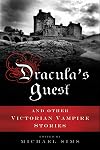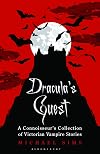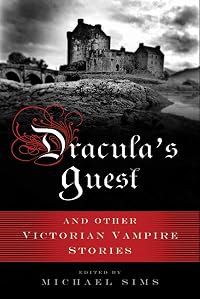
Dracula's Guest: A Connoisseur's Collection of Victorian Vampire Stories
by Michael Sims (Editor)
On This Page
Description
A treasury of Victorian-era vampire stories includes Edgar Allan Poe's "The Oval Portrait" and Guy de Maupassant's "The Horla," in an anthology complemented by Transylvanian superstitions.Tags
Recommendations



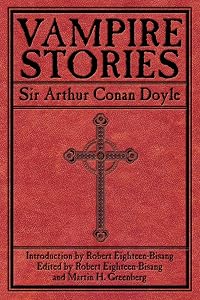



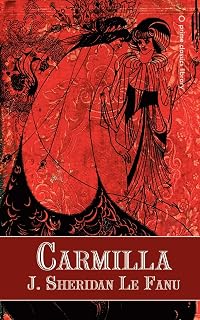

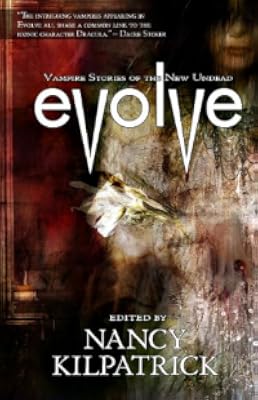
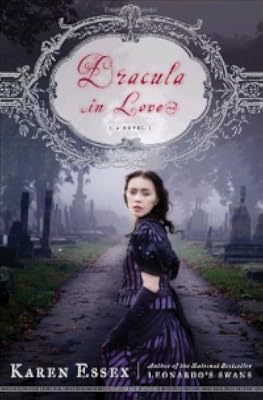
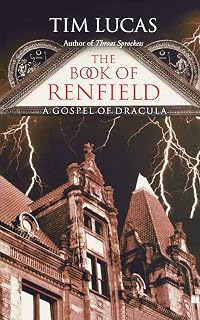







Member Recommendations
fundevogel Looks into the folkloric tradition of vampires in early America and makes the argument that vampires were often blamed for wasting deaths from tuberculosis which had a way of slowly killing off entire families. It's worth checking out on its own but especially since many of the vampires in Sims' collection seem to be rooted in the mythology examined in Food For the Dead.
hadden One of the more recent additions to the vampire stories.
Member Reviews
Victorian Vampire Stories! Well I don't know about you, but I'm sold already. Michael Sims begins his collection by making excuses. Not all of the stories are Victorian, either by era, locality or the holder of the pen that spawned them. I'm still sold. And this is despite Sims' efforts to shake me from my purchase with a stumbling beginning to the collection. To get to the good stuff we have to climb over the scattered rough debris of several supposed true accounts preceded by Sims' introduction, filled with personal asides and an unconscionable concluding paragraph, which seems to hold up Stephanie Meyer as some kind of guru and ultimate literary culmination of the genre.
Each story begins with a short essay from Sim that include some show more biographical information of the authors and an examination of their story's place within the literary development of the Vampire genre, particularly in how they might have influenced Bram Stoker.
Byron's incomplete effort, conceived on the same famous night that would birth Mary Shelley's Frankenstein, gives way to his friend John Polidori's story featuring his Vampyre, a bloodsucker hardly indistinguishable from Byron himself. The vampire as a seductive parasite is prevalent throughout the collection, the main plot being generally either the victim's struggle to free themselves from their wasting doom as in Tieck's Wake Not The Dead or Gautier's The Deathly Lover, or the same scenario featuring the victim's friends trying to break the spell as in Anne Crawford's A Mystery of the Capagna.
Limits of the genre aside, there are some excellent stories here, like the unattributed The Mysterious Stranger, without which Stoker's Dracula would surely have turned out differently; Mary Elizabeth Braddon's challenging atmospheric Good Lady Ducayne; M,R,James' Count Magnus, finding a more comfortable home here away from the ghosts and demons of his anthologies and Aleksei Tolstoy 's doomed Family of the Vourdalak. Sometimes it's just a moment in the story that sets it above other stories like the nightmarish slow invasion of the room by the long fingered blood sucker picking the lead from the window glass in Augustus Hare's And The Creature Came In.
Not all the stories are of such high standard though. The first chapter of Rymer's Varney the Vampire is included here, hugely popular in its day and even influential, but whose peculiar style reads often like an extended list of stage directions. Thankfully we are spared the remaining 108 instalments. Aylmer Vance and the Vampire by Alice and Claude Askew, a sort of supernatural investigator hybrid of Holmes and Watson crossed with John Silence but without much flare, wit or invention. Other stories score high on the creep-o-meter but are questionable as true vampire stories e.g. What Was it? & Let Loose.
The anthology concludes with the title story, billed as an omitted chapter from Dracula, though I would surmise that it was more of a false start by Stoker before he committed to the epistolary format.
I recommend this book for all connoisseurs of the vampire story and its literary evolution, vampire lovers or just seekers of chills before bedtime. show less
Each story begins with a short essay from Sim that include some show more biographical information of the authors and an examination of their story's place within the literary development of the Vampire genre, particularly in how they might have influenced Bram Stoker.
Byron's incomplete effort, conceived on the same famous night that would birth Mary Shelley's Frankenstein, gives way to his friend John Polidori's story featuring his Vampyre, a bloodsucker hardly indistinguishable from Byron himself. The vampire as a seductive parasite is prevalent throughout the collection, the main plot being generally either the victim's struggle to free themselves from their wasting doom as in Tieck's Wake Not The Dead or Gautier's The Deathly Lover, or the same scenario featuring the victim's friends trying to break the spell as in Anne Crawford's A Mystery of the Capagna.
Limits of the genre aside, there are some excellent stories here, like the unattributed The Mysterious Stranger, without which Stoker's Dracula would surely have turned out differently; Mary Elizabeth Braddon's challenging atmospheric Good Lady Ducayne; M,R,James' Count Magnus, finding a more comfortable home here away from the ghosts and demons of his anthologies and Aleksei Tolstoy 's doomed Family of the Vourdalak. Sometimes it's just a moment in the story that sets it above other stories like the nightmarish slow invasion of the room by the long fingered blood sucker picking the lead from the window glass in Augustus Hare's And The Creature Came In.
Not all the stories are of such high standard though. The first chapter of Rymer's Varney the Vampire is included here, hugely popular in its day and even influential, but whose peculiar style reads often like an extended list of stage directions. Thankfully we are spared the remaining 108 instalments. Aylmer Vance and the Vampire by Alice and Claude Askew, a sort of supernatural investigator hybrid of Holmes and Watson crossed with John Silence but without much flare, wit or invention. Other stories score high on the creep-o-meter but are questionable as true vampire stories e.g. What Was it? & Let Loose.
The anthology concludes with the title story, billed as an omitted chapter from Dracula, though I would surmise that it was more of a false start by Stoker before he committed to the epistolary format.
I recommend this book for all connoisseurs of the vampire story and its literary evolution, vampire lovers or just seekers of chills before bedtime. show less
I thought that this was an excellent and well-put-together collection of (mostly) 19th century vampire stories. While some are quite familiar to readers (Polidori's and Byron's versions of The Vampyre, Varney the Vampire, the title story itself), others, like "Let Loose" by Mary Cholmondeley and "The Tomb of Sarah" by F.G. Loring are more obscure. The anthology is an interesting mix of travel writing and stories that range from being rather boring copycats to the overly melodramatic to the downright creepy, and present a good overview of gothic vampire literature from the 18th century to the early 20th.
 This review was written for LibraryThing Early Reviewers.
I recently picked up this anthology again after a hiatus of three years and finished reading it over a weekend. To be honest I can’t really explain why I had lost interest midway through it the first-time round, because this is a highly readable anthology of vampire tales.
The book’s subtitle – A Connoisseur’s Collection of Victorian Vampire Stories – gives a good indication of what lies buried between its covers. I’m not too sure, however, whether it is helpful to describe the works within as “Victorian”, which suggests that the stories are exclusively by English authors of (more or less) the 19th Century. Although the Victorian era is the main source for the material in this anthology, editor Michael Sims casts his net show more much wider. He starts, for instance with two accounts of purportedly real-life vampiric manifestations, by 18th Century French authors Jean-Baptiste de Boyer, Marquis d’Argens and Antoine Augustin Calmet. There follow Lord Byron’s “The End of My Journey” and Polidori’s “The Vampire”, generally considered the prototypes of English vampire fiction. Again, they precede the Victorian era. On the other hand, M.R. James’s classic story “Count Magnus” and Alice and Claude Askew’s “Aylmer Vance and the Vampire” are probably too late to be considered “Victorian”.
Alongside British authors, Sims includes works by Continental (Johann Ludwig Tieck, Gautier, Aleksei Tolstoy) and American (Mary E. Wilkins Freeman) authors. For greater variety, the anthology also features “vampires” of a figurative nature – indeed, whilst all tales feature the supernatural, some of the ‘monsters’ within are not always of the bloodsucking type.
As for this being a “connoisseur’s collection”, I would say that this is a fair description. Editor Michael Sims cannily mixes the familiar with unfamiliar, with works by established authors of horror fiction (Bram Stoker, M.R. James) sitting alongside lesser-known pieces – such as an extract from Emily Gerard’s retellings of Transylvanian lore, which would exert a marked influence on Stoker’s Dracula. This should make this volume attractive both to newcomers to the genre and to more seasoned vampire buffs. A foreword to the collection and a brief biographical introduction to each story completes a captivating anthology.
https://endsoftheword.blogspot.com/2019/12/dracula-connoisseurs-collection-victo... show less
The book’s subtitle – A Connoisseur’s Collection of Victorian Vampire Stories – gives a good indication of what lies buried between its covers. I’m not too sure, however, whether it is helpful to describe the works within as “Victorian”, which suggests that the stories are exclusively by English authors of (more or less) the 19th Century. Although the Victorian era is the main source for the material in this anthology, editor Michael Sims casts his net show more much wider. He starts, for instance with two accounts of purportedly real-life vampiric manifestations, by 18th Century French authors Jean-Baptiste de Boyer, Marquis d’Argens and Antoine Augustin Calmet. There follow Lord Byron’s “The End of My Journey” and Polidori’s “The Vampire”, generally considered the prototypes of English vampire fiction. Again, they precede the Victorian era. On the other hand, M.R. James’s classic story “Count Magnus” and Alice and Claude Askew’s “Aylmer Vance and the Vampire” are probably too late to be considered “Victorian”.
Alongside British authors, Sims includes works by Continental (Johann Ludwig Tieck, Gautier, Aleksei Tolstoy) and American (Mary E. Wilkins Freeman) authors. For greater variety, the anthology also features “vampires” of a figurative nature – indeed, whilst all tales feature the supernatural, some of the ‘monsters’ within are not always of the bloodsucking type.
As for this being a “connoisseur’s collection”, I would say that this is a fair description. Editor Michael Sims cannily mixes the familiar with unfamiliar, with works by established authors of horror fiction (Bram Stoker, M.R. James) sitting alongside lesser-known pieces – such as an extract from Emily Gerard’s retellings of Transylvanian lore, which would exert a marked influence on Stoker’s Dracula. This should make this volume attractive both to newcomers to the genre and to more seasoned vampire buffs. A foreword to the collection and a brief biographical introduction to each story completes a captivating anthology.
https://endsoftheword.blogspot.com/2019/12/dracula-connoisseurs-collection-victo... show less
A fun book. I think the most surprising thing about Victorian literature, whenever I read it, is that it's never as dated as I expected it to be. People really are similar, throughout the ages.
There are a few really great stories. I was sure I'd read "The Family of the Vourdalak" quite a few years ago, but I don't think Sims explicitly cited reprint permissions anywhere in the book, so I'm still not completely clear where. At any rate, it was an oldie but goody.
"Varney the Vampire" was completely awful, but that was to be expected. Very like a cheesy silent 'horror' film.
"The Tomb of Sarah" - why is it that if a character comes across something that says, 'For the sake of the dead and the welfare of the living, let this sepulchre show more remain untouched.', you KNOW, you always know, that it's THAT tomb that they're going to have to move six feet to the left? Predictable mayhem results.
"A True Story of a Vampire" has such a modern beginning. This is the sort of beginning I WISH more modern vampire stories would have. That's the thing that attracts me to the Victorian age, I suppose. Even when they were describing the most unlikely things, often the Victorians seemed grounded. Like they understood life, or expected it to be capable of understanding, in a way we do not, in the dreadful age of postmodernism.
The best stories of the volume, I thought, were "The Deathly Lover" and "Good Lady Ducayne". "The Deathly Lover" had a lot of the romance associated with vampires today - in Anne Rice and Stephenie Meyer and their ilk - while I thought it was refreshing that the vampire herself wasn't sorry for what she was. As the story rightly points out, it's we mortals who feel the vampire ought to be tortured, in body or in soul. Why not be content with your lot?
When I read "Good Lady Ducayne", all I could think of was Jo March from Little Women hiding Lady Audley's Secret, or perhaps some other girl of that era and literary kind. But I could see Jo reading "Good Lady Ducayne", and enjoying it. It was a satisfying little tale with a happy ending, though not, strictly speaking, a vampire story. MR James' "Count Magnus" was good, as his stories almost always are, and satisfyingly creepy.
"Luella Miller" made me think of ... is it Robinson? -"Whenever Richard Cory went downtown, the people always stopped and looked at him..." that sort of small town fatalism that channels Sherwood Anderson and Faulkner in equal measures. It had such a good beginning, but the ending fell flat.
On the whole, this was a very interesting anthology. A page turner, if anthologies can be. I'm interested to see what else Michael Sims has written. I am at least certain of never being bored by his work. show less
There are a few really great stories. I was sure I'd read "The Family of the Vourdalak" quite a few years ago, but I don't think Sims explicitly cited reprint permissions anywhere in the book, so I'm still not completely clear where. At any rate, it was an oldie but goody.
"Varney the Vampire" was completely awful, but that was to be expected. Very like a cheesy silent 'horror' film.
"The Tomb of Sarah" - why is it that if a character comes across something that says, 'For the sake of the dead and the welfare of the living, let this sepulchre show more remain untouched.', you KNOW, you always know, that it's THAT tomb that they're going to have to move six feet to the left? Predictable mayhem results.
"A True Story of a Vampire" has such a modern beginning. This is the sort of beginning I WISH more modern vampire stories would have. That's the thing that attracts me to the Victorian age, I suppose. Even when they were describing the most unlikely things, often the Victorians seemed grounded. Like they understood life, or expected it to be capable of understanding, in a way we do not, in the dreadful age of postmodernism.
The best stories of the volume, I thought, were "The Deathly Lover" and "Good Lady Ducayne". "The Deathly Lover" had a lot of the romance associated with vampires today - in Anne Rice and Stephenie Meyer and their ilk - while I thought it was refreshing that the vampire herself wasn't sorry for what she was. As the story rightly points out, it's we mortals who feel the vampire ought to be tortured, in body or in soul. Why not be content with your lot?
When I read "Good Lady Ducayne", all I could think of was Jo March from Little Women hiding Lady Audley's Secret, or perhaps some other girl of that era and literary kind. But I could see Jo reading "Good Lady Ducayne", and enjoying it. It was a satisfying little tale with a happy ending, though not, strictly speaking, a vampire story. MR James' "Count Magnus" was good, as his stories almost always are, and satisfyingly creepy.
"Luella Miller" made me think of ... is it Robinson? -"Whenever Richard Cory went downtown, the people always stopped and looked at him..." that sort of small town fatalism that channels Sherwood Anderson and Faulkner in equal measures. It had such a good beginning, but the ending fell flat.
On the whole, this was a very interesting anthology. A page turner, if anthologies can be. I'm interested to see what else Michael Sims has written. I am at least certain of never being bored by his work. show less
This review was written for LibraryThing Early Reviewers.In this collection of vampire stories from the Victorians, Michael Sims provides a fascinating look at the development of vampire mythology. He starts with some "true" accounts from the sixteenth century that set the stage for later fictional works, culminating the collection with a short work by the man himself, Bram Stoker. From the lurid "The Family of the Vourdalak" to the unintentionally funny "Varney the Vampire," from the creepy "What Was It?" to the gossipy, almost L. M. Montgomery-ish "Luella Miller," this compilation shows off the wide range of styles that have been used to treat this subject. Major writers like Byron and Braddon are included, as well as some lesser-known authors such as Alice and Claude Askew and Mary E. show more Wilkins Freeman. The result is a satisfying read that I found hard to put down.
With one or two ambiguous exceptions, the vampires portrayed in these stories are not the kind you would sympathize with or want to date. Vampires are evil! There are vampires coming back to kill their former family members and drag them into the same hellish state, vampires resorting to cunning to gain the invitation they need to attack their victims, vampires targeting children. Many of the vampires in these stories exert a strong sexual attraction on their victims. But that attraction is never shown as a good thing, as it is in more modern tales. Good was good and bad was seductive but still bad back then!
One thing I appreciated about Sims' introduction is how he avoids the usual scholarly tone of condescension toward religious people (though he does not appear to be religious himself). He makes an excellent point that vampire stories are sobering as well as entertaining, because they make us contemplate our own mortality. His short introductions before each story are informative and well written. He gives his own opinions on the story that follows and his reasons for including it, and in general I found his insights sound. It's clear that he has a passion for the genre of vampire fiction and is quite knowledgeable about it.
I already have two friends lined up to borrow this book, and I think it will prove to be a popular compilation. I hope that the current fascination with paranormal and especially vampiric fiction will lead readers to discover these older gems of supernatural suspense, written in a time when vampire fiction wasn't sparkly. show less
With one or two ambiguous exceptions, the vampires portrayed in these stories are not the kind you would sympathize with or want to date. Vampires are evil! There are vampires coming back to kill their former family members and drag them into the same hellish state, vampires resorting to cunning to gain the invitation they need to attack their victims, vampires targeting children. Many of the vampires in these stories exert a strong sexual attraction on their victims. But that attraction is never shown as a good thing, as it is in more modern tales. Good was good and bad was seductive but still bad back then!
One thing I appreciated about Sims' introduction is how he avoids the usual scholarly tone of condescension toward religious people (though he does not appear to be religious himself). He makes an excellent point that vampire stories are sobering as well as entertaining, because they make us contemplate our own mortality. His short introductions before each story are informative and well written. He gives his own opinions on the story that follows and his reasons for including it, and in general I found his insights sound. It's clear that he has a passion for the genre of vampire fiction and is quite knowledgeable about it.
I already have two friends lined up to borrow this book, and I think it will prove to be a popular compilation. I hope that the current fascination with paranormal and especially vampiric fiction will lead readers to discover these older gems of supernatural suspense, written in a time when vampire fiction wasn't sparkly. show less
This review was written for LibraryThing Early Reviewers.I always have the most trouble reviewing collections. Invariably the stories vary, often dramatically, in tone, style, and quality making it harder to review the work as a whole. Fortunately in this case Sims has made it clear what the intent of this collection is. This is not just a collection of vampire stories, or even a collection of Victorian vampire stories. The intent here is to trace the path that vampire mythology has taken from it's earliest literary appearances until the beginning of the 20th century giving the reader the history behind the modern vampire we are so familiar with.
And this it does very well. The book is arranged chronologically allowing the reader to see how later works built on earlier writings and how themes show more came into favor and then disappeared. I especially liked the inclusion of historical accounts mentioning vampires. Typically these would be buried in hard to find and probably otherwise uninteresting texts so it's nice to have the relevant bits reprinted here in all their esoteric glory.
As far as the story quality goes its a mixed bag and favorites will probably vary a good bit from reader to reader. I tended to favor the ones that most closely resembled classic ghost stories--"Wake Not the Dead", "The Family of the Vourdalak" and "The Creature Came In". There is a tendency in a fair number of stories to commit the literary sins of the era, there is some serious sexism in "The Mysterious Stranger" and a consistent trend towards Dickensonian length over more efficient wordage. However even these are variable. Many of the later stories are down right casual in voice and even a little funny. "The Deathly Lover" even seems to take a pretty daring position on female sexuality and religion, no surprise that that one one was written by one of Oscar Wilde's buddies.
I think the key thing to remember with this book is that it is a survey. The is some top shelf stuff here....and there's some serious hack writing as well. I never intend to read any more of "Varney the Vampire" than what was presented here, but it gave me more appreciation for what exactly sentences like "It was a dark and stormy night" tend to precede. In Varney's case it's about three pages of needless description followed by two of uncomfortably eroticized teenspoilation. You're not likely to come across that very often.
I'd go four stars for success in really showing the development of this popular myth, but I'm dropping it to three and a half because a fair number of the stories are just so-so. show less
And this it does very well. The book is arranged chronologically allowing the reader to see how later works built on earlier writings and how themes show more came into favor and then disappeared. I especially liked the inclusion of historical accounts mentioning vampires. Typically these would be buried in hard to find and probably otherwise uninteresting texts so it's nice to have the relevant bits reprinted here in all their esoteric glory.
As far as the story quality goes its a mixed bag and favorites will probably vary a good bit from reader to reader. I tended to favor the ones that most closely resembled classic ghost stories--"Wake Not the Dead", "The Family of the Vourdalak" and "The Creature Came In". There is a tendency in a fair number of stories to commit the literary sins of the era, there is some serious sexism in "The Mysterious Stranger" and a consistent trend towards Dickensonian length over more efficient wordage. However even these are variable. Many of the later stories are down right casual in voice and even a little funny. "The Deathly Lover" even seems to take a pretty daring position on female sexuality and religion, no surprise that that one one was written by one of Oscar Wilde's buddies.
I think the key thing to remember with this book is that it is a survey. The is some top shelf stuff here....and there's some serious hack writing as well. I never intend to read any more of "Varney the Vampire" than what was presented here, but it gave me more appreciation for what exactly sentences like "It was a dark and stormy night" tend to precede. In Varney's case it's about three pages of needless description followed by two of uncomfortably eroticized teenspoilation. You're not likely to come across that very often.
I'd go four stars for success in really showing the development of this popular myth, but I'm dropping it to three and a half because a fair number of the stories are just so-so. show less
This review was written for LibraryThing Early Reviewers.Vampire stories aren't just for angst-ridden teenagers who fantasize about guys breaking into the bedrooms to watch them sleep. They are - consistently, from Polidori to Twilight - about sex: more specifically, our weird sexual hangups. This collection makes that clear, shedding a light on the 19th century's obsession with women and their increasing (and, clearly, terrifying) insistence on owning their sexuality. Oh, and loads of repressed homosexuality. My favorite, though, is Mary Elizabeth Braddon's "Good Lady Ducayne," which happens to be the exception that proves the rule; that one's more about mothers than fucking.
The big selling point is probably Polidori's "The Vampyre," and of course if you liked Frankenstein you'll want to show more read it; but if I'm being honest, it's a pretty shit story. show less
The big selling point is probably Polidori's "The Vampyre," and of course if you liked Frankenstein you'll want to show more read it; but if I'm being honest, it's a pretty shit story. show less
Members
- Recently Added By
Lists

In Our Time books
4,934 works; 2 members
Author Information

Michael Sims several nonfiction books include The Story of Charlotte's Web, which the Washington Post and Boston Globe chose as one of the best books of 2011; Adam's Navel: A Natural and Cultural History of the Human Form, which was a New York Times Notable Book; Apollo's Fire: A Day on Earth in Nature and Imagination and in the Womb: Animals, a show more companion to the Narional Geographic Channel series. Please visit his website at www.michaclsimsboolc6.com or follow him on Twitter at @MichaclSiinsllook. show less
All Editions
Work Relationships
Common Knowledge
- Original title
- Dracula's Guest: A Connoisseur's Collection of Victorian Vampire Stories
- Original publication date
- 2010
- People/Characters
- Augustus Darvell; Aubrey; Lord Ruthven; Walter; Brunhilda; Swanhilda (show all 38); Clarimonda; Romualdo; Father Serapion; Marquis d'Urfe; Duchesse de Gramont; Gorcha; George; Sdenka; Varney; Dr. Hammond; Franziska von Fahnenberg; Baron Franz von Kronstein; Azzo von Klatka; Knight Woislaw; Marcello; Signor Martino; Detaille; Monsieur Magnin; Mademoiselle Vonnaert; Count Vardalek; Bella Rolleston; Lady Adeline Ducayne; Captain Fisher; Ariadne Brunnell; Luella Miller; Erastus Miller; Lily Miller; Mr. Wraxall; Count Magnus de la Gardie; Paul Davenant; Miss Jessica MacThane; Aylmer Vance
- Important places
- Råbäck, Vestergothland, Sweden
- Epigraph
- I felt in my heart a wicked, burning desire
that they would kiss me with those red lips.
-Jonathan Harker
in Dracula, by Bram Stoker - First words
- I don't remember when the nightmares began.
- Last words
- (Click to show. Warning: May contain spoilers.)From a distant country had come, in the very nick of time, a message that took me out of the danger of the snow-sleep and the jaws of the wolf.
Classifications
- Genres
- Fiction and Literature, Horror, Fantasy
- DDC/MDS
- 823.0873808 — Literature & rhetoric English & Old English literatures English fiction By type Genre fiction Adventure fiction Horror and ghost fiction Horror fiction Anthologies Collections of literary texts in more than one form
- LCC
- PR1309 .H6 .D73 — Language and Literature English English Literature Collections of English literature
- BISAC
Statistics
- Members
- 318
- Popularity
- 100,203
- Reviews
- 39
- Rating
- (3.88)
- Languages
- Danish, English
- Media
- Paper, Audiobook, Ebook
- ISBNs
- 7
- ASINs
- 5