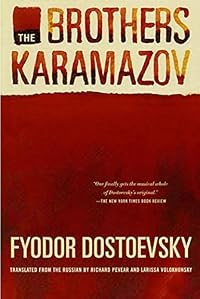
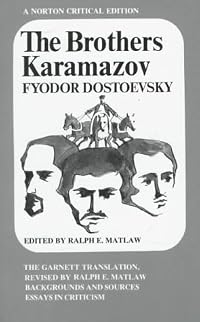
The Brothers Karamazov
by Fyodor Dostoyevsky
On This Page
Description
What is free will? Is redemption possible? Can logic help us answer moral questions? Renowned Russian novelist Fyodor Dostoyevsky tackles all of these topics and many more in this remarkable novel, widely regarded as one of the classic masterpieces of literature. Follow the Karamazov family through the travails that transpire after the murder of their father, and expand your intellectual horizons with a work that celebrated thinkers such as Einstein, Freud, and Pope Benedict XVI cite as one show more of their favorites. show lessTags
Recommendations






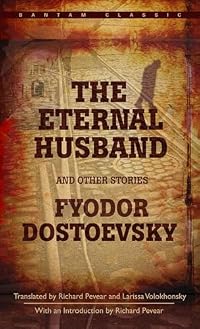
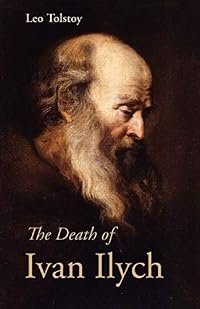
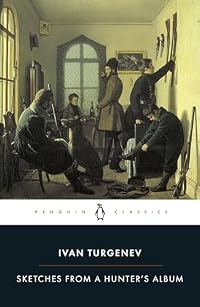
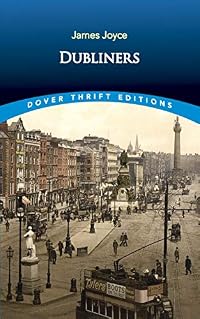

Member Recommendations
PrincessPaulina "The Idiot" is overlooked compared to Dostoevsky's other work, but in my opinion it's the most engaging. Deals with upper crust society in pre-revolutionary Russia
Also recommended by melies
232
xtien Brilliand novel by Coetzee about a fictional Dostoevsky
40
Member Reviews
ان خطر ببالك الاخوة كارامازوف لدوستويفسكي اول ما يتبادر الى ذهنك قول سيغموند فرويد " اجمل رواية واروعها على الاطلاق " لا شك ان فرويد محق فانت حين تنتهي من هذه الملحمة الروائية تكون قد استنفذت كل ما لديك من طاقة عاطفية و عقلية بتفاعلك مع اراء الكاتب ومحاولتك سبر اغوار مقاصده الادبية حتى يخيل اليك بان كل جملة كتبها كان قد عني بها قصدا فلسفيا معينا.
من الصعب ان لا تجد وجها من شخصيتك او حالة من حالاتك السايكولوجية show more وانت تتصفح هذه الرواية ولكأن دوستويفسكي قد عاش الف عام كي يكتب هذا العمل لدقته الشديدة في ملاحظة خواطر النفس الانسانية وهواجسها وتقلباتها احزانها وافراحها.
انت تتواصل مع افضل طبيب نفسي في التاريخ عبر مطالعتك لهذه الرواية ستعيش مع نفسك ونقيضها وتستمتع بان هنالك عبقري قد تنبه لشوارد افكارك وان كان يبعد عنك قرنا ونصف القرن.
اذا اردت نصيحة في معاملة الناس كتبها احدهم قبل ديل كارنيجي فاقرا ما قاله ابطال الاخوة كارامازوف " هل تعرفين ماذا علمني شيخي مرة ؟ قال لي : يجب ان تعامل اكثر الناس معاملتك اطفالا , وان تعامل بعض الناس معاملتك مرضى. "
وان كان ايمانك قد تزعزع بموجة الالحاد الجديدة فاقرأ " واذا انت لم تتساءل خاصة هل الله موجود ام هو غير موجود . هذه عناصر لا سبيل لعقلنا الى ادراكها لان عقلنا قد خلق لمعرفة مكان ليس له الا ثلاثة ابعاد. "
وان اردت ان تعرف واحد من اسباب شقاء البشرية في القرن العشرين فاقرأ " انهم يأملون ان يقيموا العدل في هذا العالم ولكنهم وقد رفضوا المسيح سوف ينتهي بهم الامر الى سفك الدم في كل مكان لان العنف يستدعي العنف ومن يشهر السيف يهلك بالسيف "
وان اردت تقييم السياسة والسياسيين فاقرأ " ان اي انسان يمكن ان يكون وغدا ولا شك اننا جميعا اوغاد بدرجات متفاوتة ولكن ليس كل انسان لصا لا بد من حقارة خاصة حتى يكون المرء لصا."
وان كنت قد شغلك كيف ان الدين قد سيس واصبح لا يشبه ما تقرأه عنه في شي فاقرأ الفصل بعنوان المفتش الاكبر وستجد ضالتك.
هذا غيض من فيض والرواية ممتعة وشيقة على ما فيها من عمق وفلسفة وخطابات مطولة ومعقدة وهنا يتميز اسلوب الكاتب الادبي الابداعي. show less
من الصعب ان لا تجد وجها من شخصيتك او حالة من حالاتك السايكولوجية show more وانت تتصفح هذه الرواية ولكأن دوستويفسكي قد عاش الف عام كي يكتب هذا العمل لدقته الشديدة في ملاحظة خواطر النفس الانسانية وهواجسها وتقلباتها احزانها وافراحها.
انت تتواصل مع افضل طبيب نفسي في التاريخ عبر مطالعتك لهذه الرواية ستعيش مع نفسك ونقيضها وتستمتع بان هنالك عبقري قد تنبه لشوارد افكارك وان كان يبعد عنك قرنا ونصف القرن.
اذا اردت نصيحة في معاملة الناس كتبها احدهم قبل ديل كارنيجي فاقرا ما قاله ابطال الاخوة كارامازوف " هل تعرفين ماذا علمني شيخي مرة ؟ قال لي : يجب ان تعامل اكثر الناس معاملتك اطفالا , وان تعامل بعض الناس معاملتك مرضى. "
وان كان ايمانك قد تزعزع بموجة الالحاد الجديدة فاقرأ " واذا انت لم تتساءل خاصة هل الله موجود ام هو غير موجود . هذه عناصر لا سبيل لعقلنا الى ادراكها لان عقلنا قد خلق لمعرفة مكان ليس له الا ثلاثة ابعاد. "
وان اردت ان تعرف واحد من اسباب شقاء البشرية في القرن العشرين فاقرأ " انهم يأملون ان يقيموا العدل في هذا العالم ولكنهم وقد رفضوا المسيح سوف ينتهي بهم الامر الى سفك الدم في كل مكان لان العنف يستدعي العنف ومن يشهر السيف يهلك بالسيف "
وان اردت تقييم السياسة والسياسيين فاقرأ " ان اي انسان يمكن ان يكون وغدا ولا شك اننا جميعا اوغاد بدرجات متفاوتة ولكن ليس كل انسان لصا لا بد من حقارة خاصة حتى يكون المرء لصا."
وان كنت قد شغلك كيف ان الدين قد سيس واصبح لا يشبه ما تقرأه عنه في شي فاقرأ الفصل بعنوان المفتش الاكبر وستجد ضالتك.
هذا غيض من فيض والرواية ممتعة وشيقة على ما فيها من عمق وفلسفة وخطابات مطولة ومعقدة وهنا يتميز اسلوب الكاتب الادبي الابداعي. show less
I probably need more time to digest this tome, but parts of this book, the Grand Inquisitor tale in particular, will reside with me for quite a while. I was expecting the normal Russian angst and social insecurity but I was not prepared for what may be the best bit of writing I’ve ever encountered. Does Dostoyevsky know us all that well? It’s all here, everything there is to know about being human. Amazing book; even better writing.
Brothers Karamazov is an exceptionally tricky and intricate book. It's also an exceptional pain in the ass. I might have to create a new shelf for it called "I'd Have To Read It Again To Get It But I'd Rather Just Not Get It." Tristram Shandy can join it there. The first problem is when a speech is so long that it reminds you of Atlas Shrugged. The second problem is that when I finished it just now, the words that unconsciously escaped my mouth were, "Well, fuck you Karamazov."
Here's a game I made up during the interminable ramblings of Elder Zosima: Zosima or Baz? Guess whether each boring platitude below is from the Elder Zosima or Baz Luhrmann's 1998 novelty hit, "Everybody's Free (To Wear Sunscreen)":
a. Don't be reckless with other show more peoples' hearts; don't put up with people who are reckless with yours.
b. Keep company with yourself and look to yourself every day and hour, every minute.
c. Enjoy the power and beauty of your youth.
d. Cherish your ecstasy, however senseless it may seem.
e. Love children especially.
Answers at end of review
Okay, I almost never had a good time reading this book. Why'd I give it four stars? One reason: cowardice.
Listen, I know this book's smarter than me. Its inventiveness is impressive. Watch how careful Dostoevsky is with words: how each character, including the narrator, uses and misuses them, repeats them, throws them to each other. Check out how the stories - Ilyusha and Dmitri, Katya and Grushenka - intertwine. Feel how the word "Karamazovian" implants itself in you: you wouldn't be able to say what it means, maybe, I probably can't, but you'll know it when you see it from now on. Debate whether the whole thing is a comedy or a tragedy.
Before I read them, I used to think Tolstoy and Dostoevsky were probably more or less the same, y'know? Like, old Russian guys who wrote crazy long books, how different can they be? But they're not the same at all. Tolstoy is exceptionally controlled. Dostoevsky is pure virtuosity. I don't mean to say he doesn't know what he's doing; actually, Karamazov is more tightly structured than War & Peace is. But the energy behind it is more or less insane.
Four stars because I know this book is good; if I give it two stars, it would be like admitting that I let a brilliant masterpiece escape me for the prosaic reason that it's incredibly fucking boring. Y'know?
Four stars, dude. A brilliant masterpiece.
Introduction note: You can and should read the first section of Pevear & Volokhonsky's intro, up to p. xiv. It gives you great background. Get out quick after that though - right after "transforming them finally into a universal human drama" - 'cause they're gonna blow the whole plot in the next paragraph.
Quiz Answers: Fuck you, Karamazov. show less
Here's a game I made up during the interminable ramblings of Elder Zosima: Zosima or Baz? Guess whether each boring platitude below is from the Elder Zosima or Baz Luhrmann's 1998 novelty hit, "Everybody's Free (To Wear Sunscreen)":
a. Don't be reckless with other show more peoples' hearts; don't put up with people who are reckless with yours.
b. Keep company with yourself and look to yourself every day and hour, every minute.
c. Enjoy the power and beauty of your youth.
d. Cherish your ecstasy, however senseless it may seem.
e. Love children especially.
Answers at end of review
Okay, I almost never had a good time reading this book. Why'd I give it four stars? One reason: cowardice.
Listen, I know this book's smarter than me. Its inventiveness is impressive. Watch how careful Dostoevsky is with words: how each character, including the narrator, uses and misuses them, repeats them, throws them to each other. Check out how the stories - Ilyusha and Dmitri, Katya and Grushenka - intertwine. Feel how the word "Karamazovian" implants itself in you: you wouldn't be able to say what it means, maybe, I probably can't, but you'll know it when you see it from now on. Debate whether the whole thing is a comedy or a tragedy.
Before I read them, I used to think Tolstoy and Dostoevsky were probably more or less the same, y'know? Like, old Russian guys who wrote crazy long books, how different can they be? But they're not the same at all. Tolstoy is exceptionally controlled. Dostoevsky is pure virtuosity. I don't mean to say he doesn't know what he's doing; actually, Karamazov is more tightly structured than War & Peace is. But the energy behind it is more or less insane.
Four stars because I know this book is good; if I give it two stars, it would be like admitting that I let a brilliant masterpiece escape me for the prosaic reason that it's incredibly fucking boring. Y'know?
Four stars, dude. A brilliant masterpiece.
Introduction note: You can and should read the first section of Pevear & Volokhonsky's intro, up to p. xiv. It gives you great background. Get out quick after that though - right after "transforming them finally into a universal human drama" - 'cause they're gonna blow the whole plot in the next paragraph.
Quiz Answers: Fuck you, Karamazov. show less
The genius of Dostoevsky to see people so deeply and describe the soul of a man with such precision and detail is absolutely astounding. Reading Dostoevsky’s characters brought me again and again to say, “How absolutely true.” Of course, a character for Dostoevsky becomes a lens through which an entire worldview comes to life. The sensuous, flesh-driven Mitya paints the portrait of broken man – “capable of the greatest heights and of the greatest depths,” bound by noble heart and drawn by irresistible flesh. He is a prisoner to both nature and nurture, and he knows it. The intellectual Ivan embodies the secular thinkers of our age, either denying God entirely or just practically, and driving themselves to dehumanized show more insanity in the process. The loving man of childlike faith, Alyosha, embodies the best of what the Church has to offer – a living, breathing Christ in the world. With these, along with many others, Dostoevsky makes a thrilling case for faith. In essence, he says, “Here you are, laid bare and raw with all your best and worst tendencies. Now, what kind of world do you want to live in? Do you want to live in the world of the scoffer? Of the sensualist? Or, of Christ?” Refusing to take any shortcuts, Dostoevsky actually writes some of the best arguments against God in all of literature. Yet, in the end, the reader is more convinced than ever, “I want to live in Christ’s world.”
Personally, there are a number of things that strike me deeply about this book that wouldn't fit in a public book review. For one, I knew from the moment Krassotkin was introduced as a skeptic that the book was going to end on his conversion. Surely, Graham Greene had read Karamazov when he created his Luis for The Power and the Glory. The idea is the Christ-man, Alyosha, is the only hope for the salvation of our future generations – it is the image of Christ living in Christians that carries the pure faith into the future. Along those same lines, I was struck afterward at what a Christ-figure Alyosha really was. The children loved him as he knelt down to genuinely love them on their level. Is it too much even to remember how Ilusha tasted his flesh and blood? Are we to see a garden moment as he wept bitterly following Zossima's death, there experiencing his only crisis of faith, akin to "let this cup pass from Me"?
Of course, the realization that truly hits home is this: I am Mitya. What am I to make of his repeated breast pounding if not to hear, "God, have mercy on me, a sinner"? I bear the pain of my broken origin, and though I strive from my heart to be honorable, I am broken. I gravitate towards other broken people (Grushenka). I am judged by the prejudices of the people around me, though they are no better than I am (these same people even judge the holy when they get the chance – remember Zossima). I am wrongfully accused at times, though my rightful charges loom just as large. I am the broken Mitya, and my salvation is living in my Brother's world.
There's so much else to think about, but this one last thing I hope not to forget – Grushenka's onion. All our good deeds are onions. show less
Personally, there are a number of things that strike me deeply about this book that wouldn't fit in a public book review. For one, I knew from the moment Krassotkin was introduced as a skeptic that the book was going to end on his conversion. Surely, Graham Greene had read Karamazov when he created his Luis for The Power and the Glory. The idea is the Christ-man, Alyosha, is the only hope for the salvation of our future generations – it is the image of Christ living in Christians that carries the pure faith into the future. Along those same lines, I was struck afterward at what a Christ-figure Alyosha really was. The children loved him as he knelt down to genuinely love them on their level. Is it too much even to remember how Ilusha tasted his flesh and blood? Are we to see a garden moment as he wept bitterly following Zossima's death, there experiencing his only crisis of faith, akin to "let this cup pass from Me"?
Of course, the realization that truly hits home is this: I am Mitya. What am I to make of his repeated breast pounding if not to hear, "God, have mercy on me, a sinner"? I bear the pain of my broken origin, and though I strive from my heart to be honorable, I am broken. I gravitate towards other broken people (Grushenka). I am judged by the prejudices of the people around me, though they are no better than I am (these same people even judge the holy when they get the chance – remember Zossima). I am wrongfully accused at times, though my rightful charges loom just as large. I am the broken Mitya, and my salvation is living in my Brother's world.
There's so much else to think about, but this one last thing I hope not to forget – Grushenka's onion. All our good deeds are onions. show less
"… that package lay there in the corner, behind the icons, sir." (pg. 626)
Dostoevsky is a difficult writer, and nowhere is his dense, feverish maze of philosophical and theological prose better exampled than in The Brothers Karamazov. Along with his Crime and Punishment and Tolstoy's War and Peace, this is where the daunting reputation of 'Russian Literature' is made. Hefty, serious tomes that, when you commit to them, turn out to be more readable than you supposed and fully deserving of their praise. Reach the end and – with a little help from other observers – you gain a sense of their rich complexity and the passionate rigour of their themes. Provided, of course, you've managed to hurdle all of the Russian naming show more conventions.
And that, really, is accurate for The Brothers Karamazov. There is an astonishingly intricate, almost cathedral-like, build-up of the story to service Dostoevsky's deep themes, with the Karamazov family representing various aspects of both Russia and the human condition, leaning heavily on the Christian tradition. Despite some discussions where characters explicitly outline abstract themes at length, the philosophy and the themes can be very hard to wrap your head around. The book, despite its intermittent readability, is very much of that class of literature which needs to be studied rather than merely read. That will be a black mark for many people, but personally I'm pleased there are novels of this density, complexity and endurance. Russian literature is Tough Mudder for bookworms.
"What is this Karamazov family?" asks the prosecutor in his discursive speech during the trial which consumes the final part of the novel. "It seems to me that certain basic, general elements of our modern-day educated society shine through" (pg. 695). This nails down Dostoevsky's framework (though it is part of the writer's genius that the arguments of both the prosecutor and the defense attorney complement his theme), with the trial not only about the various conflicts between the members of the Karamazov family but also bearing "witness precisely to something universal, to some general malaise that has taken root among us" (pg. 694).
Fyodor Karamazov is not only the father but the Father; he represents tired, then-contemporary Russia ("the whole spiritual side has been scrapped, but there is an extraordinary thirst for life" (pg. 696)) but also, in being challenged and questioned by his children, he represents, in some way, God, or at least the image of God and the religious foundation of the country. Of the three brothers Karamazov, Dmitri, on trial for his father's murder, is the one most buffeted by the storm; both "sincerely noble" and "sincerely base" (pg. 699), he represents, in Dostoevsky's view, the ingenue (pg. 698), the most likely outcome for Russia. Neither one thing or another, he is good when given opportunity to be good and bad when given opportunity to be bad (pg. 698). He veers towards both Christ-like sacrifice (pp 304, 743-4) and existential dread (the only "way out of his terrible situation… was suicide" (pg. 716), pre-emptively posing Camus' famous dilemma from The Myth of Sisyphus). His sentence – his future – is decided by the jury, representing Russia (pg. 722). It is telling that the novel ends with Dmitri's ultimate fate undecided: whether he will submit to penal servitude or be freed by those various characters – and influences – which bore witness to the trial.
Of the other brothers Karamazov, Ivan is said to be the one most resembling his father (pg. 697), and as the rational, cool-headed one he seems the most appropriate one to continue the family legacy. Just as Russia ought to move into a more rational future, so too should the Karamazov mantle be passed onto Ivan. However, it is feared that he may fall into "dark mysticism on the moral side, and witness chauvinism on the civic side" (pg. 697), conveying Dostoevsky's extraordinarily prescient fears that a rational, empirical, secular society might – if it forgets its other side of 'faith and loyalty' (pg. 697) – descend into chaos. Science and freedom will lead people into a maze, some of whom will exterminate themselves and some of whom will return to the church. Some of them will exterminate each other, Dostoevsky writes, sixty-five years before Auschwitz (pg. 258). This fork in the road is emphasised by Smerdyakov (a bastard son of Fyodor and therefore also arguably one of the brothers Karamazov). Late on in the story, Smerdyakov offers the rational Ivan a dilemma which triggers the latter's descent into madness, emphasising that rationality, for all its strengths, can be corrupted. (Smerdyakov, as vengeful and vindictive, superficial, and failing to read the signs in the world (pp 707, 738) can be seen as a representation of the ignorant person who doesn't want to engage with the themes of the book/the problems of the world, but, in his bastard origin and role as tempter, also as the Devil.) Dostoevsky's worldview, as engineered in The Brothers Karamazov, is almost Nietzschean (God is dead/the father Karamazov is dead) and, sometimes, Jungian ("much on earth is concealed from us, but in place of it we have been granted a secret, mysterious sense of our living bond with the other world" (pg. 320)). At the very least, Dostoevsky's worldview is a helpmate to such philosophical dispositions and, even today (perhaps especially today), very timely and contemporary.
The third brother, Alyosha, is identified as the 'hero' at the outset of the book by Dostoevsky himself (pg. 3), and at first this seems strange as, in many ways, he is almost incidental to the vast majority of the book's plot. But he is the keenest and most thoughtful observer; lacking the dramatic ennui or sacrifice of Dmitri, or the logical mazes and dilemmas that madden Ivan, he is the one people open up to most willingly and, tellingly, the one who first realises the implications of Ivan's testimony during the trial (pg. 686). Whilst others are fighting over money or honour or relationships, his most impactful scenes are those with children. He wants to "influence the young generation, develop them, be useful" (pg. 534) and, in the final chapters, he is the one codifying the moral of the story in a vaguely Biblical scene called the 'speech at the stone' (pg. 768). In the prosecutor's speech, it is lamented that "young men are shooting themselves… without the least Hamletian question of 'what lies beyond'" (pg. 694) – that is, sinking into despair without even looking elsewhere for answers – and that, while other (implied: healthier) cultures might "have their Hamlets… so far we have only Karamazovs" (pg. 716). Well, Alyosha might be the first Russian Hamlet, so to speak; the first one looking beyond, seeing more. This is why he is Dostoevsky's hero. Dmitri might be the one who is Christ-like at times (in a sacrificial sense), but it is Alyosha who believes – and with his eyes open.
It is a huge, daunting, complex book that my review has barely scratched the surface of, and much of this content is regrettably unfashionable today. Dostoevsky has a spiritual conscience that is entirely absent from contemporary writers, and reaches conclusions regarding Christ and the ministry, and the metatextual undercurrent of religion, that will get you labelled as a kook if voiced today – just witness the complacent insults sent the way of Jordan B. Peterson, who swears by Dostoevsky ("suffering is life" (pg. 642)). The Brothers Karamazov is deeply argued and prescient in its diagnosis of modern societal ills. Far from being a Christian apologia, it questions the legitimacy of a father and, by association, of God (pp 744-6). None of its characters, despite embodying vastly different ideas, are straw men, and the book, simply by making such philosophically-diverse characters believable, makes the case for both rationality and spirituality – brothers in a dysfunctional family but brothers nonetheless. It might be difficult to engage with the themes, because these are not parables in which everything is made clear, but if it is a Tough Mudder it is largely because Dostoevsky is writing on firm ground that other artists could not even see. show less
Dostoevsky is a difficult writer, and nowhere is his dense, feverish maze of philosophical and theological prose better exampled than in The Brothers Karamazov. Along with his Crime and Punishment and Tolstoy's War and Peace, this is where the daunting reputation of 'Russian Literature' is made. Hefty, serious tomes that, when you commit to them, turn out to be more readable than you supposed and fully deserving of their praise. Reach the end and – with a little help from other observers – you gain a sense of their rich complexity and the passionate rigour of their themes. Provided, of course, you've managed to hurdle all of the Russian naming show more conventions.
And that, really, is accurate for The Brothers Karamazov. There is an astonishingly intricate, almost cathedral-like, build-up of the story to service Dostoevsky's deep themes, with the Karamazov family representing various aspects of both Russia and the human condition, leaning heavily on the Christian tradition. Despite some discussions where characters explicitly outline abstract themes at length, the philosophy and the themes can be very hard to wrap your head around. The book, despite its intermittent readability, is very much of that class of literature which needs to be studied rather than merely read. That will be a black mark for many people, but personally I'm pleased there are novels of this density, complexity and endurance. Russian literature is Tough Mudder for bookworms.
"What is this Karamazov family?" asks the prosecutor in his discursive speech during the trial which consumes the final part of the novel. "It seems to me that certain basic, general elements of our modern-day educated society shine through" (pg. 695). This nails down Dostoevsky's framework (though it is part of the writer's genius that the arguments of both the prosecutor and the defense attorney complement his theme), with the trial not only about the various conflicts between the members of the Karamazov family but also bearing "witness precisely to something universal, to some general malaise that has taken root among us" (pg. 694).
Fyodor Karamazov is not only the father but the Father; he represents tired, then-contemporary Russia ("the whole spiritual side has been scrapped, but there is an extraordinary thirst for life" (pg. 696)) but also, in being challenged and questioned by his children, he represents, in some way, God, or at least the image of God and the religious foundation of the country. Of the three brothers Karamazov, Dmitri, on trial for his father's murder, is the one most buffeted by the storm; both "sincerely noble" and "sincerely base" (pg. 699), he represents, in Dostoevsky's view, the ingenue (pg. 698), the most likely outcome for Russia. Neither one thing or another, he is good when given opportunity to be good and bad when given opportunity to be bad (pg. 698). He veers towards both Christ-like sacrifice (pp 304, 743-4) and existential dread (the only "way out of his terrible situation… was suicide" (pg. 716), pre-emptively posing Camus' famous dilemma from The Myth of Sisyphus). His sentence – his future – is decided by the jury, representing Russia (pg. 722). It is telling that the novel ends with Dmitri's ultimate fate undecided: whether he will submit to penal servitude or be freed by those various characters – and influences – which bore witness to the trial.
Of the other brothers Karamazov, Ivan is said to be the one most resembling his father (pg. 697), and as the rational, cool-headed one he seems the most appropriate one to continue the family legacy. Just as Russia ought to move into a more rational future, so too should the Karamazov mantle be passed onto Ivan. However, it is feared that he may fall into "dark mysticism on the moral side, and witness chauvinism on the civic side" (pg. 697), conveying Dostoevsky's extraordinarily prescient fears that a rational, empirical, secular society might – if it forgets its other side of 'faith and loyalty' (pg. 697) – descend into chaos. Science and freedom will lead people into a maze, some of whom will exterminate themselves and some of whom will return to the church. Some of them will exterminate each other, Dostoevsky writes, sixty-five years before Auschwitz (pg. 258). This fork in the road is emphasised by Smerdyakov (a bastard son of Fyodor and therefore also arguably one of the brothers Karamazov). Late on in the story, Smerdyakov offers the rational Ivan a dilemma which triggers the latter's descent into madness, emphasising that rationality, for all its strengths, can be corrupted. (Smerdyakov, as vengeful and vindictive, superficial, and failing to read the signs in the world (pp 707, 738) can be seen as a representation of the ignorant person who doesn't want to engage with the themes of the book/the problems of the world, but, in his bastard origin and role as tempter, also as the Devil.) Dostoevsky's worldview, as engineered in The Brothers Karamazov, is almost Nietzschean (God is dead/the father Karamazov is dead) and, sometimes, Jungian ("much on earth is concealed from us, but in place of it we have been granted a secret, mysterious sense of our living bond with the other world" (pg. 320)). At the very least, Dostoevsky's worldview is a helpmate to such philosophical dispositions and, even today (perhaps especially today), very timely and contemporary.
The third brother, Alyosha, is identified as the 'hero' at the outset of the book by Dostoevsky himself (pg. 3), and at first this seems strange as, in many ways, he is almost incidental to the vast majority of the book's plot. But he is the keenest and most thoughtful observer; lacking the dramatic ennui or sacrifice of Dmitri, or the logical mazes and dilemmas that madden Ivan, he is the one people open up to most willingly and, tellingly, the one who first realises the implications of Ivan's testimony during the trial (pg. 686). Whilst others are fighting over money or honour or relationships, his most impactful scenes are those with children. He wants to "influence the young generation, develop them, be useful" (pg. 534) and, in the final chapters, he is the one codifying the moral of the story in a vaguely Biblical scene called the 'speech at the stone' (pg. 768). In the prosecutor's speech, it is lamented that "young men are shooting themselves… without the least Hamletian question of 'what lies beyond'" (pg. 694) – that is, sinking into despair without even looking elsewhere for answers – and that, while other (implied: healthier) cultures might "have their Hamlets… so far we have only Karamazovs" (pg. 716). Well, Alyosha might be the first Russian Hamlet, so to speak; the first one looking beyond, seeing more. This is why he is Dostoevsky's hero. Dmitri might be the one who is Christ-like at times (in a sacrificial sense), but it is Alyosha who believes – and with his eyes open.
It is a huge, daunting, complex book that my review has barely scratched the surface of, and much of this content is regrettably unfashionable today. Dostoevsky has a spiritual conscience that is entirely absent from contemporary writers, and reaches conclusions regarding Christ and the ministry, and the metatextual undercurrent of religion, that will get you labelled as a kook if voiced today – just witness the complacent insults sent the way of Jordan B. Peterson, who swears by Dostoevsky ("suffering is life" (pg. 642)). The Brothers Karamazov is deeply argued and prescient in its diagnosis of modern societal ills. Far from being a Christian apologia, it questions the legitimacy of a father and, by association, of God (pp 744-6). None of its characters, despite embodying vastly different ideas, are straw men, and the book, simply by making such philosophically-diverse characters believable, makes the case for both rationality and spirituality – brothers in a dysfunctional family but brothers nonetheless. It might be difficult to engage with the themes, because these are not parables in which everything is made clear, but if it is a Tough Mudder it is largely because Dostoevsky is writing on firm ground that other artists could not even see. show less
Reading this book, I was struck by Aloysha's multipurpose role as a savior, especially in the first half of the book, when most of the characters are trying to stake out possession of his soul. Both Fyodor and Ivan want to reclaim Alexei from religion, while Dmitri wants Aloysha as a mediator and a witness. The residents of their town have their own interests in Alexei. And so Aloysha ministers, witnesses, and absolves in the variety of fashions demanded by the others. Alexei is the Swiss Army Knife of Christ figures. But, then, everyone is a Christ figure in The Brothers Karamazov; everyone is kissed by the divine, whether or not they accept that grace.
In the margins of the beginning of my book, I also noted the thwarted creative show more urges of the Karamazov kin: Dmitri's confession is filled with poetry, Smerdyakov's guitar ballads are technical, not artistic, compositions, and Ivan's "poem" about the Grand Inquisitor reveals his conflict (and his shaky grasp of how poems work). This aspect of the novel faded in importance in the middle of the book, but there's a scene in the second half of the novel, where Alexei comforts Kolya by defending play-acting as "a sort of nascent art, an emerging need for play-acting in the young soul," which ties into the novel's greater point about the ubiquity and role of art. I guess. My marginal notes seem to think so, anyway.
Anyway. The Brothers Karamazov: You'll come for the patricide, but you'll stay for the hallucinations of Satan! show less
In the margins of the beginning of my book, I also noted the thwarted creative show more urges of the Karamazov kin: Dmitri's confession is filled with poetry, Smerdyakov's guitar ballads are technical, not artistic, compositions, and Ivan's "poem" about the Grand Inquisitor reveals his conflict (and his shaky grasp of how poems work). This aspect of the novel faded in importance in the middle of the book, but there's a scene in the second half of the novel, where Alexei comforts Kolya by defending play-acting as "a sort of nascent art, an emerging need for play-acting in the young soul," which ties into the novel's greater point about the ubiquity and role of art. I guess. My marginal notes seem to think so, anyway.
Anyway. The Brothers Karamazov: You'll come for the patricide, but you'll stay for the hallucinations of Satan! show less
Having previously read an excerpt of this novel for a university philosophy course, I wasn't surprised to see the characters engage in lengthy discussions on religion in this book. In fact, I personally found these to be the most valuable passages, challenging the reader with such topics as the problem of evil, the role of religion in society, and what, if anything, is worth living for. For religious readers, Ivan's thesis is a force to be reckoned with, while readers who agree with Ivan may be troubled by passages that betray his own uncertainty as well as by events unfolding arguably as a direct result of his particular philosophy.
I was surprised by the amount of interpersonal drama that does, in fact, unfold over the course of these show more seven hundred-some pages. Scandals, love triangles, and a much-foreshadowed tragedy all take their turns on stage as a large cast of imperfect characters pursues often contradictory goals. In some cases, it's clear that a character's goals are even in direct contradiction to their own best interest.
While there are characters the author seemingly intended to be the few "good ones" readers can stand behind in a book full of despicable people, I personally found that I could sympathize with almost every character in at least one aspect. Doing so, however, was sometimes a challenge because of what I perceived to be the author's own flawed worldview forcing its way through.
For example, I naturally wanted to sympathize with many of the female characters because of my own understanding of the patriarchal system under which they were forced to live, but they were often depicted in ways that make very little sense unless you as a reader believe that women are often irrational and overly emotional and given to bouts of hysteria. Unlike in works like Henrik Ibsen's A Doll's House, which explicitly states that the female lead has been behaving according to certain feminine stereotypes because of the way her life has been shaped by patriarchal forces, the female characters in this book seem to be written by a sexist author who doesn't understand women at all.
In fact, I very often got the impression that the author's prejudices were affecting the way he depicted certain characters, and in some cases, I got the strong impression that he was expecting the reader to feel a certain way about certain characters because he assumes the reader to share his prejudice. For example, the story of a disabled woman named Lizaveta is recounted very early on, and her behavior once again seems entirely irrational based on my understanding of the disability she seems to have. Fyodor is implied to have raped to her, which I do believe is meant to be viewed negatively by the reader, but at the same time I got the sense that it's meant to be viewed that way mainly because of the author's belief that such people shouldn't have children. Indeed, the idea that such people are lesser than the nondisabled people around them is reinforced by the fact that the narrative treats it as completely natural that Lizaveta's son (who is disabled in a different way) grows up to become Fyodor's servant, making him a fourth Karamazov brother who isn't given nearly the same treatment as the others either in his fictional life or through the narration that presents it. In fact, he's given a surname that roughly translates to "stinking" because his mother was referred to this way, and he's consistently referred to only by this insulting surname even in narration. Despite having the given name of Pavel and being assumed by everyone to be Fyodor's son, he's only referred to as Pavel Fyodorovitch a single time, in the dialogue of the one character in the book who seems to treat him kindly. While he himself makes some indications of his dissatisfaction with his lot in life, I think by the end of the book it will be exceptionally clear to the reader how the author wanted us to think of this.
I would be remiss if I didn't also mention classism, of which there's one particularly glaring instance that I found quite disturbing. Namely, the fact that Dmitri nearly killed the servant who was like a father to him for a portion of his childhood, but everyone including the narrator seems to care only about whether he killed his actual father, heavily implying that he shouldn't feel guilty at all over what should have been treated as attempted murder . The book also contains many instances of antisemitism and many derogatory references to the Romani people.
All that being said, the book is written in an engaging way, assuming you're the type of person who at least sometimes finds classic literature to be engaging. I was surprised by how easily I found myself making progress, even during the beginning portions that mainly consisted of introducing characters and establishing back story. When the plot got to a certain point, I even found myself reading on and on without wanting to stop. The effect was only broken when I reached a portion of the book that seemed needlessly repetitive, recounting events that had already been depicted through the filter of a different character's opinion. While I think the book could have been trimmed down in that specific instance, I was able to see value in all the rest. Although it is a very long book, it didn't take nearly as long to read as I expected it would.
In fact, I was disappointed that the book didn't go on a little longer because I wanted to know more about the fate of certain characters beyond the point at which the ending cuts off. I was a little surprised that there wasn't more closure in certain regards, although perhaps I missed some subtle passages that were meant to tell the reader everything we should need to know.
Overall, I was definitely more invested in this book as an exploration of the ideas presented within it than anything else. Because I don't see many character portrayals as being realistic and could not stop seeing the setting as a fictional one created as a representation of what I presumed to be the author's flawed worldview, I treated it as one of those books that give an insight into an author's mind rather than an insight into the world itself. In some cases, this negates much of the value a book would otherwise have had, but in this case I think the heavy emphasis on philosophy and other "big ideas" is the very thing that saves it. Because I did come to see that much of the drama was tied into that philosophical underpinning in a way I never would have expected at the beginning.
I don't think this is a novel to be read as entertainment, but I do see it as a novel that can entertain the reader who engages with the deeper substance of it. In that way, I fully understand why it's a classic. I recommend you read it if you're at a point in your life where you can appreciate such a thing. But I also encourage you to skip it if you're sensitive to any of the potential triggers mentioned above, with the added warning that it includes incredibly disturbing stories of child abuse. I stand firmly by the statement that no novel in the world is a "must read" for every single person, even when it comes to classics that have rightfully earned a good portion of the respect they've been given. While you may benefit greatly from a thoughtful reading of The Brothers Karamazov, you're not a lesser reader or a lesser person if you choose to engage on that deep level with a book more suitable to you. show less
I was surprised by the amount of interpersonal drama that does, in fact, unfold over the course of these show more seven hundred-some pages. Scandals, love triangles, and a much-foreshadowed tragedy all take their turns on stage as a large cast of imperfect characters pursues often contradictory goals. In some cases, it's clear that a character's goals are even in direct contradiction to their own best interest.
While there are characters the author seemingly intended to be the few "good ones" readers can stand behind in a book full of despicable people, I personally found that I could sympathize with almost every character in at least one aspect. Doing so, however, was sometimes a challenge because of what I perceived to be the author's own flawed worldview forcing its way through.
For example, I naturally wanted to sympathize with many of the female characters because of my own understanding of the patriarchal system under which they were forced to live, but they were often depicted in ways that make very little sense unless you as a reader believe that women are often irrational and overly emotional and given to bouts of hysteria. Unlike in works like Henrik Ibsen's A Doll's House, which explicitly states that the female lead has been behaving according to certain feminine stereotypes because of the way her life has been shaped by patriarchal forces, the female characters in this book seem to be written by a sexist author who doesn't understand women at all.
In fact, I very often got the impression that the author's prejudices were affecting the way he depicted certain characters, and in some cases, I got the strong impression that he was expecting the reader to feel a certain way about certain characters because he assumes the reader to share his prejudice. For example, the story of a disabled woman named Lizaveta is recounted very early on, and her behavior once again seems entirely irrational based on my understanding of the disability she seems to have. Fyodor is implied to have raped to her, which I do believe is meant to be viewed negatively by the reader, but at the same time I got the sense that it's meant to be viewed that way mainly because of the author's belief that such people shouldn't have children. Indeed, the idea that such people are lesser than the nondisabled people around them is reinforced by the fact that the narrative treats it as completely natural that Lizaveta's son (who is disabled in a different way) grows up to become Fyodor's servant, making him a fourth Karamazov brother who isn't given nearly the same treatment as the others either in his fictional life or through the narration that presents it. In fact, he's given a surname that roughly translates to "stinking" because his mother was referred to this way, and he's consistently referred to only by this insulting surname even in narration. Despite having the given name of Pavel and being assumed by everyone to be Fyodor's son, he's only referred to as Pavel Fyodorovitch a single time, in the dialogue of the one character in the book who seems to treat him kindly. While he himself makes some indications of his dissatisfaction with his lot in life, I think by the end of the book it will be exceptionally clear to the reader how the author wanted us to think of this.
I would be remiss if I didn't also mention classism, of which there's one particularly glaring instance that I found quite disturbing. Namely,
All that being said, the book is written in an engaging way, assuming you're the type of person who at least sometimes finds classic literature to be engaging. I was surprised by how easily I found myself making progress, even during the beginning portions that mainly consisted of introducing characters and establishing back story. When the plot got to a certain point, I even found myself reading on and on without wanting to stop. The effect was only broken when I reached a portion of the book that seemed needlessly repetitive, recounting events that had already been depicted through the filter of a different character's opinion. While I think the book could have been trimmed down in that specific instance, I was able to see value in all the rest. Although it is a very long book, it didn't take nearly as long to read as I expected it would.
In fact, I was disappointed that the book didn't go on a little longer because I wanted to know more about the fate of certain characters beyond the point at which the ending cuts off. I was a little surprised that there wasn't more closure in certain regards, although perhaps I missed some subtle passages that were meant to tell the reader everything we should need to know.
Overall, I was definitely more invested in this book as an exploration of the ideas presented within it than anything else. Because I don't see many character portrayals as being realistic and could not stop seeing the setting as a fictional one created as a representation of what I presumed to be the author's flawed worldview, I treated it as one of those books that give an insight into an author's mind rather than an insight into the world itself. In some cases, this negates much of the value a book would otherwise have had, but in this case I think the heavy emphasis on philosophy and other "big ideas" is the very thing that saves it. Because I did come to see that much of the drama was tied into that philosophical underpinning in a way I never would have expected at the beginning.
I don't think this is a novel to be read as entertainment, but I do see it as a novel that can entertain the reader who engages with the deeper substance of it. In that way, I fully understand why it's a classic. I recommend you read it if you're at a point in your life where you can appreciate such a thing. But I also encourage you to skip it if you're sensitive to any of the potential triggers mentioned above, with the added warning that it includes incredibly disturbing stories of child abuse. I stand firmly by the statement that no novel in the world is a "must read" for every single person, even when it comes to classics that have rightfully earned a good portion of the respect they've been given. While you may benefit greatly from a thoughtful reading of The Brothers Karamazov, you're not a lesser reader or a lesser person if you choose to engage on that deep level with a book more suitable to you. show less
Members
- Recently Added By
Lists

The Guardian's 1000 Novels Everyone Must Read
1,005 works; 549 members

1001 Books You Must Read Before You Die
1,448 works; 1,132 members

Classics you know you should have read but probably haven't
421 works; 407 members

Russian Literature
184 works; 35 members

Top-Rated Books on LibraryThing
272 works; 116 members

Favourite 19th century fiction
257 works; 62 members

Favorite Long Books
330 works; 42 members
Favourite Books
1,817 works; 316 members

The Top Ten: Writers Pick Their Favorite Books
240 works; 31 members

Best of World Literature
431 works; 51 members
The 100 Best Books of All Time by Norwegian Book Club (World Library)
104 works; 23 members

Recommend the 20 best books you've read in the last five years
2,167 works; 606 members

Philosophical Fiction
97 works; 27 members

Philip Ward's Lifetime Reading Plan
592 works; 22 members

Books featuring monks and/or nuns
165 works; 33 members

Le Monde - Les 100 livres du siècle
121 works; 25 members

19th Century
190 works; 16 members

The Guardian's 100 greatest novels of all time
100 works; 16 members

50 Tough Books for Extreme Readers
71 works; 38 members

Best Psychological Fiction
81 works; 16 members

Books That Made Me Cry
199 works; 104 members

Best family sagas
244 works; 33 members
Out of Copyright
244 works; 14 members

Western World's Greatest Books - Project Gutenberg
295 works; 15 members

One Book, Many Authors
441 works; 40 members
Blue Pyramid 1,276 Best Books of All Time
1,248 works; 32 members

Church Times 100 Best Christian Books
106 works; 26 members
Folio Society
831 works; 50 members

Pleasant Surprises: Books That Exceeded Our Expectations
418 works; 143 members

Books featuring alcoholics
103 works; 18 members
Harold Bloom - The Western Canon: C. The Democratic Age
336 works; 15 members
Fiction For Men
142 works; 11 members

Top Five Books of 2014
1,064 works; 397 members

Great Books Favorites
71 works; 6 members
1964 College Preparatory Reading List
202 works; 8 members
Books about Russia and the former USSR
67 works; 12 members

Story Within a Story
65 works; 16 members
Five star books
1,755 works; 107 members

W. S. Maugham's Reading Suggestions for Spiritual Enrichment: Continental
19 works; 3 members

Best Antiheroes and Antiheroines
119 works; 6 members
LibraryThingers' 1001 Books You Must Read Before You Die
442 works; 30 members

Novels featuring siblings
133 works; 8 members
The Greatest Books
99 works; 5 members
Lamont's Hundred Best Novels (1947)
100 works; 4 members

CCE 100 Great Books List
145 works; 8 members
Daria Morgendorffer's Bookshelf
70 works; 5 members

Top 50 Favourite Books
50 works; 2 members
Literature in Translation
113 works; 5 members
Fake Top 100 Fiction
81 works; 4 members
Best Domestic Fiction
77 works; 6 members
Existentialism
90 works; 11 members
Favorite Novels of All Time
4 works; 1 member
Jordan B. Peterson's Recommended Books
104 works; 5 members

Books Read in 2017
4,248 works; 130 members

The Road to Freedom (Will Durant's 100 Best Books for an Education)
100 works; 8 members

Mind Expanding Books by hackerkid
581 works; 8 members
Good, Smart, Clean Fiction
46 works; 4 members
W. Somerset Maugham's "Ten Best Novels of the World"
10 works; 4 members


Russian Literature Sequence
28 works; 1 member

the ultimate desert island list
14 works; 2 members

recalling favorites...
105 works; 2 members

CCE 1000 Good Books List
1,033 works; 12 members

Plan to Read Books
75 works; 1 member
Books on my Kindle
162 works; 3 members

SHOULD Read Books!
354 works; 9 members

Books Read in 2022
5,164 works; 113 members

Books Read in 2016
4,666 works; 199 members

Romans
49 works; 1 member

The "A" List
67 works; 8 members

Favorite Books in Translation
320 works; 133 members

Recommended Reading : 600 Classics Reviewed, Editors of Salem Press, 2015
634 works; 6 members

The 150 Greatest Novels of All Time
150 works; 6 members
Books in The Club Dumas
72 works; 1 member
.
396 works; 1 member

living room bookshelf
150 works; 1 member
My Favorite Russian Novels
37 works; 2 members

Books We Resisted Reading
175 works; 104 members

DigitalDreamDoor top 300
300 works; 4 members

Books That Changed Our Perspective
423 works; 166 members
Very Long Novels
15 works; 1 member

2026 Reading Challenge
12 works; 1 member

Books Read in 2025
4,090 works; 97 members

el
1,139 works; 1 member
School Made Us Read It
380 works; 196 members

Fyodor Dostoevsky books
17 works; 1 member

Take Four Books
131 works; 1 member
Recommendations by Peter Kreeft
45 works; 4 members
Books That Made Us Cry
278 works; 145 members

100 knjiga
100 works; 1 member
Books We'd Want on a Desert Island
203 works; 131 members

Allie's List of Books I Want To Read
93 works; 1 member

Books Read in 2014
2,341 works; 89 members
All Things Russia
459 works; 11 members

Trinity Norman Recommended Christian Readings
170 works; 5 members

thinking of reading in 2016
99 works; 1 member
25 Books Every Christian Should Read
27 works; 4 members
Christianity Books You've Read
179 works; 18 members

Trinity College Booklist (1951): Class Nine, Foreign Literatures
161 works; 3 members

Política - Clásicos
164 works; 2 members

Bibliografia essenziale
86 works; 2 members
New Lifetime Reading Plan by Fadiman and Major
225 works; 5 members
Most Popular Penguins
70 works; 5 members

Shaykh Hamza's Book Recommendations
439 works; 3 members

The Art of Manliness' 100+ Books Every Man Should Read
108 works; 2 members
How to Read a Book's Recommended Reading List
309 works; 10 members

Greatest Books, allegedly
484 works; 9 members

Books Referenced by Izetbegovic's Islam Between East and West
233 works; 2 members

AP Lit
363 works; 6 members

Mustich's 1000 Books to Read Before You Die: A Life Changing List
1,001 works; 18 members

I Can't Finish This Book
189 works; 22 members

Unread books
1,063 works; 86 members
Talk Discussions
Past Discussions
KARAMAZOV: Who's in? in Le Salon Littéraire du Peuple pour le Peuple (October 2010)
BROTHERS KARAMAZOV Group Read in Fans of Russian authors (October 2010)
Dostoevsky: The Brothers Karamazov in Author Theme Reads (August 2009)
Best translation of The Brothers Karamazov? in Fans of Russian authors (March 2008)
Author Information

1,419+ Works 179,283 Members
One of the most powerful and significant authors in all modern fiction, Fyodor Dostoevsky was the son of a harsh and domineering army surgeon who was murdered by his own serfs (slaves), an event that was extremely important in shaping Dostoevsky's view of social and economic issues. He studied to be an engineer and began work as a draftsman. show more However, his first novel, Poor Folk (1846), was so well received that he abandoned engineering for writing. In 1849, Dostoevsky was arrested for being a part of a revolutionary group that owned an illegal printing press. He was sentenced to be executed, but the sentence was changed at the last minute, and he was sent to a prison camp in Siberia instead. By the time he was released in 1854, he had become a devout believer in both Christianity and Russia - although not in its ruler, the Czar. During the 1860's, Dostoevsky's personal life was in constant turmoil as the result of financial problems, a gambling addiction, and the deaths of his wife and brother. His second marriage in 1887 provided him with a stable home life and personal contentment, and during the years that followed he produced his great novels: Crime and Punishment (1886), the story of Rodya Raskolnikov, who kills two old women in the belief that he is beyond the bounds of good and evil; The Idiots (1868), the story of an epileptic who tragically affects the lives of those around him; The Possessed (1872), the story of the effect of revolutionary thought on the members of one Russian community; A Raw Youth (1875), which focuses on the disintegration and decay of family relationships and life; and The Brothers Karamazov (1880), which centers on the murder of Fyodor Karamazov and the effect the murder has on each of his four sons. These works have placed Dostoevsky in the front rank of the world's great novelists. Dostoevsky was an innovator, bringing new depth and meaning to the psychological novel and combining realism and philosophical speculation in his complex studies of the human condition. (Bowker Author Biography) show less

Fyodor Dostoyevsky has a Legacy Library. Legacy libraries are the personal libraries of famous readers, entered by LibraryThing members from the Legacy Libraries group.
Some Editions
Awards and Honors
Series
Belongs to Publisher Series
Clube de Literatura Clássica (CLC) (37 [May 2023])
Modern Library (151)
La nostra biblioteca Edipem (52-53)
Airmont Classics (128)
Everyman's Library (802-803)
Work Relationships
Is contained in
I capolavori (L'adolescente - Delitto e castigo - I demoni - I fratelli Karamazov - Il giocatore - L'idiota - Memorie dal sottosuolo - Le notti bianche - Racconti - Il sosia - Umiliati e offesi) by Fëdor Mihajlovič Dostoevskij
Contains
Has the adaptation
Is abridged in
Inspired
Has as a study
Has as a supplement
Has as a commentary on the text
Has as a student's study guide
Common Knowledge
- Canonical title
- The Brothers Karamazov
- Original title
- Братья Карамазовы
- Alternate titles
- The Brothers Karamazov. A Novel in Four Parts with Epilogue
- Original publication date
- 1880
- People/Characters
- Karamazov, Fyodor Pavlovich; Karamazov, Dmitri Fyodorovich; Karamazov, Ivan Fyodorovich; Karamazov, Alexei Fyodorovich; Smerdyakov, Pavel; Svetlova, Agrafena Alexandrovna (show all 13); Verkhovtseva, Katerina Ivanovna; Zosima the elder; Grand Inquisitor; Jesus Christ; Doctor Herzenstube; Kirillovich, Ippolit; Fetyukovich
- Important places
- Russia; Mokroje, Russia; Moscow, Russia; Seville, Andalusia, Spain; Skotoprigonyevsk, Russia (fictional)
- Related movies
- The Brothers Karamazov (1958 | IMDb); Bratya Karamazovy (1969 | IMDb); Karamazovi (2008 | IMDb); Die Brüder Karamasoff (1921 | IMDb); Der Mörder Dimitri Karamasoff (1931 | IMDb); I fratelli Karamazoff (1947 | IMDb)
- Epigraph
- Verily, verily, I say unto, you, except a corn of wheat fall into the ground and die, it abideth alone: but if it die, it bringth forth much fruit.
— John 12:24 - Dedication
- Tillägnas Anna Grigorjevna Dostojevskaja
Dedicated to
Anna Grigorievna Dostoevsky - First words
- Alexey Fyodorovich Karamazov was the third son of Fyodor Pavlovich Karamazov, a landowner well known in our district in his own day, and still remembered among us owing to his tragic and obscure death, which happened just thi... (show all)rteen years ago, and of which I shall speak in its proper place. (Garnett, 1912)
Aleksei Fyodorovich Karamazov was the third son of Fyodor Pavlovich Karamazov, a landowner of our district, extremely well known in his time (and to this day still remembered in these parts) on account of his violent and myst... (show all)erious death exactly thirteen years ago, the circumstances of which I shall relate in due course. (Avsey 1994)
Alexey Fyodorovitch Karamazov was the third son of Fyodor Pavlovitch Karamazov, a landowner well known in our district in his own day, and still remembered among us owing to his gloomy and tragic death, which happened thirtee... (show all)n years ago, and which I shall describe in its proper place. (Garnett, Great Books, 1952)
Alexei Fyodorovich Karamazov was the third son of a landowner from our district, Fyodor Pavlovich Karamazov, well known in his own day (and still remembered among us) because of his dark and tragic death, which happened exact... (show all)ly thirteen years ago and which I shall speak of in its proper place. (Pevear/Volokhonsky, 1990)
[Introduction] The Brothers Karamazov is a joyful book. (Peavear/Volokhonsky, 1990) - Quotations
- Very well then - tell me the truth, squash me like a cockroach.
(McDuff,1993)
In schools children are a tribe without mercy.
(McDuff, 1993)
I have, as it were, torn my soul in half before you, and you have taken advantage of it and are rummaging with your fingers in both halves along the torn place...O God!
(McDuff, 1993)
I'm a Karamazov - when I fall into the abyss, I go straight into it, head down and heels up . . .
The man who lies to himself and listens to his own lie comes to such a pass that he cannot distinguish the truth within him, or around him, and so loses all respect for himself and for others. And having no respect he ceases ... (show all)to love, and in order to occupy and distract himself without love he gives way to passions and coarse pleasures, and sinks to bestiality in his vices, all from continual lying to other men and to himself. (Garnett, 1912)
...the stupider one is, the closer one is to reality. The stupider one is, the clearer one is. Stupidity is brief and artless, while intelligence wriggles and hides itself. Intelligence is a knave, but stupidity is honest and... (show all) straightforward. (Garnett, 1912) - Last words
- (Click to show. Warning: May contain spoilers.)"And always so, all our lives hand in hand! Hurrah for Karamazov!" Kolya cried once more rapturously, and once more the boys took up his exclamation. (Garnett, 1912)
(Click to show. Warning: May contain spoilers.)'And always, all our lives, we'll walk hand in hand! Hurrah for Karamazov!' Koyla shouted again ecstatically, and, once more, all the boys echoed his cry. (Avsey 1994).
(Click to show. Warning: May contain spoilers.)"And always so, all our lives hand in hand! Hurrah for Karamazov!" Kolya cried once more rapturously, and once more the boys took up his exclamation: "Hurrah for Karamazov!" (Garnett, Great Books, 1952)
(Click to show. Warning: May contain spoilers.)"And eternally so, all our lives hand in hand! Hurrah for Karamazov!" Kolya cried once more ecstatically, and once more all the boys joined in his exclamation. (Pevear/Volokhonsky, 1990)
(Click to show. Warning: May contain spoilers.)[Introduction] It is Alyosha's first homily, earnest and unoriginal, but counter-pointed by a gentle comedy of style that lifts it into a new light. (Pevear/Volokhonsky, 1990) - Original language
- Russian
- Canonical DDC/MDS
- 891.733
- Disambiguation notice
- Individual volumes should not be combined with the complete set/work or different volumes of the same set/work.
Classifications
- Genres
- General Fiction, Fiction and Literature
- DDC/MDS
- 891.733 — Literature & rhetoric Literatures of other languages East Indo-European and Celtic literatures Russian and East Slavic languages Russian fiction 1800–1917
- LCC
- PG3326 .B7 — Language and Literature Slavic languages and literatures. Baltic languages. Albanian language Slavic. Baltic. Albanian Russian literature Individual authors and works 1800-1870 Dostoyevsky
- BISAC
Statistics
- Members
- 34,335
- Popularity
- 91
- Reviews
- 393
- Rating
- (4.37)
- Languages
- 33 — Arabic, Bulgarian, Catalan, Chinese, Czech, Danish, Dutch, English, Finnish, French, German, Greek, Hebrew, Hungarian, Icelandic, Italian, Japanese, Korean, Norwegian (Bokmål), Norwegian, Panjabi, Farsi/Persian, Polish, Romanian, Russian, Serbian, Croatian, Slovenian, Spanish, Swedish, Turkish, Portuguese (Portugal), Portuguese (Brazil)
- Media
- Paper, Audiobook, Ebook
- ISBNs
- 686
- UPCs
- 4
- ASINs
- 529