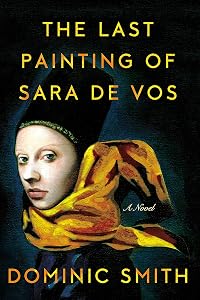
The Last Painting of Sara de Vos
by Dominic Smith
On This Page
Description
"This is what we long for: the profound pleasure of being swept into vivid new worlds, worlds peopled by characters so intriguing and real that we can't shake them, even long after the reading's done. In his earlier, award-winning novels, Dominic Smith demonstrated a gift for coaxing the past to life. Now, in The Last Painting of Sara de Vos, he deftly bridges the historical and the contemporary, tracking a collision course between a rare landscape by a female Dutch painter of the golden show more age, an inheritor of the work in 1950s Manhattan, and a celebrated art historian who painted a forgery of it in her youth. In 1631, Sara de Vos is admitted as a master painter to the Guild of St. Luke's in Holland, the first woman to be so recognized. Three hundred years later, only one work attributed to de Vos is known to remain--a haunting winter scene, At the Edge of a Wood, which hangs over the bed of a wealthy descendant of the original owner. An Australian grad student, Ellie Shipley, struggling to stay afloat in New York, agrees to paint a forgery of the landscape, a decision that will haunt her. Because now, half a century later, she's curating an exhibit of female Dutch painters, and both versions threaten to arrive. As the three threads intersect, The Last Painting of Sara de Vos mesmerizes while it grapples with the demands of the artistic life, showing how the deceits of the past can forge the present"-- show lessTags
Recommendations














































Member Recommendations


Member Reviews
I listened to this book in audiobook format, unabridged. About halfway through, though, I did something I rarely do: I borrowed a hard copy from the library as well, as there were parts I wanted to look back at and that is the one thing that is not easy to do with an audiobook. This proved to be a good decision.
This is almost time travel story. In 1631, Sara de Vos is the wife of a landscape painter, and is a talented painter in her own right, the first woman admitted to Amsterdam's Guild of master painters. Although women usually only paint indoor still lifes, Sara is mesmerized by a scene she has witnessed of a lone girl standing beside the river, watching skaters at dusk, and decided to paint it. After the sudden death of their young show more daughter, the life that Sara and her husband lead begins to unravel and eventually, comes apart. The painting, however, survives. Fast forward to the 1950s, where a wealthy New York lawyer, Marty de Groot, has owned the painting that has been in family for generations. It hangs over his bed until one day, he suddenly discovers that it has been replaced by a forged copy. The mystery of how or even when, this happened, or where the original might be, obsesses him and he hires a private detective to try to find out. The events that lead him to the truth haunt him in ways that he could not have expected. It isn't until the year 2000 that the circle closes, that the forger and Marty make peace.
Throughout the book, the chapters alternate between Sara's story and Marty's story (as well as Ellie -- the forger's -- story). I have to say, the reader of this audiobook, Edoardo Ballerini, is excellent. His voice is quiet, understated but eloquent and he is masterful at accents and giving voice to the characters. But most of all, the writing is beautiful. I want to include just 2 short excerpts here, from the very end of the book, as a sample:
"The cold air burns her cheeks as she skates along, pushing into long glides, her hands behind her back, the sound of her skate blades like the sharpening of a knife on a whetstone. She wants to skate for miles, to fall until midnight into this bracing pleasure. The bare trees glitter with ice along the riverbank, a complement to the inking stars. The night feels unpeeled, as if she's burrowed into its flesh. Here is the bone and armature, the trees holding up the sky like the ribs of a ship, the ice hardening the river into a mirror too dull to see the sky's full reflection. Everything flits by except the sky and her thoughts, both of which seem to widen and gyre in a loose, clockwise procession...Everything is strung together on the line of her skates, swooping curves and perfect delineations of her wistful thinking. She is light upon the ice, a weightless passenger."
"Every work is a depiction and a lie. We rearrange the living, exaggerate the light, intimate dusk when it's really noonday sun..." show less
This is almost time travel story. In 1631, Sara de Vos is the wife of a landscape painter, and is a talented painter in her own right, the first woman admitted to Amsterdam's Guild of master painters. Although women usually only paint indoor still lifes, Sara is mesmerized by a scene she has witnessed of a lone girl standing beside the river, watching skaters at dusk, and decided to paint it. After the sudden death of their young show more daughter, the life that Sara and her husband lead begins to unravel and eventually, comes apart. The painting, however, survives. Fast forward to the 1950s, where a wealthy New York lawyer, Marty de Groot, has owned the painting that has been in family for generations. It hangs over his bed until one day, he suddenly discovers that it has been replaced by a forged copy. The mystery of how or even when, this happened, or where the original might be, obsesses him and he hires a private detective to try to find out. The events that lead him to the truth haunt him in ways that he could not have expected. It isn't until the year 2000 that the circle closes, that the forger and Marty make peace.
Throughout the book, the chapters alternate between Sara's story and Marty's story (as well as Ellie -- the forger's -- story). I have to say, the reader of this audiobook, Edoardo Ballerini, is excellent. His voice is quiet, understated but eloquent and he is masterful at accents and giving voice to the characters. But most of all, the writing is beautiful. I want to include just 2 short excerpts here, from the very end of the book, as a sample:
"The cold air burns her cheeks as she skates along, pushing into long glides, her hands behind her back, the sound of her skate blades like the sharpening of a knife on a whetstone. She wants to skate for miles, to fall until midnight into this bracing pleasure. The bare trees glitter with ice along the riverbank, a complement to the inking stars. The night feels unpeeled, as if she's burrowed into its flesh. Here is the bone and armature, the trees holding up the sky like the ribs of a ship, the ice hardening the river into a mirror too dull to see the sky's full reflection. Everything flits by except the sky and her thoughts, both of which seem to widen and gyre in a loose, clockwise procession...Everything is strung together on the line of her skates, swooping curves and perfect delineations of her wistful thinking. She is light upon the ice, a weightless passenger."
"Every work is a depiction and a lie. We rearrange the living, exaggerate the light, intimate dusk when it's really noonday sun..." show less
I recently finished Dominic Smith’s latest book, Return to Valetto, and I enjoyed it so much that I decided to read an earlier novel of his which I had been on my to-read pile for quite some time.
The Last Painting of Sara de Vos covers three time periods in three different continents. In New York in 1957, Marty de Groot is robbed of the sole painting attributed to Sara de Vos and left with a “meticulous fake.” Entitled “At the Edge of a Wood,” the painting has been in his family for over 300 years. Marty hires a private detective who discovers that the forger was a graduate student of art history, Ellie Shipley. Marty adopts an alias, Jake Alpert, to entrap Ellie.
In 1637 in Amsterdam, Sara de Vos, the first woman to be show more admitted into St. Luke’s guild of master painters, paints “At the Edge of a Wood” to help her cope with an unimaginable loss.
In 2000, in Sydney, Australia, Ellie Shipley, now a renowned art historian, awaits the arrival of two paintings entitled “At the Edge of a Wood,” one the original and one the forgery she herself painted almost 50 years earlier. One is coming from the Netherlands and one is being personally delivered by Marty de Groot.
There is sufficient suspense to engage the reader throughout. What will Marty do when he uncovers the identity of the forger? Did Sara de Vos paint only this one painting? Will Ellie’s crime be revealed and her reputation ruined and career destroyed?
Lovers of art will certainly enjoy this book which examines one painting’s impact on people hundreds of years after its creation. Personally I loved the parallels between a painting’s canvas and the canvas of a person’s life. The painting process, and restoration process too, involves the layering of paints just as over a lifetime, we layer on experiences which shape our lives. The canvases of people’s lives show layers of grime, damage, and the effects of time, so the past cannot be totally escaped.
Ellie, for instance, after agreeing to “copy” de Vos, has worked hard to hide that choice but “The forgery didn’t stop after she’d handed off the canvas, it continued into the unfolding of years – the plush academic job, the marriage to an art dealer, the publications and curating of exhibits, none of these spoils would have been offered if anyone knew what she’d done. . . . She never stopped painting the beautiful fake.” Marty admits that he “carries the past around like a bottle of antacids in his pocket. . . . You live among the ruins of the past, carry them in your pockets, wishing you’d been decent and loving and talented and brave.”
I enjoyed the stories of all three characters, especially the examination of their motives. Anger in fact connects all three: Sara is angry at her husband’s choices, Marty is angry at “those who wronged him,” and Ellie “recognized her own recurring anger at being overlooked.” When there are multiple main characters in a novel, I often find one of the narratives less appealing, but that is not the case here. All three emerge as distinct characters, with both flaws and redeeming qualities, and interesting backstories.
On a personal note, I began reading this novel while on a visit to family in the Netherlands so I loved the description of the Dutch “sturdy, unflappable manner and their occasional brusqueness.” We visited the seaside village of Zoutelande in the province of Zeeland so I enjoyed the references to “the dunes of Zeeland” where “German tourists can bunk down with their entire brood” since I climbed those dunes and discovered that German is the second language in that area.
This is a wonderful book which touches on so many human impulses and emotions: anger, ambition, revenge, deceit, regret. Full of suspense and memorable characters, it is a work of both creativity and meticulous research. I highly recommend it.
Note: Please check out my reader's blog (https://schatjesshelves.blogspot.com/) and follow me on Twitter (@DCYakabuski). show less
The Last Painting of Sara de Vos covers three time periods in three different continents. In New York in 1957, Marty de Groot is robbed of the sole painting attributed to Sara de Vos and left with a “meticulous fake.” Entitled “At the Edge of a Wood,” the painting has been in his family for over 300 years. Marty hires a private detective who discovers that the forger was a graduate student of art history, Ellie Shipley. Marty adopts an alias, Jake Alpert, to entrap Ellie.
In 1637 in Amsterdam, Sara de Vos, the first woman to be show more admitted into St. Luke’s guild of master painters, paints “At the Edge of a Wood” to help her cope with an unimaginable loss.
In 2000, in Sydney, Australia, Ellie Shipley, now a renowned art historian, awaits the arrival of two paintings entitled “At the Edge of a Wood,” one the original and one the forgery she herself painted almost 50 years earlier. One is coming from the Netherlands and one is being personally delivered by Marty de Groot.
There is sufficient suspense to engage the reader throughout. What will Marty do when he uncovers the identity of the forger? Did Sara de Vos paint only this one painting? Will Ellie’s crime be revealed and her reputation ruined and career destroyed?
Lovers of art will certainly enjoy this book which examines one painting’s impact on people hundreds of years after its creation. Personally I loved the parallels between a painting’s canvas and the canvas of a person’s life. The painting process, and restoration process too, involves the layering of paints just as over a lifetime, we layer on experiences which shape our lives. The canvases of people’s lives show layers of grime, damage, and the effects of time, so the past cannot be totally escaped.
Ellie, for instance, after agreeing to “copy” de Vos, has worked hard to hide that choice but “The forgery didn’t stop after she’d handed off the canvas, it continued into the unfolding of years – the plush academic job, the marriage to an art dealer, the publications and curating of exhibits, none of these spoils would have been offered if anyone knew what she’d done. . . . She never stopped painting the beautiful fake.” Marty admits that he “carries the past around like a bottle of antacids in his pocket. . . . You live among the ruins of the past, carry them in your pockets, wishing you’d been decent and loving and talented and brave.”
I enjoyed the stories of all three characters, especially the examination of their motives. Anger in fact connects all three: Sara is angry at her husband’s choices, Marty is angry at “those who wronged him,” and Ellie “recognized her own recurring anger at being overlooked.” When there are multiple main characters in a novel, I often find one of the narratives less appealing, but that is not the case here. All three emerge as distinct characters, with both flaws and redeeming qualities, and interesting backstories.
On a personal note, I began reading this novel while on a visit to family in the Netherlands so I loved the description of the Dutch “sturdy, unflappable manner and their occasional brusqueness.” We visited the seaside village of Zoutelande in the province of Zeeland so I enjoyed the references to “the dunes of Zeeland” where “German tourists can bunk down with their entire brood” since I climbed those dunes and discovered that German is the second language in that area.
This is a wonderful book which touches on so many human impulses and emotions: anger, ambition, revenge, deceit, regret. Full of suspense and memorable characters, it is a work of both creativity and meticulous research. I highly recommend it.
Note: Please check out my reader's blog (https://schatjesshelves.blogspot.com/) and follow me on Twitter (@DCYakabuski). show less
I thoroughly enjoyed this account of a fictional (though based on a conglomeration of historical figures) woman painter in the 1600s - the Dutch Golden Age of painting. [[Dominic Smith]] weaves together the little known life of Sara de Vos with a modern day story of the relationship between a woman art forger/historian and the man who owns the work she forges (Sara de Vos's painting).
Usually in these sorts of novels I get annoyed with the modern-day part and just want to read the historical part, but I actually enjoyed both parts equally here. I also though Smith hit just the right note in describing the paintings without being overly wordy or pretentious. He also cleverly works noting light patterns and the visual world of a painters show more into the story without interrupting the flow of the book or being overly obvious.
I really enjoyed this. Thanks to the LT members who have recommended it! show less
Usually in these sorts of novels I get annoyed with the modern-day part and just want to read the historical part, but I actually enjoyed both parts equally here. I also though Smith hit just the right note in describing the paintings without being overly wordy or pretentious. He also cleverly works noting light patterns and the visual world of a painters show more into the story without interrupting the flow of the book or being overly obvious.
I really enjoyed this. Thanks to the LT members who have recommended it! show less
4.5 - rounded up.
This is a wonderfully woven tale of the art world and its intrigues that blends two stories, set in the 1600s, the 1950s and the year 2000. The intrigue focuses around a painting by a Dutch woman, Sara de Vos, the first woman admitted to the Guild of St. Luke, who has broken the imposed boundaries of her time by painting a landscape instead of a still-life. This painting, owned by a very wealthy collector in 1958, is stolen, and a young artist, named Ellie, is commissioned to paint a copy. The stories of these two very different, and yet somehow similar, women unfold with a touch of mystery that keeps you wanting to know more and more about their lives.
As is often the case with dual time period novels, I found myself show more wrapped up by the earlier era and resenting the intrusion of the later one at times. I wanted to know about Ellie, of course, but I was entranced by Sara (and not just because of that lovely name). I would have been just as happy if Mr. Smith had just told me Sara’s story in greater detail and left Ellie on the editing floor. However, since he did not, I must admit to loving the way he tied the two women together in the end.
I did like that Ellie was driven to create the forgery by something beyond a mercenary desire for money. I feel free to say that, since the forgery takes place in the early goings and I have not given away anything of the plot in referencing it. Does it matter if you did a wrong thing for a less sinister reason than might be suspected? Maybe not, but I suppose I am pleased to find a little higher moral character lurking in my criminals.
The writing here is beautifully done. Smith describes the painting in question in such vivid detail that it seems by the end of the book that you have seen it hanging in a museum you have visited, mixing with the Rembrandts and Vermeers. His characters have heart and substance. Sara, particularly, seems very real. She is the artist who must paint, the woman who never gets the recognition she deserves, and the soul that never stops trying to overcome sorrow. On the modern side, you could believe you might see Marty on a New York street and recognize his swagger as a sign of his easy privilege and wealth. And Ellie? Well, she is the girl in every woman who wants to achieve great things but lives with the knowledge of her own failures.
A very enjoyable read that never goes off course, I recommend this one to those who like historical fiction, mystery, or just a generally well-told story. There is a little something for everyone. show less
This is a wonderfully woven tale of the art world and its intrigues that blends two stories, set in the 1600s, the 1950s and the year 2000. The intrigue focuses around a painting by a Dutch woman, Sara de Vos, the first woman admitted to the Guild of St. Luke, who has broken the imposed boundaries of her time by painting a landscape instead of a still-life. This painting, owned by a very wealthy collector in 1958, is stolen, and a young artist, named Ellie, is commissioned to paint a copy. The stories of these two very different, and yet somehow similar, women unfold with a touch of mystery that keeps you wanting to know more and more about their lives.
As is often the case with dual time period novels, I found myself show more wrapped up by the earlier era and resenting the intrusion of the later one at times. I wanted to know about Ellie, of course, but I was entranced by Sara (and not just because of that lovely name). I would have been just as happy if Mr. Smith had just told me Sara’s story in greater detail and left Ellie on the editing floor. However, since he did not, I must admit to loving the way he tied the two women together in the end.
I did like that Ellie was driven to create the forgery by something beyond a mercenary desire for money. I feel free to say that, since the forgery takes place in the early goings and I have not given away anything of the plot in referencing it. Does it matter if you did a wrong thing for a less sinister reason than might be suspected? Maybe not, but I suppose I am pleased to find a little higher moral character lurking in my criminals.
The writing here is beautifully done. Smith describes the painting in question in such vivid detail that it seems by the end of the book that you have seen it hanging in a museum you have visited, mixing with the Rembrandts and Vermeers. His characters have heart and substance. Sara, particularly, seems very real. She is the artist who must paint, the woman who never gets the recognition she deserves, and the soul that never stops trying to overcome sorrow. On the modern side, you could believe you might see Marty on a New York street and recognize his swagger as a sign of his easy privilege and wealth. And Ellie? Well, she is the girl in every woman who wants to achieve great things but lives with the knowledge of her own failures.
A very enjoyable read that never goes off course, I recommend this one to those who like historical fiction, mystery, or just a generally well-told story. There is a little something for everyone. show less
In THE LAST PAINTING OF SARA DE VOS, Dominic Smith has created a marvelous triptych that cleverly explores themes of feminism, deceit, betrayal and forgiveness. The first panel is set in Amsterdam during the 1630’s. Sara De Vos and her husband are talented painters who have been suspended from the Guild of St. Luke for selling their work outside the control of the union, thus losing their livelihood. During that period, women could only paint still-lives—tulips were all the rage. Sara does a landscape—“ At the Edge of a Wood”— expressing her grief at the death of her young daughter, Kathrijn. There is a clever twist to this painting that is only revealed at the end of the novel.
The second panel occurs in 1950’s Manhattan. show more Marty de Groot, a wealthy patent attorney, has inherited Sara’s landscape, which he thinks has been a jinx for his family. When he discovers that his painting has been switched with a clever forgery, he goes in search of the thief, but only finds the forger. Ellie Shipley is a struggling graduate student who has agreed to forge the painting. Although complicit, she knows little about the actual theft. DeGroot plays a game of deceit and betrayal with Ellie that seems to be more about retribution than an honest attempt to actually retrieve his stolen property.
The setting for the final panel is Sydney in 2000. Ellie is now a successful art historian and DeGroot is an octogenarian widower. They meet after a 40-year hiatus because DeGroot has unresolved guilt feelings about how he treated Ellie. He personally brings the recovered De Vos landscape to an exhibit of female Dutch painters that Ellie is curating in Australia. A problem arises when the forgery, masquerading as the original, also arrives from a Dutch museum. If she confesses to being the forger, her career will undoubtedly be destroyed.
The plotting is wonderfully complex; the outcome is satisfying; the main characters are well developed and nuanced; and the details about art forgery and 17th century female Dutch painters provide a deft narrative and an agreeable read. show less
The second panel occurs in 1950’s Manhattan. show more Marty de Groot, a wealthy patent attorney, has inherited Sara’s landscape, which he thinks has been a jinx for his family. When he discovers that his painting has been switched with a clever forgery, he goes in search of the thief, but only finds the forger. Ellie Shipley is a struggling graduate student who has agreed to forge the painting. Although complicit, she knows little about the actual theft. DeGroot plays a game of deceit and betrayal with Ellie that seems to be more about retribution than an honest attempt to actually retrieve his stolen property.
The setting for the final panel is Sydney in 2000. Ellie is now a successful art historian and DeGroot is an octogenarian widower. They meet after a 40-year hiatus because DeGroot has unresolved guilt feelings about how he treated Ellie. He personally brings the recovered De Vos landscape to an exhibit of female Dutch painters that Ellie is curating in Australia. A problem arises when the forgery, masquerading as the original, also arrives from a Dutch museum. If she confesses to being the forger, her career will undoubtedly be destroyed.
The plotting is wonderfully complex; the outcome is satisfying; the main characters are well developed and nuanced; and the details about art forgery and 17th century female Dutch painters provide a deft narrative and an agreeable read. show less
The Last Painting of Sara de Vos - Dominic Smith
Audio performance by Edoardo Ballerini
5 stars
The book begins in 1957 with a clever art theft from a posh private home on New York City’s Upper East Side. An unusual 17th century Dutch landscape is removed and replaced by a ‘meticulous fake’. This story is not suspenseful crime fiction. It’s about three principal characters; the original artist, Sara de Vos; the wealthy 20th century owner of the painting, Marty de Groot; and the forger, Eleanor Shipley. It’s also a detailed study of art, its material and esthetic value.
The book has three timelines and three locations. Sara de Vos is a vivid character in a richly detailed historical period. Without long winded explanations, show more Smith builds a clear picture of Sara’s life within the constraints of her time; the power of artists’ guilds, the restrictions placed on women in art and marriage, the dangers of disease. The 20th century characters are just as clearly defined in their settings. Marty de Groot is surrounded firmly by his wealth and his boredom with his superficial life. Eleanor Shipley is a talented mid-century graduate student, wallowing in her anger at a male chauvinist art establishment. They are an interesting trio.
The book is not really about the crime. It’s about the lives of these three individuals and how they interact with similar issues. All three of these characters cheat or lie to others at some significant point in their lives. All of them are victims of deception. All of them are grieving and dealing with the consequences of loss.The creation, acquisition, and appreciation of art runs through each story.
This is the book I was looking for when I read Shapiro’s disappointing The Art Forger.
I would not recommend it to someone who was looking for a thriller like The Da Vinci Code. However, I think that if you liked The Painter, you would like this book as well. In fact, Heller’s book and Sara De Vos would be great companion books for a group discussion. show less
Audio performance by Edoardo Ballerini
5 stars
The book begins in 1957 with a clever art theft from a posh private home on New York City’s Upper East Side. An unusual 17th century Dutch landscape is removed and replaced by a ‘meticulous fake’. This story is not suspenseful crime fiction. It’s about three principal characters; the original artist, Sara de Vos; the wealthy 20th century owner of the painting, Marty de Groot; and the forger, Eleanor Shipley. It’s also a detailed study of art, its material and esthetic value.
The book has three timelines and three locations. Sara de Vos is a vivid character in a richly detailed historical period. Without long winded explanations, show more Smith builds a clear picture of Sara’s life within the constraints of her time; the power of artists’ guilds, the restrictions placed on women in art and marriage, the dangers of disease. The 20th century characters are just as clearly defined in their settings. Marty de Groot is surrounded firmly by his wealth and his boredom with his superficial life. Eleanor Shipley is a talented mid-century graduate student, wallowing in her anger at a male chauvinist art establishment. They are an interesting trio.
The book is not really about the crime. It’s about the lives of these three individuals and how they interact with similar issues. All three of these characters cheat or lie to others at some significant point in their lives. All of them are victims of deception. All of them are grieving and dealing with the consequences of loss.The creation, acquisition, and appreciation of art runs through each story.
This is the book I was looking for when I read Shapiro’s disappointing The Art Forger.
I would not recommend it to someone who was looking for a thriller like The Da Vinci Code. However, I think that if you liked The Painter, you would like this book as well. In fact, Heller’s book and Sara De Vos would be great companion books for a group discussion. show less
So why only three stars?
This book is close to flawless, and has some beautiful writing. The evocation of the three different time periods is excellent, though I felt most convinced by the seventeenth century scenes. There are some exquisite insights into life, love, pain and art, but the 20th century plot completely threw me out of my enjoyment.
What happened? Sara's painting is bought at a clearing sale after her husband abandons her to their debts. It is bought by Piet de Grootin the 1600s. Marty de Groot, the painting's 20th century owner, realises that he's been duped after thieves substitute a forgery in the painting's place. With limitless riches, he's able to hire help to find the forger - Australian Ellie. Instead of reporting show more her to police, he embarks on a devious course of revenge - to dupe Ellie in her turn that he is a wealthy widower in love with her. So far, OK, and I had quite liked Marty and the tender relationship he had with his childless wife.
Then, unaccountably, he lures Ellie into a weekend away at a small hotel, and takes his time over the most godless sex I've ever read. No joy or sweetness or even great desire. Strange - and then he leaves, his revenge complete, after what amounts to a gratuitous rape (having intercourse with someone while pretending to be someone else? what would you call it?). His revenge would have been complete had he just abandoned Ellie in the hotel, leaving her to discover the returned forgery on her own. Totally revolting. Changed my view of Marty, and nearly made me stop reading!
Forty years later, Marty and Ellie meet again at an art show, where both the forgery and the genuine painting are briefly in the same place at the same time. Marty explains his conduct 40 years before as the result of his having fallen in love with Ellie while trying to wreak revenge on her. Hmm, strange kind of love, mate - do you mean lust? Marty regains some dignity by making all right for Ellie and not unmasking her from her successful career (he still has buckets of money to throw around), but I find myself still very resentful that his selfish 'taking of her virginity' as it is phrased is allowed to pass as if it was nothing.
I had to read on because I wanted to find out what happened to Sara, and I was not at all disappointed by these sections of the book. They are lovely, and I found Sara and her new husband Tomas the most likeable characters in the book.
I confess I'm a bit disappointed. I began this book with very high expectations, and these were realised well into the book, but then there was this sudden twist of surprising rape. It may not strike other readers so strongly, and the book is very worth reading for its other diamonds of expression and philosophy. show less
This book is close to flawless, and has some beautiful writing. The evocation of the three different time periods is excellent, though I felt most convinced by the seventeenth century scenes. There are some exquisite insights into life, love, pain and art, but the 20th century plot completely threw me out of my enjoyment.
What happened? Sara's painting is bought at a clearing sale after her husband abandons her to their debts. It is bought by Piet de Grootin the 1600s. Marty de Groot, the painting's 20th century owner, realises that he's been duped after thieves substitute a forgery in the painting's place. With limitless riches, he's able to hire help to find the forger - Australian Ellie. Instead of reporting show more her to police, he embarks on a devious course of revenge - to dupe Ellie in her turn that he is a wealthy widower in love with her. So far, OK, and I had quite liked Marty and the tender relationship he had with his childless wife.
Then, unaccountably, he lures Ellie into a weekend away at a small hotel, and takes his time over the most godless sex I've ever read. No joy or sweetness or even great desire. Strange - and then he leaves, his revenge complete, after what amounts to a gratuitous rape (having intercourse with someone while pretending to be someone else? what would you call it?). His revenge would have been complete had he just abandoned Ellie in the hotel, leaving her to discover the returned forgery on her own. Totally revolting. Changed my view of Marty, and nearly made me stop reading!
Forty years later, Marty and Ellie meet again at an art show, where both the forgery and the genuine painting are briefly in the same place at the same time. Marty explains his conduct 40 years before as the result of his having fallen in love with Ellie while trying to wreak revenge on her. Hmm, strange kind of love, mate - do you mean lust? Marty regains some dignity by making all right for Ellie and not unmasking her from her successful career (he still has buckets of money to throw around), but I find myself still very resentful that his selfish 'taking of her virginity' as it is phrased is allowed to pass as if it was nothing.
I had to read on because I wanted to find out what happened to Sara, and I was not at all disappointed by these sections of the book. They are lovely, and I found Sara and her new husband Tomas the most likeable characters in the book.
I confess I'm a bit disappointed. I began this book with very high expectations, and these were realised well into the book, but then there was this sudden twist of surprising rape. It may not strike other readers so strongly, and the book is very worth reading for its other diamonds of expression and philosophy. show less
Members
- Recently Added By
Published Reviews
ThingScore 100
Lists

Top Five Books of 2016
795 works; 228 members

To Read
6 works; 1 member

Books Read in 2016
4,666 works; 199 members

Western & Northern Europe
60 works; 1 member

Books Read in 2019
4,052 works; 108 members

Books Read in 2021
5,361 works; 114 members
Author Information

6 Works 2,102 Members
Dominic Smith grew up in Sydney, Australia and now lives in Austin, Texas. Smith earned an MFA in writing from the Michener Center for Writers at the University of Texas at Austin. His writing has been nominate for a Pushcart Prize and appeared in numerous journals and magazines, including The Atlantic Monthly. Dominic's writing has received show more several awards including the Dobie Paisano Fellowship, the Sherwood Anderson Fiction Prize, and the Gulf Coast Fiction Prize. His debut novel The Mercury Visions of Louis Daguerre was selected for the Barnes and Noble Discover Great New Writers Program. It also received the Steven Turner Prize for First Fiction from the Texas Institute of Letters. Dominic's second novel, The Beautiful Miscellaneous, was optioned for a film by Southpaw Entertainment. His third novel-Bright and Distant Shores was published in 2011 and was shortlisted for The Age Book of the Year and the Vance Palmer Prize, two of Australia's foremost literary awards. His most recent book is The Last Painting of Sara De Vos (2016). It won the 2017 2017 Indie Book Award for Fiction. Dominic serves as a faculty of the Warren Wilson MFA Program for Writers and has taught recently at the University of Texas at Austin and Southern Methodist University. (Bowker Author Biography) show less
Some Editions
Awards and Honors
Awards
Distinctions
Common Knowledge
- Canonical title
- The Last Painting of Sara de Vos
- Original title
- The Last Painting of Sara de Vos
- Original publication date
- 2016
- People/Characters
- Sara de Vos; Marty de Groot; Ellie Shipley
- Important places
- Sydney, Australia; New York, New York, USA; Amsterdam, The Netherlands
- Dedication
- For Tamara Smith, M.P. - beloved sister, loyal friend, trailblazer
- First words
- The painting is stolen the same week the Russians put a dog into space.
- Last words
- (Click to show. Warning: May contain spoilers.)She is twenty again and just starting out, turning to take us in as we come through the door, her lips parted as if she's about to speak.
- Blurbers
- Fountain, Ben; Brooks, Geraldine; Wells, Susanne; Livesey, Margot; Groff, Lauren
- Original language
- English
- Canonical DDC/MDS
- 813.6
- Canonical LCC
- PS3619.M5815
Classifications
Statistics
- Members
- 1,244
- Popularity
- 19,708
- Reviews
- 71
- Rating
- (3.86)
- Languages
- 6 — Dutch, English, French, German, Italian, Spanish
- Media
- Paper, Audiobook, Ebook
- ISBNs
- 34
- ASINs
- 9