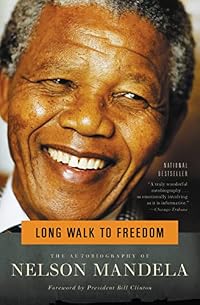
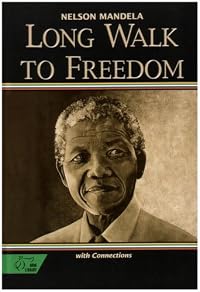
Long Walk to Freedom: The Autobiography of Nelson Mandela
by Nelson Mandela
Long Walk to Freedom: The Autobiography of Nelson Mandela (Collections and Selections — 1-2)
On This Page
Description
The autobiography of global human rights icon Nelson Mandela is "riveting . . . both a brilliant description of a diabolical system and a testament to the power of the spirit to transcend it" (Washington Post).Nelson Mandela was one of the great moral and political leaders of his time: an international hero whose lifelong dedication to the fight against racial oppression in South Africa won him the Nobel Peace Prize and the presidency of his country. After his triumphant release in 1990 show more from more than a quarter-century of imprisonment, Mandela was at the center of the most compelling and inspiring political drama in the world. As president of the African National Congress and head of South Africa's antiapartheid movement, he was instrumental in moving the nation toward multiracial government and majority rule. He is still revered everywhere as a vital force in the fight for human rights and racial equality.
Long Walk to Freedom is his moving and exhilarating autobiography, destined to take its place among the finest memoirs of history's greatest figures. Here for the first time, Nelson Rolihlahla Mandela told the extraordinary story of his life — an epic of struggle, setback, renewed hope, and ultimate triumph.
The book that inspired the major motion picture Mandela: Long Walk to Freedom.
. show less
Tags
Recommendations
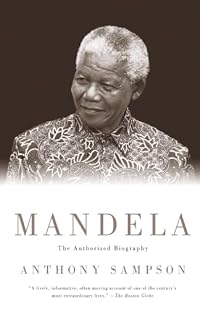
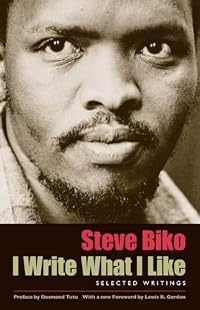
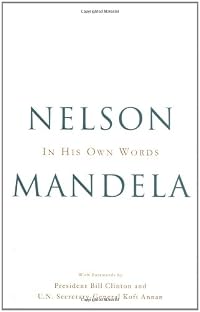

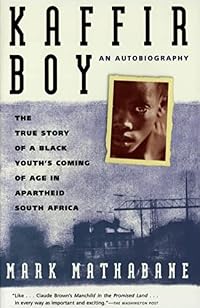
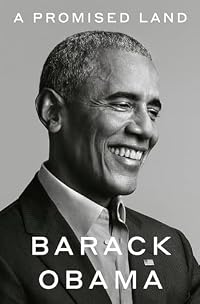



Member Recommendations
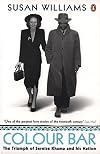
Widsith Two brilliant and moving biographies (one auto-, one not) of southern African leaders (Mandela in South Africa and Khama in Botswana) coming of age, and taking on the racism of whole societies. Obviously Mandela is the more important world figure to get to grips with; but if anything, I found Khama's story even more emotional to retrace. Both utterly inspirational.
Member Reviews
If we do nothing else for those who suffer for a cause, we must at least bear witness and say, I have seen, and understood.
Many people the world over have waxed prolific and poetic on this book, and all that is left to say is, it is a must-read for anyone who cares about anything at all in this world. This struggle cannot be dismissed as a partisan "engagement". It is not just about apartheid; it is not about fighting a harsh regime; it is not about man's inhumanity to man -- and all that "stuff" that so many readily dismiss, once the book is shelved again.
It is about one man, walking, and holding his head up despite everything that was thrown upon his shoulders. It is how to preserve dignity, strength and integrity -- and have the show more moral constitution to wake up to it day after day after day, for the entire course of his life. It's easy to maintain a posture for a day or a week or a month; but to hold on to it for a lifetime -- that is a strength that only a very few can maintain.
To emerge out of the darkness of his prison, of his life, and still shine with hope for humanity -- and faith that goodness will prevail -- leaves me speechless. show less
Many people the world over have waxed prolific and poetic on this book, and all that is left to say is, it is a must-read for anyone who cares about anything at all in this world. This struggle cannot be dismissed as a partisan "engagement". It is not just about apartheid; it is not about fighting a harsh regime; it is not about man's inhumanity to man -- and all that "stuff" that so many readily dismiss, once the book is shelved again.
It is about one man, walking, and holding his head up despite everything that was thrown upon his shoulders. It is how to preserve dignity, strength and integrity -- and have the show more moral constitution to wake up to it day after day after day, for the entire course of his life. It's easy to maintain a posture for a day or a week or a month; but to hold on to it for a lifetime -- that is a strength that only a very few can maintain.
To emerge out of the darkness of his prison, of his life, and still shine with hope for humanity -- and faith that goodness will prevail -- leaves me speechless. show less
Nelson Mandela’s Long Walk to Freedom takes readers from his early years in Mvezo through his twenty-seven year imprisonment and finally to his inauguration. This memoir focuses on the struggle to end apartheid, but does not discuss Mandela’s time in South Africa’s government so if you are looking for a complete picture of his life, you will need to supplement your reading. This memoir is interesting in a few different ways.
Despite your feelings about Mandela as a person, it must be acknowledged that the movement he led was incredible. Not only did the ANC manage to overthrow apartheid, he led South Africa to a democratic system in a time when more African countries were replacing their colonist yokes with dictatorships. South show more Africa is still in a lot of turmoil – racial inequalities and government corruption still reigns. But the steps he took are important, and it was fascinating to read about his journey.
Long Walk to Freedom is not a traditional memoir – instead, the narrative comes from two parts: first, Mandela’s “prison diary” describing his life up to his time in Robben’s Prison. Everything afterward has been converted from interviews between Mandela and journalist Richard Stengel, who ghostwrote Long Walk to Freedom. The flow of the memoir is fantastic and consistent – you really can’t tell the shift, and Stengel did an excellent job humanizing Mandela, combining the facts of his life on a grand scheme with the small pieces of daily life. One moment, he will be relaying information about early negotiations with the government and the next, an antidote about Mandela’s taste in wine. It’s all fascinating, but incredibly accessible, too.
While Long Walk to Freedom is quite a long memoir, I found it excellent and well worth reading, especially if you want to better understand the dismantling of apartheid from a primary source. This is not a piece of objective non-fiction. It’s a memoir, so it’s incredibly biased. That said, I really think it’s worth a read! Nelson Mandela is an important historical figure and a Nobel laureate and there’s no better source of information about an influential individual’s life then his memoir. show less
Despite your feelings about Mandela as a person, it must be acknowledged that the movement he led was incredible. Not only did the ANC manage to overthrow apartheid, he led South Africa to a democratic system in a time when more African countries were replacing their colonist yokes with dictatorships. South show more Africa is still in a lot of turmoil – racial inequalities and government corruption still reigns. But the steps he took are important, and it was fascinating to read about his journey.
Long Walk to Freedom is not a traditional memoir – instead, the narrative comes from two parts: first, Mandela’s “prison diary” describing his life up to his time in Robben’s Prison. Everything afterward has been converted from interviews between Mandela and journalist Richard Stengel, who ghostwrote Long Walk to Freedom. The flow of the memoir is fantastic and consistent – you really can’t tell the shift, and Stengel did an excellent job humanizing Mandela, combining the facts of his life on a grand scheme with the small pieces of daily life. One moment, he will be relaying information about early negotiations with the government and the next, an antidote about Mandela’s taste in wine. It’s all fascinating, but incredibly accessible, too.
While Long Walk to Freedom is quite a long memoir, I found it excellent and well worth reading, especially if you want to better understand the dismantling of apartheid from a primary source. This is not a piece of objective non-fiction. It’s a memoir, so it’s incredibly biased. That said, I really think it’s worth a read! Nelson Mandela is an important historical figure and a Nobel laureate and there’s no better source of information about an influential individual’s life then his memoir. show less
Mr. Mandela's autobiography is extremely well written. Don't let the length intimidate you because it's highly readable. Don't worry that 27 years in prison might not give the author much to say about that period because it is one of the most interesting parts of the book. A wonderful book about standing your ground, and a tribute: to patience, to loyalty to your supporters, your organization and your estanged spouse; to faith that things could and would change for the better.
Even knowing little detail about Mr. Mandela's life, I have admired him. After reading this book, he's become one of my heroes (and I don't have many of those). The way he managed to maintain such a balanced outlook, untainted by bitterness is truly inspirational. show more Also inspiring is his belief in true reconciliation, uniting the oppressed and the oppressors against a flawed system. Something we in Canada could learn from as we attempt to reconcile with our Aboriginal peoples. show less
Even knowing little detail about Mr. Mandela's life, I have admired him. After reading this book, he's become one of my heroes (and I don't have many of those). The way he managed to maintain such a balanced outlook, untainted by bitterness is truly inspirational. show more Also inspiring is his belief in true reconciliation, uniting the oppressed and the oppressors against a flawed system. Something we in Canada could learn from as we attempt to reconcile with our Aboriginal peoples. show less
4.5 stars, this is an incredible journey through the life of a fully human man - and he knows that about himself. I love that he was always exactly himself, never overly moral, but devoted to his cause. You can tell he struggled with what he made his priority - putting his activism over his family, but he was at peace with his choices. This is excellent, and I saw a few parallels to the Autobiography of Malcolm X, in their thoughts on activism and life priorities. Mandela is certainly my favorite of the two.
At over 700 pages, Nelson Mandela’s autobiography might look like a serious commitment. Actually though, it doesn’t feel like a heavy book at all. Like the thinking which informs it, the writing is clear, measured and straightforward, albeit scattered with bits of Harvard English that are presumably down to Mandela’s (uncredited) American ghostwriter, Richard Stengel.
I sped through it in under a week, thanks mainly to a couple of long train journeys. I’m left with a much more nuanced view of Mandela and what he stood for, and a much clearer idea of the man behind the symbol.
What I found particularly valuable were the insights into how deeply apartheid ingrained racism not just on to the white minority, but on to the attitudes show more and assumptions throughout the whole of South African society. Mandela at one point mentions being struck by the sight of a young beggar-girl by the side of the road in a township, and reacting completely differently because she was white:
While I did not normally give to African beggars, I felt the urge to give this woman money. In that moment I realized the tricks that apartheid plays on one, for the everyday travails that afflict Africans are accepted as a matter of course, while my heart immediately went out to this bedraggled white woman. In South Africa, to be poor and black was normal, to be poor and white was a tragedy.
A few years and several hundred pages later, he has the corollary experience while taking a clandestine flight in Ethiopia.
As I was boarding the plane I saw that the pilot was black. I had never seen a black pilot before, and the instant I did I had to quell my panic. How could a black man fly a plane? But a moment later I caught myself: I had fallen into the apartheid mind-set, thinking Africans were inferior and that flying was a white man’s job.
If the leaders of the resistance movement can react like this – How could a black man fly a plane? – the reactions of less committed or thoughtful South Africans can readily be imagined, and you begin to get a sense of the sheer scale of the problem which faced the ANC and other activsts. A problem which has not entirely gone away.
These are the well-chosen memories of someone interested in their own thoughts and responses, and who had the time – so much of it – to examine his life and sift out the experiences that counted. Everywhere in the book, there is this sense of a man who has thought long and hard about the choices he made, and can explain them simply and directly.
Not all of them are necessarily easy to sympathise with, or at least they perhaps shouldn’t be. Let’s be clear: Mandela is not Ghandi. We should remember (and he is admirably open about it) that Amnesty International always declined to work on Mandela’s behalf because he refused to renounce violence as a valid tool in the fight against apartheid. He was the first head of the ANC’s militant wing, the MK, and involved in paramilitary training; he drew up plans for action that ran from sabotage to guerrilla warfare. At one point, he describes his 1950s self as ‘a young man who attempted to make up for his ignorance with militancy’ – but actually, that militancy never goes away, it just becomes more grounded in political and moral justifications. Mandela’s ethical sensibility is always there; but ethics are not paramount.
For me, non-violence was not a moral principle but a strategy; there is no moral goodness in using an ineffective weapon.
Effective weapons were considered to include explosives, as demonstrated for example in the Church Street bombing of 1983 which killed 19 people and wounded over 200, including many civilians. Mandela mentions it in passing, and has the following to say.
The killing of civilians was a tragic accident, and I felt a profound horror at the death toll. But disturbed as I was by these casualties, I knew that such accidents were the inevitable consequence of the decision to embark on a military struggle. Human fallibility is always a part of war, and the price of it is always high. It was precisely because we knew that such incidents would occur that our decision to take up arms had been so grave and reluctant. But as Oliver said at the time of the bombing, the armed struggle was imposed upon us by the violence of the apartheid regime.
We are on dangerous ground here. Can we put a number on how many civilian deaths are considered a reasonable price to pay for ending apartheid? At the same time, though, who on earth am I to question his decisions and moral code – I who have never experienced a fraction of the abuse and discrimination which was his daily life, and who am never likely to have to make the impossible choices that were so common under apartheid?
All I can say is Mandela doesn’t shy away from it. I may not always be comfortable about it, but I felt a deep respect for his willingness to stand behind his actions and explain them as best he can.
Ultimately, Mandela was saved from being a truly ambiguous figure by the simple fact that he was arrested and imprisoned before he could be directly involved in any violence himself; for him, it’s all theoretical, and, locked away behind bars, he could be viewed more simply as an innocent martyr to a just cause. And indeed, it’s in his response to the years of incarceration that the greatness of Mandela’s character comes through. Twenty-seven years in jail would be enough to make any man bitter; but he is the opposite of bitter. Time and again he shows himself willing to listen to and work with those who might easily be called his enemies – from dissenting black activists, through ambivalent prison warders, up to the president of South Africa.
It’s his astonishing ability to do without bitterness – essentially, his capacity for forgiveness – which really makes Mandela an inspiration. Perhaps it’s my naïveté, but I can’t help concluding that, when international pressure got too much for South Africa’s government, it was Mandela’s openness in negotiations which forged the breakthrough and not the MK’s sporadic attempts to meet violence with violence. That’s certainly what I’ll take away from this excellent and fascinating memoir: that, and a delight in his unshakable belief that no matter how degrading the conditions, or how long the imprisonment, no one had the power to damage who he was on the inside:
Prison and the authorities conspire to rob each man of his dignity. In and of itself, that assured that I would survive, for any man or institution that tries to rob me of my dignity will lose because I will not part with it at any price or under any pressure. show less
I sped through it in under a week, thanks mainly to a couple of long train journeys. I’m left with a much more nuanced view of Mandela and what he stood for, and a much clearer idea of the man behind the symbol.
What I found particularly valuable were the insights into how deeply apartheid ingrained racism not just on to the white minority, but on to the attitudes show more and assumptions throughout the whole of South African society. Mandela at one point mentions being struck by the sight of a young beggar-girl by the side of the road in a township, and reacting completely differently because she was white:
While I did not normally give to African beggars, I felt the urge to give this woman money. In that moment I realized the tricks that apartheid plays on one, for the everyday travails that afflict Africans are accepted as a matter of course, while my heart immediately went out to this bedraggled white woman. In South Africa, to be poor and black was normal, to be poor and white was a tragedy.
A few years and several hundred pages later, he has the corollary experience while taking a clandestine flight in Ethiopia.
As I was boarding the plane I saw that the pilot was black. I had never seen a black pilot before, and the instant I did I had to quell my panic. How could a black man fly a plane? But a moment later I caught myself: I had fallen into the apartheid mind-set, thinking Africans were inferior and that flying was a white man’s job.
If the leaders of the resistance movement can react like this – How could a black man fly a plane? – the reactions of less committed or thoughtful South Africans can readily be imagined, and you begin to get a sense of the sheer scale of the problem which faced the ANC and other activsts. A problem which has not entirely gone away.
These are the well-chosen memories of someone interested in their own thoughts and responses, and who had the time – so much of it – to examine his life and sift out the experiences that counted. Everywhere in the book, there is this sense of a man who has thought long and hard about the choices he made, and can explain them simply and directly.
Not all of them are necessarily easy to sympathise with, or at least they perhaps shouldn’t be. Let’s be clear: Mandela is not Ghandi. We should remember (and he is admirably open about it) that Amnesty International always declined to work on Mandela’s behalf because he refused to renounce violence as a valid tool in the fight against apartheid. He was the first head of the ANC’s militant wing, the MK, and involved in paramilitary training; he drew up plans for action that ran from sabotage to guerrilla warfare. At one point, he describes his 1950s self as ‘a young man who attempted to make up for his ignorance with militancy’ – but actually, that militancy never goes away, it just becomes more grounded in political and moral justifications. Mandela’s ethical sensibility is always there; but ethics are not paramount.
For me, non-violence was not a moral principle but a strategy; there is no moral goodness in using an ineffective weapon.
Effective weapons were considered to include explosives, as demonstrated for example in the Church Street bombing of 1983 which killed 19 people and wounded over 200, including many civilians. Mandela mentions it in passing, and has the following to say.
The killing of civilians was a tragic accident, and I felt a profound horror at the death toll. But disturbed as I was by these casualties, I knew that such accidents were the inevitable consequence of the decision to embark on a military struggle. Human fallibility is always a part of war, and the price of it is always high. It was precisely because we knew that such incidents would occur that our decision to take up arms had been so grave and reluctant. But as Oliver said at the time of the bombing, the armed struggle was imposed upon us by the violence of the apartheid regime.
We are on dangerous ground here. Can we put a number on how many civilian deaths are considered a reasonable price to pay for ending apartheid? At the same time, though, who on earth am I to question his decisions and moral code – I who have never experienced a fraction of the abuse and discrimination which was his daily life, and who am never likely to have to make the impossible choices that were so common under apartheid?
All I can say is Mandela doesn’t shy away from it. I may not always be comfortable about it, but I felt a deep respect for his willingness to stand behind his actions and explain them as best he can.
Ultimately, Mandela was saved from being a truly ambiguous figure by the simple fact that he was arrested and imprisoned before he could be directly involved in any violence himself; for him, it’s all theoretical, and, locked away behind bars, he could be viewed more simply as an innocent martyr to a just cause. And indeed, it’s in his response to the years of incarceration that the greatness of Mandela’s character comes through. Twenty-seven years in jail would be enough to make any man bitter; but he is the opposite of bitter. Time and again he shows himself willing to listen to and work with those who might easily be called his enemies – from dissenting black activists, through ambivalent prison warders, up to the president of South Africa.
It’s his astonishing ability to do without bitterness – essentially, his capacity for forgiveness – which really makes Mandela an inspiration. Perhaps it’s my naïveté, but I can’t help concluding that, when international pressure got too much for South Africa’s government, it was Mandela’s openness in negotiations which forged the breakthrough and not the MK’s sporadic attempts to meet violence with violence. That’s certainly what I’ll take away from this excellent and fascinating memoir: that, and a delight in his unshakable belief that no matter how degrading the conditions, or how long the imprisonment, no one had the power to damage who he was on the inside:
Prison and the authorities conspire to rob each man of his dignity. In and of itself, that assured that I would survive, for any man or institution that tries to rob me of my dignity will lose because I will not part with it at any price or under any pressure. show less
There are some people who inspire such awe that it is difficult to conceive that they are only flesh and blood: Nelson Mandela is one of them. After 27 years in prison, for nothing more than believing a black man to be an equal to a white, how does one treat one's captors with dignity?
This book, not only gives an insight as to how Mr. Mandela so did, but also tells of a modest man who brought his country into the twenty-first century with the minimum of bloodshed.
My favourite story, is the tale of his eventual release when President de Klerk told Mandela that he was to be released with immediate effect and Nelson declines; he wants a week to make arrangements! Typical of the man, he accedes to de Klerk's request when he learns that the show more World press are expecting his release and anything else will start rumours of a breakdown in negotiations towards a free South Africa.
The 600 pages of this book fly by: an excellent read. show less
This book, not only gives an insight as to how Mr. Mandela so did, but also tells of a modest man who brought his country into the twenty-first century with the minimum of bloodshed.
My favourite story, is the tale of his eventual release when President de Klerk told Mandela that he was to be released with immediate effect and Nelson declines; he wants a week to make arrangements! Typical of the man, he accedes to de Klerk's request when he learns that the show more World press are expecting his release and anything else will start rumours of a breakdown in negotiations towards a free South Africa.
The 600 pages of this book fly by: an excellent read. show less
No one is born hating another person because of the color of his skin, or his background, or his religion. People must learn to hate, and if they can learn to hate, they can be taught to love, for love comes more naturally to the human heart than its opposite.” -Nelson Mandela
I am not sure how I want this review to go because I was incredibly touched by this story and the struggles that Nelson Mandela went through. I think that the struggles he went through made him the man that he was. I think that any man who can stand forward to unify the races and to bring peace is an admirable person. No one is perfect and neither was Mandela and his story told this. I love an autobiography when a person can admit there weaknesses and strengths show more as they tell a story. show less
I am not sure how I want this review to go because I was incredibly touched by this story and the struggles that Nelson Mandela went through. I think that the struggles he went through made him the man that he was. I think that any man who can stand forward to unify the races and to bring peace is an admirable person. No one is perfect and neither was Mandela and his story told this. I love an autobiography when a person can admit there weaknesses and strengths show more as they tell a story. show less
Members
- Recently Added By
Published Reviews
ThingScore 100
A Long Walk to Freedom, by Nelson Mandela, is an autobiography that describes the South African anti-apartheid struggle from his point of view. In the book, Mandela talks about his childhood, time in prison, and his political and social life. Throughout this journey, you see the development of an international hero, and one of the largest moral and political leaders. He uses various quotes show more to pursue his meanings in a secretive way; while creating a larger impact.
The book starts off with Mandela's childhood days and sketches out his family connections and his prospects if he had not become the father of the nation. Mandela's first step towards freedom was when he ran away to escape an arranged marriage. After his escape, his education life follows and his first trial to becoming an international hero. On pg. 24 of chapter 2, he says, “On the first day of school, my teacher, Miss Mdingane, gave each of us an English name and said that from thenceforth that was the name we would answer to in school. This was the custom among Africans in those days and was undoubtedly due to the British bias of our education. The education I received was a British education, in which British ideas, British culture, British institutions, were automatically assumed to be superior. There was no such thing as African culture. Africans of my generation—and even today—generally have both an English and an African name. Whites were either unable or unwilling to pronounce an African name and considered it uncivilized to have one. That day, Miss Mdingane told me that my new name was Nelson. Why she bestowed this particular name upon me I have no idea. Perhaps it had something to do with the great British sea captain Lord Nelson, but that would be only a guess.” Ever since his first day of school, he was already seen as “different”. They were taught all about British culture, and British institutions. Whites didn’t bother and try to pronounce his name. They also believed that Africans should have English names because their native names were uncivilized. This makes me wonder and feel amazed at how much society has changed in a positive manner. People now are much more united and significantly less ignorant. Later on in the story, Mandela talks in depth about his life in prison; it is both horrifying and edifying and it is during these chapters that the reader develops a strong empathy with the man. For example, on pg. 276 of chapter 61, he says, “ Prison is designed to break one's spirit and destroy one's resolve. To do this, the authorities attempt to exploit every weakness, demolish every initiative, negate all signs of individuality--all with the idea of stamping out that spark that makes each of us human and each of us who we are.” While prison is designed to break one’s spirit and destroy one’s resolve; Nelson didn’t let it get to him in his 27 years in prison. While I’ve never experienced something similar to this myself but I can imagine how authorities can try and demolish you mentally. This truly shows his colors; his spirit of compassion, forgiveness, inclusiveness, and ability to live by his principles that made him. In addition, the final parts of the book deal with his life after prison, politics and the dismantling of apartheid. It also deals with the elections, violence and how Mandela ultimately becomes President. For example, on pg. 127 of chapter 20, he says, “ Education is the great engine of personal development. It is through education that the daughter of a peasant can become a doctor, that the son of a mineworker can become the head of the mine, that a child of farmworkers can become the president of a great nation. It is what we make out of what we have, not what we are given, that separates one person from another.”Education is what allows us to learn and grow. It is also what allows us to escape poverty. For instance, my parents came from Mexico to the U.S so I could get the chance to go to a university and live a better life than they did. Without education, no one would have the chance to better themselves, their families, or their future.
In conclusion, A Long Walk to Freedom was truly a magnificent journey and a must read. Mandela’s journey and his hardships all convey the message of, “fight for what you believe is right” and Mandela did just that. Nelson Mandela is truly worthy of his title of an “international hero”. The wisdom, fortitude, strength, and humanity of Nelson Mandela radiated from every page. I felt very enriched after closing the last page of the book, but I also felt an immense sense of anger after the final page; I wanted more! The autobiography creates another layer of perspective; after reading it you can not look at things the same anymore and it creates an experience as if you were the one going through this journey. It was truly a long, long walk to freedom. show less
The book starts off with Mandela's childhood days and sketches out his family connections and his prospects if he had not become the father of the nation. Mandela's first step towards freedom was when he ran away to escape an arranged marriage. After his escape, his education life follows and his first trial to becoming an international hero. On pg. 24 of chapter 2, he says, “On the first day of school, my teacher, Miss Mdingane, gave each of us an English name and said that from thenceforth that was the name we would answer to in school. This was the custom among Africans in those days and was undoubtedly due to the British bias of our education. The education I received was a British education, in which British ideas, British culture, British institutions, were automatically assumed to be superior. There was no such thing as African culture. Africans of my generation—and even today—generally have both an English and an African name. Whites were either unable or unwilling to pronounce an African name and considered it uncivilized to have one. That day, Miss Mdingane told me that my new name was Nelson. Why she bestowed this particular name upon me I have no idea. Perhaps it had something to do with the great British sea captain Lord Nelson, but that would be only a guess.” Ever since his first day of school, he was already seen as “different”. They were taught all about British culture, and British institutions. Whites didn’t bother and try to pronounce his name. They also believed that Africans should have English names because their native names were uncivilized. This makes me wonder and feel amazed at how much society has changed in a positive manner. People now are much more united and significantly less ignorant. Later on in the story, Mandela talks in depth about his life in prison; it is both horrifying and edifying and it is during these chapters that the reader develops a strong empathy with the man. For example, on pg. 276 of chapter 61, he says, “ Prison is designed to break one's spirit and destroy one's resolve. To do this, the authorities attempt to exploit every weakness, demolish every initiative, negate all signs of individuality--all with the idea of stamping out that spark that makes each of us human and each of us who we are.” While prison is designed to break one’s spirit and destroy one’s resolve; Nelson didn’t let it get to him in his 27 years in prison. While I’ve never experienced something similar to this myself but I can imagine how authorities can try and demolish you mentally. This truly shows his colors; his spirit of compassion, forgiveness, inclusiveness, and ability to live by his principles that made him. In addition, the final parts of the book deal with his life after prison, politics and the dismantling of apartheid. It also deals with the elections, violence and how Mandela ultimately becomes President. For example, on pg. 127 of chapter 20, he says, “ Education is the great engine of personal development. It is through education that the daughter of a peasant can become a doctor, that the son of a mineworker can become the head of the mine, that a child of farmworkers can become the president of a great nation. It is what we make out of what we have, not what we are given, that separates one person from another.”Education is what allows us to learn and grow. It is also what allows us to escape poverty. For instance, my parents came from Mexico to the U.S so I could get the chance to go to a university and live a better life than they did. Without education, no one would have the chance to better themselves, their families, or their future.
In conclusion, A Long Walk to Freedom was truly a magnificent journey and a must read. Mandela’s journey and his hardships all convey the message of, “fight for what you believe is right” and Mandela did just that. Nelson Mandela is truly worthy of his title of an “international hero”. The wisdom, fortitude, strength, and humanity of Nelson Mandela radiated from every page. I felt very enriched after closing the last page of the book, but I also felt an immense sense of anger after the final page; I wanted more! The autobiography creates another layer of perspective; after reading it you can not look at things the same anymore and it creates an experience as if you were the one going through this journey. It was truly a long, long walk to freedom. show less
added by PedroM2741
Lists

Best Autobiographies and Memoirs
370 works; 66 members

100 Biographies & Memoirs to Read in a Lifetime
42 works; 18 members

Best Biographies, Autobiographies and Memoirs
464 works; 156 members

Top-Rated Books on LibraryThing
272 works; 116 members

Must-Read Books by Black Authors
114 works; 91 members

Favorite Memoirs
64 works; 12 members

Non-Fiction Worth Reading
1,015 works; 260 members

Books recommended by Barack Obama
295 works; 28 members
100 Biographies and Memoirs to Read in a (Single) Lifetime
98 works; 12 members

Ten books that most shaped your view of history
91 works; 12 members

Black Authors
381 works; 32 members

Top Five Books of 2021
604 works; 181 members

Top Five Books of 2014
1,064 works; 397 members
Ten Books That Have Stayed With Me
160 works; 30 members

The Black Archives: All Power To the People! Reading List
79 works; 10 members

Obama Reads
181 works; 3 members

Books Set In Africa
81 works; 4 members

Política - Clásicos
164 works; 2 members

Shaykh Hamza's Book Recommendations
439 works; 3 members

Pleasant Surprises: Books That Exceeded Our Expectations
418 works; 143 members

Schomburg Centennial Reading List
100 works; 4 members

Allie's Favourite 150 Books
145 works; 3 members
Read These Too
458 works; 9 members

Books We Couldn't Put Down
443 works; 197 members
Books That Changed Our Perspective
423 works; 166 members
Barack Obama's Favorite Books of 2018
29 works; 2 members

BitLife
212 works; 4 members

My favourite books
96 works; 3 members
Favourite Books
1,817 works; 316 members

Most Popular Books Tagged Africa
35 works; 3 members

Writers at Risk
106 works; 17 members

Favourite Books by Male Authors
29 works; 2 members

Mind Expanding Books by hackerkid
581 works; 8 members

infjsarah's wishlist
408 works; 2 members

Books Read in 2021
5,361 works; 114 members

What are your favourite books?
121 works; 11 members

Five star books
1,755 works; 107 members

Revolutions
72 works; 5 members

Blue Pyramid 1,276 Best Books of All Time
1,248 works; 32 members
LibraryThingers' 1001 Books You Must Read Before You Die
442 works; 30 members

Best African Books
126 works; 46 members

Favourite Books
50 works; 1 member

The Five Books That Represent Us
390 works; 147 members
Talk Discussions
Past Discussions
Nelson Mandela's Long Walk to Freedom in 2014 Category Challenge (April 2014)
Author Information

75+ Works 8,952 Members
Nelson Mandela was born Rolihlahla Mandela on July 18, 1918 in Mvezo, South Africa. His teacher later named him Nelson as part of a custom to give all schoolchildren Christian names. He briefly attended University College of Fort Hare but was expelled after taking part in a protest with Oliver Tambo, with whom he later operated the nation's first show more black law firm. He eventually completed a bachelor's degree through correspondence courses and studied law at the University of Witwatersrand in Johannesburg. He left without graduating in 1948. Mandela was part of the African National Congress (ANC) and spent many years as a freedom fighter. When the South African government outlawed the ANC after the Sharpeville Massacre, he went underground to form a new military wing of the organization. In 1964, he was sentenced to life in prison for sabotage and conspiracy to overthrow the government. Instead of testifying at the trial, he opted to give a speech that was more than four hours long and ended with a defiant statement. While in prison, he received a bachelor's degree in law in absentia from the University of South Africa. In 1990, Mandela was released from prison after 27 years. He served as President of South Africa from 1994 to 1999, and was the first South African president to be elected in a fully representative democratic election. He was awarded the Nobel Peace Prize with former South African President F.W. de Klerk in 1993 for transitioning the nation from a system of racial segregation. After leaving the presidency, Mandela retired from active politics, but continued championing causes such as human rights, world peace and the fight against AIDS. He died on November 5, 2013 at the age of 95. (Bowker Author Biography) show less
Some Editions
Awards and Honors
Awards
Distinctions
Notable Lists
Series

Long Walk to Freedom: The Autobiography of Nelson Mandela (Collections and Selections — 1-2)
Work Relationships
Contains
Has the adaptation
Common Knowledge
- Canonical title*
- Un long chemin vers la liberté
- Original title
- Long Walk to Freedom: The Autobiography of Nelson Mandela
- Alternate titles
- The Long Walk of Nelson Mandela
- Original publication date
- 1994
- People/Characters
- Nelson Mandela
- Important places
- South Africa; Johannesburg, South Africa; Robben Island
- Important events
- Apartheid; Anti-apartheid movement
- Related movies
- Mandela: Long Walk to Freedom (2013 | IMDb)
- Dedication
- I dedicate this book to my six children, Madiba and Makaziwe (my first daught), who are now deceased, and to Makgatho Makaiwe, Zenani, and Zindzi, whose support and love I treasure; to my twenty-one grandchildren and three-gr... (show all)andchildren who give me great pleasure; and to all my comrades, friends, and fellow South Africans whom I serve and whose courage, determination, and patriotism remain my source of inspiration.
- First words
- Apart from life, a strong constitution, and an abiding connection to the Thembu royal house, the only thing my father bestowed upon me at birth was a name, Rolihlahla
- Quotations
- I learned that courage was not the absence of fear, but the triumph over it. I felt fear more times than I can remember, but I hid it behind a mask of boldness. The brave man is not he who does not feel afraid, but he who con... (show all)quers that fear.
- Last words
- (Click to show. Warning: May contain spoilers.)But I can rest only for a moment, for with freedom come responsibilities and I dare not linger, for my long walk is not yet ended.
- Blurbers
- Brink, André; Kaufman, Gerald; Steel, David
- Disambiguation notice
- This work is the main unabridged non-illustrated edition.
Please do not combine the following works with this:
The strongly abridged illustrated edition (ISBN 0316550388/0316880205/6 & 0316857874) which is 550 p... (show all)ages shorter and a different work.
The children's picture book illustrated edition.
Individual parts in cases where this has been divided into separate editions.
*Some information comes from Common Knowledge in other languages. Click "Edit" for more information.
Classifications
- Genres
- Biography & Memoir, History, Nonfiction, General Nonfiction
- DDC/MDS
- 968.064092 — History & geography History of Africa Republic of South Africa and neighboring southern African countries 1961- 1989- Biographies, Diaries And Journals
- LCC
- DT1949 .M35 .A3 — History of Europe, Asia, Africa and Oceania Africa History of Africa South Africa History
- BISAC
Statistics
- Members
- 5,577
- Popularity
- 2,375
- Reviews
- 72
- Rating
- (4.27)
- Languages
- 12 — Afrikaans, Danish, Dutch, English, Finnish, French, German, Italian, Norwegian (Bokmål), Spanish, Swedish, Portuguese (Portugal)
- Media
- Paper, Audiobook, Ebook
- ISBNs
- 114
- UPCs
- 2
- ASINs
- 46