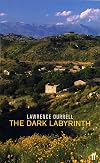
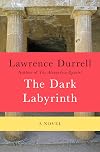
The Dark Labyrinth
by Lawrence Durrell 
On This Page
Description
Who will survive the Labyrinth of Crete? A group of English cruise-ship tourists debark to visit the isle of Crete's famed labyrinth, the City in the Rock. The motley gathering includes a painter, a poet, a soldier, an elderly married couple, a medium, a convalescent girl, and the mysterious Lord Gracean. The group is prepared for a trifling day of sightseeing and maybe even a glimpse of the legendary Minotaur, but instead is suddenly stuck in a nightmare when a rockslide traps them deep show more within the labyrinth. Who among the passengers will make it out alive? And for those who emerge, will anything ever be the same? show lessTags
Recommendations
















Member Reviews
I’ve often wondered why I collect certain books through the years. Multiple moves entailed weaning away a dozen here, a dozen there, but still my library with a healthy contingent of unread books has been a constant companion. Just the other day I found, hidden away, a small dusty paperback, a 1978 Penguin edition of Lawrence Durrell’s The Dark Labyrinth.
So many years ago, I had thoroughly enjoyed his Alexandria Quartet- a series of romances written in poetic language set in Egypt. Now, a fan of Jorge Luis Borges and his frequent use of the labyrinth as a metaphor for the mysteries of life, I took it up.
A delightful choice, The Dark Labyrinth is a post WW II novel about a group of British tourists cruising the Greek Isles who, on a show more stop on the island of Crete, decide to take a tour of a series of caves formed as a labyrinth.
An odd mix who are loosely connected through their independent relationship with a British analyst who encourages them to explore life: Baird- whose wife “displays Bohemian behavior” to which he would sulk and grow a mustache and the cruise evoking “the first fugitive feelings of happiness being alone”, Campion- a free living painter “who would do anything to break the monotony of this life of changes”, Graecen- a classicist poet, Fearmax- a psychic with a deck of Tarot cards, the Trumans- a retired couple, and 2 single women-a younger librarian and an older religious kvetch.
Durrell creates a suspense once the group experiences an accident while touring the labyrinth. What befalls them varies and in some ways the novel transforms itself into part Robinson Crusoe/The Lost Horizon- Mrs. Truman “feeling as if she lost her way in her own dream”; there was no more need for sleep nor for death.
“Something inside me seemed to change…perhaps I only imagined it…in some way we had become allied to the forces of Nature instead of against them…the whole of western civilization was based on the Will; and that led always to action and destruction…yet there is something inside us, an element of repose which you could develop, and alter your life completely.”
In conclusion this was a delightful escapade of just 256 pages by an author I was happy to revisit after so many years.
In an end note Durrell says the tale was inspired by a travelogue, The Islands of the Aegean, written in 1875 by one Rev. Henry Fanshawe Tozer. For some odd reason I was also reminded of another great book, The Magus by John Fowles. show less
So many years ago, I had thoroughly enjoyed his Alexandria Quartet- a series of romances written in poetic language set in Egypt. Now, a fan of Jorge Luis Borges and his frequent use of the labyrinth as a metaphor for the mysteries of life, I took it up.
A delightful choice, The Dark Labyrinth is a post WW II novel about a group of British tourists cruising the Greek Isles who, on a show more stop on the island of Crete, decide to take a tour of a series of caves formed as a labyrinth.
An odd mix who are loosely connected through their independent relationship with a British analyst who encourages them to explore life: Baird- whose wife “displays Bohemian behavior” to which he would sulk and grow a mustache and the cruise evoking “the first fugitive feelings of happiness being alone”, Campion- a free living painter “who would do anything to break the monotony of this life of changes”, Graecen- a classicist poet, Fearmax- a psychic with a deck of Tarot cards, the Trumans- a retired couple, and 2 single women-a younger librarian and an older religious kvetch.
Durrell creates a suspense once the group experiences an accident while touring the labyrinth. What befalls them varies and in some ways the novel transforms itself into part Robinson Crusoe/The Lost Horizon- Mrs. Truman “feeling as if she lost her way in her own dream”; there was no more need for sleep nor for death.
“Something inside me seemed to change…perhaps I only imagined it…in some way we had become allied to the forces of Nature instead of against them…the whole of western civilization was based on the Will; and that led always to action and destruction…yet there is something inside us, an element of repose which you could develop, and alter your life completely.”
In conclusion this was a delightful escapade of just 256 pages by an author I was happy to revisit after so many years.
In an end note Durrell says the tale was inspired by a travelogue, The Islands of the Aegean, written in 1875 by one Rev. Henry Fanshawe Tozer. For some odd reason I was also reminded of another great book, The Magus by John Fowles. show less
É sempre um prazer ler um livro bem escrito. Durrell desenvolve personagens incríveis numa história surpreendente. Assim que comecei a ler lembrei de Thorton Wilder "A Ponte de São Luis Rei", com sua tragédia logo no início com a queda da ponte e que volta ao passado de cada personagem que morreu no desastre. Apesar da simetria do enredo que inicia com os personagens perdidos no labirinto em Creta e com a história voltando para contar como cada um chegou ali. A proposta tem um quê diferente. Primeiro é um certo suspense que não sabemos identificar exatamente qual é, com várias questões que vão se abrindo antes de chegar ao final. A história é sobre escolhas e visões de vida, nossas decisões e as consequências. O livro show more tem um contorno de fábula com referência ao labirinto de creta, e o labirinto é talvez a grande metáfora da vida, um labirinto escuro, que pouco entendemos e é preciso aceitar a morte para sair. O livro tem fôlego de suspense, mas devemos nos refrear e apreciar cada etapa, sem focar no final, tal qual a vida. É permeado de humor e cinismo, como nessa definição que um personagem faz da guerra: "Um milhão imbecis arrancando uns aos outros pernas e braços com incrível coragem e condecorando-se mutuamente com os membros que lhes restam." Em outra passagem outro personagem fala do socialismo no pós guerra "Agora vão nacionalizar tudo, incluindo a alegria, o sexo e o sono. Agora vai haver bastante de tudo para todos, visto que o governo providenciará tudo. Os que não conseguirem dormir serão metidos em celas.". Essa não é considerada uma das melhores obras do autor pois em todas as biografias outros livros são mencionados. De qualquer maneira recomendo a leitura, até mesmo por se tratar de livro pequeno que pode ser lido rapidamente. show less
When a group of first class passengers on a cruise disembark at Crete for a guided tour of a labyrinthine cave system at Cefalu, they are trapped by a rock-fall, with only Lord Graecan being on the right side of the rocks to make his way back out and raise the alarm. The back stories of the passengers (many of whom already knew each other) and how each of them reacts when facing death in the labyrinth, make for a fascinating story.
There are sub-plots about the mysterious Axelos, who lives in a house at Cefalu, the ancient relics recently found in the labyrinth, and Captain Baird who is haunted by a man he killed in occupied Crete during World War II, enhance the atmosphere of the wild and mountainous island that permeates the book, and show more the story unfolds in a strange mix of realism, fantasy, and fakery. show less
There are sub-plots about the mysterious Axelos, who lives in a house at Cefalu, the ancient relics recently found in the labyrinth, and Captain Baird who is haunted by a man he killed in occupied Crete during World War II, enhance the atmosphere of the wild and mountainous island that permeates the book, and show more the story unfolds in a strange mix of realism, fantasy, and fakery. show less
The Dark Labrinth is - yum! - a bowed and wrapped Whitman's Sampler of Lawrence Durrell's confections, obsessions and impressions. This is a relief. Life is short, art is not, reading lists grow like bamboo, and Durrell can be a python length, whipping, fire hose font of lyricism, spraying and drowning the reader in quartets and quintets of poetry and prose. However, the canvas of this cosmos is a brilliantly compact. The scene: a group of tourists, on a holiday cruise in the Mediterannean, who make a side trip to an island to visit a newly discovered antiquities site (a maze of caves, replete, allegedly, with a Minotaur). Inside the maze, their guide meets with an accident, and they are trapped. And so, some die, some escape, and some show more are exiled.
Swiftly, and precisely, Durrell introduces, and disposes of, a motley Survivor- cast of characters, including a couple who won a lottery, a semi-famous painter, an antiquarian/minor poet, a secretary, a seance conductor, and an evangelical spinster - with a dog. Of equal importance to the portrait are some participants who don't actually enter the caves, including a war vet with a bit of post traumatic stress disorder, a monk, a psychoanalyst, and an eccentric archeologist. Of those who perish, some get the fate they deserve, and some get better than they deserve. Durrell touchs upon psychoanalysis, art criticism, the stress of war, the beauty of the Greek Isles, the whimsy of fate, and, in a chapter "On the Roof of the World" explicates his vision of a kind of zen Shangri-La.
My appreciation for this work was heightened by a familiarity with Durrell's interest in Gnosticism. In brief, that metaphysical belief system, dating to the pre-Christian era, holds that the world we know was designed by an evil lesser god, that the ultimate creator is indifferent to man's fate, and that reality is occult or even unknowable. I found the dark labyrinth to be Durrell's illustrative metaphor of a Gnostic universe. Each character perceived the reality of the labyrinth differently, and hence, each came to conceive of "the minotaur" differently. The character Juan Axelos, the archeologist, was especially significant in this regard. While he discovered the treasures in the cave site, he paradoxically and perversely took measures so that people would conclude that he had faked the antiquities. How very like the Gnostic's god! show less
Swiftly, and precisely, Durrell introduces, and disposes of, a motley Survivor- cast of characters, including a couple who won a lottery, a semi-famous painter, an antiquarian/minor poet, a secretary, a seance conductor, and an evangelical spinster - with a dog. Of equal importance to the portrait are some participants who don't actually enter the caves, including a war vet with a bit of post traumatic stress disorder, a monk, a psychoanalyst, and an eccentric archeologist. Of those who perish, some get the fate they deserve, and some get better than they deserve. Durrell touchs upon psychoanalysis, art criticism, the stress of war, the beauty of the Greek Isles, the whimsy of fate, and, in a chapter "On the Roof of the World" explicates his vision of a kind of zen Shangri-La.
My appreciation for this work was heightened by a familiarity with Durrell's interest in Gnosticism. In brief, that metaphysical belief system, dating to the pre-Christian era, holds that the world we know was designed by an evil lesser god, that the ultimate creator is indifferent to man's fate, and that reality is occult or even unknowable. I found the dark labyrinth to be Durrell's illustrative metaphor of a Gnostic universe. Each character perceived the reality of the labyrinth differently, and hence, each came to conceive of "the minotaur" differently. The character Juan Axelos, the archeologist, was especially significant in this regard. While he discovered the treasures in the cave site, he paradoxically and perversely took measures so that people would conclude that he had faked the antiquities. How very like the Gnostic's god! show less
Lawrence Durrell's second novel The Dark Labyrinth was originally published as Cefalu in 1947. It's not clear why he uses the name of the Sicilian village for his fictional locale in Crete. An appended author's note quotes at length the passage from Henry Fanshawe Tozer's Islands of the Aegean (1875) that he says inspired the book. My Dutton paperback copy touts itself as an "early novel by the author of Justine" rather than an independent text of interest.
The main concern of the novel is with a sightseeing party from an English cruise, who are lost after an accident in a subterranean labyrinth in Crete. They enjoy a surprisingly wide diversity of fates. There is a flavor of allegory about the book, and the carefully constructed show more characters include a poet, a shorthand typist, a painter, an evangelist, a spiritualist-occultist, and a married couple. There is also a side story concerning a gentleman veteran rehabilitating his mental health and doing a bit of espionage.
Once I got the rhythm of the book, it was a speedy read. Durrell does not at all belabor the mythological allusions; there is perhaps just one mention of Ariadne, although the Minotaur is an active presence in the form of an indeterminate menace in the labyrinth itself--one which resolves differently for different characters. The Dark Labyrinth is not a genre novel, yet the later chapters swing rather dramatically among such strange attractors as horror and mystical philosophy, without being subordinated to them. show less
The main concern of the novel is with a sightseeing party from an English cruise, who are lost after an accident in a subterranean labyrinth in Crete. They enjoy a surprisingly wide diversity of fates. There is a flavor of allegory about the book, and the carefully constructed show more characters include a poet, a shorthand typist, a painter, an evangelist, a spiritualist-occultist, and a married couple. There is also a side story concerning a gentleman veteran rehabilitating his mental health and doing a bit of espionage.
Once I got the rhythm of the book, it was a speedy read. Durrell does not at all belabor the mythological allusions; there is perhaps just one mention of Ariadne, although the Minotaur is an active presence in the form of an indeterminate menace in the labyrinth itself--one which resolves differently for different characters. The Dark Labyrinth is not a genre novel, yet the later chapters swing rather dramatically among such strange attractors as horror and mystical philosophy, without being subordinated to them. show less
Lawrence Durrell is best known for his Alexandria Quartet, and his writings about travel in the Greek isles. As a long time resident of the islands and a diplomat in war-time Greece during World War II, he came to know and love the islands. I'm a huge fan of his Greece travel books, in particular The Greek Islands.
Some time ago I learned of The Dark Labyrinth, a novel set on the island of Crete (originally published under the title Cefalu). I bought a copy a long time ago and finally got a chance to read it, it's been out of print for a long time. A group of travelers head to Crete to explore the Labyrinth and find the rumored Minotaur.
The early part of the novel has the travelers on an ocean liner headed to the Mediterranean, each for show more their own reasons. Durrell gradually exposes us to the travelers, their lives and reasons for heading to the Mediterranean. Durrell absolutely skewers the pretensions of the passengers. The first half of the book almost feels like a comedy of manners or an A. S. Byatt novel fifty years early. I found myself laughing out loud, which doesn't happen to me very often.
As the ship stops at Crete and the passengers sign up for a tour of the Labyrinth and to search for the legendary Minotaur, we enter Durrell's Greece. The thyme-scented mountains, the stories of the Greek resistance's mountain hideaways, abbots and monks and peasants, and the natural beauty of Greece come to the fore. The passengers encounter a disaster while in the labyrinth, and each finds their own fate while trying to escape. A bit of Greek legend, and bit of "Lost Horizons" bring the novel to an interesting philosophical close.
The Dark Labyrinth doesn't rise to the level of the Alexandria Quartet, but it's good read, particularly for those who are interested in Durrell or the Greek islands. show less
Some time ago I learned of The Dark Labyrinth, a novel set on the island of Crete (originally published under the title Cefalu). I bought a copy a long time ago and finally got a chance to read it, it's been out of print for a long time. A group of travelers head to Crete to explore the Labyrinth and find the rumored Minotaur.
The early part of the novel has the travelers on an ocean liner headed to the Mediterranean, each for show more their own reasons. Durrell gradually exposes us to the travelers, their lives and reasons for heading to the Mediterranean. Durrell absolutely skewers the pretensions of the passengers. The first half of the book almost feels like a comedy of manners or an A. S. Byatt novel fifty years early. I found myself laughing out loud, which doesn't happen to me very often.
As the ship stops at Crete and the passengers sign up for a tour of the Labyrinth and to search for the legendary Minotaur, we enter Durrell's Greece. The thyme-scented mountains, the stories of the Greek resistance's mountain hideaways, abbots and monks and peasants, and the natural beauty of Greece come to the fore. The passengers encounter a disaster while in the labyrinth, and each finds their own fate while trying to escape. A bit of Greek legend, and bit of "Lost Horizons" bring the novel to an interesting philosophical close.
The Dark Labyrinth doesn't rise to the level of the Alexandria Quartet, but it's good read, particularly for those who are interested in Durrell or the Greek islands. show less
The name Lawrence Durrell is not a name mentioned with any frequency these days, but his work deserves a revival. The Dark Labyrinth, published in 1947, begins with a simple enough premise: a small group of tourists visits a Cretan labyrinth. In the ensuing narrative, the group gets lost with certain members getting rescued while others never return. With this basic plot, Durrell spins a tale chock full of philosophical rumination, surgical precision social satire, and capacious character development. The foredoomed tour group includes a failed artist, a harsh Christian missionary, a disgraced psychic, and a quaint Cockney couple on holiday.
The genius of the book comes from two sources: Durrell’s precise, nuanced use of language and show more his unorthodox plotting. Unlike Brideshead Revisited, the reader isn’t drowning in the super-sweet honey and amber prose, The Dark Labyrinth is light and propulsive. In terms of plotting, when the reader is expecting Durrell to zig, he zags. But O Dear Reader, the zags! A couple terms while reading, I quoted Hunter S. Thompson’s assessment of his drug-addled Samoan friend, “You’ve gone completely sideways on me, man!” Not something I’d expect from a Dean of the English Highbrow Novel, especially a novel written two years after the Second World War.
The Dark Labyrinth is worth reading (and worth reprinting, perhaps by New York Review Books or the Dalkey Archive). The novel presents the Artist in Embryo, along with his unique personal philosophy, a combination of Western physics and Eastern metaphysics (Einstein and Buddha). The novel is also a great entrepôt into Durrell’s vast oeuvre. This single, self-contained volume will lead to his travel writing and his more epic fictional works (the quartets and quintets).
http://driftlessareareview.com/2011/11/08/forgotten-classics-the-dark-labyrinth-... show less
The genius of the book comes from two sources: Durrell’s precise, nuanced use of language and show more his unorthodox plotting. Unlike Brideshead Revisited, the reader isn’t drowning in the super-sweet honey and amber prose, The Dark Labyrinth is light and propulsive. In terms of plotting, when the reader is expecting Durrell to zig, he zags. But O Dear Reader, the zags! A couple terms while reading, I quoted Hunter S. Thompson’s assessment of his drug-addled Samoan friend, “You’ve gone completely sideways on me, man!” Not something I’d expect from a Dean of the English Highbrow Novel, especially a novel written two years after the Second World War.
The Dark Labyrinth is worth reading (and worth reprinting, perhaps by New York Review Books or the Dalkey Archive). The novel presents the Artist in Embryo, along with his unique personal philosophy, a combination of Western physics and Eastern metaphysics (Einstein and Buddha). The novel is also a great entrepôt into Durrell’s vast oeuvre. This single, self-contained volume will lead to his travel writing and his more epic fictional works (the quartets and quintets).
http://driftlessareareview.com/2011/11/08/forgotten-classics-the-dark-labyrinth-... show less
Members
- Recently Added By
Lists

Summer Reads 2014
207 works; 70 members

To Read - Literature / Fiction
26 works; 1 member

Books You Couldn't Finish
202 works; 32 members

Greece - a reading list
83 works; 4 members
Author Information

152+ Works 18,699 Members
Lawrence Durrell was born on February 27, 1912 in Jullundur, India to British parents. During World War II, he served as a British press officer. His first novel, Pied Piper of Lovers, was published in 1935, but was considered a failure. Some of his other works include The Black Book, The Alexandria Quartet, The Avignon Quintet, and Caesar's Vast show more Ghost: A Portrait of Provence. Bitter Lemons won the Duff Cooper Prize in 1959. He died on November 7, 1990 at the age of 78. (Bowker Author Biography) show less
Lawrence Durrell has a Legacy Library. Legacy libraries are the personal libraries of famous readers, entered by LibraryThing members from the Legacy Libraries group.
Series
Belongs to Publisher Series
ハヤカワ文庫 NV (20)
Work Relationships
Is contained in
Common Knowledge
- Canonical title
- The Dark Labyrinth
- Original title
- Cefalû
- Original publication date
- 1947 (as Cephalu) (as Cephalu)
- People/Characters
- Lord Graecen; Juan Axelos
- Important places
- Greece; Crete, Greece; Labyrinth of Cefalu
- Dedication
- For
MARGARET, GERALD
& LESLIE - First words
- During the early part of June, 1947, a small party of sightseers found itself trapped in what was then the newly discovered labyrinth of Cefalu, in the island of Crete.
- Quotations
- Coreze made love to her with an art and industry that would have to be described to be fully appreciated.
- Last words
- (Click to show. Warning: May contain spoilers.)Ascending the hillside, we crossed a plateau, the ground beneath which is
mined by the Labyrinth, and at one point Captain George pointed out to us the position of the refectory underground. Higher up we obtained a view of the snowy mountains of Crete together, comprising the Dictean Mountains, Ida, Kedros, and the White Mountains.
Classifications
Statistics
- Members
- 467
- Popularity
- 65,500
- Reviews
- 12
- Rating
- (3.61)
- Languages
- 12 — Dutch, English, Finnish, French, German, Hungarian, Italian, Japanese, Portuguese, Serbian, Spanish, Turkish
- Media
- Paper, Audiobook, Ebook
- ISBNs
- 24
- ASINs
- 22