On This Page
Description
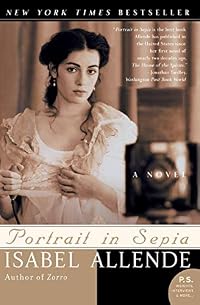
A sequel to Daughter of Fortune, New York Times bestselling author, Isabel Allende, continues her magic with this spellbinding family saga set against war and economic hardship. Aurora del Valle suffers a brutal trauma that erases from her mind all recollection of the first five years of her life. Raised by her ambitious grandmother, the regal and commanding Paulina del Valle, she grows up in a privileged environment, free of the limitations that circumscribe the lives of women at that time, show more but tormented by horrible nightmares. When she is forced to recognize her betrayal at the hands of the man she loves, and to cope with the resulting solitude, she decides to explore the mystery of her past. Portrait in Sepia is an extraordinary achievement: richly detailed, epic in scope, intimate in its probing of human character, and thrilling in the way it illuminates the complexity of family ties. show lessTags
Recommendations











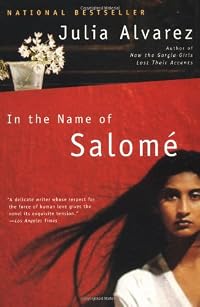
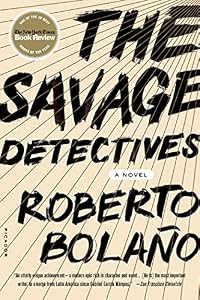
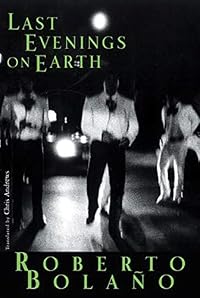
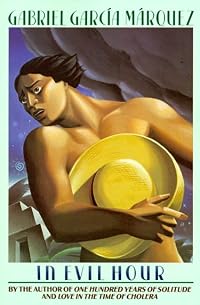

Member Recommendations

Member Reviews
A lens into cultures - the protagonist is a racially mixed child of Chinese-Chilean descent who is orphaned at birth and raised by grandparents of both cultures at the latter end of the 19th century, and continents - North and South America and Europe in the 19th and 20th centuries. It describes the brutality of war, racial prejudice and class difference, seen through the eyes of the young protagonist.
This is only the second Allende that I have read, and the only one from this -duet/trilogy-depending on the source. But it stands alone as a wonderful read.
This is only the second Allende that I have read, and the only one from this -duet/trilogy-depending on the source. But it stands alone as a wonderful read.
Audiobook narrated by Blair Brown
This is the third book Allende has written about the Del Valle family. Though it was the last published, in chronological order it falls between Daughter of Fortune and House of the Spirits, but can easily be read as a standalone novel. The sweeping scope of this book takes us from mid 19th-century San Francisco to early 20th century Chile, and is narrated by Aurora Del Valle, a fiercely independent woman who followed her own destiny regardless of convention.
I love Allende’s writing. There is a decidedly Latin beat to the flow of her sentences. And her descriptions are full of sensory highlights – the reader smells the sea air, feels the quality of fine fabrics, suffers in the tropical heat, hears show more the cacophony of a busy marketplace, and tastes the herbs and spices of Chinese or Chilean cuisine.
The characters are larger than life and run the gamut from a wealthy Chilean grand dame to a Chinese herbalist to an English butler and a Serbian physician. I greatly appreciated the family tree printed in the text version, and wished that I also had a map handy to help with the geography.
While she is known for magical realism, there is little of that in this book, aside from a reference to the ghost of Aurora’s grandfather being ever present. I think I need to go back to House of the Spirits and read it again….
Blair Brown does a fine job performing the audio version. She has good pacing and enough skill as a voice artist to clearly distinguish the many characters. show less
This is the third book Allende has written about the Del Valle family. Though it was the last published, in chronological order it falls between Daughter of Fortune and House of the Spirits, but can easily be read as a standalone novel. The sweeping scope of this book takes us from mid 19th-century San Francisco to early 20th century Chile, and is narrated by Aurora Del Valle, a fiercely independent woman who followed her own destiny regardless of convention.
I love Allende’s writing. There is a decidedly Latin beat to the flow of her sentences. And her descriptions are full of sensory highlights – the reader smells the sea air, feels the quality of fine fabrics, suffers in the tropical heat, hears show more the cacophony of a busy marketplace, and tastes the herbs and spices of Chinese or Chilean cuisine.
The characters are larger than life and run the gamut from a wealthy Chilean grand dame to a Chinese herbalist to an English butler and a Serbian physician. I greatly appreciated the family tree printed in the text version, and wished that I also had a map handy to help with the geography.
While she is known for magical realism, there is little of that in this book, aside from a reference to the ghost of Aurora’s grandfather being ever present. I think I need to go back to House of the Spirits and read it again….
Blair Brown does a fine job performing the audio version. She has good pacing and enough skill as a voice artist to clearly distinguish the many characters. show less
This is a sequel to Daughter of Fortune, a bridge to The House of the Spirits and not quite as good as either. Portrait in Sepia is written as the memoir of Aurora del Valle, granddaughter of the intrepid Eliza Sommers and formidable Paulina del Valle from Daughter of Fortune. Isabel Allende uses her usual style of intense character portraits, lyrical descriptions and background history of Chile to tell us what happened to all our favorite characters from that book; but her heroine is a lack luster vehicle. To me, Aurora came off as a "poor little rich girl." Sure, she was orphaned, but raised by people who loved and cherished her. She watched a horrible tragedy as a child that gave her nightmares, but lived a life of luxury and show more intellectual indulgence. Even in an unhappy marriage, she found refuge in sympathetic and loving in-laws who did nothing to curb her eccentric behavior or limit her in any way. Aurora takes up a modern hobby (later profession) in photography, rides in men's clothing, and has an affair--all with no, or even threatened, consequences. She faced little in the way of personal obstacles, which is the essence of conflict in a character-driven story.
I'm not denigrating the psychological effects of witnessing a personal tragedy, or saying rich people can't be unhappy; just that it didn't make for compelling reading in this particular book, especially against the background of poverty and war that Allende provides. The most interesting parts, for me, were catching up with the characters from Daughter of Fortune and seeing the seeds planted for The House of the Spirits (both of which I very much enjoyed). There are several more engaging characters than Aurora, which make the book worth reading; including Severo and Nivea del Valle, the parents of the main characters in The House of the Spirits. The Chilean history is also interesting and well integrated. I would recommend Portrait in Sepia for folks who want the bridge from Daughter of Fortune to The House of the Spirits, truly enjoy character-driven fiction and/or are interested in Chilean history. For those who like more plot-driven fiction, this will be a disappointment. show less
I'm not denigrating the psychological effects of witnessing a personal tragedy, or saying rich people can't be unhappy; just that it didn't make for compelling reading in this particular book, especially against the background of poverty and war that Allende provides. The most interesting parts, for me, were catching up with the characters from Daughter of Fortune and seeing the seeds planted for The House of the Spirits (both of which I very much enjoyed). There are several more engaging characters than Aurora, which make the book worth reading; including Severo and Nivea del Valle, the parents of the main characters in The House of the Spirits. The Chilean history is also interesting and well integrated. I would recommend Portrait in Sepia for folks who want the bridge from Daughter of Fortune to The House of the Spirits, truly enjoy character-driven fiction and/or are interested in Chilean history. For those who like more plot-driven fiction, this will be a disappointment. show less
Historical fiction covering 1862 – 1910, set mostly in Chile, that carries on the family saga started in Allende’s outstanding Daughter of Fortune. Aurora del Valle tells her life story, starting with her birth in San Francisco to Chinese and Chilean parents. A traumatic incident has erased memories of her early years and has resulted in recurring nightmares. She grows up in the privileged world of her grandmother, which enables her to initially avoid the social restrictions placed on women and learn the art of photography. Her marriage leads to disillusionment and growth. Through photography and writing, Aurora seeks to discover meaning in her life. She notices that perspective changes over time and memories fade like old photos. show more While the primary focus is on Aurora, Allende has provided a patchwork quilt of segments focused on the lives of other family members, involving politics, love, honor, sex, feminism, patriarchy, social mores, and marital trials. Themes include memory, identity, and the search for truth.
The strength of this novel lies in its characters. They are deep and well-articulated. Some are eccentric and outlandish. Others are reserved and honorable. Many of the women are strong, intelligent, and ahead of their time in terms of struggling against the prevailing views that women should be silent and subservient. This novel is also rich in Chilean history, portraying the War of the Pacific among Chile, Peru, and Bolivia and the brutally violent internal political struggles.
Written last, this is the second of a three-book series between Daughter of Fortune and House of Spirits. The beginning of this book catches the reader up on the major events of the previous story, so it stands alone, but I recommend starting with Daughter of Fortune (link to My Review). Recommended to readers that enjoy family sagas, stories filled with eccentric characters, or explorations of identity. show less
The strength of this novel lies in its characters. They are deep and well-articulated. Some are eccentric and outlandish. Others are reserved and honorable. Many of the women are strong, intelligent, and ahead of their time in terms of struggling against the prevailing views that women should be silent and subservient. This novel is also rich in Chilean history, portraying the War of the Pacific among Chile, Peru, and Bolivia and the brutally violent internal political struggles.
Written last, this is the second of a three-book series between Daughter of Fortune and House of Spirits. The beginning of this book catches the reader up on the major events of the previous story, so it stands alone, but I recommend starting with Daughter of Fortune (link to My Review). Recommended to readers that enjoy family sagas, stories filled with eccentric characters, or explorations of identity. show less
Portrait in Sepia is a continuation of the story begun in Daughter of Fortune. This historical novel is narrated by Aurora del Valle, who was raised in San Francisco's Chinatown by her grandparents because her mother died in childbirth. At age 5, her beloved grandfather is beaten to death, and her grieving grandmother decides that Lao Ming should be raised by her grandmother del Valle in Santiago, Chile. Paulina, the eccentric Chilean grandmother, accepts the proposition - with the conditions that the girl be called Aurora Del Valle, that the past will never be spoken of again, and that Eliza Sommers never see the child again. So begins the life story of Aurora, who always felt adrift in her surroundings, trying to make peace with her show more nightmares, searching for a place she belonged, yearning for the love and peace she once felt. show less
This is the follow on to Allende's 'Daughter of Fortune', which I read 13 years ago. Bits returned to me as I read, but you can read this as a standalone work.
Took me a while to get into it, but it really is very well written, full of vivid characters and with a definite South American, magic realism feel to it. It's a family tale: the lovely daughter of a Chinese herbalist and an American pastry shop owner becomes involved with the syphilitic som of a wealthy Chilean family, headed by the matriarch Paulina del Valle (ably assisted by Williams, the butler.) The fall out, the events...war, unhappy marriages, the rediscovery of long lost characters...all comes together to make a truly lovely read.
Took me a while to get into it, but it really is very well written, full of vivid characters and with a definite South American, magic realism feel to it. It's a family tale: the lovely daughter of a Chinese herbalist and an American pastry shop owner becomes involved with the syphilitic som of a wealthy Chilean family, headed by the matriarch Paulina del Valle (ably assisted by Williams, the butler.) The fall out, the events...war, unhappy marriages, the rediscovery of long lost characters...all comes together to make a truly lovely read.
I have to give this two stars and no more because, ultimately, I don't think it held together very well. Making Aurora Del Valle the narrator, rather than opting for a third-person narration like in Daughter of Fortune, left Aurora narrating lots of things she wasn't present for and has no realistic way of knowing the details of. It didn't work.
And furthermore, Aurora Del Valle just isn't that interesting. She's surrounded by interesting people, but she doesn't have much going for her herself – only her love of photography which didn't interest me at all. She's no Eliza Sommers.
I liked some things about this book. I liked that we finally got to see Eliza Sommers and Tao Chi'en consummate their love, although it would have been nice to show more see at the end of the last book. I got invested in hating Matías Del Valle (Aurora's biological father), was pleased to see him meet his doom, and I liked Severo and Nivea. I don't remember The House of the Spirits very well, so it took a long time before I remembered what role they played in that book, but I was almost tempted to put it on the "to reread" list to see what happened to them. Maybe one day.
I have to say that this book was better as a sequel to Daughter of Fortune than as a prequel to House of the Spirits. The latter draws on the magical realism tradition, unlike the other two, which are straight historical fiction. This leaves Aurora, in this book, having to say things like, "and then the strangest thing happened, wouldn't you believe it, and this child had green skin! if only I'd had my camera…" It stood out and bothered me, I guess.
I did read this in Spanish, but I was too lazy to review it in that language (mostly I got stuck on how to translate "held together" from the first sentence of this review, so I gave up). The Spanish wasn't too tricky, although as always, it slowed down my reading. Overall, you might as well read it if you finished Daughter of Fortune and feel cheated by the ending, but otherwise it's not that great. (Mar 2014) show less
And furthermore, Aurora Del Valle just isn't that interesting. She's surrounded by interesting people, but she doesn't have much going for her herself – only her love of photography which didn't interest me at all. She's no Eliza Sommers.
I liked some things about this book. I liked that we finally got to see Eliza Sommers and Tao Chi'en consummate their love, although it would have been nice to show more see at the end of the last book. I got invested in hating Matías Del Valle (Aurora's biological father), was pleased to see him meet his doom, and I liked Severo and Nivea. I don't remember The House of the Spirits very well, so it took a long time before I remembered what role they played in that book, but I was almost tempted to put it on the "to reread" list to see what happened to them. Maybe one day.
I have to say that this book was better as a sequel to Daughter of Fortune than as a prequel to House of the Spirits. The latter draws on the magical realism tradition, unlike the other two, which are straight historical fiction. This leaves Aurora, in this book, having to say things like, "and then the strangest thing happened, wouldn't you believe it, and this child had green skin! if only I'd had my camera…" It stood out and bothered me, I guess.
I did read this in Spanish, but I was too lazy to review it in that language (mostly I got stuck on how to translate "held together" from the first sentence of this review, so I gave up). The Spanish wasn't too tricky, although as always, it slowed down my reading. Overall, you might as well read it if you finished Daughter of Fortune and feel cheated by the ending, but otherwise it's not that great. (Mar 2014) show less
Members
- Recently Added By
Lists

Unread books
1,063 works; 87 members

Magic Realism
371 works; 52 members

1990s
309 works; 17 members

Best family sagas
244 works; 34 members

TBR - Older Books
92 works; 1 member

World Books
51 works; 4 members
Author Information

84+ Works 84,392 Members
Isabel Allende was born in 1942 in Lima, Peru, the daughter of a Chilean diplomat. When her parents separated, young Isabel moved with her mother to Chile, where she spent the rest of her childhood. She married at the age of 19 and had two children, Paula and Nicolas. Her uncle was Salvador Allende, the president of Chile. When he was overthrown show more in the coup of 1973, she fled Chile, moving to Caracas, Venezuela. While living in Venezuela, Allende began writing her novels, many of them exploring the close family bonds between women. Her first novel, The House of the Spirits, has been translated into 27 languages, and was later made into a film. She then wrote Of Love and Shadows, Eva Luna, and The Stories of Eva Luna, all set in Latin America. The Infinite Plan was her first novel to take place in the United States. She explores the issues of human rights and the plight of immigrants and refugees in her novel, In The Midst of Winter. In Paula, Allende wrote her memoirs in connection with her daughter's illness and death. She delved into the erotic connections between food and love in Aphrodite: A Memoir of the Senses. In addition to writing books, Allende has worked as a TV interviewer, magazine writer, school administrator, and a secretary at a U.N. office in Chile. She received the 1996 Harold Washington Literacy Award. She lives in California. Her title Maya's Notebook made The New York Times Best Seller List in 2013. (Bowker Author Biography) show less
Some Editions
Awards and Honors
Awards
Distinctions
Notable Lists
Series

Belongs to Publisher Series
Work Relationships
Common Knowledge
- Canonical title
- Portrait in Sepia
- Original title
- Retrato en sepia
- Original publication date
- 2000
- People/Characters
- Aurora del Valle; Lynn Sommers; Eliza Sommers; Tao Chi'en; Paulina del Valle; Frederick Williams
- Important places
- California, USA; Chile; Latin America; San Francisco, California, USA; South America
- Epigraph
- And that's why I have to go back
to so many places in the future,
there to find myself
and constantly examine myself
with no witness but the moon
and then whistle with joy,
ambling over rocks and clods of... (show all) earth,
with no task but to live,
with no family but the road.
--Pablo Neruda, End of the World (Wind) - Dedication
- For Carmen Balcells and Ramon Huidobro,
two lions born on the same day,
forever alive. - First words
- I came into the world one Tuesday in the autumn of 1880, in San Francisco, in the home of my maternal grandparents.
- Quotations
- My mother never takes a stitch with an unthreaded needle.
Nothing is free in this world. You would pay a very dear price for those trinkets.
… she believed that photography and painting are not competing arts but basically different: the painter interprets reality, and the camera captures it. In the former everything is fiction, while the second is the sum of th... (show all)e real plus the sensibility of the photographer.
In the anguish of identifying what was lacking in me, I devoted hours and hours to shooting self-portraits, some before a large mirror I had brought to my studio, others standing before the camera. I took hundreds of photogra... (show all)phs; in some I am dressed, in some I’m naked; I examined myself from every angle, and the only thing I discovered was a crepuscular sadness.
Memory is fiction. We select the brightest and the darkest, ignoring what we are ashamed of, and so embroider the broad tapestry of our lives. Through photography and the written word I try desperately to conquer the transito... (show all)ry nature of my existence, to trap moments before they evanesce, to untangle the confusion of my past.
In the end, the only thing we have in abundance is the memory we have woven. Each of us chooses the tone for telling his or her own story; I would like to choose the durable clarity of a platinum print, but nothing in my dest... (show all)iny possesses that luminosity. I live among diffuse shadings, veiled mysteries, uncertainties; the tone for telling my life is closer to that of a portrait in sepia. - Last words
- (Click to show. Warning: May contain spoilers.)His last breath stayed with me ...
(Click to show. Warning: May contain spoilers.)EPILOGUE. Each of us chooses the tone for telling his or her own story; I would like to choose the durable clarity of a platinum print, but nothing in my destiny possesses that luminosity. I live among diffuse shadings, veiled mysteries, uncertainties; the tone for telling my life is closer to that of a portrait in sepia. - Original language
- Spanish
Classifications
- Genres
- General Fiction, Fiction and Literature, Historical Fiction
- DDC/MDS
- 863.64 — Literature & rhetoric Spanish, Portuguese, Galician literatures Spanish fiction 20th Century 1945-2000
- LCC
- PQ8098.1 .L54 .R4813 — Language and Literature French, Italian, Spanish and Portuguese literatures Spanish literature Provincial, local, colonial, etc. Spanish America
- BISAC
Statistics
- Members
- 4,531
- Popularity
- 3,206
- Reviews
- 77
- Rating
- (3.70)
- Languages
- 24 — Bulgarian, Catalan, Chinese, Czech, Danish, Dutch, English, Finnish, French, German, Greek, Hebrew, Hungarian, Icelandic, Italian, Lithuanian, Norwegian (Bokmål), Norwegian, Polish, Portuguese, Romanian, Croatian, Spanish, Swedish
- Media
- Paper, Audiobook, Ebook
- ISBNs
- 122
- ASINs
- 28